

Understanding the Excavator Market Before You Buy
Buying an excavator — whether it is a compact track hoe for residential grading or a full-size crawler for heavy civil work — ranks among the largest capital commitments a contractor or equipment buyer will ever sign off on. Yet most of the advice floating around online comes from dealer websites, auction platforms, or financing companies that steer you toward their own inventory. That built-in bias makes it hard to get a straight answer to a seemingly simple question: where to buy an excavator without overpaying or getting burned.
This guide takes a different approach. No single platform or brand gets preferential treatment here. Instead, you will find a neutral, end-to-end breakdown of every legitimate buying channel — from authorized dealerships and online marketplaces to government surplus auctions and rental fleet disposals — so you can match the right source to your budget, timeline, and risk tolerance.
Why the Buying Channel Matters as Much as the Machine
Imagine two identical excavators with the same hours, same attachments, and the same maintenance history. One sells through a certified pre-owned dealer program with a limited powertrain warranty. The other appears as a private listing you found searching "excavator sale near me" on a classifieds site. The sticker prices might differ by thousands of dollars — and so will your warranty coverage, inspection access, financing options, and long-term ownership costs. Where you buy directly shapes what you pay, what protections you receive, and how much risk you absorb. Overlooking that reality is one of the most expensive mistakes a buyer can make.
Excavator Size Classes at a Glance
Before diving into buying channels, it helps to know which size class fits your work. Excavators are generally grouped by operating weight, and the class you need influences which sellers carry relevant inventory. According to Gregory Poole Equipment Company, the industry recognizes three primary weight classes, though a practical four-tier breakdown gives buyers a clearer picture:
- Mini/Compact excavators — Under 7 metric tons. Ideal for landscaping, trenching, and tight residential sites. If you have been searching for an excavator small for sale to handle property work, this is your category. These machines offer zero or near-zero tail swing and are easy to trailer.
- Mid-size excavators — Roughly 7 to 16 metric tons. Sometimes called "small standard" machines, they bridge the gap between compact agility and jobsite muscle for utility and light commercial projects.
- Standard excavators — Approximately 16 to 45 metric tons. The workhorse class for commercial construction, road building, and infrastructure. This range includes popular models from Caterpillar, Komatsu, John Deere, and others, and accounts for the bulk of new financed sales in the U.S. — nearly 15,000 units between mid-2025 and mid-2026 alone.
- Large excavators — Over 45 metric tons. Built for mass excavation, quarry work, and demolition. Specialty variants such as a long reach excavator for sale fall into this heavyweight tier as well, featuring extended booms that can work at distances of up to 100 feet.
Knowing your target class narrows the field immediately — not every dealer, auction house, or online marketplace carries inventory across all four tiers. That mismatch between what you need and what a given channel actually stocks is exactly why the buyer profile you bring to the table matters just as much as the machine specs on the listing page.
Match the Right Buying Path to Your Buyer Profile
A homeowner shopping for a compact machine to grade a driveway and a fleet manager sourcing a dozen crawlers for a highway project are both asking the same question — where to buy an excavator — but the right answer for each looks completely different. Budget constraints, warranty expectations, financing structures, and even the ability to physically inspect a machine before signing all shift dramatically depending on who you are and what you need the equipment for. Yet most buying guides treat every reader the same, lumping a first-time property owner in with a seasoned equipment dealer as though they share identical priorities.
They don't. Here is how four distinct buyer profiles should think about the purchase decision.
First-Time Buyers and Homeowners
If you have never owned heavy equipment, the sheer number of options can feel overwhelming. You might be a rural landowner clearing brush, a hobby farmer building a pond, or a DIY homeowner tackling a foundation repair. In every case, you are likely looking at the mini excavator category — machines under seven metric tons that are small enough to trailer behind a pickup truck.
Your top priorities are straightforward: keep the upfront cost as low as possible, find a machine you can inspect in person before committing, and secure at least some form of warranty or return protection in case something goes wrong. Financing flexibility matters too, since many first-time buyers do not have established commercial credit lines. Browsing a mini excavator sale at a local authorized dealer gives you the chance to sit in the cab, test the controls, and ask questions face-to-face — an advantage that online-only channels cannot replicate. Bobcat of North Texas recommends that first-time buyers try a rental or demo unit before purchasing, giving you a hands-on feel for how the machine handles on your actual terrain.
Small Contractors Scaling Their Fleet
You have been renting excavators on a project-by-project basis, and the math is starting to tilt toward ownership. Maybe you are spending close to $950 per week on rental fees and losing productive hours coordinating pickup and drop-off logistics. At some point, those recurring costs exceed what you would pay in monthly loan or lease installments on a machine that sits in your yard ready to go every morning.
Small contractors in this position care most about balancing acquisition cost with reliable dealer support. A warranty-backed excavator for sale through an authorized dealer or certified pre-owned program protects you against surprise repair bills during the critical first year of ownership. Financing terms matter here — you want competitive rates and manageable monthly payments that do not strain cash flow between project payouts. The ability to find excavators near me through a regional dealer network also means faster parts availability and local service when something breaks mid-job. Unlike a homeowner making a one-time purchase, you are building a relationship with a dealer who will support the machine across thousands of operating hours.
Fleet Managers and Equipment Dealers
Fleet managers and equipment dealers operate in a different reality altogether. You are not buying a single excavator — you are sourcing multiple units, sometimes across several size classes, and every dollar per machine compounds across the fleet. Volume pricing, bulk logistics, and resale value retention drive the decision more than any individual feature or warranty term.
Fleet managers at established construction firms often maintain direct relationships with manufacturer reps and negotiate fleet discount programs that are invisible to smaller buyers. Equipment dealers sourcing inventory for resale — including import buyers who purchase used Caterpillar, Komatsu, or Hitachi machines through international channels — prioritize landed cost, machine documentation, and the ability to inspect or verify condition remotely before committing to a bulk order. For this profile, auction houses, rental fleet disposal events, and international multi-brand marketplaces become primary hunting grounds rather than last resorts.
The table below offers a quick decision matrix so you can identify which profile fits your situation and jump to the most relevant buying channels covered later in this article.
| Buyer Type | Top Priority | Budget Sensitivity | Recommended Starting Channels |
|---|---|---|---|
| First-Time Buyer / Homeowner | In-person inspection and basic warranty protection | Tight | Local authorized dealers, certified pre-owned programs, private sellers with documented history |
| Small Contractor Scaling Up | Warranty coverage and dealer service support | Moderate | Authorized dealers (new and CPO), equipment listing aggregators, rental fleet disposals |
| Fleet Manager (Established Firm) | Volume pricing and resale value retention | Moderate to Flexible | Manufacturer fleet programs, auction platforms, international marketplaces |
| Equipment Dealer / Import Buyer | Landed cost and bulk sourcing efficiency | Flexible (margin-driven) | Auction houses, international multi-brand platforms, government surplus sales |
Notice how the recommended channels shift as budget flexibility increases and buying volume grows. A homeowner benefits most from the hands-on guidance of a local dealership, while an import buyer sourcing a container load of used compact excavators needs access to aggregated multi-brand inventory and export logistics — two things a neighborhood dealer simply does not offer.
Regardless of which profile you identify with, one question tends to surface before any channel comparison becomes useful: should you even buy at all, or does renting still make more financial sense for your situation? The answer hinges on utilization — and it is worth getting right before a single dollar changes hands.
Rent vs Buy and When Owning Makes Financial Sense
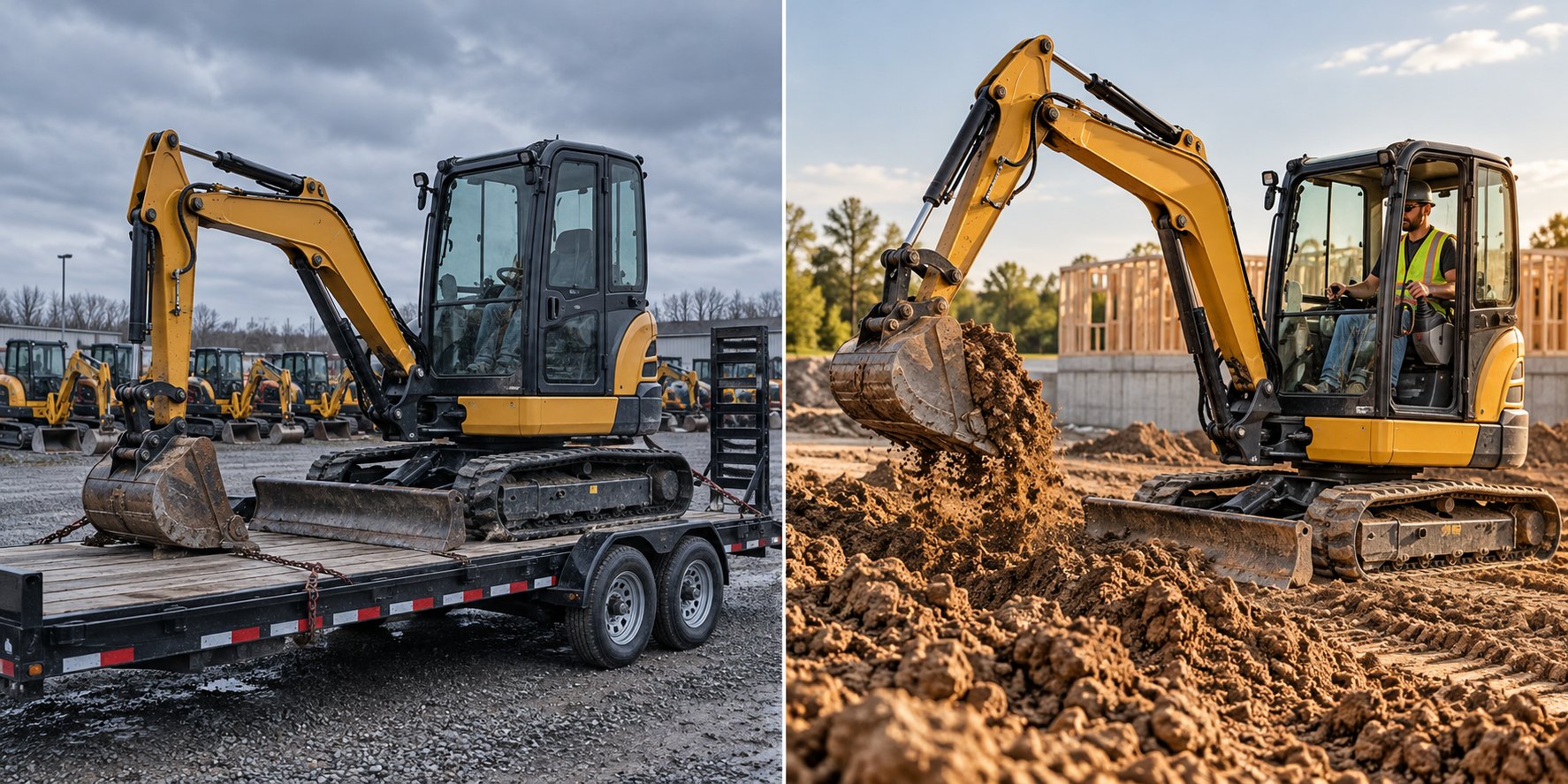
You have identified your size class, you know your buyer profile, and you are ready to start comparing channels. But there is a decision that should come first — one that could save you tens of thousands of dollars or prevent you from sinking capital into a machine that spends more time parked than working. That decision is whether buying makes sense at all, or whether renting remains the smarter play for your situation right now.
The answer is not about gut feeling or pride of ownership. It comes down to one number: your utilization rate.
When Renting Beats Buying
Picture this. You land a three-week grading job that calls for a mini excavator. You rent one, finish the project, return the machine, and move on. No loan payments lingering after the work dries up, no insurance premiums ticking away while the excavator sits on a trailer in your yard. For short-duration and seasonal work, renting keeps your capital free and your risk low.
Renting consistently wins in a few specific scenarios:
- Short-term or one-off residential projects — A homeowner excavating a pond or a contractor handling a single foundation repair will struggle to justify the carrying costs of ownership for a machine needed only a handful of days.
- Specialized equipment you rarely need — If your bread and butter is utility trenching but one job calls for a larger crawler, renting that bigger unit avoids tying up capital in a machine with no recurring demand.
- Testing a new machine size before committing — A few weeks of real-world operation on your actual terrain reveals more than any spec sheet. Many contractors rent mini excavators for sale in their area specifically to evaluate whether stepping up — or down — in size class is worth a purchase.
- Unpredictable cash flow periods — Rental converts a six-figure capital outlay into a manageable operating expense, preserving working capital and credit capacity when your project pipeline is uncertain.
Industry analysis from Cleveland Brothers suggests that equipment used fewer than 150 to 180 working days per year generally costs less to rent than to own once you account for depreciation, maintenance, insurance, and storage. A FieldFix cost breakdown puts a finer point on it: a mid-size excavator purchased at $120,000 can run over $100 per operating hour if it only logs 500 hours in a year — a number that makes weekly rental rates look downright reasonable by comparison.
When Ownership Pays for Itself
Renting is not always the thrifty choice it appears to be. Those weekly checks add up fast when a machine stays on your jobsite month after month. Ownership starts to win once your utilization crosses a clear threshold — roughly 60 to 70 percent of available working days, or about 1,000-plus hours per year for most contractors.
Buying makes strong financial sense when you have:
- A steady contract pipeline — Multi-year projects or a reliable stream of similar jobs guarantee the hours needed to spread fixed ownership costs across enough productive days to beat rental math.
- Predictable weekly utilization — If your excavator runs four or five days every week, the cost per operating hour drops significantly. At 1,500 annual hours, that same $120,000 machine can fall to roughly $35 to $40 per hour — well below most daily rental rates divided across a working day.
- A desire to build equity in depreciable assets — Owned equipment adds to your company's net worth, serves as loan collateral, and qualifies for tax deductions like Section 179, which allows eligible businesses to deduct the full purchase price of qualifying equipment in the year of acquisition.
- Limited local rental availability — In rural markets or during peak construction season, rental fleets run dry. Owning your core machine eliminates the risk of losing a contract because you could not secure equipment in time.
Used excavators and used mini excavator for sale listings offer a middle path here — lower acquisition costs than new iron, which means you reach the ownership break-even point faster and absorb less depreciation in year one.
The decision to buy should be driven by utilization rate and project pipeline — not by sticker price comparison alone. A cheap machine that sits idle costs more than an expensive rental that works every day it is on your site.
One more angle worth noting: rental companies themselves periodically sell off aging fleet inventory to make room for newer models. Auction firms like J.J. Kane run public sales featuring late-model construction equipment retired from rental fleets — including units from national chains — with no minimum bids or reserves. These rental fleet disposals create a lesser-known buying channel that blends the pricing advantages of used equipment with the relatively well-maintained condition of machines that were serviced on a corporate schedule. It is a channel worth exploring in detail, and it comes up again when we compare every buying source side by side in the next section.
Every Excavator Buying Channel Compared Side by Side
Rental fleet disposals hinted at one often-overlooked source of inventory — but they are just one tile in a much larger mosaic. The real challenge most buyers face is not a shortage of excavators for sale. It is the opposite: too many channels, each with its own pricing logic, warranty structure, inspection protocol, and risk profile. No single source works best for everyone, and no competing guide lays all six legitimate buying channels next to each other in one honest comparison.
That changes here. Below is a channel-by-channel breakdown covering the factors that actually determine how much does an excavator cost you in total — not just the number on the listing, but the warranty protection, financing access, and inspection opportunities bundled (or missing) alongside it.
Authorized Dealers and Certified Pre-Owned Programs
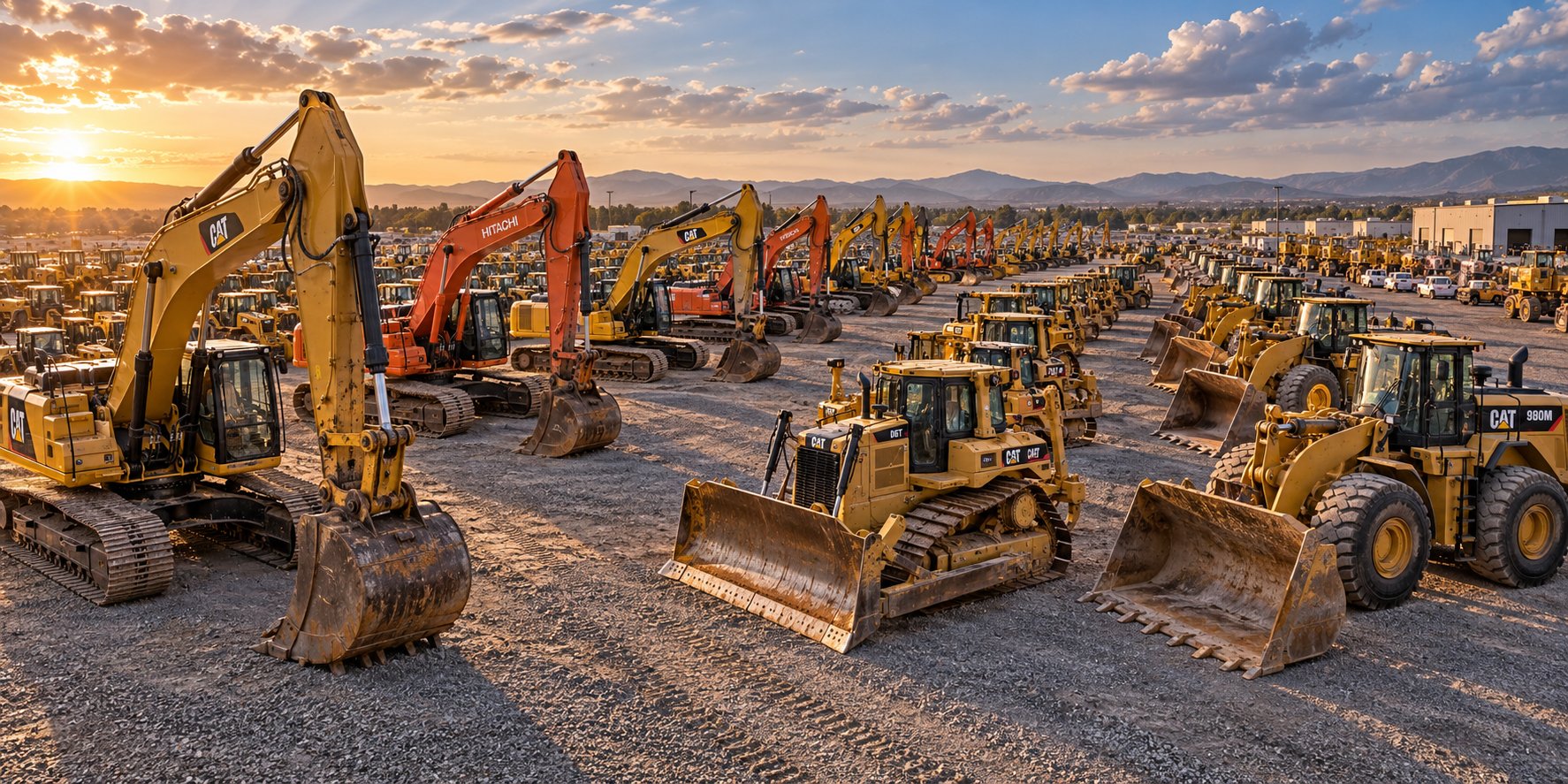
Authorized dealerships — think your local Cat, Komatsu, or Kubota store — remain the safest entry point for most buyers. New machines ship with full manufacturer warranties, the latest emissions-compliant engines, and telematics packages. Certified pre-owned (CPO) programs layer a limited factory-backed warranty on top of inspected used inventory, giving you a middle ground between new-iron pricing and bare-bones private sale risk.
Dealers also offer in-house or manufacturer-subsidized financing, scheduled maintenance contracts, and immediate access to OEM parts. The trade-off? You will pay a premium for that safety net. Negotiation flexibility exists — especially on aging lot stock or last-year models — but do not expect auction-floor discounts.
Online Marketplaces and Listing Platforms
Equipment listing aggregators like Machinery Trader, Equipment Trader, and various international platforms pull together thousands of listings from dealers, brokers, and private sellers. You can filter by brand, size class, hours, and location, making it easy to spot a used mini excavator sale in your region or even overseas.
The breadth of inventory is the biggest advantage. You will find everything from a mini used excavator with low hours to a 45-ton crawler priced for quick liquidation. The downside is inconsistency: some listings come from reputable dealers offering financing and inspection access, while others are bare-bones private posts with a phone number and little documentation. Treat each listing on its own merits, and always verify the seller independently.
One important note about international platforms: equipment exported from China or other Asian hubs through online marketplaces is not necessarily manufactured by a Chinese brand. Many listings feature well-known global names — Caterpillar, Komatsu, Hitachi — sourced from the secondary market in regions where fleet turnover is high. The country a machine ships from and the brand on its boom are two entirely separate data points.
Auction Houses, Private Sellers, and Government Surplus
Auction houses such as Ritchie Bros. and IronPlanet run both live and online events that move enormous volumes of used construction equipment. Pricing is market-driven, which means you might land a deal — or find yourself in a bidding war that pushes the hammer price past retail. Be aware of buyer's premiums and other fees; as 2M Machinery notes, charges like listing fees, transport to the sale site, and settlement timelines can quietly erode what looked like a bargain. Inspection opportunities vary: some auction yards allow walk-through days before the sale, while online-only events may limit you to photos and condition reports.
Private sellers — contractors offloading a machine they no longer need — offer the highest negotiation flexibility and often the lowest sticker prices. The catch is obvious: no warranty, limited recourse if the machine has undisclosed problems, and financing is entirely on you. Always verify hour-meter readings, lien status, and maintenance history before handing over a check.
Government surplus sales round out the channel mix. Agencies at the federal, state, and municipal level regularly retire heavy equipment, including excavators and excavadora-class track machines, through public auction. The U.S. General Services Administration (GSA) runs GSA Auctions, where registered bidders can compete for surplus federal assets — from compact excavators to full-size crawlers. Pricing can be remarkably low since the goal is disposal rather than profit maximization, but machines are sold as-is with no warranty and no government financing. Payment methods are limited to wire transfers, government checks, or credit cards capped at $24,999.99 per transaction, and buyers are responsible for removal within a prescribed deadline.
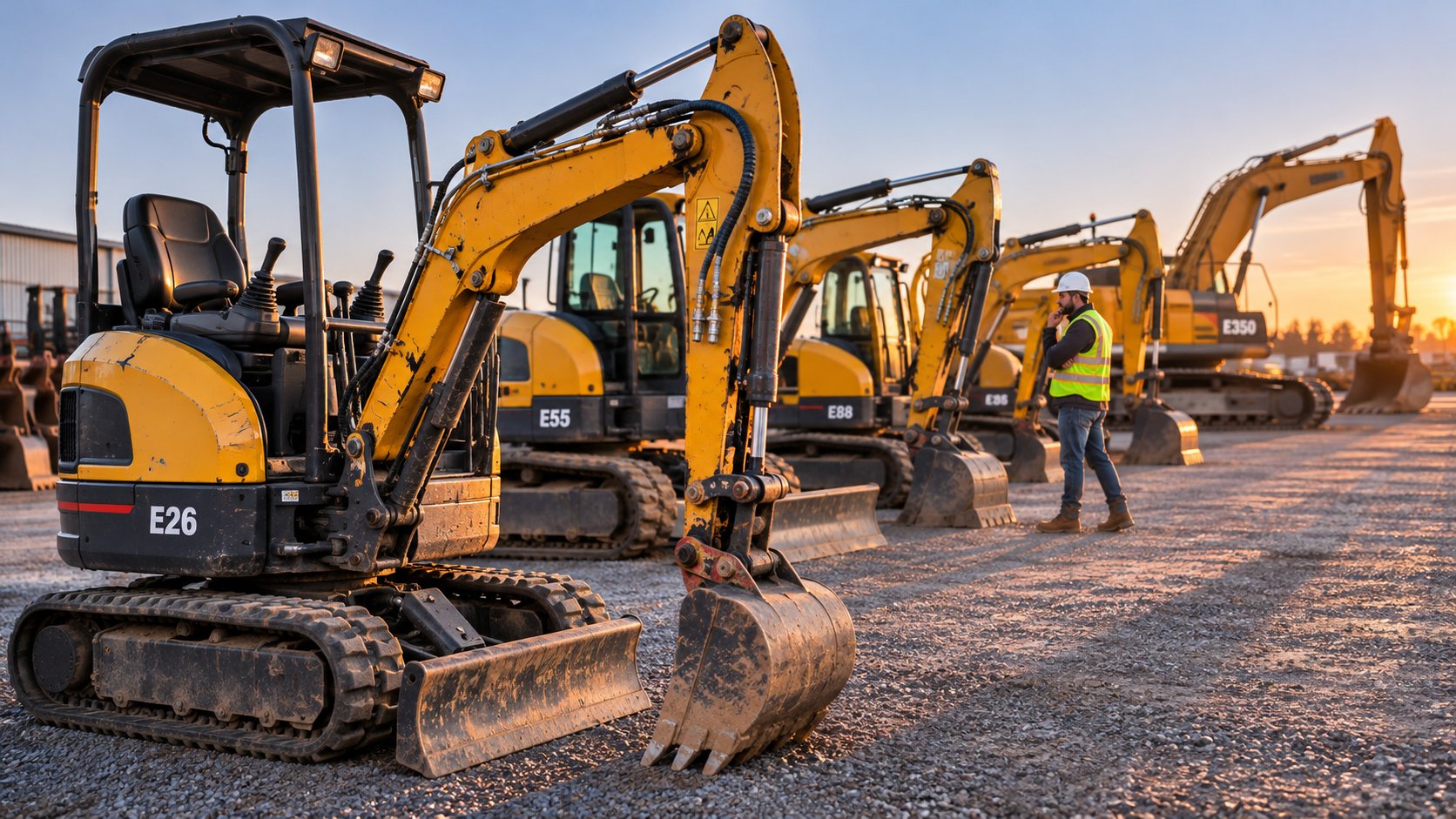
Finally, rental company fleet disposals — touched on in the previous section — slot in as a hybrid channel. Companies like United Rentals, Sunbelt, and regional fleet operators periodically cycle out aging inventory through dedicated auctions or direct sale events. These machines tend to have documented service records and relatively consistent maintenance histories, though high hours are common. Pricing sits between private-sale lows and dealer-lot highs, and inspection is typically available at the fleet yard before the sale event.
The table below pulls all six channels into a single comparison so you can weigh the trade-offs at a glance.
| Buying Channel | Price Range (Relative) | Warranty Available | Inspection Opportunity | Financing Offered | Negotiation Flexibility | Risk Level |
|---|---|---|---|---|---|---|
| Authorized Dealer (New & CPO) | Highest | Yes | Yes | Yes | Moderate | Low |
| Online Marketplaces & Listing Sites | Low to High (varies) | Limited (seller-dependent) | Sometimes | Sometimes | Moderate to High | Moderate |
| Auction Houses (Live & Online) | Low to Moderate | No | Sometimes | Sometimes | Low (market-driven bidding) | Moderate to High |
| Private Sellers | Lowest to Moderate | No | Yes (arranged directly) | No | High | High |
| Government Surplus Sales | Lowest to Low | No | Sometimes | No | Low (bid-based) | Moderate to High |
| Rental Company Fleet Disposals | Low to Moderate | Limited (occasional remaining coverage) | Yes | Sometimes | Low to Moderate | Moderate |
Scan the table horizontally and you will spot a clear pattern: lower price almost always correlates with higher risk and fewer buyer protections. A private seller or government surplus listing might save you thousands up front, but you absorb the full burden of inspection, lien verification, and post-sale repairs. A dealer charges more because the warranty, financing infrastructure, and service network are baked into the price. Neither approach is inherently better — the right channel depends on your risk tolerance, mechanical expertise, and the buyer profile you identified earlier.
Choosing a channel answers where you will shop. The next question is equally consequential: should the machine you bring home be new, used, or somewhere in between? That decision reshapes your total outlay, depreciation exposure, and long-term parts strategy in ways the sticker price alone never reveals.
New vs Used Excavators and the Trade-Offs That Matter
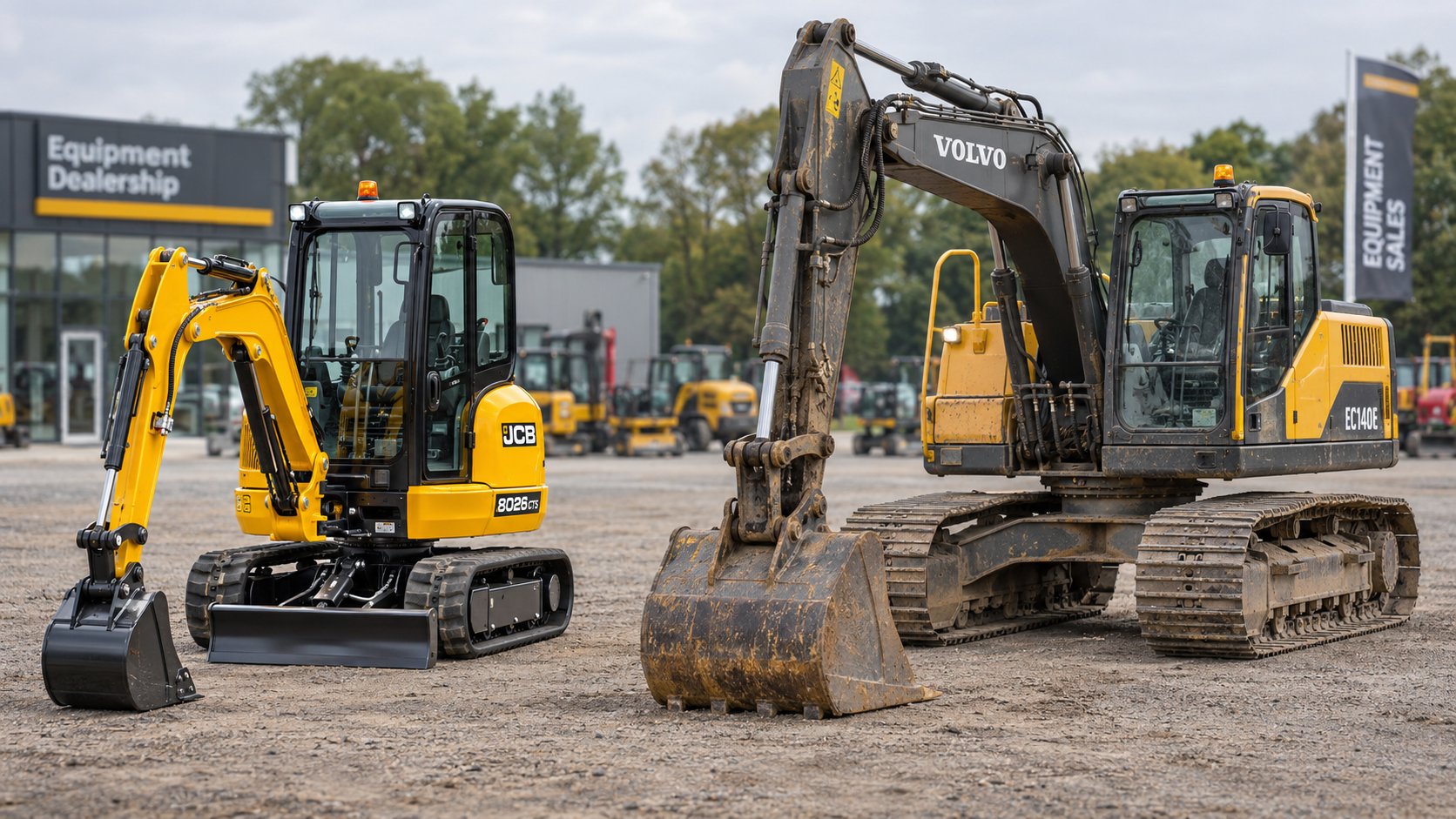
Sticker price grabs attention. A new compact excavator listing at $70,000 next to a comparable used excavator for sale at $35,000 makes the math look obvious — until you factor in warranty coverage, fuel efficiency, emissions compliance, and the hidden repair costs lurking behind that bargain. The new-versus-used decision is really a question about where you want to absorb risk: up front in a higher purchase price, or down the road in unpredictable maintenance bills.
Both paths can make financial sense. The trick is matching the right condition tier to your operational reality. Here is how each option stacks up — and why a third category sitting between the two deserves serious consideration.
The Case for Buying New
Walking off the dealer lot with a factory-fresh excavator gives you something no used listing can replicate: certainty. Every component is at zero hours, every system is under full manufacturer warranty, and you know exactly what you are getting.
The practical advantages go beyond peace of mind:
- Full manufacturer warranty — Most OEMs back new excavators with multi-year, multi-thousand-hour powertrain and hydraulic warranties. If a pump fails or an engine sensor trips in the first 24 months, the dealer fixes it on the manufacturer's dime.
- Latest emissions-compliant engines — New machines ship with Tier 4 Final engines, keeping you compliant everywhere including strict CARB-regulated states like California. Older used units may not meet current in-use fleet rules, a compliance gap that can trigger daily fines.
- Telematics and GPS technology — Integrated fleet management systems — Cat Product Link, Komatsu KOMTRAX, John Deere JDLink — come standard on new models, feeding you real-time location, fuel consumption, idle time, and fault codes without aftermarket retrofits.
- Predictable maintenance schedule — With zero prior history to guess at, you control the service intervals from day one. That predictability is especially valuable for fleet managers tracking cost per hour across multiple machines.
- Dealer support packages — Many authorized dealers bundle preventive maintenance agreements, extended service contracts, and priority parts fulfillment with new-machine purchases. These packages lower the risk of unexpected downtime during the critical early years of operation.
The trade-off is straightforward: new iron carries the steepest depreciation hit. MachineryList notes that mini excavators depreciate fastest in their first two to three years before the curve flattens. For someone asking how much is an excavator going to cost me over its full lifecycle, that front-loaded depreciation can represent a five-figure loss in resale value before the machine even needs its first major service.
Why Used Excavators Deliver Better Value for Many Buyers
If the new-machine buyer is paying for certainty, the used-machine buyer is paying for value — and often getting more productive hours per dollar spent. The used construction equipment market has expanded significantly, valued at approximately $120 billion globally with steady growth projected through 2028. That expansion is not accidental. Tight credit conditions, rising new-machine lead times, and a simple economic truth — a three-year-old excavator with documented service records can handle the same workload as a new one — keep pushing more contractors toward used inventory.
Here is what used machines bring to the table:
- Significantly lower acquisition cost — Used machines in the popular compact and standard classes typically sell for 40 to 60 percent less than their new equivalents. A 3.5-ton mini excavator that listed at $70,000 new might trade hands at $42,000 with thousands of productive hours still ahead of it.
- Slower depreciation from point of purchase — Because the steepest part of the depreciation curve has already passed, a used machine holds a larger share of its purchase price year over year. You are buying on the flat part of the curve rather than riding the cliff.
- Proven reliability when history is documented — A machine that has already logged 3,000 well-maintained hours has demonstrated that its engine, hydraulics, and undercarriage function under real-world conditions. Documented maintenance records turn that operational history into a tangible asset rather than a gamble.
- Broader brand selection on the secondary market — The used market aggregates inventory from every era and every manufacturer. Looking for a specific Komatsu PC200 or a 20 ton excavator from Hitachi that is no longer in active production? Used channels are often the only realistic source.
The risk, of course, is inheriting someone else's deferred maintenance. Hitachi Construction Machinery warns buyers to watch for fractures on load-bearing components like the boom and arm, cracked tracks, and hydraulic leaks — all signs that repair costs could erode whatever you saved on the purchase price. Used mini excavators for sale in the compact class tend to hold resale value particularly well, which makes them attractive to budget-conscious buyers, but it also means clean low-hour units rarely sit on the market long. Acting quickly — and arriving with financing already lined up — is a competitive necessity in this segment.
Certified Pre-Owned as the Middle Ground
What if you could split the difference — used-machine pricing with a layer of new-machine protection? That is the promise of certified pre-owned programs offered by manufacturers like Caterpillar, Komatsu, and John Deere.
A CPO excavator is a used machine that has been inspected, reconditioned, and re-certified by the original manufacturer or an authorized dealer. High-wear components get replaced or rebuilt, service history is verified, and a limited warranty — typically ranging from three to twelve months — backs the sale. According to industry data, CPO units carry a 10 to 20 percent price premium over comparable non-certified used machines. That premium is not just a markup for a sticker on the window. Unplanned repair events in the first twelve months cost private-purchase buyers an average of $7,400 more than CPO buyers of equivalent machines — a gap that can erase the savings of buying uncertified.
CPO programs are especially worth considering for small contractors who lack an in-house mechanic and cannot afford extended downtime. You get a machine with documented provenance, reconditioned critical systems, and a safety net if something fails early — all without the full depreciation hit of driving a brand-new unit off the lot.
For buyers still wondering how much is an excavator going to cost across all three condition tiers, the table below lays out the key differences in one view.
| Factor | New | Used | Certified Pre-Owned (CPO) |
|---|---|---|---|
| Upfront Cost | Highest | Lowest | Moderate (10-20% above non-certified used) |
| Warranty Coverage | Full manufacturer warranty (multi-year) | None unless negotiated privately | Limited factory-backed warranty (3-12 months typical) |
| Technology & Emissions Standards | Latest Tier 4 Final; integrated telematics | Varies by age; older units may be Tier 3 or below | Varies by age; verified compliant at point of certification |
| Depreciation Hit | Steepest in first 2-3 years | Flatter curve; majority of depreciation already absorbed | Similar to used; modest premium holds if warranty transfers |
| Parts Availability | Full OEM pipeline; immediate dealer stock | Good for popular models; harder for discontinued or niche units | Dealer-supported; reconditioned components on hand |
No single column wins across every row. A fleet manager replacing a high-utilization machine on a multi-year highway project may justify the new-machine premium for warranty certainty and emissions compliance. A landscaper adding a compact excavator for weekend residential work might find the best return in a clean used unit with solid records. And a small contractor splitting the difference on risk and cost might discover that a CPO machine hits the sweet spot — enough protection to sleep at night, at a price that does not drain the operating account.
Whichever tier you lean toward, the condition of a specific machine matters far more than its category label. A poorly maintained CPO unit can disappoint just as badly as a neglected private-sale find. That reality makes a thorough pre-purchase inspection non-negotiable — and knowing exactly what to look for separates buyers who find bargains from buyers who inherit problems.
How to Inspect a Used Excavator Before Closing the Deal
A clean paint job and a competitive excavator price can make any listing look like a steal — until you discover a cracked boom weld, a leaking main pump, or an hour meter that tells a very different story from the worn-out cab interior. Whether you are browsing used excavators for sale at a local dealer lot, scanning auction previews, or driving out to meet a private seller, what you check on the ground matters far more than what looks good on a screen.
Think of the inspection as your single best insurance policy. Even the largest trackhoe in the world still comes down to the same wear points as a two-ton mini: undercarriage, hydraulics, engine, structure, and paperwork. The scale changes, but the checklist does not. Walk through these five areas methodically, and you will either confirm a fair deal or uncover the hidden costs that should reshape your offer — or send you walking.
Request maintenance records and verify hour-meter authenticity before you schedule an in-person visit. If a seller cannot produce documentation or refuses to let you arrange a cold start, treat that resistance as information — not a minor inconvenience.
Undercarriage and Track System Checks
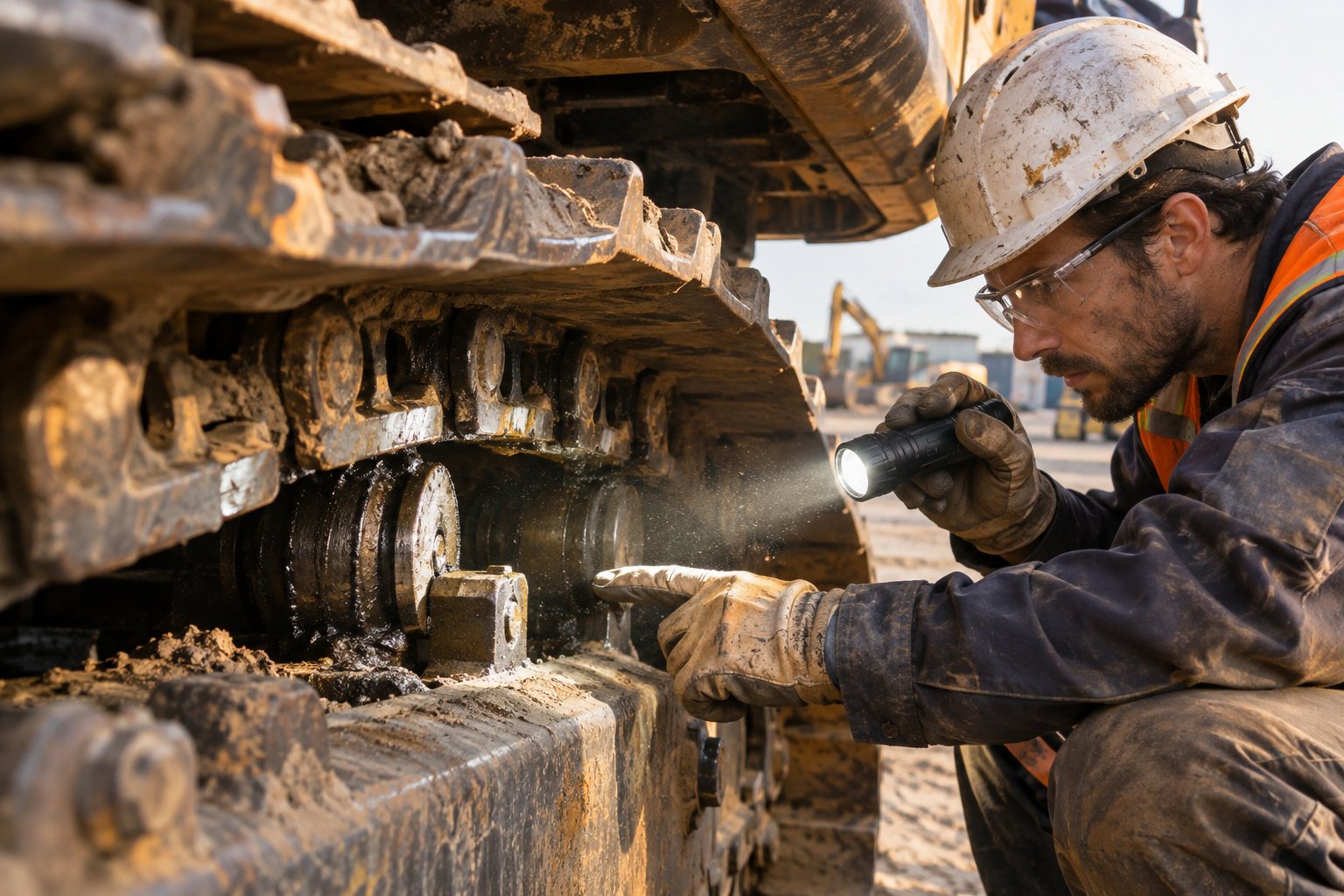
The undercarriage is where the biggest dollars hide. According to Five Star Equipment, undercarriage components typically represent 40 to 50 percent of a tracked excavator's total operating cost over its lifetime. Replacing a full set of chains, rollers, idlers, and sprockets on a standard-class machine can easily run into five figures — a bill that wipes out whatever discount lured you to the listing in the first place.
Here is what to examine closely:
- Track pads and shoes — Look for uneven wear, missing grouser bars, or cracked rubber on compact machine pads. The shoe width should match the machine's factory configuration.
- Rollers (bottom and carrier) — Bottom rollers carry the machine's weight and are in constant contact with the track links. Check for oil leaks at the seals. A roller that has lost its internal lubricant will fail quickly from bearing damage.
- Idlers — The front idler maintains track tension. A worn idler or failed recoil spring allows slack that accelerates wear across the entire system.
- Sprockets — Pointed or hooked sprocket teeth are a telltale sign of heavy chain wear. If the sprocket teeth look sharp rather than flat-topped, the chain has been running on worn components for too long.
- Track tension — Too loose and the track slaps, accelerating contact-point wear. Too tight and every component carries excessive stress. Ask the seller to demonstrate the sag in the upper track run and compare it to the manufacturer's specification for the ground conditions.
Do not accept vague claims like "80 percent undercarriage remaining" without supporting measurements. As MachineryList emphasizes, a visual percentage without a measurement basis is not enough for accurate pricing. Ask a technician to use the manufacturer's wear-measurement procedures if the deal is large enough to justify the cost — and for most small excavators for sale in the standard or mid-size class, it absolutely is.
Hydraulic, Engine, and Structural Inspection
Hydraulics are the heartbeat of every excavator. A sluggish cylinder or a whining pump signals problems that range from a simple hose replacement to a catastrophic system overhaul.
- Hoses, fittings, and cylinder rods — Walk around the machine and look for wet spots, scorched hose jackets, or dents on exposed cylinder rods. Mico Equipment notes that hydraulic leak problems are far easier to spot on a dry, clean machine — a freshly pressure-washed unit with no explanation deserves extra scrutiny.
- Functional testing under load — Cycle every function: boom raise and lower, stick curl, bucket open and close, swing left and right, and travel in both directions. Listen for pump whine, watch for drift when holding a loaded bucket in the air, and feel for hesitation or uneven speed. Recheck once the hydraulics reach operating temperature, since some issues only reveal themselves when warm.
Engine health comes next. If possible, arrive before the seller starts the machine so you can witness a cold start. Hard cranking, heavy exhaust smoke, or abnormal knocking during cold start points to problems that a warm engine can temporarily mask.
- Fluid condition — Pull the oil dipstick and check for milky residue, which suggests coolant contamination. Dark, gritty oil between service intervals indicates neglect.
- Blow-by — Remove the oil fill cap while the engine idles. Excessive pressure or vapor blowing out signals worn piston rings or cylinder liners.
- Exhaust smoke color — Blue smoke points to oil burning. Black smoke suggests fuel system or injection issues. White smoke on a fully warmed engine can indicate a head gasket problem.
- Emissions system — On Tier 4 equipped machines, ask about any stored fault codes or aftertreatment system warnings. Regeneration failures and DPF issues on newer models can be costly to resolve.
Structural integrity ties everything together. Examine the boom foot, boom nose, stick tip, and cylinder mounting points for cracks, fresh welds, or grinding marks that suggest a repaired fracture. Cracks on the boom and stick can be hidden under new paint — run your hand along weld seams if the surface looks suspiciously fresh. Check every pin joint by cycling the stick and bucket slowly while watching for clunking or excessive play. Loose pins and worn bushings are normal wear items, but they are also negotiation leverage if replacement is imminent.
Do not forget the swing bearing: rotate the upper structure a full 360 degrees and listen for grinding, popping, or rattling. Check for vertical play between the turntable and the undercarriage frame. A failing swing bearing is one of the most expensive single-component repairs on any excavator, and catching it before you sign a check can save thousands.
Documentation and Hour-Meter Verification
A machine can pass every physical test and still burn you if the paperwork does not add up. Documentation verification is the final — and arguably most important — gate before committing your money.
- Undercarriage condition — Confirm measured wear data on track components matches the asking price. Budget for replacement costs if wear exceeds 70 percent of the manufacturer's allowable limits.
- Hydraulic system — Verify that all cylinders, pumps, and valves function without leaks, drift, or abnormal noise under load and at operating temperature.
- Engine health — Cross-reference cold-start behavior, fluid condition, exhaust characteristics, and any stored diagnostic codes against the seller's claims about the machine's mechanical condition.
- Structural integrity — Document any weld repairs, pin play, or frame cracks found during inspection. Ask the seller to explain when and how structural work was performed, and whether approved repair procedures were followed.
- Documentation and hours — Match the hour-meter reading against dated service records, oil analysis reports, and available telematics data. A "low hour" unit with worn pedals, a cracked seat, and loose joysticks does not add up, as Mico Equipment warns. Many OEM telematics systems can help confirm hours electronically — ask the dealer or a qualified technician to pull the data where the model supports it.
Beyond hours, dig into ownership history and lien status. Verify the serial number against the title and any available manufacturer records. Ask directly whether any liens are attached to the machine — an outstanding loan from a previous owner can follow the equipment, not the person, leaving you legally responsible for debt you never incurred. A clean title and matching serial number are non-negotiable before money changes hands.
For buyers shopping a used mini excavator for sale near me through local classifieds or private channels, this documentation step is even more critical. Dealer and auction transactions typically include title verification as part of the closing process, but a handshake deal in someone's backyard does not come with that safety net. Run a lien search, request every service record the seller has, and if gaps in the maintenance history raise doubts, adjust your offer accordingly — or walk away.
As a practical rule of thumb, MachineryList suggests that full-size excavators crossing the 8,000 to 10,000 hour mark warrant closer scrutiny of major components and stronger repair documentation, while machines below 4,000 hours still deserve verification because low readings can reflect meter replacement or incomplete records rather than light use. For compact and mini machines, thresholds trend lower given their smaller-displacement engines and lighter-duty hydraulic systems — condition and records always outweigh the number on the display.
Armed with a thorough inspection and verified documentation, you are in a position to negotiate from strength rather than hope. But knowing what to look for on a single machine is only half the equation — understanding which brand you are inspecting, and what that nameplate means for parts access, dealer support, and long-term resale value, shapes the ownership experience for years after the sale closes.
Excavator Brand Reputation and What It Means for Buyers
A flawless inspection tells you the machine is healthy today. The brand on the boom tells you how easy it will be to keep it healthy five years from now. Parts availability, dealer proximity, resale demand, and technology ecosystem all trace back to one variable that most buying guides gloss over: which manufacturer built the excavator you are considering. Whether you are evaluating a used mini excavator at an auction yard or comparing new compact units at a dealer lot, understanding what each nameplate brings — and where it falls short — prevents you from choosing a machine you love to operate but struggle to maintain.
No single brand wins every category. The contractor running a Cat mini excavator for sale in three years cares about resale premiums. The fleet manager sourcing twenty mid-size crawlers cares about volume parts pricing. The import buyer scanning international platforms for an excavator for sell into a developing market cares about brand recognition in that destination country. Your priorities dictate the right badge — not the other way around.
Global Tier-One Brands and Their Strengths
Caterpillar (CAT) — The premium benchmark. CAT commands roughly 32 percent of used-market demand globally, which is the single clearest signal of resale confidence in the industry. The dealer and parts network across North America is unmatched — if a hydraulic hose blows on a Friday afternoon, a Cat dealer can usually get you back running before Monday. You pay more up front for that support structure, and the excavator cost per unit reflects it. But for contractors who measure downtime in thousands of dollars per day, the premium is a form of insurance.
Komatsu — Production-grade reliability with a deep global footprint, especially in the 20-ton-and-above classes. The PC series is a staple on civil and heavy earthmoving sites worldwide. Komatsu holds approximately 12 percent of used-market demand, second only to Caterpillar. Their KOMTRAX telematics system pioneered remote machine monitoring, and fuel efficiency on the latest hydraulic platform remains a competitive advantage for high-utilization operations.
John Deere — The logical choice if you already run Deere iron in your fleet, whether agriculture or construction. One dealer relationship, one parts account, one warranty contact — that consolidation reduces friction and often unlocks loyalty pricing. Resale values stay particularly strong in the Midwest and farm belt, where Deere brand trust runs generationally deep. The G-Tier and P-Tier compact and mid-size excavators have closed the technology gap with Japanese competitors in recent model years.
Hitachi — Japanese precision engineering at its best, especially in the mid-to-full-size segment. The ZX series is widely respected for hydraulic responsiveness and operator comfort on fine-grade and finish work. Hitachi accounts for roughly 10 percent of global used-equipment demand, giving buyers confidence that these machines hold value even at higher hours. Parts availability is strong across North America, Asia-Pacific, and Europe.
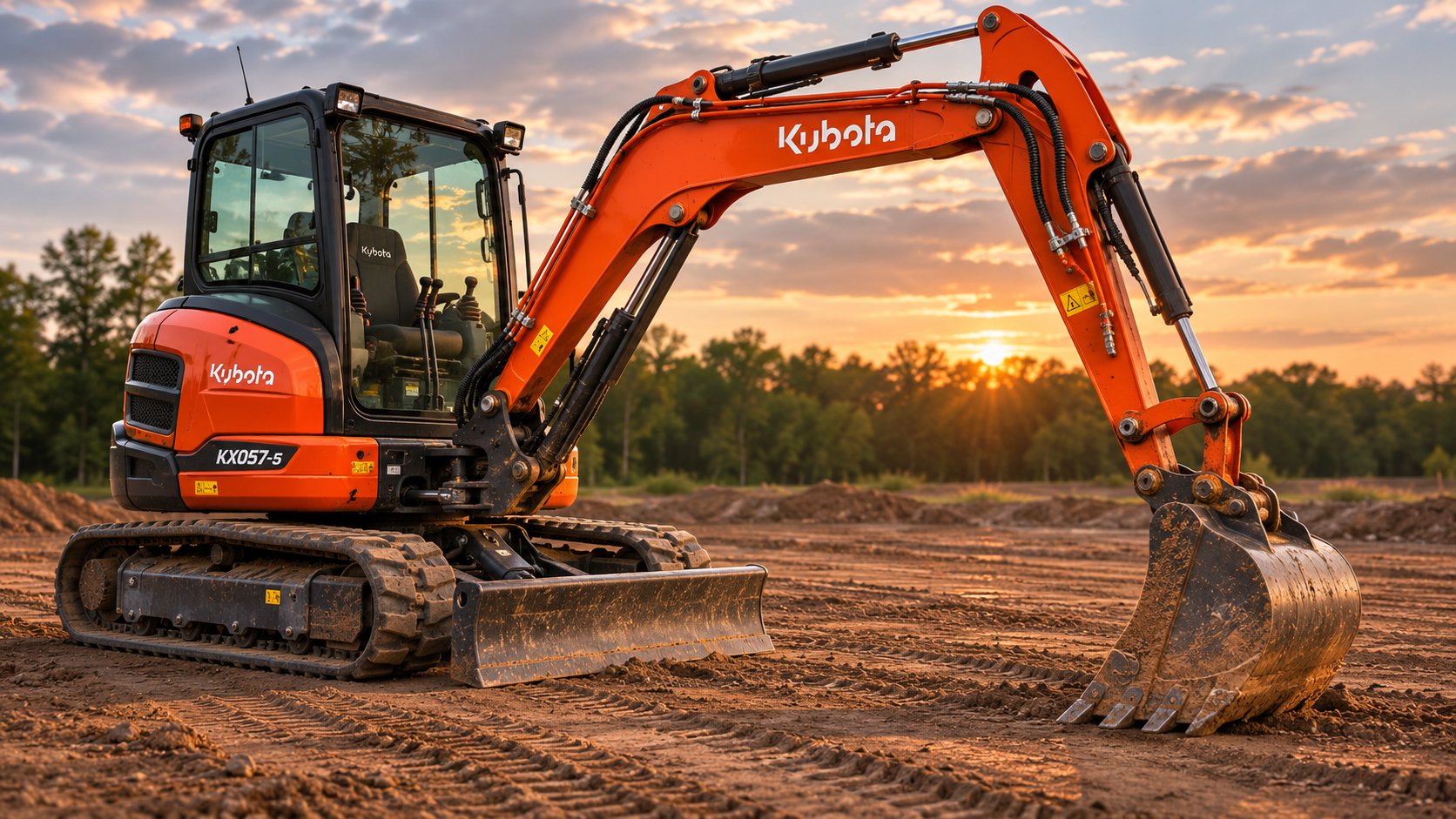
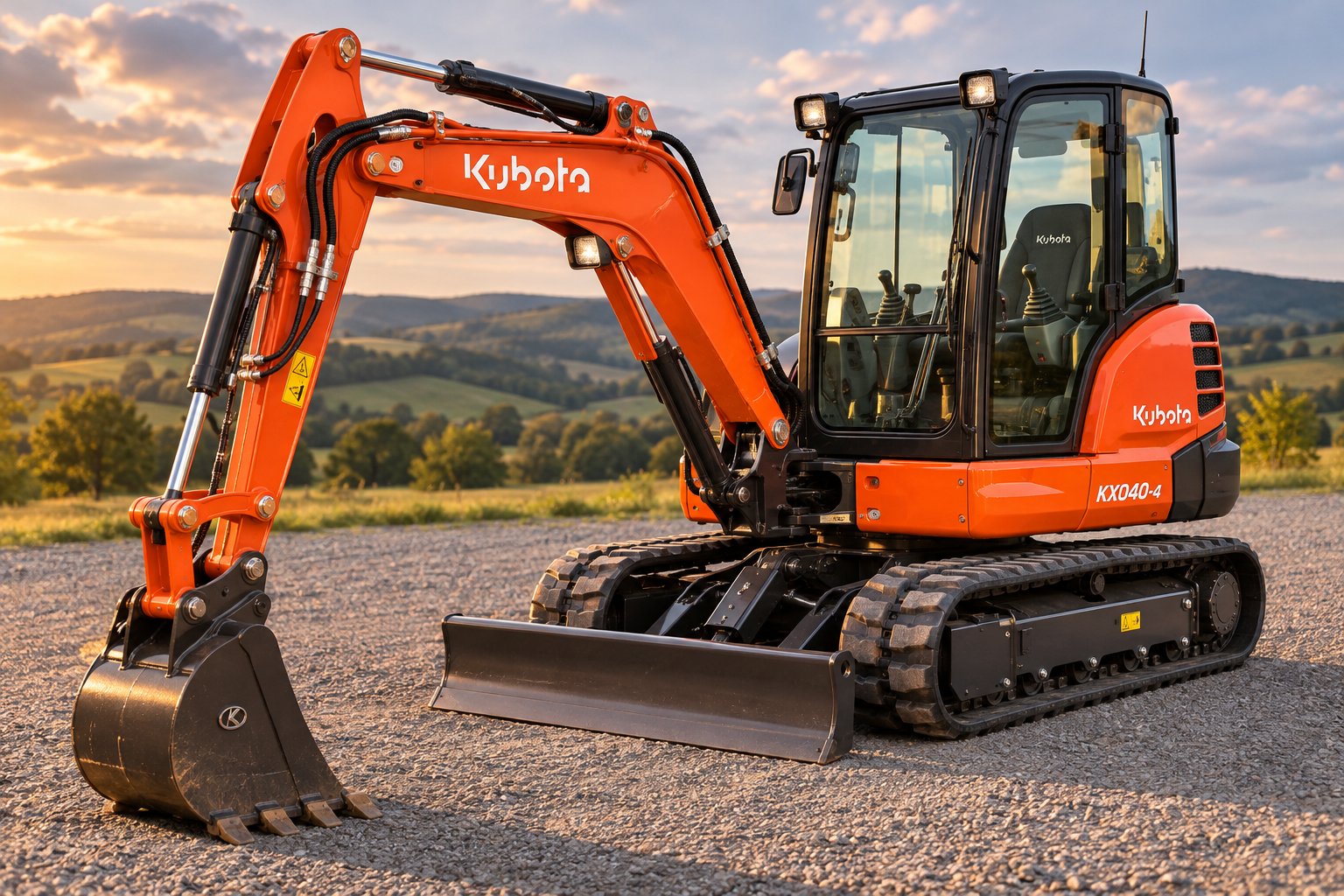
Kubota — The mini and compact excavator specialist. Japanese diesel reliability from decades in the tractor segment carries over into the KX and U-series excavators. Fuel economy leads the compact class, and operator comfort punches above its weight relative to the price point. The dealer network is thinner than Cat or Bobcat in some U.S. regions, but loyalty among landscapers, residential contractors, and ag operators keeps resale values healthy — particularly in rural markets.
Volvo CE — The brand to consider when operator comfort, fuel economy, and confined-site capability are deciding factors. Volvo's EC and ECR short-tail-swing models are purpose-built for urban jobsites where full rotation clearance is a luxury. Dealer networks span over 140 countries, and emissions compliance across European and North American regulatory frameworks is a strength. Resale is solid, though demand concentration skews toward metro markets where short-tail-swing machines earn a premium.
Kobelco — Known for fuel efficiency and low vibration during operation, Kobelco has a strong following in the Asia-Pacific region and a growing presence in North America. The SK series competes well in the mid-size category, and reduced fuel consumption is a genuine differentiator for contractors tracking cost per operating hour. Parts availability is good but not as dense as CAT or Komatsu in some rural U.S. markets — verify dealer proximity before committing.
Emerging Brands and Regional Considerations
SANY — The fastest-growing Chinese OEM in the U.S. market. SANY's SY series covers mini through full-size classes, and acquisition cost runs below the established tier-one names. The U.S. dealer footprint has expanded significantly over the past three to five years, though parts pipeline depth still sits a tier below Caterpillar and Komatsu in most regions. For contractors who can plan around slightly longer lead times on specialty components, SANY offers genuine value. Resale performance is improving as global acceptance rises, particularly in emerging markets across Africa, Southeast Asia, and the Middle East.
LiuGong — One of China's oldest equipment manufacturers, with a reputation for structural durability and straightforward maintenance. LiuGong machines have gained traction among contractors in developing markets who prioritize low ownership costs and simple serviceability. The international dealer network is growing but remains more limited than SANY's in North America. For equipment dealers and import buyers sourcing inventory for resale in regions where affordable spare parts and practical design matter more than brand prestige, LiuGong is a name worth knowing.
Here is an important distinction that trips up many buyers shopping international channels: the country a machine ships from and the brand stamped on its boom are two separate things. Many used Komatsu, Caterpillar, and Hitachi excavators circulate through overseas resellers and export platforms based in China, Southeast Asia, or the Middle East. These are not Chinese-manufactured machines — they are globally recognized brands that entered the secondary market in a region with high fleet turnover. Judging a listing by its export origin rather than its manufacturer badge means passing up well-maintained tier-one equipment simply because of a geographic assumption. Evaluate the machine on its own merits — brand, hours, documentation, and inspection results — regardless of where the seller is located.
| Brand | Typical Strengths | Parts Network | Resale Value |
|---|---|---|---|
| Caterpillar | Premium build quality, strongest dealer support, industry-leading telematics | Extensive | High |
| Komatsu | Production-grade durability, fuel efficiency, deep global presence | Extensive | High |
| John Deere | Fleet consolidation with ag/construction iron, strong brand loyalty | Extensive | High |
| Hitachi | Hydraulic precision, operator comfort, finish-work capability | Extensive | High |
| Kubota | Mini/compact fuel economy, operator comfort, tractor-heritage reliability | Moderate | High (compact class) |
| Volvo CE | Short-tail-swing leadership, operator comfort, emissions compliance | Extensive | Moderate to High |
| Kobelco | Fuel efficiency, low vibration, strong Asia-Pacific presence | Moderate | Moderate |
| SANY | Competitive pricing, expanding U.S. footprint, broad model range | Growing | Variable (improving) |
| LiuGong | Structural durability, low ownership cost, straightforward maintenance | Growing | Variable |
Scan the "Parts Network" column and you will notice a pattern: the brands with extensive networks are the same ones commanding the highest resale values. That correlation is not coincidental. A machine that is easy to service attracts more buyers on the secondary market, which keeps residual values healthy, which in turn makes the brand safer to purchase in the first place. It is a self-reinforcing cycle — and it matters whether you plan to run the excavator for ten years or flip it in three.
Brand reputation gives you a lens for evaluating any listing, but it does not tell you where to actually find those listings. The next step is translating this knowledge into action — identifying the specific platforms, auction sites, and international marketplaces where you can browse real inventory, compare asking prices, and start narrowing your shortlist right now.
Where to Shop for Excavators Online Right Now
Knowing which brand to trust and what to look for during an inspection only pays off when you have actual listings to evaluate. The internet has compressed what used to be a weeks-long regional search into a few browser tabs — but it has also multiplied the number of platforms competing for your attention. Some specialize in auction-style bidding, others aggregate dealer and private-seller inventory into searchable databases, and a growing category of international marketplaces lets contractors and equipment dealers source multi-brand machines from a single platform regardless of geography.
Each channel type carries its own strengths and blind spots. Browsing all of them before committing gives you pricing context that no single site can provide on its own — and that context is what separates a buyer who overpays from one who lands fair value. Here is a practical breakdown of the platforms worth bookmarking, organized by how they operate.
Auction and Listing Platforms Worth Bookmarking
Auction platforms remain one of the most active secondary markets for excavators of every size class. They are especially useful if you are comfortable with as-is purchasing and want market-driven pricing rather than a fixed ask.
- Ritchie Bros. — The world's largest equipment auctioneer, running unreserved public auctions where every item sells to the highest bidder with no minimum or reserve price. You can bid in person at regional auction sites, online in real time, or through a proxy bid set in advance. Ritchie Bros. also powers the IronPlanet online marketplace, which adds fixed-price and make-offer options alongside timed auctions. Both platforms let you filter by brand, model, hours, and location, and many listings include IronClad Assurance inspection reports — a useful baseline, though never a substitute for your own evaluation. Keep in mind that buyer's premiums and additional fees can add 10 to 15 percent or more on top of the hammer price.
- Machinery Trader — One of the largest equipment listing aggregators, pulling inventory from hundreds of authorized dealers, independent sellers, and brokers. Filters cover year, hours, horsepower, price, and condition. Whether you are looking for a John Deere mini excavator for sale through a regional dealer or a full-size Komatsu crawler listed by a national fleet operator, Machinery Trader's depth of inventory makes it a reliable starting point. Listings link directly to the selling dealer, so financing and inspection arrangements happen on a case-by-case basis.
- Equipment Trader — Similar in scope to Machinery Trader but with a slightly broader equipment mix. Over 80,000 listings span new and used categories, and the platform lets you set up saved searches with email alerts — handy when a specific model or price bracket is hard to find. Budget-conscious buyers searching for a small excavator for sale or an excavator for sale under $10,000 can use the price filters to surface compact and older-model units that fall into tighter spending ranges.
- Other platforms worth a look — My Little Salesman offers watchlists and price alerts across a wide range of heavy equipment. Construction Equipment Guide pairs listing search with regional industry news, giving you auction calendar dates and market insights alongside inventory. And for auction-only buyers, Proxibid aggregates timed and live auctions from hundreds of independent auction houses — useful for finding smaller regional sales that the major platforms do not always feature.
A word about manufacturer dealer locators: every major OEM — Caterpillar, Komatsu, John Deere, Kubota, Volvo, and others — maintains an online tool that maps authorized dealers by zip code. These locators are free to use and connect you directly to dealerships carrying new inventory, certified pre-owned programs, and sometimes rental-to-own options. If you already know the brand and size class you want, a dealer locator is the fastest path to an in-person inspection and manufacturer-backed financing. The limitation is scope — you only see that one brand's inventory and pricing, which makes it harder to gauge how much is a mini excavator across competing manufacturers without cross-referencing other platforms.
International Marketplaces for Multi-Brand Sourcing
For equipment dealers, import buyers, and contractors open to sourcing beyond their domestic market, international platforms aggregate multi-brand inventory in ways no single-dealer locator can match. These marketplaces are especially relevant for buyers who need volume, brand variety, or access to models that are scarce locally.
- JIUHONG's used excavator collection — A representative example of what a well-organized international marketplace looks like. JIUHONG brings together compact and larger excavators from multiple global brands — Caterpillar, Komatsu, Hitachi, and others — on a single platform. Excavation contractors, equipment dealers, and import buyers can compare listings across brands, review machine specifications, and request model-specific quotes for individual units or bulk purchases. For fleet managers sourcing multiple machines or dealers building resale inventory, the ability to consolidate sourcing through one platform reduces the legwork of contacting dozens of individual sellers. It is worth emphasizing that equipment exported from China through platforms like JIUHONG is not necessarily manufactured by a Chinese brand. Many listings feature globally recognized names sourced from the active secondary market in Asia, where high fleet turnover keeps a steady supply of well-known models in circulation.
- Alibaba and Made-in-China — The largest general B2B marketplaces, both featuring used and new excavator listings from a mix of manufacturers, trading companies, and brokers. Inventory volume is enormous, but so is the variance in seller quality. Due diligence is non-negotiable — verify the seller's business license, request recent machine photos with serial numbers visible, and consider hiring a third-party inspection agent before transferring funds. As China Company Lookup warns, some listings involve ghost brokers or machines with undisclosed chattel mortgages that can prevent legal export.
- Regional and specialized export platforms — Smaller marketplaces focused on specific regions — Japan, South Korea, the Middle East — often carry niche inventory that the larger aggregators miss. These can be valuable for finding low-hour Japanese-market machines from Hitachi, Kobelco, or Komatsu that were maintained under strict domestic service standards. The trade-off is less standardized buyer protection and a steeper learning curve around shipping logistics and import compliance.
Regardless of the platform type, treat every listing as a starting point rather than a finish line. An attractive price on any site — domestic or international — still needs to survive the inspection checklist, documentation verification, and total-cost calculation you have already built throughout this guide. The platforms above give you access to inventory. Your preparation is what turns access into a smart purchase.
Speaking of total cost: the number on the listing page is never the final number. Transport logistics, insurance during transit, maintenance reserves, and attachment needs all stack on top of whatever you negotiate as the sale price. Those post-purchase costs vary dramatically depending on which channel you buy from and how far the machine has to travel — and they deserve the same careful analysis you just gave the platforms themselves.
Total Cost of Ownership and Post-Purchase Logistics
You found the right platform, picked a brand you trust, passed the machine through a rigorous inspection, and negotiated a price you feel good about. The deal is done — but the spending is not. What happens between signing the purchase agreement and putting the excavator to work on your first jobsite introduces a layer of costs that can quietly reshape whether that "great deal" actually was one.
Transport fees, insurance requirements, maintenance reserves, attachment purchases, and titling paperwork all sit outside the sale price, and they vary wildly depending on the buying channel you chose, the distance the machine has to travel, and the size class you are hauling. Ignoring these line items is the single most common budgeting mistake equipment buyers make — and it is entirely avoidable with a little advance planning.
Transport, Shipping, and Delivery Logistics
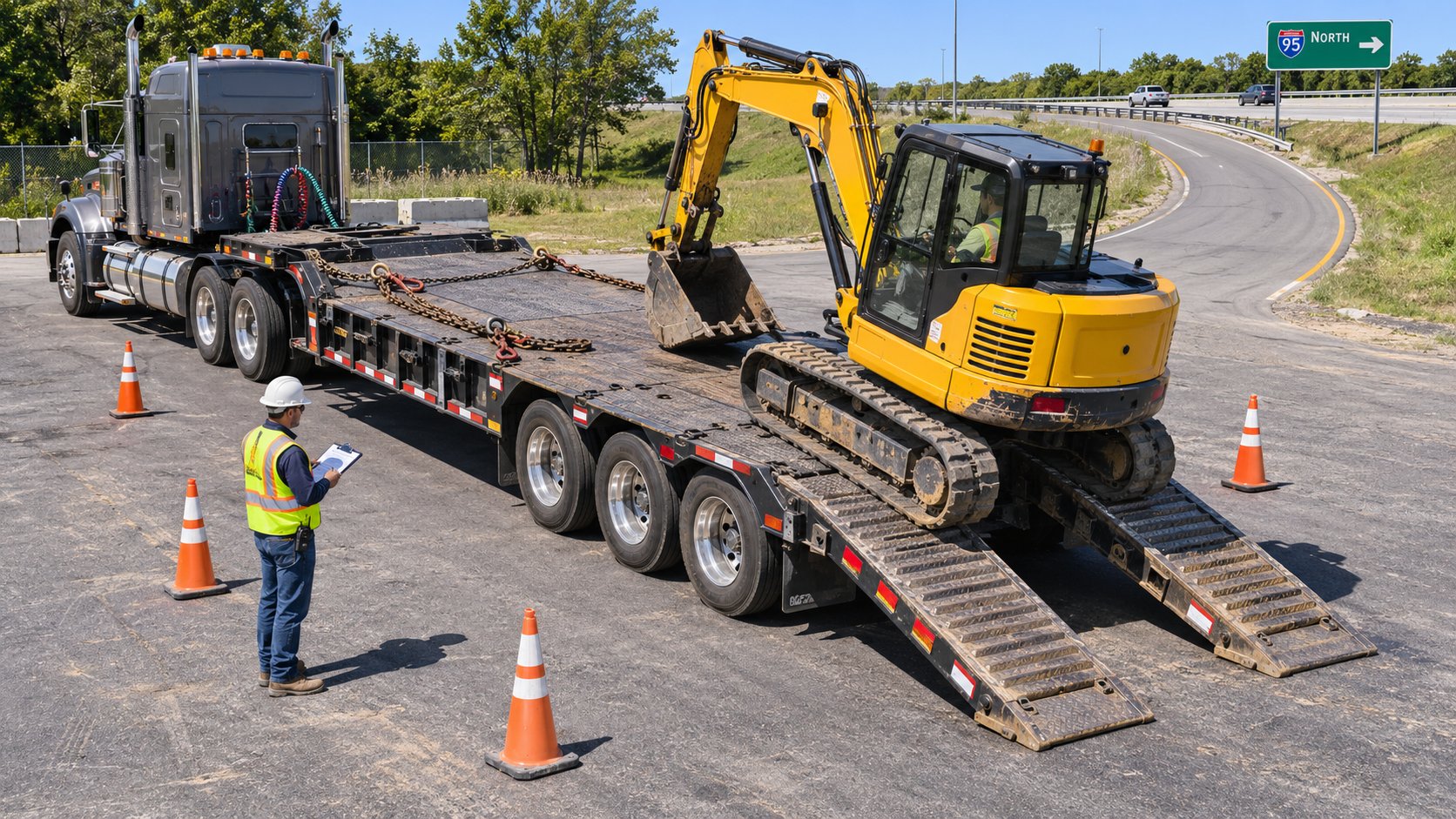
Imagine you spotted a clean excavator for sale near me listing 400 miles away. The price undercut your local dealer by $8,000. That sounds like a clear win — until you price the haul. Heavy equipment does not ride in the bed of a pickup. You need a lowboy, step deck, or RGN (removable gooseneck) trailer, a qualified carrier, and potentially state-by-state permits if the load exceeds legal dimensions.
How much does transport actually cost? The answer depends on the machine's width, height, weight, and the distance it needs to travel. According to HTS Logistics, the national flatbed spot rate averaged $3.61 per mile including fuel as of September 2026. Vendor estimates for RGN trailers — the type most commonly used for tracked excavators — range from $3.50 to $6.00 per mile for legal-size loads and climb to $5.00 to $15.00 per mile when the machine is oversize or overweight. On a 500-mile move, that translates to roughly $1,750 to $3,000 for a legal-size compact unit, and significantly more for a standard or large excavator that triggers permit and escort requirements.
Here is what drives the transport bill beyond the per-mile rate:
- Oversize permits — Any load exceeding 8 feet 6 inches wide, 13 feet 6 inches tall, or 80,000 pounds gross needs permits in every state on its route. Individual state fees are modest — New York charges $40 per single-trip permit, New Jersey starts at $10, and Pennsylvania runs $46 to $97 — but the administrative burden and travel restrictions compound quickly on multi-state hauls.
- Pilot cars and escorts — Width triggers vary by state. New York requires a certified escort over 12 feet wide, Pennsylvania over 13 feet, and New Jersey over 14 feet. Vendor rates for escort vehicles start around $1.95 to $2.15 per mile, with height-pole cars at $2.25 to $2.50 per mile. On a 200-mile move requiring one escort, that alone adds $390 to $500 to your transport cost.
- Daylight-only and holiday restrictions — Most states limit oversize travel to daylight hours on weekdays. Holiday blackout windows — like Pennsylvania's multi-day closures around Thanksgiving and Christmas — can strand a load mid-route, adding layover fees for both the truck and any escorts.
- Loading and site access — If the machine cannot drive onto the trailer under its own power, a crane or forklift at the pickup site adds another line item. Low-clearance bridges, soft ground at delivery sites, and restricted-access urban locations further complicate logistics.
The good news for buyers shopping compact machines: a mini excavator like the Cat 308 CR, at 7 feet 7 inches wide and roughly 20,800 pounds, hauls within legal dimensions on a standard flatbed or step deck — no permits, no escorts, and significantly lower per-mile rates. That is one more reason an affordable mini excavator often delivers better total value than a mid-size machine that costs less on paper but triggers a $2,000-plus transport bill every time it moves between jobsites.
For international purchases, shipping logistics add another dimension entirely. Ocean freight for a containerized compact excavator or Ro-Ro (roll-on/roll-off) service for a larger machine involves port fees, customs duties, import compliance documentation, and inland trucking at both ends. Buyers sourcing through platforms like JIUHONG's excavator collection can request model-specific quotes that factor in bulk or export logistics, helping international buyers and equipment dealers compare landed cost more accurately rather than discovering surprise fees after the commitment is made.
Calculating True Cost of Ownership Beyond the Sticker Price
Transport is just the first post-purchase expense. Gregory Poole Equipment Company frames it well: total cost of ownership is the real cost of purchasing and operating a piece of heavy equipment from the day you buy it to the day you sell it. The purchase price is the most visible number, but it is rarely the number that determines long-term profitability.
Here is a practical checklist of every cost category you should budget for beyond the sale price — whether you are buying a new mini excavator for sale from a dealer lot or a used standard-class crawler through an auction:
- Transport and delivery — Heavy-haul trucking, permits, escorts, and loading as outlined above. For auction purchases, Grafe Auction reminds buyers that most lots are pickup-only — you arrange and pay for hauling, and a win three states away can carry real freight expense.
- Buyer's premiums and closing fees — Auction houses typically add a buyer's premium of 10 to 15 percent on top of the hammer price. Some online marketplaces charge listing or transaction fees. These are part of your acquisition cost even though they do not appear in the headline price.
- Insurance — You need inland marine or equipment floater coverage during transit, and a general liability plus physical damage policy once the machine is in your possession. Coverage requirements differ between ownership and rental, and lenders financing the purchase will mandate specific policy minimums before releasing funds.
- Scheduled maintenance parts and fluids — Oil changes, hydraulic fluid replacement, filter kits, coolant, and grease are recurring expenses that start accruing from hour one. Gregory Poole notes that skipping routine tasks can lead to emergency repairs, expedited parts shipping, and project delays that dwarf the cost of staying on schedule.
- Undercarriage replacement reserves — Tracks, rollers, idlers, and sprockets account for 40 to 50 percent of a tracked excavator's lifetime operating cost. Budgeting a per-hour reserve toward eventual undercarriage replacement prevents a five-figure surprise bill from derailing your cash flow mid-project.
- Attachments — A bare excavator handles digging, but most real-world applications demand additional tooling: hydraulic thumbs, tilt buckets, breakers, augers, or plate compactors. Attachments can add 10 to 30 percent to your total equipment investment, and compatibility varies by brand and coupler type. Budget for at least one or two core attachments at the time of purchase rather than treating them as afterthoughts.
- Registration, titling, and sales tax — Requirements vary by state and municipality. Some states assess personal property tax on heavy equipment annually, adding a recurring ownership cost that is easy to overlook during the buying phase.
- Fuel — Fuel efficiency varies based on engine size, operating conditions, and operator habits. A dozer running eight hours daily at high throttle consumes far more than a compact excavator on light-duty residential tasks. Understanding your projected utilization helps estimate this cost realistically.
- Depreciation — The value your machine loses each year affects your balance sheet and your eventual resale return. Well-maintained machines with documented service histories depreciate more slowly, which is why investing in proper maintenance is not just an operational decision but a financial one.
This is exactly where your choice of buying channel circles back. A compact excavator for sale through an authorized dealer may carry a higher sticker price, but that price often includes warranty coverage, dealer-backed financing at competitive rates, and a local service network that keeps unplanned repair costs low. A comparable machine purchased at auction — especially one found by searching excavators for sale near me on a bidding platform — might save you 20 percent on the hammer price, but once you add the buyer's premium, transport from the auction yard, and the cost of addressing deferred maintenance with no warranty backstop, the total landed cost can converge with or even exceed the dealer price. As Grafe Auction puts it: the hammer price is where your cost starts, not where it ends.
The same logic applies to united rentals used equipment for sale events and other rental fleet disposals. The sticker price may look attractive because rental companies want fast turnover, but high operating hours, wear patterns from multiple operators, and transport from a fleet yard that may not be local all factor into your real number. Run the full equation before celebrating the discount.
Where you buy shapes what you pay long after the purchase is complete. The sticker price is one line on a much longer invoice — and the buyers who calculate every line before they commit are the ones who never feel burned.
Frequently Asked Questions About Buying an Excavator
1. What is the best place to buy an excavator for the first time?
First-time buyers benefit most from authorized dealerships or certified pre-owned (CPO) programs. These channels offer in-person inspection, manufacturer-backed warranties, dealer financing, and expert guidance — all of which reduce the risk of an expensive mistake. Local dealers also let you sit in the cab, test controls, and ask questions before committing. If budget is tight, rental fleet disposal events offer well-maintained used machines at prices between private-sale lows and dealer-lot highs, often with documented service histories from corporate maintenance schedules.
2. How much does an excavator cost including all ownership expenses?
The sticker price is only one line on the total bill. You also need to budget for heavy-haul transport (which can range from $1,750 to well over $3,000 depending on distance and machine size), buyer's premiums at auctions (typically 10-15 percent), insurance, scheduled maintenance parts, undercarriage replacement reserves (40-50 percent of lifetime operating cost for tracked machines), attachments (adding 10-30 percent to equipment investment), registration, titling, sales tax, fuel, and depreciation. Comparing landed cost across channels — not just listing price — is the only reliable way to identify the actual best deal.
3. Should I buy a new or used excavator?
It depends on your utilization, budget, and tolerance for risk. New machines come with full warranties, the latest emissions-compliant engines, and integrated telematics, but they carry the steepest depreciation — especially in the first two to three years. Used excavators cost 40-60 percent less than new equivalents and depreciate more slowly from the point of purchase, though they may need unexpected repairs. Certified pre-owned (CPO) units split the difference, offering inspected and reconditioned machines with a limited factory-backed warranty at roughly 10-20 percent above comparable non-certified used prices.
4. How do I avoid getting scammed when buying a used excavator online?
Start by verifying the seller independently — check business licenses, request recent photos with visible serial numbers, and confirm the serial number matches the title. Always request maintenance records and hour-meter verification before scheduling a visit. Watch for red flags like freshly pressure-washed machines with no explanation, hour-meter readings that contradict cab wear, and sellers who refuse cold-start demonstrations. For international purchases, consider hiring a third-party inspection agent and running a lien search. Platforms like JIUHONG (jiuhong-machinery.com/products/excavators/) let buyers request model-specific quotes and compare multi-brand listings, adding transparency for cross-border transactions.
5. When does it make more sense to rent an excavator instead of buying one?
Renting generally wins when your machine utilization falls below roughly 150-180 working days per year. Short-duration residential projects, one-off specialty jobs, and periods of unpredictable cash flow all favor rental because you convert a six-figure capital outlay into a manageable operating expense. Renting is also smart when you want to test a new size class before committing to ownership. Once utilization crosses about 60-70 percent of available working days — roughly 1,000-plus hours annually — ownership typically becomes more cost-effective, especially when you factor in equity building, tax deductions like Section 179, and elimination of rental coordination delays.