

What Heavy Equipment for Sale Really Means for Buyers
Heavy equipment for sale refers to the broad marketplace of new, used, and surplus construction machines available through authorized dealers, auction houses, private sellers, and online marketplaces. It covers everything from compact mini excavators to 100-ton crawler cranes — and the buying decisions surrounding these machines are far more complex than browsing a listing page. This guide exists to fill the education gap that pure listing sites ignore, giving you the pricing knowledge and strategic framework most buyers only discover after an expensive mistake.
What Counts as Heavy Equipment
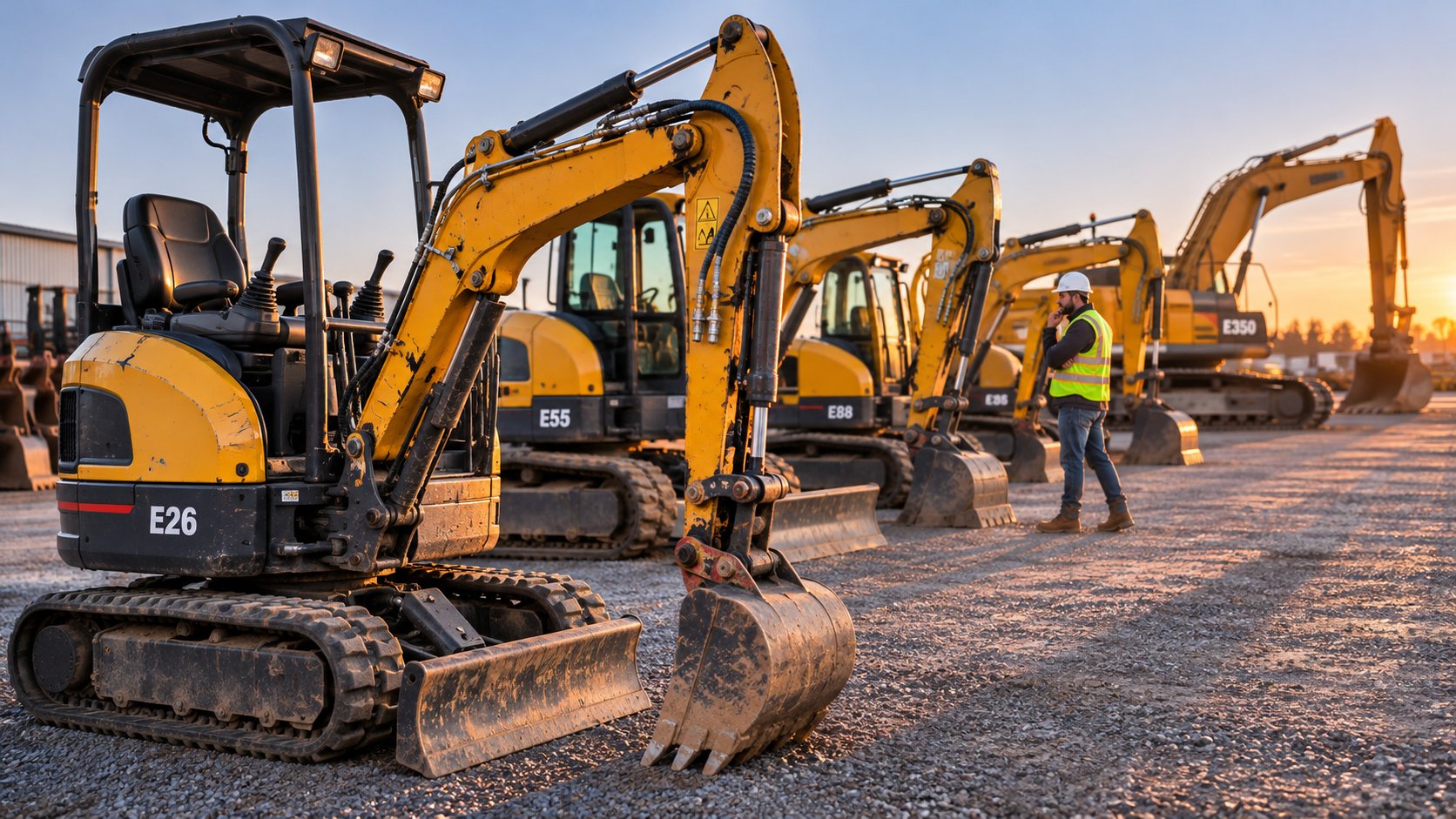
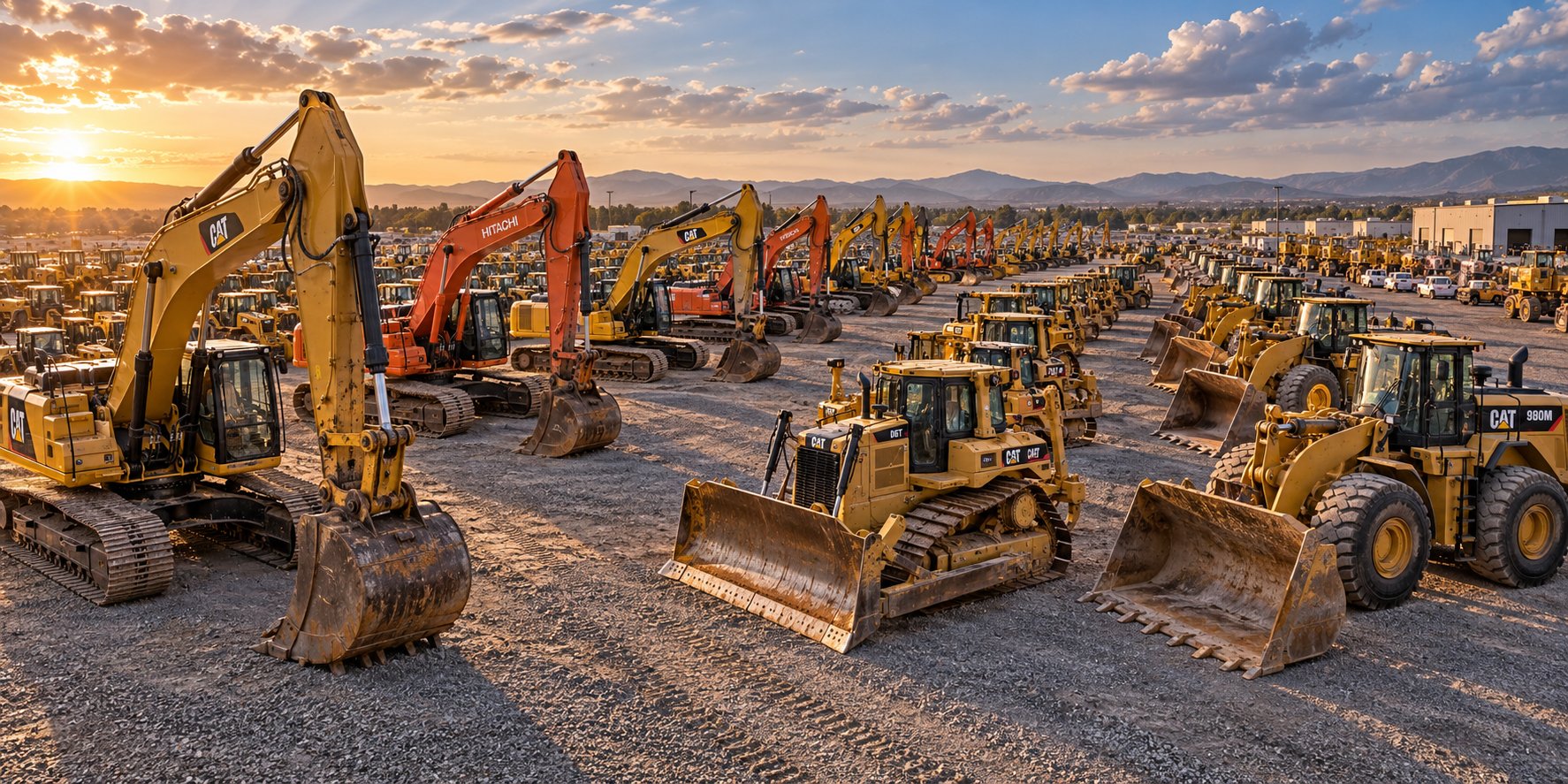
The category spans a wide range of machine types: excavators, bulldozers, wheel loaders, motor graders, cranes, skid steers, articulated dump trucks, compactors, and more. Whether you're searching for used construction equipment for sale in a regional market or browsing national inventories, the sheer variety can be overwhelming. Compact machines under six tons sit alongside massive earthmovers, and the market for equipment for trade between contractors adds another layer of inventory that rarely appears on mainstream listing sites. You'll find options whether you're typing "construction equipment for sale near me" into a search engine or visiting a specialized dealer lot — even niche regional sellers like those in areas such as Nashville tractor GA circles contribute machines to the broader supply pool.
Why a Buying Strategy Matters
Purchasing used construction equipment is one of the largest capital decisions a contractor or fleet manager faces. A single uninformed purchase can lead to overpaying by tens of thousands of dollars, inheriting hidden maintenance liabilities, or acquiring a machine that's simply wrong for the job. As industry experts at McClung-Logan note, most equipment buying mistakes happen when the purchase is evaluated through too narrow a lens — optimizing for one project rather than long-term fleet needs.
Informed buyers consistently save more and avoid costly mistakes by understanding machine categories, specifications, and pricing dynamics before entering the market.
The sections ahead break down every factor that separates a smart equipment purchase from a regrettable one — starting with the machine categories themselves and what each type is actually built to do.
Equipment Categories Every Buyer Should Understand
Imagine scrolling through an equipment alley of hundreds of listings — excavators, dozers, loaders, cranes — all blending together. Without a clear understanding of what each machine class actually does, you'll waste hours filtering results that don't match your project. Knowing the distinctions between earth moving equipment types is the single fastest way to narrow your search and avoid buying the wrong iron.
Excavators and Earthmoving Machines
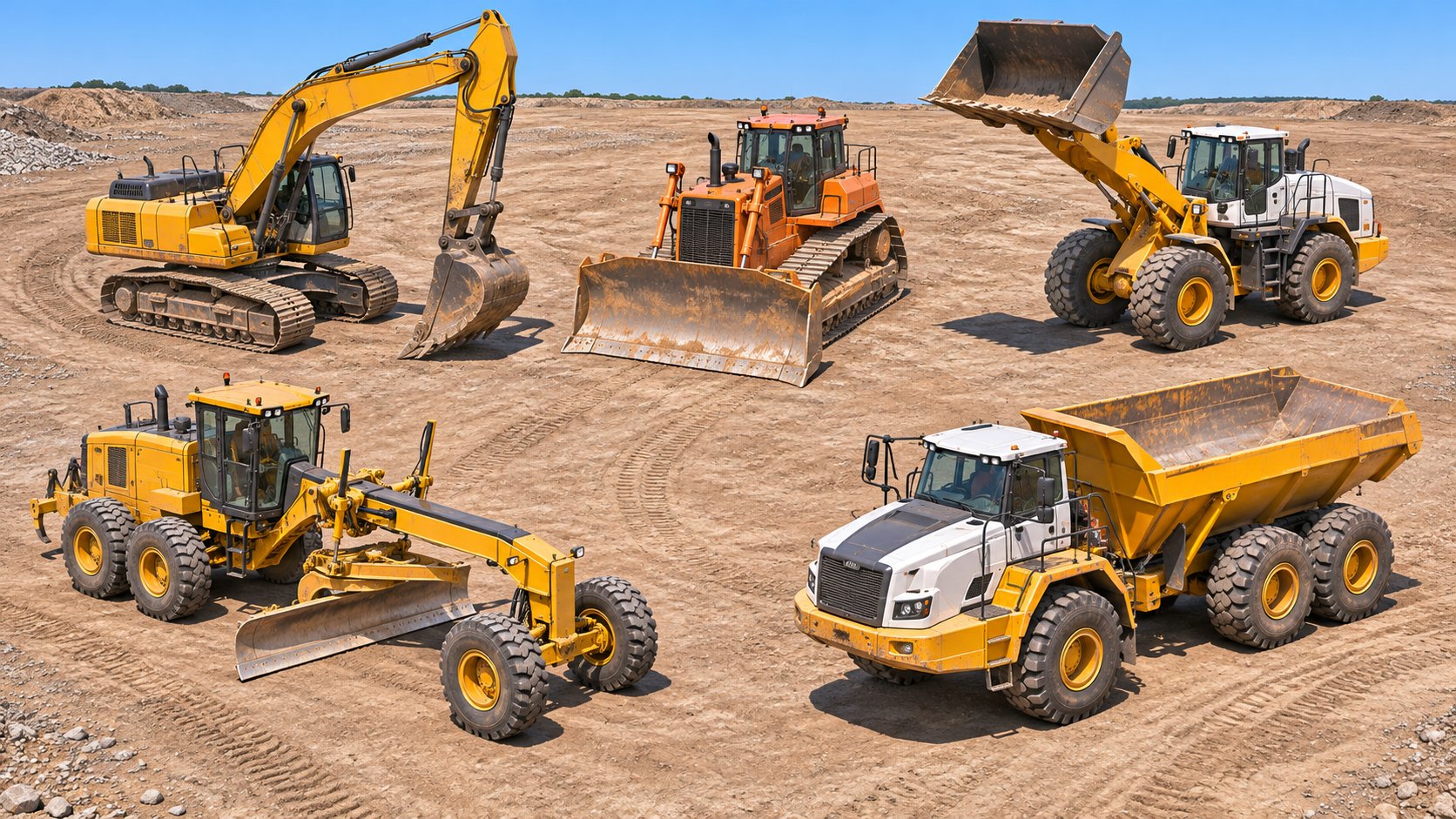
Excavators dominate the resale market. They're the most commonly listed machines on virtually every marketplace, and for good reason — their versatility across trenching, demolition, grading, and material handling makes them essential to nearly every job site. You'll encounter three primary weight classes:
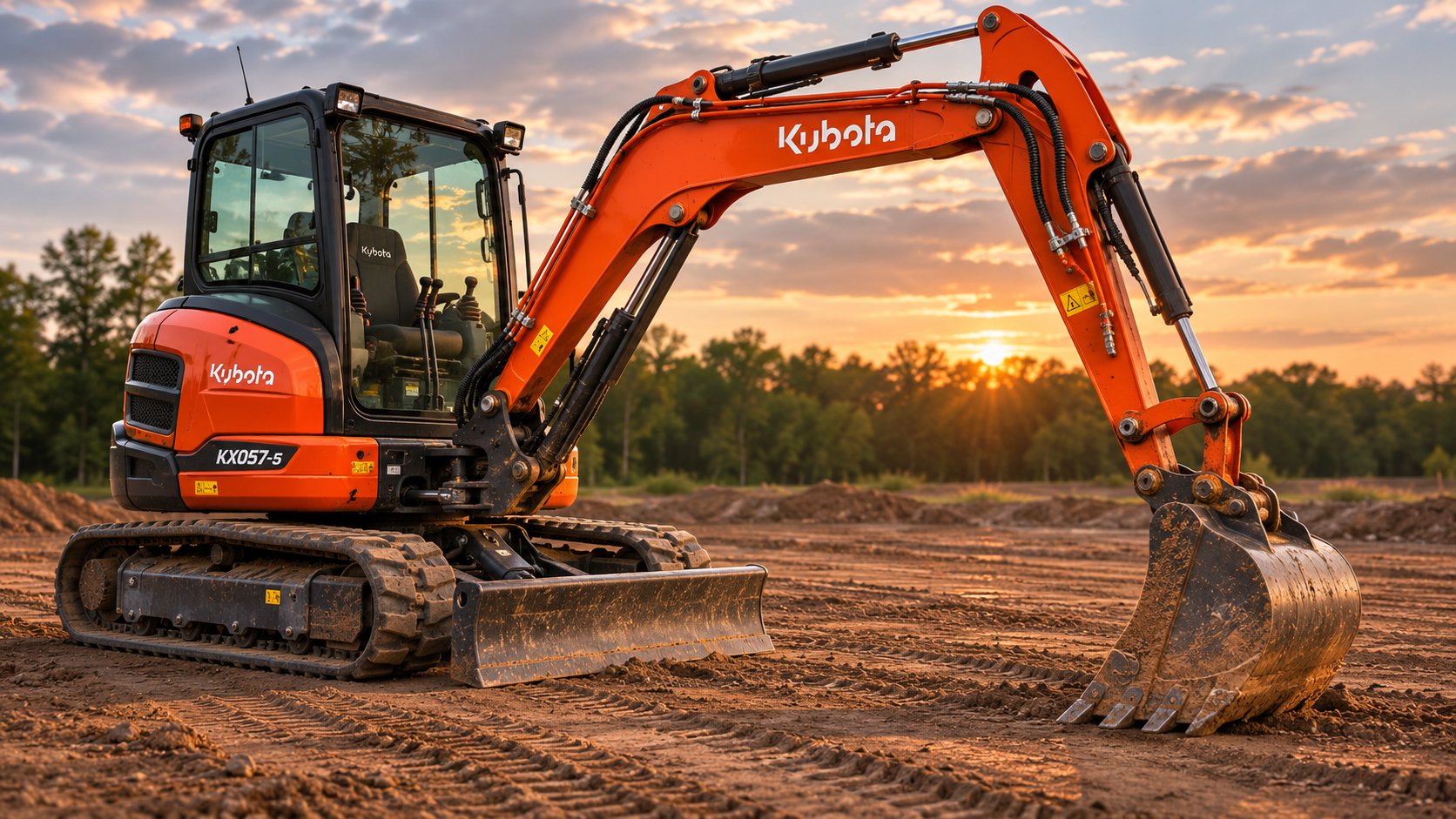
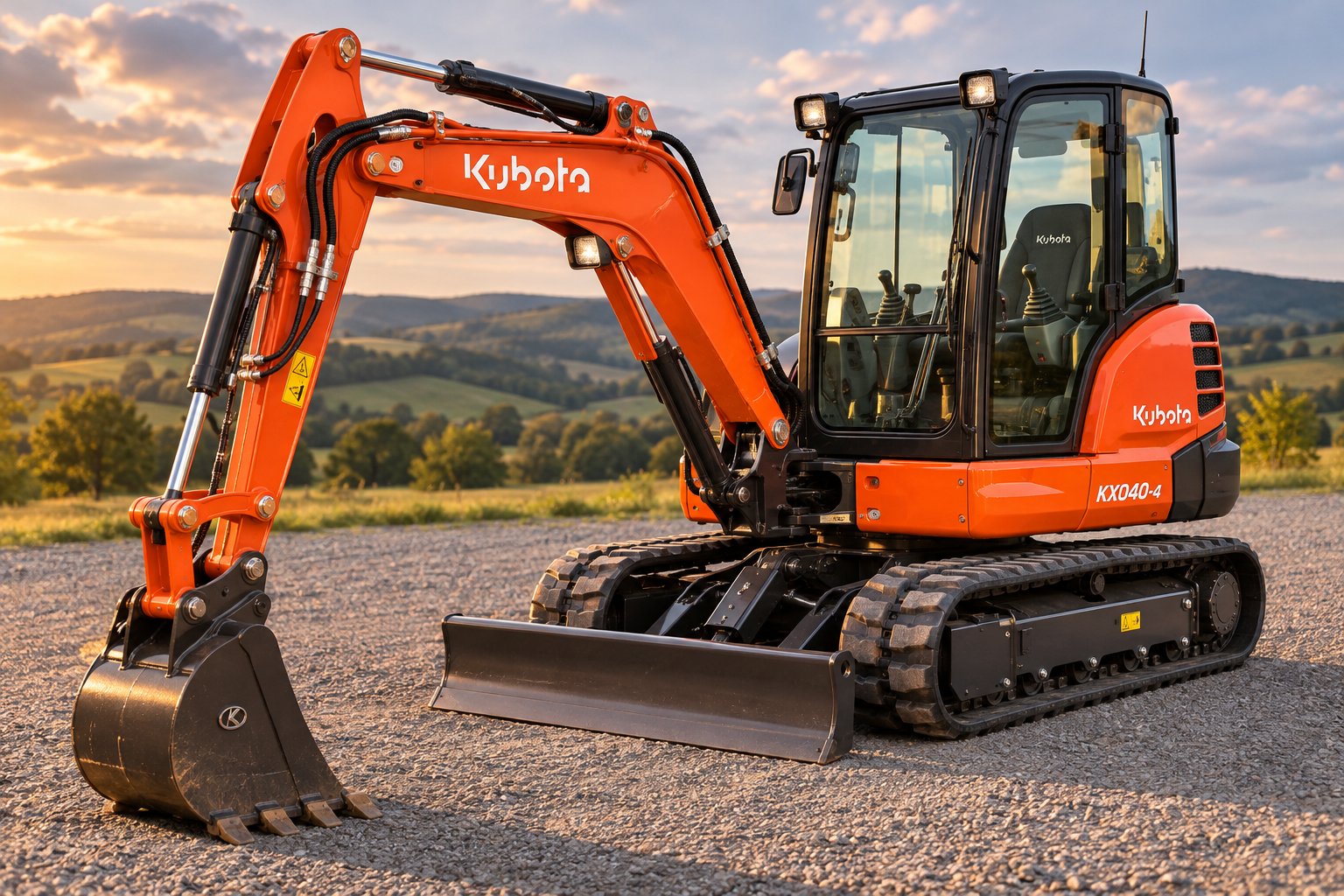
- Compact (under 6 tons): Mini excavators like these fit tight residential sites, utility work, and landscaping. Their low ground pressure and near-zero tail swing make them ideal where space is limited. As Gregory Poole's excavator guide notes, mini excavators weighing under 7 metric tons are best suited for confined job sites where standard machines can't maneuver properly.
- Midsize (6–20 tons): The workhorse range for commercial construction. Models in this bracket — including popular units like the SANY SY225C — balance digging power with reasonable transport requirements and cover the bulk of general contracting needs.
- Large (20+ tons): Built for heavy-duty excavation, demolition of large structures, and mining applications. These machines offer serious dig depth and lift capacity but require lowboy trailers and sometimes permits for transport.
Long-reach variants extend the standard boom and stick assembly for applications like canal dredging or deep demolition, with working ranges that can stretch up to 100 feet. Whether you're shopping for a compact unit or a full-size crawler, excavators offer the broadest selection of any category in the used heavy machinery market.
Bulldozers, Loaders, and Graders
These three machine types handle the bulk of site preparation and material movement work, but each serves a distinct role:
Crawler dozers are identified by their wide front-mounted blades and tracked undercarriage. They excel at land clearing, rough grading, and pushing large volumes of material across a site. Heavier models often include a rear-mounted ripper for breaking compacted soil or rock.
Wheel loaders are the go-to machines for material handling and stockpile work. Their rubber-tired design allows faster travel between loading points, and bucket capacities range from under one cubic yard on compact models to well over six cubic yards on production-class units. If you've ever searched for a used wheel loader for sale, you've likely noticed just how many options exist — these machines hold strong resale value because of their universal applicability across construction, aggregates, waste handling, and agriculture.
Motor graders feature a long frame with a centrally mounted adjustable blade that can be angled, tilted, and rotated. They're essential for fine grading and road maintenance, and they serve road construction agencies, mining operations, and civil contractors alike.
Specialty and Support Equipment
Beyond the primary earth moving equipment categories, several specialty machines round out a complete fleet. Skid steer loaders, for example, offer exceptional maneuverability and attachment versatility — Quotor's equipment comparison highlights that their zero-radius turning and quick-hitch coupler system let a single machine handle buckets, forks, augers, trenchers, and grapples. Backhoe loaders combine a front loader bucket with a rear digging arm, eliminating the need for two machines on smaller job sites. And articulated dump trucks, compactors, and cranes each fill critical roles that no other machine can replicate.
The table below provides a structured reference across seven major categories — use it to match your project requirements to the right machine class before you start browsing listings or heavy equipment salvage inventories.
| Equipment Type | Typical Weight Range | Primary Application | Common Industries |
|---|---|---|---|
| Excavator | 1–90+ tons | Trenching, demolition, material handling | Construction, mining, utilities, landscaping |
| Crawler Dozer | 8–100+ tons | Land clearing, rough grading, pushing material | Construction, mining, forestry |
| Wheel Loader | 3–55+ tons | Material handling, stockpile management, loading trucks | Construction, aggregates, waste, agriculture |
| Motor Grader | 13–30+ tons | Fine grading, road maintenance, slope work | Road construction, mining, civil |
| Skid Steer Loader | 1.5–5 tons | Site cleanup, landscaping, material handling | Construction, landscaping, agriculture |
| Articulated Dump Truck | 25–45+ tons | Hauling material over rough terrain | Construction, mining, quarrying |
| Compactor | 3–25+ tons | Soil and asphalt compaction | Road construction, earthworks, landfill |
Pinpointing your equipment category is just the starting point. The real pricing leverage comes from understanding whether a new or used machine makes more financial sense for your specific situation — a decision that hinges on factors most listing sites never bother to explain.
New Versus Used Heavy Equipment Purchasing Decisions
Here's a question that trips up even experienced contractors: should you buy new or used? It sounds simple, but the answer depends on far more than the sticker price. Most listing sites skip this conversation entirely — they want you browsing inventory, not questioning whether a brand-new machine or a well-maintained pre-owned unit is the smarter financial move. Yet this single decision can swing your total ownership cost by tens of thousands of dollars in either direction.
When Buying New Makes Sense
New equipment delivers advantages that no amount of careful used shopping can replicate. Modern machines come with the latest technological advancements — ConEquip notes that new units typically feature improved fuel efficiency, advanced telematics, and enhanced ergonomics, all contributing to increased productivity on job sites. You'll also get full manufacturer warranty coverage, which means unexpected failures during the first few years won't come out of your pocket.
Buying new is generally justified when:
- High annual utilization: If a machine will log 1,500+ hours per year, the reliability and reduced maintenance of a new unit offset the premium price.
- Emissions compliance is non-negotiable: Projects in regulated jurisdictions may require Tier 4 Final engines, and new equipment guarantees you meet the latest standards without retrofitting.
- Fleet standardization matters: When your technicians, parts inventory, and operator training are already built around a specific manufacturer, adding a new unit from the same line reduces friction across the board.
- Telematics and machine control integration: Newer models offer GPS grading systems, remote diagnostics, and fleet management connectivity that older machines simply can't match.
The trade-off? Significantly higher upfront cost and steeper depreciation. New construction machines can lose 20–30% of their value within the first two to three years — a depreciation curve that makes the financial math challenging for operations with moderate utilization or tight capital budgets.
The Case for Used and Pre-Owned Equipment
The used market dominates heavy equipment transactions for a reason. Prices are substantially lower, depreciation has already absorbed its sharpest decline, and the sheer volume of available machines means you can often acquire a higher-spec unit for the same budget that would only buy a base-model new machine.
Consider the real-world math: a used Sany excavator or a pre-owned Komatsu loader with 4,000 documented hours might sell for 40–50% less than its new equivalent while still having years of productive life remaining. For contractors who monitor used construction equipments listings and heavy mart platforms closely, these kinds of value opportunities appear regularly.
That said, buying used carries legitimate risks. Boom & Bucket's buying guide emphasizes that used machinery may come with hidden wear and tear, leading to higher maintenance and repair costs — making thorough inspections and maintenance record reviews essential. Common concerns include:
- Hidden mechanical issues: Hydraulic leaks, worn undercarriage components, and engine blow-by aren't always visible during a quick walk-around.
- Unknown maintenance history: A machine with incomplete service records forces you to assume the worst about how it was treated. As MY-Equipment's 2026 fleet manager guide points out, a 5,000-hour machine with inadequate maintenance may be riskier than a 7,000-hour machine with documented servicing and recently replaced critical components.
- Outdated emissions standards: Older machines may carry Tier 2 or Tier 3 engines, limiting where they can legally operate — a factor that also suppresses resale value.
- No warranty safety net: Unlike new purchases, bulky equipment bought on the secondary market rarely includes comprehensive warranty coverage, placing repair costs squarely on the buyer.
Despite these concerns, used construction equipment auctions and private sales remain the primary acquisition channel for the majority of contractors. The key is approaching the process with the same rigor you'd apply to any major capital investment.
Decision Framework for Your Budget
Rather than defaulting to "new is better" or "used is cheaper," smart fleet managers weigh their specific situation against multiple factors. The table below provides a side-by-side comparison to guide that analysis:
| Factor | New Equipment | Used Equipment |
|---|---|---|
| Purchase Price | Significantly higher | 30–60% lower depending on age and hours |
| Depreciation Rate | Steep in first 2–3 years (20–30% loss) | Slower, more stable after initial drop |
| Warranty Coverage | Full manufacturer warranty included | Limited or none; buyer assumes repair risk |
| Technology and Emissions | Latest Tier 4 Final engines, telematics, GPS | May have older Tier ratings and fewer tech features |
| Availability | May require lead time for ordering | Often available for immediate purchase and deployment |
| Risk Level | Low — no prior wear history | Moderate to high — depends on inspection and records |
The critical variable most buyers overlook? Annual hours of planned use. A machine expected to run 2,000 hours per year on a multi-year project justifies the new-equipment premium because warranty coverage and reliability directly protect your production schedule. A machine needed for 600–800 hours annually on supplemental tasks? The used market offers far better return on capital.
Many experienced fleet managers run a mixed strategy — purchasing new anchor machines for their highest-utilization roles while filling supplemental positions with quality used units. This approach balances reliability where it matters most against capital efficiency across the broader fleet. An industry survey cited by MY-Equipment found that 42% of contractors preferred financing and 37% chose cash purchases, reflecting just how varied acquisition strategies are even within the same market.
Whether you lean toward new or used, the next challenge is identical for both paths: understanding what the specifications on a listing actually tell you about how a machine will perform on your job site.
How to Read and Compare Equipment Specifications
Every listing you'll encounter — whether it's used machinery for sale on a dealer site, a private tractor sale posting, or an auction catalog — includes a block of specifications: weight, horsepower, bucket capacity, engine hours. These numbers appear on every page, yet almost no listing explains what they actually mean for your daily production. That gap between raw data and practical understanding is where buyers either find hidden value or inherit expensive problems.
Machine Hours and What They Tell You
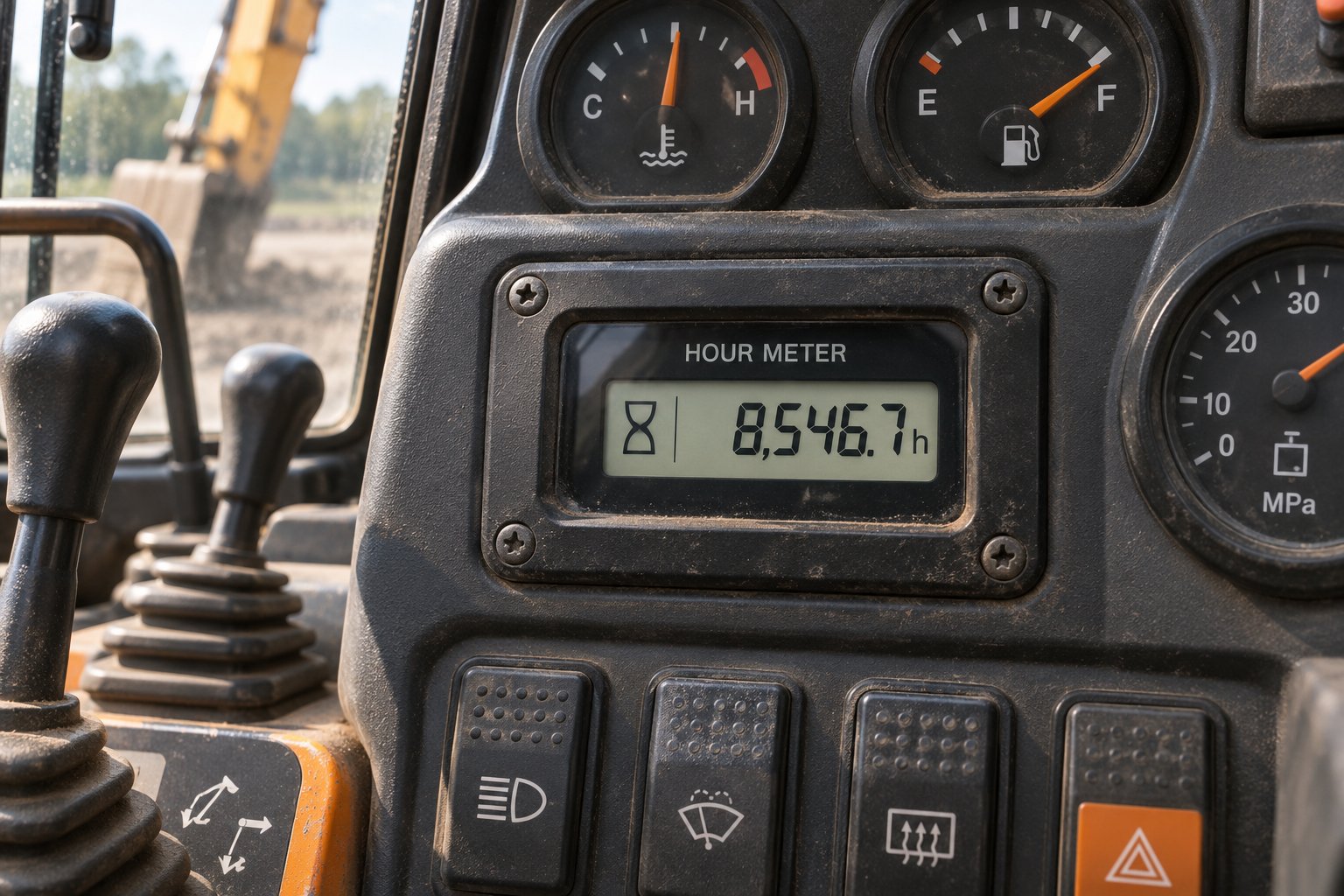
Think of an hour meter as the odometer for used heavy machinery. It records cumulative engine run time and serves as the single most referenced data point in any equipment transaction. But here's where most buyers go wrong: they treat the number as an absolute verdict rather than a starting point for deeper evaluation.
General guidance for excavators — the most commonly traded machines — breaks down like this:
| Hour Range | General Assessment | Price Impact |
|---|---|---|
| Under 3,000 | Lightly used with plenty of productive life remaining | Commands a premium |
| 3,000 - 6,000 | Broken in but far from worn; the sweet spot for value | Best balance of price and remaining life |
| 6,000 - 10,000 | Higher hours; condition and records matter more than ever | Priced lower; inspect closely before committing |
| Over 10,000 | Likely facing major component rebuilds (engine, pumps, undercarriage) | Buy only with strong, documented service records |
For mini excavators, industry specialists at 2M Machinery note that 6,000 to 8,000 hours is often treated as the high-hour threshold, though well-maintained machines regularly run beyond that mark. Larger excavators are engineered for heavier duty cycles and can stack more hours before major work becomes necessary.
Here's the critical nuance: hours must always be interpreted relative to machine age and maintenance documentation. A 5,000-hour machine with a full binder of dealer service records — regular oil changes, hydraulic service, filter replacements — is often a safer buy than a 2,000-hour machine with no paperwork at all. As one industry rule of thumb puts it, documented maintenance tells you the machine was cared for; a blank history tells you nothing, and in the used equipment world, no news is rarely good news.
Rental fleet machines deserve a special mention here. Many rental companies cycle equipment out at 1,500 to 3,000 hours — not because the machines are worn out, but to refresh inventory and protect resale value. A well-managed rental unit with full service records can represent one of the better values on the market, especially when you're browsing used construction equipment for sale by owner or through dealer channels.
Horsepower, Weight, and Bucket Capacity Explained
Beyond hours, three specifications define how a machine actually performs on a job site: horsepower, operating weight, and bucket capacity. Each one tells a different part of the productivity story.
Horsepower directly correlates with digging force and cycle time. Higher horsepower generally means faster bucket fill, quicker boom movements, and more aggressive breakout force. But raw horsepower alone doesn't capture the full picture — a machine's hydraulic system efficiency determines how much of that engine power translates into actual work at the bucket teeth. Two machines with identical horsepower ratings can perform very differently if one has a more advanced hydraulic system.
Operating weight affects both stability and logistics. A heavier machine offers greater counterweight for lifting and digging, which improves breakout force and reduces tipping risk. The trade-off? Heavier machines exert more ground pressure, require larger transport trailers, and may need special permits for highway moves. As GM Machinery Movers highlights, lighter equipment is generally preferable if it can get the job done, since lighter units produce lower ground pressure and consume less fuel.
Bucket capacity determines material-moving productivity in the most direct way possible. A larger bucket means fewer passes to fill a truck or clear a trench, which translates to faster cycle times and higher daily output. That said, bucket capacity varies by attachment — many excavator manufacturers don't list a single fixed number because operators frequently swap between general-purpose, heavy-duty, and specialty buckets depending on the material being handled.
When you're comparing machines across any listing platform or heavyquip-style directory, these five specifications should always be verified before a purchase conversation begins:
- Engine hours: The starting point for assessing remaining useful life and predicting upcoming maintenance needs
- Operating weight: Determines transport requirements, ground pressure, and overall stability
- Net horsepower: Indicates digging force, cycle speed, and the machine's ability to handle demanding applications
- Hydraulic flow rate: Dictates how efficiently the machine converts engine power into actual work — particularly important for running high-demand attachments
- Maximum dig depth or lift capacity: The specification that directly determines whether the machine can physically accomplish your project's core requirements
Reading a Spec Sheet Like a Pro
Specifications only become useful when you cross-reference them against your actual project requirements. Sounds obvious, but you'd be surprised how often buyers purchase based on brand reputation or a favorable price without confirming the machine can do the work.
Start with the non-negotiable requirements of your project. If you're trenching utilities at 18-foot depths, any excavator with a maximum dig depth under that threshold is automatically disqualified — regardless of brand, price, or hour count. DOZR's excavator spec guide illustrates this clearly: small excavators generally reach 15 to 22 feet in dig depth, while medium models can exceed 30 feet. Matching the spec to the task eliminates machines that look attractive on paper but can't physically perform the work.
Next, consider daily production targets. If you need to move 500 cubic yards of material per day, you can work backward from bucket capacity and estimated cycle time to determine the minimum machine size. A 1.5-cubic-yard bucket running 60-second cycles produces roughly 90 cubic yards per hour under ideal conditions — roughly 720 cubic yards in an eight-hour shift. A 0.75-cubic-yard bucket on the same cycle time cuts that output in half, potentially requiring a second machine or extended shifts to hit the same target.
Finally, factor in logistics. A machine that barely fits on a standard lowboy trailer may need oversize load permits for every mobilization, adding cost and scheduling delays. Operating weight thresholds vary by state, but machines exceeding 80,000 pounds gross vehicle weight (combined with trailer) typically trigger permit requirements.
The bottom line? Specifications should drive your purchasing decision — not brand loyalty alone, not a dealer's recommendation, and certainly not the first listing that looks like a good deal. A disciplined spec-to-project matching process protects you from the most common and most expensive buying mistake: acquiring a machine that can't do the job you bought it for.
Of course, even the perfect spec match means nothing if you overpay. The factors that determine fair market pricing for any given machine — age, condition, regional demand, and one often-overlooked regulatory detail — deserve their own careful analysis.
What Determines Fair Market Pricing for Heavy Equipment
You've found a machine heavy enough for your project, with specs that match your requirements. The listing price looks reasonable — but is it? Fair market value for used equipment isn't a single number pulled from thin air. It's the intersection of multiple factors, and understanding how they interact gives you genuine negotiating power whether you're browsing a used construction equipment dealer lot or bidding through heavy equipment online auctions.
Core Valuation Factors for Used Machines
Five primary drivers determine what any piece of second hand heavy equipment is actually worth: machine age, accumulated hours, overall condition, attachment package, and service history documentation. Each factor matters individually, but the way they interact is what separates a fair deal from an overpriced listing.
Machine age sets the baseline. A five-year-old excavator and a fifteen-year-old excavator occupy different pricing tiers even before you look at anything else. But age alone doesn't tell the whole story — and this is where many buyers make mistakes.
Accumulated hours layer critical context onto that age baseline. A seven-year-old dozer with 3,500 hours has averaged roughly 500 hours per year — light duty by any standard. The same model with 12,000 hours has been working nearly double the typical annual utilization. Jeff Martin Appraisals emphasizes that hours alone don't tell the whole story — a well-maintained machine with moderate hours may be more marketable than a lower-hour unit that has been abused or neglected.
Overall condition goes far deeper than cosmetics. The three areas that impact value most are:
- Undercarriage wear: On tracked machines, the undercarriage can represent 50% or more of total maintenance cost over the machine's life. Worn tracks, idlers, rollers, and sprockets signal expensive repairs ahead.
- Hydraulic integrity: Leaking cylinders, sluggish boom response, or inconsistent bucket curl all point to hydraulic system issues that can cost thousands to resolve.
- Engine compression: Low compression readings indicate internal wear that may require a full engine rebuild — easily a five-figure expense on larger machines.
Attachment packages add value, but not always dollar-for-dollar. As professional appraisers note, bundled attachments can support a higher valuation, yet the market may not give full retail credit for every item installed on the machine. A quick-coupler with three matching buckets adds meaningful versatility. A specialty attachment with limited buyer appeal? Less so.
Service history documentation is arguably the most powerful pricing lever buyers underestimate. Records showing scheduled service, major repairs, undercarriage replacement, and component rebuilds can justify a higher asking price — and should. A 6,000-hour machine with a complete dealer service binder may genuinely be worth more than a 3,000-hour machine with zero documentation, because the records let you assess risk instead of guessing.
Regional Demand and Market Conditions
The same machine can carry two very different price tags depending on where it's listed. Geography creates pricing asymmetry that savvy buyers exploit regularly.
In high-demand construction markets — think booming metro areas with major infrastructure projects underway — equipment carries a premium because contractors need machines immediately and are willing to pay for availability. If you're searching for heavy equipment for sale near me in one of these hot markets, expect stiffer competition and higher asking prices.
Conversely, regions experiencing slowdowns in construction activity often produce surplus inventory that sellers need to move. Equipment listed in these areas may be available at meaningful discounts compared to national averages. This is one reason experienced buyers expand their search radius beyond their immediate area — the savings on the purchase price can more than offset transportation costs.
Seasonal cycles amplify these geographic effects. Ironmartonline's market analysis documents that summer typically brings the strongest demand for used construction equipment with premium pricing, while winter softens values and extends sales cycles. The data is striking: excavator prices can swing 15–20% between peak season and the slowest months, and compactors may see swings of 18–25%. Equipment that sold for $85,000 in July might move for $72,000 in January — not because the machine deteriorated, but because buyer demand collapsed.
For buyers, the practical takeaway is clear: shopping during off-peak months (typically November through February in most U.S. markets) and in regions with softening construction activity can yield significant savings on identical machines.
Emissions Compliance and Its Impact on Value
Here's the pricing factor that catches the most buyers off guard. The EPA has adopted multiple tiers of emission standards for nonroad diesel engines — the compression-ignition engines that power excavators, dozers, loaders, and virtually every other piece of construction equipment. These tier ratings directly affect where a machine can legally operate and, by extension, what it's worth on the open market.
The tier system progressed over decades, with each level imposing stricter limits on particulate matter and nitrogen oxide emissions:
- Tier 1 (1996–2003): First federal emission standards for nonroad diesel engines. Machines with Tier 1 engines trade at steep discounts and face operational restrictions in many jurisdictions. Limited buyer pool.
- Tier 2 (2001–2006): Tightened particulate and NOx limits. Still widely found on the used market, but increasingly restricted in states with strict air quality regulations. Moderate pricing discount compared to newer tiers.
- Tier 3 (2006–2008): Further emission reductions without requiring aftertreatment systems. These machines still command reasonable resale values in less-regulated markets but face growing restrictions.
- Tier 4 Interim (2008–2014): Introduced diesel particulate filters and selective catalytic reduction on many engine sizes. Machines in this tier remain broadly compliant and hold value well.
- Tier 4 Final (2014–present): The current standard, requiring advanced emission control technologies that reduce particulate matter and NOx to near-zero levels. EPA regulations also mandated Ultra Low Sulfur Diesel Fuel (15 ppm maximum sulfur) to protect these emission control devices. Tier 4 Final machines command the strongest resale values.
Why does this matter so much for pricing? A Tier 2 excavator might look like an incredible bargain compared to an identical model with a Tier 4 Final engine. But if your projects operate in California, parts of the Northeast, or on federally funded job sites with strict emission requirements, that bargain becomes a machine you can't legally put to work. Non-compliant machines trade at significant discounts — sometimes 20–30% below comparable Tier 4 units — precisely because their buyer pool is restricted to regions and projects without stringent emission mandates.
Before you commit to any purchase, verify the engine's tier rating against the regulatory requirements in every jurisdiction where you plan to operate. This single check can prevent the most expensive mistake in the used equipment market: buying a machine at what looks like a great price, only to discover it's sidelined from your most important contracts.
Pricing factors tell you what a machine should cost. But the manufacturer's name on the side of that machine influences resale value, parts availability, and long-term ownership costs in ways that deserve their own careful examination.
Top Heavy Equipment Manufacturers and Brand Reputations
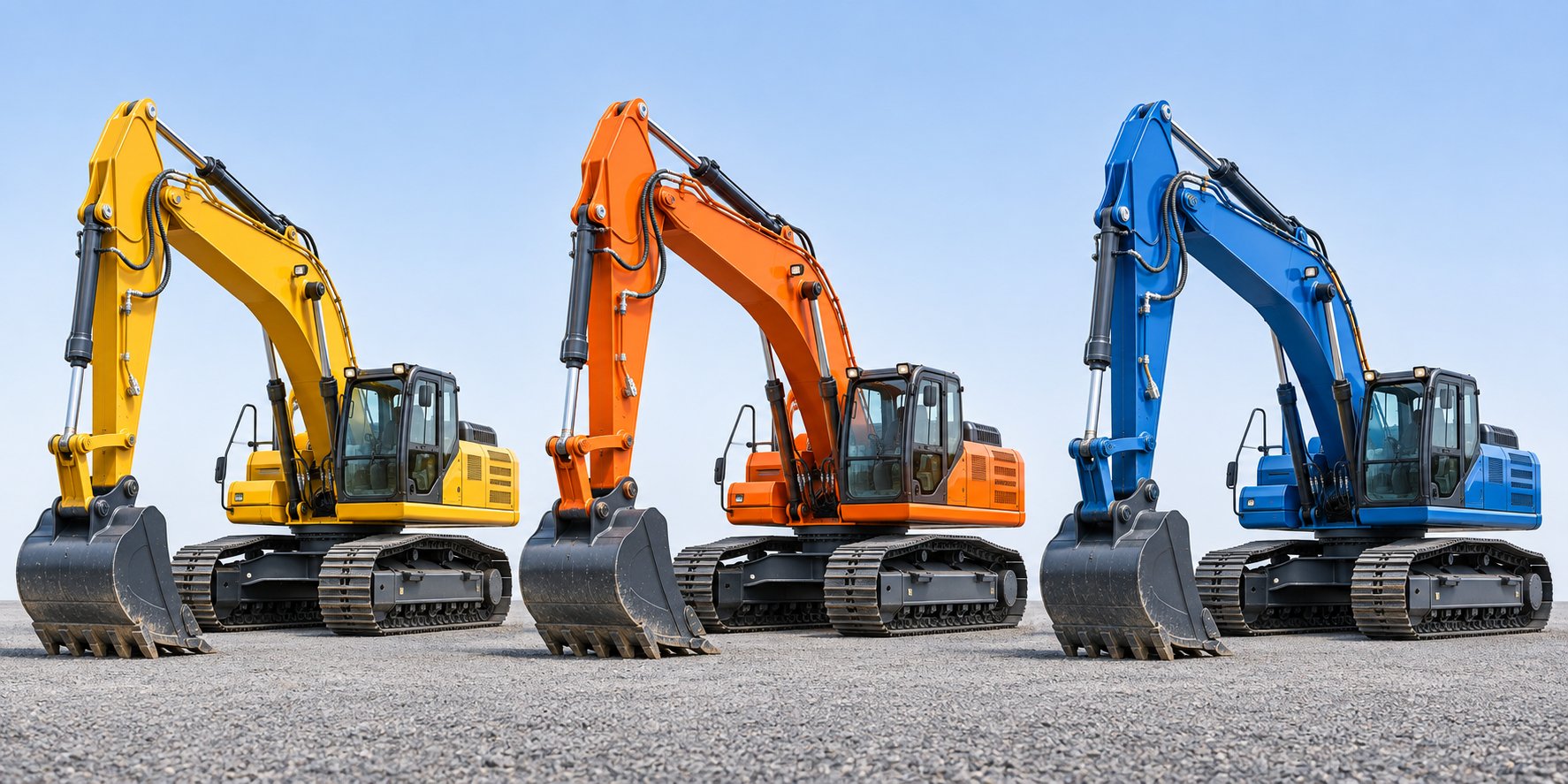
Brand reputation shapes more than just the decal on the hood. It influences resale value retention, parts lead times, service accessibility, and ultimately the total cost you'll carry across years of ownership. Yet most listing sites plaster manufacturer names across every page without ever explaining what those names actually mean for your wallet. Here's the brand context that matters when you're evaluating heavy machines for purchase.
Established Global Manufacturers
A handful of manufacturers dominate the global heavy equipment sales landscape because they've spent decades building dealer networks, parts infrastructure, and buyer trust. These are the brands you'll encounter most often when browsing used inventories or attending excavation sales events:
Caterpillar remains the benchmark. With a service network spanning 190 countries, Cat equipment consistently holds strong secondary market value. Plant & Equipment's resale analysis reports that well-maintained Caterpillar machines command 65-70% of original value after five years — a retention rate that makes ownership economics substantially more forgiving.
Komatsu earns its reputation through exceptional component longevity. Hydraulic systems on Komatsu excavators and loaders routinely reach 12,000+ hours before major intervention, and depreciation rates run 2-4 percentage points better than industry averages. If you've searched for a komatsu bulldozer for sale on any major marketplace, you've likely noticed the pricing reflects that durability premium.
Volvo Construction Equipment dominates articulated hauler resale rankings, holding 62-68% of value over five years. The brand's MATRIS telematics system provides verifiable machine histories that boost buyer confidence — a meaningful advantage in a market where documentation drives pricing.
John Deere, Hitachi, and Liebherr round out the established tier. Deere leverages its agricultural dealer footprint to provide broad service coverage. Hitachi's hydraulic excavators in the 13-35 tonne range show 40-48% depreciation over five years. Liebherr cranes occupy the premium segment, where resale value depends more on boom configuration than age — well-specified units often depreciate linearly rather than following the typical curved pattern.
Emerging Manufacturers and Value Options
The competitive landscape is shifting. Manufacturers like SANY, XCMG, and LiuGong have moved well beyond their initial reputation as budget alternatives. Arizton's market research documents how these brands have outpaced traditional Western competitors in expanding markets, driven by competitive pricing, reliable performance, and comprehensive product ranges.
XCMG's resale values have strengthened 12-15% over the past three years as operational track records extend beyond 8,000-10,000 hours and regional parts distribution improves. The core trade-off buyers should evaluate? Lower acquisition cost against potentially limited local dealer service networks. A machine priced 15-20% below an established brand equivalent looks attractive — until you need a hydraulic pump shipped from overseas with a three-week lead time during peak season.
| Manufacturer Tier | General Market Perception | Typical Resale Value Retention (5 Years) | Parts Availability |
|---|---|---|---|
| Established (Caterpillar, Komatsu, Volvo) | Premium quality, highest buyer confidence | 55-70% of original value | Extensive global dealer networks; rapid fulfillment |
| Mid-Tier (JCB, Doosan, Hitachi, Kobelco) | Strong reliability, competitive pricing | 45-60% of original value | Solid coverage in major markets; some regional gaps |
| Emerging (SANY, XCMG, LiuGong) | Rapidly improving; gaining fleet manager trust | 35-50% of original value (trending upward) | Expanding distribution; can be limited in some regions |
Choosing a Brand That Fits Your Operation
Brand loyalty can be a smart strategy — or an expensive habit. The difference depends entirely on whether your preference aligns with your operational reality.
Fleet standardization research shows that running a single-brand fleet reduces parts inventory complexity, simplifies technician training, and accelerates maintenance cycles. Maintenance alone accounts for roughly 22% of total fleet costs, and those expenses drop measurably when every machine shares common components and service procedures. For operations running ten or more heavy machines, standardization isn't a preference — it's a cost-control strategy.
But standardization only pays off if the brand you've chosen has strong local dealer support and healthy secondary market demand in your region. A fleet of machines from a manufacturer with no nearby service center means longer downtime for every repair, higher parts shipping costs, and weaker resale values when it's time to cycle units out through excavation sales channels.
Here's the practical framework: before you commit to any brand, verify three things — whether your existing fleet benefits from standardization around that manufacturer, whether local dealer and independent service support can keep machines running without excessive lead times, and whether the brand's secondary market strength protects your exit value. A machine that checks every specification box but comes from a manufacturer with poor regional support can cost you more in downtime and depreciation than the savings on the purchase price ever justified.
Ultimately, brand is one factor among many. A well-maintained, properly spec'd machine from a mid-tier manufacturer can outperform a neglected unit from a premium brand every time. Condition, hours, price, and service documentation should always carry more weight than the name on the counterweight — because the best-branded machine in the world still costs you money if you can't find it at the right price, through the right channel.
Where to Find Heavy Equipment for Sale
Knowing what to buy and what it should cost only matters if you can actually find the right machine for sale through a trustworthy channel. The sourcing landscape for heavy equipment has expanded dramatically — from traditional dealer lots and live auction yards to online marketplaces aggregating thousands of listings from across the country. Each channel operates differently, carries distinct risk profiles, and appeals to different buyer situations. Picking the wrong one can mean overpaying, getting stuck with an uninspected machine, or missing better deals entirely.
Dealers, Auctions, and Online Marketplaces
Imagine you're searching for "used heavy equipment for sale near me" or browsing for caterpillar mini excavators for sale. The results will pull from several distinct sourcing channels, and understanding their differences is the first step toward a smarter purchase.
Authorized dealers offer the most structured buying experience. Machines typically pass through an intake process that includes inspection, service history review, and sometimes reconditioning before they hit the lot. Many dealers provide limited warranties or certified pre-owned programs, and financing options are usually available on-site. The trade-off? Premium pricing. Dealers carry overhead — showrooms, technicians, parts inventory — and that cost gets built into every machine for sale on their lot. Still, for buyers who value documentation and post-sale support, the dealer premium often pays for itself in reduced risk.
Auction houses provide a fundamentally different dynamic. Companies like Ritchie Bros. and IronPlanet run both live and online auction events where competitive bidding determines the final price. Central Auction Group's comparison research highlights a key advantage: auction pricing is transparently driven by supply and demand, with no dealer markups or commission-inflated sticker prices. Buyers also set their own maximum bid, which prevents overspending beyond a predetermined budget. The downside? Inspection windows are limited — sometimes just a few hours before bidding opens — and most auction sales are final with no warranty or return option. A disciplined buyer with inspection experience can find exceptional value here, but the risk level rises sharply for anyone bidding without firsthand knowledge of the machine's condition.
Online marketplaces function as aggregators. Platforms like Equipment Trader, Machinery Trader, and Rock & Dirt host listings from dealers, private sellers, and brokers nationwide. Ironmartonline's marketplace guide notes that the real power of these sites is comparison shopping — you can display machines from dozens of sellers simultaneously, filtering by make, model, year, location, and price. Whether you're looking for wheel loaders for sale near me or a specific excavator model across the country, the breadth of inventory is unmatched. The catch is that online marketplaces require buyers to verify listings independently. Photo quality, condition descriptions, and documentation completeness vary wildly from one seller to the next. Treat every listing as a starting point for investigation, not a final representation of the machine.
Brokers occupy a specialized niche. They act as intermediaries who source specific machines on your behalf, leveraging industry contacts and off-market inventory that never appears on public listing sites. This service is particularly useful when you need a specific make, model, and configuration that isn't readily available. Brokers charge fees — typically a percentage of the transaction or a flat sourcing fee — but for buyers with precise requirements and limited time to search, the cost can be justified by the time savings and access to inventory you wouldn't find on your own.
The table below compares these channels side by side so you can match your buying style and risk tolerance to the right source:
| Channel Type | Typical Price Level | Inspection Opportunity | Risk Level | Best For |
|---|---|---|---|---|
| Authorized Dealer | Premium (highest) | Thorough; often includes dealer inspection reports | Low | Buyers prioritizing documentation, warranty, and post-sale support |
| Auction House | Competitive (market-driven) | Limited window; some offer inspection reports (e.g., IronClad) | Moderate to High | Experienced buyers comfortable evaluating machines quickly |
| Online Marketplace | Varies widely by seller | Buyer-arranged; depends on seller cooperation | Moderate | Comparison shoppers who want the broadest inventory selection |
| Broker | Market rate plus sourcing fee | Broker often coordinates inspection on buyer's behalf | Low to Moderate | Buyers with specific requirements and limited search time |
| Direct Supplier Website | Listed pricing; negotiable | Supplier-provided photos, specs, and condition details | Low to Moderate | Buyers who prefer dealing directly with equipment suppliers |
Evaluating Supplier Websites for Equipment Selection
Beyond aggregator marketplaces and auction platforms, many equipment suppliers maintain their own websites where buyers can browse available inventory directly. This channel deserves particular attention because it often provides the most detailed machine-level information — and it cuts out the intermediary layers that can obscure condition details or inflate pricing.
When evaluating any supplier's online presence, look for these indicators of a reputable operation:
- Clear, high-resolution photography: Multiple angles of each machine, including close-ups of the undercarriage, cab interior, engine compartment, and any visible wear areas. Stock photos or a single exterior shot should raise caution — they suggest the seller isn't invested in transparency.
- Listed specifications with hours and condition notes: Every piece of big equipment listed should include the hour meter reading, year of manufacture, engine tier rating, and a written condition summary. Vague descriptions like "runs great" without supporting data are a red flag.
- Transparent contact processes: A reputable supplier makes it easy to request additional information, schedule an inspection, or ask for maintenance records. If the only contact option is a generic form with no phone number or direct point of contact, proceed carefully.
- Side-by-side comparison capability: The most useful supplier sites let you compare multiple machines against each other — specs, hours, pricing — without opening a dozen browser tabs.
For example, JIUHONG's used construction equipment collection illustrates what a supplier-direct browsing experience looks like in practice. Contractors, fleet managers, and equipment dealers can browse categories including excavators, loaders, bulldozers, and graders, compare machinery specifications across listed units, and request purchase quotes directly. It's one channel worth exploring alongside dealer lots and marketplace searches — particularly if you're sourcing specific machine types and want to evaluate options from a dedicated supplier rather than sifting through mixed-seller listings.
Regardless of which channel you favor, the smartest buyers never limit themselves to a single source. Cross-referencing the same machine type across dealers, auctions, marketplaces, and direct supplier sites gives you the pricing context and condition benchmarks needed to recognize a genuinely fair deal. A wheel loader listed at $85,000 on a dealer lot looks different when you've seen comparable units at $72,000 through an auction and $78,000 on a supplier website — that triangulation is what separates informed buyers from those who simply accept the first price they encounter.
Finding the right machine at a competitive price is a milestone, not a finish line. The purchase price is only one component of what that equipment will actually cost you over the years you own it — and the expenses that accumulate after the transaction closes are where most buyers get blindsided.
Calculating Total Cost of Ownership Beyond the Price Tag
Picture this: you negotiate a great deal on a used excavator, sign the paperwork, and feel confident you just saved your operation thousands of dollars. Six months later, a hydraulic pump fails. Parts take three weeks to arrive. Fuel costs are running 20% higher than expected. Insurance premiums came in above your estimate. Suddenly, that "great deal" doesn't look so great — and the machine hasn't even hit its first anniversary in your fleet.
This scenario plays out constantly because most buyers evaluate used heavy equipment on purchase price alone. The real financial picture — what the industry calls total cost of ownership (TCO) — includes every dollar you'll spend from the day you acquire a machine to the day you sell it. Gregory Poole's TCO framework puts it simply: TCO is the complete financial picture, and understanding it helps you avoid financial surprises, supports better budgeting, and forces you to account for everything from routine maintenance to eventual resale value. Ignoring these downstream costs is how buyers turn a competitive purchase price into an ownership liability.
Maintenance, Parts, and Scheduled Rebuilds
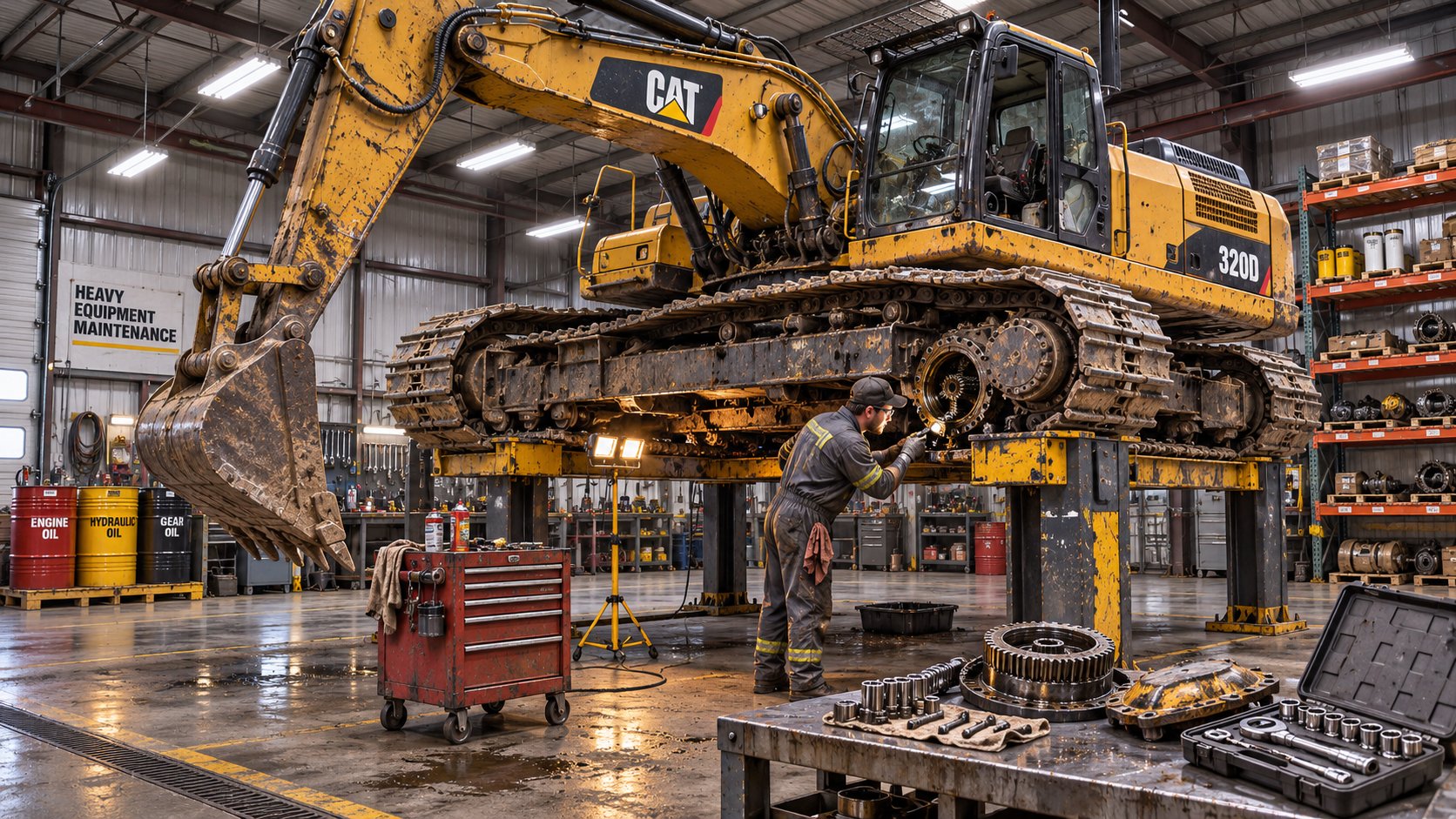
Every piece of heavy equipment demands ongoing investment just to stay operational. Filters, fluids, undercarriage components, hydraulic seals, and wear parts represent a steady baseline expense — and they're only the beginning. Over thousands of operating hours, major component rebuilds become inevitable: engines, transmissions, hydraulic pumps, and final drives all have finite service lives, and rebuilding them is measured in five-figure costs for larger machines.
How significant are these expenses? Anterra's cost estimation data shows that a backhoe loader valued at $100,000 can generate roughly $5,000 per year in routine maintenance costs and another $5,000 annually in repair reserves — that's $10,000 each year before the machine burns a single gallon of diesel. Scale that up to a 30-ton excavator or a production-class wheel loader and the numbers climb proportionally.
Here's the factor that separates a manageable maintenance budget from a financial drain: parts availability. Machines from manufacturers with extensive dealer networks — Caterpillar, Komatsu, Volvo — typically have parts on shelves regionally, with delivery measured in days. Surplus heavy equipment from manufacturers with limited local representation can carry significantly higher parts costs and longer lead times. A three-week wait for a hydraulic cylinder on a machine that bills $150 per hour in production value isn't just a parts expense — it's a revenue loss measured in the tens of thousands.
Before committing to any purchase, research average parts costs for the specific make and model. Ask the seller or dealer for the machine's service interval schedule. If you're considering something compact, like a Cat 301.5 for sale at an attractive price point, verify that filters, undercarriage components, and hydraulic seals are readily available through local channels. The purchase price discount evaporates quickly when every routine service call requires overnight shipping on basic consumables.
Fuel, Insurance, and Transportation Costs
Fuel consumption is the single largest recurring operating expense for most heavy equipment — and it varies dramatically by machine size, engine tier, and operating conditions. A mid-sized bulldozer can burn 5 to 8 gallons of diesel per hour, translating to $200–$320 per ten-hour day at current fuel prices. A compact excavator running light-duty tasks might consume a fraction of that. When you multiply daily fuel cost by hundreds of annual operating days, even small differences in consumption rates produce meaningful budget impacts over a five-year ownership horizon.
Engine tier matters here too. Tier 4 Final machines require Ultra Low Sulfur Diesel and Diesel Exhaust Fluid (DEF), adding a modest per-hour cost. However, their improved combustion efficiency can partially offset those consumable expenses — another reason why spec sheets and tier ratings deserve close attention before purchase, not after.
Insurance is another ownership cost that buyers frequently underestimate. Annual insurance premiums typically run between 1% and 5% of the machine's value, depending on equipment type, location, security measures, and claims history. For a $100,000 dozer, that's $1,000 to $5,000 annually — covering physical damage, theft, and liability. Owner-operators running midwest heavy equipment across multiple states should also factor in varying policy requirements by jurisdiction.
Then there's the cost most buyers completely forget: transportation. Moving heavy equipment between job sites isn't free. Lowboy trailer rental, fuel for the haul truck, and mobilization time all add up. Machines exceeding standard weight limits require oversize load permits — fees that vary by state and can add hundreds of dollars per move. A contractor who mobilizes equipment four or five times per year across a regional territory could easily spend $5,000–$10,000 annually on transport alone.
Resale Value and Exit Strategy
Here's a mindset shift that separates experienced fleet managers from first-time buyers: think about selling the machine before you buy it. Every piece of equipment you acquire will eventually leave your fleet — through resale, trade-in, or auction. The price you'll recover at that point directly affects your true ownership cost, and it should influence your purchase decision today.
Industry guidance from Gregory Poole confirms that depreciation starts the moment equipment enters your fleet, but how much value you lose depends on hours of use, maintenance history, and market demand for that specific model. Well-maintained machines with thorough service records and manageable hours can recover a meaningful percentage of their original cost — while neglected units with incomplete documentation sell at steep discounts regardless of actual condition.
To build a complete ownership cost picture, track these components from day one:
- Purchase Price: The upfront capital outlay, including any financing interest
- Annual Maintenance: Scheduled service, filters, fluids, undercarriage wear, and component rebuild reserves
- Fuel: Daily consumption multiplied across annual operating hours
- Insurance: Physical damage coverage, liability, and any additional policy requirements
- Transport/Mobilization: Lowboy rental, permits, fuel, and crew time for every site-to-site move
- Projected Resale Value: The estimated recovery at the end of your planned ownership period, based on brand, hours, condition, and market trends
When you subtract projected resale value from the sum of all other costs and divide by total expected operating hours, you get a true cost-per-hour figure — the number that actually determines whether a machine is affordable, not the sticker price alone. Cleveland Brothers' ownership guide recommends this calculation for every machine under consideration, noting that equipment providing reliable service across eight to ten years generally delivers the strongest return on investment.
The math often produces counterintuitive results. A machine with a higher purchase price but lower fuel consumption, cheaper parts availability, and stronger resale value retention can be the significantly cheaper option over a five-year ownership window. Conversely, a bargain-priced unit with expensive parts, high fuel burn, and weak secondary market demand can quietly become the most expensive machine in your fleet — one maintenance invoice at a time.
Total cost of ownership turns abstract pricing knowledge into an actionable financial framework. But frameworks only deliver value when you actually apply them — which is exactly why the final step is converting everything covered so far into a concrete, step-by-step evaluation process you can follow before every purchase.
Your Heavy Equipment Buying Checklist and Next Steps
Every section of this guide — from equipment categories and specifications to pricing dynamics, brand reputations, sourcing channels, and total cost of ownership — exists to solve one problem: helping you commit capital with confidence rather than guesswork. The difference between a purchase that strengthens your operation and one that drains it comes down to preparation. A structured evaluation process keeps you disciplined when a listing looks tempting, a seller pushes urgency, or a price seems too good to question.
Your Pre-Purchase Evaluation Checklist
Whether you're sourcing earthmoving equipment for a major infrastructure contract or pricing a crawler tractor for sale in a regional market, this step-by-step checklist consolidates the frameworks covered throughout this guide into one repeatable process:
- Define project requirements and match to equipment category. Identify the specific machine class — excavator, dozer, loader, grader — that fits your scope of work. Don't shop broadly when your project demands a specific solution.
- Set a total budget that includes ownership costs, not just purchase price. Factor in annual maintenance, fuel, insurance, transport, and projected resale value. The sticker price is only the first chapter of the cost story.
- Decide new versus used based on utilization and budget analysis. High-utilization anchor roles may justify new equipment. Supplemental and seasonal machines often make more financial sense as used acquisitions.
- Research target specifications — hours, weight class, horsepower. Cross-reference dig depth, bucket capacity, and hydraulic flow rate against your daily production targets. Specifications should disqualify machines before price enters the conversation.
- Verify emissions tier compliance for your operating region. A Tier 2 machine at a steep discount becomes a liability if your contracts require Tier 4 Final engines. Check before you bid.
- Compare machines across multiple sourcing channels. Dealers, auctions, online marketplaces, brokers, and direct supplier websites each offer different pricing, risk levels, and inspection opportunities. Triangulate values across all of them.
- Request and review maintenance records before committing. Custom Truck One Source's inspection guide emphasizes that service documentation tells the true story of how a machine was treated — and a blank history should raise immediate concern.
- Arrange a professional pre-purchase inspection. Even experienced operators miss internal issues. An independent inspector can evaluate engine compression, hydraulic integrity, undercarriage wear, and structural condition with the objectivity your investment deserves.
- Negotiate with resale value data in hand. SLS Financial's negotiation guidance reinforces that backing your offer with market pricing data, documented repair needs, and comparable sale figures gives you leverage that gut-feel offers never provide. Sellers expect negotiation — reward them with a buyer who's done the homework.
This checklist applies universally — whether you're evaluating caterpillar machines for sale at a dealer lot, bidding on industrial equipment for sale through an auction house, or reviewing a volvo generator Georgia listing that showed up during a broader regional search. The discipline of following every step, in order, protects you from the impulse decisions that cost contractors the most.
Taking the Next Step Toward Your Purchase
Start by narrowing your equipment category and specification requirements using the frameworks from earlier sections. Pin down the weight class, hour range, and tier rating that match your project. Then explore multiple sourcing channels simultaneously — the price differences between a dealer lot, an auction result, and a direct supplier listing for the same class of machine can be substantial, and you won't see those gaps unless you're comparing in real time.
For buyers specifically researching used excavators, loaders, bulldozers, or graders, JIUHONG's equipment collection is one practical channel to include in that multi-source approach. You can browse available machinery by category, compare specifications across listed units, and request purchase quotes directly — all useful steps alongside checking dealer inventories, monitoring auction calendars, and contacting brokers for off-market options.
The buyers who consistently secure the best deals aren't the ones with the biggest budgets. They're the ones who refuse to shortcut the process. Every hour you invest in research, inspection, and comparison before signing pays back in thousands saved — or tens of thousands in costly mistakes avoided.
The best equipment purchase is one where the buyer has done thorough research across categories, specifications, pricing, and sourcing channels before committing capital.
Heavy equipment is a long-term asset, and the decisions you make at the point of purchase echo across years of ownership. Use this guide as your reference, follow the checklist on every acquisition, and approach every listing with the mindset that preparation — not luck — is what separates a great deal from an expensive lesson.
Frequently Asked Questions About Heavy Equipment for Sale
1. How many hours is too many when buying used heavy equipment?
There is no single cutoff, because hours must be weighed against machine age and maintenance history. As a general benchmark for excavators, under 3,000 hours is considered low use, 3,000 to 6,000 hours is the value sweet spot, and anything above 8,000 to 10,000 hours likely signals upcoming major component rebuilds. However, a 5,000-hour machine backed by complete dealer service records can be a safer investment than a 2,000-hour unit with no documentation at all. Always request maintenance logs and pair the hour-meter reading with a professional pre-purchase inspection before committing.
2. What is the difference between buying heavy equipment from a dealer versus an auction?
Authorized dealers typically inspect and sometimes recondition machines before listing them, may offer limited warranties or certified pre-owned programs, and provide financing — all at a premium price. Auction houses use competitive bidding that can drive prices below dealer levels, but inspection windows are short and most sales are final with no warranty. Dealers suit buyers who prioritize documentation, post-sale support, and lower risk. Auctions reward experienced buyers who can evaluate machines quickly and are comfortable accepting higher risk in exchange for potential savings. A smart strategy is to compare pricing across both channels — along with online marketplaces and direct supplier sites like JIUHONG's equipment collection at https://jiuhong-machinery.com/products/ — to triangulate fair market value.
3. How do emissions tier ratings affect the price of used construction equipment?
EPA tier ratings — ranging from Tier 1 through Tier 4 Final — regulate the allowable emissions from nonroad diesel engines. Machines with older tier ratings (Tier 1 or Tier 2) face operational restrictions in states with strict air-quality rules and on federally funded projects, which shrinks their buyer pool and suppresses resale values by 20 to 30 percent compared to Tier 4 Final equivalents. Before purchasing any used machine, verify the engine tier against the regulatory requirements of every jurisdiction where you plan to operate. A low price on a non-compliant machine is no bargain if it cannot legally work on your contracts.
4. What costs should I include when calculating total cost of ownership for heavy equipment?
Total cost of ownership extends well beyond the sticker price. You should account for the purchase price (including financing interest), annual maintenance and component rebuild reserves, fuel consumption across projected operating hours, insurance premiums (typically 1 to 5 percent of machine value per year), transportation and mobilization expenses such as lowboy rental and oversize-load permits, and projected resale value at the end of your ownership period. Subtracting the estimated resale recovery from all accumulated costs and dividing by total operating hours gives you a true cost-per-hour figure — the metric that reveals whether a machine is genuinely affordable over a multi-year horizon.
5. Should I buy new or used heavy equipment for my construction business?
The answer depends on planned annual utilization and overall budget. New equipment makes sense for high-utilization anchor roles exceeding 1,500 hours per year, where manufacturer warranties, latest emissions compliance, and integrated telematics protect your production schedule. Used equipment is typically the smarter financial move for supplemental or seasonal machines running 600 to 800 hours annually, because the purchase price is 30 to 60 percent lower and depreciation has already absorbed its steepest decline. Many successful fleet managers use a mixed strategy — buying new for their hardest-working positions and filling supporting roles with quality pre-owned units that have documented service histories.