

Why Used Kubota Mini Excavators Are a Smart Investment
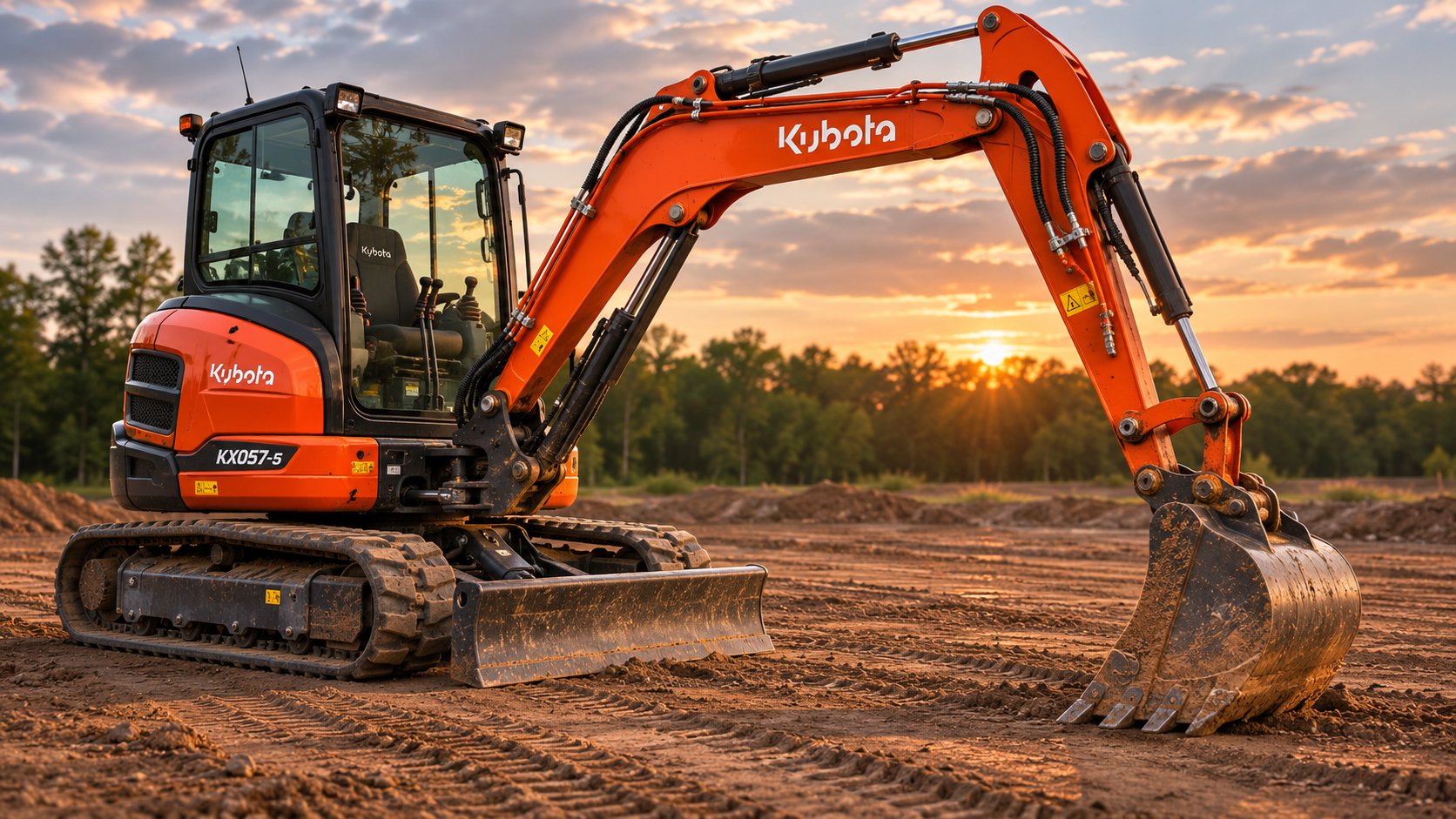
A used Kubota mini excavator is a pre-owned compact hydraulic excavator, typically weighing between one and six tons, built by Kubota — one of the world's most trusted manufacturers of construction and agricultural equipment. These machines feature a boom, arm, and bucket powered by a hydraulic system, and they are designed for digging, trenching, grading, and material handling in spaces where full-size excavators simply cannot operate. Buying one on the secondary market lets you tap into Kubota's engineering quality at a fraction of new-equipment pricing.
If you have been searching online for the right compact excavator, you have probably noticed that most results are marketplace listings — pages full of prices, hours, and "call for info" buttons. This guide takes a different approach. Instead of selling you a machine, it walks you through the entire buying process so you can evaluate any listing, from any source, with real confidence. Whether you are a homeowner planning a drainage project, a landscaper adding capacity to your fleet, a small contractor chasing reliable dig power, or a farmer who needs a versatile utility machine on the property, the information here is built for your research phase — not your checkout page.
Why Kubota Dominates the Used Mini Excavator Market
Kubota's grip on the resale market comes down to three factors that compound over time: durability, parts availability, and residual value.
On durability, Kubota excavators have earned a reputation for engines and hydraulic systems that hold up across thousands of hours of mixed-use work. Owners who maintain these machines regularly report long service lives with relatively few major failures — a track record that keeps demand high on the secondary market.
Parts availability reinforces that demand. Kubota operates one of the largest dealer networks in North America, which means filters, seals, undercarriage components, and hydraulic parts are accessible in most regions without long lead times. For a used buyer, easy parts access translates directly into lower downtime risk and more predictable maintenance costs — similar to the confidence owners feel sourcing parts for a kubota mower or kubota lawn tractors through the same dealer network.
Residual value ties it all together. Ritchie Bros. ranks Kubota as having the strongest resale strength in the mini excavator class, noting that the brand dominates rental fleets and dealer inventories across North America, which keeps used buyers familiar with and confident about service support. A well-maintained compact Kubota excavator with under 1,500 hours commonly retains 55-70% of its original value — a meaningfully better depreciation curve than most compact equipment categories. That strong residual value is a double-edged advantage: you pay a slight premium when buying used, but you also recover more when it is time to sell or upgrade.
Who Should Consider Buying Used Over New
Different buyers arrive at the used market for different reasons, and understanding your own motivation sharpens every decision that follows.
- Budget-conscious contractors want maximum dig capability per dollar spent. A lightly used Kubota mini excavator — say, three to four years old with moderate hours — delivers roughly the same productive life as a new unit at 30-50% less than new list price. The savings can fund attachments, transport, or a second piece of equipment.
- Depreciation-aware landscapers know that mini excavators experience their steepest value drop in the first 500-1,000 hours. Buying a unit that has already absorbed that initial depreciation is a deliberate financial strategy, not a compromise. It is the same logic that drives savvy buyers to research the kubota l2501 price on the used market before committing to a new tractor purchase.
- Project-specific homeowners and farmers may only need a compact excavator for a defined scope of work — installing a French drain, clearing a pond, or setting fence posts. Purchasing a used machine, completing the project, and reselling it can cost less than a multi-week rental, especially given Kubota's strong resale curve.
The used compact excavator market has shifted from a niche secondary channel into a primary purchasing pathway for budget-conscious professionals. Used financed mini excavator sales in the U.S. jumped 13.1% year over year while new financed sales declined 7.7%, signaling that more contractors are choosing depreciated machines over new ones as a deliberate business strategy.
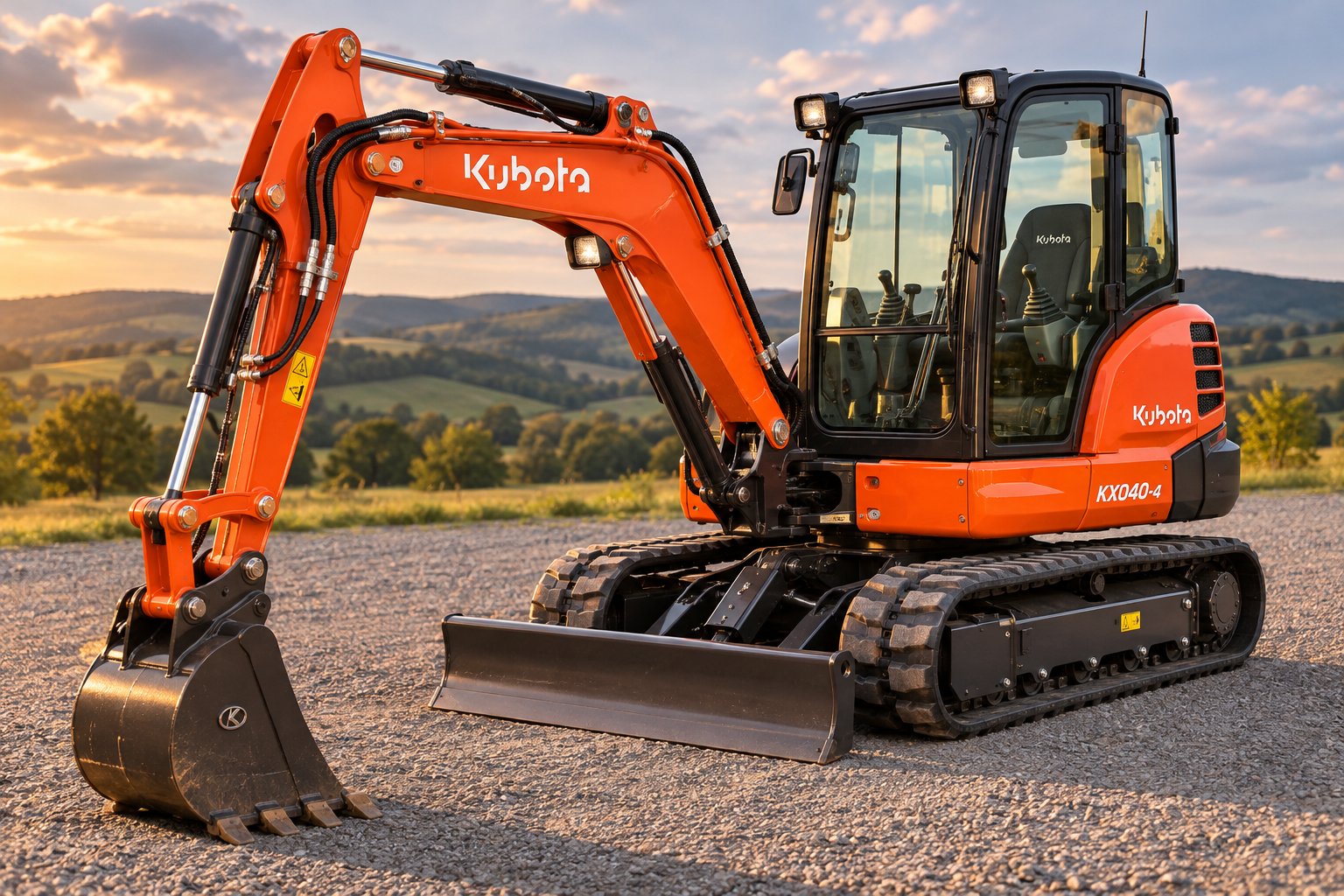
That shift, documented by Equipment World's market data, underscores a broader trend: the used Kubota excavator is no longer a fallback option. It is an intentional, informed choice. Kubota's KX040-4, for example, ranks among the most popular used financed mini excavator models in the country — a clear sign that professionals trust these machines well beyond their first owner.
The real question is not whether buying used makes sense. It is which Kubota model, in which condition, at which price point, matches your specific job requirements. That answer starts with understanding size classes — and how each one maps to the work you actually need done.
Matching the Right Kubota Size Class to Your Job
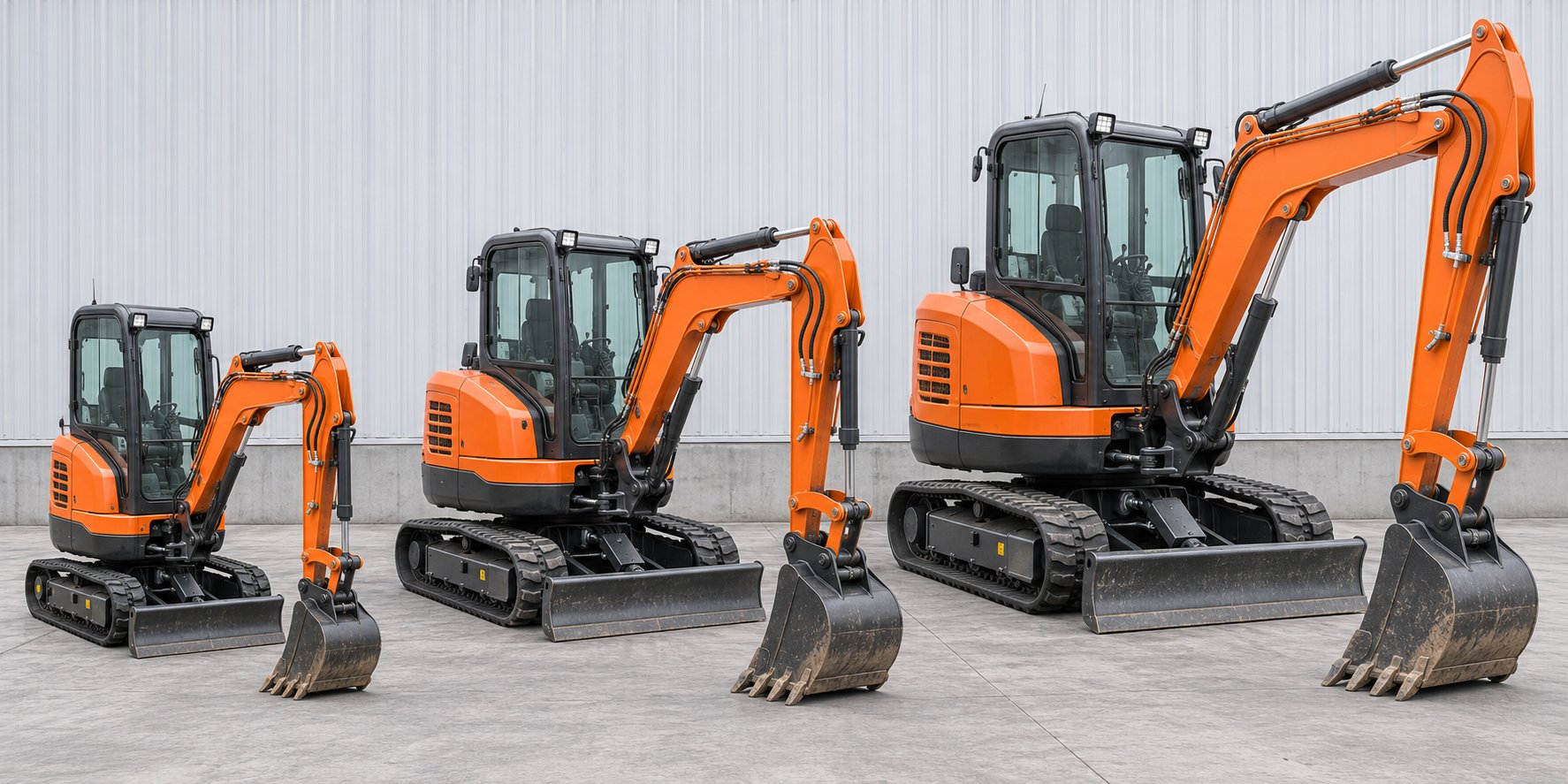
Picking the wrong size excavator is one of the most expensive mistakes a used buyer can make. Too small, and you are renting a second machine to finish the job. Too large, and you have overpaid for capability you will never use — plus you are hauling extra weight that demands a heavier trailer. Kubota's mini excavator lineup spans roughly one to eight metric tons, but for most used buyers, the action happens across three distinct weight classes. Matching the right class to your actual work eliminates regret before it starts.
Micro and One-Ton Class for Tight Residential Work
Imagine squeezing an excavator through a backyard gate or maneuvering inside a building for interior demolition. That is exactly what Kubota's smallest machines are built for. The K008-5 weighs just 2,025 to 2,315 lbs and offers a 5 ft 8 in dig depth with a frame narrow enough — only 34 inches — to pass through standard doorways. Step up to the U10-5 at 2,646 lbs and you gain minimal tail swing plus a slightly deeper 5 ft 11 in reach.
The U17 and KX018-4, both hovering around 3,700 lbs, push dig depth into the 7 ft 7 in to 7 ft 10 in range — enough for shallow utility trenches, planting large trees, or small drainage projects. The U17 stands out with its zero-tail-swing design, which Kubota highlights as perfect for working along buildings and fences without risking contact.
The trade-offs in this class are real. Limited dig depth means you are not excavating foundations or running deep sewer lines. Bucket force is modest. But for homeowners tackling a one-time backyard project or landscapers doing precision planting in tight residential lots, these machines hit the sweet spot between capability and portability — you can haul most of them on a standard pickup trailer.
Two-to-Three-Ton Class for Landscaping and Light Commercial
This is the class where most landscapers and small contractors find their workhorse. Models like the U27-4, KX030-4, KX033-4, and U35-4 range from approximately 5,688 to 8,488 lbs in operating weight and deliver dig depths between 9 ft 5 in and 10 ft 6 in. That depth handles the bulk of residential and light commercial work: foundation footings, utility trenches, pool excavation prep, and grading tasks that smaller machines simply cannot manage.
The KX033-4 is particularly popular on the used market. At 7,420 lbs with 10 ft 6 in of dig depth and 23.2 HP, it delivers meaningful digging capability while remaining transportable on a standard tag-along equipment trailer. The U35-4 offers a similar weight class with the added advantage of tight tail swing — a valuable feature when you are working alongside structures or on narrow commercial lots.
If you have been researching kubota skid steer prices or browsing kubota mowers alongside excavator options, this middle class probably matches your operation's scale. Landscapers in particular gravitate here because the machines balance real productivity with the flexibility to tow between jobsites without a CDL-rated rig. For buyers searching for a used kubota excavator that covers the widest range of everyday tasks, the two-to-three-ton class deserves your closest attention.
Four-to-Six-Ton Class for Serious Earthmoving
Contractors who need real dig depth, substantial bucket force, and the hydraulic muscle to run demanding attachments step into the KX040 and KX057 range. The KX040-4 operates at 9,195 lbs with 38.9 HP and features a robust hydraulic system that — as Kubota notes — utilizes engine horsepower to its fullest extent, allowing the operator to run a hydraulic attachment while simultaneously operating other functions. If you have been checking the kubota kx040 5 price on newer models, you will find that a well-maintained KX040-4 on the secondary market delivers comparable dig performance at a significantly lower cost of entry.
The KX057-5 steps up to 12,346 lbs and 46.4 HP, pushing dig depth to an impressive 12 ft 9 in. This is the machine mid-size contractors choose for commercial site work, deep utility installation, and foundation excavation. The U48-5 and U55-5 offer tight-tail-swing alternatives in the same power range for urban environments where swing clearance matters. Keep in mind that machines in this class require a flatbed or heavy equipment trailer for transport — a logistics factor that affects both your hauling setup and your total cost of ownership.
For buyers who have previously researched older models and searched for kubota kx121 3 specifications, the current KX-series four-to-six-ton lineup represents a significant evolution in operator comfort, hydraulic efficiency, and emissions compliance. Used units from recent model years carry those improvements at depreciated prices.
| Weight Class | Approx. Operating Weight | Typical Dig Depth | Common Use Cases | Transportability | Representative Kubota Models |
|---|---|---|---|---|---|
| Micro / One-Ton | 2,025 – 3,737 lbs | 5 ft 8 in – 7 ft 10 in | Tight residential access, indoor demolition, shallow trenching, landscape planting | Standard pickup trailer in most cases | K008-5, U10-5, U17, KX018-4 |
| Two-to-Three-Ton | 5,688 – 8,488 lbs | 9 ft 5 in – 10 ft 6 in | Landscaping, light commercial, foundation footings, utility trenching, pool prep | Tag-along equipment trailer | U27-4, KX030-4, KX033-4, U35-4 |
| Four-to-Six-Ton | 9,195 – 12,346 lbs | 10 ft 8 in – 12 ft 9 in | Commercial earthmoving, deep utility installation, foundation excavation, heavy attachment work | Flatbed or heavy equipment trailer required | KX040-4, U48-5, KX057-5, U55-5 |
The weight and spec figures above reflect published Kubota data compiled by BigRentz and DOZR. Always confirm exact specifications against Kubota's official spec sheets for the specific model year you are evaluating, as configurations like angle blades and cab packages shift operating weight.
Choosing your size class narrows the field dramatically — but within each class, individual models carry distinct reputations, availability patterns, and resale characteristics that shape the used buying experience. Those model-level differences are exactly where smart shoppers gain an edge. Much like researching a kubota mx5400 for sale or comparing options across equipment categories — say, scanning listings for sale kubota zero turn mower alongside compact excavators — the key is knowing precisely what each model brings to the table before you ever contact a seller.
Popular Used Kubota Models You Will Find on the Market
Knowing your weight class is a strong start, but it does not tell you which specific model to hunt for — or which ones to avoid. Each Kubota series carries a distinct design philosophy, and those differences directly affect where a machine excels, how it holds value, and how readily you will find one when browsing mini excavators for sale. Here is an educational breakdown of the models you are most likely to encounter on the resale market, organized by series.
KX Series — The Conventional Tail-Swing Workhorses
What does "conventional tail swing" actually mean? It refers to a machine whose rear counterweight extends beyond the width of the tracks when the upper structure rotates. That overhang gives the excavator better weight distribution and added stability during heavy digging — a genuine advantage on open jobsites where swing clearance is not a concern. Kubota describes it as delivering "more precise handling when operating where space restrictions aren't an issue." The trade-off is straightforward: you need more room to rotate safely, which makes these machines less ideal for tight urban lots or work alongside buildings.
Three KX models dominate the used market:
KX040-4. With an operating weight around 9,195 lbs, 38.9 gross HP, and roughly 10 ft 8 in of dig depth, this machine sits at the entry point of the four-ton class. It is one of the most commonly financed used mini excavators in the United States, and its popularity means healthy inventory across resale channels. Buyers looking for a kubota mini excavator for sale in this range will almost always see multiple KX040-4 listings to compare.
KX057-5. Stepping up to 12,346 lbs and 46.4 gross HP, the KX057-5 pushes dig depth to around 12 ft 9 in — deep enough for commercial utility runs and foundation excavation. Mid-size contractors favor this model for its balance of power and manageable footprint. You will commonly find it listed on major platforms like Equipment Trader, which carries 135+ Kubota excavator listings, and GovPlanet, where 154+ Kubota units — many with documented government-surplus provenance — are available at any given time. New MSRP starts at $88,140, which makes a well-maintained used unit with moderate hours a compelling value proposition.
KX080-5. This is Kubota's largest conventional-swing compact excavator, tipping the scales at over 18,000 lbs with 66.6 gross HP and a max dig depth of 15 ft 1 in. It appeals to contractors handling serious earthmoving, deep trenching, and commercial demolition. New MSRP starts at $138,273, so the savings on a used unit are substantial. Expect less inventory than the KX040 or KX057, though — these machines tend to stay in fleets longer before hitting the secondary market.
U Series — Zero and Tight Tail-Swing Compact Leaders
If you have ever tried to dig a trench alongside a building and worried about smashing a wall every time you swing the boom, you understand why zero and tight tail swing matters. U-series excavators keep the rear counterweight within or very close to the track width during rotation. That means you can work inches from structures, fences, and parked vehicles without constantly checking your clearance. In dense residential neighborhoods and urban environments, this operational advantage is not a luxury — it is a requirement.
U17-5. Kubota's zero-tail-swing design in the one-ton class. Kubota highlights it as perfect for working along buildings and fences, with retractable tracks that allow narrow entry access through gates and doorways. If you are a landscaper doing precision residential work, this is one of the most sought-after models on the used market.
U27-4. A two-ton-class machine that bridges the gap between micro excavators and full-capability compact units. With approximately 9 ft 5 in of dig depth, it handles utility trenching and landscaping projects while remaining easy to trailer. Used inventory is consistently available because this size class sees high turnover among rental fleets.
U35-4. The three-ton tight-tail-swing option that competes directly with the KX033-4 on capability but wins on jobsite clearance. Landscapers and small contractors working on lots with limited swing room often prefer this model over its conventional-tail-swing counterpart — a decision that comes down to your typical work environment rather than raw specs.
U55-4. Kubota's five-ton tight-tail-swing option for contractors who need serious dig depth in confined spaces. The U48-5 is also worth watching — Kubota notes it offers options like a deluxe cab, climate control, and an advanced LCD panel with optional keyless start and diagnostic feedback. Both models serve the urban contractor who cannot sacrifice power for maneuverability.
K Series — The Micro Excavator Entry Point
The K008-5 is the smallest excavator in Kubota's current lineup and the most accessible entry point for first-time buyers. At just 2,315 lbs with 10.3 gross HP and a 5 ft 8 in max dig depth, it is purpose-built for ultra-compact access — think interior demolition, tight plumbing work, or navigating through a 28-inch-wide doorway. The machine's simplicity also means fewer things to go wrong on a used unit, which makes it a relatively low-risk purchase for homeowners or small operators who do not need deep excavation capability.
Many buyers who initially search for a kubota excavator for sale in this micro class are the same people researching kubota 0 turn mower prices or a kubota z200 series zero turn mower — property owners and small-acreage operators who want Kubota reliability across multiple equipment categories. The K008-5 fits that profile perfectly.
Here is a quick-reference summary of each model's standout feature and the buyer it serves best:
- KX040-4: High used-market availability and proven four-ton workhorse — ideal for contractors seeking the most popular and competitively priced used option in the mid-size class.
- KX057-5: Deep dig depth (approx. 12 ft 9 in) with strong hydraulic output — best for mid-size contractors handling commercial site work and deep utility installation.
- KX080-5: Maximum compact excavator power at 66.6 HP — built for serious earthmoving contractors who need the deepest dig depth Kubota offers in a compact frame.
- U17-5: Zero tail swing with retractable tracks — the go-to for landscapers and residential specialists working in gated backyards and tight access points.
- U27-4: Balanced two-ton utility with strong rental-fleet turnover — a smart pick for buyers who want consistent used availability and manageable transport weight.
- U35-4: Tight tail swing in the three-ton class — preferred by contractors who need KX033-level capability but work alongside structures regularly.
- U55-4: Five-ton tight-tail-swing power — serves urban contractors who refuse to compromise dig depth for swing clearance.
- K008-5: Ultra-compact micro excavator at 2,315 lbs — perfect for homeowners, interior demolition, and first-time buyers who prioritize simplicity and portability.
Keep in mind that exact specifications vary by model year and configuration — always verify weight, dig depth, and horsepower against Kubota's published spec sheets for the specific serial number you are evaluating. A cab model, for example, will weigh more than a canopy version of the same machine.
Kubota equipment owners often cross-shop across the brand's full product range, comparing machines the way someone might weigh a john deere 2155 against a Kubota utility tractor before deciding. That brand-loyalty factor works in your favor on the used excavator market: widespread familiarity means more informed sellers, better-documented service histories, and a deeper pool of mechanics who know these machines inside and out. The real variable that separates a great used purchase from a costly mistake, though, is not the model name on the boom — it is the hours on the meter and the maintenance story behind them.

Understanding Hours and Condition Before You Buy
Every used Kubota mini excavator listing leads with one number: hours. Buyers scan it first, sellers highlight it prominently, and financing decisions hinge on it. Yet hours alone tell you almost nothing about what you are actually buying. A 2,000-hour machine that ran demolition work with skipped oil changes can be in far worse shape than a 4,500-hour unit that spent its life doing light landscaping with dealer-documented service at every interval. The hour meter is a starting point for evaluation — not the finish line.
Understanding how to read that number in context, verify it against physical evidence, and then systematically inspect the rest of the machine is what separates confident buyers from those who end up with a mini excavator price tag that balloons after purchase. This is the section no marketplace listing will walk you through.
What Hour Counts Really Mean on a Kubota Mini Excavator
Think of hours on a compact excavator the way you think of mileage on a truck — useful as a rough indicator, but only meaningful alongside the full story. Here are general reference brackets that experienced buyers and dealers use when evaluating a mini Kubota excavator in the one-to-six-ton class:
- Low hours (under 1,500): The machine is still in its early service life. Components like hydraulic pumps, undercarriage parts, and engine internals should show minimal wear. Expect a price premium here — these units often come from homeowners, part-time users, or recent rental-fleet rotations. A low-hour Kubota small excavator in this bracket is attractive, but verify that the hours are genuine and that the machine was not simply sitting idle without proper storage maintenance.
- Moderate hours (1,500–3,500): This is the sweet spot for value-conscious buyers. The machine has proven itself in the field, the steepest depreciation has already occurred, and — with solid maintenance records — there is still substantial productive life remaining. Most kubota zero turn mower owners are familiar with the concept of a machine breaking in and finding its stride; the same logic applies here. A well-maintained compact excavator at 2,500 hours often runs better than a neglected one at 800.
- High hours (3,500+): The machine is entering the stage where major component replacements become more likely — undercarriage rebuilds, hydraulic pump service, and engine overhauls move from theoretical risks to near-term realities. That said, high-hour machines with complete service documentation and recent component replacements can still represent excellent value, especially for buyers who plan to work the machine hard on a defined project and resell it.
The critical nuance is that these brackets are not rigid cutoffs. A KX057-5 that spent 4,000 hours doing careful utility trenching in sandy soil is a fundamentally different machine from one that logged 2,800 hours breaking concrete and running a hydraulic breaker. Application type, maintenance consistency, and model year all shift where the real wear boundaries fall. Before fixating on hours, ask what the machine was doing during those hours — and whether the seller can prove it.
How to Spot a Tampered Hour Meter
Hour meter fraud is not common, but it is real — and the consequences for buyers are severe. Overpaying for a machine with rolled-back hours means you are absorbing hidden wear that will surface as expensive repairs. Here is how to protect yourself:
Cross-reference the meter against service records. This is the single most reliable verification method. If a maintenance sticker from two years ago shows 3,100 hours and the current meter reads 2,400, something is wrong. As Main West Equipment notes, comparing the hour meter reading against oil change stickers, decal dates, and documented service history is the most dependable way to confirm accuracy. A reasonable machine should show consistent hour accumulation over time — not sudden drops.
Inspect the meter housing itself. A meter that looks noticeably newer than the surrounding dash, has mismatched screws, shows adhesive residue, or sits slightly crooked in its mounting may have been replaced. Replacement can be legitimate — meters do fail — but a seller should be able to explain when and why it was swapped.
Compare hours to physical wear. Joystick grips polished smooth from years of use, deeply worn pedal pads, a seat compressed well beyond its original shape, and heavily worn boom pins on a machine reading 1,200 hours? Those physical signs cannot be faked and tell a story the meter might contradict. Undercarriage wear is especially telling — track pads, rollers, and sprockets degrade at relatively predictable rates tied to actual usage.
Request an ECM data pull. On newer Kubota models with electronic engine control modules, a dealer can extract stored operating hours independent of the dash-mounted meter. This data lives in the engine's memory and is far more difficult to manipulate. For any machine where the kubota kx057-5 price or similar model pricing justifies a significant investment, having a dealer pull ECM data before committing is well worth the cost of a service visit.
The Pre-Purchase Inspection Checklist
You have verified the hours and they check out. The next step is a systematic physical inspection that covers every area where expensive problems hide. Work through this checklist before signing anything:
- Check for hydraulic leaks at cylinder seals. Wipe each cylinder rod clean, then cycle the boom, arm, and bucket through their full range of motion. Return and inspect for fresh oil on the rods. Small weeps are common on older machines, but steady drips signal seals that need replacement — and if oil is leaking from the hydraulic pump housing rather than cylinder seals, you are looking at a far more expensive repair.
- Inspect undercarriage wear on tracks and rollers. The undercarriage accounts for a disproportionate share of lifetime maintenance costs on any tracked excavator. Examine track pads for depth, check rollers and idlers for oil leaks or flat spots, and look at sprocket teeth for sharpening or hooking. If you can, measure component wear against Kubota's published new and limit-wear dimensions rather than eyeballing it.
- Test all boom and arm functions through full range of motion. Extend, retract, curl, and swing — every function should respond smoothly without hesitation, jerking, or unusual noise. Sluggish operation often points to worn hydraulic components or a tired pump.
- Verify bucket pin and bushing condition. Have someone apply and release down-pressure on the bucket while you watch each pin connection for excessive play. Loose pins and bushings indicate a machine that lived a hard, under-greased life — and the wear does not stop at the bucket linkage.
- Examine the engine for blow-by or excessive smoke. Start the machine cold and observe the exhaust. A brief puff on startup is normal. Persistent blue smoke means the engine is burning oil; white smoke may indicate coolant entering the cylinder; thick black smoke suggests fuel delivery or air intake problems. Check the dipstick for oil condition and feel around the oil fill cap for blow-by pressure.
- Review maintenance logs and service history. This is not optional — it is the single most important document in any used equipment transaction. Dealer-stamped service records that show consistent oil changes, filter replacements, and hydraulic service at appropriate intervals tell you the previous owner treated the machine as an investment, not a disposable tool.
- Confirm no structural cracks on the boom or arm. Follow the entire length of the boom and stick, paying close attention to weld seams and stress points. Any area where a plate has been welded over a crack is a serious red flag — it indicates the machine experienced loads beyond its design capacity. As industry appraisers have noted, cracks in a machine's structure can reduce its value by roughly 20%.
- Perform a hydraulic drift test. Boom the machine up with a loaded bucket, shut the engine off, mark the cylinder rod position, and wait five minutes. Measure how far the boom has settled. Some drift is normal, but significant movement indicates internal bypass in the cylinders or control valve — a problem that only gets worse over time.
If you are not confident performing this inspection yourself, hire a qualified heavy equipment technician or request a third-party inspection. The fee is a fraction of what a single missed hydraulic pump or undercarriage rebuild would cost you.
When to Walk Away from a Deal
Not every used machine is worth saving with a lower offer. Some red flags signal risks that no discount can justify:
- Missing service records entirely. A machine with zero documentation is a machine with an unknown past. You are gambling on every major component — and the odds are not in your favor.
- Visible frame repairs or re-welded boom cracks. Structural fatigue from overloading does not stop at the repair site. If the boom or arm has been plated over, the machine was pushed past its limits, and other components likely absorbed that same abuse.
- Hydraulic systems that hesitate or drift excessively. A hydraulic system that cannot hold pressure or responds sluggishly under load is telling you the pump, valves, or cylinders are approaching failure. Repair costs on hydraulic components add up fast.
- Milky or foamy hydraulic fluid or engine oil. This indicates water or coolant contamination — a deal-killer on most machines because it signals internal damage that is expensive and difficult to fully remediate.
- A seller who refuses an independent inspection. Any honest seller welcomes scrutiny. If someone will not let you bring a technician, will not provide an ECM hour pull, or resists your request to operate the machine through a full test cycle, that resistance is the loudest red flag of all.
Walking away from a bad deal is not losing an opportunity — it is protecting your budget for the right one. Hundreds of used Kubota compact excavators are listed across major platforms at any given time, and with platforms like Midsota trailers making transport straightforward across regions, your next option is never far away.
A machine that passes this level of scrutiny earns your confidence. The remaining question is whether that confidence is better invested in a used unit or a new one — and how the total cost of ownership stacks up when you account for depreciation, warranty, and financing realities.
New vs Used Kubota Mini Excavators Compared
Depreciation, warranty coverage, and financing terms — these three factors shape the real cost of owning a mini excavator Kubota far more than the sticker price ever could. Buyers who compare only purchase prices are looking at a snapshot. Buyers who compare total cost of ownership across the machine's productive life are watching the full movie. Here is how the new-versus-used decision breaks down when you examine each factor honestly.
Depreciation and the Used Buyer's Advantage
Mini excavators follow the same depreciation curve as most heavy equipment — steep early losses that flatten dramatically as the machine ages. Industry data from ASA Machinery's depreciation analysis shows that new mini excavators typically lose 12–20% of their value in the first one to two years, with depreciation slowing to 8–12% annually thereafter. That front-loaded value drop means a Kubota KX040-4 purchased new will shed a significant portion of its original price before the first 500–1,000 hours are logged — hours that barely scratch the surface of the machine's total service life.
This is exactly where the used buyer gains an edge. Purchasing a unit that is two to four years old with moderate hours lets someone else absorb that steepest depreciation hit. You step in after the sharpest decline but before major repairs become likely — a window that ASA Machinery identifies as the "buy zone" for equipment purchasers. The math works the same way whether you are evaluating compact excavators or researching used Kubota utility tractors like the Kubota L6060, Kubota L3301, or Kubota L3560 — the brand's strong residual values across product lines mean you pay a slight premium over lesser-known names, but you also recover more at resale.
Kubota USA has historically offered promotional financing on new equipment — programs like 0% APR for 60 months through Kubota Credit Corporation. Those terms are genuinely attractive. However, used buyers rarely qualify for manufacturer-backed zero-interest deals. That reality is worth acknowledging upfront: you trade access to promotional financing for the immediate savings baked into a depreciated purchase price. For most budget-conscious professionals, the math still favors buying used — especially when the depreciation savings outweigh the additional interest cost on a standard equipment loan.
Warranty and Support Differences
Here is what you give up when buying used: Kubota's factory limited warranty typically does not transfer to a second owner, or — if any coverage remains — it is limited in scope and duration. That gap means you should budget a repair reserve from day one. A hydraulic pump replacement, an undercarriage rebuild, or an unexpected engine issue will come out of your pocket rather than a warranty claim.
Certified pre-owned programs from authorized Kubota dealers offer a middle ground. Machines sold through these programs often undergo professional reconditioning and may carry a dealer-backed limited warranty — giving you some protection without paying new-equipment prices. Think of it as paying a moderate premium above private-party pricing in exchange for documented service history and a safety net. If you have ever searched for backhoes for sale near me through a dealer network, you have likely encountered similar certified programs — and the peace of mind they provide is real, particularly for buyers who lack the mechanical expertise to evaluate a machine independently.
For buyers comfortable with a thorough pre-purchase inspection — like the checklist covered earlier in this guide — purchasing from a private seller or auction platform without warranty coverage is a calculated risk that often pays off. The key is adjusting your total budget to include a contingency fund for repairs, rather than assuming everything will run perfectly.
Total Cost of Ownership Compared
Raw purchase price tells one story. Total cost of ownership tells the truth. The table below frames the new-versus-used comparison across the factors that actually determine what you will spend over the machine's time in your fleet:
| Factor | New Kubota Mini Excavator | Used Kubota Mini Excavator |
|---|---|---|
| Purchase Price | Full MSRP (varies by model and dealer) | Roughly 30–50% less than new list price, depending on hours and condition |
| Depreciation in First 1,000 Hours | Steepest loss — typically 12–20% of purchase price | Significantly reduced — the prior owner absorbed the sharpest decline |
| Warranty Coverage | Full Kubota factory limited warranty; eligible for Orange Protection Program extension | Limited or no remaining factory warranty; certified pre-owned may include dealer-backed coverage |
| Financing Terms | Promotional rates available (e.g., 0% APR for 60 months through Kubota Credit Corporation) | Standard equipment loan rates; higher APR than new-equipment promotions |
| Maintenance Risk | Low — all components are new or near-new | Moderate to higher — depends on hours, service history, and prior application type |
| Resale Value Retention | Strong for Kubota, but you bear the full depreciation curve from day one | Strong — entering the flatter part of the curve means less value lost during your ownership period |
The takeaway is straightforward. A new machine delivers peace of mind through warranty coverage and promotional financing, but you pay for that comfort through steep early depreciation. A used unit — whether it is a Kubota KX040-4 with 1,800 hours from a dealer or a U35-4 from a private seller — skips that depreciation cliff and puts more of your budget toward productive work rather than value evaporation. The trade-off is higher maintenance risk and less favorable loan terms, both of which you can manage through diligent inspection and a realistic repair reserve.
For contractors and landscapers who treat equipment as a financial tool rather than an emotional purchase, buying used is not settling — it is strategy. The same logic that drives fleet managers to analyze per-hour depreciation costs before committing to any machine applies here. As equipment economists note, the total cost of five years of ownership on a used machine is typically 20–35% lower than five years starting from new.
Knowing that used makes financial sense is only half the equation, though. Where you buy — and from whom — introduces an entirely different set of variables that can either reinforce or undermine every advantage the used market offers.
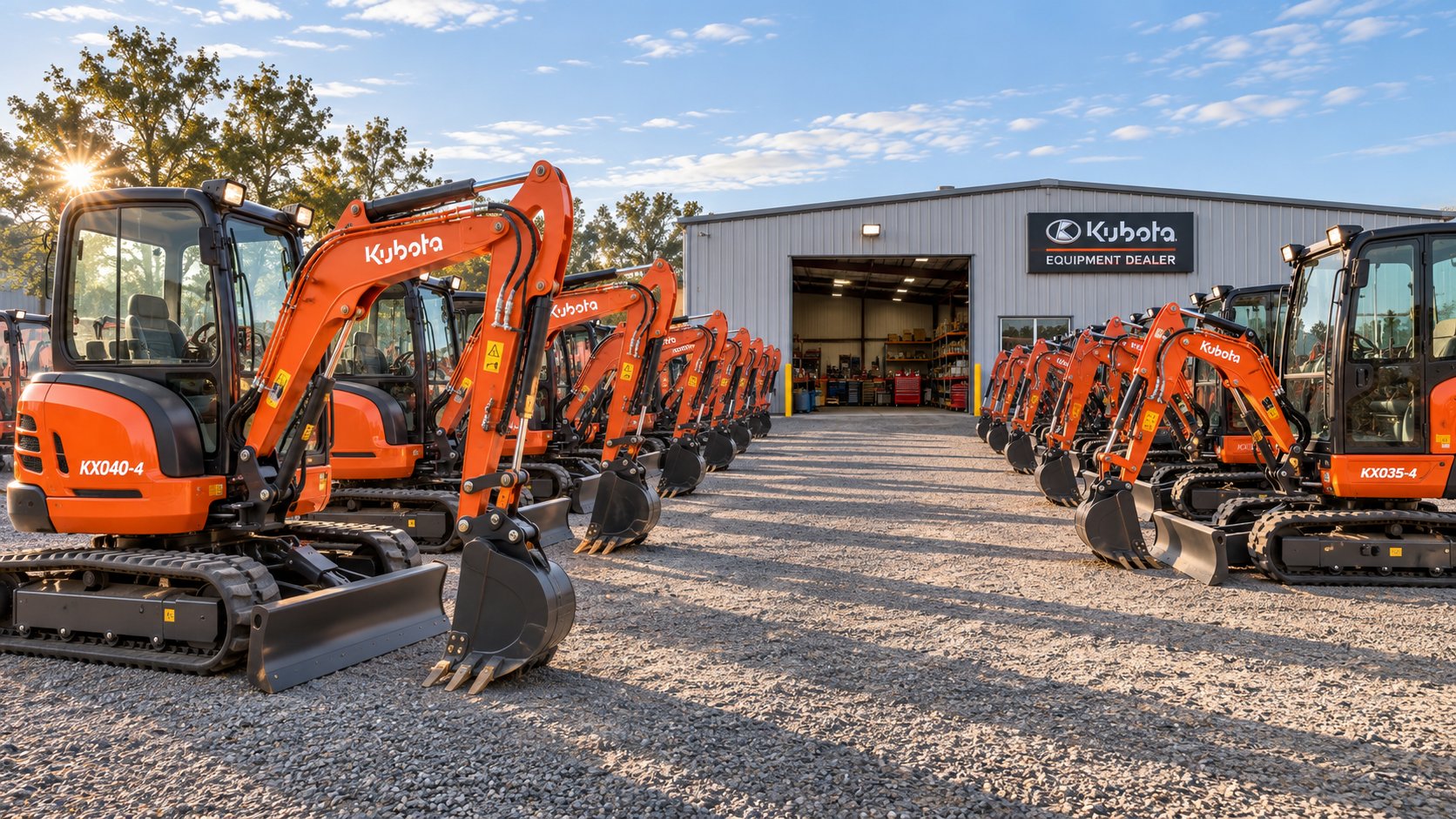
Where to Buy a Used Kubota Mini Excavator
The financial case for buying used is clear. But a great price on the wrong platform — or from the wrong seller — can erase every advantage you just calculated. Buying channels differ dramatically in risk, cost, transparency, and support, yet most buyers default to whichever listing pops up first in their search results. That approach works about as well as picking a surgeon based on who has the flashiest billboard.
Each channel that sells a used kubota compact excavator serves a different buyer profile. Understanding those differences before you start bidding, calling, or clicking "request quote" keeps you in control of the transaction rather than reacting to it.
Authorized Kubota Dealers and Certified Pre-Owned
Buying from an authorized Kubota dealer is the closest experience to purchasing new — and the price reflects it. Dealer units typically carry a premium because someone already invested in reconditioning the machine: servicing the hydraulics, replacing wear items, and documenting the work. Some dealers offer certified pre-owned programs with limited dealer-backed warranty coverage, which gives buyers a safety net that no other channel provides.
The advantages are tangible. You can usually demo the machine on-site, review documented service history, arrange financing in a single transaction, and — if something goes wrong early — you have a relationship with a shop that knows the equipment. The trade-off? Expect to pay meaningfully more than you would through an auction or private seller for the same model and hour range. For first-time buyers or single-machine operators who cannot afford downtime, that premium often pays for itself. As PDQ Equipment frames it, the dealer markup covers inspection, reconditioning, financing convenience, and parts support — services that auction buyers handle on their own.
Online Marketplaces and Auction Platforms
The volume of used Kubota inventory online is staggering, and three platforms stand out for selection and buyer infrastructure.
Equipment Trader, part of the Trader Interactive network, consistently lists 135+ Kubota excavators across fixed-price and dealer listings. It functions as a classified marketplace — you browse, contact the seller, and negotiate directly. There is no auction pressure, which gives patient buyers room to compare multiple KX040-4 or U-series units side by side before committing.
GovPlanet, backed by Ritchie Bros. Auctioneers, takes a different approach. Its weekly online auctions feature 154+ Kubota excavators at any given time, many with documented government-surplus provenance. Military and municipal units often come with maintenance records that meet strict institutional standards — a plus for buyers who value service documentation. The auction model means competitive bidding, though, and all sales are "as-is, where-is." That phrase matters: no warranty, no returns, and the machine is your responsibility the moment the hammer drops.
Machinery Pete rounds out the major platforms with 135+ Kubota listings and integrated AgDirect financing — a convenient option for agricultural buyers. Each platform has its own fee structure, inspection access, and payment terms, so read those details before you register, not after you win.
The core distinction between fixed-price listings and auctions comes down to control. Fixed-price platforms let you negotiate on your timeline. Auction platforms can deliver lower hammer prices, but buyer premiums, documentation fees, transport costs, and potential repair bills close much of that gap. Dealer analysis suggests that when an auction purchase goes well, buyers save roughly 5-10% over dealer pricing — but when hidden problems surface, total costs can exceed what a dealer would have charged.
Specialty Used Equipment Dealers and International Suppliers
Between the high-volume auction platforms and local Kubota dealers sits a third category: specialty used equipment dealers who curate specific brand inventories. These sellers — including international suppliers like JIUHONG Machinery — focus on sourcing, inspecting, and offering targeted selections of popular models rather than listing thousands of mixed-brand units.
JIUHONG's Kubota excavator collection lets buyers browse available U-series and KX-series models, compare condition details across listings, and request quotes tailored to their specific needs. If you are searching for a particular model — say a U35-4 for tight-access landscaping or a KX057 for commercial site work — the curated format saves time compared to sifting through general-purpose marketplaces. For models like the KX040, the collection serves as a resource to submit availability inquiries rather than assuming specific inventory or pricing. This approach works well for landscapers, small contractors, and equipment buyers who already know what they want and prefer a streamlined comparison process.
Specialty dealers often differentiate themselves through personalized service: condition assessments, shipping coordination, and the ability to source specific configurations on request. The experience feels closer to a dealer purchase in terms of guidance, while pricing tends to be more competitive than authorized Kubota dealer lots — particularly for buyers open to international sourcing.
Private Party and Rental Fleet Liquidation
Private party sales — a retiring contractor, a homeowner who finished the pond project, a landscaper downsizing — can deliver the best value of all. You meet the actual operator, ask how the machine was used, and often run it as long as you need. A one-owner Kubota with a folder full of dealer service receipts is worth more than any auction condition report. The risk? No warranty, no title guarantee unless you verify it yourself, and zero recourse if something was misrepresented. As industry sources warn, never wire money for a machine you have not physically inspected.
Rental fleet liquidation is its own sub-category. Companies like United Rentals periodically rotate used machines out of their fleet on a lifecycle schedule. These units are typically well-maintained to OEM standards — United Rentals maintains equipment "in accordance with manufacturer specifications," as the company's used equipment team confirmed in an interview with International Rental News. The catch is that rental machines lived hard lives across multiple operators, so hour counts tend to be high even when maintenance documentation is strong. For buyers comfortable with higher hours backed by complete service records, ex-rental units often hit a sweet spot of reliability and price.
If you have been browsing kubota skid steers for sale or kubota ztr mowers for sale through similar channels, you will recognize the pattern: each buying source trades price against risk, and your job is to pick the balance that matches your mechanical comfort level and tolerance for uncertainty.
| Buying Channel | Typical Price Premium | Warranty Likelihood | Inspection Access | Inventory Volume | Risk Level |
|---|---|---|---|---|---|
| Specialty Dealer (e.g., JIUHONG Machinery) | Moderate — below authorized dealer, above auction | Varies by dealer; condition details provided per listing | Condition reports and photos; inquiries welcomed before purchase | Curated Kubota-specific inventory (U-series, KX-series) | Low to moderate |
| Authorized Kubota Dealer / Certified Pre-Owned | Highest — reflects reconditioning and support | Highest — possible remaining factory or dealer-backed warranty | Full demo and on-site inspection typically available | Moderate — regional inventory | Lowest |
| Online Marketplace (Equipment Trader, Machinery Pete) | Varies widely by listing type | Low — most are as-is from third-party sellers | Depends on seller; arrange independently | High — 135+ Kubota listings per platform | Moderate to high |
| Auction Platform (GovPlanet / Ritchie Bros.) | Lowest hammer price, but add buyer premium and fees | None — strictly as-is, where-is | Preview window only; limited run time | High — 154+ Kubota units on GovPlanet | High |
| Private Party Sale | Often lowest overall — no middleman markup | None | Depends entirely on seller cooperation | Low — sporadic availability | High |
| Rental Fleet Liquidation (e.g., United Rentals) | Moderate — competitive retail pricing | Typically expired; sold in rent-ready condition | Third-party inspection can be coordinated | Large — thousands of units across 4,600+ equipment classes | Moderate |
Each row in this table represents a fundamentally different buying experience. The right channel depends on where you fall as a buyer: a fleet operator with a shop can thrive at auction, while a first-time buyer with a single machine budget belongs at a dealer or specialty supplier where support comes standard. Buyers researching kubota kx121 3 weight specs and older model details for comparison shopping will find that casting a wide net across multiple channels simultaneously — exactly as this table suggests — gives you the best leverage on both price and selection.
Finding the right machine through the right channel, though, only gets you to the purchase decision. Between signing and actually putting tracks on dirt, a series of practical logistics — financing terms, transport planning, and paperwork — will either smooth your path or stall it completely.
Financing and Logistics for Used Equipment Purchases
You found the machine. The hours check out, the inspection passed, and the price fits your budget. So why are you not digging yet? Because between shaking hands on a deal and actually putting a used mini excavator to work, a gauntlet of practical details — financing applications, trailer logistics, title paperwork, and insurance coverage — determines whether your purchase timeline is measured in days or weeks. These steps lack the excitement of comparing hydraulic specs, but mishandling any one of them can delay your project, inflate your costs, or create legal headaches that outlast the machine itself.
Financing a Used Mini Excavator Purchase
If you are paying cash, skip ahead. Everyone else needs to understand how used equipment financing differs from the promotional terms advertised on new machines. Kubota Credit Corporation has historically offered programs like 0% APR for 60 months on new equipment — terms that make monthly payments feel almost invisible. Used buyers do not get that luxury. Standard equipment loan rates apply, and they are meaningfully higher.
How much higher? Lenders like AgDirect (a Farm Credit Services financing arm that specializes in agricultural and construction equipment) publish transparent rate schedules that illustrate the gap. Their current fixed rates for used equipment range from approximately 7.25% to 8.75% depending on the loan term and financed amount, with variable rate options around 6.25%. Terms typically run two to seven years, and minimum finance amounts start at $5,000. AgDirect finances equipment purchased through dealers, auctions, and even private-party transactions — a flexibility that matters when you are sourcing a used Kubota from a channel like GovPlanet or a private seller rather than a dealership showroom.
Many equipment dealers also offer in-house financing or partnerships with regional lenders. These arrangements can streamline the buying process — you negotiate price and financing in one conversation — but always compare the dealer's rate against an independent lender like AgDirect or your local Farm Credit office before signing. The convenience of bundled financing sometimes comes at the cost of a higher APR that adds thousands over the life of the loan.
A few practical realities about financing a used machine that catch buyers off guard:
- Down payments typically range from 0% to 30% of the purchase price, depending on your credit profile and the lender's requirements. Stronger credit and a lower loan-to-value ratio earn better terms.
- Maintenance records strengthen your application. Lenders view a well-documented machine as a lower-risk collateral asset. A used Kubota with dealer-stamped service history is easier to finance — and often at a better rate — than an identical model with no paperwork. Think of service records as the machine's credit score.
- Older machines and higher hours tighten terms. Most lenders cap loan terms based on the equipment's age and condition. A three-year-old KX040-4 with 1,500 hours might qualify for a seven-year term; a ten-year-old unit with 4,000 hours may only get three to five years, which increases your monthly payment significantly.
- Lease options exist for used equipment too. AgDirect, for example, offers leasing on both new and used machines — a structure that can benefit buyers who want lower upfront costs and plan to rotate equipment on a regular cycle. Just note that variable rates are typically unavailable for leases.
Buyers in the agricultural space who have financed a Kubota M5-111 or similar utility tractor through Farm Credit will find the used excavator process familiar. The application mechanics are nearly identical — credit check, equipment details, purchase documentation — but the rate environment is different because used compact excavators lack the manufacturer-subsidized promotional financing that new Kubota equipment enjoys.
Transport, Delivery, and Title Transfer
A mini excavator is not a riding mower you toss on a utility trailer. Even the smallest Kubota models weigh over a ton, and mid-size machines push past 10,000 lbs. Getting your purchase from the seller's location to your jobsite requires matching the right trailer to the machine's weight class — and budgeting for a cost that too many buyers overlook until the deal is done.
For micro and one-ton machines like the K008-5 or U17, a standard equipment tag-along trailer rated for 3,500–5,000 lbs handles the job. Most pickup trucks with a proper hitch can tow these loads without a CDL. Step into the two-to-three-ton class — the KX033-4 at 7,420 lbs or the U35-4 — and you need a heavier-duty equipment trailer with appropriate axle ratings. Four-to-six-ton models like the KX057-5 at 12,346 lbs demand a flatbed, step-deck, or lowboy trailer, and the tow vehicle needs to match.
Shipping costs scale with distance and machine dimensions. Current market estimates from A1 Auto Transport put legal-dimension mini excavator hauling at roughly $800–$1,500 for moves under 200 miles, $2,000–$3,500 for 500–1,000 miles, and $5,000–$6,500 for cross-country transport around 2,000 miles. Short moves often cost more per mile because loading and deadhead time are spread over fewer miles. If you are buying from an out-of-state seller or an international supplier, get a transport quote before you finalize the purchase price — not after — so the total landed cost does not blow past your budget.
Title transfer and documentation requirements vary depending on the buying channel and your state. Most compact excavators do not carry a traditional vehicle title the way a truck or car does. Instead, ownership transfers through a bill of sale that documents the machine's make, model, serial number, sale price, and both parties' information. However, some states do title certain equipment, and machines purchased at auction or through dealer networks may come with a certificate of origin or manufacturer's statement of origin.
Before you wire any funds, perform a UCC (Uniform Commercial Code) lien search through your state's Secretary of State office. This confirms no existing lender has a security interest in the machine — a step that Boom & Bucket specifically recommends to protect buyers from inheriting someone else's debt. Verify the serial number against the paperwork and inspect the plate for signs of tampering, as altered serial numbers can indicate stolen equipment.
Insurance is the final piece, and it covers two distinct phases. During transport, confirm that the shipping carrier maintains cargo insurance sufficient to cover the machine's value — and get that confirmation in writing before the machine is loaded. For ongoing operation, contact your commercial insurance provider or equipment insurer to add the machine to your policy before it touches a jobsite. Liability coverage, physical damage protection, and — if you are financing — the lender's required comprehensive coverage all need to be in place from day one.
Here is your essential paperwork checklist — gather every item before you consider the transaction complete:
- Bill of sale — signed by both parties, with machine details, sale price, and date
- Title or certificate of origin — if applicable in your state or provided by the seller
- Hour meter verification — documented reading at time of sale, ideally supported by ECM data or service records
- Maintenance records — every service log, dealer receipt, and filter change record the seller can provide
- Lien release — if the seller had financing on the machine, obtain written confirmation that the lien has been satisfied
- Proof of insurance — both transport coverage from the carrier and your own operational policy effective on or before delivery date
Missing even one of these documents creates risk — whether it is a lien that surfaces six months later, a disputed hour count, or an insurance gap during transport that leaves you exposed. Treat this checklist the way you treated the mechanical inspection: methodically, without shortcuts.
Financing secured, logistics planned, paperwork complete — you are nearly ready to put the machine to work. But one variable still separates a good deal from a great one: timing. The used equipment market does not price evenly across the calendar, and understanding seasonal patterns gives patient buyers a measurable edge on both selection and negotiating leverage.
Pricing Trends and the Best Time to Buy Used
You have identified the right model, verified hours, inspected the machine, compared buying channels, and lined up financing. Every box is checked — except one. What should you actually pay? And does it matter when you pay it? The answer to both questions is more nuanced than a simple dollar figure, because used Kubota mini excavator pricing behaves less like a fixed sticker and more like a commodity influenced by half a dozen variables that shift throughout the year.
Understanding those variables — and the seasonal rhythm behind them — turns you from a buyer who accepts the listed price into one who negotiates from a position of data-backed confidence.
What Drives Used Kubota Mini Excavator Pricing
Five factors consistently determine what any given machine commands on the resale market:
- Model and series. Not all Kubota excavators price alike at the same tonnage. KX-series conventional tail-swing models and U-series zero-tail-swing models serve different work environments, and that demand split shows up in pricing. U-series machines — particularly the U27-4 and U35-4 — often carry a premium in urban markets where tight-access jobsites dominate. KX-series units like the KX040-4 tend to price more competitively in rural and suburban regions where swing clearance is less of a constraint. If you have been researching the kubota kx040 price specifically, expect it to vary by as much as 10-15% depending on the geographic demand for conventional-swing versus zero-tail models.
- Hour count. The single most visible metric. Machines under 1,500 hours carry a noticeable premium, while units past 3,500 hours see aggressive discounting — though as covered earlier, hours must be read alongside service history and application type. Equipment World's market data shows the average age of used mini excavators on the resale market hovering around 4.5 to 4.75 years, which typically corresponds to 2,000-2,500 hours under normal commercial use.
- Geographic region. A used Kubota listed in the Pacific Northwest — where supply is tight and infrastructure spending is high — may trade at 10-19% above the national average. The same model in the Southeast, where auction inventory runs deep and rental fleet churn is constant, can price 8-12% below the national baseline. Buyers willing to search beyond their home region and budget for transport often capture meaningful savings.
- Attachment package. A machine sold with a thumb, multiple bucket widths, a hydraulic coupler, or a breaker attachment commands a higher price than a bare unit. Attachments add immediate utility and save the buyer from sourcing them separately — a convenience premium that sellers price in deliberately.
- Overall condition. Paint, cab interior, undercarriage wear, and cosmetic damage all influence perceived value. Two machines with identical hours can price thousands apart if one looks neglected and the other was clearly maintained with care. Documented service history — as discussed in the inspection chapter — adds measurable value, sometimes $2,000-$5,000 above comparable undocumented units.
These five variables interact constantly. A high-hour U35-4 with a full attachment package and dealer service records in a tight-supply market may trade at a higher price than a lower-hour KX033-4 with no documentation in a flooded Southeast auction. Context always overrides any single data point.
Seasonal Trends and When to Buy
Construction seasonality creates a pricing rhythm in the used equipment market that rewards patient, strategic buyers. The pattern is straightforward: when contractors are busy, they are buying machines and driving prices up. When projects slow down, inventory builds and sellers compete harder for fewer buyers.
Ironmart Online's seasonal analysis documents that excavators see peak demand from June through August, with pricing swings of 15-20% between peak and off-peak periods. Summer is when landscapers, utility contractors, and site-prep crews are running at full capacity — and when a compact excavator listed on any major platform draws the most competitive attention. Spring (April-May) functions as a ramp-up period, with strong demand but slightly less urgency than midsummer.
Late fall and winter tell a different story. As construction projects wind down — particularly in northern and midwestern states where weather shortens the building season — inventory increases and prices soften. Rental companies and fleet managers liquidate units before year-end to manage tax obligations and capital allocation, flooding platforms with additional supply. Auction volume peaks in late Q4, and hammer prices during November and December consistently run 8-14% below the spring peak.
For buyers, the implication is clear: begin your search in the off-season for the best combination of selection and negotiating leverage. A used Kubota mini excavator purchased in December or January — when seller urgency is highest and buyer competition is lowest — can save you several thousand dollars compared to the same model bought in June. That savings compounds if you are financing: a lower purchase price reduces both your loan principal and total interest paid over the life of the term.
The best time to buy a used mini excavator is not when you need it most — it is when sellers need to move it most. Patient buyers who begin searching in late fall and close before spring consistently outperform those who scramble to buy at peak season pricing.
Does this mean you should wait indefinitely? No. If a project demands a machine in July, you buy in July and accept the seasonal premium. But if your timeline allows flexibility — say you are a landscaper planning next year's fleet expansion or a contractor lining up equipment for a spring project — shopping during winter gives you the upper hand on both price and selection.
The volume of available inventory across major platforms supports this strategy. Equipment Trader, GovPlanet, and Machinery Pete collectively list hundreds of Kubota excavators at any given time, and that inventory swells as the year winds down. For kubota excavators in the compact class, a healthy supply of both KX-series and U-series models means patient buyers are rarely forced to settle for a machine that does not match their specifications. The l3560 Kubota owner who plans utility tractor purchases around seasonal dealer incentives already understands this logic — the same principle applies to compact excavators for sale on the secondary market, just with different timing windows.
Seasonal awareness does not guarantee the perfect deal. It does guarantee that you are not overpaying because you did not know the calendar was working against you. Combined with the model knowledge, inspection discipline, and channel awareness covered throughout this guide, timing becomes the final variable that separates a good purchase from an exceptional one — and sets the stage for a clear, confident buying decision.
Your Action Plan for Buying the Right Machine
You have worked through model classes, series breakdowns, hour-meter interpretation, inspection checklists, total cost of ownership math, buying channels, financing realities, transport logistics, and seasonal pricing patterns. That is a lot of ground — and it is exactly the ground that separates a buyer who makes an informed decision from one who makes an expensive mistake. The question now is not whether you have the knowledge. It is whether you organize that knowledge into a repeatable process that keeps every decision anchored to your actual needs rather than whatever deal happens to pop up first.
Here is the truth that cuts through every marketplace listing, every auction countdown, and every seller's pitch: the best deal is the machine that matches your job requirements at a price that accounts for total cost of ownership. A bargain-priced excavator that cannot dig deep enough for your typical trench is not a bargain. A pristine low-hour unit that is two weight classes heavier than you need is wasted capital sitting on a trailer. The lowest price wins nothing if it delivers the wrong machine.
Your Used Kubota Mini Excavator Decision Framework
Distill everything in this guide into six sequential steps. Work them in order — skipping ahead invites exactly the kind of regret the title of this article warns against.
- Define your primary use case and required dig depth. Are you trenching utility lines at 8 feet, grading residential lots, or squeezing through a backyard gate for a drainage project? Your most common task dictates the minimum dig depth and operating weight you need. Write it down before you look at a single listing — it becomes your filter for everything that follows.
- Identify the Kubota model class that fits. Match your use case to the weight class table from earlier in this guide. Tight residential access points you toward the K008-5 or U17. Landscaping and light commercial work lands in the U27-4, KX033-4, or U35-4 range. Serious earthmoving and deep utility installation calls for a KX040-4 or KX057-5. Let the job choose the machine — not the other way around.
- Set a budget that includes transport and potential repairs. Your purchase price is not your total cost. Add a realistic transport estimate based on distance and machine weight class ($800-$1,500 for short hauls, $2,000-$6,500 for longer moves). Then add a repair contingency — 5-10% of the purchase price for a well-documented machine, up to 15-20% for a unit with limited service records. If the total exceeds your budget, adjust the target model or hours rather than eliminating the contingency fund. That fund is not optional — it is the financial difference between a setback and a disaster.
- Search across multiple buying channels simultaneously. Do not anchor to a single source. Check authorized Kubota dealers for certified pre-owned options with warranty coverage. Scan Equipment Trader and Machinery Pete for fixed-price listings you can evaluate at your own pace. Monitor GovPlanet auctions for government-surplus units with institutional maintenance records. Browse specialty dealer inventories — JIUHONG Machinery's Kubota collection, for example, lets you compare available U-series and KX-series models by condition, request quotes, and submit availability inquiries for specific machines like the KX040 that may not be currently listed. Cross-referencing multiple channels simultaneously gives you pricing context that no single platform can provide on its own.
- Inspect thoroughly or hire a qualified technician. Run through the pre-purchase inspection checklist covered in this guide — hydraulic leak checks, undercarriage wear assessment, boom and arm function tests, pin and bushing play, engine smoke analysis, and service record review. If you lack the mechanical confidence to catch these issues yourself, pay a third-party heavy equipment inspector $300-$600 to evaluate the machine before you commit. That fee is trivial compared to a missed hydraulic pump failure or an undercarriage rebuild that surfaces three weeks after purchase.
- Negotiate with confidence using hour count and condition data. Armed with inspection findings, comparable listings from other channels, and seasonal pricing awareness, you negotiate from strength rather than guesswork. A machine with 3,200 hours and no service records should not command the same price as an identical model at 2,800 hours with dealer-stamped maintenance logs. Quantify every deficiency you found during inspection — worn undercarriage components, hydraulic weep, missing documentation — and factor those into your offer. Sellers respect data-driven negotiations because they know you will simply move to the next listing if the numbers do not work.
This framework is not complicated. It is disciplined. And discipline is what protects your budget when a glossy listing or an eager seller tempts you to skip steps.
Start Comparing Used Kubota Models Today
The used compact excavator market rewards action paired with patience — not one without the other. Waiting indefinitely for the perfect listing means missing machines that other buyers snap up. Rushing into the first deal you find means overpaying or inheriting someone else's deferred maintenance. The balance is straightforward: start searching now, but commit only when the machine, the price, and the documentation all align with your framework.
Begin by casting a wide net across the buying channels this guide covered. If you are a landscaper expanding a fleet, a small contractor adding compact dig capability, or an equipment buyer sourcing kubota excavators for sale across multiple projects, JIUHONG Machinery's Kubota excavator collection offers a practical starting point — browse available U-series and KX-series used Kubota excavators, compare compact digging options by model and condition, and request quotes based on what you actually need. For buyers interested in specific models like the kubota kx080 for sale or a KX040 unit, the collection lets you submit an availability inquiry to check current stock without assuming any particular machine is listed.
At the same time, check Equipment Trader for regional fixed-price listings, monitor GovPlanet auction cycles for government-surplus inventory, and reach out to local authorized Kubota dealers about certified pre-owned options. The more sources you compare, the sharper your sense of fair market value becomes — and the harder it is for any single seller to overprice a machine without you noticing.
Two final reminders that bear repeating because they prevent the most common — and most expensive — buyer mistakes:
- Never purchase without inspection. No photograph, no condition report, and no seller's verbal assurance replaces hands-on evaluation or a qualified technician's eyes on the machine. If a seller will not accommodate inspection, they are not the right seller.
- Cross-reference every deal against at least two other sources. A price only looks good or bad in context. The l2501 Kubota buyer who checks three dealers before committing to a utility tractor purchase applies the same logic here — and it works just as well for compact excavators.
The used market for Kubota mini excavators is deep, liquid, and — for informed buyers — genuinely rewarding. Hundreds of KX-series and U-series units trade hands every month across authorized dealers, online marketplaces, auction platforms, specialty suppliers, and private sellers. The machine that fits your jobsite, your budget, and your ownership timeline is out there. This guide gave you the framework to find it, evaluate it, and buy it with confidence instead of regret. The only step left is yours.
Frequently Asked Questions About Used Kubota Mini Excavators
1. How many hours is too many on a used Kubota mini excavator?
There is no single cutoff, but general brackets help frame the conversation. Under 1,500 hours is considered low and commands a price premium. Between 1,500 and 3,500 hours is the value sweet spot where steep depreciation has passed but major repairs remain unlikely. Above 3,500 hours, expect higher maintenance risk — undercarriage rebuilds, hydraulic pump service, and engine work become near-term possibilities. However, a 4,000-hour machine with complete dealer service records and light-duty landscaping use can outperform a neglected 1,200-hour unit. Always evaluate hours alongside maintenance history, application type, and physical condition rather than relying on the meter alone.
2. What is the difference between KX-series and U-series Kubota excavators?
KX-series models use a conventional tail-swing design where the rear counterweight extends past the track width during rotation. This provides better stability and weight distribution on open jobsites but requires more swing clearance. U-series models feature zero or tight tail swing, keeping the counterweight within or very close to the tracks. That design lets operators work inches from buildings, fences, and vehicles without risking contact — a critical advantage in urban and tight residential environments. The choice depends on your typical work setting: open lots favor the KX-series, while confined spaces make the U-series the smarter pick.
3. What should I look for when inspecting a used Kubota mini excavator?
Focus on eight key areas: hydraulic cylinder seals for active leaks, undercarriage components like tracks, rollers, and sprockets for wear depth, boom and arm functions for smooth full-range operation, bucket pins and bushings for excessive play, engine exhaust for persistent blue, white, or black smoke, documented maintenance logs showing consistent service intervals, structural integrity of the boom and arm at weld seams and stress points, and a hydraulic drift test with the engine off. Hiring a qualified heavy equipment technician for $300 to $600 is worthwhile if you lack inspection experience, as catching a single hidden issue can save thousands in post-purchase repairs.
4. When is the best time of year to buy a used mini excavator?
Late fall and winter consistently offer the best pricing and selection. As construction projects slow in colder months, inventory on resale platforms increases and seller urgency rises. Rental companies and fleet managers often liquidate units before year-end for tax and capital planning reasons, adding supply to the market. Auction hammer prices in November and December can run 8 to 14 percent below spring peaks. If your project timeline allows flexibility, beginning your search in October through January gives you stronger negotiating leverage and a wider pool of machines to evaluate before spring demand drives prices back up.
5. Where can I find used Kubota mini excavators for sale?
Multiple channels serve different buyer profiles. Authorized Kubota dealers offer certified pre-owned units with potential warranty coverage at a price premium. Online marketplaces like Equipment Trader and Machinery Pete list hundreds of fixed-price Kubota excavators for side-by-side comparison. GovPlanet runs weekly auctions featuring government-surplus units with institutional maintenance records. Specialty dealers such as JIUHONG Machinery curate Kubota-specific inventories of U-series and KX-series models at jiuhong-machinery.com/products/excavators/kubota/, where buyers can compare conditions and request quotes. Private sellers and rental fleet liquidation sales from companies like United Rentals round out the options. Searching multiple channels simultaneously sharpens your sense of fair market value.