

Used Heavy Machinery and Why It Deserves a Closer Look
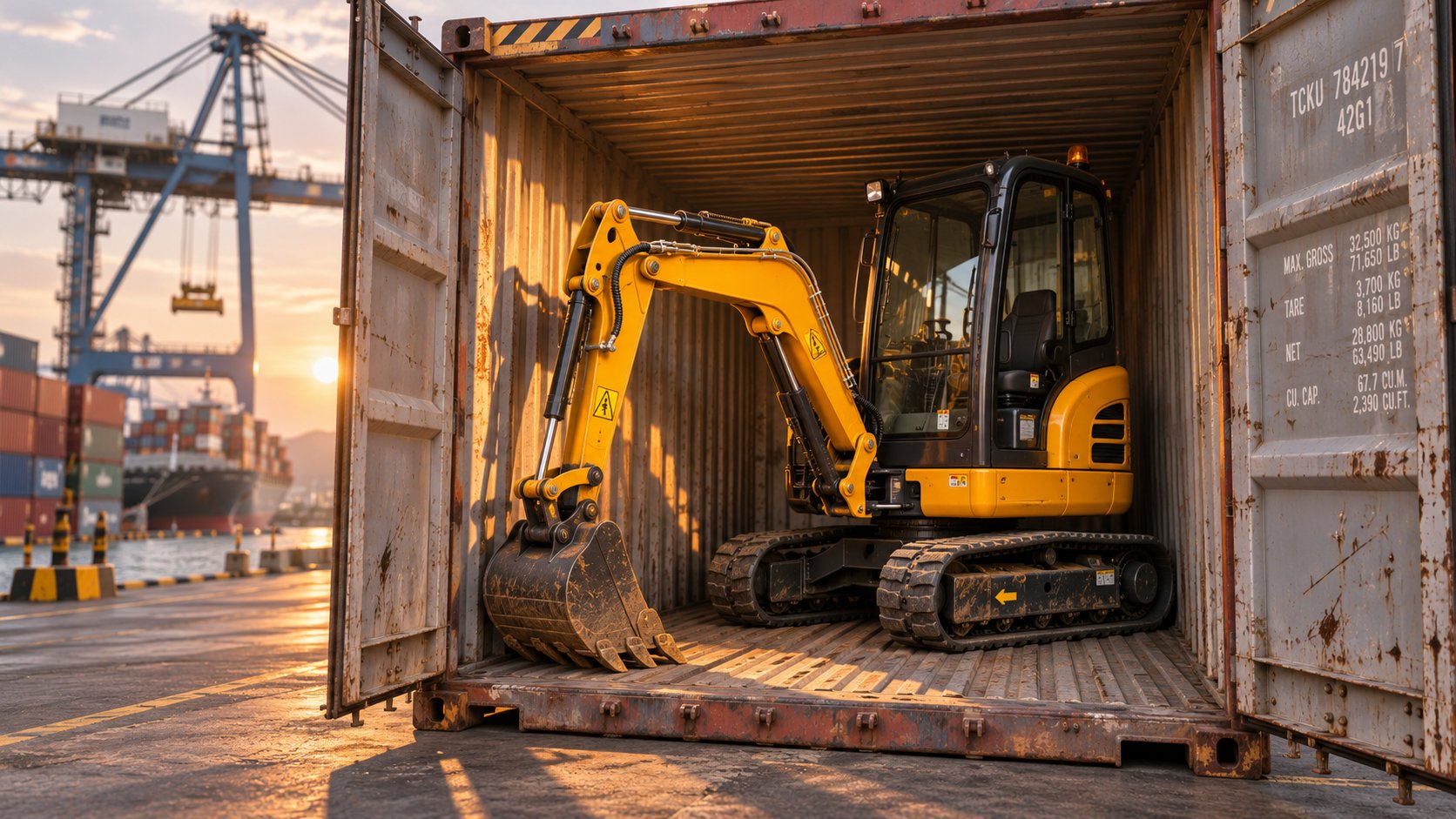
Used heavy machinery refers to any previously owned construction, earthmoving equipment, or industrial machines resold through dealers, auctions, online marketplaces, or private channels. Think excavators, bulldozers, wheel loaders, motor graders, crawler carriers, and tracked carriers — if it moved dirt, lifted steel, or graded a road for a prior owner, it qualifies. The category spans everything from compact mini-excavators to 50-ton dozers, and it represents a secondary market now valued at roughly USD 132.67 billion globally, with projections reaching USD 174.28 billion by 2031.
What Counts as Used Heavy Machinery
An important distinction separates used equipment for sale from salvage or surplus inventory. A used machine is one that has been previously operated but remains functional and suitable for continued project work. Salvage equipment, by contrast, is typically damaged beyond economical repair and sold primarily for parts. Surplus equipment — often offloaded by government agencies or large fleets — may be fully operational but simply exceeds the seller's current needs. When you're browsing used construction equipment for sale, understanding which category a listing falls into prevents costly misunderstandings before a dollar changes hands.
Why the Used Equipment Market Keeps Growing
Several forces are pushing more buyers toward pre-owned machines. New-equipment lead times from OEMs can stretch 12 to 18 months, a bottleneck that turns secondary-market units into bridge solutions — and, increasingly, permanent fleet additions. Project budgets are tightening while construction demand holds steady, making the price gap between new and used impossible to ignore. Late-model machines with documented service histories now offer reliability that rivals factory-fresh units, especially when you factor in industrial equipment for sale from certified pre-owned programs backed by major manufacturers.
Buying used is no longer a compromise — it is a calculated business decision when approached with the right knowledge.
This guide is built for three audiences. If you're a first-time buyer, you'll find foundational knowledge on equipment categories and specifications. Experienced contractors will discover inspection checklists and red-flag frameworks designed to protect against expensive surprises. And fleet managers weighing expansion will gain a total-cost-of-ownership perspective that turns marketplace listings into actionable data. Whether you're looking for equipment for trade, evaluating a crawler carrier at auction, or comparing earthmoving equipment across dealers, every chapter ahead is designed to sharpen your decision-making before you commit a single dollar.
Major Equipment Categories Every Buyer Should Understand
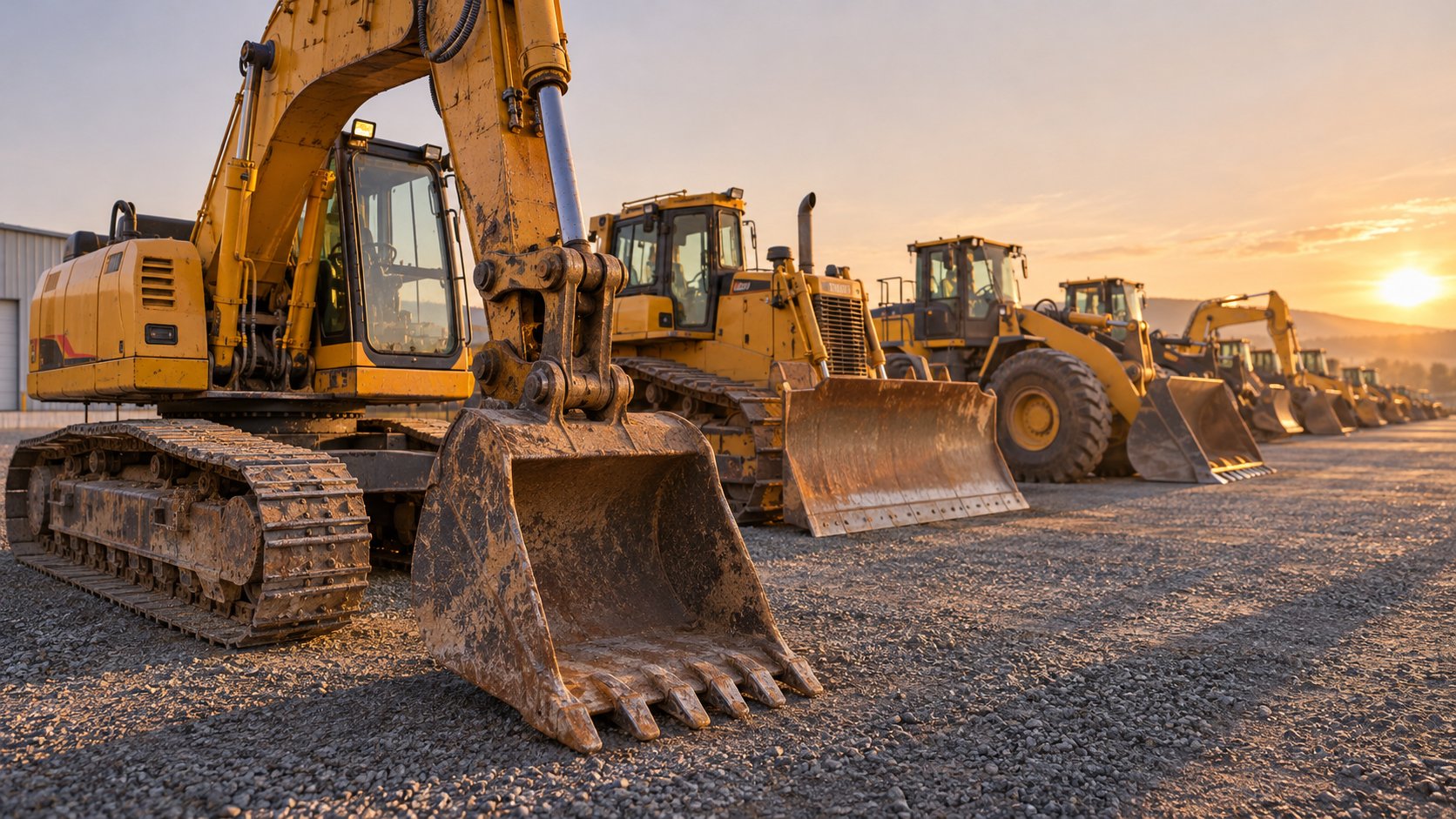
Imagine walking through rows of earth moving equipment at a dealer lot or scrolling through hundreds of online listings. Without a clear grasp of what each machine does — and where it fits on a real jobsite — you risk overspending on something oversized or limping through a project with the wrong tool entirely. A confident purchase starts with knowing the categories inside and out.
Excavators and Earthmoving Machines
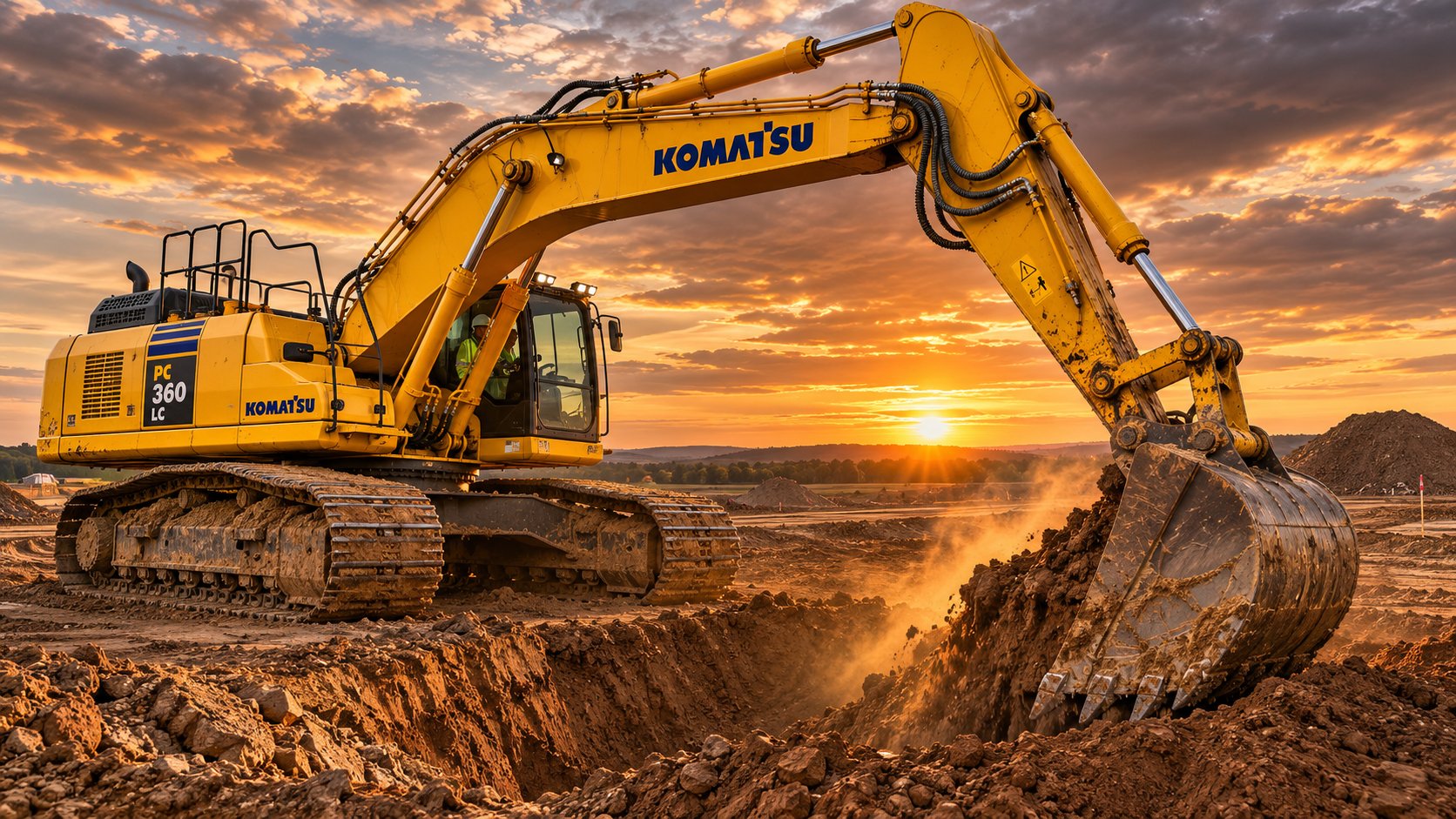
Excavators dominate the used market for good reason: they're the Swiss Army knives of construction. A standard hydraulic excavator features a rotating upper structure, a boom-and-stick assembly, and a bucket mounted at the end — all riding on a tracked or wheeled undercarriage. You'll find them trenching utility lines, demolishing structures, grading building pads, and handling materials with specialized attachments like grapples and thumbs.
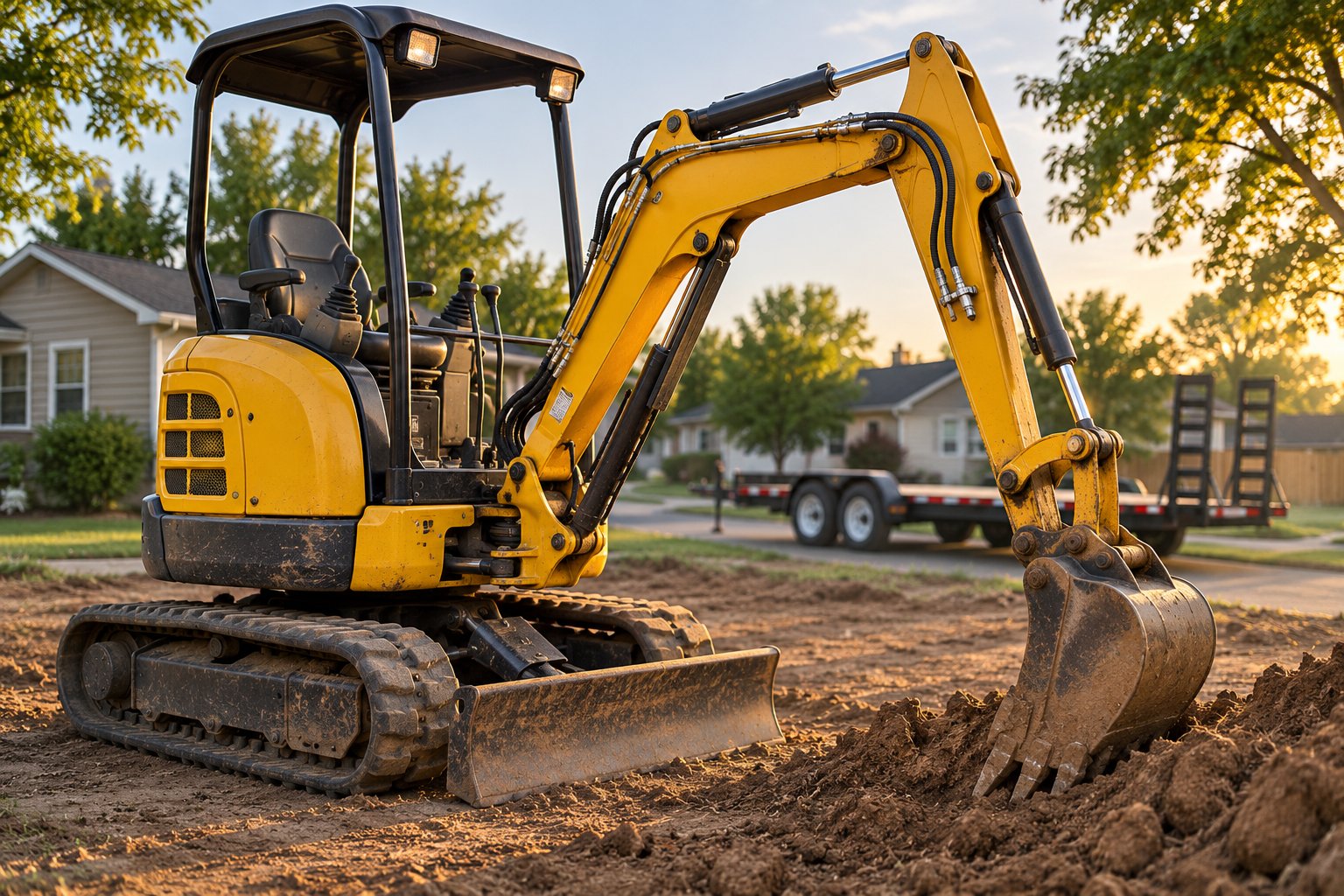
Mini-excavators, typically under 10,000 pounds, tackle residential foundations, landscaping, and interior demolition where full-size machines simply won't fit. Long-reach variants extend the boom assembly to access deep waterways, retention ponds, or elevated demolition zones. When browsing construction equipment listings, you'll notice excavators classified as earthmoving equipment — and they account for one of the highest-volume segments in the secondary market.
Loaders, Bulldozers, and Graders
These three machine types handle the bulk of material movement and surface preparation, yet each serves a distinctly different purpose.
Wheel loaders use a front-mounted bucket on a wheeled chassis to scoop, carry, and dump loose materials — gravel, sand, topsoil, demolition debris. They excel in stockpile management and truck loading. Track loaders (compact track loaders and skid steers) trade highway mobility for lower ground pressure and tighter maneuverability, making them ideal for soft or confined sites.
A bulldozer is built for brute-force earthmoving. Its wide, flat front blade pushes massive volumes of soil, and its tracked undercarriage provides the traction needed for land clearing, rough grading, and pioneering access roads. Track-type dozers remain the standard for heavy site prep because their low ground pressure and strong climbing ability handle soft or uneven terrain that would stall wheeled machines.
Motor graders step in after the dozer's rough work is done. With a long frame and a centrally mounted, adjustable blade that can be angled, tilted, and rotated, graders deliver the precision leveling required for road subgrades, airport runways, and finish grading. If your projects involve road maintenance or fine surface work, a grader is the category to watch — not a substitute loader or dozer.
Specialty and Support Equipment
Beyond the core trio, several support machines round out a functional fleet. Compactors and drum rollers apply downward force — through steel drums, rubber tires, or vibrating plates — to densify soil and asphalt layers. Articulated dump trucks (ADTs) feature a jointed frame that pivots between the cab and the dump body, giving them off-road agility that rigid-frame trucks can't match. If you've seen articulated dump trucks for sale in auction catalogs, you'll recognize them by their oversized tires and high-capacity beds designed for rough terrain hauling.
Crawler carriers deserve special attention. These rubber-tracked haulers thrive where wheeled trucks sink — swampy ground, steep grades, and environmentally sensitive areas where low ground pressure is mandatory. As industry specialists note, the crawler carrier segment has grown roughly 10% annually, fueled by utility, oil and gas, and trail-building applications. Buyers searching for a tracked carrier in areas like Rochester or other regional markets will find growing inventory as more contractors recognize these machines' versatility.
| Equipment Type | Primary Applications | Typical Project Types |
|---|---|---|
| Standard Excavator | Trenching, demolition, grading, material handling | Commercial site work, utility installation, demolition |
| Mini-Excavator | Tight-access digging, landscaping, interior demolition | Residential construction, urban infill, plumbing |
| Wheel Loader | Stockpile management, truck loading, material transport | Quarries, aggregate yards, snow removal |
| Bulldozer | Land clearing, rough grading, pushing heavy material | Large site prep, road pioneering, mining |
| Motor Grader | Finish grading, road maintenance, ditch cutting | Highway construction, airport runways, subdivision roads |
| Compactor / Drum Roller | Soil and asphalt compaction | Road construction, building pad prep, landfill operations |
| Articulated Dump Truck | Off-road bulk hauling over rough terrain | Earthwork projects, mining, large infrastructure |
| Crawler Carrier | Material transport over soft, steep, or sensitive ground | Utility corridors, wetland restoration, pipeline work |
Why does all of this matter for a buyer scanning construction equipment for sale near me? Because matching the right category to your actual workload is the first layer of financial protection. An oversized dozer on a residential grading job burns fuel and tears up surfaces unnecessarily. A compact loader pressed into service as a primary hauler slows production and accelerates wear. Heavy equipment salvage yards are filled with machines that weren't wrong — they were just wrong for the job they were given.
Knowing categories, though, only tells you what to buy. The next critical question is what it will actually cost you — and that answer extends far beyond the sticker price sitting on the listing.
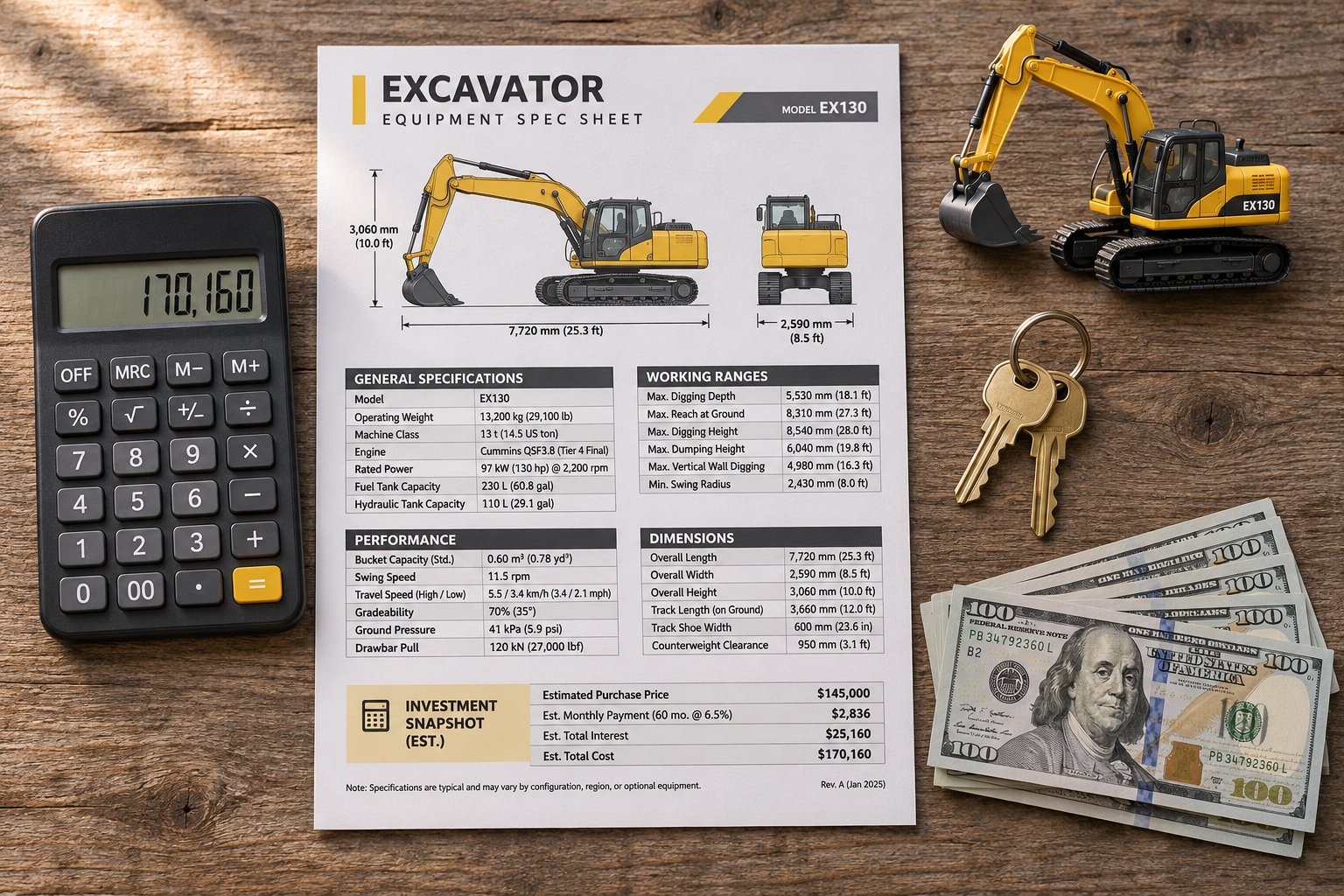
New Versus Used and the Real Cost of Ownership
A sticker price is a starting point, not a finish line. Two machines listed at the same dollar amount can deliver wildly different returns depending on where each one sits on its depreciation curve, how much maintenance it demands, and what it costs to keep running per hour. Buyers who fixate on purchase price alone often discover — too late — that the "deal" they celebrated on day one quietly erodes their margins for years. The real question isn't how much does this machine cost? It's how much will this machine cost me over every hour I own it?
How Heavy Equipment Depreciates Over Time
Every piece of used heavy machinery follows a predictable pattern: value drops fastest in the earliest stage of ownership, then the decline gradually flattens as the machine ages. Picture a steep hill that levels out into a long, gentle slope. A brand-new excavator or dozer can lose a significant portion of its original value within the first several thousand operating hours — a reality that hits hardest when you're the one writing the check for a factory-fresh unit.
Here's why that matters for buyers shopping the secondary market. When you purchase a machine that has already absorbed that initial depreciation hit, you're stepping onto the flatter part of the curve. The previous owner absorbed the steepest losses, and your investment holds its relative value more steadily from that point forward. As Thompson Machinery explains, two identical machines with the same original price can carry very different resale values based on hours, condition, and care — meaning the used unit often represents a more capital-efficient entry point.
Depreciation isn't purely about age, either. Operating hours, maintenance consistency, brand reputation, and regional market demand all influence how quickly a machine sheds value. A 10-year-old excavator with 3,000 documented hours may hold more value than a 5-year-old unit that has logged 9,000 hard hours. Conversely, unusually low hours on an older machine can raise red flags — long storage periods sometimes lead to deteriorated seals, stale fluids, and hidden condition problems. Smart buyers look at age and hours together, treating them as two sides of the same coin.
Whether you're evaluating used machinery for sale at a dealer lot or reviewing a private listing for a crawler carrier, understanding where a machine sits on its depreciation curve gives you immediate leverage. You'll know whether the asking price reflects reality or whether the seller is banking on your ignorance of how value actually erodes.
Calculating True Ownership Costs
Purchase price is just one line item on a much longer receipt. Before committing to any piece of bulky equipment, you need a clear picture of every dollar that will flow out of your account from the moment you sign until the day you sell, trade, or retire the machine. Industry professionals call this the Total Cost of Ownership (TCO), and it's the metric that separates profitable fleet decisions from regrettable ones.
According to Cleveland Brothers' TCO guide, the simplest way to calculate this figure is to add your purchase price to all annual maintenance, repair, fuel, tax, insurance, and financing costs, subtract the estimated resale value, and then divide by the machine's total lifetime operating hours. The result — your cost per hour — becomes the single most useful number for comparing any two machines, whether one is new and the other is a decade-old unit listed as used construction equipment for sale by owner.
Here's a checklist of the cost components buyers should estimate before making an offer:
- Transportation and delivery: Moving a 40-ton dozer or a set of track carriers across state lines involves flatbed trailers, permits, and potentially pilot vehicles. These logistics costs can add thousands to your effective purchase price.
- Insurance: Coverage premiums vary by machine value, intended use, and geography. Factor in both transit insurance and ongoing operational liability.
- Maintenance reserves: Set aside a per-hour budget for routine servicing — oil changes, filter replacements, undercarriage adjustments, and fluid analysis. Machines with documented service histories let you forecast these expenses with greater accuracy.
- Repair and rebuild costs: Major component rebuilds (engine, transmission, hydraulic pumps) are inevitable on high-hour machines. Knowing a machine's rebuild history helps you anticipate when the next major expense will hit.
- Attachment compatibility: A great deal on a used excavator loses its shine if none of your existing buckets, hammers, or thumbs fit the coupler. Verify pin spacing, hydraulic flow requirements, and coupler type before buying.
- Fuel consumption: Older or poorly maintained engines burn more fuel per hour. Even small efficiency gaps compound into substantial costs over a full project season.
- Financing interest: If you're financing the purchase, the interest rate directly inflates your true cost per hour. A well-maintained used machine bought at a lower principal — even at the same interest rate — can deliver a meaningfully lower hourly cost than a new unit carrying a larger loan balance.
- Resale or trade-in value: Estimate what the machine will be worth when you're done with it. Buying on the flatter part of the depreciation curve means less value lost between purchase and eventual sale.
Imagine you're comparing two options: a new compact loader financed at a high interest rate versus a well-maintained used unit with full service records, purchased outright for roughly half the price. The new machine offers a warranty and the latest technology, but the used machine — already past its steepest depreciation — may produce a lower cost per hour across its remaining useful life. That math shifts even further in favor of used equipment when the seller provides detailed maintenance logs, fluid analysis reports, and component rebuild receipts.
The same logic applies across equipment classes. Whether you're pricing tracked carrier units near Webster or comparing crawler carrier sales listings from multiple regions, the machine with the most transparent ownership history almost always delivers the most predictable TCO. A fresh coat of paint tells you nothing about what a machine will cost next month. A stack of service records tells you almost everything.
The cheapest machine on the lot is rarely the least expensive one to own.
Grasping the full financial picture is essential — but numbers on a spec sheet still need context. Knowing what those specifications actually mean on a jobsite is the difference between a machine that earns its keep and one that drains your budget from the cab seat out.
Equipment Specifications That Actually Matter on the Job
Spec sheets are dense. Rows of numbers, abbreviations, and units that blur together if you don't know which figures actually drive performance on your jobsite. Worse, many buyers — especially those purchasing used heavy machinery for the first time — assume that bigger numbers always mean a better machine. They don't. A 400-horsepower dozer on a residential grading project is like bringing a firehose to water a garden: expensive, excessive, and potentially destructive. The goal isn't to find the most powerful machine available — it's to match the right specifications to the work you'll actually perform, day after day.
Operating Weight, Horsepower, and What They Tell You
Two numbers dominate the top of nearly every spec sheet: operating weight and rated engine power. Both are important, but neither tells the full story on its own.
Operating weight is the total weight of the machine ready to work — base unit, standard boom and arm (on excavators), bucket, full fuel tank, hydraulic oil, and an operator in the seat. As Desi Machines explains, this figure is what names the size class, which is why a "20-tonne excavator" has an operating weight near 20,000 kg. It directly determines two things you'll deal with every day: stability and ground pressure. A heavier machine resists tipping when the arm is extended under load, and it distributes more force across the undercarriage — which can be an advantage on firm ground but a liability on soft or finished surfaces.
Operating weight also dictates your logistics costs. A 7.5-ton mini-excavator rides on a standard trailer. A 20-ton machine requires a larger rig, road permits, and higher transport fees. If you're evaluating used construction equipments across multiple listings, don't just compare the machines — compare what it costs to get each one to your jobsite.
Watch out for lookalike terms. "Shipping weight" often excludes fuel and operator. "Transport weight" may omit the bucket. Two spec sheets that appear to disagree by a full ton might simply be measuring different things.
Horsepower indicates how much energy the engine produces at a stated RPM — for example, 48 HP (36 kW) at 2,100 RPM. Here's the catch: within any given size class, horsepower figures cluster tightly together. Two competing 20-ton excavators will post nearly identical engine power ratings. So what actually separates them? The hydraulic system. Pump flow rate — measured in gallons per minute (GPM) or liters per minute — determines how fast the boom, arm, and bucket cycle. System pressure — measured in PSI or MPa — determines how much raw force the machine can apply. A machine with superior hydraulic flow will feel faster and more responsive from the operator's seat, even if its horsepower rating is identical to a competitor's.
Why does this matter for buyers browsing a heavy mart of pre-owned listings? Because an older machine with a well-maintained hydraulic system can outperform a newer unit with a tired pump — regardless of what the horsepower line says. When used construction equipment dealers present side-by-side comparisons, push past the headline HP figure and ask about hydraulic flow and pressure specs.
Bucket Capacity, Lift Ratings, and Dig Depth
These three specifications translate directly into productivity — how much material moves per cycle, how high the machine can lift it, and how far below grade it can reach. Misunderstand any of them, and you'll either underperform on the job or overload the machine.
Bucket capacity is a volume, not a weight. It's measured in cubic yards or cubic meters and represents how much material the bucket holds in a single scoop. Most manufacturers publish a "heaped" capacity — the bucket filled above the rim at the natural angle of repose — which is the larger number. "Struck" capacity measures level with the rim and is always smaller. The actual weight the bucket carries depends entirely on the material: loose topsoil weighs far less per cubic yard than saturated clay or crushed stone. Choosing the right bucket size means balancing cycle volume against the machine's safe operating load for the material you're moving.
Lift ratings define how much weight the machine can safely hoist at specific boom reach and height combinations. This is not a single number — it's a chart. The farther the load extends from the machine's center of gravity, the lower the rated capacity drops. As MMS Industrial notes, lift capacity is one of the most misunderstood and most dangerous specifications to get wrong. Always plan lifts based on the actual reach and height you'll use, not the maximum headline figure printed on the brochure.
Dig depth is measured from the ground the machine is standing on, straight down to the bucket teeth at full arm extension. It defines the deepest trench or excavation the machine can cut in a single pass. A related — and more practically honest — figure is maximum vertical wall cut depth, which tells you how deep the machine can dig a straight-sided trench. That number is always less than maximum dig depth because of boom geometry at full extension. If your projects involve pipeline installation, utility trenching, or foundation work, vertical wall cut depth is the spec that actually governs your production.
Here's a quick-reference guide to help you connect the dots between spec sheet numbers and real-world decisions:
| Specification | What It Measures | Why It Matters |
|---|---|---|
| Operating Weight | Total machine weight ready to work (unit, attachments, fuel, operator) | Determines size class, stability under load, ground pressure, and transport requirements |
| Rated Engine Power (HP/kW) | Energy output of the engine at a specified RPM | Sets the machine's energy budget; however, hydraulic flow and pressure drive actual cycle performance |
| Hydraulic Flow Rate (GPM) | Volume of hydraulic fluid the pump delivers per minute | Controls boom, arm, and bucket speed — directly affects cycle times and attachment compatibility |
| Bucket Capacity (yd³/m³) | Volume the bucket holds per scoop (heaped or struck) | Drives material-moving productivity per cycle; must be matched to material density and machine load limits |
| Maximum Lift Capacity | Safe load the machine can hoist at specific reach/height combinations | Critical for pipe setting, material placement, and any operation involving suspended loads |
| Maximum Dig Depth | Deepest point below grade the bucket teeth can reach | Defines trench and excavation limits; vertical wall cut depth is the more practical working figure |
| Ground Bearing Pressure (PSI/kPa) | Machine weight distributed across the track contact area | Determines whether the machine will sink, rut, or damage sensitive surfaces |
| Breakout Force (lbf/kN) | Maximum force applied by curling the bucket or pulling the arm | Indicates the machine's ability to penetrate compacted soil, clay, or soft rock |
Undercarriage and Hydraulic System Specs
Buyers frequently skip these secondary specifications, yet they quietly determine whether a machine fits your ground conditions and supports the attachments you need.
Track gauge — the distance between the outer edges of the tracks — sets the machine's footprint on-site. Wider track gauge provides greater lateral stability, which matters during side-loading or working on slopes. Some models offer retractable undercarriages that narrow for transport and widen for operation.
Ground clearance dictates how the undercarriage handles debris, stumps, and uneven terrain. Machines with low clearance risk belly-dragging on rough ground, damaging frames and hydraulic lines routed underneath. According to Gregory Poole's undercarriage guide, the undercarriage system can account for up to 50% of fleet repair budgets, so understanding track shoe width, roller configuration, and sprocket condition on any used machine is essential before purchase.
Hydraulic flow rates — both main circuit and auxiliary circuit — deserve special attention if you plan to run powered attachments. A hydraulic breaker, auger, or tilt rotator each requires a specific GPM range to operate correctly. If the machine's auxiliary flow falls below the attachment's minimum requirement, you'll get sluggish performance or outright failure. If it exceeds the maximum, you risk damaging the attachment. Before comparing options — whether that's a Deere 655 for sale at a regional dealer or a competing brand listed near Wilkes-Barre — confirm that the machine's hydraulic output matches every attachment you intend to use.
One final principle ties this entire chapter together: match specifications to your most common tasks, not your most demanding edge case. A machine sized for the heaviest job you'll do once a year will burn excess fuel and accelerate wear during the lighter work that fills the other 51 weeks. If you occasionally need extra capacity, renting a larger unit for that single project almost always costs less than owning an oversized machine year-round. Construction equipment for sale near Wilkes-Barre, Pittsburgh, or any other market will include dozens of listings that look impressive on paper. The spec sheet tells you what a machine can do. Your job list tells you what it should do — and those two answers need to align before you sign anything.
Specifications confirm capability on paper, but the true condition of any pre-owned machine hides in the details you can only uncover through hands-on inspection — and that process demands its own structured approach.
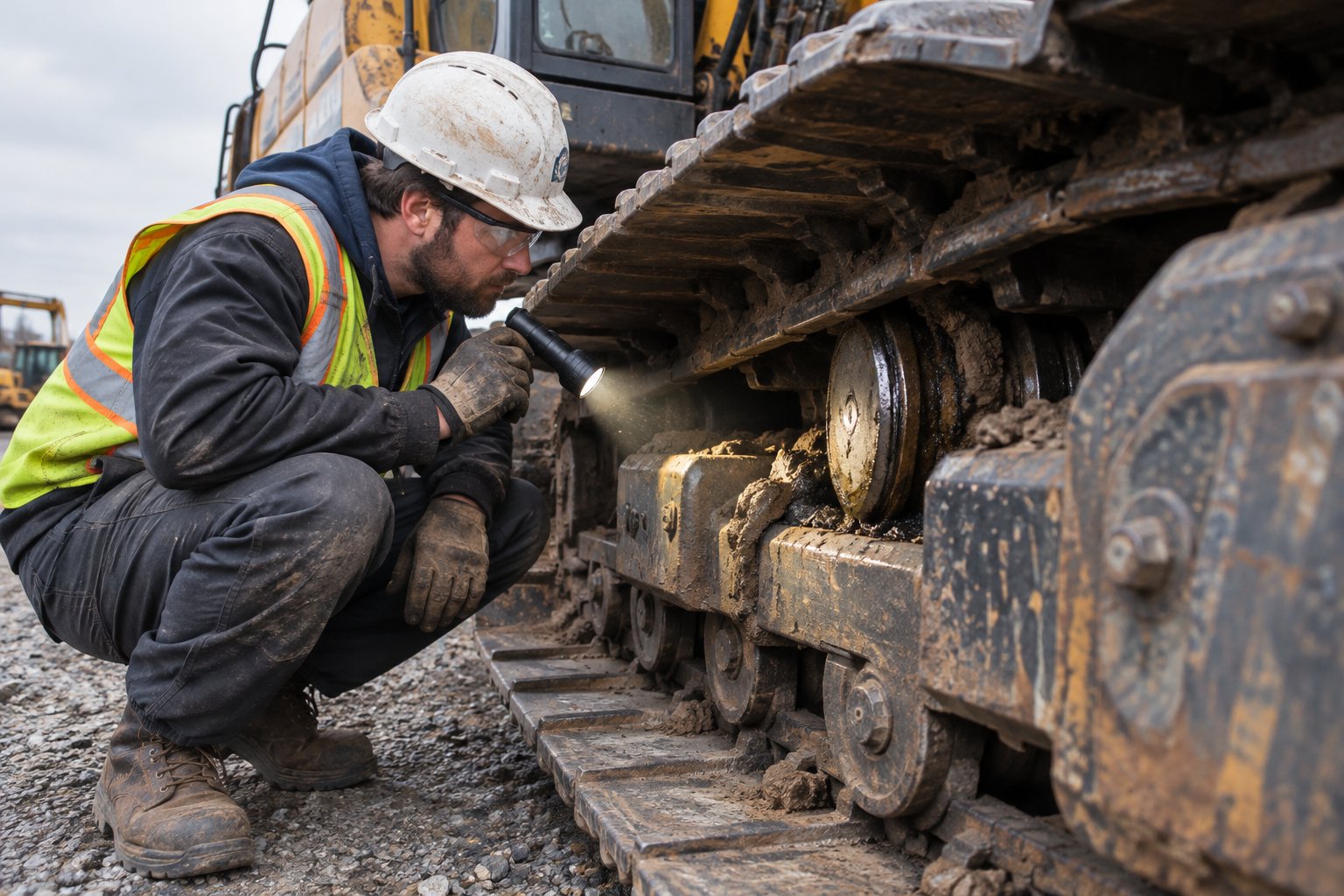
How to Inspect and Evaluate Used Heavy Equipment
A spec sheet tells you what a machine was designed to do. An inspection tells you what it can still do — and that distinction is where thousands of dollars hang in the balance. Whether you're a fleet manager evaluating a row of excavators at a dealer lot or a first-time buyer eyeing a single construction work machine on an online listing, a disciplined inspection process is your strongest defense against hidden problems. Skip it, rush it, or trust someone else's summary of it, and you're gambling with your capital.
Reading the Hour Meter and What It Really Means
The hour meter is often the first number buyers look at — and the most frequently misunderstood. Hours on a machine function like mileage on a truck: they reflect cumulative engine run time and serve as the baseline for estimating wear. But here's the critical nuance — what qualifies as "low," "moderate," or "high" hours depends entirely on the equipment type.
A compact excavator with 5,000 hours has lived a very different life than a large mining dozer at the same reading. Smaller machines typically face major component overhauls sooner because their systems are scaled for lighter duty. A 20-ton excavator, by contrast, may run productively well past 10,000 hours with proper maintenance. The number on the meter matters far less than the maintenance behind it. A well-maintained machine at higher hours can outperform a neglected one showing half the reading — worn seals, degraded hydraulic fluid, and skipped service intervals do more damage than honest runtime.
Be cautious, though. Hour-meter tampering is a documented reality in the secondary market. As Makana's verification guide explains, even if a physical meter has been reset or replaced, the ECU (Electronic Control Unit) on modern machines stores a separate, internal record of operating hours. Diagnostic tools from the OEM — such as CAT ET scanners for Caterpillar equipment or Komtrax reports for Komatsu machines — can pull that embedded data and expose discrepancies. One real-world example: a Komatsu PC200-8 listed at 6,500 hours was found through its Komtrax report to have actually logged 11,200 hours at its last dealership service. That kind of gap isn't a rounding error — it's a red flag that should halt any negotiation.
How do you cross-reference when manufacturer telematics aren't available? Compare the meter reading against the machine's physical condition. A unit showing 3,000 hours but displaying heavily worn track links, faded controls, and hydraulic drift has almost certainly worked far longer than the meter suggests. If the hours and the wear don't tell the same story, trust the wear.
Visual and Mechanical Inspection Checklist
A structured inspection sequence keeps you from getting distracted by cosmetics and missing structural problems hiding underneath. Whether you're walking around a John Deere dump truck, a compact loader, or a full-size excavator, follow this order to ensure nothing gets overlooked:
- Structural frame and welds: Start with a full walk-around of the chassis and boom structure. Look for cracks around high-stress areas — boom pivot points, mounting brackets, and swing bearing connections. Fresh paint on isolated sections can conceal prior repairs or rust damage. Inspect all welds carefully; Custom Truck One Source's inspection guide recommends checking that the equipment meets federal structural integrity requirements, especially around booms, cranes, and mounting points.
- Undercarriage wear: For tracked machines, examine sprockets, idlers, rollers, and the tracks themselves for wear, cracks, and missing hardware. An undercarriage replacement is one of the most expensive repairs you can face — it can account for up to 50% of fleet repair budgets. Measure track sag and look for uneven wear patterns that indicate misalignment or prior abuse.
- Hydraulic hoses and cylinders: Check every visible hose for brittleness, cracking, bulging, or signs of patched repairs. Look for active leaks around cylinder seals, pumps, and fittings. Operate the boom, arm, and bucket under light load and watch for hydraulic drift — a raised implement slowly sinking on its own signals worn internal seals or failing valves.
- Engine compartment: Listen for knocking or unusual sounds during a cold start, which can indicate worn bearings. Check for oil leaks around seals, gaskets, and the oil pan. Note exhaust smoke color: blue typically means the engine is burning oil, white suggests coolant is entering the combustion chamber, and black points to fuel system problems.
- Cab controls and electrical systems: Sit in the operator's seat and test every switch, gauge, light, and joystick. A faulty electrical system is notoriously expensive to diagnose and repair. Inspect wiring harnesses for rodent damage or amateur splices — problems that surface unpredictably and shut down production.
- Fluid analysis results: Request or arrange oil sampling from the engine, hydraulic system, and transmission. Lab analysis reveals metal particle counts, coolant contamination, and fluid degradation that no visual inspection can detect. Think of it as a blood test for the machine — it exposes internal wear you'd otherwise never see until something fails.
This sequence works whether you're inspecting heavy equipment for sale near me at a local lot or flying across the country to evaluate a high-value unit. The key is consistency: follow the same steps every time, and you'll catch problems that casual buyers miss entirely.
Documentation Buyers Must Request
Physical condition reveals the present. Documentation reveals the past — and the past is what predicts the future cost of ownership. Every serious buyer should request the following before finalizing any purchase:
- Maintenance logs: A complete service history — oil changes, filter replacements, scheduled inspections, and component adjustments — shows whether the previous owner followed OEM-recommended intervals or cut corners. Gaps in the log are just as telling as the entries themselves.
- Title and lien history: Verify clean ownership. As Crest Capital warns, blanket liens — common clauses buried in business loans — can attach to equipment even if the seller believes it's free and clear. A UCC search helps uncover most existing liens, but no single search guarantees a perfectly clean title. Buying from a reputable used construction equipment dealer typically reduces this risk, as established dealers often run lien checks before acquiring inventory.
- Prior-use context: A machine that spent its life doing residential grading has endured vastly different stresses than one used in demolition or quarry work. Ask directly about the types of projects the equipment worked on. Demolition and rock-breaking applications accelerate wear on booms, buckets, and undercarriages far beyond what the hour meter alone would suggest.
- Inspection reports from certified technicians: If the seller has commissioned a third-party inspection, request the full report — not just a summary. If no report exists, consider hiring an independent inspector before committing, especially on high-value purchases like a John Deere crawler loader for sale or any machine priced above your comfort threshold for unverified risk.
Documentation is worth more than a fresh coat of paint — service records reveal what no walk-around ever will.
Sellers who readily produce organized records signal transparency and confidence in their equipment. Sellers who hesitate, make excuses, or claim records were "lost" are telling you something equally valuable — just not with words. When you're browsing platforms like HeavyQuip or any major listing service, the machines backed by thorough documentation consistently command higher prices for a reason: they represent lower risk for the buyer, and lower risk translates directly into more predictable ownership costs.
Engaging a qualified, independent inspector is especially important when purchasing remotely or through channels that offer limited post-sale recourse. The cost of a professional inspection — typically a fraction of the machine's price — pales against the potential expense of discovering a cracked boom or a failing transmission after the deal closes.
Inspection discipline protects you at the individual machine level, but where you source that machine — dealer, auction, online marketplace, or private seller — introduces an entirely different layer of risk and opportunity that deserves its own careful evaluation.
Where to Source Used Heavy Machinery
Every sourcing channel carries its own blend of price advantage, buyer protection, and hidden cost. A machine heavy enough to reshape a hillside deserves a purchasing process that accounts for more than just the lowest number on the screen. The channel you choose determines not only what you pay upfront but also how much recourse you have if something goes wrong after the transaction closes. Understanding the tradeoffs across dealerships, auctions, and online platforms turns what feels like a gamble into a structured decision.
Dealerships and Certified Pre-Owned Programs
Buying from an established dealer is the closest thing the secondary equipment market offers to a safety net. Reputable dealers typically inspect, service, and recondition machines before listing them. That reconditioning — fresh filters, repaired leaks, replaced wear parts — is baked into the sticker price, which is why dealer pricing runs higher than what you'd see at auction or in a private listing. The markup isn't arbitrary, though. It reflects risk reduction and convenience bundled into a single transaction.
Here's what a dealer relationship can include that other channels usually don't:
- Post-sale support: A parts counter, a service shop familiar with the machine, and technical advice when something unexpected surfaces on the jobsite.
- Financing options: Many dealers arrange equipment loans in-house or through manufacturer-affiliated lenders, letting you consolidate the purchase, trade-in, and financing into one step.
- Potential warranty coverage: Some dealers offer limited warranties on pre-owned units, and late-model machines may still carry remaining factory coverage. Always get warranty terms in writing — verbal assurances disappear the moment you drive off the lot.
- Demo opportunities: You can often operate the machine before committing, testing joystick response, hydraulic speed, and overall feel under realistic conditions.
The tradeoff is straightforward: you pay more per unit, but you absorb less risk per transaction. For first-time buyers, single-machine operators, or anyone who can't afford extended downtime, that premium often pays for itself before the first invoice is due. If you're searching for something specific — say, a compact tractor loader for sale with documented service records — a dealer's curated inventory and transparent history tend to deliver fewer surprises than other channels.
Auctions and Government Surplus Sales
Heavy equipment online auctions attract a different kind of buyer: one who's comfortable with uncertainty in exchange for potential savings. The basic mechanics are simple. Machines are listed by consignors — contractors, rental companies, municipalities — and sold to the highest bidder. Some auctions run live on-site with simultaneous online bidding; others operate entirely on a timed digital clock. What separates auctions from every other channel is a three-word phrase that governs the entire experience: as is, where is.
That phrase means no warranty, no returns, and no recourse if the engine knocks on the trailer ride home. You own whatever you bid on — including every hidden problem the preview window didn't reveal. As PDQ Equipment's dealer-vs-auction analysis bluntly puts it, the hammer price is the start of the bill, not the end of it. Buyer's premiums (typically a percentage of the winning bid), documentation fees, sales tax, transport, and first-round repairs all stack on top. A machine that looked like a bargain at the gavel can quietly close the gap with — or even exceed — dealer pricing once every line item hits your ledger.
Government surplus sales, run through platforms like GovDeals, occupy a unique middle ground. Public agencies often maintain detailed service records, rotate equipment out on schedule rather than running it to failure, and sell without middleman markups. Excavation sales from municipal fleets can yield well-documented machines at competitive prices. The catch? Inventory is unpredictable. You can't order a specific model — you bid on whatever a county road department or state DOT decides to surplus that quarter.
Should you attend an auction? If you run a fleet with an in-house mechanic and can absorb the occasional bad purchase across a volume of buys, auctions reward that capability. If you're a single-machine owner-operator whose income stops when the iron stops, the savings rarely justify the exposure. Knowing which buyer you are matters more than knowing which auction to attend.
Online Marketplaces and Direct-From-Supplier Channels
Digital platforms have reshaped how buyers find and compare pre-owned machines. Instead of driving between dealer lots or waiting for the right unit to surface at a regional auction, you can filter by make, model, year, hours, and location from a single screen. That geographic reach is the core advantage — a tracked carrier listed three states away is now just as accessible as one parked down the road, provided you're willing to arrange inspection and transport.
Online marketplaces range from multi-seller listing aggregators to direct-from-supplier storefronts. Multi-seller platforms host thousands of independent listings, offering enormous variety but shifting the verification burden squarely onto the buyer. Direct suppliers, by contrast, control their own inventory and pricing. For example, suppliers such as JIUHONG allow contractors and fleet managers to browse used excavators, loaders, bulldozers, and graders online and request purchase quotes directly — making comparison across multiple machine types more convenient without navigating competing seller terms on a shared marketplace. JIUHONG operates as a machinery supplier, not an auction house or multi-seller platform, so the buying experience is closer to a dealer interaction than a bidding war.
Regardless of the platform, the same due-diligence principles apply. Request detailed photos beyond what's posted. Ask for service records, fluid analysis results, and hour-meter verification. If you're evaluating a Deere 655K or any other specific model remotely, insist on a live video walkthrough or hire a local third-party inspector before committing funds. Distance buying amplifies convenience, but it also amplifies the cost of a mistake.
The table below compares sourcing channels side by side so you can match each option to your risk tolerance and operational needs:
| Channel Type | Typical Price Range | Buyer Protections | Best For |
|---|---|---|---|
| Authorized Dealer / CPO Program | Highest — reflects reconditioning, overhead, and risk reduction | Potential warranty, financing, service support, demo access | First-time buyers, single-machine operators, buyers needing financing or minimal downtime |
| Live or Online Auction | Lowest hammer price — but premiums, fees, and repairs narrow the gap | Minimal — as-is terms with no returns; limited preview window | Fleet owners with in-house mechanics, volume buyers who can absorb occasional losses |
| Government Surplus (e.g., GovDeals) | Low to moderate — no middleman markup; agency-maintained units | Better maintenance documentation than private auctions; still sold as-is | Budget-conscious buyers comfortable with unpredictable inventory and as-is terms |
| Online Marketplace (Multi-Seller) | Varies widely — competitive due to geographic reach | Platform-dependent; verification is primarily the buyer's responsibility | Buyers seeking broad selection and geographic flexibility; experienced evaluators |
| Direct Supplier (e.g., JIUHONG) | Moderate — supplier-controlled pricing with quote-based negotiation | Direct communication with inventory owner; consistent listing standards | Contractors and fleet managers comparing multiple machine types from a single source |
| Private Party Sale | Often moderate — no dealer overhead or auction premiums | None — no warranty, no lien guarantee unless buyer verifies independently | Experienced buyers who can inspect thoroughly and handle all paperwork themselves |
Notice that no single channel wins across every column. A track truck for sale at auction might carry the lowest sticker price, but the total landed cost — after premiums, transport, and repairs — can rival or exceed dealer pricing when the machine needs unexpected work. Conversely, a dealer's higher upfront number might represent the lowest total cost of ownership when you factor in warranty coverage, arranged financing, and zero downtime on delivery day.
Each channel serves a different combination of budget priority, mechanical capability, and risk appetite. The smartest buyers don't commit to one sourcing method — they monitor several simultaneously, comparing the same machine class across dealers, auctions, and online listings until the right combination of price, condition, and documentation aligns with their project timeline.
Finding the right channel, however, only solves half the equation. The other half — knowing when a deal is genuinely good versus when it's hiding something dangerous — requires a different kind of knowledge: the ability to spot warning signs that should stop a transaction cold.
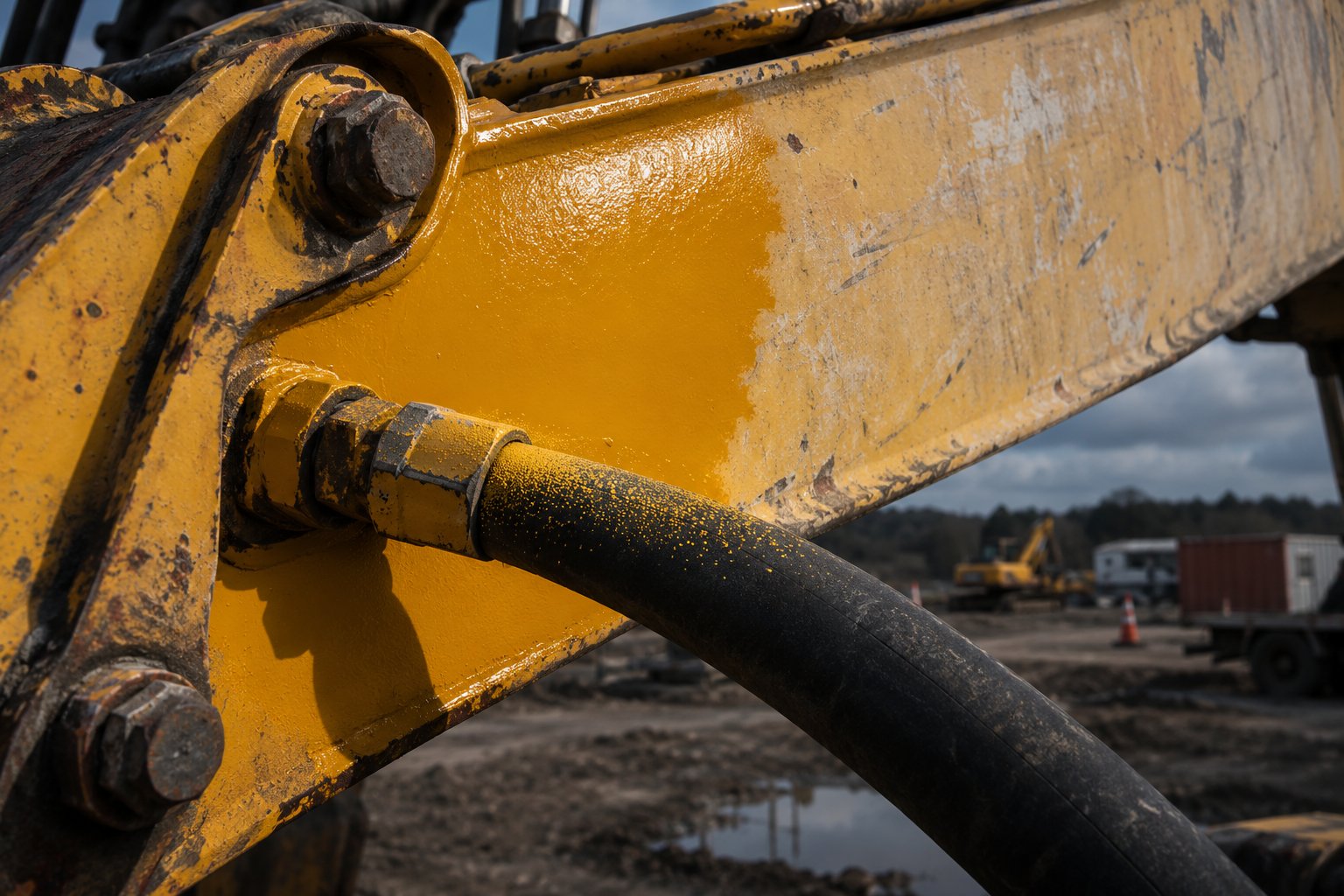
Red Flags and Risk Mitigation for Equipment Buyers
A great price on a machine for sale means nothing if the deal hides a cracked frame, a tampered hour meter, or a lien you'll discover six months after writing the check. The sourcing channel gets you to the listing — but what protects you inside the transaction is your ability to recognize when something doesn't add up. Heavy equipment sales move fast, and sellers know that urgency clouds judgment. Slowing down long enough to spot warning signs is the single most profitable skill a buyer can develop.
Red Flags That Should Stop a Deal
Some problems announce themselves quietly. Others wave bright flags — if you know where to look. The following warning signs should pause or kill any negotiation, whether you're evaluating big equipment at a dealer lot or reviewing a private listing online:
- Mismatched serial numbers: The PIN plate on the frame, the number stamped on the engine block, and the paperwork should all agree. Any discrepancy suggests a component swap the seller hasn't disclosed — or worse, a stolen machine reassembled from multiple units.
- Reluctance to share service records: A seller who deflects, delays, or claims records were "lost" is telling you something important. Transparent owners keep documentation because it protects the value of their heavy machines. Absence of records is itself a data point.
- Visible welding repairs on structural members: Weld beads along the boom, arm, or mainframe that don't match factory patterns indicate prior cracking or structural failure. These repairs may hold — or they may fail under load with catastrophic consequences.
- Recent repaint concealing damage: A fresh coat of paint on an otherwise aged machine deserves scrutiny. Look for overspray on hoses, fittings, and decals. Paint hides rust, patched metal, and collision damage that a bare surface would reveal instantly. As MY Equipment's scam-prevention guide notes, scammers and dishonest sellers alike rely on cosmetic cover-ups to deflect buyer attention from mechanical reality.
- Inconsistent hour-meter readings: If the meter shows 3,000 hours but the pedals are worn smooth, the seat foam is compressed flat, and the joystick grips are polished to a shine, the machine has worked far longer than the display claims. Cross-reference with ECU data or OEM telematics whenever possible.
- Price far below market value: A unit priced at half of comparable listings isn't a bargain — it's a question that demands an answer. If the seller can't explain the discount with verifiable facts (a needed rebuild, a lien payoff, a fleet liquidation), the discount is hiding something you don't want to inherit.
Protecting Yourself Legally and Financially
Spotting red flags stops bad deals. Legal and financial safeguards protect you even when problems slip past your inspection.
Lien checks are non-negotiable. As Crest Capital details, a blanket lien buried in a seller's unrelated business loan can legally attach to the equipment you're purchasing — even if the seller genuinely believes the machine is free and clear. A UCC (Uniform Commercial Code) search uncovers most recorded liens, but it's not foolproof. Blanket liens from previous owners can survive multiple resales and only surface when someone defaults. If you're buying from a private party rather than an authorized dealer, conduct the UCC search yourself. Your money is on the line, not theirs.
Title verification goes hand in hand with lien checks. Confirm that the seller's name matches the title, that the title is not branded as salvage or rebuilt (unless priced accordingly), and that the machine's serial number matches the title document exactly. A complete paper trail back to the original purchase offers the strongest protection — and as Crest Capital bluntly warns, "the buyer is the responsible party" if a lien issue surfaces later.
Written purchase agreements should specify the machine's condition, hours, included attachments, and any representations the seller made during negotiation. Verbal promises evaporate. A signed document survives. For private sales involving significant dollar amounts, escrow services add a layer of protection by holding funds until both parties confirm the terms have been met — but only if you choose and verify the escrow provider independently.
One important distinction: a purchase quote from a supplier is a pricing offer, not a certified appraisal. Buyers conducting due diligence on high-value purchases — whether it's a 655 John Deere track loader, a fleet of excavators, or any john deere construction used equipment — may need independent valuations from certified appraisers to confirm fair market value before committing capital.
When to Walk Away
Walking away from a deal you've invested time and emotion into is hard. It's also, occasionally, the most profitable decision you'll make all year. The math is simple: the cost of continuing to search is almost always less than the cost of repairing — or losing — a machine you shouldn't have bought.
Here's a practical decision framework. If more than two red flags from the list above appear during your evaluation, or if the seller cannot produce basic documentation — title, service records, and a verifiable serial number — the risk almost certainly outweighs the savings. No discount is steep enough to compensate for a machine with a hidden lien, a falsified hour meter, and structural welds that weren't disclosed.
Emotional readiness matters, too. Decide before you inspect that you're willing to walk. Bring a colleague or advisor who isn't emotionally invested in the outcome. Their objectivity catches what your enthusiasm misses. As even CarGurus advises in the vehicle market, if something doesn't feel right — even if you can't articulate exactly what — trust that instinct. Another machine will surface. A bad purchase follows you for years.
Patience in sourcing protects profitability on the project — the best deal is sometimes the one you didn't make.
Knowing when to walk away keeps your capital safe in the short term. But for the deals that do pass scrutiny, the next question becomes equally important: how much productive life does this machine actually have left — and is that enough to justify the investment?
Understanding Equipment Lifecycle and Remaining Value
A listing shows hours, a price, and maybe a few photos. What it rarely tells you is where that machine sits in its productive lifespan — and whether the asking price reflects a unit with years of reliable work ahead or one approaching a costly overhaul cliff. Turning a static listing into an informed purchasing decision requires understanding how lifecycle stages differ across equipment types and what truly determines how many productive hours remain.
Low Hours Versus High Hours by Machine Type
Here's a mistake buyers make constantly: applying a single hour threshold to every machine class. A compact excavator at 8,000 hours is deep into its wear-acceleration phase. A large bulldozer at the same reading may still be in its prime operating years. The benchmarks vary because the machines themselves are engineered for different duty cycles, component tolerances, and service intervals.
Industry data from equipment lifecycle studies provides useful reference points. Excavators generally deliver a total useful life of 10,000 to 15,000 hours. Bulldozers, subjected to less mechanical shock than digging machines, typically last 15,000 to 20,000 hours. Loaders fall in a range of 12,000 to 18,000 hours, while rollers tend toward 10,000 to 14,000 hours. Crawler carriers, often operating on softer terrain with lower peak loads, can stretch toward the upper end of these ranges when properly maintained.
These figures aren't hard ceilings. They represent the window within which most machines transition from productive assets to maintenance liabilities. FieldFix's lifecycle analysis breaks this window into four predictable stages that apply broadly across used heavy equipment:
- Break-in period (0–2,000 hours): Warranty coverage active, minimal maintenance beyond fluids, lowest hourly operating cost.
- Prime operating years (2,000–8,000 hours): The sweet spot — the machine is broken in, major components are healthy, and the optimal resale window falls between roughly 6,000 and 8,000 hours, where 35–45% of original value is still recoverable.
- Wear acceleration (8,000–12,000 hours): Hydraulic pumps, final drives, undercarriage components, and engine internals begin reaching end-of-life. Hourly operating costs can nearly double compared to the prime phase.
- Declining returns (12,000+ hours): Cascading failures become common — fixing one component stresses adjacent systems. Parts availability shrinks on older models, fuel consumption climbs, and operator productivity drops.
When you're browsing used heavy equipment for sale near me or scanning catalogs from heavy construction equipment auctions, knowing which stage a machine occupies instantly reframes the asking price. A 6,000-hour excavator at a premium and a 13,000-hour unit at a discount may represent identical value propositions once you factor in what each machine will demand in repairs over the next two years.
Assessing Remaining Useful Life
Hours alone don't predict how much productive work a machine still has in it. Two excavators at 9,000 hours can have radically different futures — one serviced on schedule and used for residential grading, the other neglected and run through a rock quarry. The first might deliver another 5,000 reliable hours. The second might not survive 500 without a major rebuild.
This is where the concept of economic life becomes essential. Economic life isn't a fixed number on a spec sheet. It's the point at which ongoing repair costs consistently exceed the productive value the machine generates. As Reliant Business Valuation explains, factors like maintenance history and operating conditions can push a machine's effective age significantly higher or lower than its chronological age. Their appraisal framework illustrates the gap clearly: a well-maintained five-year-old dozer with average hours and documented service might retain roughly 11 years of remaining useful life from a 15-year baseline, while an identical machine run hard in dusty conditions with inconsistent maintenance might retain only five.
When evaluating any piece of quality used equipment — whether it's construction equipment for sale near Pittsburgh, a crawler carrier listed in a regional marketplace, or a loader surfacing at a fleet liquidation — assess remaining useful life by weighing these key factors together:
- Cumulative operating hours: The starting point, but never the full picture. Compare hours against the lifecycle benchmarks for that specific machine class.
- Maintenance consistency: A complete service log following OEM intervals is worth more than low hours with no documentation. Gaps in records signal deferred maintenance that accelerates hidden wear.
- Severity of prior applications: Quarry work, demolition, and heavy rock excavation impose dramatically more stress than utility grading or landscaping. Two machines with identical hours can carry vastly different levels of internal wear depending on how they were used.
- Availability of replacement parts: Older or discontinued models may still run fine mechanically, but if hydraulic pumps, electronic controllers, or undercarriage components are backordered or discontinued, the machine's practical lifespan shrinks regardless of its physical condition.
- Component rebuild history: A machine that has already received an engine overhaul, new hydraulic pumps, or a fresh undercarriage has effectively reset the clock on its most expensive systems. Documented rebuilds extend remaining useful life in ways that raw hour counts can't capture.
Imagine two loaders listed at the same price. One shows 7,500 hours with no rebuild history and sketchy service records. The other shows 11,000 hours but includes receipts for a recent engine overhaul, new hydraulic hoses, and consistent 500-hour service intervals throughout its life. Which machine has more productive life ahead? The higher-hour unit — by a wide margin. The rebuild receipts and maintenance log tell you exactly what's been replaced and when, letting you forecast future costs with confidence instead of guessing.
A machine's remaining value lives in its maintenance records and rebuild history — not in the number displayed on its hour meter.
This lifecycle perspective transforms how you read any listing. Instead of filtering strictly by hours or price, you're evaluating where a machine sits relative to its economic life — and whether the documentation supports what the seller claims. That shift in thinking is what separates buyers who find genuine value from those who simply find the lowest number on the page. With lifecycle positioning firmly in your toolkit, the final step is assembling everything — categories, specs, inspections, sourcing channels, red flags, and remaining-life analysis — into a practical action plan that moves you from research into a confident purchase.
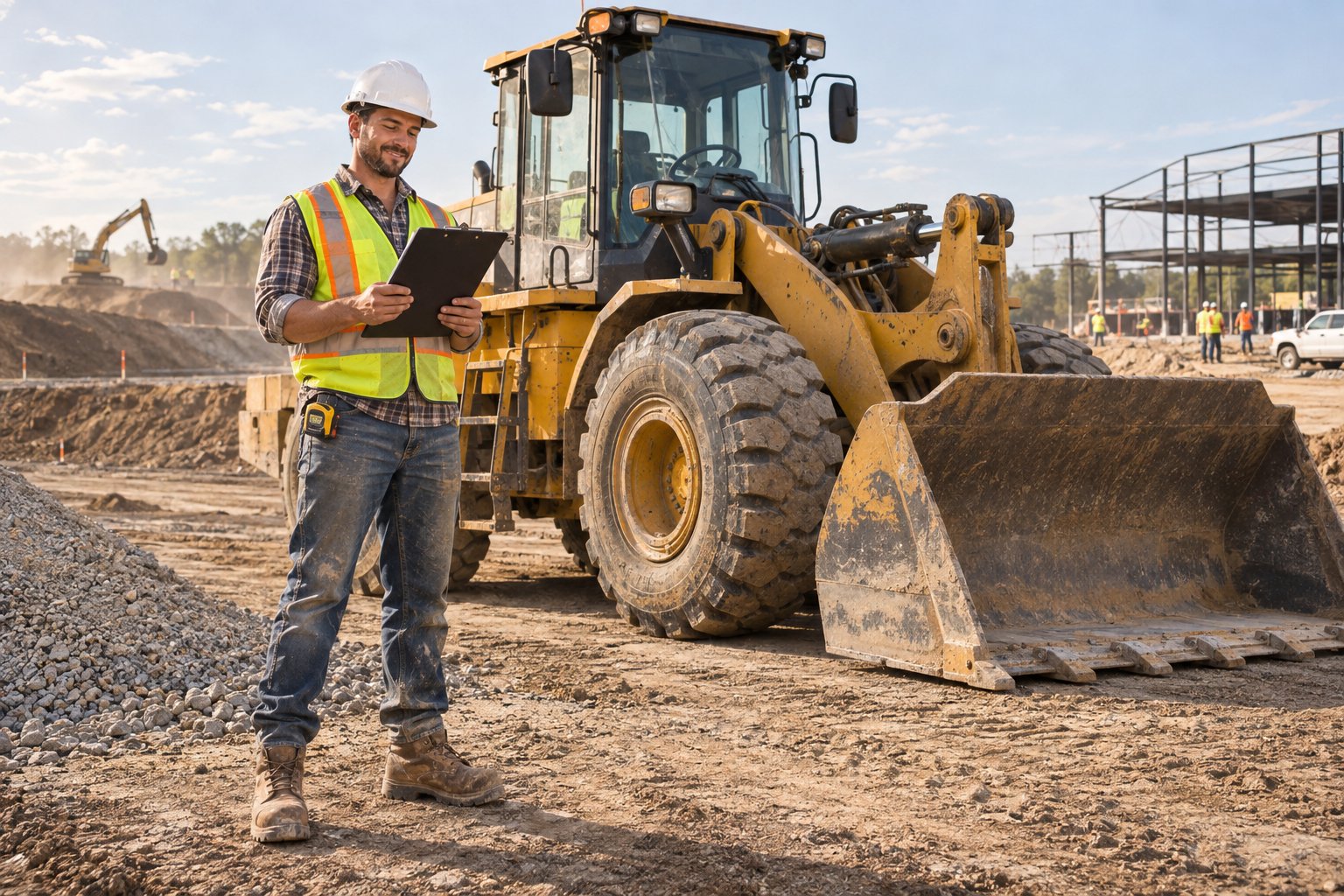
Turning Research Into a Confident Equipment Purchase
Knowledge without action is just expensive trivia. You now understand equipment categories, specifications, depreciation curves, inspection sequences, sourcing channels, red flags, and lifecycle positioning — but none of that protects your capital until you organize it into a repeatable process. The difference between buyers who consistently find reliable heavy duty machinery at fair prices and those who stumble into regrettable deals isn't luck. It's discipline applied in the right order, every single time.
Your Pre-Purchase Action Plan
Whether you're a fleet manager expanding capacity across the Midwest or a first-time buyer searching for used construction equipment near me, the following sequence keeps every decision grounded in the principles this guide has covered:
- Define your project requirements precisely. Start with the work, not the machine. What are you digging, grading, hauling, or compacting? How deep, how far, how many cubic yards per shift? Vague requirements produce vague purchases — and vague purchases drain budgets.
- Identify the right equipment category. Match the task to the machine class using the category framework from earlier in this guide. A crawler carrier solves a different problem than an articulated dump truck, even though both haul material. Choosing the wrong category is more expensive than overpaying within the right one.
- Set a total-ownership budget — not just a purchase budget. Add transport, insurance, maintenance reserves, attachment compatibility costs, and projected rebuild expenses to the sticker price. Divide by the estimated hours you'll operate the machine to get your target cost per hour. That single number becomes your negotiation anchor.
- Inspect thoroughly and verify all documentation. Follow the structured inspection checklist — frame, undercarriage, hydraulics, engine, cab, and fluid analysis — in the same order every time. Request maintenance logs, title history, prior-use context, and any third-party inspection reports. If the seller can't produce documentation, revisit whether the price adequately compensates for the added risk.
- Compare across multiple sourcing channels. Check dealers, auction calendars, government surplus listings, and online supplier inventories for the same machine class simultaneously. A unit that looks like a steal on one platform may be average — or overpriced — when measured against comparable listings elsewhere.
- Negotiate terms with data, not emotion. Use your TCO calculation, the machine's lifecycle position, and competing listings as leverage. A seller who knows you've done your homework negotiates differently than one who senses urgency.
- Arrange logistics before you commit. Confirm transport availability, delivery timelines, and insurance coverage for the move. A signed deal means nothing if the machine sits idle for weeks waiting on a flatbed.
Print this sequence. Save it on your phone. Tape it to the dashboard of your truck. The steps are simple, but skipping even one of them — especially under deadline pressure — is how buyers end up owning problems instead of assets.
Building Your Equipment Pipeline
The costliest equipment decisions happen under pressure. A machine breaks down mid-project, a new contract lands with a tight mobilization deadline, and suddenly you're racing to find a replacement instead of methodically evaluating options. That urgency is where overpaying and overlooking red flags thrive.
Smart fleet managers and contractors avoid that trap by maintaining an ongoing equipment pipeline — a living shortlist of machines across multiple channels, updated regularly, long before the need becomes urgent. Think of it as a bench roster for your fleet. You're not committing to buy; you're staying informed about what's available, at what price, and in what condition so that when the right moment arrives, you act from a position of knowledge rather than desperation.
Here's how to build that pipeline practically:
- Set alerts on dealer and auction platforms for the specific makes, models, and hour ranges you'd consider. Midwest heavy equipment markets, surplus heavy equipment liquidations, and regional listings — such as tracked carriers in the Webster area — all fluctuate in inventory and pricing throughout the year. Alerts catch favorable listings before they disappear.
- Bookmark direct-supplier inventories for periodic comparison. Platforms like JIUHONG's used construction equipment collection — which features excavators, loaders, bulldozers, and graders — can serve as one comparison source alongside dealerships and auction platforms when evaluating options and requesting quotes for upcoming projects. Having a supplier bookmark alongside your dealer contacts and auction calendars means you're always comparing across the full spectrum of available inventory.
- Track pricing trends over time. A machine you pass on today at a certain price point may reappear — or a comparable unit may surface at a better number next quarter. Seasonal patterns, fleet liquidations, and regional economic shifts all influence secondary-market pricing. Patience, backed by data, consistently beats impulse.
- Revisit your fleet's lifecycle positioning quarterly. If a machine in your current fleet is approaching its wear-acceleration phase, begin sourcing its replacement months before repair costs spike. Proactive replacement planning — informed by the lifecycle benchmarks covered earlier — prevents the emergency purchases that erode margins.
Whether you're comparing surplus heavy equipment from a government auction, evaluating a listing from a regional dealer like G and R in Tyrone, PA, or browsing an online supplier's catalog from your office, the principle is identical: the more sourcing channels you monitor, the stronger your negotiating position and the lower your risk of settling for the wrong machine at the wrong price.
The used heavy machinery market rewards informed, patient buyers who treat equipment acquisition as a strategic investment — not an emergency expense.
Every chapter in this guide has been building toward this single idea. Categories help you pick the right tool. Specifications confirm it can handle the work. Depreciation analysis protects your capital. Inspections expose hidden problems. Sourcing-channel knowledge expands your options. Red-flag awareness keeps you from inheriting someone else's nightmare. And lifecycle understanding tells you whether the machine's best years are ahead of it or behind it.
Stack those layers together, follow the action plan above, and you'll approach every purchase with the confidence of someone who's done the work — because you have. The next piece of heavy duty machinery you buy won't just fill a spot on a jobsite. It'll earn its place in your fleet, project after project, because you chose it with strategy instead of scrambling for a seat at the last available auction. That's the difference between buying equipment and building a business.
Frequently Asked Questions About Buying Used Heavy Machinery
1. How do I know if used heavy machinery is worth the investment over buying new?
Used heavy machinery often delivers a lower cost per hour than new equipment because the steepest depreciation has already occurred. A machine that has passed its initial depreciation phase holds value more steadily, meaning your capital is better protected. To confirm the investment is sound, calculate the Total Cost of Ownership — purchase price plus transport, insurance, maintenance reserves, rebuild costs, fuel, and financing — then divide by estimated operating hours. When a used unit with documented service records produces a lower cost-per-hour figure than a financed new machine, the math favors the pre-owned option.
2. What are the most important things to inspect on used construction equipment before buying?
Prioritize a structured sequence: start with the structural frame and welds for cracks or concealed repairs, then examine the undercarriage for sprocket, roller, and track wear. Next, check hydraulic hoses and cylinders for leaks or drift, listen for engine knocks during a cold start, and test every cab control and electrical system. Finally, request fluid analysis results — oil sampling from the engine, hydraulics, and transmission reveals internal wear invisible to the eye. Cross-reference the hour meter with physical wear indicators and, ideally, the machine's ECU data to confirm hours have not been tampered with.
3. How can I tell if an hour meter on used heavy equipment has been tampered with?
Compare the displayed hours against the machine's physical condition. Heavily worn track links, faded cab controls, polished joystick grips, and a compressed seat on a unit showing low hours all suggest the meter has been reset or replaced. On modern machines, the Electronic Control Unit stores an independent record of operating hours that diagnostic tools from the OEM can retrieve. Manufacturer telematics platforms — such as Komtrax for Komatsu or CAT ET for Caterpillar — provide another verification layer. If telematics data is unavailable, insist on cross-referencing service records with the claimed hours before proceeding.
4. Where is the best place to buy used heavy machinery?
The best channel depends on your risk tolerance, mechanical capability, and budget. Authorized dealers and certified pre-owned programs offer the most buyer protections — potential warranties, financing, and post-sale service — but at higher prices. Auctions and government surplus sales can yield savings, though machines sell as-is with limited recourse. Online marketplaces and direct suppliers like JIUHONG (https://jiuhong-machinery.com/products/) let you compare excavators, loaders, bulldozers, and graders across geography and request purchase quotes conveniently. Experienced buyers often monitor multiple channels simultaneously and compare the same machine class across all of them before committing.
5. How many hours is too many on used heavy equipment?
There is no universal threshold because lifecycle benchmarks vary by machine type. Excavators generally deliver 10,000 to 15,000 total useful hours, bulldozers last 15,000 to 20,000 hours, and loaders fall between 12,000 and 18,000 hours. More important than the raw number is where the machine sits in its lifecycle stages — prime operating years, wear acceleration, or declining returns — and how well it has been maintained. A higher-hour unit with complete service records and documented component rebuilds can have significantly more productive life remaining than a lower-hour machine with no maintenance history.