

What Is a Komatsu Excavator and Why It Matters
When you hear "excavator" on a construction site, there's a strong chance the machine in question wears the Komatsu name. But what exactly sets these machines apart from the dozens of other brands competing for space on job sites worldwide?
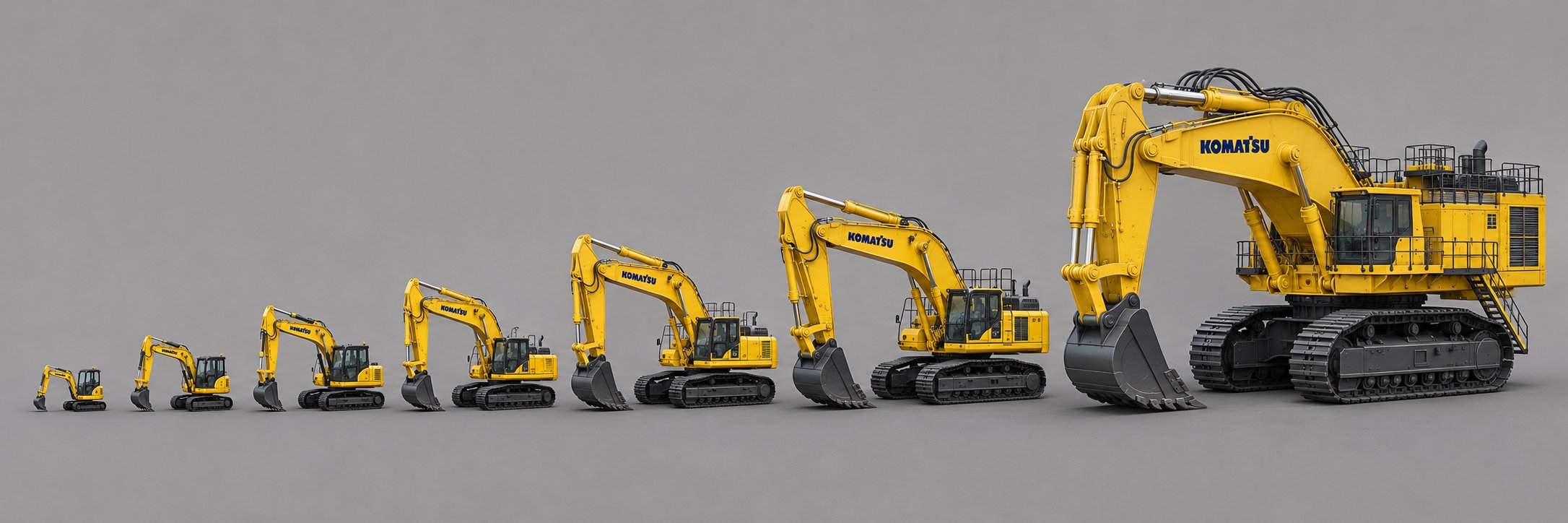
A Komatsu excavator is a hydraulic crawler or wheeled earthmoving machine manufactured by Komatsu Ltd (コマツ, also referenced internationally as Комацу Лимитид), the world's second-largest construction and mining equipment company. Spanning the PC series product line, these machines range from sub-one-ton micro units designed for backyard projects to ultra-class mining excavators exceeding 800 tonnes built for open-pit resource extraction.
That single product line — the PC series — covers a staggering spectrum of capability. Imagine a machine small enough to fit through a garden gate sitting in the same brand catalog as a giant that loads 400-ton haul trucks. That range is precisely what makes this lineup worth understanding in detail.
What Defines a Komatsu Excavator
Every Komatsu excavator, regardless of size, shares a common DNA: a hydraulic system that powers the boom, arm, and bucket through precise, responsive movements. Whether you're looking at a compact unit for utility trenching or a massive excavator trackhoe clearing overburden in a mine, the underlying engineering philosophy stays consistent — efficiency, durability, and operator control.
The PC series designation ties the entire range together. From the tiny PC01 to the enormous PC8000, each model number tells you the machine's approximate weight class, its configuration, and its generation. You'll find crawler-mounted models dominating the lineup, though wheeled variants exist for applications requiring frequent repositioning on paved surfaces. Komatsu's excavator product page organizes the range into small, mid-size, large, and surface mining categories — a structure this guide mirrors.
Why Komatsu Excavators Dominate Global Job Sites
Komatsu holds the position of the second-largest heavy equipment manufacturer and supplier on the planet. That ranking alone signals something important, but the reason behind it matters more: vertical integration.
Unlike many competitors that source engines from one supplier, hydraulic components from another, and electronics from a third, Komatsu designs and manufactures its own diesel engines, hydraulic pumps, control valves, and electronic systems in-house. This approach gives the komatsu mining company division and its construction equipment arm tighter quality control over every critical subsystem. When the engine, hydraulics, and software are all developed under one roof, they work together more seamlessly — reducing inefficiencies that often creep in when components come from separate vendors.
The industries these machines serve stretch from residential foundations and landscaping to highway construction, demolition, quarry operations, and large-scale open-pit mining. A single large excavator model like the PC490 can load trucks on a highway cut-and-fill project one year and move to a quarry the next, adapting through attachment changes and configuration options.
Who This Guide Is For
This guide serves several audiences:
- Contractors evaluating their next machine purchase or rental and needing clarity on which size class fits their projects
- Equipment dealers comparing inventory options and seeking a consolidated brand-level reference
- Fleet managers reviewing specifications, technology packages, and total ownership costs across multiple models
- Researchers and buyers new to the brand who want a grounded, educational overview before engaging with salespeople
In the sections ahead, you'll find detailed model breakdowns, plain-language explanations of Komatsu's proprietary technologies, application-matching guidance, and honest ownership considerations — everything needed to make a confident, well-informed decision. The story begins with how a century-old Japanese industrial company evolved into the excavator powerhouse it is today.
How Komatsu Became a Global Excavator Powerhouse
A company that started by making tools for a copper mine eventually built the world's largest excavator class available in serial production. That transformation didn't happen overnight — it unfolded across a century of deliberate engineering choices, strategic pivots, and relentless quality improvement.
From Iron Works to Global Heavy Equipment Leader
In 1917, Takeuchi Mining Industry established Komatsu Iron Works in Komatsu City, Ishikawa Prefecture, Japan. The purpose was straightforward: manufacture machine tools and mining equipment for in-house use. By May 1921, the iron works separated from its parent to become Komatsu Ltd — a standalone company with deep roots in heavy industrial manufacturing.
Those early decades focused on presses, steel castings, and mining machinery. Komatsu built its first 450-ton sheet-forming press in 1924 and produced Japan's first crawler-type farm tractor in 1931. The pivot toward construction machinery accelerated after World War II, when the company introduced the D50 bulldozer in 1947 and began diesel engine production in 1948. Motor graders, dump trucks, and forklift trucks followed through the early 1950s.
The real turning point for Komatsu excavators came in 1963, when the company entered a technology licensing agreement with Bucyrus-Erie of the United States for hydraulic excavator development. By 1968, Komatsu began full production of hydraulic excavators — launching the PC series that would eventually define the brand. The "PC" designation, commonly understood to stand for "Power Crane" or "Power Shovel Crawler," reflected the machine's hydraulic heritage and crawler-based mobility. From compact models like the PC16 class to full-size units, the lineup expanded rapidly through the 1970s and 1980s as global demand for hydraulic excavation grew.
Decades of Engineering Innovation
What separates a good equipment manufacturer from a dominant one? Continuous, compounding improvement across every generation. Komatsu's trajectory illustrates this perfectly.
The introduction of electronically controlled hydraulics marked an early leap. Rather than relying purely on mechanical valve logic, Komatsu integrated electronic sensors and controllers that allowed finer modulation of boom, arm, and bucket movements. This evolved into the CLSS (Closed-Center Load-Sensing System), a hydraulic architecture that matches pump output to actual demand rather than running at full pressure constantly. The result was a measurable reduction in fuel waste — a difference operators and fleet managers notice at the end of every billing cycle.
In 1998, Komatsu developed KOMTRAX (Komatsu Machine Tracking System), a satellite-based telematics platform that monitors machine location, operating hours, fuel consumption, and error codes in real time. By July 2001, KOMTRAX became standard equipment across the lineup — years before most competitors offered anything comparable. Fleet managers suddenly had visibility into utilization patterns, idle time, and maintenance needs without physically visiting every job site.
The innovation pace accelerated further in the 2010s. In 2013, Komatsu launched the world's first intelligent Machine Control (iMC) bulldozers, followed by iMC excavators in 2014. This technology integrates 3D GPS/GNSS positioning with automatic boom, arm, and bucket control — enabling semi-autonomous digging that prevents over-excavation and achieves finish grade without survey stakes on the ground. Over 14,000 iMC-equipped machines have logged more than 40 million operating hours globally, a scale of field validation few competitors can match.
Komatsu's ambitions extended well beyond standard construction sites. The company pushed into mining-class machines with purpose-built giants like the PC3000 and the PC8000. The PC8000, weighing in at roughly 800 tonnes, stands among the biggest diggers in the world — a machine engineered specifically for open-pit operations where loading 200- to 400-ton haul trucks is routine. In 2008, Komatsu introduced the world's first hybrid hydraulic excavator and deployed the first Autonomous Haulage System (AHS) for mining trucks, signaling that the largest excavator platforms were only part of a broader automation strategy. The 2017 acquisition of Joy Global (rebranded as Komatsu Mining Corp.) further cemented the company's position across both surface and underground mining.
Komatsu's Manufacturing Footprint
Building machines at this scale and quality level requires manufacturing infrastructure to match. Komatsu operates a global production and assembly network spanning multiple continents, ensuring that parts availability and service reach keep pace with the machines themselves.
- Japan — Core R&D and manufacturing hub with major plants in Osaka, Awazu (Ishikawa), Ibaraki, Kanazawa, and Oyama (Tochigi), producing excavators, engines, hydraulic components, and electronics
- Americas — Komatsu America Corp. (Chicago headquarters) oversees North American operations; manufacturing in Chattanooga, TN and Peoria, IL; Komatsu Mining Corp. in Milwaukee produces mining equipment; Komatsu do Brasil handles South American production
- Europe — Komatsu UK (Birtley) manufactures construction excavators; Komatsu Germany GmbH (Hanover and Dusseldorf) handles construction, mining, and industrial equipment; Komatsu Italia Manufacturing (Este, Italy) produces utility-class machines
- Asia-Pacific — PT Komatsu Indonesia, Bangkok Komatsu (Thailand), Komatsu India (Chennai), and Komatsu's Chinese operations in Changzhou and Shandong serve regional and export markets
With 60 manufacturing locations worldwide and a 70% overseas production ratio, this footprint means a contractor in Texas, a quarry operator in Germany, or a mining company in Australia can source genuine parts and factory-trained service support without extended lead times. That kind of infrastructure quietly shapes purchasing decisions — because a machine is only as reliable as the support network behind it.
Of course, understanding where these machines come from is just the first layer. The next question most buyers face is far more practical: what do all those model numbers and letter codes actually mean?
Decoding the PC-Series Model Lineup
Every Komatsu excavator carries a model number that looks like a secret code — PC210LC-11, PC490LCi-11, PC88MR-11. Sounds complex? It's actually a remarkably logical system. Once you understand how each segment works, you can glance at any model designation and immediately know the machine's size class, configuration, and technology generation.
How to Read a Komatsu Model Number
Think of a Komatsu model number as a four-part formula. Each segment answers a specific question about the machine.
The prefix tells you the machine type. "PC" stands for "Power Crawler" (sometimes referenced as "Power Crane" or "Power Shovel Crawler"), identifying it as a hydraulic crawler excavator. Other Komatsu prefixes work differently — "WA" designates a komatsu loader, "D" marks a dozer — so the PC tag instantly separates excavators from the rest of the equipment catalog.
The number following the prefix indicates the approximate operating weight class. A PC200 sits in the 20-tonne range. A PC490 falls near 49 tonnes. A PC8000 weighs roughly 800 tonnes. The pattern is consistent: divide the number by 10, and you get a close approximation of the machine's operating weight in metric tonnes.
Suffix letters after the weight number describe the machine's specific configuration. These codes unlock critical details about undercarriage length, tail swing behavior, and specialized roles — details that directly affect whether a machine fits your job site constraints. Common suffixes include:
- LC — Long Crawler: extended undercarriage for greater stability, the most common configuration on mid-size and large models
- MR — Minimum Radius: reduced tail swing for working near walls, fences, and traffic
- US — Ultra-Short tail swing: even tighter tail rotation than MR, ideal for congested urban sites
- SLF — Super Long Front: extended boom and arm for deep trenching, slope work, or waterway maintenance — essentially a long reach excavator configuration
- HD — Heavy Duty: reinforced structures and more powerful systems for demanding conditions like quarry loading
- ME — Mass Excavation: larger bucket capacity and robust frames built for high-volume earthmoving
- i — intelligent Machine Control: integrated 3D GNSS positioning with semi-automatic grade control
- WH — Waste Handler: configured for waste management and material sorting tasks
- MH — Material Handler: purpose-built for scrap, recycling, or bulk material handling operations
Finally, the dash number at the end (e.g., -8, -10, -11) identifies the generation. Higher numbers mean newer designs with updated emissions compliance, hydraulic efficiency, electronics, and cab comfort.
Here's how all four elements come together across real models:
| Full Model | Prefix | Weight Number | Suffix Code(s) | Generation Dash | What It Tells You |
|---|---|---|---|---|---|
| PC55MR-5 | PC | 55 | MR (Minimum Radius) | -5 | ~5.5-tonne mini excavator with tight tail swing, 5th generation |
| PC138USLC-11 | PC | 138 | US (Ultra-Short) + LC (Long Crawler) | -11 | ~13.8-tonne compact with ultra-short tail and extended tracks, 11th generation |
| PC210LCi-11 | PC | 210 | LC (Long Crawler) + i (iMC) | -11 | ~21-tonne mid-size with intelligent Machine Control, 11th generation |
| PC360LC-11 | PC | 360 | LC (Long Crawler) | -11 | ~36-tonne large excavator, long undercarriage, 11th generation |
| PC8000-11 | PC | 8000 | None (base mining config) | -11 | ~800-tonne ultra-class mining excavator, 11th generation |
Notice how a single model like the PC210 can appear as a PC210LC-11 (standard dig), a PC210LCi-11 (intelligent Machine Control), or a PC210LC-11 SLF (super long front with 50-foot reach). Same weight class, very different machines for very different tasks. That distinction matters whether you're comparing specifications against a cat excavator 320l or evaluating purpose-built configurations for your own fleet.
Understanding Size Tiers Across the Lineup
Komatsu organizes its excavator range into distinct size tiers, each targeting a different segment of the market. Official specifications from Komatsu's product pages group models similarly, though the boundaries between tiers sometimes overlap where compact models meet mid-size entry points.
Here's the full spectrum broken into five clear categories:
- Micro and Mini (PC01 through PC88) — Operating weights from under 1 tonne up to roughly 8.7 tonnes. These machines handle landscaping, residential utility trenching, pool excavation, indoor demolition, and light grading. The smallest units in this tier regularly rank among the best mini excavators for tight-access residential work thanks to zero-tail-swing and minimum-radius designs. Models include the PC01, PC30MR-5, PC35MR-5, PC45MR-5, PC55MR-5, PC78US-11, and PC88MR-11.
- Compact and Midi (PC130 through PC170) — Operating weights from approximately 13 to 19 tonnes. These bridge the gap between true minis and standard machines, offering enough digging force for utility construction and light commercial work while remaining relatively easy to transport. The PC130LC-11, PC138USLC-11, and PC170LC-11 are the primary players here.
- Standard / Mid-Size (PC200 through PC290) — Operating weights from about 20 to 33 tonnes. This is the workhorse segment — the most popular excavator class worldwide. Road building, commercial excavation, site development, pipeline work, and moderate demolition all fall squarely in this range. Key models include the PC210LC-11, PC238USLC-11, PC240LC-11, and PC290LC-11, plus their iMC and SLF variants.
- Large (PC360 through PC1250) — Operating weights from roughly 36 to 124 tonnes. Heavy civil works, quarries, large-scale demolition, pipeline corridors, and mass earthmoving demand machines at this scale. Models range from the PC360LC-11 and PC490LC-11 through the PC650LC-11, PC900LC-11, and the PC1250LC-11. Some wheeled excavators also serve this segment in markets where frequent road travel between sites is required.
- Mining-Class (PC2000 through PC8000) — Operating weights from approximately 200 to 800 tonnes. Purpose-built for surface mining, these machines load the largest haul trucks on earth. The PC2000-11, PC3000-11, PC4000-11, PC5500-11, PC7000-11, and PC8000-11 represent Komatsu's mining excavator lineup, with horsepower ratings climbing from 1,046 to 4,020 HP.
Each tier exists because the physics and economics of excavation change dramatically with scale. A PC55MR digging a residential water line faces entirely different challenges than a PC8000 loading coal trucks — yet both follow the same naming logic.
What Generation Numbers Tell You
The dash number at the tail end of every model might look like a minor detail, but it carries outsized importance for anyone buying, selling, or maintaining these machines.
A higher dash number signals a newer generation. The PC200-8, for instance, represents the eighth iteration of the 20-tonne platform. The PC200-11 is the eleventh. Between those generations, Komatsu overhauled the hydraulic system, upgraded the engine to meet stricter emissions standards, improved cab ergonomics, and integrated more advanced telematics and control electronics.
Why does this matter practically? Three reasons:
- Emissions compliance — Newer dash numbers align with current Tier 4 Final and EU Stage V regulations. Older generations may not meet emission requirements for certain jurisdictions or government-funded projects.
- Technology access — Features like intelligent Machine Control (iMC), advanced KOMTRAX analytics, and hybrid swing systems only appear on specific generations. A dash-8 machine and a dash-11 machine with the same base number can offer very different technology packages.
- Parts compatibility — This is where the generation number becomes critical for maintenance. As parts specialists emphasize, a PC200-6, PC200-7, and PC200-8 are all 20-tonne excavators wearing similar badges, yet they use substantially different pumps, sensors, wiring harnesses, valves, and engine components. Ordering by base model alone — without the dash number — is one of the most common ways to receive incorrect parts. Komatsu revises components at serial breaks within production runs, making the dash number and serial number together the only reliable identifiers for accurate fitment.
Even remote control excavators for adults — aftermarket RC conversion kits and factory-offered remote operation packages — depend on generation-specific electronics and wiring. A remote system designed for a dash-10 cab interface won't necessarily integrate with a dash-8 platform.
For buyers evaluating used equipment, the generation number serves as a quick proxy for age and feature level. A higher dash number typically commands a higher resale price, but it also delivers measurably better fuel efficiency, lower emissions, and more capable onboard technology. Knowing what each generation introduced helps you decide whether the premium is justified for your operation — or whether a well-maintained older generation delivers the value you actually need.
With the naming system decoded, the natural next question shifts from identification to application: what can each size class actually do on a real job site?
Komatsu Excavator Size Classes Compared
Knowing a model number is useful. Knowing what that model actually does on a live job site — the kind of trench it digs, the truck it loads, the space it fits into — is what drives a purchase decision. Each Komatsu excavator size class occupies a distinct role in the construction and mining ecosystem, and the practical differences between them go far beyond weight and horsepower numbers on a spec sheet.
Mini and Compact Excavators for Tight Access Work
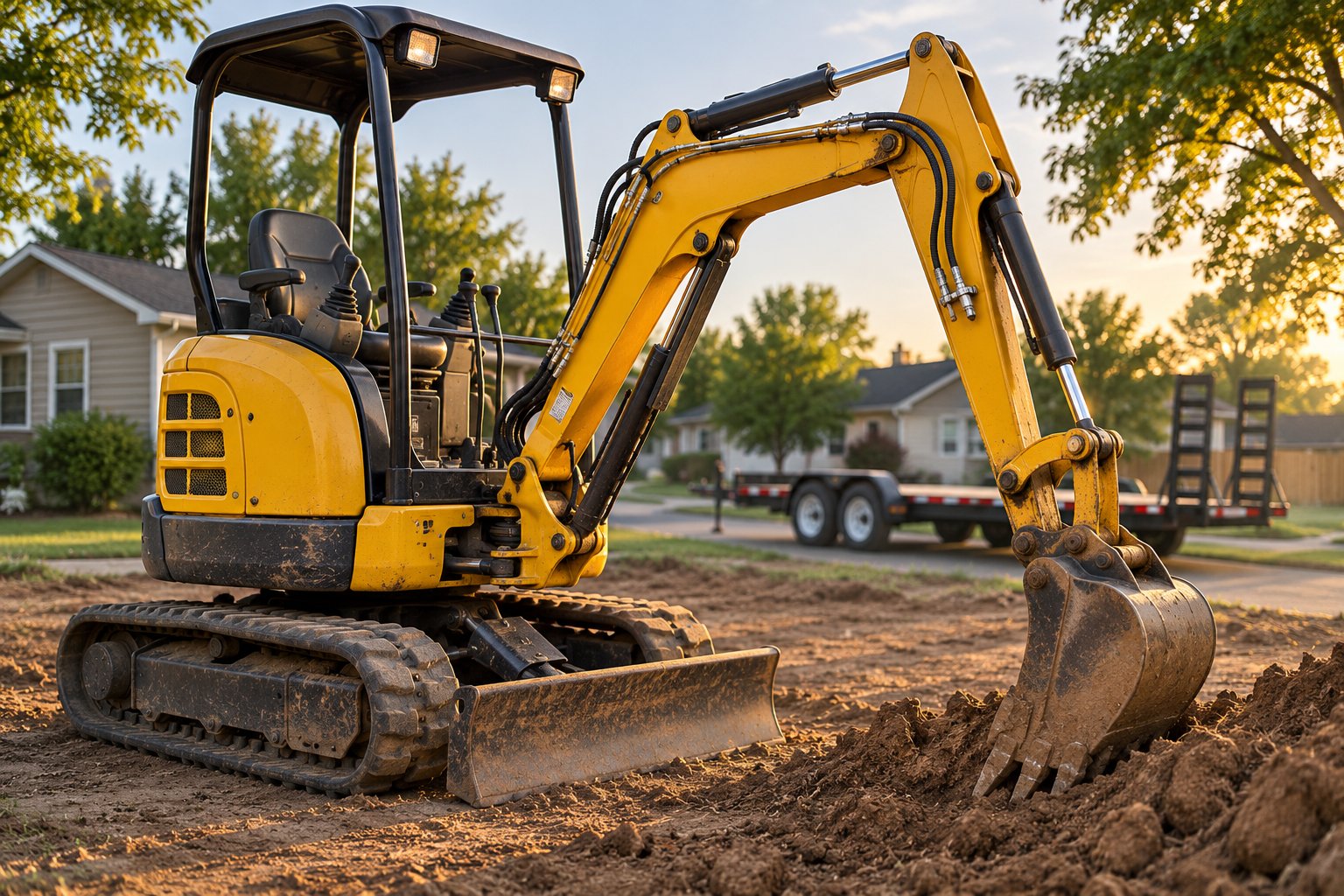
Picture a backyard pool excavation with a wooden fence on three sides and a finished patio on the fourth. That's the world mini and compact excavators were built for. The Komatsu lineup from the Komatsu PC01 — a sub-one-ton micro unit originally designed as a personal-use machine in Japan — through the PC88MR-11 at roughly 8.7 tonnes covers landscaping, utility trenching, residential foundations, indoor demolition, and light grading work.
What makes this class uniquely capable in tight quarters? Zero-tail-swing and minimum-radius (MR) configurations. On a machine like the PC55MR-5, the upper structure stays within the track width during rotation, meaning you can swing the cab next to a wall or fence without striking it. The PC78US-11 takes this further with an ultra-short tail swing and 68 horsepower — enough muscle for serious utility work while maintaining a compact footprint. For contractors who also need to reposition quickly across paved surfaces without damaging asphalt, a wheel excavator variant offers rubber-tired mobility as an alternative to crawler tracks.
Transport is another practical advantage. Every machine in this tier fits on a standard flatbed or equipment trailer without overwidth permits. A compact excavator like the PC45MR-5 weighs under 11,000 pounds — light enough for a contractor with a heavy-duty pickup and trailer to mobilize without hiring a separate haul truck. That flexibility matters when you're running three residential jobs in the same week.
Mid-Size Excavators for General Construction
If the mini class is the specialist, the mid-size segment is the generalist — and it's the most popular excavator class sold worldwide for good reason. Models from the PC200 through the PC290 handle an enormous range of work: road building, commercial site development, storm drain trenching, bridge abutment excavation, moderate demolition, and mass cut-and-fill operations.
The 20-tonne class, anchored by the PC210LC-11, represents the sweet spot for most general contractors. With 165 horsepower, a maximum dig depth of 21 feet 9 inches, and reach extending to 32 feet 5 inches, this machine balances digging force, cycle speed, and transportability in a way that smaller or larger classes simply can't replicate at the same cost per yard of material moved. It's the machine you'll see loading trucks on a subdivision grading project one month and trenching a 48-inch sewer main the next.
Moving up within the tier, the PC290LC-11 at roughly 33 tonnes adds 196 horsepower and over 44,500 pounds of bucket digging force. That extra muscle pays off on tougher materials — compacted clay, weathered rock, and dense gravel — without jumping to the higher transport costs and mobilization complexity of a large-frame machine. Super long front (SLF) variants extend reach to 60 feet, turning a standard mid-size platform into a slope-shaping or waterway-cleaning tool.
Large Crawler Excavators for Heavy Earthmoving
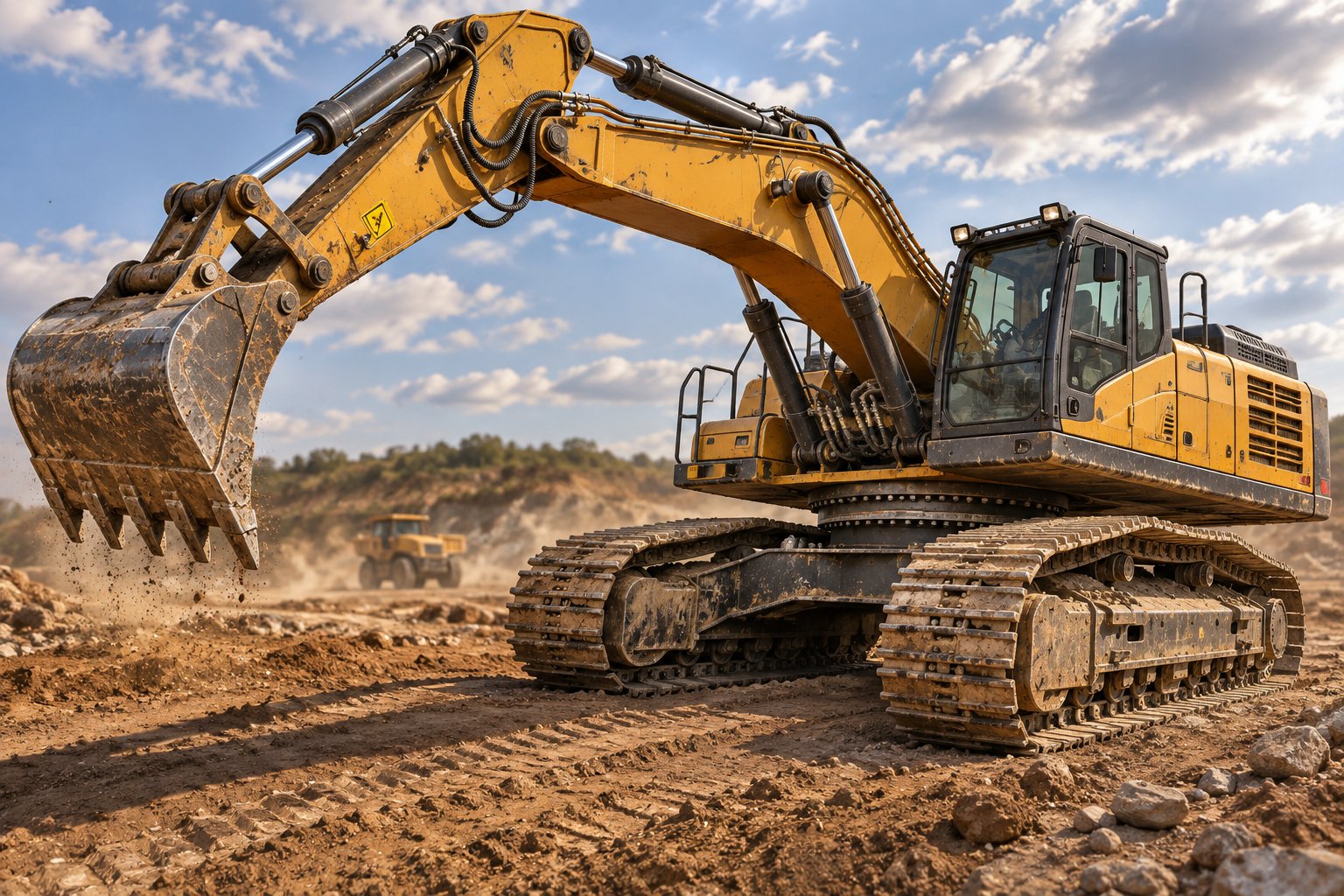
When the job demands deeper cuts, bigger bucket loads, and serious lifting capability, the PC360 through PC490 class steps in. These machines anchor heavy civil works projects — highway interchanges, dam construction, large-scale demolition, quarry face loading, and pipeline corridor excavation.
Imagine loading 30-ton articulated haul trucks at a pace that keeps four trucks cycling without idle time. A PC490LC-11 delivers 359 horsepower and 61,730 pounds of bucket digging force, with operating weights reaching 110,000 pounds. That's enough mass and hydraulic power to run a 3.5-cubic-yard bucket through hard-packed material efficiently. The PC360LC-11, at 257 horsepower and around 80,000 pounds operating weight, offers a slightly more transportable option for projects that need large-class capability without maximum-weight mobilization logistics.
Stepping further up, the PC650LC-11 at 436 horsepower and the PC900LC-11 at 543 horsepower blur the line between construction and production mining. These are machines built for sustained, high-volume output — where every hour of downtime carries a price tag measured in thousands of dollars.
Mining-Class Excavators Built for Production
Production mining operates on a completely different scale. Here, the conversation shifts from cubic yards per hour to cubic meters per shift, and the machines involved make even the largest construction excavators look modest by comparison.
Komatsu's mining-class lineup — the PC2000, PC3000, PC4000, PC5500, PC7000, and PC8000 — serves open-pit operations extracting coal, copper, iron ore, oil sands, and other bulk commodities globally. The PC8000-11 sits at the top: 4,020 horsepower, an operating weight between 768 and 777 tons, and bucket capacity up to 42 cubic meters. It's engineered to cycle through 240- to 400-short-ton haul trucks and stands firmly among the largest excavators in the world. Available in both diesel and electric-drive configurations, the PC8000 is designed with input from mining operations across multiple continents, reflecting decades of field data on durability, cycle times, and maintenance access.
Even the "entry-level" mining model — the PC2000-11 at 1,046 horsepower — dwarfs anything on a typical construction site, with an operating weight exceeding 445,000 pounds.
The comparison table below puts all four classes side by side so you can see exactly how capability, scale, and application scope shift as you move up the lineup:
| Class | Representative Models | Operating Weight Range | Typical Bucket Size | Common Applications | Transport Considerations |
|---|---|---|---|---|---|
| Mini / Compact | PC01, PC30MR-5, PC55MR-5, PC78US-11, PC88MR-11 | Under 1 t to ~8.7 t (2,200 – 19,200 lb) | 0.01 – 0.28 m3 | Landscaping, utility trenching, residential foundations, indoor demolition, pool excavation | Standard flatbed or equipment trailer; no overwidth permits required |
| Mid-Size | PC210LC-11, PC238USLC-11, PC240LC-11, PC290LC-11 | ~21 t to ~33 t (51,400 – 72,100 lb) | 0.8 – 1.6 m3 | Road building, commercial excavation, site development, storm drain trenching, moderate demolition | Lowboy trailer; may require pilot car above 8.5 ft width in some jurisdictions |
| Large | PC360LC-11, PC490LC-11, PC650LC-11, PC900LC-11 | ~36 t to ~93 t (78,600 – 204,000 lb) | 1.5 – 5.4 m3 | Heavy civil works, quarry loading, pipeline, large demolition, mass earthmoving | Heavy-haul lowboy; overwidth and overweight permits typically required; multi-axle trailers for 50+ tonne units |
| Mining-Class | PC2000-11, PC3000-11, PC5500-11, PC8000-11 | ~202 t to ~777 t (445,000 – 1,713,000 lb) | 12 – 42 m3 | Open-pit mining (coal, copper, iron ore, oil sands), overburden removal, bulk commodity extraction | Shipped disassembled; on-site assembly required with support cranes; typically stays at mine for machine life |
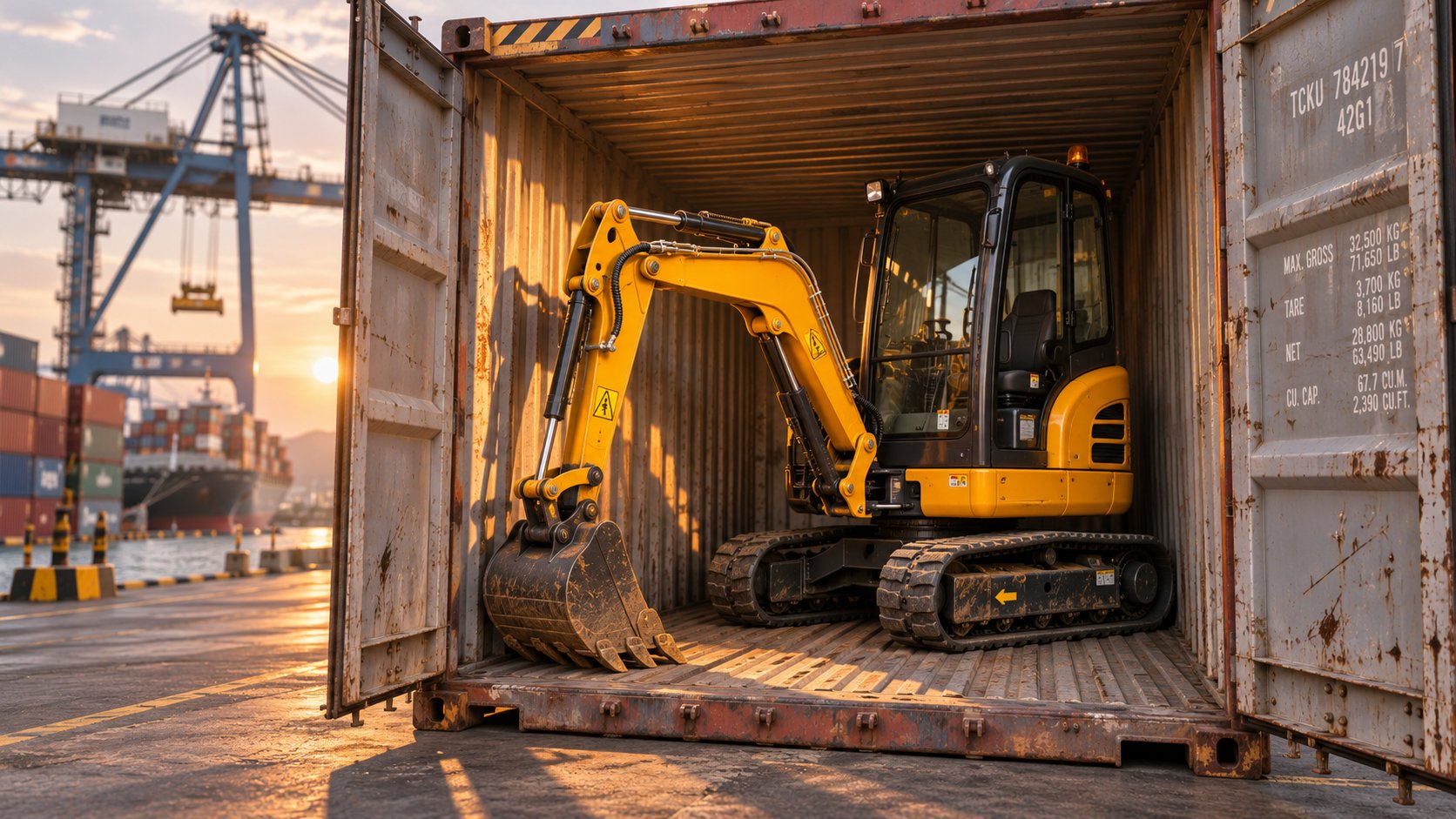
Notice the jump in transport complexity as you climb the classes. A mini goes on a flatbed behind a pickup. A mining-class machine ships in pieces and gets assembled on-site by a dedicated crew over several weeks. That logistical reality shapes not just the purchase decision but the entire operational model — and it's precisely why understanding the technology built into each class matters just as much as the raw specifications.
Komatsu Technology That Sets These Machines Apart
Raw specifications — horsepower, bucket force, operating weight — tell you what a machine can do. Technology tells you how efficiently, safely, and profitably it does it. Komatsu has spent decades building proprietary systems that layer intelligence on top of hydraulic muscle, and understanding these technologies is often the deciding factor when contractors compare machines side by side — whether against another Komatsu generation or cat excavators for sale across the aisle at a dealer lot.
KOMTRAX Telematics and Fleet Monitoring
Imagine knowing exactly where every machine in your fleet is, how many hours each has run today, how much fuel each consumed, and whether any error codes fired — all without leaving your office. That's what KOMTRAX (Komatsu Machine Tracking System) delivers.
KOMTRAX is a satellite-based telematic system embedded in every new Komatsu excavator as standard equipment. It transmits real-time data — GPS location, operating hours, fuel consumption, idle time, load factors, hydraulic temperatures, and diagnostic fault codes — to a cloud platform accessible from any PC, smartphone, or tablet. Fleet managers can set threshold alerts for fuel usage, receive automated maintenance reminders, and even remotely lock the engine if a machine is reported stolen or used outside authorized hours.
The system extends beyond Komatsu-branded iron. Through the My Komatsu digital hub, operators running mixed fleets can pull ISO 15143-3 (AEMP 2.0) telematic data from other OEMs into the same dashboard — eliminating the need to juggle multiple monitoring platforms. Maps, tables, fuel charts, and historical trend graphs all live in one place. For a fleet running a Komatsu 490 alongside mid-size units and compact machines from different manufacturers, that single-pane visibility simplifies utilization analysis dramatically.
Intelligent Machine Control and Semi-Autonomous Digging
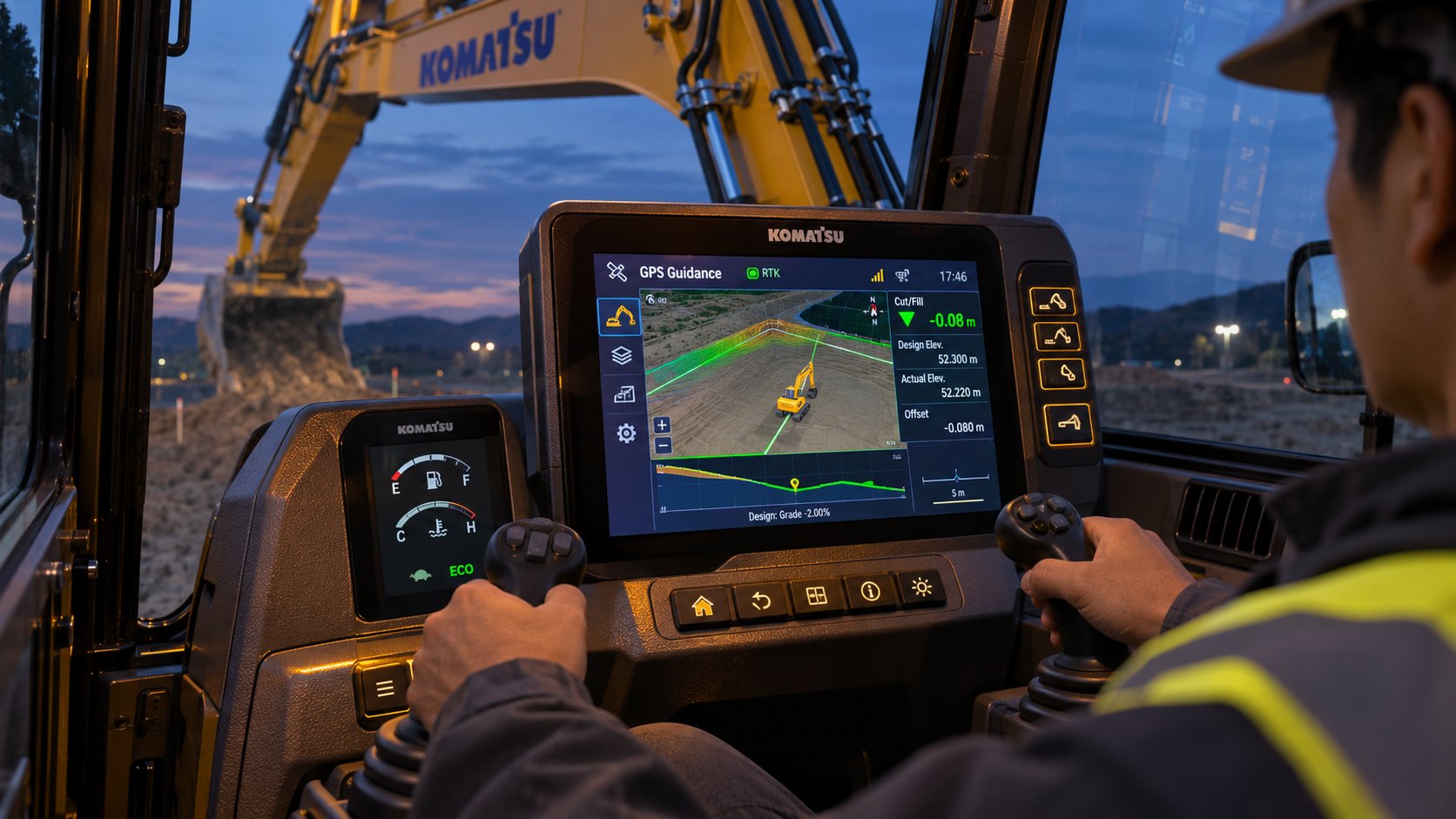
Survey stakes, grade checkers, and constant manual depth verification slow down excavation. Komatsu's intelligent Machine Control (iMC) technology eliminates much of that overhead by integrating 3D GPS/GNSS positioning directly into the machine's hydraulic control logic.
Here's how it works in practice: a 3D design surface is loaded onto the excavator's monitor. As the operator digs, the system continuously tracks the bucket's cutting edge relative to that design. When the bucket approaches finish grade, iMC automatically limits downward movement of the boom, arm, and bucket — preventing over-excavation without the operator needing to feather controls manually. The result is faster grading, less material waste, and reduced rework.
The latest iteration, IMC 3.0, introduced on the PC220LCi-12, takes automation further. It adds factory-integrated 3D boundary control — a construction-industry first — that lets operators set GPS-tied restriction zones for height, depth, front, back, and side boundaries. The machine stops automatically when approaching a restricted zone, such as a buried utility or overhead power line. IMC 3.0 also introduces Auto Swing, which automates the upper-body swing between dig point and dump point with a two-button press, plus an enhanced payload system for real-time weighing and load-out tracking.
iMC is available across multiple excavator classes. Mid-size models like the PC210LCi-11 and PC220LCi-12 offer it as a factory-integrated option, and Komatsu plans to expand IMC 3.0 into additional excavators and dozers in future launches. Even standard PC220LC-12 units can be upgraded to full iMC capability through a factory kit, future-proofing the initial investment. Much like how Komatsu bulldozer powershift transmission reliability mining applications have earned long-term trust through proven field performance, iMC technology has logged over 40 million operating hours across more than 14,000 machines globally — a depth of real-world validation that's difficult to replicate.
Hydraulic Efficiency and Hybrid Systems
Hydraulic systems are the heart of any excavator, and Komatsu has engineered two distinct approaches to making them more efficient: smarter flow control and energy recapture.
The CLSS (Closed-Center Load-Sensing System) is Komatsu's foundational hydraulic architecture on most construction-class machines. Unlike open-center systems that circulate oil at full pressure constantly, CLSS uses variable-displacement pumps that adjust output to match actual demand. When the operator pauses between digging cycles, pump flow drops. When multiple functions run simultaneously — boom raise plus arm curl plus swing — the system allocates flow proportionally. The net effect is less wasted energy and measurably lower fuel consumption across a full shift.
The newest generation takes this further. The PC220LC-12 platform introduces an Electric over Hydraulic system that replaces traditional pilot-pressure-controlled (PPC) valves with electronically actuated controls. Operators can adjust hydraulic flow speed preferences, and the system scales semi-automatic grade control smoothness to match those settings. Over-the-air software updates — a first for Komatsu excavators — keep the platform current without dealer visits.
For applications where fuel savings and emissions reduction carry even more weight, the HB-series hybrid excavators offer a fundamentally different approach. The HB365LC-3, Komatsu's third-generation electric hybrid, uses an electric motor-generator on the swing mechanism to capture kinetic energy during swing deceleration and store it in a capacitor. When the operator swings again, that stored energy powers the rotation electrically — freeing 100 percent of the hydraulic system's capacity for the boom, arm, and bucket.
The practical impact is significant. Because the swing no longer competes with digging functions for hydraulic flow, operators describe the HB365LC-3 as noticeably "snappier" than its diesel-only counterpart. In truck-loading scenarios — where the machine repeatedly digs, swings 90 degrees or more, dumps, and returns — Komatsu reports the hybrid delivers 20 percent better fuel efficiency, 15 percent higher productivity, and 20 percent lower CO2 emissions compared to equivalent diesel models. For owners evaluating komatsu 490 excavator price points against the HB365LC-3's 36-tonne class, the hybrid's lower operating cost over thousands of hours can offset its higher acquisition price.
The hybrid system adds only four components beyond the standard machine — an engine-mounted generator, a swing generator, a capacitor, and an inverter — keeping additional maintenance requirements minimal.
Emissions Compliance and Engine Technology
Every Komatsu excavator sold in regulated markets runs a Komatsu-built SAA-series diesel engine meeting Tier 4 Final (U.S.) or EU Stage V emissions standards. Unlike manufacturers that source engines externally, Komatsu designs and produces these powerplants in-house, allowing tight integration between engine management, hydraulic controls, and exhaust aftertreatment.
The exhaust system centers on the KDPF (Komatsu Diesel Particulate Filter), which captures soot and regenerates automatically during normal operation — no manual intervention or forced downtime needed in most conditions. Selective Catalytic Reduction (SCR) using Diesel Exhaust Fluid (DEF) handles NOx reduction. Together, these systems meet the strictest global emissions limits while maintaining the power output and throttle response operators expect.
Buyers occasionally researching across equipment categories — comparing everything from an mx12rx mini excavator from another brand to the world's biggest excavator in Komatsu's mining lineup — will find that Komatsu's engine technology scales consistently. The same in-house design philosophy applies whether the engine displaces 3.4 liters in a compact model or over 65 liters in a PC8000.
Here's a quick-scan summary of each core technology and what it delivers:
- KOMTRAX Telematics — Real-time GPS tracking, fuel monitoring, fault-code alerts, and remote engine lock reduce theft risk and enable proactive maintenance scheduling across mixed fleets.
- Intelligent Machine Control (iMC / IMC 3.0) — 3D GNSS-integrated semi-automatic digging prevents over-excavation, achieves finish grade without survey stakes, and adds automated swing and boundary-control features on the latest generation.
- CLSS Hydraulics — Variable-flow, load-sensing pump control matches hydraulic output to demand, cutting fuel waste during partial-load and idle cycles.
- Electric over Hydraulic (EoH) — Electronically actuated valve control enables customizable flow speeds, smoother automation response, and over-the-air software updates.
- HB-Series Hybrid System — Electric swing energy recapture delivers up to 20% fuel savings and 15% productivity gains by freeing full hydraulic capacity for boom, arm, and bucket functions.
- SAA-Series Diesel Engines — In-house designed and manufactured engines meet Tier 4 Final / EU Stage V standards with integrated KDPF and SCR aftertreatment for clean, reliable power.
Technology shapes what a Komatsu excavator can accomplish. But the real question for most buyers isn't which features exist — it's which features matter for their specific project type. Matching the right machine class and technology tier to a concrete job-site scenario is where theory meets payoff.
Matching the Right Komatsu Excavator to Your Job Site
You understand the model numbers. You've seen the spec sheets. But here's the question that actually drives a buying decision: which machine belongs on your job site, doing your work, under your specific constraints? Specifications describe capability in the abstract. Applications ground those numbers in dirt, concrete, and deadlines.
The guidance below works backward from common project types to the Komatsu excavator class, configuration, and attachments that deliver the best results — a practical matching exercise that turns catalog knowledge into field-ready decisions.
Residential and Light Commercial Projects
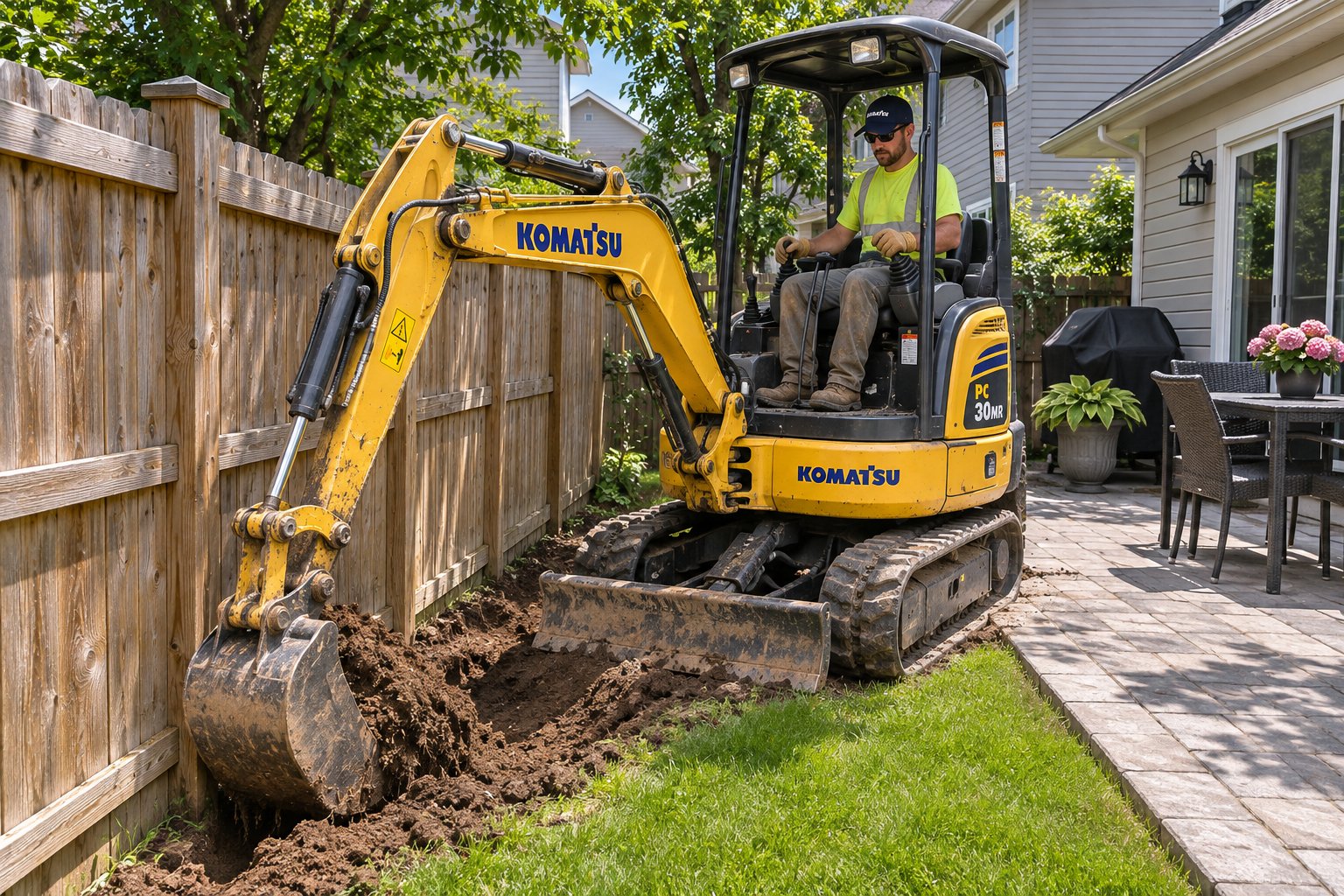
When you're digging a swimming pool in a fenced backyard, trenching a waterline between an existing garage and a street main, or grading a residential lot for a new foundation, space is the primary constraint. Neighbors are close, finished surfaces are everywhere, and there's rarely room for a machine that swings wide.
This is where the komatsu mini excavator lineup — the PC26 through PC88 range — earns its keep. Models like the PC35MR-5 and PC55MR-5 feature zero-tail-swing designs that keep the counterweight inside the track width during rotation. You can swing the cab parallel to a fence or retaining wall without striking it, which is critical when excavating next to finished hardscaping or property-line structures.
The PC78US-11 and PC88MR-11 push further into the compact utility space, delivering enough dig depth and bucket force for foundation work, storm water retention installations, and light commercial grading. Their operating weights — roughly 7.7 to 8.7 tonnes — still fall within standard trailer capacities, so a single contractor can mobilize between residential sites without overweight permits or specialized hauling.
Need to reposition across paved parking lots or finished driveways without damaging the surface? Wheeled excavator variants eliminate track marks entirely. Rubber tires allow faster travel speeds on asphalt and concrete, making them ideal for utility contractors who move between dig points spread across a commercial property or municipal streetscape. The trade-off is reduced traction on soft ground, so crawlers remain the better choice for muddy sites or slopes.
Attachments expand what these small machines can accomplish. A hydraulic thumb turns the bucket into a grapple for handling boulders, root balls, and debris. An auger attachment drills post holes or pier footings. A grading bucket with a flat bottom and wider profile handles final surface preparation without switching to a separate machine. For landscaping contractors, that kind of versatility means fewer equipment rentals per project.
Road Building, Site Development, and Civil Works
Scale up the project, and the machine class scales with it. Road building, commercial site development, bridge construction, and civil infrastructure work demand mid-size and large crawlers that balance reach, digging force, cycle speed, and the stamina to run ten-hour shifts day after day.
The PC200 through PC290 class handles the bulk of this work. Cut-and-fill operations on highway projects, trenching for 36-inch storm drains, shaping bridge abutments, and loading 25-ton haul trucks all fall within the sweet spot of a PC210LC-11 or PC240LC-11. These machines deliver enough bucket capacity — roughly 0.8 to 1.6 cubic meters — to keep truck fleets moving without oversizing the excavator relative to the material being handled.
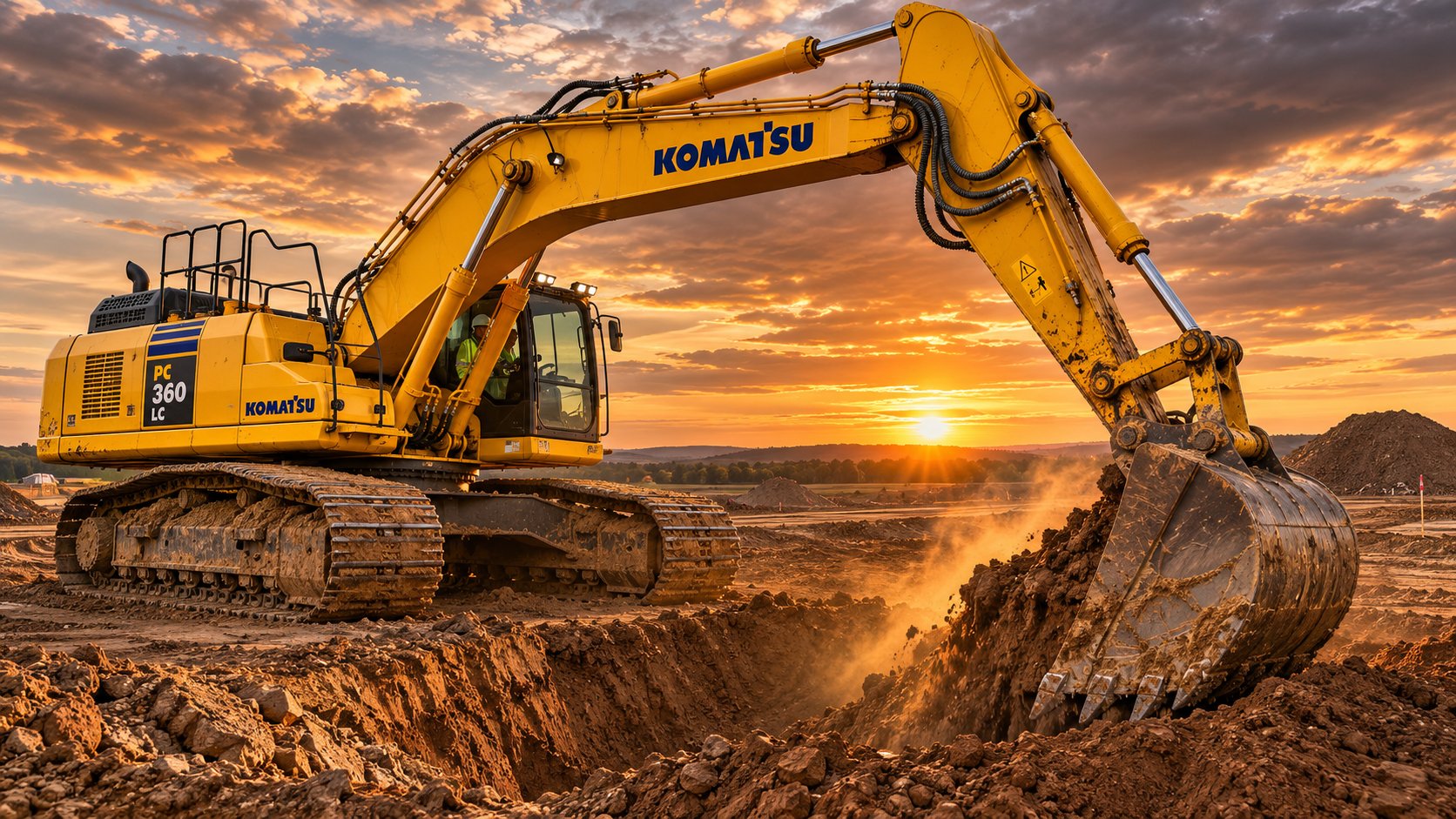
For larger civil works — highway interchanges, dam embankments, levee construction — the PC360 through PC490 class brings deeper reach and significantly higher bucket forces. A PC360LC-11 (the 360/11 generation) provides 257 horsepower and roughly 2.56 cubic meters of bucket capacity, making it a strong match for quarry-face loading and heavy mass earthmoving where mid-size machines would cycle too slowly. The PC490LC-11 steps up to 359 horsepower and handles the high-volume loading scenarios that keep four or five articulated trucks rotating without idle gaps.
Long-reach configurations deserve special mention for civil and waterway projects. A super long front (SLF) variant on a PC210 platform extends working range to roughly 60 feet, enabling slope shaping on highway embankments, channel cleaning on drainage canals, and levee maintenance — all from a stable position set back from the edge. This reach eliminates the need to position the machine on unstable banks or construct temporary access ramps, saving both time and risk.
Larger long-reach setups on the PC360 and PC490 platforms serve river dredging, reservoir maintenance, and deep-cut pipeline trenching where the extra boom length and increased hydraulic flow keep cycle times productive even at maximum extension. Models comparable in class to machines like the PC1250/7 generation historically served as bridge machines between standard construction and mining-scale earthmoving — a role the current PC900LC-11 and PC1250LC-11 continue to fill for high-volume infrastructure projects.
Demolition, Quarry, and Specialty Applications
Demolition work flips the usual excavator priorities. Instead of digging down, you're often reaching up — tearing apart multi-story concrete structures, cutting steel beams, and sorting debris streams for recycling. The machine needs reinforced guarding, high-flow hydraulics for powered attachments, and in many cases, a purpose-built high-reach boom that can dismantle a building floor by floor from a safe standoff distance.
Komatsu's mid-size and large-class machines — particularly the PC360LC-11, PC490LC-11, and larger frames — serve as the base platforms for demolition excavator configurations. High-reach boom conversions extend the working envelope to 60 feet or more, allowing operators to pull down upper floors while the machine sits at ground level. Factory-fitted or aftermarket guarding packages protect the cab, cylinders, and undercarriage from falling debris — a necessity on any demolition site where concrete chunks rain down unpredictably.
Attachment selection drives profitability in demolition just as much as the base machine. Industry experience shows that properly sizing attachments to the excavator's hydraulic flow and pressure is critical — an undersized machine running an oversized processor will operate slowly and risk premature wear. Conversely, matching the right combination unlocks revenue from both tearing down and processing materials on-site. Hydraulic breakers crack concrete foundations. Concrete processors with interchangeable jaws crush, crack, and shear structural elements. Sorting grapples separate steel rebar from concrete rubble for recycling. Shears cut through I-beams and plate steel.
In quarry applications, the focus shifts to sustained production loading. PC490 and PC650 machines equipped with heavy-duty (HD) rock buckets load face material into haul trucks shift after shift. The key metric here is match factor — the excavator's bucket capacity and cycle time need to keep the truck fleet moving without bottlenecks. Undersizing the excavator means trucks idle at the face; oversizing wastes capital and fuel.
Specialty applications round out the picture. Mulching heads mounted on mid-size excavators clear vegetation for right-of-way projects. Vibratory plate compactor attachments on compact models compact trench backfill in a single pass. Tilt-rotator couplers — increasingly popular in European and North American markets — allow the bucket to rotate 360 degrees and tilt side to side, essentially giving the operator wrist-like flexibility for precision grading and pipe laying.
The table below matches five common job scenarios to the Komatsu class, features, and attachments best suited for each:
| Application Type | Recommended Komatsu Class | Key Features Needed | Suggested Attachments |
|---|---|---|---|
| Residential foundation and pool excavation | Mini / Compact (PC35MR-5, PC55MR-5, PC78US-11) | Zero-tail-swing or minimum-radius design; trailer-friendly weight; rubber track pads for finished surfaces | Standard digging bucket, hydraulic thumb, grading bucket |
| Utility trenching and landscaping | Mini / Compact (PC26, PC30MR-5, PC45MR-5) | Compact footprint; auxiliary hydraulic circuits for attachments; quick coupler | Trenching bucket, auger, hydraulic thumb, backfill blade |
| Road building and commercial site development | Mid-Size (PC210LC-11, PC240LC-11, PC290LC-11) | CLSS hydraulics for fuel efficiency; iMC for semi-automatic grading; long crawler undercarriage for stability | General purpose bucket, ripper tooth, slope bucket, compaction wheel |
| Structural demolition and material processing | Large (PC360LC-11, PC490LC-11, PC650LC-11) | High-reach boom option; factory guarding package; high-flow auxiliary hydraulics; reinforced undercarriage | Hydraulic breaker, concrete processor / crusher, sorting grapple, steel shears |
| Quarry face loading and mass earthmoving | Large (PC490LC-11, PC650LC-11, PC900LC-11) | Heavy-duty frame; maximum bucket force; reinforced boom and arm; KOMTRAX production monitoring | Heavy-duty rock bucket, tooth systems (tiger or chisel points), ripper |
Every row in that table represents a real-world decision point: match the machine to the work, not the other way around. Oversizing burns fuel and capital. Undersizing burns hours and patience. Getting it right, though, delivers something harder to quantify — a fleet that earns more per hour than it costs to operate. And that calculation leads directly into the broader ownership picture: what does a Komatsu excavator actually cost to maintain, support, and eventually resell?
Ownership Costs, Maintenance, and Resale Value
A Komatsu excavator's sticker price is the number everyone fixates on. But the machine that costs the least to buy isn't always the machine that costs the least to own. Fuel, filters, hydraulic fluid, undercarriage wear, dealer labor rates, unplanned downtime, and eventual resale recovery — these running costs accumulate over thousands of hours and quietly determine whether a machine earns its place in the fleet or drains it. Understanding the total cost of ownership separates buyers who make profitable equipment decisions from those who simply chase the lowest purchase price.
Maintenance Intervals and Service Requirements
Komatsu follows the same tiered, hour-based preventive maintenance (PM) structure used across the heavy equipment industry — services at 250, 500, 1,000, and 2,000 hours — but layers proprietary programs on top that no other OEM currently matches in scope.
Here's what each interval involves on a typical Komatsu excavator:
| Service Tier | Hour Interval | Key Tasks |
|---|---|---|
| PM-1 | Every 250 hours | Engine oil and filter change, grease all pivot points (boom, arm, bucket, swing bearing), check fluid levels, inspect air filter, belt and hose inspection, visual walk-around |
| PM-2 | Every 500 hours | All PM-1 tasks plus fuel filter and water separator replacement, hydraulic return filter replacement, battery service, coolant SCA test, KOWA oil sample, detailed undercarriage inspection |
| PM-3 | Every 1,000 hours | All PM-2 tasks plus hydraulic oil sample, final drive oil change (both sides), turbocharger inspection, undercarriage wear measurements, valve adjustment check, structural inspection of boom and stick welds |
| PM-4 | Every 2,000 hours | All PM-3 tasks plus full hydraulic system oil change, coolant flush and replacement, swing machinery oil change, comprehensive component evaluation, KDPF check (typically at ~4,500-hour intervals) |
Beyond the standard intervals, Komatsu's KDPF (Diesel Particulate Filter) exchange is recommended at approximately 4,500 and 9,000 hours on Tier 4 machines — a critical step for maintaining emissions compliance and engine performance. SCR (Selective Catalytic Reduction) system maintenance aligns with the same milestones.
What makes the Komatsu maintenance ecosystem distinctive is how tightly it's integrated with technology. KOMTRAX automatically tracks operating hours, monitors load factors and fuel consumption, and notifies both the owner and the servicing dealer when each PM interval approaches. Countdown timers on the in-cab display and email alerts eliminate the guesswork that leads to missed services on busy job sites. For machines running hydraulic breakers or other high-stress attachments, KOMTRAX data even supports shortening intervals based on actual load frequency — because a machine hammering rock eight hours a day wears differently than one trenching soft clay.
New Komatsu Tier 4 equipment also ships with Komatsu CARE — complimentary factory-scheduled maintenance for the first three years or 2,000 hours, whichever comes first. Each CARE service includes a 50-point inspection by factory-certified technicians, Komatsu Genuine Lubricants, and KOWA (Komatsu Oil Wear Analysis) fluid sampling. KOWA provides laboratory-grade analysis of engine oil, hydraulic fluid, coolant, and drivetrain fluids — tracking wear metals, contamination levels, and viscosity changes over time to catch developing problems before they escalate into unplanned repairs. After CARE expires, Komatsu CARE PLUS extends coverage at fixed national pricing with no surprise costs, and any authorized dealer nationwide can perform the work.
For owners of older Japanese Komatsu machines — pre-Tier 4 units without telematics — the same PM structure applies, but without the automated monitoring safety net. These machines benefit even more from disciplined service tracking, whether through a fleet management platform or simple spreadsheet logging.
Parts Availability and Dealer Network Strength
A machine sitting idle waiting for a hydraulic pump or a set of track shoes costs money every hour it isn't working. Parts availability and dealer responsiveness are, in practical terms, as important to total ownership cost as fuel efficiency or purchase price.
Komatsu's global dealer network spans every major construction and mining market. In North America alone, authorized distributors operate hundreds of branch locations with parts inventories, field service trucks, and factory-trained technicians. The genuine parts distribution system flows from Komatsu's global manufacturing hubs in Japan, Indonesia, and other production centers through regional distribution hubs to local dealer shelves.
That supply chain is actively expanding. Komatsu recently invested in doubling the capacity of its Edmonton, Alberta parts distribution center — transforming a regional depot into a full-service 135,000-square-foot hub with 24-hour delivery capability to western Canadian dealers. The facility integrates directly with Komatsu's global warehouse management system, streamlining supply routes from manufacturing plants to dealer counters. Moves like this signal a company investing in uptime infrastructure, not just machine sales.
Beyond genuine OEM parts, a robust aftermarket ecosystem exists for Komatsu excavators. Third-party manufacturers produce filters, undercarriage components, bucket teeth, hydraulic seals, and wear parts that fit PC-series machines at lower price points. The breadth of this aftermarket reflects the sheer global population of Komatsu machines — a wheeled excavator or crawler model that sells in high volumes naturally attracts more aftermarket suppliers, which drives competition and keeps replacement costs in check.
For contractors running mixed fleets, Komatsu's dealer density matters in a relative sense. Brands with thinner support infrastructure — fewer branches, smaller parts inventories, longer lead times for non-stocked components — create hidden downtime costs that don't show up on the purchase invoice but absolutely show up in lost production days. When you're comparing a Komatsu excavator for sale against a competitor with a lower sticker price, factoring in parts lead times and dealer proximity can shift the math significantly.
Resale Value and the Used Komatsu Market
Every machine purchase has an exit strategy, whether the owner plans for it or not. A Komatsu excavator's resale value at 5,000, 10,000, or 15,000 hours directly affects the true cost of ownership — and this is one area where the brand consistently performs well.
Auction data supports the pattern. EquipmentWatch data covering March 2025 through February 2026 shows that among the 20 most expensive crawler excavators sold at auction during that period, every single machine was either a Caterpillar or a Komatsu — no other brand made the list. Average resale prices across the broader used excavator market hovered near $159,000 at peak and held in the $155,000 range through winter months. Notably, the average age of used excavators on the market crept from 7.1 to 7.7 years, indicating fleets are holding machines longer and buyers are pushing further down the age curve to find inventory.
Why do these machines hold value? The same factors that make them productive on the job — brand recognition, build quality, vertically integrated component manufacturing, and global parts availability — create confidence in the secondary market. International demand is particularly strong. Buyers across Southeast Asia, Africa, the Middle East, and Latin America actively seek used Komatsu machines because they know replacement parts are globally accessible and the dealer network, even for older models, remains robust.
Several factors influence where a specific machine lands on the resale spectrum:
- Accumulated hours — Lower hours relative to machine age signal lighter use or better-maintained equipment; machines under 5,000 hours command premium pricing
- Maintenance records and KOWA history — Documented PM compliance, especially under Komatsu CARE, significantly boosts buyer confidence and justifies higher asking prices
- Generation / dash number — Newer generations (-10, -11) with current emissions compliance and advanced technology packages retain value better than older dash numbers
- Geographic market — Demand varies by region; a machine priced competitively in North America may command a premium when exported to markets with high demand for used Japanese Komatsu equipment
- Attachment package — Machines sold with buckets, thumbs, quick couplers, or specialized tooling attract more buyer interest than bare units
- Undercarriage condition — Track shoes, rollers, idlers, and sprockets represent one of the most expensive wear-item replacements; worn undercarriage components reduce resale value disproportionately
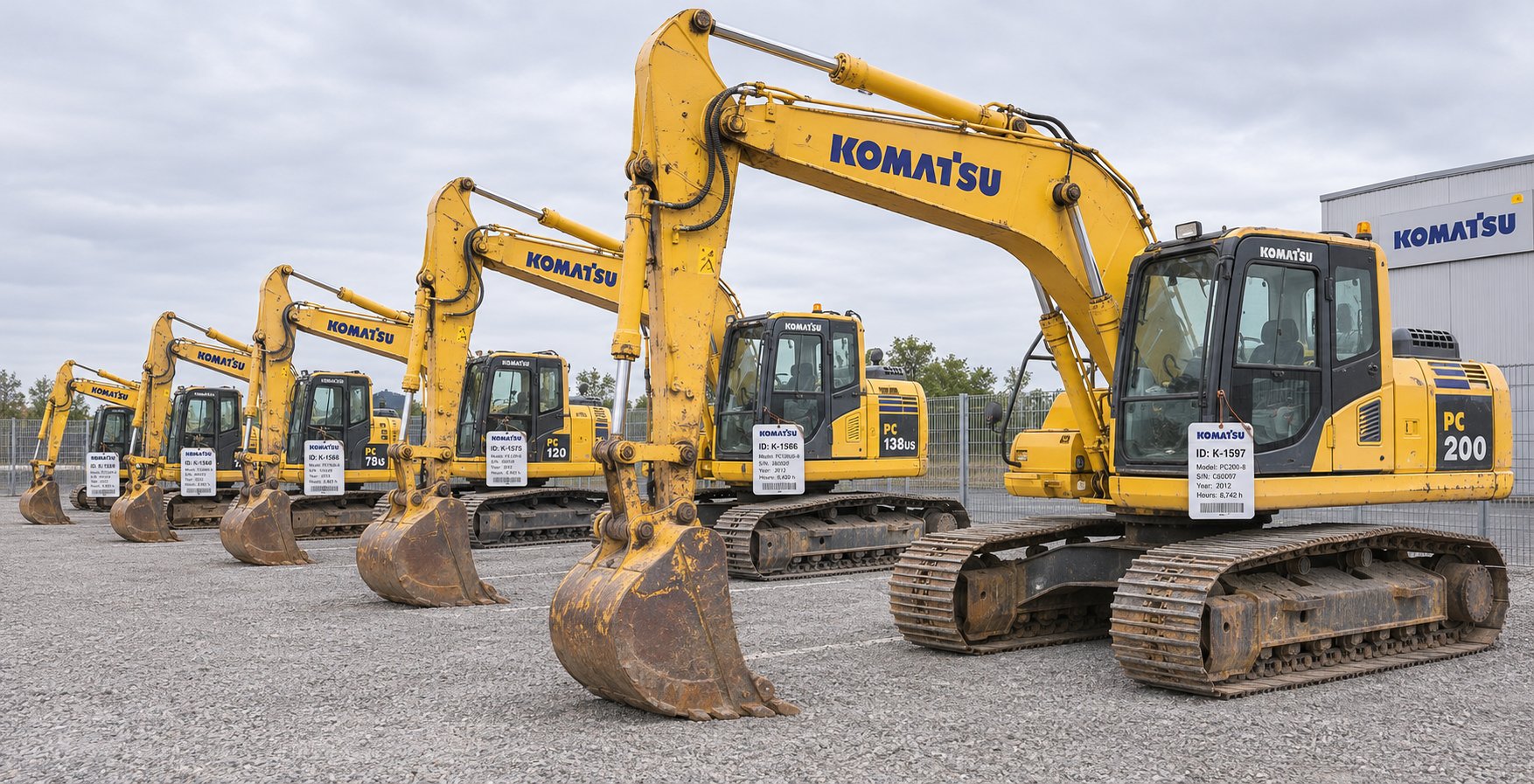
For contractors and dealers actively sourcing used machines, multiple channels exist. Authorized Komatsu dealers carry certified pre-owned inventory. Major auction houses like Ritchie Bros. and IronPlanet move significant volumes. Specialized online platforms offer curated selections — for example, JIUHONG's used Komatsu excavator collection allows buyers to browse available crawler models spanning compact through larger classes and request model-specific pricing, serving as a practical resource for comparing used inventory. As with any used equipment purchase, specific configurations — whether you're after an LC variant, a particular dash generation, or a micro excavator for tight-access work — should be confirmed directly with the seller, since availability changes frequently.
The used market also highlights an important pricing dynamic for anyone researching komatsu pc8000 price points or other mining-class machines. Ultra-large excavators rarely appear on open auction platforms — they typically trade through direct negotiation between mining companies and specialized brokers, often remaining at a single mine site for their entire operating life. The secondary market for construction-class machines (PC200 through PC490) is far more liquid, with higher transaction volumes and more transparent price benchmarking.
Whether buying new or used, the total ownership picture — maintenance discipline, parts access, dealer support, and eventual resale recovery — determines the real cost per hour of owning any excavator long into its service life. The smartest equipment decisions account for all of these variables before signing a purchase order, not after. And for buyers ready to move from research to action, the final step is knowing exactly where and how to source the right machine.
How to Find and Buy the Right Komatsu Excavator
You've identified the size class that fits your work, explored the technology that delivers real efficiency gains, and mapped out what ownership actually costs over thousands of hours. The remaining question is purely practical: where do you find the right machine, and what should you evaluate before committing money?
That answer depends heavily on one foundational decision — whether to buy new or used. Each path carries distinct trade-offs that ripple through your budget, project timeline, and long-term fleet strategy.
New vs. Used Komatsu Excavators and What to Evaluate
Buying new means walking into a dealer and configuring exactly what you want — the latest dash generation, full factory warranty, current emissions compliance, and access to technology packages like iMC 3.0 and Electric over Hydraulic controls. A new PC360LC-11 or PC210LCi-11 arrives with Komatsu CARE coverage, KOMTRAX already activated under your account, and zero hours on every component. For contractors bidding on government-funded projects that mandate Tier 4 Final compliance, or fleet managers who need predictable uptime over a five-to-seven-year ownership cycle, new acquisition often delivers the lowest total cost per hour despite the higher purchase price.
Buying used flips those priorities. The acquisition cost drops significantly — most excavators shed the steepest depreciation in their first three to four years, meaning a well-maintained machine with 3,000 to 5,000 hours can cost 30 to 50 percent less than an equivalent new unit. Availability is immediate; there's no factory lead time, which can stretch six months or longer during high-demand periods. And older dash-number machines like a PC 290LC-10 or a -8 generation unit have years of field-proven reliability behind them, with known maintenance patterns and a deep aftermarket parts supply.
The risk, of course, is inheriting someone else's problems. A big excavator that looks clean on the outside can hide expensive surprises in worn undercarriage components, fatigued hydraulic cylinders, or structural cracks masked by fresh paint. That's why a disciplined inspection matters more than any seller's description.
Before signing anything on a used Komatsu excavator, run through this checklist:
- Undercarriage wear percentage — Measure track chains, rollers, idlers, sprockets, and shoes against manufacturer specs. Undercarriage replacement is one of the most expensive repairs on any crawler, so knowing remaining life is essential for pricing negotiations.
- Hydraulic cylinder condition — Inspect boom, arm, and bucket cylinder rods for scoring, dents, and seal leaks. Operate each function under load and check for drift — a cylinder that slowly sinks when held in position signals internal bypass.
- Boom and arm pin play — Move the bucket and stick through their range while someone watches each joint. Clunking or visible slop at the pins and bushings means wear that affects digging precision and eventually requires rebuild work.
- Engine cold start — Request a cold start before the seller warms the machine. Hard cranking, excessive smoke, or unusual knocking on a cold engine reveals issues that disappear once oil circulates. On Tier 4 units, ask about any stored emissions fault codes.
- Cab electronics functionality — Test every switch, gauge, joystick, monitor screen, camera feed, climate control, and lighting circuit. Stored fault codes on the display reveal problems the seller may not volunteer. On iMC-equipped models like a 2021 Komatsu PC490LCi-11 for sale, verify that the GNSS receivers, IMU sensors, and control software are functional and current.
- KOMTRAX transferability — Confirm the telematics system can be transferred to your account. Review KOMTRAX hour records against the mechanical hour meter — discrepancies suggest meter tampering or system resets.
- Service history documentation — Ask for PM records, KOWA oil analysis reports, and major repair invoices. Gaps in maintenance documentation aren't automatic deal-breakers, but they warrant deeper mechanical inspection and a lower offer price.
A professional pre-purchase inspection by an independent technician is worth every dollar on machines above the compact class. Oil sampling alone — pulled from the engine, hydraulic system, final drives, and swing gearbox — can reveal wear metals, contamination, and coolant intrusion that visual inspection simply cannot detect.
Where to Start Your Search
Sourcing channels for Komatsu excavators range from factory-direct dealer inventory to global online platforms, and each channel serves a different buying scenario. Here's a practical sequence that covers the most ground efficiently:
- Specialized used equipment platforms — Start with curated inventories that focus specifically on Komatsu machines. JIUHONG's used Komatsu excavator collection lets contractors and dealers browse available crawler models across compact and larger classes, compare configurations side by side, and request model-specific pricing for project or resale needs. This kind of focused platform saves time versus scrolling through general marketplaces with thousands of mixed-brand listings. Keep in mind that specific configurations — a particular LC setup, a certain dash generation, or a niche model like a PC3000 mining unit — may not always be in stock, so confirming availability directly via inquiry is a smart first step.
- Authorized Komatsu dealers — For new machines and certified pre-owned units, your local dealer is the most straightforward path. Dealers offer factory warranty on new equipment, Komatsu CARE enrollment, and access to the latest generation models. Many dealers also carry used trade-in inventory with service records already on file, reducing the due-diligence burden.
- Online heavy equipment marketplaces — Platforms like Machinery Trader, Equipment Trader, and similar listing aggregators provide broad visibility across thousands of sellers. Use model-specific searches — filtering by dash number, hour range, and geographic radius — to narrow results quickly. Expect to do your own verification on these listings, since quality and documentation vary widely by seller.
- Auction houses — Ritchie Bros., IronPlanet, and regional auction companies move significant volumes of used Komatsu equipment. Auction pricing can deliver strong value, particularly on older units or machines being liquidated from fleet turnover. The trade-off is limited inspection time before bidding and typically no warranty coverage — reinforcing why a pre-purchase inspection is critical on auction units.
- Private sales and broker networks — Contractors selling directly, fleet liquidations, and equipment brokers offer another layer of inventory. These channels sometimes surface machines that never reach public marketplaces — particularly larger units like PC490 or PC650 frames — but require more legwork on title verification, lien checks, and independent condition assessment.
Regardless of the channel, always verify the machine's serial number against Komatsu's records, confirm there are no outstanding liens or title encumbrances, and secure a written agreement detailing exactly what's included — attachments, manuals, service records, and any warranty or return provisions.
Making a Confident Decision
Selecting the right Komatsu excavator ultimately comes down to three factors working in alignment:
Match machine class to application. A PC55MR handling backyard utility trenching and a Komatsu PC8000 loading 400-ton haul trucks in an open pit represent opposite ends of the same product line — both engineered precisely for their intended role. Oversizing wastes capital and fuel. Undersizing costs hours and patience. The comparison tables and application-matching guidance in this article exist to prevent both mistakes.
Understand which technology tier delivers real ROI for your operation. Not every contractor needs iMC 3.0 or hybrid swing energy recovery. But for operations running GPS-guided grading daily, or fleets burning 15,000 gallons of diesel per machine annually, those technologies translate directly into measurable savings. Evaluate the payback period against your specific utilization — not against a generic industry average.
Verify total ownership costs before committing. Purchase price is the opening number, not the final one. Maintenance intervals, parts lead times, dealer proximity, fuel efficiency, and projected resale value at your planned exit point all shape the true cost per operating hour. A machine that costs ten percent more to acquire but holds stronger residual value and burns less fuel across 8,000 hours may actually be the cheaper option in total.
Looking ahead, the Komatsu excavator lineup continues to evolve. The company's investments in electrification — including battery-electric micro and mini excavators already in pilot programs — and expanded automation through IMC 3.0 and autonomous haulage systems signal that the next generation of these machines will push efficiency and precision even further. Contractors and fleet managers who understand the current lineup deeply will be best positioned to evaluate those future developments and adopt them when the ROI case is clear.
Whether you're pricing a compact model for residential work, evaluating a mid-size workhorse for your next civil project, or sourcing a big excavator for quarry production, the fundamentals remain the same: know the machine, know the math, and buy with confidence.
Frequently Asked Questions About Komatsu Excavators
1. What does PC stand for in Komatsu excavator model numbers?
PC stands for 'Power Crawler' (also referenced as 'Power Crane' or 'Power Shovel Crawler'). It identifies the machine as a hydraulic crawler excavator within Komatsu's product catalog. The number following PC approximates the operating weight class in tonnes when divided by 10 — so a PC200 weighs roughly 20 tonnes and a PC490 weighs roughly 49 tonnes. Suffix letters like LC (Long Crawler), MR (Minimum Radius), and US (Ultra-Short tail swing) describe the specific configuration, while the dash number at the end (e.g., -11) indicates the generation.
2. How many size classes of Komatsu excavators are there?
Komatsu organizes its excavator lineup into five main size tiers. Micro and Mini models (PC01 through PC88) weigh under 1 tonne up to about 8.7 tonnes for residential and light utility work. Compact and Midi models (PC130 through PC170) bridge the gap at 13 to 19 tonnes. Standard Mid-Size models (PC200 through PC290) form the most popular 20- to 33-tonne workhorse segment. Large models (PC360 through PC1250) handle heavy civil works at 36 to 124 tonnes. Mining-Class machines (PC2000 through PC8000) range from 200 to roughly 800 tonnes for open-pit production. Each tier targets distinct project requirements, transport logistics, and budget ranges.
3. What is KOMTRAX on a Komatsu excavator?
KOMTRAX (Komatsu Machine Tracking System) is a satellite-based telematics platform installed as standard on every new Komatsu excavator. It transmits real-time data including GPS location, operating hours, fuel consumption, idle time, hydraulic temperatures, and diagnostic fault codes to a cloud dashboard accessible from a computer or smartphone. Fleet managers use KOMTRAX to schedule proactive maintenance, monitor machine utilization, receive automated service reminders, and even remotely lock the engine in theft situations. The system also supports ISO 15143-3 data from other OEM brands, allowing mixed-fleet monitoring from a single interface.
4. Are Komatsu excavators good for resale value?
Komatsu excavators consistently rank among the strongest-performing brands on the secondary market. EquipmentWatch auction data from 2025-2026 shows that every one of the 20 most expensive crawler excavators sold at auction was either a Caterpillar or a Komatsu. Factors that sustain their resale value include global brand recognition, in-house component manufacturing, and worldwide parts availability that gives international buyers confidence. Key variables affecting individual resale pricing include accumulated hours, documented maintenance records and KOWA oil analysis history, generation dash number, geographic market demand, attachment packages, and undercarriage condition. Platforms such as JIUHONG's used Komatsu excavator collection at jiuhong-machinery.com offer a starting point for comparing available used crawler models and requesting pricing.
5. What should I inspect before buying a used Komatsu excavator?
A thorough pre-purchase inspection should cover seven critical areas. First, measure undercarriage wear percentage on track chains, rollers, idlers, sprockets, and shoes against manufacturer specs, since replacement is among the costliest repairs. Second, check hydraulic cylinder rods on the boom, arm, and bucket for scoring, dents, and seal leaks, and test for drift under load. Third, evaluate boom and arm pin play for clunking or visible slop indicating bushing wear. Fourth, request a cold engine start to reveal hard cranking or excessive smoke. Fifth, test all cab electronics including monitors, joysticks, cameras, and stored fault codes. Sixth, confirm KOMTRAX can transfer to your account and verify hour records match the mechanical meter. Finally, review all service history documentation including PM records and KOWA oil analysis reports.