

What Used Earth Moving Equipment Really Means for Buyers
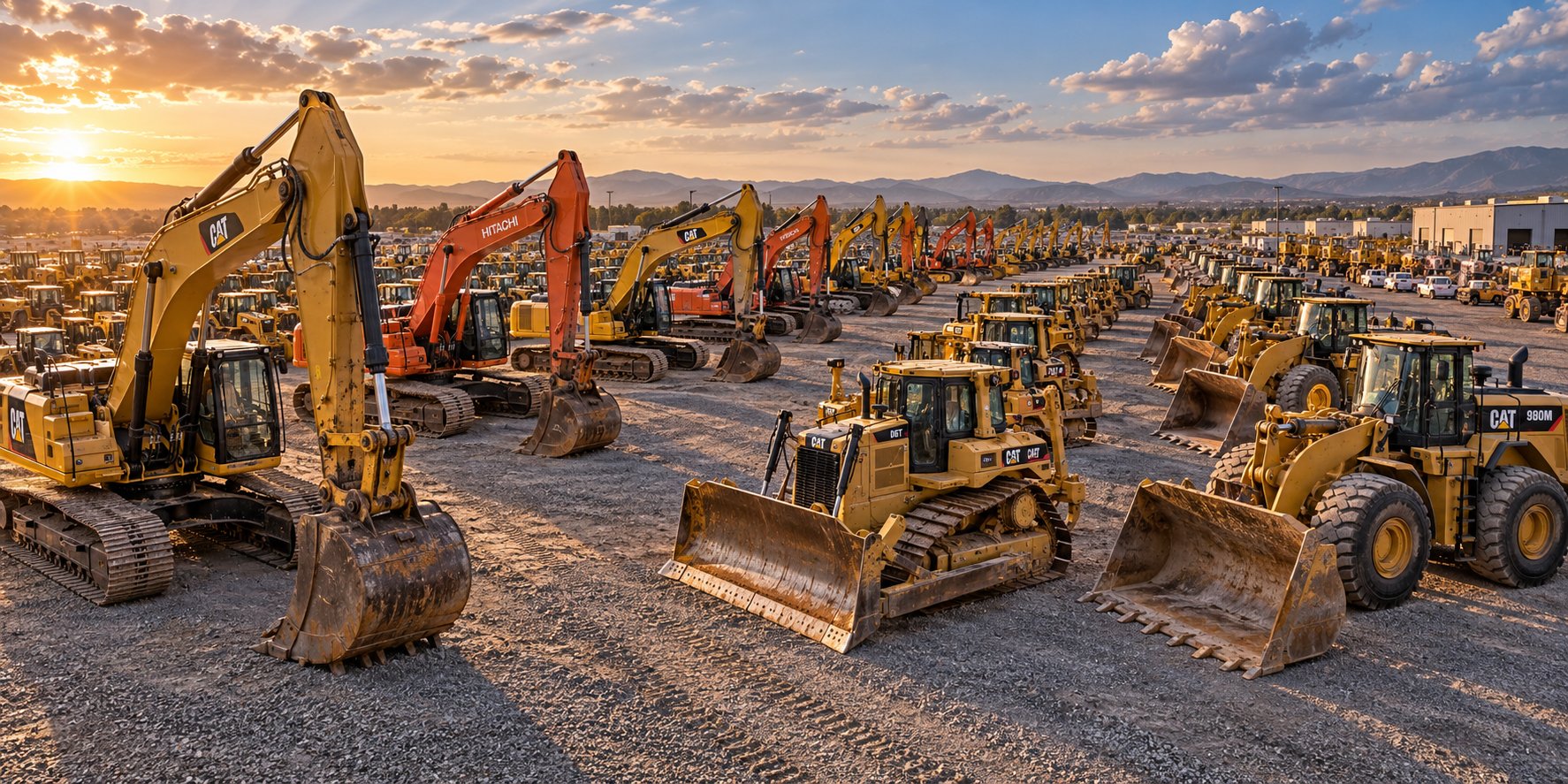
Imagine you need to break ground on a new project next month, but the lead time on a brand-new machine stretches six months out and the price tag would eat half your annual equipment budget. Sound familiar? You are not alone. Contractors, fleet managers, and equipment dealers across the country are turning to used earth moving equipment for sale as a smarter path to getting work done on schedule and on budget.
What Counts as Earth Moving Equipment
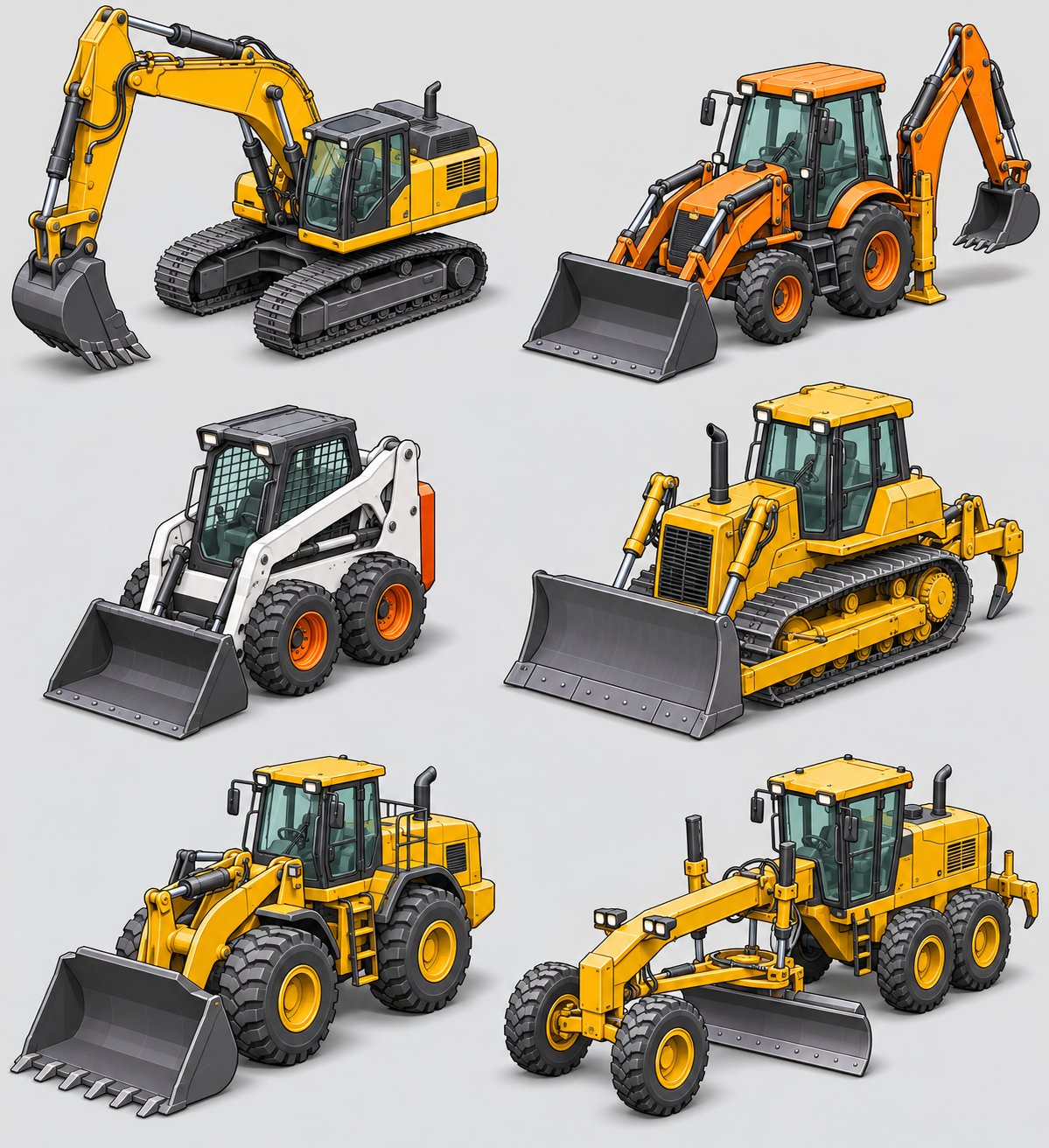
Earth moving equipment is any machine built to dig, push, load, grade, or haul soil, rock, and debris on a job site. The category is broader than most people realize. It includes excavators and mini excavator units for trenching and demolition, bulldozers for clearing and rough grading, wheel loaders for stockpile and aggregate work, motor graders for precision leveling, backhoe loaders that dig and load in one chassis, skid steer machines for tight-access material handling, scrapers for cut-and-fill earthwork, and trench digger equipment like dedicated trenchers for utility installation. Whether you are shopping for a skid loader for sale or scoping out back hoe rentals to test a machine class before buying, every one of these units falls under the earthmoving umbrella.
Why the Used Market Is Booming
Several forces are driving unprecedented demand for pre-owned heavy equipment. Rising project costs pressure contractors to preserve capital. Supply-chain delays on new machines, a challenge the industry has grappled with for years, still push delivery windows well beyond what tight schedules allow. Meanwhile, modern heavy equipment is engineered to deliver reliable service far beyond its first owner. Data from industry analysts shows that buying a quality used machine three to five years old can save 40-60% off the new retail price, while the steepest depreciation has already occurred.
Buying used earthmoving equipment is not a compromise. It is a calculated business decision when the buyer knows what to look for.
That single idea drives everything in this guide. Over the sections ahead, you will learn how to identify the right machine type for your project, decode pricing factors like machine hours and brand reputation, run a thorough pre-purchase inspection, and navigate financing and warranty options. The goal is straightforward: help you find used earth moving equipment for sale that actually lasts, so every dollar you invest keeps working long after the deal closes.
Types of Earthmoving Equipment Every Buyer Should Understand
Knowing that a machine falls under the earthmoving umbrella is one thing. Understanding exactly what it does, where it excels, and whether it fits your workload is something else entirely. Most online listings throw dozens of categories at you without explaining the differences. That gap costs buyers real money when a machine shows up on site and turns out to be wrong for the job. Here is a clear breakdown of the equipment types you will encounter most often when shopping for used earth moving equipment for sale.
Excavators and Mini Excavators
Excavators are the workhorses of virtually every construction fleet. Featuring a rotating cab mounted on a tracked undercarriage and a hydraulic boom-and-arm assembly, they handle everything from deep trenching and demolition to material handling and site prep. Standard excavators typically range from about 14 to 50 metric tons, with digging depths that can exceed 20 feet depending on the model. Their versatility comes from the boom's range of motion combined with a wide selection of bucket sizes and attachments.
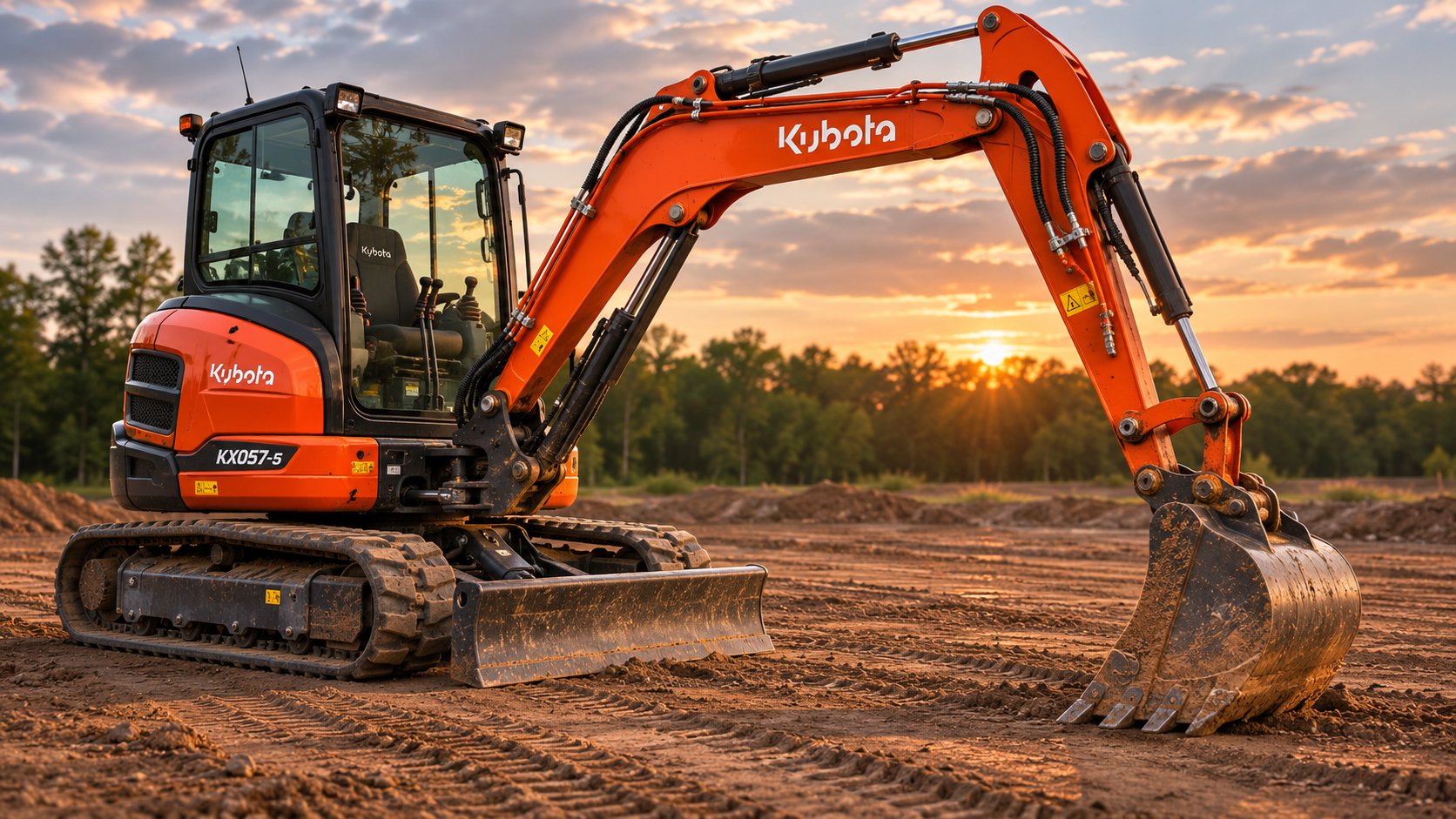
Mini excavators, generally classified under 10 metric tons, have surged in popularity over the past decade. Their compact footprint makes them ideal for residential lots, landscaping projects, and utility work in tight-access areas where a full-size machine simply cannot maneuver. If you have been browsing listings for a mini excavator for sale, you will notice they hold resale value well precisely because demand stays consistently high among small contractors and rental fleets. Industry experts at Heavy Equipment Guide note that mini excavators are especially popular for residential utilities, fiber optic installation, and trench work where portability and low ground pressure are essential.
Backhoe Loaders and Skid Steers
Think of a backhoe loader as two machines sharing one chassis. A loading bucket sits up front for scooping and carrying material, while a rear-mounted digging arm handles excavation, trenching, and backfill. That dual-purpose design makes backhoe loaders a staple for municipalities, utility crews, and mid-size contractors who need to dig, load trucks, and move material without swapping equipment. If you are watching for backhoes for sale in the used market, pay close attention to both the loader linkage and the boom pivot points, because wear in either area signals heavy use.
Skid steers take a completely different approach to versatility. These compact, four-wheel or tracked machines steer by varying the speed of their left and right drive sides, giving them an incredibly tight turning radius. That maneuverability, combined with a universal quick-attach plate, lets operators swap between buckets, pallet forks, augers, brush cutters, and grapples in minutes. A skid steer for sale with a healthy quick-attach system and high-flow hydraulic option can effectively replace several single-purpose machines on smaller job sites. Skid steers typically shine in grading, material handling, snow removal, and landscaping, where space is limited and tasks change throughout the day. Searching for a used skid steer for sale near me is a common starting point for contractors who want to add attachment-driven flexibility without a massive capital outlay.
Bulldozers, Wheel Loaders, and Graders
When a project demands raw pushing power, bulldozers step in. Equipped with a large front-mounted blade and a heavy tracked undercarriage, dozers excel at land clearing, rough grading, and moving massive volumes of soil or debris. Blade configurations vary: S-blades (straight blades) handle general-purpose pushing, U-blades cup and carry loose material over short distances, and PAT-blades (power-angle-tilt) offer the most versatility by angling and tilting to shape terrain. Rear-mounted rippers break up compacted soil or rock before the blade makes its pass. Almarwan's machinery specialists highlight that dozer engines can range from 80 HP on compact models up to over 900 HP on the largest units, so matching power class to your earthwork volume is critical.
Wheel loaders handle a different piece of the puzzle. With their articulated frame and large front bucket, they are built for scooping aggregate, loading haul trucks, and managing stockpiles. Operating weights commonly fall between 10 and 25 tons, and their rubber tires allow them to travel between work zones far faster than a tracked machine. You will frequently see loaders for sale alongside excavators in used equipment listings because the two machines pair naturally on commercial sites.
Motor graders round out the heavy earthmoving lineup with precision. Their long, centrally mounted moldboard blade can rotate a full 360 degrees, enabling operators to cut exact grades, shape drainage slopes, and produce the smooth finish required before asphalt paving. Graders are indispensable for road construction and maintenance, and they also serve in ditching, drainage shaping, and even snow removal in colder regions. While a bulldozer pushes material in bulk, a motor grader refines the surface, so the two machines often work in sequence on the same project.
A dedicated trencher deserves mention here as well. Unlike excavators that can trench as one of many tasks, trenchers are purpose-built for cutting narrow, clean channels for pipelines, cables, and drainage systems. They come in chain, wheel, and mini configurations, and a trencher for sale on the used market is worth considering if your workload involves repetitive utility or irrigation installation.
Quick-Reference Comparison
The table below summarizes each equipment type so you can scan for the machines most relevant to your projects:
| Equipment Type | Primary Function | Typical Weight Range | Best-Fit Project Type |
|---|---|---|---|
| Excavator (Standard) | Digging, trenching, demolition, material handling | 14 - 50+ metric tons | Commercial excavation, infrastructure, mining |
| Mini Excavator | Light digging, utility trenching, landscaping | 1 - 10 metric tons | Residential sites, tight-access utility work |
| Backhoe Loader | Combined digging and loading | 6 - 12 metric tons | Municipal utilities, mid-size construction |
| Skid Steer / Compact Track Loader | Grading, material handling, attachment-driven tasks | 2 - 5 metric tons | Landscaping, snow removal, urban construction |
| Bulldozer | Pushing, clearing, rough grading | 8 - 100+ metric tons | Land clearing, road base, mining |
| Wheel Loader | Loading, stockpile management, truck loading | 10 - 25 metric tons | Aggregate yards, commercial site development |
| Motor Grader | Finish grading, road shaping, drainage slopes | 12 - 25 metric tons | Road construction and maintenance |
| Trencher | Cutting narrow trenches for utilities and drainage | 0.5 - 20 metric tons | Pipeline installation, irrigation, cable laying |
Each category carries its own pricing dynamics, depreciation curve, and inspection priorities in the used market. A machine that looks like a bargain on paper can become a liability if it does not match your actual workload or if critical wear points have been overlooked. That raises an important question: how do used machines really stack up against new ones when you factor in total cost, risk, and long-term value?
Buying Used vs New Earthmoving Equipment
Sticker price is the number everyone sees first, but it rarely tells the whole story. A brand-new trackhoe fresh off the assembly line comes with a factory warranty, zero hours on the meter, and a depreciation curve that starts dropping the moment it rolls onto your site. A well-maintained used unit, on the other hand, arrives at a fraction of the cost with most of that steep value loss already absorbed by the previous owner. The real question is not simply "new or used?" It is: which option delivers the best return when you account for every dollar you will spend over the machine's remaining working life?
Upfront Cost Savings and Depreciation Advantages
Heavy equipment follows a depreciation pattern similar to commercial trucks and fleet vehicles. The sharpest drop in value occurs during the first several years of service. According to Gregory Poole Equipment Company, factors like operating hours, maintenance history, and market demand all influence how quickly a machine loses value, but the steepest decline is front-loaded early in the asset's life. A buyer who picks up a three- to five-year-old excavator or loader sidesteps that initial free fall while still acquiring a machine with thousands of productive hours ahead of it.
The capital you save on the purchase itself creates options that new-equipment buyers rarely enjoy. Imagine you budget $250,000 for a mid-size excavator. Buying used at $140,000 frees up $110,000 you can redirect toward hydraulic attachments, a preventive maintenance reserve, or even a second unit like a mini skid steer for sale that fills a gap in your fleet. That kind of flexibility turns a single equipment decision into a broader operational upgrade. Lower purchase prices also mean reduced sales tax, lower insurance premiums, and smaller monthly payments if you finance the deal. As Keystone Equipment Finance points out, used equipment still qualifies for Section 179 accelerated depreciation and bonus depreciation, allowing you to reduce taxable income just as you would with a new machine.
Availability is another practical advantage. New machines can carry lead times of several months, especially during periods of strong construction activity. Used equipment is typically available immediately, which matters when a project timeline cannot wait or when an unexpected breakdown takes a critical unit out of your fleet. Whether you are comparing excavators for sale across dealer lots or evaluating a backhoe rental to bridge a short-term gap, pre-owned inventory gives you speed that new orders simply cannot match.
Risks and Trade-Offs of Buying Used
Honesty matters here. Buying used is not risk-free, and pretending otherwise would set you up for expensive surprises. Every pre-owned machine carries some degree of uncertainty, and the severity of that uncertainty depends on how thoroughly you do your homework before signing.
Here are the primary risk factors you should weigh, along with practical ways to manage each one:
- Unknown abuse or operating history - The previous owner may have run the machine in harsh conditions, overloaded it, or deferred critical maintenance. Mitigation: Request complete maintenance and repair records. Walk away from any deal where the seller cannot or will not provide documentation.
- Shorter remaining useful life - A used machine has already consumed a portion of its productive lifespan. Mitigation: Compare the hour-meter reading to manufacturer benchmarks for that model class, and factor projected remaining life into your cost analysis.
- Expired factory warranty - Most used units have outlived their original warranty coverage, leaving you fully responsible for repair costs. Mitigation: Ask the dealer about aftermarket or extended service contracts, and budget a maintenance reserve from day one.
- Outdated emissions or safety technology - Older machines may not meet current Tier 4 Final emissions standards, and they may lack modern telematics, cameras, or operator-assist features. Mitigation: Verify local regulatory requirements and decide whether technology gaps will affect productivity or compliance on your job sites.
- Limited customization - Unlike ordering new, you are limited to the configurations currently on the market. Finding a skidsteer for sale with the exact hydraulic flow rate, cab package, and attachment setup you want takes patience. Mitigation: Expand your search radius, work with multiple dealers, and consider a mini skid loader rental to test a configuration before committing to a purchase.
None of these risks are deal-breakers on their own. They become problems only when buyers skip due diligence or let a low asking price override common sense.
Total Cost of Ownership Thinking
The smartest equipment buyers never compare sticker prices in isolation. They calculate total cost of ownership, or TCO, a framework that captures every expense tied to a machine from the day you buy it to the day you sell it. Cleveland Brothers recommends a straightforward formula: add the purchase price to cumulative maintenance, repair, fuel, insurance, tax, and financing costs, then subtract the estimated resale value and divide by total operating hours. The result is your true cost per hour of ownership.
Why does this matter so much for used equipment decisions? Because a machine with a lower purchase price can still carry a higher TCO if it burns excessive fuel, demands frequent repairs, or has negligible resale value at the end of your ownership period. Conversely, a slightly more expensive used unit with a documented service history, modern fuel injection, and strong brand demand on the resale market can deliver a lower cost per hour than a bargain-priced machine with question marks in its maintenance log.
Here is a practical way to think about it. Before you make an offer on any piece of used earth moving equipment for sale, sketch out these numbers:
- Acquisition cost - Purchase price plus delivery, taxes, and any immediate repairs needed at delivery
- Projected annual maintenance - Oil changes, filters, undercarriage or tire wear, hydraulic service
- Fuel consumption - Estimated gallons per hour multiplied by your average annual operating hours
- Insurance and financing - Annual premiums plus interest if you are borrowing
- Expected resale value - What comparable machines with similar hours sell for when you plan to exit
Run those figures side by side for a new machine and a used alternative. You may find the used option wins by a wide margin, or you may discover that a particular unit's projected repair costs erode the upfront savings entirely. Either way, TCO thinking protects you from making decisions based on a single number that only tells part of the story.
Price, of course, does not exist in a vacuum. The factors that determine what a used machine is actually worth, starting with the hour meter and extending to brand reputation, regional demand, and attachment packages, deserve their own close look.
Pricing Factors and Machine Hours for Used Earthmoving Equipment
Every used machine carries a price, but not every price reflects true value. Two excavators with the same model year can sell tens of thousands of dollars apart, and the reason has almost nothing to do with how old they are. If you are comparing an excavator for sale across multiple listings, or scanning the market for mini skid loaders for sale or a backhoe for sale that fits your budget, understanding what actually drives pricing is the difference between landing a solid deal and overpaying for someone else's worn-out asset.
Why Machine Hours Matter More Than Age
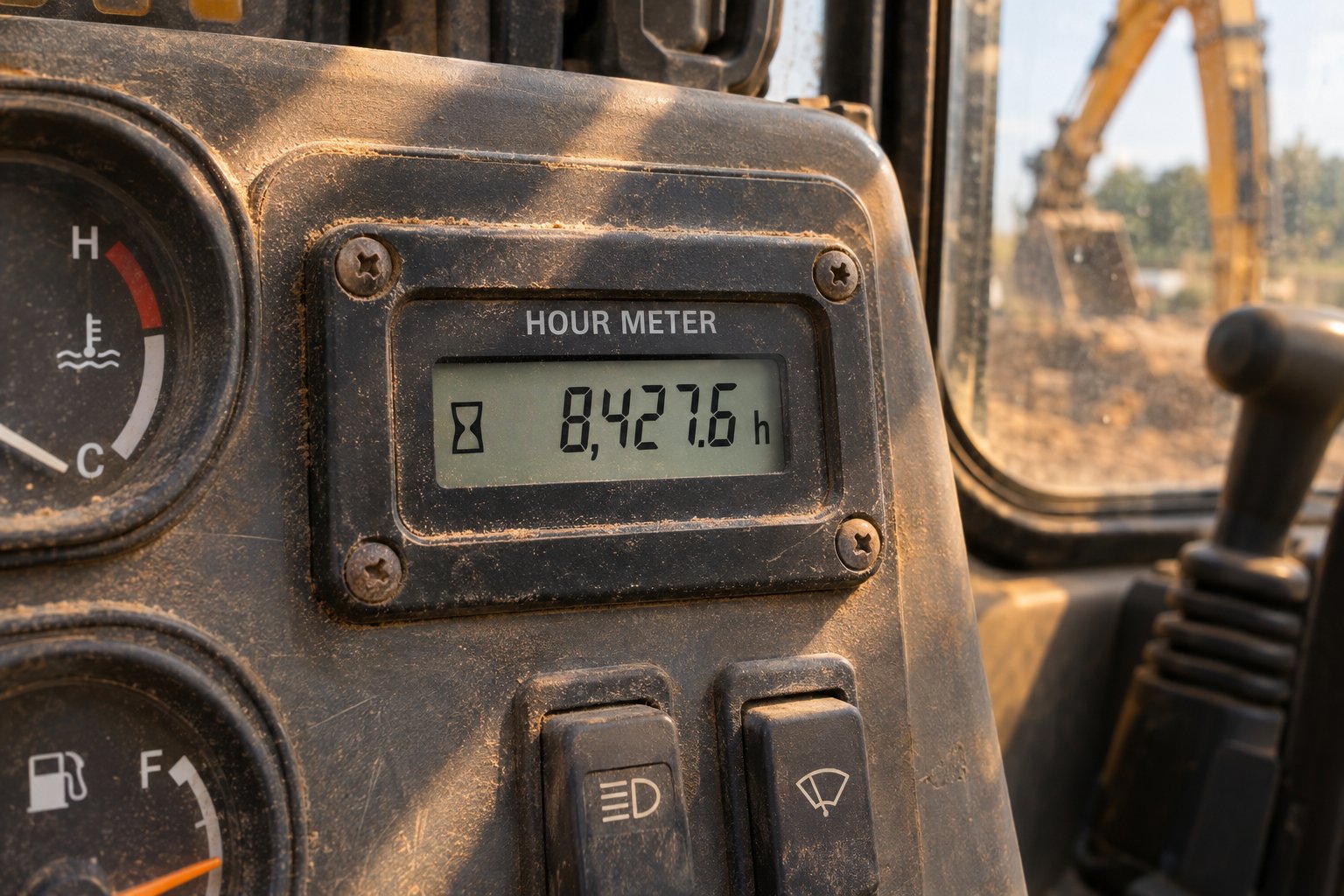
Think of the hour meter on a piece of heavy equipment the same way you think of the odometer on a pickup truck. It tells you how hard the machine has worked, not just how long it has existed. A five-year-old wheel loader sitting in a yard with 1,800 hours has lived a completely different life than a three-year-old loader that has logged 7,000 hours on a busy aggregate operation. The lower-hour machine, despite being older, will almost always command a higher resale price because its major components, engine, transmission, hydraulics, and undercarriage, have consumed far less of their useful life.
Each equipment category carries its own expected annual usage range. Construction excavators typically accumulate 1,000 to 1,500 hours per year, while lighter-duty machines like compact track loaders or small skid steers may average 500 to 800 hours annually. When a machine significantly exceeds those norms, buyers should expect a steep discount because costly overhauls, think engine rebuilds, hydraulic pump replacements, and full undercarriage swaps, are approaching faster than the calendar age suggests.
There are also psychological thresholds to watch for. Machines listed just below 5,000 or 10,000 hours tend to sell faster and at higher prices than units that have crossed those round numbers, even if the mechanical difference is negligible. Savvy sellers know this and time their listings accordingly, so a sharp buyer should look beyond the number itself and ask for service records that confirm how those hours were accumulated.
Brand, Condition, and Regional Pricing Factors
Hours are the single largest variable, but they do not act alone. Industry auctioneers and equipment brokers typically weigh five core factors when appraising a used machine, and each one carries a measurable share of the final price. Here they are, ranked by their approximate impact on resale value:
- Operating hours (roughly 25% of value determination) - The primary wear indicator, as discussed above. A machine at 4,000 hours versus 8,000 hours at the same calendar age can retain 40 to 50 percent more value.
- Maintenance history and documentation (roughly 22%) - Complete, verifiable service records are the second most influential factor. Machines with photo-verified maintenance logs and documented parts replacements consistently sell for 15 to 20 percent more than identical units with incomplete paperwork.
- Physical condition (roughly 20%) - Paint, glass, cab interior, undercarriage or tire wear, and overall cosmetic appearance. Machines stored indoors or under cover tend to sell for 8 to 12 percent more than those left exposed to the elements.
- Make, model, and specification (roughly 18%) - Brand reputation matters. Caterpillar consistently leads resale-value retention across excavators, loaders, and dozers in North American markets, followed closely by Komatsu and John Deere. However, a well-documented Deere excavator with low hours will outsell a poorly-documented Cat with high hours almost every time. Brand sets the ceiling; documentation and condition determine where the actual price lands.
- Market timing and regional demand (roughly 15%) - Selling during spring construction season versus winter can swing prices by 10 to 15 percent. Geographic project booms, like a state launching a major highway program, push local demand and prices upward, while regions experiencing a slowdown see inventory pile up and values dip.
Regional pricing differences deserve extra attention if you are shopping for compact excavators for sale or browsing loaders for sale outside your immediate area. A machine sitting in a region with heavy infrastructure spending may carry a premium that disappears entirely if you expand your search to markets with softer demand. Comparing listings nationally, and even internationally, gives you the leverage to negotiate from a position of knowledge rather than guesswork.
How Depreciation Patterns Differ by Equipment Type
Not all earthmoving machines lose value at the same rate. A typical crawler excavator may experience roughly 32 percent depreciation in its first three years and an additional 23 percent over the following four years. Wheel loaders and bulldozers follow broadly similar curves, but the steepness varies depending on utilization rates, technological change cycles, and how widely a particular model is adopted across the industry.
Here is a general pattern most equipment categories share. The steepest value loss, often 40 to 50 percent of the original purchase price, occurs during the first three years. Depreciation then moderates to roughly 8 to 12 percent per year through years four to six, which many industry professionals consider the sweet spot for used buyers. By years seven through ten, value tends to plateau near 25 to 35 percent of the original retail price before dropping again as major-overhaul territory approaches.
What does this mean in practical terms? If you are eyeing a used mini excavator sale listing for a unit that is four to six years old with moderate hours, you are likely buying at the point where the depreciation curve has flattened but the machine still has substantial productive life ahead. The same logic applies when you are comparing a backhoe for sale at seven years old versus one at three years old; the younger unit costs more but has not yet reached the moderate-depreciation zone, meaning you will absorb more value loss per year of ownership.
Before making any offer, research recent comparable sales for the specific make, model, and hour range you are considering. Auction results, dealer asking prices, and online listing aggregators all provide data points that help you determine whether a seller's price reflects genuine market value or wishful thinking. The more comparables you gather, the stronger your negotiating position becomes.
Pricing knowledge gives you the confidence to evaluate any listing objectively, but a fair price only matters if the machine you buy is actually suited to your workload. Matching equipment type, size class, and configuration to the specific demands of your projects is the next piece of the puzzle.
Choosing the Right Machine Size for Your Project
A fair price on the wrong machine is still a bad deal. You could find a low-hour bulldozer at a great number, but if your workload is residential utility trenching on quarter-acre lots, that dozer will sit idle while you scramble for something compact enough to squeeze through a backyard gate. Size, weight class, and configuration need to align with the actual dirt you plan to move, not just the price you plan to pay. When browsing used earth moving equipment for sale, the smartest filter is not the asking price column; it is your project list.
Residential Grading and Small-Site Work
Picture a typical residential job: a half-acre lot with an existing fence line, a neighboring driveway ten feet away, and underground utilities marked in orange paint every few yards. Space is tight, ground-pressure sensitivity matters, and you need a machine that can maneuver without tearing up finished surfaces or sinking into soft turf.
Mini excavators thrive in exactly this environment. Units in the 1- to 5-metric-ton range deliver enough digging force for foundation prep, French drain installation, and landscape grading while fitting through standard gate openings. Bobcat of the Rockies highlights that tail-swing configuration is a critical detail for residential buyers: zero tail swing and minimal tail swing models allow unrestricted cab rotation close to walls, fences, and structures, while retractable undercarriages on select models let the machine squeeze through narrow entries without sacrificing lift capacity. If you are not ready to commit to a purchase, searching for mini excavators for rent in your area is a practical way to test a size class on an actual job before locking in capital.
A small skid steer, typically under 2,500 pounds of operating capacity, handles the other half of small-site work: grading fill material, moving pallets of pavers, backfilling around foundations, and switching to a brush cutter for lot cleanup. The universal quick-attach plate means one machine can cycle through half a dozen tasks in a single day. Contractors who handle mixed residential work often pair a mini excavator with a compact skid steer, covering trenching, loading, and finish grading without needing a third unit. You will find plenty of listings for a used skid steer for sale in this weight class because rental fleets rotate them out regularly, creating a steady supply of well-documented machines.
Compact track loaders deserve a mention here as well. They share the skid steer's attachment versatility but ride on rubber tracks instead of wheels, distributing weight over a larger surface area. On rain-softened residential lots or freshly seeded lawns, that lower ground pressure prevents the rutting and turf damage that wheeled machines leave behind.
Commercial Excavation and Road Construction
Scale changes everything. A commercial site-development project or a road-widening contract involves moving thousands of cubic yards of material on a fixed schedule. The machines that excel in a backyard cannot keep pace here, and attempting to use undersized equipment leads to missed deadlines and inflated operating costs.
Mid- to full-size excavators, ranging from roughly 20 to 50-plus metric tons, anchor most commercial earthwork operations. Their deeper dig reach, higher breakout force, and larger bucket capacities let operators load haul trucks in fewer cycles, which directly drives daily production. An excavator trackhoe in the 30-ton class, for example, can trench utility corridors, mass-excavate building pads, and handle demolition on the same site with nothing more than an attachment swap. When you are evaluating used units in this range, hydraulic flow rate and pump condition become especially important because commercial cycle times depend on consistent, high-volume hydraulic performance.
Wheel loaders step in wherever material needs to be scooped, carried, and loaded at speed. On a road-base project, a loader feeds the crusher, manages aggregate stockpiles, and loads belly dumps all day long. Their rubber-tire mobility means they can reposition between work zones far faster than any tracked machine, saving minutes per cycle that add up to hours over a week. Motor graders follow behind the rough work, cutting precise grades for road surfaces, shaping drainage ditches, and preparing the final profile before paving crews arrive.
Bulldozers round out the heavy crew. On large commercial sites, they clear vegetation, push topsoil into designated stockpile areas, and rough-grade pads to within a few inches of final elevation. Choosing the right blade type matters: a U-blade carries loose material efficiently over short hauls, while an S-blade or PAT-blade handles general-purpose pushing and side-casting on road shoulders. A contractor bidding on a state highway project will have very different dozer needs than one grading a retail pad, even though both jobs fall under "commercial earthwork."
Land Clearing and Specialized Applications
Some projects do not fit neatly into residential or commercial categories. Forestry mulching, selective tree removal, drainage-channel excavation, and demolition each demand machine configurations that go beyond a standard dig-and-load setup.
5K Land Management emphasizes a task-based approach to land clearing: brush-heavy ground calls for forestry mulcher attachments on compact track loaders or skid steers, while scattered hardwoods and deep root systems require a full-size excavator equipped with a thumb and possibly a shear or grapple. Dozers handle the rough shaping and debris windrowing after the cutting is done. On large-acreage projects, all three machine types often work in sequence, each handling the phase it was designed for.
High-flow hydraulics become essential for running mulching heads and other demanding attachments. If you spot a used backhoe for sale or an excavator listing that advertises a high-flow auxiliary circuit, that feature adds real value because retrofitting hydraulic capacity after purchase is expensive and sometimes impractical. Long-reach boom configurations serve another niche: dredging ponds, cleaning drainage channels, and reaching down steep embankments where standard-length arms cannot operate safely.
Demolition work introduces its own requirements. Machines need reinforced cab guards, heavy-duty stick and boom protection, and often specialized quick couplers rated for breakers and pulverizers. A used excavator headed for demolition duty should be inspected closely for frame stress and boom cracks that general construction units rarely develop.
The key takeaway for specialized applications is simple: attachments and machine configuration matter as much as the base unit itself. A skid steers sale listing that includes a forestry mulcher head, high-flow lines, and a reinforced door is worth significantly more to a land-clearing contractor than the same base machine sold bare.
Project-to-Machine Quick-Reference Guide
Use the table below to match your project type to the equipment class and attachments most likely to deliver efficient results:
| Project Type | Recommended Equipment | Typical Size Class | Key Attachment Needs |
|---|---|---|---|
| Residential grading and utilities | Mini excavator, small skid steer, compact track loader | 1 - 5 metric tons | Trenching bucket, grading blade, pallet forks |
| Landscaping and hardscaping | Mini excavator, compact track loader | 1 - 4 metric tons | Tilt bucket, auger, hydraulic thumb |
| Commercial site development | Mid-size excavator, wheel loader, bulldozer | 20 - 50+ metric tons | Heavy-duty digging bucket, ripper, loading bucket |
| Road construction and maintenance | Motor grader, bulldozer, wheel loader | 12 - 40 metric tons | Moldboard blade, scarifier, V-plow |
| Land clearing (brush and saplings) | Compact track loader, skid steer with mulcher | 3 - 6 metric tons | Forestry mulcher head, high-flow hydraulics |
| Land clearing (mature trees and stumps) | Full-size excavator, bulldozer | 20 - 45 metric tons | Hydraulic thumb, grapple, ripper |
| Demolition | Excavator with reinforced cab and boom | 20 - 40 metric tons | Hydraulic breaker, pulverizer, sorting grapple |
| Drainage and pond work | Long-reach excavator, compact excavator | 8 - 35 metric tons | Ditching bucket, long-reach boom, weed rake |
Matching your projects to the right size class narrows the search dramatically, but the base machine is only half the equation. The attachments bolted to it, and whether those attachments are compatible, well-maintained, and included in the sale price, can shift the true value of a used listing by thousands of dollars in either direction.
Attachments and Configurations That Impact Value
You found a used excavator for sale at a price that looks almost too good. The hours are reasonable, the brand is solid, and the photos show clean paint. Then you realize the listing includes a single narrow digging bucket, no thumb, no coupler, and no auxiliary hydraulic lines. Suddenly that attractive price needs another $8,000 to $15,000 in attachments before the machine can actually perform the work you bought it for. This scenario plays out constantly in the used market, and it highlights a principle many buyers learn the hard way: the base machine is only part of the investment. What is bolted to it, and what can be bolted to it, determines whether that purchase becomes a versatile profit center or an expensive one-trick unit.
Excavator Buckets, Thumbs, and Coupler Systems
Excavators earn their keep through attachment variety, and the right combination can turn a single machine into a digging, grading, loading, and demolition platform. The most common attachments you will encounter when browsing mini excavators for sale or full-size units include:
- Digging buckets - Standard-width buckets with teeth designed for trenching, foundation excavation, and general dirt work. Width and tooth configuration should match your primary soil type.
- Grading buckets - Wider, flat-bottomed buckets without teeth, built for finish grading, ditch shaping, and cleanup passes. A machine sold with both a digging bucket and a grading bucket saves you an immediate secondary purchase.
- Hydraulic thumbs - Mounted opposite the bucket, a thumb lets the operator grip irregular objects like stumps, concrete slabs, boulders, and pipe sections. A machine without a thumb loses an enormous amount of material-handling capability.
- Quick-coupler systems - These mechanical or hydraulic devices let the operator swap attachments from the cab in under a minute, eliminating the need to shut down, grab a hammer, and knock pins out manually. A hydraulic quick coupler is the single most valuable add-on for any excavator that handles varied tasks throughout the day.
When evaluating a used excavator for sale, check whether the coupler is a pin-grabber style or a dedicated-brand system. Universal pin-grabber couplers accept attachments from multiple manufacturers, giving you far more flexibility when sourcing buckets, breakers, or compaction wheels on the secondary market. A proprietary coupler locks you into one brand's ecosystem, which can limit options and inflate costs down the road.
Loader and Skid Steer Attachment Versatility
If excavators earn versatility through boom-end attachments, skid steers and wheel loaders earn it through the front plate. A used skid steer with a universal quick-attach plate, sometimes called a universal coupler or skid steer interface, can accept dozens of attachment types from virtually any manufacturer. That single feature dramatically increases ROI because one compact machine can cycle through tasks that would otherwise require separate, dedicated equipment.
Common skid steer and loader attachments include pallet forks for material handling and unloading deliveries, augers for post-hole drilling and fence installation, brush cutters and forestry mulchers for land clearing, grapple buckets for handling logs, demolition debris, and irregular loads, and snow pushers or blower attachments for winter maintenance work. According to SANY's skid steer guide, the ability to quickly switch between buckets, sweepers, snow removal tools, planers, and augers is one of the core advantages that makes skid steers adaptable across construction, municipal, agricultural, and warehousing applications.
Here is where configuration matters for used buyers specifically. A walk behind skid steer or a compact wheeled unit with standard-flow hydraulics will run a bucket and forks just fine, but it will struggle with high-demand attachments like mulching heads and cold planers that require significantly more hydraulic volume and pressure. If your project list includes any attachment that draws heavy hydraulic power, confirm that the machine has a high-flow auxiliary circuit before you commit. Retrofitting high-flow capability after purchase is not always possible, and when it is, the cost can rival the price of a separate attachment.
Also verify that the attachment plate is in good condition. Worn latch mechanisms, bent guide rails, or sloppy pin engagement create safety hazards and reduce the precision with which attachments seat, leading to premature wear on both the tool and the machine frame.
Dozer Blade Types and Grader Configurations
Bulldozer productivity hinges on blade selection just as much as engine horsepower. Three blade types cover the majority of earthmoving applications. The S-blade, or straight blade, is the most common and handles general-purpose pushing, leveling, and site prep on medium to hard soils. The U-blade features a curved profile with tall side wings that cup and carry loose material like sand or topsoil over short distances, making each pass more productive on high-volume jobs. The PAT blade (Power-Angle-Tilt) offers six-way movement, angling left and right while also tilting forward and back, which gives operators precise control for slope work, road-shoulder shaping, and finish grading without swapping blades.
Motor graders carry their own configuration considerations. Moldboard width determines how much surface area the machine covers per pass, and wider boards speed up finish grading on road projects but reduce maneuverability in tight corridors. Articulated frames allow the front axle to steer independently, improving accuracy on curves and crowned road surfaces. When shopping used graders, confirm that the moldboard circle, the turntable mechanism that rotates the blade a full 360 degrees, operates smoothly and without excessive play.
Before you make an offer on any used machine listing, run through these attachment and configuration questions:
- What attachments are included in the sale price, and what is their current condition?
- Does the machine have a quick-coupler system, and is it a universal or proprietary design?
- Are auxiliary hydraulic circuits standard-flow or high-flow, and do the lines show signs of leakage or wear?
- Have hydraulic fittings and couplers been cross-threaded, replaced, or adapted with non-OEM connectors?
- Is the attachment mounting plate, bucket pin bore, or blade hitch worn beyond service limits?
- Do blade cutting edges, bucket teeth, or thumb pads need immediate replacement, and what will parts cost?
Answering these questions before you negotiate protects you from hidden costs that quietly erase the savings you thought you were getting. A machine priced $5,000 below market but missing $7,000 in necessary attachments is not a deal; it is a trap dressed up as a bargain.
Knowing what to look for on the machine itself is essential, but equally important is knowing where to look. The channel you buy through, whether it is a specialized equipment supplier, an online marketplace, an auction house, or a private seller, shapes the level of transparency, buyer protection, and selection you will have access to.
Where to Find and Compare Used Equipment for Sale
Two machines can be identical in make, model, and hours, yet the buying experience feels completely different depending on where you purchase. One channel hands you a detailed spec sheet, service records, and a direct line to a product specialist. Another drops you into a bidding war with sixty seconds on the clock and no maintenance history in sight. The channel you choose does not just affect convenience; it affects how much risk you carry into the deal and how much leverage you have if something goes wrong.
Dealerships and Specialized Equipment Suppliers
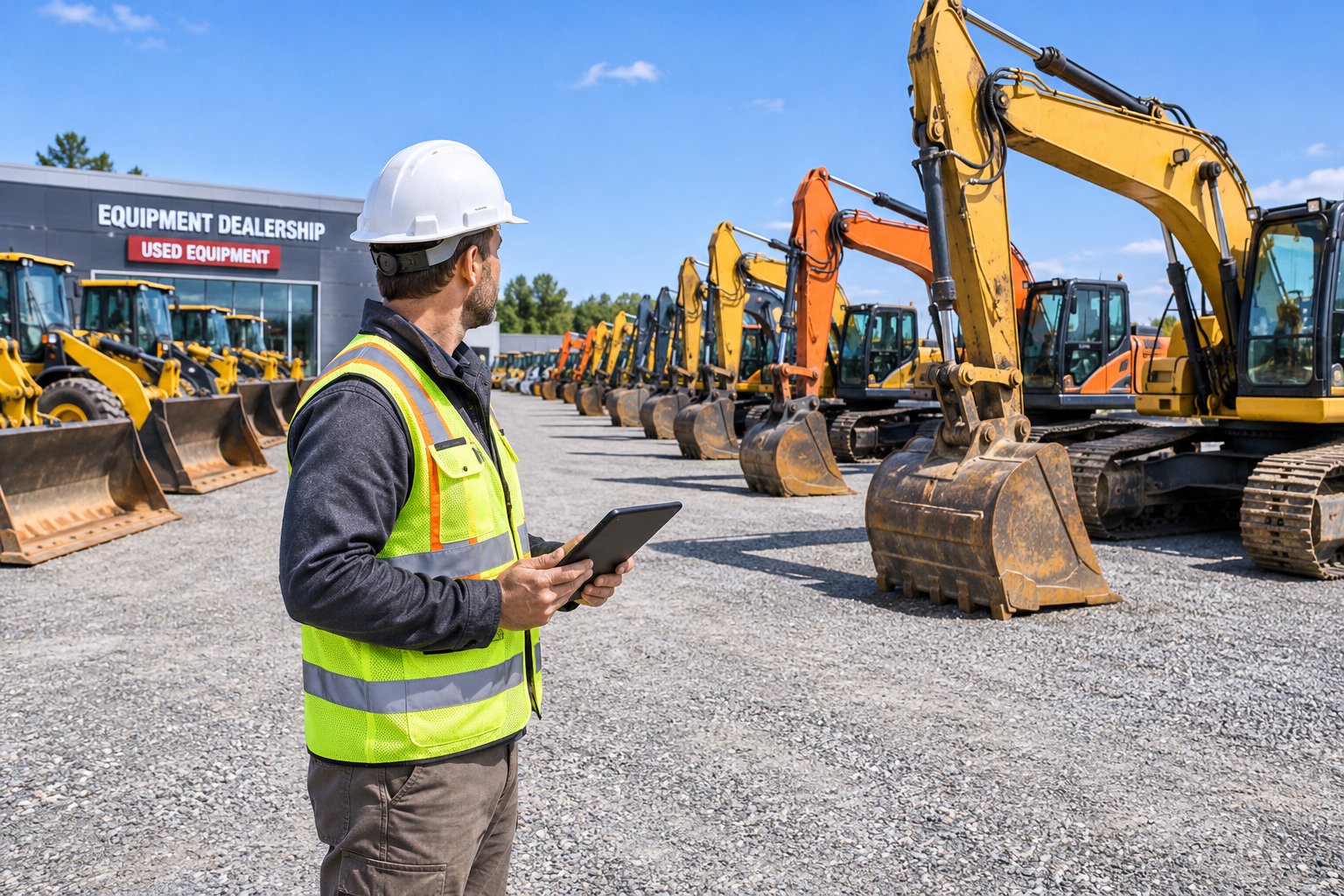
Buying from an established equipment dealer or supplier typically delivers the highest level of transparency in the used market. You can review full machine specifications, request detailed photos of undercarriage wear and hydraulic components, and ask for service history documentation before you commit a single dollar. Many dealers also offer financing packages, limited warranty coverage, and after-sale parts support that other channels simply cannot match.
The trade-off is price. Dealer overhead, reconditioning costs, and margin requirements mean you will generally pay more than you would at auction or through a private seller. That premium, however, buys accountability. If a hydraulic pump fails two weeks after delivery, a reputable dealer has a business relationship to protect and a service department to back it up.
For buyers searching for a used mini excavator for sale, a wheel loader for sale, or larger units like dozers and graders, suppliers that specialize in used construction equipment for sale let you compare multiple machine classes in one place. JIUHONG's used construction equipment collection, for example, allows contractors, fleet managers, and equipment dealers to browse excavators, loaders, bulldozers, and graders side by side and request purchase quotes directly, streamlining the comparison process when you are evaluating several units at once.
Online Listing Platforms and Auction Houses
Aggregator-style listing platforms cast the widest net. They compile inventory from dealers, rental fleets, and private sellers across regions, making it easy to search for a mini excavator for sale near me or filter by brand, hours, and price range. The selection breadth is a genuine advantage, but listings vary wildly in quality. Some include full inspection reports; others offer little more than a few photos and an hour-meter reading. The burden of due diligence shifts squarely onto the buyer.
Auction houses, both live and timed-online, concentrate buyer attention around a scheduled sale date and can produce competitive pricing. Volvo CE's auction guide recommends researching comparable sale prices, arranging a mechanic's inspection before bidding, and lining up financing in advance because payment deadlines at auction are often measured in days, not weeks. Keep in mind that the winning bid is not your total cost; buyer premiums, transport fees, and potential export logistics can add 10 to 20 percent on top. Auction is well-suited to experienced buyers who know exactly what they want, whether that is a walk behind trencher for utility work or a 30-ton excavator for commercial excavation, and can evaluate condition quickly under time pressure.
Private Sales and Direct-From-Owner Deals
Buying directly from an owner, a retiring contractor, a farmer upgrading equipment, or a company liquidating assets, often yields the lowest purchase price. There is no dealer margin, no auction premium, and no listing fee baked into the number. For buyers comfortable with independent inspections, this channel can deliver exceptional value.
The risk, however, is proportionally higher. Industry specialists emphasize that private sales leave the buyer responsible for title verification, lien checks, payment security, and transport logistics. There is limited recourse if an undisclosed mechanical problem surfaces after the handshake. You will not find a trench digger rental option to bridge a gap while a private-sale machine sits in a repair bay, so the stakes of getting the inspection right are real. Always verify the seller's identity, match the serial number across the machine and all documents, and confirm there are no outstanding liens before funds change hands.
Source Comparison at a Glance
Use this table to weigh the strengths and trade-offs of each buying channel before you start shopping:
| Source Type | Typical Price Range | Buyer Protection Level | Selection Breadth |
|---|---|---|---|
| Dealer / Specialized Supplier | Moderate to High | Highest — service history access, potential warranty, after-sale support | Curated inventory across major equipment categories |
| Online Listing Platforms | Low to High (varies by seller) | Variable — depends on individual seller transparency | Very broad; national and international reach |
| Auction (Live or Timed Online) | Low to Moderate | Limited — sold as-is in most cases; inspection windows vary | Large volume during scheduled events |
| Private Sale / Direct From Owner | Lowest | Minimal — buyer assumes nearly all verification responsibility | Narrow; one or a few units per seller |
No single channel is universally best. A fleet manager refreshing multiple units may benefit from the structured inventory and quoting process of a specialized supplier, while a small contractor hunting for one specific compact machine might find the best deal through a private listing or a regional auction. The smartest buyers often monitor several channels simultaneously, using dealer pricing as a benchmark and auction results as a reality check.
Wherever you source your next machine, the listing is only the starting point. The real protection comes from what happens between finding a unit and signing the paperwork: a thorough, methodical pre-purchase inspection backed by verified maintenance records.
Pre-Purchase Inspection and Maintenance Record Verification
A listing can look perfect on screen: sharp photos, reasonable hours, a well-known brand, and a price that fits your budget. But photos do not reveal a cracked boom weld hidden under fresh paint, and a low hour-meter reading means nothing if the previous owner skipped oil changes for 500 hours straight. The pre-purchase inspection is where a promising deal either proves itself or falls apart, and skipping it is the single most expensive shortcut a buyer can take. Whether you are evaluating used excavators for sale from a dealer or considering a backhoe for sale near me from a private seller, the inspection process follows the same core sequence.
Service History and Maintenance Records
If you could ask for only one document before buying a used machine, it should be the maintenance log. Verified service records tell you more about a machine's future reliability than any walk-around inspection ever will. A backhoe loader with 4,000 hours and a complete record of oil changes every 250 hours, filter replacements on schedule, and hydraulic fluid swaps at manufacturer intervals is a fundamentally different proposition than the same model at 3,500 hours with zero documentation.
Here is what to look for when reviewing records:
- Oil and filter change intervals - Consistent changes at OEM-recommended hours indicate disciplined ownership. Gaps or irregularities suggest deferred maintenance that accelerates internal wear.
- Undercarriage replacement history - On tracked machines, undercarriage components like tracks, rollers, idlers, and sprockets are among the most expensive items to replace. Records showing at least one documented undercarriage service give you a clear picture of remaining life.
- Hydraulic system service - Pump rebuilds, cylinder reseal dates, hose replacements, and hydraulic fluid analysis reports reveal how hard the hydraulic system has been worked and how proactively it has been maintained.
- Major component rebuilds - Engine overhauls, transmission rebuilds, final-drive replacements, and turbocharger swaps are high-cost events. A machine that has had a recent engine rebuild with documentation may actually be a stronger buy than a lower-hour unit that is approaching its first major overhaul with no reserve budget in sight.
Always request records directly from the seller, and verify them independently when possible. Cross-reference service dates with hour-meter readings to confirm the log is consistent. Boom & Bucket recommends checking maintenance documentation against authorized dealership records or reputable service providers to confirm authenticity. A seller who hesitates to share records, or who claims they "lost" the paperwork, is waving a red flag you should not ignore.
Physical and Operational Inspection Checklist
Documentation tells you how the machine was treated. The physical inspection tells you how it is performing right now. Combine the two, and you have a realistic picture of what you are actually buying. Follow this step-by-step sequence to cover every critical system, whether you are looking at used skid steer loaders for sale, a full-size excavator, or a motor grader:
- Structural frame and welds - Walk the entire machine and examine high-stress areas: boom-to-frame connections, stick pivot points, loader arm pins, and chassis rails. Look for cracks, fresh paint that could be masking repairs, and any bending or twisting that suggests the machine was overloaded or involved in an incident. Custom Truck One Source notes that any inspection should meet federal structural integrity requirements outlined by the FMCSA.
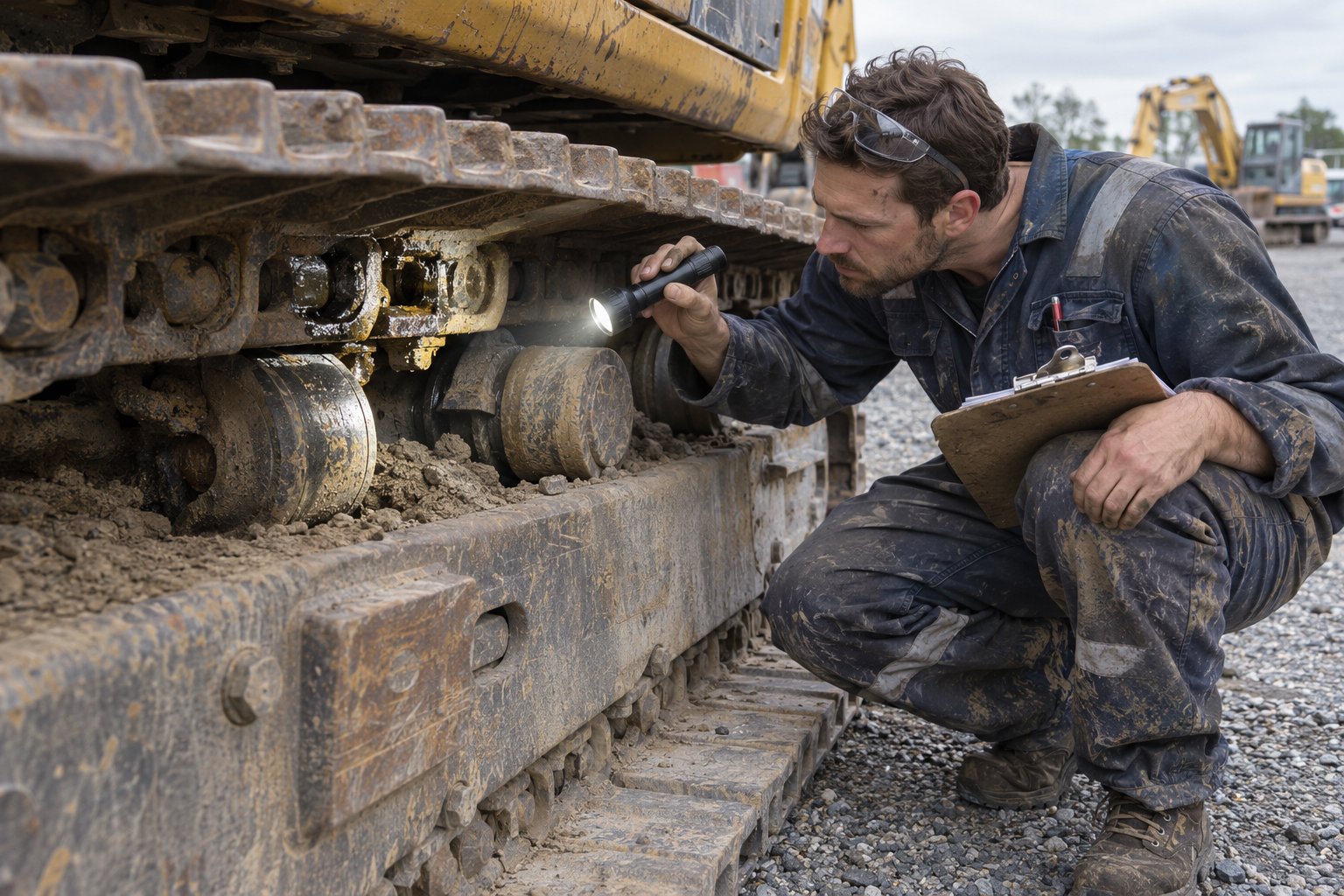
- Undercarriage or tire condition - For tracked machines, check track tension, link wear, sprocket teeth, roller condition, and idler alignment. For wheeled equipment, measure tread depth, inspect sidewalls for cuts or bulges, and look for uneven wear patterns that signal alignment or suspension issues. Undercarriage replacement on a mid-size excavator can easily exceed $15,000 to $25,000, so this step directly impacts your true acquisition cost.
- Hydraulic hoses and cylinders - Inspect every visible hose for cracking, chafing, brittleness, and signs of previous splicing or field repairs. Check cylinder rods for scoring or pitting, and look for oil seepage around seals and fittings. Operate each function, boom, stick, bucket, swing, and blade, under light load and watch for hydraulic drift, where a raised implement slowly settles on its own. Drift indicates worn internal seals or valve problems that will only worsen.
- Engine performance - Request a cold start. A machine that has been pre-warmed before your arrival may be hiding hard-start issues. Listen for knocking, excessive rattling, or irregular idle. Watch the exhaust closely: blue smoke suggests oil burning past worn rings or valve seals, white smoke points to coolant entering the combustion chamber, and black smoke indicates fuel system problems. Check for oil leaks around gaskets, seals, and the oil pan. Remove the oil fill cap while the engine is running and check for excessive blowby, a sign of worn piston rings or cylinder walls.
- Cabin controls and safety systems - Sit in the operator seat and test every control, switch, gauge, and display. Confirm that joysticks respond proportionally, that the travel system engages smoothly in all directions, and that the machine shifts under load without hesitation. Verify that lights, horn, backup alarm, and emergency stop all function. Fleetio's inspection guide stresses that electrical and sensor failures are among the most common findings on heavy equipment, and a faulty system can be expensive to diagnose.
- Attachment mounting points - Examine pin bores, coupler latches, and quick-attach plates for excessive wear, elongation, or damage. Worn mounting hardware creates sloppy attachment engagement, reduces precision, and poses a safety risk if an attachment separates under load.
If you are evaluating a listing on a platform like myused or any other aggregator, request a video of the cold start and a walk-around before traveling to see the machine in person. A seller willing to provide pre-visit documentation signals confidence in the machine's condition.
When to Hire a Third-Party Inspector
Not every purchase requires a professional inspector, but certain situations make the investment almost mandatory. Consider hiring an independent technician or certified equipment appraiser when:
- The purchase price exceeds $50,000 and the financial risk of a hidden defect is significant.
- You are buying from a private seller who cannot provide verified maintenance records.
- The machine is located too far away for you to conduct a hands-on inspection yourself.
- You are evaluating a model or brand outside your typical experience, for example, a skid steer for sale near me from a manufacturer you have never owned.
A qualified third-party inspection typically costs between $200 and $500, depending on machine size and location. Compare that to the cost of discovering a cracked swing bearing, a failing hydraulic pump, or a frame fracture after you have already wired payment. The math is not even close. Industry professionals consistently recommend independent inspections for expensive equipment or machines with uncertain histories, emphasizing that inspectors have the tools, expertise, and objectivity to identify problems a buyer might miss under the pressure of a purchase decision.
A thorough inspection protects you from buying a problem, but it does not close the deal on its own. The financial structure you wrap around that purchase, how you finance it, what warranty coverage you secure, and the after-sale support you line up, determines whether the machine delivers value over years of ownership or becomes a cash drain hidden behind a reasonable sticker price.
Financing, Warranties, and Your Action Plan for Used Equipment
You have identified the right machine type, verified the hours, and walked through a thorough inspection. The unit checks every box. But how you structure the purchase financially, and the protection you secure after the handshake, will determine whether that machine generates profit for years or quietly drains your cash reserves. Financing terms, warranty coverage, and after-sale support are not afterthoughts; they are core components of a smart acquisition strategy for any used equipment for sale.
Financing Options for Used Equipment Purchases
Few contractors pay cash outright for a major equipment purchase, and that is not a weakness; it is sound capital management. Spreading the cost across structured payments keeps working capital available for payroll, fuel, and the next project bid. Here are the most common financing paths for pre-owned heavy equipment:
- Equipment loans - The machine itself serves as collateral, which can make qualification easier than unsecured financing. Nav's equipment financing guide notes that borrowers with strong credit profiles can secure interest rates in the single digits or low teens, while newer businesses or those with credit challenges may see rates in the mid-to-high teens or above. Terms typically run two to seven years depending on the lender and the asset's remaining useful life.
- Leases - Operating leases keep monthly payments lower and let you return or upgrade the machine at term end. This works well if you need backhoes or skid steers for sale on a specific contract and do not want a long-term ownership commitment. Capital leases, by contrast, function more like financing and transfer ownership at the end.
- Rent-to-own arrangements - A hybrid path where rental payments build equity toward eventual purchase. This option suits buyers who want to prove a machine's reliability on their own jobs before committing fully.
- Lines of credit - Flexible draw-down financing that works for smaller purchases, such as mini skid steer loaders for sale or compact attachments, where the total amount does not justify a formal term loan.
One important nuance: financing terms for used machines often differ from new-equipment programs. Expect slightly higher interest rates and shorter repayment windows because lenders factor in the asset's remaining economic life. Compare offers from at least two or three lenders before signing. Even a single percentage point difference on a $120,000 excavator price translates to thousands of dollars over a five-year term. Both purchased and leased equipment may qualify for the Section 179 tax deduction, allowing you to write off the cost in the year of acquisition rather than depreciating it over time, so consult your tax advisor before finalizing the deal structure.
Warranty Coverage and After-Sale Support
Here is where many buyers get caught off guard. A new machine ships with a factory warranty that covers major components for a defined period. A used machine? It almost certainly does not. Understanding what protection is available, and what is not, prevents costly surprises down the road.
Wagner Equipment outlines three tiers of warranty coverage you will encounter in the used market:
- Certified pre-owned warranties - Select manufacturers and dealers offer certified programs that include multi-point inspections (sometimes 140 points or more) and equipment protection plans covering parts and labor on major components. These programs come closest to the new-equipment warranty experience, but they are typically limited to machines sold through authorized dealer networks.
- Limited powertrain warranties - These cover the engine, transmission, and drive axles but exclude wear items, electronics, and cosmetics. Time and hour-usage caps apply, so read the fine print carefully.
- As-is / no warranty - The most common scenario in private sales and auctions. If a critical hydraulic line fails a week after purchase, every dollar of parts, labor, and downtime comes out of your pocket.
Third-party extended service contracts offer a middle ground for machines purchased without dealer coverage. These contracts vary widely in scope and exclusions, so compare deductibles, covered components, and claims processes before buying a policy. More importantly, factor after-sale parts availability and service support into your purchase decision. A machine from a manufacturer with a thin dealer network in your region could mean multi-day waits for parts that keep the unit sidelined. Whether you are buying skid steers for sale or a full-size dozer, proximity to qualified service and genuine parts matters as much as the purchase price itself.
Putting It All Together — Your Next Steps
Every section of this guide has built toward a single idea: buying used earth moving equipment for sale is a strategic advantage when you approach it with discipline, not just enthusiasm for a low price tag. Here is the buyer's journey distilled into a clear action sequence:
- Define your project needs - Match job-site requirements to equipment type, size class, and attachment configuration before you look at a single listing.
- Learn the pricing landscape - Study machine hours, brand retention rates, and regional demand so you recognize fair value when you see it.
- Source from credible channels - Whether you work with a specialized supplier, an auction platform, or a private seller, understand the trade-offs each channel carries.
- Inspect thoroughly - Follow a structured physical and operational checklist, verify maintenance records independently, and hire a third-party inspector for high-value purchases.
- Secure favorable financial terms - Compare loan, lease, and rent-to-own offers. Budget a maintenance reserve from day one, and confirm warranty or service-contract options before you sign.
If you are ready to start comparing machines, JIUHONG's used construction equipment collection lets you browse excavators, loaders, bulldozers, and graders in one place and request purchase quotes, making it a practical starting point alongside the auction results, dealer lots, and private listings you are already monitoring. Contractors searching for used construction equipment for sale sevierville or anywhere else in the country will benefit from casting a wide net and using the evaluation framework outlined above to filter every option objectively.
The machines are out there. The deals are real. Your job is to bring the knowledge, patience, and inspection rigor that separate a lasting investment from an expensive lesson. Follow this guide, and the next piece of used earthmoving equipment you buy will not just save you money upfront; it will earn its keep for years to come.
Frequently Asked Questions About Used Earth Moving Equipment
1. How many hours is too many on used earthmoving equipment?
There is no single cutoff because acceptable hours vary by equipment type and maintenance quality. Construction excavators typically accumulate 1,000 to 1,500 hours per year, while compact machines like skid steers average 500 to 800 hours annually. A well-maintained excavator at 6,000 hours with full service records can be a stronger purchase than a 3,500-hour unit with no documentation. Focus on comparing the hour-meter reading to manufacturer benchmarks for that model class, verify maintenance logs, and calculate the projected cost of upcoming major overhauls such as engine rebuilds or undercarriage replacements before deciding.
2. What is the best place to buy used earth moving equipment?
The best source depends on your experience level and risk tolerance. Dealerships and specialized suppliers like JIUHONG (jiuhong-machinery.com/products/) offer the most transparency, including service records, spec sheets, and potential warranty coverage, making them ideal for buyers who value accountability. Online listing platforms provide broad national selection but require more independent due diligence. Auction houses can yield competitive prices for experienced buyers who can evaluate machines quickly. Private sales typically offer the lowest price but carry the highest risk since verification and inspection fall entirely on the buyer.
3. What should I inspect before buying used heavy equipment?
A thorough pre-purchase inspection should cover six key areas in sequence: structural frame and welds for cracks or signs of hidden repairs, undercarriage or tire condition including track tension and roller wear, hydraulic hoses and cylinders for leaks or drift, engine performance during a cold start while watching for abnormal exhaust smoke, cabin controls and safety systems for proper function, and attachment mounting points for excessive pin-bore wear. Always request and independently verify maintenance records covering oil changes, hydraulic service, and any major component rebuilds. For purchases above $50,000 or from private sellers, hiring a third-party inspector at $200 to $500 is a wise investment.
4. Is it cheaper to buy used earthmoving equipment than to rent?
Purchasing used equipment is generally more cost-effective when you need the machine consistently over months or years, because rental fees accumulate quickly and offer no equity. A three- to five-year-old used machine can cost 40 to 60 percent less than its new retail price while still having thousands of productive hours remaining. However, renting makes more sense for short-duration projects, one-off specialty tasks, or when you want to test a machine class before committing capital. Many contractors use a hybrid approach: owning core fleet machines and renting specialized units like trenchers or long-reach excavators only when specific projects demand them.
5. Can I finance used earthmoving equipment?
Yes, multiple financing paths exist for pre-owned heavy equipment. Equipment loans use the machine as collateral and typically run two to seven years, with interest rates varying based on your credit profile and the asset's remaining useful life. Operating leases keep monthly payments lower and allow upgrades at term end, while rent-to-own arrangements let you build equity through rental payments before committing. Both purchased and leased used equipment may qualify for Section 179 accelerated depreciation, allowing you to deduct the cost in the acquisition year. Expect slightly higher rates and shorter terms compared to new-equipment financing, and always compare offers from at least two or three lenders.