

What Is a Mini Excavator Auction and Why Should Buyers Care
Imagine you need a compact excavator for a landscaping project, a utility trench, or a small demolition job. You search for a mini excavator auction online and every single result is a listing page — hundreds of machines, zero guidance on how the process actually works. That gap is exactly why this guide exists.
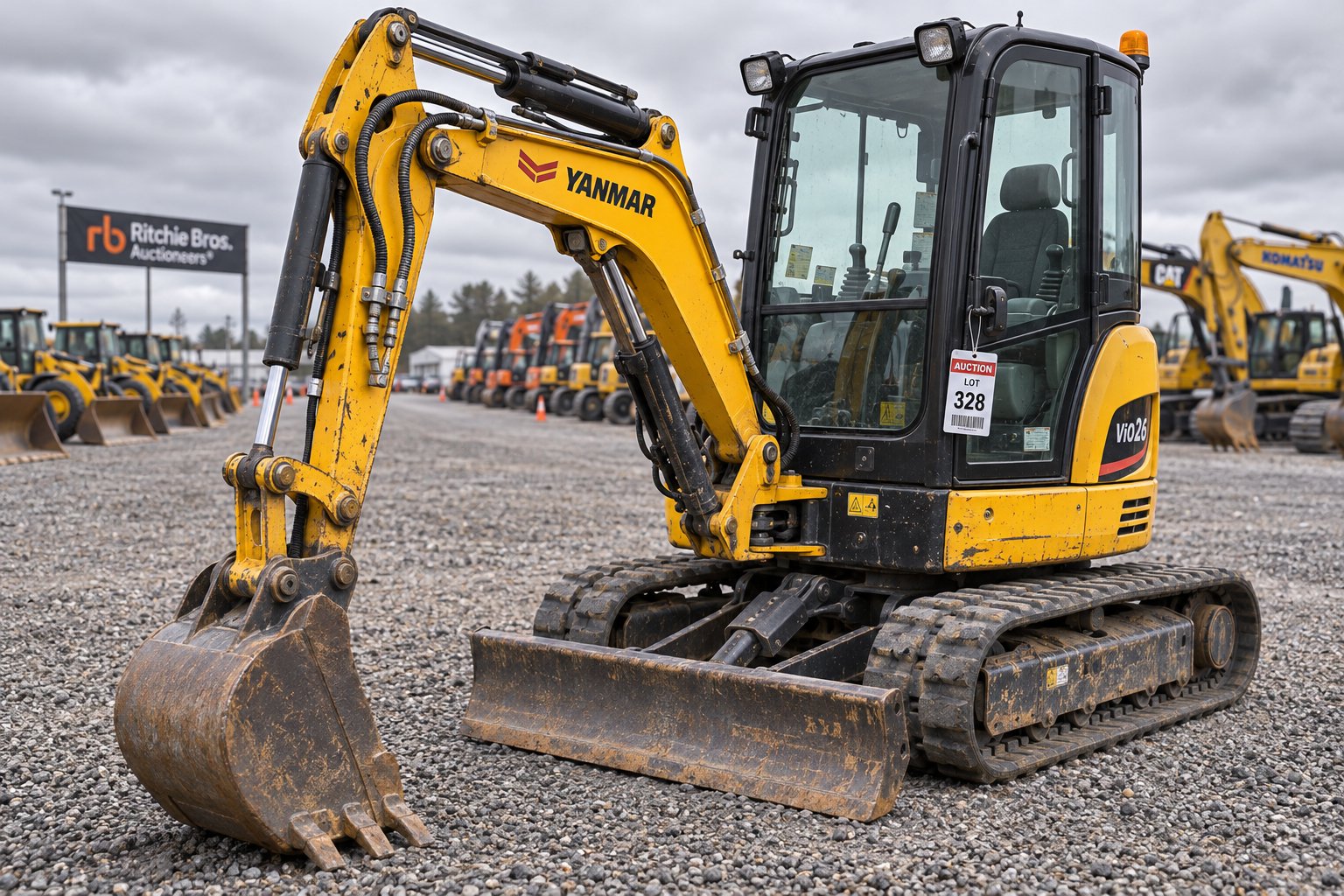
A mini excavator auction is a competitive bidding event where sellers — fleet operators, rental companies, government agencies, and banks holding repossessed assets — liquidate compact excavators through online or on-site platforms. Buyers register, place bids, and the highest bidder wins the machine, often at prices well below retail market value. The same platforms frequently list other heavy equipment categories like dump trailers for sale, utility vehicles for sale, and even niche items like a stump grinder for sale, but compact excavators consistently rank among the highest-volume segments.
Every top search result for "mini excavator auction" is a transactional listing page. Not one offers first-time buyers an educational walkthrough of the bidding process, hidden costs, or inspection strategies. If you have never bought equipment at auction before, there is literally nowhere to learn — until now.
What Counts as a Mini Excavator at Auction
Most auction platforms classify a mini excavator as any compact excavating machine weighing less than 7 metric tons (roughly 6.6 US tons). You will also see these machines listed under aliases like mini ex, compact excavator, mini trackhoe, or simply mini digger. Despite the different names, the category boundaries stay consistent across major bidding sites.
This weight class dominates auction volume for a straightforward reason: compact excavators are the workhorses of urban construction, residential landscaping, and utility trenching. Ritchie Bros. reports that the average mini excavator attracted 49 bids before selling — a 17% year-over-year increase — which signals fierce buyer competition. Rental companies, the single largest source of used minis, regularly turn over fleet inventory, flooding auction catalogs with well-used but often well-maintained machines. Whether you are hunting for something the size of an LMTV or browsing the same platform where you would find a tractor for sale, compact excavators consistently appear in the densest concentration.
Why This Guide Exists
Major platforms like Ritchie Bros. display over 3,100 active compact excavator listings. GovPlanet returns more than 600 results. AuctionTime, EquipmentFacts, and GovDeals add thousands more. Yet none of these sites explain how to buy — they only show you what to buy. That is a problem for first-time bidders who have real money on the line and no framework for evaluating condition, calculating total cost, or avoiding common pitfalls.
This guide is platform-agnostic. It does not favor one auction house over another, and it is not trying to sell you a machine. Instead, it walks you through the entire journey — from understanding auction formats and comparing platforms to inspecting equipment, calculating hidden fees, and timing your bid for maximum value. Think of it as the buyer's manual that should have existed all along.
The logical starting point? Understanding exactly how the bidding process unfolds from the moment you create an account to the moment a machine rolls off a trailer at your job site.
How Mini Excavator Auctions Work from Start to Finish
Buying a compact excavator at auction is not the same as clicking "add to cart" on an e-commerce site. There is a structured sequence — registration, research, bidding, payment, and logistics — and skipping any step can cost you money or leave you stuck with a machine you never properly evaluated. Whether you are browsing the same catalogs where you would find tow trucks for sale or zeroing in on a specific 3-ton mini, the process follows a remarkably consistent pattern across every major platform.
Here is exactly how the journey unfolds, step by step:
- Research and platform selection. Start by identifying which auction platforms carry the type of compact excavator you need. Some platforms specialize in government surplus, others in commercial fleet liquidations. Browse active listings and completed sales to develop a feel for pricing on specific makes and models — a Bobcat skid steer might trade in different price bands than a Kubota mini excavator on the same site. Spending time here prevents impulse bidding later.
- Account creation and deposit. Every platform requires you to register before you can bid. Most ask for basic identification, a valid payment method, and sometimes a refundable deposit. Read the terms of service carefully — they outline buyer's premiums, payment deadlines, and removal windows that vary from one auction house to another.
- Catalog review and inspection scheduling. Auction catalogs typically publish one to four weeks before the sale. Study the lot descriptions, serial numbers, reported hours, and available photos. If the platform offers preview days or inspection windows, schedule them immediately. This is your only chance to verify details like fuel tank condition, hydraulic responsiveness, and undercarriage wear before money is on the line.
- Bidding. Depending on the format, you will either place live bids in real time, set a maximum proxy bid that the system incrementally raises on your behalf, or submit an offer directly to the seller. Set your ceiling before bidding opens — factoring in all fees and transport — and respect that number no matter how competitive the room gets.
- Winning and payment. Once you win, payment terms are strict. Most platforms require full payment within 24 to 48 hours via wire transfer, certified check, or credit card. Late payment can result in forfeited deposits and permanent account suspension.
- Equipment removal or shipping. You are responsible for getting the machine off the auction yard within a defined removal window — often five to ten business days. That means arranging a lowboy trailer, flatbed transport, or a third-party shipping service. Delays can trigger daily storage fees that quietly eat into your savings.
Sounds straightforward on paper. The real complexity shows up in how you bid — because the format you choose shapes both your strategy and your risk.
Online Bidding vs. On-Site Auctions
You will encounter two broad environments: fully online auctions and live on-site events. Many major houses now blend both through simulcast bidding, where an auctioneer calls the floor while remote bidders participate in real time through a digital portal.
Online auctions offer unmatched convenience. You can bid from your office, track multiple lots across different platforms, and — critically — stick to your maximum bid more easily because you are removed from the emotional pressure of a live crowd. Proxy bidding tools handle the incremental raises automatically, and anti-snipe timers on many platforms prevent last-second bid manipulation.
On-site auctions bring a different advantage: you can physically inspect the machine minutes before it sells. Hands-on inspection lets you start the engine cold, cycle the hydraulics, check for leaks under the chassis, and assess overall condition in ways that even the best photo gallery cannot replicate. The tradeoff is real — travel costs, a full-day time commitment, and the heightened emotional energy of a fast-paced floor that can push even disciplined buyers past their budget. Companies like Aggreko and other large fleet operators sometimes liquidate dozens of machines in a single on-site event, creating rare opportunities but also intense competition.
Many experienced buyers adopt a hybrid approach: they use online platforms for routine purchases where listings include detailed photos and condition reports, and reserve on-site attendance for higher-value machines or large fleet liquidation events where physical verification gives them a decisive edge.
Buy Now, Make Offer, and Timed Auction Formats
Not every listing follows the traditional "auctioneer calls the room" model. Across major platforms, you will find three distinct buying formats — and picking the right one depends on your timeline, budget, and appetite for competition.
- Timed auctions are the classic format. Bidding opens on a set date and closes at a scheduled time, often with automatic extensions if last-minute bids come in. This is where patient buyers find the best deals. If you are searching for tractors for sale near me or a compact excavator in a specific weight class, timed auctions let you monitor pricing trends across multiple lots before committing.
- Buy-now listings work exactly like a fixed-price sale. The seller sets a price, and the first buyer who meets it takes the machine. There is no bidding war, no waiting — just a straight transaction. This format suits contractors who need a machine on a tight project deadline and cannot afford to lose a week watching a timed auction expire.
- Make-offer options sit between the two. Platforms like GovPlanet allow buyers to submit a price directly to the seller, who can accept, reject, or counter. This introduces negotiation flexibility you simply do not get in a traditional auction. It is particularly useful when a listing has been sitting for a while and the seller may be motivated to move the asset.
Understanding these format differences before placing your first bid is not optional — it is foundational. A buyer who treats a make-offer listing like a timed auction, or rushes into a buy-now without checking comparable sold prices, risks overpaying from the very first click.
Format and process, though, only tell half the story. The platform you choose determines everything from inventory depth to buyer protections — and the differences between major auction houses are larger than most first-time buyers expect.
Comparing the Six Major Auction Platforms for Mini Excavators
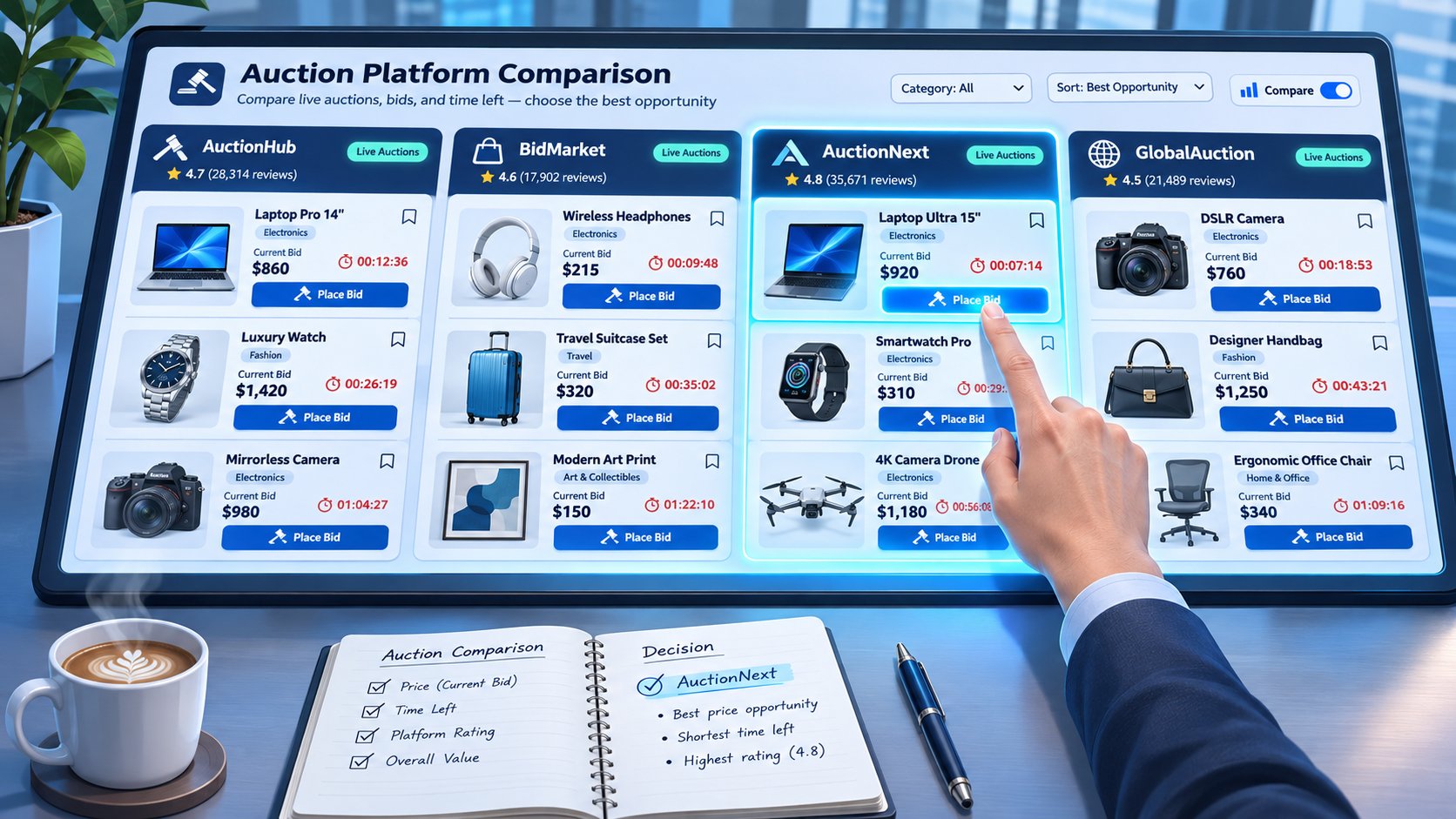
Six platforms dominate the compact excavator auction landscape — and they are far from interchangeable. Each one targets different seller pools, offers different buying formats, and provides different levels of buyer protection. Choosing the wrong platform does not just waste your time; it can mean overpaying for a machine, missing out on better inventory elsewhere, or bidding blind without the condition data you need to make a sound decision.
The table below breaks down the major players side by side. Whether you are searching for a mini excavator for sale, a flatbed truck, or even a surplus humvee, these platforms collectively cover the broadest range of heavy equipment available through competitive bidding.
| Platform | Specialization | Buying Formats | Buyer Protections | Approximate Inventory Scale |
|---|---|---|---|---|
| Ritchie Bros. Auctioneers | World's largest equipment auctioneer; commercial fleet liquidation, rental company turnover, private-party consignment | Live on-site, timed online, simulcast | Detailed lot descriptions; inspection days at yard locations | 3,100+ compact excavator listings |
| GovPlanet | Government and military surplus equipment | Timed auction, Buy Now, Make Offer | IronClad Assurance inspection program on select listings | 600+ compact excavator results |
| GovDeals | Government agency surplus — municipal, county, state, federal, and educational institutions | Timed online auctions | Known provenance from government entities; many listings include maintenance records | Varies by cycle; hundreds of agencies list equipment nationally |
| EquipmentFacts | Aggregator connecting buyers to upcoming auctions from regional and national auctioneers | Links to live and timed auctions hosted by partner auction houses | Dependent on host auctioneer's policies | Aggregated; scale varies by auction cycle |
| AuctionTime | Commercial and private equipment marketplace; strong in agricultural and construction equipment | Timed online auctions | Lot descriptions and photos provided by sellers; as-is sales | 1,233+ active equipment listings |
| Proxibid | Broad auction aggregator with access to industrial, commercial, and government auctions | Live simulcast, timed online | Dependent on individual auction house policies | Aggregated across partner auctioneers |
A few things jump out immediately. Ritchie Bros. dwarfs every competitor in raw listing volume — if you want the widest selection and do not mind competing against a large buyer pool, it is the obvious starting point. GovPlanet stands alone in offering all three buying formats (auction, buy now, and make offer) alongside its IronClad Assurance program, which provides verified condition reports on qualifying machines. And aggregator platforms like EquipmentFacts and Proxibid do not host their own sales at all — they funnel you to auctions run by regional houses, which means protections and fees depend entirely on the host auctioneer.
Government Surplus vs. Commercial Equipment Sources
This distinction matters more than most first-time buyers realize. Government surplus auctions — the kind you find on GovDeals and GovPlanet — draw inventory from a fundamentally different pipeline than commercial platforms.
When a county public works department, a state transportation agency, or a university facilities team retires a compact excavator, that machine typically comes with a documented service history. GovDeals reports that hundreds of government agencies across individual states list surplus through the platform, from city fleet divisions to military installations. These machines were maintained on scheduled intervals using taxpayer-funded budgets — not always perfectly, but almost always with a paper trail. You can often trace exactly which agency owned the equipment, how long they operated it, and what maintenance was performed. That provenance is gold for a buyer trying to assess risk.
Commercial platforms tell a different story. Ritchie Bros., AuctionTime, and similar marketplaces carry machines from rental fleets, private contractors, and equipment dealers. The condition spectrum is much wider. A rental company might list a three-year-old Kubota with meticulous maintenance records. A private seller might consign a ten-year-old machine with no documentation at all. Listings for a backhoe for sale or a compact excavator from commercial sources require sharper due diligence because the history simply is not guaranteed.
Neither source is inherently better — the right choice depends on how much risk you are comfortable absorbing and how much homework you are willing to do before you bid. Government surplus often means lower drama but a narrower selection. Commercial platforms offer volume and variety at the cost of variable transparency.
Which Platform Fits Your Buying Style
Imagine three different buyers walking into the same market. The first is a budget-conscious landscaper buying a first machine. The second is an equipment dealer building resale inventory. The third is a general contractor who needs a specific model by next Friday. Each one should be looking at a completely different platform.
- Budget hunters benefit most from government surplus auctions on GovDeals and GovPlanet. Starting bids tend to be lower, competition can be lighter on less glamorous municipal equipment, and the documented provenance reduces guesswork. If you are the type who scours listings the way bargain shoppers search for a porta potty for sale at a surplus event — patient, methodical, willing to wait for the right lot — this is your lane.
- Volume buyers and dealers gravitate toward Ritchie Bros. and AuctionTime for a simple reason: scale. When you need to evaluate dozens of comparable machines across multiple auctions, you want the platform with the deepest catalog. Ritchie Bros.' global reach also makes it a natural fit for buyers sourcing machines for export or multi-site operations.
- Negotiators and deadline-driven buyers should seriously consider GovPlanet's make-offer and buy-now formats. The ability to submit a price and negotiate directly with the seller bypasses the uncertainty of a timed auction. For a contractor who cannot afford to lose a bidding war on a machine needed for an active project, this format removes the biggest auction headache — the possibility of walking away empty-handed after days of waiting.
- Researchers and comparison shoppers find value in aggregators like EquipmentFacts and Proxibid. These platforms pull listings from multiple auction houses into a single search interface, making them useful for scanning the broader market before committing to a specific platform. Think of them as the search engine layer that sits on top of individual auction houses.
No single platform is the "best" — the best platform is the one that aligns with your buying style, your risk tolerance, and the amount of time you can dedicate to due diligence. And that last factor, due diligence, becomes especially important when you consider how wildly the brands, models, and size classes of compact excavators vary across these catalogs.
Mini Excavator Brands and Size Classes Explained for Auction Buyers
Scroll through any mini excavator auction catalog and you will see a dizzying mix of brand names, model numbers, and weight specifications. A Kubota KX040-4 sits three lots away from a Takeuchi TB240. A Caterpillar 303.5 CR shares the same page as a Yanmar ViO35-6A. For experienced contractors, those model numbers tell an instant story about capability, parts cost, and resale trajectory. For first-time buyers, they all look like alphabet soup.
The brand on the hood and the weight class stamped on the spec sheet are two of the most important variables driving auction prices — and understanding both before you bid prevents costly mismatches between the machine you win and the work you need it to do.
Popular Brands and What They Mean for Resale Value
Not all badges carry equal weight in the used market. Ritchie Bros. data shows that Kubota, Bobcat, and Caterpillar consistently hold their value best among compact excavators, driven by massive dealer networks, high rental fleet adoption, and steady parts availability. Buyers trust these names because finding a replacement hydraulic pump or a set of track rollers rarely requires a multi-week overseas order.
| Brand | Resale Strength | Key Differentiator in the Used Market |
|---|---|---|
| Kubota | Strongest | Dominates rental fleets and dealer inventories across North America; widest parts availability in the sub-5-ton class |
| Bobcat | Strongest | High brand familiarity; strong dealer support; extensive model lineup including zero-tail-swing options |
| Caterpillar | Strong | Commands premiums in the 5,000-8,000 lb range; higher initial purchase price narrows resale-percentage advantage |
| John Deere | Above average | Loyal buyer base; outperforms lesser-known imports at resale |
| Takeuchi | Above average | Respected among professionals for reliability; solid resale in the 3-to-6-ton range |
| Yanmar | Moderate | Strong ViO zero-tail-swing lineup; fuel efficiency focus; narrower North American dealer footprint |
| JCB | Moderate | Industry-leading dump heights on select models; growing but smaller used market presence in North America |
You will notice a clear pattern: well-known brands like Kubota and Caterpillar command auction premiums because buyers price in the convenience of easy service and fast parts access. A well-maintained 3-to-4-year-old compact excavator with under 1,500 hours commonly retains 55-70% of its original value — a stronger curve than most compact equipment categories. That retention rate matters whether you are building a fleet or planning to resell after a single project.
Lesser-known makes — including some models exported from various countries — can offer genuine value for buyers comfortable sourcing parts independently. Equipment exported from China, for instance, is not necessarily manufactured by a Chinese brand; multi-brand sourcing is common in the global used equipment market, and auction catalogs regularly feature machines built under license or assembled from internationally sourced components. If you have the mechanical knowledge to maintain one of these units yourself, the lower hammer price can translate into real savings. If you do not, the parts headache can quickly erase the discount.
The same resale logic applies beyond excavators. Whether you are browsing used tractors for sale, dump trucks for sale, or compact excavators, brand recognition consistently influences what buyers are willing to pay on the secondary market. A police impound auction might turn up equipment at steep discounts, but those bargains only pay off if the brand behind the machine has a parts and service infrastructure you can actually access.
Matching Excavator Size to Your Job Requirements
Brand matters, but size selection might matter even more. Bidding on a 5-ton machine when your job calls for a 1.5-ton unit means you are overpaying for capability you will never use — and potentially buying a machine too large to access the work area. The compact excavator market breaks down into four practical weight classes, each suited to a different scope of work:
- Micro excavators (under 1 ton): Purpose-built for extremely tight residential work — interior demolition, backyard landscaping behind narrow gates, and indoor applications. Models like the Kubota K008-5 at just over 2,000 lbs fit through standard doorways. Limited dig depth (typically under 6 feet) restricts them to shallow tasks.
- 1-2 ton machines: The sweet spot for landscaping, light utility trenching, and small residential projects. Brands like Bobcat, Kubota, and Yanmar offer strong options in this class. Machines are still trailer-towable with a standard pickup, keeping transport costs low.
- 2-4 ton machines: General contracting workhorses. This is the most popular size class at auction and on job sites alike. Dig depths of 9-12 feet handle foundation work, drainage installation, and moderate demolition. Models in this range — like the Bobcat E35, Cat 303.5 CR, and Takeuchi TB335R — consistently show up in the highest auction volumes.
- 4-6 ton machines: Heavier commercial excavation, road work, and utility construction. These units deliver dig depths of 12-15+ feet and significantly more lifting power, but they require a lowboy trailer or flatbed for transport. Expect to see models like the Cat 305 CR, Kubota KX057-5, and JCB 55Z-I competing for bids in this class.
One specification deserves special attention: zero-tail-swing configuration. A zero-tail-swing excavator keeps its housing entirely within the track width when rotating, which means you can work safely against walls, fences, and traffic lanes without the rear end swinging into obstacles. As Compact Equipment reports, the demand for zero-tail-swing designs has grown steadily as urban job sites become more confined. Kubota, JCB, and Yanmar offer particularly strong zero-tail-swing lineups.
The tradeoff? Zero-tail-swing machines are lighter and typically lift less over the side than conventional-tail models. If your work involves heavy attachments like hydraulic breakers or grapples, a conventional tail swing may deliver better stability and production. Always confirm zero-tail-swing specifications for any specific machine listing — auction descriptions do not always make the distinction clear, and assuming a model is zero-tail based on its size class alone can lead to a frustrating surprise on the job site.
Knowing which brand holds value and which size class fits your work is critical intelligence before you place a bid. But even the best brand in the perfect weight class can become an expensive mistake if the machine itself has hidden mechanical problems — and that is where a disciplined pre-auction inspection separates confident buyers from hopeful gamblers.
The Pre-Auction Inspection Checklist Every Buyer Needs
A sharp-looking machine with fresh paint and a low hour meter can still hide five figures in repair costs. The difference between a profitable auction purchase and an expensive regret almost always comes down to what you check before the gavel falls — and right now, not a single major auction platform provides buyers with a structured inspection framework. You are expected to bid thousands of dollars on complex hydraulic machinery with nothing more than a photo gallery and a one-line condition note.
That ends here. The checklist below covers every critical system on a compact excavator, organized so you can work through it methodically — whether you are standing next to the machine at a preview day or evaluating a listing remotely from your office. Print it, save it, or screenshot it. It is the single most important tool you will carry into any mini excavator auction.
Mechanical and Hydraulic System Checks
The hydraulic system is the heart of every excavator. Small leaks and sluggish response hide repair bills that can rival the hammer price itself. A professional inspection walkthrough prioritizes these areas first — and so should you.
- Hydraulic cylinders: Examine every cylinder rod on the boom, arm, and bucket for scoring, pitting, and chrome peeling. Wipe the rods clean and look for fresh oil seeping past the seals. A single cylinder reseal on a mini excavator can run into the thousands, and scored rods usually mean the entire cylinder needs rebuilding rather than just a seal replacement.
- Hydraulic fluid condition: Pull the dipstick or check the sight glass. Clean hydraulic oil should be a clear amber. Milky or foamy fluid signals water contamination — a potential deal-killer that points to internal seal failure or a cracked cooler. Dark, burnt-smelling oil suggests the system has been running hot, which accelerates wear on pumps and valves.
- Pump responsiveness: With the engine warm, cycle the boom, arm, and bucket through their full range of motion. The movements should be smooth and consistent. Hesitation, jerky response, or noticeably slower speeds in one direction indicate a tired pump or internal valve bypass. A hydraulic pump replacement on even a small Kubota mini excavator can cost several thousand dollars.
- Cylinder drift test: Raise the boom fully loaded, shut the engine off, and wait five minutes. Mark the cylinder rod position before and after. Some drift is normal, but significant settling indicates worn packing or bypassing valves — a hidden cost that adds up fast if left unaddressed.
- Engine performance: Start the machine cold and watch the exhaust. A brief puff of white smoke on startup is common in cooler weather. Persistent blue smoke means the engine is burning oil — worn rings or valve seals. Black smoke points to fuel delivery or air intake problems. Listen at idle for irregular rhythm, knocking, or excessive vibration that suggests internal wear.
- Fluid condition across all systems: Check the engine oil dipstick for metal flakes and excessive blackening. Inspect the coolant for oil sheens that suggest a head gasket issue. These five-minute checks reveal maintenance habits that no listing description will tell you.
- Hour meter verification: Hours on a mini excavator are loosely analogous to mileage on a vehicle — they are the primary yardstick for estimating remaining useful life. But here is the critical warning: roughly 15-20% of used equipment listings show hour readings inconsistent with service records or ECM data, according to Iron Solutions market analysis. Tampered hour meters are a documented risk in the used market. Look for telltale signs: worn-out controls and pedals that do not match a suspiciously low reading, a meter housing that looks newer than the machine, or fresh wiring around an old gauge. On machines built after 2005, request an ECM (engine control module) hour pull through a dealer — this electronic record is far harder to falsify than a mechanical counter. If the seller refuses, treat that refusal as a red flag.
Typical useful life ranges vary significantly by brand and maintenance history. Industry data suggests compact excavators in the sub-10-ton class start entering a caution zone around 5,000 hours, though a well-maintained machine can deliver productive service well beyond that threshold. A 6,000-hour unit with full dealer service records can be a far better buy than a 2,500-hour machine with no documentation at all. Context always trumps raw numbers.
Undercarriage, Tracks, and Structural Integrity
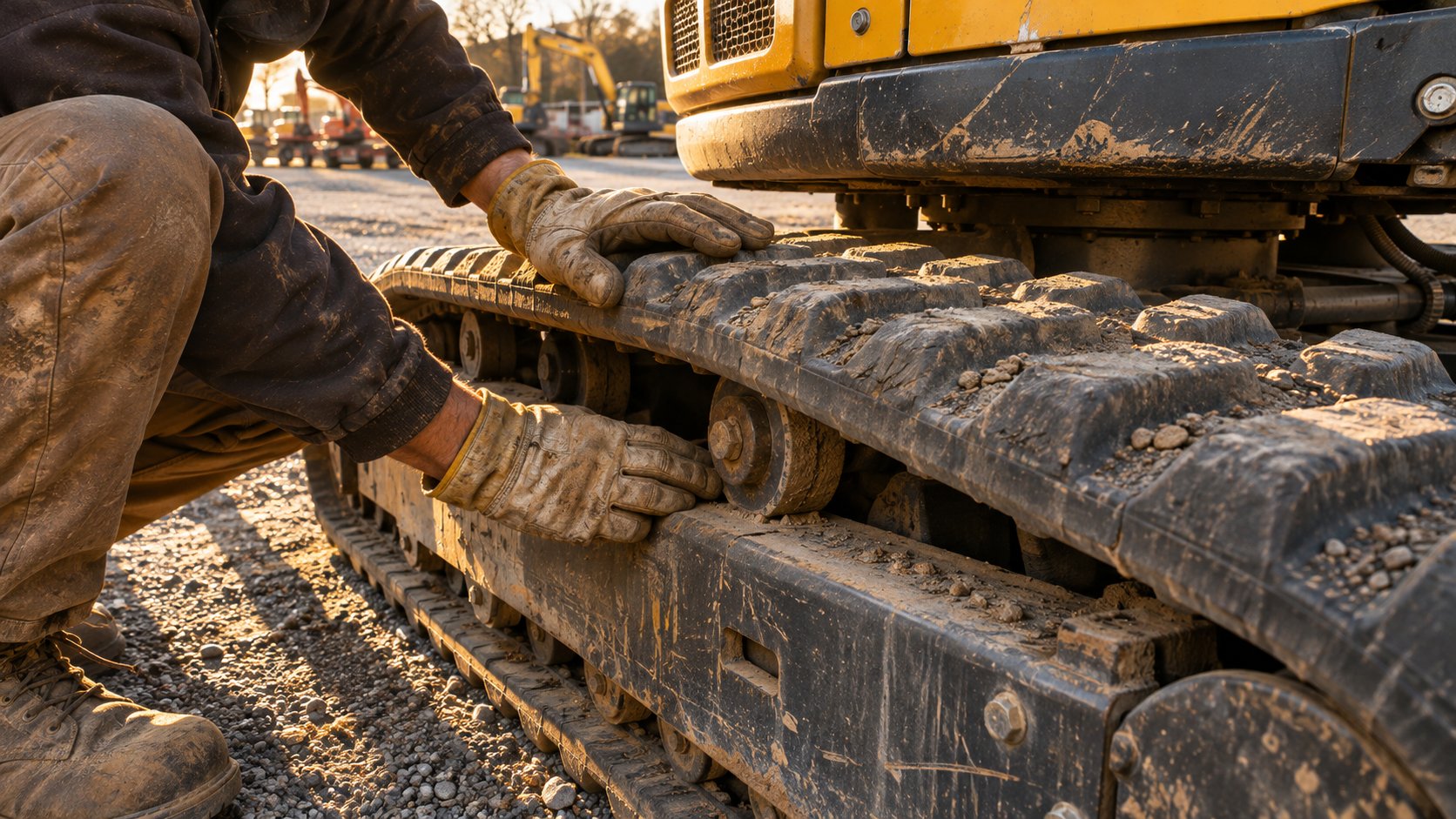
If the hydraulic system is the heart, the undercarriage is the wallet. The undercarriage on a tracked excavator typically represents 40 to 50 percent of the machine's total operating cost over its life — and on compact models with rubber tracks, wear happens even faster than on their larger steel-tracked counterparts. A full undercarriage replacement can represent a significant portion of a mini excavator's total auction value, so this is the one area where cutting corners on inspection is genuinely unaffordable.
- Track condition: On rubber-tracked minis, look for cracking, chunking, missing lugs, and exposed steel cords. On steel-tracked models, measure grouser height and check for link wear. Tracks that appear tight despite high hours may have had a link removed to mask internal wear — compare the link count against the manufacturer's specification.
- Rollers and idlers: Spin each bottom roller and carrier roller by hand if possible. They should rotate freely without grinding or excessive play. Check for oil leaking from roller seals — a leaking seal means the roller's internal bearings are running dry and failure is imminent. The front idler should move smoothly within its recoil mechanism; a seized or damaged recoil spring throws off track tension across the entire system.
- Sprocket teeth: Examine the drive sprocket for pointed, hooked, or asymmetrically worn teeth. Worn sprockets accelerate chain wear and are a reliable indicator that the undercarriage has been running hard. If the sprocket looks rough, assume the rest of the system is carrying similar wear.
- Track tension: Proper tension varies by ground conditions, but obviously loose or excessively tight tracks both signal problems. Loose tracks slap and wear contact points prematurely. Over-tightened tracks stress components and accelerate wear through excessive load.
Beyond the undercarriage, structural integrity tells you how the machine was treated over its working life:
- Boom and arm pin play: Have someone cycle the bucket while you watch each pin joint closely. Visible movement or clunking at the pin bushings means the machine was under-greased or overworked — and loose pins stress every connected component. Rebuilding pin joints is labor-intensive and expensive.
- Bucket tooth wear and cutting edge: Severely worn teeth reduce digging efficiency and indicate heavy use. Replacement is straightforward, but the wear pattern reveals how hard the machine was pushed.
- Weld repairs on the boom or stick: This is a major red flag. Any visible plate welded over a crack suggests the machine experienced loads beyond its design limits. As one experienced appraiser notes, cracks can reduce a machine's value by roughly 20% — and on smaller excavators, the safer move is often to walk away entirely rather than gamble on structural fatigue.
- Cab condition: A torn seat, cracked glass, battered controls, and a filthy interior are not just cosmetic issues. They are evidence of how carefully — or carelessly — the operator treated the machine day after day. A cab that looks like it survived a demolition derby rarely houses a well-maintained engine underneath.
You might be wondering: what if you cannot physically visit the machine? Many auction buyers — especially those sourcing equipment across state lines or internationally — face exactly this problem. The same dilemma applies whether you are bidding on a compact excavator, browsing used dump trailers for sale near me, or evaluating a snow plow and truck package listed three states away.
Request every available resource from the auction platform before committing a single dollar: high-resolution photos of the undercarriage, cylinder rods, weld seams, and cab interior. Ask for service records, hour meter documentation, and any condition reports the platform offers. Programs like GovPlanet's IronClad Assurance exist specifically to bridge this information gap on qualifying listings. For higher-value machines, consider hiring an independent third-party inspector who can visit the yard, measure undercarriage wear, and perform hydraulic tests on your behalf. The inspection fee is a fraction of what a single hidden repair would cost.
Auction veterans treat on-site preview days the way serious car buyers treat test drives — as non-negotiable. If the platform offers one, attend. If it does not, the burden of verification falls entirely on your research. The same discipline applies whether you are evaluating a school bus for sale at a municipal surplus event or a compact excavator at a commercial liquidation — any asset sold as-is demands that you do the homework the seller will not do for you.
A thorough inspection protects you from buying a lemon. But even a mechanically sound machine can become an overpriced purchase if you fail to account for the costs that come after the winning bid — and those hidden expenses are where most first-time auction buyers get blindsided.
Understanding the True Cost of Winning a Mini Excavator at Auction
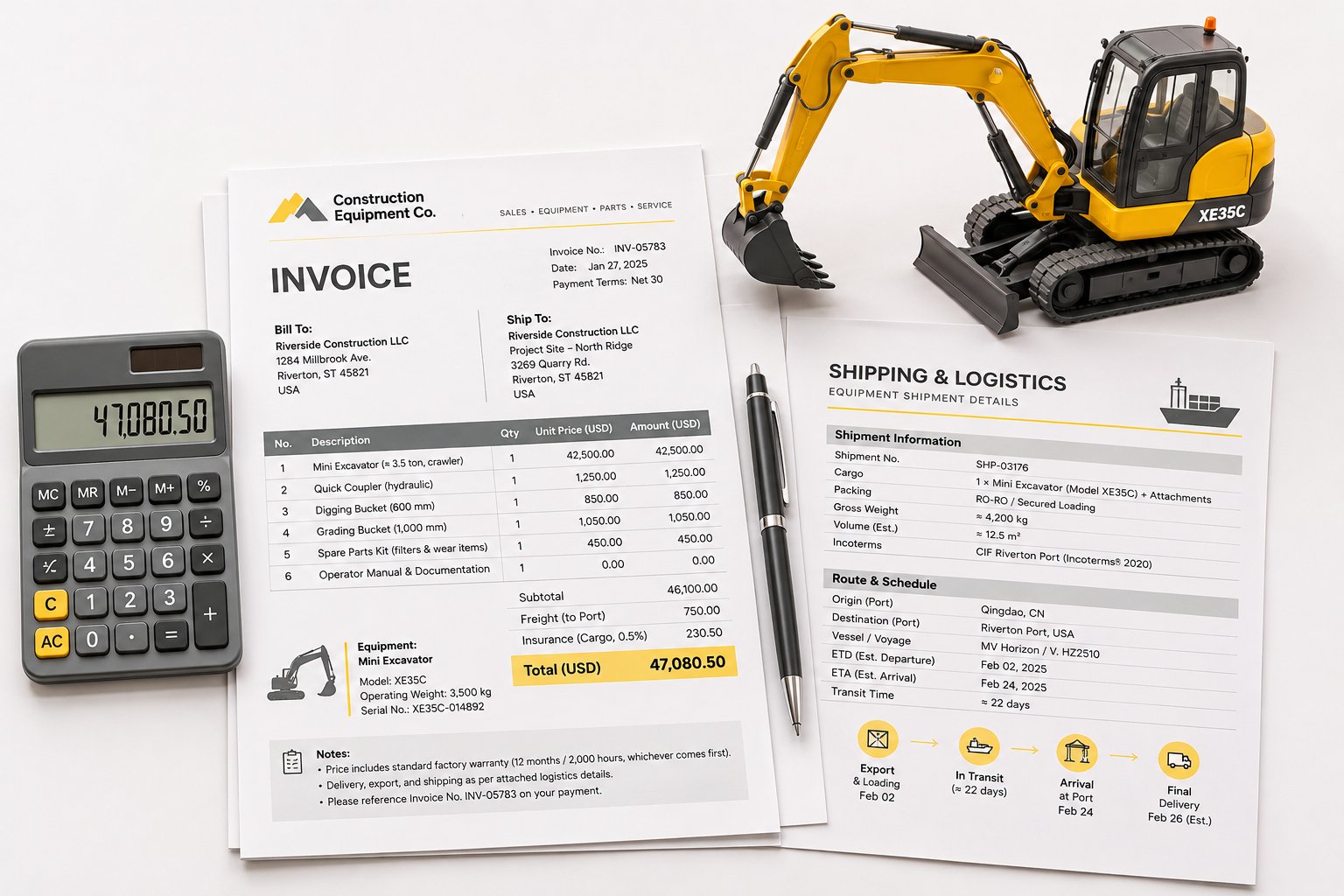
Here is the number that surprises almost every first-time buyer: the price you see on the bid screen is not the price you actually pay. A winning bid of $15,000 can quietly become $20,000 or more once platform fees, taxes, and logistics are layered on top. As Grafe Auction puts it, "the winning bid is where your cost starts, not where it ends." Buyers who budget only for the hammer price are the ones who get blindsided at pickup — and this knowledge gap is the single biggest reason first-time auction participants feel burned by a process that was supposed to save them money.
The formula worth memorizing is simple:
Hammer price + buyer's premium + sales tax + transport + immediate repairs = your true landed cost. Every bid you place should be reverse-engineered from this total, not from the hammer price alone.
Buyer Premiums, Taxes, and Platform Fees
The buyer's premium is the first cost that catches people off guard. It is a percentage added on top of your winning bid, charged by the auction house to cover the cost of running the sale. Think of it as the platform's commission — except you, the buyer, pay it, not the seller. Every major auction house charges one, and the percentage varies by platform and sometimes by lot value. Some houses use a tiered structure where the rate decreases on higher-value purchases; others apply a flat rate across the board.
On top of the premium, you owe applicable sales tax unless you have filed a valid resale certificate or tax-exempt form before the sale closes. This is not optional paperwork you can handle after the fact — most platforms require exemption documentation on file prior to invoicing, and retroactive claims are rarely honored. Administrative or documentation fees also appear on some platforms as small fixed charges, but they add up across multiple purchases.
The critical discipline here is straightforward: before the auction starts, look up the platform's published fee schedule, calculate the premium and estimated tax on your maximum bid, and subtract those amounts from your ceiling. If your all-in budget is $18,000, your actual bidding ceiling might be closer to $15,000 depending on the platform's rates. Bidding to $18,000 and then discovering $3,000 in fees on the invoice is a mistake you only make once.
The table below illustrates how these costs stack up. Actual percentages vary by platform — always reference the specific auction house's current fee schedule for precise figures before you bid.
| Cost Category | Description | When It Applies |
|---|---|---|
| Hammer Price | Your winning bid — the amount displayed when the gavel falls or the timer expires | Every auction purchase |
| Buyer's Premium | A percentage of the hammer price charged by the auction house; rates vary by platform and may be tiered | Every auction purchase; check the platform's fee schedule for current rates |
| Sales Tax | State and local tax applied to the purchase unless a valid exemption is filed before the sale | Varies by jurisdiction and buyer status |
| Administrative/Documentation Fees | Fixed processing or title transfer charges imposed by some platforms | Platform-dependent; not universal |
| Transport/Shipping | Cost of moving the machine from the auction yard to your location via flatbed trailer, lowboy, or third-party carrier | Every purchase unless buyer self-loads at the yard |
| Immediate Maintenance or Repairs | Fluid changes, seal replacements, track repairs, or other work needed before the machine enters service | Common on as-is auction purchases |
| Estimated Total | Sum of all categories above — this is the real number to compare against retail pricing | Always calculate before bidding |
You will notice that the hammer price is just one line in a seven-row table. That ratio tells you everything about why total cost of ownership thinking — not sticker-price thinking — separates experienced auction buyers from first-timers who overspend.
Transport, Delivery, and Post-Purchase Expenses
Winning the bid is one milestone. Getting the machine to your job site is an entirely separate project — and an entirely separate expense. Most auction sales are pickup-only, meaning you arrange and pay for hauling on your own timeline, within a removal window that typically ranges from five to ten business days. Miss that window, and daily storage fees start accumulating.
For compact excavators, transport usually means hiring a flatbed trailer or lowboy depending on the machine's weight and dimensions. Current U.S. market data from A1 Auto Transport puts mini excavator shipping costs at roughly $800 to $1,500 for moves under 200 miles, $2,000 to $3,500 for 500 to 1,000 miles, and $5,000 to $6,500 for cross-country hauls around 2,000 miles. Shorter moves cost more per mile because loading time and deadhead travel get spread over fewer billable miles. Machine dimensions, trailer choice, permits, and site access can push quotes outside those ranges in either direction.
Cross-border purchases add another layer entirely. Import duties, customs brokerage fees, and compliance documentation can represent a meaningful percentage of the machine's value. Insurance during transit is not optional for a high-value asset — verify that your carrier provides cargo coverage and understand the claims process before the machine leaves the yard. The same logistical homework applies whether you are moving a compact excavator, a skid steer for sale from a surplus lot, or a tow truck for sale picked up at a regional auction three states away. Distance, weight, and access dictate the bill.
Then there is the cost most buyers forget completely: immediate post-delivery maintenance. Auction equipment sells as-is. Even a solid machine with honest hours might need fresh hydraulic fluid, new filters, a track tension adjustment, or minor seal work before it is ready for a job site. Budget a maintenance reserve — think of it the way a savvy buyer at a military surplus sale budgets for cleaning and refitting after picking up a pallet of ammo can storage containers or field equipment. The purchase price gets you possession; the conditioning cost gets you something you can actually use.
For buyers who cannot absorb the full landed cost in a single payment, used mini excavator financing is worth exploring. Cat Financial and similar lenders offer equipment loans and leases specifically designed for used machinery purchases. Spreading costs over 24 to 60 months can make an auction purchase cash-flow positive from the first month if the machine generates revenue immediately. The key is factoring the interest expense into your total cost calculation — a $14,000 hammer price financed at a higher rate can end up costing more than a $16,000 machine purchased outright. Run the numbers both ways before committing.
One insight from Caterpillar's cost-of-ownership research reframes the entire conversation: the purchase price of a machine has the lowest impact on overall profitability compared to factors like productivity, availability, and operating costs. A 1% improvement in productivity delivers over five times the financial impact of a 1% change in purchase price. That means a slightly more expensive machine with better uptime, lower fuel consumption, and cheaper maintenance can dramatically outperform a bargain-bin auction win that spends half its life waiting for parts.
Total cost of ownership is not just an accounting exercise — it is the lens that turns auction buying from a gamble into a strategy. And strategy becomes especially important when you consider the risks that even careful budgeting cannot fully eliminate. The reality is that every auction purchase carries inherent uncertainties, and the buyers who acknowledge those risks upfront are the ones best positioned to manage them.
Common Risks and How to Protect Yourself at Equipment Auctions
You have done the research. You understand the platforms, the brands, the fee structure, and the inspection checklist. But here is the uncomfortable truth that no auction house advertises on its homepage: the vast majority of equipment sold at auction is sold as-is, where-is, with all faults. That legal phrase means exactly what it sounds like — once the gavel falls, the machine is yours regardless of what you discover afterward. There is no return window, no 30-day warranty, and in most cases, no recourse if the listing description turned out to be optimistic.
That does not make auctions a bad idea. It makes them an environment where preparation is the only real insurance policy. The buyers who consistently come out ahead are the ones who know what red flags look like before they bid — and who have a personal risk framework that keeps emotion out of the equation when the timer starts counting down.
Red Flags in Auction Listings to Watch For
Every listing tells a story. Some stories are honest. Others have chapters missing. Learning to spot the gaps is the difference between landing a solid machine and inheriting someone else's expensive problem. Here are the warning signs that experienced buyers treat as non-negotiable deal-breakers or, at minimum, reasons to dig significantly deeper before committing money.
- Vague or missing condition descriptions. A listing that says "runs and operates" without specifying how well it runs is doing the bare minimum. Compare that to listings that detail specific component conditions, recent service work, and known issues. The less detail a seller provides, the more likely there is something they would rather you not ask about.
- Suspiciously low hour readings on older machines. A 2012-era compact excavator showing 1,200 hours should raise immediate questions. As discussed in the inspection chapter, hour meters can be replaced, rolled back, or disconnected — and cross-referencing the displayed hours against physical wear patterns is the only reliable verification method outside an ECM data pull. If the seat is worn through but the meter reads like a weekend-use machine, trust the seat.
- No photos of the undercarriage or key components. When a seller photographs every angle of a freshly washed cab but conveniently omits images of the track system, cylinder rods, and engine compartment, that omission is information. Request the missing photos directly. If the seller declines or ignores the request, assume the worst.
- Fresh paint on everything. A full repaint on a used compact excavator is not a cosmetic upgrade — it is often a cover-up. Fresh paint on the engine block, boom welds, or frame rails can hide cracks, leak stains, and corrosion that would otherwise be visible. A genuine seller maintains the machine; a motivated one paints over the problems.
- Missing attachments that are expensive to replace. A mini excavator listed without a bucket, thumb, or quick coupler might look like a bargain until you price the replacements. OEM buckets for popular brands can run $1,000 to $3,000 depending on size and type. Hydraulic thumbs cost even more. Factor replacement costs into your bid ceiling — not as an afterthought, but as a line item.
- "Sold as-is" with zero service records. Yes, nearly every auction machine is sold as-is. But there is a meaningful difference between a machine that has no records because the seller did not bother to include them and a machine that genuinely has no maintenance history. Government surplus from platforms like GovDeals almost always includes at least a basic service trail. A privately consigned machine with zero documentation forces you to assume the worst-case maintenance scenario.
- Prices that seem too good to be true. Brownfield Ag News reported that a farmer in western Iowa wired $100,000 to a fake auction site for a tractor, and another in South Dakota lost $80,000 in a similar scam. These are not isolated incidents. Scammers build convincing replica auction sites using commonly available software and stolen photos from legitimate platforms. If a buy-now price is dramatically below market value, if the seller has a reason you cannot inspect the equipment in person, or if the platform itself is unfamiliar — stop. Verify the auction house through your state's auctioneer association before sending money.
The pattern across all these red flags is consistent: missing information is never neutral. In an as-is marketplace, silence from the seller almost always works against the buyer. Whether you are evaluating a compact excavator, browsing semi trailers for sale, or considering work trucks for sale at a fleet liquidation event, the discipline is identical — if the listing leaves you guessing about condition, the bid should reflect that uncertainty or you should walk away entirely.
Strategies to Protect Yourself as an Auction Buyer
Knowing the red flags is half the equation. The other half is building a personal buying framework that accounts for risk before you enter a bidding war. These strategies are not theoretical — they come directly from the habits of contractors and dealers who buy at auction consistently without getting burned.
- Set a firm maximum bid that includes all fees. This point has appeared in every chapter of this guide for a reason: it is the single most violated rule in auction buying. Your ceiling is not the hammer price — it is the total landed cost including buyer's premium, tax, transport, and estimated immediate maintenance. Write that number down. When bidding reaches it, close the browser tab or put the paddle down. There will always be another machine.
- Never bid emotionally. Auction fever is real, and it gets expensive fast. You drove four hours to the yard, inspected the machine, and now someone is outbidding you by $500. The temptation to go "one more bid" is exactly how auction houses generate revenue above fair market value. That extra $500 becomes $700 after the premium, then $750 after tax, then $3,250 when you add the transport you still have not booked. Discipline is the cheapest insurance available.
- Request all available condition reports and service history. Even on platforms where documentation is sparse, asking costs nothing. Some sellers provide records upon request that were never uploaded to the listing. GovPlanet's IronClad Assurance program provides verified condition reports on qualifying machines — if that program is available on a lot you are considering, use it. It is one of the few buyer protections that exists in an otherwise as-is environment.
- Attend preview days whenever possible. In-person inspection is the single most effective risk reduction tool. Most major auction houses schedule preview windows one to three days before the sale. Use every minute. Start the engine cold, cycle the hydraulics, crawl under the machine, and check every item on the inspection checklist covered earlier in this guide.
- Hire an independent inspector for high-value machines. If you cannot attend in person — or if the machine's value justifies the expense even if you can — a third-party inspection service provides professional evaluation for a few hundred dollars. On a $30,000 to $50,000 compact excavator, that fee is trivial compared to the cost of a missed hydraulic pump failure or a cracked boom discovered after delivery.
- Start with smaller purchases to build experience. Your first auction buy should not be a $40,000 machine. Build your comfort level with lower-stakes purchases where the financial exposure is manageable. Many experienced buyers started by picking up attachments, smaller tools, or lower-value equipment before graduating to high-dollar compact excavators. The same logic applies at a Wisconsin surplus auction or any regional government sale — use smaller lots as training ground before committing serious capital.
- Verify the platform's legitimacy independently. Before registering on any auction site, confirm it is a recognized, established operation. Check your state auctioneer association's directory, look for a physical address and verifiable contact information, and search for reviews from real buyers. The scam operations flagged by industry watchdogs typically lack these markers. A legitimate platform will never pressure you to skip inspection or wire funds outside its standard payment process.
There is one more strategic layer worth considering: know when auctions are not the right channel for you. If you lack mechanical expertise and cannot evaluate a machine's condition independently, if your project timeline cannot absorb a two-week delay for shipping and repairs, or if you simply cannot inspect the equipment in person or through a trusted proxy — the auction format carries significantly more risk than alternative procurement options. A sale of used tractors through a reputable dealer, for example, often includes some form of condition guarantee that an auction sale does not. The same applies to buying a dump truck for sale directly from a fleet operator who provides maintenance records upfront. Auctions reward preparation and patience; they penalize rushed decisions and knowledge gaps.
The goal is not to scare anyone away from bidding. Thousands of contractors buy excellent equipment at auction every year and save real money doing it. The goal is to make sure you enter the process with open eyes, a hard budget, and a clear understanding that the as-is marketplace does not forgive the unprepared. Every safeguard you build into your buying process shifts the odds in your favor — and the smartest safeguard of all might be choosing when to bid in the first place, because timing and market conditions influence auction prices far more than most buyers realize.
When to Buy and Timing Strategies for Better Auction Deals
Auction prices are not static. The same Bobcat skid steer loader that sells for $28,000 in April might close at $22,000 in December — same hours, same condition, different month. Construction seasonality, fleet turnover cycles, and year-end financial pressures all push supply and demand in predictable directions, and buyers who understand those rhythms gain a meaningful edge over those who bid whenever a listing catches their eye.
Seasonal Trends That Affect Auction Prices
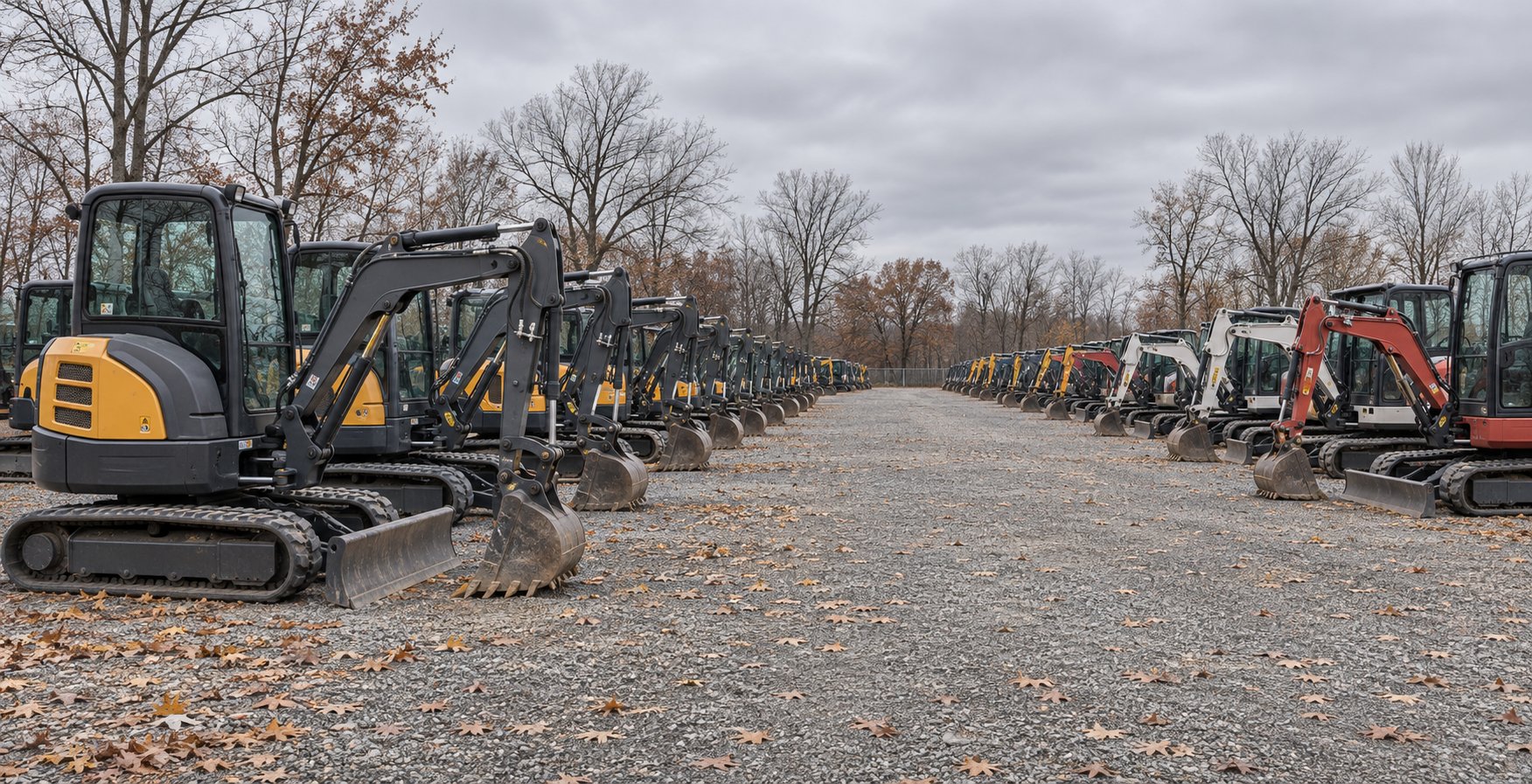
The pattern is straightforward once you see it. As construction activity winds down in the Northern Hemisphere — typically late October through February — fleet operators, rental companies, and large contractors begin liquidating machines they do not want to store, insure, and maintain through the off-season. Hansen Auction Group notes that fall auctions see increased selection precisely because sellers want to clear inventory before winter storage costs accumulate. That surge in supply tilts the pricing leverage toward buyers.
The reverse happens in spring and early summer. Contractors gear up for the busy season, project pipelines fill, and demand for compact excavators spikes. Bidding activity intensifies, and hammer prices firm up accordingly. If you have ever searched for an excavator for sale in March, you have felt this effect firsthand — fewer choices, more bidders, higher closing prices.
Fleet liquidation events deserve special attention. When a national rental company turns over its inventory or a large contractor downsizes after completing a major project, dozens of well-maintained machines hit the market simultaneously. Bright Star Auctions confirms that these end-of-season windows attract both sellers eager to convert assets to cash and buyers positioning themselves for next year's projects. The machines coming out of managed fleets — especially rental units — often carry documented service histories and consistent maintenance intervals, making them lower-risk purchases compared to random private-party consignments. These fleet events apply across equipment categories, from compact excavators and used dump trailers for sale to used lawn mowers for sale at municipal surplus events.
Year-end financial planning amplifies the effect. Businesses looking to capture tax deductions often accelerate equipment purchases in Q4, while sellers simultaneously push assets out the door to clean up balance sheets. That dual pressure creates a concentrated window where motivated sellers and informed buyers converge — and the buyers who arrive prepared tend to walk away with the best deals.
How to Time Your Bidding for Maximum Value
Patience is not a personality trait in this context — it is a pricing strategy. Rather than jumping on the first listing that matches your specifications, monitor auction calendars across multiple platforms for several weeks or even a full cycle. Watch what comparable machines actually sell for, not just what they are listed at. Completed sale prices on Ritchie Bros., AuctionTime, and similar platforms are publicly accessible and provide the most reliable benchmark for fair market value.
Track three variables across those cycles: the number of comparable listings available (supply), the number of bids each lot receives (demand intensity), and the final hammer prices relative to estimated retail value (discount depth). When supply is high, bid counts are moderate, and discounts are deepening, you are looking at a buyer's market. That alignment happens most reliably in the late fall and winter months — the same window when police motor auctions and government surplus events also tend to cluster their year-end inventory clearances.
Understanding seasonal supply dynamics can save a buyer thousands of dollars compared to impulse bidding during peak spring demand. The best auction deals go to buyers who have been watching the market long enough to recognize when prices are soft — not to those who bid the moment urgency strikes.
One critical caveat: timing should sharpen your strategy, never replace your standards. A low price in December means nothing if you skip the inspection checklist or ignore red flags because the deal "looks too good to pass up." Seasonal pricing advantages only compound when layered on top of the due diligence framework covered earlier — thorough inspection, firm budget ceilings, and clear-eyed risk assessment. A well-timed bid on a poorly evaluated machine is still a gamble; a well-timed bid on a thoroughly vetted machine is where real value lives.
Timing and patience work well for buyers who thrive in competitive bidding environments. But not every buyer does — and not every purchasing need aligns neatly with auction calendars and seasonal windows. For those situations, a completely different procurement channel may deliver better results with less uncertainty.
Direct Purchasing as a Smarter Alternative to Auction Bidding
Some buyers are built for the auction floor. They have the mechanical expertise to evaluate a machine in fifteen minutes, the emotional discipline to walk away at their ceiling, and the logistical infrastructure to haul equipment across state lines on short notice. This entire guide has been written to help those buyers succeed. But what about everyone else?
Imagine you are an equipment dealer trying to stock three specific Kubota models for resale. Or an import buyer sourcing a container load of compact excavators for an overseas market. Or a general contractor who needs a confirmed zero-tail-swing machine with verified hours and a detailed condition report — not a gamble on a two-line listing that says "runs and operates." For all three of those buyers, the auction format introduces friction that direct purchasing eliminates entirely.
The decision framework from earlier chapters makes this distinction clear: auctions reward risk-tolerant, mechanically savvy buyers who can absorb uncertainty. Direct purchasing from established equipment dealers and exporters suits buyers who prioritize transparency, specification control, and transactional predictability over the possibility of a below-market hammer price. Neither channel is universally superior — they serve fundamentally different needs.
When Direct Purchasing Beats Auction Bidding
Three scenarios consistently tip the scales away from competitive bidding and toward direct procurement.
Import buyers sourcing for overseas markets face challenges that auction platforms were never designed to solve. Cross-border purchases require correct export documentation, HS code verification, compliance certificates (CE for European markets, EPA documentation for the United States), and coordinated shipping logistics. A missed document can strand a machine at port for weeks. Multi-brand exporters based at major ports handle this paperwork routinely because it is their core business — whereas an auction house simply hands you a bill of sale and wishes you luck with customs. For a buyer shipping a compact excavator, a lowboy trailer load of attachments, or even a bucket truck to a destination overseas, that logistical support is not a luxury. It is a prerequisite.
Equipment dealers building inventory of specific models cannot afford to wait for the right machine to appear in an auction catalog, compete against other bidders, and hope the final price leaves enough margin for resale. Direct sourcing lets dealers specify the exact make, model, weight class, and hour range they need — then receive a quote before committing any money. That predictability is why dealers who stock everything from a used skid steer for sale to full-size excavators increasingly supplement auction purchases with direct procurement relationships. The same inventory-building logic applies whether you are stocking compact excavators or listing a Ford F-150 for sale alongside heavier equipment on a dealer lot.
Contractors who need confirmed specifications often find auctions too uncertain. When a job requires a verified zero-tail-swing configuration, a specific dig depth, or a particular hydraulic flow rate for running attachments, bidding on an auction listing that may or may not match those specs is an expensive way to learn the difference between "probably fits" and "confirmed fit." Direct purchasing allows you to request detailed specifications, review condition reports before committing, and negotiate on price and terms — a process that feels more like buying from a reputable dealer than rolling the dice at a liquidation event. Yancey Bros. highlights that dealer-sourced equipment typically comes with the guarantees, physical evaluation opportunities, and relationship-based trust that auction sales simply cannot provide.
The distinction matters beyond excavators, too. Buyers who shop for repossessed cars for sale or browse police seizure lots accept the as-is uncertainty because the discount justifies the risk. But when the asset is a revenue-generating piece of heavy equipment that a business depends on daily, the calculus shifts. Downtime caused by an auction machine that needs unexpected repairs can cost more than the discount you thought you captured.
Exploring Multi-Brand Used Excavator Inventories Online
The global used equipment market has evolved well beyond local dealer lots. Online platforms now allow buyers to browse multi-brand inventories from exporters who aggregate machines at port facilities — inspecting, documenting, and shipping units to buyers worldwide. One important clarification that trips up many first-time international buyers: equipment exported from China is not necessarily manufactured by a Chinese brand. Multi-brand sourcing is standard practice, and export inventories commonly include Caterpillar, XCMG, Sany, Lonking, and other globally recognized makes sitting side by side in the same yard.
JIUHONG's used excavator collection illustrates this model well. The platform brings together compact and larger machines from multiple brands, giving excavation contractors, equipment dealers, and import buyers a single point of comparison for units across different weight classes and price points. This is a broad excavator collection — not limited to mini excavators alone — where buyers can browse available inventory and request model-specific quotes for individual or bulk purchases. For a Mercedes truck buyer or a contractor sourcing a fleet of 3-ton minis, the ability to compare listings from multiple manufacturers in one place streamlines a process that would otherwise require contacting dozens of separate sellers.
Direct purchasing through platforms like this offers a set of structural advantages that the auction format does not replicate:
- Transparent pricing without buyer premiums. The quoted price is the price you negotiate against — no hidden percentages added after the deal closes. This alone can represent a meaningful savings compared to auction purchases where the buyer's premium inflates your final cost by a significant margin.
- Detailed condition reports and specifications before committing. Rather than relying on a handful of listing photos and hoping the description is accurate, buyers can request comprehensive inspection data — including live video walkthroughs, cold-start demonstrations, and hydraulic load tests — before any money changes hands. Third-party inspections through agencies like SGS are also available for additional verification on high-value units.
- Model-specific quotes tailored to your requirements. Instead of scanning hundreds of auction lots hoping to find what you need, you describe your requirements — tonnage, brand preference, hour range, required certifications — and receive a quote matched to available inventory. This is the opposite of the auction approach, where the catalog dictates your options.
- Support for bulk orders and export logistics. Buyers sourcing multiple units benefit from consolidated shipping, standardized documentation, and volume pricing that individual auction purchases cannot offer. For dealers building inventory or contractors equipping a new fleet, this efficiency compounds across every machine in the order.
None of this means direct purchasing is risk-free. International sourcing still requires due diligence — verifying the supplier's physical facility, reviewing contracts carefully, confirming payment terms and inspection rights, and budgeting separately for duties and freight. The red flags that apply to auction listings — vague condition language, refusal to provide live video, pressure to pay urgently — apply equally to any seller, regardless of the sales format.
The difference is structural. In an auction, you compete against other buyers under time pressure for an as-is asset with limited recourse. In a direct purchase, you negotiate with the seller, define the terms, inspect before paying the balance, and build a transaction around your specifications rather than adapting to whatever the catalog happens to offer that week. For buyers whose needs do not align neatly with the auction model — whether due to timeline constraints, specification requirements, volume demands, or limited mechanical expertise — direct purchasing is not just an alternative. It is often the more practical path to getting exactly the machine you need, at a price you have verified, with documentation you can trust.
The mini excavator auction market offers genuine opportunities for prepared, disciplined buyers. This guide has walked through every stage of that journey — from understanding platforms and formats to inspecting machines, calculating true costs, managing risks, and timing bids for maximum value. For buyers who thrive in competitive bidding environments, that knowledge is a decisive advantage. For those who prefer a more controlled procurement process, the direct purchasing channel covered here provides a complementary path that eliminates much of the uncertainty. Either way, the buyers who win are the ones who do the homework before the money is on the line.
Frequently Asked Questions About Mini Excavator Auctions
1. How much does a mini excavator cost at auction compared to retail?
Hammer prices at auction can fall well below retail, but the true landed cost includes a buyer's premium (a percentage added by the auction house), applicable sales tax, transport fees ranging from roughly $800 to $6,500 depending on distance, and any immediate maintenance the as-is machine needs. Once all post-bid expenses are factored in, the actual savings over retail typically narrow — so buyers should always reverse-engineer their maximum bid from the total landed cost, not just the hammer price.
2. What should I inspect before bidding on a mini excavator at auction?
Focus on five critical areas: hydraulic cylinder rods for scoring and leaking seals, engine exhaust color on a cold start (blue smoke signals oil burning, black smoke indicates fuel delivery issues), undercarriage condition including track wear, roller integrity, and sprocket teeth, structural checks for boom pin play and weld repairs that suggest prior damage, and hour meter verification by cross-referencing physical wear against the displayed reading or requesting an ECM data pull. Attending a preview day for hands-on evaluation remains the single most effective way to reduce buying risk.
3. Which auction platform is best for buying a mini excavator?
No single platform is universally best — the right choice depends on your buying style. Ritchie Bros. offers the largest inventory with over 3,100 compact excavator listings for maximum selection. GovPlanet provides government surplus with IronClad Assurance condition reports and unique make-offer negotiation. GovDeals features municipal and state surplus with documented service histories. Budget-focused buyers often start with government surplus sites, volume dealers prefer Ritchie Bros. for scale, and deadline-driven contractors benefit from GovPlanet's buy-now format.
4. When is the best time of year to buy a mini excavator at auction?
Late fall through winter (roughly November to February in the Northern Hemisphere) generally favors buyers. Fleet operators and rental companies liquidate machines before winter storage costs accumulate, increasing supply and moderating prices. Spring and early summer bring higher demand as contractors gear up for the busy season, which drives hammer prices upward. Monitoring completed sale prices across multiple auction cycles during the off-season helps buyers identify soft pricing windows and avoid impulse bidding during peak demand.
5. Are mini excavators sold at auction covered by a warranty?
The vast majority of auction equipment sells as-is, where-is, with all faults — meaning there is no return window or warranty coverage once you win the bid. GovPlanet's IronClad Assurance program is a notable exception, providing verified condition reports on qualifying listings. For buyers who need condition guarantees or cannot inspect machines in person, direct purchasing from established dealers or exporters often provides more transactional protection, including detailed condition reports, specification verification, and negotiation flexibility that the auction format does not offer.