

What Exactly Is a Mid Size Excavator
Imagine you're browsing listings for a mid size excavator for sale, and every marketplace throws different weight ranges at you. One dealer calls a 9-ton machine "mid-size." Another labels a 30-ton trackhoe the same way. The confusion is real, and it costs buyers time, money, and sometimes the wrong machine sitting on their jobsite. Let's clear that up.
What Counts as a Mid Size Excavator
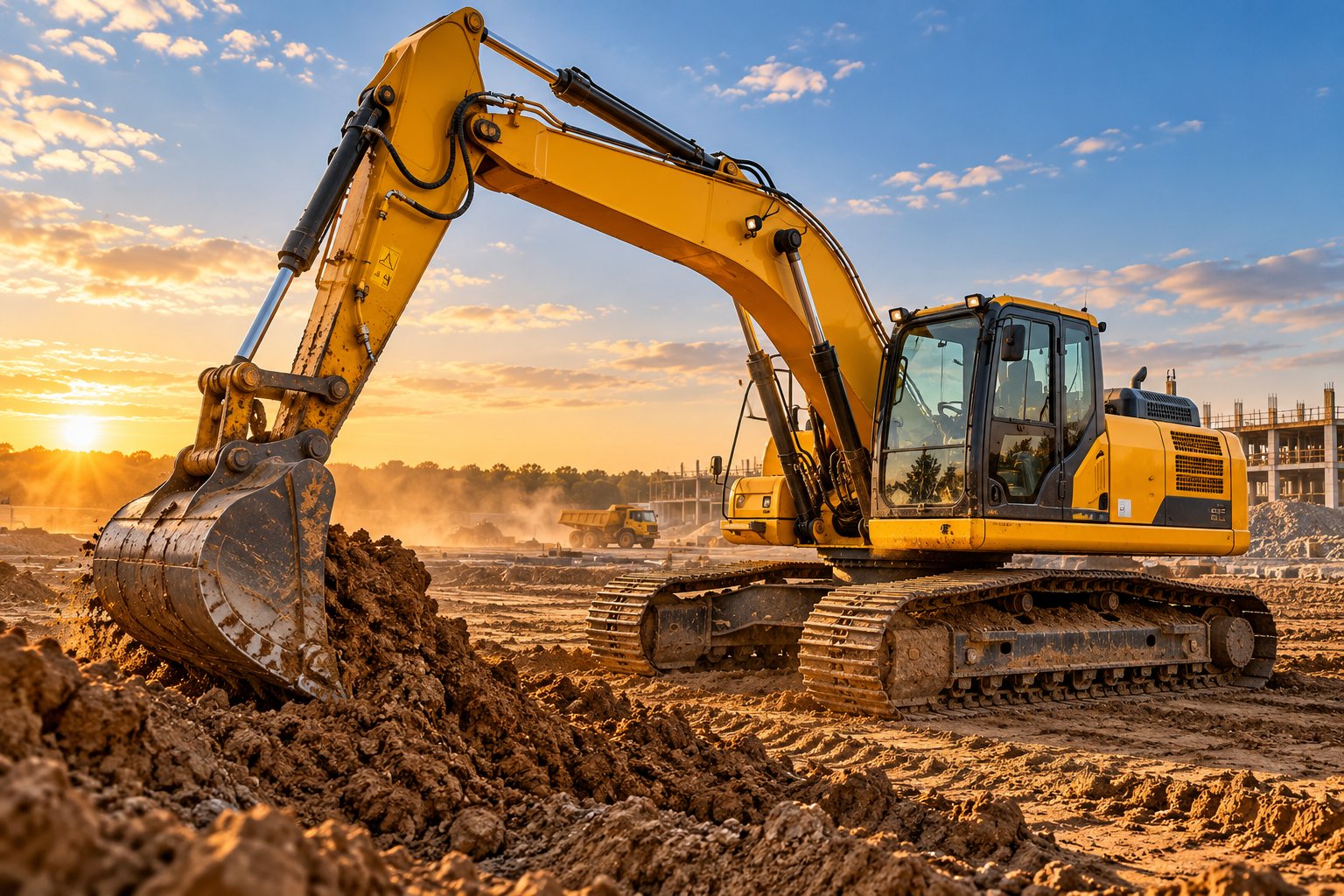
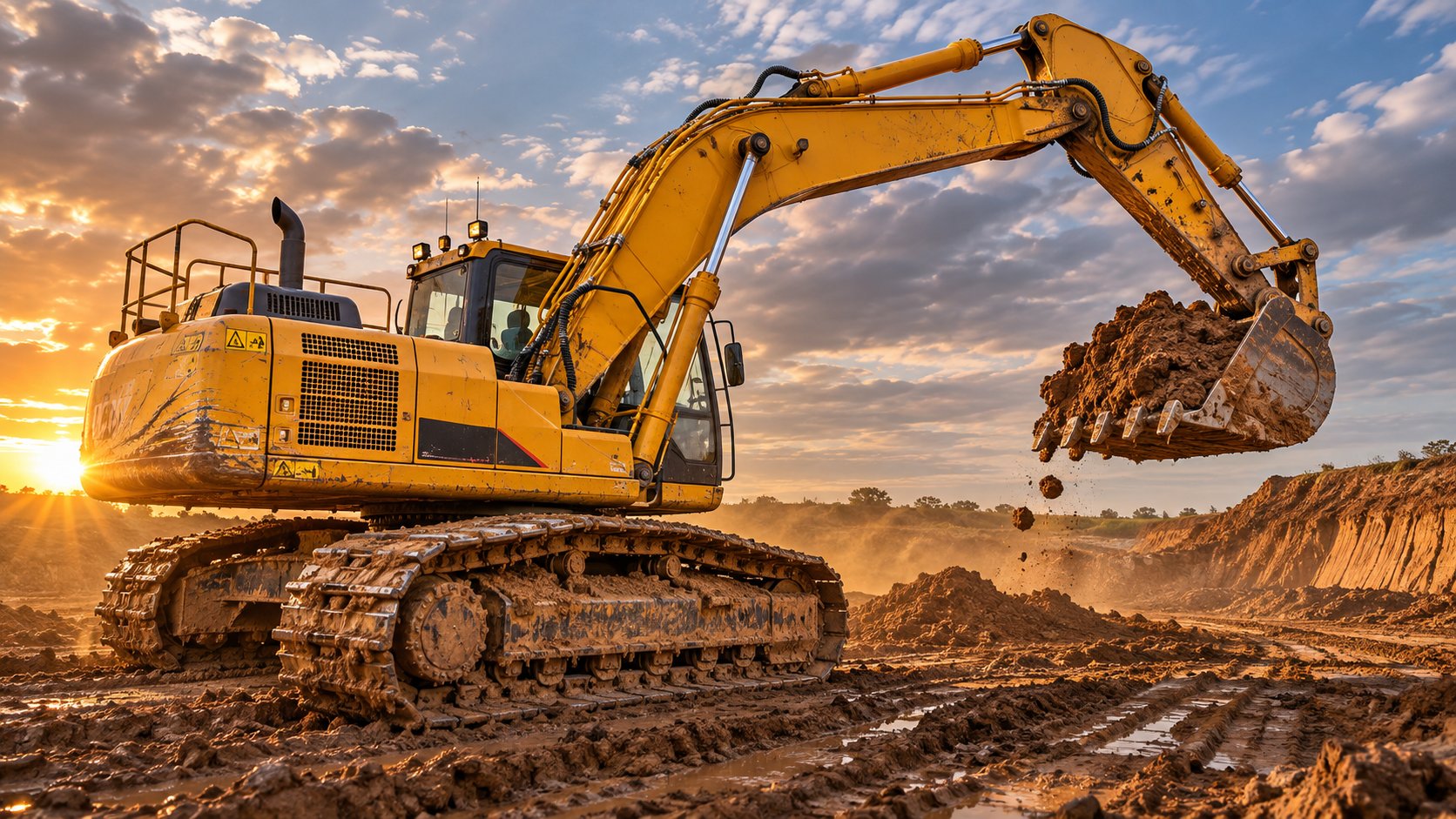
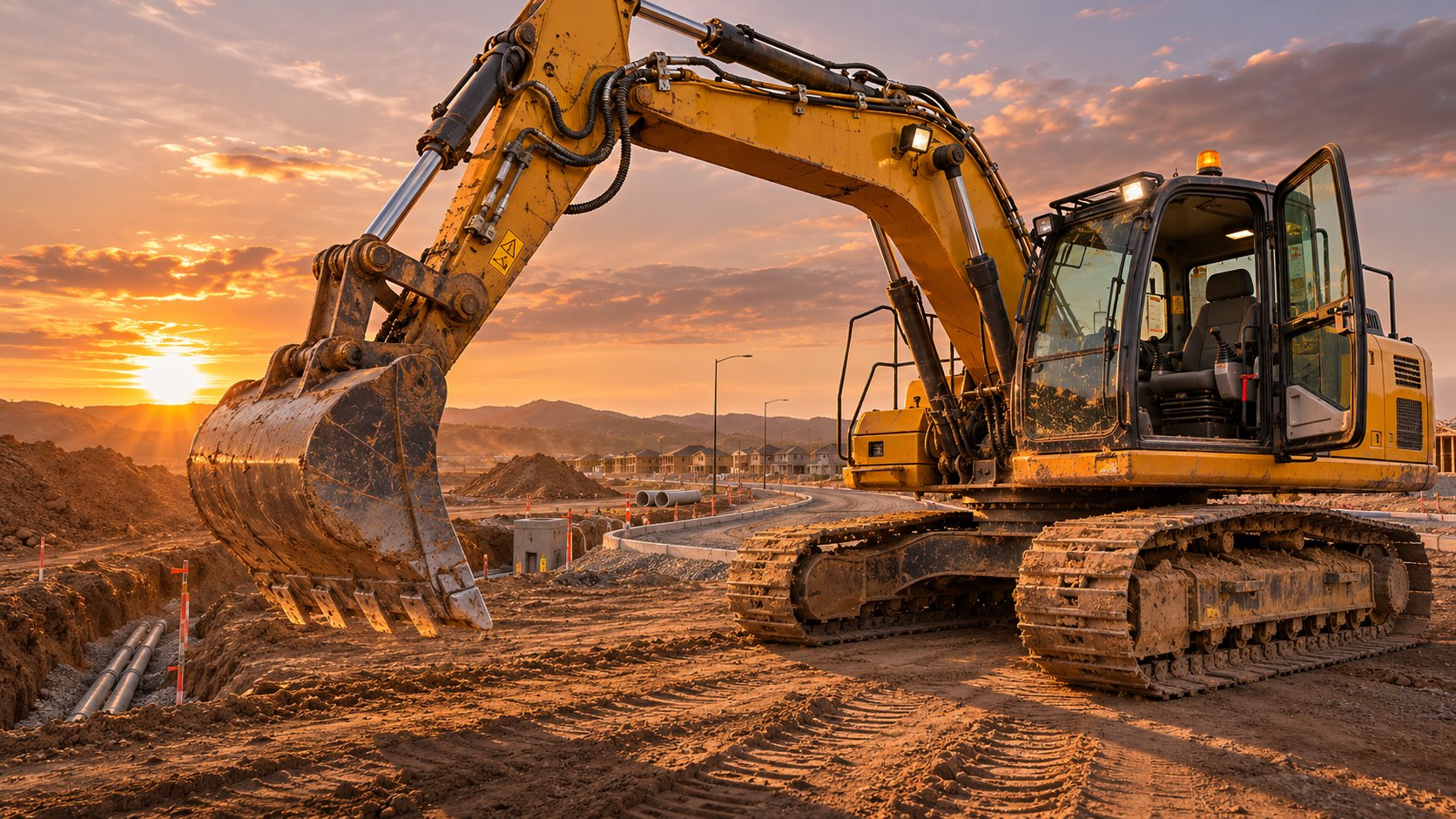
In the heavy equipment industry, a mid-size excavator - also called a medium excavator - is generally defined by an operating weight between 10 and 25 metric tons (roughly 22,000 to 55,000 lbs). This weight class sits squarely between mini or compact excavators, which fall under 10 tons, and large excavators that exceed 25 tons. If you've heard someone refer to a machine in this range as a track hoe or trackhoe, they're using the same colloquial term contractors have relied on for decades.
The distinction matters because each size class is engineered for fundamentally different work. A Kubota excavator in the compact range, for instance, excels in tight residential lots and utility repairs. A large machine handles mass earthmoving and mining support. The mid-size class? It bridges the gap with enough digging force, reach, and lift capacity for serious commercial work - without the oversized transport headaches. Models like the excavator Cat 320C or a Takeuchi excavator in the upper-compact-to-mid-size transition illustrate how manufacturers position their lineups around this critical boundary.
Here's a side-by-side breakdown of the three primary excavator size classes:
| Size Class | Operating Weight | Typical Dig Depth | Common Applications | Example Models |
|---|---|---|---|---|
| Mini / Compact | Under 10 metric tons | 7 - 14 ft | Residential work, landscaping, utility repairs, small demolition | Cat 305, Kubota KX080, Bobcat E60 |
| Mid-Size (Medium) | 10 - 25 metric tons | 15 - 23 ft | Commercial site prep, sewer/water main installation, road construction, demolition | Cat 320, Komatsu PC200, John Deere 210G |
| Large | Above 25 metric tons | 22 - 30+ ft | Major earthmoving, mining support, highway projects, structural demolition | Cat 349, Komatsu PC490, Volvo EC480 |
Use this table as your quick-reference filter. If the machine you're evaluating falls within that 10-to-25-ton window, you're shopping in the right category. Anything lighter, and you're looking at compact equipment. Anything heavier crosses into large-class territory with different transport permits, trailer requirements, and fuel economics.
Why Mid Size Machines Dominate Commercial Jobsites
So why does this middle weight class get so much attention from contractors and fleet managers? Versatility. A medium excavator delivers enough power and cycle speed to load trucks efficiently, dig deep utility trenches, and handle demolition tasks - yet it stays compact enough for suburban infrastructure projects, utility corridors, and mid-scale site development where a 45-ton machine simply can't maneuver.
Commercial contractors running sewer installations, water main replacements, and stormwater projects lean heavily on this class. The dig depths - typically 15 feet and beyond - satisfy most municipal utility depth requirements, while the reach radius lets operators work safely from road shoulders or outside trench collapse zones. You'll also notice that when a long reach excavator for sale appears in this weight range, it extends the machine's versatility even further for tasks like canal work or slope grading.
For anyone searching for a used excavator for sale in this segment, understanding the dominance of mid-size machines in commercial fleets explains why the resale market stays competitive year-round. Demand is consistently strong because these machines earn their keep across a wide project spectrum.
The mid-size excavator class handles roughly 60 to 70 percent of commercial excavation tasks without the transport complications, oversized permits, or excessive fuel costs associated with larger machines - making it the most versatile single investment for growing contractors.
That versatility, though, only pays off when you match the right brand and model to your specific workload - and the range of manufacturers building machines in this class is broader than most buyers realize.
Major Brands Making Mid Size Excavators
Every equipment marketplace lets you filter by brand, yet almost none explain what those brand names actually mean for a mid-size buyer's experience - dealer support, parts lead times, resale strength, or technology philosophy. When you're evaluating an excavator for sale in the 10-to-25-ton class, the manufacturer behind the iron shapes everything from day-one reliability to what the machine is worth five years down the road. Here's a brand-by-brand landscape to help you compare before you ever click on an individual listing.
Caterpillar and Komatsu Lineups
These two names dominate the mid-size conversation for good reason, and you'll encounter them on nearly every jobsite and resale platform in North America.
Caterpillar's mid-size excavator range lives within the 300 series. The Cat 320, 325, and 330 models form the core of what most contractors picture when they hear "cat excavator" in the medium class. Cat's competitive edge here isn't just the machines themselves - it's the ecosystem around them. With over 50 excavator models in their total lineup and one of the broadest dealer networks in the industry, parts availability and service response times are consistently strong across the United States. If a hydraulic pump fails on a Tuesday morning in rural Tennessee, chances are a Cat dealer can have a replacement on-site faster than most competitors. Resale values reflect that support infrastructure: Cat machines in this class tend to hold 52 to 58 percent of their original price after five years, among the highest retention rates you'll find.
Komatsu takes a different angle with its PC200 through PC300 series. Where Caterpillar leans into dealer breadth and brand ubiquity, Komatsu has built its mid-size reputation around fuel-efficiency technology and intelligent machine control. Their KOMTRAX telematics system provides real-time monitoring and predictive maintenance data, and their closed-center hydraulic architecture allows simultaneous multi-function operation without the power losses that plague some competing designs. For contractors running a 20 ton excavator 1,500 hours a year, fuel savings of even 8 to 10 percent compound into meaningful annual cost reductions. Komatsu also backs its confidence in durability with extended powertrain warranty options that few competitors match at this price point.
John Deere, Kobelco, and Hyundai Options
Beyond the two market leaders, several manufacturers bring genuinely differentiated machines to the mid-size segment - and dismissing them means missing potential advantages that could matter more than brand familiarity on your specific projects.
John Deere's P-Tier excavators (which replaced the earlier G-series) span the mid-size range with models like the 210 through 350. Deere has focused heavily on reducing ownership costs in this generation: on-demand electric cooling fans deliver up to 10 percent better fuel efficiency, and redesigned undercarriages with improved tensioner access and dirt-shedding relief holes address one of the highest ongoing expense categories for any excavator trackhoe. Their 500-hour service intervals - double what some brands require - reduce maintenance downtime by roughly 35 percent compared to 250-hour cycles, a meaningful advantage for operations running tight project schedules. SmartGrade integration also positions Deere well for contractors who want factory-ready grade control without costly aftermarket installs.
Kobelco has carved a distinct niche with its emphasis on reduced-tail-swing configurations. On congested commercial sites, utility corridors, or urban roadwork, tail swing overhang creates real safety hazards and limits where a machine can operate. Kobelco's engineering approach minimizes that overhang across several mid-size models, and they back the machines with a 4-year, 4,000-hour warranty - one of the more generous standard coverage terms in the segment. Before purchasing any specific Kobelco model based on zero-tail-swing claims, verify the exact tail-swing radius against the manufacturer's current spec sheet, since configurations vary by model and arm length.
Hyundai rounds out this tier with an aggressive pricing position that appeals to budget-conscious buyers and fleet operators looking to scale without premium-brand capital outlays. Their A-series excavators offer competitive specifications, and models like the HX210A sit comfortably in the mid-size sweet spot. Hyundai's 3-year warranty provides above-average coverage, and their growing North American dealer network - over 170 locations - continues narrowing the service gap with established players.
They're far from the only contenders, though. Here's a broader view of the brands actively competing in the mid-size excavator market:
- Volvo - Known for operator comfort, fuel-efficient electrohydraulic systems, and a recent lineup overhaul described as their most significant in 20 years.
- Case - The Case excavator lineup, including the CX220E, pairs competitive horsepower with a standard 5-year telematics and 3-year factory warranty package (ProCare) that reduces early ownership risk.
- Hitachi - Japanese-manufactured machines with a long track record in heavy-duty applications and strong resale demand in commercial excavation fleets.
- Doosan/Develon - Recently rebranded from Doosan, Develon's DX225LC-7X features proprietary electrohydraulic controls and standard factory 2D grading, backed by a 3-year, 5,000-hour warranty.
- Link-Belt - Manufactured in Kentucky, offering a 5-year, 5,000-hour warranty - among the longest in the industry - with standard digital stability assist and payload systems.
- JCB - Seven-model Heavyline range with advanced operator-profile management and 2D/3D grade control readiness through a Leica Geosystems partnership.
- SANY - Competitive pricing from a manufacturer with Georgia-based U.S. production and warranty coverage up to 5 years and 5,000 hours.
- Bobcat - Two mid-size models (E145 and E165) positioned for contractors stepping up from compact machines, with reduced tail swing and standard 360-degree camera systems.
One factor that often outweighs spec-sheet comparisons is regional dealer presence. A brand with superior on-paper performance means little if the nearest service center is 300 miles away. Before committing to any manufacturer, map out the authorized dealer and parts distribution network within a realistic response radius of your primary operating area. Emergency service response can range from 4 to 8 hours with well-represented brands versus 24 to 48 hours for those with limited coverage - and every hour of downtime on an active project erodes revenue.
With this brand landscape in mind, the real question shifts from "which manufacturer is best" to "which machine specifications actually match my work." Dig depth, lift capacity, and breakout force vary significantly across models within the same weight class, and choosing the wrong spec profile costs far more than choosing the wrong logo on the hood.
Matching Excavator Specs to Your Job Type
Knowing which brands build mid-size excavators is useful - but the brand badge on the boom doesn't dig your trench. Specifications do. And the spec that matters most depends entirely on the work you're doing. A utility contractor burying sewer pipe at 18 feet has a completely different priority list than a demolition crew ripping out a concrete parking structure. Yet most buyers shopping for used excavators for sale scroll past the spec sheets or fixate on a single number like operating weight without connecting those figures to real job demands.
Here's how to translate your daily work into the specifications that should drive your purchase decision.
Dig Depth and Reach for Utility and Trenching Work
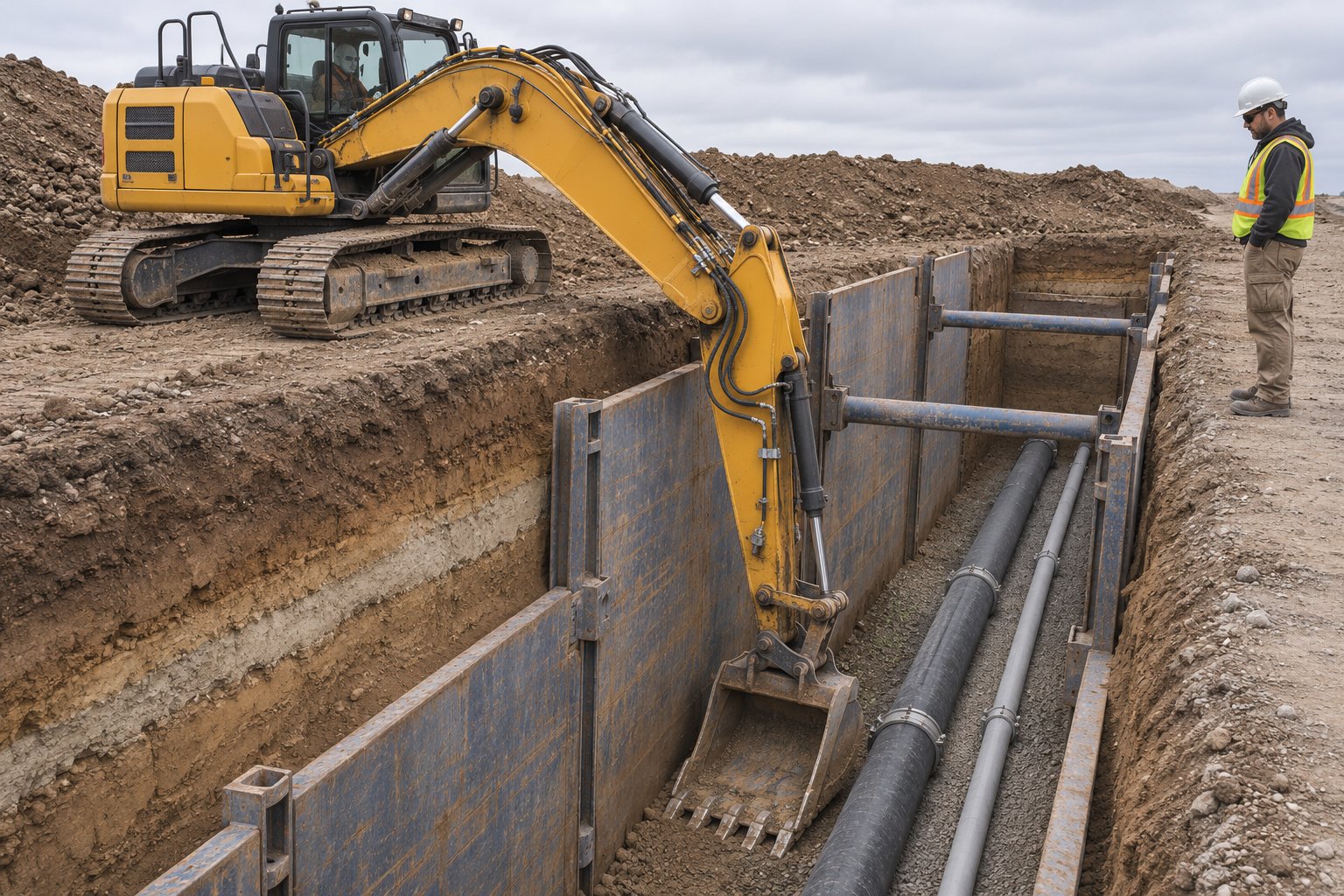
If your crews install water lines, sewer mains, stormwater systems, or telecommunications conduit, dig depth is the specification that makes or breaks your machine choice. Municipal utility standards frequently require burial depths between 4 and 12 feet for water lines and up to 15 feet or deeper for sanitary sewer installations, depending on local frost lines and topography. Mid-size excavators in the 10-to-25-ton class typically deliver maximum dig depths between 15 and 23 feet, comfortably covering most utility requirements with margin to spare.
Reach radius deserves equal attention, though it's often overlooked. When you're working from a road shoulder to excavate a utility trench below a sidewalk, or keeping the machine outside the trench collapse zone dictated by OSHA cave-in protection standards, maximum reach at ground level determines whether you can position safely. A Cat 317, for example, offers roughly 29 feet 6 inches of reach - enough for most suburban utility corridor work without crowding the excavation. Komatsu excavator models like the PC210 push that figure to nearly 32 feet. Those extra feet of horizontal reach translate directly into safer setups where crews don't need to reposition the machine as often.
When evaluating listings for excavators near me, always cross-reference the advertised dig depth and reach against the specific project depths your contracts require. A machine that falls even two feet short of your deepest trench spec forces you to rent a second unit or decline work.
Lift Capacity and Swing Speed for Material Handling
Digging gets all the attention, but many mid-size excavators spend more hours loading trucks, setting pipe, and placing precast structures than they do trenching. If material handling dominates your workflow, the spec sheet priorities flip. Lift capacity - measured at ground level and at maximum reach - becomes the lead number, followed by swing cycle time.
Lift capacity on excavators isn't a single value. Manufacturers publish lift charts that map safe load limits across a grid of heights and radii. Lifting over the front of the machine provides greater stability than lifting over the side, and capacity drops significantly as the load moves farther from the machine's centerline. A 20-ton excavator might handle 12,000 pounds close to the cab but only 4,000 to 5,000 pounds at full stick extension - and real-world factors like ground slope, boom configuration, and attachment weight reduce those numbers further.
Swing cycle time - the seconds required for one full cab rotation - directly impacts truck loading productivity. Faster swing speeds mean more buckets dumped per hour, which compounds across a full shift. For high-volume truck loading operations, even a one-second reduction in cycle time can yield measurably higher daily production. Models from SANY excavator lineups, like the SY215C, and comparable Hyundai units are engineered with selectable power modes that boost swing speed when loading demands peak.
If you're setting pipe or placing heavy precast vaults, also confirm that the machine's rated lift capacity covers your heaviest load at the actual radius you'll be working - not just at the closest position shown on the chart. Terrain conditions, including uneven or sloped ground, further reduce real-world lifting ability, so build a safety margin into your minimum capacity requirement.
Bucket Force and Breakout for Demolition and Hard Digging
Demolition contractors, rock trench crews, and anyone digging through heavy clay or frozen ground should prioritize two closely related specifications: bucket curl force and arm breakout (crowd) force. These numbers reveal how much raw digging power the hydraulic system delivers to the cutting edge.
Bucket breakout force is generated by the bucket cylinder during the curl motion - the movement that rotates the bucket toward the cab. Because the lever arm is short, this force is typically the higher of the two published values. It's the "bite" that cracks concrete, pries roots, and breaks through compacted clay. Arm crowd force, generated by the arm cylinder pulling the stick toward the machine, is what drags the bucket through material during the main stroke. A machine with strong bucket breakout but weak arm crowd will crack hardpan effectively yet struggle to complete a full dig cycle efficiently.
One critical detail most buyers miss: published breakout force is a peak value, measured with the cylinder at its optimal 90-degree angle to the linkage. Move the bucket to a fully open or fully curled position, and effective force at the teeth drops dramatically. Experienced operators instinctively position the arm and bucket in that optimal zone before applying full hydraulic pressure, but the spec sheet won't tell you that. Also keep in mind that bucket geometry matters - a narrow 18-inch rock bucket with a shorter tip radius concentrates force far more effectively than a wide 36-inch general-purpose bucket, even on the same machine with the same hydraulics.
When comparing spec sheets across brands, confirm whether breakout force values follow the SAE J1179 standard (measured at the tooth tips) or ISO 6015 (measured at the bucket lip). ISO values appear higher for the same machine because the measurement point sits closer to the pivot pin. A machine rated at 30 kN under ISO and another at 27 kN under SAE may deliver identical real-world performance - the gap reflects the measurement method, not the hydraulics.
For buyers evaluating a compact-to-mid-size transition - stepping up from a machine like the KX080 into a 14-to-17-ton unit - the jump in both bucket and arm force is substantial. That increase unlocks demolition and hard-dig applications that simply aren't feasible with smaller equipment.
Use the following table to match your primary job type to the specifications that should drive your machine selection:
| Job Type | Primary Spec to Evaluate | Secondary Spec | Typical Mid-Size Range |
|---|---|---|---|
| Utility trenching (water, sewer, telecom) | Maximum dig depth | Reach at ground level | 15 - 23 ft dig depth; 28 - 33 ft reach |
| Truck loading and material handling | Lift capacity at working radius | Swing cycle time | 4,000 - 12,000+ lbs (varies by radius); 12 - 16 sec full swing |
| Pipe setting and precast placement | Lift capacity at full reach | Maximum dump height | Verify lift charts per model; 20 - 25 ft dump height |
| Demolition and concrete removal | Bucket breakout force | Arm crowd force | Varies by brand and standard (SAE vs. ISO); verify per model |
| Rock trenching and heavy clay | Arm crowd force | Bucket breakout force | Verify per model; prioritize narrow bucket geometry |
| Site grading and slope work | Reach at ground level | Swing speed and blade control | 28 - 33 ft reach; blade-equipped models preferred |
Treat this framework as your pre-shopping filter. Before you browse a single listing, identify which one or two rows describe your primary revenue-generating work, then screen every machine against those specs first. A mid-size excavator that excels at your core application and merely satisfies secondary needs will outperform a "well-rounded" machine that doesn't truly dominate any single task.
Specifications, of course, only tell you what a machine can do on paper. The number that tells you what a machine will cost in practice - purchase price - follows its own set of rules entirely.
How Much Does a Mid Size Excavator Cost
You've identified the specs your work demands. You know which brands build the machines that meet them. The inevitable next question: what's the actual price tag? Surprisingly few resources answer this directly for the mid-size class, leaving buyers to guess whether a quoted excavator price is fair or inflated. Let's fix that with real market context.
Ballpark Price Ranges for New Mid Size Excavators
A new mid-size excavator represents a serious capital commitment. Based on current market data, medium excavators in the 11-to-25-ton class generally range from $190,000 to $300,000 for a new unit. That's a wide spread - and the gap isn't random. Several factors push a machine toward the low end or the high end of that range:
- Brand premium: Caterpillar, Komatsu, and John Deere typically command 15 to 25 percent more than comparable machines from brands like Hyundai or SANY. A Cat 330 trackhoe, for instance, sits near the upper pricing tier partly because of the dealer support ecosystem and resale strength buyers are paying into.
- Technology packages: GPS grading systems, telematics, and advanced machine control can add $15,000 to $30,000 on top of the base machine price. Factory-integrated grade control costs more upfront but avoids the retrofit expense of aftermarket systems.
- Configuration: Standard boom and stick setups cost less than long-reach or mass-excavation configurations. Specialty arms built for deep utility work or slope grading carry a measurable premium.
- Emissions compliance: Machines meeting Tier 4 Final or Stage V emission standards cost more to manufacture, and that cost passes through. Older-tier machines may appear cheaper on the used market, but face growing restrictions in regulated regions - a hidden cost that surfaces later.
- Attachments: Hydraulic breakers add $10,000 to $25,000. Grapples, augers, and extra buckets easily push the total another $5,000 to $15,000 beyond the base excavator price.
Keep in mind that these figures represent general market ranges. Regional dealer pricing, current promotions, and fleet-volume discounts all introduce variation. A buyer financing a single machine pays a different effective price than someone purchasing three units as part of a fleet expansion. Always request itemized quotes from multiple dealers rather than relying on sticker figures - and don't overlook smaller-footprint brands whose mid-size models, like a Bobcat E85 stepping into the lower boundary of this class or Kubota excavator for sale listings in the compact-to-mid transition, might deliver adequate performance at a noticeably lower entry point.
What Drives Used Mid Size Excavator Pricing
The used market is where most contractors actually shop - and where pricing becomes far less predictable. Two seemingly identical machines can carry price tags $50,000 apart, and the reasons aren't always obvious from a listing photo. Understanding what drives valuation helps you spot fair deals and walk away from overpriced iron.
Industry pricing benchmarks place used medium excavators in these general ranges by age:
| Machine Age | Typical Price Range (11-25 Ton Class) | Approximate Value Retention |
|---|---|---|
| 1 - 3 years old | $130,000 - $220,000 | 65 - 75% of original price |
| 4 - 7 years old | $85,000 - $150,000 | 40 - 55% of original price |
| 8+ years old | $50,000 - $90,000 | 25 - 40% of original price |
Those ranges are broad for a reason. The machine's story - not just its age - determines where it falls. Here are the primary valuation factors, ranked roughly by their impact on price:
- Machine hours: This is the single most scrutinized number in any used excavator listing. Depreciation analysis shows pricing drops approximately 5 to 10 percent for every additional 1,000 hours. A 5-year-old machine with 3,000 hours commands a significantly different price than the same model with 8,000 hours - even if everything else checks out. Machines in the 2,000-to-4,000-hour range generally offer the best balance of remaining useful life versus cost savings.
- Undercarriage condition: Replacing an undercarriage on a mid-size excavator runs $15,000 to $30,000 or more. Buyers mentally subtract that cost - and then some - when they see worn track shoes, sagging rollers, or a sprocket with rounded teeth. A machine listed at $120,000 with 40 percent undercarriage life remaining is effectively $135,000-plus once you factor in the rebuild.
- Maintenance history: Documented service records can add 10 to 15 percent to resale value. Conversely, a machine with spotty or nonexistent records faces steep buyer skepticism regardless of how clean the paint looks. Research on equipment resale shows that two identical excavators can vary in resale value by 60 to 80 percent based solely on maintenance documentation and operational care.
- Model year and technology: Modern telematics, Tier 4 Final engines, and integrated grade control all support higher valuations. Pre-2014 machines without current emissions compliance trade at growing discounts as regulated markets restrict their use.
- Application history: A machine that spent its life in general excavation and site prep wears differently than one that ran a hydraulic breaker in demolition for 6,000 hours. Demolition service stresses boom pins, stick bushings, and hydraulic components far more aggressively. Buyers who understand this pay accordingly - and sellers who can document lighter-duty use justify premium asks.
- Attachment package: A mid-size excavator sold with a quick coupler, multiple bucket sizes, and a hydraulic thumb holds more value than an identical machine with only a single pin-on bucket. Attachments bundled with the sale save the buyer immediate capital outlay and reduce setup time.
- Geographic market demand: A 20-ton excavator listed in a market flush with infrastructure spending attracts more competitive bids than the same machine in a region where construction activity has slowed.
Mid-size excavators tend to hold their value better than smaller machines over time. Why? Commercial demand. Contractors running sewer installations, road projects, and site development need this class year-round, creating consistent resale demand that supports pricing floors. Niche machines like a Gradall or specialty configurations may not benefit from the same broad demand, so their depreciation curves can behave differently.
The depreciation pattern itself follows a predictable curve. Industry data shows crawler excavators lose 15 to 20 percent of their value in year one, followed by 8 to 10 percent annually through years two to five. After year six, the curve flattens to 4 to 6 percent per year. That front-loaded depreciation means buying a machine that's two to three years old with moderate hours often delivers the strongest value proposition - someone else absorbed the steepest portion of the depreciation hit.
Seasonal and Regional Price Fluctuations
Even with identical specs, hours, and condition, the same mid-size excavator can sell for meaningfully different prices depending on when and where it's listed. Seasonal market analysis confirms that spring and summer - peak construction months - drive both higher demand and tighter inventory, pushing prices up by 8 to 15 percent compared to winter listings. Sellers know buyers are motivated during ramp-up season, and bidding competition on auction platforms intensifies accordingly.
Fall and winter flip the dynamic. As projects wind down, fleet operators review their equipment and release machines they won't need for the coming season. More inventory enters the market while buyer urgency fades, creating favorable conditions for purchasers willing to plan ahead. Buying during the off-season and storing or reconditioning the machine before spring means you're ready to work when competitors are scrambling to source equipment at premium prices.
Regional infrastructure spending adds another layer. Markets receiving major federal or state highway funding, municipal utility upgrades, or commercial development surges see localized demand spikes that inflate prices for available machines - sometimes well above national averages. Conversely, regions experiencing construction slowdowns may have motivated sellers offering competitive pricing. If you're open to transporting a machine, shopping outside your immediate market can unlock savings that more than offset the freight cost, especially for buyers searching for a kubota mini excavator for sale or similar models where regional availability varies sharply.
Pricing context is essential - but it only protects you if you're shopping through the right channels. Where and how you buy a mid-size excavator introduces its own set of trade-offs in cost, risk, and buyer protection that can shift the final deal by tens of thousands of dollars.
Buying Channels Compared for Mid Size Excavators
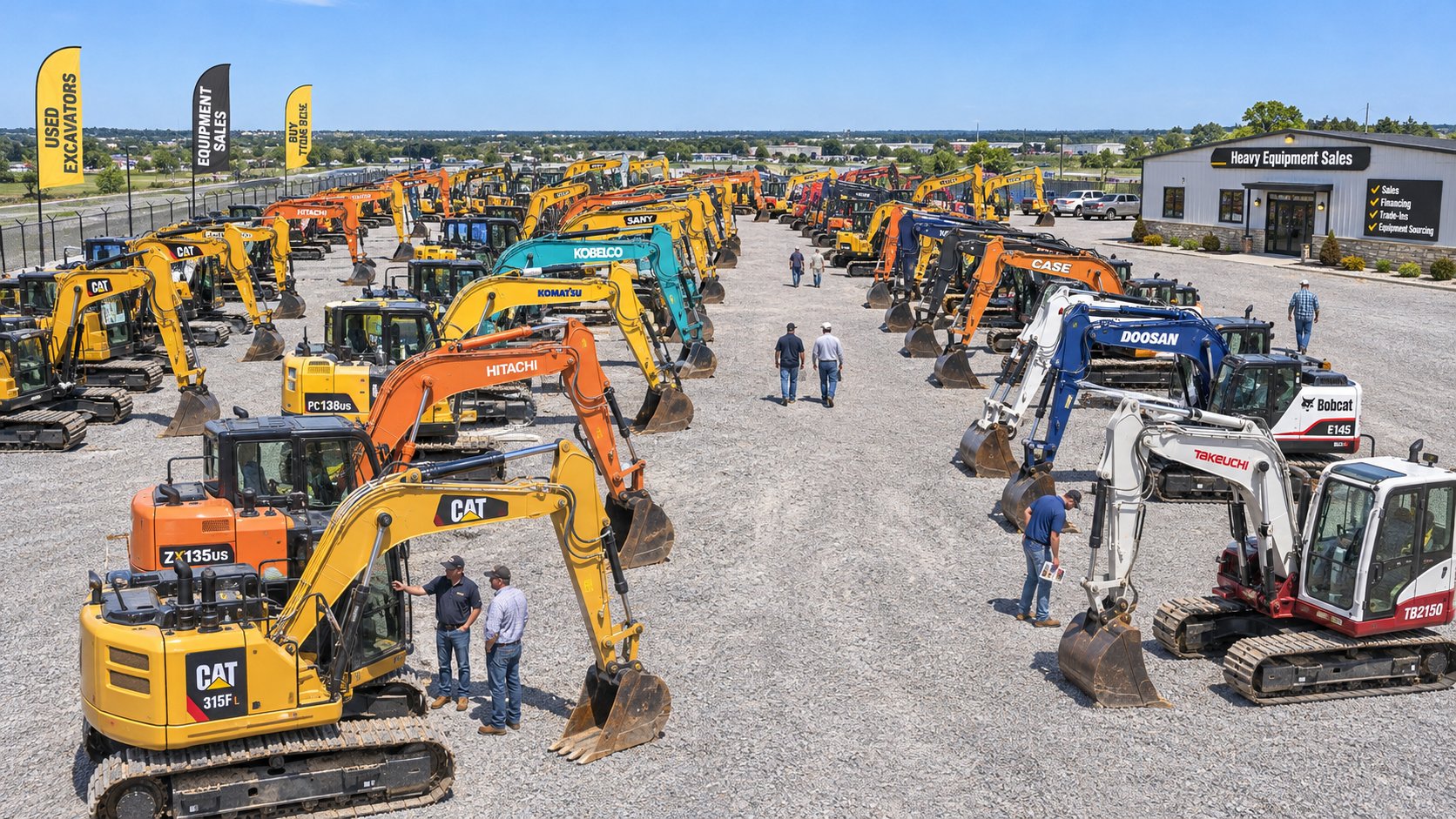
A fair price means nothing if the buying channel itself costs you money through hidden risk, missing warranties, or zero recourse when something goes wrong. Whether you're after a caterpillar excavator with 4,000 hours or a Develon excavator fresh off lease, where you buy shapes the deal just as much as what you buy. Each channel carries distinct trade-offs in pricing, transparency, and buyer protection - and understanding those trade-offs before you commit separates smart purchases from expensive lessons.
Auction Platforms and What They Offer
Live and online auctions remain one of the most popular paths to used mid-size excavators. Platforms like Ritchie Bros. and IronPlanet aggregate thousands of machines - everything from a cat 308 excavator for sale to full-size 30-ton units - into competitive bidding environments where pricing typically runs 20 to 40 percent below dealer retail.
The appeal is obvious: broad selection, transparent bidding, and fast possession. The risk, however, is equally real. Most auction machines sell as-is. IronPlanet's IronClad Assurance program offers a layer of buyer protection - inspected machines receive condition reports with ratings, photos, and component comments - but the coverage has important boundaries. IronClad inspections are general condition assessments performed on the day of inspection. They do not include load testing, digging, or diagnostic equipment checks, and they explicitly exclude latent defects, hydraulic leaks, and electrical system issues. Dispute claims must be filed within 11 business days of sale and carry a $750 deductible. If you export the machine or begin disassembly before resolving a dispute, you forfeit your claim entirely.
That's not a reason to avoid auctions - it's a reason to go in with open eyes. Budget $500 to $1,500 for a third-party inspection before you bid, and treat any assurance program as a safety net, not a warranty.
Authorized Dealers and Certified Pre-Owned Programs
Dealer purchases sit at the opposite end of the risk spectrum. You'll pay more - roughly 5 to 10 percent above auction pricing - but that premium buys tangible protections. Certified pre-owned programs from major manufacturers typically include professional reconditioning (up to 140-point inspections), 6-to-12-month powertrain and hydraulic warranties, financing through manufacturer finance arms, and documented maintenance histories.
For buyers less experienced with evaluating used iron, this premium functions as insurance. A Deere 85G purchased through an authorized John Deere dealer, for instance, comes with service records, financing access, and post-sale support that an auction purchase simply can't replicate. Some regional dealers, like Coastline Equipment on the West Coast, specialize in specific brands and carry deep inventory in the mid-size class - often with reconditioned machines ready to deploy immediately.
The trade-off? Less negotiation flexibility and a narrower selection compared to auctions or open marketplaces. Dealers carry what their brand offers, so cross-brand comparison requires visiting multiple locations.
Direct-Purchase Marketplaces and International Suppliers
A growing third channel bridges the gap between auction unpredictability and dealer premiums: online marketplaces that aggregate multi-brand inventory and allow direct quote requests. These platforms let buyers compare a deere track hoe alongside a Komatsu PC200 or a Sany mini excavator without bouncing between brand-specific dealer lots.
One common misconception worth clearing up: equipment sourced through international marketplaces - including those based in China - isn't necessarily Chinese-manufactured. Many platforms source used machines originally built by Japanese, American, and European manufacturers like Caterpillar, Komatsu, Hitachi, and Kobelco. The marketplace serves as the aggregator and logistics coordinator, not the manufacturer. JIUHONG's used excavator collection, for example, brings together mid-size machines from multiple brands, letting contractors and equipment dealers compare listings side by side and request model-specific quotes for individual or bulk purchases - a format particularly useful for fleet buyers sourcing several units at once.
Direct-purchase marketplaces typically offer more negotiation room than dealers and more pricing predictability than auctions. The trade-off is that warranty coverage varies by seller, and buyers should insist on independent inspections and clear documentation before committing - especially on cross-border transactions where dispute resolution is more complex.
Here's how the three primary channels stack up across the factors that matter most:
| Factor | Auctions | Authorized Dealers / CPO | Direct-Purchase Marketplaces |
|---|---|---|---|
| Typical Pricing | 20-40% below dealer retail | Highest (5-10% above auction) | Moderate; negotiable |
| Warranty Availability | None (as-is); limited assurance programs | 6-12 month powertrain/hydraulic coverage typical | Varies by seller; confirm before purchase |
| Inspection Transparency | Condition reports available on some listings; general inspections only | Professional reconditioning with detailed reports | Buyer should arrange third-party inspection |
| Negotiation Flexibility | Limited (competitive bidding sets price) | Moderate (dealer margins allow some movement) | High (direct seller communication) |
| Bulk-Purchase Options | Multiple units available per event | Fleet discounts possible through dealer programs | Strong; many platforms support multi-unit quotes |
No single channel is universally "best." Experienced buyers with inspection expertise thrive at auctions. Risk-averse purchasers or first-time buyers benefit from the dealer safety net. Fleet operators sourcing multiple machines across brands often find direct-purchase marketplaces the most efficient path. Many seasoned contractors use all three simultaneously - cross-referencing auction results against dealer quotes and marketplace listings to triangulate fair market value before committing anywhere.
Whichever channel you choose, though, your protection ultimately comes down to one thing: how thoroughly you inspect the machine before money changes hands. And that inspection process has its own set of critical steps most buyers skip.
Red Flags When Inspecting a Used Excavator
A clean paint job and a competitive price can make any listing look like a deal. But underneath that freshly washed exterior, worn hydraulics, a tampered hour meter, or an undercarriage nearing end-of-life can turn a bargain into a five-figure repair bill within weeks. Whether you're evaluating cat excavators for sale at an auction, browsing case diggers through a dealer lot, or considering a bobcat excavator for sale on an online marketplace, the inspection process is your last line of defense before money changes hands.
Most buyers know they should "inspect the machine." Far fewer know exactly what to look for - or in what order. Here's a field-tested sequence that covers the mechanical systems most likely to hide expensive surprises.
Hour Meter Readings and Maintenance History
The hour meter is the first number every buyer checks - and the first number dishonest sellers manipulate. On a mid-size excavator, machine hours function like odometer readings on a truck: they quantify cumulative use and serve as the primary benchmark for scheduling maintenance, estimating remaining component life, and justifying price.
What counts as "low" or "high" hours? Context matters more than a fixed cutoff. A well-maintained machine with 8,000 hours and full service documentation can easily outlast a neglected unit showing 3,000 hours. That said, general benchmarks help frame expectations. Machines under 3,000 hours are typically considered low-use in the mid-size class. Units in the 3,000-to-6,000-hour range represent the bulk of the used market - solid working machines with plenty of life remaining if maintenance was consistent. Above 8,000 hours, you're entering territory where major component rebuilds (hydraulic pumps, final drives, engine overhauls) become increasingly likely, and pricing should reflect that proximity.
The real danger isn't high hours - it's misrepresented hours. Experienced inspectors flag hour meter tampering by cross-referencing the displayed hours against physical wear indicators. A machine advertised at 2,500 hours should have a seat, pedals, and joystick grips that look barely broken in. If those components show heavy wear - a sagging seat cushion, rubber pedal covers worn smooth, joystick boots cracked and shiny - the hours don't match the story. Many OEM telematics systems, including Cat's Product Link and Komatsu's KOMTRAX, store cumulative hours in the machine's ECU and satellite reporting history, making it possible to verify independently. Always ask the seller for telematics access or ECU hour verification before accepting the meter reading at face value.
Maintenance records deserve the same scrutiny. Request documentation of oil changes, filter replacements, greasing schedules, and any major repairs - all dated and ideally cross-referenced with hour intervals. Oil analysis reports are particularly valuable: they reveal internal wear metals, coolant contamination, and fuel dilution long before symptoms appear externally. A machine with complete, dated maintenance logs commands 10 to 15 percent higher resale value for good reason - those records are proof of care, not just claims of it. Gaps in documentation aren't automatic deal-breakers, but they should prompt deeper investigation into the machine's history and condition.
Undercarriage and Structural Integrity Checks
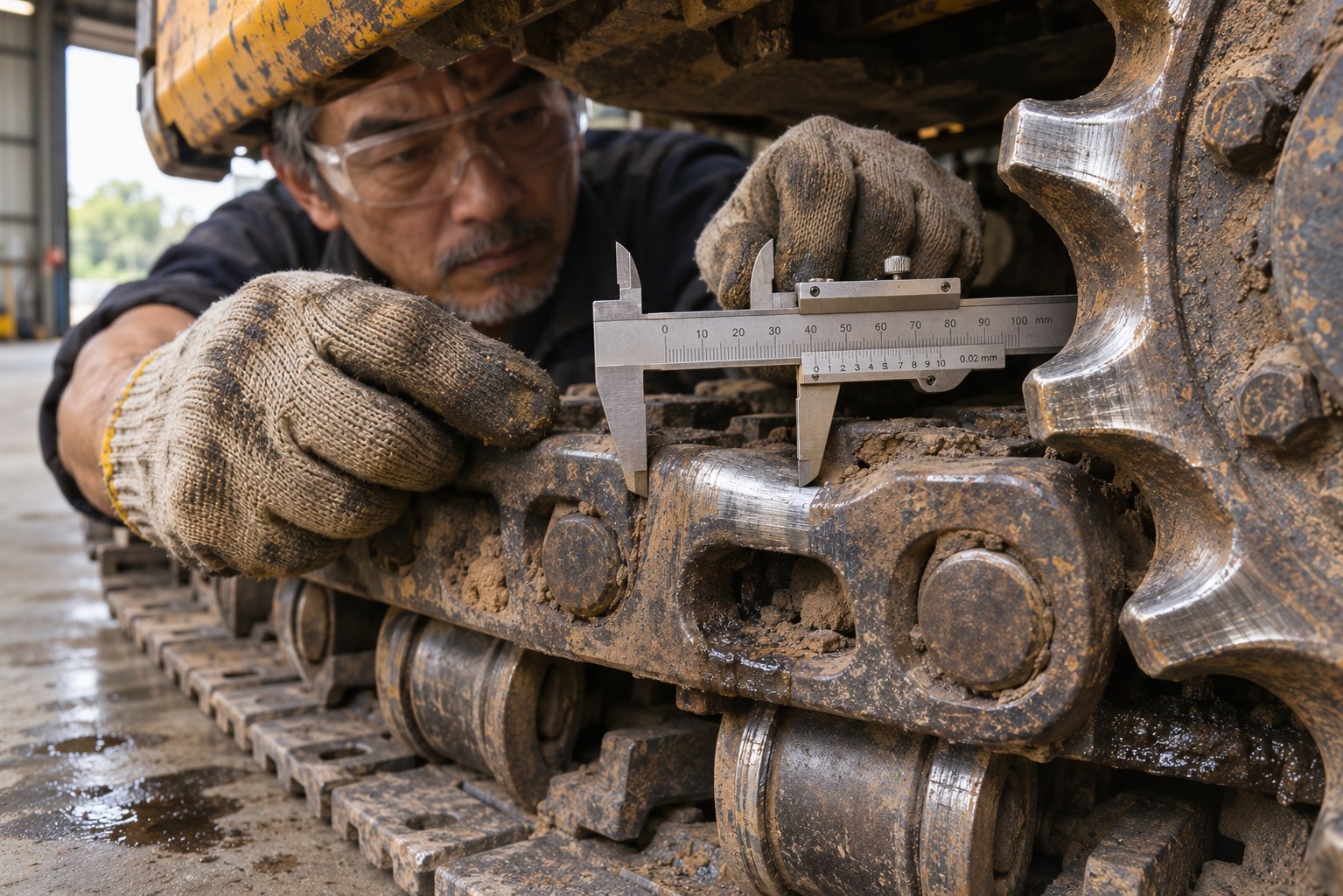
If the hour meter tells you how long a machine has worked, the undercarriage tells you how hard. And replacing it is one of the most expensive repairs you'll face on any tracked excavator. Industry analysis shows the undercarriage accounts for up to 50 percent of a machine's lifetime owning-and-operating cost. On a mid-size excavator, a full undercarriage rebuild - new track chains, shoes, rollers, idlers, and sprockets - can run $15,000 to $30,000 or more. That cost needs to factor directly into your purchase price calculation.
Here's what to examine component by component:
- Track shoes: Check grouser height - the raised bar that provides traction. As grousers wear down, the machine loses grip and slips, which accelerates wear everywhere else. Also look for bent shoes, a telltale sign of hard-surface operation or side-loading stress.
- Track rollers (top and bottom): Measure tread diameter at the most worn point. Flat spots indicate a roller that seized and dragged instead of rotating freely - a $400 failure that cascades into premature wear across the entire undercarriage if left unaddressed. Check for oil leaks at roller seals; a leaking seal means internal lubrication is failing.
- Idlers: Inspect tread wear depth and flange condition. Worn guide flanges cause track misalignment, which compounds wear on every component the track contacts.
- Sprockets: Look at the tooth profile. New sprocket teeth are rounded and symmetrical. As they wear, they develop sharp, hooked points - a classic visual indicator that replacement is approaching. Pointed or scalloped teeth mean the sprocket is pulling unevenly on the track chain, accelerating link and bushing wear simultaneously.
- Track tension: Stretch a string line from sprocket to idler over the grouser tips to check sag. Too tight accelerates roller and idler wear; too loose causes chain bounce and snaking. Ask whether the idler adjustment has been maxed forward - if so, the track chain has stretched to its limit and no further adjustment is possible.
Beyond the undercarriage, inspect the boom, stick, and bucket for structural concerns. Move the bucket and stick through their full range of motion while watching and listening at each joint. Clunking, excessive play, or sloppy lateral movement at pin connections indicates worn pins and bushings - a repair that requires pressing out old pins, reaming bores, and installing oversized components. Check welds carefully around the boom foot, boom nose, stick tip, and cylinder mounts. Fresh paint or grinding marks near structural welds can conceal crack repairs that compromise the boom's fatigue life. If a cat excavator for sale or a John Deere 85G you're evaluating shows evidence of structural welding, request documentation of the repair - or walk away unless the price accounts for the risk.
Hydraulic System and Engine Health
The hydraulic system is the muscle behind every digging, lifting, and swinging motion. A mid-size excavator with sluggish hydraulics isn't just slow - it's burning fuel inefficiently, stressing pumps and motors, and signaling internal wear that only gets worse. Evaluating hydraulic health requires more than a visual scan.
Start with a cold inspection before the machine is started. Walk the boom, stick, and bucket cylinders looking for oil weeping at rod seals, wet spots at hose fittings, and any dents or scoring on cylinder rods. Scored rods destroy seals rapidly and require either rod resurfacing or full cylinder rebuild. Check hydraulic hose condition - cracked, bulging, or heat-hardened hoses are overdue for replacement and suggest the entire hose network may be aging out simultaneously.
Once the machine warms to operating temperature, run functional tests. Hydraulic performance testing should evaluate cycle times for boom raise, arm curl, and swing against the manufacturer's published specifications. A machine that takes noticeably longer than spec to complete these movements is losing hydraulic flow - typically from worn pump internals, leaking control valves, or bypassing cylinders. Perform a drift test: raise the boom to full height with a loaded bucket, then shut down hydraulic input. If the boom drops more than a few inches over 30 to 60 seconds, the boom cylinder has internal bypass - a condition that worsens progressively and eventually requires a cylinder rebuild.
Engine assessment begins with a cold start. Arrive early and ask to start the machine yourself before anyone has warmed it up. Hard starting, extended cranking, heavy smoke, or unusual knocking during cold start all warrant investigation. Once running, observe exhaust color: white smoke suggests coolant entering the combustion chamber (head gasket or liner issue), blue smoke indicates oil burning past worn rings or valve seals, and persistent black smoke points to fuel system problems or restricted air intake. Check for blow-by at the crankcase breather - excessive blow-by means cylinder or ring wear is advanced. On newer Tier 4 machines, ask about any stored fault codes related to the diesel particulate filter or selective catalytic reduction system, as aftertreatment repairs on mid-size excavators can run several thousand dollars.
Also inspect the cooling system. Look for coolant leaks at hose connections, the radiator core, and the water pump. Check for milky discoloration in the engine oil - a sign of coolant contamination that can indicate a cracked head or failed head gasket. Overheating history accelerates wear across every engine component, so a machine with coolant system issues has likely suffered damage beyond what's immediately visible.
Pull all of these checks together into a structured sequence you can follow on-site. Here's the order that maximizes what you learn while minimizing the chance of missing critical items:
- Verify the serial number, model, year, and configuration against the seller's listing and any available paperwork.
- Record the hour meter reading and request telematics or ECU verification.
- Review all available maintenance records, oil analysis reports, and repair documentation.
- Inspect the undercarriage: track shoes, rollers, idlers, sprockets, and track tension - measure wear percentages where possible.
- Examine boom, stick, and bucket structure for cracks, weld repairs, paint inconsistencies, and pin/bushing play.
- Walk hydraulic cylinders, hoses, and fittings for leaks, scoring, and deterioration before starting the engine.
- Perform a cold start and note cranking behavior, exhaust color, and any abnormal engine sounds.
- Warm the machine to operating temperature and test all hydraulic functions: boom, arm, bucket, swing, and travel.
- Run drift tests on boom and arm cylinders to check for internal bypass.
- Compare cycle times (boom raise, swing, travel speed) against manufacturer specs.
- Inspect the cab: controls, gauges, electronics, stored fault codes, seat belt, camera, and climate systems.
- Verify all included attachments, confirm coupler compatibility, and document any needed repairs for negotiation.
This twelve-step sequence works whether you're standing in front of a Bobcat E60 at a dealer lot or evaluating a 20-ton Komatsu at an auction yard. Print it, bring it on-site, and check off each item systematically. Rushing through - or skipping steps because the machine "looks clean" - is how buyers end up absorbing repair costs that should have been the seller's problem.
For any used mid-size excavator valued above $50,000, always request a professional third-party inspection before finalizing the purchase - the $500 to $1,500 inspection fee is insignificant compared to the $15,000-plus cost of a single major repair you failed to catch.
A thorough inspection reveals a machine's current condition. But it doesn't tell you everything about what the machine can do once it's on your jobsite - that depends heavily on the attachments you pair with it, and the compatibility details most buyers overlook until it's too late.
Attachments That Multiply Your Excavator's Versatility
Compatibility details might sound like a minor footnote - until you're staring at a $6,000 hydraulic breaker that won't mount to your machine because the pin spacing is 5 millimeters off. Attachments are what transform a mid-size excavator from a single-purpose digger into a multi-functional revenue generator, and they can easily add $10,000 to $40,000 to your total acquisition cost. Yet most buyers shopping for a mid size excavator for sale focus entirely on the base machine and treat attachments as an afterthought. That's a costly mistake. The attachment lineup you plan to run should influence which machine you buy in the first place - because not every excavator supports every tool.
Buckets, Thumbs, and Grapples
Buckets are the attachment every excavator ships with, but "a bucket" is never just one thing. Mid-size machines routinely cycle through multiple bucket types depending on the task at hand, and each design serves a distinct purpose:
- General-purpose (GP) digging buckets - Equipped with teeth for breaking into soil, gravel, and moderate rock. This is the everyday workhorse for trenching, foundation excavation, and general site work.
- Heavy-duty (HD) buckets - Thicker sidewalls, reinforced wear plates, and heavier teeth designed for rocky ground, demolition debris, and abrasive material. Expect 20 to 30 percent more weight than a GP bucket of the same width.
- Ditching and grading buckets - Wider profiles with a smooth cutting edge instead of teeth. These excel at surface finishing, channel shaping, and final grade work where precision matters more than breakout force.
- Rock buckets - Narrow width with extremely robust construction and replaceable wear components. Built for hard-digging environments where a standard bucket would fail within weeks.
- Clean-up buckets - Wide, smooth-edged designs for clearing debris and backfilling after primary excavation is complete. Not built for heavy digging, but invaluable for site cleanup efficiency.
Hydraulic thumbs dramatically expand what any of these buckets can do. Picture trying to pick up a concrete chunk, a tree stump, or an oddly shaped boulder with just a bucket - the material rolls off or slides out. A thumb clamps against the bucket lip like a massive opposing finger, letting operators grasp, rotate, and precisely place irregular objects. For demolition work, material sorting, and John Deere excavator operators running site-clearing contracts, a thumb effectively turns the machine into a material handler without swapping attachments.
Grapples take material handling further. With their high clamping force, grapples grab and sort debris, scrap metal, brush, and demolition waste that even a thumb-and-bucket combination can't secure. Rotating grapples add a hydraulic rotation circuit, letting the operator spin loads without repositioning the cab - a feature that pays for itself quickly on recycling, land-clearing, and waste-handling jobs.
Here's where compatibility becomes critical: coupler systems. Mid-size excavators use either pin-on or quick-coupler mounting interfaces, and the choice affects your daily productivity.
Pin-on attachments mount directly to the excavator stick using two steel pins that match the machine's specific pin diameter and center distance. They're mechanically simple and offer the most secure connection, but swapping a pin-on attachment takes 8 to 12 minutes and requires the operator to leave the cab - plus a second person or a pry bar to align pins. For crews running one bucket type all day, pin-on works fine. For anyone switching between digging, grading, and material handling on the same shift, it's a bottleneck.
Quick-coupler systems let operators swap attachments hydraulically from the cab in under two minutes. For mid-size machines in the 10-to-25-ton class, common standards include S-50, CW-30, and manufacturer-specific designs like CAT's Pin Grabber. The productivity gain is real - but so is the compatibility complexity. An S-50 coupler won't accept a CW-series bucket without an adapter plate. Proprietary systems from one manufacturer may lock you into that brand's attachment ecosystem entirely. If you're running a mixed fleet with machines from Kobelco, Komatsu, and Caterpillar, standardizing on a single coupler standard across all units can reduce your total attachment inventory by up to 40 percent. Before buying any quick-coupler attachment separately, measure your machine's actual pin diameter, pin center distance, and dipper gap - don't rely on model number alone, since even machines within the same brand can have different pin geometries across model years.
Breakers, Augers, and Specialty Attachments
Buckets and thumbs handle most general excavation tasks. But the attachments that truly multiply a mid-size excavator's earning potential are the powered tools that turn it into specialized equipment - replacing machines that would otherwise cost tens of thousands to rent or purchase separately.
Hydraulic breakers (hammers) are the most common powered attachment for demolition and rock work. They break through concrete, asphalt, and rock formations with repeated impact blows, saving days of manual labor on removal tasks. Selecting the right breaker, though, demands attention to your machine's auxiliary hydraulic circuit. Mid-size excavators typically provide 20 to 30 GPM of auxiliary flow at 2,500 to 3,500 PSI. A breaker rated for 40 GPM won't perform properly on a standard-flow machine - it'll underperform, overheat, and potentially damage the excavator's hydraulic pump. Conversely, running a small breaker on a high-flow system without adjusting flow output risks blowing seals inside the attachment.
Auger drives handle post-hole drilling, pier installation, and utility pole placement. They operate on steady hydraulic flow at moderate pressure and typically need 15 to 25 GPM. One detail many buyers miss: auger drives often require a case drain line to prevent pressure buildup in the hydraulic motor housing. If your excavator doesn't have this circuit, you'll need a diverter valve modification before the auger can run safely.
Beyond breakers and augers, several specialty attachments extend what a mid-size excavator can tackle:
- Rippers - Single-tooth tools that tear through frozen ground, compacted soil, and soft rock to prepare for excavation. Essential for winter work or rocky site prep.
- Compaction wheels - Vibrating attachments that compress backfill material directly in utility trenches where roller compactors can't reach. They eliminate the need for a separate compaction crew on many pipe-laying jobs.
- Rotating pulverizers - Demolition tools that crush concrete and separate rebar in a single pass, common on structural demolition projects.
- Brush cutters and mulchers - Land-clearing attachments that require high-flow hydraulic circuits (30+ GPM) and are typically paired with larger mid-size units in the 20-to-25-ton range.
- Tilt buckets and tiltrotators - Advanced grading tools that add rotational degrees of freedom for precision slope work. Tiltrotators are the most hydraulically demanding attachment available, often requiring multiple auxiliary circuits and CAN BUS electrical integration.
Before committing to any powered attachment, verify two things. First, confirm your excavator's actual auxiliary flow rate using a flow meter at operating RPM - published spec sheets reflect factory-new performance, and pump wear on used machines can reduce real output below rated figures. Second, ensure the attachment's weight falls within safe limits. As a general rule, attachments should weigh between 5 and 10 percent of the excavator's operating weight - exceeding 10 percent risks hydraulic overload, structural stress, and tipping instability.
If you're evaluating a Sany excavator for sale or a Takeuchi excavator for sale that comes bundled with attachments, treat those bundled tools as a genuine value-add - but only after confirming they're properly matched. A bundled breaker that's undersized for the machine or a coupler that doesn't match your existing attachment inventory isn't a bonus; it's dead weight. Factor attachment acquisition into your total budget from the start, not as an afterthought. For most mid-size excavator buyers, attachments represent 15 to 25 percent of the total working investment once you account for buckets, a thumb or grapple, and at least one powered tool.
Getting the right machine with the right attachments is the hardware side of the equation. But the financial side - whether owning that hardware actually makes more sense than renting it - depends on how consistently you'll keep the machine working.
Should You Buy or Rent a Mid Size Excavator
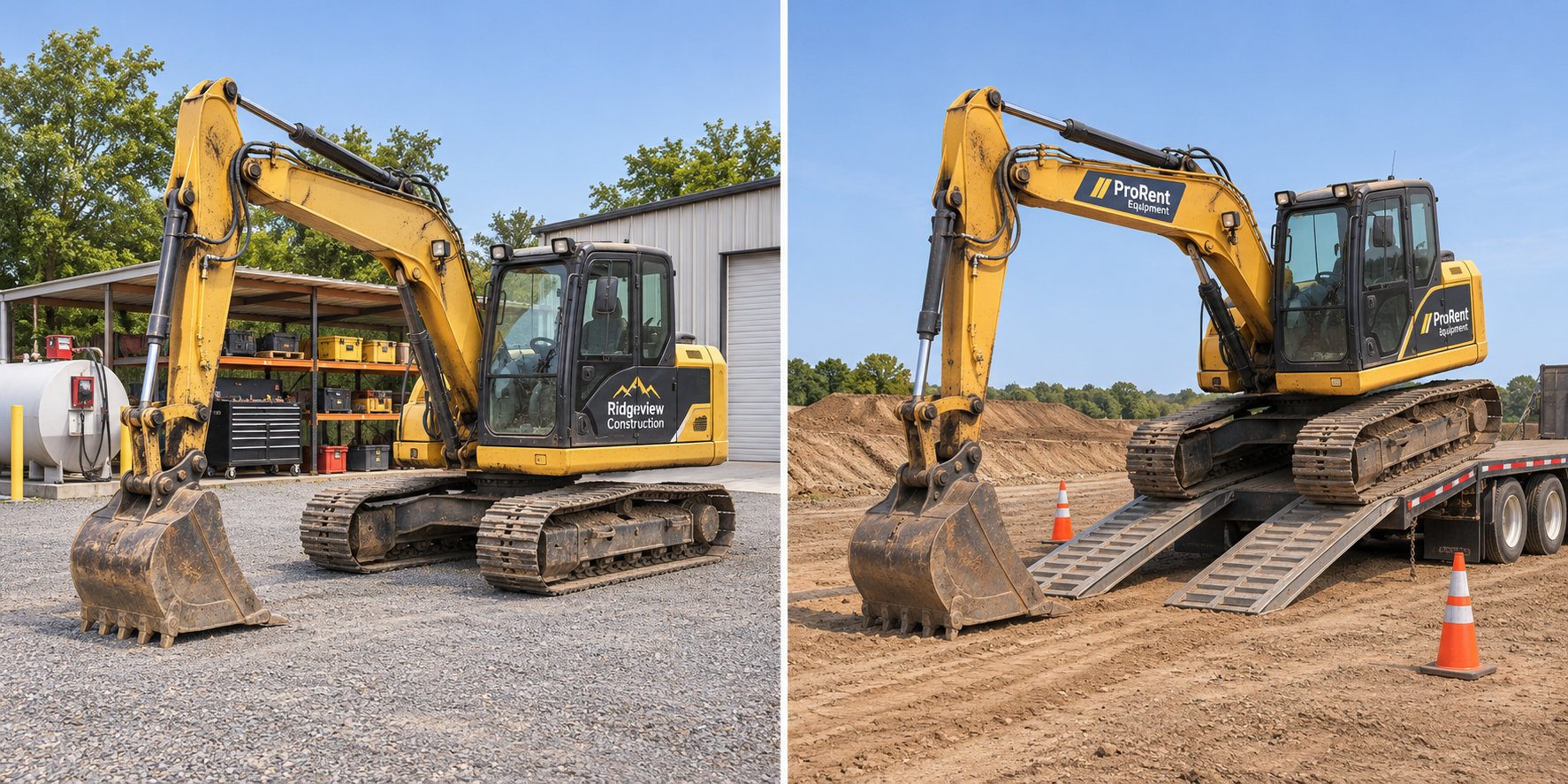
You've found the right specs, the right brand, and a machine with clean maintenance records and a solid undercarriage. The listing price fits your budget. Everything points toward clicking "buy." But here's the question that separates profitable equipment decisions from regrettable ones: will this machine actually work enough hours to justify owning it? A mid-size excavator sitting idle four months a year doesn't build equity - it bleeds insurance premiums, storage costs, and tied-up capital that could be earning returns elsewhere. Renting, meanwhile, feels wasteful when you're writing checks month after month for a machine you could own outright. The answer isn't universal. It depends on your utilization rate, project pipeline, and financial position.
When Buying Makes Financial Sense
Ownership rewards consistency. If your excavator runs 200 or more days per year - roughly 60 to 70 percent of available working days - the math almost always favors purchasing. At that utilization level, your fixed costs (depreciation, insurance, storage) spread across enough productive hours to drive per-day ownership costs well below equivalent rental rates. Industry analysis from Cleveland Brothers confirms that machines exceeding 150 to 180 working days annually generally cross the ownership break-even threshold.
Beyond raw utilization, several scenarios make a compelling case for buying:
- Long-term project backlogs: Multi-year contracts or a steady pipeline of similar excavation jobs guarantee the hours your machine needs to pay for itself. Contractors locked into municipal utility work, subdivision development, or ongoing site prep rarely struggle with utilization.
- Revenue from idle periods: Some owners offset downtime by renting their machine to other contractors through peer-to-peer equipment rental platforms. A Kobelco excavator or Cat 325 sitting between your own projects can generate $3,000 to $6,000 per week in rental income - turning a carrying cost into a profit center.
- Strategic fleet building: Owned equipment is a balance sheet asset. It serves as loan collateral, strengthens your company's net worth, and increases business valuation if you ever sell the operation. For contractors positioning themselves for growth, a core fleet of owned machines signals financial stability to bonding companies and project owners.
Buying, though, means absorbing the full total cost of ownership - and that figure extends far beyond the purchase price. Gregory Poole's ownership cost framework breaks this down clearly: heavy machinery typically depreciates 20 to 30 percent in the first year and retains only 40 to 60 percent of its value after five years. On top of depreciation, plan for maintenance at 5 to 10 percent of purchase price annually, insurance at 1 to 3 percent of current value, plus storage and transport expenses. A $200,000 mid-size excavator doesn't cost $200,000 to own - over five years, the true ownership cost can reach $280,000 to $340,000 once you factor in every line item. Buyers who only compare the sticker price against rental rates without accounting for these hidden costs routinely overestimate the financial advantage of ownership.
When Renting or Leasing Is the Smarter Move
Renting wins when predictability matters more than equity. Imagine you land a three-month bridge demolition contract that requires a machine you'll never use again afterward. Purchasing a mid-size excavator for a single project - then eating depreciation, maintenance, and resale hassle once it's over - makes no financial sense. Rental converts that six-figure capital outlay into a predictable operating expense that ends when the project does.
Several other scenarios favor renting over buying:
- Seasonal or infrequent use: If the machine would sit idle four or more months per year, carrying costs during downtime erode any ownership savings. Contractors in northern climates where ground freezes shut down excavation work face this math every winter.
- Specialized one-off tasks: Need a long-reach configuration for a single canal project? A specific attachment-ready platform for pile driving? Renting the exact machine for the exact duration avoids locking capital into equipment that doesn't match your core work.
- Access to newer technology: Rental fleets turn over faster than owned fleets. Leasing arrangements let operators access newer models with the latest fuel efficiency, telematics, and emissions compliance without absorbing the depreciation hit that ownership front-loads.
- Cash flow preservation: When capital is tight - during expansion phases, seasonal revenue dips, or uncertain economic periods - rental keeps working capital liquid and credit lines available for emergencies or growth opportunities.
- Try before you buy: Some contractors rent a specific model for several weeks of real jobsite use before committing to a purchase. A few hundred hours on a machine reveals comfort, performance, and maintenance quirks that no spec sheet or dealer walk-around can replicate. If you're comparing track hoes for sale across multiple brands, renting your top two candidates for actual project work eliminates guesswork.
Leasing sits between renting and buying. An operating lease functions like a long-term rental: lower monthly payments, maintenance often included, and you return the machine at term end. A finance lease behaves more like a loan - you may claim depreciation benefits and often have a purchase option at lease end. Both structures preserve cash flow better than outright purchase while still guaranteeing machine access for the lease duration.
Here's how buying and renting compare across the factors that matter most to a mid-size excavator decision:
| Factor | Buying | Renting |
|---|---|---|
| Upfront Cost | High ($130,000 - $300,000+ depending on new vs. used) | Low (daily, weekly, or monthly rates only) |
| Long-Term Cost Trajectory | Decreasing per-day cost as utilization rises; maintenance costs increase with age | Flat or slightly increasing with rate adjustments; no surprise repair bills |
| Maintenance Responsibility | Owner bears full cost (5-10% of purchase price annually) | Typically included in rental rate; renter handles daily checks only |
| Flexibility | Low - committed to one machine configuration | High - swap models, sizes, and brands as projects change |
| Asset Value Retention | Yes - depreciating asset on balance sheet; collateral and resale value | None - payments are pure operating expense with no residual equity |
| Tax Treatment | Section 179 deduction and depreciation schedules available | Rental payments fully deductible as operating expenses in year incurred |
| Best For | High utilization (200+ days/year), predictable pipeline, fleet building | Short-term projects, seasonal work, cash-flow-sensitive operations |
One factor that often tips the scale: financing access. Not every buyer has $200,000 in available capital, and not every lender makes equipment loans straightforward. Programs like AgDirect (common in agricultural and crossover equipment markets) and manufacturer financing through Cat Financial, John Deere Financial, or Komatsu Financial Services offer structured payment plans that reduce the upfront barrier to ownership. Equipment financing typically uses the machine itself as collateral, which can make approval easier than unsecured business loans - but interest rates vary widely based on credit profile, time in business, and down payment. Borrowers with strong credit may secure single-digit rates, while newer businesses or those with credit challenges could face rates in the mid-to-high teens. Compare dealer financing, bank loans, SBA programs, and equipment-specific lenders before committing. Even a two-percentage-point difference in interest rate on a $180,000 loan compounds into thousands over a five-year term.
Many successful contractors don't pick one side of this debate permanently. They own their core, high-utilization machines - perhaps a John Deere 210 excavator or comparable unit that runs five days a week, 10 months a year - and rent everything else. Seasonal surge capacity, specialty configurations, and project-specific needs get filled with rentals. This hybrid approach keeps fixed costs lean while ensuring you always have the right iron available when excavators for sale match your long-term fleet plan and rental catalogs cover the gaps.
Whether you decide to buy, rent, or blend both strategies, the final step is the same: building a clear action plan that moves you from research into a confident, well-informed purchase.
Your Next Steps to Finding the Right Mid Size Excavator
Research without action is just reading. You've worked through the specs, the pricing realities, the inspection red flags, the attachment math, and the buy-versus-rent calculus. Every one of those topics sharpens your decision - but only if you pull them together into a structured process before you start contacting sellers. Buyers who wing it overpay, overlook critical flaws, or end up with a machine that doesn't match their actual workload. Buyers who follow a deliberate sequence consistently land better machines at better prices.
Here's how to move from informed reader to confident purchaser.
Build Your Requirements Checklist Before You Shop
Think of this checklist as your filter. Every listing you evaluate - whether it's a caterpillar excavator for sale at auction, a John Deere 135G through an authorized dealer, or a case excavator for sale on a direct-purchase marketplace - gets measured against these criteria. If a machine doesn't pass, you move on without second-guessing.
- Define your primary application. Revisit the spec-matching framework from earlier in this article. Are you trenching utilities, loading trucks, running demolition, or handling a mix? Write down the one or two job types that generate the majority of your revenue. These dictate which specifications matter most.
- Lock in your must-have specs. Based on your application, identify non-negotiable numbers: minimum dig depth for your deepest trench contract, minimum lift capacity at the radius you actually work, or minimum breakout force for the material conditions you encounter daily. Any machine that falls short on these specs is disqualified regardless of price.
- Set a realistic total budget - not just a machine budget. Include the base excavator, attachments you'll need (buckets, thumb, breaker, coupler), transport to your yard or jobsite, any immediate maintenance or repairs flagged during inspection, and insurance activation costs. A $140,000 machine that needs $25,000 in undercarriage work and $8,000 in attachments is really a $173,000 investment. Budget accordingly.
- Decide on acceptable hour and age ranges. Use the depreciation benchmarks discussed earlier to identify your value sweet spot. For most mid-size buyers, machines two to five years old with 2,000 to 5,000 hours offer the strongest balance of remaining life versus price savings. Kubota excavators and other brands with solid service histories in this range often deliver excellent value retention.
- Choose your preferred buying channels. Will you bid at auction, shop through dealers, explore direct-purchase marketplaces, or work all three simultaneously? Each channel demands a different preparation approach - auction buyers need pre-set bidding limits and inspection budgets; dealer buyers need financing pre-approval; marketplace buyers need clear communication templates for requesting quotes and documentation.
- Identify your regional dealer support map. Before committing to any brand, confirm that authorized service and parts support exists within a reasonable response radius of your operating area. A JD 210 excavator with a dealer 30 miles away beats a competing model with a dealer 300 miles away, even if the distant option costs slightly less.
- Arrange inspection resources in advance. Line up a qualified third-party inspector or a trusted mechanic before you find a machine - not after. Scrambling to find an inspector while a seller pressures you to close creates exactly the conditions where buyers skip due diligence and regret it.
- Prepare your negotiation leverage. Document comparable sales data from auction results, dealer listings, and marketplace pricing. When you can show a seller that three similar machines with lower hours sold for 10 percent less last month, your offer carries weight. Knowledge of seasonal pricing trends - buying during fall or winter when inventory is higher and competition is lower - strengthens your position further.
Print this sequence. Tape it to your office wall. Share it with your equipment manager. Skipping even one step - especially the total-budget calculation or the pre-arranged inspection - is how experienced contractors end up absorbing costs they should have anticipated.
Where to Start Browsing Inventory
With your checklist locked in, the search itself becomes efficient rather than overwhelming. The goal isn't to find one listing - it's to compare across multiple channels simultaneously so you can triangulate fair market value and identify the strongest deal available.
Start with auction platforms like Ritchie Bros. and IronPlanet to establish baseline pricing. Search for your target models, filter by hour range, and note what machines are actually selling for - not just listed at. Completed auction results give you real transaction data that's far more reliable than asking prices.
Next, check authorized dealer inventories and certified pre-owned programs. Platforms like MachineFinder and Cat Used let you search nationally, and dealer listings often include more complete documentation than auction entries. If financing is part of your plan, dealer channels typically offer the most streamlined path to approval.
Then broaden your search through direct-purchase marketplaces that aggregate multi-brand inventory. JIUHONG's used excavator collection, for example, brings together mid-size machines from brands like Caterpillar, Komatsu, Hitachi, and Kobelco in a single browsable catalog - useful for contractors and equipment dealers who want to compare options across manufacturers and request model-specific quotes without visiting a dozen separate sites. For fleet buyers sourcing multiple units or import buyers exploring international inventory (excavadora listings included), the ability to request bulk pricing through a single point of contact saves significant time.
Regardless of where you find a promising listing, the process from here follows the same path: request full documentation (hours, maintenance records, repair history), arrange an independent inspection, compare the asking price against your auction and dealer benchmarks, and negotiate from a position of verified data rather than gut feeling.
Don't rush. The mid-size used excavator market is deep enough that waiting two to four weeks for the right machine at the right price almost always outperforms settling for the first acceptable listing. Sellers know that urgency benefits them - patient, informed buyers shift that leverage back to their side of the table.
Informed buyers who understand their spec requirements, inspect thoroughly, and compare pricing across auctions, dealers, and direct-purchase marketplaces consistently secure better machines at better prices than those who rely on a single channel or skip due diligence under time pressure.
The equipment you choose will shape your profitability for years. Give the decision the structure it deserves, follow the steps outlined throughout this guide, and you'll put iron on your jobsite that earns its keep from day one.
Frequently Asked Questions About Mid Size Excavators for Sale
1. What weight range defines a mid size excavator?
A mid size excavator typically weighs between 10 and 25 metric tons (roughly 22,000 to 55,000 lbs). This class sits between mini or compact excavators under 10 tons and large excavators above 25 tons. The mid-size range is also called 'medium excavator' in industry terminology. Machines in this weight window deliver dig depths of 15 to 23 feet and enough lift capacity for commercial site prep, sewer and water main installation, road construction, and demolition work - covering an estimated 60 to 70 percent of commercial excavation tasks without requiring oversized transport permits.
2. How much does a mid size excavator cost new and used?
New mid-size excavators generally range from $190,000 to $300,000 depending on brand, technology packages, and configuration. Used pricing varies significantly by age and condition: machines 1 to 3 years old typically sell for $130,000 to $220,000, units 4 to 7 years old range from $85,000 to $150,000, and machines 8 years and older may fall between $50,000 and $90,000. Key factors influencing used pricing include machine hours, undercarriage condition, documented maintenance history, model year, application history, and regional market demand. Buying during fall or winter can yield savings of 8 to 15 percent compared to peak spring and summer pricing.
3. What should I inspect before buying a used mid size excavator?
Focus on a structured 12-step inspection sequence. Start by verifying the hour meter reading against telematics data and physical wear patterns on seats, pedals, and joystick grips to detect tampering. Examine the undercarriage closely - track shoes, rollers, idlers, and sprockets - since a full rebuild costs $15,000 to $30,000. Check boom, stick, and bucket pins for excessive play indicating worn bushings. Test hydraulic performance by comparing cycle times to manufacturer specs and running drift tests on boom cylinders. Perform a cold engine start to observe cranking behavior, exhaust color, and abnormal sounds. For any machine valued above $50,000, investing $500 to $1,500 in a professional third-party inspection is strongly recommended.
4. Is it better to buy or rent a mid size excavator?
Buying generally makes financial sense when the machine runs 200 or more days per year, when you have a predictable project pipeline, or when you plan to build fleet equity. Total cost of ownership over five years - including depreciation, maintenance, insurance, and storage - can reach 140 to 170 percent of the purchase price. Renting is smarter for short-duration projects, seasonal work below 150 working days annually, specialty one-off tasks, or when you want to preserve cash flow. Many contractors use a hybrid strategy: owning high-utilization core machines and renting for seasonal surges or specialty configurations.
5. Where is the best place to buy a mid size excavator?
Three primary channels serve mid-size excavator buyers, each with distinct trade-offs. Auction platforms like Ritchie Bros. and IronPlanet offer pricing 20 to 40 percent below dealer retail but sell machines mostly as-is with limited buyer protection. Authorized dealers charge a premium of 5 to 10 percent above auction pricing but provide warranties, financing, and documented maintenance histories. Direct-purchase marketplaces such as JIUHONG's used excavator collection at jiuhong-machinery.com aggregate multi-brand inventory, letting buyers compare machines from Caterpillar, Komatsu, Hitachi, and other manufacturers in one place while requesting model-specific quotes for individual or bulk purchases. Experienced buyers often cross-reference all three channels simultaneously to triangulate fair market value.