

What Is Machinery Trader and Who Is It For
Machinery Trader is an online marketplace owned by Sandhills Global where buyers and sellers connect over heavy construction equipment. Think of it as a specialized classifieds hub - but instead of furniture or used cars, you're browsing excavator listings, skid steer inventory, dozers, loaders, telehandlers, and everything else that moves earth or lifts steel on a job site. The platform has been connecting the heavy equipment industry for over four decades, evolving from a print magazine into one of the most recognized digital marketplaces in the construction world.
Here's an important distinction many people miss: "Machinery Trader" is a specific brand name, not a generic description for anyone who trades machinery. When someone searches for a machinery trader online, they might be looking for this particular platform - or they might mean the broader concept of buying and selling equipment. This article focuses on the platform itself while also helping you navigate the wider equipment trading landscape.
What Machinery Trader Actually Is
At its core, the platform serves as a bridge between people who have heavy equipment to sell and people who need it. Dealers, auctioneers, brokers, and rental companies list their inventory through MachineryTrader.com, while buyers browse categories ranging from mini excavators and skid steers to cranes, motor graders, and asphalt paving equipment. Listings typically include key specs, photos, dealer contact information, and equipment location. The platform also leverages AI-powered search tools that personalize results and recommend machines based on browsing behavior - a feature designed to surface relevant equipment you might otherwise overlook.
Whether you're a contractor in Billings, MT, hunting for commercial asphalt paving equipment or a fleet manager scouting compact loaders on the East Coast, the geographic reach is broad enough to surface options across the U.S. and international markets.
Who Uses Machinery Trader and Why
The platform attracts a diverse mix of users, each with different goals. You'll find everyone from one-person operations to large dealership networks active on the site. Here are the primary personas:
- Contractors sourcing project equipment - Looking for specific machines like an excavator or a Bobcat skid steer to match an upcoming job's requirements, often with urgency and budget constraints.
- Fleet managers expanding or rotating inventory - Strategically acquiring newer units while offloading aging machines to keep their fleets productive and cost-efficient.
- Equipment dealers listing stock - Using subscription-based accounts to advertise large volumes of inventory to a nationwide buyer audience.
- Individual sellers liquidating assets - Contractors, farmers, or business owners selling one or two pieces of equipment they no longer need, typically through individual listings rather than dealer subscriptions.
Each of these groups interacts with the platform differently. A dealer might maintain hundreds of active listings with branded pages, while a private seller may post a single unit and wait for inquiries. Understanding which side of this dynamic you fall on shapes how you'll experience the platform.
Machinery Trader Within the Sandhills Global Network
Machinery Trader doesn't exist in isolation. It's one piece of a larger ecosystem of niche marketplaces operated by Sandhills Global. Sister properties include Truck Paper for commercial trucks, CraneTrader for hoisting equipment and cranes (including specialized listings for equipment like gantry crane models), and ForestryTrader for logging machinery. Sandhills also launched OilfieldTrader.com as a brand extension focused on drill rigs and production equipment. Each property segments the broader heavy equipment market so buyers can zero in on exactly the category they need - whether that's a tower crane, a gantry crane, or a forestry feller buncher.
This network matters because it means sellers using the Sandhills Cloud business tools can manage inventory across multiple platforms simultaneously, while buyers benefit from category-specific search environments rather than wading through irrelevant results.
One critical clarification: Machinery Trader is not the same thing as Equipment Trader. Equipment Trader is a completely separate platform owned by Trader Interactive, with its own inventory, fee structures, and user base. Conflating the two is one of the most common mistakes buyers make - and it can lead to real confusion when comparing prices, reading reviews, or evaluating where to list your equipment.
That distinction between platforms only scratches the surface. The bigger story is how the entire equipment buying landscape shifted from handshake deals and printed catalogs to the digital-first marketplace model that platforms like these represent.
How Online Machinery Trading Transformed the Industry
Picture this: it's the mid-1990s, and you need a used excavator and loader package for a highway project starting in six weeks. Your options? Drive to three or four dealerships within a 200-mile radius, flip through the latest print edition of Machinery Trader magazine, call a few contacts you met at last year's trade show, or maybe bid on something at a regional auction you heard about through word of mouth. Every option demanded windshield time, phone tag, and a healthy dose of trust in people you might barely know.
Fast-forward to today, and that same search takes about 90 seconds on a smartphone. The shift didn't happen overnight - but when it did accelerate, it fundamentally rewired how the heavy equipment market operates.
From Trade Shows and Print Listings to Online Marketplaces
For decades, the machinery trading process revolved around physical presence. Trade shows like CONEXPO-CON/AGG served as the industry's biggest networking events, where manufacturers unveiled new models, dealers showcased inventory, and buyers could kick tires in person. These events remain valuable - CONEXPO still draws over 100,000 attendees - but they happen on fixed schedules, in fixed locations, and they demand significant travel budgets.
Between shows, buyers relied on printed catalogs and classified publications. The original Machinery Trader magazine was a staple on the desks of equipment managers and dealer principals across North America. You'd circle listings with a pen, tear out pages, and start making phone calls. Dealer networks were built on personal relationships and regional reputations. If you needed a Kubota skid steer in the Southeast, you probably knew two or three dealers to call. If you needed one in the Pacific Northwest, you were starting from scratch.
These traditional methods worked - and they still play a role. Regional auctions continue to draw crowds, and face-to-face dealer relationships remain invaluable for repeat buyers. But they shared a common limitation: geography constrained your options. You could only buy what you could find within your network's reach, and pricing intelligence was scattered at best.
Why Digital Platforms Changed the Equipment Market
Online marketplaces introduced several advantages that the traditional model simply couldn't match. Buyers gained the ability to browse inventory 24 hours a day, search across nationwide and international listings, filter results by manufacturer, price range, year, and hour-meter readings, and contact dealers directly through built-in lead forms - all without leaving the office or the job site.
The impact on comparison shopping was especially dramatic. Imagine you're sourcing a mini skid steer for a landscaping division. Before digital platforms, you might compare three or four units from local dealers and make your best guess on fair pricing. With online marketplaces, you can pull up dozens of comparable listings from across the country, instantly revealing whether that $28,000 asking price is competitive or inflated.
Online platforms fundamentally shifted pricing transparency in the equipment market by letting buyers compare similar machines - down to the model year and hour count - across hundreds of dealers simultaneously. For the first time, a contractor in rural Kansas had access to the same market intelligence as a fleet manager in Houston.
This transparency didn't just benefit buyers. Dealers who priced competitively gained broader exposure, while online platforms eliminated the geographic barriers that once limited their customer base to local foot traffic and regional referrals. A dealer in Ohio listing a well-maintained excavator and attachments package could now attract inquiries from contractors in Florida, Texas, or even overseas.
The convenience factor also proved transformative. Traditionally, negotiating prices and finalizing deals involved multiple phone calls, in-person meetings, and stacks of paperwork. Digital platforms streamlined communication through messaging systems and lead forms, making the initial stages of a transaction far more efficient - even if the final handshake still happened in person.
The Current Machinery Trading Landscape
Today's equipment market operates across several distinct platform types, and understanding where each one fits helps you search smarter. Here's how the ecosystem breaks down:
- Listing marketplaces - Platforms like Machinery Trader and Equipment Trader function as digital classifieds. Sellers post inventory with specs, photos, and contact details. Buyers browse, compare, and reach out directly. Prices are typically negotiable, and transactions happen off-platform between buyer and seller.
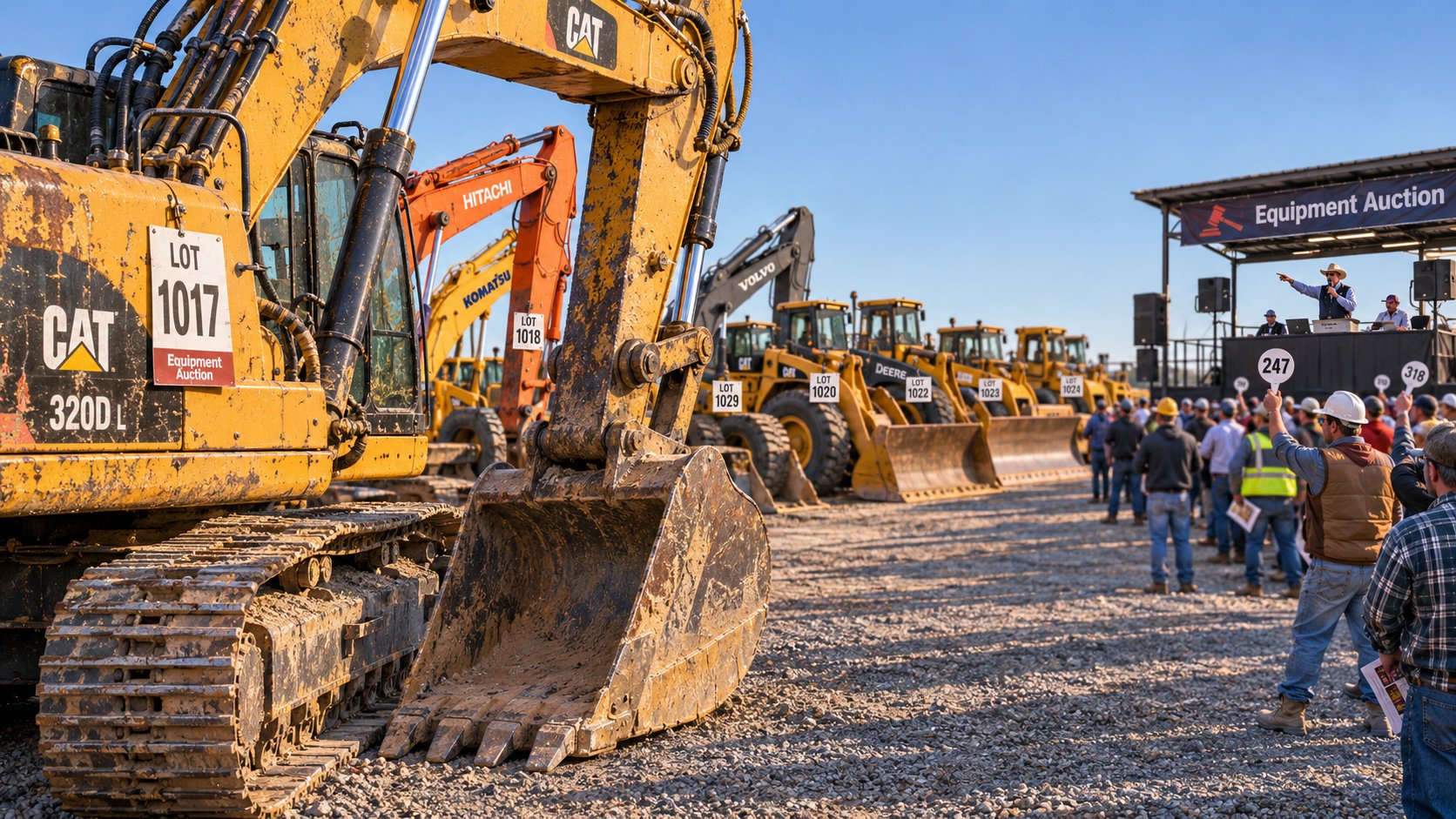
- Auction platforms - Services like Ritchie Bros, IronPlanet, and AuctionTime use timed or live bidding models. Equipment sells to the highest bidder, sometimes with reserve prices and sometimes without. Auction houses typically charge commissions of 10-15%, and final sale prices can be unpredictable - great for bargain hunters, risky for sellers counting on a specific return.
- Dealer-direct websites - Many large dealerships and manufacturer-certified used equipment programs (like Cat Used) maintain their own online inventories. These sites often include financing options, warranty details, and certified inspection reports that independent listings may lack.
Each channel serves different needs. A contractor looking for a single used machine at a fair price might start with a listing marketplace. A company liquidating an entire fleet might lean toward auction. And a buyer who values warranty coverage and certified condition reports might go straight to a dealer-direct site.
The real power move? Experienced buyers don't pick just one. They cross-reference listings across multiple channels to build a clear picture of what's available and what constitutes a fair price - a strategy that only became possible once these platforms brought the market online.
Understanding the landscape is one thing. Knowing how to actually navigate a platform like Machinery Trader - from running your first search to contacting a seller - is where the practical value kicks in.
How the Machinery Trader Platform Works Step by Step
You've seen the listings. You've probably bookmarked a few machines. But how does the platform actually work once you start clicking? Surprisingly, most guides skip this entirely - they tell you what Machinery Trader is without ever walking you through how to use it. Let's fix that.
Searching and Filtering Equipment Listings
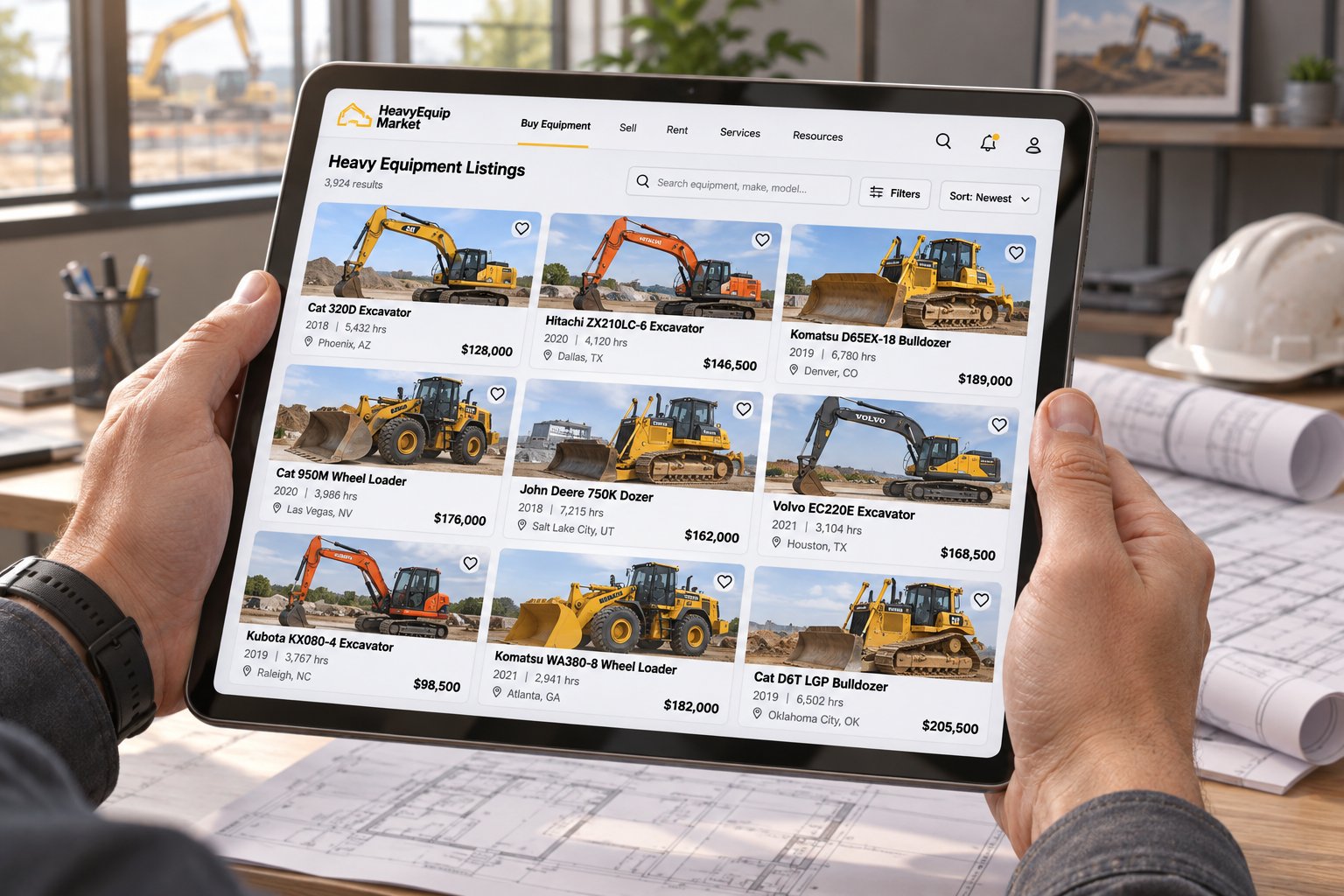
When you land on MachineryTrader.com, the homepage greets you with prominent icons linking to the most popular equipment categories - excavators, wheel loaders, loader backhoes, skid steers, dozers, graders, drills, and asphalt and aggregate equipment. Think of these as your fast lanes. If you already know you need a Bobcat skid steer or a compact excavator, one click drops you into a filtered results page for that category.
Not sure where to start? The search bar at the top accepts keyword queries, so you can type anything from a specific model number to broader terms like "concrete cement mixers" or "F450" to surface relevant listings. There's even a Quick Find Code feature - if you spotted something in the print edition of Machinery Trader magazine, you can punch in that code and jump straight to the online listing.
Where the platform really earns its keep is in the filter panel. Once you're inside a category, the left sidebar lets you narrow results by:
- Year - Zero in on newer models or hunt for budget-friendly older units
- Hours - Filter by hour-meter readings, arguably the most important wear indicator on any machine
- Price range - Set minimum and maximum to stay within budget
- Horsepower - Critical when matching a machine to job requirements
- Location - Search within a geographic radius to minimize shipping costs or plan an in-person inspection
- Manufacturer - Sort by brand when you have a preference or need parts compatibility
Each listing typically displays the key specs upfront: make, model, year, hours, price (when the seller chooses to show it), photos, and dealer or seller contact information. Click into a listing, and you'll see a full description along with all photos, videos, and detailed specifications. The platform also cross-posts listings from Sandhills Global sister sites like CraneTrader, ForestryTrader, and LiftsToday, so you may encounter cranes, forestry equipment, or aerial lifts alongside standard construction machinery.
One feature worth mentioning: the platform uses AI to personalize your browsing experience. Log in with a registered account, and you'll notice a "Recommended For You" section near the top of the homepage. It pulls from your recent search activity and interactions to surface machines you might have missed - handy when you're cross-shopping between a skid steer and a skid steer loader variant, for example, and want to see what else fits your specs.
Dealer Listings vs. Private Seller Listings
Not all listings on the platform are created equal, and understanding the difference between dealer inventory and private-party listings helps you calibrate expectations before you pick up the phone.
Dealers typically operate through subscription-based accounts. They maintain larger volumes of active listings, often with branded dealer pages, professional photography, and detailed spec sheets. Their listings tend to look polished because they're managing inventory as a business. Private sellers - usually contractors, fleet managers, or individual equipment owners - list one or a handful of machines. Their listings may be less visually refined, but the equipment itself can be just as solid.
Here's how the two listing types compare across the factors that matter most to buyers:
| Factor | Dealer Listings | Private Seller Listings |
|---|---|---|
| Typical Volume | Dozens to hundreds of active listings | Usually 1-5 individual units |
| Trust Signals | Branded pages, established business history, consistent listing presence | Limited platform history; may require more independent verification |
| Response Time | Generally faster - dedicated sales teams monitor leads | Variable - depends on individual availability |
| Listing Features | Professional photos, full specs, sometimes video walkarounds | Basic photos and descriptions; detail level varies widely |
| Pricing Approach | Often retail or near-retail pricing with negotiation room | May price lower due to motivation to sell quickly |
| Post-Sale Support | Some dealers offer limited warranties, financing coordination, or delivery | Typically sold as-is with no post-sale support |
Neither type is inherently better. A well-maintained machine from a private seller liquidating assets can be a better value than a dealer unit with higher overhead baked into the price. The key is adjusting your due diligence based on who you're buying from.
Contacting Sellers and Requesting Quotes
Here's where some buyers get tripped up: Machinery Trader is a connection platform, not a transaction platform. It brings buyers and sellers together, but it does not process payments, hold funds in escrow, or mediate disputes. Every financial exchange happens directly between you and the seller.
The typical contact flow works like this. You find a listing that fits your needs - say, a late-model Bobcat skid steer with under 2,000 hours. The listing page includes a contact form where you can submit your name, phone number, email, and a message. Many listings also display the seller's phone number directly, so you can call if you prefer a faster conversation. Dealers with subscription accounts often have dedicated sales representatives who respond to leads through the platform's built-in tools.
Once connected, the negotiation unfolds off-platform. Sellers respond with pricing details, current availability, and - for buyers outside the local area - shipping options and cost estimates. The platform even provides links to third-party services for shipping logistics and equipment financing, though these are separate providers, not Machinery Trader services.
Buyers can also take a proactive approach by posting a free Want-To-Buy notice on the platform. Instead of searching through listings, you describe what you're looking for - equipment type, preferred specs, budget range - and let sellers come to you. It's a useful tactic when you're hunting for something specific or uncommon, like a particular attachment configuration or a niche machine that doesn't appear in everyday search results.
The important takeaway is that convenience has limits. The platform makes discovery and initial contact seamless, but once money enters the conversation, you're operating in direct-deal territory. That reality raises a critical question: how does this platform stack up against its competitors - especially the one it's most often confused with?
Machinery Trader vs. Equipment Trader and Other Platforms
It's the single most common mix-up in the heavy equipment world: someone mentions "Equipment Trader" when they mean Machinery Trader - or vice versa. On the surface, the names sound interchangeable. In reality, they're entirely separate businesses with different parent companies, different inventory pools, and different fee structures. Confusing the two can send you down the wrong rabbit hole when you're comparing prices, reading reviews, or deciding where to list a machine.
And those two aren't the only players. The broader platform landscape includes auction houses, dealer-direct sites, and hybrid marketplaces - each built around a different model. Understanding the differences saves you time, money, and a lot of frustration.
Machinery Trader vs. Equipment Trader Clarified
Here's the short version: Machinery Trader is owned by Sandhills Global, the same company behind Truck Paper, CraneTrader, and AuctionTime. Equipment Trader is owned by Trader Interactive, which also operates Commercial Truck Trader, Cycle Trader, and RV Trader. Different corporate parents. Different technology stacks. Different seller agreements.
The inventory overlap can be significant - a dealer like Titan Machinery, for instance, might list the same telehandler or loader on both platforms to maximize exposure. But the listing presentation, lead delivery, and subscription costs are platform-specific. A dealer subscription on one doesn't carry over to the other, and buyer experiences differ in search interface, filtering options, and the types of sellers you'll encounter.
Why does this matter to you? If you're searching for tractors for sale near me or comparing skid steer pricing across platforms, you need to check both independently. Inventory on Machinery Trader won't necessarily appear on Equipment Trader, and vice versa. Treat them as complementary sources, not duplicates.
Comparing Major Equipment Trading Platforms
Beyond these two listing marketplaces, several other platforms compete for buyer and seller attention. Each operates under a distinct model, serves a somewhat different audience, and structures its fees differently. Here's how the major players stack up:
| Platform | Platform Type | Primary Equipment Focus | Geographic Reach | Fee Model | Best For |
|---|---|---|---|---|---|
| Machinery Trader | Listing marketplace | Construction, earthmoving, farming equipment | U.S. and international | Dealer subscriptions; per-listing fees for individuals | Contractors and fleet managers comparing dealer inventory |
| Equipment Trader | Listing marketplace | Construction, agriculture, material handling | Primarily U.S. | Dealer subscriptions; individual listing fees | Buyers wanting broad category coverage across equipment types |
| Ritchie Bros / IronPlanet | Auction (unreserved and online) | Construction, transportation, agricultural | Global - customers in ~170 countries | Seller commission + buyer's premium (5-10% depending on bid amount) | Sellers needing guaranteed liquidation; bargain-hunting buyers |
| AuctionTime | Auction (timed online) | Farm, construction, transportation | U.S. and Canada | Seller commission; buyer's premium varies by auction | Dealers and auctioneers running their own branded online auctions |
| Cat Used | Dealer-direct marketplace | Caterpillar equipment (certified used) | Global via Cat dealer network | No listing fees for buyers; dealer-managed pricing | Buyers prioritizing manufacturer-certified condition and warranty |
A few things stand out. Ritchie Bros. and IronPlanet - now both under RB Global - dominate the auction side with a combined gross transaction value of $4.3 billion in Q1 2026 alone and a registered buyer base exceeding 1.8 million users on IronPlanet. AuctionTime, notably, is a Sandhills Global property - the same parent company behind Machinery Trader - which means some listings flow between the two ecosystems. Cat Used takes a fundamentally different approach: it's not a third-party marketplace at all, but a manufacturer-backed channel where Caterpillar dealers list certified pre-owned equipment with inspection reports and sometimes warranty coverage.
No single platform "wins" across every scenario. The right choice depends entirely on what you're buying, how quickly you need it, and how much due diligence you're willing to handle yourself.
Auction Platforms vs. Listing Marketplaces
This is where the real decision point lies for most buyers. Auction platforms and listing marketplaces look similar on the surface - both show you photos, specs, and equipment details online. But they operate on fundamentally different mechanics, and those mechanics shape your experience in ways that matter.
Listing marketplaces like Machinery Trader and Equipment Trader work on a posted-price model. A seller sets an asking price, you browse, and if something catches your eye, you reach out to negotiate. There's no ticking clock. You can take a week to arrange an inspection, sleep on it, negotiate back and forth, and walk away if the numbers don't work. You control the pace.
Auction platforms like Ritchie Bros. and IronPlanet use timed bidding - either live or online. You compete against other bidders, and the highest bid at close takes the equipment. Many major auctions run unreserved, meaning every lot sells regardless of final price. That's a double-edged sword: buyers can land genuine deals on equipment that draws less competition, but popular machines can escalate well beyond what you'd pay through private negotiation.
So which model fits your situation? Consider these three factors:
- Urgency - If a project timeline is breathing down your neck, auctions with guaranteed sale dates can deliver faster than negotiating through listings. But you'll need to bid decisively and have financing arranged in advance.
- Budget certainty - Listing marketplaces give you more control over final price. You know the asking price upfront and negotiate from there. Auctions introduce uncertainty - you might pay less than expected, or you might get caught in a bidding war that blows past your ceiling.
- Negotiation preference - Some buyers thrive on the back-and-forth of direct negotiation. Others prefer the clean finality of an auction hammer. Neither approach is inherently better; it's about what suits your buying style and risk tolerance.
One practical note: auction platforms typically charge a buyer's premium on top of the winning bid - often ranging from 8% to 15% depending on the firm - while listing marketplaces generally let buyers browse and contact sellers for free. That cost difference matters, especially on high-value equipment where even a modest percentage adds thousands to your total outlay.
The platform comparison gives you the map. But to navigate any of these channels effectively, you need to understand the fee structures and listing tiers that actually determine how - and whether - you see the equipment you're looking for.
Understanding Listing Types and Fee Structures
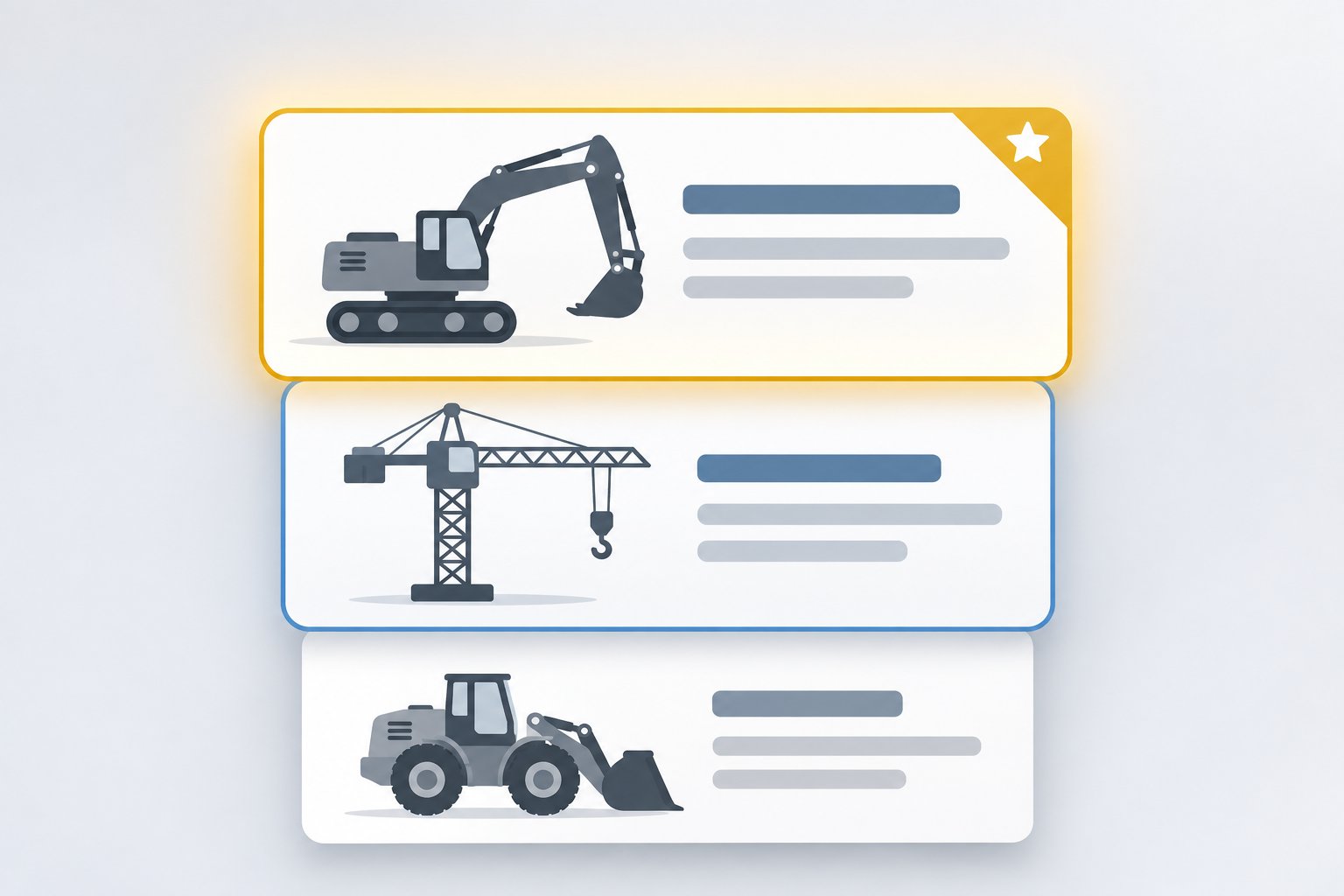
You're browsing tractors for sale on a listing platform when you notice something odd: two nearly identical machines, same year, similar hours - yet one appears at the top of results in a highlighted box while the other is buried on page three. The equipment isn't different. The listing tier is. And if you don't understand how these tiers work, you might assume the promoted machine is somehow better - or worse, you might never scroll far enough to find the one that's actually the best deal.
Fee structures and listing terminology are among the most opaque aspects of online equipment marketplaces. Most platforms don't spell them out clearly for buyers, partly because the fee relationship exists between the platform and the seller. But as a buyer, understanding this system gives you an edge in evaluating what you see - and what you don't.
Featured Listings vs. Standard Listings
Most machinery trading platforms - including Machinery Trader, Equipment Trader, and even sister properties like Commercial Truck Trader - organize their listings into visibility tiers. The exact naming varies, but the structure is broadly consistent across the industry:
- Standard listings - Basic visibility. Your equipment appears in search results based on relevance and recency, but with no special placement boost. Photos are limited, and there's minimal branding. For a private seller posting a single mini excavator for sale, this is typically the default option.
- Featured listings - Boosted placement in search results, often displayed with highlighted borders or badges that catch the eye. Featured listings usually allow more photos and may appear in "Recommended" or "Featured Equipment" sections on category pages. On some platforms, a featured listing upgrade can cost as little as $10 per listing per month - a relatively small investment for the visibility bump it provides.
- Premium or top-of-search listings - The highest tier. These listings occupy the most prominent positions in search results, often above all organic results. Dealers at this level typically get branded pages, priority placement across multiple equipment categories, and maximum photo and video allowances.
Here's the critical point for buyers: listing tier reflects how much the seller paid for visibility, not the quality or condition of the equipment. A standard listing for a well-maintained CAT 200/8 excavator isn't a lesser machine just because it sits lower in search results. It simply means the seller chose not to pay for premium placement. Smart buyers scroll past the first page. They adjust filters, sort by different criteria, and treat featured badges as marketing - not endorsements.
Dealer Subscriptions and Individual Seller Options
Behind the scenes, the way sellers pay to use these platforms splits into two basic models: subscriptions and per-listing fees.
Dealers - the backbone of most listing marketplaces - typically operate on monthly or annual subscription plans. The cost scales with listing volume: a small dealership maintaining 20 active units pays less than a regional operation like Titan Machinery managing hundreds. Specific pricing varies by platform and isn't always publicly disclosed, so dealers should confirm rates directly during the sign-up process. But in general, a dealer subscription package includes:
- Listing slots - A set number of active listings based on the subscription tier, with the ability to upgrade for additional capacity
- Analytics dashboards - Data on listing views, lead volume, and buyer engagement metrics to help sellers understand what's performing
- Lead management tools - Centralized inboxes or CRM integrations that route buyer inquiries so sales teams can respond quickly
- Branding options - Custom dealer pages, logo placement on listings, and sometimes banner advertising within relevant categories
Individual sellers - a contractor offloading a single skid loader, for example - usually pay a flat per-listing fee rather than committing to a subscription. The cost is lower, but so is the feature set. You get basic listing functionality without the analytics, branding, or lead management tools that dealer accounts include. For someone selling one or two pieces of equipment, that tradeoff makes sense. For anyone listing inventory regularly, the subscription model offers better per-unit economics and more control over how your equipment is presented.
Understanding Lead Generation Models
Here's something most buyers never think about - but should: you are not the customer of Machinery Trader. The sellers are.
That isn't a criticism; it's how the business model works. Most listing marketplaces operate on what the industry calls a lead generation model. Revenue comes primarily from seller subscriptions, listing fees, and featured placement upgrades - not from buyer fees. Buyers browse for free, search for free, and contact sellers for free. The platform earns money by delivering those buyer inquiries - leads - to the sellers who pay to be listed.
This creates an incentive structure worth understanding. The platform benefits when more buyers submit inquiries to more sellers. That's why you'll see features designed to encourage contact: prominent "Request Quote" buttons, "Call Now" banners, and email forms pre-loaded on every listing page. These aren't aggressive sales tactics - they're how the platform demonstrates value to the dealers funding it.
For buyers, the practical implication is straightforward. You won't encounter paywalls, membership fees, or charges for viewing contact details on most listing platforms. Your access is genuinely free. But recognize that the listings you see are shaped by who's paying for visibility. The seller with the biggest subscription budget gets the most screen real estate - and that's by design, not by accident.
The equipment you see first on a listing platform reflects the seller's marketing budget, not the machine's value. Always dig deeper than the first page of results.
Knowing how the money flows behind the scenes helps you read the marketplace more clearly. But reading listings is only half the equation - the other half is knowing what to do once you've found a machine worth pursuing, from first inquiry all the way through closing the deal.
The Complete Buyer Journey on Equipment Platforms
Finding a promising listing is the easy part. The real work - the part that separates a smart purchase from an expensive mistake - happens in the steps between spotting a machine online and signing the bill of sale. Most guides treat equipment buying as a single event. It's not. It's a process with distinct phases, each carrying its own risks and its own opportunities to save money or avoid disaster.
Whether you're sourcing a compact trencher for utility work or a full-size Bobcat machine for earthmoving, the journey follows a predictable arc: research, inspection, negotiation, transaction, and post-purchase logistics. Let's walk through each stage so you know exactly what to expect - and where to watch your back.
Research Phase and Equipment Shortlisting
Every smart purchase starts before you ever open a browser tab. Begin by defining the job the machine needs to do. What type of equipment fits the application? What size class makes sense for your job-site conditions - access width, ground bearing, overhead clearance, transport routes? What attachments are non-negotiable? A buyer who skips this step ends up comparing machines that were never built for the same work.
Once you've nailed down the specs, cast a wide net. Search across multiple platforms - Machinery Trader, Equipment Trader, auction sites, dealer-direct inventories - to build a realistic picture of what's available and at what price. Industry benchmarks from sites like MachineryTrader, Equipment Trader, and Ritchie Bros. Auctions can help you establish fair market value before you make a single phone call.
As you shortlist machines, pay close attention to three data points that reveal more than any photo ever will:
- Hour-meter readings - This is the mileage equivalent for heavy equipment. A concrete mixer or excavator with 6,000 hours tells a very different story than one with 1,200. Compare hours against the machine's age to gauge how hard it's been worked.
- Maintenance history - Consistent service records signal an owner who invested in the machine's longevity. Gaps in records raise questions - sometimes legitimate, sometimes not.
- Equipment age vs. condition - A 2018 machine with well-documented maintenance and moderate hours can easily outperform a 2022 unit that was run hard and neglected. Age is a data point, not a verdict.
Build a shortlist of three to five realistic candidates. For each one, note the asking price, seller type (dealer or private), location, and any specs that need verification. This becomes your working document for the next phase.
Inspection and Due Diligence Before Purchase
Here's the line too many buyers cross too quickly: they treat an online listing as proof of condition. It isn't. A listing is a claim. Photos can hide rust, angles can obscure damage, and descriptions can omit critical details - sometimes intentionally, sometimes just carelessly. As Ironmart Online's 2026 buying guide puts it, the shift to online marketplaces moved the catalog online faster than it moved inspection habits. The burden of proof rests squarely on you.
Before committing any money, work through this due diligence checklist in order:
- Verify the seller's identity and business standing - For dealers, confirm the legal business name against your state's secretary of state database and any dealer licensing records. For private sellers, request government-issued ID and confirm the name matches ownership documents. Be cautious of anyone "selling for a friend" who can't produce written authorization.
- Request complete maintenance and service records - Ask for documentation of oil changes, hydraulic service, undercarriage work, and any major component replacements. Vague answers to maintenance questions are a signal; clear answers backed by records tell you the seller has nothing to hide.
- Arrange an independent mechanical inspection - This is non-negotiable on high-value equipment. Hire a qualified inspector or a local mechanic who knows the machine type. Have them check fluid levels, hydraulic performance, undercarriage wear, pins and bushings, engine condition, and any visible leaks. If you can't be there in person, request a dated video walkthrough showing the machine running through its full range of functions.
- Check for liens or financial encumbrances - A machine with an outstanding loan is a machine someone else has a claim on. Verify clear title before payment. Services like Equipment Title Records or a UCC lien search through your state's filing office can surface existing claims.
- Confirm the equipment's physical location matches the listing - Ask the seller for a timestamped photo of the machine's data plate and serial number next to a piece of paper with the current date and the seller's name. This low-cost step confirms the seller has actual physical access to the equipment.
- Review return or warranty policies, if any - Dealer listings may include limited warranties or buyer protection terms. Private sales are almost universally as-is. Know which scenario you're in before you sign anything.
Skipping even one of these steps introduces risk that's entirely avoidable. A few hours of verification work before the first payment is infinitely cheaper than discovering problems after a Bobcat machine arrives on your trailer with a blown hydraulic pump and a hidden lien.
Negotiation, Transaction, and Post-Purchase Steps
You've done your homework. The inspection came back clean - or at least within acceptable tolerances. It's time to negotiate. And here's where understanding market dynamics gives you real leverage.
Negotiation dynamics worth knowing:
- Aged inventory creates flexibility - Equipment that's been listed for 60, 90, or 120+ days is equipment a seller is increasingly motivated to move. Check listing dates when available, or ask the seller directly how long the machine has been on the market. The longer it sits, the more room you typically have to negotiate.
- Bundled deals unlock discounts - Buying multiple units from the same seller? That's leverage. Dealers are often willing to discount when moving two or three machines in a single transaction rather than selling them piecemeal over months.
- Inspection findings are negotiating tools - If your mechanic found worn undercarriage components or a hydraulic line that needs replacing, don't just note it - price it. Present repair estimates and use them to justify a lower offer. As SLS Financial advises, backing up your negotiation with data on market pricing and repair costs strengthens your position significantly.
- Timing matters - Sellers are often more flexible at the end of a quarter when they're working toward sales targets, or during slower seasonal periods. Strategic timing won't always save you thousands, but it can tip a borderline negotiation in your favor.
- Fast financing is a bargaining chip - If you can promise quick payment through pre-approved financing or available cash, sellers may be willing to lower the price. A deal that closes in days is worth more to most sellers than a higher offer that drags out for weeks.
Handling the transaction itself:
This is the stage where the platform steps back entirely. Machinery Trader, Equipment Trader, and most listing marketplaces do not process payments, hold escrow, or mediate disputes. The financial exchange happens directly between buyer and seller, which means you need to protect yourself.
Common payment methods in equipment transactions include:
- Wire transfer - Fast and widely accepted, but difficult to reverse if something goes wrong. Use only after completing full due diligence and receiving all documentation.
- Third-party financing - Equipment lenders and commercial finance companies can fund the purchase directly to the seller, adding a layer of institutional oversight. Look for lenders with fast approvals and industry-specific experience.
- Escrow services - For high-value transactions where buyer and seller don't have an established relationship, a legitimate third-party escrow service holds funds until both parties confirm the deal terms are met. Verify any escrow provider independently - never use one the seller introduces without checking its licensing yourself.
- Cashier's checks - Provide a paper trail and are harder to counterfeit than personal checks, but still require in-person exchange and carry some fraud risk if not verified through the issuing bank.
Regardless of payment method, obtain a complete bill of sale that includes the machine's serial number, make, model, year, hour-meter reading at time of sale, and both parties' legal names and signatures. Keep the title, inspection report, maintenance records, payment confirmation, and purchase agreement in a single file. When you finance, insure, or eventually resell the machine, that documentation package is your proof of a clean transaction.
Shipping and delivery logistics:
If the equipment isn't local, you'll need to arrange transport - and this step deserves the same diligence as the purchase itself. ICAT Logistics' 2026 buyer's guide emphasizes that the lowest freight quote isn't always the right starting point; a machine's dimensions, weight, and handling needs determine whether a proposed transport plan will actually work. Before booking a carrier, confirm the machine's transport weight and dimensions, get quotes from carriers experienced with oversize loads, clarify who handles loading and securing, and establish who bears risk of loss during transit. Build delivery terms into your purchase agreement, and inspect the equipment the day it arrives - that's your last opportunity to catch a problem before taking full ownership.
The buyer journey doesn't end when the machine rolls off the trailer. It ends when you've filed the paperwork, confirmed clear title transfer, and verified that everything matches what was promised. Every shortcut you skip in this process is a potential liability down the road.
Of course, even the most thorough process can't protect you if the person on the other end of the deal isn't legitimate. That's why seller verification and scam awareness deserve their own dedicated attention - especially in an industry where six-figure transactions happen between strangers who've never met in person.
How to Verify Sellers and Avoid Equipment Scams
A contractor in the Midwest recently lost $14,000 after wiring money for a piece of heavy equipment advertised at a fraction of its real value. The seller's website looked legitimate. The listing photos were professional. The price was aggressive but not absurd. The equipment never arrived. Stories like this aren't rare - they're a growing problem in online equipment markets where six-figure deals happen between strangers based on photos, phone calls, and a handshake over email.
Whether you're shopping for a skid steer for sale on Machinery Trader, browsing Ditch Witch trenchers on Equipment Trader, or comparing Kaufman trailers across auction sites, the verification burden falls squarely on you. Platforms facilitate connections. They don't guarantee the person on the other end is honest. Here's how to tell the difference before your money leaves the account.
How to Verify Sellers on Machinery Trading Platforms
Legitimate sellers welcome scrutiny. That single principle separates trustworthy dealers from bad actors more reliably than any other indicator. A real dealer with a real machine has nothing to lose from answering detailed questions - and everything to gain from a buyer who feels confident enough to close the deal.
Start your verification process with these concrete steps:
- Confirm the seller is a registered business with a physical address - Look up the business name through your state's Secretary of State office or equivalent agency. Most states offer free online lookup tools. If the registration is only a few months old or the business address traces to a mailbox service or residential home, that's a significant concern for someone claiming to be an equipment dealer.
- Check for consistent listing history on the platform - Established dealers maintain a visible track record. On Machinery Trader, dealer accounts show branded pages with multiple active listings and a history of past inventory. A seller with a single listing, no platform history, and no verifiable business page deserves extra scrutiny.
- Search the business name independently - Google the company name alongside terms like "reviews," "complaints," or "scam." Check the Better Business Bureau, equipment trading forums, and third-party review sites. As Ironmart Online notes, legitimate dealers accumulate verifiable customer reviews over time across multiple independent platforms - not just on their own website. A dealer with glowing testimonials on their site but zero presence anywhere else raises a red flag.
- Verify contact information directly - Call the phone number listed. Confirm the person who answers matches the name on the listing. Cross-reference the phone number and email against the business registration. Scammers often use disposable phone numbers and free email addresses that don't match any registered business entity.
- Request the equipment serial number early - Every piece of heavy equipment carries a unique serial number or machine ID. Ask for it during your first conversation - not after you've invested hours negotiating. Verify it directly with the manufacturer. This single step takes about 15 minutes and catches most scams involving stolen, misrepresented, or nonexistent equipment.
If a seller balks at any of these requests, you have your answer. Move on.
Beyond these proactive verification steps, certain behaviors should trigger immediate caution. Watch for these red flags:
- Pressure to pay via untraceable methods - Wire transfers to personal accounts, cryptocurrency, gift cards, or prepaid debit cards offer zero buyer protection. Legitimate dealers understand this and work with secure payment options.
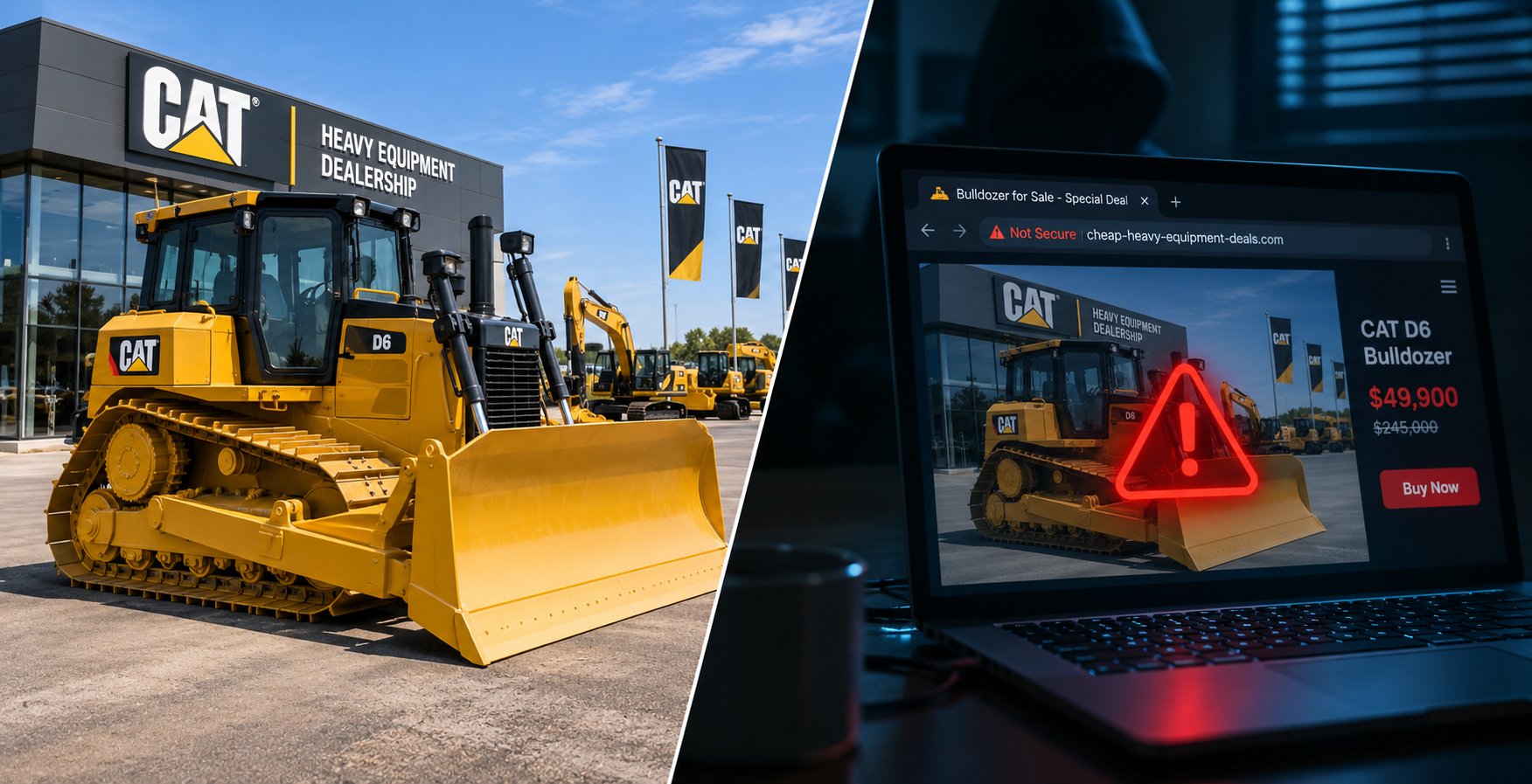
- Listings with stock photos only - If the seller can't provide timestamped photos of the actual machine showing the serial number plate, walk away. Scammers frequently copy photos from legitimate dealer websites and rotate them across different listings with different contact information.
- Prices dramatically below market value - A bulldozer listed at 40% below comparable units isn't a bargain - it's bait. Legitimate dealers typically price within 5-15% of market comparables. If the discount can't be explained by condition, age, or a documented liquidation event, the listing deserves deep skepticism.
- Refusal to allow in-person or video inspection - Claims of being "out of town," "traveling," or unable to schedule a walkthrough are classic deflection tactics. A seller who physically possesses the equipment can show it to you - period.
- Reluctance to get on the phone - Many scammers operate overseas and will find every excuse to avoid a phone call or will keep conversations extremely limited. They may claim medical reasons for not being able to talk. Insist on a live conversation as a baseline trust check.
- Urgency manufactured by the seller - "I have another buyer ready to wire today" or "This price is only good until Friday" are pressure tactics designed to short-circuit your due diligence. Legitimate sellers aren't offended by thorough buyers. Scammers are threatened by them.
Avoiding Common Scams in Equipment Trading
Equipment fraud isn't random. It follows repeatable patterns that, once you recognize them, become much easier to sidestep. Here are the most prevalent scam types active in the heavy equipment market:
Phantom listings. The equipment doesn't exist. The seller posts an attractive listing - maybe a low-hour Ditch Witch directional drill or a late-model skid steer for sale at a tempting price - using photos stolen from a legitimate dealer's site. When a buyer wires payment, the seller vanishes. The machine was never real. This is the most common and most damaging scam in online equipment trading, and it's why serial number verification and in-person inspection are non-negotiable steps.
Bait-and-switch on condition. The listing shows a clean, well-maintained machine. What arrives - or what you find when you show up for inspection - is a unit with hidden mechanical problems, undisclosed damage, or hour-meter readings that have been rolled back. Sellers in this category aren't always outright criminals; some are simply dishonest about known issues to avoid price reductions. Independent mechanical inspection catches these cases before money changes hands.
Title fraud on financed equipment. The seller doesn't actually own the machine free and clear. There's an outstanding loan, lease, or lien. They sell the equipment, pocket the money, and the lender eventually comes after the machine - which is now sitting on your job site. A UCC lien search through your state's Secretary of State website confirms clear title before you commit a dollar.
Fake escrow services. This one is particularly insidious. A seller agrees to use escrow for payment protection - then directs you to a fraudulent escrow website that mimics a legitimate service. You deposit funds into what looks like a secure holding account, but it's controlled by the scammer. Always verify escrow providers independently. Look up their registration, check for regulatory licensing, and never use an escrow service that the seller introduced without your own due diligence.
Fake dealer websites. Some scammers build professional-looking websites stocked with equipment listings - all fake. One telltale sign: run a domain lookup on their website. If the domain was registered within the past few months, that's a major warning sign for a business claiming years of experience. Modern website builders make it trivially easy for fraudsters to create convincing online presences.
Legitimate platforms like Machinery Trader and Equipment Trader do provide reporting mechanisms for fraudulent listings, and both invest in moderation to remove scam content. But no platform can catch everything in real time. Your own verification process is the most reliable filter you have.
Protecting Your Transaction
Recognizing scams is half the battle. The other half is structuring your transaction so that even if something unexpected happens, you have recourse.
These safeguards aren't optional extras - they're baseline protections that experienced equipment buyers treat as standard operating procedure:
- Use secure payment methods with full documentation - If you're paying by wire transfer, only do so after completing every verification step outlined above. Better yet, use a legitimate escrow service that holds funds until you've confirmed receipt and condition of the equipment. Credit cards offer chargeback protection but are rarely accepted for high-value equipment purchases due to processing fees.
- Get a bill of sale that includes serial numbers - The bill of sale should list the machine's make, model, year, serial number, hour-meter reading at the time of sale, purchase price, and the legal names and signatures of both buyer and seller. This document is your proof of ownership and your legal foundation if disputes arise.
- Verify clear title before releasing any payment - A UCC lien search confirms no outstanding financial claims exist against the equipment. Don't rely on the seller's assurance - verify it yourself through your state's filing office. This step is especially critical for high-value machines where outstanding loan balances can exceed tens of thousands of dollars.
- Consider hiring a third-party inspection service - For purchases above $25,000 - or any amount that would hurt to lose - the cost of hiring a professional inspector ($200-500) is negligible compared to the risk of buying equipment with concealed mechanical problems. If you can't physically visit the equipment, many inspection services operate nationally and can provide detailed condition reports with photos and video.
- Document every communication - Save emails, text messages, voicemails, and screenshots of listings. If you conduct a video inspection, record it with the seller's permission. This documentation trail becomes invaluable if you need to file a fraud complaint, pursue legal action, or dispute a payment through your bank.
No online platform - no matter how reputable - replaces the need for independent due diligence. The platform connects you to the seller. Protecting the transaction is your responsibility.
If the worst does happen and you discover you've been defrauded, act immediately. Contact your bank to attempt a wire recall, file a complaint with the Federal Trade Commission, report the fraud to the FBI's Internet Crime Complaint Center (IC3), and preserve every piece of documentation. Early action improves recovery odds - though prevention through thorough verification is always the stronger strategy.
Trust and safety aren't abstract concepts when you're wiring $40,000 for a machine you've only seen in photographs. They're the practical foundation every equipment decision should be built on. And once that foundation is solid, the next logical question becomes: given everything you now know about platforms, fees, and risks, which sourcing channel actually fits your specific situation?
Choosing the Right Platform for Your Situation
You've seen how the platforms work, how fees shape what you see, and how to protect yourself from fraud. But here's the question that actually matters when you're staring at a project timeline and a capital budget: which platform should you use right now, for this specific purchase?
The honest answer is that no single platform fits every scenario. A fleet manager rotating a dozen skid loaders out of inventory faces a completely different decision than a landscaper hunting for one compact machine under $30,000. Someone searching for a dump truck for sale to support a paving contract has different priorities than a dealer looking to liquidate surplus utility vehicles like a John Deere Gator or a Mahindra Roxor side-by-side. The equipment, the urgency, the budget, and your own buying style all drive the choice - and trying to force every situation through the same channel wastes time and often costs money.
Rather than recommending one platform over another, here's a framework that matches common buying scenarios to the sourcing channel most likely to deliver results.
Matching Your Equipment Needs to the Right Platform
Think about your situation first, then pick the platform - not the other way around. The table below maps real-world buyer scenarios to the platform type that tends to serve each one best, along with the reasoning behind each match.
| Buyer Scenario | Best Platform Type | Why |
|---|---|---|
| Sourcing a single used excavator or skid loader | Listing marketplace (Machinery Trader, Equipment Trader) | Browse at your own pace, compare specs across dozens of dealers, negotiate directly without bidding pressure |
| Liquidating an entire fleet quickly | Auction platform (Ritchie Bros., AuctionTime) | Guaranteed sale dates move all units within a defined window; buyer competition can maximize returns on popular machines |
| Comparing prices across dealers nationwide | Multi-platform search (listing sites + auction results) | Cross-referencing active listings with recent auction hammer prices gives the most accurate picture of current fair market value |
| Buying manufacturer-certified equipment with warranty | Dealer-direct marketplace (Cat Used, MachineFinder) | OEM-backed channels offer inspection reports, certified condition ratings, and post-sale support that third-party listings typically lack |
| Browsing used construction equipment with direct quote capability | Supplier websites + listing marketplaces | Platforms and individual equipment suppliers each offer distinct advantages. Buyers exploring used excavators, loaders, bulldozers, or graders can request purchase quotes directly from suppliers like JIUHONG to compare alongside marketplace listings - adding another data point to the pricing picture |
| Finding a niche or hard-to-source machine | Multiple channels simultaneously | Specialty equipment rarely appears on a single platform; casting a wide net across listing sites, auction calendars, and direct supplier inventories increases your odds significantly |
Notice a pattern? The more specific or urgent your need, the more important it becomes to look beyond a single channel. A contractor who only checks Machinery Trader might miss a better-priced unit on Equipment Trader, a below-market auction result on AuctionTime, or a competitive quote from a direct supplier. Experienced buyers treat each source as one input in a broader pricing and availability analysis - not as the only answer.
Factors That Should Drive Your Decision
Before you commit to any platform, run your situation through these decision filters. They'll clarify which channel deserves most of your time - and which ones you can skip for this particular purchase.
- Equipment category and specialization - Are you looking for mainstream construction equipment like excavators and loaders, or something more specialized like forestry processors or oilfield rigs? Mainstream machines appear everywhere. Niche categories are better served by specialized platforms (CraneTrader for cranes, ForestryTrader for logging equipment) or direct supplier outreach.
- Budget and financing needs - If you need third-party financing, dealer-direct platforms and listing marketplaces with financing partner integrations streamline the process. Auction platforms often require payment within a tight window - sometimes 48 to 72 hours - which can create problems if your financing isn't pre-approved.
- Geographic proximity to sellers - Buying locally eliminates shipping costs and lets you inspect in person before committing. If you're searching for a dump truck for sale or a compact loader within driving distance, filtering by location on a listing marketplace is the fastest path. For buyers willing to ship, the geographic net widens considerably - but so do logistics costs and inspection challenges.
- Urgency of acquisition - Tight project deadlines favor auction platforms with guaranteed sale dates or dealer-direct channels with ready-to-ship inventory. If you have time on your side, listing marketplaces reward patience with better negotiation leverage on aged inventory.
- Comfort level with auction-style bidding vs. fixed-price negotiation - Auctions introduce pricing uncertainty. You might land a great deal - or you might get caught in a bidding war that pushes the final price above what you'd have paid through private negotiation. Fixed-price listings reduce that risk by letting you negotiate from a known starting point, which suits buyers who need predictable budgeting and controlled margins.
No single factor should dominate the decision. A buyer with a generous timeline but a tight budget might prioritize listing marketplaces for negotiation flexibility. A buyer who needs three machines next month and has financing in place might split the search between auction lots and dealer inventory to cover all bases. The point is to match the platform's mechanics to your constraints - not to assume one channel is universally superior.
When to Use Multiple Platforms Simultaneously
Here's what separates casual buyers from seasoned equipment professionals: the best buyers almost never rely on a single platform. They run parallel searches across listing marketplaces, auction calendars, and direct supplier channels - then use the combined data to make sharper decisions.
The strategy works like this. Start with a broad search on Machinery Trader and Equipment Trader to establish a baseline for asking prices on the machine type you need. Then check recent auction results on Ritchie Bros. or AuctionTime for the same make, model, and year range. Auction hammer prices - especially from unreserved sales - reveal what buyers are actually paying, not just what sellers are asking. The gap between those two numbers is your negotiation window on listing marketplaces.
Layer in direct supplier outreach for additional comparison points. Contractors and fleet managers comparing used construction equipment - excavators, loaders, bulldozers, graders - can request quotes from dedicated suppliers like JIUHONG alongside their marketplace research. This adds a sourcing channel that operates independently from the major listing platforms, sometimes surfacing equipment or pricing that wouldn't appear in a standard marketplace search.
Dealer-direct sites like Cat Used and MachineFinder round out the picture, especially when certified condition and post-sale support matter to your decision. As Ironmart Online's equipment sourcing guide notes, comparing across classified marketplaces, auction platforms, and dealer networks simultaneously gives you the broadest view of what's available and what constitutes a fair price.
The multi-platform approach does require more upfront time. But on a $50,000 or $100,000 equipment purchase, even a 5-10% improvement in pricing justifies hours of additional research. You're not just buying a machine - you're building market intelligence that informs every equipment decision you make going forward.
Choosing the right platform - or combination of platforms - gives you the tactical advantage. But tactics only work when they're guided by a clear strategy. Whether you're a first-time buyer trying to avoid rookie mistakes or a fleet manager optimizing a multi-channel sourcing operation, the final piece is knowing how to pull all of these insights together into a repeatable process.
Smart Next Steps for Equipment Buyers and Sellers
You've now seen the full picture - how platforms like Machinery Trader operate behind the scenes, where fees hide, how scams unfold, and which sourcing channels fit which scenarios. That's a lot of ground to cover, and the temptation at this point is to bookmark the article and move on. Don't. The value of everything above only materializes when you act on it. So let's distill the key takeaways into clear, role-specific guidance you can apply the next time you're sourcing or selling heavy equipment.
For First-Time Equipment Buyers
If this is your first time purchasing through an online marketplace, the sheer volume of listings, platform options, and industry jargon can feel overwhelming. Simplify the process by focusing on four non-negotiable principles:
- Learn the platform basics before you spend a dollar - Understand the difference between listing marketplaces and auction sites. Know that featured listings reflect seller budgets, not machine quality. Recognize that platforms like Machinery Trader connect you to sellers but don't process payments or guarantee condition. These aren't minor details - they shape every interaction you'll have.
- Compare across multiple marketplaces - Never base a purchasing decision on a single platform's listings. Cross-reference asking prices on Machinery Trader with Equipment Trader inventory, recent auction results on AuctionTime or PurpleWave, and dealer-direct sites. The gap between asking prices and actual hammer prices reveals your true negotiation range.
- Prioritize inspection and seller verification above everything else - Photos lie. Descriptions omit. Hour meters get rolled back. An independent mechanical inspection and a basic seller background check cost a fraction of what a bad purchase costs. If a seller resists transparency, that resistance is the answer.
- Never rush a high-value transaction - Manufactured urgency is the scammer's favorite weapon and the impatient buyer's biggest vulnerability. A legitimate machine listed today will still be available next week. Your due diligence checklist doesn't have a fast-forward button - and it shouldn't.
Think of your first equipment purchase as a learning investment. The research habits and verification instincts you build now become second nature on every deal that follows. The goal isn't just to buy a machine - it's to build a repeatable process that protects you every time.
For Fleet Managers and Equipment Dealers
If you're managing a fleet or running a dealership, the stakes are higher and the strategy needs to match. You're not buying one machine - you're optimizing an ongoing procurement pipeline where every sourcing decision cascades into maintenance budgets, project timelines, and resale values. Fleet procurement experts at Fleetio emphasize that the purchase price is the smallest number you'll deal with over a machine's life - fuel, maintenance, insurance, downtime, and resale value account for the majority of total spend.
Here's how to sharpen your approach:
- Use listing platforms for targeted inventory sourcing - Machinery Trader and Equipment Trader excel when you need a specific machine type, year range, or hour count. Set saved searches with alert notifications so you're among the first to see new listings matching your criteria. Dealers who respond fast to fresh inventory close deals before competitors even pick up the phone.
- Monitor auction results for market pricing intelligence - Even if you never bid at auction, platforms like AuctionTime and PurpleWave publish realized sale prices that serve as real-time market benchmarks. Tracking hammer prices on equipment you buy and sell regularly gives you data-backed leverage in every negotiation - whether you're acquiring or liquidating.
- Build relationships with reliable dealers and suppliers - Transactional buying works for one-off purchases. Strategic sourcing requires ongoing relationships. Identify dealers who consistently deliver on condition claims, and cultivate direct supplier connections for equipment categories you rotate frequently. Fleet managers comparing used construction equipment - excavators, loaders, bulldozers, and graders - can streamline their research by requesting quotes from dedicated suppliers like JIUHONG alongside browsing major listing platforms. Adding a direct supplier channel reduces dependence on any single marketplace and often surfaces pricing or availability that doesn't appear in standard searches.
- Diversify sourcing channels deliberately - The rising demand for used and refurbished equipment means competition for quality machines intensifies across every platform. A three-pronged approach - listing marketplaces for targeted searches, auction platforms for opportunistic buys, and direct supplier relationships for consistent access - hedges against inventory shortages in any single channel.
- Track total cost of ownership, not just acquisition cost - Calculate TCO across depreciation, fuel, maintenance, insurance, and projected resale value before comparing candidates. Two machines with identical asking prices can differ by tens of thousands over a five-year holding period. As Fleetio's procurement framework notes, the only way to know when a vehicle or machine should be replaced is to have the operational data - repair frequency, cost per hour, and downtime trends - feeding your next procurement cycle.
For dealers on the selling side, the same multi-platform logic applies in reverse. Listing inventory across Machinery Trader, Equipment Trader, and auction channels simultaneously maximizes buyer exposure. Subscription analytics dashboards reveal which platforms generate the highest-quality leads for your specific equipment categories, letting you allocate marketing budget where it actually converts.
Making Smarter Equipment Decisions
Whether you're a first-time buyer with a grapple attachment on your wish list or a fleet manager cycling through dozens of machines a year, the underlying principle is the same: informed buyers consistently outperform reactive ones.
The best machinery trading outcomes come from buyers who understand the platform ecosystem, perform thorough due diligence, and compare options across multiple channels before committing. No single listing, no single platform, and no single seller should ever represent your entire market view.
The digital machinery trading landscape continues to evolve in ways that favor prepared buyers. Pricing transparency improves as more auction results become publicly searchable. Platform search tools grow more sophisticated with AI-driven recommendations and personalized alerts. Cross-border equipment sourcing - once reserved for large operations with international contacts - becomes accessible to smaller contractors through platforms that handle inspection verification and logistics coordination.
At the same time, the risks evolve too. Scam tactics grow more convincing. Listing volumes expand faster than platform moderation can keep pace. And the gap between a well-researched purchase and a costly mistake remains as wide as it's ever been.
The equipment you buy shapes every project you take on - its profitability, its timeline, its safety profile. Treat the sourcing process with the same rigor you'd apply to the work itself. Learn the platforms. Verify the sellers. Run the numbers across multiple channels. And never let urgency override diligence. The machinery trading market rewards patience, preparation, and a healthy skepticism that asks one more question before signing on the dotted line.
Frequently Asked Questions About Machinery Trader
1. Is Machinery Trader the same as Equipment Trader?
No. Machinery Trader is owned by Sandhills Global, while Equipment Trader belongs to Trader Interactive. They operate on separate technology platforms with different inventory pools, seller agreements, and subscription costs. A dealer listing on one does not automatically appear on the other, so buyers should search both independently to get a complete picture of available equipment and fair market pricing.
2. Does Machinery Trader charge buyers any fees?
Machinery Trader does not charge buyers to browse listings, use search filters, or contact sellers. The platform generates revenue through dealer subscription packages and featured listing upgrades paid by sellers. Buyers can search, compare equipment, and submit inquiries entirely for free. However, any transaction costs such as shipping, inspection fees, or escrow services are arranged separately between the buyer and seller.
3. How do I avoid scams when buying equipment on Machinery Trader?
Start by verifying the seller's business registration and physical address through your state's Secretary of State database. Request the equipment's serial number early and confirm it with the manufacturer. Arrange an independent mechanical inspection before sending payment, and run a UCC lien search to confirm clear title. Red flags include pressure to pay via untraceable methods, stock photos instead of timestamped images, prices far below market value, and refusal to allow in-person or video inspections.
4. What types of equipment can I find on Machinery Trader?
Machinery Trader lists a wide range of heavy construction and earthmoving equipment including excavators, skid steers, wheel loaders, bulldozers, motor graders, telehandlers, cranes, concrete mixers, trenchers, and asphalt paving machines. The platform also cross-posts listings from Sandhills Global sister sites like CraneTrader and ForestryTrader, so buyers may encounter specialized categories such as forestry equipment and aerial lifts alongside standard construction machinery.
5. Should I use Machinery Trader or an auction site like Ritchie Bros?
It depends on your buying situation. Machinery Trader is a listing marketplace where you browse posted prices and negotiate directly with sellers at your own pace, making it ideal for targeted searches with specific specs and budget requirements. Auction platforms like Ritchie Bros use competitive bidding with set sale dates, which suits buyers seeking potential bargains or sellers needing guaranteed liquidation timelines. Many experienced buyers use both simultaneously, cross-referencing auction hammer prices with marketplace asking prices to identify fair market value before committing.