

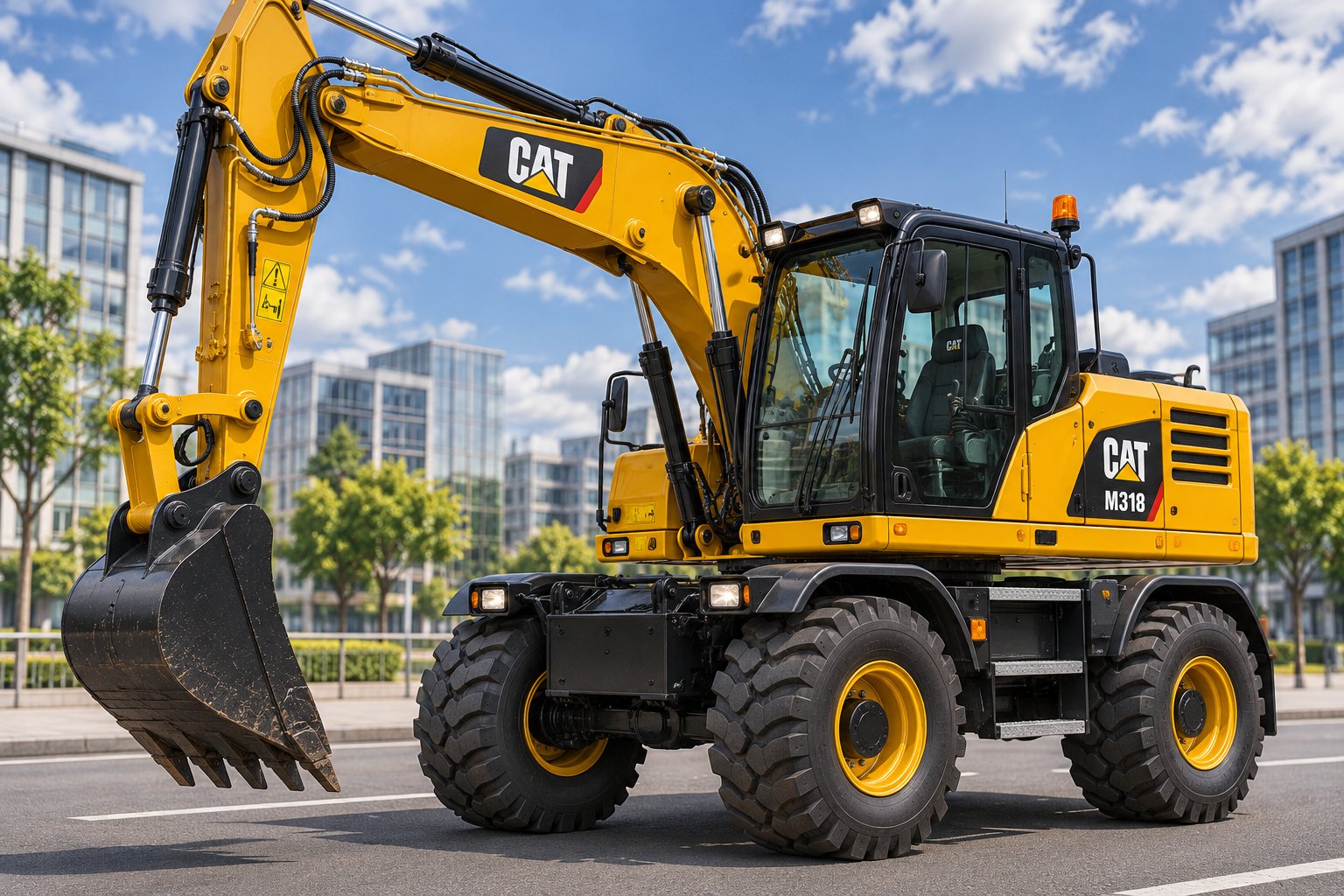
What Is a Cat Wheeled Excavator and How Does It Work
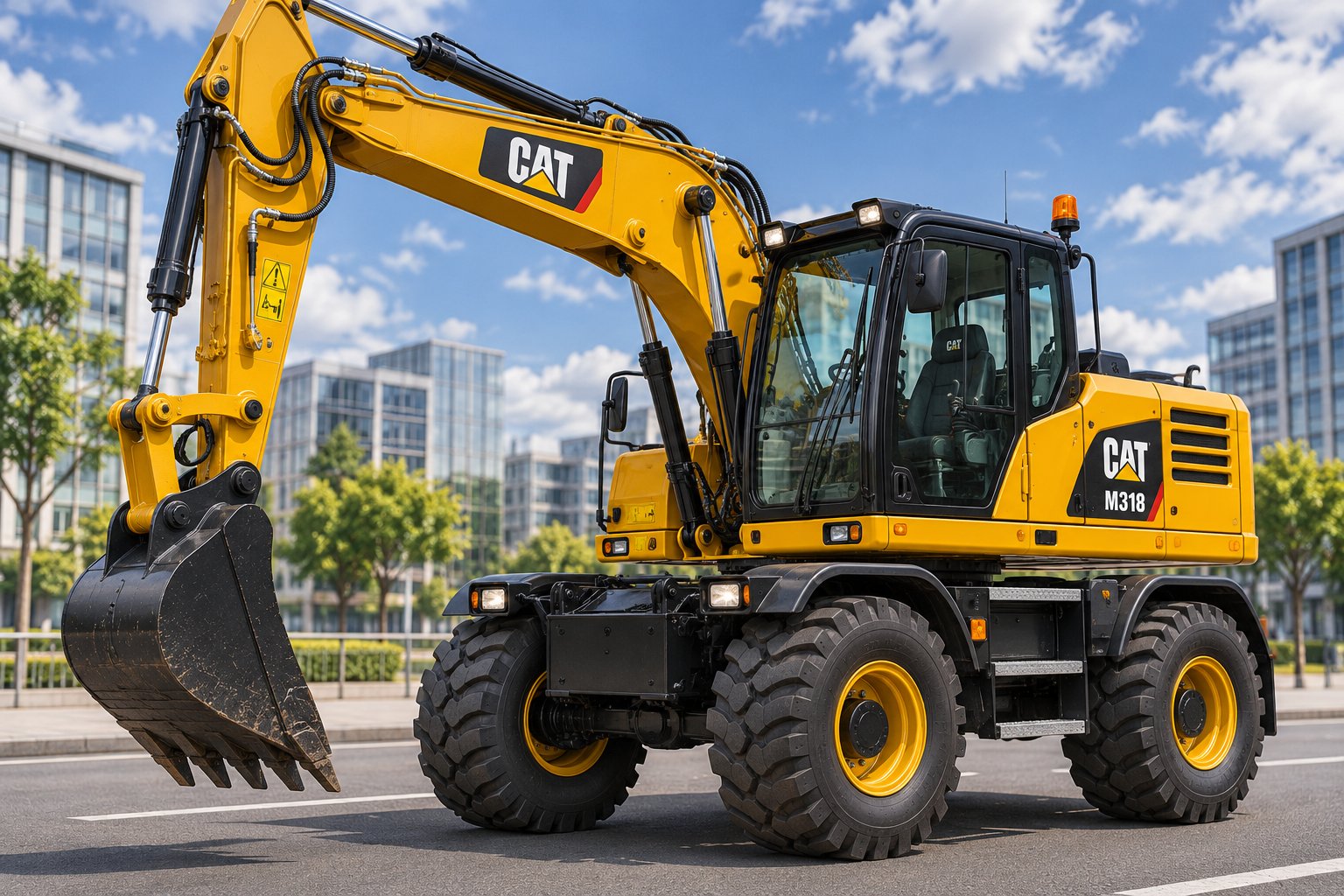
Picture a standard excavator — the kind you see crawling across muddy construction sites on heavy steel tracks. A Cat wheeled excavator takes that same familiar 360-degree upper structure, the boom, the stick, the hydraulic bucket, and plants it on a road-ready undercarriage fitted with pneumatic or solid rubber tires and steerable axles. The result is a Caterpillar excavator that can drive itself down a paved street at road-legal speeds without leaving a single scratch on the surface.
Defining the Cat Wheeled Excavator
A cat wheeled excavator is a rubber-tired hydraulic excavator manufactured by Caterpillar that uses wheels and axles instead of steel tracks, allowing it to travel on paved roads at speeds up to roughly 22 mph while delivering the same digging and lifting functions as a conventional crawler excavator. Caterpillar identifies its wheeled excavator models with an 'M' prefix — think M314, M316, M318, and M320. The numeric portion roughly corresponds to the machine's metric-ton weight class, so an M318 operates in the 18-tonne range. This naming convention makes it easy to distinguish a cat wheel excavator from its tracked counterpart at a glance: if the model number starts with "M3," you're looking at a wheeled machine.
The mechanical distinction goes deeper than just swapping tracks for tires. Tracked excavators, sometimes called crawlers, distribute their weight across a wide, continuous track system that grips soft or uneven ground exceptionally well. A wheeled configuration trades that off-road flotation for something entirely different — mobility on improved surfaces. Rubber tires roll smoothly over asphalt, concrete, and finished landscapes, and the axle-based undercarriage supports steering modes like two-wheel, four-wheel, and even crab steering for tight maneuvering in confined urban spaces.
Why Caterpillar Builds Excavators on Wheels
Imagine your crew needs to repair water mains at six different locations across town in a single day. With a traditional tracked excavator, every move between sites requires a lowboy trailer, a CDL-qualified driver, and significant downtime for loading and unloading. A wheeled excavator simply drives there. That self-propelled mobility is exactly the market need these machines fill — urban infrastructure projects, municipal utility work, road shoulder maintenance, and any application where frequent repositioning on paved or improved surfaces is part of the daily routine.
A wheeled excavator combines the digging power of a conventional excavator with the road mobility of a wheeled loader, eliminating trailer logistics for short-distance moves and protecting finished surfaces from damage.
Stability is a fair concern when you move from tracks to tires. Caterpillar addresses this with outrigger and dozer-blade stabilizer systems that deploy when the machine is digging. As Cat Rentals notes, wheel excavators can add stabilizers to match the performance of tracked models. Once those stabilizers are down, you'll find that breakout force and lifting capacity rival a similarly sized crawler — with the added bonus of driving to the next dig spot under your own power.
This article walks through the full Cat wheeled excavator lineup, compares wheeled and tracked configurations head to head, and builds a practical framework for choosing the right model and weight class — so you invest in the machine that actually matches your work, not just the one with the most impressive spec sheet.
Wheeled vs Tracked Excavators and When Each Excels
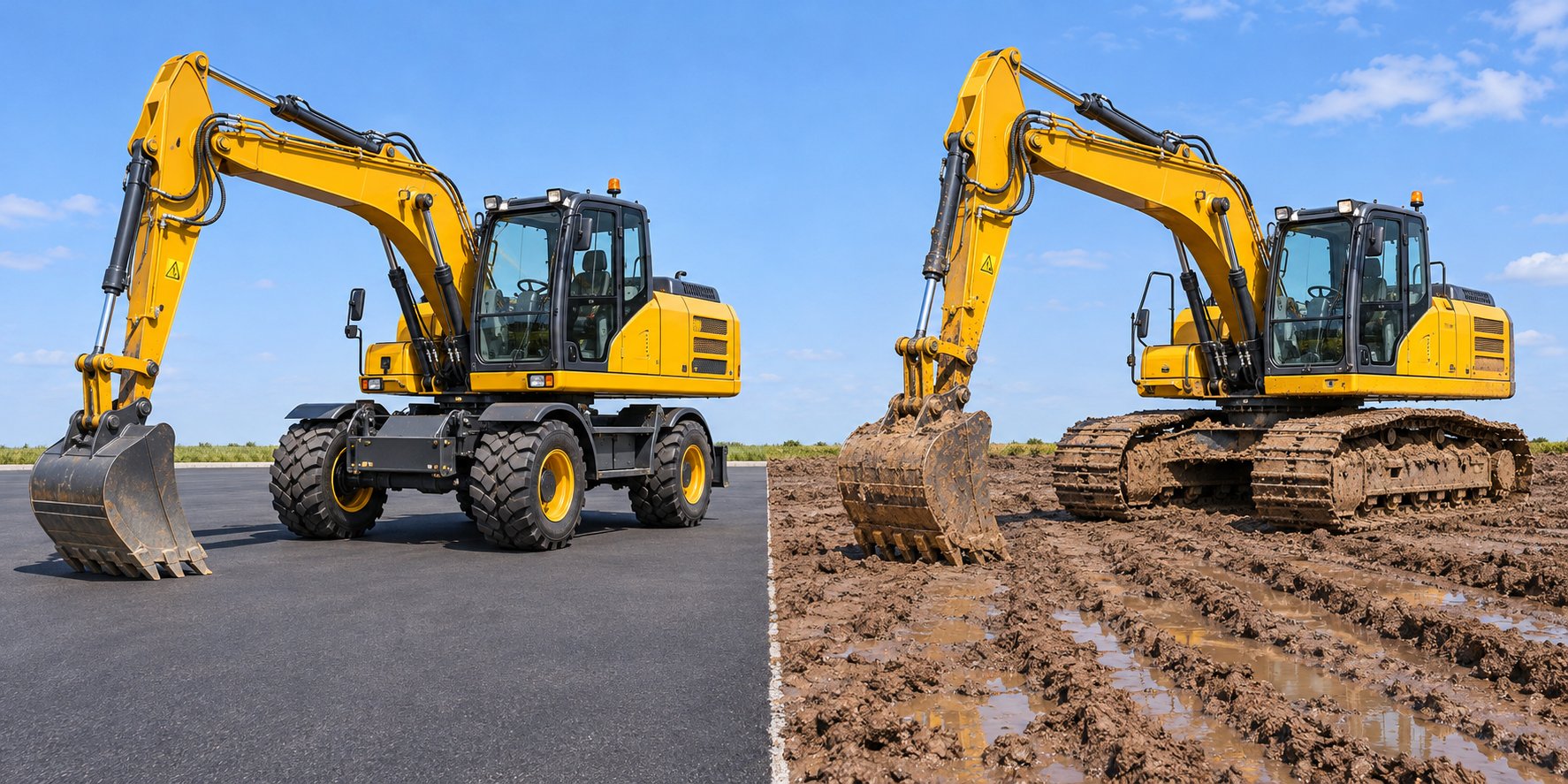
Choosing between wheels and tracks is not a matter of preference — it is a matter of matching the undercarriage to the work environment. Both configurations share the same 360-degree upper structure, the same boom-and-stick geometry, and many of the same hydraulic components. The real divergence happens below the slew ring, and that divergence ripples outward into transport logistics, surface impact, ground conditions, and total project cost. Here is how those differences play out in practical terms across the Caterpillar lineup.
Mobility and Transport Advantages
Wheeled excavators can self-propel between job sites on public roads at speeds typically up to 35 km/h — roughly 22 mph. Some models, like the Cat M319, reach travel speeds of 21.7 mph with full roading packages that include lights, mirrors, fenders, and license-plate brackets. That speed might sound modest compared to a pickup truck, but consider what it replaces: a lowboy trailer, a CDL-qualified driver, the fuel to haul a 40,000-pound crawler, and the loading and unloading time at both ends of the trip.
For a crew handling utility repairs at scattered locations across a municipality, those trailer moves can consume hours of billable time every week. A wheeled machine simply retracts its boom for visibility and drives to the next dig point. Tracked machines, by contrast, require flatbed transport for any road travel. Steel tracks chew through asphalt, violate road-use regulations, and crawl at walking speed — typically 3 to 4 mph. Even a short move across town becomes a logistical event.
This self-propelled mobility is the single biggest cost advantage of wheeled excavators, and it compounds over time. The fewer trailer moves your fleet requires, the more hours your operators spend actually digging.
Surface Protection and Terrain Trade-Offs
Rubber tires leave finished surfaces intact. Asphalt, concrete, pavers, landscaped turf — none of these suffer the gouging and scarring that steel tracks inflict. For municipal crews working in residential neighborhoods or contractors operating around completed infrastructure, this is not a minor detail. Post-job surface restoration adds real cost and delays project handoffs. Wheeled excavators eliminate that line item almost entirely.
The trade-off? Soft ground. Tracked machines distribute their weight across a much larger contact area, which lowers ground pressure and prevents the machine from sinking into mud, sand, or loose fill. A wheel Caterpillar excavator on pneumatic tires concentrates its weight on four relatively small contact patches. On a saturated clay site or a steep slope, that concentrated pressure means the machine can bog down or lose lateral stability.
Rocky terrain presents another consideration. Tracks shrug off sharp stone and uneven rubble, while tires risk punctures. If your primary work environment involves unimproved ground — raw excavation sites, rural pipeline corridors, or heavily sloped terrain — a tracked configuration remains the stronger choice. Wheeled excavators thrive where the ground is firm, flat, or improved.
Stability and Digging Performance Differences
A common concern with wheeled excavators is stability during heavy digging. Tires sit higher than tracks, which raises the machine's center of gravity. Does that mean you sacrifice breakout force or lifting capacity? Not necessarily.
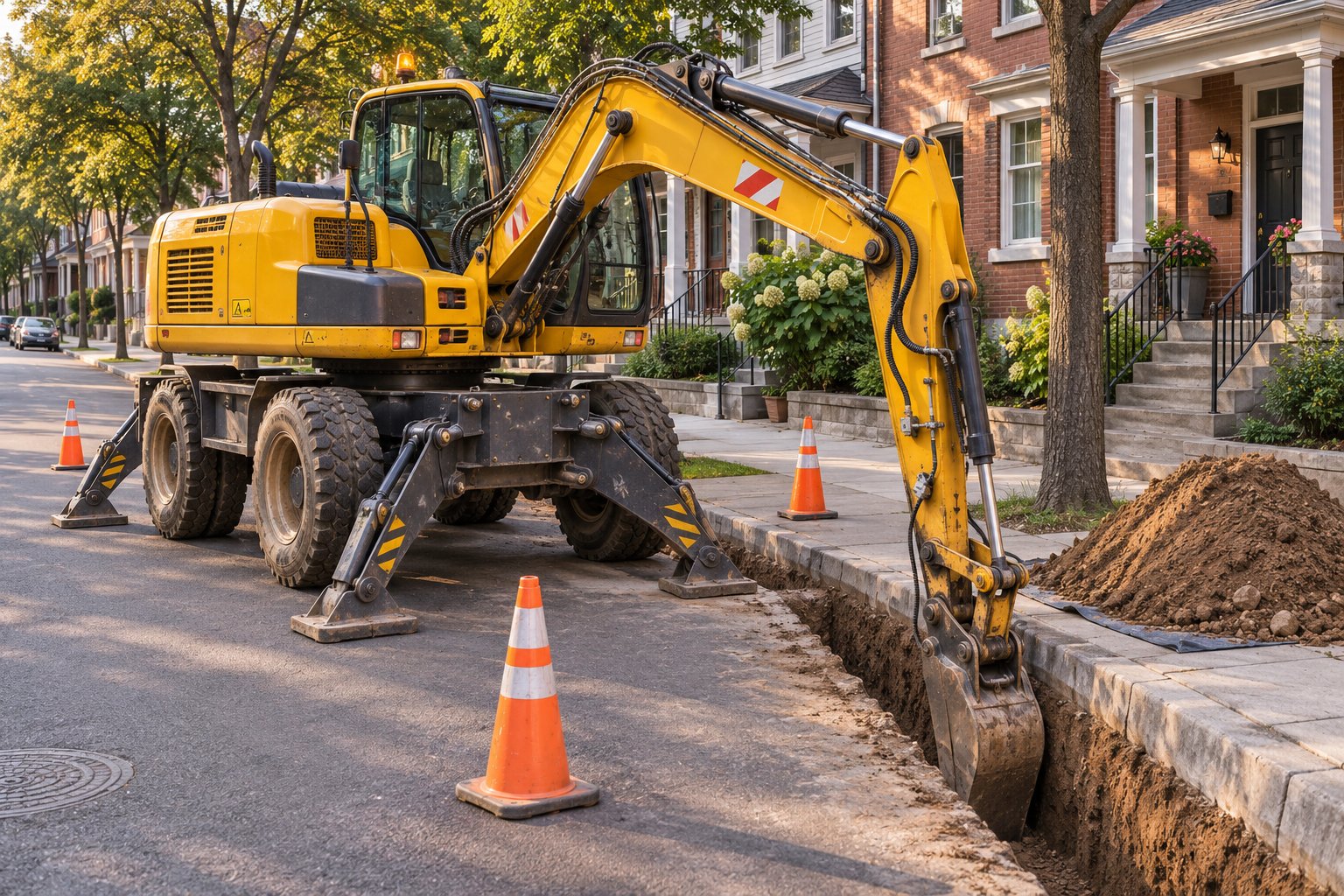
Cat wheeled excavators compensate with outrigger and dozer-blade stabilizer systems. When you deploy the outriggers — typically two at the rear, with a front dozer blade lowered to the ground — the machine effectively plants itself. The tires partially or fully unload, and the excavator digs from a rigid, wide-stance platform. As industry experts note, a wheeled model with outriggers deployed typically matches the exact breakout force, digging depth, and lifting capacity of a tracked counterpart in the same weight class.
Some operators also choose between four-tire and eight-tire (dual-tire) configurations. A single-tire setup per axle keeps the machine narrower for tight urban lanes, while dual tires on each side widen the footprint for better flotation, traction, and inherent stability — even before outriggers come into play.
The practical takeaway: when stabilizers are down, you are not giving up digging performance by choosing wheels. You are only giving up the ability to dig effectively on soft or uneven ground where tracks would keep the machine stable without auxiliary support.
| Factor | Wheeled Excavator | Tracked Excavator |
|---|---|---|
| Road Travel Speed | Up to 22 mph (35 km/h) | 3-4 mph; requires flatbed trailer for road moves |
| Surface Damage Risk | Minimal — rubber tires protect pavement and turf | High — steel tracks gouge asphalt and landscaping |
| Soft-Ground Performance | Limited; tires concentrate weight on small contact patches | Excellent; tracks distribute weight over a large footprint |
| Transport Cost Between Sites | Low — self-propels on public roads | High — lowboy trailer, CDL driver, load/unload time |
| Ground Pressure | Higher per contact point | Lower; spread across full track length |
| Slope and Uneven Terrain Stability | Moderate; depends on stabilizer deployment | Strong; low center of gravity and wide track base |
| Typical Use Environment | Urban streets, paved yards, road shoulders, finished surfaces | Raw excavation sites, muddy ground, steep grades, rural corridors |
Every entry in that table points back to one core principle: wheeled excavators dominate on improved surfaces where mobility matters, and tracked machines dominate on raw ground where flotation and traction matter. Many fleets carry both configurations for exactly this reason. The real question is which type of ground your crew spends the majority of its hours working on — and that answer leads directly to the specific model and weight class best suited for the job.
Cat Wheeled Excavator Model Lineup Explained
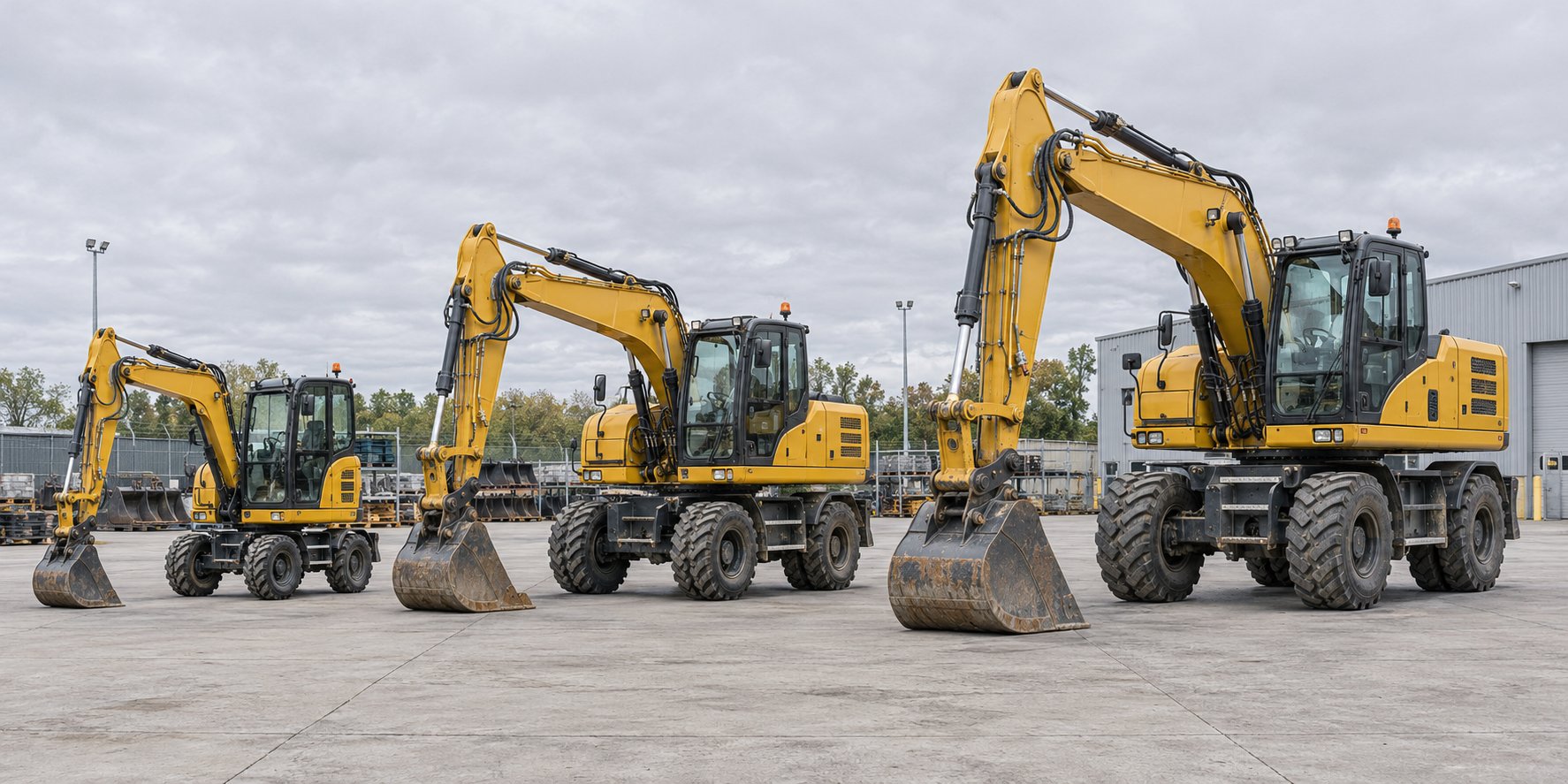
Knowing that wheels beat tracks on improved surfaces is only half the decision. The other half is picking the right size. Caterpillar's current M-series wheeled excavator lineup spans five models — M314, M315, M316, M318, and M320 — and each one occupies a distinct weight class with different reach, dig depth, and attachment capacity. Choosing too small leaves you short on power; choosing too large burns money on transport permits and fuel you didn't need to spend. Here's how the range breaks down in practical, job-site terms.
Compact and Mid-Range Models — M314 Through M316
The M314, M315, and M316 sit at the lighter end of the lineup, targeting urban utility work, landscaping on finished surfaces, and light commercial excavation. If you picture a crew trenching for fiber-optic cable through a suburban neighborhood or swapping out a section of sidewalk, these are the machines doing that work.
What does their lower operating weight mean in practice? Several things. First, lighter machines face fewer road-travel permitting hurdles. Many municipalities set axle-weight thresholds for self-propelled equipment on public roads, and a machine in the 14-to-16-tonne range typically clears those limits without special permits. Second, a smaller footprint lets operators work in tighter spaces — narrow residential streets, parking lots, or utility easements where a larger excavator simply wouldn't fit. Third, lighter machines pair well with lighter-duty attachments like small buckets, augers, and compact hydraulic breakers, keeping total system weight manageable.
The M314 anchors the compact end, operating in roughly the 14-tonne weight class. It is the logical starting point for contractors who need full excavator capability but work primarily in confined urban environments. The M315 steps up slightly in operating weight and hydraulic output, bridging the gap between compact and mid-range applications.
The M316 is where the mid-range truly begins. Powered by a Cat C4.4 engine producing 148 hp, this model carries a maximum operating weight of approximately 36,990 lb (around 16.8 tonnes). It delivers a maximum dig depth of 19.4 ft and a ground-level reach of 30.2 ft with its variable adjustable boom. Travel speed tops out at 21.7 mph — fast enough to self-propel between job sites without a trailer. Standard features include all-wheel drive, a 92.5-gallon fuel tank, and a 5,732 lb counterweight, giving you a sense of how much stability Cat engineers have built into this mid-range platform. For many municipal fleets and utility contractors, the M316 hits the sweet spot between capability and maneuverability.
Larger Models — M318 and M320
Step up to the M318 and M320, and you're entering territory designed for heavier infrastructure projects — road construction, sewer and water main installation, deep utility trenching, and material-handling applications that demand greater reach and bucket capacity.
The M318 operates in the 18-tonne class. That additional weight translates directly into deeper dig depth, longer reach, and higher lifting capacity compared to the mid-range models. When a project calls for excavating below existing utility lines at depths beyond what an M316 can manage, or when you need to swing heavier loads over a trench wall, the M318 provides that extra margin without jumping to the largest machine in the range.
The M320 tops out the current lineup. Also powered by a Cat C4.4 engine, it travels at speeds up to 35 km/h (22 mph) and features an extended wheelbase that improves stability during both travel and digging. Caterpillar designed the M320 with an auto axle lock that engages automatically when the travel pedal is in neutral and speed nears zero — a small but meaningful safety refinement during frequent stop-and-dig cycles. The company reports up to 17 percent lower maintenance costs compared to its predecessor, which matters significantly over a multi-year ownership period. Attachment commonality with the tracked Cat 320 excavator is another practical advantage: if your fleet already runs 320-series crawlers, many of the same buckets, hammers, and grapples bolt right on.
For contractors handling material in scrap yards, recycling centers, or lumber operations — where a machine fitted with a grapple or sorting grab repositions constantly on hard surfaces — the M320's combination of lifting power and caterpillar wheels makes it a natural fit.
Understanding the M-Series Designation
Caterpillar's naming convention is simpler than it looks. The "M" prefix identifies the machine as a wheeled (mobile) excavator rather than a tracked crawler. The numeric portion that follows corresponds roughly to the metric-ton weight class. An M314 operates in the 14-tonne range, an M318 in the 18-tonne range, and so on. This pattern mirrors how Cat names its tracked excavators — a 320 crawler sits in the 20-tonne class — so fleet managers already familiar with caterpillar excavator numbering can estimate a wheeled model's size at a glance.
Keep in mind that actual operating weight varies with configuration. Tire selection (single vs. dual), counterweight options, boom and stick length, and installed attachments all shift the final number. The model designation gives you a reliable ballpark, but always confirm the specific configuration weight when evaluating road-travel legality or trailer requirements.
The table below summarizes the current M-series range, translating model numbers into approximate weight classes and the types of work each machine handles best. Whether you're browsing a Caterpillar excavator for sale listing or spec'ing a new unit through your dealer, this overview helps you narrow the field before diving into detailed specifications.
| Model | Approximate Weight Class | Typical Applications | Relative Size Category |
|---|---|---|---|
| M314 | ~14 tonnes | Urban utility trenching, landscaping, fiber-optic installation, light commercial work | Compact |
| M315 | ~15 tonnes | Municipal repairs, sidewalk reconstruction, small-diameter pipe work | Compact / Mid-Range |
| M316 | ~16.8 tonnes (36,990 lb max) | General utility, moderate-depth trenching, urban infrastructure, attachment versatility | Mid-Range |
| M318 | ~18 tonnes | Road construction, sewer/water main installation, deeper excavation, heavier attachments | Mid-Range / Heavy |
| M320 | ~20 tonnes | Heavy infrastructure, material handling (grapples, magnets), deep utility work, road maintenance | Heavy |
Notice the progression: as the model number climbs, so does the machine's reach, dig depth, bucket force, and attachment capacity. But bigger does not automatically mean better. A contractor running an M320 for shallow residential utility work is burning extra fuel, dealing with tighter road-permit margins, and paying more upfront — all without using the machine's full capability. The smarter move is matching the model to the work, and the work itself dictates which row in that table deserves your attention. That raises the next logical question: what specific job-site scenarios genuinely demand a wheeled excavator over any other machine type?
Best Applications for Wheeled Excavators on the Job Site
Specs and model numbers only matter when they connect to real work. A wheeled excavator earns its keep not because of what it is, but because of where and how it operates. In every scenario below, the common denominator is the same: the machine needs to dig, lift, or handle material — and then move to the next spot quickly, on a surface it cannot afford to tear up.
Urban Construction and Municipal Infrastructure
City utility projects are where wheeled diggers truly separate themselves from their tracked counterparts. Think about what a typical municipal workday looks like: a crew repairs a water main break on one block, replaces a sewer lateral two streets over, and finishes the afternoon trenching for fiber-optic conduit in a residential cul-de-sac. Each dig site is relatively small, but they are spread across a neighborhood connected by finished asphalt and concrete.
A tracked excavator would need a lowboy trailer for every move between those locations, chewing through hours of non-productive time. A wheeled excavator retracts its boom, drives to the next address at road speed, deploys its stabilizers, and starts digging — all without a single trailer hookup. The rubber tires roll across pavement, brick pavers, and curbside landscaping without leaving marks, which means no angry calls from the public works department about torn-up streets and no expensive surface-restoration change orders after the job wraps.
Sidewalk reconstruction is another natural fit. Contractors working in pedestrian-heavy downtown areas need a machine compact enough to operate alongside open storefronts yet powerful enough to break out old concrete and set new curb sections. A mid-range wheeled excavator handles that scope cleanly, and it repositions between sidewalk panels under its own power rather than shutting down a lane for trailer access.
Road Maintenance and Highway Shoulder Work
Imagine a drainage ditch running alongside a state highway, silted in after a season of heavy rain. A tracked machine would need to be hauled to the site on a flatbed, unloaded in a staging area, and then crawled slowly into position — requiring traffic-lane closures, flagging crews, and additional permits. A wheeled excavator simply drives along the highway shoulder under its own power, cleaning ditches, replacing culverts, and grading slopes as it goes.
This is not a hypothetical advantage. Departments of transportation across the United States rely on wheeled excavators for exactly this type of corridor maintenance. A Maine DOT project on Route 11 demonstrated the approach: a rubber-tired wheeled excavator performed ditch clean-out along the highway, staying on firm pavement while reaching into the drainage channel with its boom. The machine's ability to remain on the road surface — rather than driving into the soft, saturated shoulder — protected unstable terrain from further damage and kept the operator on stable ground.
Highway shoulder work also benefits from the wheeled excavator's relatively compact tail swing. Many current models feature reduced or near-zero tail swing, allowing the upper structure to rotate without swinging into an active traffic lane. That geometry means the machine can work in one lane while vehicles pass safely in the adjacent lane, reducing the scope of traffic-control setups and shortening the duration of lane closures.
Material Handling and Industrial Yards
Step off the public road and into a scrap yard, recycling center, or lumber operation, and you'll find wheeled excavators doing something that looks nothing like traditional digging. Fitted with orange-peel grapples, magnets, or sorting grabs, these machines spend their shifts picking, sorting, and loading material — then immediately repositioning to the next pile or truck on a hard, flat surface.
The constant repositioning is what makes wheels essential in these environments. A tracked machine crawling across a concrete yard floor grinds down both the surface and its own undercarriage components. A wheeled excavator rolls between stations quickly, with minimal wear on tires or pavement. In a busy scrap operation, that mobility difference translates directly into higher throughput — more loads sorted, more trucks filled, more revenue per shift.
Attachment versatility deepens the value. As industry sources note, matching the right grapple, magnet, or shear to the carrier machine is critical for maximizing scrap-processing profitability. A wheeled excavator in the 18-to-20-tonne class provides the hydraulic flow and lifting capacity to run full-size orange-peel grapples or magnet generators, while its wheeled undercarriage handles the relentless repositioning that material-handling work demands.
Additional Applications Where Wheels Win
The three scenarios above represent the highest-volume use cases, but wheeled excavators show up in a surprising range of other roles. The qualifying question is always the same: does the job require excavator-class digging or lifting power combined with frequent moves on an improved or sensitive surface?
- Emergency storm-debris removal — After severe weather, wheeled excavators can self-deploy to multiple locations along cleared roadways, removing downed trees and debris without waiting for trailer logistics during a crisis when every hour counts.
- Landscaping on finished surfaces — Parks, golf courses, and campus grounds with established hardscape and turf benefit from a machine that won't rut or scar the surface between work zones.
- Bridge and overpass maintenance — Wheeled excavators drive across bridge decks to reach work areas, avoiding the weight-concentration and surface-damage issues that tracks create on structural concrete.
- Rail-corridor work — Maintenance along rail lines often involves moving between grade crossings on paved access roads, and a wheeled excavator transitions smoothly from road travel to trackside excavation.
Every application on that list shares a single thread: the machine's value comes not just from what it digs, but from how quickly and cleanly it gets to the next dig. That dual capability — full excavator performance plus self-propelled road mobility — is what justifies the wheeled configuration over a tracked alternative.
Of course, raw capability only tells part of the story. The technology packed inside the cab and the electronic systems managing the hydraulics play an equally important role in how much productive work an operator actually extracts from each shift.
Smart Technology and Operator Comfort in a Cat Wheel Excavator
A wheeled excavator that reaches the job site quickly but leaves the operator guessing at grade or struggling with poor visibility wastes much of the time it saved on the road. Caterpillar builds its M-series machines with an onboard electronics suite and a cab environment designed to close that gap — turning raw machine capability into accurate, repeatable work output across a full shift. Here is what those systems actually do, stripped of marketing jargon, and why they matter to both the person in the seat and the fleet manager reviewing the numbers.
Cat Smart Machine Technology in Wheeled Excavators
Every current M-series wheeled excavator ships with an in-cab touchscreen monitor that serves as the central hub for multiple integrated technology features. You'll encounter three categories of onboard intelligence most often: grade guidance, payload estimation, and equipment-health monitoring.
Grade-assist guidance uses sensors on the boom, stick, and bucket to display the cutting edge's real-time position relative to a target grade on the touchscreen. Instead of an operator repeatedly stopping to check depth with a laser receiver or a grade rod, the system provides continuous visual feedback — showing exactly how many inches remain before the bucket hits the design elevation. The practical payoff is fewer passes, less over-excavation, and dramatically reduced rework. For a municipal crew trenching utility corridors across a neighborhood, that accuracy compounds across dozens of dig locations per week.
Payload estimation is another standard feature on many next-generation Cat excavators. The Cat Payload system calculates material weight on the go by using data from sensors that measure bucket position and hydraulic pressure. An easy-to-read display shows bucket and truck load weights while tracking load counts and material movements. Operators can tip off excess material on the last pass using real-time weight estimates — eliminating both underloading and overloading without ever leaving the cab. The system even functions with a wide array of work tool attachments, including buckets, orange-peel grapples, clamshell grapples, and sorting grapples, which is particularly relevant for material-handling applications in scrap yards and recycling facilities.
Equipment-health monitoring rounds out the technology package. The machine continuously tracks engine parameters, hydraulic pressures, fluid temperatures, and fault codes, then makes that data accessible both on the in-cab display and remotely through Cat's VisionLink fleet-management platform. Fleet managers can view machine hours, fuel consumption, idle time, and diagnostic alerts from a desktop or mobile device — without calling the operator or driving to the job site. When a maintenance interval approaches or an abnormal reading surfaces, the system flags it before a small issue escalates into an expensive repair.
Taken together, these three technology layers do something important: they shift the operator's role from estimation to verification. The machine provides the data; the operator makes the judgment call. That dynamic reduces errors, speeds up production, and generates a digital record of every shift — useful for billing, compliance reporting, and long-term fleet analysis.
Operator Cab Design and Comfort Features
Technology only delivers results if the operator can focus on using it. That is where cab design enters the equation, and Caterpillar has invested heavily in making the M-series cab a workspace rather than just a shelter.
Visibility is the starting point. The cab features a large glass area — including an oversized skylight, a wide front windshield with parallel wipers, and a larger door with additional glass panels — that gives the operator a nearly unobstructed view of the boom, the trench, and the surrounding work zone. A counterweight-mounted rearview camera feeds live video to the touchscreen monitor, covering the one significant blind spot behind the machine. All standard lights are LEDs, providing long-lasting, high-intensity illumination for early-morning startups and low-light applications without the frequent bulb replacements that halogen units demand.
Ergonomic controls keep the operator productive without physical strain. Joystick steering eliminates the constant hand-over-hand wheel turning that fatigues wrists and shoulders during long travel stretches. Adjustable armrests on both consoles let operators of different heights and builds find a natural hand position on the joysticks, and a tilting left-hand console swings out of the way for easier entry and exit. A tilting, height-adjustable steering wheel complements the setup, so each operator can dial in a personalized driving position rather than adapting to a one-size-fits-all layout.
HVAC and cab pressurization address the environmental realities of construction work. The pressurized cab maintains positive internal air pressure, which prevents dust, diesel particulate, and other airborne contaminants from entering the operator's breathing space — a significant health consideration given that industry research links prolonged exposure to respirable crystalline silica dust with serious lung diseases including silicosis and COPD. An effective filtration system removes the vast majority of respirable aerosols, while the climate-control system maintains a consistent interior temperature regardless of whether the machine is working in August heat or a December freeze. Sound insulation further reduces noise levels inside the cab, helping the operator concentrate and communicate clearly over radio.
Additional comfort details — cruise control activated from the monitor's quick-access button, a PIN-code anti-theft system, automatic axle-oscillation lock that sets the service brakes during short breaks — may sound minor individually. Collectively, they reduce the small physical and mental friction points that accumulate over an 8-, 10-, or 12-hour shift.
Investing in operator comfort is a fleet strategy, not a luxury — the cost of recruiting and training a replacement operator far exceeds the cost of a well-equipped cab, and reduced fatigue translates directly into higher productivity, fewer safety incidents, and stronger crew retention.
As Caterpillar's own marketing professional Greg Worley has noted, "If the operator is uncomfortable, everything is wrong with the machine." That statement captures a broader industry reality: in a competitive labor market where skilled equipment operators are difficult to find and expensive to replace, the cab experience influences whether your best operator stays or walks to a competitor offering a better seat. For fleet managers evaluating Caterpillar excavators for sale — whether new or pre-owned — the technology and comfort package should factor into the total value calculation just as heavily as dig depth or horsepower.
Still, even the most capable machine loses its edge if it is the wrong size for the job or paired with incompatible attachments. Translating all of these features into a smart purchase decision requires a structured selection process — one that starts with the work itself and works backward to the spec sheet.
How to Choose the Right Cat Wheeled Excavator Model
You know the lineup, the technology, and the job-site scenarios. The challenge now is filtering all of that down to a single model number on a purchase order — without overshooting your budget or undershooting your requirements. The most reliable way to get there is to follow a structured decision path that starts with the work itself and works backward to the machine.
Matching Weight Class to Job Requirements
Operating weight is the single most consequential variable in this decision. It directly governs dig depth, reach, lift capacity, and which attachments the machine can safely run. As industry advisors at Avesco Cat emphasize, choosing a model that is too small leaves you unable to meet the demands of the job, while choosing one that is too large introduces unnecessary expense in fuel, transport permits, and acquisition cost.
Think of it in three tiers:
- Compact models (M314, M315) — Best suited for light utility trenching, landscaping, fiber-optic installation, and residential work where tight spaces and strict road-weight limits are everyday realities. If your average trench depth stays under 15 feet and your heaviest attachment is a small hydraulic breaker, you likely live in this tier.
- Mid-range models (M316, M318) — These handle the broadest range of municipal and commercial excavation: sewer laterals, water main replacements, moderate-depth utility corridors, and general site prep. Most contractors shopping for an excavator with wheels land here because the capability-to-cost ratio hits a practical sweet spot.
- Heavy models (M320) — Deep infrastructure, road construction, and material-handling operations where greater reach, deeper dig depth, and higher bucket capacity are non-negotiable. Scrap yards running orange-peel grapples and highway contractors pulling full-width ditch profiles typically need this weight class.
A useful gut check: if you find yourself routinely maxing out the machine's lift chart or wishing for another two feet of dig depth, you bought one class too small. If the machine sits idle between jobs because permitting or mobilization is more complicated than it needs to be, you bought one class too large.
Attachment Compatibility and Versatility
A Cat wheeled excavator is only as versatile as the attachments it can run. Buckets, hydraulic hammers, grapples, augers, thumbs, plate compactors, and even boom-mounted mowers all bolt onto the same boom-and-stick platform through quick-coupler systems. That versatility is a major selling point — but it comes with a compatibility caveat that catches buyers off guard.
Not all attachments fit all machines. According to attachment compatibility research, fitment depends on four critical factors: pin dimensions and mounting geometry, machine weight class, hydraulic flow and pressure ratings, and quick-coupler standard. Even within the same brand, a bucket designed for a Cat 320 tracked excavator may not share identical pin spacing with every M320 configuration. Pin diameter differences as small as 2 millimeters can prevent proper engagement and create dangerous play in the joint.
Hydraulic matching deserves equal attention. Powered attachments — breakers, augers, rotating grapples, and tiltrotators — each demand a specific flow rate (measured in GPM) and pressure (measured in PSI). Running a high-flow breaker on a standard-flow circuit leads to poor impact force and potential overheating. Before committing to a model, list every attachment you plan to use and cross-reference its hydraulic requirements against the machine's auxiliary circuit specifications. A five-minute flow-rate check can prevent thousands of dollars in repair costs down the road.
Quick-coupler standards add another layer. Cat's Pin Grabber coupler, CW-series couplers, and S-type European standards are not universally interchangeable. If your fleet runs machines from multiple manufacturers — or if you share attachments between a wheeled and tracked excavator — standardizing on a single coupler system across the fleet eliminates headaches and reduces your total attachment inventory. One Florida rental fleet manager who standardized 22 units on S-45 couplers across four brands cut her attachment inventory by 40 percent.
Terrain and Travel Considerations
This is where honest self-assessment pays off. A wheeled excavator thrives on paved roads, compacted gravel, and firm prepared surfaces. It handles moderate off-road conditions — a dry construction yard, a well-graded shoulder, a hard-packed dirt access road — without issue. But if the majority of your hours are spent on saturated clay, loose sand, steep slopes, or raw unimproved ground, a wheeled machine is the wrong tool regardless of how attractive its road mobility looks on paper.
Contractors who split their time between improved-surface work and moderate off-road conditions represent the ideal buyer profile for a wheeled excavator. The machine earns its premium every time it self-propels between job sites on public roads instead of waiting for a flatbed trailer. However, if travel distances between sites are short enough that trailer moves are trivial — say, everything happens within a single fenced yard — the mobility advantage fades, and a tracked machine may deliver better value through superior ground stability.
Also factor in local road-travel regulations. Weight limits, required safety equipment (lights, mirrors, fenders, slow-moving-vehicle signage), and licensing requirements vary by state and municipality. A compact M314 rolls through most jurisdictions without special permits. An M320 at full operating weight may trigger overweight restrictions on certain roads or bridges. Verify these rules before you buy — not after the machine is on your lot.
Pulling all of these considerations together, here is a step-by-step selection framework you can follow before contacting a dealer or browsing listings:
- Identify your primary application — Urban utility, road maintenance, material handling, general excavation, or a combination.
- Determine required dig depth and reach — Match these to the specific trench profiles, loading heights, or material-handling radii your projects demand.
- List every intended attachment — Buckets, hammers, grapples, augers, thumbs, tiltrotators — and record each one's pin dimensions, hydraulic flow, pressure requirements, and coupler type.
- Assess travel distance between job sites — Frequent moves across town favor wheels; single-site operations reduce the mobility advantage.
- Evaluate ground conditions honestly — Firm and improved surfaces suit wheels; soft, steep, or unprepared ground favors tracks.
- Check local road-travel weight regulations — Confirm that your target model's operating weight complies with axle-load limits, bridge restrictions, and permitting requirements in every jurisdiction where you plan to drive the machine.
Walk through those six steps with actual project data — not assumptions — and the right model will surface on its own. You will not need a salesperson to tell you whether an M316 or an M320 fits your work; the work itself will tell you.
That clarity around the right model also puts you in a stronger position when it comes time to evaluate pricing — especially if the used market is part of your buying strategy, where the gap between a smart purchase and an expensive mistake often comes down to knowing exactly what to inspect.
Navigating the Used Cat Wheeled Excavator Market
Buying new is straightforward — you spec a machine, sign the paperwork, and wait for delivery. Buying used is where the real homework begins. A pre-owned cat wheeled excavator can deliver excellent value for contractors who don't need the latest technology suite, but only if you know what fair pricing looks like, where to shop, and exactly which components to scrutinize before handing over a check. The gap between a smart used purchase and a money pit often comes down to a handful of inspection steps that take less than an hour on-site.
Market Availability and Pricing Context
The secondary market for Caterpillar wheeled excavators is active and surprisingly deep. Major equipment marketplaces like MachineryTrader and IronPlanet list hundreds of used Cat wheeled excavators at any given time, spanning everything from older M-series units with five-figure price tags to late-model machines approaching new-equipment territory. That volume signals healthy demand on both sides of the transaction — sellers can move units without sitting on inventory for months, and buyers have enough listings to comparison-shop rather than jumping on the first machine that appears.
Pricing varies widely, and four variables explain most of the spread: model year, accumulated hours, configuration, and geographic location. A 2018 M318 with 6,500 hours in the Midwest will price very differently from a 2022 M316 with 1,800 hours listed on the East Coast. Used excavator prices across all brands have softened roughly 5-8 percent since their 2023 peaks, according to Ritchie Bros auction data — a correction that creates better buying opportunities for contractors entering the market right now.
Caterpillar equipment historically commands a brand premium in the resale market. Equipment Watch residual-value data shows Cat machines retaining approximately 62 percent of their original value at 5,000 hours — the highest retention rate among major excavator brands. That premium reflects dealer network density, parts availability, and the deep buyer pool that Cat equipment attracts. For sellers, it means stronger resale returns. For buyers, it means you will pay more for the Cat badge, but you will also recover more when you eventually sell or trade the machine.
The practical takeaway: a well-maintained used wheeled excavator can deliver strong value for contractors who prioritize proven reliability over cutting-edge features. If your projects don't require the latest grade-guidance system or touchscreen interface, a model that's three to five years old — purchased at a meaningful discount — may handle your workload just as effectively as a brand-new unit.
What to Inspect on a Used Cat Wheeled Excavator
A wheeled excavator shares many inspection points with its tracked counterpart, but the tire-and-axle undercarriage introduces unique wear items that tracked machines simply don't have. Walk through every item on this list before committing to a purchase — or better yet, bring an experienced mechanic who can catch subtleties that photos and spec sheets won't reveal.
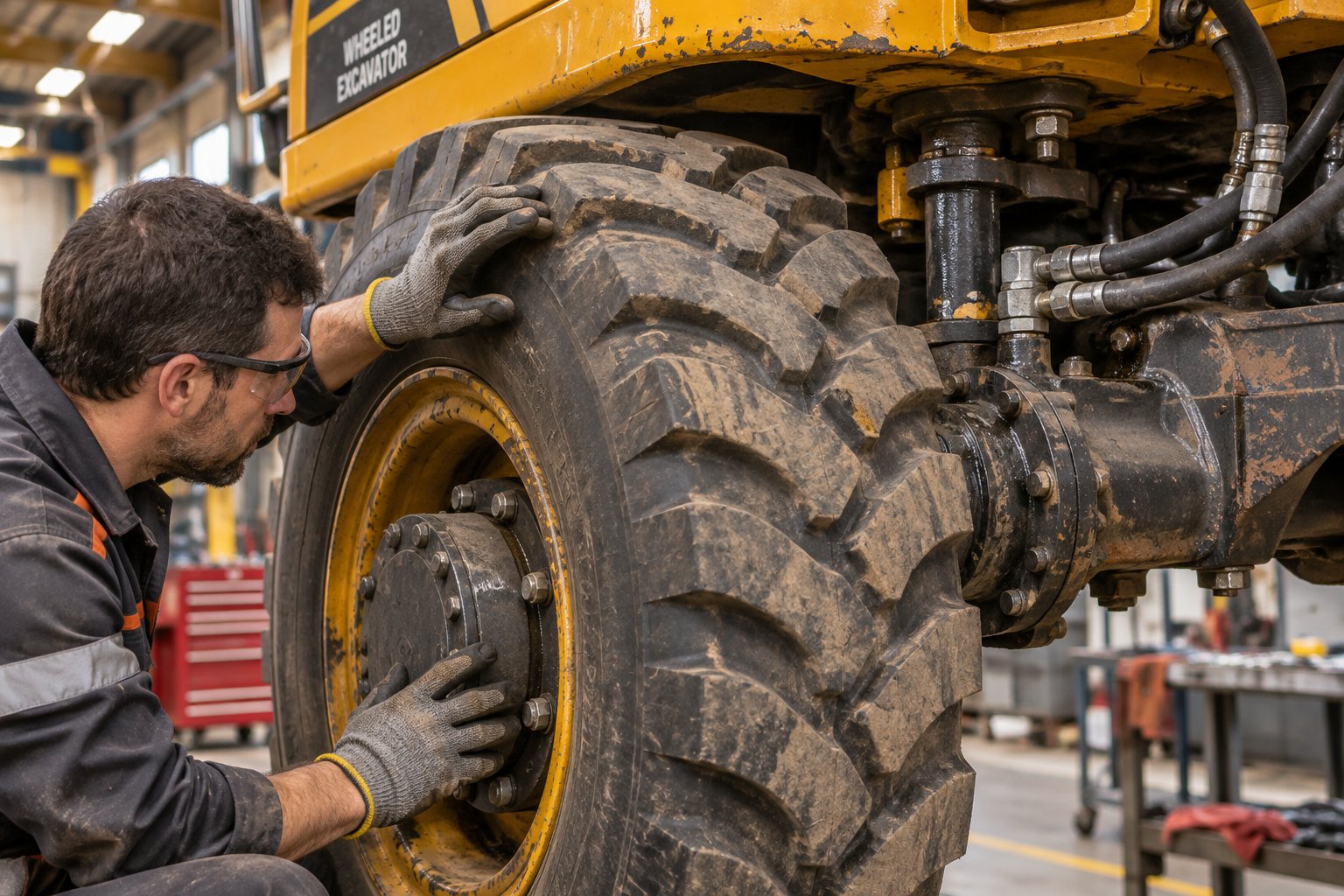
- Tire condition and remaining tread — Examine all tires for sidewall cracking, uneven wear patterns, and remaining tread depth. Replacement tires for a wheeled excavator are a significant expense, so worn rubber should be factored into your offer price. Uneven wear often indicates alignment or axle issues hiding underneath.
- Steering and axle play — With the machine on stable ground, check for excessive play in the steering linkage and axle joints. Grab each tire at 12 and 6 o'clock, then at 3 and 9 o'clock, and feel for looseness. Worn king pins, tie-rod ends, or axle bearings translate into expensive repairs and potentially dangerous road-travel behavior.
- Hydraulic-cylinder condition — Inspect every cylinder — boom, stick, bucket, outrigger, and steering — for rod scoring, chrome flaking, and active leaks at the seals. Active hydraulic leaks suggest seal failure, hose degradation, or cylinder wear, and buyers should assume that visible leaks represent the beginning of a larger problem, not the end of a minor one.
- Boom and stick pin-and-bushing wear — Wiggle the boom and stick joints while watching for visible movement at the pin locations. Excessive slop in these joints affects digging accuracy and accelerates structural fatigue. Replacing pins and bushings is routine maintenance, but the labor cost adds up quickly if every joint needs attention simultaneously.
- Cab electronics functionality — Power up the in-cab touchscreen and cycle through every menu. Verify that the rearview camera displays clearly, that climate controls respond, and that the machine's onboard diagnostics report no active fault codes. A non-functional display or persistent error codes can indicate wiring issues, sensor failures, or ECM problems that are expensive to trace and repair.
- Engine hours relative to service records — Cross-reference the hour meter reading against documented service history. As Gregory Poole Equipment notes, when operational history aligns with the machine's component appearance, the recorded hours likely reflect actual usage. A machine showing 3,000 hours but wearing like a 6,000-hour unit should raise immediate red flags. Missing or incomplete service records reduce buyer confidence — and should reduce your offer price accordingly.
- Undercarriage stabilizer operation — Deploy and retract all outriggers and the front dozer blade. Listen for hydraulic whining, watch for jerky or uneven movement, and verify that each stabilizer locks firmly under load. These components are essential to digging stability on a wheeled excavator; a machine with sluggish or unreliable stabilizers loses the performance parity with tracked models that makes the wheeled configuration worthwhile.
This inspection list is not exhaustive — a full pre-purchase evaluation should also include fluid sampling, a cold-start test, and a functional check of all steering modes. But covering these seven items will catch the most common and most costly problems before they become your problems.
Where to Source Pre-Owned Cat Wheeled Excavators
Used machines surface through four main channels, each with its own trade-offs in pricing, risk, and convenience.
Authorized Cat dealers represent the lowest-risk option. Dealer-certified pre-owned machines typically undergo multi-point inspections, and many come with limited warranties or certified-used programs. The trade-off is price — dealer units carry a 15-25 percent premium over comparable machines at auction, a spread consistent with industry pricing data. For buyers who need a production-ready machine with minimal risk, that premium buys real peace of mind.
Independent equipment dealers often specialize in specific brands or machine types, giving them deep knowledge of the models they stock. Specialized dealers like JIUHONG Machinery maintain inventories of used Caterpillar excavators — including compact and larger Cat models — and allow buyers to inquire about specific configurations, weight classes, and pricing. This kind of focused inventory is particularly helpful for contractors comparing a wheeled excavator for sale across multiple model years and configurations without visiting half a dozen lots.
Online marketplaces — MachineryTrader, IronPlanet, Equipment Trader — aggregate listings from dealers and private sellers nationwide. The breadth of selection is unmatched, but so is the variability in machine condition. Listings range from meticulously documented fleet units to "as-is, where-is" machines with no service history. Treat marketplace listings as a starting point for research, not a substitute for an in-person inspection.
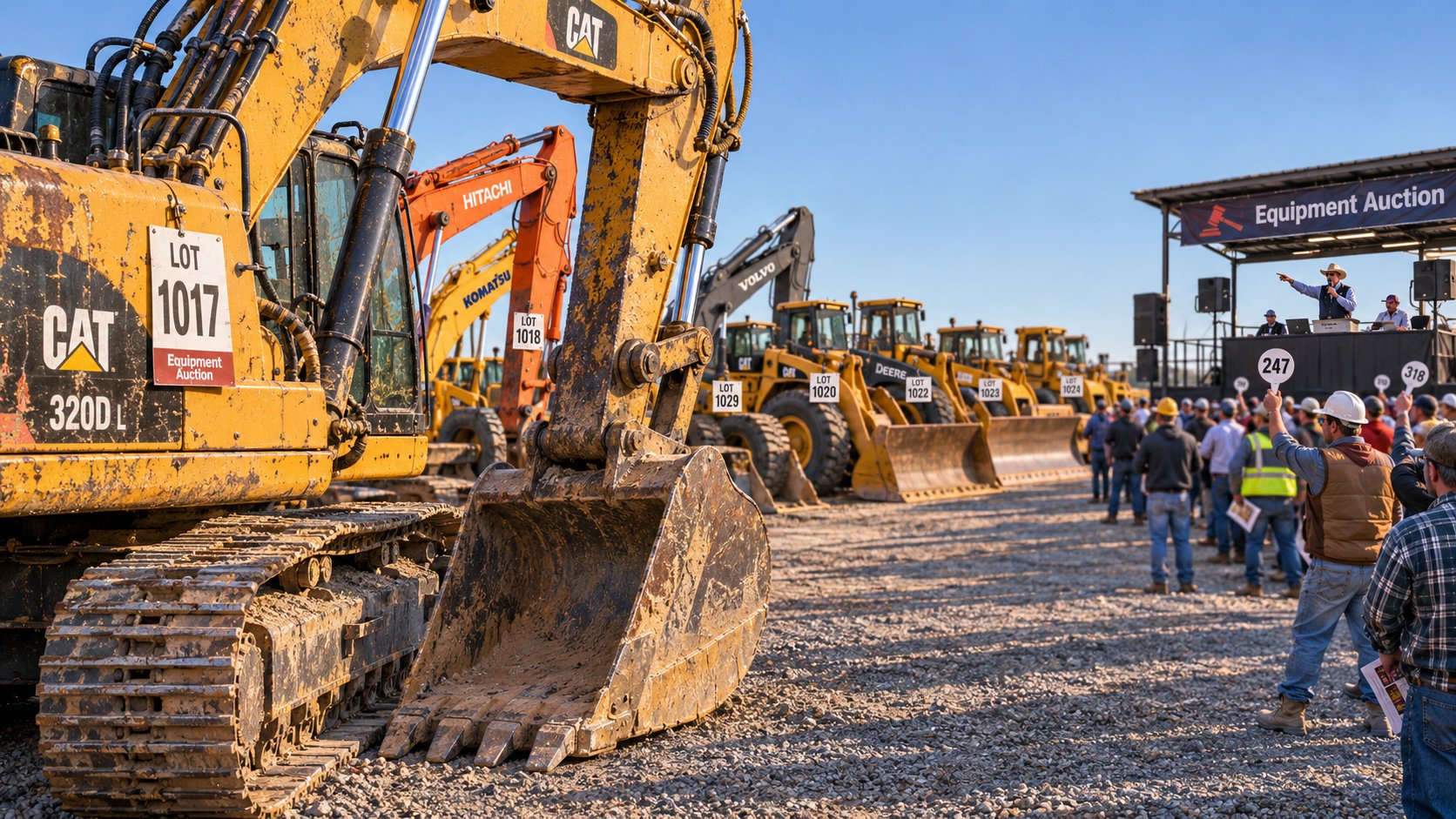
Auctions — primarily Ritchie Bros and its online platform — deliver the most aggressive pricing. Auction machines typically sell 15-25 percent below dealer retail, but they come with no warranties and limited opportunity for pre-sale inspection. Experienced buyers comfortable with mechanical evaluation can find excellent value here. First-time buyers should approach auctions cautiously and factor potential repair costs into their maximum bid.
Regardless of which channel you choose, the fundamentals stay the same: define the model and weight class you need using the selection framework from the previous section, verify the machine's condition against the inspection checklist above, and compare pricing across at least three or four sources before committing. A few extra days of research can easily save five figures on a machine you'll own for years.
Landing the right machine at the right price is a milestone — but it is not the finish line. The true cost of owning a cat wheeled excavator unfolds over thousands of operating hours, shaped by maintenance discipline, tire cycles, fuel consumption, and the resale value waiting at the end of the ownership period.
Ownership Costs and Resale Value for Cat Wheeled Excavators
Purchase price gets all the attention. It is the number on the quote, the figure in the board presentation, and the line item that triggers the most negotiation. But here is the uncomfortable truth: purchase price is one of the smaller components of what a cat wheeled excavator actually costs over its productive life. Fuel, filters, hydraulic fluid, tires, labor, insurance, and eventual resale recovery all stack onto that initial number — and the decisions you make about maintenance and lifecycle planning determine whether the machine earns its keep or quietly drains your margins year after year.
Understanding total cost of ownership shifts your thinking from "What does this machine cost?" to "What does each hour of production cost me?" That reframe changes how you maintain, operate, and eventually replace the equipment in your fleet.
Maintenance Intervals and Key Service Items
Every piece of heavy equipment follows a maintenance rhythm — engine oil and filter changes at 500-hour intervals, hydraulic fluid and filtration services at longer cycles, coolant system inspections, and greasing schedules that keep pins and bushings from grinding themselves into expensive problems. A Cat wheeled excavator shares most of these requirements with its tracked counterpart. The engine, hydraulic pumps, swing motor, and boom-and-stick components are largely identical across both configurations. Where the ownership math diverges is below the cab.
Tire replacement cycles represent the single biggest maintenance-cost difference between wheeled and tracked machines. Pneumatic or solid rubber tires on a wheeled excavator wear down from road travel, jobsite repositioning, and constant steering loads. Replacement frequency depends heavily on surface type — a machine spending most of its hours on smooth asphalt will get significantly more life from a set of tires than one regularly crossing gravel yards or rough shoulders. Budget for tire replacement as a recurring line item, because worn tires affect steering response, stability, and road-travel safety.
The good news? Tire costs are offset — often more than offset — by what you don't spend. Tracked excavators require periodic replacement of tracks, rollers, idlers, and sprockets, a maintenance category that can run $30,000 to $40,000 per replacement cycle every 3,000 to 5,000 hours. Wheeled machines eliminate that entire expense category. Tire sets for a mid-range wheeled excavator typically cost a fraction of a full undercarriage rebuild — industry figures place the range at roughly $5,000 to $10,000 per set, depending on size and tire type. Over a 10,000-hour ownership window, that difference alone can amount to tens of thousands of dollars in saved maintenance spending.
Steering and axle service is another item unique to the wheeled configuration. King pins, tie-rod ends, axle bearings, and differential components all experience wear from constant road travel and jobsite maneuvering. Regular inspection of steering play and axle condition — the same checks you would perform during a pre-purchase evaluation — should be part of every scheduled service interval. Catching a worn tie-rod end early is a $200 repair; ignoring it until the steering geometry shifts can cascade into tire wear, axle damage, and compromised road-travel safety.
Undercarriage stabilizer maintenance rounds out the wheeled-specific service list. Outrigger cylinders, dozer-blade hydraulics, and their associated pins, bushings, and locking mechanisms must deploy and retract reliably every time the operator sets up for a dig. Sluggish or leaking stabilizers don't just slow down production — they undermine the digging stability that makes a wheeled excavator competitive with tracked machines. Include stabilizer function checks in every preventive-maintenance cycle and address hydraulic seal weeping before it progresses to full-flow leaks.
One practical way to stay ahead of all these items: consider a Cat Customer Value Agreement (CVA), which bundles scheduled maintenance parts and fluid-analysis services into a predictable payment. Rolling maintenance costs into a structured program removes the temptation to defer service — a temptation that, over time, turns minor wear into major failures.
Resale Value and Lifecycle Planning
Cat equipment has a well-earned reputation for holding resale value. That reputation is not accidental — it is built on brand recognition, a global dealer and parts network, and a deep buyer pool that actively seeks Caterpillar iron on the secondary market. As noted in our discussion of the used market, Cat machines retain approximately 62 percent of their original value at 5,000 hours, outperforming most competing brands. For fleet managers, that residual value is not a bonus — it is a planned financial asset that factors into every acquisition decision.
What protects that residual value more than anything else? Documentation. Caterpillar's own resale guidance emphasizes that well-maintained equipment with a complete service history commands a meaningfully higher price than a comparable machine with gaps in its records. Buyers in the used market are willing to pay a premium for certainty — and a detailed maintenance log, complete with fluid-analysis reports, filter-change records, and repair invoices, provides exactly that certainty. Every service event you document today adds real dollar value to the machine's eventual resale price.
Additional steps that protect long-term value include using genuine Cat parts for every repair, sampling fluids regularly through Cat S·O·S Services to catch internal wear before it becomes visible, and considering extended equipment protection plans that ensure dealer technicians — rather than unfamiliar third-party shops — handle covered repairs. These are not upsells; they are resale-value preservation strategies.
Calculating cost-per-hour over the full ownership period — including acquisition, maintenance, fuel, tires, and projected resale value — gives a far more accurate picture of true equipment cost than purchase price alone.
That cost-per-hour calculation is the metric fleet managers should live by. Here is how it works in simple terms: add the purchase price to every dollar you expect to spend on maintenance, repairs, fuel, insurance, and financing over the machine's life. Then subtract the projected resale value at the end of the ownership period. Divide the result by total expected operating hours. The number you get is your true hourly cost of ownership — and it often tells a very different story than the sticker price suggested.
For example, a mini excavator Cat model with a lower purchase price but poor fuel efficiency, high tire-wear rates, and weak resale retention might carry a higher cost-per-hour than a larger, more expensive machine that burns less fuel per unit of work, holds its value, and runs longer between major service events. The math rewards efficiency and durability, not the lowest upfront number.
Replacement-cycle planning ties all of these variables together. Every machine follows a predictable curve: maintenance costs start low, rise gradually through mid-life, and then accelerate as major components approach end-of-life thresholds. Resale value, meanwhile, declines steadily from day one. The optimal replacement point is where those two curves cross — the moment when rising annual maintenance costs begin to exceed the annual depreciation you would incur by purchasing a newer machine. Wait too long past that crossover, and you are spending more to keep the old machine running than it would cost to own and operate its replacement.
Fleet managers tracking these numbers in a structured system — whether through Cat's VisionLink platform, a third-party fleet-management tool, or even a well-maintained spreadsheet — can identify that crossover point with reasonable precision. The key inputs are cumulative maintenance spend, current resale value (check recent auction results and dealer trade-in quotes annually), projected future repair costs based on upcoming service milestones, and the acquisition cost of a replacement unit.
Machines that have been rebuilt or refurbished can extend the productive window. Cat Certified Rebuilds, for instance, return end-of-life equipment to like-new condition — sometimes with engineering updates that improve performance beyond the original build. A rebuilt machine resets the maintenance-cost curve while preserving the original chassis investment, effectively buying another lifecycle at a fraction of new-machine cost. For contractors running larger models like the M318 or M320, where replacement cost is substantial, a mid-life rebuild can be the most capital-efficient path forward.
The bottom line: ownership cost is not a number you discover at the end — it is a number you manage from the beginning. Every oil change logged, every tire rotation documented, every fluid sample analyzed contributes to a machine that costs less per hour to operate and returns more when it finally leaves your fleet. That discipline, sustained over years, is what separates contractors who build equity in their equipment from those who simply burn through it.
Choosing Your Next Caterpillar Wheeled Excavator With Confidence
Discipline in selecting, inspecting, and maintaining equipment is what separates fleets that build long-term equity from those that cycle through machines without ever capturing real value. Everything covered in this article — from the mechanical fundamentals of a wheeled undercarriage to the cost-per-hour math that governs lifecycle planning — serves a single purpose: putting you in a position to buy the right machine, at the right price, for the right work.
Key Takeaways for Prospective Buyers
Before you contact a dealer, request a quote, or bid at auction, run through these five essentials. They distill the full decision framework into a checklist you can carry into any conversation about a cat wheeled excavator purchase.
- A Cat wheeled excavator combines excavation power with road mobility — rubber tires and steerable axles let the machine self-propel between job sites at speeds up to 22 mph without damaging paved surfaces, eliminating lowboy trailer logistics for short-distance moves.
- The M-series lineup covers weight classes from roughly 14 to 20-plus tonnes — the M314 anchors the compact end for tight urban utility work, while the M320 tops out the range for heavy infrastructure and material handling. The numeric designation tells you the approximate metric-ton class at a glance.
- Urban, municipal, and material-handling applications favor wheeled over tracked — any scenario that demands frequent repositioning on improved surfaces, surface protection, and full excavator digging capability is where these machines earn their premium. Soft, unprepared ground still belongs to tracked crawlers.
- Model selection should follow a structured evaluation — identify your primary application, determine required dig depth and reach, list every intended attachment with its hydraulic specs, assess travel distances between sites, evaluate ground conditions honestly, and check local road-travel weight regulations. Let the work dictate the machine, not the other way around.
- The used market offers strong value when machines are properly inspected — Cat equipment retains approximately 62 percent of its original value at 5,000 hours, and a well-maintained pre-owned unit three to five years old can handle most workloads at a meaningful discount. The inspection checklist — tires, axles, hydraulic cylinders, pins and bushings, cab electronics, stabilizer function, and hours-to-service-record alignment — is non-negotiable before any purchase.
Print that list, save it to your phone, or pin it above your desk. It works whether you are evaluating cat mini hydraulic excavators for a landscaping fleet or spec'ing an M320 for a highway maintenance contract.
Next Steps to Find the Right Machine
Where you go from here depends on where you are in the buying process. If you are still weighing wheeled against tracked, revisit the comparison table from earlier in this article and answer one honest question: does your crew spend most of its hours on improved surfaces, or on raw, unimproved ground? That single answer eliminates half the options immediately.
If you have already committed to a wheeled configuration, use the six-step selection framework to narrow the field to one or two model numbers. Then start gathering pricing data. Request quotes from your local authorized Cat dealer for new units. Check MachineryTrader and Ritchie Bros auction results for recent sale prices on comparable used machines. Cross-reference at least three or four sources before anchoring on a budget number — the spread between the highest and lowest price you find for the same model and hour range will likely surprise you.
For contractors exploring the pre-owned route, specialized dealers can accelerate the search significantly. JIUHONG Machinery lists compact and larger Cat models — including various Caterpillar excavators for sale across multiple weight classes — and their team works with buyers to match specific configuration requirements, model preferences, and budget constraints. Reaching out with your target model number, preferred hour range, and must-have features gives their sales team enough context to surface relevant inventory quickly, saving you weeks of marketplace browsing.
Regardless of whether you buy new, certified pre-owned, or straight off an auction lot, circle back to the ownership-cost principles from the previous section. Document every service event from day one. Calculate your cost-per-hour annually. Track resale values in your weight class so you know when the maintenance-versus-depreciation crossover point is approaching. These habits cost nothing to implement and consistently return thousands of dollars in preserved resale value and avoided emergency repairs.
The best excavator is the one that matches the job, the operator, and the budget — not simply the newest or most expensive option on the lot.
That principle has guided every recommendation in this article, and it should guide yours. A contractor running an M316 on municipal utility work — bought used at a fair price, maintained on schedule, and operated by a comfortable, well-trained crew — will outperform a competitor who overspent on an M320 that sits idle half the week because the jobs never required that much machine. Right-sizing is not about spending less. It is about spending accurately, so every dollar in your equipment budget translates into productive hours on the ground.
Define the work. Match the model. Inspect thoroughly. Maintain relentlessly. That four-step cycle, repeated with discipline across every acquisition, is how fleets built on caterpillar wheeled excavator iron stay profitable — not just for the first year, but for every year the machine turns a key.
Frequently Asked Questions About Cat Wheeled Excavators
1. What is the difference between a Cat wheeled excavator and a tracked excavator?
A Cat wheeled excavator rides on rubber tires and steerable axles, allowing it to drive on public roads at up to 22 mph without damaging pavement. A tracked (crawler) excavator uses steel tracks that provide superior flotation on soft or uneven ground but cannot travel on paved surfaces without a flatbed trailer. When a wheeled model deploys its outrigger stabilizers, its digging force and lift capacity closely match a tracked machine in the same weight class. The choice comes down to your primary work environment: improved surfaces favor wheels, while raw or muddy terrain favors tracks.
2. What models are in the current Cat wheeled excavator lineup?
Caterpillar's current M-series wheeled excavator range includes five models: M314, M315, M316, M318, and M320. The M prefix identifies them as wheeled (mobile) machines, and the number corresponds roughly to the metric-ton weight class. The M314 and M315 suit compact urban utility work, the M316 and M318 cover mid-range municipal and commercial excavation, and the M320 handles heavy infrastructure and material-handling tasks. Actual operating weight varies with tire configuration, counterweight, and boom selection.
3. How much does a used Cat wheeled excavator cost?
Used Cat wheeled excavator pricing varies significantly based on model year, accumulated hours, configuration, and location. Market data shows used excavator prices across all brands softened roughly 5-8 percent since 2023 peaks, creating favorable buying conditions. Cat machines retain approximately 62 percent of original value at 5,000 hours — the highest among major brands. Buyers can compare pricing through authorized Cat dealers, auction platforms like Ritchie Bros, online marketplaces such as MachineryTrader, and specialized dealers like JIUHONG Machinery (https://jiuhong-machinery.com/products/excavators/caterpillar/), which lists compact and larger Cat models and helps buyers match configurations to budget.
4. What are the best applications for a wheeled excavator?
Wheeled excavators excel in any scenario that combines excavator-class digging or lifting with frequent repositioning on improved surfaces. Top applications include urban utility work such as water main repairs and fiber-optic trenching, road maintenance and highway shoulder ditch cleaning, and material handling in scrap yards or recycling centers using grapples and magnets. Additional uses include emergency storm-debris removal, landscaping on finished surfaces, bridge deck maintenance, and rail-corridor work. The qualifying factor is always the need to move between dig locations on pavement without causing surface damage.
5. What should I inspect before buying a used Cat wheeled excavator?
Critical inspection points include tire condition and remaining tread depth, steering linkage and axle play, hydraulic cylinder rods for scoring or leaks, boom and stick pin-and-bushing wear, full cab electronics and touchscreen functionality, engine hours cross-referenced against documented service records, and outrigger and dozer-blade stabilizer operation. Uneven tire wear may signal hidden axle problems, while incomplete service records should reduce your offer price. A cold-start test and hydraulic fluid sampling round out a thorough pre-purchase evaluation and help avoid costly surprises after the sale.