

Understanding the Kubota U17 Before You Shop
Imagine you're scrolling through equipment listings, searching for a Kubota U17 for sale. You find dozens of results — different years, different hour readings, wildly different asking prices — and every listing looks like the same small orange machine. How do you know which one is actually worth your money? That gap between what listings show you and what you actually need to know is exactly where costly mistakes happen.
The Kubota U17 is one of the most widely traded micro-excavators on the used equipment market, and for good reason. It's compact, dependable, and backed by a brand synonymous with small diesel engines. But "U17" isn't a single machine — it's a family of models spanning multiple generations, each with meaningful differences under the skin. Buying the wrong variant, overpaying for high hours, or missing a critical inspection point can turn what should be a smart investment into a budget-draining headache.
This guide bridges that gap. Every section ahead is designed to arm you with the contextual knowledge that raw marketplace photos and spec sheets leave out.
What the Kubota U17 Actually Is
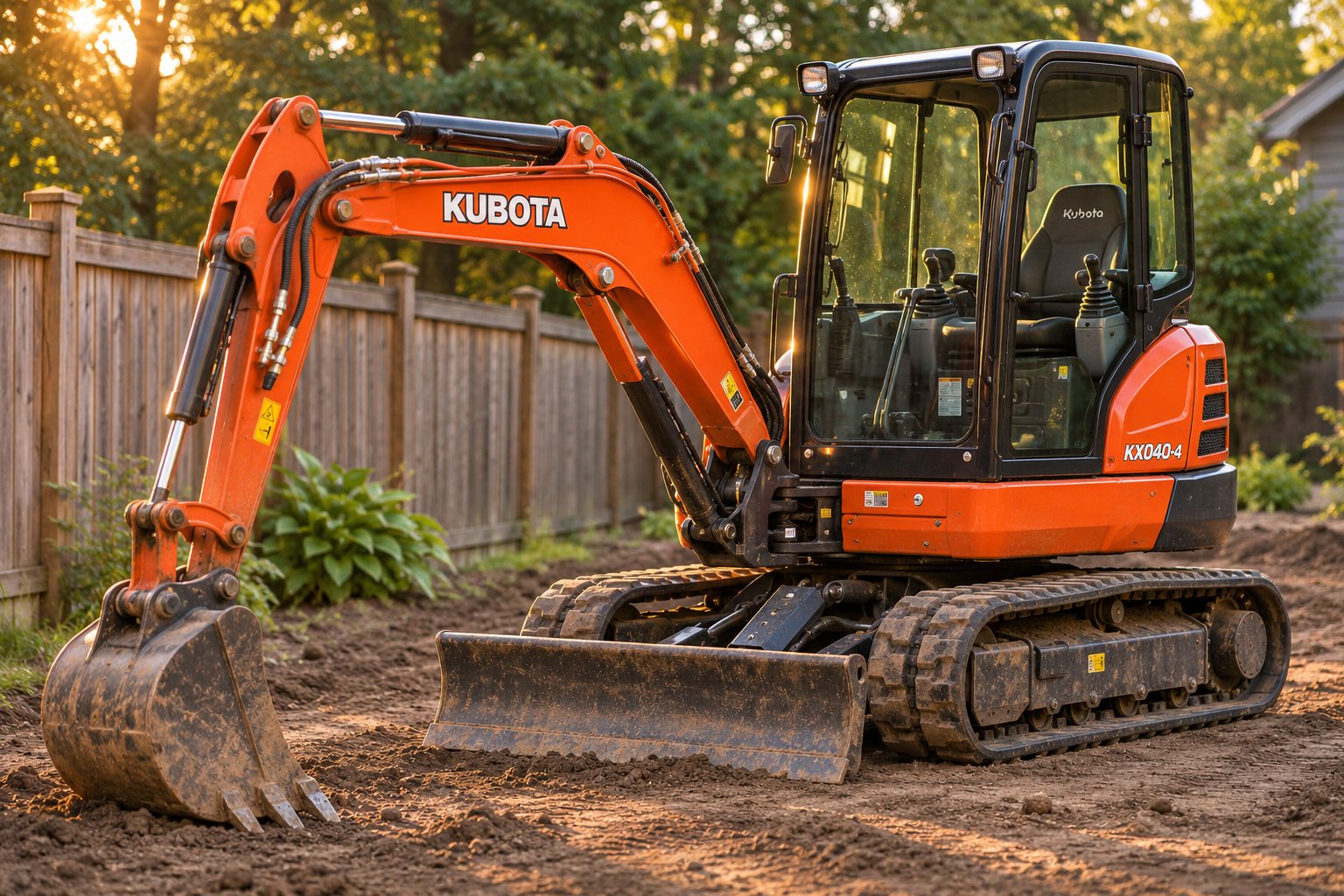
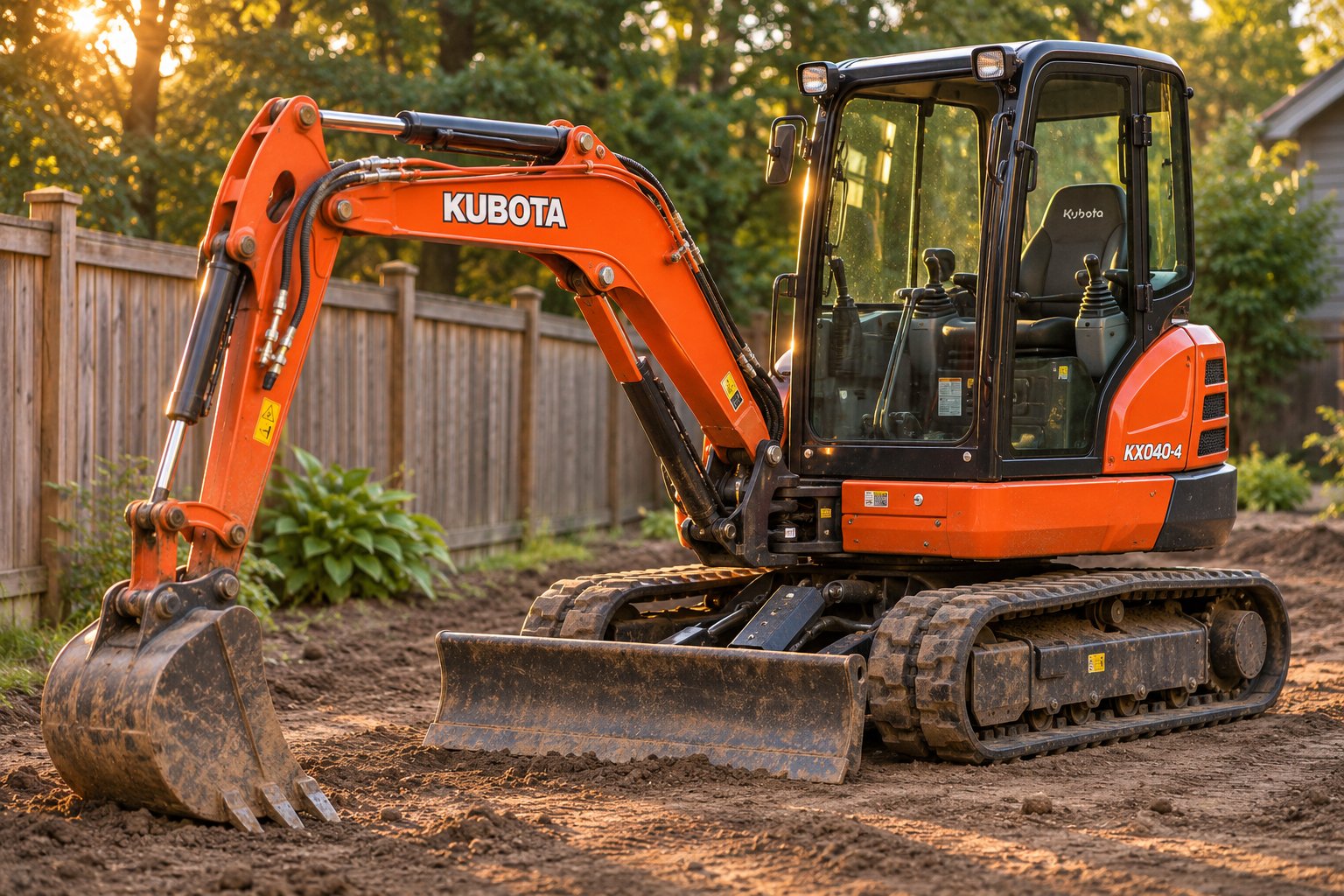
The Kubota U17 is a compact, zero-tail-swing excavator within Kubota's U Series lineup, purpose-built for tight-access jobsites. It sits in the 1.7-ton class, with an operating weight around 3,703 lbs (approximately 1,680 kg) depending on the variant and configuration. That makes it one of the smallest "real" excavators you can buy — small enough to fit through a standard garden gate, yet capable enough to handle serious trenching and foundation prep.
What makes it a zero-tail-swing machine? In practical terms, the counterweight and rear housing stay entirely within the width of the tracks when the upper structure rotates 360 degrees. You'll notice this matters most when you're digging beside a building wall, along a fence line, or next to a busy lane of traffic. A conventional tail swing excavator's rear end swings outward during rotation, creating a collision hazard in confined spaces. The U17's zero-tail design eliminates that risk. As Kubota's Patrick Baker has noted, reduced and zero tail swing models became increasingly popular "because they give operators more versatility when working in tight spaces."
Under the hood, the U17 runs a Kubota-built three-cylinder diesel engine — a detail that matters because Kubota manufactures its own power plants rather than sourcing from third-party suppliers. This vertical integration gives the brand tighter quality control over the most critical component in the machine.
Why Buyers Need More Than Just Listings
Here's the problem with shopping for a kubota mini excavator for sale using only marketplace results: listings give you a price tag, a few photos, and maybe an hour meter reading. They almost never explain which generation of the U17 you're looking at, what a fair mini excavator kubota price looks like for that specific variant, or what to physically inspect before handing over a check.
A U17 from 2008 and a U17-5 from 2023 share a name and a silhouette — but they are fundamentally different machines with different engines, different hydraulic systems, and very different market values. Knowing which variant you're evaluating is the single most important step before comparing prices.
A used mini excavator can be one of the smartest equipment investments you make — if you understand what separates a solid machine from one that will drain your budget. The sections ahead walk you through every dimension of that decision: model identification, full specifications, real-world applications, pricing context, a hands-on inspection checklist, and where to actually find the right unit. Each builds on the last, so by the time you're ready to pull the trigger on a purchase, you'll have the knowledge most buyers wish they had before they signed.
The first critical piece? Understanding exactly which U17 variant a listing represents — because the differences between generations are bigger than most sellers let on.
Kubota U17 Model Variants and How to Tell Them Apart
The U17 badge has been stamped on Kubota mini excavators for well over a decade, but the machine behind that badge has changed significantly. When you spot a U17 for sale, the model generation determines everything from engine emissions compliance to hydraulic capability — and ultimately, what that machine is actually worth. Here's how the platform evolved and how to pinpoint exactly which variant you're evaluating.
U17 Generation Timeline and Key Changes
Kubota's U17 platform has moved through several distinct generations, each bringing incremental — and sometimes substantial — improvements. The original U17 established the formula: a compact, zero-tail-swing excavator powered by a Kubota three-cylinder diesel, built for tight residential and utility work. It was a straightforward, mechanically simple machine with limited operator amenities.
The U17-3 followed as a mid-cycle refresh. This generation brought a cleaner-burning engine to meet tightening emissions standards, along with refinements to hydraulic responsiveness and operator controls. Cab noise levels improved, and small ergonomic touches made the machine more comfortable during full-day operation. If you're shopping for used kubota mini excavators, the U17-3 represents a sweet spot — modern enough to feel capable, old enough to have depreciated meaningfully.
Between the U17-3 and the current generation, Kubota also marketed the U17VR1 variant, which served as the direct predecessor to today's model. Then came the U17-5, launched at World of Concrete in January 2025. This fifth-generation machine replaced the U17VR1 and brought the most significant overhaul yet: an expanded track gauge (hydraulically adjustable from 39.4 inches to 51.2 inches), a factory-welded thumb bracket, a standard auxiliary diverter valve for quick attachment swaps, LED boom work lights, KubotaNOW telematics, and a redesigned operator station with a semi-suspension seat and repositioned touchscreen monitor. The operating weight climbed to 3,902 pounds. Visually, you'll recognize a Dash 5 machine by its two-tone orange and black color scheme — a clear departure from earlier generations.
In some markets, you may also encounter the U17-5α (alpha), which typically adds region-specific features or configurations. Older U17 models obviously lack the refinements found on the U17-5, but they can represent strong value if the price reflects their age and capability level.
| Feature | U17 (Original) | U17-3 | U17-5 (Current) |
|---|---|---|---|
| Approximate Production Period | Early-to-mid 2000s | Late 2000s – mid 2010s | 2025 – present |
| Engine | Kubota 3-cylinder diesel (pre-emissions tier) | Kubota 3-cylinder diesel (updated emissions) | Kubota diesel, 16.1 gross hp (SAE J1995) |
| Operating Weight | ~3,500 – 3,600 lbs | ~3,600 – 3,700 lbs | 3,902 lbs |
| Track Width Adjustment | Manual or limited hydraulic | Hydraulic retractable | Hydraulic: 39.4 in. to 51.2 in. |
| Telematics | None | None | KubotaNOW standard |
| Thumb Bracket | Aftermarket only | Aftermarket or dealer-installed | Factory pre-welded |
| Auxiliary Diverter Valve | Not available | Optional | Standard |
| Visual Identifier | Solid orange body | Solid orange body, updated decals | Two-tone orange and black |
How to Identify Which Variant You Are Looking At
Marketplace photos can make every generation look nearly identical — a small orange excavator with "Kubota" on the boom. So how do you tell them apart before driving out to inspect one?
Start with the data plate. On Kubota excavators, the identification plate is typically located on the frame near the cab entry or on the side of the upper structure. This plate carries the exact model designation — not just "U17" but the specific variant code like U17-3 or U17-5. The model number alone tells you the generation; the serial number beneath it ties the machine to its exact build specification and parts catalog. Ask the seller for a clear photo of this plate before you visit.
Visual cues help too. The U17-5's two-tone orange and black paint is the easiest giveaway. Older models wear a uniform orange with generation-specific decal styles. Look at the operator station — a repositioned front monitor, LED boom lights, and a USB port are U17-5 features you won't find on earlier machines. The factory-welded thumb bracket on the dipper arm is another Dash 5 tell.
Here's a critical detail many buyers overlook: the serial number matters more than the model badge. As any experienced Kubota dealer will tell you, manufacturers change parts and specifications at serial breaks within the same model generation. Two machines wearing the same U17-3 badge but built eighteen months apart might take different seals or hoses. When you're comparing a U17 price across listings, always get the full serial number — it's the only way to confirm exactly what a machine is and what parts it needs.
If a seller can't or won't provide the serial number, treat that as a red flag. You can also verify a machine's identity through Kubota dealer lookup tools by providing the serial to an authorized dealer, who can confirm the model, build date, and warranty history from Kubota's records.
With the variant identified, the next logical question becomes whether the machine's specifications actually match what your projects demand — and that requires digging into the numbers.
Complete Kubota U17 Specifications Breakdown
Numbers tell the real story when you're comparing machines. Listings for a Kubota U17 for sale typically include a photo, a price, and maybe a couple of headline specs — but rarely the full picture you need to evaluate whether this excavator actually fits your projects. The specifications below focus on the current-generation U17-5, since that's the benchmark buyers should measure all variants against. Where earlier generations differ meaningfully, those differences are called out.
Engine and Performance Specifications
The U17-5 is powered by a 16.1-gross-horsepower Kubota diesel engine (rated per SAE J1995). That's not a sourced engine from a third-party manufacturer — Kubota builds its own three-cylinder diesel power plants, and this vertical integration is one of the reasons the brand has a reputation for long engine life in the compact equipment space. Kubota's in-house engine production means tighter quality control, easier parts sourcing, and better compatibility between the engine and hydraulic system.
For a micro-excavator in the 1.7-ton class, 16.1 gross horsepower is competitive. You won't be moving mountains, but you'll have more than enough power for trenching utility lines, excavating footings, and loading spoil into a wheelbarrow or small dump trailer. The engine also features an auto-idle system that drops RPM when the control levers sit in neutral, saving fuel during the frequent pauses that characterize residential and utility work. Touching any control instantly returns engine speed to the working setting.
Fuel capacity on the U17 class is modest — you're looking at a small tank designed for a machine that sips diesel rather than gulping it. The cooling system uses a liquid-cooled arrangement, which is standard for Kubota's compact diesel engines and helps maintain stable operating temperatures even during sustained digging in warm conditions.
Dimensions, Weight, and Transport Considerations
This is where the U17 earns its keep on confined jobsites. The zero-tail-swing design means the rear of the upper structure stays within the track width during full 360-degree rotation — no overhang smacking into walls, fences, or parked vehicles. But the dimensions that matter most for buyers are the ones that determine whether this machine fits on your trailer, through your client's gate, and onto sensitive surfaces without damage.
The U17-5 features hydraulically adjustable tracks that retract to just 39.4 inches (3 feet, 3 inches) for squeezing through narrow passageways and expand to 51.2 inches (4 feet, 3.2 inches) for maximum stability during heavy digging or attachment work. That 2.4-inch increase over the previous model's maximum width gives the U17-5 noticeably better side-to-side stability. The dozer blade retracts and expands with the tracks, so you don't need to manually adjust it separately.
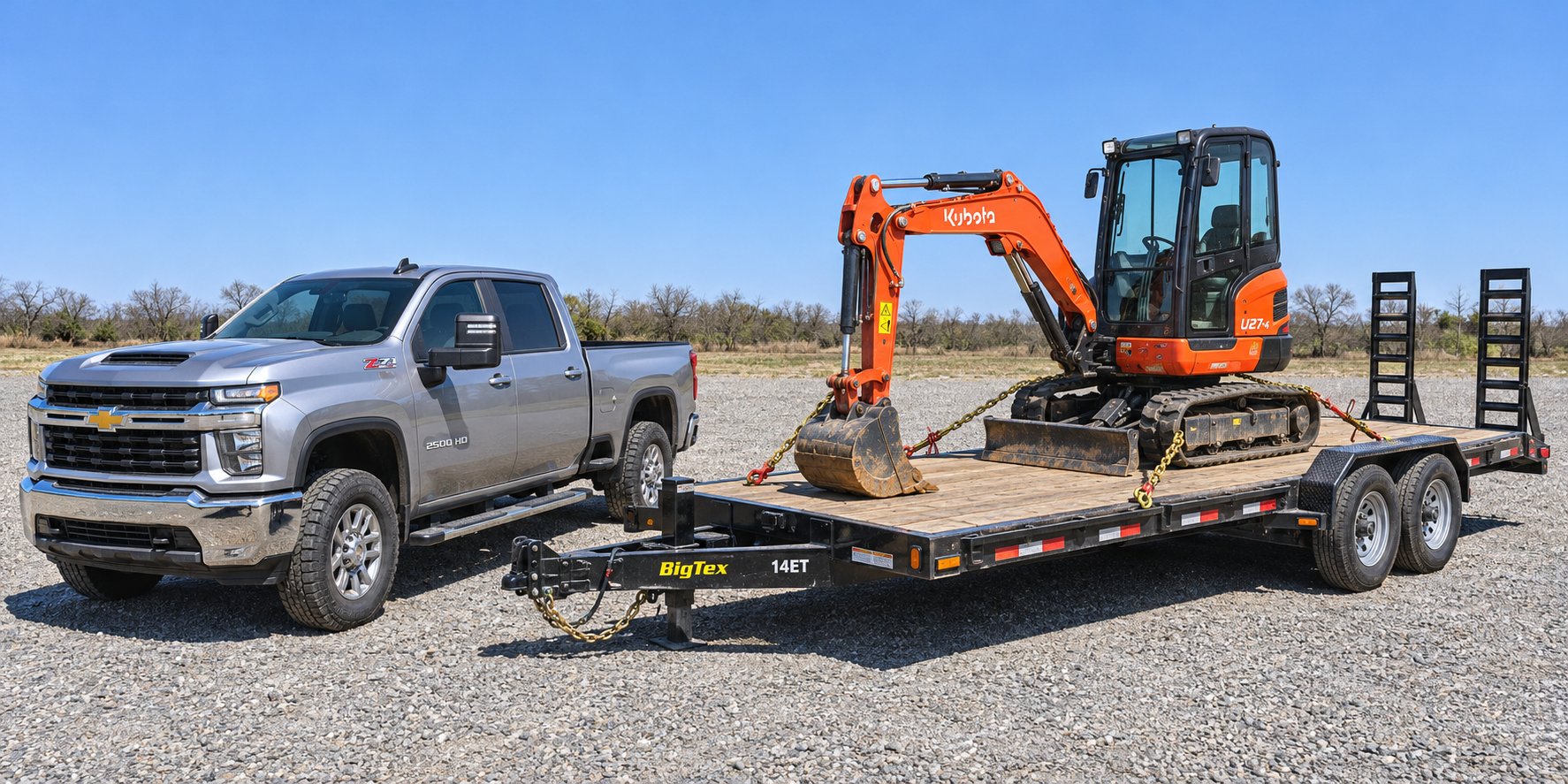
Operating weight comes in at 3,902 pounds (approximately 1,770 kg). You'll also encounter listings — particularly from international used-equipment dealers — citing machine weights near 1,805 kg for older U17 variants with different configurations. Either way, you're sitting just under 2 metric tons, which is relevant if you've been searching within the 2-ton micro-excavator category. This weight class means a standard equipment trailer and a half-ton or three-quarter-ton pickup truck can handle transport, though you should always verify your tow vehicle's rated capacity against the combined weight of machine plus trailer.
Ground pressure is rated at just 4 psi on the U17-5. To put that in perspective, a human standing in work boots exerts roughly 8-10 psi. That featherlight footprint is why landscapers and property managers trust this machine on finished lawns, paver patios, and other surfaces where heavier equipment would leave ruts or crack pavers.
Digging Performance and Hydraulics
The specs that define what a Kubota U17 mini excavator for sale can actually accomplish on the job come down to digging depth, reach, and breakout force. Here's what those numbers look like on the U17-5 — and what they mean in practical terms.
Maximum dig depth reaches 7 feet, 6.2 inches. That's deep enough for residential water and sewer line connections, most landscape drainage installations, and small foundation footings. If your projects routinely require trenches beyond eight feet, you'll need to step up to a larger class like the KX040 or U25.
Dump height tops out at 8 feet, 1.2 inches — enough to clear the side of a standard pickup truck bed or a low-profile dump trailer. Bucket breakout force is rated at 3,547 pounds, which represents the raw digging force at the bucket tip when the bucket cylinder is fully activated. For context, that's sufficient for breaking through compacted clay, root-laced soil, and light frost — the kinds of ground conditions you encounter daily in residential and light commercial work.
The auxiliary hydraulic flow rate is 7.3 gallons per minute, which feeds attachments like hydraulic breakers, augers, and thumbs. Proportional flow control is integrated into the joystick, letting you feather attachment speed with your thumb — a meaningful upgrade for precision work with a breaker or when operating a hydraulic thumb to grab irregular objects. The standard diverter valve allows you to keep the thumb connected while switching oil flow to another front-end attachment, eliminating the need to replumb hoses every time you swap tools.
Maximum travel speed hits 2.7 mph. That's not going to win any races across a jobsite, but for a machine that typically operates within a 20-foot radius, repositioning speed is rarely the bottleneck.
| Category | Specification | U17-5 Value |
|---|---|---|
| Engine | Type | Kubota 3-cylinder diesel |
| Engine | Gross Horsepower | 16.1 hp (SAE J1995) |
| Engine | Cooling | Liquid-cooled |
| Dimensions | Track Width (Retracted) | 39.4 in. (1,000 mm) |
| Dimensions | Track Width (Expanded) | 51.2 in. (1,300 mm) |
| Dimensions | Tail Swing | Zero (within track width) |
| Digging Performance | Max Dig Depth | 7 ft. 6.2 in. (2,290 mm) |
| Digging Performance | Max Dump Height | 8 ft. 1.2 in. (2,470 mm) |
| Digging Performance | Bucket Breakout Force | 3,547 lbs. (15.8 kN) |
| Hydraulics | Auxiliary Flow Rate | 7.3 gpm |
| Hydraulics | Diverter Valve | Standard |
| Hydraulics | Flow Control | Proportional (joystick-integrated) |
| Transport Weight | Operating Weight | 3,902 lbs. (~1,770 kg) |
| Transport Weight | Ground Pressure | 4 psi (27.5 kPa) |
| Travel | Max Travel Speed | 2.7 mph (4.3 km/h) |
One thing worth noting: when you're browsing Kubota diggers for sale across different marketplaces, the weight figures you encounter will vary slightly depending on configuration, attachments, and whether the listing quotes operating weight or shipping weight. The U17-5's official 3,902-pound operating weight (roughly 1,770 kg) represents the machine ready to work — with hydraulic oil, coolant, and a full fuel tank. International listings may cite slightly different figures, such as 1,805 kg, reflecting alternate configurations or measurement standards. Either figure places the U17 firmly in the sub-2-metric-ton class, a distinction that matters for transport regulations and trailer selection in many regions.
Specifications confirm capability — but capability only matters if it aligns with your actual workload. The real question is whether the U17's digging envelope, weight class, and attachment versatility match the specific jobs you need it to perform.
Who Should Buy a Kubota U17 and What Jobs It Handles Best
A spec sheet tells you what a machine can do. Your project list tells you what it needs to do. Matching those two realities is the difference between a Kubota U17 that earns its keep every week and one that sits on a trailer because it's either too small for the work or overkill for the site. Before you commit to a kubota u17 price, spend a few minutes honestly evaluating whether the 1.7-ton class is the right fit — because the answer isn't always yes.
Ideal Applications for the 1.7-Ton Class
The U17 thrives in a specific operational sweet spot: jobs where a full-size excavator can't physically access the work area and a shovel-wielding laborer would take three times as long. Its zero-tail-swing design, 4-psi ground pressure, and retractable tracks (narrowing to just 39.4 inches) open doors — sometimes literally — that larger machines simply cannot enter.
Think about the kinds of projects where space is the primary constraint. A backyard French drain installation surrounded by a privacy fence, mature trees, and a patio. A water line replacement running alongside a house with only four feet of clearance between the foundation wall and the property line. An indoor demolition job inside a commercial building where the machine needs to roll through a standard double door. These are the scenarios where the U17 doesn't just work — it dominates.
Here are the job types where a U17 consistently delivers strong returns:
- Residential landscaping — grading, drainage trenching, tree and shrub removal, retaining wall prep. The featherlight ground pressure protects finished lawns and pavers.
- Utility line trenching — water, gas, electrical, and fiber-optic runs in residential and light commercial settings. The 7-foot-6-inch dig depth handles most residential utility connections.
- Small foundation work — footings for decks, additions, garden walls, and small outbuildings where trench width and depth stay within the U17's envelope.
- Driveway and patio preparation — excavating sub-base material, grading to precise elevations, and loading spoil into small trailers or dump trucks.
- Indoor demolition — removing concrete floors, plumbing rough-ins, and interior grade work in spaces too tight for anything larger. The compact footprint and zero tail swing prevent accidental contact with walls and columns.
- Cemetery work — grave excavation requires precision, minimal surface disruption to surrounding plots, and a machine small enough to navigate between headstones and narrow cemetery lanes.
In every one of these applications, the zero-tail-swing geometry earns its premium. You can rotate the upper structure a full 360 degrees without the counterweight swinging beyond the track edges — meaning you dig, swing, dump, and swing back without constantly monitoring your rear clearance. On a tight residential lot, that translates directly into faster cycle times and fewer anxiety-inducing near-misses with the client's fence or garage wall.
When to Consider a Smaller or Larger Machine
Honesty matters here. The U17 is an exceptional machine within its design envelope, but it has real limits — and pushing past them leads to frustration, slow production, and premature wear.
On the smaller side, Kubota's U10-5 is a 1-ton minimal-tail-swing excavator with a 5-foot-11-inch digging depth inside an ultra-compact frame. If your work is primarily garden-level — planting beds, shallow drainage, narrow cable trenches under two feet deep — the U10-5 gets the job done with even less trailer weight, tighter access capability, and a lower purchase price. Paying a kubota u17 price when a U10-5 would suffice means tying up capital in capability you won't use.
On the larger side, the KX040-5 and U25 occupy the 2.5-to-4-ton range with substantially more digging depth, bucket capacity, and lifting force. According to industry sizing guidelines, machines in the 2-to-3-ton class are better suited for foundation excavation, larger drainage systems, and repeated material loading — jobs that demand more bucket volume and cycle stability than a 1.7-ton platform can sustainably deliver.
Here's where the U17's practical limits show up:
- Trench depths beyond 7.5 feet — the U17-5 maxes out at 7 feet, 6.2 inches. Municipal sewer mains, deep storm drains, and commercial utility work often require 8 to 10+ feet of depth, putting them firmly outside the U17's reach.
- Bucket sizes above 18 inches — wider buckets on a 1.7-ton machine create disproportionate side loads and reduce fill efficiency. If you routinely need a 24-inch or wider bucket, a heavier carrier provides better stability.
- Lifting heavy loads at full reach — rated lift capacity drops significantly as the arm extends. Setting large pipe sections, heavy precast components, or full pallets of material at arm's length pushes the U17 beyond its safe working zone.
- High-volume production earthmoving — stripping a building pad, excavating a full basement, or loading trucks all day long demands a bigger bucket, more hydraulic flow, and greater breakout force than the U17 class provides.
- Heavy attachment work — hydraulic breakers, large augers, and compaction plates sized for 3-ton carriers will overload the U17's hydraulic system and compromise stability.
Match the machine to your most common project, not your biggest one. A U17 that runs 200 hours a year on residential work it handles perfectly is a far better investment than an oversized excavator that sits idle because it can't fit on the jobsites where your revenue actually comes from.
The decision framework is straightforward. If 80 percent of your projects involve confined-space work with trench depths under seven feet, the U17 is hard to beat in its class. If your typical project demands deeper excavation, heavier attachments, or sustained high-volume material handling, stepping up to a 2.5-ton or larger machine will save you time and wear over the long run. And if your work rarely requires more than shallow trenching in tight gardens, the smaller U10-5 keeps your investment — and your trailer weight — leaner.
Knowing the U17 fits your workload is half the equation. The other half is knowing whether the asking price on any given listing represents fair market value — and that requires understanding what actually drives pricing in the used compact excavator market.
Kubota U17 Pricing and What Drives Market Value
Every listing has a price. Very few listings explain why that price is what it is. When you're evaluating a kubota u17 for sale, the asking number on screen tells you almost nothing without context — and context is exactly what most marketplaces strip away. A $12,000 unit and a $30,000 unit can both be legitimate deals or terrible ones, depending on the variables hiding behind those digits. Let's unpack what actually moves the needle on Kubota U17 pricing so you can spot fair value — and walk away from inflated asks.
Factors That Drive Kubota U17 Pricing
Six core variables interact to set market value on any used mini excavator. Understanding each one gives you a framework for evaluating every listing you encounter, regardless of the platform.
Model year and generation set the baseline. A U17-5 built after 2025 commands a premium over a U17-3 from 2012 — not just because it's newer, but because it carries upgraded hydraulics, KubotaNOW telematics, a factory thumb bracket, and an engine meeting current emissions standards. The kubota u17 specs differ enough between generations that two machines with the same hour reading and wildly different prices can both be fairly priced if they represent different variants.
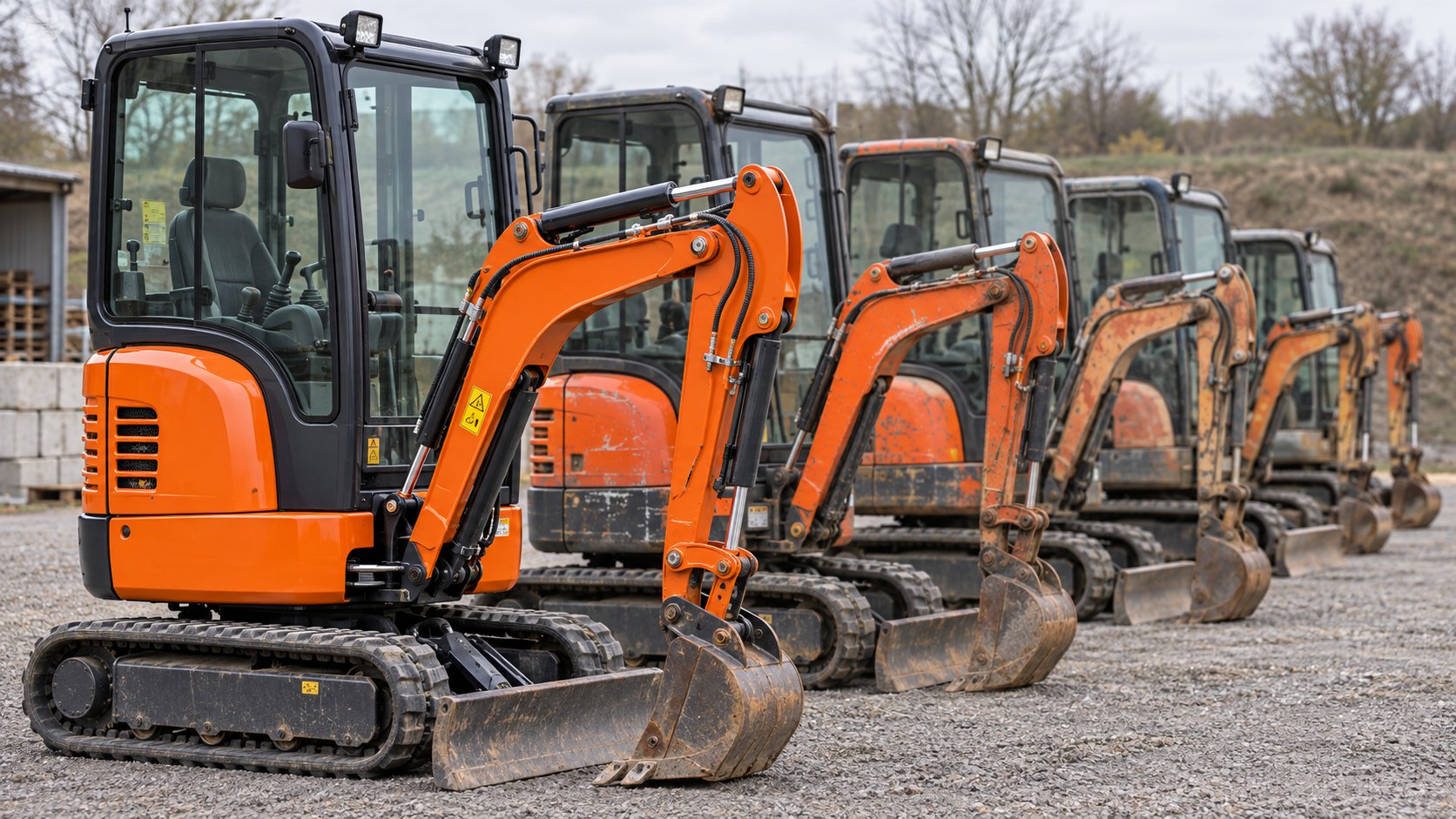
Hour meter reading functions as the machine's odometer. Low-hour units — generally under 1,000 hours — attract premium buyers and hold value firmly. Machines between 1,000 and 3,000 hours sit in the sweet spot where used-market demand is strongest, offering substantial savings over new while retaining significant service life. Push past 3,000 hours and pricing softens, as buyers begin factoring in the increasing probability of major component replacement.
Attachment packages shift perceived value. A machine that comes with a mechanical quick coupler, multiple bucket widths, and a hydraulic thumb is worth materially more than a bare unit with a single bucket. Industry appraisal guidance suggests attachment packages can add 5-15% to resale value, though the premium doesn't always translate dollar-for-dollar against what those attachments cost new.
Geographic region creates pricing pockets. Markets with year-round construction activity — the Sun Belt, coastal urban corridors — tend to sustain higher asking prices because demand for compact equipment never fully pauses. Northern markets with seasonal slowdowns may offer better winter deals, but fewer machines change hands during those months.
Sales channel matters enormously, and we'll explore this in depth later. For now, know that dealer prices typically run highest (reflecting warranties, inspections, and overhead), private-party sales sit in the middle, and auction results can swing in either direction depending on bidder turnout and timing.
You'll encounter computed average listing prices across major marketplace platforms — TractorHouse, for example, has reported an average near $32,559 across their active U17 listings. That figure can be useful as a rough orientation point, but averages flatten the spread between a pristine, low-hour, late-model unit and a high-hour workhorse nearing its second set of tracks. Relying on a single average number without understanding what's behind it is one of the fastest ways to overpay or undervalue a machine.
New vs. Used Price Expectations
New U17-5 units from authorized Kubota dealers typically land in the mid-$30,000 to low-$40,000 range depending on region, dealer markup, and whether optional packages are included. That price buys you a full factory warranty, zero hours, current-generation features, and the peace of mind that nothing has been abused, repaired, or neglected. For buyers with steady utilization — rental fleets, full-time contractors running the machine several hundred hours per year — buying new often makes financial sense when you factor in reduced maintenance risk and warranty coverage during the steepest depreciation years.
Used pricing spreads widely based on age and hours. Recent auction data from Purple Wave illustrates the range clearly. A 2022 model with 619 hours sold for $15,400. A 2020 unit with 653 hours brought $18,700. A 2019 machine carrying 939 hours closed at $18,700 as well — while a different 2019 unit with 1,542 hours sold for just $11,550. At the high end, a 2020 model with 863 hours fetched $19,800. At the value end, a 2014 unit carrying 2,019 hours went for $8,910, and a 2015 model with 3,187 hours brought $10,340.
Those real-world auction results reveal something important: the kubota mini excavator price range for used U17s spans roughly $8,000 to $20,000 at auction, with most units landing between $11,000 and $19,000. Dealer-listed used units typically command 15-30% more than auction results for comparable machines, reflecting the dealer's reconditioning, inspection, and implied warranty.
Kubota U Series excavators generally retain value better than lesser-known brands in the resale market. That brand premium works in two directions — it makes these machines attractive to resale-conscious buyers, but it also means used prices stay relatively firm. Don't expect deep discounts just because a Kubota has some hours on it. The demand floor for well-maintained kubota u series for sale stays higher than for off-brand equivalents with identical specs.
Depreciation and Value Retention Patterns
Here's a principle that trips up many first-time equipment buyers: hours matter more than age. A 10-year-old excavator with 800 hours on the meter has experienced far less mechanical wear than a 5-year-old machine with 4,000 hours — and the market prices them accordingly. Appraisal professionals consistently rank operating hours as the single most reliable indicator of remaining useful life, ahead of calendar age, cosmetic condition, or even brand.
The depreciation curve for mini excavators follows a predictable shape. New machines lose 20-30% of their value within the first two years simply by transitioning from "new" to "used" — even with low hours and perfect maintenance. Between years three and five, annual depreciation slows to roughly 8-15%. After year six, value decline becomes more gradual — often 5-10% annually — provided the machine remains mechanically sound and cosmetically presentable.
What does this mean for your buying strategy? The steepest depreciation happens in those initial few hundred hours, when a new machine becomes a "used" machine on paper. If you buy a one-year-old unit with 200 hours, you've absorbed someone else's sharpest depreciation hit. But if you buy a 2,000-hour machine with complete service records and fresh undercarriage components, your cost per remaining hour of useful life can actually be lower than buying a lightly used machine at a premium.
This is the critical insight most buyers miss: a higher-hour, well-maintained unit can be a dramatically better value than a low-hour, neglected one. Complete service records, documented oil changes, hydraulic fluid analysis reports, and receipts for preventive maintenance all contribute to a machine's real-world value in ways the hour meter alone doesn't capture. Machines with full documentation appraise 10-15% higher than identical units without records, because buyers can trust the maintenance history rather than guessing at it.
Most mini excavators remain economically useful for 8 to 12 years in real-world operating conditions, with total service life spanning 5,000-10,000 operating hours before major component rebuilds become necessary. Many contractors time their exit between years five and seven, when the machine still commands solid resale value but the risk of expensive engine or hydraulic rebuilds begins to rise. If you're buying in that five-to-seven-year window, you're acquiring a machine that someone else managed through its steepest depreciation — but you'll want to inspect it thoroughly to ensure the previous owner didn't defer maintenance to maximize short-term returns.
| Factor | Impact on Price | What to Look For |
|---|---|---|
| Model Year / Generation | High — newer generations (U17-5) command 30-50% premiums over early models | Confirm exact variant via data plate; don't rely on the listing title alone |
| Hour Meter Reading | High — each additional 500 hours beyond 1,000 reduces value by roughly 3-5% | Cross-reference meter reading with service records; ask about hour meter replacement history |
| Maintenance Documentation | Moderate to High — complete records add 10-15% vs. undocumented machines | Request service logs, oil analysis reports, and repair receipts; missing records are a negotiation lever |
| Attachment Package | Moderate — additional buckets, quick coupler, and thumb add 5-15% value | Verify attachment condition separately; damaged attachments can subtract rather than add value |
| Undercarriage Condition | High — track and roller replacement can cost $2,000-$4,000+ | Inspect track pad wear, sprocket teeth, roller play, and idler condition; budget replacement costs into your offer |
| Geographic Region | Low to Moderate — Sun Belt and urban markets sustain higher prices | Compare listings across multiple regions; consider transport costs if buying from a distant market |
| Sales Channel | Moderate — dealer prices run 15-30% above auction results for comparable units | Factor in warranty coverage, return policies, and inspection guarantees when comparing dealer vs. private vs. auction pricing |
| Cosmetic Condition | Low to Moderate — faded paint and dents signal neglect to buyers | Look past surface cosmetics to mechanical health, but use cosmetic issues as negotiation points |
Pricing context transforms your search from a passive scroll through listings into an active evaluation process. You know what drives value up, what pulls it down, and where the real deals hide — in well-documented, moderate-hour machines whose owners maintained them properly but whose depreciation curve has already flattened. The logical next step is making sure the specific machine you're considering actually lives up to its asking price — and that means putting hands on it with a structured inspection checklist designed to catch what sellers don't volunteer.
Used Kubota U17 Inspection Checklist for Buyers
A fair price means nothing if the machine hiding behind it needs $5,000 in repairs you didn't see coming. When you're standing in front of a used Kubota U17 for sale, the seller's job is to highlight what's right. Your job is to find what's wrong — or confirm that nothing is. The inspection checklist below gives you a systematic sequence to follow at any viewing, turning a casual walk-around into the kind of rigorous assessment that separates informed buyers from hopeful ones.
Before diving into specific systems, understand one foundational reality about compact excavators: the undercarriage alone represents 40 to 50 percent of a tracked machine's total lifetime operating cost. On a mini excavator where the entire used value might be $12,000 to $18,000, a worn-out undercarriage can represent a repair bill that rivals what you paid for the machine itself. That's why inspecting from the ground up isn't optional — it's the foundation of your entire purchase decision.
Undercarriage and Track Condition
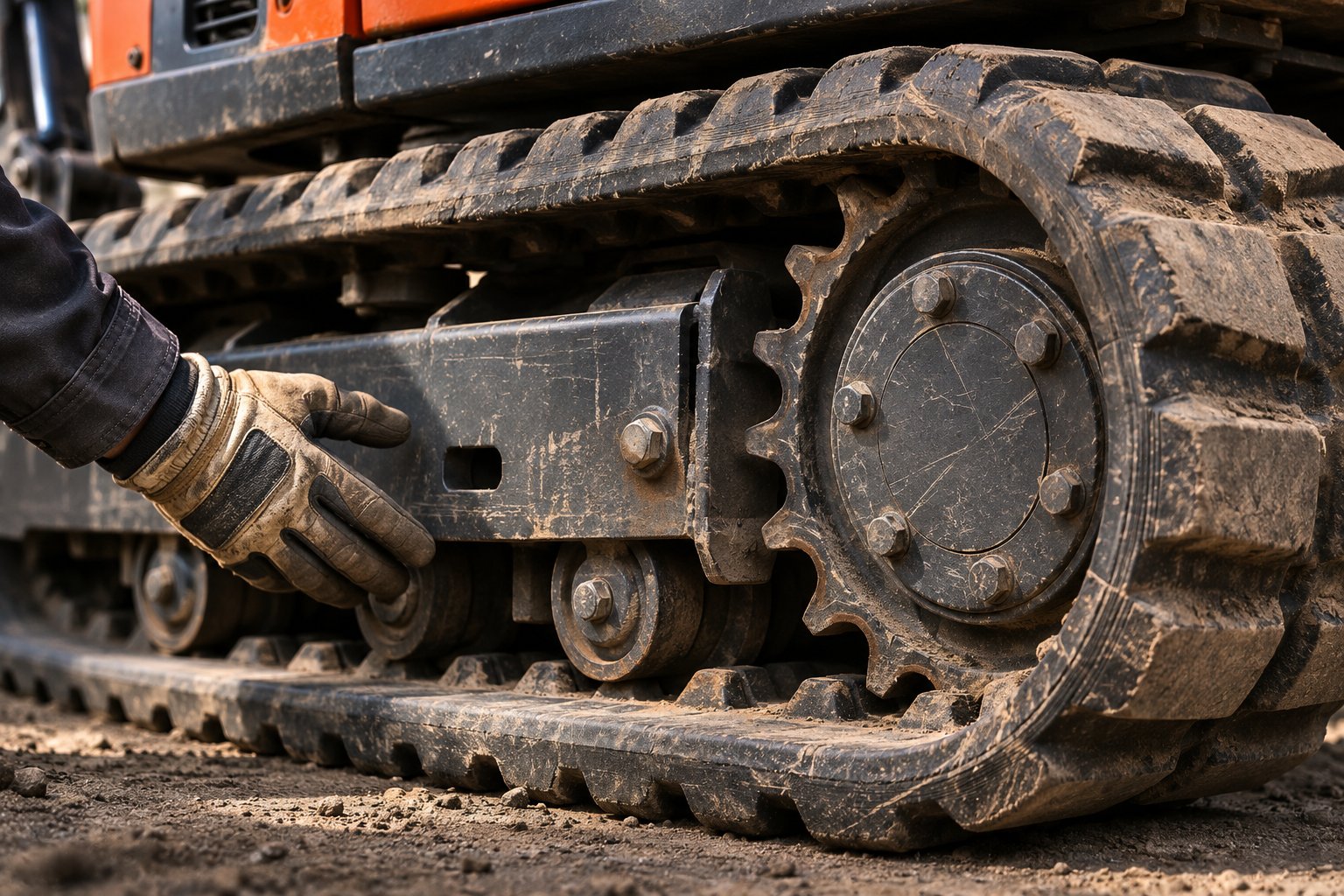
Drop to your knees and start underneath. The U17 runs rubber tracks — which wear differently than steel but are no less expensive to replace — along with steel sprockets, rollers, and an idler assembly that all demand scrutiny.
Track pads: Look at the rubber surface for cracking, chunking (missing pieces), and tread depth. Worn pads lose traction and accelerate wear on the rollers beneath them. If the tread pattern is nearly smooth or the rubber shows deep cracks from UV and age exposure, you're looking at a replacement that can run $1,500 to $2,500 for the pair on a machine this size.
Rollers and carrier rollers: Spin each bottom roller by hand if possible, or visually inspect for oil weeping around the seals. A roller with a leaking seal that has lost its oil will fail quickly from bearing damage. Look for flat spots or uneven wear surfaces — these indicate a roller that has been running dry or under excessive load on one side.
Sprocket teeth: Examine the drive sprocket at the rear of each track frame. Teeth should have a rounded, symmetrical profile. Pointed, hooked, or visibly thinned teeth signal that the sprocket is nearing the end of its service life and will accelerate chain wear if not replaced. On a Kubota U Series machine, worn sprockets with hooked or pointed teeth accelerate chain wear and should be evaluated alongside the track condition rather than in isolation.
Idler and track tension: The front idler guides the track and maintains proper tension through a recoil spring mechanism. Push firmly on the top run of the track between the sprocket and idler — you should see moderate sag, roughly one to two inches on a mini excavator, depending on the manufacturer's specification. Too loose means the track slaps and wears components at the contact points. Too tight increases stress on every component in the system. Also check whether the idler moves freely without grinding or catching.
One trick that experienced inspectors watch for: count the track links. If the machine has fewer links than the factory specification, someone may have removed a link to keep a worn, stretched track looking tight. A short link count masks internal pin and bushing wear that you'd otherwise catch by measuring track pitch.
Hydraulic System and Engine Health Indicators
The hydraulic system is the nervous system of any excavator — and on a machine as compact as the U17, there's nowhere for leaks to hide if you know where to look.
Cylinder seals: Examine the chrome piston rods on the boom, arm, bucket, and blade cylinders. The rods should be smooth, shiny, and free of pitting, scratches, or rust. Oil film is normal; drips or wet streaks running down the rod are not. Rust, scratches or other damage on piston rods can harm the seals and cause leaks that progressively worsen under operating pressure. A single cylinder reseal on a mini excavator can run $800 to $1,500 depending on cylinder size and access difficulty.
Hose fittings and routing: Trace every visible hydraulic hose from end to end. Look for cracking, abrasion wear where hoses rub against metal, bulging, and wet fittings. Pay special attention to the hoses running along the boom and arm — these flex constantly during operation and wear faster than stationary lines. Replacing one hose is a minor expense; discovering six deteriorated hoses across the machine signals deferred maintenance.
Control valve block: Located beneath or behind the operator station, the main control valve distributes hydraulic oil to every function. Look for oil weeping at the valve body joints and around the spool fittings. External leaks here can indicate worn internal seals that allow oil to bypass between circuits, reducing hydraulic efficiency across all functions.
Hydraulic oil color and condition: Pull the hydraulic oil dipstick or check the sight glass if equipped. Healthy hydraulic oil is clear amber. Dark brown oil has been overheated or hasn't been changed on schedule. Milky or foamy hydraulic fluid indicates water or coolant contamination — a deal-killer on most machines, because moisture in the hydraulic system damages pumps, valves, and cylinder internals from the inside out.
Engine oil and coolant: Check the engine oil dipstick for excessive blackening, metallic particles (rub it between your fingers), or a milky appearance that suggests coolant mixing with oil — usually a head gasket failure. Inspect the coolant reservoir for proper level, clean color, and the absence of oil sheens floating on the surface. If the seller has oil analysis reports available, these are gold — they reveal internal engine and hydraulic wear trends that no visual inspection can match.
Exhaust smoke color: Ideally, arrive early enough to witness a cold start. A brief puff of white or light smoke during cranking is normal for a small diesel on a cool morning. But persistent smoke tells a story. Blue exhaust signals burning oil from worn rings or valve seals. White smoke sustained beyond warm-up can mean coolant entering the cylinder. Thick black smoke points to fuel delivery or air intake problems. Any of these conditions on a warmed-up engine warrant serious concern — engine rebuilds on even a compact Kubota diesel aren't cheap.
Cold-start behavior: A healthy Kubota three-cylinder diesel should fire within a few seconds of cranking, even cold. Extended cranking, rough idle, or an engine that hunts up and down in RPM before stabilizing can indicate worn injectors, a tired fuel pump, glow plug failures, or compression issues. Ask the seller not to pre-warm the machine before your arrival — how it starts cold reveals more than any test after it's been idling for an hour.
Structural and Operational Checks
With the undercarriage and fluid systems assessed, shift your attention to the structural joints and working components that determine whether this machine can still dig precisely or has developed the sloppiness that makes close-quarters work frustrating and slow.
Pin and bushing wear — the "wiggle test": This is one of the most revealing checks you can perform. Have someone operate the machine to position the bucket just above the ground with light downward pressure on the arm. Then release and reapply pressure while you closely watch each pin-and-bushing connection — boom foot pin, boom-to-arm pin, arm-to-bucket pin, and bucket link pins. You're looking for visible movement, knocking, or gaps between the pin and its bushing. Loose pins and bushings are a clear indication that the machine has experienced significant wear — typically from a life of inadequate greasing. A small amount of play is acceptable on any used machine, but excessive play makes precise work more difficult and can lead to expensive repairs involving pin removal, bushing replacement, and potential bore repair on the attachment points.
Boom and arm structural integrity: Run your eyes — and your hands — along the full length of the boom and dipper arm. Look carefully at every weld seam for cracks, especially at high-stress points where the boom geometry changes direction. Any plate welded over an existing crack is a major red flag: it indicates the machine was subjected to forces beyond its design limits. Cracks in a machine's structure can reduce its value by approximately 20%, and on a small excavator where the entire resale value may be $10,000 to $15,000, that hit is significant. Small kubota compact excavators for sale that show structural cracking are generally machines to avoid entirely — the repair cost relative to value rarely pencils out.
ROPS/FOPS canopy or cab condition: The rollover protective structure and falling object protective structure exist to save the operator's life. Check for bends, cracks, or modifications. Any structural alteration to the ROPS — welding, cutting, drilling — potentially compromises its certification. Inspect the cab glass (if enclosed), door latches, and window seals. A heavily dented canopy or cracked cab frame tells you this machine has either rolled or taken a serious impact, and you should investigate the rest of the machine with even more skepticism.
Seat and controls: Sit in the operator position. Is the seat torn, sagging, or missing its suspension mechanism? Do the joysticks return to center smoothly when released? Is there excessive play in the control levers? Check every gauge and warning light on the instrument panel — turn the key to the "on" position before cranking and confirm that all indicator lights illuminate during the self-test cycle. Missing or non-functional gauges mean the operator has been running blind on critical parameters like engine temperature and hydraulic oil temperature.
Blade operation: The front dozer blade on the U17 serves double duty — leveling and stabilizing the machine during digging. Cycle the blade through its full range of motion. Listen for grinding or hesitation. Check the blade cylinder rod for the same pitting and seal leakage you inspected on the boom cylinders. A blade that won't hold position under pressure has a cylinder seal issue that affects machine stability during every digging cycle.
Finally, test every hydraulic function through its complete range of motion — boom up and down, arm in and out, bucket curl and dump, swing left and right, tracks forward and reverse, and auxiliary hydraulic flow if equipped. Movements should be smooth without hesitation or jerking. A function that bogs down, drifts under load, or makes unusual noise during operation is telling you exactly where the next repair bill lives.
Walking away from a bad machine is always cheaper than repairing one. Every dollar you don't spend on someone else's deferred maintenance is a dollar you keep for a better unit.
Here's the full inspection distilled into a sequence you can follow — in order — at any viewing:
- Arrive before the seller starts the machine. You want to see and hear a genuine cold start, not a pre-warmed engine that masks starting issues.
- Walk around the entire machine. Photograph the data plate, serial number, hour meter, and any visible damage, leaks, cracks, or weld repairs before anything moves.
- Inspect the undercarriage. Check track pad wear, roller seals, sprocket tooth profile, idler condition, and track tension. Count the track links.
- Check all fluid levels and conditions. Pull the engine oil dipstick, hydraulic oil dipstick, and inspect the coolant reservoir. Note colors, consistency, and any contamination signs.
- Cold-start the engine. Listen for cranking speed, watch exhaust color, and note how quickly the engine reaches stable idle. Record any warning lights that stay illuminated.
- Inspect all hydraulic cylinders and hoses. Look for rod pitting, seal leakage, hose cracking, and wet fittings across the boom, arm, bucket, and blade circuits.
- Perform the pin-and-bushing wiggle test. With the engine running, cycle the arm and bucket while watching each connection point for play or knocking.
- Run the boom and arm through full range of motion. Listen for unusual sounds, feel for hesitation, and note any functions that are slower or weaker than others.
- Test swing rotation in both directions. Listen for grinding, knocking, or uneven movement. Sudden stops should feel smooth, not jarring.
- Drive the machine forward and reverse. Confirm straight tracking — a machine that pulls to one side has a potential track motor or pump imbalance.
- Perform a loaded drift test. Boom up with a loaded bucket, shut down the engine, mark the cylinder rod position, and wait five minutes. Excessive drift indicates internal cylinder or valve bypass.
- Inspect the cab, controls, gauges, and blade. Verify all instruments function, joysticks center properly, the seat is intact, and the blade cycles smoothly through full range.
Print this list, bring it to the viewing, and check off each step. Sellers who welcome a thorough inspection are signaling confidence in their machine. Sellers who rush you, pre-warm the engine, or discourage close examination are telling you something too — and you should listen.
A solid inspection protects you from buying someone else's problems. But even the best-inspected machine can be a bad deal if you buy it through the wrong channel — and the differences between dealers, auctions, online marketplaces, and international sellers are bigger than most buyers realize.
Where to Find a Kubota U17 for Sale Right Now
You know which variant you want. You understand the specs. You've memorized the inspection checklist. The remaining variable — and one that directly affects price, risk, and post-purchase support — is where you buy. Each sales channel carries its own economics, its own protections, and its own blind spots. No single channel is universally best, because the right choice depends on your budget flexibility, mechanical confidence, and tolerance for risk. Here's an honest breakdown of every viable option for sourcing a U17 Kubota, with the trade-offs each one demands.
Dealers, Marketplaces, and Auctions Compared
Authorized Kubota dealers are the premium channel — and they price accordingly. Buying from a dealer typically means the machine has been through some level of inspection and reconditioning, and many dealers offer certified pre-owned programs with limited warranty coverage. If you're purchasing a new U17-5, the dealer is your only legitimate source, and the relationship includes warranty support, parts access, and scheduled service infrastructure. The downside? Dealer overhead — showroom costs, technician salaries, and profit margins — gets baked into every asking price. Expect to pay 15-30% more than you'd pay for a comparable machine at auction or through a private sale. For buyers who value certainty over savings, that premium buys real peace of mind.
Online marketplaces like MachineryTrader, TractorHouse, and Equipment Trader aggregate thousands of listings from dealers, rental companies, and private sellers nationwide. The selection volume is unmatched — you can compare dozens of used kubota mini excavators across age, hours, and geography in a single search session. The trade-off is that these platforms are listing aggregators, not quality gatekeepers. A listing on TractorHouse tells you what the seller claims, not what an independent inspection confirms. Photos may be outdated. Hour meter readings may not reflect current condition. You're getting access, not assurance — and the burden of verification falls entirely on you.
Equipment auctions — both live and online through platforms like Ritchie Bros., Purple Wave, and IronPlanet — offer the potential for below-market pricing, especially on machines consigned by fleet operators liquidating older units. Auction economics work in your favor when bidder turnout is low, the machine is cosmetically rough but mechanically sound, or the lot timing falls on a slow day. The catch? Most auction sales are final. No warranties. No returns. No recourse if the machine develops a problem the moment you load it on a trailer. Auction houses publish condition reports of varying detail, but these are descriptions, not guarantees. If you have the mechanical knowledge to evaluate a machine quickly and the discipline to set a hard bid ceiling, auctions can yield genuine bargains on used kubota diggers for sale. If you lack either, the risk tilts against you.
Private sales — found through Craigslist, Facebook Marketplace, local classifieds, and word-of-mouth — offer the most room for direct negotiation. There's no dealer markup, no auction buyer's premium, and no platform fees eating into your budget. A private seller who maintained the machine well and kept records can be the best deal on the market. But private sales also carry the highest risk profile. There's no institutional accountability if the seller misrepresented the hours, failed to disclose a cracked boom, or neglected to mention a lien on the title. Due diligence is entirely your responsibility, and a UCC lien search before closing is non-negotiable. Private sales work best when you can physically inspect the machine, verify documentation independently, and trust your own mechanical judgment.
| Buying Channel | Typical Price Level | Warranty Likelihood | Selection Volume | Risk Level |
|---|---|---|---|---|
| Authorized Kubota Dealer | Highest (15-30% above auction) | High — new units carry full warranty; CPO programs available for used | Moderate — limited to dealer inventory and trade-ins | Low |
| Online Marketplaces (TractorHouse, MachineryTrader) | Mid to High — varies by listing source | Low to Moderate — depends on whether the listing seller is a dealer | Very High — thousands of aggregated listings nationally | Moderate |
| Equipment Auctions (Ritchie Bros., Purple Wave) | Variable — potential for below-market deals | None — sold as-is, where-is | High — large consignment volumes, especially fleet liquidations | High |
| Private Sales (Craigslist, Facebook, local) | Lowest — no dealer overhead or buyer's premium | None — no institutional backing | Low — scattered, inconsistent availability | Highest |
| International Used-Equipment Dealers | Variable — pricing often by inquiry; can be competitive | Low — typically sold as-is; depends on seller terms | Moderate — specialized inventory of Japanese-brand machines | Moderate to High — cross-border logistics and verification add complexity |
International and Online Equipment Dealers
Beyond domestic channels, a growing number of buyers source used Kubota mini excavators from international dealers who specialize in pre-owned Japanese-brand equipment. These sellers often maintain detailed online catalogs with machine specifications, photos, and inquiry-based pricing — a format that lets remote buyers evaluate before committing to a conversation.
For example, JIUHONG Machinery lists a used Kubota U-17 at a machine weight of 1,805 kg, with an inquiry form where prospective buyers can request pricing and availability. That listed weight places the machine in the near-2-metric-ton class — not an exact 2,000-kg unit, but firmly within the micro-excavator category that attracts small contractors and landscaping businesses evaluating compact digging options. The detailed spec listing and structured inquiry process are features worth noting, because they give buyers a concrete starting point for comparison even before prices are exchanged.
International sourcing can unlock machines at price points that domestic markets don't always offer — particularly for older, well-maintained units that have been cycled out of Japanese domestic fleets at relatively low hours. However, cross-border purchases introduce layers of complexity that domestic buyers rarely encounter, and ignoring them can erode whatever price advantage you found.
Import duties and tariffs are the first consideration. In the United States, machinery imports are classified under the Harmonized Tariff Schedule (HTS), and the applicable duty rate depends on the specific equipment and its function. Most mechanical machinery falls within Chapter 84 of the HTS. Additional tariffs — such as Section 301 duties on certain China-origin goods — may also apply depending on the HTS classification and the machine's country of manufacture. Working with a licensed customs broker before committing to an international purchase helps you understand the true landed cost, not just the sticker price.
Shipping logistics vary by machine size and origin. A Kubota U17, with its sub-2-metric-ton weight and compact footprint, can typically ship in a standard container or via Roll-on/Roll-off (RoRo) vessel service. Common shipping methods for machinery include standard containers for equipment that fits safely within dimension and weight limits, flat racks for oversized pieces, and RoRo for self-propelled wheeled or tracked equipment. For a machine this size, container shipping is usually the most cost-effective option. Expect to budget for international freight, port handling, terminal charges, and inland trucking from the port to your location.
EPA emissions compliance deserves special attention. Used equipment containing nonroad engines may require EPA Form 3520-21 for importation, and the exact requirements depend on the engine and equipment being imported. An older U17 with a pre-emissions-tier engine may face different compliance requirements than a later model. Confirm this before the machine ships — resolving EPA holds at a U.S. port is significantly more expensive and time-consuming than addressing compliance proactively.
Verifying machine condition remotely is the biggest challenge with any international purchase. Request comprehensive photo sets — not just marketing angles, but close-ups of the undercarriage, cylinder rods, data plate, hour meter, hydraulic hoses, and any areas of visible wear or repair. Video of a cold start and operation sequence adds another layer of verification. Some international dealers, including JIUHONG Machinery, provide detailed machine specifications on their product pages, which allows you to cross-reference listed data against Kubota's factory specs before reaching out. That kind of transparency helps you filter viable machines from vague listings, even across international borders.
The essential rule for cross-border equipment buying is the same as for any channel: your total cost isn't the asking price — it's the asking price plus duties, plus shipping, plus compliance, plus any reconditioning needed on arrival. Calculate that full landed cost and compare it honestly against what's available domestically before committing. Sometimes the international deal is genuinely better. Sometimes the domestic auction down the road is the smarter play. The only way to know is to run the numbers for both.
Of course, buying outright — from any channel — assumes you've already decided that ownership is the right move. For some buyers, it's not. Renting, leasing, or rent-to-own programs can make more financial sense depending on your utilization rate and project pipeline — and those alternatives deserve the same honest evaluation.
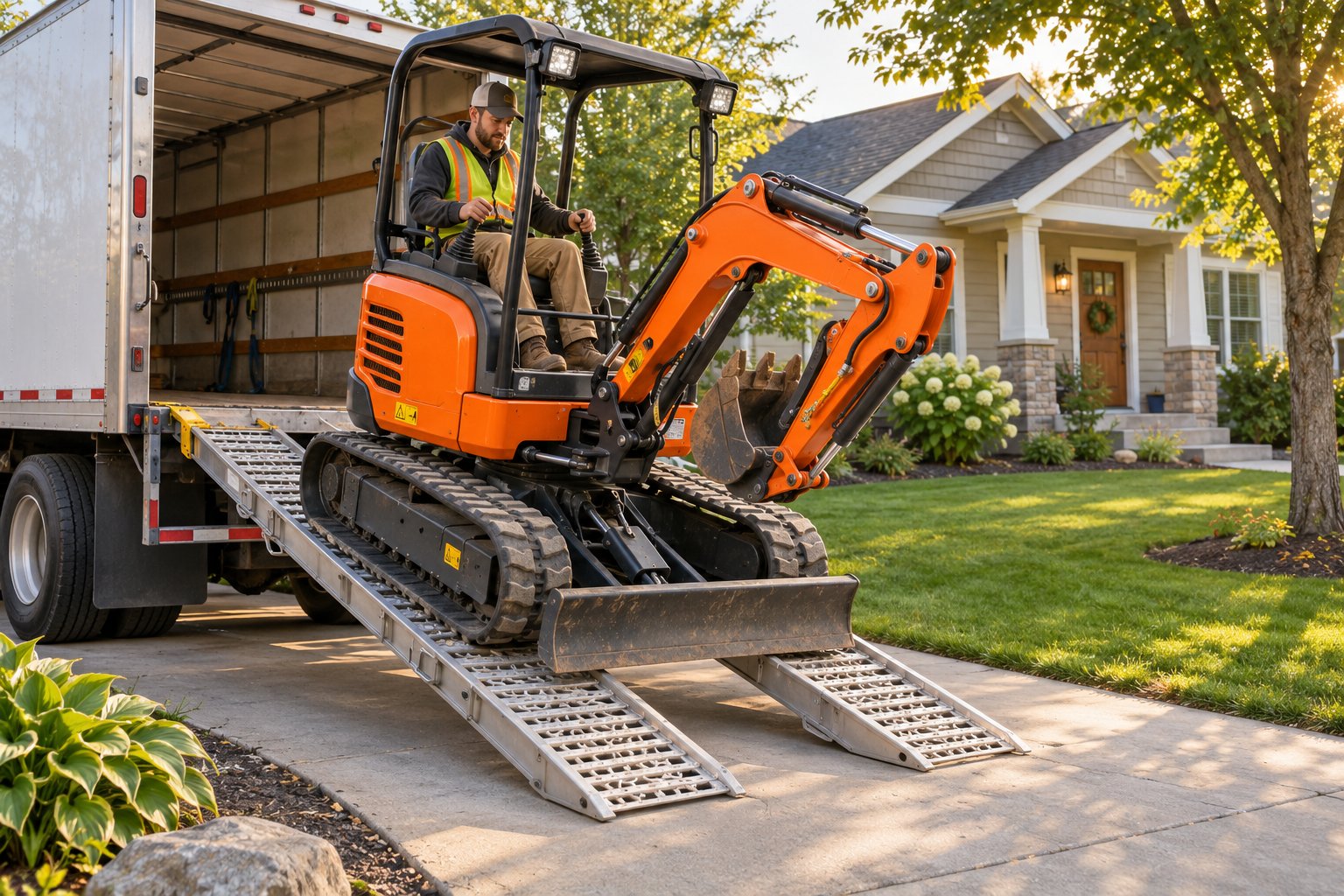
Renting vs. Buying a Kubota U17 Mini Excavator
Not every buyer scrolling through listings for a Kubota U17 mini excavator actually needs to buy one. That might sound counterintuitive in an article about purchasing, but the smartest equipment decision isn't always ownership — sometimes it's renting, leasing, or testing the waters through a rent-to-own arrangement. If your project pipeline is unpredictable, your annual utilization is low, or you've never operated a 1.7-ton excavator before, spending $15,000 to $40,000 on a machine you might not use enough is a risk that deserves a harder look.
Renting a Kubota U17 Before Committing
Imagine you have three residential landscaping jobs booked over the next two months, each requiring a few days of trenching and grading. Do you need to own a mini excavator for that? Probably not. Renting a mini excavator in the 1-to-2-ton class costs roughly $200 to $250 per day, with weekly rates running three to four times the daily rate and monthly rates landing around ten to twelve daily rates. For a Kubota U17 or equivalent micro-excavator, you'll typically fall in that range — though exact figures vary by region, rental yard, and seasonal demand.
Here's the quick math. If you rent a 1.7-ton excavator at $225 per day for 10 days across those three projects, your total rental cost is around $2,250. Add delivery and pickup fees — typically $100 to $300 round trip — plus a damage waiver at 10-15% of the rental rate, and you're looking at roughly $2,700 to $3,000 all-in. Compare that to a used U17 purchase at $15,000 and the rental looks like a bargain — for now.
The economics flip once utilization crosses a threshold. Industry guidance suggests that ownership becomes economical at roughly 60 to 70 percent of working days annually — approximately 150 to 180 days of use per year. For most small contractors and landscapers, that's a high bar. A more practical breakpoint for a kubota u17 specifications machine in this price class: if you're renting a mini excavator 40 to 60 days per year, the cumulative rental cost starts approaching the annual ownership cost of a used unit when you factor in depreciation, insurance, maintenance, and storage. Below 40 days, renting almost always wins. Above 60, ownership starts pulling ahead — provided you have a place to store the machine and the ability to maintain it.
Renting also serves a purpose beyond pure cost comparison. If you've been evaluating kubota mini excavators for sale but haven't operated one in the field, a week-long rental gives you hands-on experience with the U17's digging envelope, control responsiveness, and transport logistics. You'll quickly discover whether the 7-foot-6-inch dig depth handles your typical projects or leaves you wishing for more reach. That $600 to $1,000 week of real-world testing tells you more than any spec sheet or YouTube review ever could.
Rent-to-Own and Lease Options
Between renting by the day and buying outright sits a middle ground that many buyers overlook entirely: rent-to-own programs and equipment leases. Both let you spread payments over time while keeping cash reserves intact — but they work very differently in practice.
Rent-to-own programs are offered by some Kubota dealers and independent equipment rental companies. The structure is straightforward: you rent the machine at a standard or slightly elevated rental rate, and a portion of each payment applies toward the eventual purchase price. After a set period — often 12 to 24 months — you've built enough equity in the machine to convert the rental into a purchase, sometimes with a buyout amount that reflects what you've already paid. The advantage is flexibility. If the work dries up or the machine doesn't fit your needs, you can return it without being locked into a loan. The disadvantage is cost — you'll typically pay more over the total term than you would with a conventional equipment loan, because the rental company is absorbing the risk of you walking away.
Equipment leasing operates more like a structured finance arrangement. An operating lease lets you use the machine for a defined term — commonly 24 to 60 months — with fixed monthly payments that are generally lower than loan payments because you're not paying toward full ownership. At the end of the lease, you either return the machine, extend the lease, or purchase it at fair market value. Leasing is particularly attractive for preserving working capital, since it converts a large capital expenditure into a predictable monthly operating expense. For a small contractor whose cash flow swings with the seasons, that predictability can be the difference between covering payroll in January and scrambling for a line of credit.
The tax treatment also differs meaningfully between the two paths. Purchased equipment can be depreciated under Section 179, allowing qualifying businesses to deduct the full purchase price in the year of acquisition up to annual limits. Lease payments, on the other hand, are typically deductible as operating expenses in the year they're incurred — simpler accounting, but without the accelerated depreciation benefit. Your accountant or tax advisor should run the comparison based on your specific situation, because the better option depends on your current-year tax liability, business structure, and how long you intend to keep the machine.
One important caution with leasing: early termination penalties can be steep, sometimes requiring you to cover all remaining lease payments plus a termination fee. Before signing a lease on a Kubota U17, make sure your projected utilization justifies the full term — backing out early can cost nearly as much as completing the lease.
So how do you decide which path fits your situation? These criteria tend to sort buyers cleanly:
- Projected annual hours under 200: Renting on a per-project basis is almost certainly the most cost-effective approach. You avoid depreciation, storage, insurance, and off-season carrying costs entirely.
- Projected annual hours between 200 and 500: This is the gray zone. Run the break-even math between cumulative rental costs and annual ownership costs. Rent-to-own can be a smart hedge if you're not sure your pipeline will sustain those hours year over year.
- Projected annual hours above 500: Ownership — via purchase or finance — typically wins. At this utilization level, you're spreading fixed costs across enough productive hours that the per-hour ownership cost drops well below rental rates.
- Fewer than 5 projects per year requiring a mini excavator: Rent. The machine would sit idle more than it works, and idle equipment costs you money every day it doesn't move.
- 10+ projects per year with consistent excavator needs: Buy or lease. Steady demand justifies the commitment, and you eliminate the risk of rental unavailability during peak season.
- No secure storage available: Lean toward renting or leasing with a dealer who stores the machine between uses. An unsecured mini excavator is a theft target — and stolen equipment is an uninsured loss for many small operators.
- Limited mechanical maintenance capability: Renting includes maintenance in the rate. Owning means you're responsible for every oil change, grease cycle, and repair. If you don't have the tools, space, or knowledge to maintain a diesel-hydraulic machine, rental converts that burden into a cost someone else absorbs.
- Testing a new service offering: If you're a landscaper considering adding excavation to your services, rent first. A few weeks of real-world use on actual client projects will validate whether the Kubota U17 mini excavator fits your workflow — and whether clients will pay enough for the service to justify eventual ownership.
The rent-versus-buy decision isn't a one-time calculation — it's a framework you should revisit annually as your project volume, cash position, and storage situation evolve. What makes sense this year may flip next year if you land a major contract or lose a key client. The goal isn't to commit permanently to one approach. It's to deploy capital where it generates the highest return, whether that means signing a purchase agreement, writing a monthly lease check, or picking up the phone to book a rental for next Tuesday.
Whichever path you choose, the decision gains clarity only when you've worked through every preceding step — identifying the right U17 variant, confirming the specs match your needs, understanding fair market value, and knowing exactly what to inspect. Pulling all of those threads together into a single actionable framework is the final piece of the puzzle.
Making a Smart Kubota U17 Purchase Decision
Every section of this guide has been building toward one outcome: giving you the confidence to act decisively when the right U17 excavator appears. Confidence doesn't come from impulse — it comes from preparation. The buyers who negotiate the best kubota excavator prices, avoid hidden repair bills, and walk away from bad deals aren't luckier than everyone else. They're simply better prepared. Here's your framework for joining that group.
Your Pre-Shopping Decision Checklist
Before you contact a single seller or place a single bid, work through these steps in order. Skipping ahead is how expensive mistakes happen.
- Identify the right U17 variant for your budget and needs. Know whether you're targeting a current-generation U17-5, a value-oriented U17-3, or an older original U17. Each generation carries different capabilities, different kubota u17 lift capacity ratings, and different price expectations. Confirm the variant through the data plate — never trust a listing title alone.
- Verify that the specifications match your actual project demands. Cross-reference the U17's 7-foot-6-inch dig depth, 3,547-pound bucket breakout force, and 7.3-gpm auxiliary flow against the work you do most often. If 80 percent of your projects fall within these limits, you've found your machine class. If they don't, save yourself money and frustration by sizing up or down before you shop.
- Establish a fair price range based on real market data. Anchor your expectations to actual auction results and dealer asking prices for the specific variant and hour range you're targeting — not a single marketplace average that blends pristine low-hour units with high-hour workhorses. A used U17 at auction typically falls between $8,000 and $20,000; dealer-listed units run 15-30% higher for comparable machines.
- Inspect every candidate using the full checklist. Undercarriage, hydraulics, engine cold start, pin-and-bushing wiggle test, structural integrity, cab condition, and blade operation — in that order. Print the 12-step inspection sequence from this guide and bring it to every viewing. No exceptions.
- Choose your buying channel deliberately. Weigh dealer security against auction savings against private-sale negotiation room. Factor in your mechanical confidence, your tolerance for risk, and whether warranty coverage matters enough to justify the dealer premium.
Starting Your Search with Confidence
The most effective buyers cast a wide net. Search authorized Kubota dealers for new and certified pre-owned inventory. Scan MachineryTrader and TractorHouse for the broadest selection of used listings. Monitor Purple Wave and Ritchie Bros. auctions for below-market opportunities. Check local classifieds for private-party deals where direct negotiation keeps prices lean.
For those exploring international options, sellers like JIUHONG Machinery offer detailed product pages — their Kubota U-17 listing, for instance, shows a machine weight of 1,805 kg (near 2 metric tons, not an exact 2,000-kg unit) and includes an inquiry form for pricing and availability. That kind of structured listing gives remote buyers a concrete starting point for comparison, even before committing to a conversation. Treat it as one data point among several in your cross-channel research.
Informed buyers negotiate better, inspect sharper, and walk away faster when something doesn't add up. You now have the variant knowledge, specification benchmarks, pricing context, inspection discipline, and channel awareness that most U17 shoppers lack entirely. Use all of it. The right machine at the right price is out there — and you're ready to recognize it when you find it.
Frequently Asked Questions About Buying a Kubota U17
1. How much does a used Kubota U17 cost?
Used Kubota U17 prices vary widely based on model generation, hour meter reading, and sales channel. At equipment auctions, most units sell between $8,000 and $20,000 — for example, a 2020 model with around 650 hours may fetch $18,700, while a 2014 unit with over 2,000 hours might sell closer to $9,000. Dealer-listed used machines typically run 15-30% higher than auction prices for comparable condition and hours. New U17-5 units from authorized Kubota dealers generally fall in the mid-$30,000 to low-$40,000 range. When comparing prices, always confirm the exact model variant and hour reading, since a U17-3 and a U17-5 at the same price represent very different value propositions.
2. What is the difference between the Kubota U17, U17-3, and U17-5?
These designations represent different generations of the same platform, each with meaningful upgrades. The original U17 featured a basic Kubota three-cylinder diesel with limited operator amenities. The U17-3 introduced improved emissions compliance, better hydraulic responsiveness, and ergonomic refinements. The current U17-5, launched in January 2025, is the most significant overhaul — it includes hydraulically adjustable tracks (39.4 to 51.2 inches), a factory-welded thumb bracket, standard auxiliary diverter valve, KubotaNOW telematics, LED boom lights, and a redesigned operator station. Visually, the U17-5 is identifiable by its two-tone orange and black color scheme, while older models wear uniform orange paint.
3. What can you dig with a Kubota U17 mini excavator?
The Kubota U17-5 offers a maximum dig depth of 7 feet 6.2 inches and a bucket breakout force of 3,547 pounds, making it well-suited for residential landscaping, utility line trenching (water, gas, electrical, fiber-optic), small foundation footings, driveway and patio preparation, indoor demolition, and cemetery work. Its zero-tail-swing design and 4-psi ground pressure allow it to work safely in tight spaces — alongside buildings, fences, and on finished lawns — without causing surface damage. However, projects requiring trench depths beyond 7.5 feet, buckets wider than 18 inches, or heavy production earthmoving exceed the U17's practical limits.
4. What should I inspect before buying a used Kubota U17?
A thorough pre-purchase inspection should follow a systematic sequence starting with the undercarriage, which accounts for 40-50% of a tracked machine's lifetime operating cost. Check rubber track pad wear and cracking, roller seals for oil leaks, sprocket tooth profiles for hooking or thinning, and track tension. Next, inspect all hydraulic cylinder rods for pitting or seal leakage, trace hoses for cracking and wet fittings, and check hydraulic oil color — milky fluid indicates water contamination, which is a deal-breaker. Witness a cold engine start to evaluate exhaust smoke and cranking behavior. Perform a pin-and-bushing wiggle test at every boom, arm, and bucket joint to assess structural wear. Finally, test all hydraulic functions through full range of motion and verify instrument panel operation.
5. Is it better to rent or buy a Kubota U17 mini excavator?
The answer depends on your annual utilization. Renting a 1-to-2-ton mini excavator costs roughly $200-$250 per day, making it the smarter choice if you need the machine fewer than 40 days per year. Once usage exceeds 60 days annually, cumulative rental costs begin approaching the annual ownership cost of a used unit when you factor in depreciation, insurance, maintenance, and storage. For buyers in the gray zone (200-500 projected annual hours), rent-to-own programs offer flexibility — a portion of each rental payment applies toward eventual purchase, with the option to return the machine if work volume drops. Equipment leasing is another middle-ground option that preserves working capital through fixed monthly payments.