

Why Kubota Mini Excavator Prices Are So Hard to Pin Down
Imagine you're ready to pull the trigger on a Kubota mini excavator. You hop online, expecting a straightforward price list, and instead you hit a wall. Dealer websites show inventory photos with no context. Equipment marketplaces display hundreds of listings but zero pricing guidance. Even Kubota's own pages only tell part of the story. If you've felt that frustration, you're not alone — getting a clear picture of what a Kubota mini excavator price actually looks like is one of the most common headaches in the compact equipment world.
Why Transparent Kubota Pricing Is Hard to Find
Here's the core issue. Kubota USA splits its compact excavator and mini excavator lineups across two separate series pages. The KX Series page advertises a single starting MSRP of $28,450 for the entire line, covering everything from the tiny K008-5 up to the heavy-hitting KX080-5. The U Series page is slightly more helpful, listing individual model MSRPs starting at $31,045 for the U10-5. But nobody — not Kubota, not dealers, not competing guides — consolidates both series into a single, side-by-side pricing reference. You'll find kubota deals on tractors and mowers promoted heavily, yet excavator and mini excavator pricing remains scattered across disconnected sources. The result? Buyers are left bouncing between tabs, comparing apples to oranges.
What This Pricing Guide Covers
This guide changes that. We've built a consolidated resource covering new MSRPs for every current KX and U Series model, used market expectations, head-to-head brand comparisons, mini excavator financing realities, and total cost of ownership — everything you need before requesting a single dealer quote. Whether you're shopping Kubota compact tractors for a small farm or pricing excavator excavators for a landscaping fleet, the goal is the same: arm you with real numbers so you negotiate from a position of strength.
The sticker price is only one piece of the puzzle — what you actually pay depends on at least six major variables.
Those variables range from model class and dealer markup to attachments, regional demand, and financing terms. Each one can shift your out-the-door cost by thousands of dollars — and each one gets its own deep dive in the sections ahead.
Every Kubota Mini Excavator Model and Its Price Range
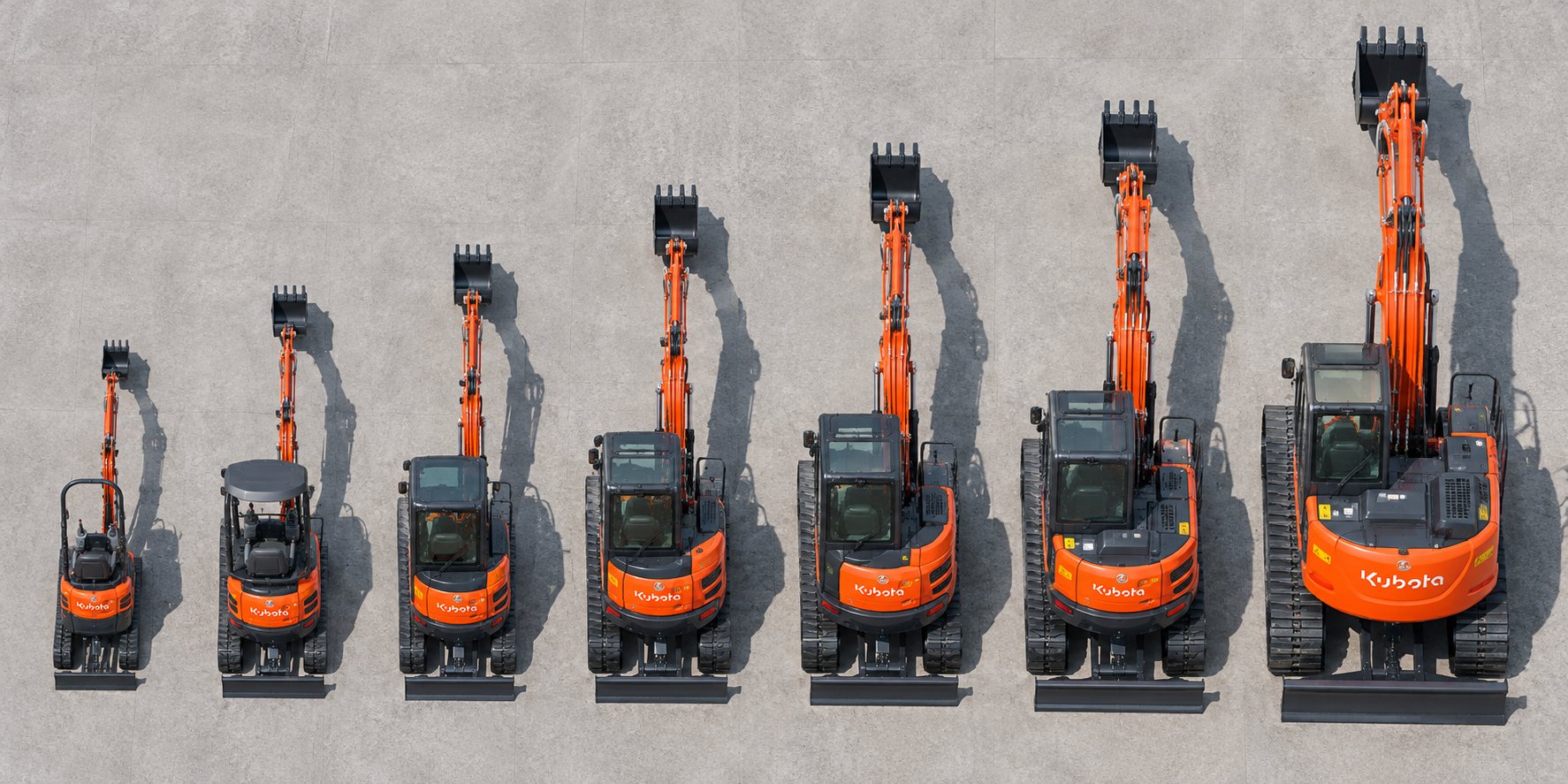
Kubota splits its compact excavator lineup into two distinct families — the KX Series and the U Series — each marketed on its own webpage with its own spec sheets. That split forces buyers to toggle between pages and mentally piece together which models exist and what they cost. Below, you'll find every current Kubota mini excavator and Kubota excavator model organized into one place, with verified MSRPs pulled directly from Kubota USA's KX Series and U Series pages.
KX-Series Compact Excavator Pricing
The KX Series is Kubota's performance-oriented line, built around conventional tail swing for maximum stability and digging power on open job sites. It spans everything from the micro-class K008-5 all the way up to the 8-ton-plus KX080-5, and that range explains why the official "starting MSRP" of $28,450 can be misleading without model-level detail.
Here's what each KX model costs at its base configuration:
- K008-5 — MSRP as low as $28,450 | 10.3 HP | 2,315 lbs operating weight | 5 ft 8 in max dig depth
- KX018-4 — MSRP as low as $39,520 | 15.5 HP | 3,737 lbs | 7 ft 9.7 in dig depth
- KX030-4 — MSRP as low as $50,369 | 23.7 HP | 6,272 lbs | 9 ft 7 in dig depth
- KX033-4 — MSRP as low as $56,901 | 23.2 HP | 7,420 lbs | 10 ft 6 in dig depth
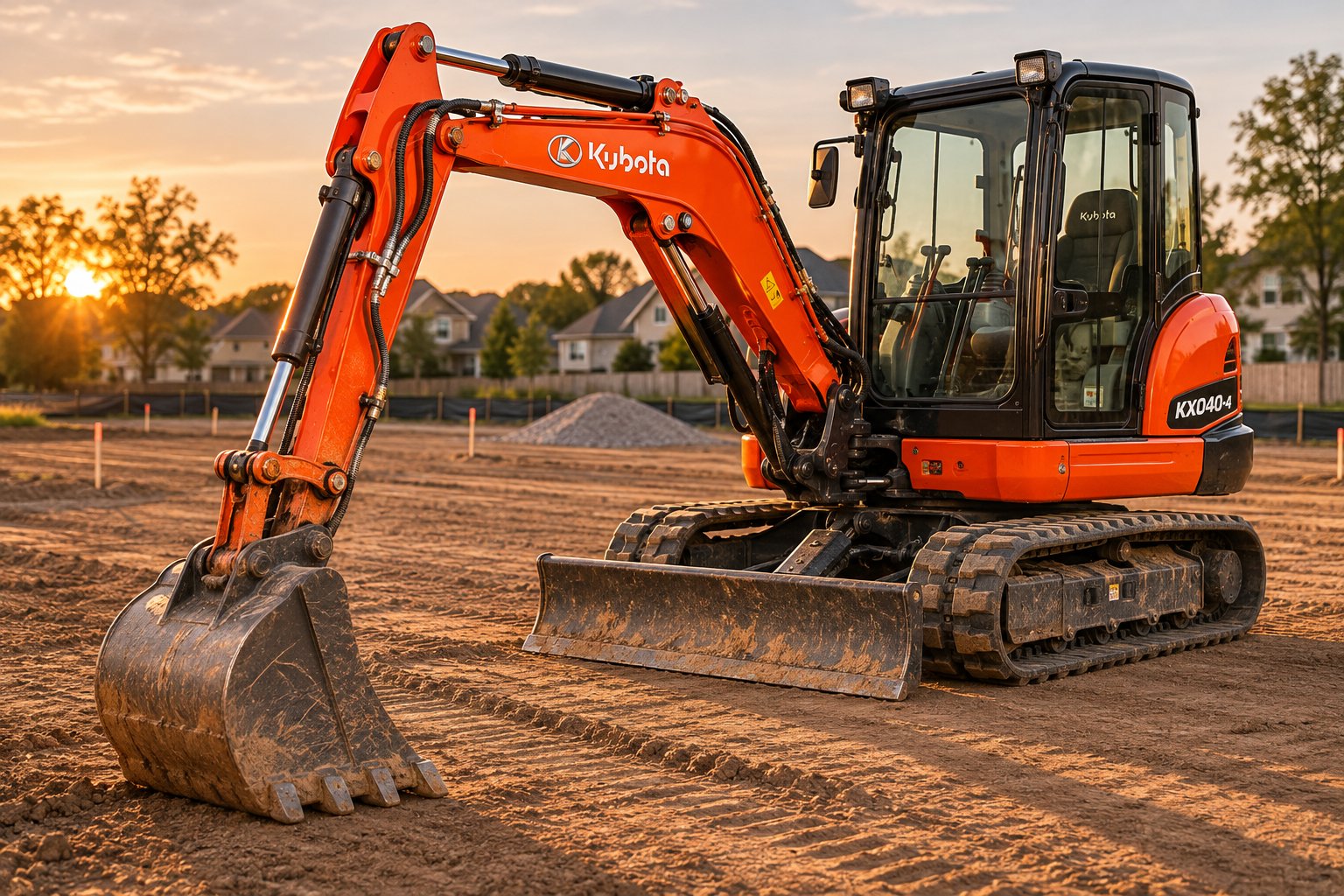
- KX040-4 — MSRP as low as $64,946 | 38.9 HP | 9,195 lbs | 7 ft 4.8 in dig depth
- KX040-5 — MSRP as low as $68,768 | Updated generation of the Kubota KX040 platform
- KX057-5 — MSRP as low as $88,140 | 46.4 HP | 12,346 lbs | 12 ft 9 in dig depth
- KX080-5 — MSRP as low as $138,273 | 66.6 HP | 18,280 lbs | 15 ft 1 in dig depth
Notice the jump between the KX040-4 and KX040-5. Both represent the popular Kubota 40 excavator class, yet the newer KX040-5 commands roughly $3,800 more at base MSRP — a premium that buys you updated features like an available 6-way angle blade. If you're researching the kubota kx040 price specifically, keep in mind that both generations may still appear on dealer lots, and the older KX040-4 sometimes offers better value for buyers who don't need the latest refinements.
U-Series Mini Excavator Pricing
Where the KX Series prioritizes raw digging capability, the U Series is designed for tight-access work. Models feature tight-tail or zero-tail swing, meaning the counterweight barely extends past the track width. That makes them ideal for residential neighborhoods, alongside buildings, and in congested commercial spaces where every inch of clearance matters.
Current U-Series models and their verified MSRPs:
- U10-5 — MSRP as low as $31,045 | 10.3 HP | 2,646 lbs | 5 ft 11 in dig depth
- U17 — MSRP as low as $35,072 | 16.1 HP | 3,693 lbs | 7 ft 7 in dig depth
- U17-5 — MSRP as low as $37,920 | Zero-tail swing configuration
- U27-4 — MSRP as low as $45,713 | 20 HP | 5,688 lbs | 9 ft 5 in dig depth
- U35-4 — MSRP as low as $56,147 | 23.9 HP | 8,488 lbs | 9 ft 8.9 in dig depth
- U48-5 — MSRP as low as $76,131 | 38.9 HP | 10,848 lbs | 10 ft 8 in dig depth
- U55-5 — MSRP as low as $82,642 | 46.4 HP | 12,247 lbs | 11 ft 11 in dig depth
You'll notice the U-Series pricing starts slightly higher than the KX-Series at the micro level — the U10-5 opens at $31,045 compared to the K008-5's $28,450 — but that gap reflects the added engineering behind the tight-tail design. For buyers focused on confined spaces, the premium typically pays for itself in reduced risk of property damage and faster cycle times in close quarters.
Combined Pricing Reference Table
This is the table nobody else publishes. Every current Kubota mini excavator — KX and U combined — sorted from least to most expensive so you can quickly spot which models match your budget and job type.
| Model | Series | Operating Weight Class | MSRP (As Low As) | Best For |
|---|---|---|---|---|
| K008-5 | KX | Micro (0-1 ton) | $28,450 | Tight indoor work, shallow trenching |
| U10-5 | U | Micro (0-1 ton) | $31,045 | Residential landscaping, utility repairs |
| U17 | U | Mini (1-2 ton) | $35,072 | Homeowner projects, precision grading |
| U17-5 | U | Mini (1-2 ton) | $37,920 | Zero-tail tight-space excavation |
| KX018-4 | KX | Mini (1-2 ton) | $39,520 | Light trenching, small demolition |
| U27-4 | U | Compact (2-3 ton) | $45,713 | Utility installation, foundation prep |
| KX030-4 | KX | Compact (3 ton) | $50,369 | Trenching, small site prep |
| U35-4 | U | Compact (3-4 ton) | $56,147 | Contractor workhorse, tight-access grading |
| KX033-4 | KX | Compact (3-4 ton) | $56,901 | General contracting, material handling |
| KX040-4 | KX | Mid-size (4-5 ton) | $64,946 | Small fleet operations, versatile jobsite work |
| KX040-5 | KX | Mid-size (4-5 ton) | $68,768 | Updated KX040 with advanced blade options |
| U48-5 | U | Mid-size (5 ton) | $76,131 | Tight-tail commercial excavation |
| U55-5 | U | Mid-size (5-6 ton) | $82,642 | Heavy utility work in confined areas |
| KX057-5 | KX | Mid-size (6 ton) | $88,140 | Commercial projects, deep excavation |
| KX080-5 | KX | Heavy (8+ ton) | $138,273 | Municipal work, large commercial builds |
A few patterns jump out. The sweet spot for small contractors — models in the $50,000 to $70,000 range — is also the most crowded tier, with the KX030-4, KX033-4, U35-4, and both Kubota KX040 generations competing for attention. That density means more room to negotiate, especially if you're willing to consider a used Kubota mini excavator from the previous generation rather than the latest release.
Also worth noting: these MSRPs represent the lowest available starting price for each model, typically in a canopy (open-cab) configuration without angle blades or premium attachments. Add an enclosed cab, air conditioning, or a hydraulic thumb, and the actual purchase price can climb well beyond these figures — a topic the next section covers in detail alongside how the used market stacks up against these new sticker prices.
New vs. Used Kubota Mini Excavator Pricing Explained
Those new MSRPs tell you what Kubota charges at the factory gate — but a massive share of buyers never pay them. The used market for Kubota small excavator models is one of the most active in the compact equipment industry, with thousands of pre-owned KX and U Series machines changing hands every year through dealers, auctions, and private sales. The question isn't whether used inventory exists. It's how much is a mini excavator actually worth once it's logged real hours on real job sites? That's the pricing gap most listings never fill.
How Used Kubota Prices Compare to New MSRPs
Compact excavators follow a depreciation curve that's steeper in the early years and gradually flattens as the machine ages. According to 2026 equipment appraisal data, Kubota mini excavators depreciate at roughly 12-16% per year for the first three years, then slow to 7-10% annually through years four to eight. That's noticeably better than the broader category average, where year-one depreciation alone can reach 18-22% for less established brands.
What does that look like in dollar terms? Consider the KX040-4, one of the most popular models in Kubota's lineup. A new unit lists at $64,946, yet a well-maintained 2018-2021 example with under 1,500 hours typically trades in the $32,000-$52,000 range — representing 40-60% of the original sticker price depending on condition and documentation. Smaller models compress the gap further. A used KX018-4 with 500-1,500 hours realistically falls between $14,000 and $22,000, while the U17 in similar condition runs $16,000-$24,000.
Three factors dominate resale value more than anything else: machine hours logged, maintenance documentation, and model generation. A Kubota excavator for sale with a complete service history and consistent fluid-change records commands a measurable premium over an identical model with gaps in its paperwork. Condition documentation is, by a wide margin, the single greatest price lever in the used market.
What to Look for When Evaluating Used Kubota Pricing
Browsing a kubota mini excavator for sale listing is easy. Determining whether the asking price is fair requires looking beyond the headline number. Dealer listings from authorized resellers typically include machine hours, horsepower, serial numbers, and operating weight — and those are the exact data points you should be comparing across multiple listings before making an offer.
Here's the reality: a 2018 KX040 with under 1,500 hours and documented maintenance will list at $38,000-$46,000 in most U.S. markets. Add a hydraulic thumb attachment, and the price climbs another $2,000-$4,000. Remove the maintenance records and defer undercarriage service, and that same machine drops to $28,000-$32,000. The spread between "good" and "questionable" condition on the same model can exceed $15,000.
Before committing to any used purchase, work through these evaluation criteria:
- Machine hours vs. visible wear — A "low-hour" unit with worn pedals, a tattered seat, and loose joystick controls doesn't add up. Cross-reference displayed hours against engine ECU readouts and service stickers.
- Hydraulic system condition — Run all functions (boom, arm, bucket, swing, travel) for at least 10 minutes. Inspect every cylinder seal, hose junction, and control valve for seepage or sluggish response.
- Undercarriage wear — Check track tension, sprocket teeth, roller condition, and rubber track integrity. Undercarriage replacement on a KX040 runs $3,000-$6,500, making it one of the costliest surprises for unprepared buyers.
- Boom and structural welds — Use a flashlight at weld seams and pivot points. Fresh paint over structural areas is a common cover for repaired cracks. Not automatically disqualifying, but it must be disclosed and inspected.
- Cold-start behavior — A healthy Kubota diesel starts cleanly within two glow-plug cycles. Blue smoke means oil burning; white smoke in warm conditions points to coolant intrusion.
- Included attachments — Buckets, thumbs, quick couplers, and breakers all add value. Confirm exactly what's included in the listed price and verify that auxiliary hydraulics function properly.
- Title and documentation — Verify a clean title, check for lien releases, and match the serial number against Kubota's published VIN format. Gaps in service records are a legitimate red flag.
- Geographic market pricing — The same model can sell for noticeably different prices depending on regional demand. Urban markets with tight-access work tend to price U-Series machines higher, while rural areas may favor the KX-Series at a premium.
At any price point above $20,000, spending $150-$300 on an independent mechanic inspection is one of the highest-ROI steps in the entire buying process. Think of it as insurance on your due diligence. Sellers who refuse third-party inspections are signaling something — walk away without hesitation.
Where to Browse Used Kubota Inventory
The used Kubota market is served by three main channels, each with a different risk-reward profile. Authorized Kubota dealers offer reconditioning, verified service history, and sometimes limited powertrain warranties — but you'll pay a 10-18% markup over private sales for that peace of mind. Online auction platforms like Ritchie Bros. and IronPlanet cast the widest net, with listings across every U.S. state and auction prices that typically run 8-15% below dealer retail. The trade-off is limited inspection time and no warranty coverage. Private sellers on marketplace platforms round out the spectrum — genuinely good deals appear there, but so do misrepresented machines.
For buyers specifically looking to compare Kubota models side by side, specialty equipment resellers can simplify the search. JIUHONG's Kubota excavator collection, for example, lets you browse available U-Series and KX-Series listings, compare condition details, and request quotes across their inventory — a useful starting point when you want to evaluate multiple Kubota options in one place. Whichever channel you choose, the strategy stays the same: collect listings from at least two or three sources, compare pricing against the used ranges above, and never skip the inspection checklist.
One more consideration worth flagging: not every buyer needs to own. If your project timeline is short or your workload is seasonal, trackhoe rental or short-term leasing may deliver better economics than purchasing — even at used pricing. For larger models like the Kubota KX080, where used units still command $50,000-plus, running the rent-vs.-buy math before committing can save you significant capital. The right answer depends on how many hours you'll realistically put on the machine each year, which connects directly to the broader set of factors that shape what any Kubota mini excavator actually costs.
Key Factors That Determine What You Actually Pay for a Small Excavator
Two buyers walk into two different Kubota dealerships on the same day, looking at the same KX040-4, and walk out with quotes that are thousands of dollars apart. How? Because the MSRP printed on Kubota's website is a starting line, not a finish line. At least six variables sit between that published number and the actual check you write — and understanding each one is the difference between overpaying and negotiating a fair deal.
Model Size, Class, and Specification Tier
Operating weight class is the single largest price driver in the compact excavator market. Kubota's lineup stretches from the 2,315-pound K008-5 at $28,450 to the 18,280-pound KX080-5 at $138,273 — nearly a 5x price multiplier across a 7.9x weight spread. That correlation isn't linear, either. You'll notice the steepest price jumps occur when machines cross key capability thresholds: from micro (under 1 ton) into mini (1-2 tons), and again from compact (3-4 tons) into the 5 ton excavator class and above, where heavier structural steel, larger hydraulic pumps, and more powerful diesel engines compound the bill of materials.
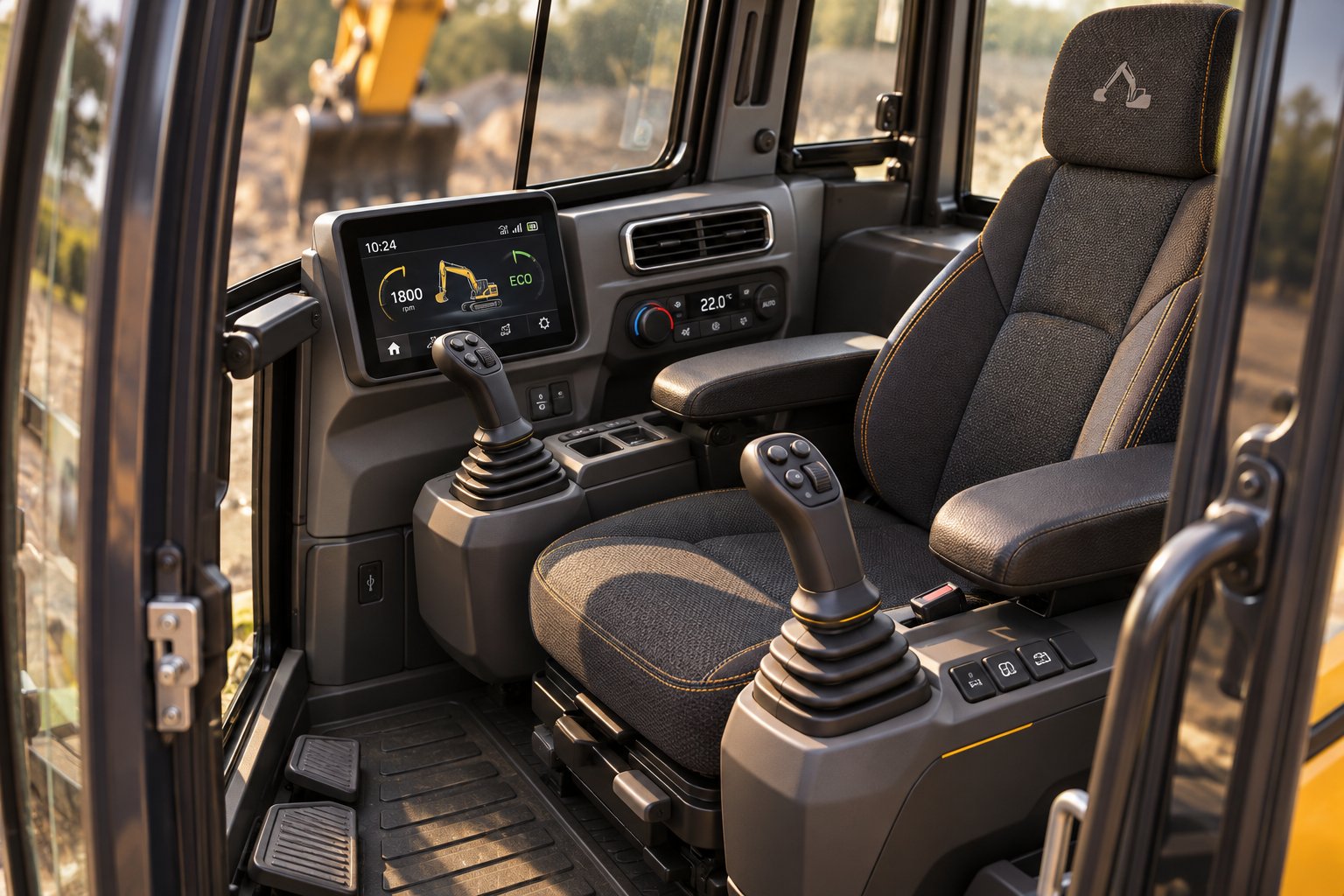
Specification tier layers additional cost on top of base weight class. A canopy-only configuration — the open-air operator station you'll see on entry-level quotes — represents the "as low as" MSRP. Step up to an enclosed cab, and you're typically adding $4,000-$8,000 depending on the model. Add air conditioning, and another $1,500-$3,000 lands on the invoice. Advanced hydraulic packages with proportional controls and higher auxiliary flow rates push costs further because they require upgraded pumps, valves, and wiring harnesses. As industry pricing guides consistently note, a machine configured for one application may carry a very different price tag than the same model configured for another — even when the base platform is identical.
This is exactly why two listings for the same model at different prices aren't automatically a red flag. The lower quote might be a canopy unit with a standard bucket; the higher one might include an enclosed cab, climate control, and auxiliary hydraulic plumbing ready for powered attachments. Always compare the complete machine configuration, not just the model name.
Dealer Markup, Regional Demand, and Supply Conditions
Kubota distributes through an authorized dealer network, and that model means final pricing is never truly fixed at the national level. Each dealer sets their own margin based on local operating costs, competitive pressure, inventory levels, and seasonal demand patterns. A Kubota compact excavator sitting in a high-demand metro market — think Dallas, Atlanta, or Phoenix during peak construction season — will frequently carry a higher out-the-door price than the identical unit at a rural dealership in the Midwest where foot traffic is slower and inventory sits longer.
Seasonal timing matters more than most buyers realize. Dealer lots tend to be fullest in late fall and winter when construction activity slows in northern states, and that surplus creates negotiating leverage for buyers willing to purchase off-season. Conversely, spring and early summer bring the strongest demand, tightest inventory, and least flexible pricing. If your project timeline allows it, buying a KX057-5 in November rather than April could save you a meaningful percentage off the sticker — not because the MSRP changed, but because the dealer's motivation to move units shifted.
Supply chain conditions also play a role. During periods of tight inventory — which the equipment industry experienced heavily in recent years — dealers had little incentive to discount. When supply normalizes and lots fill up, competitive pressure between dealers in overlapping territories pushes prices closer to or even below MSRP on slower-moving models. Buyers who request quotes from three or more dealers simultaneously put themselves in the strongest negotiating position regardless of market conditions.
Attachments, Packages, and Add-Ons
Here's where the gap between the advertised price and your actual investment really widens. A base-MSRP Kubota typically ships with a standard digging bucket and not much else. Every additional capability — thumbs for gripping logs and debris, trenching buckets for utility work, hydraulic breakers for demolition, and angle blades for backfilling — adds to the total purchase price. For contractors who need a versatile machine, attachment costs can represent 15-30% of the base machine price.
The price impact breaks down into three tiers:
- Minor impact ($500-$2,000): Additional standard-width buckets, bolt-on cutting edges, LED work light kits, rearview camera systems, and protective belly guards.
- Moderate impact ($2,000-$6,000): Hydraulic thumb attachments, mechanical quick couplers, angle or 6-way blades, and narrow trenching buckets with teeth upgrades.
- Significant impact ($6,000-$15,000+): Hydraulic breaker packages (which may require auxiliary plumbing), auger drive units, hydraulic quick coupler systems with multi-circuit connections, and premium cab packages bundling HVAC, suspension seats, and advanced display monitors.
Bundled packages from dealers sometimes offer better economics than purchasing attachments individually. If you're browsing kubota diggers for sale and you find a unit already equipped with a thumb and extra buckets, run the math — a "more expensive" listing that includes $5,000 worth of attachments may actually be the cheaper path compared to buying a stripped base machine and adding everything aftermarket.
One often-overlooked cost amplifier: hydraulic compatibility. Not every attachment works with every machine's hydraulic flow rate and pressure. Mounting a breaker designed for a larger excavator onto a smaller Kubota won't just underperform — it can damage the hydraulic system. Matching attachments to the machine's auxiliary hydraulic specifications avoids both wasted money and repair bills. When requesting dealer quotes, always specify which attachments you need so the pricing reflects a configuration that actually works together.
These six factors — weight class, spec tier, cab configuration, dealer and regional dynamics, seasonal timing, and attachment packages — explain why two seemingly identical Kubota mini excavators can differ by $10,000 or more at the point of sale. They also explain why informed buyers consistently pay less: when you understand the variables, you can separate genuine value from unnecessary markup. That same principle applies when stacking Kubota against its direct competitors, where brand positioning and long-term value retention add yet another dimension to the pricing equation.
How Kubota Mini Excavator Prices Compare to Competing Brands
Brand positioning and long-term value retention create a pricing dimension that pure MSRP lists miss entirely. A Kubota KX040 at $65,000 isn't expensive or cheap in isolation — it's only meaningful when you know what Caterpillar, Bobcat, John Deere, and budget alternatives charge for equivalent capability. Yet none of the pricing guides currently ranking for compact excavators for sale provide that direct comparison. Here's what the competitive landscape actually looks like across the kubota excavator models buyers shop most frequently.
Kubota vs. Cat, Deere, and Bobcat Pricing
Kubota occupies a premium-but-not-top-dollar position among major North American brands. In the 4 ton mini excavator class — the highest-volume segment for commercial buyers — 2026 dealer quotes collected by HeavyDutyYard show the Kubota KX040-4 pricing at $72,500-$82,500 with standard equipment (bucket, thumb, rubber tracks, and enclosed cab). The Bobcat E35 in the same class runs $68,500-$78,500, while the Takeuchi TB335R lands at $74,000-$84,500. Caterpillar's comparable 303 CR sits around $52,000-$60,000 in the slightly smaller 3.5-ton configuration, though stepping up to Cat's true 5-ton competitor pushes pricing above Kubota's range.
The pattern repeats at other size classes. In the 2-ton segment, the Kubota U17 comes in at $34,500-$39,500 — slightly cheaper than both the Bobcat E20 ($36,000-$41,000) and the Takeuchi TB216 ($36,500-$42,500). At the 5-6 ton level, the Kubota KX057-5 ranges from $92,500 to $104,500, slotting between the Bobcat E50 ($88,500-$100,000) and Takeuchi TB260 ($94,500-$106,500). Bobcat consistently prices lowest on new machines, while Takeuchi commands the highest sticker — but those upfront numbers only tell half the story.
Resale value flips part of that script. Based on auction data from Ritchie Bros, IronPlanet, and sold-inventory databases, a Kubota mini excavator retains roughly 60-64% of its original MSRP after five years and 2,500 hours. Bobcat machines retain 54-58%, and Takeuchi leads the pack at 65-66%. That 6-10 percentage point spread between Kubota and Bobcat translates to thousands of dollars in real trade-in value. On a $78,000 machine, it's the difference between getting $47,000 back and getting $42,000 — enough to cover a year's worth of maintenance and fuel. Kubota incentives on financing and trade-in programs occasionally narrow this gap further, but resale strength remains one of the brand's core economic advantages over Bobcat specifically.
Reliability also weighs into long-term value. HeavyDutyYard's 0-100 reliability index — built from owner surveys, rental-fleet repair data, warranty claims, and 1,200-plus pre-purchase inspections — scores Kubota at 88 overall, with a class-leading 94 on engine reliability. Bobcat scores 79, dragged down by electrical issues on older models. Takeuchi edges everyone at 90, driven by its legendary hydraulic and undercarriage durability. For buyers evaluating a new machine like the 2025 KX040-5R3TP or any current-generation Kubota, that engine reliability score means fewer unplanned shop visits and lower maintenance costs over the ownership cycle — benefits that don't appear on the sticker but absolutely appear in the total cost equation.
Kubota vs. Budget and Import Brands
Below the premium tier, a growing field of value-oriented competitors offers 20-40% lower purchase prices. Brands like SANY, XCMG, Hyundai, and various Chinese-manufactured compact excavators have improved dramatically in recent years — SANY alone holds roughly 15% of the global excavator market and has led Chinese sales for nine consecutive years, per 2025 market-share data. Kobelco excavators, while Japanese-made and closer to Kubota in build quality, also tend to price below Kubota on comparable models due to a thinner North American dealer network.
The trade-offs are real, though. A SANY SY35U in the 3.5-ton class lists around $35,000-$42,000 compared to $48,000-$55,000 for the Kubota U35 — a $13,000-plus savings at the point of sale. But five-year resale retention on SANY drops to 40-50% versus Kubota's 65-70%, meaning you recover $14,000-$21,000 on a SANY at trade-in compared to $31,000-$38,500 on a Kubota. The math narrows fast. One 5-year total cost of ownership analysis from Typhon Machinery's 2026 buyer comparison modeled a $55,000 premium brand against a $38,000 value brand and found that after factoring in higher maintenance costs, increased fuel consumption, and dramatically lower resale, the value brand's net 5-year cost actually exceeded the premium brand's by $2,500.
Parts availability and dealer support magnify this gap for buyers who depend on the machine daily. Kubota operates over 1,100 combined construction and agricultural dealers across North America. Bobcat runs 500-plus dedicated locations. Chinese brands? Growing rapidly in Asia, Africa, and the Middle East, but still thin in much of the U.S. — particularly outside major metro areas. A two-week wait on a $6,000 hydraulic pump can cost a working contractor $10,000-$20,000 in lost billable hours, as industry analysts consistently note. That downtime risk is effectively invisible at the point of purchase but very real at 2,000 hours.
Brand Comparison at a Glance
The table below frames Kubota's position against four competing brand categories. Use it as a quick reference for understanding where your upfront dollar goes — and where it comes back.
| Brand Tier | Typical Price vs. Kubota | Dealer Network Strength | Resale Value (5-Year) | Parts Availability |
|---|---|---|---|---|
| Caterpillar (Premium) | 5-15% higher | Strongest globally; unmatched in remote areas | 65-70% retention | Widest global coverage |
| Bobcat (Mainstream Premium) | 5-10% lower | Largest dedicated compact equipment network in North America (500+ dealers) | 54-65% retention | Excellent; deep rental-channel overlap |
| Takeuchi / John Deere (Strong Contender) | Similar to 5% higher (Takeuchi); similar (Deere) | Takeuchi: ~175 dealers, concentrated in commercial markets. Deere: strong ag/municipal network | 60-66% retention (Takeuchi leads) | Good; Takeuchi thinner in rural Midwest and Mountain West |
| Hyundai / Kobelco (Value-Oriented Japanese/Korean) | 10-20% lower | Moderate; growing aftermarket support | 50-60% retention | Good aftermarket; dealer density varies by region |
| SANY / XCMG / Chinese Brands (Budget) | 20-40% lower | Limited in North America; strong in Asia/Africa/Middle East | 35-50% retention | Improving rapidly but inconsistent in U.S. markets |
A few things stand out. Kubota's pricing sits in the middle of the premium pack — less than Caterpillar, more than Bobcat, and roughly comparable to Takeuchi and Deere. Its dealer network is the densest among Japanese brands in the U.S., and its resale retention consistently ranks second only to Takeuchi among the most-shopped compact excavator brands. For buyers who plan to trade or sell within five to seven years, that resale strength effectively subsidizes the upfront premium over budget alternatives. For buyers who intend to run a machine until it's fully depreciated, the lower entry cost of SANY or Hyundai can make financial sense — provided local parts and service support won't leave you stranded during a breakdown.
Ultimately, the "right" brand at the "right" price depends on your specific use case, which brings up a question the sticker never answers: how much machine do you actually need for the work you do? Matching budget to job type — rather than simply chasing the lowest number — is where smart buying decisions really get made.
Which Kubota Mini Excavator Fits Your Budget and Job Type
Sticker price and brand comparisons only matter when they're anchored to the work you actually need done. A $28,000 micro excavator is a terrible deal if it can't reach your trench depth — and a $138,000 heavy-duty unit is wasted capital if you're only grading residential driveways. Matching your budget to the right model class isn't about spending the least. It's about spending precisely enough to cover your most demanding use case without locking up money in capability you'll never touch.
Budget Under $30,000 — Micro and Small Class
At this entry tier, you're looking at new units like the K008-5 ($28,450 MSRP) or stepping into the used market for lightly worn compact mini excavator models from the U and KX families. A used Kubota KX018-4 with 800-1,200 hours frequently lands in the $16,000-$22,000 window, while a pre-owned U17 in good condition slots between $18,000 and $24,000 — both well within reach for homeowners, small-acreage property managers, and startup landscapers.
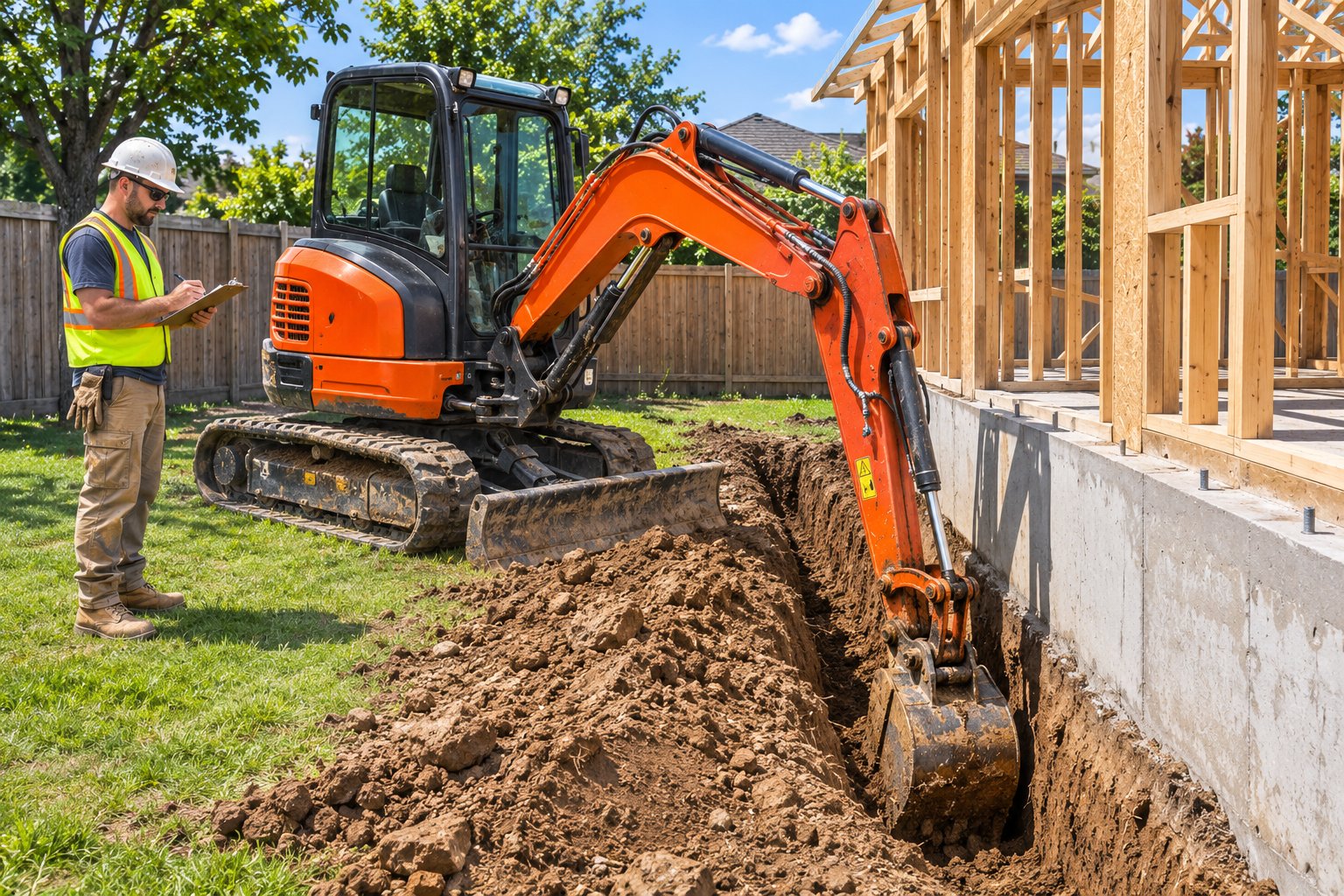
These machines shine in tight-access residential work. Imagine trenching a sprinkler system through a backyard gate, digging footings for a small deck, or installing a French drain along a foundation wall. Dig depths top out around 5-8 feet, and operating weights stay light enough to trailer behind a half-ton pickup. If you're searching for a kubota mini excavator for sale near me and your projects rarely exceed residential scope, this tier covers the vast majority of what you'll encounter.
The trade-off? Limited breakout force and shallow reach mean you'll hit the machine's ceiling quickly on commercial jobs. Operators who outgrow this class within a year end up renting larger units anyway — which is exactly the false economy the next tier eliminates.
Budget $30,000 to $60,000 — Mid-Range Workhorses
This is where Kubota excavators dominate the sales charts, and for good reason. Models like the KX033-4 ($56,901), U35-4 ($56,147), and the previous-generation Kubota KX040 4 ($64,946 new, or $38,000-$52,000 used) deliver the balance of power, transportability, and versatility that small contractors and landscaping companies depend on daily. EDA sales data confirms that the 3- to 4-metric-ton class represents the single highest-volume segment in compact excavator sales — and Kubota's U35-4 ranks No. 10 nationally, with the KX033-4 close behind.
Dig depths in this range stretch from 9.5 to 11 feet, horsepower climbs into the 23-39 HP band, and operating weights support serious attachment work — thumbs, augers, and trenching buckets all perform well at this class. For property maintenance businesses running two to three jobs per week, or small general contractors handling foundation prep and utility installation, this tier delivers enough muscle to avoid constant renting without the capital burden of heavier iron.
One practical note: as Construction Equipment's buyer guide highlights, new machines in the 3- to 4-metric-ton class can range from $35,000 to $80,000 depending on cab options, hydraulic packages, and attachments. That spread means a buyer at the $45,000 mark and a buyer at $58,000 might both be shopping the exact same model — just in different configurations. Always confirm the spec sheet before assuming a higher price means a bigger machine.
Budget $60,000 and Above — Heavy-Duty Compact Power
Step above $60,000 and you enter the domain of serious commercial equipment. The Kubota KX057-5 ($88,140 MSRP) is Kubota's No. 3 top-selling compact excavator nationwide — a 5.6-metric-ton machine delivering 46.4 HP and 12 ft 9 in of dig depth. It serves municipal water-line replacement, commercial site development, and operators who need maximum breakout force in a trailerable package. At the top of the lineup, the KX080-5 ($138,273) pushes into 8-ton territory with 66.6 HP and over 15 feet of dig depth, competing directly with mid-size machines from Caterpillar and even Volvo excavators in the compact-radius category.
The U55-5 ($82,642) offers an alternative path for buyers who need heavy capability in tight quarters. Its zero-tail swing design means you get nearly the same hydraulic power as the KX057-5 but in a footprint that won't clip fences, walls, or parked vehicles when swinging. For urban utility contractors, that clearance advantage often justifies the price premium over the KX-Series equivalent.
Buying more machine than you need wastes capital; buying too little costs you in rental fees and lost productivity.
The practical question isn't just "what can I afford?" — it's "what does my most common job actually require?" Use the following as a quick-reference guide to match typical applications against the right Kubota class:
- Residential landscaping, small trenching, homeowner projects — Micro/small class (K008-5, U10-5, U17). Budget: under $30,000 new, or $12,000-$24,000 used.
- Foundation work, utility installation, fence-line grading — Compact class (KX030-4, KX033-4, U27-4, U35-4). Budget: $45,000-$60,000 new, or $25,000-$42,000 used.
- Small contractor fleet operations, daily commercial use — Mid-size class (KX040-5, U48-5). Budget: $65,000-$80,000 new, or $35,000-$55,000 used.
- Deep excavation, municipal pipeline, heavy commercial projects — Heavy class (KX057-5, U55-5, KX080-5). Budget: $82,000-$140,000 new.
- Indoor demolition, ultra-tight access, seasonal/rental use — Consider the smallest compact mini excavator you can find (K008-5 or U10-5), or evaluate whether renting makes more economic sense than ownership.
Regardless of which tier fits your situation, the purchase price is still only the upfront commitment. How you pay for it — dealer financing, third-party loans, or cash — reshapes the monthly economics in ways that can make a $70,000 machine feel like a $50,000 one, or a $50,000 machine sting like $65,000. The financing structure deserves just as much attention as the sticker itself.
Financing Options and Realistic Monthly Payments for a Mini Kubota Excavator
A $70,000 machine paid in full and a $70,000 machine financed at zero percent over five years produce the same total cost — but radically different cash-flow profiles. That distinction matters enormously for small contractors and landscapers who need working capital for payroll, materials, and fuel alongside the equipment payment itself. Yet most pricing guides stop at the sticker and never explain what mini excavator financing actually looks like in practice. Here's how the numbers break down across Kubota's own programs, third-party lenders, and real-world payment scenarios.
Kubota's Dealer Financing and Promotional Rates
Kubota runs one of the most aggressive promotional financing programs in the compact equipment industry — and it's active right now. Kubota USA's current special offers feature $0 down and 0% APR financing for up to 60 months on new KX and U Series excavators purchased from participating dealers' in-stock inventory. The math is straightforward: 60 monthly payments of $16.67 per $1,000 financed, with no interest charges added. On a KX057-5 with a kubota kx057-5 price of $88,140, that translates to roughly $1,469 per month — zero interest, zero down.
That's an exceptional deal, but it comes with conditions worth understanding. The promotional rate is available only through Kubota Credit Corporation (KCC) and requires credit approval. Rebates are not stackable with the 0% APR offer, so buyers need to calculate whether a cash rebate plus conventional financing beats the zero-interest path on their specific purchase. The offer applies exclusively to new units from participating dealers' existing inventory — meaning special-order configurations or used machines don't qualify. And the standard down payment structure (25%, 30%, or 35% based on payment frequency) applies unless the $0-down promotion is explicitly part of the offer on your transaction.
For agricultural buyers, there's a parallel channel worth exploring. AgDirect, powered by Farm Credit Services, offers equipment financing with fixed rates currently ranging from 7.25% to 8.75% depending on the loan term and financed amount, and variable rates at 6.25%. AgDirect finances both new and used equipment with terms from two to seven years and down payments ranging from 0% to 30%. Their structure works particularly well for farm operations purchasing a mini kubota excavator for property maintenance, drainage work, or barn-site preparation — situations where the machine supports agricultural income and the borrower already has a Farm Credit relationship.
Third-Party Financing and Used Equipment Loans
Kubota's zero-percent deal is hard to beat on new machines, but it doesn't cover used purchases, private-party transactions, or buyers whose credit profile doesn't meet KCC's approval threshold. That's where third-party financing fills the gap.
Equipment-specific lenders like 1West and similar platforms specialize in heavy equipment loans for small businesses, offering terms from 5 to 60 months on both new and used machinery. The equipment itself typically serves as collateral, which often means less stringent qualification requirements compared to unsecured business loans. Rates vary based on credit score, time in business, revenue consistency, and the age and condition of the equipment — but expect fixed rates in the 7-12% range for borrowers with established business history.
SBA loans represent another avenue, particularly the SBA 7(a) program, which can cover equipment purchases with longer repayment terms and competitive rates. The trade-off is a slower approval process and heavier documentation requirements — tax returns, business financial statements, and detailed equipment quotes are all standard. For a contractor buying a KX080 or another high-value unit, the lower long-term interest cost of an SBA loan can justify the extra paperwork.
Credit unions and community banks round out the options. They often offer more personalized underwriting — factoring in your local reputation, existing relationship, and project pipeline rather than relying solely on automated credit scoring. If you've banked with a local institution for years, it's worth getting their quote alongside the dealer's offer.
One critical distinction for used equipment: lenders typically offer shorter terms and may require larger down payments on older machines. A five-year-old mini kubota excavator with 2,500 hours might qualify for a 36- to 48-month term rather than the 60 months available on new units, and a 10-20% down payment is common. The logic is simple — the lender wants the loan term to stay within the machine's remaining productive life so the collateral holds value throughout the repayment period.
Realistic Monthly Payment Scenarios
Rather than quote a single monthly number that may not match your situation, it helps to understand the four variables that drive every equipment payment: purchase price, down payment percentage, interest rate, and loan term. Adjust any one of these, and your monthly obligation shifts — sometimes dramatically.
Here's how those variables interact across the three budget tiers that span the full range of kubota excavator sizes, from a micro excavator like the K008-5 up through the heavy-class KX080-5:
| Variable | Under $30K (Micro/Small) | $30K–$60K (Compact/Mid-Range) | $60K+ (Mid-Size/Heavy) |
|---|---|---|---|
| Typical Purchase Price | $15,000–$28,000 | $35,000–$58,000 | $65,000–$140,000 |
| Down Payment (10–25%) | $1,500–$7,000 | $3,500–$14,500 | $6,500–$35,000 |
| Financed Amount | $13,500–$21,000 | $26,250–$49,300 | $48,750–$105,000 |
| Monthly Payment at 0% / 60 mo | $225–$350 | $438–$822 | $813–$1,750 |
| Monthly Payment at 7% / 60 mo | $267–$416 | $520–$976 | $965–$2,079 |
| Monthly Payment at 7% / 48 mo | $323–$503 | $629–$1,180 | $1,167–$2,514 |
| Monthly Payment at 10% / 48 mo | $342–$533 | $666–$1,250 | $1,236–$2,663 |
| Total Interest Paid (7% / 60 mo) | $1,500–$3,960 | $4,950–$9,260 | $9,150–$24,740 |
A few patterns jump off the table. The 0% promotional rate through Kubota Credit Corporation eliminates interest entirely — saving $4,950 to $24,740 on a mid-range to heavy-class machine over five years. That's real money, and it's the single strongest argument for buying new from a participating dealer if your credit qualifies. Conversely, a used machine financed at 7-10% through a third-party lender still often costs less in total than a new unit at full MSRP, even with interest — because the lower purchase price offsets the financing charges.
Consider this example: a new KX040-5 at $68,768 financed at 0% for 60 months costs $68,768 total. A well-maintained used KX040-4 at $42,000 financed at 7% over 48 months costs approximately $48,120 total. The used route saves over $20,000 in total outlay while putting a proven, capable machine on your trailer. The trade-off is a slightly higher monthly payment ($1,003 vs. $1,146) over a shorter term — but significantly less total capital committed.
Whichever path you choose, one rule applies universally: compare at least three financing quotes before signing. Dealer financing, a direct lender, and your existing bank or credit union will almost certainly offer different rate-and-term combinations. Even half a percentage point on a $60,000 loan saves roughly $900 over five years. Buyers who compare Kubota's promotional financing against outside lenders consistently find the best structure for their specific cash-flow situation — and that comparison takes an afternoon, not a week.
The monthly payment, however, still isn't the final number. Fuel, maintenance, insurance, transport, and depreciation stack additional costs on top of every payment — expenses that quietly reshape the true economics of ownership in ways the financing paperwork never mentions.
Total Cost of Ownership Beyond the Purchase Price
Every financing calculator stops at the final payment. Reality doesn't. A mini excavator Kubota owners run for five years accumulates fuel bills, maintenance invoices, insurance premiums, transport fees, and attachment purchases that collectively dwarf the original sticker. Industry data paints a stark picture: operating cost analyses peg the purchase price at only 25 to 35 percent of what you'll actually spend over a five-year ownership cycle. That means a $50,000 Kubota can quietly cost $100,000 to $140,000 by the time you sell it or trade it in. Understanding where that money goes — and how Kubota stacks up against alternatives on lifetime economics — separates buyers who profit from their machines from those who barely break even.
Maintenance, Fuel, and Insurance Costs
Fuel is the largest ongoing line item, typically accounting for 35 to 50 percent of total operating expenses. A compact-class Kubota in the 2- to 4-ton range — think a KX033-4 or KX040-4 — burns roughly 1.0 to 2.5 gallons of diesel per hour depending on workload intensity. At $4 per gallon and 500 operating hours per year, that's $2,000 to $5,000 annually in fuel alone. Push utilization to 800 or 1,000 hours and the number scales proportionally. Idle time makes it worse; a machine burning 0.3 to 0.5 gallons per hour at idle wastes $600 to $1,600 per year with zero production to show for it.
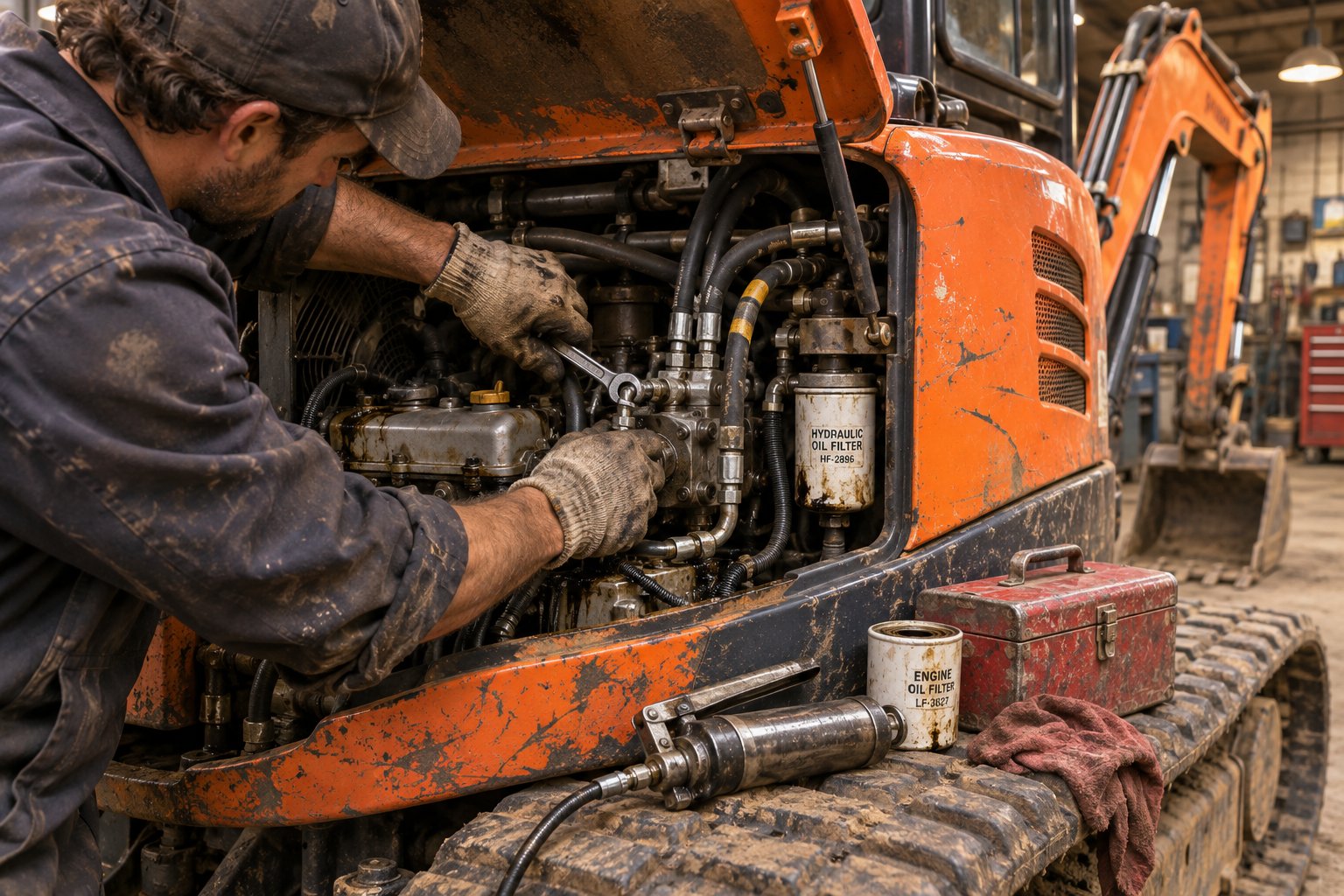
Routine maintenance is the most predictable cost category — and the one most within your control. Detailed service-interval breakdowns show that a machine running 500 hours per year needs approximately two engine oil changes ($150 to $250 each at dealer rates), one hydraulic fluid and filter service ($400 to $700), air and fuel filter replacements, and roughly ten grease services. Budget $1,500 to $3,000 per year for dealer-performed maintenance on a mid-size unit, or cut that by 40 to 50 percent if you handle basic service in-house. The Kubota KX040-4, for example, follows the same interval schedule as most Kubota diesels — every 250 hours for oil, every 500 for filters, every 1,000 for hydraulic fluid.
Hydraulic system care deserves special emphasis. Skipping the 1,000-hour hydraulic service — a $500 to $700 expense — can lead to pump failure costing $3,000 to $6,000 to repair. Preventive maintenance costs 60 to 70 percent less than reactive repairs, making it one of the highest-return investments in the entire ownership equation.
Rubber track replacement is the single costliest maintenance event. A set of tracks for a 1.5- to 4-ton machine runs $2,000 to $4,000 installed, with track life ranging from 800 to 1,200 hours on abrasive surfaces like asphalt up to 1,500 to 2,000 hours on softer terrain. Rollers and idlers add another $800 to $1,500 every 2,000 to 3,000 hours.
Insurance rounds out the fixed-cost picture. Annual premiums for commercial equipment policies typically range from $600 to $2,000 depending on machine value, storage security, and operator history. A Kubota KX057 valued at $80,000 will sit at the higher end; a used U17 valued at $20,000 will fall near the lower end. Bundling equipment coverage with general liability insurance often saves 20 to 30 percent on premiums — a simple step that many first-time buyers overlook.
Transport, Storage, and Attachment Expenses
These are the costs that never appear in any dealer quote yet hit your bank account every month the machine is in service. Transport alone can rival maintenance spending — especially for contractors working multiple job sites per week.
Hiring equipment transport runs $150 to $300 per local move. A contractor averaging three site moves per month spends $5,400 to $10,800 per year, or $27,000 to $54,000 over five years. Owning a 3/4-ton truck and dual-axle trailer reduces per-move costs to $50 to $100 in fuel and wear, but the upfront investment in towing capability adds its own capital requirement. For owners of heavier models like the KX080-5, transport may require oversize permits or a CDL-rated tow vehicle, adding regulatory complexity alongside cost.
Here are the most commonly overlooked ownership costs that buyers fail to budget for:
- Job-site transport — $3,600 to $12,000+ annually depending on move frequency and distance
- Secure storage — Unsecured storage increases insurance premiums by 30 to 50 percent and raises theft risk; a locked yard or enclosed structure pays for itself in lower premiums
- Attachment accumulation — Thumbs, extra buckets, augers, and breakers commonly add $3,000 to $7,000 within the first two years of ownership
- Unplanned repairs beyond warranty — Budget $1,000 to $4,000 per year once the machine exits its warranty period; hydraulic cylinder rebuilds, final drive seals, and hose replacements are the most frequent culprits
- Downtime and lost revenue — A two-week breakdown during peak season doesn't just cost $1,300 in parts and labor; it costs $3,000 to $8,000 in canceled or delayed jobs that never hit your invoice
- Compliance and registration — Some states require commercial vehicle registration for tow vehicles hauling equipment above certain weights, and EPA compliance on imported machines can add $500 to $2,000
The attachment category is especially sneaky. You buy a machine with a standard digging bucket. Within six months, a hydraulic thumb ($1,800 to $3,500), a trenching bucket ($800 to $1,500), and maybe a breaker ($4,000 to $8,000) all find their way onto the wish list. By year two, attachment spending can rival a full year's maintenance budget. Buyers shopping an affordable mini excavator on a tight budget should factor at least one or two essential attachments into their upfront purchase calculation rather than treating them as future surprises.
Depreciation and Resale Value Over Time
Depreciation is the largest single cost of equipment ownership — and the one area where Kubota consistently outperforms most of the market. According to Ritchie Bros. auction data, Kubota ranks among the strongest brands for resale value in the mini excavator class. A well-maintained 3- to 4-year-old Kubota with under 1,500 hours commonly retains 55 to 70 percent of its original purchase price — meaningfully better than most compact equipment categories and significantly ahead of budget brands that retain only 35 to 50 percent over similar timelines.
What drives that retention? Three factors work in Kubota's favor. First, the brand dominates rental fleets and dealer inventories across North America, which keeps buyer familiarity and confidence high on the secondary market. Second, parts availability through Kubota's 1,100-plus dealer network ensures that used buyers know they can service and repair the machine without extended wait times — a concern that suppresses resale on brands like kobelco excavators or Chinese imports with thinner North American support. Third, Kubota's engine reliability reputation, backed by consistently strong ratings in independent owner surveys, gives used buyers confidence in remaining productive life.
Proper maintenance and reasonable machine hours are the levers you control. A Kubota KX040-4 sold at 2,500 hours with complete service records will command a substantially higher price than the same model sold at 2,500 hours with no documentation. The difference can easily reach $8,000 to $12,000 — money you effectively earn by maintaining records that cost nothing to keep. Similarly, owners who run the machine at moderate utilization (500 to 800 hours per year) rather than pushing it past 1,000 hours annually tend to preserve both mechanical condition and resale attractiveness.
This resale strength is one of the reasons Kubota's higher upfront MSRP doesn't always translate to a higher total cost of ownership. Five-year TCO projections comparing premium brands against value-tier alternatives consistently show that Kubota's net ownership cost — purchase price minus resale recovery, plus all operating expenses — lands between $47,000 and $57,000 for a 3-ton machine. Value-tier brands with lower sticker prices often land in the same range or higher because weaker resale, higher maintenance frequency, and greater repair risk offset the upfront savings. Owners of a kubota compact tractor or excavator who plan to trade within five to seven years effectively recover a significant share of their original investment at the point of sale — a financial advantage that doesn't appear in any MSRP comparison.
Total cost of ownership can add 120 to 170 percent on top of the purchase price over five years of operation, making it essential to factor into any buying decision.
The bottom line: every dollar spent on fuel, filters, tracks, insurance, and transport is a dollar that shapes your real return on the machine. Buyers who calculate these costs before signing — rather than discovering them afterward — consistently make better purchase decisions and negotiate from a position of genuine financial awareness. That awareness also powers the final and most practical step in the process: turning all of this research into action by collecting the right quotes, comparing the right options, and closing a deal that holds up to scrutiny.
Smart Next Steps to Get the Best Kubota Mini Excavators Deal
Research without action is just entertainment. You now understand Kubota's full model lineup and verified MSRPs, the realistic spread between new and used pricing, how brand comparisons reshape the value equation, where financing dollars actually go, and why total cost of ownership dwarfs the sticker. That puts you ahead of roughly 90 percent of buyers who walk into a dealership armed with nothing more than a vague budget and a model name they found on Instagram. The final step? Converting that knowledge into a purchase process that protects your money and lands the right machine.
Getting Accurate Quotes from Multiple Sources
Here's a truth the equipment industry doesn't advertise: the first price you're quoted is almost never the best price available. Price negotiation is standard practice — expected, even — when buying compact excavators. AgDirect's equipment purchasing guide puts it plainly: understand the market, know what the equipment is worth, and be prepared to walk away if the terms don't fit your budget. Sellers respect informed buyers, and the MSRP data and used-market ranges covered throughout this article give you exactly the benchmark you need to evaluate any quote you receive.
Aim for a minimum of three quotes from different source types. Your local authorized Kubota dealer should be one — they'll have access to current promotional financing like the 0% APR offers through Kubota Credit Corporation and can provide exact pricing on specific configurations. An online equipment marketplace (Ritchie Bros., IronPlanet, or Equipment Trader) gives you a second data point grounded in actual transaction prices rather than list prices. And a specialty reseller or regional dealer outside your immediate area introduces geographic pricing variation that can work in your favor, especially if you're willing to travel or arrange transport for a meaningful savings.
Timing matters, too. Dealers are often most flexible near the end of a fiscal quarter or during the slower winter months when inventory sits longer and sales targets loom. A Kubota KX033 quoted at $56,901 in April might be available for $52,000-$54,000 in November from a dealer looking to clear floor stock before year-end. That $3,000-$5,000 gap requires nothing more than patience and a willingness to ask.
Comparing New, Used, and Certified Options
Every trade-off covered in this guide converges at the point of purchase. New machines deliver warranty protection, the latest technology, access to 0% financing, and predictable maintenance — but at full MSRP plus configuration costs. Used units slash the upfront commitment by 25-50%, absorb the steepest depreciation curve for you, and offer immediate availability — but require thorough inspection and typically carry higher financing rates. A mini bobcat excavator or other competing brand may undercut Kubota's sticker by 5-10%, yet weaker resale retention and thinner dealer support can erase that savings within three to five years.
For used equipment buyers specifically, the inspection checklist from earlier in this guide isn't optional — it's the foundation of every smart purchase. Evaluate condition reports, verify machine hours against visible wear, demand maintenance documentation, and budget $150-$300 for an independent mechanic's assessment on any unit priced above $20,000. The difference between a well-maintained KX033-4 and a neglected one can easily exceed $15,000 in hidden repair costs, so the due diligence investment pays for itself many times over.
When browsing used Kubota compact excavator inventory, cast your net across multiple channels. Authorized dealers offer reconditioning and sometimes transferable warranties. Auction platforms provide the widest selection and often the lowest prices. Specialty resellers like JIUHONG's Kubota excavator collection let you browse available U-Series and KX-Series models, compare condition details side by side, and request quotes — a useful resource for landscapers, small contractors, and equipment buyers who want to evaluate multiple Kubota options in one place and inquire about specific model availability. No single source guarantees the best deal; comparing across all three is what produces it.
Ready to move from research to action? Follow these five steps in order:
- Define your must-have specs — Lock in your required dig depth, operating weight class, and attachment needs based on your most demanding job type. This eliminates 60-70% of the lineup immediately and focuses your search on two or three candidate models, whether that's a 4 ton excavator for commercial work or a micro unit for residential projects.
- Establish your all-in budget — Add 15-25% on top of the purchase price to cover attachments, transport, insurance, and first-year maintenance. If your machine budget is $50,000, your true commitment is $57,500-$62,500. Plan for it now rather than scrambling later.
- Collect at least three quotes — Contact your nearest Kubota dealer for a new-unit quote with current promotional financing terms. Search at least one online marketplace for used comparisons. And explore specialty resellers to see what's available in your target model range. Compare not just price, but included attachments, warranty coverage, and delivery timelines.
- Run the financing math both ways — Get a quote from the dealer's financing arm (Kubota Credit Corporation for new, or their preferred lender for used) and at least one independent source — your bank, credit union, or an equipment-specific lender like AgDirect. Even half a percentage point on a $60,000 loan saves roughly $900 over five years.
- Inspect, negotiate, and close with confidence — For used machines, complete every item on the inspection checklist before discussing final price. For new units, ask about floor-plan specials, package discounts on attachments, and end-of-quarter incentives. Remember that equipment industry experts consistently advise being willing to walk away — that single willingness is the most powerful negotiating tool you have.
Whether you end up with a brand-new kx033-4 rolling off the dealer lot or a well-maintained used KX040 from a specialty reseller, the process is the same: match the machine to the work, verify the price against real market data, inspect what you're buying, and finance it on terms that protect your cash flow. Kubota mini excavators hold their value, perform reliably, and serve an enormous range of job types — but only when the buyer does their homework before signing. You've just done yours.
Kubota Mini Excavator Price — Frequently Asked Questions
1. How much does a new Kubota mini excavator cost in 2025?
New Kubota mini excavators start at $28,450 for the micro-class K008-5 and go up to $138,273 for the heavy-duty KX080-5. The most popular mid-range models — such as the KX033-4, U35-4, and KX040-4 — fall between $56,000 and $69,000 at base MSRP. Keep in mind that adding an enclosed cab, air conditioning, or a hydraulic thumb can push the final invoice $5,000 to $15,000 beyond the published starting price.
2. How much is a used Kubota mini excavator worth?
Used Kubota mini excavators typically retain 55 to 70 percent of their original MSRP after three to five years, depending on machine hours, maintenance records, and condition. For example, a pre-owned KX040-4 with fewer than 1,500 hours generally trades between $32,000 and $52,000, while a used U17 in good shape falls in the $16,000 to $24,000 range. Complete service documentation and low hours are the two biggest factors that push resale value toward the higher end of any range. Specialty resellers like JIUHONG's Kubota collection (https://jiuhong-machinery.com/products/excavators/kubota/) let buyers compare available U-Series and KX-Series models and request condition-specific quotes.
3. Is Kubota more expensive than Bobcat or Caterpillar mini excavators?
Kubota sits in the middle of the premium tier. In the popular 3- to 4-ton class, Kubota typically prices 5 to 10 percent higher than Bobcat and 5 to 15 percent lower than Caterpillar. However, Kubota's stronger resale retention — roughly 60 to 64 percent after five years versus Bobcat's 54 to 58 percent — effectively narrows the total cost gap. Over a full ownership cycle, Kubota and Bobcat often end up costing similar amounts once depreciation, maintenance, and parts availability are factored in.
4. Can I get 0% financing on a Kubota mini excavator?
Yes. Kubota Credit Corporation currently offers $0 down and 0% APR for up to 60 months on new KX and U Series excavators purchased from participating dealers' in-stock inventory. This promotion eliminates $5,000 to $25,000 in interest charges depending on the model, making it one of the strongest financing offers in the compact equipment industry. Credit approval is required, and the 0% rate cannot be stacked with cash rebates, so buyers should compare both options to determine which path saves more on their specific purchase.
5. What is the total cost of owning a Kubota mini excavator over five years?
Industry analyses estimate that the purchase price represents only 25 to 35 percent of total five-year ownership costs. Fuel, routine maintenance, track replacement, insurance, transport between job sites, and attachments add 120 to 170 percent on top of the original sticker. For a mid-range Kubota in the 3- to 4-ton class, that means a $55,000 purchase can cost $100,000 to $140,000 over five years. Kubota's strong resale value helps offset these costs — owners who sell or trade at year five typically recover 55 to 70 percent of the original price, significantly reducing the net cost of ownership.