

Understanding Building Materials News and Its Industry Impact
Imagine scrolling through a dozen trade publications in a single morning, each one delivering a firehose of press releases, price tickers, and merger announcements. You walk away knowing a lot happened, yet you still can't answer the question that actually matters: what does it all mean for your next procurement decision, your expansion timeline, or your bottom line? That gap between raw headlines and genuine insight is exactly where building materials news becomes a discipline rather than a feed.
At its core, this discipline synthesizes five distinct intelligence streams into a single, coherent picture. Pricing data across commodities like softwood lumber, structural steel, and gypsum tells one story. Mergers and acquisitions — think of US LBM's continued acquisition activity in the Southeast — tell another. Supply chain disruptions, evolving building codes, and product innovations each add their own layer. Alone, any one of these data points is interesting. Woven together, they form the strategic fabric professionals need to anticipate market shifts instead of chasing them.
Why Building Materials News Matters to Industry Professionals
Contractors rely on timely intelligence to lock in material prices before cost spikes eat into project margins. Distributors track consolidation patterns to understand which supplier relationships might evaporate — or which new partnerships could open doors. Fleet managers connect material trends to equipment needs, while investors monitor deal flow from companies like US LBM to gauge sector momentum. Even policymakers depend on this information to calibrate tariff structures, infrastructure allocations, and building code timelines.
The stakes are high and getting higher. Turner & Townsend's Global Construction Market Intelligence 2026 report notes that global construction cost inflation is projected to reach 4.5% in 2026 before leveling off in 2027, with labor shortages reported in over 70% of markets worldwide. In North America specifically, average hourly labor costs sit at $79.50 — the highest of any region. When conditions shift this fast, the difference between being informed and being late can be measured in millions of dollars.
What Sets Actionable Coverage Apart from Headline Feeds
Most trade publications operate as index pages: a chronological list of press releases, each treated as an isolated event. A merger here, a price increase there, a new product launch somewhere else. You'll notice the pattern — plenty of "what" but almost no "so what." Actionable coverage does something fundamentally different. It contextualizes individual developments within the broader dynamics of housing demand, infrastructure spending, regulatory shifts, and global trade policy. It connects the dots between, say, a tariff adjustment on imported steel and the downstream pricing pressure a regional distributor will face six months later.
Knowing what happened in the building materials market is information. Understanding what it means for your next quarter is intelligence — and that distinction separates the professionals who react from those who lead.
This analytical lens extends even to developments that might seem tangential at first glance. When Sherwin-Williams launched its Rewild color forecast for 2027 — a palette of 48 shades spanning moody oxbloods, mossy greens, and earthy neutrals — the headline reads as a design story. The deeper signal, however, points to shifting consumer preferences that influence finish material demand, coating specifications, and ultimately the products distributors need to stock. Every piece of industry news carries a second layer of meaning for professionals willing to look beneath the surface.
The sections ahead unpack that second layer across every major category: pricing volatility, corporate consolidation, supply chain resilience, sustainability mandates, product innovation, and regulatory developments. Each one builds on the others, because in this industry, nothing happens in isolation.
Market Prices and Cost Trends Every Professional Should Monitor
Here's the uncomfortable truth about construction material pricing right now: costs are climbing even when demand cools. NAHB's analysis of Producer Price Index data showed building material prices up 3.5% year over year as of late 2025 — the largest annual increase since early 2023 — despite a residential construction market showing clear signs of slowing. By early 2026, the picture intensified. Associated Builders and Contractors reported that nonresidential construction input prices surged at a 12.6% annualized rate during the first two months of the year, the fastest pace since the supply chain disruptions of 2022. Aggregate input prices through April 2026 are running roughly 7% above the prior year — with 6.2% of that increase concentrated in just the first four months.
For anyone tracking building materials news, these numbers tell a clear story: cost pressure is persistent, uneven, and not waiting for demand to recover before it bites.
Key Price Indicators Across Lumber, Concrete, and Steel
Not every material category moves in the same direction at the same speed, and that divergence is exactly what makes pricing intelligence so valuable. Imagine budgeting a mid-rise project with last quarter's steel numbers only to discover structural steel has jumped 11.9% year over year, as Engineering News-Record's Building Cost Index documented for 2025. Meanwhile, softwood lumber has actually retreated from its prior peaks, and ready-mix concrete prices softened through late 2025 — likely reflecting stagnant construction spending in certain segments.
The metals category stands out as the sharpest pain point. Metal molding and trim prices surged nearly 50% year over year, according to NAHB's PPI analysis. Steel mill products, structural shapes, rebar, and fabricated steel are all running 10% to 20% above year-ago quotes in many regional markets, with projections of 15% to 35% further increases through the balance of 2026. Copper-heavy mechanical, electrical, and plumbing packages are among the hardest-hit categories, with copper prices expected to climb 25% to 50% due to electrical infrastructure demand and tight global supply.
On the other end of the spectrum, lumber tells a more complicated story. Prices remain below their pandemic-era highs, but industry analysts anticipate a 20% to 40% rebound driven by supply constraints and recovering housing demand. Gypsum and insulation products sit somewhere in between — not spiking dramatically, but steadily grinding higher as energy costs feed through to manufacturing.
How Macroeconomic Signals Affect Material Costs
Material prices don't exist in a vacuum. They respond to a web of macroeconomic forces that professionals need to monitor just as closely as commodity tickers. Interest rates sit at the center of that web. The federal funds rate currently holds at a target range of 3.50% to 3.75% following three cuts in late 2025 and consecutive holds to start 2026. The 30-year fixed mortgage rate averages around 6.46%, keeping housing starts subdued and dampening one traditional demand driver for lumber and concrete.
Yet elevated borrowing costs haven't relieved pricing pressure the way you might expect. Federal infrastructure allocations continue to push demand for steel, aggregates, and heavy materials into highways, bridges, and data center construction — sectors largely insensitive to mortgage rates. Tariff policy adds another layer: steel, aluminum, and copper items currently carry a 50% tariff, with softwood lumber at 10% and derivative products at 25%. Longer-term tariff impacts are expected to add 5% to 25% in cost escalation depending on material category, with aggregate construction cost escalation estimated at roughly 8% under current policy conditions.
Even retailers focused on consumer-facing channels feel the ripple effects. Programs like Lowe's how to workshops attract DIY homeowners, but the pricing environment those customers encounter at the register reflects the same upstream pressures hitting commercial contractors — from tariff-inflated steel fasteners to energy-driven increases in adhesives and coatings.
| Material Category | Primary Cost Drivers | Current Directional Trend |
|---|---|---|
| Structural Steel | 50% tariff on imports, infrastructure demand, energy costs | Rising (11.9%+ YoY) |
| Copper & Electrical Components | Global supply tightness, data center demand, tariffs | Rising (25-50% projected increase) |
| Softwood Lumber | Supply constraints, housing demand recovery, 10% tariff | Recovering (20-40% projected increase) |
| Ready-Mix Concrete | Energy costs for kiln operations, transportation, natural gas prices | Moderately Rising |
| Gypsum & Drywall | Manufacturing energy costs, freight logistics | Stable to Slightly Rising |
| Roofing Materials | Oil-linked inputs, asphalt pricing, energy volatility | Rising |
| Insulation Products | Petroleum-based inputs, energy mandates, demand growth | Rising |
Regional Price Variations Worth Watching
National averages are useful starting points, but they can mask dramatic local differences. A contractor in the Southeast might see steel quotes 10% to 20% above year-ago levels on tilt-wall warehouse projects, while a Pacific Northwest builder benefits from proximity to domestic sawmills that soften lumber delivery costs. Transportation expenses alone — trucking capacity, fuel surcharges, and distance from manufacturing hubs — can create a 5% to 15% swing in delivered material cost between regions.
Local housing demand compounds the effect. Markets with strong population growth, such as the Carolinas, Texas, and parts of the Mountain West, experience tighter supply and faster quote expiration. Some suppliers in high-demand regions have shortened quote validity from 30-60 days down to 7-15 days, forcing contractors to move faster on procurement decisions. Meanwhile, areas where permitting has slowed or where Lowe's buys FBM competitor dynamics reshape local distribution networks may see temporary softening as inventory adjusts to new ownership structures.
The takeaway is straightforward: professionals who rely solely on national price indices risk building budgets on assumptions that don't match their local reality. Combining national trend data with regional supplier intelligence and real-time quote tracking creates the pricing picture that actually protects margins.
Pricing pressure, of course, doesn't emerge in isolation. Much of the cost volatility reshaping the market traces directly to a wave of corporate consolidation that is redrawing the competitive landscape for lumber, building products, and distribution networks across the country.
Mergers, Acquisitions, and the Consolidation Reshaping Distribution
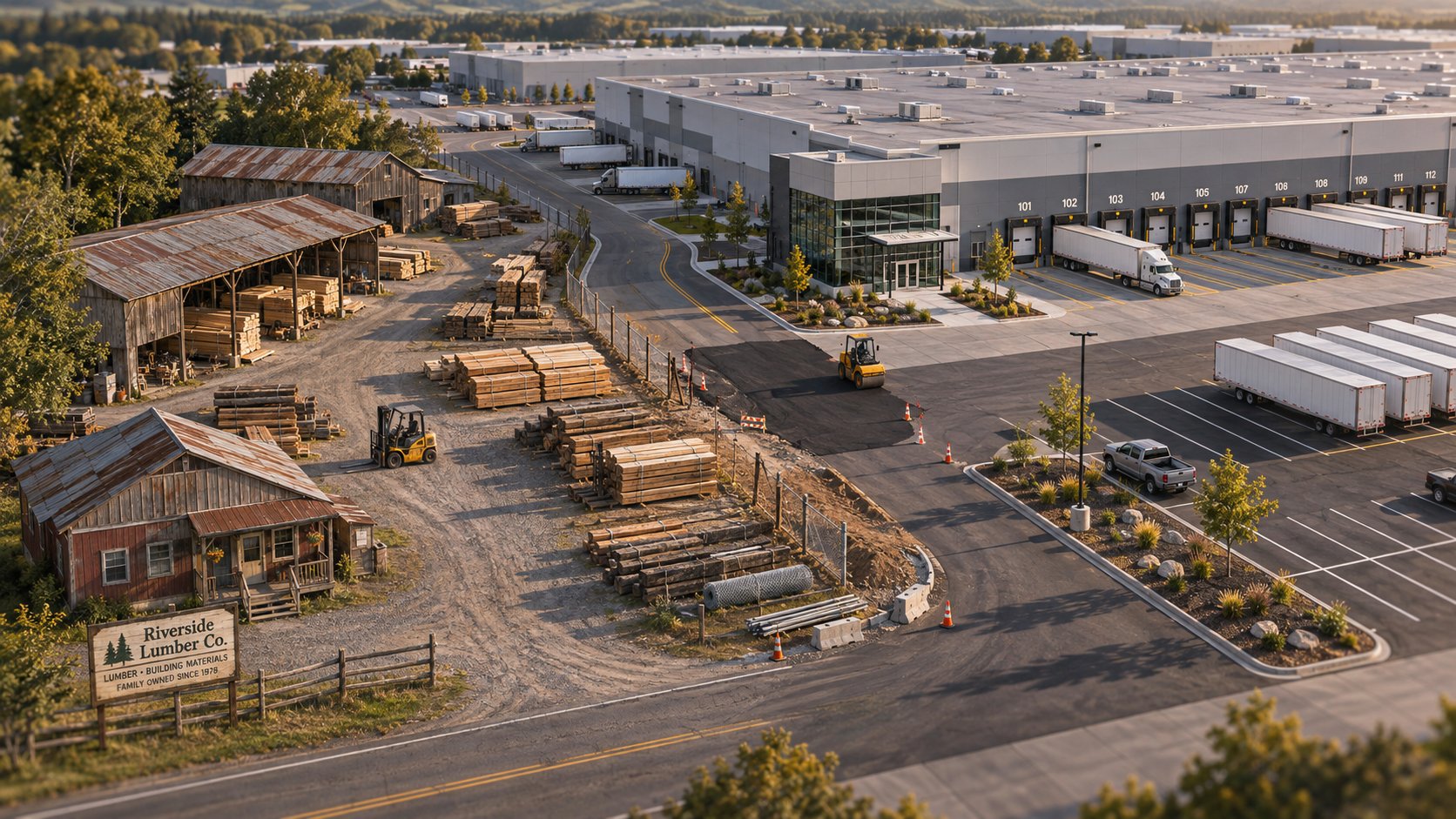
More than $54 billion in completed and pending transactions since 2024 — that's the figure reshaping the lumber and building materials distribution channel right now. This isn't a gentle consolidation cycle. It's a full-scale competitive reset, and every contractor, distributor, and investor following construction materials news needs to understand the forces driving it.
Major Consolidation Moves Transforming the Sector
The headline deal setting the tone arrived when QXO completed its approximately $2.25 billion acquisition of Kodiak Building Partners from Court Square Capital Partners, expanding its addressable market to more than $200 billion. QXO's chairman Brad Jacobs framed the deal as a step toward a $50 billion annual revenue target — a goal the company expects to reach within the next decade through accretive acquisitions and organic growth. Steve Swinney, Kodiak's co-founder, now leads QXO's new LBM division, signaling how quickly acquired leadership gets folded into larger corporate strategies.
QXO isn't operating in a vacuum. US LBM has continued its own aggressive acquisition cadence across the Southeast and beyond, steadily absorbing regional dealers to build national scale. Lowe's competitive positioning has intensified as well — its acquisition of Foundation Building Materials gave it a stronger foothold in specialty distribution, a move felt acutely by independent dealers in markets like New Jersey where suppliers they'd relied on for years suddenly operated under a new corporate umbrella. Boise Cascade Holdings maintains its vertically integrated position in engineered wood products and distribution, while treated lumber specialists like Great Southern Wood Preserving represent the kind of niche players that larger platforms often target for product portfolio expansion.
Even regional names familiar to local markets — companies like Alpine Lumber in the Mountain West or Pleasants Hardware serving mid-Atlantic communities — face a landscape where the competitive math is changing quarterly. Every acquisition ripples outward, altering supplier relationships, pricing leverage, and geographic coverage maps.
What Consolidation Means for Independent Dealers and Distributors
Sounds abstract from 30,000 feet? It's anything but for the single-store lumberyard or the family-owned dealer watching national platforms move into their territory. LBM Journal's survey of dealers and distributors reveals a strikingly candid picture. One respondent noted that since QXO took over Kodiak, their company added 18 new contractors who had previously purchased from Kodiak-affiliated yards — winning them on service, communication, and connectivity while struggling to compete on strategic price points where large consolidators sell at razor-thin margins. Another dealer described watching moulding and millwork suppliers dwindle from ten to just three large companies over recent years.
The pattern is consistent: consolidators leverage purchasing scale, integrated credit programs, and national logistics to capture production builders and high-volume contractors. Independent dealers retain advantages in responsiveness, local relationships, and the flexibility to handle complex custom specifications — but those advantages face mounting pressure as larger platforms invest in technology and end-to-end service models.
Several veteran industry voices in the LBM Journal survey drew sharp parallels to the consolidation wave of 1995 to 2006, when roll-ups by ProBuild, BMC, Stock, and BFS ended in failures fueled by excessive debt, underperforming acquisitions, and a lack of cyclical discipline. The warning is clear: scale without operational excellence tends to unravel when the market contracts.
Understanding why these deals happen helps professionals anticipate which companies might be targets — or acquirers — next. The strategic motivations behind building materials M&A typically cluster around a few recurring themes:
- Geographic expansion — Acquiring regional dealers to build or fill gaps in a national distribution footprint
- Vertical integration — Controlling more of the value chain from manufacturing through last-mile delivery
- Product portfolio diversification — Adding specialty categories like treated wood, engineered products, or millwork to broaden revenue streams
- Supply chain control — Securing preferred access to manufacturing capacity, transportation assets, and warehouse networks
- Succession-driven exits — Baby Boomer owners retiring without willing or capable next-generation leadership, making sale to a consolidator their clearest path
That last point deserves special attention. Multiple dealers surveyed identified generational succession as the single biggest accelerant of consolidation — not competitive pressure, not private equity appetite, but the simple reality that many family-owned businesses lack a succession plan.
Tracking Deal Flow and Market Impact
Professionals who want to stay ahead of consolidation shifts rather than react to them need a structured approach to monitoring deal activity. Investor relations pages — like QXO's, which publishes detailed acquisition announcements and earnings guidance — provide the most authoritative primary source for publicly traded acquirers. Trade publications such as LBM Journal, ProSales, and Builder Magazine contextualize those announcements with market impact analysis. Industry association reports from organizations like the National Lumber and Building Material Dealers Association (NLBMDA) track membership trends that often signal where the next wave of exits might occur.
Setting alerts for key company names, monitoring private equity fund activity in the building products sector, and maintaining direct relationships with regional peers all contribute to an early-warning system. The goal isn't just knowing who bought whom — it's understanding how each deal shifts pricing leverage, product availability, and competitive dynamics in your specific market.
Great Southern Wood Preserving's position in the treated lumber segment illustrates this nicely: a specialized manufacturer with strong brand recognition becomes either a strategic acquisition target for a platform seeking product breadth, or a resilient independent that thrives precisely because consolidators struggle to replicate niche expertise. Tracking which outcome unfolds — and for how many similar companies — tells you where the industry's center of gravity is moving.
Yet consolidation alone doesn't explain why the materials you ordered three months ago still haven't arrived. Behind every merger headline sits a supply chain network that may be integrating, disrupting, or both — and understanding those logistics pressures is the next essential layer of intelligence.
Supply Chain and Logistics Updates Impacting Material Availability
You can negotiate the best material price on the market, but it means nothing if the shipment doesn't arrive before your crew is standing idle on-site. That's the reality facing contractors, distributors, and project managers right now — a logistics environment where roughly 70% of contractors report being affected by tariff-driven disruptions, and where traditional supply chain models built for cost efficiency are buckling under sustained volatility. Understanding building materials news today requires looking well beyond price tags and merger announcements. It demands attention to the physical movement of goods — and the bottlenecks slowing that movement at every stage.
Current Bottlenecks and Shortage Conditions for Key Inputs
Several structural forces are converging to create persistent supply disruptions across the construction value chain. Manufacturing capacity constraints remain a core issue: cement plants, steel mills, and insulation manufacturers operate near peak utilization while simultaneously absorbing higher energy and input costs. Workforce shortages compound the problem. Finding skilled labor for manufacturing lines, warehouse operations, and last-mile delivery is a challenge that no single hiring campaign can solve, particularly as construction and industrial sectors compete for the same shrinking pool of workers.
Specific material categories feel the strain differently. Copper wire and cable prices have jumped more than 22% year over year, driven by explosive demand from data center construction and electrical infrastructure upgrades. Steel and aluminum remain constrained by elevated tariffs — aluminum climbed over 30% and steel rose 17% in 2025 alone, according to AGC's analysis of producer price data. Specialty products are particularly vulnerable: items like engineered wood components from manufacturers such as Miter Brands' window and door lines, or treated lumber from niche producers, face extended lead times when a single production facility serves a wide geographic footprint. Organizations like the American Wood Council continue to advocate for expanded domestic timber utilization, but translating policy support into mill capacity takes years, not quarters.
Insulation and roofing materials present their own friction points. Petroleum-based inputs keep costs elevated, while energy efficiency mandates are driving demand growth faster than production can scale. The result is a market where even routine procurement requires earlier ordering windows and more aggressive follow-up than contractors were accustomed to just a few years ago.
Freight and Distribution Challenges Affecting Delivery Timelines
Even when materials roll off the production line on schedule, getting them to the jobsite is another battle entirely. C.H. Robinson's May 2026 freight market report paints a vivid picture: the DAT dry van load-to-truck ratio surged to 8.3-to-1 by late April, nearly double the 4.6-to-1 recorded during the same period a year earlier. Flatbed markets — the segment most critical for steel, lumber, and building products — are even tighter, with national load-to-truck ratios hovering near 72-to-1 and the Texas-to-North Carolina corridor averaging a staggering 116-to-1.
Carrier attrition is accelerating the squeeze. Elevated operating costs, fuel price volatility, and a more restrictive regulatory environment have pushed smaller trucking firms out of the market, and carrier authority counts have returned to historical baseline levels — meaning the excess capacity that cushioned disruptions over the past few years has effectively evaporated. C.H. Robinson has revised its 2026 dry van cost-per-mile forecast upward from +17% to +23% year over year, with refrigerated lanes following a similar trajectory.
Seasonal stacking makes matters worse. Produce season, DOT Roadcheck Week inspections, and holiday freight surges all compress into a narrow window that diverts trucks away from construction lanes. For professionals managing building material deliveries, that means lead times stretch, spot rates spike, and tender acceptance rates drop — sometimes all within the same week.
Professionals should actively monitor these key supply chain risk factors:
- Carrier availability — Track load-to-truck ratios and route guide depth metrics as leading indicators of trucking capacity tightness in your region
- Fuel cost trends — Diesel price volatility feeds directly into freight surcharges and delivered material costs, especially for heavy or bulky products
- Warehouse and staging capacity — Regional distribution network congestion can delay materials even after they arrive in your market area
- Lead time changes — Shortening quote validity windows and lengthening delivery estimates signal upstream production or logistics stress before it hits headlines
- Regulatory disruptions — Events like Roadcheck Week and hours-of-service enforcement create predictable but impactful capacity contractions that smart operators plan around
Building Resilience into Procurement Strategy
Waiting for supply chain conditions to normalize is not a strategy — it's a gamble. Industry advisors recommend treating resilience as an operational investment rather than a contingency plan. The most effective approaches combine structural changes to sourcing with sharper use of data and relationships.
Supplier diversification is the most immediate lever. Relying on a single vendor — or a single geography — for any critical input creates a single point of failure. Maintaining relationships with two or three qualified suppliers for high-risk materials like steel, electrical components, and specialty wood products provides fallback options when disruptions hit. Even if backup vendors don't receive regular orders, keeping them engaged with periodic purchases or open communication preserves the relationship for when it matters most.
Strategic inventory positioning is evolving alongside this shift. The just-in-time delivery model that dominated construction procurement for decades assumed a stable supply environment that no longer exists. Forward-thinking contractors and distributors are staging materials closer to jobsites through regional warehousing partnerships, converting capital-intensive inventory holdings into flexible operating costs that scale with project cycles. Think of it as buying insurance against the next freight crunch or production delay.
Technology ties it all together. Real-time visibility into shipment status, supplier production schedules, and regional freight conditions enables procurement teams to spot problems early and reroute before delays cascade. Digital tools that integrate material tracking with project scheduling give project managers a single dashboard view — replacing the frantic phone calls that too often substitute for systematic monitoring.
Finally, documentation matters more than most teams realize. Recording supplier communications, tracking delivery timeline changes, and maintaining clear records connecting delays to specific causes — whether tariff-related, weather-driven, or capacity-constrained — strengthens contract negotiations and supports claims for relief under price escalation or force majeure clauses.
Supply chain resilience, however, is only one dimension of the transformation underway. The materials flowing through these logistics networks are themselves changing — driven by sustainability mandates and decarbonization goals that are rewriting what gets manufactured, specified, and installed across the built environment.
Sustainable Materials and the Green Building Movement
The construction industry accounts for roughly 39% of global energy-related carbon emissions annually — 28% from building operations and another 11% from embodied carbon baked into the materials themselves. That 11% figure represents the emissions locked in the moment steel is forged, cement is fired, or aluminum is smelted. Unlike operational carbon, which can be reduced over a building's lifetime through efficiency upgrades, embodied carbon is fixed at project completion. You can't retrofit it away. This single reality is driving a fundamental shift in what gets manufactured, specified, and sold across the building materials landscape.
Green Building Products Gaining Market Share
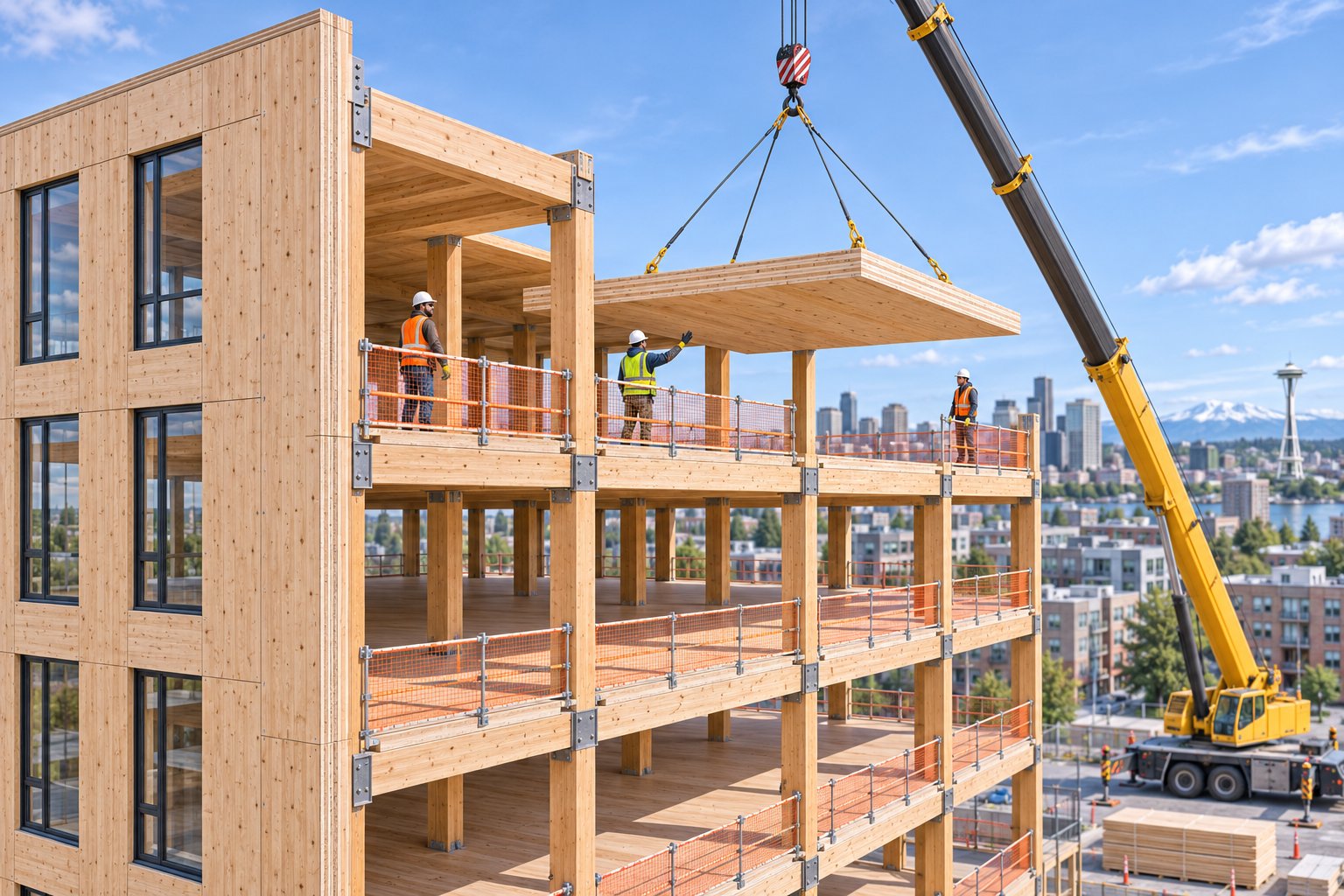
Several product categories are moving from sustainability niche to mainstream specification. Mass timber leads the charge. Cross-laminated timber and glulam structures don't just emit fewer greenhouse gases during production — they actively store carbon absorbed during tree growth. Research from Ecochain highlights that mass timber buildings function as carbon sinks, locking atmospheric carbon into the structure for decades. Real-world results back this up: the 443 West mass timber project in New York reduced carbon emissions equivalent to removing 550 cars from the road for a full year. Prefabricated mass timber panels also cut construction timelines by 20-25%, delivering cost savings alongside environmental gains.
Solar-integrated roofing is another category accelerating fast. GAF Energy launched its Timberline Solar ES 2 shingle in early 2025, delivering 57 watts per shingle — a 23% power increase over the previous generation — at a profile depth of less than a quarter inch. Developed and assembled at GAF's facilities in Georgetown, Texas, and San Jose, California, the product integrates seamlessly with conventional asphalt shingles. GAF's broader manufacturing commitment, including developments related to the GAF 300 million expansion Newton Kansas news that signaled the company's aggressive capacity scaling, reflects a strategic bet that solar roofing will transition from premium add-on to standard specification within the decade.
Low-carbon concrete formulations represent a third front. ACEEE's research into limestone calcined clay cement identifies it as one of the most promising alternatives to traditional portland cement — reducing clinker content and associated kiln emissions without sacrificing structural performance. Carbon-capture cement technologies, which mineralize CO2 directly into concrete during mixing, are moving from pilot programs to early commercial deployment.
Advanced insulation products round out the picture. Higher-performance spray foams, mineral wool, and aerogel-based systems deliver better thermal resistance per inch, reducing both material volume and operational energy demand over the building's lifecycle. For distributors like Mans Lumber and other regional suppliers, stocking these next-generation insulation products is becoming a competitive necessity rather than a niche offering.
Regulatory Drivers Accelerating Sustainable Material Adoption
Market demand alone isn't driving this transition — regulation is accelerating it. California's Buy Clean Act, signed into law in 2017, set the template by requiring state-funded projects to meet embodied carbon thresholds for structural steel, concrete reinforcing steel, flat glass, and mineral wool insulation. Since then, similar proposals have been introduced in six additional states, and federal procurement policies under Executive Order 14057 extended green purchasing mandates across government agencies.
Building codes are evolving in parallel. The 2021 International Building Code update expanded mass timber construction to 18 stories — up to 270 feet — opening mid-rise and commercial markets that were previously steel-and-concrete-only territory. Energy codes under the IECC continue tightening insulation R-value requirements and envelope performance standards, creating downstream demand for higher-performing building products. Green certification frameworks like LEED, WELL, and the Living Building Challenge layer additional material specifications on top of code minimums, rewarding projects that demonstrate measurably lower embodied carbon through Environmental Product Declarations (EPDs) and lifecycle assessments.
The combined effect is a regulatory ecosystem that increasingly penalizes carbon-intensive defaults and rewards low-carbon alternatives. Manufacturers who invest in EPD documentation and carbon-optimized production lines position themselves for specification preference — not just on green-labeled projects, but on an expanding share of standard construction.
| Metric | Traditional Materials (Steel/Concrete) | Sustainable Alternatives (Mass Timber, Low-Carbon Cement, Solar Shingles) |
|---|---|---|
| Embodied Carbon | High — energy-intensive extraction and manufacturing processes | Low to Negative — timber sequesters carbon; alternative cements reduce clinker emissions |
| Lifecycle Cost | Moderate — lower upfront cost but higher operational energy burden | Competitive — prefabrication savings and energy generation offset premium pricing |
| Market Availability | Ubiquitous — established supply chains and manufacturing base | Expanding — growing production capacity and broader code acceptance |
| Code Compliance | Meets minimum standards but faces increasing embodied carbon scrutiny | Increasingly favored — Buy Clean policies, updated IBC, and certification systems reward adoption |
How the Green Transition Creates Business Opportunities
Here's where the narrative shifts from obligation to advantage. Early adopters in distribution, contracting, and manufacturing aren't just checking compliance boxes — they're capturing margin and market share that laggards will struggle to reclaim.
Consider the financial case for mass timber. A Seattle office building project found that choosing steel over mass timber increased costs by 11% and extended the construction schedule by 7%. The Adidas North American headquarters expansion, using a mass timber and precast concrete hybrid, finished three months ahead of schedule. Those aren't marginal differences — they're project-defining advantages that show up directly on the balance sheet.
For distributors, the opportunity lies in becoming the regional go-to source for sustainable product lines before competitors claim that position. Stocking EPD-documented products, training sales teams on specification language, and building relationships with architects and engineers who prioritize low-carbon design creates a moat that purchasing scale alone can't replicate. Just as the collapse of yellow freight carriers years ago taught logistics professionals that established market positions can evaporate faster than anyone expects, the green building transition is reshuffling competitive standings in materials distribution with similar speed.
Home improvement retailers are responding to this shift as well. Programs like the Home Depot rewards program changes reflect broader retail strategies to engage sustainability-conscious consumers and professionals who increasingly factor environmental performance into purchasing decisions. The signal is unmistakable: green building products are migrating from specialty catalogs to mainstream inventory.
Manufacturers who invest now in low-carbon production, transparent emissions reporting, and certified sustainable sourcing (FSC, PEFC) are building the documentation trail that Buy Clean policies and green certifications demand. Those who wait risk discovering that regulatory deadlines and specification requirements have moved past them — and that catching up is far more expensive than leading.
Sustainability is reshaping what materials get built. Innovation is reshaping what those materials can do — and the next generation of engineered wood, advanced concrete, and composite products is pushing the boundaries of structural performance, design flexibility, and construction speed in ways that would have seemed impractical just a decade ago.
Innovation in Engineered Wood, Concrete, and Advanced Composites
A decade ago, suggesting that a wood panel could replace a concrete slab in a twelve-story building would have drawn skeptical looks from most structural engineers. Today, it's happening — and engineered wood is just one of several material innovations rewriting the rules of what construction can achieve. For professionals tracking building materials news, the innovation pipeline is no longer a "someday" story. It's actively reshaping specifications, procurement lists, and jobsite logistics right now.
Engineered Wood and Mass Timber Breakthroughs
Cross-laminated timber (CLT), glulam, and related engineered wood products have crossed the threshold from architectural curiosity to legitimate structural system. Over 1,700 mass timber buildings have been completed or are under construction in the United States, with manufacturing capacity expanding through new plants in Arkansas, Alabama, Washington, and Montana. Several buildings exceeding 20 stories are in design or under construction worldwide.
What makes mass timber compelling isn't just sustainability — it's speed and weight. A typical mid-rise CLT floor can be erected in days rather than weeks, and the material weighs roughly one-fifth as much as an equivalent concrete structure. That translates into smaller foundations, reduced seismic loads, and simpler crane operations. The 2021 International Building Code formalized this potential by introducing Type IV-A, IV-B, and IV-C construction types, allowing mass timber buildings up to 18 stories depending on fire protection configurations.
Organizations like the American Wood Council continue advancing performance standards and design guidance, while manufacturers such as Roseburg Forest Products and Huber Engineered Woods expand product lines tailored for commercial applications. Regional suppliers like Golden State Lumber are increasingly fielding inquiries about engineered wood products that would have gone exclusively to steel or concrete distributors just a few years ago. The fire performance narrative has shifted as well: mass timber chars at a predictable rate of roughly 1.5 inches per hour, creating an insulating layer that protects the structural core — a behavior that's actually more predictable than unprotected steel, which can lose half its strength at 1,100 degrees Fahrenheit.
Advanced Concrete and Composite Materials
Concrete isn't standing still while timber captures headlines. Ultra-high-performance concrete (UHPC), with compressive strengths exceeding 22,000 psi — roughly four to eight times that of conventional mixes — is enabling thinner, lighter structural sections that use less material while delivering superior durability. Fiber-reinforced polymers (FRPs) are replacing steel rebar in corrosion-prone environments like coastal infrastructure and parking structures, eliminating a primary failure mechanism that drives billions in annual maintenance costs.
Self-healing concrete represents perhaps the most fascinating frontier. Research published in the journal Sustainability systematically evaluated bacterial candidates for their ability to autonomously repair cracks and capture carbon within concrete matrices. The mechanism works through microbially induced calcium carbonate precipitation (MICP): bacteria embedded in the concrete remain dormant until cracks form, then activate to seal fissures with mineral deposits. Top-performing species like Bacillus sphaericus and Sporosarcina pasteurii exhibit carbonate precipitation rates of 75-100 mg CaCO3 per gram of biomass, enabling crack closure of up to 0.97 mm within eight weeks. Over a 50-year structural lifespan, these bacteria can mineralize between 15 and 30 kg of CO2 per cubic meter of concrete.
Carbon-capture cement adds another dimension. Given that cement production alone accounts for roughly 8% of global CO2 emissions, formulations that mineralize atmospheric carbon directly into the cementitious matrix during mixing could fundamentally alter the industry's environmental footprint. These technologies are transitioning from laboratory validation to early commercial deployment — a shift that procurement teams and specification writers need to monitor closely. The fear of firing an established supplier relationship for an unproven alternative is understandable, but waiting too long to evaluate these innovations risks falling behind competitors who've already integrated them into their bid packages.
Modular and Prefabricated Building Systems
Factory-built construction is scaling far beyond portable classrooms and temporary offices. The global modular and prefabricated construction market was valued at $171.1 billion in 2025 and is projected to reach $307.2 billion by 2035, expanding at a compound annual growth rate of 6.1%. The permanent construction segment alone generated $91.8 billion in 2025, reflecting extensive adoption in apartment complexes, office buildings, schools, and healthcare facilities.
What's driving adoption? Offsite manufacturing enables walls, floors, and roof systems to be produced concurrently in controlled factory environments, reducing on-site labor requirements and limiting weather-related delays. The wood segment — accounting for 34% of the market in 2025 — benefits directly from engineered timber innovations, as CLT and glulam panels are inherently suited to factory prefabrication and precision machining. Products like GAF solar shingles integrate even more cleanly into prefabricated roof assemblies, where factory conditions allow for tighter quality control than field installation typically permits.
For contractors and distributors, modular construction changes procurement patterns in fundamental ways. Material orders shift upstream, specifications lock earlier, and delivery sequencing becomes critical because factory-cut panels arrive ready to install in a specific order. Missed penetrations or late design changes mean scrapped material and new production slots — a dynamic that rewards disciplined preconstruction coordination over field improvisation.
Ranking these innovation categories by their near-term market impact helps professionals prioritize where to invest attention and resources:
- Mass timber expansion — Already code-approved to 18 stories, with over 1,700 U.S. projects completed or underway, and manufacturing capacity actively scaling
- Low-carbon concrete — Self-healing and carbon-capture formulations address both performance and the industry's largest emissions source simultaneously
- Prefabrication systems — A $171 billion market growing at 6.1% CAGR, reshaping procurement timelines and jobsite logistics across every building type
- Smart building materials — Sensor-embedded components and responsive facades are moving from pilot projects toward broader specification, particularly in commercial and institutional construction
- Advanced weatherproofing — Next-generation barrier systems, solar-integrated roofing, and high-performance insulation products address tightening energy codes while creating new revenue streams for manufacturers and distributors
Each of these categories represents not just a product evolution but a shift in how buildings get designed, specified, and built. Yet innovation doesn't happen in a regulatory vacuum. The codes, tariffs, and trade policies shaping which materials can enter the market — and at what cost — determine how quickly these breakthroughs move from early adoption to industry standard.

Regulatory and Trade Policy Developments to Watch
Tariffs don't just show up in policy briefs — they show up on invoices. Code changes don't just live in model documents — they dictate what your crew installs and what your inspector approves. For professionals who depend on building materials news to guide procurement and project planning, the regulatory and trade policy landscape has become one of the most volatile — and most consequential — forces shaping cost structures, product availability, and competitive positioning across the entire value chain.
Tariffs and Trade Policy Affecting Material Imports
The current tariff regime on construction-critical metals represents the most aggressive trade posture the industry has faced in decades. Section 232 tariffs on steel and aluminum, originally imposed at 25% and 10% respectively in 2018, have been ratcheted dramatically higher. Steel and aluminum tariffs climbed to 50% for imports from nearly all trading partners as of June 2025, with country-specific exemptions — previously granted to the EU, Canada, Mexico, South Korea, and others — fully eliminated in March 2025. The only exception: the United Kingdom, which secured a 25% rate through the U.S.-UK Economic Prosperity Deal.
The scope has widened alongside the rates. More than 400 product codes were added to the tariff's coverage in August 2025 through a first-ever "inclusions process," and an April 2026 proclamation shifted duties from applying only to the metal content of derivative products to the full value of imported goods. That distinction matters enormously for contractors and distributors purchasing finished or semi-finished steel and aluminum components — brackets, fasteners, structural shapes, architectural panels — because the tariff now applies to the entire landed cost, not just the metal fraction.
Lumber faces its own trade friction. NAHB has consistently urged the administration to negotiate a new softwood lumber agreement with Canada, noting that tariffs on Canadian lumber shipments needlessly push up housing costs. The combined effect of duties on softwood lumber, steel, aluminum, and copper-heavy electrical components creates a layered cost burden that real clear markets analysts and industry economists estimate adds 5% to 25% in escalation depending on material category and project type.
Retaliatory measures compound the problem. Canada imposed 25% counter-tariffs on approximately $11 billion worth of U.S. steel and aluminum imports in September 2025, then increased those tariffs to 50% in response to additional U.S. trade actions. For construction firms operating near the border or sourcing from cross-border supply chains, these reciprocal duties create a pricing whipsaw that affects everything from structural steel to mechanical equipment.
U.S. steel and aluminum imports tell the story in hard numbers. Total steel imports fell 21% year over year in 2025 — from $31.6 billion to $24.8 billion — while aluminum imports declined a more modest 5%, from $18.6 billion to $17.5 billion. Canadian steel shipments dropped from $7.2 billion to $4.5 billion, a 37% contraction. Whether that contraction signals successful reshoring of production or simply higher costs and constrained supply depends on where you sit in the value chain — domestic steel producers applaud the protection, while downstream manufacturers and contractors absorb the premium.
Building Code Updates and Compliance Requirements
Trade policy hits the cost line. Building codes hit the specification line — and both ultimately converge on your project budget. The 2024 editions of the International Building Code (IBC) and International Residential Code (IRC) are rolling into enforcement across jurisdictions throughout 2025 and 2026, carrying material specification changes that affect framing, roofing, insulation, and structural systems.
The headline structural change: for the first time, the IBC includes tornado-specific design requirements. Chapter 32 now mandates that certain commercial structures in tornado-prone regions — schools, hospitals, emergency shelters, large assembly buildings — resist tornadic wind loads per ASCE 7-22 standards. That means different connection hardware, upgraded sheathing, reinforced anchorage, and load paths that differ materially from standard wind-resistance detailing. For contractors and material suppliers in the central and eastern United States, this translates into new product lines, new fastener schedules, and higher per-unit costs.
The energy code tightens even further. The 2024 International Energy Conservation Code (IECC) pushes insulation R-values higher, mandates stricter blower door testing thresholds, requires EV-ready wiring in new residential construction, and updates mechanical equipment efficiency minimums. Each of these requirements changes the materials that get specified, ordered, and installed — from thicker wall assemblies to upgraded air barrier products to dedicated electrical conduit runs that didn't exist in prior code cycles.
Mass timber provisions continue expanding as well. The IBC refines requirements around fire protection, connection detailing, and char calculations for Type IV-A, IV-B, and IV-C construction, reinforcing the code framework that enables engineered wood structures to compete directly with steel and concrete in mid-rise markets. For companies tracking leadership developments at organizations like Colony Hardware or American Building Components, these code shifts signal which product categories will see specification growth — and which may face declining demand as alternatives gain code approval.
The challenge for professionals is that adoption timelines vary wildly. Some states enforce the latest edition within a year of publication. Others lag by a full cycle or more. And states like Texas leave adoption to individual cities and counties, creating a patchwork of requirements that distributors serving multi-state territories must navigate project by project. Monitoring the following regulatory categories helps professionals stay ahead of the compliance curve:
- Federal trade policy — Tariff rates, Section 232 modifications, trade agreement negotiations (including the USMCA review), and retaliatory measures from trading partners
- State and local building codes — IBC, IRC, and IECC adoption timelines, state-specific amendments, and jurisdiction-level enforcement schedules that determine which edition applies to your next permit
- Environmental regulations — Buy Clean procurement mandates, embodied carbon thresholds, emissions reporting requirements, and environmental product declaration (EPD) specifications
- Safety standards — Updated fire assembly ratings, tornado-resistant design requirements, and structural connection specifications that change approved material lists
- Energy efficiency mandates — Insulation performance requirements, envelope testing standards, EV infrastructure provisions, and mechanical equipment efficiency floors that drive demand for higher-performing building products
Policy Signals That Forecast Market Shifts
Regulatory changes don't arrive without warning — they send signals months or years before enforcement begins. Learning to read those signals turns policy monitoring from a compliance exercise into a strategic advantage.
Infrastructure spending bills offer the clearest demand forecasts. Federal allocations for highway, bridge, water system, and broadband projects create multi-year demand floors for steel, concrete, aggregates, and heavy equipment. When Congress authorizes billions in infrastructure investment, the downstream material demand is predictable in both volume and timing — giving procurement teams and distributors a planning horizon that private-sector construction rarely provides.
Housing policy initiatives function similarly. Proposals to expand affordable housing production, modify zoning regulations, or incentivize specific construction types (such as accessory dwelling units or factory-built housing) create demand signals for the material categories those projects require. Professionals at firms like Christensen Building Company and similar regional builders who track these policy shifts can position inventory, secure supplier commitments, and staff crews ahead of the demand curve rather than scrambling after it arrives.
Environmental legislation rounds out the forecasting picture. Embodied carbon mandates currently affect a handful of states, but the legislative trajectory points toward broader adoption. Trade negotiations — including the ongoing USMCA review, where the Trump Administration declined to extend the agreement in its current form during a July 2026 review — will determine whether North American supply chains face additional tariff friction or find a path toward policy alignment that benefits cross-border material flows.
The professionals who thrive in this environment aren't the ones with the best policy lobbyists — they're the ones who treat regulatory intelligence as a core business input. Tracking proposed legislation, monitoring code adoption calendars, and modeling tariff scenarios into project budgets transforms reactive compliance into proactive positioning. And that positioning pays dividends not just in avoiding penalties, but in capturing opportunities — from tornado-resistant product lines to low-carbon material specifications — before competitors even recognize the shift.
Policy shapes what materials cost and which products are allowed. But translating that knowledge into on-the-ground project execution requires one more critical decision: matching the right equipment to the materials and methods your projects demand.

Selecting the Right Equipment Alongside Your Materials Strategy
Every material shift discussed in the preceding sections — from mass timber adoption to prefabricated panel delivery to recycled aggregate specifications — changes what happens on the ground. And what happens on the ground depends entirely on whether the right machinery is positioned, fueled, and ready to perform when crews arrive. Imagine specifying CLT panels for a mid-rise project but showing up with a crane rated for tilt-wall concrete, or planning a recycled aggregate base course without a grader calibrated for the material's different compaction characteristics. Equipment selection and material strategy aren't separate decisions — they're two halves of the same project-readiness equation.
How Material Trends Influence Equipment Requirements
The connection between building materials news and equipment planning runs deeper than most professionals realize. When the industry pivots toward mass timber, jobsite logistics change dramatically. CLT panels arrive on flatbeds in precise installation sequences, requiring telescopic handlers or mobile cranes with lift capacities matched to panel weight — typically 40 to 60 pounds per square foot — rather than the tower cranes and concrete pumps that dominate traditional mid-rise construction. Excavation scope often shrinks as well, because timber structures weigh roughly one-fifth as much as their concrete equivalents, meaning smaller foundations, shallower excavations, and lighter earthmoving equipment.
Prefabricated building systems introduce similar shifts. Factory-built wall and floor assemblies demand precise site preparation: level pads, clean staging areas, and material handling equipment capable of positioning large panels without damage. A contractor accustomed to stick-framing with deliveries from suppliers like Alpine Lumber Company may find that switching to prefab modules requires swapping a standard forklift for a rough-terrain telehandler with extended reach.
Recycled aggregates and alternative base materials present another equipment consideration. These products often compact differently than virgin stone, requiring graders and rollers with adjustable settings and operators familiar with the material's behavior. As green building mandates expand the use of recycled content in site work, equipment fleets need to adapt accordingly.
Even smaller-scale material trends ripple into equipment decisions. The growing use of insulated concrete forms (ICFs), fiber-reinforced polymer rebar, and advanced weatherproofing systems changes what attachments, mixing equipment, and application tools crews need on-site. Professionals who track material innovation without adjusting their equipment strategy risk showing up to a modern jobsite with yesterday's fleet.
Comparing Used Construction Equipment for Project Readiness
Here's the practical reality: not every contractor can — or should — buy new equipment every time a material trend shifts their project requirements. Used construction machinery offers a cost-effective path to fleet flexibility, especially when material cost pressures are already squeezing project budgets. Industry data shows that used equipment typically costs 25-50% less than comparable new models, with machines in the three-to-seven-year age range offering the strongest balance of modern features, remaining service life, and affordability.
The math is compelling. A three-year-old excavator with 3,000 hours might run $120,000 compared to $240,000 new — identical digging capability at half the capital outlay. For a contractor managing tight margins alongside rising steel and lumber costs, that savings can redirect toward material procurement, labor, or strategic inventory buffers. Fleet managers and equipment dealers evaluating options should consider operating hours in context rather than as an absolute threshold: a well-maintained machine with 9,000 documented service hours often outperforms a neglected unit showing 5,000.
Lead times add urgency to the used equipment calculus. New machinery delivery windows have stretched to 12-18 months in many categories — nearly three times longer than pre-2020 norms. When a project timeline won't wait, the used market provides immediate availability that keeps work moving. This is a calculation that us builders executives and board members increasingly factor into capital allocation discussions, balancing fleet investment against material procurement budgets within the same project pro forma.
Professionals evaluating used machinery should approach sourcing the same way they approach material procurement: diversify channels, verify documentation, and compare options before committing capital. Dealers offer inspected equipment with warranties but at premium pricing. Private sellers may present lower price points but carry higher due diligence requirements. Online equipment suppliers like JIUHONG provide another channel where contractors and fleet managers can browse used excavators, loaders, bulldozers, and graders, compare specifications, and request purchase quotes directly — a useful starting point when evaluating machinery options for upcoming projects.
| Equipment Category | Primary Building-Material-Related Applications | Sourcing Channels |
|---|---|---|
| Excavators | Foundation work for mass timber and concrete structures, utility trenching for updated code-mandated EV wiring, site demolition | JIUHONG used equipment collection, authorized dealers, regional equipment auctions |
| Loaders | Aggregate and recycled material handling, prefab panel staging, lumber yard operations | Dealer networks, online equipment platforms, private fleet liquidations |
| Bulldozers | Site grading for modular building pads, land clearing for new development, infrastructure earthwork | Manufacturer-certified pre-owned programs, equipment brokers, direct supplier channels |
| Graders | Precision grading for alternative base materials, road construction using recycled aggregates, final site preparation | Government surplus sales, specialty heavy equipment dealers, online sourcing platforms |
Regardless of which channel you use, the evaluation fundamentals remain consistent. Verify maintenance records and ownership history. Cross-reference operating hours against visible wear patterns — a mismatch is a red flag. For tracked machines, budget for undercarriage assessment, since replacement costs can reach $30,000-$60,000 depending on machine size. And always factor in total cost of ownership: purchase price plus transportation, immediate refurbishment needs, ongoing maintenance, and fuel efficiency differences between models.
The smartest equipment procurement strategies mirror the same intelligence-driven approach that defines effective material sourcing. Track market conditions. Compare multiple options. Build relationships with reliable suppliers — whether that's a regional hardware operation like Hartville Hardware in Middlefield serving a niche community, a specialty door and window supplier offering systems like ProVia's EntryLink platform, or a used machinery dealer who understands your project pipeline. The contractors who manage total project cost — materials, equipment, and labor as an integrated budget — consistently outperform those who optimize each category in isolation.
Equipment procurement, like material sourcing, ultimately comes down to information quality. The professionals who synthesize pricing trends, supply chain conditions, regulatory shifts, and innovation signals into a unified project strategy don't just build better — they build smarter. Turning that synthesis into a repeatable system is what separates occasional insight from sustained competitive advantage.
Turning Building Materials Intelligence Into Strategic Advantage
Pricing volatility, corporate consolidation, supply chain disruptions, sustainability mandates, material innovation, regulatory shifts, and equipment readiness — you've now seen how each of these forces operates individually and how they intersect to shape the building materials landscape. The question isn't whether this intelligence matters. It's whether you'll consume it passively or weaponize it as a strategic asset. The professionals who consistently win — the ones landing projects on budget, locking in materials ahead of price spikes, and adapting fleets before project requirements shift — aren't smarter or luckier. They simply have better systems for turning scattered signals into coordinated action.
Building Your Own Industry Intelligence System
Think of intelligence gathering the way you'd think about a jobsite safety program: it only works when it's structured, consistent, and embedded into daily operations. A haphazard scan of headlines over morning coffee won't cut it. What you need is a repeatable framework — a set of information sources mapped to the specific decisions they inform, reviewed on a predictable cadence.
Start with the categories that matter most to your role. A distributor managing inventory across three states needs different intelligence priorities than a specialty subcontractor bidding mechanical packages or a fleet manager evaluating capital expenditures. But regardless of role, five source categories cover the full spectrum of building materials news that drives competitive decisions:
- Trade publications for M&A and product news — Publications like LBM Journal, ProSales, ENR, and Builder Magazine provide the editorial analysis that contextualizes deal announcements, product launches, and corporate strategy shifts. These outlets break stories about consolidation activity, leadership transitions at distributors like L&W Supply Corporation, and emerging product categories months before the effects hit your local market. Subscribe to daily digests and set keyword alerts for companies in your supply chain.
- Government data for pricing and housing starts — The Bureau of Labor Statistics Producer Price Index, Census Bureau housing starts data, and Federal Reserve economic releases provide the macroeconomic foundation for material cost forecasting. These datasets are free, published on predictable schedules, and far more reliable than anecdotal pricing reports. Bookmark the BLS construction materials series and the Census Bureau's monthly new residential construction report — they're the closest thing the industry has to a crystal ball.
- Association reports for code updates and advocacy intelligence — Organizations like the Associated General Contractors of America (AGC), the American Wood Council, and the National Association of Home Builders (NAHB) publish code adoption trackers, tariff impact analyses, and workforce data that no commercial outlet replicates. Their advocacy positions also signal where regulatory pressure is heading next. Events like IBS 2026 and similar industry gatherings concentrate months of intelligence into a few days of programming — attending in person or reviewing session recordings afterward delivers outsized returns on time invested.
- Sustainability organizations for green building developments — ACEEE, the U.S. Green Building Council, and the Carbon Leadership Forum track embodied carbon regulation, Buy Clean policy adoption, and EPD requirements that increasingly determine which products get specified. For professionals in specialty products and insulation, where energy code tightening directly drives demand, these sources provide early warning of specification changes that reshape ordering patterns.
- Equipment and supplier networks for procurement intelligence — Manufacturer dealer networks, regional supplier relationships, and used equipment platforms provide ground-level intelligence about lead times, inventory availability, and pricing trends that aggregate data can't capture. A five-minute phone call to a trusted vendor often reveals more about real-time supply conditions than a week of index watching.
The key is combining these sources into a rhythm that matches your decision cycle. Weekly scans of trade publications catch deal flow and product news. Monthly reviews of government data track pricing direction. Quarterly deep dives into association reports and regulatory updates align with budgeting and bid preparation cycles. And daily contact with your supplier network keeps you grounded in the operational reality that data alone can miss.
Turning News Into Competitive Advantage
Gathering intelligence is the foundation. Acting on it is the payoff. The contractors and distributors who outperform their peers share a common trait: they connect dots across categories rather than treating each news signal in isolation. A tariff increase on imported steel isn't just a pricing story — it's a signal to evaluate domestic sourcing alternatives, revisit bid escalation clauses, and check whether your equipment fleet is optimized for materials that might substitute for steel in certain applications. A mass timber code expansion isn't just an innovation headline — it's a cue to train estimators on new takeoff methods, build relationships with CLT suppliers, and assess whether your crane capacity matches panel weights.
Investors and corporate strategists apply this same synthesis at a larger scale. Monitoring platforms like QXO investor relations — where quarterly earnings reveal $3.25 billion in net sales and a stated goal of reaching $50 billion in revenue within the decade — provides a direct window into how the largest consolidators view market trajectory. When a company of that scale targets doubling EBITDA by 2030 and continues acquiring businesses like Kodiak Building Partners and TopBuild, the signal is clear: the distribution landscape will look fundamentally different in five years than it does today. Professionals who internalize that signal make different decisions about partnerships, market positioning, and capital allocation than those who notice the headline and move on.
The same principle applies at every level. A regional distributor tracking QXO investor relations filings alongside local permit data and supplier lead time reports can anticipate competitive pressure in specific markets before a national platform's sales team even arrives. A subcontractor who combines freight market data with material pricing trends can bid with escalation clauses that protect margins instead of gambling on cost stability. A fleet manager who aligns equipment procurement with both material trends and regulatory timelines avoids the costly mismatch of deploying yesterday's machines on tomorrow's jobsite.
Synthesis also means knowing what to ignore. Not every headline deserves a strategic response. The discipline of filtering noise from signal — distinguishing a one-time disruption from a structural trend, separating regional anomalies from national shifts — is what prevents information overload from paralyzing decision-making. Build your intelligence system around the decisions you actually make, and let everything else flow past.
Building materials intelligence isn't a reading habit — it's a competitive system. The professionals who treat pricing data, regulatory shifts, supply chain signals, and innovation trends as integrated inputs into a single strategic framework don't just stay informed. They stay ahead.
The building materials landscape will keep shifting — prices will spike and soften, consolidation will redraw competitive maps, codes will tighten, and new products will challenge established specifications. None of that is within your control. What you control is whether you see it coming, understand what it means, and move before the market forces your hand. That's the difference between reading the news and using it.
Frequently Asked Questions About Building Materials News
1. Why are building material prices rising even when construction demand slows?
Several forces push prices higher independently of demand. Tariffs on steel, aluminum, and lumber add 5% to 25% in cost escalation depending on the category. Energy costs inflate manufacturing expenses for cement, gypsum, and insulation. Infrastructure spending from federal allocations sustains demand for heavy materials like structural steel and aggregates regardless of housing market conditions. Meanwhile, carrier attrition in the trucking industry has driven freight cost-per-mile forecasts up by 23% year over year, adding delivery surcharges on top of already elevated material costs. The result is a pricing environment where multiple upstream pressures compound even when downstream residential activity softens.
2. How is consolidation in the building materials industry affecting independent dealers?
Over $54 billion in completed and pending M&A transactions since 2024 are fundamentally reshaping the distribution channel. Large consolidators like QXO and US LBM leverage purchasing scale, integrated credit programs, and national logistics networks to capture high-volume production builders. Independent dealers report losing pricing competitiveness on commodity products but gaining customers who value responsiveness, local relationships, and custom specification flexibility. Generational succession is accelerating the trend, as many family-owned businesses lack next-generation leadership and sell to consolidators as their clearest exit. Independents who invest in technology, niche expertise, and service differentiation tend to retain competitive positioning despite mounting pressure from national platforms.
3. What sustainable building materials are gaining the most market traction?
Mass timber leads adoption with over 1,700 U.S. projects completed or underway, now code-approved to 18 stories under the 2021 IBC. Cross-laminated timber structures actively sequester carbon while cutting construction timelines by 20-25% compared to concrete alternatives. Solar-integrated roofing products like GAF Energy's Timberline Solar ES 2 shingle deliver 57 watts per unit at less than a quarter-inch profile, blending energy generation with conventional roofing. Low-carbon cement formulations using limestone calcined clay reduce clinker content and kiln emissions without sacrificing structural performance. Regulatory drivers including California's Buy Clean Act and federal green procurement mandates are pushing these products from specialty niches into mainstream specifications across commercial and residential construction.
4. How can contractors build supply chain resilience for building materials procurement?
Effective resilience starts with supplier diversification — maintaining relationships with two or three qualified vendors for high-risk materials like steel, electrical components, and specialty wood products ensures fallback options during disruptions. Strategic inventory positioning through regional warehousing partnerships replaces just-in-time models that assume stable supply conditions no longer present. Real-time digital tracking tools that integrate shipment status with project scheduling help procurement teams identify problems early and reroute before delays cascade. Thorough documentation of supplier communications, delivery timeline changes, and delay causes strengthens contract negotiations and supports claims under price escalation or force majeure clauses. Monitoring freight indicators like load-to-truck ratios and carrier availability provides early warning of logistics tightening before it reaches industry headlines.
5. How do building material trends affect construction equipment selection?
Material shifts directly change jobsite equipment requirements. Mass timber projects need telescopic handlers or mobile cranes matched to CLT panel weights rather than tower cranes and concrete pumps. Prefabricated systems demand rough-terrain telehandlers with extended reach for positioning factory-built modules. Recycled aggregates compact differently than virgin stone, requiring graders and rollers with adjustable settings. Used construction equipment offers a cost-effective path to fleet flexibility, typically costing 25-50% less than new models. Contractors can evaluate options through multiple channels including authorized dealers, regional auctions, and online suppliers like JIUHONG's used equipment collection at jiuhong-machinery.com/products/, where professionals compare excavators, loaders, bulldozers, and graders and request purchase quotes for upcoming projects.