

Meet the Cat 352 Excavator and Why Buyers Are Searching for One
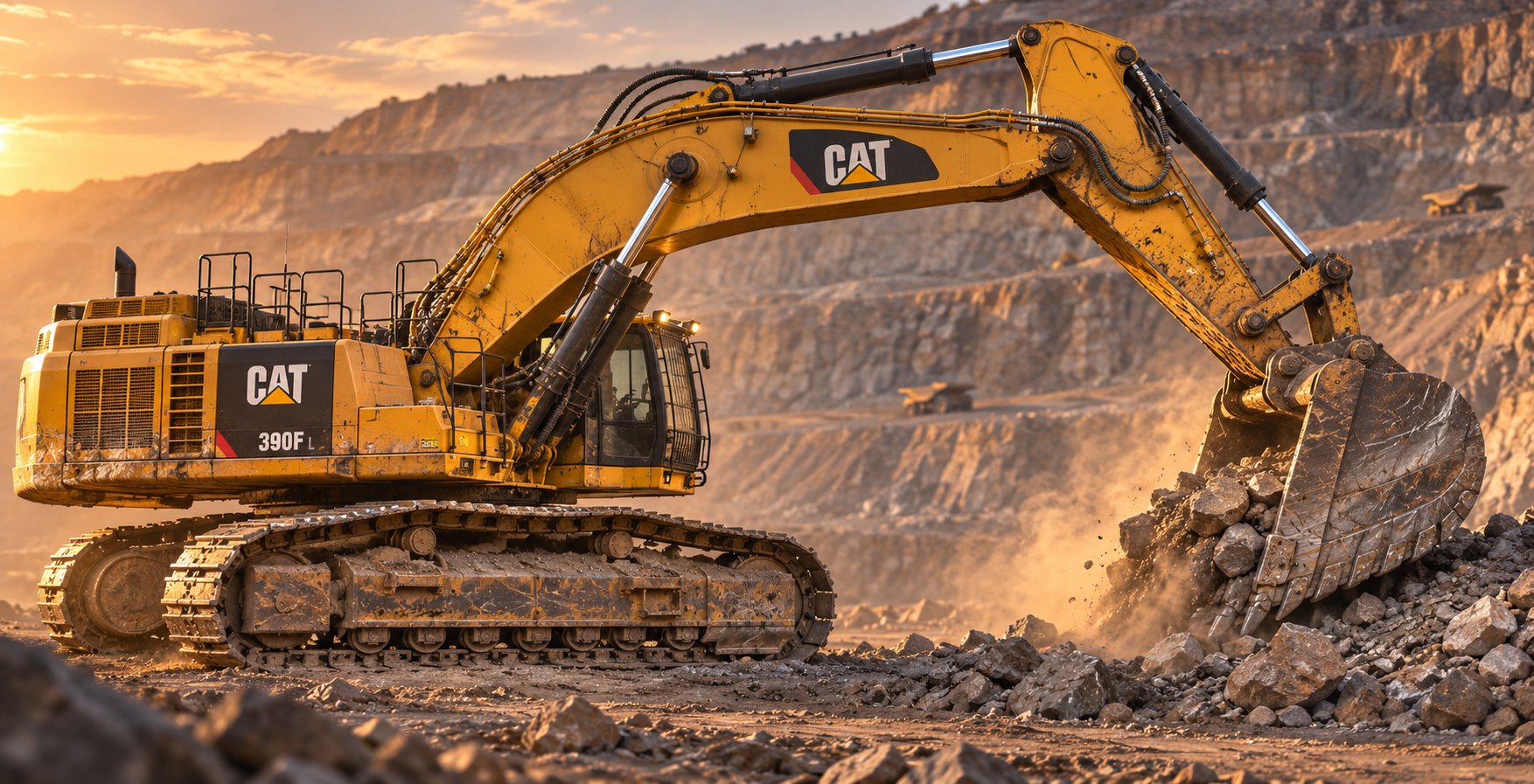
Imagine a machine that can rip through solid rock, load 40-ton trucks in a handful of passes, and demolish reinforced concrete structures — all before lunch. That is the Cat 352 hydraulic excavator in a nutshell. Caterpillar designed this 50-metric-ton powerhouse for contractors who need serious production capacity on large-scale earthmoving, quarry loading, deep excavation, and infrastructure demolition projects. When you see a cat 352 excavator for sale, you are looking at one of the most capable machines in its weight class — and one of the most searched.
Demand for the 352 remains strong in both new and used markets for a simple reason: it delivers. Its 330-kW (443-hp) engine paired with an electrohydraulic system powers through difficult material with features like auto dig boost, which increases bucket penetration by up to 8 percent when resistance is encountered. That kind of real-world capability keeps resale values healthy and buyers actively searching.
This guide is built for those buyers. Whether you are a fleet manager replacing aging iron or a contractor stepping up from a mid-size machine like the Cat 308 or Cat 306, the information ahead covers everything you need to evaluate a purchase with confidence — from lineup positioning and model variants to specifications, competitive alternatives, inspection red flags, total cost of ownership, pricing benchmarks, and sourcing channels.
What the Cat 352 Is Built to Do
At its core, the 352 is a high-production digging and loading machine. Think large-scale site development where thousands of cubic yards need to move on schedule. Think deep utility trenching that smaller excavators like the Cat 308 excavator simply cannot reach. Think quarry faces where rock loading demands both breakout force and cycle speed, or heavy demolition where structural steel and concrete require brute hydraulic power.
The current-generation 352 replaced the legacy 352F platform, bringing updated hydraulics, a modern electrohydraulic control system, and standard Cat Grade technology that can boost productivity by up to 45 percent. Pipeline contractors, mass-excavation crews, and demolition firms all rely on this machine to anchor their spreads. Its variable gauge undercarriage option — retracting to just 7 feet 10 inches for transport and expanding wider than the fixed-gauge version for stability — makes it surprisingly adaptable for a machine of this size.
Who Should Consider a Cat 352
The typical buyer falls into a few distinct categories: mid-to-large civil contractors running highway or commercial site projects, quarry operators who need relentless truck-loading capability, demolition firms handling multi-story structures, and rental or fleet companies stocking proven production excavators that hold their value. If your projects consistently demand more reach, depth, and bucket capacity than a 35-to-45-ton machine can deliver — but you do not need the 70-plus-ton footprint of the largest excavators — the 352 deserves a hard look.
The Cat 352 occupies a sweet spot between the agility of the Cat 349 and the sheer mass of the Cat 374, making it one of the most versatile machines in the 50-ton class — big enough to dominate heavy production work, yet manageable enough for transport and tighter job-site footprints.
Versatility, however, only matters if you are buying the right variant at the right price — and that is where the details get interesting.
Where the Cat 352 Fits in the Caterpillar Excavator Lineup
Buying the wrong size excavator is one of the most expensive mistakes a contractor can make. An undersized machine kills productivity; an oversized one burns cash on fuel, transport, and wasted capability. So before you start evaluating any cat 352 excavator for sale, it helps to zoom out and understand exactly where this model sits on Caterpillar's size ladder — and why that position matters for your bottom line.
From Mini Excavators to Mining Machines
Caterpillar builds one of the broadest excavator lineups in the industry, spanning machines that weigh barely a ton all the way up to 200,000-pound mining giants. You can think of the range as five distinct tiers, each designed for progressively heavier work:
- Mini/Compact (roughly 1 to 10 metric tons): Models like the 301.5, 302 CR, Cat 306, and the popular Caterpillar 308 excavator (308 CR) live here. These machines handle residential trenching, landscaping, utility installs, and tight-access jobs where maneuverability matters more than raw power.
- Small/Standard (roughly 14 to 20 metric tons): The 313, 315, 317, and 320 GC fall into this bracket. They are the general-contractor workhorses — versatile enough for commercial site prep, utility trenching, and truck loading without requiring heavy-haul trailers.
- Medium (roughly 22 to 35 metric tons): Models such as the 323, 326, 330, and 336 step up to roadwork, large-scale foundations, and heavier material handling. Dig depths reach into the mid-20-foot range, and hydraulic output supports bigger attachments.
- Large (roughly 35 to 55 metric tons): This is 352 territory. The Cat 349, Cat 350, and Cat 352 deliver high-production digging and loading for mass excavation, quarry operations, heavy demolition, and major infrastructure. Horsepower climbs past 400, and operating weights push beyond 100,000 pounds.
- Extra-Large/Mining (55+ metric tons): The Cat 374 at roughly 162,900 pounds and the Cat 395 at over 207,000 pounds anchor the top of the lineup. These are purpose-built for sustained, high-volume earthmoving and mining support where sheer breakout force and bucket capacity drive the economics.
Recognizing which tier your project actually needs prevents a common trap: overspending on a machine that spends half its time idling, or underbuying and watching cycle times drag out week after week.
How the Cat 352 Bridges the Gap Between the Cat 349 and 374
Here is where the sizing decision gets nuanced. The Cat 349 operates at roughly 49 metric tons with about 413 horsepower, while the Cat 374 jumps to approximately 74 metric tons and 484 horsepower. That is a massive leap — nearly 25 tons and a significant increase in transport complexity. The 352 fills the strategically important middle ground at around 49 metric tons (approximately 107,800 pounds) with 443 horsepower, giving contractors a meaningful power and stability upgrade over the 349 without the cost and logistical burden of the 374.
When would you choose the 352 over the smaller 349? Consider scenarios involving heavier material density, deeper dig profiles that demand a longer stick, or consistently larger bucket loads. Quarry operators loading oversized haul trucks, for example, benefit from the 352's additional hydraulic muscle and heavier counterweight. Demolition crews working with large shears or processors gain stability and cycle efficiency that the 349 cannot quite match.
And when is the 374 overkill? In smaller quarries, urban demolition projects with space constraints, or applications where transport frequency is high, the 374's sheer size becomes a liability. Its wider footprint demands more room to swing, its weight pushes into permit-required hauling territory on many routes, and its fuel consumption reflects the extra tonnage — even during lighter work phases. The 352 avoids all of those penalties while still delivering serious production output.
Choosing the correct size class is not a minor detail. It directly shapes your productivity per hour, fuel cost per cubic yard, trailer and permit requirements, and even which job sites the machine can physically access. Getting this decision right before you start browsing listings saves far more money than negotiating a few thousand dollars off the purchase price.
Of course, size class is only half the equation. Within the 352 family itself, multiple model designations exist — and each one represents a different configuration, generation, and feature set that buyers need to decode before signing anything.
Cat 352 Model Variants and What Every Designation Means
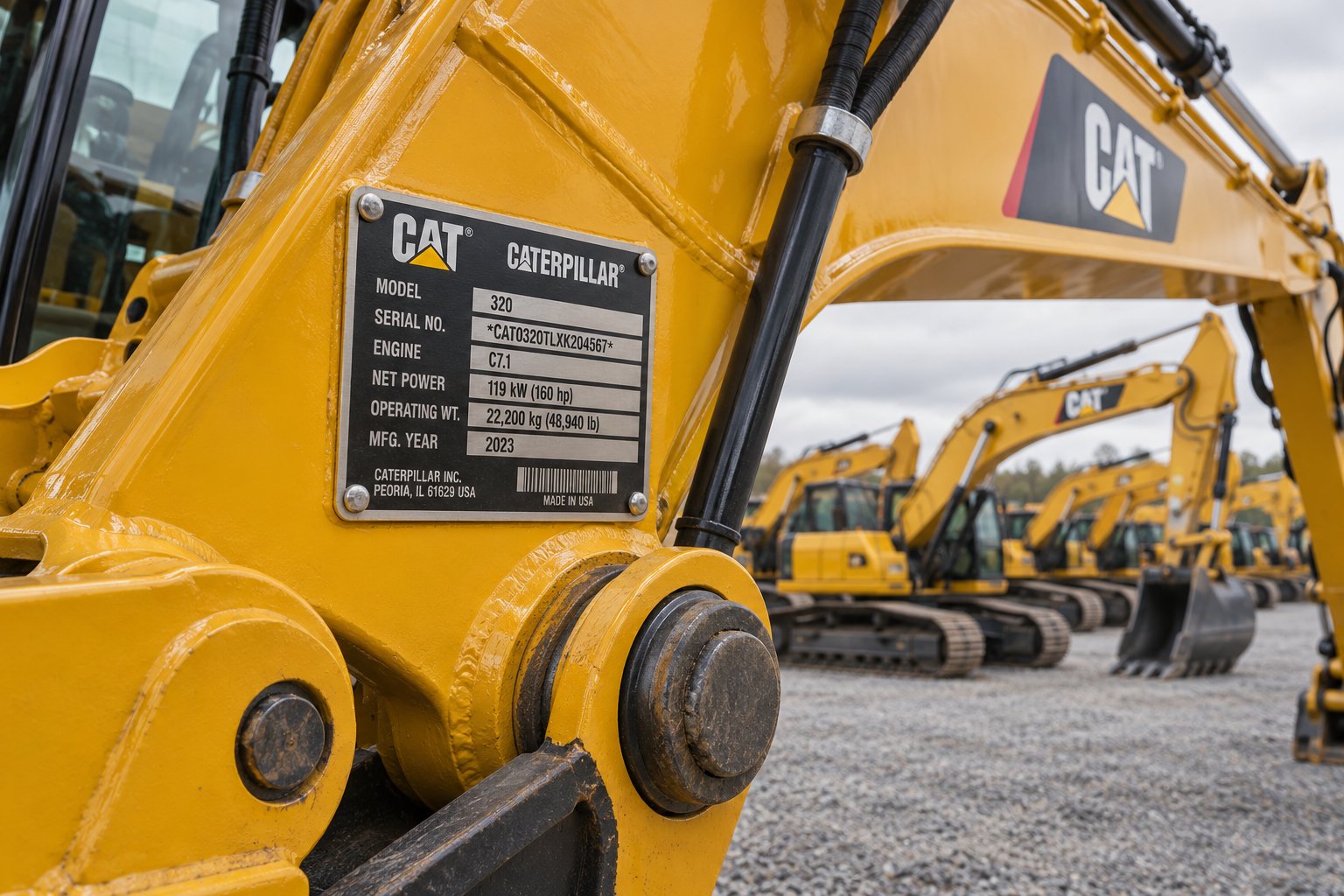
You have settled on the 50-ton class, confirmed the Cat 352 is the right size for your projects, and started browsing listings. Then you notice something confusing. One listing says "352F." Another reads "352 FG." A third advertises a "352 GC," and a fourth mentions a "352 FLGC." Are these all the same machine? Not even close. Each suffix represents a different generation, configuration, or feature package — and the differences affect everything from purchase price to long-term parts availability. If you are evaluating a cat 352 excavator for sale, understanding these designations is not optional. It is the first line of defense against buying the wrong machine.
Decoding Cat 352 Model Suffixes
Caterpillar uses a structured naming system across its entire excavator lineup — the same logic that applies to machines like the Cat 299 compact track loader, the cat 259d3 for sale listings you may see on dealer sites, or a cat 323 excavator for sale page. For tracked excavators, the first digit "3" identifies the machine as a crawler excavator, the next two digits indicate the approximate operating weight class, and any trailing letters or suffixes describe the generation, undercarriage type, or product tier. Here is how those suffixes break down for the 352 family:
- F: Denotes the previous-generation platform. The 352F was Caterpillar's earlier production model in this weight class, built with the hydraulic architecture and electronics of its era. Many used listings still feature 352F units with solid remaining service life, but buyers should recognize the technology is a generation behind.
- L: Signals a long-undercarriage configuration. The extended track frame increases the machine's ground contact area, improving stability on soft or uneven terrain and providing better lift capacity over the side. You will often see "L" combined with other suffixes, such as "FL" or "FLGC."
- GC: Stands for General Construction. This variant is Caterpillar's entry-level tier, optimized for lower acquisition cost and simpler systems. Think of it as the practical workhorse — reliable for straightforward digging and loading, but with fewer auxiliary hydraulic circuits and simplified electronics compared to higher-spec models.
- FG: Represents the current-generation production model that succeeded the 352F. The "F" references the platform lineage, and "G" indicates the latest generational update. This is typically the variant with the most advanced electrohydraulic controls, emissions compliance, and technology integration.
- FLGC: Combines multiple suffixes — previous-generation platform (F), long undercarriage (L), and general construction tier (GC). It is a specific configuration that pairs the extended track frame with the simplified GC package.
The table below organizes these variants for quick reference:
| Designation | Generation / Platform Notes | Typical Application Focus |
|---|---|---|
| 352F | Previous generation; legacy hydraulic and electronic architecture | General heavy excavation, quarry loading, demolition |
| 352FL | Previous generation with long undercarriage | Soft-ground stability, improved side-lift capacity |
| 352 GC | General Construction tier; simplified systems, lower cost of ownership | Standard digging and loading with limited attachment needs |
| 352 FG | Current generation; advanced electrohydraulic system, latest emissions tier | High-production digging, attachment versatility, technology-integrated job sites |
| 352 FLGC | Previous-generation platform, long undercarriage, GC specification | Budget-conscious buyers needing extended-track stability without premium features |
| 352 UHD | Ultra High Demolition; specialized boom and reinforced front structure | High-reach structural demolition up to eight or nine stories |
One important note: exact sub-model availability changes over time as Caterpillar updates its catalog. Always confirm the specific variant and its production status with Caterpillar's published literature or an authorized dealer before making a purchasing decision. The same advice applies whether you are shopping for a 352 or comparing a cat 259d3 price against other compact options — verify the exact model designation against the serial number.
Why the Variant Matters When Shopping Used
Here is where many buyers stumble. A listing labeled "Cat 352" with an attractive price might actually be a 352 GC — a machine with simpler hydraulic circuits that cannot efficiently run high-flow attachments like large-capacity shears or mulchers. Another listing advertising a "352F" at a steep discount could be a unit built to an earlier emissions tier, which creates potential compliance headaches depending on your operating region and resale plans.
The real-world differences between variants go deeper than branding:
- Electronics and controls: A current-gen 352 FG features Caterpillar's latest electrohydraulic system with programmable joystick responses and standard Cat Grade technology. A 352F may use an older control platform with fewer software features and limited remote diagnostics.
- Hydraulic system design: Higher-spec models offer auxiliary hydraulic circuits that support a wide range of attachments. A 352 GC may lack these circuits entirely, restricting you to basic bucket work.
- Emissions tier: Newer models comply with Tier 4 Final or EU Stage V standards, incorporating DPF and DEF aftertreatment. Older 352F units may sit at an earlier tier, which affects both regulatory compliance and resale value in regions with strict emissions enforcement.
- Cab features and operator comfort: Cab trim, monitor size, seat options, and HVAC systems vary across generations and tiers. Operators notice these differences immediately, and they affect retention and productivity.
The bottom line? Never rely on a generic model label. Request the machine's full serial number and cross-reference it with Caterpillar's serial-number lookup or your dealer's records. That serial number tells you exactly what was built at the factory — the engine configuration, hydraulic package, undercarriage type, and installed options. It is the single most reliable way to confirm you are getting the variant that matches your job requirements and budget.
The Cat 352 UHD — Ultra High Demolition Configuration
The 352 UHD stands apart from every other variant on this list because it was purpose-built for a completely different task: tearing down tall structures. Imagine a machine that can reach the top of an eight- or nine-story building with a multi-processor or shear — that is the 352 UHD's specialty.
In the UHD configuration, the excavator features an extended boom geometry that provides a vertical reach of 28 meters to the work-tool attachment pin and a horizontal reach of 15.8 meters when working with a 3.7-tonne tool. The front structure is reinforced to handle the stresses of high-reach demolition, and the cab tilts up to 30 degrees so the operator can maintain a clear line of sight to the work tool overhead. A hydraulically activated variable-gauge undercarriage widens to 13 feet for maximum stability during demolition and retracts to 10 feet for road transport.
What makes the UHD especially versatile is its ability to switch configurations. The UHD front can be swapped for a straight or bent retrofit boom for lower-level demolition and standard earthmoving — a changeover that typically takes about 15 minutes with no special tools required. In the retrofit straight-boom setup, the machine uses a 29.1-meter boom with stick options of 9.4 or 11 feet, providing a practical digging depth of 21.8 feet and a maximum ground-level reach of 38.92 feet.
Powered by a Stage V-compliant 304 kW (408 hp) Cat C13 engine, the UHD also includes safety features specific to demolition work: a falling objects guard structure (FOGS), laminated glass with a P5A impact rating on the front and roof, and advanced viscous cab mounts that reduce vibration by up to 50 percent compared with previous models.
Because of this specialized equipment, UHD pricing sits well above standard dig-configuration 352 models. If you encounter a 352 UHD listing while searching for a general-purpose excavator, recognize that you are looking at a fundamentally different machine — one designed for a niche that commands premium pricing and serves a distinct buyer profile.
Knowing which variant you need is a critical first step. But understanding what the machine can actually do on your job site — the specific dig depths, reach numbers, hydraulic flow rates, and weight constraints that determine daily productivity — requires a closer look at the 352's full specification sheet.
Cat 352 Specifications and What They Mean for Real-World Performance
Specification sheets can feel like alphabet soup — kPa, kN, L/min — numbers that mean very little unless you know how they translate to productivity on your job site. A lot of listings for a cat 352 excavator for sale include vague references to "power" and "capacity" without giving you anything concrete to evaluate. This section fixes that. Every figure below comes from Caterpillar's official 352 specification sheet, and each one is paired with a plain-English explanation of what it actually means when steel meets dirt.
Key Performance Specifications Explained
The table below covers the specifications that matter most when you are comparing machines, planning projects, or estimating operating costs. These figures reflect the current-generation Cat 352 with a Reach Boom and R3.35TB (11-foot) stick on the fixed-gauge long undercarriage — one of the most common configurations you will encounter in both new and used inventory.
| Specification | Value | What It Means on the Job |
|---|---|---|
| Operating Weight | 48,500 – 51,600 kg (106,900 – 113,800 lb) | Varies by undercarriage and bucket selection. This range determines trailer requirements, ground-bearing limits, and overall machine stability during heavy lifts and swings. |
| Net Engine Power (Cat C13B) | 330 kW / 443 hp (ISO 9249) | Enough horsepower to maintain hydraulic pressure under full load without lugging. Three selectable modes — Power, Smart, and Eco — let operators match output to the task and manage fuel burn. |
| Maximum Dig Depth | 7,660 mm / 25 ft 2 in (fixed gauge) | Defines how deep the bucket can reach below grade. Critical for deep utility trenching, foundation excavation, and below-water-table work. The variable-gauge undercarriage option reduces this slightly to 7,530 mm (24 ft 8 in). |
| Maximum Reach at Ground Level | 11,730 mm / 38 ft 6 in | How far the bucket tip extends horizontally from the machine's center of rotation. Greater reach means fewer repositioning moves when loading trucks or shaping slopes — a direct cycle-time advantage. |
| Bucket Capacity Range | 1.90 – 3.30 m³ (2.48 – 4.32 yd³) | Spans from heavy-duty excavation (HDX) buckets for dense rock to general-duty construction (GDC) buckets for lighter material. Matching bucket size to material density is essential for safe, efficient loading. |
| Bucket Digging Force | 268 kN / 60,200 lbf | The raw breakout force at the bucket teeth. Higher force translates to faster penetration in compacted clay, blasted rock, and frozen ground — jobs where weaker machines stall. |
| Stick Digging Force | 199 kN / 44,700 lbf | The curling force applied through the stick cylinder. Works in tandem with bucket force during deep trenching and material prying. A strong stick force reduces the need for repositioning on tough cuts. |
| Swing Speed | 8.3 rpm | How quickly the upper structure rotates. Faster swing speeds shorten load-and-dump cycle times, especially in truck-loading applications where the haul unit sits beside the excavation. |
| Ground Pressure (600 mm shoes) | 84.7 – 84.9 kPa (12.3 psi) | Indicates how much weight the machine exerts per unit of ground area. Lower is better on soft sites. Switching to 750 mm (30 in) shoes drops ground pressure to approximately 68.8 kPa (10.0 psi). |
| Main Hydraulic Pump Flow | 779 L/min (206 gal/min) from two pumps | Determines how quickly hydraulic cylinders and motors can move. Higher flow supports faster cycle times and is essential for running high-demand attachments like hammers and shears. |
| Maximum Hydraulic Pressure (Implement) | 35,000 kPa / 5,076 psi | The ceiling for system pressure during digging. Lift mode increases this to 38,000 kPa (5,511 psi) for heavy picks and pipe-laying, providing an extra margin of force when you need it most. |
| Fuel Tank Capacity | 715 L / 188.9 gal | A large tank means fewer refueling interruptions during long shifts. Combined with Eco mode, operators can extend run time significantly on lighter applications. |
| Maximum Travel Speed | 4.5 km/h / 2.8 mph | Relevant for repositioning on large sites. This is not a road-travel machine — it moves between dig positions and loading zones, and two-speed travel helps cover ground faster on flat terrain. |
A few numbers in that table deserve extra attention. The bucket digging force of 268 kN gives the 352 a decisive edge in hard-digging applications that would slow down machines in the Cat 336 class. And the 779 L/min combined hydraulic flow — split across two pumps at approximately 389 L/min each — is what allows the 352 to run large hydraulic hammers and demolition attachments without sacrificing cycle speed. If you are comparing the 352 against a Cat 336 excavator or similar mid-size models, that hydraulic output gap becomes immediately obvious on the job.
How Weight and Dimensions Affect Transport and Setup
Here is a reality that catches some first-time 50-ton-class buyers off guard: the machine's operating weight does not just affect digging performance — it dictates how you move it and where you can use it.
At 106,900 to 113,800 pounds depending on configuration, the Cat 352 requires a specialized lowboy or removable gooseneck (RGN) trailer rated for heavy equipment. Standard flatbeds simply cannot handle the concentrated weight. Once loaded, the combined weight of machine and trailer will exceed standard legal road limits in most states, meaning you will likely need oversize and overweight permits, potential escort vehicles, restricted travel hours, and approved haul routes — all of which add cost and scheduling complexity.
The variable-gauge undercarriage option helps here. It retracts to 2,390 mm (7 ft 10 in) for transport, reducing the overall width on the trailer and potentially simplifying permit requirements. Expanded for work, it extends to 2,890 mm (9 ft 6 in), providing a wider, more stable footprint than the fixed-gauge option at 2,740 mm (9 ft 0 in). Attachments, counterweights, and buckets may need to be removed and hauled separately to comply with weight or dimensional restrictions — another cost and time factor buyers should plan for.
On soft or sensitive ground, the 352's ground pressure becomes the critical spec. With standard 600 mm (24 in) shoes, ground pressure sits around 84.7 kPa (12.3 psi). Swapping to the optional 750 mm (30 in) shoes reduces that to roughly 68.8 kPa (10.0 psi), spreading the machine's mass over a wider track area. For contractors working on wet clay, reclaimed land, or near waterways, that shoe upgrade can be the difference between productive digging and a machine sinking into its own excavation.
Overall machine width also matters for job-site access. With 600 mm shoes on the fixed-gauge undercarriage, the total track width is 3,340 mm (10 ft 11 in). Step up to 900 mm (35 in) shoes, and that figure grows to 3,640 mm (11 ft 11 in). In open quarry or highway-corridor applications, those dimensions are a non-issue. In constrained urban demolition sites or congested commercial developments, every inch counts — and you may find the 352 pushing the limits of available working space. Verifying site dimensions against the machine's published footprint before purchase avoids an expensive mismatch.
Understanding Hydraulic Flow and Attachment Compatibility
If you plan to run anything beyond a standard digging bucket, the hydraulic system is where you need to pay closest attention. Attachments like hydraulic hammers, demolition shears, grapples, and mulchers each have specific flow and pressure requirements — and not every 352 configuration can deliver them.
The standard Cat 352 produces a combined maximum implement flow of 779 L/min at up to 35,000 kPa, which comfortably supports Cat's own line of hydraulic hammers (H160 S through H190 S) and mobile scrap and demolition shears (S3050 Flat Top) as pin-on attachments. A combined two-way auxiliary circuit is available, and a medium-pressure auxiliary circuit can be added as an option — both of which expand the range of tools the machine can power efficiently.
Here is the catch. A 352 GC variant, designed with simplified systems for lower cost of ownership, may lack these auxiliary circuits entirely. That means a GC model could struggle — or outright fail — to run high-flow attachments that a standard or FG-configured 352 handles without hesitation. If your work involves frequent attachment swaps between buckets, hammers, and processing tools, the hydraulic package on the specific unit you are evaluating is not a minor detail. It is a dealbreaker.
Caterpillar's pin-grabber quick coupler system, available as an option, speeds up attachment changes and reduces the downtime of manual pin swaps. Keep in mind, though, that adding a coupler reduces maximum payload capacity. The 352's spec sheet shows a maximum pin-on load (payload plus bucket) of approximately 6,910 kg on the fixed-gauge undercarriage versus 5,857 kg with a pin-grabber coupler installed — a reduction worth factoring into your production calculations, especially in quarry loading scenarios where every pass counts.
A machine's hydraulic flow rate and auxiliary circuit configuration determine its true versatility — not the model name on the side of the boom.
Specifications tell you what a machine can do. But how does the Cat 352 stack up when measured directly against its closest competitors from Komatsu, Volvo, John Deere, and Hitachi? That comparison reveals strengths and trade-offs that the spec sheet alone cannot capture.
How the Cat 352 Compares to Komatsu, Volvo, Deere, and Hitachi Rivals
Buying a 50-ton excavator without comparing alternatives is like signing a five-year lease without reading the terms. The Cat 352 is a proven machine, but it is not the only contender in this weight class. Komatsu, Volvo, John Deere, and Hitachi each field competitive models that deserve a fair look — especially when hundreds of thousands of dollars are on the line. Here is how they stack up.
Cat 352 vs Komatsu PC490
Buyers in this weight class often cross-shop Komatsu's PC490, which operates at approximately 53.9 tons with 359 horsepower. That is a meaningful power gap compared to the 352's 443 hp, and you will feel it in hard-digging applications where sustained hydraulic pressure matters. Where Komatsu fights back is technology. Its intelligent Machine Control (iMC) system integrates 3D GPS guidance and auto-grade control directly into the machine — a feature set that appeals to contractors running precision earthwork. Komatsu's fuel-efficiency reputation is well earned, and the PC490's KOMTRAX telematics platform provides solid remote monitoring. The trade-off? Komatsu's global dealer network, while extensive, is generally considered narrower than Caterpillar's — a factor that matters most when you need emergency parts or service in remote locations.
Cat 352 vs Volvo EC480 and EC380
Volvo approaches this class from two directions. The EC380E sits at roughly 41.7 tons with 303 hp, making it lighter and less powerful than the 352 — better suited for contractors who need the form factor without the full 50-ton commitment. The EC480E, at 50.2 tons and 373 hp, is the closer competitor. Volvo's electro-hydraulic system earns consistent praise for smooth, precise control, and the brand's Eco Mode reportedly delivers meaningful fuel savings during lighter duty cycles. Operator comfort is another area where Volvo consistently scores well in industry evaluations, with operating efficiency rated at 9.5 out of 10 in independent assessments. The primary trade-off is resale value. In most North American markets, Caterpillar equipment retains a higher percentage of its original value at resale — a financial reality that affects total cost of ownership over a machine's productive life.
Cat 352 vs John Deere 380 P-Tier and 470 P-Tier
John Deere straddles this segment with the 380 P-Tier at 42.7 tons (271 hp) and the 470 P-Tier at 56.5 tons (367 hp). Neither lands squarely on the 352's 50-ton, 443-hp sweet spot, which leaves a gap in Deere's lineup that Cat exploits. Deere's strongest cards are competitive financing programs and a dealer network with deep roots in agricultural markets — useful if your operation already runs Deere support equipment. Contractors who pair their excavators with other fleet machines, whether a cat 930 wheel loader for stockpile management or a Cat 289 compact track loader for finish grading, often value a single dealer relationship that spans multiple product lines. Deere offers that same breadth, though its heavy civil and demolition presence in the 50-ton class remains narrower than Caterpillar's.
Cat 352 vs Hitachi ZX490
Hitachi has built its reputation on hydraulic efficiency, and the ZX490 at 54.9 tons with 362 hp continues that tradition. The TRIAS II hydraulic system delivers smooth, responsive controls that operators appreciate — especially during fine-grading and precision loading tasks. Hitachi's excavator heritage runs decades deep, and the brand commands loyalty in markets where hydraulic "feel" is a top priority. The compromise is similar to Komatsu's: a smaller global support footprint and generally lower resale value retention compared to Caterpillar in North American markets. For contractors operating in regions with strong Hitachi dealer coverage, though, the ZX490 is a legitimate alternative that competes on production capability. A fleet that runs a cat 930 loader alongside a Hitachi excavator, for example, will still find parts and service manageable in well-served metro areas — but remote job sites tell a different story.
The comparison table below consolidates key data points across all five brands. Use it as a starting framework, not a final answer — each manufacturer updates specifications periodically, and regional pricing varies significantly.
| Brand / Model | Approx. Operating Weight | Engine Power Range | Noted Strengths | Common Trade-Offs | Relative Resale Value Trend |
|---|---|---|---|---|---|
| Cat 352 | ~49–52 metric tons | 330 kW / 443 hp | Highest power in class; deepest global dealer and parts network; strong resale; advanced electrohydraulic controls | Higher acquisition cost; premium parts pricing | Strong — typically leads 50-ton class in North America |
| Komatsu PC490 | ~54 metric tons | 268 kW / 359 hp | Integrated iMC machine control; strong fuel efficiency; KOMTRAX telematics | Lower horsepower; smaller dealer footprint than Cat | Moderate to strong |
| Volvo EC480E | ~50 metric tons | 278 kW / 373 hp | Operator comfort; electro-hydraulic precision; Eco Mode fuel savings; high operating-efficiency ratings | Lower resale retention in most North American markets | Moderate |
| John Deere 470 P-Tier | ~56.5 metric tons | 274 kW / 367 hp | Competitive financing; strong agricultural-crossover dealer network; JDLink telematics | Narrower 50-ton-class excavator presence; lower power-to-weight than Cat 352 | Moderate |
| Hitachi ZX490 | ~55 metric tons | 270 kW / 362 hp | TRIAS II hydraulic efficiency; smooth operator feel; long excavator heritage | Smaller global dealer footprint; lower resale vs. Caterpillar | Moderate |
Disclaimer: Exact specifications should be confirmed from each manufacturer's current published data. Resale value trends reflect general market observations rather than guaranteed projections. Pricing, availability, and feature packages vary by region and configuration.
A few patterns emerge from this comparison. The Cat 352 leads the group in raw engine power and benefits from the broadest dealer support infrastructure — both of which translate directly to uptime and long-term value retention. Komatsu and Hitachi counter with technology and hydraulic refinement. Volvo prioritizes fuel economy and operator experience. John Deere leverages financing and cross-fleet dealer convenience. No single machine dominates every category, which is exactly why this comparison matters before you commit.
Competitive specs, however, only tell you what these machines look like on paper. What really separates a good purchase from a costly regret is the physical condition of the specific unit sitting in front of you — and knowing exactly what to inspect before any money changes hands.
What to Inspect Before Buying a Used Cat 352
A fresh coat of paint and a clean cab photo can make any listing look like a deal. But a 50-ton excavator hides its most expensive problems in places no camera angle conveniently captures — the undercarriage, the hydraulic system internals, and the emissions aftertreatment hardware. When you are evaluating a used Cat 352, skipping a thorough inspection is not a shortcut. It is a gamble with five- and six-figure consequences. The guidance below walks you through the critical checkpoints that separate a solid investment from an expensive headache.
Structural and Undercarriage Assessment
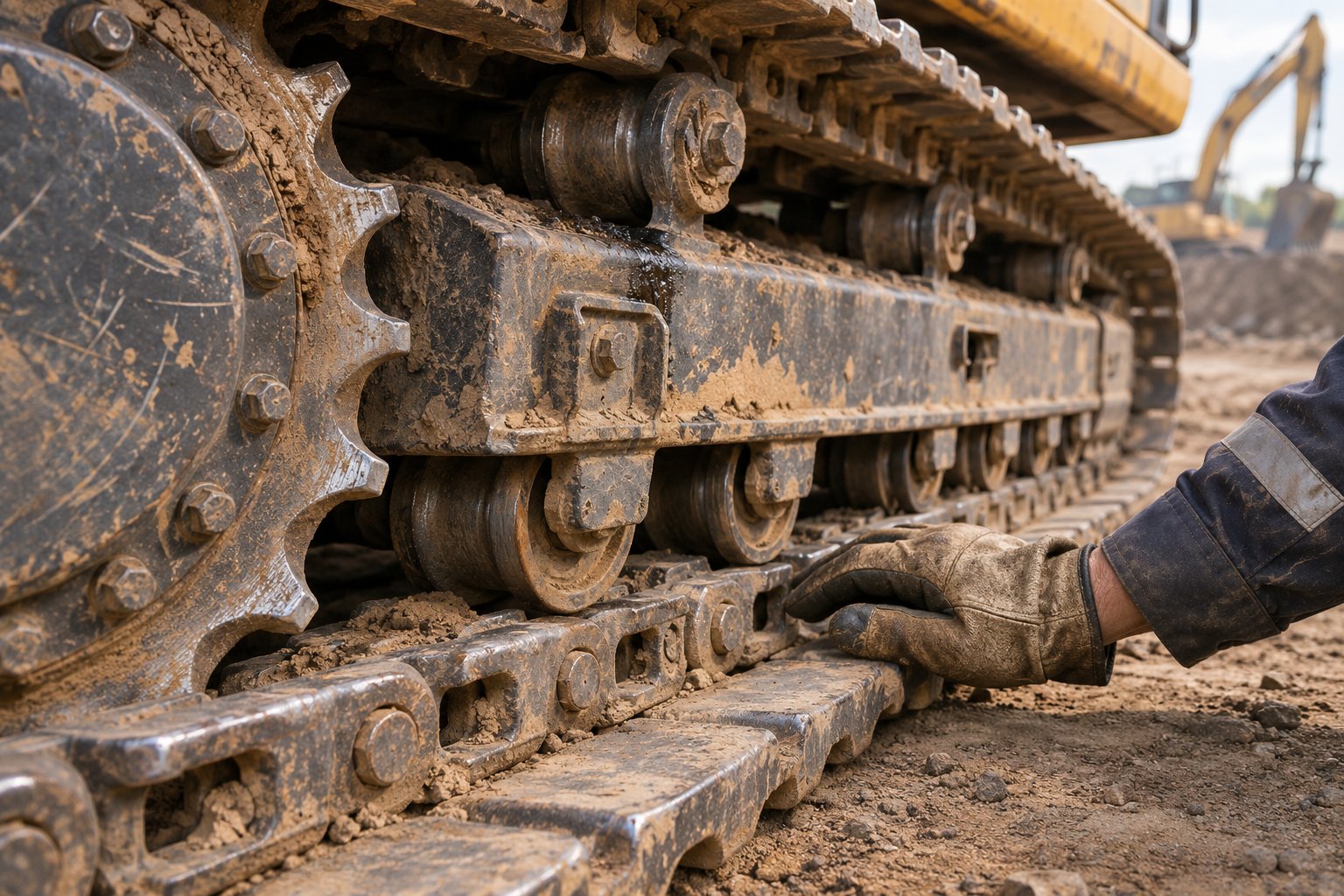
Start where the biggest repair bills live. On any large tracked excavator, undercarriage components can account for roughly half of total lifetime maintenance costs — and on a machine in the 352's weight class, a full undercarriage replacement runs well into five figures. Estimating wear by eye is not reliable enough at these stakes. You need to measure.
Begin with a walk-around of the track frames. Look for cracks at the boom-to-chassis pin joints, where stress concentrates during heavy digging and swing cycles. Any signs of re-welding or steel plates welded over cracked areas are a serious red flag — they indicate the machine has been subjected to forces beyond its design envelope. As one experienced appraiser noted, structural cracks alone can reduce a machine's value by roughly 20 percent.
Move to the undercarriage components themselves. Using a track measuring gauge, check each wear item individually:
- Track shoes and grousers: Measure grouser height with a depth gauge and compare to the OEM new and wear-limit dimensions. Worn grousers reduce traction and signal that other components are aging too.
- Track links and pins: Measure pitch extension (the distance across five pins) to detect internal pin and bushing stretch. A stretched chain means the idler has traveled forward on its adjustment — and once adjustment is maxed out, replacement is imminent.
- Rollers, idlers, and sprockets: Check roller diameters individually. Inspect sprocket teeth for pointed or hooked profiles, which indicate advanced wear. Look for oil weeping from roller seals — a sign that internal lubrication is failing.
- Track sag: With the machine on level ground, measure the sag between the top carrier roller and the track. Excessive sag after the idler has been fully adjusted forward can indicate a missing link — a trick some sellers use to keep a badly stretched track looking tight. Compare the actual link count to factory specifications.
Each worn component you document translates directly into a dollar figure you can subtract from the asking price — or a reason to walk away entirely.
Hydraulic System and Engine Diagnostics
The hydraulic system is the heart of the machine, and small problems here generate enormous repair bills fast. A hydraulic pump replacement on a large excavator can cost $12,000 to $15,000, and even a single cylinder reseal runs in the thousands. Your inspection should include both physical checks and data pulls.
Cylinder drift test: This is the definitive field test for hydraulic integrity. Boom the machine up with a loaded bucket, shut the engine off, wipe the boom cylinder rod clean, and mark a reference point. Wait five minutes and measure how far the boom has dropped. Some minor drift is normal on any machine. Significant drift — especially rapid drift — points to worn packing, bypassing control valves, or internal cylinder damage. Perform the same test on the stick and bucket circuits.
Hydraulic oil sampling: Pull a sample from the hydraulic tank and send it for laboratory analysis. The lab report reveals metal particulate levels — iron, copper, chrome, aluminum — that indicate internal wear on pumps, motors, and cylinder bores long before you would see any external symptom. Milky or foamy hydraulic fluid is a deal-killer; it signals water contamination that degrades every component in the circuit.
Engine oil and coolant analysis: The same sampling logic applies to the engine. Oil analysis detects bearing wear, fuel dilution, and coolant intrusion. Coolant analysis reveals corrosion inhibitor depletion and the presence of combustion gases, which can indicate a failing head gasket. These non-invasive tests cost a fraction of one major repair and provide objective data about internal condition.
Cat Electronic Technician (ET) diagnostic codes: Modern Cat 352 models store extensive diagnostic data in the engine control module (ECM). Connecting Cat ET software — or having an authorized dealer perform the pull — reveals active and logged fault codes that identify everything from hydraulic pressure anomalies to aftertreatment warnings and electrical faults. ECM hours also serve as a tamper-resistant cross-reference against the hour meter displayed in the cab. If those numbers do not match, the hour meter may have been replaced or rolled back.
Request the machine's complete maintenance records and verify them against Caterpillar's recommended service intervals. A 352 with documented dealer-performed services at every milestone is a fundamentally different risk profile than a unit with no paper trail — regardless of the hours showing on the display. Buyers shopping for any large Caterpillar unit, whether it is a 352, a 308 cat excavator for sale at a regional lot, or a machine sourced through a dealer like Fabick Cat, should treat missing records as a major warning sign rather than a minor inconvenience.
Cab, Electronics, and Emissions Compliance
The cab and electronics reveal how the machine was treated day to day. Climb in and check every control interface: joystick response, monitor functionality, HVAC operation, wiper and lighting circuits, and seat condition. A badly worn seat, cracked glass, and unresponsive controls tell you the machine spent its hours under an operator who did not care — and that attitude rarely stops at the cab door.
Pay special attention to the emissions aftertreatment system. Current-generation Cat 352 models run Tier 4 Final (U.S. EPA) or EU Stage V compliant engines equipped with a diesel particulate filter (DPF), diesel oxidation catalyst (DOC), and selective catalytic reduction (SCR) system requiring diesel exhaust fluid (DEF). Verify that all aftertreatment components are physically present, that sensors and warning lights function correctly, and that there is no evidence of tampering or deletion.
Why does this matter so much? A machine with a deleted or bypassed aftertreatment system faces two serious consequences. First, it is non-compliant with federal and state emissions regulations, which can result in fines and restrictions on where the machine can legally operate — particularly in California, where CARB off-road fleet rules add another layer of enforcement. Second, non-compliant machines suffer steep resale-value penalties. Buyers in regulated markets will not touch them, and export opportunities narrow significantly. Check the engine emission label, confirm the engine family number, and review any available Tier 4 documentation before committing.
Use the Cat Central App or Cat ET to check for active aftertreatment fault codes, regeneration history, and DEF consumption patterns. Abnormal regeneration frequency or persistent aftertreatment warnings suggest a system under stress — and repairs to DPF and SCR components on a large excavator are neither cheap nor quick.
Quick-Reference Inspection Checklist
Before you visit any unit, print or save this list. It covers the high-priority items that protect your investment:
- Walk-around for frame cracks, re-welding, and plating — especially at boom-to-chassis pin joints
- Track shoe grouser height and link pitch extension measured with a gauge, not estimated visually
- Roller, idler, and sprocket condition with individual measurements compared to OEM wear limits
- Track sag measurement and link count verification against factory specification
- Cylinder drift test on boom, stick, and bucket circuits with engine off
- Hydraulic oil sample pulled and sent for particulate and contamination analysis
- Engine oil and coolant samples for wear-metal and contamination screening
- Cat ET diagnostic pull for active/logged fault codes and ECM hour verification
- Complete maintenance records reviewed against Caterpillar's recommended service intervals
- DPF, DOC, SCR, and DEF system physically present, functional, and untampered
- Engine emission label photographed — engine family and compliance language confirmed
- Cab controls, monitor, HVAC, glass, seat, and all electrical systems tested
- Cold-start exhaust observation: brief puff is normal; sustained blue, white, or black smoke is not
- Full operational test including swing, travel tracking, and loaded drift recheck at operating temperature
Every worn component you identify and document during inspection is either a negotiation lever that reduces the price or a warning that saves you from a six-figure mistake.
A thorough inspection protects you at the point of purchase. But the costs that truly define whether a Cat 352 was a smart buy or a financial drain accumulate over months and years of ownership — fuel, maintenance, insurance, transport, and depreciation all quietly adding up behind the sticker price.
Total Cost of Owning a Cat 352 Beyond the Purchase Price
Here is the question that separates experienced fleet managers from first-time buyers: what does this machine actually cost me per hour once it is on the job? The sticker price on any cat 352 excavator for sale is just the opening chapter. Fuel, scheduled maintenance, parts, insurance, transport, and depreciation write the rest of the story — and those chapters are far longer. Ignoring them is how contractors end up underwater on a machine that looked like a bargain at the time of purchase.
Fuel Consumption and Operating Costs
A 50-ton-class excavator with a 330 kW (443 hp) Cat C13B engine is not sipping diesel. Under heavy working conditions — sustained digging, truck loading, demolition — expect substantial hourly fuel burn that varies with duty cycle, operator technique, and mode selection. The 352's Smart Mode system helps by automatically matching engine and hydraulic power to real-time demand, and its electrohydraulic controls eliminate pilot lines that traditionally created pressure losses. Caterpillar reports these technologies reduce fuel consumption by up to 10 percent compared to the previous 352F platform — a meaningful savings when you are burning through hundreds of gallons per week.
If you are buying used, request fuel-burn data from the machine's onboard monitoring system. Most current-generation 352 models log average fuel consumption per hour through the touchscreen monitor and VisionLink telematics. Compare that number against Cat's published specifications for the configured duty cycle. A machine consistently burning well above published figures may have hydraulic inefficiencies, aftertreatment issues, or an operator who ran exclusively in Power mode. Whatever the cause, higher-than-expected fuel consumption compounds over thousands of hours and directly inflates your cost per cubic yard.
Factor fuel into your hourly operating-cost calculation alongside operator wages, and you will have a realistic baseline before maintenance even enters the picture. Smaller machines like a Cat 317 or a cat 308 excavator for sale obviously burn far less fuel per hour — but they also move far less material. The relevant metric is not gallons per hour in isolation. It is cost per unit of production.
Maintenance Intervals and Parts Pricing
Caterpillar designed the current-generation 352 with extended and synchronized service intervals specifically to reduce shop time. The improvements are tangible. Fuel system filters now align at 1,000-hour service intervals — double the previous schedule — while the hydraulic return filter extends to a 3,000-hour service life, a 50 percent increase over earlier filters. These longer intervals reduce both parts consumption and the labor hours spent wrenching instead of digging. Caterpillar claims overall maintenance cost reductions of up to 15 percent on the new platform.
That said, genuine Cat parts carry a premium. Filters, hydraulic hoses, undercarriage components, and engine wear items all cost more than aftermarket equivalents — sometimes significantly more. The trade-off is longevity and fit. Genuine parts are engineered to the machine's exact specifications and typically deliver longer service life, which can make the higher unit cost a better deal over multiple service cycles. Aftermarket alternatives work for some components, but cutting corners on critical hydraulic or engine parts in a 50-ton machine is a risk that rarely pays off.
For buyers who want predictable budgeting, Caterpillar offers Customer Value Agreements (CVAs) — structured ownership plans that bundle scheduled parts delivery, maintenance support, equipment health monitoring through VisionLink, and a services commitment that guarantees next-day parts and two-day repairs. CVAs can be tailored for self-service operators who handle their own wrenching or for those who prefer dealer-performed maintenance with expert Cat technicians. The real value of a CVA is not just the parts — it is the elimination of surprise costs and unplanned downtime that disrupts project schedules. Whether you own a single 352 or manage an entire mixed fleet that includes everything from a cat 306 for sale acquisition to heavy iron, a CVA converts unpredictable repair expenses into a fixed, budgetable line item.
Insurance, Transport, and Depreciation Considerations
Three costs that rarely appear in listing comparisons but hit every owner's balance sheet: insurance premiums, transport expenses, and depreciation.
Insurance premiums for heavy equipment scale directly with machine value. A 352 worth several hundred thousand dollars carries a correspondingly higher annual premium than mid-size equipment. Inland marine or equipment floater policies — the standard coverage types for construction equipment — also factor in the machine's operational risk profile, your claims history, and whether the unit works in high-risk environments like demolition or waterfront excavation. Budget for insurance as a fixed annual cost and confirm coverage terms before the machine leaves the seller's yard.
Transport costs for a 50-plus-ton excavator are not trivial. As outlined in the specifications section, the 352 requires a heavy-rated lowboy or RGN trailer, and the combined load will likely need oversize and overweight permits in most jurisdictions. Each mobilization and demobilization cycle involves permit fees, specialized hauling charges, potential escort vehicles, and restricted travel windows. Contractors who move equipment frequently between projects should model these costs into their job bids — a step that is easy to overlook when the focus is on the machine's purchase price.
Depreciation is the silent cost that shapes your total investment more than almost any other factor. Industry data shows that excavators typically lose 15 to 20 percent of their value in year one, followed by 8 to 10 percent annually through years two to five. Caterpillar equipment in the 50-ton class generally depreciates more slowly than many competitors, thanks to global parts availability, deep dealer support networks, and strong brand recognition on resale platforms. Machines meeting current Tier 4 Final or Stage V emissions standards command 15 to 25 percent resale premiums over older units in environmentally regulated markets. But no brand loyalty overrides the two factors that most heavily influence a specific machine's depreciation curve: the hour-meter reading and the quality of documented maintenance history. A well-maintained 352 with moderate hours retains significantly more value than a high-hour unit with spotty records — regardless of the yellow paint and Cat badge.
The true cost of an excavator is not the purchase price — it is the cost per hour over the machine's productive life. Every dollar spent on fuel, maintenance, insurance, and transport adds to that hourly rate, and every dollar retained at resale subtracts from it.
Understanding these ownership economics transforms how you evaluate a listing. A machine priced $50,000 below market but carrying deferred maintenance, high hours, and questionable emissions compliance may actually cost more per productive hour than a higher-priced unit with clean records and lower utilization. That financial lens — cost per hour, not sticker price — is exactly what smart buyers apply when they move from inspection to negotiation and start evaluating real market pricing.
Cat 352 Pricing Factors and Resale Value in the Used Market
Cost per hour only tells the full story if you paid the right price in the first place. Overpay for a Cat 352, and even flawless maintenance cannot close the gap. Underpay on a machine hiding deferred work, and the "deal" evaporates before the first invoice clears. The used market for this excavator is active, competitive, and influenced by variables that go well beyond model year and paint condition. Knowing what drives pricing — and what protects resale value — gives you the leverage to negotiate from a position of strength rather than guesswork.
What Drives Cat 352 Market Pricing
Imagine two Cat 352 units sitting side by side at a dealer lot. Both are the same model year. One is listed at $500,000; the other at $830,000. How is that possible? The answer lies in a handful of variables that shift pricing dramatically — sometimes by hundreds of thousands of dollars.
The primary factors include:
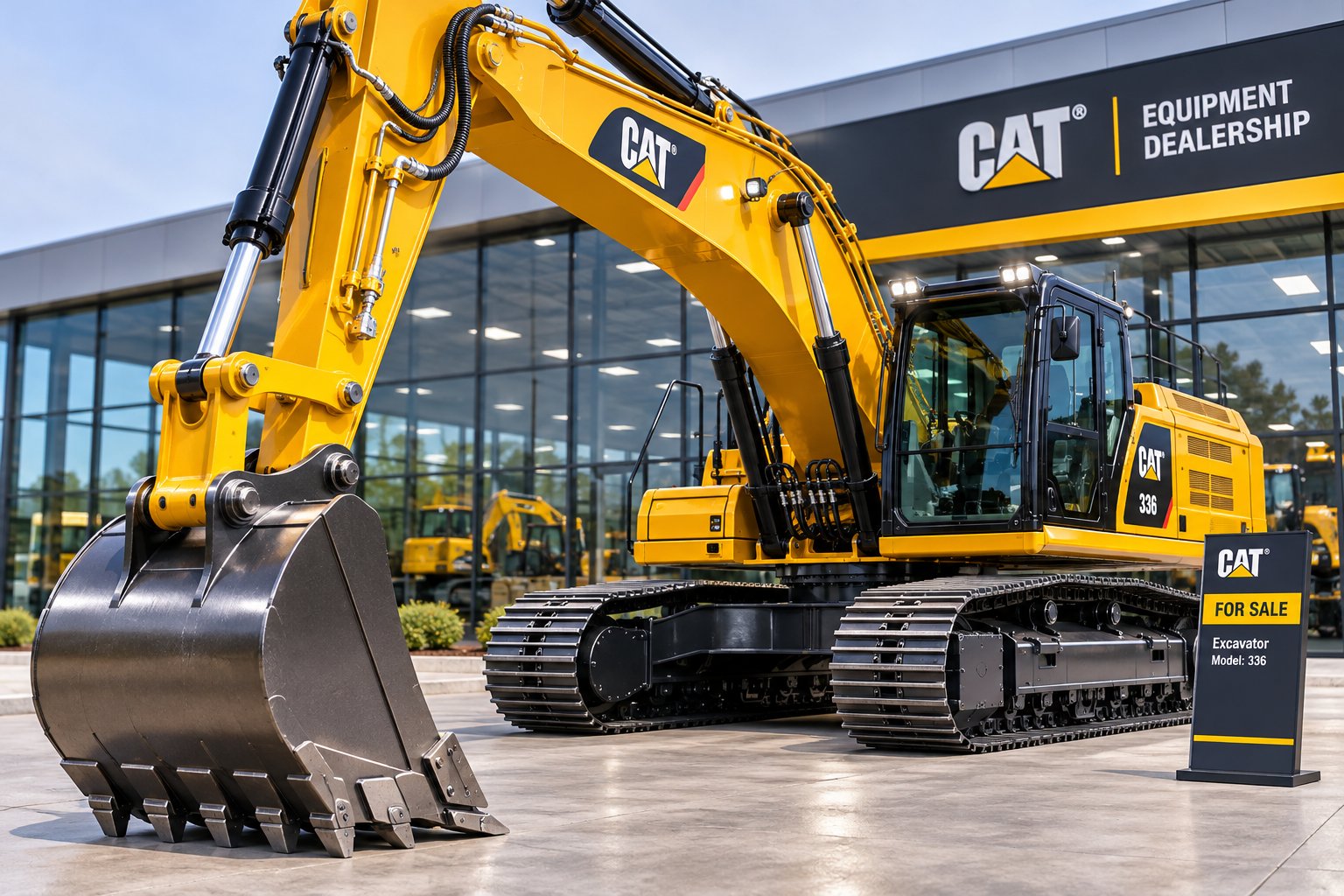
- Model year and generation: A current-generation 352 FG with the latest electrohydraulic system and Tier 4 Final compliance commands a significant premium over an older 352F built on the previous platform. One recent dealer listing priced a Cat 352 FG at approximately USD 833,066 — a useful reference point, though far from a universal benchmark. Older units and different configurations can fall well below or, in some cases with low hours and full dealer maintenance history, approach that range from different angles.
- Hour-meter reading: Hours are the single most influential variable after model designation. A Cat 352 with 3,000 hours occupies a completely different pricing tier than one showing 9,000 hours, even if both are the same year. Cross-reference the ECM hours against the cab display, as discussed in the inspection section, to verify accuracy before accepting any price justification based on "low hours."
- Maintenance documentation quality: A machine with a complete, dealer-verified service history — every interval documented, oil samples on file, major components tracked — can command 10 to 15 percent more at resale than an identical unit with missing records. Buyers pay for certainty.
- Geographic region: Demand and pricing for large excavators vary significantly by market. A 352 listed in a booming infrastructure corridor — think Texas highway expansion or Southeast commercial development — will carry higher asking prices than the same machine in a region with softer construction activity. Export demand further distorts regional pricing, as buyers in markets with limited new-equipment access compete aggressively for quality used Caterpillar iron.
- Configuration and attachments: A standard dig-configuration 352 with a general-purpose bucket prices differently from a unit equipped with a quick coupler, auxiliary hydraulic circuits, and a demolition-ready package. The 352 UHD, with its specialized high-reach boom, sits in its own pricing category entirely — often well above standard models due to the niche it serves.
- Standard dig vs. specialized variant: Even within the non-UHD lineup, the difference between a 352 GC (simplified systems, lower acquisition cost) and a fully loaded 352 FG (advanced controls, maximum attachment versatility) represents a meaningful spread. A buyer searching for a cat d6 bulldozer for sale or a cat 265 skid steer faces similar variant-driven pricing complexity within those respective product families — the lesson is universal across heavy equipment.
No single listing price should anchor your expectations. The $833,066 figure referenced above reflects one specific machine, one specific configuration, and one specific moment in the market. Your target price depends entirely on the intersection of these variables for the exact unit you are evaluating.
Resale Value Trends for Large Cat Excavators
Here is where Caterpillar's brand strength pays tangible dividends. Industry data consistently shows that CAT excavators retain approximately 65 to 70 percent of their value over five years — the highest retention rate among major excavator brands. In the 50-ton class, that advantage is amplified by several structural factors:
- Global parts availability: Caterpillar's network of approximately 2,470 dealer locations across the United States alone means a used Cat 352 buyer almost anywhere in the world can source parts and service support. That accessibility makes the machine attractive to a wider pool of second and third owners — which directly supports resale pricing.
- Brand recognition on resale platforms: The Cat badge carries weight in every major equipment marketplace and auction house. Buyers searching online — whether for a Cat 352 specifically or browsing broader heavy-equipment categories — gravitate toward Caterpillar listings because the brand signals known quality and established support infrastructure.
- Export market demand: Used Caterpillar excavators in the 50-ton class are actively sought by buyers in developing markets where new-equipment lead times are long and Cat's global parts network provides a critical reliability backstop. This international demand floor prevents prices from cratering even during softer domestic cycles.
- Emissions compliance premium: Machines meeting current Tier 4 Final or EU Stage V standards command 15 to 25 percent resale premiums over older-tier units — a gap that widens as emissions regulations tighten in more jurisdictions. A compliant Cat 352 FG holds its value substantially better than a pre-Tier 4 352F in regulated markets.
The flip side of strong resale retention is higher acquisition cost. You will pay more upfront for a Cat 352 than for a comparably aged Komatsu PC490 or Hitachi ZX490 — but you will also recover more at disposition. The net cost of ownership, factored over the machine's productive life, is where Caterpillar's value proposition becomes clearest.
Several practical factors influence what a specific buyer can expect to pay and what a future owner can expect to recover:
| Factor | Impact on Purchase Price | Impact on Future Resale Value |
|---|---|---|
| Hours at sale (under 5,000 vs. over 10,000) | Lower hours command significantly higher prices | Machines sold under 8,000 hours retain the strongest resale percentages |
| Aftertreatment compliance (Tier 4 Final / Stage V) | Compliant machines priced at a premium | Non-compliant units face steep discounts and restricted buyer pools |
| Documented dealer maintenance | Adds 10-15% vs. undocumented units | Documented machines sell faster and closer to asking price |
| Geographic demand (infrastructure boom regions) | Higher demand inflates local pricing | Strong regional demand supports resale when flipping in the same market |
| Attachment package and hydraulic configuration | Full auxiliary hydraulic setups add value | Versatile configurations appeal to a broader resale audience |
The smartest approach before committing to any purchase? Cross-reference multiple data sources. Check active listings across major equipment marketplaces. Review recent auction results for comparable units — same generation, similar hours, equivalent configuration. Request dealer quotes from authorized Caterpillar distributors in your region. Used-equipment dealers specializing in Caterpillar inventory, such as JIUHONG Machinery, also allow buyers to browse available Cat excavator stock and inquire about specific models, configurations, and pricing — a useful step during the comparison-shopping phase when you want to see what is actually available at a given moment. Specific Cat 352 availability on any platform should be confirmed directly with the seller, as inventory turns over quickly in this weight class.
When you triangulate listing prices, auction hammer prices, and dealer quotes against the condition data from your inspection, you arrive at a fair market value that reflects reality — not hope, not a seller's optimism, and not a single data point taken out of context. That informed position is what transforms a negotiation from a guessing game into a conversation grounded in evidence.
Knowing what the market charges is one thing. Knowing where to find the right machine — and which sourcing channel best fits your risk tolerance, timeline, and budget — is the final piece of the puzzle.
Where and How to Find the Right Cat 352 for Sale
You have nailed down the right size class, decoded the model variants, studied the specifications, compared competitors, built an inspection checklist, calculated ownership costs, and established a fair market price range. All of that preparation is worthless if you cannot locate the actual machine. The used heavy-equipment market is fragmented — scattered across dealer lots, online platforms, live auctions, and private sellers spanning multiple continents. Each sourcing channel carries a distinct set of advantages, risks, and cost structures. Choosing the wrong one can mean overpaying for convenience or gambling on a machine you never physically inspected. Choosing the right one puts you in front of verified inventory with the leverage to negotiate confidently.
Authorized Cat Dealers and Certified Used Programs
If minimizing risk is your top priority, start here. Caterpillar's authorized dealer network operates a Certified Used program that subjects qualifying machines to a rigorous multi-step process: initial assessment, eligibility determination, completion of all scheduled planned maintenance, replacement of worn components with genuine Cat parts, a final inspection report, and issuance of a Caterpillar warranty backed by an Equipment Protection Plan (EPP). What you get at the end is a machine restored to a documented standard — not a verbal promise that "it runs fine."
The practical benefits are significant. Certified units come with verified maintenance histories, so you are not guessing about what was done and what was skipped. Warranty coverage through the EPP provides a financial backstop against unexpected failures during the coverage period. And because dealer inventory is available for immediate purchase, you avoid the weeks or months of lead time that ordering new equipment often demands — a real advantage when a project timeline will not wait.
The trade-off is price. Dealer-sourced machines — especially certified units — carry a premium over comparable equipment found at auction or through private sellers. That premium reflects the inspection work, the parts investment, the warranty, and the dealer's overhead. For many fleet managers, the certainty is worth every dollar. For budget-constrained buyers willing to take on more due diligence themselves, other channels may deliver better value.
Financing is another dealer strength. Most authorized Caterpillar distributors offer structured financing programs, lease options, and rental-purchase agreements that spread acquisition cost over time. If cash flow matters more than total purchase price — and for most contractors, it does — the dealer channel gives you the widest range of financial tools to structure the deal.
Online Equipment Marketplaces and Auction Platforms
The digital marketplace for heavy equipment has matured significantly. Platforms like Ritchie Bros., IronPlanet, Machinery Trader, and Equipment Trader aggregate thousands of listings from dealers, fleet liquidators, and private sellers worldwide. On any given day, you can find everything from a cat 265 for sale in the compact-equipment category to 50-ton excavators like the 352 — often with detailed photo galleries, hour-meter readings, and location data included in the listing.
Auction platforms add a competitive dynamic that can work in your favor — or against it. Unreserved auctions, where the machine sells regardless of final bid, sometimes produce genuine bargains when buyer turnout is thin. Reserved auctions and buy-now listings, on the other hand, function more like traditional sales with a digital storefront. Either way, you need to approach these channels with your eyes wide open.
Before placing a bid or making an offer on any platform, verify three things:
- Seller reputation: Review the seller's transaction history, ratings, and any available feedback from previous buyers. Platforms that vet their sellers offer a layer of protection, but that vetting varies widely in rigor. A listing from a recognized dealer carries different credibility than one from an unknown private party.
- Machine location and inspection access: Buying a 50-ton excavator sight-unseen is a risk most experienced buyers refuse to take. Confirm where the machine is physically located, whether you or a third-party inspector can access it before the sale closes, and what the logistics look like for getting it to your job site.
- Buyer-fee structures: Auction houses and some marketplace platforms charge buyer premiums — typically a percentage of the hammer price — on top of the winning bid. A 10 percent buyer premium on an $800,000 machine adds $80,000 to your actual cost. Factor that fee into your maximum bid calculation before the adrenaline of auction day overrides your budget discipline.
Online marketplaces are excellent for comparison shopping and price discovery. Cross-referencing active listings and recent sold prices across multiple platforms gives you the market intelligence to recognize a fair deal — or to walk away from an inflated one. Just remember that a low listing price means nothing if the machine fails its inspection. The platform connects you to inventory; it does not guarantee condition.
Specialized Used-Equipment Dealers
Between the full-service authorized dealer and the open marketplace sits a third channel that many buyers overlook: specialized used-equipment dealers who focus specifically on particular brands or machine categories. These dealers curate their inventory rather than simply listing whatever comes through the gate. Many perform their own pre-sale inspections, address mechanical issues before listing, and develop enough brand-specific expertise to match buyers with the right model and configuration for their project needs.
The value here is specialization. A dealer focused on used Caterpillar equipment understands the differences between a 352 GC and a 352 FG at a level that a general auction house does not. They can advise on which configuration fits your application, flag known issues with specific serial-number ranges, and often provide more detailed condition reports than you would receive from a broad marketplace listing. For buyers shopping across multiple Cat models — perhaps comparing a 352 against a smaller unit, or browsing alongside listings for a cat 265 for sale or a cat 289d3 for sale to round out a mixed fleet — a specialist dealer streamlines the process considerably.
JIUHONG Machinery, for example, maintains a used Caterpillar excavator collection that spans compact and larger models, allowing contractors and fleet buyers to browse available stock, compare configurations, and contact the sales team to discuss the specific model and budget their project requires. Whether you are sourcing a 352 for heavy production or evaluating mid-size options for a different site, having a single point of contact who specializes in the brand simplifies the search. As with any platform, confirm specific Cat 352 availability directly with the dealer, since inventory in this weight class turns over quickly.
Comparing Your Sourcing Options at a Glance
Each channel serves a different buyer profile. The quick-reference list below highlights the primary advantages of each so you can match the sourcing strategy to your priorities:
- Authorized Cat Dealer / Certified Used Program: Verified maintenance history, factory-backed warranty and EPP coverage, structured financing options, genuine Cat parts used in reconditioning, and immediate availability without ordering lead times. Best for buyers who prioritize risk reduction and long-term support.
- Online Marketplace or Auction Platform: Broadest inventory selection across geographies, competitive pricing driven by market dynamics, strong price-discovery tools for benchmarking fair value, and access to both dealer and private-party listings. Best for buyers comfortable conducting independent inspections and managing their own due diligence.
- Specialized Used-Equipment Dealer: Brand-specific expertise, curated and often pre-inspected inventory, personalized guidance on model and configuration selection, and a consultative sales process suited to buyers who want knowledgeable support without the full dealer premium. Best for buyers who value specialization and want efficient access to targeted inventory.
Your Next Steps
Finding the right machine is a process, not a single event. These four steps turn everything covered in this guide into a concrete action plan:
- Define your budget and hour-count tolerance. Set a maximum acquisition price that accounts for buyer fees, transport, and any immediate reconditioning you anticipate. Decide the highest hour-meter reading you are willing to accept based on the total cost of ownership calculations covered earlier. This eliminates 80 percent of listings before you spend a minute evaluating them.
- Shortlist two or three sourcing channels. Do not limit yourself to a single source. Cross-shop between an authorized dealer, one or two online platforms, and a specialized used-equipment dealer. Different channels surface different machines at different price points — and the overlap gives you negotiation leverage.
- Arrange inspections or request diagnostic reports. For any machine that passes your initial screening, schedule a physical inspection using the checklist from the inspection section of this guide. If distance makes an in-person visit impractical, hire a qualified third-party inspector in the machine's area or request a comprehensive Cat ET diagnostic report, oil sample results, and detailed photographs from the seller. Never skip this step — no matter how attractive the price.
- Negotiate based on documented condition and fair market value. Armed with inspection findings, fluid analysis results, diagnostic codes, and pricing data from multiple sources, you enter the negotiation with objective evidence rather than opinions. Every worn component, every missing service record, and every hour above average for the model year becomes a documented, defensible reason to adjust the price downward. Sellers respect — and respond to — buyers who show up prepared.
The cat 352 excavator for sale you ultimately choose should be the one that delivers the lowest cost per productive hour over its remaining service life in your fleet — not the one with the flashiest listing photo or the most aggressive headline price. Every section of this guide has been designed to help you make that calculation with confidence, avoid the hidden costs that catch uninformed buyers off guard, and recognize the red flags that no seller will voluntarily point out. The preparation is done. The machine is out there. Go find the right one.
Frequently Asked Questions About the Cat 352 Excavator
1. How much does a used Cat 352 excavator cost?
Used Cat 352 pricing varies widely based on model year, hour-meter reading, configuration, and geographic region. A documented dealer listing for a Cat 352 FG was priced at approximately USD 833,066, but units with higher hours, older generation platforms like the 352F, or simplified GC configurations can fall significantly below that figure. Cross-referencing active marketplace listings, recent auction results, and dealer quotes is the most reliable way to establish fair market value for a specific machine. Specialized used-equipment dealers such as JIUHONG Machinery (https://jiuhong-machinery.com/products/excavators/caterpillar/) let buyers browse Caterpillar excavator inventory and inquire about pricing for particular models and configurations.
2. What is the difference between a Cat 352F and a Cat 352 FG?
The 352F is the previous-generation platform featuring older hydraulic architecture and electronics, while the 352 FG is the current-generation production model with advanced electrohydraulic controls, updated emissions compliance (Tier 4 Final or EU Stage V), and integrated Cat Grade technology. These differences affect parts availability, operating efficiency, attachment versatility, and resale value. The FG variant typically offers up to 10 percent better fuel economy and 15 percent lower maintenance costs compared to the older F platform. Always verify the exact variant through the machine's serial number rather than relying on a listing label.
3. What should I inspect before buying a used Cat 352?
Priority inspection items include structural checks for frame cracks at boom-to-chassis pin joints, undercarriage wear measurements (track shoes, rollers, idlers, sprockets, and track sag), hydraulic cylinder drift tests, and fluid sampling for both hydraulic oil and engine oil to detect internal wear. Pull Cat Electronic Technician (ET) diagnostic codes to verify ECM hours against the cab display and check for active fault codes. Confirm that the Tier 4 Final aftertreatment system — DPF, DOC, and SCR components — is intact and untampered, as non-compliant machines face regulatory penalties and steep resale discounts. Request and verify the complete maintenance history against Caterpillar's recommended service intervals.
4. How does the Cat 352 compare to the Komatsu PC490 and Hitachi ZX490?
The Cat 352 leads the 50-ton class in engine power at 443 hp, compared to the Komatsu PC490 at 359 hp and the Hitachi ZX490 at 362 hp. Caterpillar also offers the deepest global dealer and parts network, which translates to higher uptime and stronger resale value retention — approximately 65 to 70 percent over five years. Komatsu counters with its integrated intelligent Machine Control (iMC) system and fuel-efficiency reputation, while Hitachi's TRIAS II hydraulic system is praised for smooth, responsive operator feel. Both Komatsu and Hitachi generally show lower resale retention in North American markets compared to Caterpillar.
5. What is the Cat 352 UHD and how is it different from the standard model?
The Cat 352 UHD (Ultra High Demolition) is a specialized variant purpose-built for tearing down tall structures, featuring an extended boom that provides a vertical reach of 28 meters and a reinforced front structure. It includes a cab that tilts up to 30 degrees for overhead visibility, a hydraulically activated variable-gauge undercarriage, and safety features like a falling objects guard structure (FOGS). The UHD can switch between high-reach demolition and standard earthmoving configurations in roughly 15 minutes. Because of its specialized equipment, UHD pricing sits well above standard dig-configuration 352 models and serves a distinctly different buyer profile focused on multi-story demolition work.