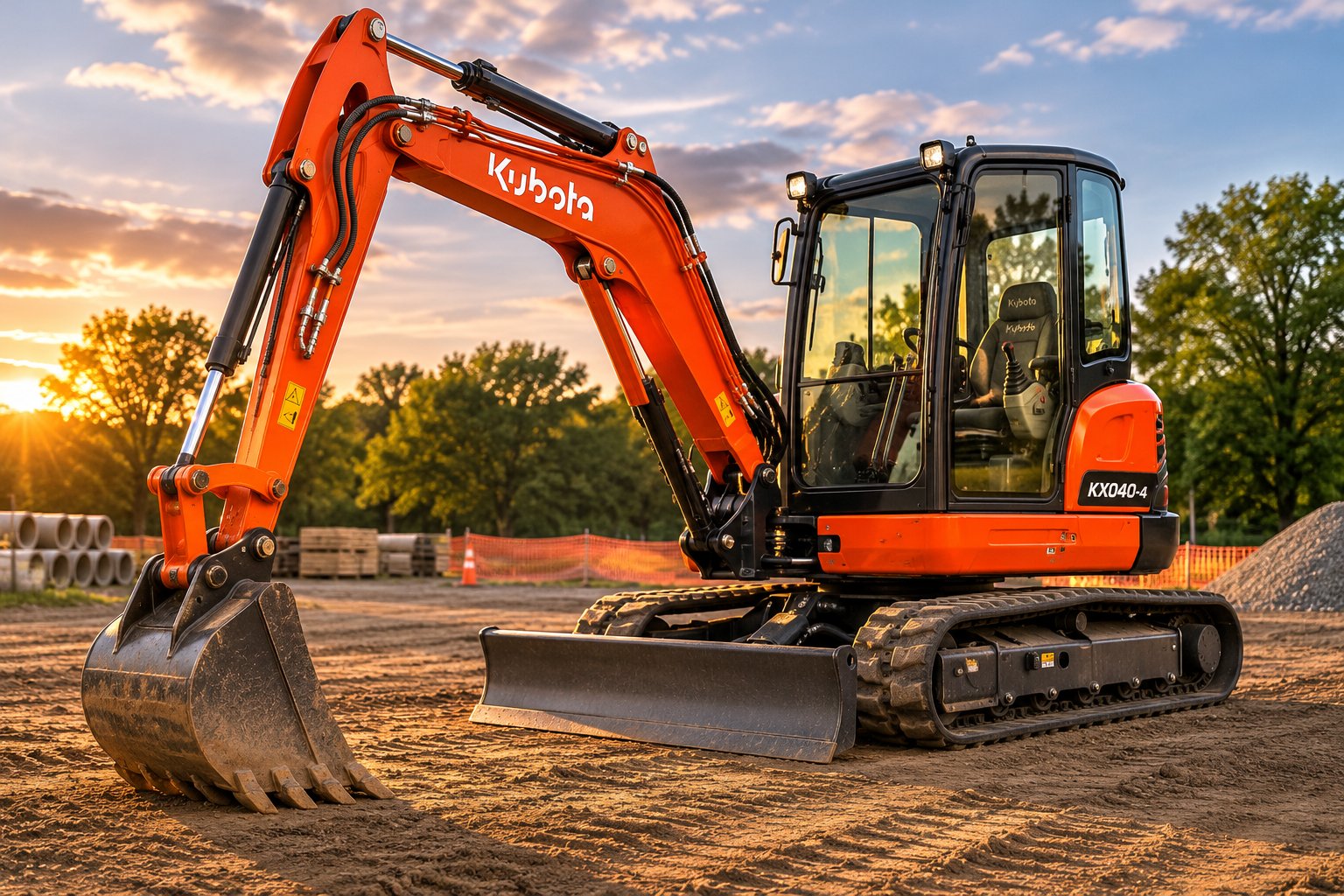


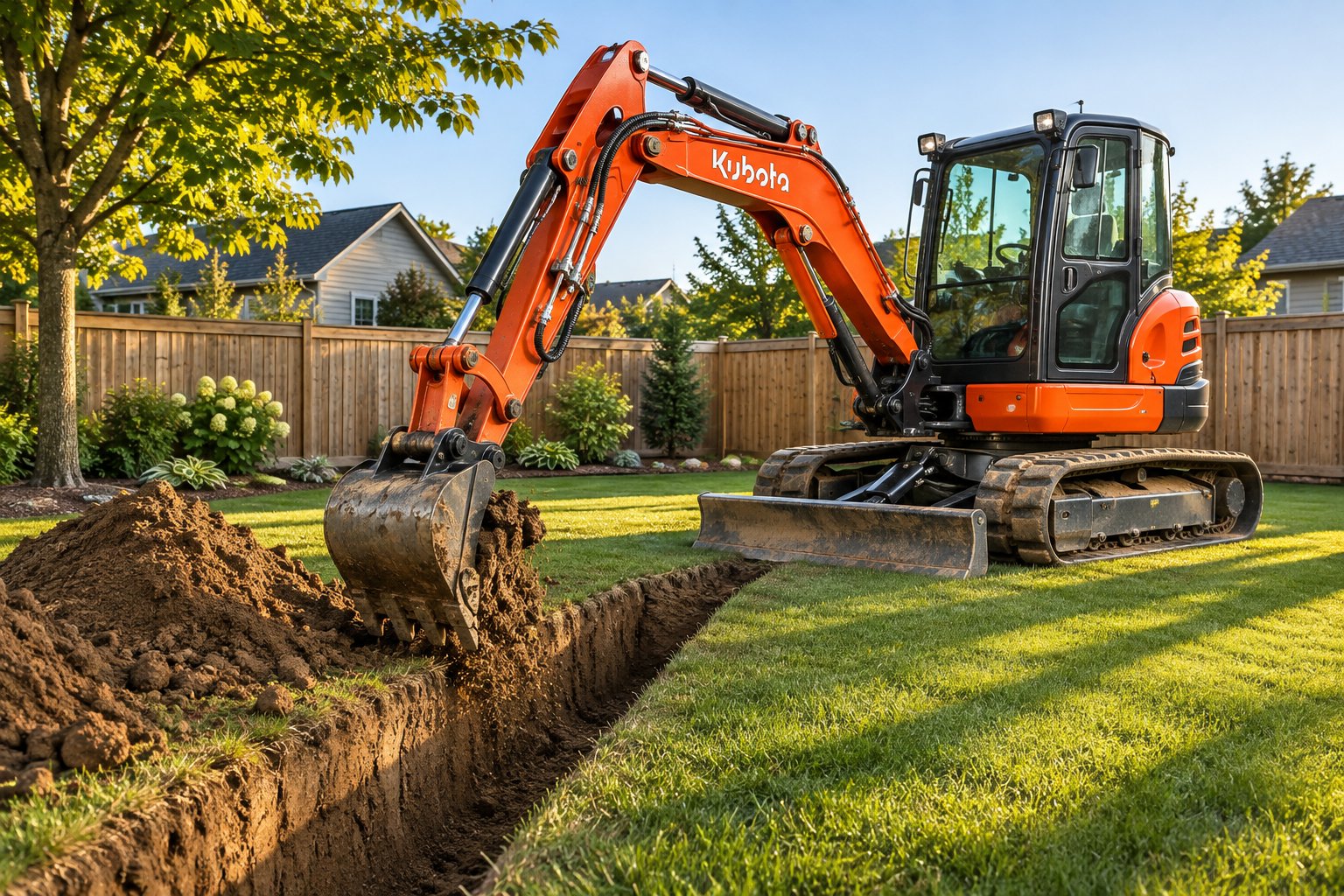
What Sets Kubota Excavators Apart From the Competition
Imagine dropping tens of thousands of dollars on a compact excavator only to realize six months in that you picked the wrong brand—wrong parts availability, weak resale value, and an engine sourced from a manufacturer you've never heard of. That's a costly mistake. Kubota excavators have earned a reputation for sidestepping exactly these problems, and the reasons trace back over a century to the company's roots in precision engine manufacturing.
From Diesel Engines to Digging Machines
Kubota didn't start building excavators. It started building engines—all the way back in 1922, when the company produced its first kerosene engine for agricultural and industrial use at its original factory in Japan. By the 1930s, the company had shifted into diesel engine production, and by the 1980s it had become one of the world's leading manufacturers of compact, multi-cylinder diesel powerplants. That engine expertise became the launchpad for Kubota's entry into construction machinery, including the mini excavator segment where it now dominates.
Here's a detail that surprises many first-time buyers: several competing brands rely on Kubota-built diesel engines inside their own machines. Bobcat, for example, uses Kubota engines across much of its compact equipment lineup, particularly in smaller skid steers and excavators. When your competitors trust your engine technology enough to put it in their own products, that says something about the quality of your engineering.
This heritage matters because every Kubota excavator model benefits from vertically integrated design. The same company that engineers the diesel engine also engineers the hydraulic system, the undercarriage, and the cab—allowing tighter optimization between components than brands that bolt together parts from separate suppliers.
Why Contractors Keep Choosing Kubota
Loyalty in the equipment world isn't about logos on hats. It's about machines that start every morning, parts that arrive fast, and trade-in values that don't collapse. Kubota checks all three boxes for landscapers, utility crews, and small contractors who depend on their excavators daily.
Kubota engineers, manufactures, and distributes most of its own products. Many competitors brand equipment made by other suppliers—and when those OEM relationships end, parts availability can become a serious problem down the line.
That insight, shared by a Kubota regional sales manager overseeing 18 dealerships, highlights a practical advantage buyers often overlook. Kubota's network of locally owned, independent dealers staffed with factory-trained technicians means service stays accessible whether you're running a Kubota mini excavator on a residential job or operating a larger KX-series model on a commercial site. The company has continued investing in U.S. infrastructure, including a 700,000-square-foot Western Division facility in Elk Grove, California, along with new production facilities under construction in Kansas and Georgia.
Resale value seals the deal. Among kubota excavator models—from the compact K008-5 mini excavator to mid-size machines—trade-in prices consistently rank among the highest in the industry. As one dealer put it, the difference in resale value between a Kubota and a competing brand can sometimes exceed the original purchase price gap, a factor many buyers fail to weigh at the time of sale.
Strong engines, strong dealer support, and strong residual value form a compelling trifecta. But choosing the right machine from Kubota's lineup still requires understanding which series, size class, and generation fits your specific work—a decision that starts with decoding how the full product range is organized.
Understanding the Full Kubota Excavator Lineup
Kubota's product range spans more than a dozen models across two distinct series—and every model name actually tells you what the machine is before you ever read a spec sheet. The trick is knowing how to decode it. Whether you're browsing a kubota excavator for sale at a dealership or scanning used listings online, understanding the naming system saves you from comparing apples to oranges.
KX-Series vs U-Series Naming Explained
Kubota splits its excavator lineup into two families: the KX Series and the U Series. The distinction is straightforward. KX-series machines use a conventional tail swing design, meaning the rear of the upper structure extends past the tracks during rotation. These models prioritize raw digging performance and stability on open jobsites. The U Series, on the other hand, is engineered around zero-tail-swing and tight-tail-swing configurations, keeping the rear counterweight within or barely beyond the track width—a critical advantage when you're working inches from a building foundation or fence line.
The numbers following the prefix reveal the machine's approximate weight class. A KX040, for instance, falls into the 4-ton operating weight category. A KX057 sits in the 5- to 6-ton range. A KX080 lands around 8 tons. The same logic applies to U-series models: the U17 is roughly a 1.7-ton class, the U27 is near 2.7 tons, and the U55 approaches 5.5 tons.
Then there's the dash-number suffix. This tells you the machine's generation. A KX040-4 is the fourth generation of that model, while the newer KX040-5 is the fifth. When you spot a kubota small excavator listed as a KX030-4 versus a KX033-4, you're looking at two different models in the same generation—not the same machine with a minor update. Knowing this prevents costly confusion, especially in the used market.
Kubota Excavator Size Classes at a Glance
Every kubota excavator falls into one of four general size classes. The table below maps each class to representative models, weight ranges, and typical dig depths drawn from published Kubota specifications.
| Size Class | Representative Models | Operating Weight Range | Typical Max Dig Depth |
|---|---|---|---|
| Micro (Under 1 Ton) | K008-5, U10-5 | 2,315–2,646 lb | 5'8"–5'11" |
| Mini (1–3 Tons) | U17-5, KX018-4, U27-4, KX030-4, KX033-4, U35-4 | 3,693–8,488 lb | 7'5"–10'6" |
| Compact (3–6 Tons) | KX040-5, U48-5, KX057-5, U55-5 | 9,199–12,346 lb | 10'8"–12'9" |
| Mid-Size (8+ Tons) | KX080-5 | 18,365 lb | 15'1" |
Notice how the U-series and KX-series models overlap within the same size class. That overlap is intentional—it gives buyers a choice between conventional swing performance and tight-space maneuverability at nearly every weight category.
How Generation Updates Improve Each Model
Why should you care whether an excavator carries a "-4" or "-5" suffix? Because generational updates aren't cosmetic refreshes. They represent meaningful engineering improvements. Take the KX040-5, introduced at World of Concrete in January 2025. Compared to the outgoing KX040-4, the fifth-generation model features a redesigned load-sensing hydraulic system that utilizes engine horsepower more fully, an expanded cab with greater head and foot space, a repositioned 7-inch LCD monitor, and standard keyless start supporting up to 10 unique operator passwords. KubotaNOW telematics also comes pre-installed, allowing fleet managers to track hours, fuel levels, and machine location from a smartphone app.
Similar patterns appear across other generational jumps: tighter emissions compliance, improved auxiliary hydraulic circuits for running attachments, LED work lights, and optional rearview cameras. If you're shopping between a late-model "-4" and a current "-5," the generation gap often translates into better fuel economy, a quieter cab, and digital features that reduce downtime—differences that add up fast over thousands of operating hours.
With the full lineup mapped and the naming conventions demystified, the next logical question becomes practical: which end of this range actually fits your work? For a surprising number of buyers, the answer starts at the smallest machines in Kubota's catalog.
Mini and Micro Excavators Built for Tight Spaces
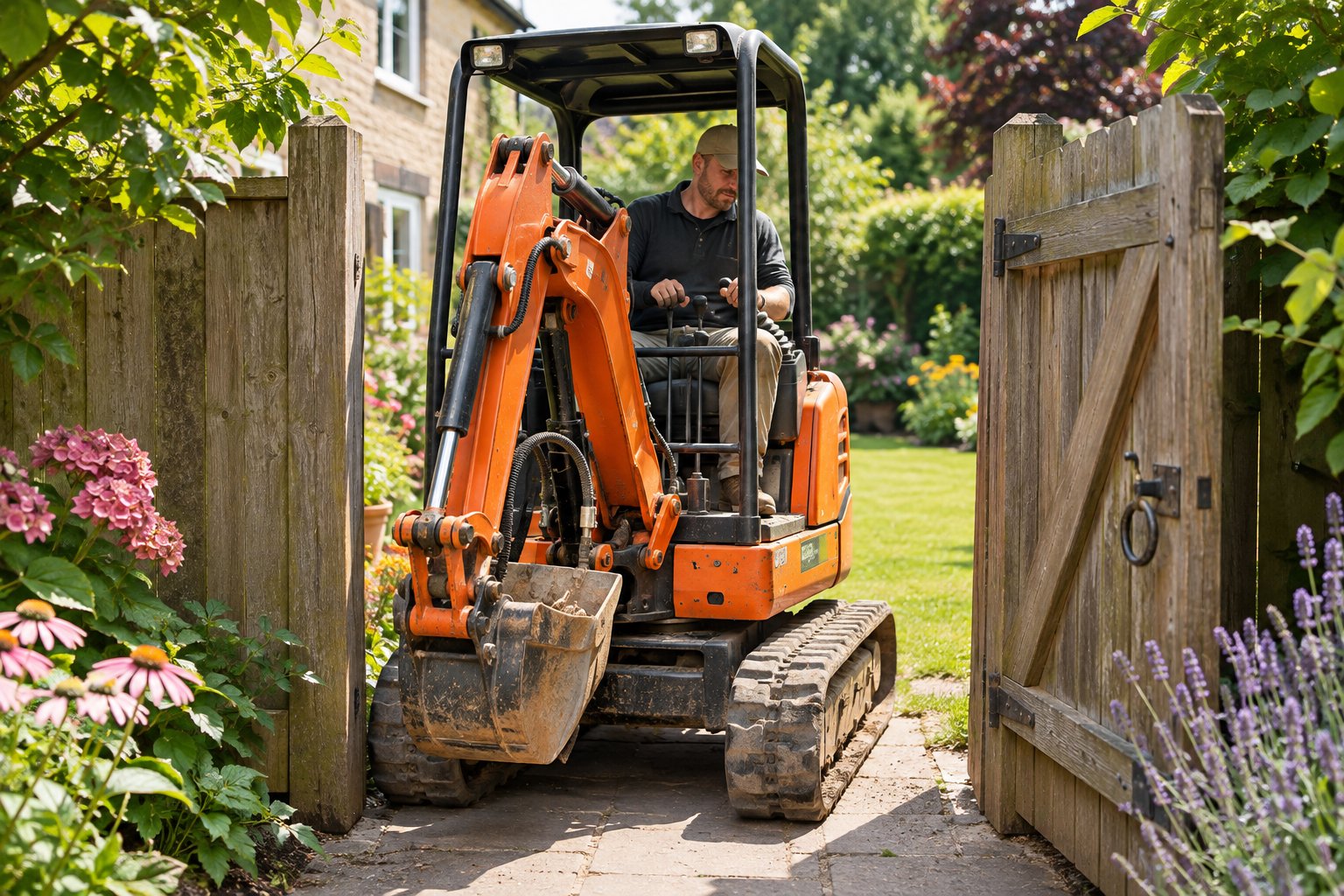
Picture this: you've got a drainage problem behind a client's house, but the only access is a 36-inch garden gate flanked by a brick wall. A standard-size excavator won't even get close. A skid steer might squeeze through but can't dig deep enough. This is exactly the scenario where Kubota's smallest machines earn their keep—and it's why the sub-three-ton segment accounts for the highest sales volume in the company's entire excavator lineup.
These compact diggers aren't toys. They're purpose-built for environments where space is the primary constraint and maneuverability trumps brute force. Understanding the difference between micro and mini classes helps you avoid overspending on a machine that's too large to reach your jobsite—or underspending on one that can't handle the work once it gets there.
Micro Excavators Under One Ton
Kubota's micro excavators—the K008-5 and U10-5—sit at the absolute bottom of the size spectrum, and that's precisely their superpower. Both machines produce 10.3 gross horsepower from Kubota's own diesel engine, keeping them light enough to tow behind most half-ton pickups without a CDL or overweight permits.
The K008-5 weighs just 2,315 pounds in its published configuration and reaches a maximum dig depth of 5 feet 8 inches. Its variable-width track frame retracts to pass through standard doorways and narrow garden gates—making it one of the few excavators that can physically enter a building for indoor demolition or basement work. The U10-5 is slightly heavier at 2,646 pounds but compensates with just 0.6 inches of rear swing clearance and a marginally deeper reach of 5 feet 11 inches.
Why does that tiny rear-swing number matter? Imagine excavating a plumbing trench along the interior wall of a finished basement. Every inch of tail overhang is an inch closer to punching a hole in drywall. The U10-5's near-zero clearance lets operators rotate freely without constantly checking behind them—a stress reducer that translates directly into faster, less cautious work.
Typical jobs for these micro machines include residential utility trenching in tight yards, small-scale landscaping grading, tree stump removal, interior selective demolition, and post-hole excavation in areas too confined for an auger truck.
Mini Excavators in the One-to-Three-Ton Range
Step up from the micro class and you land in the sweet spot that most owner-operators and small landscaping crews gravitate toward. Models like the U17-5, KX018-4, U27-4, KX030-4, and U35-4 cover the one-to-three-ton range—machines substantial enough to handle real excavation work yet compact enough to trailer behind a standard truck.
The U17-5 deserves special attention here. Kubota's next-generation 1.7-metric-ton model features true zero tail swing—0 inches of rear clearance—paired with hydraulically retractable tracks that narrow to 39.4 inches for squeezing through gates and widen to 51.2 inches when stability matters. Its 16.1-gross-horsepower Kubota diesel delivers a dig depth of 7 feet 6.2 inches and a bucket breakout force of 3,547 pounds. That's enough muscle to trench a residential water line to code depth in most jurisdictions. New standard features on the Dash-5 generation include a factory-welded thumb mount, a diverter valve for swapping between hydraulic attachments without replumbing, LED boom lighting, and pre-wired KubotaNow telematics.
Move into the 2- to 3-ton class and dig depth jumps significantly. The KX030-4, for example, produces 23.3 horsepower and digs to 9 feet 9 inches—deep enough for most residential foundation footings and storm drainage installations. The U27-4 matches similar capability with only 1.6 inches of rear swing clearance, making it a favorite for contractors who bounce between open lots and tight residential sites on the same day.
Rather than drowning in raw spec sheets, think about these numbers in practical terms. Dig depth tells you whether the machine can reach the bottom of your trench without needing a bigger excavator. Dump height determines whether you can load a tandem-axle dump truck or only a smaller trailer. Bucket breakout force reveals how well the machine handles compacted clay, root balls, or rocky fill—the kind of ground conditions that separate a productive day from a frustrating one.
If you're shopping for attachments for a kubota mini excavator in this range, the U17-5's new diverter valve system is worth noting. It lets operators run a hydraulic thumb and swap to a breaker or auger without disconnecting lines—a time-saver that used to require stepping out of the cab and wrenching hose fittings by hand.
Who Benefits Most From Going Small
Not every buyer needs a 5-ton machine. In fact, choosing too large an excavator for your typical workload can cost you money through higher transport expenses, unnecessary fuel burn, and lawn damage that eats into your profit margin. The mini and micro classes serve a specific set of operators better than any other size:
- Solo landscapers who need a single machine that fits on a small trailer, passes through backyard gates, and handles grading, trenching, and planting holes without tearing up finished turf
- Plumbers and utility subcontractors who dig narrow trenches for water, sewer, and electrical conduit in established neighborhoods where access is limited and restoration costs are billed back
- Homeowners with acreage who maintain drainage ditches, clear brush, and handle occasional post-hole or culvert projects without justifying a full-size machine
- Rental fleet operators stocking high-turnover equipment—sub-three-ton machines rent more frequently than any other excavator class, and Kubota's brand recognition drives customer requests by name
- Cemetery and park maintenance crews who need precise, low-impact digging in manicured environments where ground pressure and machine footprint directly affect turf recovery time
The common thread across all these profiles? The work demands precision and access more than raw power. A kubota compact excavator in the sub-three-ton range delivers exactly that balance. Whether you're browsing kubota compact excavators for sale at a dealer lot or scanning listings for a used kubota mini excavator for sale with low hours, these smaller models consistently offer the fastest payback period because they stay busy more days per year than larger machines sitting idle between big jobs.
Of course, there's a ceiling to what a 3-ton machine can do. When trench depths exceed 10 feet, when you're moving hundreds of yards of material per day, or when the jobsite calls for serious lift capacity, the conversation shifts to Kubota's larger compact and mid-size models—machines built for an entirely different scale of earthwork.
Compact and Mid-Size Kubota Models for Heavier Earthwork
When trench depths push past 10 feet and daily material volumes climb into the hundreds of cubic yards, sub-three-ton machines simply run out of muscle. That's where Kubota's compact and mid-size kubota excavators take over—delivering the dig depth, lift capacity, and cycle speed that production-level earthwork demands while still fitting on a standard equipment trailer.
Kubota didn't arrive in this weight class overnight. The company spent decades perfecting the mini excavator kubota owners know and trust before scaling that same engineering philosophy upward. The result is a range of 4-to-8-ton machines that feel familiar to anyone who's operated a smaller Kubota but punch well above their compact dimensions.
Compact Models in the Four-to-Six-Ton Class
This is where the lineup gets serious. The four-to-six-ton class includes some of Kubota's most popular models, and the numbers back that up: market data from Equipment World shows the KX040-5 ranked as the single best-selling new financed mini excavator model in the United States, outpacing even the Cat 305 CR and Deere 35 P-Tier.
The KX040 class, sitting around 9,200 pounds in operating weight, delivers 38.9 net horsepower and serves as the go-to workhorse for contractors who need more reach and breakout force than a 3-ton mini provides. Think residential foundation footings, driveway demolition and replacement, and trenching for commercial utility runs. The machine still fits on a standard 16-foot equipment trailer—no permit headaches, no pilot cars.
Step up to the KX057-5 and you're looking at a 12,346-pound machine producing 46.4 net horsepower with a dig depth of 12 feet 9 inches and a bucket breakout force of 10,172 pounds. Those specs put it squarely in commercial territory—deep enough for most municipal water mains and strong enough to rip through compacted subgrade without slowing down.
Here's where understanding kubota excavator sizes really pays off. Within this same weight class, buyers choose between conventional tail swing (KX series) and reduced tail swing (U series). The U48-5 and U55-5 mirror the KX040 and KX057 in power output—both share the same 38.9 HP and 46.4 HP ratings, respectively—but keep the counterweight tighter to the tracks during rotation. The U55-5's redesigned cab features thicker floor plates, a felt ceiling, and thinner cab pillars, all engineered to reduce noise and vibration during long shifts. That reduced-swing configuration means you can dig alongside an active roadway, next to a standing wall, or between parked vehicles without the rear end sweeping into obstacles.
The trade-off? Conventional tail swing models like the KX057-5 generally offer slightly greater dig depth and reach at the same weight because the extended counterweight allows more aggressive boom geometry. If your jobsites are wide open, the KX wins on pure performance. If your crew bounces between congested urban sites and open lots, the U-series flexibility is worth the marginal dig-depth compromise.
Mid-Size Excavators for Production-Level Digging
At the top of Kubota's current range sits the KX080 class—an 8-ton-plus machine built for work that would overwhelm anything smaller. The KX080-4S2 produces 62.3 net horsepower, weighs 18,596 pounds, and reaches a maximum dig depth of 15 feet 1 inch. That depth covers nearly every municipal storm drain, sanitary sewer, and commercial foundation excavation you'd encounter outside of heavy civil construction.
Contractors running the KX080 class tackle road widening projects, retention pond excavation, large commercial building pads, and utility corridor work where cycle time directly impacts profitability. The machine bridges the gap between compact equipment and the full-size crawler excavators that dominate highway and heavy civil jobsites. You get enough bucket capacity and swing torque for production digging without needing the lowboy trailer, overweight permits, and higher transport costs that come with a 20-ton machine.
It's worth noting that anyone researching a bobcat mini excavator with kubota engine operating temperature range or performance specs in this class will find that Kubota's vertically integrated powertrain gives it a thermal management edge—the engine, hydraulic pump, and cooling package are designed as a single system rather than cobbled together from different suppliers. That integration keeps operating temperatures more consistent under sustained load, which matters during full-day production digging in summer heat.
The Largest Kubota Excavators Available
Kubota's lineup currently tops out around the 8-to-10-ton mark with the KX080-5 and related models. That ceiling is deliberate. Brands like Caterpillar and John Deere extend deep into the 20-ton, 30-ton, and even 80-ton classes—machines designed for highway construction, mining, and mass excavation. Kubota doesn't try to compete there, and that's actually a strength rather than a limitation.
Kubota's strategic focus remains on the under-10-ton compact excavator market, where it holds one of the largest market shares globally. Rather than spreading engineering resources thin across every weight class, the company concentrates its R&D on the machines most contractors actually buy and use every day.
The market data supports this positioning. Kubota sold 7,270 new financed units in the most recent 12-month tracking period, capturing 22.4% of the U.S. new financed mini excavator market—second only to Caterpillar at 23.3%. In used financed sales, Kubota held 17.5% market share, with the KX040-4 ranking among the most sought-after used models nationwide. That kind of demand means parts stay available, dealer technicians stay trained on your machine, and resale values hold firm years after purchase.
For the vast majority of landscaping, utility, residential, and light commercial work, Kubota's range covers every scenario you'll realistically face. The question isn't whether they build a machine big enough—it's whether you're taking full advantage of the engineering features packed inside each one.
Zero Tail Swing and Other Engineering Advantages
Specs on a brochure tell you what a machine can do. Engineering philosophy tells you how well it does it—and how long it keeps doing it. Kubota excavators carry a set of design decisions that don't always show up in a side-by-side spec comparison but directly affect your productivity, fuel costs, and repair bills over thousands of operating hours. Three engineering advantages, in particular, separate these machines from the pack: tail swing geometry, vertically integrated diesel power, and operator-focused cab design.
Zero Tail Swing and Minimal Tail Swing Design
You're trenching along a client's vinyl privacy fence. Every rotation of the upper structure puts your counterweight within inches of those $40-per-panel sections. One misjudgment and you're writing a check. This is the exact scenario zero tail swing was designed to eliminate—and it's one of the most practical reasons buyers gravitate toward the kubota compact excavator lineup.
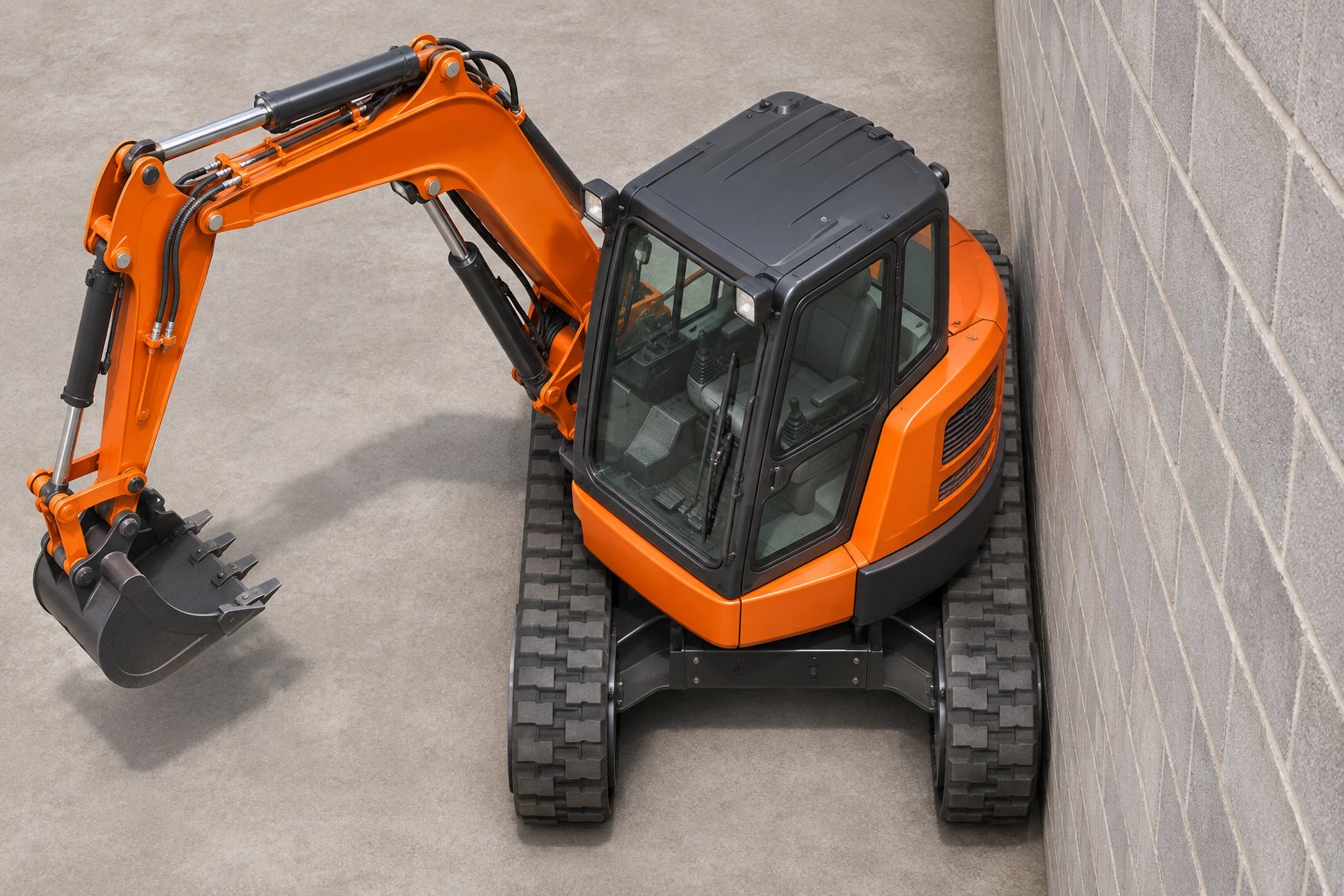
In a true zero-tail-swing machine, the rear of the upper structure does not extend past the track width at any point during a full 360-degree rotation. The operator can swing freely next to walls, fences, parked vehicles, and active traffic lanes without the counterweight sweeping into obstacles. Kubota's U-series models are built around this principle. The U17-5, for instance, maintains exactly zero inches of rear overhang beyond the tracks—meaning you can rotate with confidence in spaces where a conventional-swing excavator would require a spotter or constant mirror checks.
Minimal tail swing is the next step up. Models like the U27-4 and U55-5 keep rear overhang to roughly 1 to 2 inches beyond the track edge—close enough to zero that most operators treat them as functionally equivalent on congested sites, yet the slight extension allows Kubota's engineers to fit a marginally heavier counterweight for improved stability under heavy bucket loads.
The KX-series machines, by contrast, use conventional tail swing. The counterweight extends several inches past the tracks, which provides maximum digging stability and reach on open jobsites but demands greater situational awareness in tight quarters. Choosing between these configurations isn't about which is "better"—it's about matching the geometry to where you actually work. If 80% of your jobs are residential backyards and urban utility corridors, zero or minimal tail swing pays for itself in avoided damage claims alone.
Kubota-Built Diesel Engines and Integrated Power
Here's a question most equipment buyers never think to ask: who actually built the engine inside the excavator you're considering? For many competing brands, the answer is a third-party supplier. For Kubota, the answer is straightforward—Kubota built it.
That distinction matters more than it might seem. Kubota has been manufacturing diesel engines since the 1930s, and today Kubota Engine America supplies powerplants not just for Kubota's own equipment but for hundreds of OEM partners across construction, agriculture, and industrial markets. The company's newest platform—the V5009, a compact 4-cylinder, 5-liter diesel producing 210.9 HP—demonstrates the kind of advanced engineering Kubota pours into its engine line, including variable geometry turbocharging, automatic DPF regeneration at low temps and RPM, and hydraulic lash adjusters that eliminate a common maintenance task entirely.
For excavator buyers, vertical integration creates a specific performance advantage. When the same engineering team designs both the diesel engine and the hydraulic system it powers, they can precisely match hydraulic demand curves to engine output across the entire RPM range. The result? Smoother response under varying loads, less wasted energy as heat, and measurably better fuel economy compared to machines where an engine from one manufacturer gets paired with a hydraulic pump from another. You'll notice the difference most during sustained digging in hard material—the engine doesn't lug as aggressively, recovery from heavy bucket loads feels more immediate, and the cooling system stays ahead of heat buildup because it was sized for exactly the thermal load the matched components produce.
The irony isn't lost on experienced contractors: brands like Bobcat use Kubota-manufactured engines in many of their own compact excavators. When your competitor's machine runs on your engine, that's a credibility statement no marketing brochure can match. And for Kubota excavator owners, it means engine parts, filters, and service knowledge are extraordinarily widespread—even independent mechanics outside the Kubota dealer network tend to be familiar with these powerplants because they encounter them across multiple equipment brands.
Cab Comfort and Control Innovations
An excavator's engine and hydraulics determine what the machine can do. The cab determines whether the operator wants to do it for eight hours straight. Fatigue, poor visibility, and awkward controls don't just reduce comfort—they reduce productivity and increase the risk of costly mistakes. Kubota's latest-generation cabs address all three problems.
Every Kubota excavator from the U17-5 upward ships with a ROPS (Roll-Over Protective Structure) certified operator station, and larger models add FOPS (Falling Object Protective Structure) certification for demolition and forestry environments. But protection is just the starting point. The real differentiators show up in daily operation.
Kubota equips its current lineup with a two-pattern selection system, allowing operators to toggle between ISO and SAE control configurations at the flip of a switch. This matters more than it sounds—a rental fleet operator whose customers trained on different brands won't have to retrain anyone, and a contractor hiring a temporary operator can accommodate their muscle memory instantly. Proportional auxiliary hydraulic controls, integrated into the joystick via a thumb-operated roller, let operators feather attachment flow with precision rather than relying on crude on/off valves. On the U17-5, Kubota added a standard auxiliary diverter valve that allows a hydraulic thumb to stay plumbed while redirecting oil flow to a breaker or auger—eliminating the need to climb out of the cab and swap hoses between tasks.
The digital monitoring systems across Kubota's Dash-5 generation have also taken a significant leap. Repositioned LCD panels give operators one-touch access to hour meters, engine diagnostics, tachometer readings, and KubotaNOW telematics data including GPS location, fuel consumption, and fault codes—all viewable from inside the cab or remotely via a fleet manager's smartphone.
Key operator comfort features across Kubota's current excavator lineup include:
- Semi-suspension adjustable seat with increased foot space and lumbar support for long shifts
- LED boom work lights standard on Dash-5 models for early-morning and late-evening visibility
- Auto-idle system that drops engine RPM when controls are inactive, cutting noise and fuel burn simultaneously
- USB charging port and mobile phone holder integrated into the redesigned right-side control panel
- Emergency engine stop switch accessible with a single flip for immediate shutdown
- Advanced soundproofing and vibration dampening including thicker floor plates and felt ceiling liners on larger models
- Keyless start with multi-operator password support (up to 10 unique codes on the KX040-5 and similar Dash-5 machines)
These aren't luxury features—they're productivity multipliers. An operator who finishes the day less fatigued makes fewer mistakes, moves more material per hour, and is more likely to show up tomorrow without complaint. For contractors evaluating kubota mini excavator price against competing brands, the cab experience often tips the decision after a demo because it's the one advantage you can feel immediately rather than calculate on a spreadsheet.
Engineering advantages built into the base machine only tell half the story, though. The other half depends on what you bolt onto the end of the boom—and choosing the right attachments can turn a single Kubota excavator into a fleet of specialized tools.
Attachments That Multiply Your Kubota Excavator Capabilities
A Kubota excavator with only a digging bucket is like a cordless drill with only one bit—functional, sure, but nowhere near its full potential. The right attachments transform a single machine into a trencher, a demolition tool, a grading instrument, and a material handler without buying four separate pieces of equipment. The catch? Not every attachment fits every machine, and a mismatch can cost you thousands in returns, downtime, or hydraulic damage. Understanding how Kubota's attachment ecosystem works—from pin spacing to hydraulic flow—keeps you on the productive side of that equation.
Standard Buckets, Grading Buckets, and Thumbs
Most Kubota excavators ship with a standard digging bucket, but that's just the starting point. Three attachment categories handle the vast majority of daily excavation tasks:
Digging buckets are the default. Narrow profiles with aggressive teeth concentrate breakout force into a small area, making them ideal for trenching in compacted soil, clay, and mixed fill. Bucket widths vary by model class—a micro-class K008-5 runs buckets as narrow as 6 inches, while a KX080-4 excavator for sale might include a 24-inch or wider standard bucket.
Grading and cleanup buckets swap depth for width. A wider, toothless profile with a flat cutting edge lets you finish-grade a building pad, clean loose material from a trench bottom, or spread topsoil without the ridges a toothed bucket leaves behind. These are the attachments landscapers reach for last on every job—and the ones they'd miss most if they didn't have them.
Hydraulic thumbs add a clamping jaw opposite the bucket, turning the stick and boom into a giant hand. Stumps, boulders, broken concrete, and pipe sections that would otherwise require a second machine or manual labor get picked, placed, and loaded with a single operator. Kubota's Dash-5 models in the mini class, like the U17-5, now ship with a factory-welded thumb mount—an acknowledgment that thumbs have become standard equipment in practice, even if they're technically an add-on.
Every attachment connects to the excavator's stick through a pair of mounting pins. Here's where compatibility gets specific. Pin diameter, pin center distance, and dipper gap width all vary by model class, and even a few millimeters of mismatch will prevent an attachment from seating properly. Kubota's micro excavators typically use pins in the 25–35 mm range, mini-class machines run 30–45 mm, compact models jump to 45–60 mm, and the KX080 class sits around 60–65 mm. You'll want to measure your machine's actual pin dimensions with calipers rather than relying on published specs alone, since wear can shift tolerances over the life of the equipment.
Two mounting approaches exist: pin-on and quick-coupler. Pin-on attachments bolt directly to the stick and offer the simplest, most secure connection—but swapping them takes 8 to 12 minutes and requires the operator to leave the cab. Quick couplers let you change attachments from the seat in under a minute, which pays for itself fast on jobs that alternate between digging, grading, and thumb work throughout the day. Just confirm the coupler standard matches your attachments. S-40 couplers fit most 1-to-4-ton machines, S-45 covers the 5-to-6-ton class, and proprietary systems from individual brands may not cross over without an adapter plate.
Specialty Attachments That Expand Your Machine's Role
Beyond buckets and thumbs, a whole category of powered attachments turns your Kubota into specialized equipment—if the hydraulics support it. Hydraulic breakers, augers, plate compactors, grapples, and tilt buckets each require auxiliary hydraulic flow from the excavator's circuits, and that's where model selection becomes critical.
Every Kubota mini excavator from the KX018-4 upward includes two auxiliary hydraulic circuits as standard equipment, along with a case drain line required by many hydraulic motors. The KX033-4 delivers adjustable auxiliary flow up to 15.8 GPM, the KX040-4 pushes that to 17 GPM with programmable flow presets stored in the onboard computer, and the KX057-5 reaches 19.8 GPM. The KX080-4 tops the range at 26.4 GPM, with nine predetermined attachment icons for one-touch hydraulic configuration. These flow rates determine exactly which powered attachments your machine can run efficiently—and which ones it can't.
Imagine bolting a hydraulic breaker rated for 22 GPM onto a machine that only delivers 15.8 GPM. You'll get weak impact force, excessive heat buildup in the hydraulic system, and a frustrated operator who thinks the breaker is defective when the real problem is a flow mismatch. Always check the attachment's required flow range against your excavator's actual auxiliary output—measured with a flow meter, not just the spec sheet, since pump wear reduces output over time.
The table below maps common specialty attachments to their typical use cases, hydraulic requirements, and the Kubota size classes that support them:
| Attachment Type | Typical Use Case | Hydraulic Requirement | Compatible Kubota Size Classes |
|---|---|---|---|
| Hydraulic Breaker | Concrete demolition, rock breaking, pavement removal | 10–26 GPM depending on breaker size; case drain often required | Mini (1–3 ton) through Mid-Size (8+ ton); match breaker class to carrier weight |
| Auger Drive | Fence posts, sign footings, tree planting, pier holes | 12–23 GPM with steady flow; case drain required | Mini through Mid-Size; select auger drive model by flow range |
| Plate Compactor | Trench backfill compaction, utility bedding, paver base prep | 8–15 GPM; standard auxiliary circuit | Mini (1–3 ton) and Compact (3–6 ton); weight must suit carrier lifting capacity |
| Hydraulic Grapple | Brush clearing, log handling, demolition debris, rock placement | 15–20 GPM for non-rotating; additional circuit for rotating models | Compact (3–6 ton) through Mid-Size (8+ ton) |
| Tilt Bucket | Slope grading, ditch shaping, finish work on angled surfaces | 10–18 GPM; single auxiliary circuit | Mini through Mid-Size; pin spacing must match model class |
A quick note on the micro class: the K008-5 and U10-5 do accept certain low-flow attachments like small auger drives and narrow breakers, but their 10.3-horsepower engines and limited auxiliary flow restrict the range of powered tools compared to anything in the 2-ton-and-above lineup. If you plan to run specialty attachments regularly, the one-to-three-ton mini class or higher gives you far more flexibility.
Tips for Choosing Aftermarket vs OEM Attachments
Here's the decision most buyers face once they know which attachment type they need: do you buy Kubota-branded OEM attachments or go aftermarket? Both paths have legitimate advantages—and legitimate risks.
OEM attachments from Kubota guarantee dimensional compatibility with your specific model. Pin spacing, coupler fit, and hydraulic flow ratings are matched at the factory, which eliminates the guesswork. You also get warranty coverage from the dealer, and any claim stays clean because the manufacturer approved the component for use on your machine. The trade-off is cost. OEM parts and attachments typically carry a premium of 20% to 50% over aftermarket equivalents, and availability can be limited in some regions if the dealer doesn't stock the specific attachment you need.
Aftermarket attachments open up a broader market with more competitive pricing. Reputable aftermarket manufacturers produce buckets, thumbs, breakers, and auger drives that meet or exceed OEM material specs—often using the same hardened steel grades and wear-resistant alloys. The risk comes from less-established suppliers who cut corners on dimensional accuracy, steel quality, or hydraulic motor ratings. A bucket that arrives with pin centers 5 mm off spec won't mount safely, and returning a heavy attachment costs real money in shipping and lost productivity.
Whether you're browsing kubota excavators for sale with bundled attachment packages or pricing individual tools for a used kubota excavator you already own, ask these questions before committing to any attachment purchase:
- What are the exact pin diameter, pin center distance, and dipper gap measurements for my specific excavator model and serial number?
- Does the attachment's required hydraulic flow fall within my machine's actual auxiliary output—not just the published spec, but the measured output?
- Does the attachment require a case drain line, and does my excavator have one?
- What coupler standard does the attachment use, and does it match my existing setup or require an adapter?
- What steel grade and hardness rating are used in the wear surfaces—and can the supplier provide material certifications?
- What warranty terms apply, and does installing this aftermarket attachment affect my excavator's existing warranty coverage?
- Can the supplier provide a dimensioned technical drawing before I commit to the order?
Getting satisfactory answers to every item on that list before you spend a dollar is the single best way to avoid the fitment failures, hydraulic mismatches, and surprise return costs that plague buyers who shop on price alone. A quality aftermarket attachment matched correctly to your Kubota can deliver OEM-level performance at a significant discount. A cheap one that doesn't fit is the most expensive attachment you'll ever buy.
Knowing which attachments work with your machine is one piece of the puzzle. The other piece—often the more valuable one—is knowing which machine-and-attachment combination matches the specific type of project you're bidding on.
Matching the Right Kubota Model to Your Project
You've seen the full lineup, you understand the engineering, and you know which attachments work with which machines. The missing piece? Figuring out which combination of size class, tail swing configuration, and specs actually fits the work sitting in your bid folder right now. Too many buyers start with a budget number and work backward to a machine. Smarter buyers start with the project and let the work dictate the equipment. Here's how to think through that match for the most common job types.
Residential Landscaping and Backyard Projects
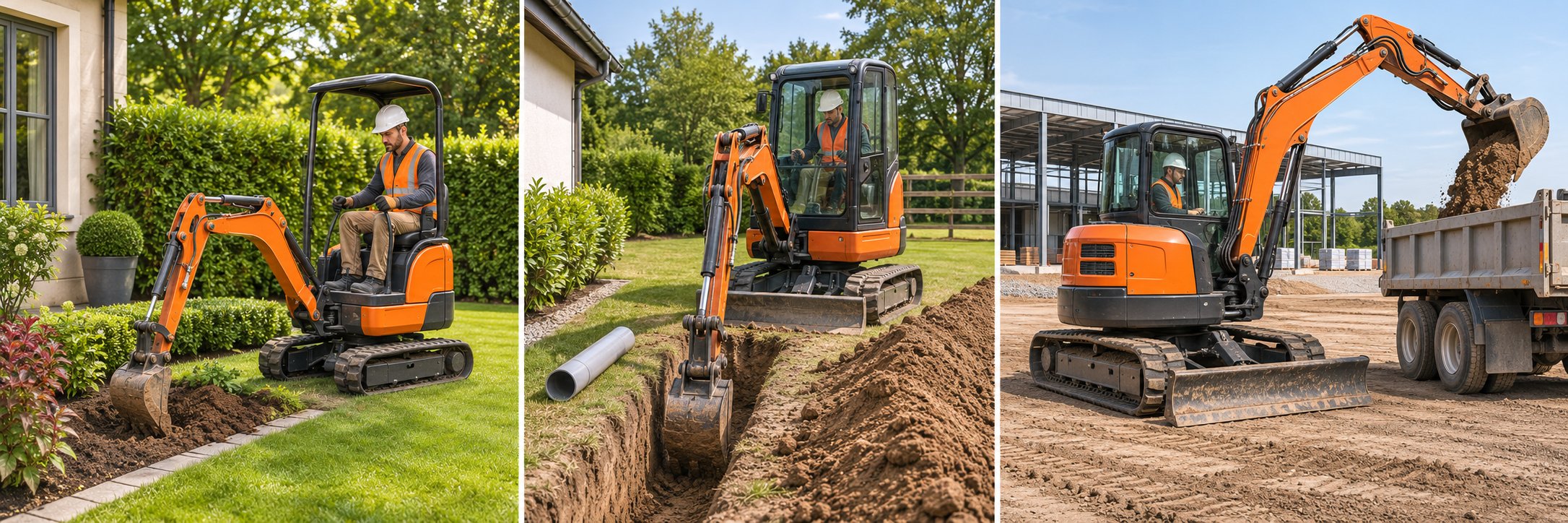
Imagine a typical residential gig—grading a backyard for a patio, digging a French drain along a foundation, or trenching for an irrigation system. The access point is usually a 36- to 48-inch gate. The ground underneath is finished lawn the homeowner expects you to preserve. And your trailer is parked on a suburban street where you can't block traffic for long.
This is where a mini kubota excavator under 3 tons dominates. Machines like the U17-5 and U27-4 slip through gates with retractable tracks, exert low ground pressure that minimizes turf damage, and weigh little enough to tow behind a half-ton pickup. Dig depths of 7 to 9 feet handle virtually every residential drainage and utility task. And zero or near-zero tail swing means you can rotate freely next to the house without a spotter watching your counterweight.
If access is exceptionally tight—think interior courtyard work, narrow side yards, or jobs requiring the machine to pass through a standard doorway—the kubota u10 5 mini excavator earns its keep. At just 2,646 pounds with 0.6 inches of rear swing clearance, it goes places no other excavator class can reach. The trade-off is a shallower 5-foot-11-inch dig depth, so confirm your trench requirements before downsizing this far.
Utility Trenching and Plumbing Work
Utility contractors face a different constraint than landscapers: depth. Municipal codes dictate how deep water lines, sewer laterals, and electrical conduit must sit—and those numbers aren't negotiable. A machine that maxes out six inches above code depth isn't a bargain; it's a liability.
For most residential utility work, the 2-to-4-ton range hits the mark. The KX030-4 delivers 9 feet 9 inches of maximum dig depth with 23.3 horsepower—enough for water service lines, residential sewer connections, and electrical conduit in most jurisdictions. The KX033-4 extends that to 10 feet 6 inches in standard configuration and 12 feet 2 inches with the optional extendable dipper arm, covering deeper storm drainage runs without jumping to a larger machine class.
A practical rule of thumb from Wolf Kubota's sizing guide: choose a machine with a maximum dig depth at least a couple of feet beyond your actual target. That buffer lets you work efficiently at the trench bottom rather than maxing out the boom geometry on every pass, which slows cycle times and puts unnecessary stress on hydraulic cylinders.
When the job happens in established neighborhoods—alongside driveways, between houses, next to landscaped beds—pair that depth requirement with a U-series model. The U27-4 reaches 9 feet 5 inches while maintaining just 1.6 inches of rear swing clearance. You get utility-grade depth and residential-grade maneuverability in the same machine.
Commercial Site Prep and Foundation Excavation
Scale up to commercial projects and the demands shift from access to volume. Building pad excavation, parking lot subgrade removal, and retention pond shaping all require moving significantly more material per hour than any sub-4-ton machine can manage. Cycle speed, bucket capacity, and lift height become the priority specs because you're loading dump trucks continuously rather than carefully placing spoil beside a trench.
The 5-to-8-ton class was built for exactly this. The KX057-5 delivers 12 feet 9 inches of dig depth and 47.6 gross horsepower—enough to rip through compacted subgrade and maintain aggressive cycle times loading tandem-axle trucks. For projects that also involve working near existing structures or active roadways, the U55-5 provides nearly identical power (47.6 HP, 11 feet 11 inches of dig depth) with only 2.5 inches of rear swing overhang.
When the excavation exceeds 12 feet—deep commercial foundations, storm drain mains, large retention basins—the KX080-5 steps in at 66.6 horsepower and 15 feet 1.1 inches of maximum dig depth. It's the largest Kubota available, and for most commercial contractors, it's the only machine in the lineup where you'd even begin to consider whether you've hit the brand's upper limit.
Choosing by Project Scale
Rather than memorizing individual model specs, use the table below to quickly identify the right weight class based on the type of work you perform most often. Focus on the "Key Spec to Prioritize" column—that's the single measurement most likely to determine whether a machine meets your needs or falls short.
| Project Type | Recommended Weight Class | Key Spec to Prioritize | Example Kubota Series |
|---|---|---|---|
| Backyard landscaping, garden grading, small drainage | Under 1 ton (micro) | Machine width and rear swing clearance for gate access | K008-5, U10-5 |
| Residential irrigation, French drains, light trenching | 1–2 tons (mini) | Dig depth vs. code-required trench depth | U17-5, KX018-4 |
| Water/sewer laterals, electrical conduit, residential foundations | 2–4 tons (mini to compact) | Maximum dig depth with adequate breakout force | U27-4, KX030-4, KX033-4, U35-4 |
| Commercial utilities, road work, deep drainage systems | 4–6 tons (compact) | Hydraulic flow for attachments; lift height for truck loading | KX040-5, U48-5, KX057-5, U55-5 |
| Building pads, retention ponds, large foundation excavation | 8+ tons (mid-size) | Bucket capacity and cycle speed for production volume | KX080-5 |
The range of kubota mini excavator sizes available means there's rarely a reason to force-fit a machine to a job it wasn't designed for. If you find yourself consistently maxing out your current excavator's depth or wishing for more bucket capacity, that's the clearest signal to move up one weight class—not two.
For buyers actively comparing models across these categories, browsing real listings with specifications and condition details accelerates the decision. JIUHONG's used Kubota excavator collection lists available U-series and KX-series machines where you can match project needs to actual inventory and request quotes on the specific model that fits your work. Whether you're looking for a kubota mini excavator used for sale in the 2-ton class or a larger KX-series machine for commercial excavation, checking current availability against the table above keeps the selection process grounded in real options rather than hypothetical specs.
Matching the machine to the project is half the equation. The other half—figuring out whether to buy new, rent, or shop the used market—depends on how many days per year that machine will actually be running.
How Kubota Excavators Stack Up Against Key Competitors
Picking the right model within Kubota's lineup is one decision. Deciding whether Kubota is the right brand is an entirely separate one—and skipping that question leaves money on the table. Every major compact excavator manufacturer brings genuine strengths to the table, and pretending otherwise won't help you make a smarter purchase. So let's put Kubota head-to-head against the four brands contractors cross-shop most frequently: Caterpillar, Bobcat, Takeuchi, John Deere, and Yanmar.
Kubota vs Caterpillar Mini Excavators
Caterpillar and Kubota occupy opposite ends of the same market. Kubota is the compact excavator specialist—over 23% of the global mini excavator market runs on its iron, according to Off-Highway Research data. Caterpillar is the heavy equipment empire that happens to also build excellent mini excavators. That distinction shapes the ownership experience in practical ways.
Cat's biggest advantage is its dealer network—the largest construction equipment footprint in North America. When a hydraulic pump fails mid-project, you're rarely more than a couple of hours from a Cat shop with parts on the shelf. For contractors who measure downtime in lost revenue per day, that proximity matters enormously. Cat's Next Gen lineup also includes Stick Steer joystick-controlled travel and Cat Connect telematics as factory-standard features, giving fleet managers usable data without aftermarket bolt-ons.
The trade-off? Cat machines run heavier and pricier than Kubota at the same tonnage class. A Cat 305 CR, for instance, weighs more than the comparable kubota 57 excavator class, which affects transport costs, ground pressure on soft surfaces, and trailer requirements. Kubota's vertically integrated engine-to-hydraulic design also delivers measurably smoother control feel on finish work—something landscapers and precision grading crews notice immediately during demo days.
If your operation runs high hours on congested jobsites and values cab refinement over raw dealer proximity, Kubota typically wins. If you can't afford even a single day of parts-related downtime and your nearest Kubota construction dealer is farther away than the Cat shop, Caterpillar earns the premium.
Kubota vs Bobcat and Takeuchi
Here's the irony that experienced contractors love to point out: many Bobcat compact excavators use Kubota-manufactured engines, particularly in smaller displacement models. So when you're comparing a Bobcat E-series against kubota mini excavators in the same tonnage, the powerplant under one hood may have been built by the company whose badge sits on the other.
Bobcat's real edge isn't the engine—it's the ecosystem. With over 500 dedicated dealers in the U.S. and the deepest attachment catalog in the compact equipment world, Bobcat makes it easy to find parts, swap tools, and keep mixed-brand fleets running. Their R-series excavators have closed the cab-comfort gap that previously favored Kubota, and new-machine pricing in the 4-ton class often undercuts both Kubota and Takeuchi by several thousand dollars. Rental fleet operators especially favor Bobcat for exactly these reasons—parts availability and lower acquisition cost matter more than brand prestige when you're cycling machines every five to seven years.
The weakness? Resale retention on Bobcat mini excavators trails both Kubota and Takeuchi. Five-year retention runs roughly 54–58% of original MSRP versus Kubota's 60–64% and Takeuchi's 65–66%. That gap compounds on higher-priced machines—on a $76,000 unit, the difference between Bobcat's and Takeuchi's retention percentages translates to roughly $8,500 to $9,500 in trade-in value. If you plan to hold equipment long-term, that resale spread can offset Bobcat's lower sticker price entirely.
Takeuchi is the competitor Kubota owners respect most. Founded in 1963 and credited with inventing the compact excavator in 1971, Takeuchi builds its own hydraulic components in-house—and the result is digging performance that punches above its listed tonnage. The TB series is legendary for undercarriage durability and hydraulic smoothness under heavy load. Contractors who do production earthwork, utility trenching, and demolition day in, day out often gravitate toward Takeuchi because the machines hold up past 6,000 hours with fewer major rebuilds.
Takeuchi's Achilles' heel is dealer density. With roughly 175 North American dealers compared to Kubota's 1,100+ and Bobcat's 500+, parts logistics can stretch to 2–4 days in underserved regions—particularly across the Midwest and Mountain West. If your nearest Takeuchi shop is 150 miles away, the reliability advantage gets partially eaten by shipping times when something does eventually need attention.
For anyone browsing a kubota u17 mini excavator for sale and wondering whether Bobcat's E20 or Takeuchi's TB216 might be a better fit, the deciding factor usually comes down to priorities. Kubota wins on smooth controls, cab comfort, and dealer coverage. Bobcat wins on price and attachment flexibility. Takeuchi wins on long-haul durability and resale.
Kubota vs John Deere and Yanmar
John Deere targets the exact same audience—landscapers, small contractors, and agricultural owner-operators—but approaches the market from a different angle. Deere's G-Series mini excavators are competent machines with genuinely useful features like the AutoShift travel system. Where Deere really differentiates, though, is financing and dealer relationship leverage. If you already run Deere tractors or larger construction iron, buying a Deere mini excavator through the same dealer unlocks bundled financing terms, cross-fleet parts stocking, and service familiarity that can save real money over a multi-year ownership cycle.
The gap shows up in hydraulic refinement. Operators who've spent serious seat time in a Kubota KX or U-series cab consistently describe Deere's mini excavator hydraulics as "good, not exceptional." The control feel is competent but lacks the proportional smoothness that makes Kubota a favorite for finish grading and precision landscaping work. In ag-heavy regions of the Midwest and Plains, Deere's dealer density rivals or exceeds Kubota's—making it the practical choice for farmers and rural contractors who value a single-brand service relationship.
Yanmar brings a different kind of credibility. The company invented the world's first viable compact excavator in 1971 and later patented the industry's first true zero-tail-swing configuration with its ViO series. Yanmar's diesel engines are so respected that they power competitor machines across the globe—a parallel to Kubota's own engine-supplier role. The ViO zero-tail-swing models remain among the best-engineered platforms for tight urban utility work where every inch of swing radius counts.
Yanmar's limitation in North America is reach, not quality. With approximately 300 authorized locations compared to Kubota's 1,100+, dealer coverage thins out quickly outside the West Coast, parts of the Northeast, and select metro areas. If you're a long drive from a Yanmar shop, parts logistics get expensive—and that ongoing cost erodes the engineering advantages that make the machines appealing in the first place.
The table below provides a side-by-side snapshot of each brand's positioning. Use it as a quick-reference filter, not a final verdict—because the "best" brand depends entirely on your specific jobsite conditions, utilization rate, and existing dealer relationships.
| Brand | Strongest Size Class | Key Advantage | Notable Weakness |
|---|---|---|---|
| Kubota | 1–6 tons (KX and U series) | Vertically integrated engine-to-hydraulic design; 1,100+ dealer locations; strongest cab comfort in class | Premium pricing; parts allocations can tighten during peak season in some regions |
| Caterpillar | 3–10 tons (Next Gen series) | Largest dealer and parts network in North America; factory telematics and Stick Steer | Heavier and pricier at same tonnage; less refined hydraulic feel on finish work |
| Bobcat | 2–5 tons (E-series / R-series) | Deepest attachment ecosystem; competitive new-machine pricing; 500+ dedicated dealers | Lowest resale retention of the five brands; electrical reliability weaker on pre-2022 models |
| Takeuchi | 3–6 tons (TB series) | Best long-term hydraulic and undercarriage durability; strongest 5-year resale retention (65–66%) | Smallest dealer footprint (~175 locations); parts delivery can lag in underserved regions |
| John Deere | 2–5 tons (G-Series) | Bundled financing through existing Deere dealer relationships; strong in ag-heavy regions | Hydraulic feel trails Kubota and Takeuchi; mini excavator platform less refined than larger Deere iron |
| Yanmar | 2–5 tons (ViO series) | Pioneered zero-tail-swing design; elite hydraulic tuning for multi-function operations | Thinnest North American dealer network; niche chassis parts can have longer lead times |
Kubota is the strongest choice when you need smooth hydraulic control for precision work, a wide dealer network for reliable service access, and strong resale value across the 1-to-6-ton range. Consider alternatives when your operation demands the absolute deepest dealer shelf (Caterpillar), the longest undercarriage life on production earthwork (Takeuchi), or seamless integration into an existing single-brand fleet (John Deere for ag operations, Bobcat for mixed compact fleets).
Shopping for a used kubota mini excavator or any competing brand follows the same logic: match the brand's strengths to your operational reality, then evaluate the individual machine's condition. A well-maintained 3,000-hour Kubota will outperform a neglected 1,500-hour anything-else, and vice versa. Brand gets you in the door—maintenance history seals the deal. That reality leads directly to one of the most consequential financial decisions in equipment ownership: whether to buy new, rent, or shop the used market in the first place.
Buying New, Renting, or Shopping for a Used Kubota Excavator
Brand selection and model matching only matter if the acquisition strategy behind them makes financial sense. A brand-new KX040-5 sitting idle four days a week bleeds money just as fast as a neglected used machine that breaks down every month. The real question isn't which Kubota to buy—it's how to acquire one in a way that protects your margins. Three paths exist: buying new, renting, and shopping the used market. Each one fits a different operational profile, and choosing wrong can cost you more than picking the wrong model ever would.
When Buying a New Kubota Excavator Makes Sense
New equipment ownership becomes economical when your machine works consistently—roughly 60 to 70 percent of available working days, or about 150 to 180 days per year. At that utilization level, the fixed costs of ownership—depreciation, insurance, storage, and maintenance—spread across enough productive hours to beat the cumulative cost of renting the same machine repeatedly.
Beyond the utilization math, buying new gives you full factory warranty coverage, access to the latest hydraulic and telematics technology (like the KubotaNOW system standard on Dash-5 models), and eligibility for Kubota dealer financing programs that can include promotional rates. You also get a machine with zero deferred maintenance—no inherited problems from a previous operator's shortcuts.
Keep in mind that new kubota diesel mini excavator pricing varies significantly by model class and region. A micro-class K008-5 and a mid-size KX080-5 are different financial commitments entirely, and dealer pricing fluctuates based on local inventory, seasonal promotions, and regional demand. Always request quotes from multiple dealers before committing—pricing isn't as fixed as the sticker might suggest.
For contractors with a predictable multi-year project pipeline and the capital or financing access to support it, new ownership builds equity in an asset that holds strong resale value. And Kubota's industry-leading residual values—roughly 58% of original MSRP retained at the five-year mark in the 3.5-ton class—mean the exit strategy is baked in from day one.
Rental as a Low-Risk Entry Point
What if you only need an excavator for a two-week drainage project? Or you're a landscaper who handles one big grading job per quarter? Renting eliminates the carrying costs that make ownership painful at low utilization rates.
Rental converts a five- or six-figure capital expenditure into a predictable operating expense. You pay for the days you use the machine, return it when the project wraps, and carry zero depreciation, insurance, or storage costs in between. For seasonal businesses or contractors testing whether a kubota u17 mini excavator or a larger KX-series model fits their workflow, renting is the lowest-risk way to gather real-world data before committing to a purchase.
There's a strategic angle here too. Spending a few weeks in the seat of a specific model teaches you more about dig depth adequacy, cab comfort, and attachment compatibility than any spec sheet or dealer demo ever could. Operators who rent first tend to buy smarter—they've already identified the exact configuration, weight class, and kubota excavator buckets setup they want before signing a purchase agreement.
Rental also makes sense for specialized or infrequently needed size classes. If your core fleet is a 3-ton mini but you land one commercial foundation job per year that demands a KX080, renting the larger machine for that single project saves tens of thousands compared to owning it year-round at 15% utilization.
Why Used Kubota Excavators Offer Strong Value
Here's where the math gets interesting. Compact excavators lose value fastest in the first three years—dropping from roughly 82% of new price at year one to about 63% by year three. That steep early depreciation means the original owner absorbs the sharpest financial hit, and a second buyer picks up a machine with substantial useful life remaining at 30 to 40 percent off retail.
Kubota's reputation for durability makes the used market particularly attractive for this brand. The same engine quality, hydraulic integration, and build standards that justify new-machine pricing also mean that well-maintained used kubota excavators routinely deliver years of reliable service past the 3,000-hour mark. In the 3.5-ton class, used kubota mini excavators command the strongest resale premiums of any brand—a reflection of buyer confidence in long-term reliability and parts availability through Kubota's 1,100+ dealer network.
The critical word in that last paragraph is "well-maintained." A used excavator with 2,000 hours and documented service records is a fundamentally different purchase than one with 2,000 hours and no paperwork. The hour meter tells you how long the machine has worked. The maintenance history tells you how well it was treated during those hours—and that second data point matters far more for predicting your future repair bills.
Before signing on any pre-owned machine, work through a systematic inspection. Based on common failure points documented by equipment dealers experienced in used excavator evaluation and real-world acquisition data, here's what to check:
- Hour meter verification: Cross-reference displayed hours against the engine ECU data using a diagnostic tool. Discrepancies beyond 10% suggest tampering.
- Undercarriage wear: Measure track pad thickness, check sprocket teeth for hook-shaped wear, and inspect idler bearings for play. Undercarriage replacement on a 3.5-ton machine can run $4,000 to $8,000—the single most expensive surprise on a used purchase.
- Hydraulic cylinder condition: Examine all rod surfaces for scoring, pitting, or oil film buildup. Wet seals on boom, arm, or bucket cylinders mean imminent replacement at $400 to $900 per cylinder.
- Swing bearing play: With the swing brake released, rock the upper structure by hand. Any detectable movement indicates bearing wear that can cost $2,500 to $5,000 to address.
- Engine fluids: Milky coolant signals a blown head gasket. Black sludge in the oil points to missed service intervals. Either condition warrants walking away or renegotiating aggressively.
- Hydraulic cycle test: Run the boom, arm, and bucket through full cycles under load. Sluggish or jerky response points to pump wear or fluid contamination.
- Structural weld inspection: Check boom and arm welds for cracks, previous repairs, or reinforcement plates. Structural repairs aren't disqualifying but must be disclosed and priced into your offer.
- Service records and ownership history: Machines maintained on a documented schedule by one or two owners typically carry fewer hidden issues than those with fragmented or missing records.
Hiring an independent diesel mechanic for a pre-purchase inspection—typically $150 to $300—is the highest-return-on-investment expense in any used equipment transaction. Skipping it to save a few hundred dollars has cost buyers thousands.
For buyers ready to explore specific models and conditions, JIUHONG's used Kubota excavator collection lists available U-series and KX-series machines with model details and condition information. Landscapers, small contractors, and equipment buyers can compare compact options side by side, check current Kubota availability across multiple model classes, and request quotes based on the specific machine and condition they need. It's a practical starting point for matching the project-driven sizing framework from the previous chapter to real machines at real prices.
Whether you buy new, rent strategically, or find value in the used market, the decision framework stays the same: calculate your actual utilization rate, match the acquisition path to that number, and never let ego or impulse override the math. The contractors who build the most profitable fleets aren't the ones with the shiniest machines—they're the ones who put every piece of equipment to work enough days per year to justify its presence on the balance sheet.
Frequently Asked Questions About Kubota Excavators
1. What is the difference between Kubota KX-series and U-series excavators?
The KX-series uses a conventional tail swing design where the rear counterweight extends past the tracks during rotation, prioritizing maximum dig depth and stability on open jobsites. The U-series features zero-tail-swing or minimal-tail-swing configurations that keep the counterweight within or barely beyond the track width. This makes U-series models ideal for congested residential sites, urban utility corridors, and work alongside walls or fences. Both series overlap across most weight classes from 1 to 6 tons, so buyers can choose based on whether tight-space maneuverability or open-site digging performance matters more for their typical projects.
2. What size Kubota excavator do I need for residential landscaping?
For most residential landscaping jobs—backyard grading, French drains, irrigation trenching, and small retaining walls—a mini Kubota excavator in the 1-to-3-ton range delivers the best balance of capability and access. Models like the U17-5 and U27-4 fit through standard garden gates with retractable tracks, exert low ground pressure to protect finished lawns, and tow behind a half-ton pickup without special permits. If your work requires passing through doorways or extremely narrow side yards, the sub-1-ton K008-5 or U10-5 micro excavators handle those constraints. Match your choice primarily to the required dig depth and the narrowest access point on your typical jobsites.
3. How do Kubota excavators compare to Caterpillar and Bobcat in the compact class?
Kubota leads in vertically integrated engine-to-hydraulic design, cab comfort, and resale value retention (roughly 60-64% at five years). Caterpillar offers the largest dealer and parts network in North America plus factory-standard telematics, but its machines tend to be heavier and pricier at the same tonnage. Bobcat provides the deepest attachment ecosystem and competitive upfront pricing, though its five-year resale retention (54-58%) trails both Kubota and Caterpillar. Your best choice depends on whether you prioritize hydraulic refinement and residual value (Kubota), parts access and dealer proximity (Cat), or attachment flexibility and lower acquisition cost (Bobcat).
4. Is it better to buy a new or used Kubota excavator?
Buying new makes financial sense when your machine will work at least 60-70% of available days per year—roughly 150 to 180 days. At that utilization, ownership costs spread efficiently across productive hours, and you gain full warranty coverage plus the latest technology. Used Kubota excavators offer strong value because the steepest depreciation occurs in the first three years, meaning second buyers can save 30-40% off retail while still getting a machine with years of reliable life ahead. Buyers exploring pre-owned options can browse available U-series and KX-series machines at JIUHONG's used Kubota excavator collection at jiuhong-machinery.com to compare models, check conditions, and request quotes.
5. What attachments are compatible with Kubota mini excavators?
Kubota mini excavators support a wide range of attachments including digging buckets, grading buckets, hydraulic thumbs, breakers, augers, plate compactors, grapples, and tilt buckets. Compatibility depends on three factors: pin dimensions (diameter and center distance specific to each model class), coupler standard (pin-on or quick-coupler), and auxiliary hydraulic flow output. Models from the KX018-4 upward include dual auxiliary circuits and a case drain line as standard. Before purchasing any attachment, verify your machine's exact pin measurements, confirm that the required hydraulic flow falls within your excavator's actual output, and check whether a case drain connection is needed.