

What Is a Hydraulic Excavator and How Does It Work
Picture a massive steel arm scooping tons of earth in a single pass, every motion smooth and precise. That is a hydraulic excavator at work — and understanding what happens beneath the sheet metal is the first step toward evaluating any hydraulic excavator for sale with real confidence.
A hydraulic excavator is a tracked or wheeled machine that uses pressurized hydraulic fluid to power a boom-stick-bucket assembly for digging, lifting, and grading. Unlike older cable-operated machines, it relies on hydraulic cylinders, pumps, and control valves to deliver precise force and movement.
That hydraulic system is the defining feature separating every modern excavator — from a compact Kubota to a full-size Cat 325 — from the cable-and-winch shovels of decades past. Where cables stretched, slipped, and wore unpredictably, hydraulics deliver repeatable power on demand.
How the Hydraulic System Powers an Excavator
The concept is simpler than it sounds. A diesel engine drives one or more hydraulic pumps, which pressurize oil and push it through hoses to cylinders mounted on the boom, stick, and bucket. Each cylinder converts that fluid pressure into straight-line force — extending or retracting to raise, curl, or dig. A separate hydraulic slew motor spins the upper carriage so the operator can rotate a loaded bucket toward a waiting truck. Oil then returns through a cooler and filter before cycling back to the reservoir, creating a closed-loop circuit that reuses fluid continuously. Volvo Construction Equipment describes this same core sequence: pump action, directional control through valves, and cylinders or motors converting fluid energy into movement.
In practical terms, flow determines how fast the boom or stick moves, while pressure determines how much force the excavator and its bucket can exert against compacted soil or rock. An operator on a JD 210 excavator blending stick-in with bucket curl during a trench pass is really metering oil flow across multiple valve sections simultaneously — a level of control that cable machines simply could not achieve.
Why Hydraulic Excavators Dominate Earthmoving
Three advantages explain why you will find far more excavators for sale with hydraulic systems than any other configuration:
- Precise, proportional control. Joystick inputs translate directly into metered oil flow, letting operators feather movements within millimeters — critical for grading, utility trenching, and work near existing structures.
- High breakout force relative to machine weight. Pressurized fluid generates tremendous cylinder force without adding mechanical bulk, so even a mid-size trackhoe can rip through compacted clay or fractured rock efficiently.
- Attachment versatility. Auxiliary hydraulic lines allow a single excavator to run buckets, thumbs, hydraulic breakers, augers, and tilt-rotators — transforming one machine into an entire fleet of tools.
These fundamentals are not just engineering trivia. They directly shape how you should evaluate a used machine's condition, from cylinder seal integrity to pump responsiveness. The deeper your grasp of what makes a hydraulic excavator tick, the harder it becomes for a worn-out machine to hide its problems behind a fresh coat of paint.
Types of Hydraulic Excavators and Their Ideal Applications
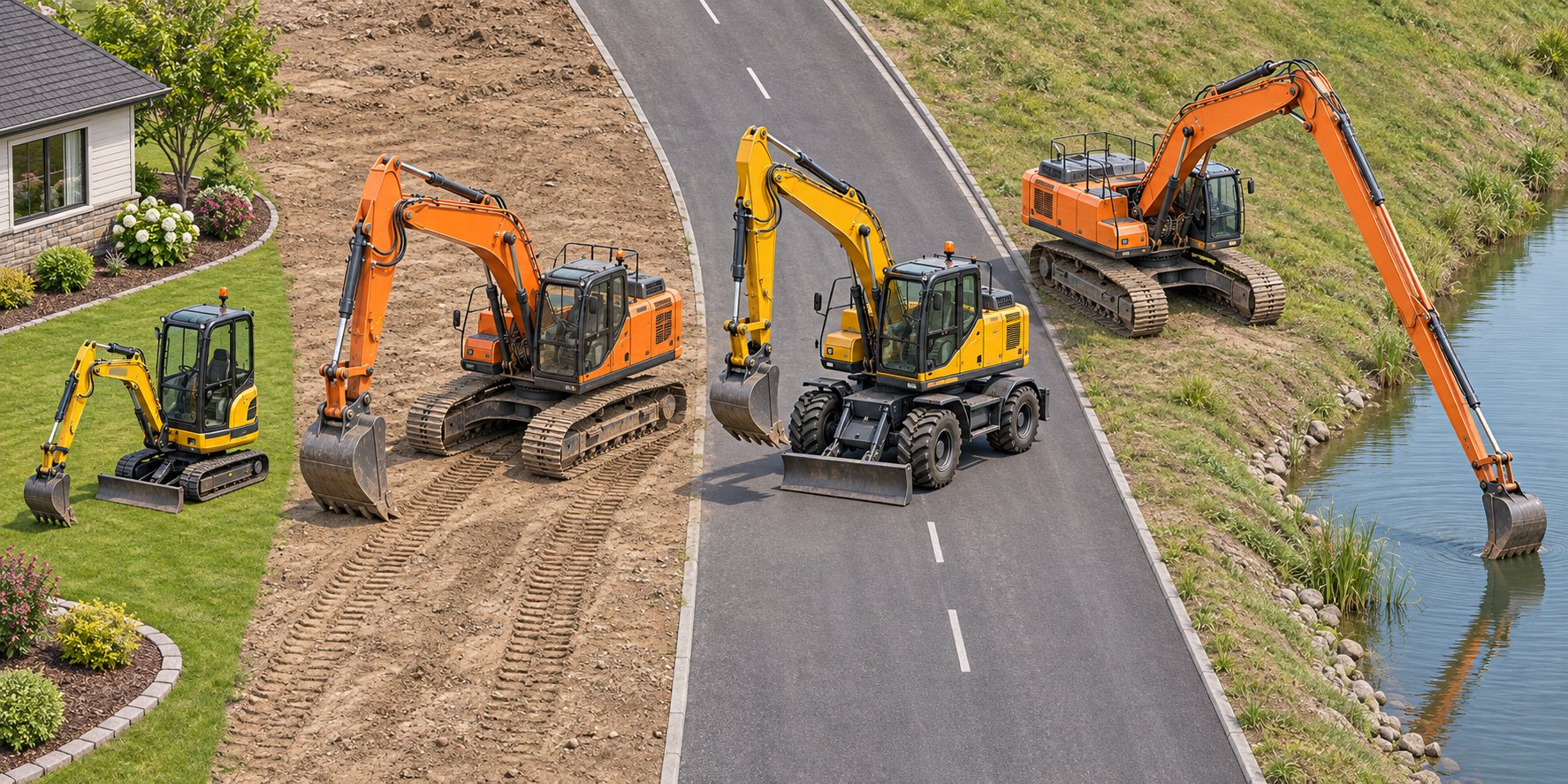
Sorting machines by size alone — compact, mid-size, large — barely scratches the surface. The real question is configuration: how a machine moves, how tightly it can rotate, and how far it can reach. Matching those traits to your job-site conditions separates a productive purchase from an expensive compromise.
Crawler Excavators vs Wheeled Excavators
Most listings you will encounter feature crawler models — the classic track hoe riding on two continuous steel or rubber tracks. Tracks spread the machine's weight across a larger footprint, which prevents sinking on muddy, sandy, or freshly graded ground. That stability makes crawlers the default choice for general excavation, demolition, mining, and forestry where terrain is anything but flat.
Wheeled excavators, sometimes called "rubber ducks" in the trade, swap tracks for heavy-duty rubber tires. The payoff? Highway-legal travel speeds that let an operator drive between urban job sites without loading onto a trailer. If you handle utility work along paved streets or bounce between municipal projects on firm ground, a wheeled unit saves transport time and avoids damaging finished surfaces. The trade-off is reduced traction on soft or sloped terrain — though many wheeled models add outriggers to compensate during digging.
Zero-Tail-Swing and Compact Radius Models
Imagine swinging a loaded bucket next to a retaining wall or a lane of live traffic. On a conventional excavator, the counterweight overhangs the track width during rotation, creating a strike zone that can clip structures, vehicles, or workers. A zero-tail-swing design solves this by packaging the counterweight so it never extends beyond the track footprint when the upper carriage rotates 360 degrees.
This matters enormously on congested residential sites, narrow roadways, and indoor demolition projects. Manufacturers like Kubota, Caterpillar, JCB, and Doosan all offer zero-tail-swing or reduced-radius models in the popular 1.8- to 10-ton range. Kubota excavators, for example, include five reduced or zero-tail-swing models alongside seven conventional designs, giving buyers flexibility at the dealer lot. Keep in mind that zero-tail-swing machines are typically lighter than their conventional counterparts, so lifting capacity and tear-out force will be somewhat lower — a worthwhile compromise when clearance is the priority.
Long-Reach and Specialty Configurations
Standard boom-and-stick geometry limits how deep and how far out a machine can work. When a project demands dredging a canal, shaping a deep slope, or demolishing an upper story from ground level, a long reach excavator for sale becomes the practical answer. These machines feature extended boom and stick sections that can push horizontal reach beyond 100 feet, letting operators maintain a safe standoff distance from water edges or unstable embankments.
At the other extreme, spider excavators — also called walking excavators — replace tracks and wheels with independently adjustable hydraulic legs. Each leg repositions independently, allowing the cab to stay level on slopes exceeding 45 degrees. Forestry crews, riverbank stabilization teams, and disaster-response units rely on spider excavators to access terrain where no conventional track hoe or wheeled machine could safely operate.
Whether you are searching for a versatile kubota excavator for residential remodels or a heavy crawler like the excavator Cat 320C for commercial site work, knowing your configuration options narrows the field fast. Even the Spanish-language search term excavadora returns machines spanning every configuration below — proof that the global used-equipment market stocks far more variety than a simple size chart suggests.
| Excavator Type | Typical Weight Range | Primary Applications | Terrain Suitability |
|---|---|---|---|
| Crawler (Tracked) | 1.5 – 90+ tons | General excavation, demolition, mining, forestry | Soft, uneven, or sloped ground |
| Wheeled | 9 – 22 tons | Urban utility work, road maintenance, landscaping | Paved or firm, flat surfaces |
| Zero-Tail-Swing / Compact Radius | 1.8 – 10 tons | Residential sites, congested roadways, indoor demolition | Confined spaces on stable ground |
| Long-Reach | 20 – 50 tons | Dredging, slope shaping, deep trenching, high-reach demolition | Stable ground at a distance from the work face |
| Spider (Walking) | 3 – 15 tons | Steep-grade forestry, riverbank work, disaster response | Extreme slopes and uneven hillsides |
Configuration tells you where a machine can work; size tells you how much it can move. Combining both criteria — and layering in brand-specific strengths — gives buyers the sharpest possible shortlist before ever contacting a seller.
Top Hydraulic Excavator Brands Compared for Buyers
Configuration and size narrow the field, but brand choice shapes the ownership experience for years after the sale. Which manufacturer backs up your machine with accessible parts? Who builds the hydraulic system that still performs smoothly at 8,000 hours? And which name on the hood holds the most value when you are ready to trade up? Those questions deserve honest, side-by-side answers — especially if you are shopping for a used excavator for sale where post-purchase support is not guaranteed.
Caterpillar, Komatsu, and Volvo at a Glance
Caterpillar is the largest construction equipment manufacturer in the world, and its dealer network reflects that scale. With roughly 2,470 locations across the United States alone, finding a Cat parts counter or field technician is rarely a problem — even in remote areas. Models like the 320, 330, and 336 dominate the used market for heavy construction and demolition, while the compact Cat 305 has become a go-to machine for residential and light commercial work. That availability comes at a cost, though: genuine Cat excavator parts typically run 20-40% higher than equivalent Komatsu components. Still, buyers who prioritize uptime and resale liquidity often consider the premium worthwhile — a five-year-old Cat 320 commonly retains 40-50% of its original new price.
Komatsu earns its reputation on hydraulic precision and fuel economy. The company designs its engines, pumps, and electronic controls in-house, engineering them to work as an integrated system rather than an assembly of third-party parts. Operators consistently rate Komatsu machines — particularly the PC200 series — as the smoothest in the industry for fine grading and truck loading. Fuel consumption typically runs 10-15% lower than comparable Caterpillar models in side-by-side tests, a difference that adds up to thousands of dollars annually on high-utilization fleets. The PC200-8 is arguably the most liquid excavator for sale on the global used market, with more units in circulation, more aftermarket parts suppliers, and more mechanics who know the platform than any other single model.
Volvo appeals to operators who spend long shifts in the cab. The Swedish manufacturer's Care Cab design consistently ranks among the quietest and most ergonomic in the industry, with interior noise levels around 69-70 dB on popular models like the EC210 and EC300. Load-sensing hydraulics and a standard ECO mode deliver fuel efficiency that rivals Komatsu, and Volvo's Smart View obstacle-detection system adds a layer of safety on congested urban sites. The trade-off? A smaller dealer footprint — roughly 200 U.S. locations — and parts that can take longer to source in underserved regions. Resale value is solid but trails both Caterpillar and Komatsu, with five-year retention typically landing in the 35-45% range.
Hitachi, Kobelco, John Deere, and Emerging Brands
Hitachi has built a loyal following among contractors who value raw hydraulic power and heavy-duty structural durability. The ZX series is known for fast cycle times and robust undercarriage components that hold up well in demanding quarry and infrastructure applications. Fleet owners frequently report running Hitachi machines for 2.5 to 3 years in punishing conditions before resale, and used pricing tends to sit below equivalent Cat or Volvo units — making Hitachi an attractive value play for buyers who do not need the largest dealer network behind them.
Kobelco has carved out a niche by engineering excavators specifically for low fuel consumption. The Japanese manufacturer's proprietary iNDr (Integrated Noise and Dust Reduction) cooling system also makes its machines noticeably quieter, an advantage on noise-sensitive urban and residential sites. Kobelco's dealer coverage in North America is thinner than the Big Three, so buyers outside major metro areas should verify local parts availability before committing.
John Deere leverages its massive North American agricultural dealer network to offer strong service support for its excavator line. If you already own Deere forestry or ag equipment, adding a Deere excavator keeps your maintenance relationship under one roof. Deere machines are well-regarded for electronics integration and comfortable cabs, though their presence in the international used market is smaller than Komatsu or Caterpillar.
Beyond these established names, brands like SANY, Hyundai, and Develon (formerly Doosan) are gaining traction in the used segment. Hyundai and Develon now operate as sister companies within the HD Hyundai group, combining R&D while maintaining separate dealer channels — a structure that is steadily expanding parts availability and model options across North America. SANY, meanwhile, has grown aggressively in emerging markets and price-sensitive fleets. It is worth noting that equipment exported from China is not necessarily manufactured by a Chinese brand; many international listings feature Japanese, Korean, or European machines — including Komatsu PC200s and Caterpillar 320s built in Chinese joint-venture factories — sourced through Chinese ports for global distribution.
Smaller but respected manufacturers round out the used market as well. A Takeuchi excavator is a common sight on compact-equipment lots, prized for build quality in the mini and mid-size classes. Likewise, a Case excavator appeals to buyers already invested in the Case Construction ecosystem, where cross-compatibility with skid steers, loaders, and backhoes simplifies fleet management and parts sourcing.
| Brand | Dealer Network Reach | General Parts Availability | Common Size Classes | Relative Resale Value Retention* |
|---|---|---|---|---|
| Caterpillar | Excellent — global, ~2,470 U.S. locations | Highest in the industry; extensive aftermarket | Mini to mining (1-980 tons) | High (40-50% at 5 years) |
| Komatsu | Strong — global, ~404 U.S. locations | Very good; large aftermarket in Asia | Mini to mining (1-800 tons) | Highest (45-55% at 5 years) |
| Volvo | Moderate — ~200 U.S. locations | Good in major markets; limited in remote areas | Mini to large (1.5-90 tons) | Moderate (35-45% at 5 years) |
| Hitachi | Moderate — 150+ U.S. locations | Good; growing aftermarket | Mini to large (1-90 tons) | Moderate-High (comparable to Komatsu) |
| Kobelco | Limited — concentrated in metro areas | Adequate; narrower aftermarket | Mini to large (1-85 tons) | Moderate |
| John Deere | Strong in N. America — ag dealer overlap | Very good domestically; limited overseas | Compact to large (3.5-87 tons) | Moderate-High |
| SANY / Hyundai / Develon | Growing — expanding North American coverage | Improving; competitive aftermarket pricing | Mini to large (1.6-100+ tons) | Lower but rising with market share |
*Resale value observations are market-dependent and fluctuate with regional demand, model popularity, and machine condition. Treat these ranges as directional benchmarks and verify with current listing data before basing a purchase decision on projected residual value.
Brand reputation opens doors, but it does not close deals by itself. A well-maintained Hitachi with full service records can easily outperform a neglected Caterpillar with twice the name recognition. The smarter move is to use brand strengths — dealer access, parts cost, fuel economy — as one filter among several, then let machine condition and the right size class for your projects make the final call.
How to Choose the Right Excavator Size for Your Project
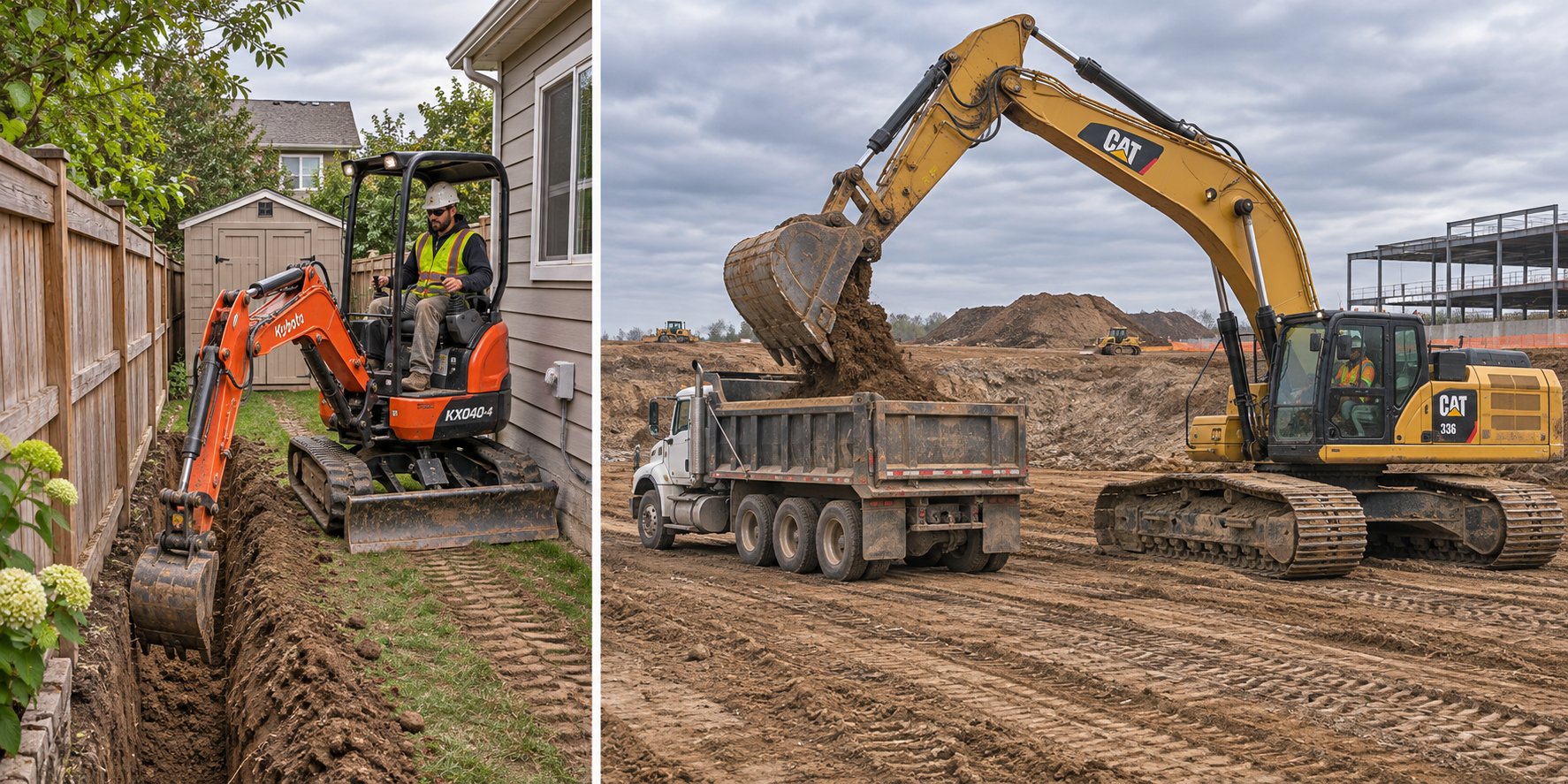
Brand preference gives you a shortlist. Size class determines whether that machine actually earns its keep on your job site. Yet most buyers browse listings by price or proximity rather than matching excavator weight to the work they need done — and that mismatch burns money in both directions. An undersized excavator trackhoe fighting compacted clay all day costs you production hours and accelerates wear on the hydraulic system. An oversized machine parked on a residential lot wastes fuel, demands expensive transport, and still cannot squeeze between the house and the property line.
The fix is a simple framework: translate your project requirements — dig depth, reach radius, lift capacity, and trench width — into the operating weight that delivers those specs without excess.
Matching Excavator Weight Class to Job Scope
Dig depth is usually the first number contractors check, and for good reason. A machine that maxes out two feet above your target depth is not just inefficient — it physically cannot finish the task. Reach radius matters equally when you are loading trucks positioned at a distance or shaping a wide slope from a single setup. Lift capacity enters the equation the moment you pick pipe, set manholes, or handle heavy attachments at the end of the stick. And trench width dictates bucket size, which in turn must match the machine's hydraulic flow to maintain productive cycle times.
All of these specs scale with operating weight. Here is how each size bracket maps to the work it does best:
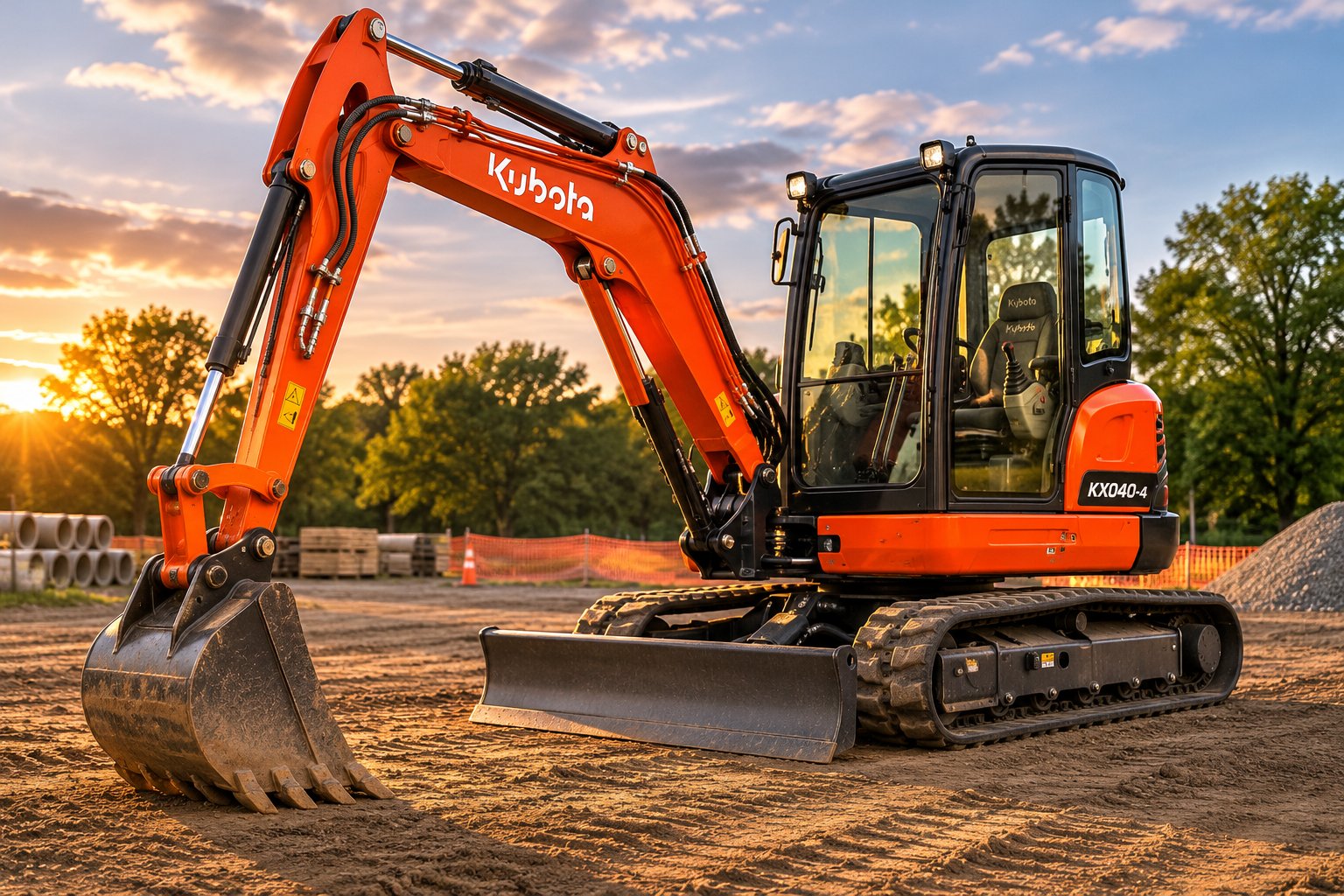
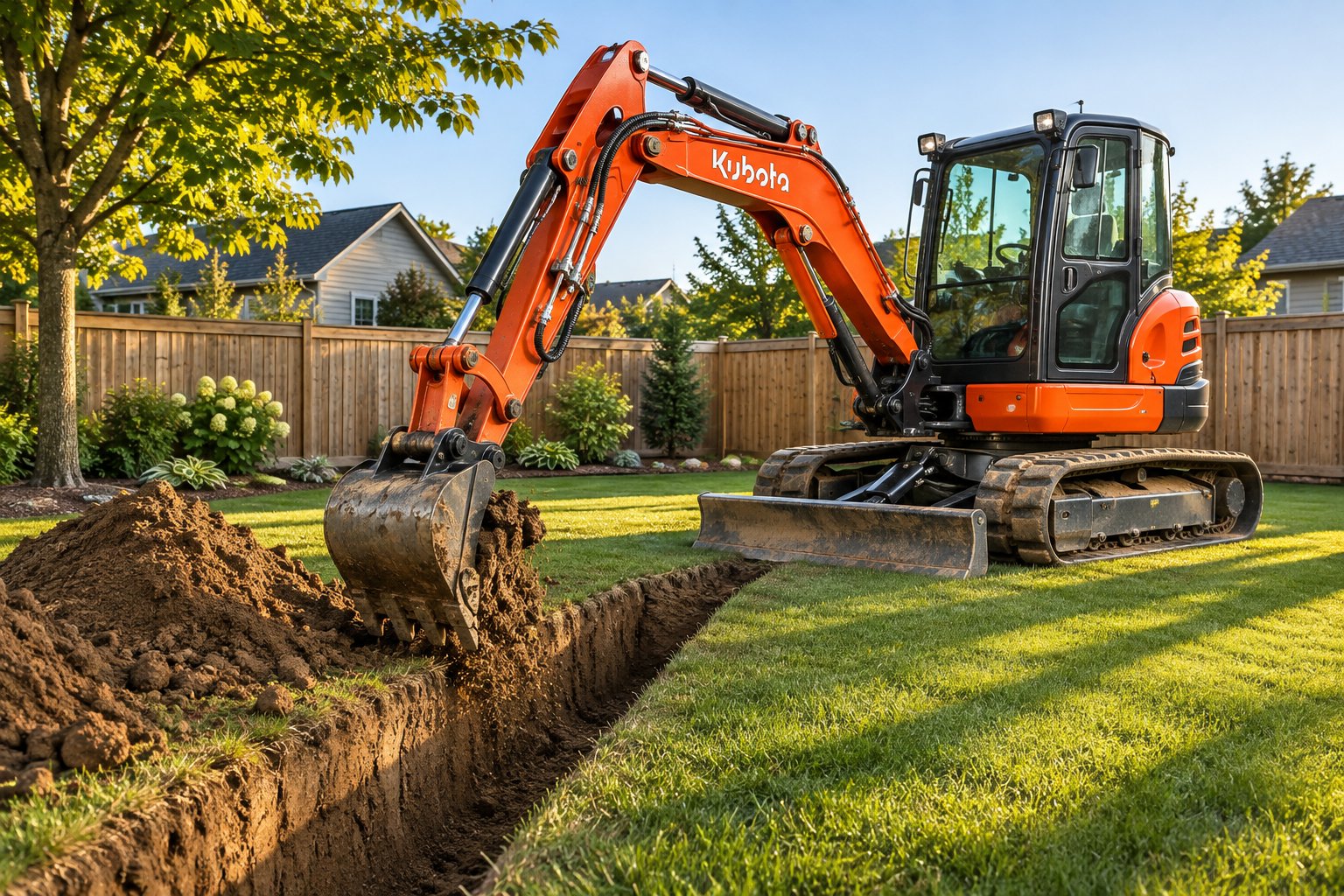
- Compact excavators — under 6 metric tons. These machines handle residential utility trenching (sewer laterals, water lines to about 10 feet deep), landscaping grading, pool excavation, and tight-access foundation prep. Many models feature zero-tail-swing, and rubber tracks protect finished surfaces. Used mini excavators for sale in this range — including popular units like the Bobcat E35, Kubota KX series, and Cat 303.5 — fit through standard 36-inch gates and haul easily on a tag-along trailer behind a one-ton pickup.
- Midi excavators — 6 to 10 metric tons. When dig depths push past 10 feet and breakout force needs to handle compacted soil, concrete chunks, or large root balls, the midi class fills the gap. Models like the Bobcat E85, the Kubota KX080, and the Cat 308 deliver 14 to 18 feet of dig depth with enough swing torque for moderate demolition, commercial utility work, and road shoulder grading. Transport still stays manageable — most midis ride on a tag trailer without a lowboy or permit conversation.
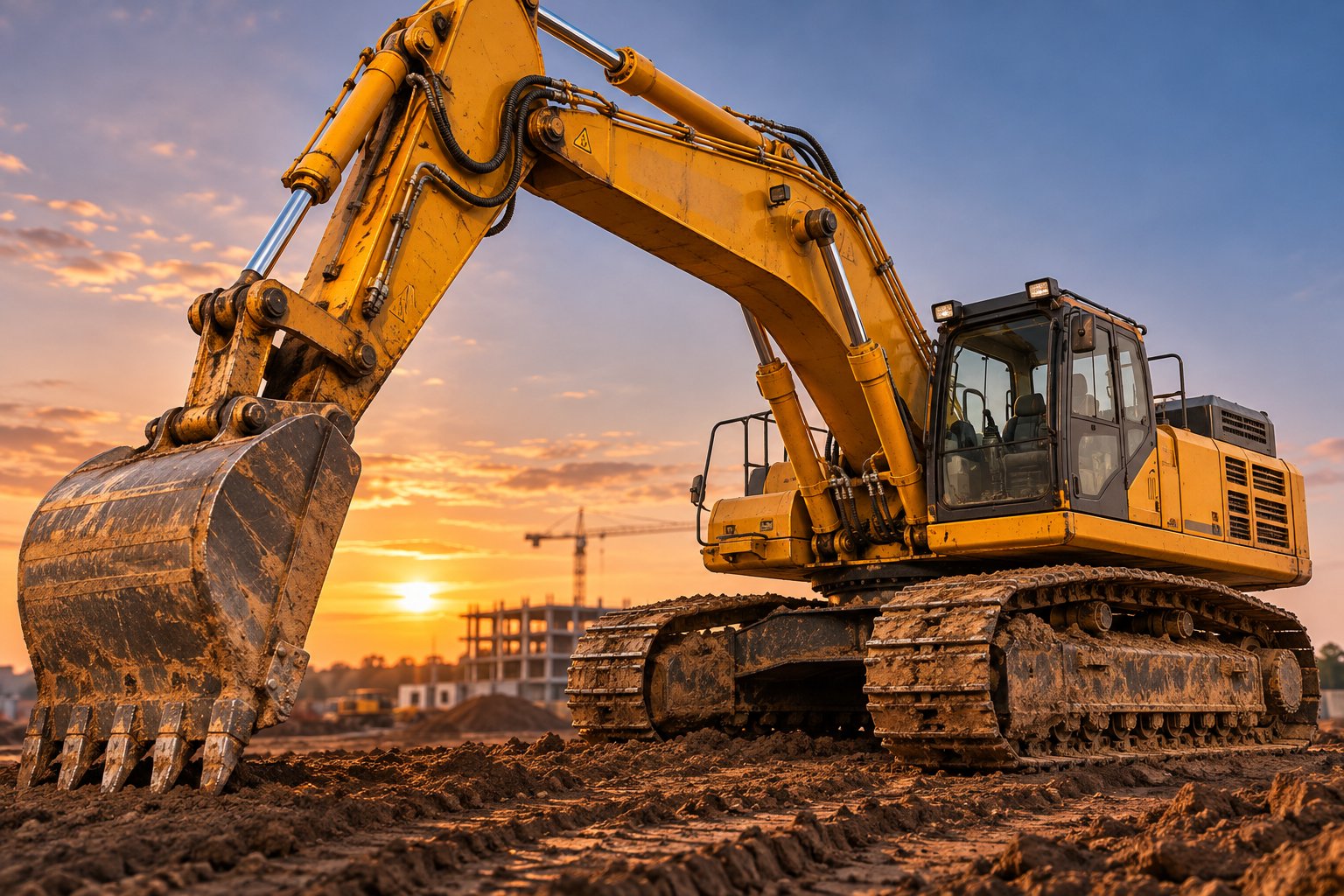
- Mid-size crawlers — 13 to 25 metric tons. Commercial site preparation, road construction, moderate demolition, and large utility installation live here. A Komatsu excavator in the PC200 class or a Cat 317 offers 20-plus feet of dig depth, serious bucket capacity for efficient truck loading, and the hydraulic flow to run breakers and augers productively. Machines in this range are the workhorses of civil construction — versatile enough for most projects, yet still transportable on a standard lowboy trailer without oversize-load permits in most states.
- Full-size crawlers — 25 to 45 metric tons. Mass excavation, quarry production loading, heavy demolition, and deep utility work exceeding 25 feet demand machines in this bracket. Cat 330 and 336 models, the Komatsu PC300, and the Hitachi ZX300 sit squarely here. Bucket capacities start above 1.5 cubic yards, and lifting performance supports large-diameter pipe placement and structural concrete handling. Transport costs increase significantly — expect lowboy fees of $500 to $1,500 each way, and machines above 35 tons may trigger oversize-load permits depending on your state.
- Large excavators — 45+ metric tons. Highway construction, dam projects, and mass earthmoving where 40-ton articulated dump trucks need to be loaded in under a minute. A SANY excavator in this class, a Cat 349, or a Komatsu PC490 brings 300-plus horsepower and bucket capacities exceeding 2.5 cubic yards. Mobilization runs several thousand dollars each way, site ground pressure must support the machine's weight, and an experienced operator is non-negotiable.
When a Smaller Machine Saves More Than It Costs
Bigger always digs faster — but faster digging does not always mean lower project cost. Transport logistics are the hidden variable that reshapes the math, especially for contractors who move frequently between residential or light commercial sites.
Consider the numbers. A compact or midi excavator rides on a tag trailer that your crew truck can tow. Total mobilization cost? Fuel and an hour of drive time. A 25-ton crawler, by contrast, requires a lowboy trailer and a professional hauler. National flatbed spot rates averaged $3.61 per mile including fuel in late 2026, and vendor estimates for RGN (lowboy) loads run $3.50 to $6.00 per mile for legal-size machines — meaning a 500-mile move can easily exceed $1,800 before permits or escorts enter the picture. Machines over legal width (8 feet 6 inches) or legal gross weight (80,000 pounds) layer on state-by-state permit fees, pilot car costs, and daylight-only travel restrictions that inflate both price and schedule.
For a contractor bouncing between three or four residential jobs per month, two extra days of production on a midi can cost less than the lowboy fee to bring in a full-size standard for a single-day dig. The same logic applies to equipment dealers reselling machines: a unit that buyers can self-transport broadens your audience and moves faster off the lot.
Accounting for Attachment Needs in Your Size Decision
An excavator's value multiplies with every attachment it can run — but only if the machine's hydraulic system can actually power them. Auxiliary hydraulic flow rates and operating pressures vary dramatically across size classes, and choosing a machine that cannot support your planned attachments is one of the most expensive sizing mistakes a buyer can make.
Here is the practical breakdown. Compact machines typically deliver 15 to 25 gallons per minute (GPM) through their auxiliary circuits — enough for a hydraulic thumb, a light-duty auger, or a small breaker. Midi-class units like the Bobcat E85 or a Cat 308 step up to 25 to 40 GPM, unlocking tilt buckets, moderate breakers, and compaction wheels without bogging down cycle times. Mid-size crawlers in the 13- to 25-ton range push 30 to 55 GPM, comfortably driving heavy breakers, shears, and tilt-rotator packages that demand both flow and proportional control. Full-size machines above 25 tons supply the volume and pressure for production-level demolition attachments, pile drivers, and large grapples.
Beyond raw hydraulic capacity, coupler compatibility matters. A machine with factory-installed auxiliary lines and a standardized quick coupler system — pin diameters and center distances that match widely available attachments — is worth more on the used market than an identical model without those provisions. Buyers evaluating any hydraulic excavator for sale should check whether auxiliary plumbing is already in place and which coupler standard it uses, because retrofitting auxiliary lines after purchase can run $2,000 to $5,000 depending on the machine and the shop doing the work.
Attachment planning also circles back to size selection itself. If your typical workflow calls for swapping between a digging bucket, a hydraulic breaker, and a thumb throughout a single shift, you need a machine whose auxiliary system supports rapid, reliable tool changes — and whose weight class provides enough residual lift capacity to handle each attachment safely at your working radius. A quick coupler on a mini excavator adds 30 to 40 kilograms at the stick tip, while the same accessory on a 30-ton crawler can weigh over 500 kilograms, directly reducing the machine's rated lift at full reach.
Getting the size decision right means balancing dig depth, transport cost, and attachment versatility into a single equation. Nail that equation, and the machine pays for itself faster. Miss it, and you are either renting supplemental equipment to cover the gaps or paying premium transport fees to shuttle an oversized unit between sites that never needed it. The real question, though, is where to find the machine that checks every box — and that search is where buying channels, pricing dynamics, and inspection access start to matter just as much as the specs on the data sheet.
Where to Find a Hydraulic Excavator for Sale
You know the size class you need, the brand strengths you value, and the attachments your workflow demands. The next variable is where you actually buy the machine — and that decision affects everything from the excavator price you pay to the inspection access you get before committing money. Each buying channel carries its own blend of risk, convenience, and leverage. Here is how the major options stack up.
Auction Houses and Online Bidding Platforms
Large auction operators like Ritchie Bros. and IronPlanet aggregate thousands of used excavators for sale in a single marketplace, from compact Kubota KX080 units to 45-ton crawlers coming off highway jobs. The sheer volume means you can sometimes land a machine below fair market value — especially at the end of a slow auction day when bidding thins out.
The trade-off is real, though. Buyer premiums typically run 5-18% on top of the hammer price, and most auction purchases are final: no warranty, no return window, and limited time for hands-on inspection before bidding closes. Industry mechanics report that auction machines frequently arrive without verified fluid levels, and some units have sat idle long enough for seals to dry out — problems you only discover after paying. If you have mechanical skills and a realistic repair budget, auctions can deliver exceptional value. If you need the machine running on Monday morning, the gamble gets expensive fast.
Direct-purchase platforms offer an alternative rhythm. Instead of competing in real-time bids, you negotiate pricing, request model-specific quotes, and schedule inspections before committing. That slower pace suits buyers who value transparency over speed.
Authorized Dealers and Certified Pre-Owned Programs
OEM-backed programs sit at the opposite end of the risk spectrum. Cat Certified Used, for example, requires every component to rate "Good" on a standardized inspection form — meaning no leaks, no excessive wear, undercarriage at 50% life or better, and all cab electronics functioning. Machines that fail any checkpoint must be repaired before earning the Certified Used badge. Other manufacturers run similar programs: Komatsu Approved Used, Volvo Certified Used, and John Deere Certified Pre-Owned each apply brand-specific multi-point inspections and limited warranty coverage.
The catch? Premium pricing. A certified unit often lists 15-25% above a comparable private-sale or auction machine. For buyers who need a mini excavator for sale near me that is ready to work immediately — or for fleet operators who cannot afford unplanned downtime — that premium buys peace of mind and documented machine history.
Online Marketplaces and Cross-Border Suppliers
Between the auction floor and the certified dealer lot sits a broad middle ground of online listing platforms. Machinery Pete, Machinery Trader, and similar aggregators let you search by model, hours, location, and price — making it easy to benchmark what a Kubota mini excavator for sale or a Gradall wheeled unit should cost in the current market. Private-sale listings on these platforms can yield competitive pricing, though inspection and documentation rest entirely on the buyer's shoulders.
For international buyers — or domestic dealers sourcing inventory from overseas — cross-border suppliers consolidate multi-brand machines for export. Platforms like JIUHONG's used excavator collection bring together compact and larger machines from brands like Caterpillar, Komatsu, Hitachi, and Kobelco, enabling excavation contractors, equipment dealers, and import buyers to compare listings, request model-specific quotes, and arrange individual or bulk purchases through a direct-purchase workflow rather than competitive bidding. The advantages include quote negotiation and broad multi-brand selection under one roof; the considerations include verifying shipping logistics, confirming export documentation, and — as with any cross-border transaction — arranging independent inspection before finalizing payment.
| Buying Channel | Typical Price Range | Inspection Access | Warranty Availability | Best-Fit Buyer Profile |
|---|---|---|---|---|
| Auction (Ritchie Bros., IronPlanet) | Below to at market; add 5-18% buyer premium | Limited preview windows; as-is condition | None — final sale | Mechanically savvy buyers comfortable with risk; bargain hunters |
| Authorized Dealer / Certified Pre-Owned | 15-25% above market average | Full multi-point inspection included | Limited OEM warranty (varies by program) | Fleet operators, contractors needing immediate uptime |
| Online Listing Aggregators (Machinery Pete, Machinery Trader) | Market average; negotiable on private listings | Buyer-arranged; varies by seller | Rarely; depends on individual seller | Price-conscious buyers who can arrange their own inspections |
| Cross-Border / Direct-Purchase Platforms (e.g., JIUHONG) | Competitive; quote-based negotiation | Buyer-arranged or platform-facilitated | Varies; confirm terms per transaction | Import buyers, dealers sourcing bulk inventory, international contractors |
No single channel wins on every dimension. Auctions reward patience and mechanical confidence. Certified programs reward budget flexibility with lower risk. Direct-purchase and cross-border platforms reward buyers who want negotiation leverage and multi-brand selection without the auction clock ticking. The smartest approach? Cross-reference at least two or three channels before committing — a habit that also reveals whether a listing's excavator price is genuinely competitive or just well-marketed.
Finding the right machine at the right price, however, is only half the equation. A listing can look flawless in photos and still hide thousands of dollars in deferred maintenance behind the hour meter — which is exactly why knowing how to read that meter, and what to inspect beyond it, separates confident buyers from expensive lessons.
Reading the Hour Meter and Evaluating Machine Condition
You have found a promising listing — right size class, right brand, competitive price. The photos look clean, and the seller mentions "low hours." But what does that number on the hour meter actually tell you? More importantly, what does it hide? The hour meter is the odometer of the heavy equipment world, yet unlike a car's mileage reading, it carries no standardized interpretation guide. Two machines showing identical hours can sit at opposite ends of the condition spectrum depending on how they were worked, how they were maintained, and whether the reading is even accurate.
Learning to decode that single number — and knowing when to look past it — is arguably the most valuable skill you can bring to any hydraulic excavator for sale evaluation.
What Low, Moderate, and High Hours Mean by Size Class
Here is a detail many listings conveniently omit: hour thresholds are not universal. A compact machine and a full-size crawler are engineered to very different service-life standards, so the same reading carries different weight depending on the class of excavator you are evaluating.
Compact excavators (under 10 metric tons). Lighter-duty components — smaller pins, narrower rubber tracks, and lower-displacement engines — mean these machines accumulate wear faster per hour than their larger cousins. Industry benchmarks place the caution zone at roughly 5,000 hours and above for minis and compacts, where rubber tracks, pins, and bushings begin showing meaningful wear even under moderate conditions. A Kubota excavator for sale reading 2,500 hours with documented service history? That is comfortably in the low-use category. The same model at 6,500 hours enters high territory where buyers should budget for track replacement and potential hydraulic-seal work.
Mid-size crawlers (10 to 30 metric tons). This is the most common resale band, and the machines are built to handle it. Heavier undercarriage steel, larger-bore cylinders, and more robust final drives extend reliable service life well beyond what compact units can tolerate. Most standard hydraulic excavators in this class leave primary production somewhere in the 8,000- to 10,000-hour range, but "leave primary production" does not mean the machine is finished — it means component replacement costs begin climbing. A well-documented Caterpillar excavator or deere track hoe at 5,000 hours with consistent oil-change records still has years of productive life ahead. At 8,000 hours, you are entering a zone where hydraulic pump efficiency, swing bearing play, and undercarriage condition need careful verification.
Full-size and heavy crawlers (30+ metric tons). Machines like the Cat 330 trackhoe or a Komatsu PC350 are overbuilt by design because they face the most punishing duty cycles — quarry loading, mass excavation, heavy demolition. That engineering margin means they can tolerate 12,000 to 15,000 hours or more before major overhauls become unavoidable, provided maintenance was disciplined. A heavy crawler at 7,000 hours with full dealer-stamped service records is, relatively speaking, still in its prime.
The takeaway? Always evaluate hours relative to size class. A 9,000-hour compact is a very different proposition than a 9,000-hour 35-ton crawler — even if the asking price per hour looks identical on a spreadsheet.
Hours Alone Do Not Tell the Full Story
Imagine two identical 20-ton excavators, both showing 6,000 hours. One spent its life trenching soft clay on a pipeline project in sandy soil, greased daily, with oil samples pulled every 250 hours. The other ran a hydraulic breaker on a concrete demolition site for three years, skipping filter changes and living in a dusty yard. Same meter reading. Radically different machines. As equipment lifecycle research consistently confirms, maintenance records, operating environment, and component condition often outweigh the raw hour count when predicting remaining useful life.
That is why experienced buyers treat the hour meter as a starting point, not a verdict. The real evaluation happens when you open panels, pull dipsticks, and put the machine through a methodical inspection. Here is a checklist of the critical points to verify on any bucket excavator or full-size crawler before signing a purchase agreement:
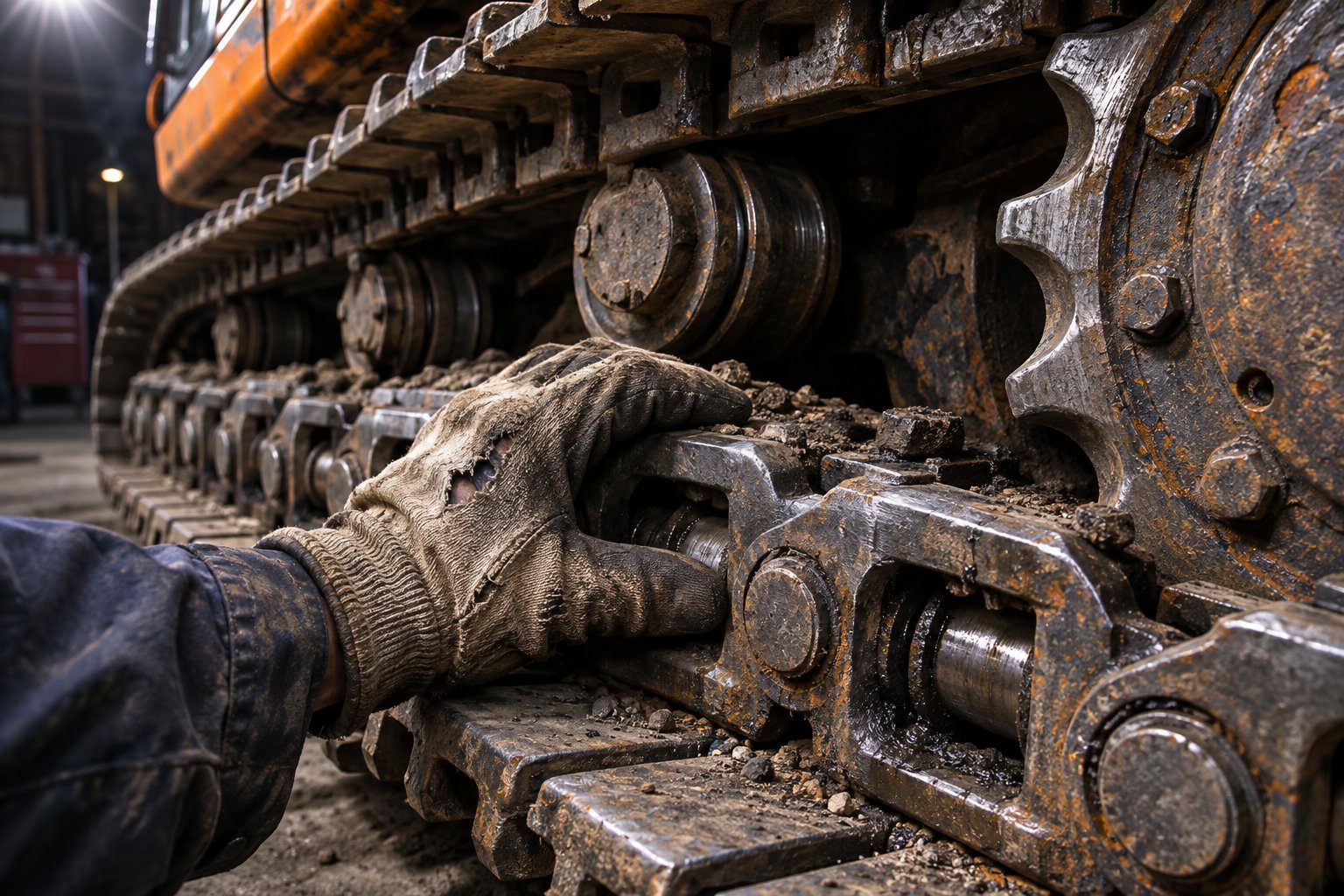
- Undercarriage wear. Measure track sag, grouser height, sprocket tooth profile, and roller condition with a track measuring gauge — not your eyes alone. On a 20-ton machine, full undercarriage replacement runs roughly $12,000, so a set at 50% life is a five-figure liability you need to price into your offer.
- Pin and bushing play. Have the operator apply and release bucket down-pressure while you watch each linkage point for excessive movement. Loose pins signal an under-greased life and accelerated wear on the bosses — a red flag for overall maintenance quality.
- Hydraulic hose condition. Inspect every visible hose for cracking, abrasion, bulging, and weeping fittings. Small drips from cylinder rod seals are resealable at roughly $2,500 per cylinder, but drips from the main hydraulic pump point toward a $12,000 to $15,000 replacement.
- Boom and stick weld integrity. Walk the full length of both structures, looking for cracks at weld seams and any plates welded over repairs. Structural cracks indicate the machine experienced loads beyond its design envelope and can reduce a machine's value by roughly 20%.
- Cab electronics and controls. Test every gauge, switch, light, and display function. Tap the onboard diagnostic screen for stored fault codes. Cracked glass, torn seats, and makeshift wiring repairs suggest rough operation and deferred maintenance.
- Engine blow-by. Remove the oil fill cap with the engine at operating temperature and feel for pressure pulses. Significant blow-by indicates worn piston rings or cylinder liners — repairs that can run $5,000 to $15,000 depending on the engine platform.
- Hydraulic oil analysis. Request recent oil sample reports. Milky or foamy fluid means water contamination — often a deal-killer. Elevated iron and chromium particles point to internal pump wear. Dark, burnt-smelling oil signals chronic overheating and viscosity breakdown.
- Cylinder drift test. Raise the boom with a loaded bucket, shut off the engine, and measure how far the boom drops over five minutes. More than two inches of drift suggests worn cylinder packings or internal valve bypass — problems that compromise both productivity and safety.
Every item on that list tells you something the hour meter cannot. A machine that passes each checkpoint at 8,000 hours is a safer buy than one that fails three of them at 3,000.
Red Flags That Override a Low Hour Reading
A suspiciously low number on the dial should sharpen your attention, not relax it. Several scenarios can produce a reading that looks attractive on paper while masking serious underlying problems.
Tampered or replaced hour meters. Mechanical hour meters drift 10-15% over their service life, but outright tampering is a bigger concern. On older machines with Hobbs-style meters, disconnecting the wire stops the count, and swapping the unit resets it to zero. The financial incentive is enormous: on a mid-size excavator, the difference between 4,000 and 8,000 hours can represent $30,000 to $50,000 in resale value. For post-2008 machines, request an ECM (engine control module) hour pull from any manufacturer dealer — the ECM logs hours independently of the dashboard display. If the dash reads 3,500 and the ECM says 7,200, walk away. Roughly 15-20% of used equipment listings show hour readings inconsistent with available service records or ECM data, according to industry analysis by Iron Solutions.
Inconsistent or missing service logs. A machine at 4,000 hours with zero paperwork is a bigger gamble than a well-documented unit at 7,000. Lack of records often correlates with skipped service intervals — and even a single missed hydraulic filter change in abrasive conditions can introduce contaminants that shorten pump life by thousands of hours. If the seller cannot produce maintenance documentation, treat the machine as if its true condition is unknown and price accordingly.
Extended idle periods. A ten-year-old excavator showing only 1,500 hours raises a different set of concerns. Hydraulic cylinder seals dry out and crack when a machine sits without regular cycling. Coolant breaks down. Condensation forms inside the engine crankcase and hydraulic reservoir, promoting corrosion and microbial growth in the fluid. A machine that has been sitting can look pristine externally while hiding degraded seals, corroded internal surfaces, and stale fluids that will fail under load. Always ask why the hours are low relative to the machine's age — and inspect seals, hoses, and fluids with extra scrutiny.
Wear patterns that contradict the stated hours. Trust your eyes. Polished-smooth pins, deeply cupped used digger buckets with rounded teeth, a cab interior worn down to bare metal on the armrests — none of these belong on a 2,500-hour machine. When physical wear outpaces the meter reading, either the machine worked harder than the hours suggest (high idle-time percentage) or someone adjusted the numbers. Cross-reference wear observations with the ECM pull and maintenance records. If two out of three data points conflict, the risk is not worth the discount.
For any purchase above $25,000 to $30,000, hiring an independent third-party inspector is money well spent. A qualified inspector brings track-measuring gauges, magnetic dial indicators for swing-bearing play, and the objectivity to walk away from a machine the seller is eager to move. The inspection fee — typically a few hundred dollars — is trivial compared to a single hidden pump failure or an undercarriage replacement that erases your purchase savings overnight.
Hour-meter literacy separates informed buyers from hopeful ones. But even a machine with verified hours and a clean inspection report can drain your bank account if you overlook what happens after the purchase — the fuel, the filters, the insurance, the transport, and the inevitable component replacements that define the true cost of ownership.
Total Cost of Owning a Hydraulic Excavator Beyond Purchase Price
A clean inspection report and verified hours put you ahead of most buyers — but the purchase price is just the opening chapter of your financial relationship with that machine. Fuel, filters, undercarriage steel, insurance premiums, and transport fees accumulate silently month after month, and they routinely exceed the original purchase cost within a few years of heavy use. Contractors who budget only for the acquisition end up surprised by invoices that dwarf the sticker price. Dealers who ignore post-sale economics lose customers who feel blindsided.
Think of it this way: the real price tag on any hydraulic excavator for sale is not what you pay at closing — it is what the machine costs per hour over every hour you own it. Mapping those costs upfront turns a gut-feel purchase into a business decision backed by numbers.
Fuel Consumption and Operating Costs by Size Class
Fuel is the single largest recurring expense on most excavators, and it scales directly with engine horsepower and hydraulic demand. A compact machine with a 20-to-40-horsepower diesel sips fuel at roughly 1 to 2.5 gallons per hour under normal digging conditions. Step up to a mid-size crawler — a Develon excavator in the 20-ton class or a John Deere 85G, for example — and consumption climbs to approximately 3.5 to 5.5 gallons per hour depending on application intensity. Full-size crawlers above 30 tons with 200-plus-horsepower engines burn 6 to 10 gallons per hour during sustained production loading.
Those ranges are general benchmarks drawn from typical operating profiles; actual burn rates vary with terrain, digging material, operator technique, and whether the machine runs in economy or power mode. Manufacturer-published fuel specifications — available in product brochures for models like the Komatsu PC200, Caterpillar 330, and Volvo EC300 — provide model-specific numbers that sharpen your estimates. Always cross-reference listed specs against real-world operator feedback, because published figures reflect controlled test conditions rather than the messy reality of a demolition site or wet-clay trench.
Here is where the math gets persuasive. Imagine running a mid-size crawler for 1,500 hours per year at an average of 4.5 gallons per hour. At a diesel price of $3.80 per gallon, annual fuel cost alone hits roughly $25,650. A compact machine doing the same hours at 1.8 gallons per hour? About $10,260. That $15,000 annual gap explains why contractors who regularly move between residential utility jobs sometimes find a smaller machine — even one that digs slower — more profitable overall. If you are shopping for a SANY mini excavator or a compact Cat 308 excavator for sale for lighter-duty work, the fuel savings compound year over year and deserve a line in your comparison spreadsheet.
Maintenance Intervals, Common Repairs, and Parts Budgeting
Every excavator follows a tiered maintenance schedule, and skipping intervals accelerates wear across the entire machine — not just the neglected component. Standard service intervals typically break down like this:
- Every 250 hours: Engine oil and filter change, hydraulic return-line filter inspection, air filter check, and greasing of all pin joints.
- Every 500 hours: Hydraulic oil filter replacement, fuel filter swap, drive-motor oil level check, and undercarriage tension verification.
- Every 1,000 hours: Full hydraulic oil sample and analysis, coolant condition test, swing-gear oil change, and detailed undercarriage measurement.
- Every 2,000 hours: Hydraulic system oil change (if analysis warrants it), valve clearance adjustment on older engines, and turbocharger inspection.
Among all these line items, undercarriage replacement stands out as the single largest maintenance expense on any crawler excavator. Industry data shows that undercarriage components account for 40-50% of total machine maintenance costs, with a full replacement running anywhere from $25,000 for a compact unit to $100,000 or more for a large crawler. Well-maintained undercarriages last 4,000 to 6,000 hours, while neglected ones may need replacement at 2,000 to 3,000 hours — a difference that can double your per-hour undercarriage cost if maintenance discipline slips.
Parts availability also shapes your budget. Caterpillar and Komatsu enjoy the broadest aftermarket ecosystems, meaning competitive pricing on filters, seals, and wear parts from both OEM and third-party suppliers. Brands with smaller dealer networks — Kobelco, Develon, or niche models like the Deere 85G — may carry longer lead times and higher pricing for components outside routine service kits, especially in regions far from major distribution hubs. Before committing to any cat excavator for sale or competing brand, call the nearest dealer and price out a 2,000-hour service kit plus one set of undercarriage components. That single phone call reveals more about real ownership cost than any listing description ever will.
Insurance, Transport, and Financing Considerations
Purchase price, fuel, and maintenance form the visible core of ownership cost, but three additional categories quietly inflate the total — and buyers who overlook them build budgets that fall short.
Insurance. Most standard commercial general liability policies exclude heavy mobile equipment. You will need an inland-marine or equipment-floater policy that covers the machine for theft, fire, vandalism, and transport damage. Premiums vary by machine value, location, and deductible, but a rough starting point is 1.5% to 3% of the insured value per year. A $120,000 excavator might cost $1,800 to $3,600 annually to insure — a figure that drops as the machine depreciates but never reaches zero.
Transport. Unless you run a single fixed site, moving the machine between jobs is an ongoing expense. Compact units that ride on a tag trailer behind a crew truck cost little more than fuel. Mid-size and full-size crawlers demand a lowboy and a professional hauler, with fees that can exceed $3.50 to $6.00 per mile for legal-size loads — and significantly more if oversize permits and escort vehicles are required. Contractors who underestimate mobilization cost often discover that two or three inter-site moves per month add thousands of dollars in annual overhead.
Financing. Not every buyer pays cash, and the financing structure you choose reshapes total cost substantially. Cat Financial outlines two primary paths: equipment financing (a loan where you own the machine once payments are complete) and equipment leasing (fixed monthly payments with the option to return, extend, or purchase at lease end). Financing builds equity and lets you capture resale value, but monthly payments typically run higher because they include principal plus interest. Leasing offers lower monthly outlays and suits short-term project needs — you avoid tying up capital on a machine you may only need for a year — but you do not build ownership equity unless you exercise a purchase option at lease end. For used equipment specifically, lenders scrutinize age and hours more closely, so expect slightly higher interest rates than you would see on a new machine, and confirm that any lender's appraisal aligns with the price you negotiated.
Pulling all of these variables together into a single document prevents surprises. Here is every line item that should appear on your total-cost-of-ownership worksheet:
- Purchase price (including buyer premiums, taxes, and transaction fees)
- Delivery or mobilization cost to your first job site
- Annual fuel cost (estimated hours x hourly burn rate x fuel price)
- Scheduled maintenance (oil, filters, grease — by interval)
- Undercarriage replacement reserve (prorated across expected component life)
- Hydraulic component reserve (pump rebuild or replacement fund)
- Insurance premium (inland-marine or equipment-floater policy)
- Ongoing transport fees (average moves per month x cost per move)
- Financing cost (total interest or lease payments over the hold period)
- Operator labor (loaded hourly rate x expected annual operating hours)
- Attachment acquisition or rental costs
- Estimated resale or residual value at end of your planned ownership period
Subtract projected resale value from the sum of every other line, divide by expected lifetime operating hours, and you get a true cost-per-hour figure. That single number lets you compare machines across brands, size classes, and buying channels on equal footing — and it exposes whether a bargain-priced listing is genuinely cheap or just deferring expensive problems to the next owner.
Armed with that cost-per-hour clarity, you are far better equipped to avoid the emotional traps and procedural blind spots that catch even experienced buyers off guard — mistakes that are common enough to deserve their own checklist.
Common Mistakes to Avoid When Buying a Used Excavator
Cost-per-hour math protects you on paper. But spreadsheets cannot save you from the procedural errors and psychological shortcuts that derail even well-researched purchases. Every experienced equipment buyer can name at least one machine they regret — and the story almost always traces back to a step they skipped, an assumption they did not question, or a detail they noticed too late.
Whether you are browsing cat excavators for sale on an auction site or negotiating directly with a private seller, the following mistakes surface repeatedly. Avoid all six and you dramatically improve your odds of landing a machine that performs as promised.
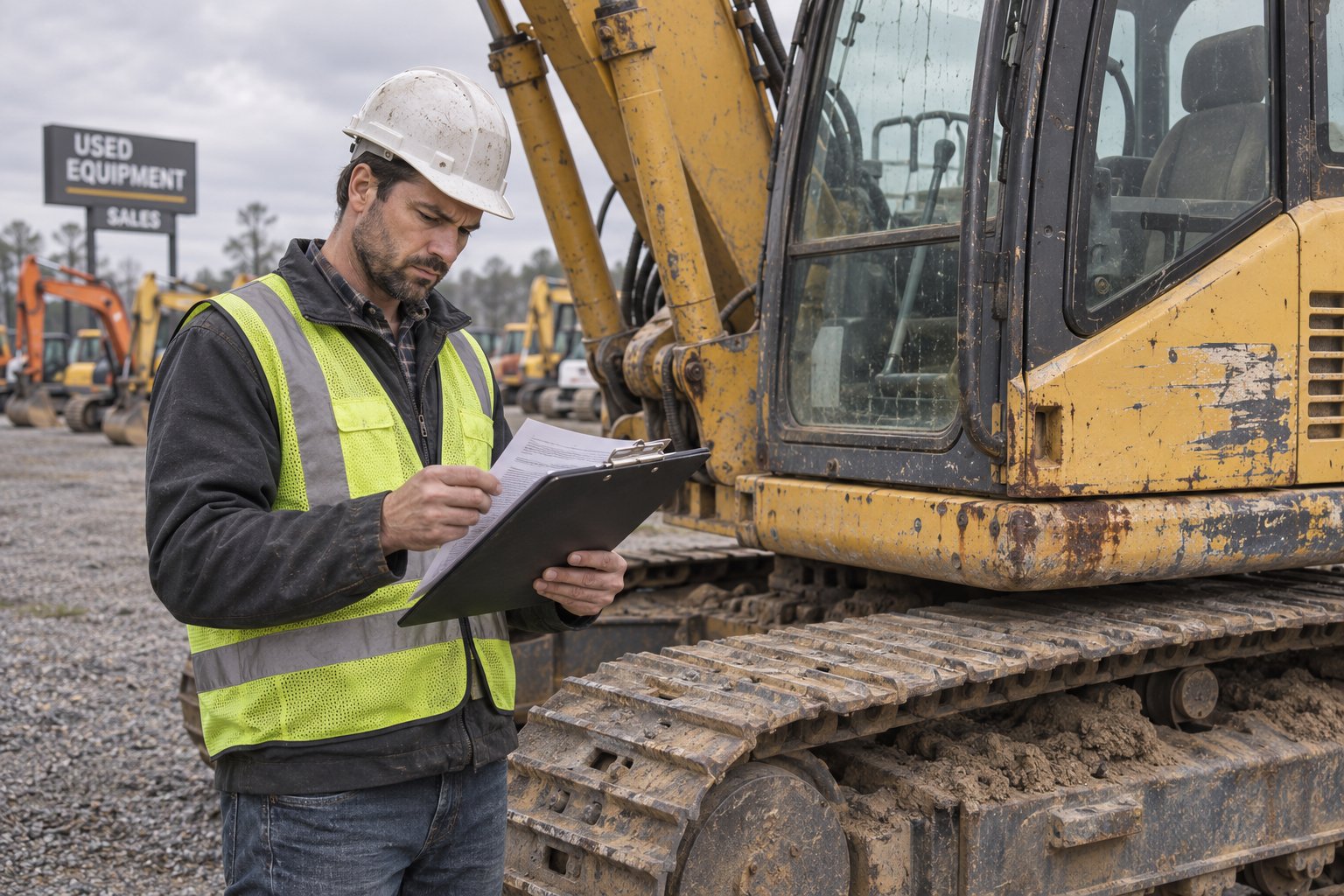
- Skipping the independent pre-purchase inspection. Seller-provided photos are marketing tools, not diagnostic evidence. A freshly pressure-washed machine looks clean in a wide-angle shot, but that same photo hides cracked boom welds, weeping cylinder seals, and worn undercarriage components that only show up under hands-on scrutiny. McClung-Logan Equipment warns that buyers who rely solely on a seller's description of condition — or who skip the inspection to move faster on a deal — absorb risk that surfaces as unexpected repair bills shortly after purchase. Hiring a qualified third-party inspector costs a few hundred dollars; a hidden hydraulic pump failure costs $12,000 to $15,000. The math speaks for itself.
- Ignoring attachment compatibility and auxiliary hydraulics. You found a great deal on a 20-ton crawler, but the machine has no factory auxiliary lines and uses a non-standard pin-on coupler. Suddenly, your hydraulic breaker, thumb, and tilt bucket are all incompatible — and retrofitting auxiliary plumbing runs $2,000 to $5,000 before you even buy the first attachment. A used excavator without auxiliary circuits or a widely adopted quick-coupler standard limits future versatility and narrows your resale audience. Always verify auxiliary flow rates, coupler pin dimensions, and whether lines are factory-installed or aftermarket before committing.
- Overlooking transport logistics and import documentation. Cross-border buyers face a documentation layer that domestic purchasers never think about. U.S. imports require EPA emission-standard compliance, DOT safety certifications, accurate Harmonized Tariff Schedule classification, and — for used machinery — proof of thorough cleaning to satisfy USDA inspection requirements. Omitting a single form can strand your machine at the port. Even domestic buyers underestimate transport cost: moving a full-size crawler 500 miles on a lowboy can exceed $1,800, and machines over legal width or weight trigger state-by-state permit fees and escort requirements. Factor logistics into your purchase budget before you bid, not after you win.
- Buying based on price alone without verifying maintenance history. A listing priced 20% below comparable used excavators looks like a bargain — until you discover why it is cheap. Missing service logs, skipped hydraulic filter changes, and deferred undercarriage maintenance all reduce the asking price while inflating your post-purchase repair bill. Houston Heavy Machinery notes that a well-maintained machine with higher hours can outperform a low-hour unit that never received proper care. Always request maintenance documentation, and if the seller cannot produce it, price the machine as though every deferred service item needs immediate attention.
- Underestimating undercarriage replacement costs. On a crawler excavator, the undercarriage is the most expensive wear system on the entire machine — accounting for up to 50% of total lifetime maintenance cost. A Bobcat E60 or similar compact unit might need $15,000 to $25,000 for a full undercarriage swap, while a 30-ton crawler can exceed $100,000. Buyers who glance at the tracks, see rubber or steel that "looks fine," and skip a proper measurement with a track gauge often inherit a five-figure liability they did not budget for. Measure grouser height, roller condition, sprocket tooth profile, and track sag with gauges — not guesswork.
- Neglecting to confirm warranty or return terms. Auction purchases are almost universally final sale, and many private-party transactions carry zero post-sale recourse. If a problem surfaces two weeks after delivery, you own it — financially and mechanically. Before committing, confirm in writing whether any warranty applies, what it covers, how long it lasts, and what your options are if the machine fails to match the seller's stated condition. For certified pre-owned programs, read the fine print on exclusions; "limited warranty" can mean very different things across brands and dealers. Case diggers sold through an authorized Case dealer, for example, may carry different warranty terms than the same model listed by an independent reseller.
- Failing to compare equivalent listings across multiple platforms. Buying the first machine you find is like accepting the first salary offer without researching the market. A SANY excavator for sale on one platform might list for $15,000 more than a comparable unit on another, simply because each marketplace attracts a different buyer pool and pricing dynamic. Cross-reference at least two to three channels — auctions, dealer inventories, online aggregators, and direct-purchase platforms — before making an offer. Comparing listings also reveals whether a particular model's pricing is trending up or down, helping you time your purchase for maximum value.
Each of these mistakes shares a common root: rushing. The pressure to get a machine on-site tempts buyers to compress due diligence into a few hurried phone calls — and sellers know it. A disciplined purchasing process that checks every box on this list takes longer, but it costs far less than a single regrettable shortcut.
Knowing what to avoid clears the obstacles. The final step is assembling everything — size criteria, brand preferences, hour-meter benchmarks, cost-of-ownership numbers, and channel comparisons — into a repeatable workflow that turns browsing into buying with confidence.
Your Next Steps to Finding the Right Excavator
Every section of this guide — from hydraulic fundamentals to hour-meter red flags to total-cost-of-ownership math — builds toward one practical outcome: a purchasing workflow you can repeat with confidence on every machine you evaluate. The difference between a regrettable deal and a profitable one almost always comes down to preparation before browsing, not luck during negotiation.
Build Your Shortlist Using the Right Criteria
Before you open a single listing, write down your specification sheet. That sounds old-school, but it works because it forces clarity. Pin down your minimum dig depth, required reach radius, and the attachments you plan to run — then match those needs to an operating weight class. Decide which brands fit your dealer-access reality: a John Deere excavator makes sense if you already service Deere ag equipment through a local dealer, while a Kobelco excavator might be the smarter pick for fuel-sensitive urban work where low consumption and quiet operation matter most. Set your hour-meter ceiling based on size class — not a universal number — and define a realistic total budget that includes transport, insurance, and a first-year maintenance reserve. That written sheet becomes your filter. Any listing that does not pass it gets skipped, no matter how attractive the photos look.
Compare Across Platforms and Request Quotes
Settling on the first listing you find is the quickest way to overpay. Cross-reference at least two to three channels — auction results, certified dealer inventories, and direct-purchase platforms — to benchmark what a comparable machine actually costs in the current market. Whether you are tracking a Takeuchi excavator for sale through a domestic aggregator, pricing a Bobcat excavator for sale on an auction site, or browsing multi-brand inventories on a platform like JIUHONG's used excavator collection, the goal is the same: verify that the asking price reflects real market value, not just one seller's optimism. JIUHONG, for instance, consolidates compact and larger earth moving equipment from brands like Caterpillar, Komatsu, Hitachi, and Kobelco under one catalog, letting contractors, dealers, and import buyers compare specifications and request model-specific quotes for individual or bulk orders — a useful starting point for anyone applying the selection criteria outlined throughout this article. Pair that comparison with detailed machine history requests and, for any unit above the $25,000 to $30,000 mark, an independent third-party inspection.
Define your requirements on paper first. Inspect every machine against a standardized checklist. Calculate total cost of ownership — not just purchase price. Compare listings across at least two to three channels before committing. The buyers who follow this sequence consistently pay less and regret less.
The used Kobelco excavator market, the certified Cat lot, the international direct-purchase platform — each channel rewards a different buyer profile. Your job is not to find the perfect channel. It is to apply a disciplined, repeatable process across whichever channels fit your risk tolerance and timeline. Do that, and the right hydraulic excavator stops being a gamble and starts being an investment you can quantify from day one.
Frequently Asked Questions About Buying a Hydraulic Excavator
1. How many hours is too many on a used hydraulic excavator?
It depends on size class. Compact excavators under 10 tons enter the high-use zone around 5,000 hours, while mid-size crawlers (10-30 tons) remain productive up to 8,000-10,000 hours with proper maintenance. Full-size machines above 30 tons are overbuilt for punishing duty cycles and can handle 12,000-15,000 hours before major overhauls. Always evaluate hours relative to machine size, maintenance records, and undercarriage condition rather than relying on a single universal threshold.
2. What is the difference between a crawler excavator and a wheeled excavator?
Crawler excavators ride on continuous steel or rubber tracks that spread weight across a larger footprint, making them ideal for soft, uneven, or sloped terrain. Wheeled excavators use heavy-duty rubber tires that allow highway-speed travel between urban job sites without needing a trailer. Wheeled models excel on paved or firm ground and avoid surface damage, but they sacrifice traction on soft terrain. Many wheeled units add outriggers for stability during digging operations.
3. Which excavator brand holds the best resale value?
Komatsu and Caterpillar consistently lead resale value retention in the used market. Komatsu models like the PC200 series typically retain 45-55% of their original price after five years, while Caterpillar machines hold roughly 40-50%. Strong dealer networks, broad aftermarket parts availability, and high global demand drive this retention. However, resale values fluctuate with regional demand, model popularity, and individual machine condition, so always verify with current listing data.
4. What should I inspect before buying a used excavator?
Prioritize undercarriage wear measurements with a track gauge, pin and bushing play at every linkage point, hydraulic hose condition for cracking or leaks, boom and stick weld integrity for cracks, cab electronics and stored fault codes, engine blow-by at operating temperature, hydraulic oil analysis for contamination, and cylinder drift testing. Cross-reference the dashboard hour meter against the ECM reading to detect tampering. For purchases above $25,000-$30,000, hiring an independent third-party inspector is strongly recommended.
5. Where is the best place to buy a hydraulic excavator for sale?
Each channel suits a different buyer profile. Auction platforms like Ritchie Bros. offer high volume and potential below-market pricing but carry inspection risk and no warranties. Certified pre-owned programs from OEM dealers provide multi-point inspections and limited warranties at a 15-25% premium. Online aggregators and direct-purchase platforms such as JIUHONG's used excavator collection at jiuhong-machinery.com allow quote negotiation and multi-brand comparison for individual or bulk purchases. The smartest approach is cross-referencing at least two to three channels before committing.