

What Makes Komatsu Mini Excavators a Top Choice for Contractors
When you start searching for a Komatsu mini excavator for sale, you quickly realize that most listings tell you almost nothing useful. You get a model number, a price, maybe an hour meter reading, and a few photos taken in bad lighting. What you do not get is the context you actually need to make a confident buying decision. This guide fills that gap entirely, covering every current model, real-world pricing dynamics, hands-on inspection techniques, and every purchasing channel worth considering.
First, a quick definition. A mini excavator, sometimes called a compact excavator, is generally any hydraulic excavator with an operating weight under 10 metric tons. These machines typically weigh anywhere from around 2,000 to 22,000 pounds and handle everything from backyard landscaping to utility trenching to light commercial demolition. If it has a front blade and tracks, and it fits on a standard trailer, you are looking at a mini excavator.
Why Komatsu Dominates the Mini Excavator Market
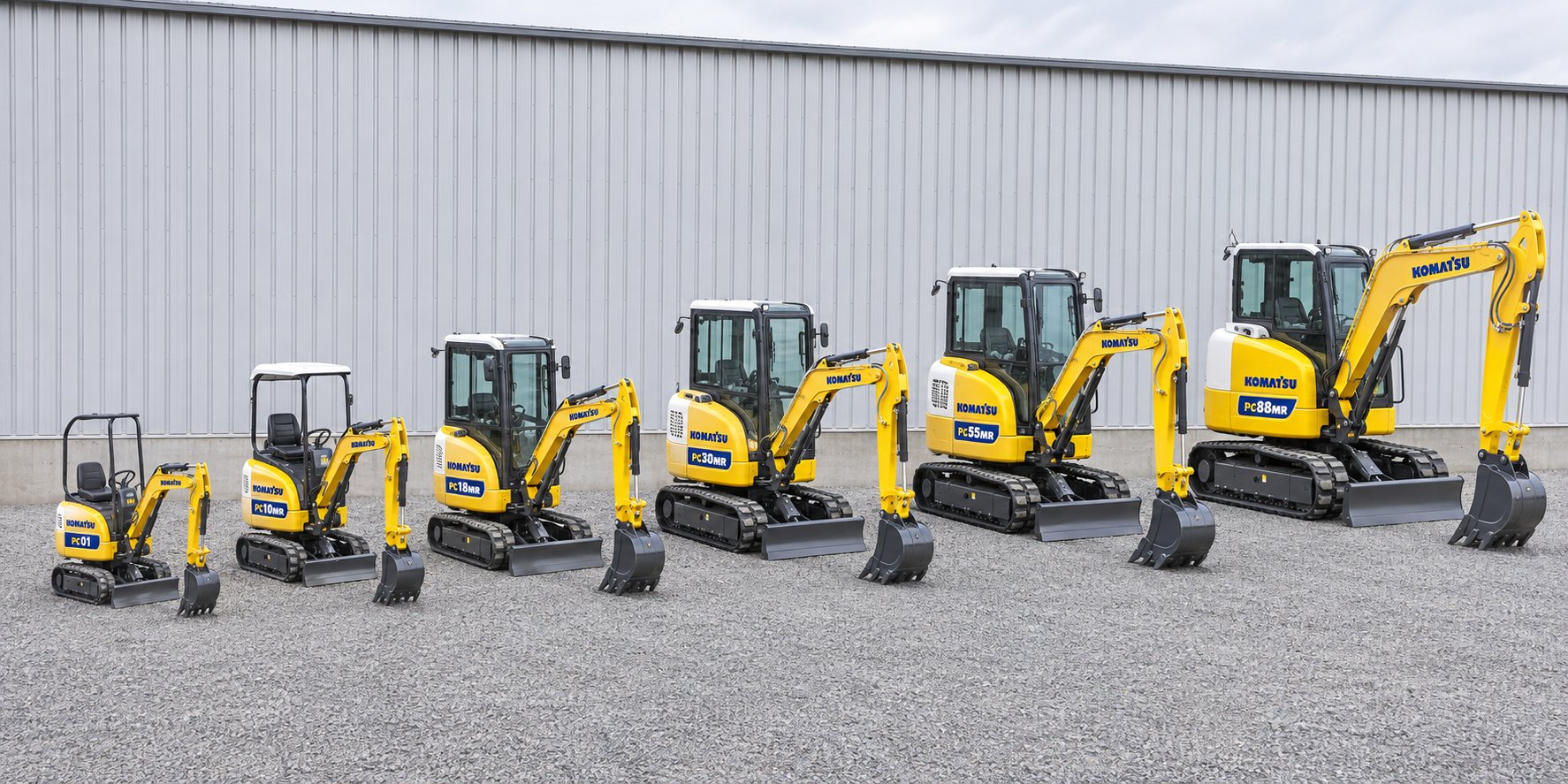
Komatsu has built its reputation on Japanese engineering precision, fuel efficiency, and remarkably low ownership costs over the life of a machine. Their compact excavator lineup currently spans six models in the 0- to 8-metric-ton size classes, from the nimble PC30MR-5 all the way up to the PC88MR-11. Every one of these Komatsu excavators meets Tier 4 Final emissions standards without requiring diesel exhaust fluid, which simplifies maintenance and reduces consumable costs. Buyers shopping for a komatsu bulldozer for sale or even pairing a compact excavator with attachments using a jrb coupler will find that Komatsu's dealer network makes sourcing parts and service straightforward across North America.
Who Buys Komatsu Mini Excavators and Why
The typical buyer profile is broader than you might expect. Landscaping crews, plumbing contractors, municipal utility departments, and small general contractors all rely on these machines daily. Operators who have run larger Komatsu excavators on commercial sites, including models like the 2021 Komatsu PC138USLC-11 for sale on the used market, often gravitate toward the compact lineup for smaller projects because the controls, build philosophy, and hydraulic responsiveness feel familiar.
Komatsu's three core advantages — strong resale value retention, a well-earned reliability reputation, and one of the widest dealer networks in the industry — directly shape every buying decision covered in this guide, from choosing the right model to negotiating a fair price.
Understanding exactly which Komatsu excavator fits your work starts with decoding their model naming system and comparing specifications side by side, something no single resource has done comprehensively until now.
Every Komatsu Mini Excavator Model Explained
Komatsu model names might look like random strings of letters and numbers at first glance, but each character carries specific meaning. Once you crack the code, you can glance at any listing for a Komatsu mini excavator for sale and instantly understand the machine's size class, generation, and configuration — before clicking a single photo.
Decoding Komatsu Model Numbers and Suffixes
Every Komatsu hydraulic excavator starts with the prefix "PC," which stands for Power Crawler — a reference to the tracked undercarriage that defines these machines. The number that follows approximates the machine's tonnage class. A PC55, for example, falls in the roughly 5.5-metric-ton range, while a PC88 sits near the 8.8-ton mark. Larger models follow the same logic: the Komatsu 980E, one of their massive mining dump trucks, uses a similar numerical shorthand for its weight class.
Suffixes tell you even more. "MR" stands for minimum radius, meaning the machine features a tight or reduced tail swing that keeps the counterweight within the track width during rotation. This is critical when you are working along property lines, inside fenced yards, or near traffic. "US" means ultra-short, indicating an even more compact tail swing than standard reduced-radius designs. You will also encounter a generational dash number — the "-5" in PC55MR-5 signals the fifth generation, while "-11" in PC88MR-11 indicates the eleventh. Higher generations bring improvements in hydraulic efficiency, emissions compliance, operator comfort, and digital monitoring features.
Imagine browsing a listing that reads "Komatsu PC78US-11." You now know it is a Power Crawler in the 7.8-ton class, with an ultra-short tail swing, built to eleventh-generation standards. That single model number instantly narrows down size, maneuverability, and technology level — a huge advantage when comparing dozens of listings across platforms.
The Full Komatsu Mini Excavator Lineup at a Glance
Komatsu's compact excavator range stretches from a micro-class machine small enough to fit through a garden gate all the way up to models that rival some mid-size excavators in digging power. The table below consolidates the full lineup into a single comparative view — something you will not find on any individual dealer page or competing equipment guide. Specifications for the PC30MR through PC88MR are drawn from published Komatsu data; the PC01, PC18MR, and PC26MR are described by relative capability since their detailed spec sheets are less commonly aggregated.
| Model | Operating Weight Class | Typical Dig Depth | Tail Swing Type | Ideal Use Case |
|---|---|---|---|---|
| PC01 | ~700 lb (micro class) | Limited — shallow trenching only | Conventional | Backyard access, garden trenching, indoor demo |
| PC18MR | ~1.8-ton class | Approx. 7–8 ft | Minimum Radius | Tight residential lots, irrigation work, fence-line digging |
| PC26MR | ~2.6-ton class | Approx. 8–9 ft | Minimum Radius | Small-scale landscaping, sidewalk excavation |
| PC30MR-5 | 6,812–7,143 lb (~3-ton class) | 9 ft 1 in | Reduced | Utility trenching, light residential grading |
| PC35MR-5 | 8,201–8,532 lb (~3.5-ton class) | 11 ft 4 in | Reduced | Foundation prep, drainage installation |
| PC45MR-5 | 10,737–11,001 lb (~4.5-ton class) | 12 ft 0 in | Reduced | Versatile site work, pool excavation |
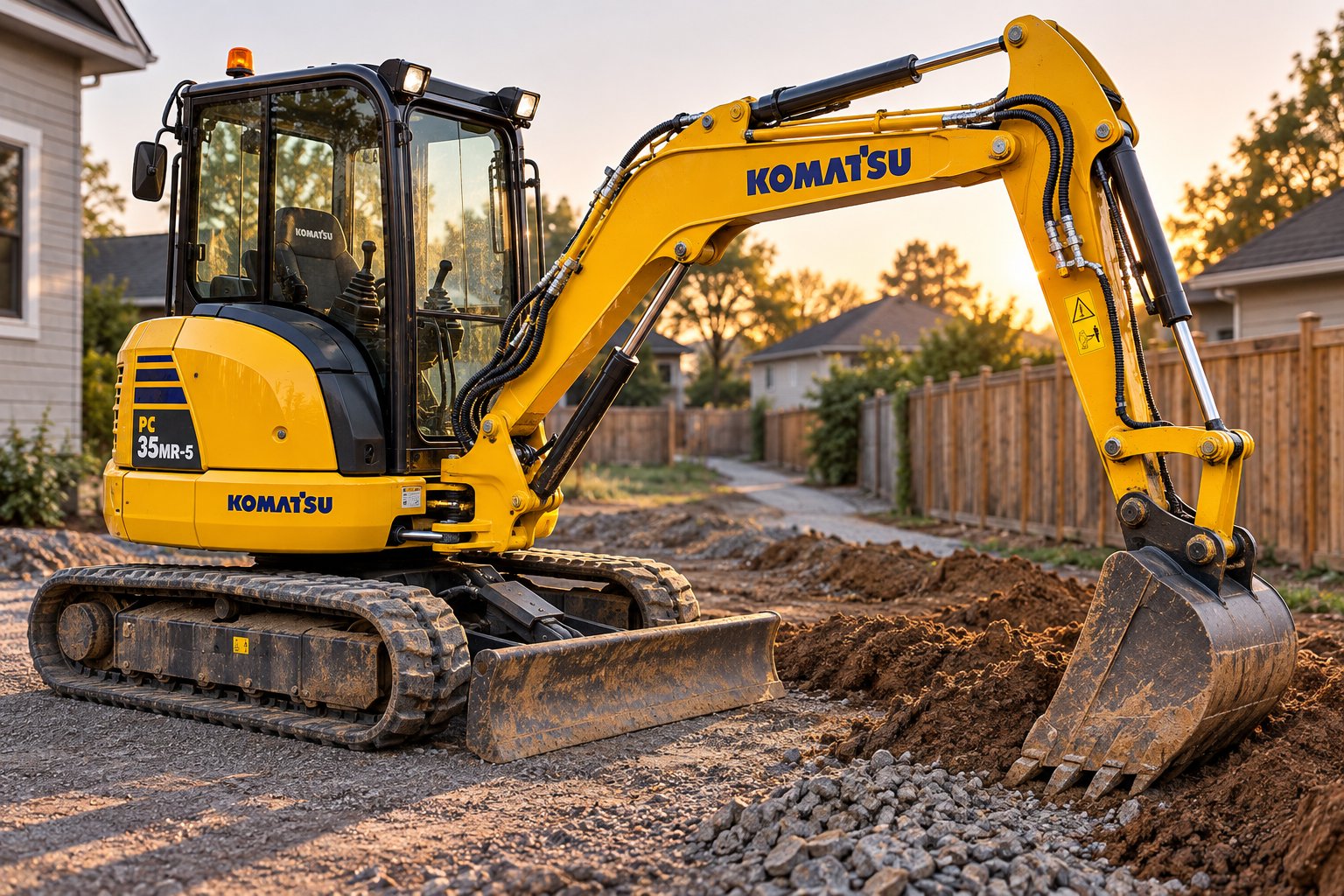
| PC55MR-5 | 11,354–11,618 lb (~5.5-ton class) | 12 ft 6 in | Reduced | General excavation, commercial landscaping |
| PC78US-11 | 17,438–18,188 lb (~7.8-ton class) | 15 ft 3 in | Ultra-Short | Heavy utility work, road-shoulder excavation |
| PC88MR-11 | 18,739–19,224 lb (~8.8-ton class) | 15 ft 0 in | Reduced | Light commercial, deep footings, storm-drain installation |
A few patterns stand out. Every model from the PC30MR upward features a reduced or ultra-short tail swing, which reflects the reality that most compact excavator work happens in tight quarters. The jump from the PC55MR to the PC78US is significant — operating weight nearly doubles, dig depth increases by almost three feet, and horsepower climbs from 38 to 68 hp. If you are browsing a Komatsu PC88 for sale, you are looking at the top of the compact range with performance that overlaps machines competitors like the Takeuchi TL8 track loader might complement on the same jobsite.
Rubber track dimensions also matter when evaluating listings. Smaller models in the 3- to 5-ton range commonly use narrower 350x4-style track configurations suited for turf-sensitive residential work, while upper-class compacts ride on wider tracks built for stability in loose or uneven soil. Similarly, tire-heavy mixed fleets sometimes pair wheeled equipment running 900/50 series tires with tracked mini excavators to cover different ground conditions on the same project.
Knowing where each model sits in the lineup is only half the equation. The real question is which size class matches your specific jobsite demands — a decision that depends on the type of work, access constraints, and the attachments you plan to run.
Matching Komatsu Mini Excavator Sizes to Your Jobsite Needs
A model number and a spec sheet are useful starting points, but they do not answer the question that actually drives every purchase: will this machine handle the work I need done? Matching a Komatsu mini excavator for sale to a specific application requires thinking in terms of size tiers, not individual models. Each tier unlocks a different set of capabilities, access advantages, and attachment options that shape how productive you will be on any given project.
Micro and Ultra-Compact Excavators for Tight Access Work
Machines under roughly 2 metric tons — the PC01 and PC18MR — exist for one primary reason: getting into spaces where nothing else fits. Picture a narrow side yard between two houses with a 30-inch gate opening, or an indoor demolition project on the ground floor of an occupied commercial building. These micro and ultra-compact Komatsu excavators weigh little enough to work on finished surfaces without causing structural damage and can often be transported in a standard pickup bed or small utility trailer.
The PC01, at around 700 pounds, is genuinely a one-person machine designed for shallow garden trenching and planting. The PC18MR steps up considerably, reaching approximately 7 to 8 feet of dig depth while keeping a minimum-radius tail swing that allows full rotation against a wall or fence line. Landscapers doing irrigation installs, plumbers running residential sewer laterals, and fence contractors digging post holes in tight backyards are the core audience here. These machines typically feature ROPS canopy protection rather than an enclosed cab, which keeps the profile compact and visibility excellent in confined settings.
Attachment options at this size class are straightforward but effective:
- Standard digging buckets (6-inch to 18-inch widths)
- Small auger drives for post holes and tree planting
- Compact breakers for light concrete removal
- Backfill blades for leveling and grading
Pin diameters on micro machines typically fall in the 25 to 45 mm range, and coupler standards like the S-40 are common for machines in the 1- to 4-ton class. Keep that in mind when evaluating listings — a machine bundled with attachments is only a bargain if those attachments actually fit.
Mid-Range Compacts for Versatile Jobsite Performance
The 2- to 6-ton range is where most buyers searching for a Komatsu mini excavator end up, and for good reason. Models like the PC26MR, PC30MR-5, PC35MR-5, PC45MR-5, and PC 55 MR-5 cover the broadest spectrum of everyday construction tasks without crossing into oversized territory. You can still trailer these machines behind a one-ton pickup (though the upper models push legal towing limits), and their reduced tail swings let them rotate freely on most residential lots.
Think about the typical jobs this tier handles: utility trenching at 8 to 12 feet deep, swimming pool excavation, foundation prep for room additions, drainage system installation, and commercial landscaping projects that demand more than a mini but less than a full-size excavator. A Compact Equipment Magazine spec guide notes that the PC45MR-5 and PC55MR-5 include features rarely found on compact equipment, such as Komtrax equipment monitoring, auto-idle shutdown, and economy modes — the same type of technology you might associate with Komatsu's larger machines, including their massive mining platforms like the PC2000.
Cab and operator comfort options diverge in this tier. Smaller models in the 2- to 3-ton range often come standard with a two-post ROPS/FOPS canopy, which provides rollover and falling-object protection while maximizing visibility and airflow. Larger models like the PC45MR and PC55MR offer the option of an enclosed, climate-controlled cab with Bluetooth audio systems, reduced operator noise levels, and high-resolution LCD monitors — a meaningful upgrade for operators putting in full shifts in extreme heat or cold.
Attachment compatibility expands significantly here:
- Digging buckets from 12-inch to 36-inch widths
- Hydraulic thumbs for material handling and debris sorting
- Standard-flow hydraulic breakers for concrete and rock
- Grapples for brush clearing and demolition cleanup
- Tilt buckets for finish grading and ditch shaping
- Compactor plate attachments for trench backfill
Auxiliary hydraulics are a key listing detail to watch for in this class. All Komatsu compacts from the PC30MR upward come with standard auxiliary hydraulic circuits, but the flow rate and whether the system is one-way or two-way determines which powered attachments the machine can run. A two-way auxiliary setup — standard on most current-generation models — allows the operator to control hydraulic thumbs, rotating grapples, and other bidirectional tools directly from the cab. Machines in the 5- to 9-ton range typically deliver 15 to 25 GPM of auxiliary flow, which supports most standard attachments but may fall short for high-demand tools like large breakers.
Upper Compact Class for Light Commercial Projects
The PC78US-11 and PC88MR-11 occupy the top of Komatsu's compact lineup, and they deliver performance that surprises operators accustomed to the lighter models. With operating weights pushing 18,000 to 19,000 pounds and dig depths exceeding 15 feet, these machines handle storm-drain installation, deep utility work, road-shoulder excavation, and foundation footings that would overwhelm anything in the mid-range tier.
Both models feature a 2.4-liter engine producing 68 net horsepower and run a closed-center load-sensing hydraulic system (CLSS) that delivers smoother, more responsive control under heavy loads. Enclosed cabs come standard at this size, complete with pattern-change valves that let operators switch between excavator and backhoe control patterns — a practical feature when different operators share the same machine across shifts. Blade configurations matter here too. The PC78US-11 offers a standard two-way blade plus an optional wider 8-foot-1-inch blade when equipped with 24-inch triple grouser tracks, giving the machine legitimate backfilling and rough-grading capability without needing a separate piece of equipment on site.
Attachment compatibility at this level opens up heavier tooling:
- Heavy-duty hydraulic breakers for rock and reinforced concrete
- Large-capacity buckets up to 42 inches for production digging
- Hydraulic thumbs with higher clamping force for pipe and debris handling
- Rotating grapples requiring dual-circuit auxiliary hydraulics
- Road-liner track shoes for working on paved surfaces without damage
A detail worth noting: the PC88MR-11 includes an electronic one-way/two-way selector switch and auxiliary hydraulics pressure control directly from the in-cab monitoring system. That means operators can fine-tune hydraulic output to match a specific attachment without leaving the seat — a level of control that competitors like the Takeuchi TL10 compact track loader simply cannot replicate in the same way, since loaders and excavators approach hydraulic management differently.
Maintenance access also improves dramatically in this upper tier. All filters on both the PC78US-11 and PC88MR-11 are centrally located and grouped together at ground level, which reduces service time and keeps scheduled maintenance from eating into productive hours.
Choosing the right size tier is a critical step, but it only captures one dimension of the buying decision. How does Komatsu's lineup actually compare against the other brands competing for the same buyer's dollar? That competitive context reveals strengths and trade-offs that raw specifications alone cannot show.
Komatsu vs Kubota, Cat, Bobcat, and Other Mini Excavator Brands
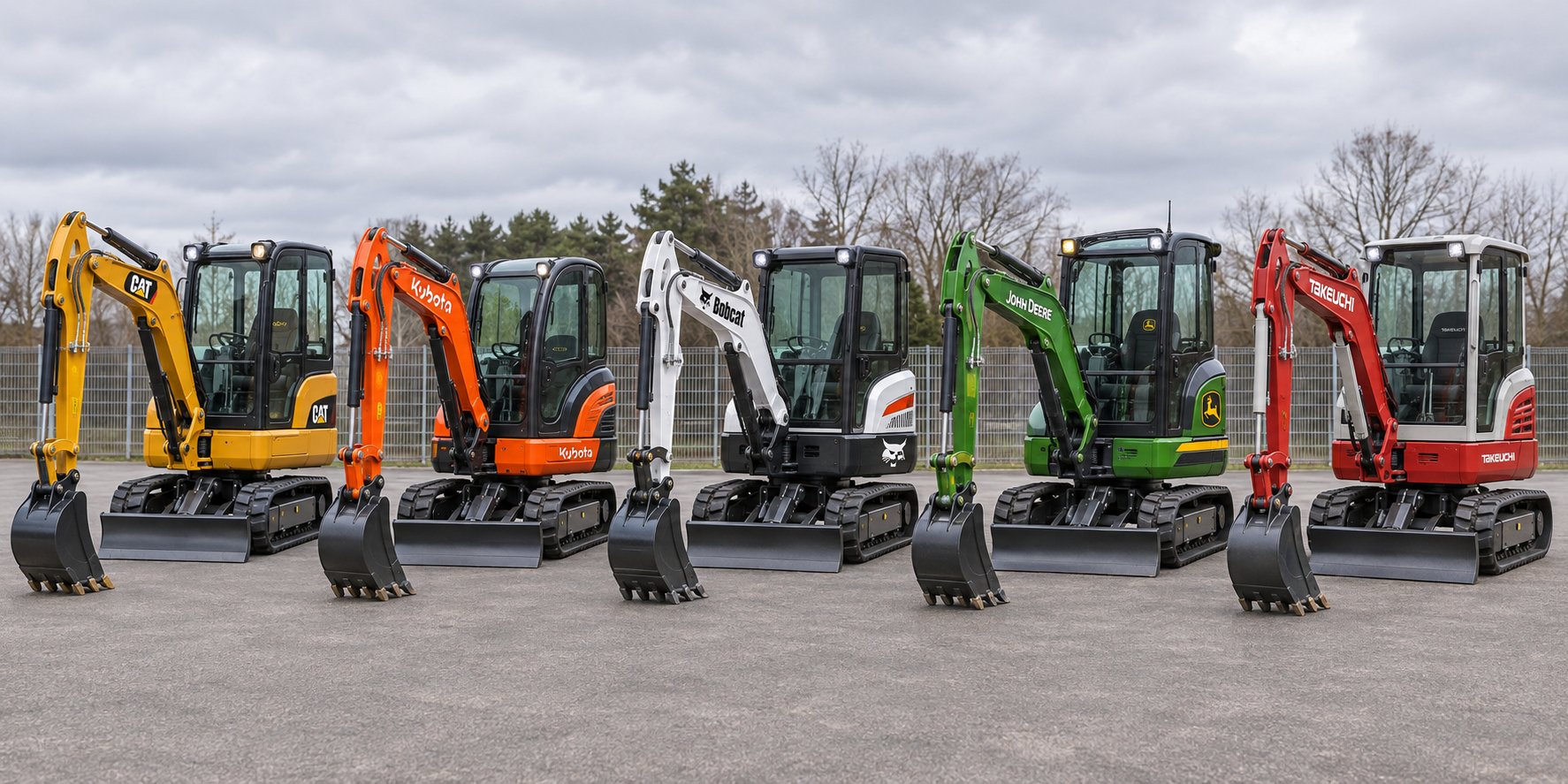
Specifications only tell part of the story. When you are comparing a Komatsu mini excavator for sale against machines from Kubota, Caterpillar, Bobcat, John Deere, or Takeuchi, the real differentiators are harder to measure — dealer responsiveness, resale trajectory, parts logistics, and how the hydraulics actually feel after nine hours in the seat. Every major brand builds a capable compact excavator, but the total ownership experience varies dramatically depending on your region, usage pattern, and fleet strategy.
How Komatsu Stacks Up Against Kubota and Caterpillar
Kubota and Caterpillar are Komatsu's most direct rivals in the compact excavator space. Kubota dominates the micro and small class, with 15 models spanning 1 to 8.5 metric tons and an engine program that powers not only its own machines but competitor brands as well. Industry resale tracking consistently shows well-maintained Kubota minis retaining 60% to 70% of their original price after three years — the strongest curve in the class. That resale edge matters if you plan to trade up within a few seasons.
Caterpillar counters with sheer dealer network scale. With the largest construction equipment dealer footprint in North America, a Cat shop with parts on the shelf is rarely more than a couple of hours away. Their Next Gen mini excavator line introduced Stick Steer joystick-controlled travel plus Cat Connect telematics as standard features, giving fleet managers real-time diagnostic data without aftermarket add-ons. The trade-off? Cat machines tend to run heavier and pricier than Komatsu or Kubota at the same tonnage class, which affects transport costs and performance on soft ground.
Komatsu occupies a distinctive middle ground. Its six-model compact lineup is smaller than both competitors, but each machine reflects a focused engineering philosophy: Komatsu-built engines across the range, tight tail swings on every model, and CLSS hydraulic systems that deliver smooth multifunction operation. Buyers who have run larger Komatsu equipment — or who also browse komatsu bulldozers for sale — appreciate the consistency in control feel and parts sourcing across the product line. Where Komatsu gives up ground is model variety. Kubota offers nearly three times as many compact excavator configurations, and Cat's 23-model range provides more granular sizing options.
Comparing Bobcat, John Deere, and Takeuchi Alternatives
Bobcat brings a massive attachment ecosystem and one of the deepest compact equipment dealer networks in the country. If you jump between skid steers and excavators throughout the day, Bobcat's control layout feels intuitive because it is designed for cross-platform operators. The current R-Series has closed quality gaps from earlier generations, though contractor surveys still show older Bobcat minis depreciating faster on the used market than top-tier brands. A Hyundai skid steer or compact excavator from their HX line, by contrast, often undercuts Bobcat on sticker price by 10% to 15% while offering one of the longest standard warranties in the class at three years and 3,000 hours.
John Deere's strength is its integrated dealer and financing ecosystem. Contractors already running green iron for ag or heavy earthmoving get streamlined financing, fleet-wide service agreements, and parts logistics that are hard to replicate across brands. Deere's 35 P-Tier ranks as the No. 2 top-selling mini excavator in the U.S. by new financed sales — and buyers looking for a John Deere 35G mini excavator for sale on the used market will find strong demand holding prices up. Deere's broader lineup also includes equipment like the Deere telehandler, so shops that standardize on green benefit from cross-training operators and consolidated parts inventories.
Takeuchi rounds out the competitive set with a fiercely loyal owner base and hydraulic performance that operators consistently praise as punching above its weight class. The TB260 at 5.5 metric tons competes directly with Komatsu's PC55MR-5, and Takeuchi's 16-model lineup offers more sizing flexibility. The catch is dealer coverage. In parts of the Midwest and rural South, the nearest Takeuchi dealer can be a long drive — a real concern when downtime costs you contracts.
| Brand | Resale Value Retention | Dealer Network Coverage | Parts Availability | Fuel Efficiency Reputation | Tight Tail Swing Options |
|---|---|---|---|---|---|
| Komatsu | Strong — consistent demand on secondary market | Wide across North America | Good — Komatsu-built engines simplify sourcing | High — auto-idle and E-mode standard | Every compact model features reduced or ultra-short swing |
| Kubota | Highest in class — 60–70% at 3 years | Very wide, especially in ag-heavy regions | Excellent — engines used across multiple brands | High — efficient diesel engines are a brand hallmark | U-series zero tail swing; K-series conventional |
| Caterpillar | Strong — premium pricing holds | Largest dealer footprint in North America | Best in class — parts on shelf at most dealers | Moderate — heavier machines consume more fuel | CR (compact radius) models available across lineup |
| Bobcat | Moderate — older models depreciate faster | Very wide for compact equipment | Good — strong aftermarket support | Moderate — competitive but not class-leading | Zero tail swing models available (E-series) |
| John Deere | Above average — strong in ag-focused markets | Wide — exceptional in rural and ag regions | Good — integrated dealer parts inventory | Moderate — AutoShift travel aids efficiency | Zero tail swing standard across lineup |
| Takeuchi | Strong — demand outpaces supply on used units | Smaller — gaps in Midwest and rural areas | Adequate — can be slower in thin-coverage regions | High — Tier 4 engines cut emissions significantly | Conventional and short radius models available |
The table makes one thing clear: no single brand wins across every category. Komatsu's advantage shows up most in hydraulic efficiency, consistent tail-swing design, and the reliability that comes from running proprietary engines rather than outsourcing powertrains. Where it concedes ground — model variety and sheer dealer count — may or may not matter depending on your location and the specific size class you need. The brands compete closest in that critical 3.5- to 5.5-ton sweet spot where contractors do the majority of their buying.
Brand reputation and competitive positioning set the stage, but the variable that ultimately separates a good deal from a costly mistake is price — and the factors that drive pricing in the used Komatsu market are rarely discussed honestly.
Pricing and New vs Used Buying Considerations
Brand comparisons help you narrow the field, but the moment you commit to a Komatsu mini excavator, a different question takes over: what should you actually pay? Dealers rarely explain why two seemingly identical machines carry wildly different price tags. The answer almost always traces back to a handful of variables that interact in ways most listings never disclose.
What Drives Komatsu Mini Excavator Pricing
The komatsu excavator price on any listing is not a single number driven by a single factor. It is the combined output of at least five major variables — and understanding each one gives you real leverage when negotiating.
Model size creates the baseline. A PC30MR-5 in the 3-ton class occupies a fundamentally different pricing tier than a PC88MR-11 pushing nearly 10 tons. As TOPOWER Machinery's buyer guide explains, larger machines require more materials, bigger engines, heavier hydraulic components, and wider undercarriage assemblies — all of which scale the price upward. Machine age layers on top of that, but not in a straight line. Industry appraisal data suggests compact excavators typically depreciate 8% to 12% annually during the first three years, then settle into a slower 5% to 8% annual decline. That curve means the steepest price drops happen early, creating a sweet spot for used buyers who target machines in the 3- to 5-year range.
Hour meter readings are the single most important pricing variable for used Komatsu minis. A 10-year-old machine with 800 hours often commands a higher price than a 5-year-old unit with 4,000 hours — because remaining useful life depends more on accumulated work cycles than calendar age.
Beyond hours and age, several other factors shift the asking price in ways that are easy to overlook when scanning listings:
- Attachment package — A Komatsu mini excavator bundled with a hydraulic thumb, multiple bucket widths, and a quick coupler can carry a 10% to 15% premium over a machine sold with a single standard bucket. A quality quick coupler alone adds meaningful resale value.
- Geographic market — Listing analysis across multiple states shows used compact excavator prices shifting 10% to 18% from one region to another. A machine priced competitively in Alabama may sell thousands higher in California where inventory is tighter. Searching "komatsu near me" is a natural starting point, but widening your radius often reveals better value even after factoring in transport costs.
- Hour meter thresholds — Machines under 1,500 hours with documented service logs are premium assets that hold close to their original depreciation curve. Units between 1,500 and 3,500 hours represent the highest-volume segment of the used market, where pricing is most competitive and negotiation room is widest. Above 5,000 hours, depreciation steepens by an additional 1% to 2% annually, and buyers should budget for potential undercarriage or hydraulic component replacement.
- Cab configuration — An enclosed climate-controlled cab versus an open ROPS canopy affects pricing noticeably, especially in regions with extreme weather where operators demand year-round comfort.
- Seasonal timing — Compact excavator listings tend to move faster in spring and summer when construction activity peaks. Machines listed in the fourth quarter may carry a 5% to 10% discount simply because demand softens heading into winter.
To assess whether any listed komatsu excavator price represents fair market value, pull comparable listings from at least three platforms — MachineryTrader, Equipment Trader, and auction results from sites like Ritchie Bros or Purple Wave. Compare only within the same model, similar hour ranges, and equivalent attachment packages. A machine priced 15% or more below its peer group almost always has an undisclosed reason, and finding that reason before you buy is the entire point of due diligence.
When Buying Used Makes More Financial Sense Than New
Not every buyer needs a factory-fresh machine. Seasonal contractors who run a Komatsu mini excavator 300 to 600 hours per year often find that buying used — targeting units in that 3- to 5-year sweet spot — cuts their acquisition cost dramatically while preserving most of the machine's productive life. As reference data from equipment appraisal sources confirms, used compact excavators can offer 30% to 50% savings compared to new while retaining 70% to 80% of useful operating life.
Komatsu's reliability reputation makes this math even more favorable. Because Komatsu builds its own engines across the compact range and equips every model with CLSS hydraulics designed for longevity, a well-maintained 4,000-hour Komatsu is generally a safer bet than a similar-hour machine from brands that rely on third-party powertrains. That reliability floor also applies to operators who cross-shop different equipment categories entirely — someone comparing a Komatsu skid steer or compact track loader against a mini excavator will notice that Komatsu's hydraulic engineering provides consistent performance even at higher hour counts.
Certified pre-owned (CPO) programs from authorized Komatsu dealers bridge the gap between the cost savings of used equipment and the warranty peace of mind of buying new. CPO machines typically undergo a multi-point dealer inspection, receive reconditioning on wear items, and come with limited warranty coverage that standard private-sale units do not. The premium over a comparable non-certified machine is real, but it buys predictability — and for a small operation where a single machine going down means lost revenue, that predictability has tangible dollar value.
Whether you buy new, certified pre-owned, or private-party used, the purchase price is only the starting number. Knowing what to physically inspect on a used Komatsu — and which red flags justify walking away — separates confident buyers from expensive regrets.
How to Inspect a Used Komatsu Mini Excavator Before You Buy
Pricing research gets you to the right ballpark, but the physical inspection is where confident buyers separate from costly regrets. A fresh coat of paint and a clean listing photo tell you absolutely nothing about the components that carry the biggest repair bills — the undercarriage, hydraulic system, and structural linkages. Whether you are evaluating a 3-ton PC30MR on a local dealer's lot or a PC78US listed halfway across the country, a systematic inspection routine protects your investment better than any warranty or seller promise ever could.
The process below follows the same sequence a professional appraiser uses when evaluating equipment. It works for any Komatsu mini excavator for sale, from micro-class machines to the upper compact tier, and it applies equally to larger models like the Komatsu PC138 or even full-size units. Plan to spend one to two hours on a thorough walk-around plus a cold-start test operation. If a seller rushes you through this timeline, that urgency is itself a red flag.
Undercarriage, Hydraulics, and Structural Inspection Checklist
Imagine walking up to a machine that looks great from twenty feet away. The paint is decent, the cab glass is intact, and the seller seems straightforward. None of that matters until you get underneath and start checking the parts where the real money hides. The undercarriage alone can account for roughly half of a tracked excavator's total lifetime maintenance cost. On a compact Komatsu in the 5- to 8-ton class, a full undercarriage replacement can run several thousand dollars — enough to erase whatever discount you thought you were getting on a used machine.
Work through the following inspection sequence in order. Each step builds on the previous one, and skipping ahead means you risk missing context that changes how you interpret later findings.
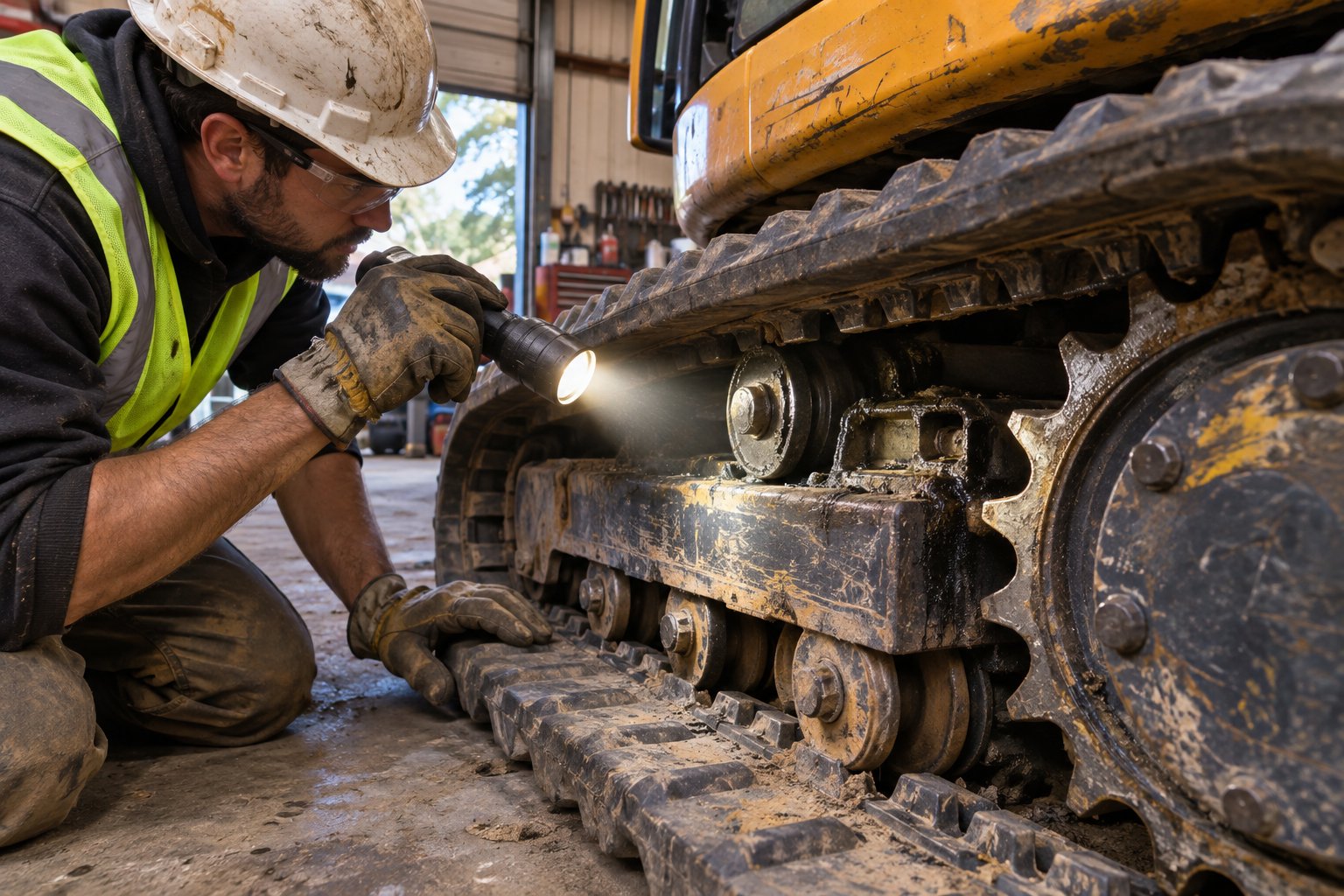
- Undercarriage condition. Start on your hands and knees with a flashlight. Check track tension by pressing down on the top run of the track between the front idler and the first upper roller — a properly tensioned rubber or steel track should deflect about one to two inches. Examine the sprocket teeth for sharpening or hooking, which signals significant wear. Inspect each bottom roller and carrier roller for oil seepage, flat spots, or frozen rotation. On rubber-track models common in the 3- to 5-ton Komatsu range, look for cracking on the inner surface, missing lugs, and steel cord exposure. A track that looks tight but has fewer links than the factory count means someone removed a link to mask internal chain stretch — a classic trick that hides thousands of dollars in wear.
- Hydraulic system. Check every hose for cracking, abrasion, bulging, and wet spots at the fittings. Wipe down each cylinder rod on the boom, arm, bucket, and blade cylinders, then operate the machine through a full cycle and re-inspect for fresh oil seepage. Pull the hydraulic fluid dipstick or check the sight glass: clean fluid should be amber or light gold. Milky or foamy hydraulic fluid indicates water contamination — a condition serious enough to walk away from immediately. Perform a drift test by raising the boom with a loaded bucket, shutting the engine off, marking the cylinder rod position, and waiting five minutes. Minor settling is normal. Visible rod retraction of more than a couple of inches suggests worn packing or bypassing valves, and the repair cost should be factored into any offer.
- Boom and arm structural integrity. Follow the entire length of the boom and stick, paying close attention to weld seams, especially at the cylinder mounting points and the junction where the boom connects to the house. Any plate welded over a crack — sometimes called a "fish plate" — is evidence of stress beyond the machine's design limits. According to experienced appraisers, cracks can reduce a machine's value by approximately 20%, and on compact excavators, many professionals recommend walking away rather than attempting a price negotiation around structural repairs. Check pin and bushing play at every linkage point by having someone in the cab apply and release bucket down-pressure while you watch each connection for excessive movement. Loose bushings indicate hard use and insufficient greasing — a red flag about the machine's overall maintenance history.
- Cab and controls. Sit in the operator's seat and assess the condition honestly. Torn seat fabric, heavily worn armrests, and smooth-polished joystick grips suggest far more operating hours than a lightly used machine should show. Test every joystick through its full range of motion — boom, arm, bucket, swing, and travel — and feel for dead spots, hesitation, or inconsistent response. Check that all gauges, warning lights, and the LCD monitor power on correctly. On enclosed-cab models, open and close the door, verify the HVAC system, and look for cracked or replaced glass. Bent ROPS frames or doors that do not align properly can indicate the machine has tipped over — a disclosure the seller should volunteer, and a significant price reduction if they did not.
- Engine compartment. Open all service panels and start your assessment cold, before the engine has run. Pull the oil dipstick and check for color and consistency: dark but smooth oil is normal between service intervals, but gritty texture or a milky sheen signals internal problems. Verify coolant level and look for oil sheens floating on the surface of the coolant reservoir, which indicate a potential head gasket issue. Start the engine cold and watch the exhaust. A brief puff of white or light smoke on a cold morning is typical for a diesel. Persistent blue smoke means the engine is burning oil from worn rings or valve seals. Sustained white exhaust points to coolant entering the combustion chamber. Thick black smoke suggests fuel delivery or air intake problems. Any of these conditions lasting more than the first 30 seconds of operation deserves serious scrutiny and likely a professional engine assessment before committing to purchase.
- Hour meter context. The number on the hour meter is meaningless without context. A mini excavator averaging 400 to 600 hours per year is working at a typical rate for contractor-owned equipment. Machines showing under 200 annual hours may have sat idle for extended periods, which introduces its own problems — dried seals, stale fluids, and rodent damage to wiring harnesses. Units logging over 1,000 hours annually have been worked hard, and you should expect component wear to reflect that pace. For compact excavators under 10 tons, industry guidance treats 5,000 to 8,000 hours as high, though well-maintained Komatsu minis regularly operate beyond that range. The critical move here is cross-referencing the hour meter against documented service records. A machine showing 2,500 hours with a full binder of oil change receipts, filter logs, and dealer service stamps is a far safer purchase than a 900-hour unit with no records at all.
Reading the Hour Meter and Maintenance Records in Context
Hour meters can be swapped or rolled back, and it happens more often than most buyers realize. The telltale signs are inconsistencies: heavily worn pedal rubber and a pristine meter face, seat foam compressed far beyond what the stated hours would produce, or joystick grips polished smooth on a machine supposedly under 1,000 hours. On newer Komatsu models equipped with Komtrax telematics, you can request an ECM (Engine Control Module) hours report from an authorized dealer to verify the mechanical meter reading. If the two numbers diverge significantly, you are looking at a tampered machine — walk away.
Service records function as the machine's biography. They tell you not just what was done, but how consistently the previous owner invested in upkeep. Look for regular oil and filter changes at Komatsu's recommended intervals, hydraulic fluid replacements, and any dealer-performed inspections with condition notes. A gap of more than 500 hours between documented services should raise questions. Complete absence of records should prompt you to either commission a third-party inspection or move on to the next listing entirely.
A well-documented 4,000-hour Komatsu mini excavator with dealer-stamped service records is almost always a safer investment than a low-hour machine with no maintenance history — because in used equipment, silence about the past rarely means nothing happened.
Red flags versus negotiation leverage — knowing the difference saves you from both overpaying and walking away from a fair deal. Milky hydraulic fluid, re-welded boom cracks, and a confirmed hour meter discrepancy are walk-away conditions. These point to fundamental mechanical or integrity issues that no price discount adequately compensates. On the other hand, worn track pads with measurable remaining life, minor hydraulic hose seepage at fittings, and normal pin-and-bushing play proportionate to the stated hours are negotiation leverage. You price the repair cost, subtract it from the asking price, and present a documented counteroffer.
This same inspection discipline applies across the broader Komatsu product range. Buyers evaluating Komatsu dozers or wheel loaders on the used market encounter identical principles — undercarriage wear, hydraulic health, and service documentation remain the three pillars of any pre-purchase evaluation, regardless of machine type or size class.
A thorough inspection gives you the confidence to commit or the evidence to walk. The remaining variable is where you source the machine in the first place — and each purchasing channel carries its own risk profile, pricing dynamics, and level of transparency that directly affects how much inspection access you actually get.
Where to Find Komatsu Mini Excavators for Sale
Knowing how to inspect a machine is only useful if you can find the right one in the first place. The channel you buy through shapes everything — the price you pay, the inspection access you get, the warranty options on the table, and the risk level you absorb. Most buyers default to whichever listing pops up first on Google, but that convenience-driven approach almost always leaves money on the table. A smarter strategy is to understand what each purchasing channel actually offers — and what it hides — before committing your search to a single path.
Authorized Dealers vs Auction Houses vs Private Sales
Authorized Komatsu dealers are the most controlled buying environment. You get access to certified pre-owned programs, factory-backed warranty options, in-house financing, and service departments staffed by technicians trained specifically on Komatsu equipment. The trade-off is price. Dealer overhead, reconditioning costs, and margin expectations mean you will pay a premium compared to other channels — sometimes 15% to 25% above equivalent private-sale pricing. That premium buys predictability, though. For a small contractor whose business depends on a single machine staying productive, that insurance has real financial value.
Auction houses — Ritchie Bros., Purple Wave, IronPlanet — sit at the opposite end of the spectrum. Competitive bidding can produce prices well below dealer retail, and the sheer volume of equipment moving through major auctions means you are more likely to find niche configurations or low-hour units that never hit dealer lots. The risk, however, is significant. As Vera Equipment notes, nearly every auction operates on a "buyer beware" or "sold as-is" basis, with terms and conditions that indemnify the auction house from responsibility for machine condition. Buyer premiums ranging from 5% to 12% plus transportation costs further erode the apparent savings. A machine that looked like a steal at hammer price can end up within striking distance of dealer pricing once you add fees, transport, and the cost of repairs the pre-auction photos concealed.
Private sales between individual owners represent the lowest pricing tier and the highest risk. You are negotiating directly with someone whose motivation to sell might include mechanical problems they are not disclosing. There is no warranty, no recourse, and rarely any documented service history. That said, private-party purchases can deliver exceptional value when the seller is a retiring contractor liquidating well-maintained equipment — the kind of operator who kept a binder of service records and changed oil on schedule. The challenge is separating those genuine opportunities from the listings designed to unload someone else's problem.
A common trap — one that industry sourcing advisors consistently warn against — is comparing one dealer quote against one auction listing and calling that "market research." The channel itself can distract from the machine. Fit, condition, application, and total landed cost still matter more than where the equipment is sold.
Online Marketplaces and International Equipment Dealers
Online listing platforms have fundamentally expanded the buyer's reach. MachineryTrader, Equipment Trader, and Machinery Pete aggregate thousands of listings from dealers and private sellers across North America, letting you compare pricing on a Komatsu PC55 for sale in Texas against one listed in Ohio without leaving your desk. These platforms provide filters for model, hours, year, and price range that make initial screening efficient. The critical step most buyers skip is verifying dealer credibility before engaging — checking business registration, reading reviews from past transactions, and confirming that the listed machine actually exists in the seller's inventory rather than being a "bait" listing designed to generate phone leads.
Virtual walkarounds are increasingly standard among reputable online sellers. As Volvo CE's guide to evaluating used equipment online describes, video-call inspections allow a remote buyer to direct a technician through a detailed machine walk-around in real time — covering undercarriage condition, hydraulic seepage, cold-start exhaust quality, and cab wear — without traveling to the yard. This technology has made remote purchasing significantly safer, though it does not fully replace hands-on inspection for high-value transactions.
Specialized international dealers represent a channel that most domestic buyers overlook entirely. These firms source used equipment from global markets — often Japan, where machines tend to accumulate fewer hours due to strict equipment retirement cycles — and sell directly to contractors worldwide. For example, JIUHONG Machinery lists a used Komatsu PC55 excavator, a 5.5-ton compact machine well-suited for landscaping and general excavation work, at a price point worth comparing against domestic dealer and auction options. Requesting a quote from specialized dealers like JIUHONG gives you a concrete data point for your multi-channel price comparison — and because these dealers often carry inventory across multiple brands and categories (the same marketplaces where you find a Komatsu dozer for sale or a used dozer for sale often stock compact excavators), they can sometimes offer package pricing or flexible terms that single-brand domestic dealers cannot match.
International purchases do carry additional considerations. Shipping logistics, import duties, and the lead time between payment and delivery can add weeks to your timeline compared to driving a machine off a local dealer's lot. Equipment sourced from overseas markets may also use different hydraulic fitting standards or electrical configurations, so confirming compatibility with domestic attachments — particularly if you are running specialized tooling on larger or mixed 900 / 50 class tire-equipped fleet vehicles alongside tracked minis — is a step that should happen before you wire any funds.
| Purchasing Channel | Typical Price Level | Warranty Availability | Inspection Opportunity | Financing Options | Risk Level |
|---|---|---|---|---|---|
| Specialized International Dealers (e.g., JIUHONG) | Competitive — often below domestic dealer retail | Varies by dealer; some offer limited coverage | Virtual walkaround and detailed photo/video reports; request condition documentation | Wire transfer common; some offer payment terms | Moderate — verify dealer reputation and shipping logistics |
| Authorized Komatsu Dealers | Highest — includes reconditioning and margin | Strong — CPO warranty and extended options available | Full on-site inspection with dealer technician support | In-house dealer financing, leases, and rent-to-own | Lowest — most transparent and accountable channel |
| Online Marketplaces (MachineryTrader, Equipment Trader) | Mid-range — wide variance by seller type | Depends on whether listing is dealer or private | Varies — request virtual walkaround or schedule on-site visit | Third-party lenders; some dealers offer direct financing | Moderate — verify seller credibility before engaging |
| Auction Houses (Ritchie Bros., Purple Wave) | Below retail — but add buyer premiums and fees | None — sold as-is with no warranty | Limited — pre-auction inspection windows are short | Some auctions partner with lenders; cash or wire typical | High — buyer beware terms; condition not guaranteed |
| Private Sales (Owner-to-Owner) | Lowest asking prices — strongest negotiation room | None — no recourse after sale | Fully dependent on seller cooperation | Buyer arranges independently; no seller-backed options | Highest — no documentation or condition guarantees |
The table reveals a clear pattern: lower price tiers correlate directly with higher risk and less buyer protection. There is no universally "best" channel — the right choice depends on your risk tolerance, timeline, mechanical confidence, and whether you value warranty coverage enough to pay the premium it commands. Many experienced buyers searching for a Komatsu dozer or compact excavator work multiple channels simultaneously, pulling quotes from authorized dealers, bookmarking auction lots, and requesting pricing from international specialists, then comparing the total landed cost across all options before committing.
Whichever channel delivers your machine, the purchase price is only the first line item. The true cost of owning a compact excavator — fuel, maintenance, insurance, transport, and financing charges — accumulates quietly over years and ultimately determines whether your investment was a smart one or just a discounted gamble.
Financing Options and Total Cost of Ownership
The sticker price on a Komatsu mini excavator for sale is deceptively simple. It is one number on one line — and it represents roughly a third of what you will actually spend over the machine's useful life. Fuel, maintenance, insurance, transport, and financing interest accumulate silently over years, and buyers who ignore those costs end up surprised when the "affordable" machine turns expensive long before it wears out. A clear-eyed look at total cost of ownership, paired with a smart financing strategy, is what separates profitable equipment investments from ones that quietly drain your cash flow.
Total Cost of Ownership Beyond the Purchase Price
Think about it this way: a 3-ton compact excavator purchased new for around $35,000 does not cost $35,000 to own. Five-year TCO projections for a mid-tier compact excavator running approximately 700 hours per year show the real figure landing closer to $89,000 to $95,000 — with the purchase price accounting for only about 35% of that total. The remaining 65% flows into fuel, scheduled maintenance, unplanned repairs, insurance premiums, transport fees, and attachment additions. Subtract estimated resale value and the net cost still lands in the $62,000 to $74,000 range. That is the number you should budget against, not the dealer's asking price.
Here is how those costs typically break down for a contractor running an excavator Komatsu in the compact class:
Fuel consumption is the single largest ongoing expense, typically representing 20% to 25% of five-year TCO. A compact Komatsu mini excavator in the 3- to 5-ton range burns roughly 1 to 1.5 gallons of diesel per hour under normal working conditions. At current diesel prices, that translates to $6 to $10 per operating hour — or $19,000 to $28,000 over five years at moderate utilization. Komatsu's auto-idle shutdown and economy mode features help here, and independent fleet data confirms that fuel-efficient machines with intelligent power management deliver 15% to 25% better economy than older or less sophisticated competitors. Over a five-year ownership window, that efficiency gap adds up to thousands of dollars in real savings.
Scheduled maintenance and wear parts account for another 15% to 20% of TCO. Oil and filter changes, hydraulic fluid replacement, greasing intervals, and air filter service follow Komatsu's recommended schedules — typically every 250 to 500 hours depending on the component. Budget $2,000 to $5,000 per year for a compact machine at normal utilization levels. Undercarriage components — track pads, rollers, sprockets, and idlers — represent the most expensive maintenance category on any tracked excavator and can spike a single year's costs if a full replacement is needed. Premium brands like Komatsu tend to sit at the lower end of annual maintenance costs because their proprietary engines and CLSS hydraulics are designed for extended service intervals.
Insurance adds $600 to $1,500 per year depending on machine value, coverage type, and your claims history. This is a fixed cost that ticks regardless of whether the machine is working or sitting in your yard, which makes it particularly punishing for low-utilization owners. Over five years, insurance alone contributes $3,000 to $7,500 to your total ownership cost.
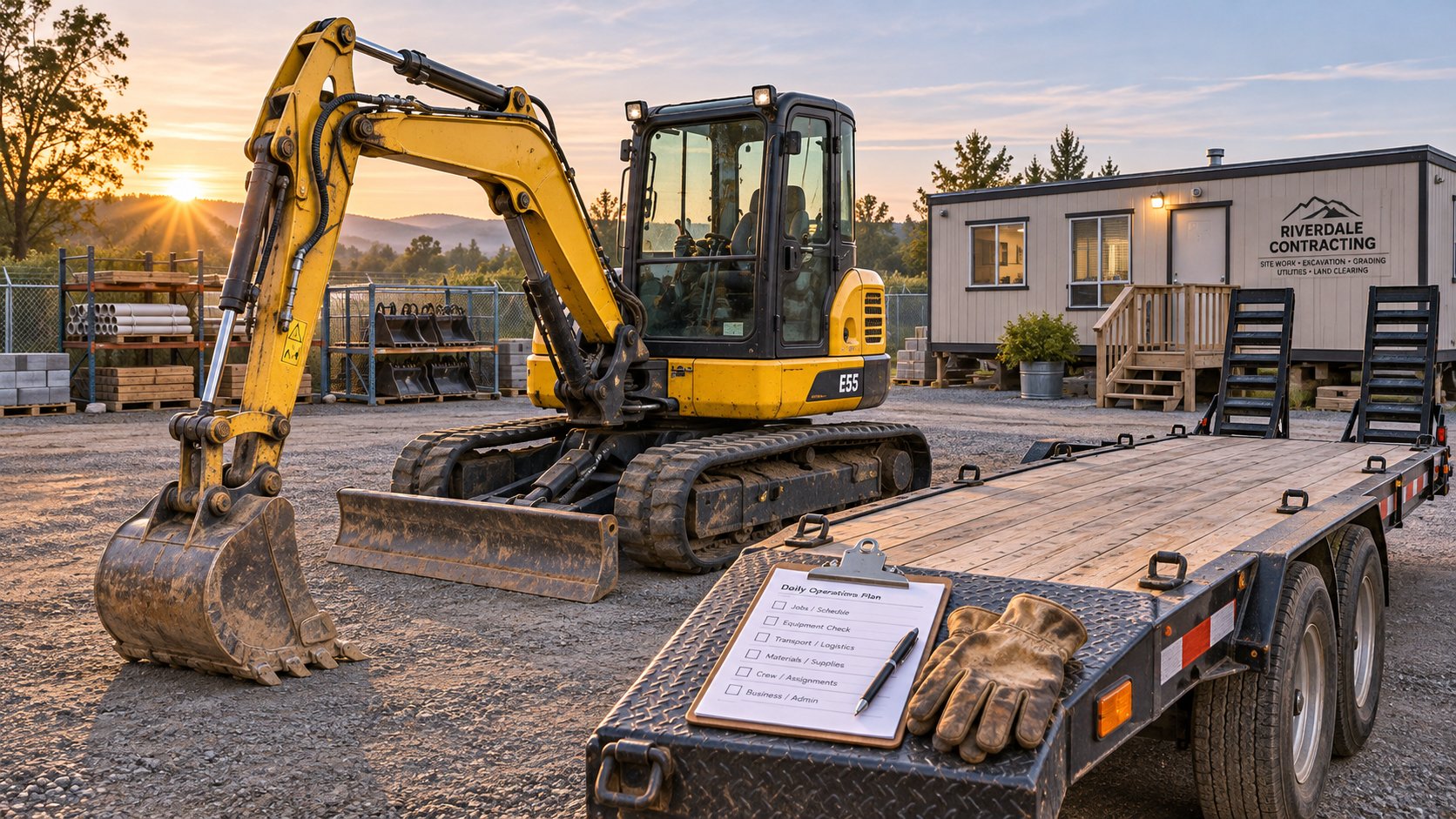
Transport and delivery expenses catch many first-time buyers off guard. Moving a compact excavator costs $100 to $300 per mobilization, depending on distance and whether you own a suitable trailer. A contractor working three different sites per month spends $300 to $900 monthly just getting the machine where it needs to be. Over five years, transport costs can reach $18,000 to $54,000 — potentially enough to purchase a second machine. Owning your own tilt-deck trailer reduces per-move costs but adds its own insurance, registration, and maintenance burden.
Unplanned repairs and attachment additions round out the picture. A hydraulic hose failure, a cracked bucket tooth, a wiring harness chewed by rodents during winter storage — these events do not appear on any purchase order, but they appear on your bank statement. Smart owners budget an additional $4,000 to $10,000 over five years for repairs. And then there is attachment creep: you buy the machine with a standard bucket, but within a year you have added a hydraulic thumb, a set of JRB attachments, a second bucket width, and maybe an auger — easily $5,000 to $8,000 that was never part of the original plan.
The purchase price is only the entry fee. For a compact excavator Komatsu operated at typical contractor hours, the real five-year cost is roughly two to two-and-a-half times the sticker price — and understanding that ratio before you buy is the difference between an investment and a money pit.
Financing, Leasing, and Rent-to-Own Pathways
Few buyers write a check for a Komatsu mini excavator outright, and they should not have to. Several financing structures exist, each designed for a different buyer profile and cash-flow situation. The key is matching the structure to your business reality — not defaulting to whatever the dealer puts in front of you first.
Equipment financing data from Five West Financial shows that most excavators are financed through either an equipment finance agreement (EFA) over 24 to 84 months or a $1 buyout lease over 24 to 60 months, with qualifying deals up to $500,000 decided on the application alone — no tax returns or financial statements required for established businesses. For a new compact mini priced around $65,000, monthly payments land around $1,349 over 60 months at an assumed 9% rate. Used units in the $25,000 to $45,000 range bring payments down to roughly $795 to $1,120 per month depending on term length.
Here are the most common structures and who they fit best:
- Equipment Finance Agreement (EFA) — You make fixed monthly payments over 24 to 84 months and own the machine outright at the end. Best for established contractors who plan to keep the excavator long-term and want to build equity. EFAs also qualify for Section 179 tax deductions, allowing businesses to write off the full purchase price in the year the machine is placed in service.
- $1 Buyout Lease — Functions similarly to an EFA with payments structured over 24 to 60 months, and the title transfers to you for one dollar at lease end. Ideal for buyers who want ownership but prefer lease accounting treatment. Monthly payments land close to EFA levels.
- Fair Market Value (FMV) Lease — Lower monthly payments than an EFA or $1 buyout because you are not financing the full residual value. At lease end, you can purchase the machine at fair market value, return it, or roll into a new lease. This works well for contractors who upgrade equipment every 3 to 4 years and do not want to manage resale themselves. Payments are deducted as rent rather than depreciation.
- Rent-to-Own Programs — Some dealers and specialty lenders offer rental arrangements where a portion of each payment applies toward eventual purchase. These suit new business owners or homeowners tackling a large project who want to test whether ownership makes sense before fully committing. Terms and conversion rates vary widely, so read the fine print carefully.
- Bank or Credit Union Equipment Loans — Traditional lenders offer competitive rates, often 1% to 3% below specialty equipment finance companies, but require more documentation — tax returns, profit-and-loss statements, and sometimes collateral beyond the machine itself. Best for established businesses with strong banking relationships and the patience for a slower approval process.
- Dealer Financing — Authorized Komatsu dealers frequently offer manufacturer-subsidized rates or promotional terms on new inventory. These programs can undercut third-party lenders on rate, especially during seasonal promotions or model-year changeovers. The limitation is that dealer financing typically applies only to new or certified pre-owned equipment purchased through that specific dealer — it will not help you finance a Komatsu loader, a used auction find, or a private-party purchase.
Startups face a narrower path. Startup equipment financing programs typically require a personal credit score of 700 or higher, relevant industry experience, working capital remaining after the purchase, and often 10% to 20% down. Businesses under one year old are underwritten primarily on the owner's personal financial profile rather than business revenue. The practical advice: start with one machine, pay it cleanly for a year to build a commercial credit track record, and then expand.
Komatsu's strong resale value retention directly influences financing decisions at every stage. Lenders evaluate collateral risk when setting terms, and a brand with proven secondary-market demand — like Komatsu — typically qualifies for longer terms, lower down payments, and better rates than equipment from brands with weaker resale trajectories. This same resale strength shapes your exit strategy. At the end of a 60-month EFA, a well-maintained Komatsu compact excavator commonly retains 40% to 55% of its original price, which means you are sitting on a meaningful asset whether you plan to keep running it, trade up, or sell outright. That retained value also makes FMV lease-end purchase options more attractive — the buyout price at lease maturity often represents genuine market value rather than an inflated residual designed to trap you into returning the machine.
One financing detail worth highlighting: attachments, trailers, and add-ons can often be bundled into the same finance agreement as the excavator itself. A hydraulic thumb, a set of extra buckets, and even the tow trailer can ride on the same monthly payment — though fast-wearing attachments like breakers should ideally be financed on a shorter term than the machine to avoid paying interest on a tool that may need replacement before the loan matures.
With a realistic picture of total ownership costs and a financing structure matched to your business profile, the final step is assembling all of these decisions — model selection, price benchmarking, inspection, sourcing, and financing — into a single actionable purchase plan.
Making Your Final Komatsu Mini Excavator Purchase Decision
Research without action is just reading. You now have the model knowledge, pricing context, inspection skills, channel awareness, and financing literacy to buy a Komatsu mini excavator for sale with genuine confidence — but only if you organize those pieces into a deliberate sequence. Skipping steps or tackling them out of order is how contractors end up overpaying for the wrong machine through the wrong channel. The framework below converts everything covered in this guide into a linear action plan you can follow from first phone call to signed paperwork.
Building Your Purchase Decision Checklist
Every successful equipment purchase shares the same DNA: clear requirements defined before browsing begins, disciplined comparison across multiple options, and financing locked down before negotiation starts. Whether you are after a micro-class Komatsu PC01 for backyard access work or a PC88MR-11 for commercial footings, the process is identical. The only variables are scale and budget.
Resist the temptation to start with listings. Start with your jobsite. What are you digging, how deep, and how tight is the access? Those three answers eliminate half the lineup instantly and keep you from falling in love with a machine that does not fit your reality. A contractor running storm-drain projects needs the dig depth of a PC78US or PC88MR, not the compact charm of a 3-ton unit. Conversely, a landscaper working residential backyards gains nothing from an 8-ton machine that cannot fit through a fence gate.
Taking the Next Step Toward Your Komatsu Mini Excavator
Follow this sequence in order. Each step depends on the one before it, and jumping ahead — especially to negotiation — before completing your groundwork costs you leverage and clarity.
- Define your primary use case and required dig depth. List the three most common jobs the machine will perform. Match those jobs to the size tiers outlined earlier: micro and ultra-compact for tight residential access, mid-range compacts for general excavation and utility trenching, and upper compact class for commercial-grade projects. If your work occasionally requires larger equipment — something in the PC138 class or even a full-size unit like a PC490 — renting for those outlier jobs is almost always smarter than oversizing your owned machine.
- Narrow down to two or three model candidates. Use the model comparison table from earlier in this guide. Factor in tail swing configuration, cab type, and auxiliary hydraulic capability. If you also run a Komatsu front end loader or other Komatsu equipment in your fleet, staying within the brand simplifies parts sourcing, operator training, and dealer service relationships.
- Set a realistic budget that includes transport and attachment costs. Remember, the purchase price represents roughly one-third of your five-year total cost of ownership. Budget separately for delivery, a hydraulic thumb or additional buckets, insurance, and a maintenance reserve. If you are financing, use the payment structures outlined in the previous section to back-calculate your maximum purchase price from a comfortable monthly payment — not the other way around.
- Source listings from multiple channels for price comparison. Pull at least three to five comparable listings from different purchasing channels. Check authorized dealer inventory, scan MachineryTrader and Equipment Trader, review upcoming auction lots, and request quotes from specialized dealers. Contractors evaluating compact 5.5-ton class machines like the Komatsu PC55, for instance, can request a purchase quote from JIUHONG Machinery as one data point in their multi-channel comparison alongside domestic dealer pricing and auction estimates. The goal is not to find the cheapest listing — it is to establish what fair market value actually looks like across channels so you can spot both overpriced inventory and suspiciously low offers.
- Conduct a thorough inspection or request detailed condition reports. For any machine you are seriously considering, walk through the full inspection sequence covered earlier: undercarriage, hydraulics, boom and arm integrity, cab and controls, engine compartment, and hour meter verification. Remote purchases should include a live video walkaround at minimum and an independent third-party inspection report at best. Machines in the PC138 class and above justify the added expense of a professional appraisal simply because the dollar amounts at stake are higher. No listing photo or seller description substitutes for hands-on verification.
- Secure financing pre-approval before negotiating. Walk into any negotiation — whether with a dealer, an auction house, or a private seller — with a pre-approved financing commitment in hand. Pre-approval establishes your ceiling, demonstrates seriousness to the seller, and prevents you from making emotional decisions under pressure. Compare at least two financing sources: your bank or credit union against a specialty equipment lender or dealer financing program. Even a half-point rate difference on a $40,000 machine saves over $1,000 across a 60-month term.
The best equipment purchase is not the cheapest one — it is the one where you controlled every variable before signing, from model selection to inspection to financing terms.
Komatsu's compact excavator lineup earns its reputation through engineering consistency, hydraulic refinement, and resale strength that few competitors match across the full size range. But reputation alone does not protect your investment. The framework above does. Define your work, match it to a machine, verify the machine's condition, compare pricing across channels, and lock in financing that fits your cash flow. Follow that sequence — whether you are buying your first mini excavator or adding your fifth — and the decision makes itself.
Frequently Asked Questions About Komatsu Mini Excavators for Sale
1. How much does a used Komatsu mini excavator cost?
Used Komatsu mini excavator pricing depends heavily on model size, hour meter reading, age, attachment package, and geographic market. Machines under 1,500 hours with documented service records command premium pricing, while units above 5,000 hours see steeper depreciation. A 3- to 5-year-old compact Komatsu in the 3- to 5-ton range can offer 30% to 50% savings compared to new while retaining most of its productive life. Always compare listings across at least three platforms — dealer inventory, online marketplaces, and auction results — to establish fair market value before negotiating.
2. What do the letters and numbers in Komatsu excavator model names mean?
Komatsu uses a consistent naming system across its excavator lineup. The 'PC' prefix stands for Power Crawler, referring to the tracked undercarriage. The number that follows approximates the machine's tonnage class — a PC55 weighs roughly 5.5 metric tons. Suffixes carry important meaning: 'MR' indicates minimum radius (tight tail swing), 'US' means ultra-short tail swing, and the dash number (e.g., -5 or -11) identifies the generation. Higher generation numbers reflect newer technology, better fuel efficiency, and improved operator comfort features.
3. What is the best size Komatsu mini excavator for residential landscaping?
For most residential landscaping work, the 2- to 5.5-ton range covers the broadest spectrum of tasks. Models like the Komatsu PC30MR-5 through PC55MR-5 handle utility trenching, drainage installation, pool excavation, and grading while still fitting on a standard trailer. If your projects involve extremely tight access — narrow side yards or gated backyards — the micro-class PC18MR at roughly 1.8 tons can fit through spaces larger machines simply cannot reach. Contractors evaluating the 5.5-ton class can compare options like the Komatsu PC55, available through dealers such as JIUHONG Machinery, against local inventory to find competitive pricing.
4. How many hours is too many on a used Komatsu mini excavator?
For compact excavators under 10 tons, industry guidance treats 5,000 to 8,000 hours as high mileage, though well-maintained Komatsu minis regularly operate beyond that range thanks to their proprietary engines and durable CLSS hydraulic systems. The hour reading matters less than the maintenance history behind it. A 4,000-hour machine with complete dealer-stamped service records is typically a safer purchase than a 900-hour unit with no documentation. Cross-reference the hour meter against physical wear indicators — pedal condition, seat compression, and joystick wear — to verify accuracy, and request Komtrax ECM reports on newer models.
5. Should I buy a Komatsu mini excavator from a dealer, auction, or private seller?
Each channel offers a different balance of price, risk, and buyer protection. Authorized Komatsu dealers provide certified pre-owned programs, warranty coverage, and financing but charge a 15% to 25% premium. Auctions can yield below-retail pricing, though buyer premiums, transport costs, and as-is terms erode apparent savings. Private sales offer the lowest prices but carry the highest risk with no warranty or recourse. Specialized international dealers like JIUHONG Machinery represent an often-overlooked option, offering competitive pricing on machines like the Komatsu PC55 with virtual inspection capabilities. The smartest approach is sourcing quotes from multiple channels simultaneously and comparing total landed cost.