

Why Smart Buyers Research Before Shopping for a Komatsu Excavator
Every Komatsu excavator for sale carries a history buried beneath its paint and hour meter. Two machines with nearly identical specs can differ by tens of thousands of dollars once you factor in undercarriage wear, maintenance documentation, and whether the unit carries factory-integrated technology. The problem? Most listing sites show you prices and photos but leave the interpretation entirely up to you.
This guide changes that. Think of it as the expert advisor sitting next to you before you click on a single listing, whether you're shopping for a compact unit for residential utility work or a large excavator built for mass earthmoving.
Why Komatsu Excavators Dominate the Resale Market
Komatsu's Japanese engineering heritage has earned the brand a reputation that directly translates into residual value. Well-maintained Komatsu excavators routinely retain 52-60% of their original price over five years, making them one of the strongest holds in the used excavator trackhoe market. Several factors drive that demand. Parts availability across North America is deep at the dealer level, and the brand's KOMTRAX telematics system gives buyers verifiable machine history that most competitors simply cannot match. From compact models like a 2021 Komatsu PC138USLC-11 for sale on a regional marketplace to heavy-production crawlers in the PC 290 class used for quarry and infrastructure work, Komatsu excavators consistently attract serious buyers because the ownership experience is predictable and well-supported.
That reliability extends into komatsu mining applications as well, where extreme-duty machines must perform thousands of hours between major overhauls. The result is a brand whose used equipment commands confident bidding at auction and strong asking prices through private channels.
What This Guide Covers for Prospective Buyers
Before you browse another listing, you'll want a clear framework for evaluating what you find. This guide walks you through the essential knowledge every informed buyer needs:
- Komatsu's full excavator model lineup organized by size class, from mini units to mining-class machines
- Key technologies like KOMTRAX, Intelligent Machine Control, and Tier 4 Final engines that directly affect resale value
- A hands-on inspection checklist you can carry to any walk-around
- How to interpret machine hours and what they actually reveal about condition
- Pricing context and practical methods for researching fair market value
- Where to buy, including dealers, auctions, private sellers, and international suppliers, with honest trade-offs for each channel
Every section is built to help you read the story a Komatsu excavator is telling, so the machine you bring to your job site is exactly the one you expected to get. The logical starting point is understanding which model fits your operation in the first place.
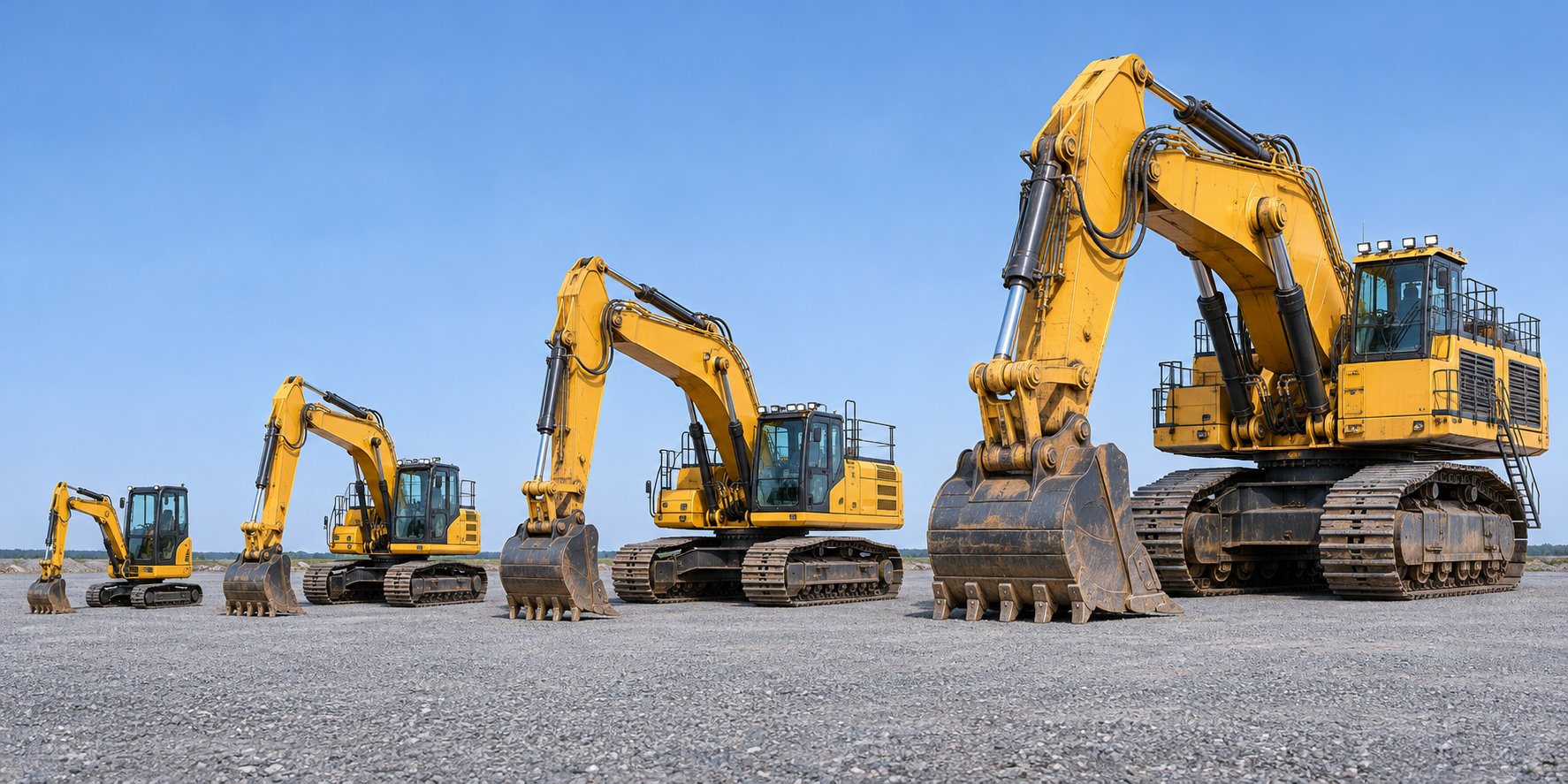
Komatsu Excavator Model Lineup by Size Class
Matching a machine to your workload is the single most consequential decision in the buying process. A contractor who needs tight-radius maneuverability for residential utility runs and another who needs to load 40-ton haul trucks in a limestone quarry are shopping in entirely different universes, even though both are searching for a Komatsu excavator for sale. Understanding Komatsu's model hierarchy by size class helps you filter listings quickly and avoid wasting time on machines that were never designed for your application.
Mini and Compact Excavators for Tight Job Sites
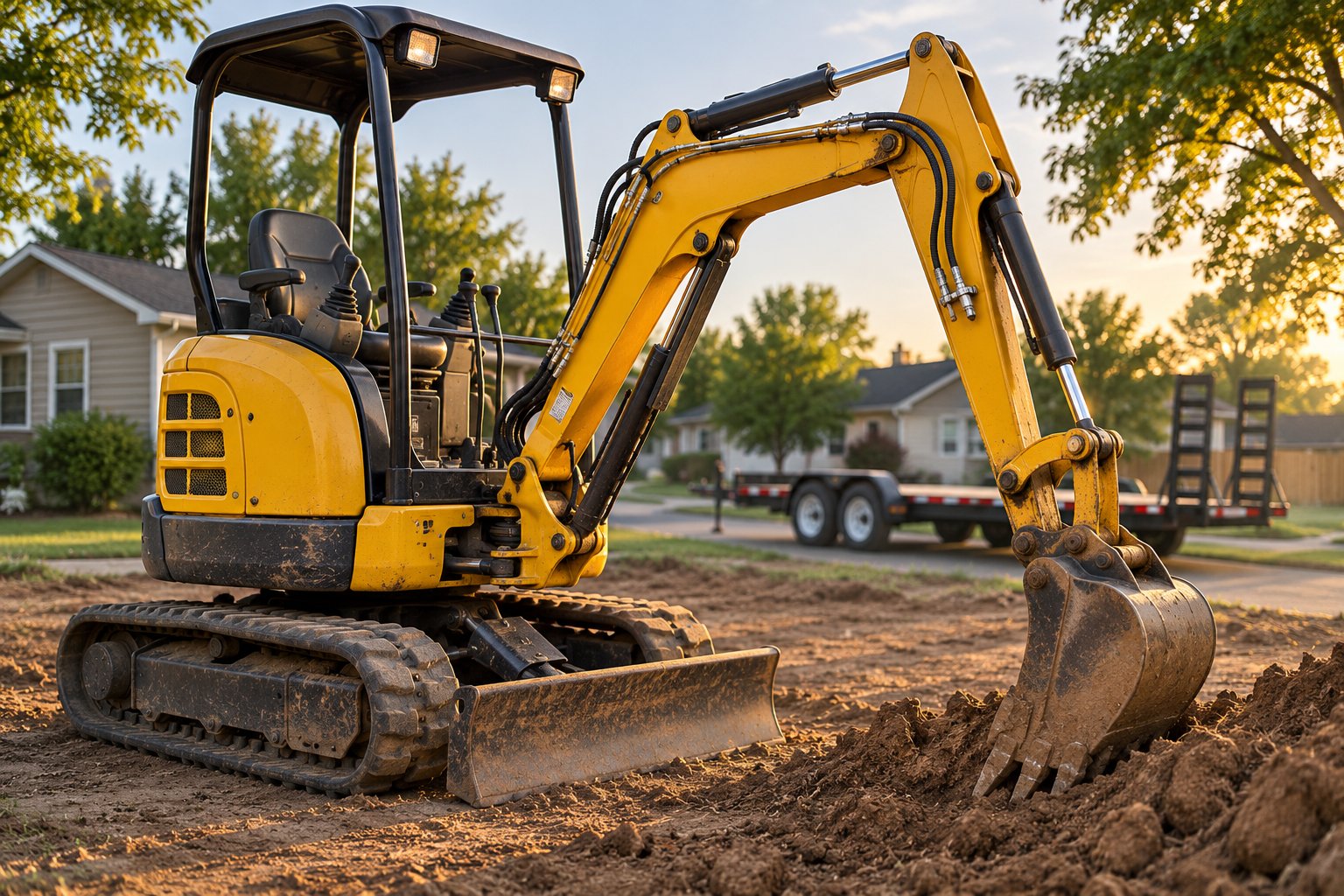
Komatsu's compact lineup spans the PC30MR-5 through the PC88MR-11, covering operating weights from roughly 6,800 to 19,200 pounds. These machines are purpose-built for spaces where larger equipment simply cannot operate, think fenced residential lots, indoor demolition, landscaping projects, and shallow utility trenching.
At the lighter end, models like the PC35MR-5 deliver about 24.4 horsepower with a maximum dig depth around 11 feet 4 inches, enough for most residential footer and drainage tasks. Step up to the PC78US-11 or PC88MR-11, and you'll find 68 horsepower with dig depths reaching 15 feet and bucket digging forces around 13,780 lbf. That range makes the upper-compact class a genuine workhorse for light commercial site prep without the transport headaches that come with a mid-size crawler. If you've ever compared a compact Komatsu against something like a Takeuchi TL8 compact track loader for site versatility, you'll notice the excavator's superior dig depth and precision trench capability set it apart for below-grade work.
Mid-Size Excavators for General Construction
The mid-size family, roughly the PC130 through PC290 range, is where the majority of general contractors and earthwork subcontractors focus their search. These machines bridge the gap between nimble compacts and heavy-production crawlers, handling commercial site work, road building, storm sewer installation, and general earthmoving with equal confidence.
The PC130LC-11 sits at the entry point with 97.2 horsepower and an operating weight near 29,000 pounds. Its longer undercarriage delivers a 20% lifting-capacity improvement over the older PC130-8 while burning 12% less fuel. Move into the popular PC210LC-11 territory, and you're looking at 165 horsepower, a 21-foot 9-inch dig depth, and operating weights in the 51,000 to 54,000-pound bracket, making it one of the most traded models in the used market.
The PC238USLC-11 deserves special mention for contractors working near buildings and roadways. Its ultra-short tail swing keeps the counterweight inside the track width, reducing the risk of striking obstacles while maintaining a 33,500 lbf bucket digging force that rivals standard-tail machines. Buyers cross-shopping against a Cat excavator 320L in the used market often find the PC238USLC-11 offers comparable performance with tighter jobsite maneuverability.
Large Crawler Excavators for Heavy Production
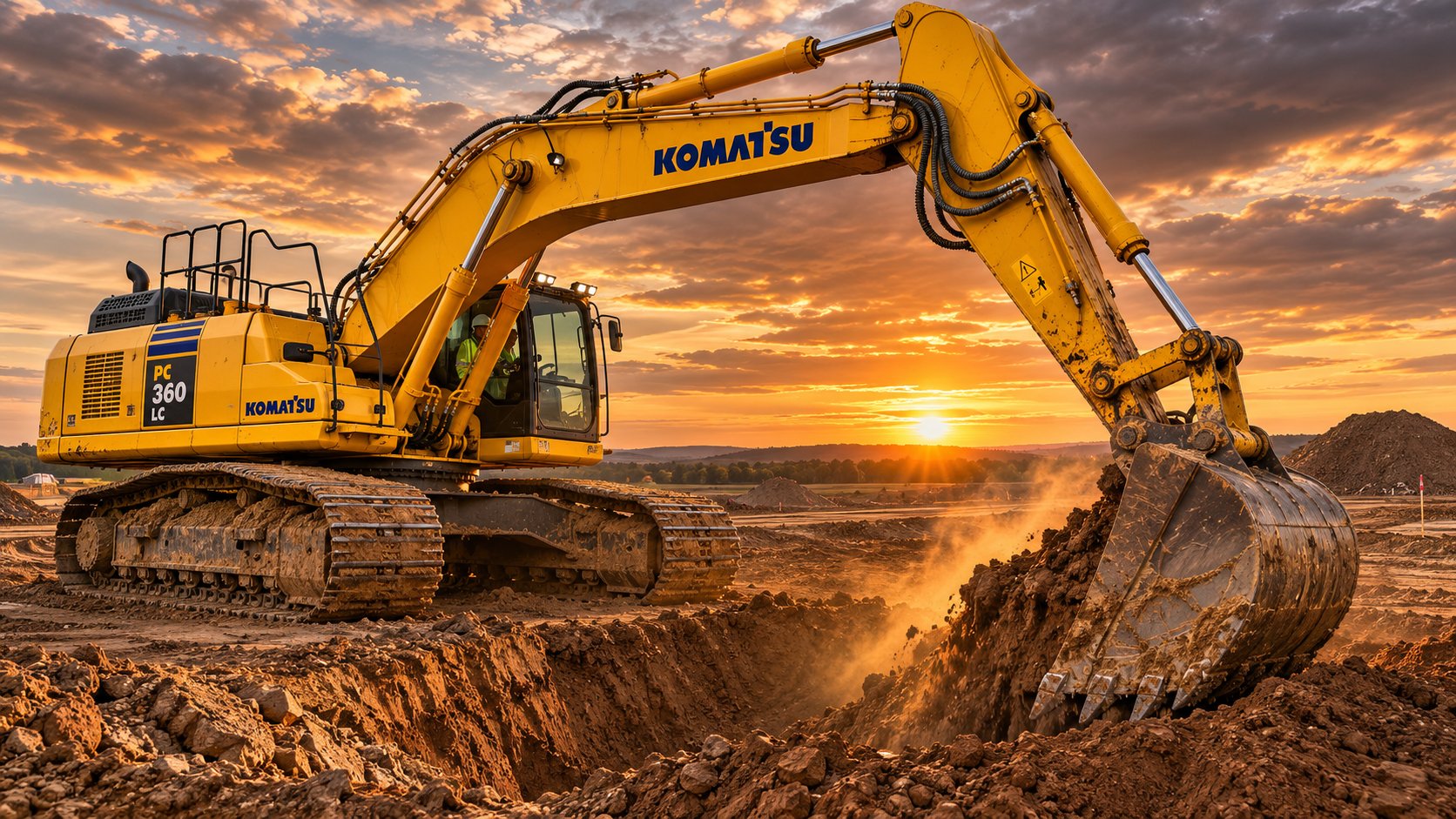
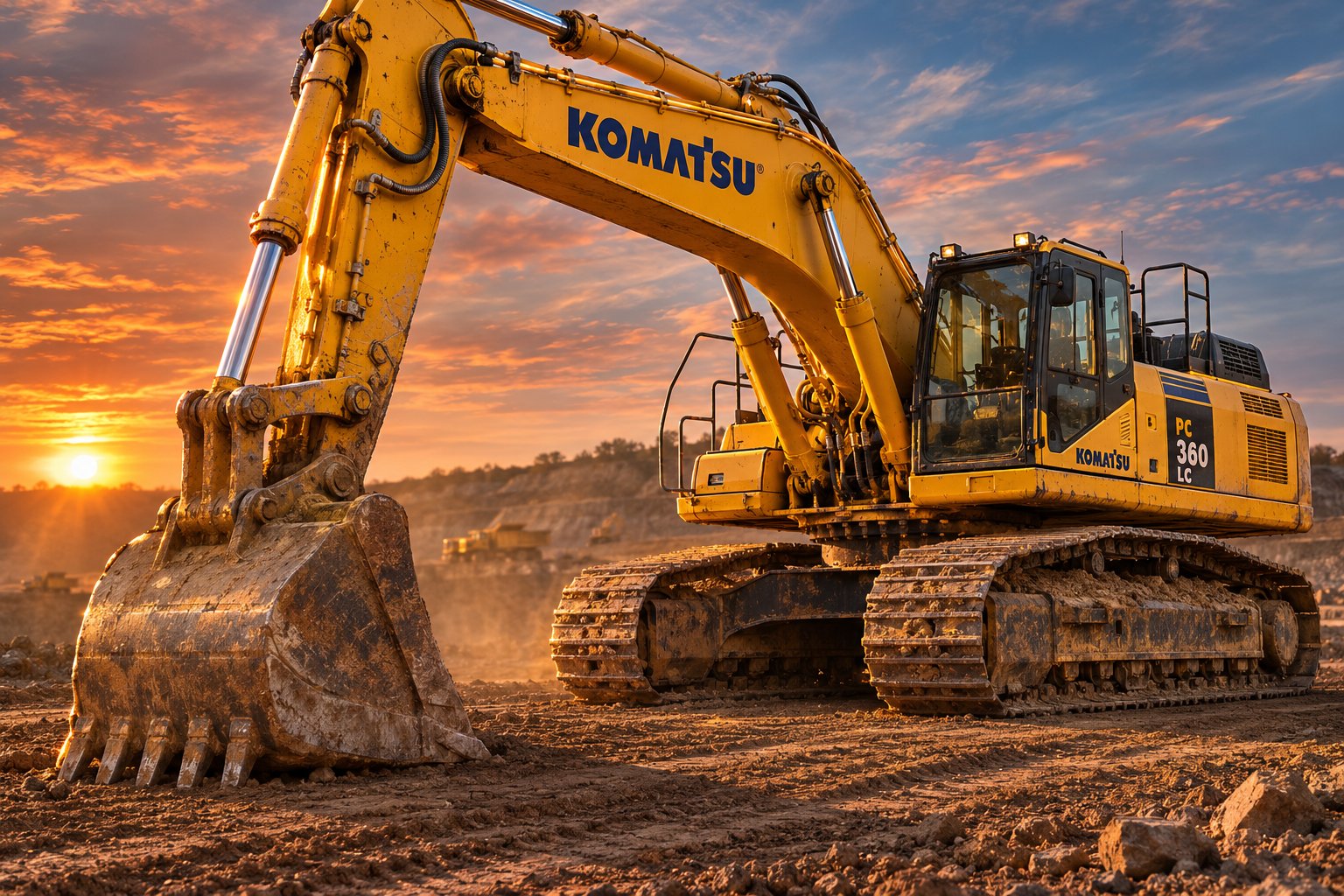
When the scope jumps to quarry loading, mass excavation, or major infrastructure, Komatsu's large excavator class from the PC360 through PC490 and beyond takes center stage. These machines deliver the cycle times, breakout forces, and bucket volumes needed to move serious tonnage per hour.
The PC360LC-11 produces 257 horsepower and a bucket breakout force of 50,930 lbf, while the PC490LC-11 pushes that figure to 61,730 lbf with 359 horsepower and an operating weight exceeding 105,000 pounds. Super long front (SLF) variants in this class extend reach past 60 feet, making them viable for deep retention pond work and slope shaping without repositioning the carrier. Material handling (MH) configurations add elevated cabs and purpose-built front-end geometry for scrap yards and waste transfer stations.
Above the PC490, Komatsu stretches into the PC650, PC900, and PC1250 tiers, where operating weights climb from 140,000 pounds to well over 270,000 pounds. These are production-scale tools designed for loading off-highway trucks in pit-and-quarry environments. Imagine the difference between filling a 25-ton articulated truck in four passes versus eight: that productivity gap is exactly what justifies the premium on these larger crawlers.
Mining-Class Excavators for Extreme Operations
At the top of Komatsu's catalog sit the surface mining excavators, from the PC2000-11 through the PC8000-11. The PC8000-11 tips the scales at 768 to 777 tons and delivers 4,020 horsepower, a bucket digging force of 466,928 lbf, and a reach of nearly 70 feet. It's often cited as the world's largest excavator in the hydraulic-mining category, and it's the biggest digger in the world that Komatsu manufactures. These machines operate in open-pit mines alongside ultra-class haul trucks, and even on the used market they represent multi-million-dollar transactions reserved for mining houses and mega-project consortiums. Worth noting: Komatsu also builds the largest excavator options in electric-drive configurations for operations where diesel emissions or fuel logistics present challenges.
Buyers searching at this scale are typically also evaluating a broader fleet strategy that might include a Komatsu loader for truck-loading redundancy. The synergy between Komatsu's excavator and wheel-loader lines allows standardized telematics and parts programs across the fleet.
| Size Class | Representative Models | Typical Operating Weight | Common Bucket Capacity | Dig Depth Range | Primary Applications |
|---|---|---|---|---|---|
| Mini / Compact | PC35MR-5, PC55MR-5, PC78US-11, PC88MR-11 | 6,800 - 19,200 lbs | 0.04 - 0.28 cu yd | 9 ft - 15 ft | Residential work, landscaping, utility trenching, light demolition |
| Mid-Size | PC130LC-11, PC210LC-11, PC238USLC-11, PC290LC-11 | 28,400 - 72,000 lbs | 0.36 - 1.56 cu yd | 18 ft - 22 ft 5 in | Commercial site work, road building, storm infrastructure, general earthmoving |
| Large Crawler | PC360LC-11, PC490LC-11, PC650LC-11, PC900LC-11, PC1250LC-11 | 78,600 - 272,600 lbs | 1.40 - 8.50 cu yd | 22 ft - 30 ft | Quarry loading, mass excavation, infrastructure, material handling |
| Mining Class | PC2000-11, PC3000-11, PC5500-11, PC7000-11, PC8000-11 | 445,000 lbs - 777 tons | 15 - 42+ cu yd | 25 ft - 30 ft | Open-pit mining, overburden removal, mega-project earthmoving |
Size class alone, however, only tells half the story. Two PC210LC-11 units sitting side by side on a dealer lot can carry wildly different values depending on whether they're equipped with Komatsu's Intelligent Machine Control system, how their Tier 4 Final engines have been maintained, and what their KOMTRAX telematics data reveals. Those technology layers are where resale value truly separates one listing from another.
Komatsu Technologies That Impact Value and Performance
Three proprietary technology systems set Komatsu apart from virtually every other brand on the used market, and each one leaves a fingerprint on resale pricing. Whether you're evaluating a tiny Komatsu PC01 for micro-utility tasks or a machine competing for the title of the world's biggest excavator, these systems shape how much a unit is worth and how confidently you can verify its real condition.
KOMTRAX Telematics and Remote Monitoring
Imagine having a detailed diary of every hour a machine has worked, every fault code it triggered, and every location it traveled — stretching back over a decade. That's essentially what KOMTRAX (Komatsu Machine Tracking System) provides. Launched commercially in 2001, KOMTRAX was one of the first telematics platforms in the construction equipment industry, and over one million Komatsu machines worldwide are now connected to it.
The system works through a GPS and cellular modem installed at the factory, which transmits operational data to Komatsu's secure cloud servers — typically every hour during operation. Even machines that worked in remote areas without consistent cellular coverage store data locally and upload it once connectivity resumes. Komatsu retains this data for the life of the machine, which means a used unit could carry 15 or more years of verifiable history.
Here's what matters most for buyers shopping for a komatsu excavator for sale: KOMTRAX records engine hours by date, GPS location history, fuel consumption trends, work mode distribution, alarm and fault code logs, idle ratios, and maintenance reminder compliance. That level of transparency makes hour meter fraud nearly impossible. If the display reads 6,000 hours but KOMTRAX logged 8,000 two years ago, you'll see the discrepancy immediately.
You should always request a KOMTRAX report before making a purchase. The seller can export one as a PDF through their KOMTRAX account, or you can ask a Komatsu dealer to pull the data using the machine's serial number with the seller's consent. Pay close attention to whether the monthly hour-accumulation rate looks consistent, whether fault codes reveal recurring hydraulic or engine alarms, and whether the location history matches the seller's description of where the machine worked. Unlike many competitors — where telematics history resets upon ownership transfer or lacks comparable depth — KOMTRAX data lives on Komatsu's servers and cannot be deleted or manipulated by the owner.
A KOMTRAX history report is one of the most valuable tools available for verifying a used Komatsu excavator's true operating condition — if a seller refuses to share it, treat that refusal as a serious red flag and consider walking away.
Even buyers familiar with other brands' telematics, such as those who've operated Kubota excavators or tracked loaders like the Takeuchi TL10, often find KOMTRAX's lifetime data retention and fault-code transparency unmatched. It's a competitive advantage that directly affects what you should be willing to pay.
Komatsu Intelligent Machine Control and GPS Grading
Komatsu introduced its factory-integrated Intelligent Machine Control (iMC) technology on excavators in 2014, and it has since become one of the most significant value differentiators on the resale market. Unlike aftermarket GPS grading systems bolted onto a standard machine, iMC is built into the excavator from the factory — the sensors, antennas, and control logic are integrated into the boom, arm, and bucket design from day one.
What does that mean in practice? The system enables semi-automatic digging and grading by preventing the bucket from cutting below a pre-loaded 3D design surface. An operator can aggressively dig toward grade without worrying about over-excavation, which customer feedback from Komatsu Europe confirms translates to roughly 30% time savings on many projects. Design files can be uploaded remotely through Komatsu's Smart Construction software suite, eliminating the need for a surveyor to be on-site for every grade check.
The latest iMC 3.0 generation — debuted on the PC220LCi-12 — adds tilt-rotator integration, 3D boundary control for enhanced safety, swing-to-line and travel-along-line functions for trenching, and even semi-automatic truck loading through an auto-swing feature. These capabilities reduce operator skill requirements and speed up production, which is why iMC-equipped Komatsu excavators consistently command a premium over standard models in the used market. A PC210LCi-11 with functioning iMC, for example, will typically sell for significantly more than a standard PC210LC-11 with equivalent hours.
For buyers, the takeaway is straightforward: if a listing mentions iMC or machine control integration, verify that the system is fully operational and that all sensors and antennas are intact. Damaged or disconnected iMC components are expensive to repair, and a non-functioning system erases the premium you paid. Think of iMC-equipped machines as the technology equivalent of what remote control excavators for adults represent in the hobby space — precision control that changes the entire experience — except scaled up to production earthmoving with real financial impact.
Tier 4 Final Engine Technology and DEF Systems
If you've looked at any Komatsu excavator manufactured after roughly 2014-2015 in North America, you've encountered Tier 4 Final emissions compliance. Understanding what that means for ownership costs and maintenance is essential before signing any purchase agreement.
Tier 4 Final engines reduce both diesel particulate matter (PM) and nitrogen oxide (NOx) emissions by approximately 90% compared to earlier Tier 3 powerplants. Komatsu achieves this through a combination of cooled Exhaust Gas Recirculation (EGR), Variable Geometry Turbochargers (VGT), a Diesel Particulate Filter (DPF), and a Selective Catalytic Reduction (SCR) system that uses Diesel Exhaust Fluid (DEF). In plain terms, the engine has more components to maintain, and each one plays a role in keeping the machine compliant and running properly.
The DPF captures soot and ash, periodically burning it off through a regeneration cycle. Komatsu's DPF units typically have a life expectancy of 4,500 hours or more before requiring replacement or a major overhaul, depending on application, operating conditions, and operator practices. Komatsu offers remanufactured DPF units at roughly one-quarter to one-third the cost of new, which is worth knowing when you're budgeting for future maintenance on a used purchase.
DEF consumption adds a recurring operating cost — typically a small percentage of fuel consumption — but running out of DEF or ignoring the system will trigger derating, where the engine deliberately reduces power to protect emissions components. Buyers should check that the DEF system is functioning properly, the tank and dosing unit are clean, and no active fault codes relate to the aftertreatment system.
For machines classified as the largest excavator in the world — Komatsu's mining-class units like the PC8000 — emissions technology differs and may include electric-drive options. But for the vast majority of used construction-class Komatsu excavators, Tier 4 Final systems are a fact of ownership. A well-maintained aftertreatment system is a sign the previous owner treated the machine seriously. Neglected DPF and DEF systems, on the other hand, can translate into thousands of dollars in immediate repair costs after purchase.
Technology alone, however, doesn't tell you whether the steel beneath it is sound. The physical condition of the undercarriage, hydraulics, and structural components carries just as much weight in the buying equation — and evaluating those elements requires a completely different skillset.
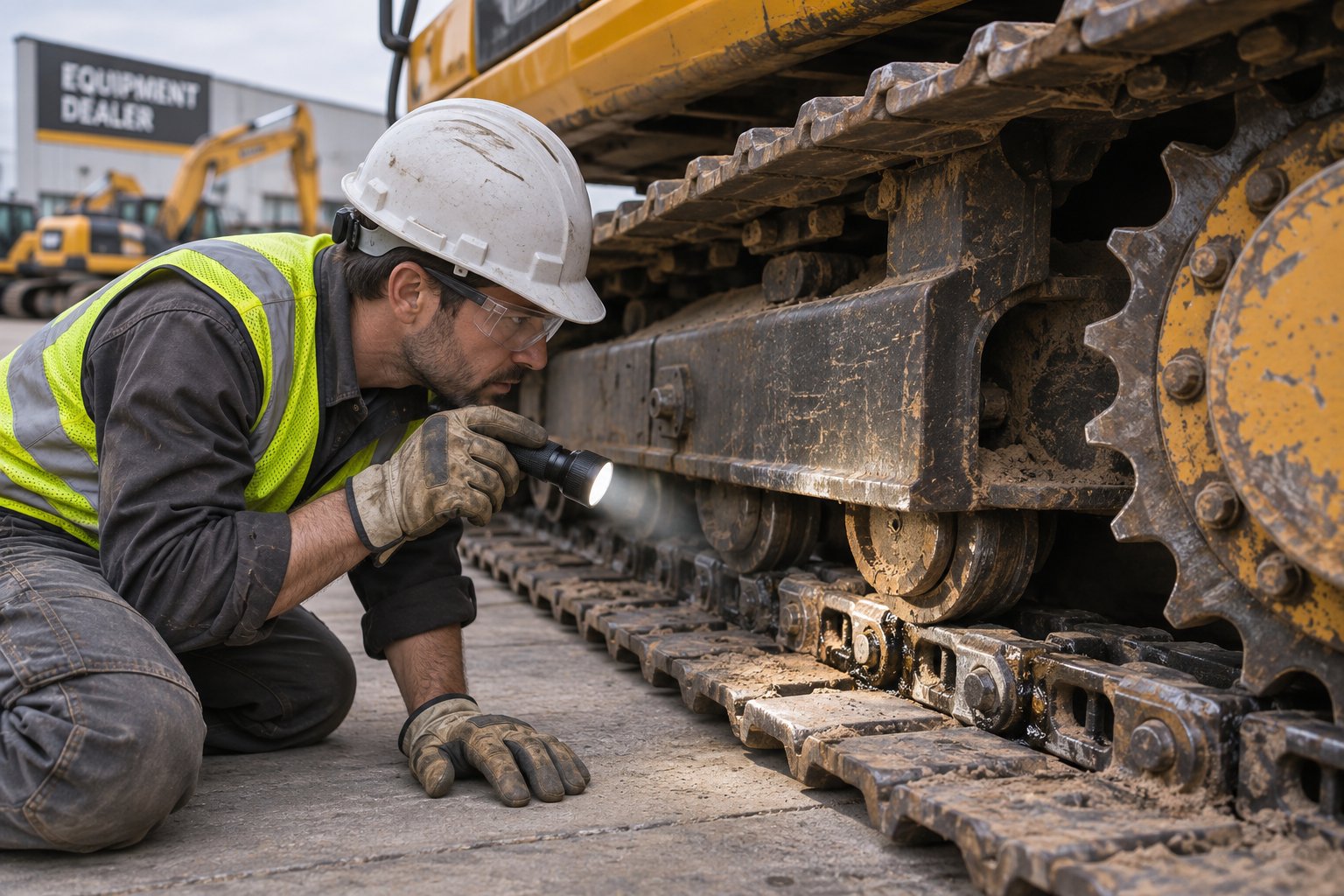
How to Inspect a Used Komatsu Excavator Before You Buy
A fresh coat of paint and a reasonable hour meter can hide an expensive history. Two Komatsu excavators sitting side by side at a dealer lot might look identical in photos, yet one could need a $25,000 undercarriage rebuild while the other is ready to dig for another 5,000 hours. The difference reveals itself only during a hands-on inspection — and knowing what to look for separates a confident purchase from a costly gamble.
This section breaks down the critical inspection areas in plain language so you can evaluate any komatsu excavator for sale, whether it's a compact PC55MR or a production-class Komatsu 490. You don't need to be a certified mechanic. You do need a systematic approach and the willingness to walk away when the evidence doesn't match the asking price.
Undercarriage Inspection and Wear Assessment
The undercarriage is where the real money hides. Industry estimates suggest it can account for up to half of an excavator's lifetime owning and operating cost, which means a worn-out undercarriage on an otherwise clean machine can erase every dollar of perceived value in the listing price.
Here's what you're evaluating: five interconnected components — track pads (or shoes), track chains with pins and bushings, bottom rollers, top rollers (carriers), idlers, and sprockets. They wear as a system, not independently. Spotting new sprockets paired with a heavily worn chain, for example, tells you someone replaced the cheapest component without addressing the root wear — and the chain will chew through those new sprockets faster than normal.
You'll encounter the term "undercarriage percentage remaining" in many listing descriptions. OEM wear charts measure each component from 0% (new) to 100% (fully consumed). A machine listed at "60% remaining" across all five systems still has meaningful life, while one at "20% remaining" is staring down a major rebuild. Ask the seller for pin-and-bushing measurements and roller gauge readings — reputable sellers will have these, and hesitation here is a warning sign.
One detail that trips up less experienced buyers: pins and bushings can typically be "turned" once to expose a fresh wear surface, essentially resetting their contact patch. If you see wear on the top half of the bushing, they've already been turned, and the next step is full chain replacement rather than another adjustment. Also, beware of tracks that have had links removed to tighten slack — this creates accelerated internal wear far worse than the looseness it was meant to fix.
Before diving deeper into hydraulics and engine condition, a quick glossary of terms you'll encounter in used Komatsu listings will save confusion:
- ROPS — Roll-Over Protective Structure, the reinforced cab frame designed to protect the operator in a rollover. Any visible modification, welding, or drilling to the ROPS is a safety disqualifier, not a cosmetic issue.
- Auxiliary hydraulics — Additional hydraulic circuits plumbed to the boom or arm for powering attachments like hammers, thumbs, or tilt rotators. Check for capped lines, leaking quick-disconnects, or missing flow controls.
- Pattern changer — A valve that lets the operator switch between ISO and SAE joystick control patterns. Verify it toggles cleanly; a stuck pattern changer frustrates every operator who touches the machine.
- Thumb — A hydraulic or mechanical clamp mounted opposite the bucket for gripping irregular objects. Hydraulic thumbs are more versatile; mechanical thumbs are simpler but less precise. Check pin wear on either type.
- Quick coupler — A device that allows rapid bucket and attachment changes without manually pulling pins. Inspect the coupler's locking mechanism and safety catches — a coupler that drops a bucket is a liability, not a convenience.
Hydraulic System Health Indicators
Hydraulics are the heartbeat of any excavator. Every function — boom lift, arm curl, bucket curl, swing, and travel — depends on the hydraulic system delivering consistent pressure and flow. A machine with compromised hydraulics doesn't just lose productivity; it becomes unpredictable and potentially unsafe.
Start your evaluation with a visual sweep. Walk around the machine and look for weeping hoses, damp fittings, and oil seepage around cylinder glands. Pay attention to corroded fittings combined with oil residue — that combination signals the machine worked in a corrosive environment, which accelerates wear across the entire hydraulic circuit. Then check the hydraulic oil itself. Pull the sight glass or dipstick: clean oil should be amber to light brown. Milky or discolored fluid suggests water contamination or internal component wear, and either finding justifies a serious price conversation.
Cylinder rods deserve hands-on attention. Run your fingers along the exposed chrome surface of the boom, arm, and bucket cylinders. Scoring, pitting, or dents on a rod will destroy seals progressively, leading to a reseal at minimum or full cylinder replacement at worst. Even minor rod damage on a PC490 or similar large machine can cost thousands to address because of the sheer size of the components involved.
The real test, though, happens when you operate the machine. Run every function — boom up and down, arm in and out, bucket curl and dump, full left and right swing, and forward and reverse travel. Listen for whining, knocking, or grinding from the pump area. Feel for hesitation, jerkiness, or a noticeable lag between joystick input and machine response. Then try the drift test: raise the boom to full height, shut down the pilot control, and time how quickly the boom settles. Rapid drift points to internal cylinder leakage or control valve bypass — both expensive repairs that won't improve on their own.
Sluggish or inconsistent hydraulic response under load is one of the most reliable indicators of expensive future repairs. A pump rebuild on a mid-size Komatsu can run $8,000 to $15,000 depending on the model, so catching early warning signs during an inspection is worth far more than the time it takes.
Engine and Structural Condition Red Flags
If possible, inspect the machine cold — before the seller has warmed it up. A Komatsu that fires instantly when pre-warmed but struggles from a cold start may be masking compression issues, glow plug failures, or fuel system problems that only reveal themselves at ambient temperature.
Watch the exhaust closely during the first 60 seconds of operation. Blue smoke indicates oil burning past worn rings or valve guides. Black smoke points to fuel system issues like injector problems or turbo trouble. White smoke can mean coolant is reaching the combustion chamber through a cracked head or failed gasket. Any persistent smoke color beyond initial startup condensation deserves a mechanic's evaluation before you commit. Check for blow-by at the crankcase breather — excessive vapor escaping under pressure signals worn piston rings or cylinder liners.
Structural integrity is the easiest problem to hide and the most expensive to fix. Inspect the boom and arm with a flashlight, paying close attention to the areas around pin bosses and the boom-to-stick transition — these are the highest-stress zones. You're looking not only for cracks but for welds that don't look factory. A repair weld almost always indicates previous structural failure, and the quality of that repair determines whether the machine is safe for continued heavy use. Komatsu's factory welds are characteristically uniform and smooth; a lumpy, ground-down, or inconsistent bead is a repair.
Check the main frame and swing frame for cracking, particularly around the swing bearing mounting area. Rotate the house through a full 360-degree swing and listen for grinding, popping, or roughness — any irregularity here can indicate swing bearing wear, which is a major and costly replacement. For buyers cross-shopping between a komatsu front end loader and an excavator for material handling applications, remember that excavator swing bearings endure significantly more rotational stress than a loader's articulation joints, making this check even more critical.
Finally, if you spot a machine where the ROPS shows any evidence of welding, drilling, or structural modification, treat it as a disqualifying safety issue unless the machine is priced to reflect complete ROPS replacement. A compromised rollover structure puts operators at risk, period.
Your Printable Pre-Purchase Inspection Walkthrough
Carry this numbered sequence to every inspection. It moves from documentation to visual checks to operational testing in a logical order that prevents you from overlooking critical items — even when a persuasive seller is rushing you through the process.
- Verify documentation first. Confirm the serial number on the machine matches all paperwork. Request the complete service history, KOMTRAX report, and any outstanding lien documentation. If the machine is imported, confirm customs and title paperwork is clean.
- Perform a cold walkaround. Before anyone starts the engine, walk the entire machine. Note overall cleanliness, paint condition, fluid stains on the ground beneath it, and any obvious damage or modifications.
- Measure the undercarriage. Inspect track pads, chains, rollers, idlers, and sprockets. Request or take wear measurements and note any components that have been recently replaced versus those showing consistent wear.
- Examine all hydraulic hoses and cylinders. Look for leaks, check rod surfaces for scoring, and inspect pin-and-bushing play at every pivot point on the boom, arm, and bucket linkage.
- Check the hydraulic oil and engine oil. Pull sight glasses or dipsticks. Look for discoloration, milkiness, or metallic particles. If lab oil analysis samples are available from the seller, review them for abnormal wear metals.
- Cold-start the engine. Listen for unusual knocking, tapping, or extended cranking. Watch exhaust color for the first 60 seconds and check for blow-by at the crankcase breather.
- Inspect the cooling system. Open the radiator cap on a cool machine and check coolant for contamination. Look for debris packed into radiator fins — it's a maintenance-habit indicator.
- Inspect structural components. Examine the boom, arm, and main frame for cracks and non-factory welds, especially around pin bosses and high-stress transitions. Check the ROPS for any modifications.
- Operate every function under no load. Cycle boom, arm, bucket, swing, and travel. Feel for hesitation, jerkiness, or unusual noise. Perform a boom-drift test with the pilot control disabled.
- Perform a loaded function test. Dig into a pile or push against the ground. Monitor digging force, swing drift under load, and track-straight travel. Drive forward roughly 30 feet, reverse the same distance, and check whether the machine returns to approximately the same position — a crawler that won't track straight needs investigation.
- Test all cab electronics and controls. Check the monitor for active fault codes, verify pattern changer function, test climate controls, and confirm all lights and safety systems work.
- Convert findings to money. Total the estimated repair and replacement costs for everything you found. Compare that figure against the asking price and against comparable listings for machines with documented maintenance and verified component life.
This walkthrough works equally well whether you're evaluating komatsu bulldozers for sale or excavators — the principles of systematic documentation, visual inspection, and loaded operational testing apply across tracked equipment categories. Buyers who've shopped for a John Deere 35G mini excavator for sale or any other brand will recognize the same fundamentals, but Komatsu's KOMTRAX integration in step one gives you a verification layer that most competing brands simply don't offer.
A thorough inspection reveals the mechanical truth behind any listing, but interpreting what you find still requires context. A machine showing 4,000 hours tells a very different story than one showing 12,000 — and yet the lower-hour unit isn't automatically the better buy. Understanding how machine hours relate to condition, maintenance quality, and real-world value is the next piece of the puzzle.
Understanding Machine Hours and What They Mean for Buyers
A listing reads "6,200 hours." Is that a lot? The honest answer depends entirely on the size of the machine, how it spent those hours, and what the maintenance records reveal. Buyers who fixate on the hour meter alone — treating it like a car's odometer — routinely overpay for low-hour machines with hidden neglect or walk away from well-maintained units that still have years of productive life ahead. Whether you're comparing a 2017 Komatsu PC138USLC-11 for sale at a regional auction or weighing the komatsu 490 excavator price against a competing brand, hours only become meaningful once you pair them with context.
What Counts as Low, Average, and High Hours
Here's where many buyers stumble: the same hour reading carries a completely different meaning depending on the excavator's size class. A micro excavator or compact unit in the PC35 to PC88 range is built lighter, with smaller components that are harder to rebuild economically. Industry consensus places the "high hours" threshold for minis around 5,000 to 6,000 hours, while a medium excavator in the PC130 to PC290 bracket doesn't typically enter that territory until 6,000 to 10,000 hours. Large production crawlers — the PC360, PC490, and even the PC1250/7 series — are engineered for overhaul, and some quarry units get rebuilt at 15,000 to 20,000 hours before returning to work.
As a general framework, well-utilized construction excavators tend to accumulate roughly 1,000 to 2,000 hours per year. So a five-year-old machine showing 5,000 hours has lived a fairly standard working life. That same reading on a two-year-old unit signals extremely heavy use. A simple calculation — total hours divided by machine age in years — gives you an instant sense of how hard the previous owner pushed it. Anything significantly above 2,000 hours per year deserves closer scrutiny, while a suspiciously low annual rate (under 400 to 500 hours) raises a different concern: machines that sit idle for extended periods suffer seal deterioration, corrosion, and hydraulic degradation from disuse.
If you're shopping for a Komatsu 138 for sale, for example, a unit showing 4,500 hours at seven years old averages roughly 640 hours annually — moderate use that suggests the machine wasn't a primary production tool but also wasn't neglected in a yard. Compare that against a listing with the same hours crammed into three years, and you're evaluating two very different machines despite identical meter readings.
How Hours Should Factor Into Your Purchase Decision
Hours alone do not determine value. A well-maintained excavator with higher hours can genuinely outperform a neglected low-hour unit because the wear isn't just about running time — it's about what happened during that time and whether anyone bothered to address it. Maintenance history, application type, and undercarriage condition carry equal or greater weight in the real-world buying equation.
Imagine two PC210LC-11 units, both showing 7,000 hours. One spent its life trenching in sandy soil for a municipal utility contractor who changed oil on schedule, greased daily, and kept a full service binder. The other ran a hydraulic breaker in a demolition yard with spotty maintenance records and an owner who topped off fluids "when he remembered." The meter reads the same. The remaining productive life does not. As industry specialists emphasize, documented maintenance often tells you more about a machine's next 5,000 hours than the meter ever could.
This principle holds across equipment categories. Whether you're evaluating a Komatsu excavator, a Hyundai skid steer, or any other piece of used iron, the combination of hours plus maintenance quality plus component condition creates the true risk profile. The table below illustrates how these factors interact across Komatsu's three primary construction size classes.
| Size Class | Hour Range | Maintenance Quality | Relative Value | Buyer Risk Level |
|---|---|---|---|---|
| Compact (PC35 - PC88) | Under 2,500 | Full records | Premium — near-new pricing | Low |
| Compact (PC35 - PC88) | 2,500 - 4,500 | Full records | Strong — best value-to-life ratio | Low to Moderate |
| Compact (PC35 - PC88) | 5,000 - 7,000 | Partial or no records | Discounted — budget for wear items | High |
| Mid-Size (PC130 - PC290) | Under 3,500 | Full records | Premium — commands top market price | Low |
| Mid-Size (PC130 - PC290) | 3,500 - 7,000 | Full records | Strong — proven and broken in | Low to Moderate |
| Mid-Size (PC130 - PC290) | 7,000 - 10,000 | Partial or no records | Reduced — inspect aggressively | High |
| Large (PC360 - PC490+) | Under 5,000 | Full records | Premium — significant life remaining | Low |
| Large (PC360 - PC490+) | 5,000 - 10,000 | Full records | Strong — built for overhaul cycles | Low to Moderate |
| Large (PC360 - PC490+) | 10,000 - 15,000 | Partial or no records | Steeply discounted — major work likely | High |
Notice the pattern: maintenance documentation consistently shifts the risk column more than hours do. A 9,000-hour large crawler with a complete service binder sits at moderate risk, while a 5,000-hour compact with no records jumps to high. The meter provides a starting point. The paper trail — or KOMTRAX data discussed earlier — provides the verdict.
Armed with both inspection skills and a realistic sense of what hours mean for your target size class, the next logical question becomes: what should you actually expect to pay? Pricing context is conspicuously absent from most listing sites, leaving buyers to guess whether an asking price is fair, inflated, or suspiciously low. Building a reliable pricing framework requires understanding the variables that drive market value.
Pricing Context and How to Judge Fair Market Value
You've inspected the undercarriage, verified the KOMTRAX data, and confirmed the hour meter tells a consistent story. The machine checks every box on your walkthrough. The seller names a price. Is it fair? Too high? Suspiciously low? Without a reliable pricing framework, even a thorough inspection loses half its value — because you can't negotiate effectively if you don't know what the market actually pays for comparable iron.
Most listing sites show you an asking price and leave it at that. No context, no benchmarks, no explanation of why a PC360 with 6,000 hours lists for $40,000 more than a seemingly similar unit three states away. That gap isn't random. It reflects a specific set of variables that experienced buyers learn to weigh — and that you can learn to weigh right now.
Factors That Drive Used Komatsu Excavator Pricing
Every komatsu excavator for sale sits at the intersection of multiple value drivers, and understanding which ones carry the most weight prevents you from overpaying or, just as importantly, from dismissing a fairly priced machine because the number initially seems high.
Here are the primary pricing factors, ranked roughly by their impact on final transaction value:
- Model and size class — A PC490 and a PC88 live in completely different pricing universes. Size class sets the baseline range before any other factor comes into play.
- Machine hours relative to age — Hours establish where the machine sits on its lifecycle curve, but only when read alongside annual utilization rate. A 5,000-hour unit that accumulated those hours in two years is priced differently than one that spread them over seven.
- Year of manufacture and model generation — Dash-11 series machines consistently command a premium over dash-8 or dash-10 equivalents, even at similar hours, because of refined emissions systems and improved hydraulic efficiency.
- Undercarriage condition — With full undercarriage replacement running $12,000 to $30,000 depending on machine size, a unit at 70% remaining versus one at 25% remaining represents a five-figure pricing difference that savvy buyers factor into every offer.
- Technology package — iMC-equipped machines, GPS-grade control, and functioning KOMTRAX systems all add measurable resale value. A standard PC210LC-11 and a PC210LCi-11 with working Intelligent Machine Control are not the same machine financially.
- Attachment package — Hydraulic thumbs, quick couplers, auxiliary plumbing, and included buckets affect value. A machine sold "bare" versus one with a full attachment kit can differ by $5,000 to $15,000 or more at the larger end.
- Geographic location — Regional supply and demand still influence pricing, though the gap has narrowed significantly with digital auction platforms. Machines in high-construction-activity regions like the Southeast U.S. may carry a slight premium over identical units in less active markets.
- Cosmetic and structural condition — Dents, peeling paint, and cab wear don't affect digging performance, but they do affect perceived value. More critically, structural repairs and frame damage reduce pricing substantially because they introduce long-term reliability risk.
Notice what's absent from that list: the seller's asking price. An asking price is a starting position, not a market verdict. The gap between asking prices and actual transaction prices on used construction equipment is consistently 8% to 20%, depending on the channel and how motivated the seller is. Treating a listed price as "the price" is one of the most common mistakes buyers make.
How to Research Fair Market Value
So how do you build a realistic picture of what a specific Japanese Komatsu model is actually worth? You triangulate. No single data source gives you the complete answer, but combining several sources creates a reliable range that puts you in a strong negotiating position.
Check completed auction results. Platforms like Ritchie Bros. provide free access to over one million past auction sale prices, searchable by equipment type, model year, location, and operating hours. Because Ritchie Bros. auctions are unreserved — meaning there's no minimum bid or hidden reserve — the final prices reflect genuine market value at the time of sale. Filter results to machines matching your target model, hour range, and year bracket, then note the low, median, and high transaction prices. That spread gives you a realistic corridor. IronPlanet and other platforms offer similar completed-sale data that further sharpens your range.
Compare active asking prices across multiple marketplaces. Sites like MachineryTrader, Equipment Trader, and regional dealer listings let you see what sellers are currently requesting. Pull up at least five to ten comparable listings for the same model and generation. Mentally discount those asking prices by 10% to 15% to approximate likely transaction values — remembering that most listed machines sell below their initial ask after negotiation.
Consult dealer trade-in estimates. If you have a relationship with an authorized Komatsu dealer, ask what they'd offer on a trade-in for the specific model and hour range you're targeting. Dealer trade-in values represent the wholesale floor — what the machine is worth to a professional remarketer who still needs to recondition and resell it at a margin. Knowing this floor tells you the absolute minimum the market supports, which is powerful leverage in any negotiation.
Factor in total acquisition cost, not just the sticker. This is where many buyers leave money on the table or underestimate their true commitment. A machine priced $8,000 below a comparable unit across the country might actually cost more once you add transport fees ranging from $600 to $6,500 depending on distance and machine size, plus cargo insurance, initial inspection, and any immediate maintenance needs. A PC360 priced attractively in the Pacific Northwest costs considerably more to land at a job site in Florida than a slightly higher-priced unit already sitting in Georgia.
For buyers evaluating high-value machines — whether it's a mid-range crawler or something at the scale of a Komatsu PC8000 in the mining tier — this triangulation approach becomes even more critical. The stakes are higher, comparable sales data is thinner, and the cost of overpaying or underbidding grows proportionally. Even a 5% miscalculation on a $200,000 machine represents $10,000 — enough to fund an entire undercarriage refresh on a compact unit.
No single listing price represents true market value. Always compare completed auction results, active marketplace listings, and dealer trade-in estimates before making an offer, and factor transportation costs into your total acquisition budget — they can add thousands of dollars that turn a good deal into a mediocre one.
One additional consideration that catches first-time international buyers off guard: machines sourced from Japanese Komatsu domestic auctions or overseas remarketers may carry attractive base prices, but import duties, shipping, customs clearance, and compliance inspections add layers of cost that must be calculated before the price comparison means anything. A komatsu skid steer or compact excavator shipped from Osaka to Houston doesn't cost what the invoice says — it costs what the invoice says plus everything required to get it onto your trailer, legally titled, and ready to work.
Pricing knowledge transforms you from a passive browser into an active negotiator. But even the sharpest negotiating skills work differently depending on where you buy. Authorized dealers, auction houses, private sellers, and international suppliers each operate under distinct rules, risk profiles, and pricing dynamics — and choosing the right channel is the final strategic decision before committing your capital.
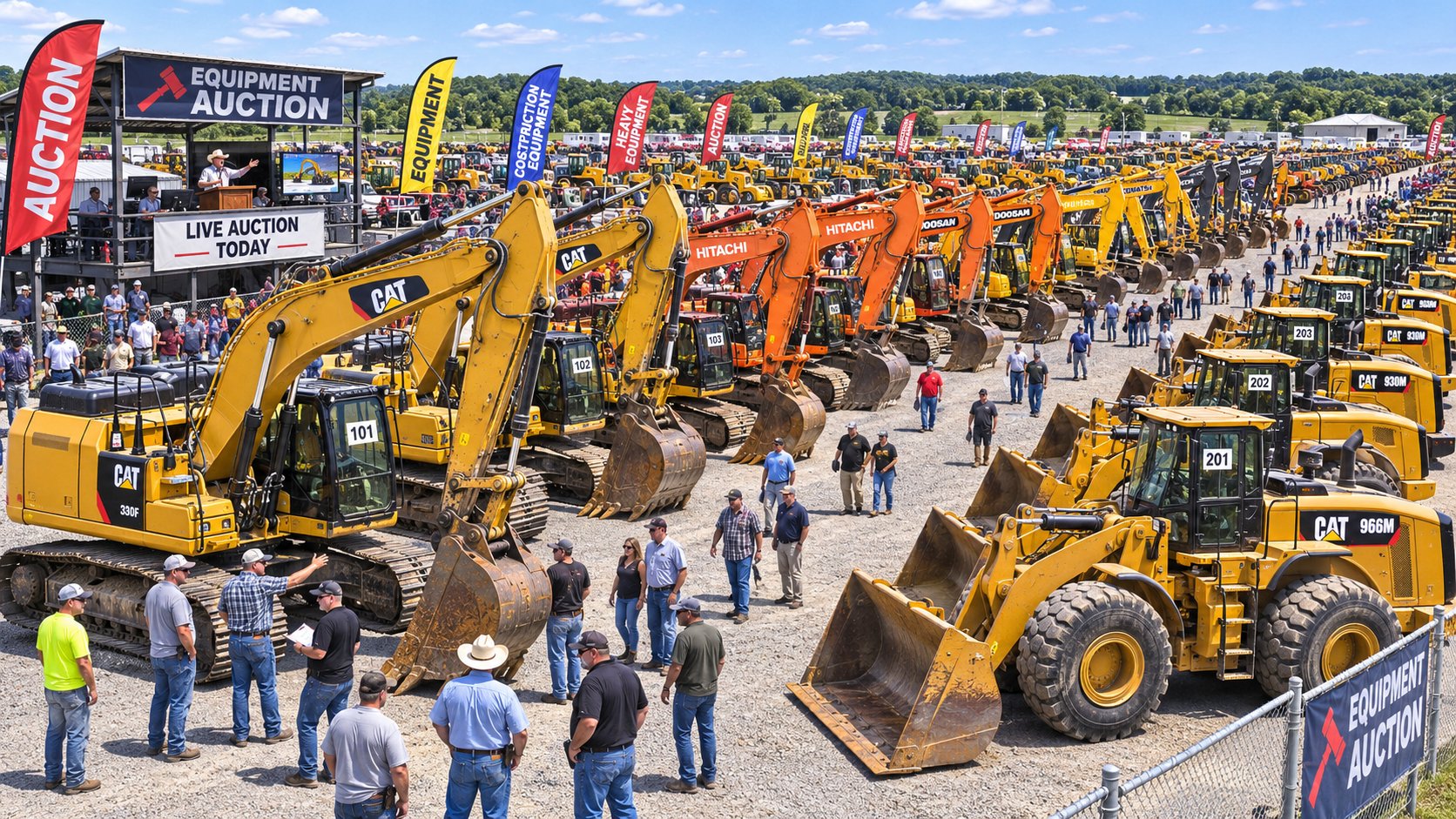
Where to Buy a Komatsu Excavator and What to Expect
You know which size class fits your work. You've studied the technology that drives resale premiums. You can inspect an undercarriage, interpret machine hours, and triangulate fair market value from multiple data sources. All of that preparation funnels into one final strategic choice: where do you actually hand over the money?
The channel you buy through shapes everything — the price you pay, the protection you receive, the selection you can access, and the risk you absorb if something goes wrong. A komatsu excavator for sale at a certified dealer and the same model listed on an auction platform or sourced from an overseas supplier represent three fundamentally different buying experiences, even when the iron is identical. Choosing the wrong channel for your situation can cost more than overpaying on the machine itself.
Authorized Komatsu Dealers vs. Third-Party Marketplaces
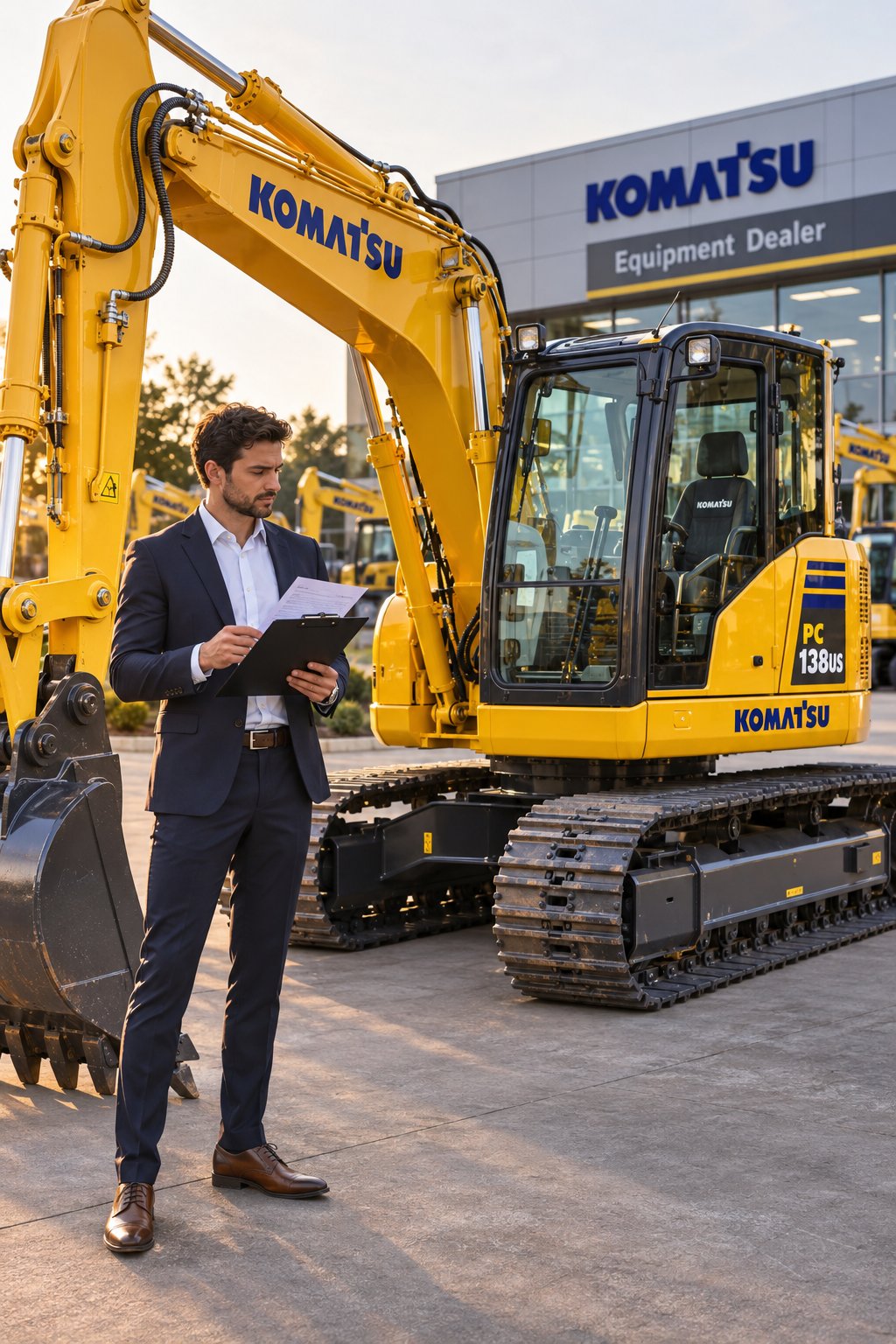
Buying from an authorized Komatsu dealer is the closest thing to a safety net in the used equipment world. Dealers typically inspect and recondition machines before listing them, offer some form of warranty or certified pre-owned program, handle financing in-house, and provide parts and service support after the sale. If you're a first-time buyer or a single-machine owner-operator who cannot afford extended downtime, that support structure has tangible value.
The trade-off is price. Dealer overhead — the shop labor for reconditioning, the lot space, the warranty reserves — gets built into what you pay. A clean PC210LC-11 on a Komatsu dealer lot might list 15% to 25% above what a comparable unit brings at auction, and negotiating room is tighter because the dealer already knows the machine's condition and has invested in bringing it to retail standard. You're paying for reduced risk, not just a machine.
Pros of Buying from an Authorized Dealer
- Pre-sale inspection and reconditioning reduce the chance of hidden mechanical issues
- Warranty options — whether factory remainder or dealer-backed — provide a financial backstop
- Financing, trade-ins, and delivery can be handled in a single transaction
- Access to KOMTRAX data and complete service history is typically easier to obtain
- Post-sale parts and service support from technicians who know the product line
Cons of Buying from an Authorized Dealer
- Higher purchase price compared to auctions, private sales, and international sources
- Limited inventory — a regional dealer may only have a handful of used Komatsu units at any time
- Selection is constrained to what the dealer has taken on trade or purchased at wholesale
Third-party marketplace sites like MachineryTrader, Equipment Trader, and Facebook Marketplace groups offer a dramatically wider selection. You can browse hundreds of listings nationwide in an afternoon, filtering by model, hours, year, and price range. The catch? Listing quality varies wildly. Some sellers provide detailed photos, service records, and honest descriptions. Others post three blurry photos and a price that seems too good because it is. Whether you're searching for a komatsu mini excavator for a landscaping fleet or a big excavator for production earthwork, marketplace sites demand that you bring your own due diligence — because nobody else is doing it for you.
Auctions, Private Sellers, and International Suppliers
Beyond dealers and marketplaces, three additional channels account for a substantial share of used Komatsu transactions, each with a distinct risk-reward profile.
Auction platforms like Ritchie Bros. and IronPlanet move enormous volumes of used equipment every month. Unreserved auctions — where the machine sells to the highest bidder regardless of price — can produce genuine bargains, especially on less popular model configurations or machines with higher hours. The flip side is equally real: everything sells "as is, where is" with no warranty, no returns, and a short payment window that typically requires a wire transfer within days. Buyer's premiums — usually a percentage of the hammer price plus documentation fees — add 10% to 15% on top of what you bid. Transport, sales tax, and any repairs needed after the sale are entirely your responsibility.
As one dealer-sourced analysis puts it plainly: when an auction purchase goes well, you might save $4,000 to $8,000 compared to dealer pricing on the same machine. When it goes badly — a tired pump, a cracked frame, an undercarriage at end-of-life — the total acquisition cost can exceed the dealer price while also costing you weeks of downtime. Auctions reward experienced fleet buyers who can diagnose machines in a preview window and absorb an occasional bad purchase across a portfolio. They punish first-timers who bid emotionally and lack the mechanical knowledge to spot problems under time pressure.
Private sellers — contractors retiring, companies downsizing, or operators upgrading — often represent the best value when the circumstances align. You can meet the owner, run the machine as long as you want, review the original service binder, and negotiate directly without auction fees or dealer margins. A one-owner Komatsu with a meticulous operator behind it is worth more than any condition report. The risk mirrors the reward: there's no third-party verification, no warranty, and no recourse if the title isn't clean or a lien surfaces after you've wired payment. Always conduct your own lien search and never send money for a machine you haven't physically inspected.
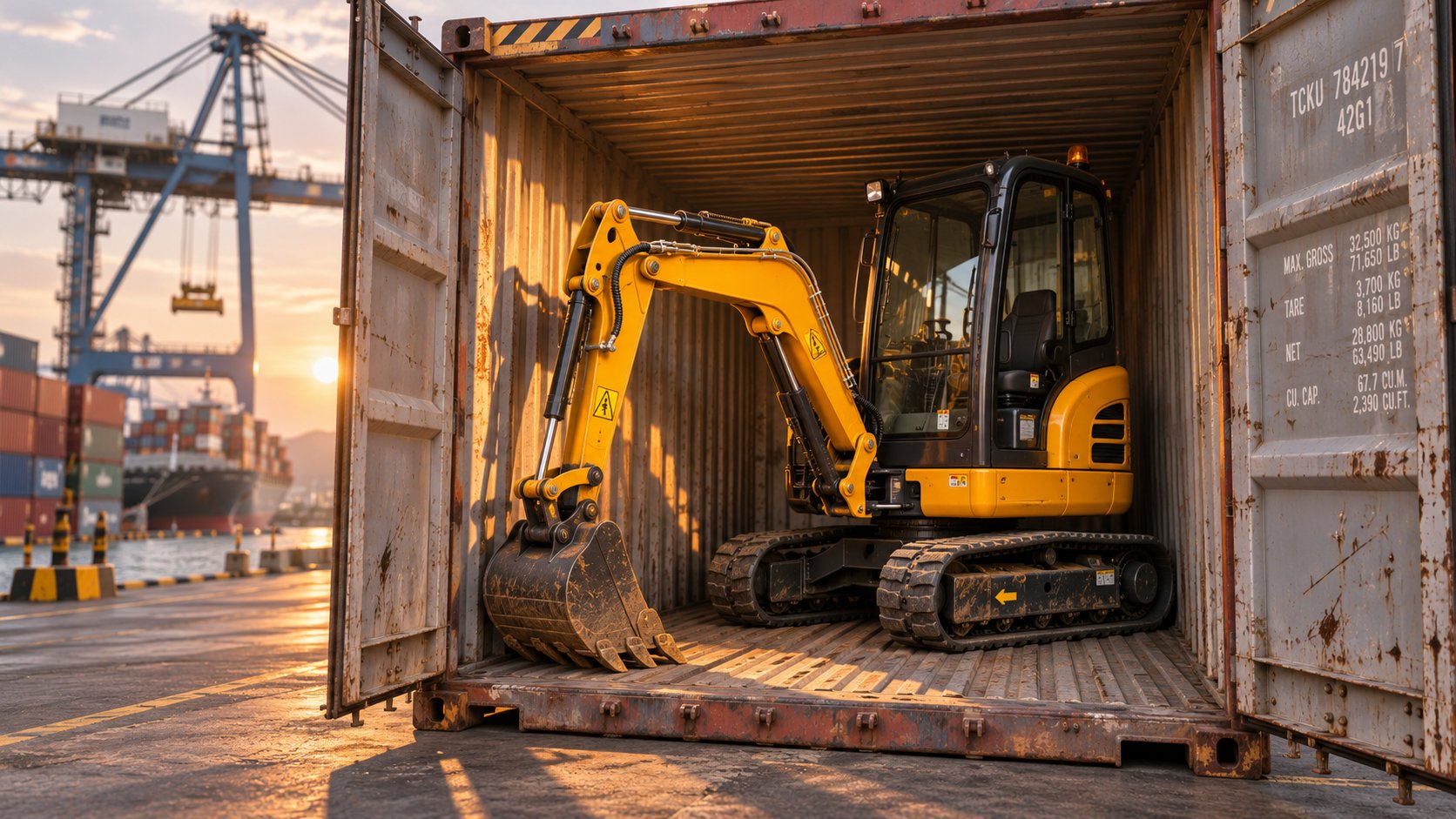
International suppliers open a channel that many domestic buyers overlook — and one that dealers and remarketing operations use regularly. Japan, in particular, produces a continuous flow of well-maintained used Komatsu equipment because Japanese contractors and rental companies replace machines on regular cycles, feeding a robust export market. Suppliers like JIUHONG offer browsable collections of used Komatsu excavators — spanning compact crawlers through larger production-class models — where contractors and equipment dealers can compare available units and request model-specific pricing tailored to their project or resale needs. The advantage is access to inventory that never appears on domestic listing sites, often at competitive price points. The considerations are real, too: international shipping, customs clearance, import duties, and the inability to perform an in-person walkaround before purchase all add layers of cost and complexity. Specific model availability varies with market flow, so buyers should inquire directly for current stock rather than assuming a particular unit will remain listed.
For context, this same international sourcing dynamic applies beyond excavators. Buyers shopping for a komatsu wheel loader, a Deere telehandler, or any other piece of heavy iron will find that overseas suppliers often carry models and price points that simply don't exist in the domestic used market. The key is accounting for every cost between the supplier's yard and your job site before declaring it a better deal.
The comparison table below maps how each channel stacks up across the factors that matter most. Use it as a decision framework — not a ranking — because the right channel depends on your experience level, risk tolerance, and operational needs.
| Purchasing Channel | Typical Price Level | Warranty Availability | Inspection Reliability | Selection Breadth | Buyer Risk |
|---|---|---|---|---|---|
| Authorized Komatsu Dealer | Highest — retail pricing with reconditioning built in | Often available (factory remainder or dealer-backed) | High — pre-sale inspection standard | Limited to dealer trade-ins and wholesale purchases | Low |
| Third-Party Marketplaces | Mid to High — varies by seller | Rare — depends on individual seller | Variable — buyer must verify independently | Very broad — national and regional listings | Moderate to High |
| Auction Platforms (Ritchie Bros., IronPlanet) | Lowest hammer price, but add premiums and fees | None — strict "as is, where is" | Limited — short preview windows | Very broad — high-volume sales weekly | High |
| Private Sellers | Mid — no overhead markup, negotiable | None | Depends on seller cooperation — can be thorough if allowed | Narrow — one machine at a time | Moderate to High |
| International Suppliers (e.g., JIUHONG) | Competitive base pricing, but add shipping, customs, and duties | Varies by supplier — inquire directly | Remote — relies on supplier photos, reports, and reputation | Broad — access to Japanese and overseas inventory | Moderate — mitigated by supplier track record and documentation |
A few patterns emerge from this comparison. Dealers offer the lowest risk at the highest price. Auctions offer the lowest entry price at the highest risk. International suppliers and private sellers both occupy a middle ground where the outcome depends heavily on the buyer's diligence and the seller's transparency. No single channel is universally best — the smart play is matching the channel to your specific situation.
If you're a fleet operator with a mechanic on staff, auctions might be your most profitable hunting ground. If you're a one-machine business where downtime means lost income, a dealer's warranty and service support might justify every dollar of the premium. And if you're an equipment dealer or reseller looking to stock inventory at scale, international suppliers like JIUHONG offer a pipeline of machines that can be evaluated remotely, shipped in containers, and remarketed domestically — a model that experienced dealers have used for years to source Japanese Komatsu units at favorable margins.
Whatever channel you choose, remember that every excavator excavator buyers ultimately settle on was only as good as the evaluation that preceded the purchase. The channel simply determines how much of that evaluation the seller does for you versus how much you do yourself.
Choosing your buying channel strategically gets you to the right marketplace — but knowing which Komatsu model generations to target and which to approach cautiously narrows the search even further. Certain production series carry known maintenance considerations that directly affect what you should expect to spend after the sale.
Common Issues to Watch by Komatsu Model Generation
Every Komatsu model generation carries its own engineering DNA — strengths inherited from decades of iterative refinement and maintenance quirks shaped by the emissions standards and hydraulic technology available at the time. A machine from the dash-8 era lives in a fundamentally different mechanical reality than a dash-11 unit, even if both carry the same model number prefix. Understanding these generational differences helps you set realistic maintenance budgets and avoid surprises that turn a fair-priced listing into an expensive lesson.
Think of it this way: if you've ever compared an older machine — say, a 2007 Komatsu PC150LC-3 that predates modern emissions requirements entirely — against a current-generation dash-11, you'll immediately recognize how dramatically the platform has evolved. Each generational jump brought meaningful changes, and some of those transitions introduced growing pains that buyers should know about before committing.
Known Considerations in the Dash-8 and Dash-10 Series
The dash-8 generation — models like the PC200-8 and PC138-8 — earned a solid reputation for hydraulic smoothness and straightforward mechanical design. These machines hit the market during an era when emissions requirements were less complex, which means their engine systems are simpler to maintain and cheaper to repair. Many contractors still swear by them for exactly that reason.
That said, age is catching up with the dash-8 fleet. Common wear areas on used Komatsu excavators of this vintage tend to include hydraulic pump fatigue — particularly on units that ran hydraulic breakers or other high-demand attachments — and electrical system issues stemming from aging wiring harnesses and connector corrosion. Walking motor failures have also been reported on some models, especially on units that accumulated heavy travel hours on rocky terrain. If you're evaluating a dash-8 machine, pay particular attention to pump responsiveness under load and listen carefully for abnormal whine or hesitation during multi-function operation.
The dash-10 series represents a more complicated evaluation. Komatsu introduced these models to meet Tier 4 Interim emissions standards, and the transition brought meaningful changes under the hood. Cooled EGR systems, diesel particulate filters, and revised engine management software all appeared in the -10 generation. Early production units in particular may have experienced aftertreatment-related issues as Komatsu refined the integration between its emissions hardware and the engine control logic. Operators on industry forums have noted occasional DPF regeneration quirks and sensor-related fault codes on first-year dash-10 production, though later builds within the same series generally improved as factory software updates addressed these teething problems.
The practical takeaway for buyers: when evaluating a dash-10 machine, pull the KOMTRAX data and look for recurring emissions-related fault codes. Ask whether the DPF has been replaced or cleaned, and confirm the machine is running current ECU software. A dash-10 that's been through its dealer-recommended software updates and DPF service intervals can be an excellent value — it carries much of the same structural durability as a dash-11 at a lower price point. One that's been ignored on the aftertreatment side, however, may need thousands in deferred emissions maintenance before it runs reliably.
If you're shopping for a Komatsu PC55 for sale or any other compact model from these generations, keep in mind that the smaller machines may not carry the same emissions complexity as mid-size and large crawlers. Many compact units from the dash-8 and early dash-10 era fell below the horsepower thresholds that triggered the most stringent Tier 4 requirements, simplifying their engine systems considerably. This is worth checking on a model-by-model basis.
What Improved in the Dash-11 Generation
The dash-11 series is where Komatsu pulled together the lessons learned from the dash-10 transition and delivered a genuinely refined product. Ranging from the 14-tonne PC138US-11 up to the 50-tonne PC490LC-11, the lineup arrived with EU Stage IV (equivalent to EPA Tier 4 Final) engines that Komatsu had fully integrated with mature aftertreatment systems. The regeneration issues and sensor quirks that some dash-10 owners experienced were largely resolved, and the entire emissions control system — including DPF, SCR, and DEF dosing — was tied into the machine's on-board diagnostics and KOMTRAX telematics for real-time monitoring.
Beyond emissions, Komatsu improved cab comfort and operator ergonomics significantly. The ROPS-certified cab on dash-11 models features a reinforced box structure mounted on viscous isolation dampers, reducing vibration levels noticeably compared to earlier generations. Standard air-suspended high-back seats, redesigned armrests, proportional control joysticks, and improved climate control made longer shifts more productive and less fatiguing. These refinements matter on the used market because operator preference directly influences demand — and machines that operators want to sit in sell faster and hold value better.
Serviceability also received attention. Guardrails on both sides of the upper structure improve access for routine maintenance. A hydraulically driven cooling fan can be manually reversed to clear debris from the cooling assembly without shutting down — a small detail that signals how thoroughly Komatsu refined the ownership experience. Radiator and hydraulic oil coolers mounted side-by-side simplify cleaning and reduce the time a mechanic spends on routine service intervals.
The cumulative effect? Dash-11 machines consistently command a premium in the used market, and that premium is justified by measurably lower operating costs, more reliable emissions compliance, and a cab environment that attracts rather than repels experienced operators. This same generational refinement philosophy extends across Komatsu's product lines — buyers evaluating a Komatsu dozer for sale, for instance, will find parallel improvements in the dash-11 bulldozer series, where similar emissions maturity and cab upgrades apply.
Regardless of which generation you're targeting, here are the key areas to investigate before committing to any used Komatsu excavator purchase:
- Emissions system reliability — Check DPF condition, DEF system function, and whether the machine runs current ECU software. Pull KOMTRAX data for recurring aftertreatment fault codes. Dash-8 units have simpler systems; dash-10 units require closer scrutiny; dash-11 units are generally mature but still need verification.
- Hydraulic pump longevity — Listen for whine, feel for hesitation under multi-function loading, and request oil analysis records. Pumps on dash-8 machines may be nearing end-of-life based on age alone, while dash-10 and dash-11 pumps benefit from improved efficiency designs but still wear based on application severity.
- Electrical system quirks — Older dash-8 harnesses are prone to connector corrosion and intermittent sensor failures. Dash-10 machines added more sensors for emissions compliance, increasing the number of potential fault points. Dash-11 units integrated these systems more cleanly but still warrant a full fault-code scan.
- Cab comfort and interface evolution — Dash-8 cabs are functional but basic. Dash-10 units introduced incremental improvements. Dash-11 cabs represent a genuine leap in ergonomics, noise isolation, and monitor interface quality — and that difference affects both operator productivity and resale demand.
Matching the right model generation to your budget and risk tolerance is the final filter before you move from research into action. A buyer who understands both the strengths and the watch-points of each Komatsu series can evaluate any listing with the confidence of someone who has owned machines across multiple generations — even if this is their first purchase.
Making a Confident Komatsu Excavator Purchase
Research without action is just reading. Every section of this guide — from model selection and technology verification to hands-on inspection, hour interpretation, pricing triangulation, channel strategy, and generational awareness — exists to give you a decision-making framework that turns browsing into buying with clarity. The difference between a buyer who lands a reliable machine at a fair komatsu excavator price and one who overpays for someone else's deferred maintenance isn't luck. It's preparation.
Whether you're sourcing compact excavators for residential utility work, a mid-size crawler for commercial site prep, or a mining excavator for production-scale earthmoving, the evaluation process follows the same core logic. Here's that logic distilled into a single actionable sequence you can follow from first search to signed paperwork.
Your Pre-Purchase Decision Checklist
- Define your project requirements and ideal size class. Match the machine to the work, not the other way around. A PC88 handles landscaping and shallow utility trenching. A PC210 covers most commercial earthmoving. A PC490 loads haul trucks in quarries. Buying too much machine wastes capital; buying too little wastes time and burns through undercarriage life on tasks the unit wasn't designed for.
- Set a realistic total budget — not just a purchase price. Factor in transportation, potential immediate repairs, undercarriage refresh if needed, insurance, and any import costs if buying internationally. A machine listed at $85,000 that needs $12,000 in deferred maintenance and $4,000 in shipping isn't an $85,000 purchase — it's a $101,000 commitment.
- Inspect thoroughly using the walkthrough checklist from this guide. Cold-start the engine, measure undercarriage wear, check every hydraulic function under load, examine structural welds, and test the swing bearing. Print the 12-step sequence and carry it to the inspection so nothing gets skipped under pressure from a seller eager to close.
- Verify KOMTRAX data or maintenance records. Request a KOMTRAX history report and cross-reference it against the hour meter, the seller's description of where and how the machine worked, and any service binders available. If KOMTRAX data isn't accessible, demand alternative documentation — oil analysis reports, dealer service invoices, or at minimum a credible explanation of the machine's working history.
- Compare pricing across multiple channels and data sources. Check completed auction results, active marketplace listings, and dealer estimates. Build a realistic market-value range for your target model, generation, and hour bracket. Never rely on a single asking price as your benchmark.
- Negotiate with data, not emotion. Present your inspection findings, comparable transaction prices, and estimated repair costs as the basis for your offer. Sellers respect — and respond to — buyers who arrive with evidence. Having financing pre-approved before you negotiate gives you the ability to move fast when the terms are right, which itself becomes a bargaining chip.
Start Comparing Machines With Confidence
Informed buyers don't just get better deals — they avoid the deals that look good on paper and fall apart on the job site. Every hour you invested reading this guide translates directly into sharper questions during inspections, more accurate valuations during negotiations, and fewer expensive surprises after the handshake. That's the real return on research.
Your next steps should be practical and parallel, not sequential:
- Set up saved searches on two or three major listing platforms filtered to your target Komatsu model, year range, and maximum hours
- Contact your nearest authorized Komatsu dealer to ask about current used inventory, trade-in opportunities, and any certified pre-owned programs available in your region
- Browse international supplier inventories — for example, JIUHONG's used Komatsu excavator collection offers a browsable range of compact and larger crawler models where contractors and equipment dealers can compare available machines and request model-specific pricing suited to their project or resale needs. Keep in mind that specific model availability changes with market flow, so confirm current stock directly with the supplier before planning around a particular unit.
- If you're considering auctions, register on platforms like Ritchie Bros. and attend a preview event before bidding on anything — even if you don't plan to buy that day. Watching the process first builds familiarity that pays off when real money is at stake.
Every komatsu excavator for sale carries a story written in its hour meter, its undercarriage wear, its hydraulic response, and its maintenance documentation. You now know how to read that story — how to separate a well-maintained workhorse from a cosmetically clean money pit, how to benchmark a komatsu excavator price against real transaction data rather than guesswork, and how to match your buying channel to your risk tolerance and operational needs. The machines are out there. The listings are live. The only variable left is the buyer — and that buyer just finished the most thorough preparation available. Go find the right one.
Frequently Asked Questions About Buying a Komatsu Excavator
1. How many hours is too many on a used Komatsu excavator?
The answer depends on the size class. Compact Komatsu excavators (PC35-PC88) generally enter high-hour territory around 5,000 to 6,000 hours, while mid-size models like the PC210 can run reliably to 6,000-10,000 hours. Large production crawlers such as the PC360 and PC490 are engineered for overhaul and may be rebuilt at 15,000-20,000 hours before returning to service. However, hours alone never tell the full story. A well-maintained 8,000-hour machine with complete service records and strong KOMTRAX data can be a far better investment than a neglected 3,000-hour unit with no documentation. Always pair the hour reading with maintenance history, undercarriage condition, and application type before judging value.
2. What is KOMTRAX and why does it matter when buying a used Komatsu?
KOMTRAX is Komatsu's proprietary telematics system installed at the factory on over one million machines worldwide. It records engine hours by date, GPS location history, fuel consumption, fault codes, idle ratios, and maintenance compliance — often spanning the entire life of the machine. For used buyers, KOMTRAX is invaluable because it makes hour-meter fraud nearly impossible and reveals recurring mechanical issues the seller may not disclose. You can request a KOMTRAX report through the seller or ask a Komatsu dealer to pull data using the machine's serial number. If a seller refuses to share this report, treat it as a significant red flag and consider other listings.
3. How much does a used Komatsu excavator cost?
Used Komatsu excavator pricing varies widely based on model, size class, machine hours, year of manufacture, undercarriage condition, technology options like iMC, and geographic location. To research fair market value, check completed auction results on platforms like Ritchie Bros., compare active asking prices across multiple marketplaces such as MachineryTrader and Equipment Trader, and consult authorized dealer trade-in estimates. Remember that asking prices typically exceed actual transaction prices by 8-20%, and total acquisition cost should include transport, potential repairs, and import fees if buying internationally. Suppliers like JIUHONG (https://jiuhong-machinery.com/products/excavators/komatsu/) also let buyers compare used Komatsu models and request tailored pricing.
4. What should I inspect before buying a used Komatsu excavator?
A thorough pre-purchase inspection should cover four critical areas. First, measure the undercarriage — track pads, chains, rollers, idlers, and sprockets — since replacement can cost $12,000 to $30,000 depending on machine size. Second, evaluate the hydraulic system by checking for hose leaks, cylinder rod scoring, and performing a boom-drift test to detect internal leakage. Third, cold-start the engine and watch exhaust color: blue smoke signals oil burning, black indicates fuel issues, and white may mean coolant entering combustion. Fourth, inspect structural integrity around boom pin bosses and the swing bearing for cracks or non-factory welds. Always verify documentation including serial numbers, lien status, and KOMTRAX records before committing.
5. Is it better to buy a Komatsu excavator from a dealer, auction, or international supplier?
Each channel suits different buyer profiles. Authorized Komatsu dealers offer the lowest risk with pre-sale inspections and warranty options, but prices run 15-25% above auction levels. Auction platforms like Ritchie Bros. can yield bargains on unreserved sales, though everything sells as-is with no warranty and buyer premiums add 10-15% to the hammer price. Private sellers offer direct negotiation without middleman fees, but provide no recourse if problems surface later. International suppliers such as JIUHONG (https://jiuhong-machinery.com/products/excavators/komatsu/) provide access to well-maintained Japanese inventory at competitive base prices, though shipping, customs, and import duties must be factored into total cost. First-time buyers or single-machine operators often benefit most from dealer support, while experienced fleet operators may find auctions or international sourcing more cost-effective.