

Understanding John Deere Construction Used Equipment
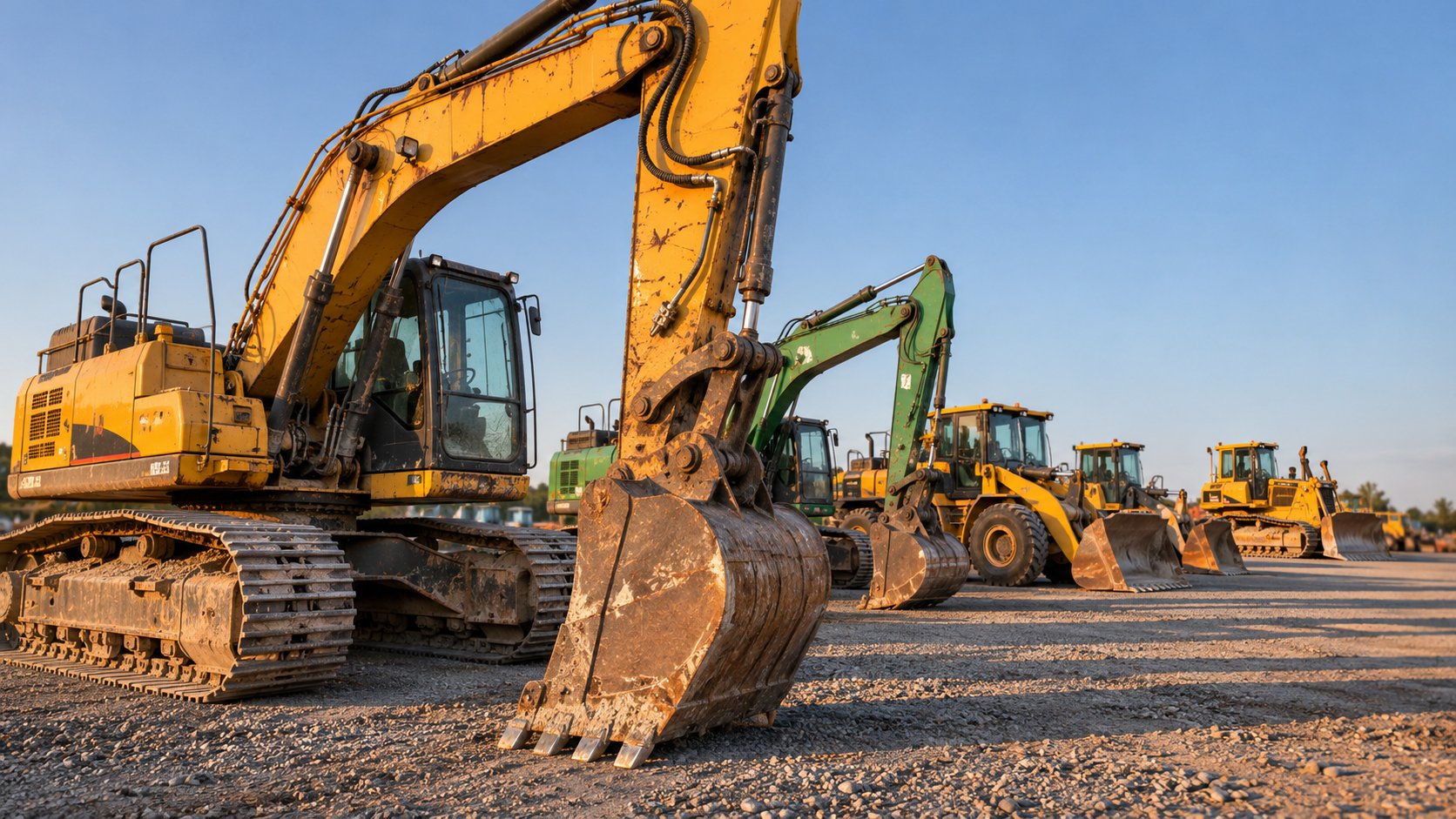
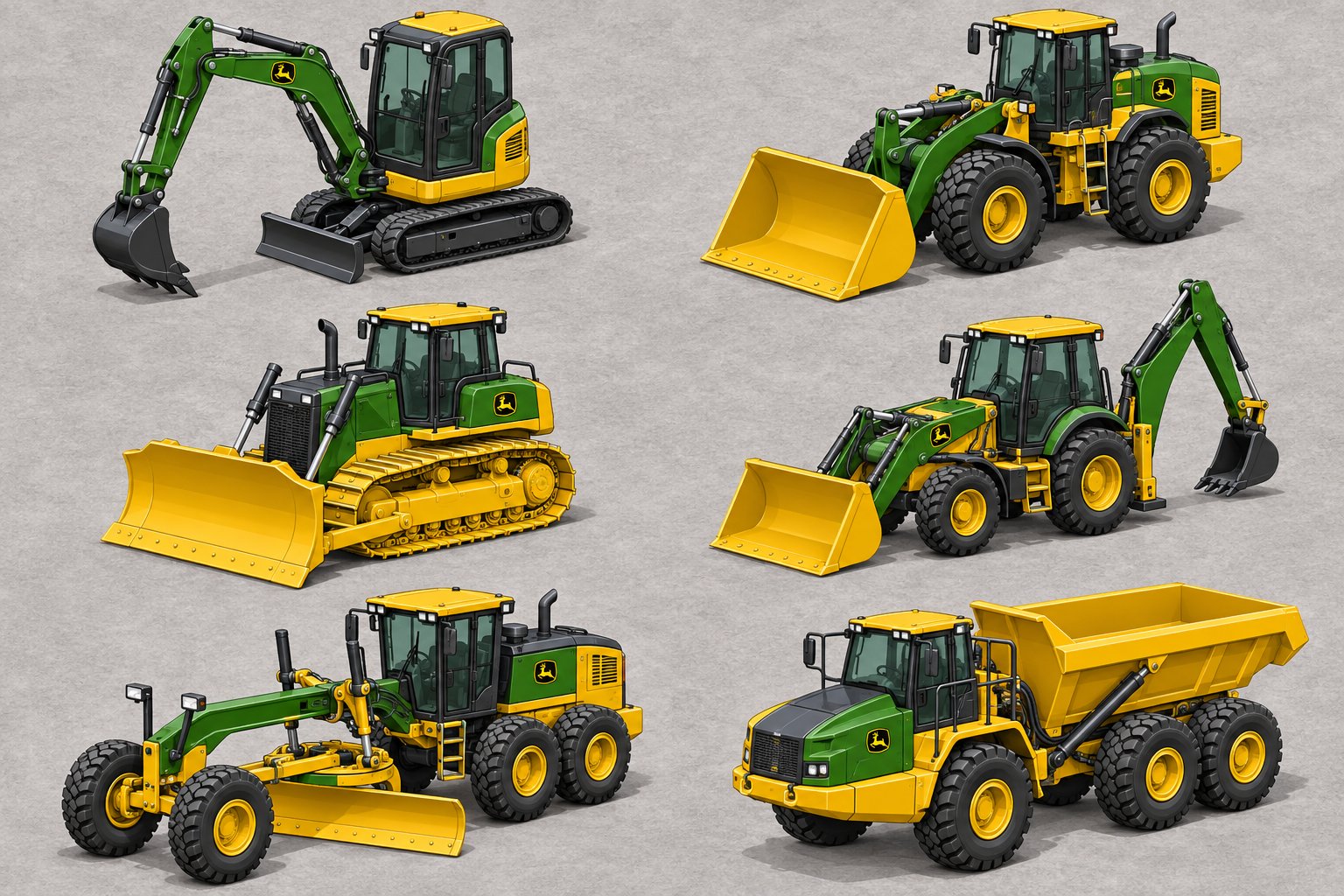
When contractors talk about John Deere construction used equipment, they're referring to a remarkably broad lineup of machines built for earthmoving, grading, loading, hauling, and site prep. These aren't just a single John Deere tractor sitting on a lot somewhere. The category spans compact and full-size excavators, wheel loaders, crawler dozers, backhoe loaders, motor graders, skid steers, articulated dump trucks, and even specialized forestry machines. Each family serves a distinct role on the jobsite, and each carries its own set of buying considerations on the secondary market.
What Falls Under John Deere Construction Equipment
Deere's construction division manufactures machines ranging from nimble mini excavators ideal for tight residential jobs all the way up to massive production-class excavators and articulated haulers designed for heavy civil and mining work. Wheel loaders handle material movement. Crawler dozers push and grade. Backhoes remain the Swiss Army knife of smaller operations. Motor graders finish road surfaces with precision. And skid steers, paired with dozens of attachment options, tackle everything in between. If you've ever searched for a john deere tractor price and felt overwhelmed by options, imagine multiplying that complexity across an entire heavy equipment portfolio.
Why the Used Market Matters for Contractors
Buying pre-owned Deere machines lets small and mid-size contractors access Tier 4 Final engine technology and advanced hydraulic systems at significantly lower entry costs than new iron. With tariffs, elevated interest rates, and inflation pressuring equipment budgets heading into 2026, the used market has become even more central to fleet strategy. Industry data suggests that pre-owned construction equipment typically saves buyers 40-60% compared to new retail pricing, and machines that have already passed through their steepest depreciation phase hold value more predictably over time.
Most online resources for used Deere construction equipment are dealer inventory pages designed to sell machines, not educational guides designed to help you buy wisely. That gap leaves contractors without a neutral decision-making framework at the exact moment they need one most.
This article is built to fill that gap. Think of it as a buyer-advocacy resource covering the full purchasing lifecycle, from identifying the right equipment type through condition evaluation, channel selection, and post-purchase planning. Whether you're comparing listings from used tractor dealers or weighing a private-party deal against a certified dealer offer, every section ahead is written to sharpen your judgment, not push inventory. Even if your fleet also includes lighter assets like a john deer mower for grounds maintenance, the inspection and sourcing principles covered here apply across the board.
Of course, making a smart buying decision starts with knowing exactly which machine categories exist on the used market and what makes each one unique in a second-hand context.
Every Equipment Category Available on the Used Market
Searching for "john deere near me" and seeing dozens of machine types in the results can feel like drinking from a fire hose. Excavators, dozers, loaders, graders, dump trucks — each category behaves differently on the resale market, depreciates at its own rate, and presents its own set of red flags during inspection. Understanding those differences before you start shopping is what separates a savvy buyer from someone chasing the lowest sticker price.
Excavators and Mini Excavators
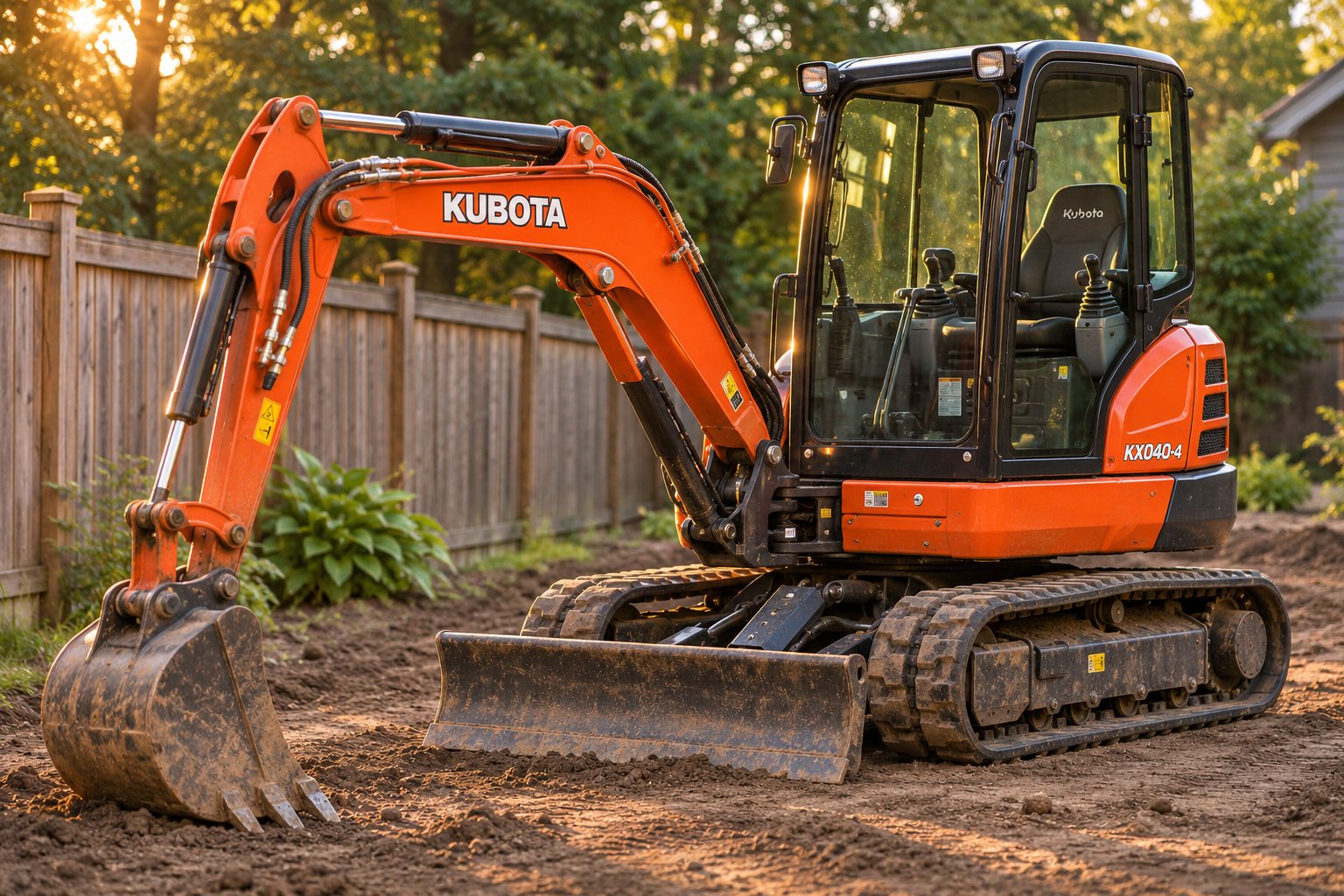
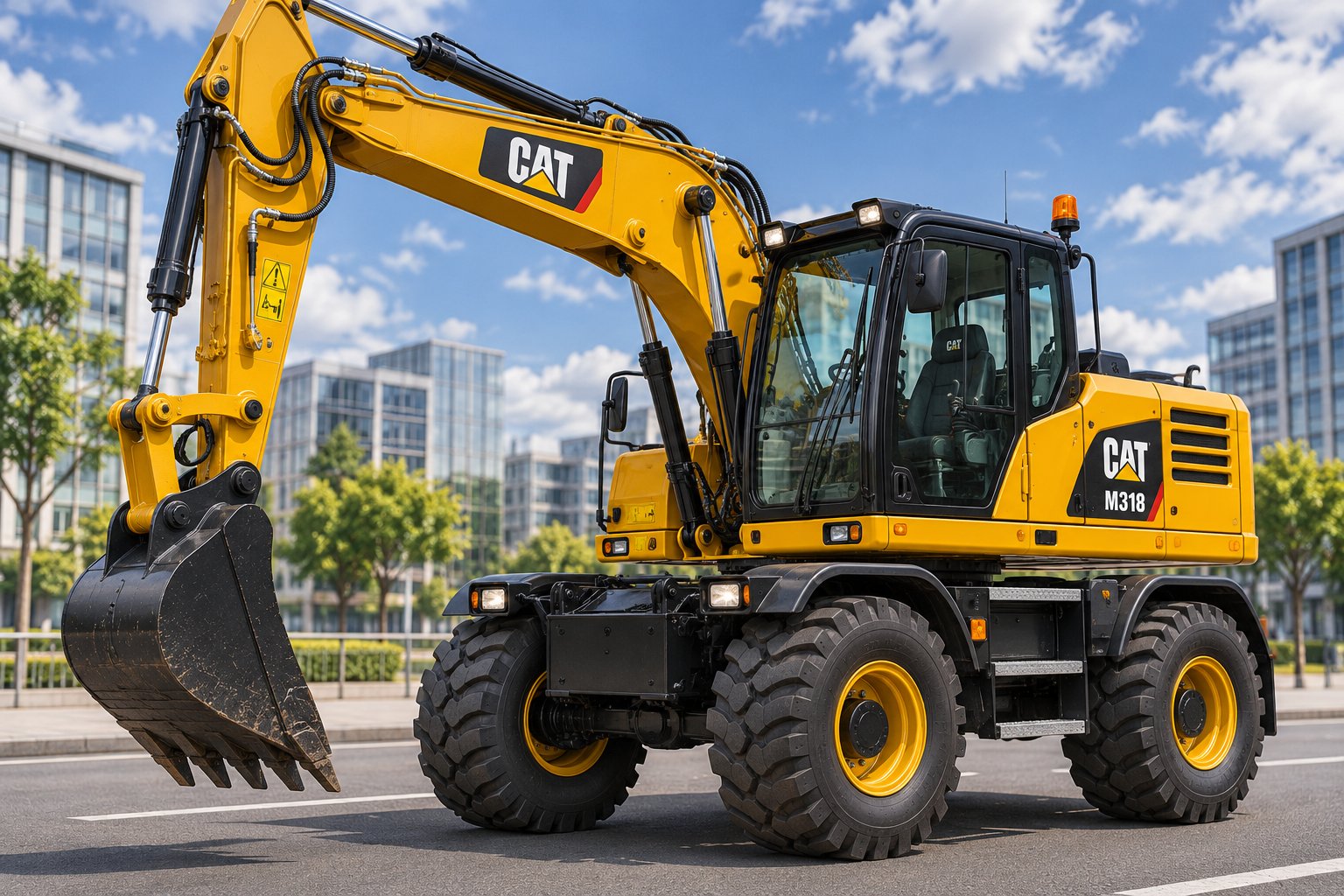
Deere's excavator lineup is one of the most actively traded segments of the john deere construction used equipment market. On the compact end, you'll find machines like the 17 P-Tier and 26 P-Tier — purpose-built for utility work, landscaping, and tight residential sites. Scale up, and the mid-size range includes the 210, 230, and 260 P-Tier models designed for production-level site development. At the top, large excavators in the 350-to-870 class handle quarry operations, mass excavation, and heavy civil projects.
When evaluating any used excavator, two factors dominate the value equation: undercarriage condition and boom-cylinder wear. Undercarriage components — tracks, rollers, idlers, and sprockets — are among the most expensive items to replace on tracked machines. Boom and stick cylinders endure constant stress cycles, so look for seal leaks, scoring on cylinder rods, and sluggish hydraulic response. A machine with solid undercarriage life remaining is worth considerably more than one approaching a full rebuild, even if the listed hours are similar.
Loaders and Dozers
Deere's wheel loader range — spanning models like the 524, 624, 644, 724, 744, and 944 series — covers everything from ag material handling to large-scale aggregate operations. On the used market, powertrain hours and transmission health are the primary value drivers. Wheel loaders accumulate stress through constant load-and-carry cycles, so pay close attention to axle condition and tire wear patterns that might indicate alignment or drivetrain problems.
Crawler dozers tell a similar story, though the wear points shift. Deere currently manufactures nine dozer models with operating weights ranging from roughly 17,800 to 94,580 lbs, organized into small (450, 550, 650 P-Tier), mid-size (700, 750, 850 P-Tier, and the 850 X-Tier E-Drive), and large (950, 1050 P-Tier) classes. Final-drive health and undercarriage wear are the cost centers to watch. A dozer that spent years in rocky terrain will have a dramatically different remaining service life than one used for finish grading on clean fill — even at identical hour readings. If you're searching for a john deere dealership near me to inspect a used dozer in person, ask specifically about track-shoe measurements and roller seal condition.
Backhoe Loaders and Skid Steers
Versatility is what makes the 310 and 410 P-Tier backhoe loaders hold their value so well on the secondary market. These machines dig, load, grade, and handle utility work — a one-machine solution for small to mid-size contractors who can't justify a fleet of single-purpose equipment. When buying used, inspect the swing tower, loader arm pivot pins, and stabilizer pads, as these high-stress joints wear faster than most buyers expect.
Skid steers and compact track loaders — think the 320, 330, and 334 G/P-Tier models — are equally popular in the used john deere tractors and equipment market. Their broad utility across construction, agriculture, and landscaping keeps demand consistently high. Tire or track condition, loader arm bushings, and hydraulic coupler wear are the key inspection points. Because skid steers run so many different attachments, you'll also want to verify that the auxiliary hydraulic flow rates match the tools you plan to use.
Motor Graders and Articulated Dump Trucks
These are the higher-capital categories where buying pre-owned delivers the steepest percentage savings. Deere's motor grader lineup — spanning the 622 through 872 class — is built for road construction, base preparation, and precision finish work. Used graders require careful evaluation of circle-and-moldboard wear, all-wheel-drive components (if equipped), and blade-tip condition. These machines also tend to have lower availability on the used market compared to excavators or loaders, so finding the right unit may take patience.
Articulated dump trucks in the 250D through 460E range are workhorses on large earthmoving, mining, and infrastructure projects. Their used-market pricing reflects the high original MSRP, but percentage discounts from new can be significant. Inspect the articulation joint, bed and frame for structural cracks, and drivetrain components closely — these machines endure punishing haul cycles that stress every system simultaneously. Anyone looking at john deere dealers near me for ADT inventory should plan to budget for a professional pre-purchase inspection, given the capital at stake.
| Equipment Category | Typical Model Range | Key Wear Points to Inspect | Relative Used-Market Availability |
|---|---|---|---|
| Compact Excavators | 17 P-Tier to 85 P-Tier | Undercarriage, boom cylinders, swing bearing | High — large volume of units in circulation |
| Mid-Size & Large Excavators | 130 to 870 class | Undercarriage, bucket linkage, hydraulic pumps | Moderate to High |
| Wheel Loaders | 524 to 944 series | Transmission, axles, tire wear, loader pins | Moderate |
| Crawler Dozers | 450 to 1050 P-Tier | Final drives, undercarriage, blade cutting edges | Moderate |
| Backhoe Loaders | 310 to 410 P-Tier | Swing tower, stabilizer pads, loader arm pins | Moderate to High |
| Skid Steers & CTLs | 312 to 334 G/P-Tier | Tires/tracks, loader arm bushings, auxiliary hydraulics | High |
| Motor Graders | 622 to 872 class | Circle & moldboard, AWD system, blade tips | Low to Moderate |
| Articulated Dump Trucks | 250D to 460E | Articulation joint, frame cracks, drivetrain | Low to Moderate |
Whether you're browsing used john deere tractors for sale at a jd dealer near me or scanning online listings from across the country, matching the right category to your operational needs is only half the equation. The other half — arguably the more consequential half — comes down to understanding what the machine's hours and service records actually reveal about its true condition.
Why Machine Hours and Service History Drive Value
Imagine two identical John Deere 330G excavators listed at the same price. One shows 4,500 hours; the other shows 7,200 hours. Which is the better deal? Most buyers instinctively reach for the lower number — and that instinct can be expensive. Hours matter, but they only tell part of the story. The real question is what happened during those hours, and whether there's documentation to prove it. These two data points — machine hours and verified service history — are the foundation of every sound buying decision in the used construction equipment market.
How Machine Hours Translate to Remaining Useful Life
Construction equipment hours function a lot like odometer miles on a truck. They give you a rough measure of how much work a machine has done over its lifetime. Dealer inventory listings display hours per unit prominently — you'll notice them front and center on any equipment page — because buyers have been conditioned to use that number as a shorthand for condition. But hours alone are a poor proxy for what really matters: remaining useful life.
Here's why. A 10,000-hour excavator that spent its career doing light utility trenching in sandy soil has experienced a fundamentally different workload than a 10,000-hour machine that ran double shifts in a granite quarry. The type of application — load intensity, duty cycle, and operating environment — shapes wear patterns far more than raw hour counts suggest. Modern ECU data on many Deere machines can even reveal the average engine load factor over the machine's life, showing whether it was consistently worked hard or operated under lighter conditions.
The counterintuitive reality? A higher-hour machine with complete, on-schedule maintenance records can be in significantly better mechanical condition than a low-hour unit that was neglected. Skipped oil changes, ignored filter intervals, and deferred hydraulic service accelerate internal wear in ways that don't always show up during a walk-around. If you're browsing john deere tractors for sale and tempted to filter results by lowest hours first, resist that urge until you've checked the paperwork.
Hour-meter tampering is another risk worth acknowledging. While increasingly difficult on modern machines with ECU-recorded hours, older units remain vulnerable to manipulation. Requesting an ECU data download — which captures hours independently of the dashboard meter — provides an additional layer of verification. Any significant discrepancy between the displayed hours and the ECU-recorded hours is a serious red flag.
Reading and Verifying Maintenance Records
If machine hours are the headline, service history is the full article. A complete maintenance record transforms a used equipment purchase from a gamble into a calculated decision. But what does "complete" actually look like?
A well-maintained piece of john deere construction used equipment should come with layered documentation that covers its entire operating life — not just the recent highlights a seller chose to share. Dealer-stamped worksheets are the gold standard because they include the machine's serial number, the date and hours at each service, a detailed description of work performed, parts used, and the technician's signature. These records are extremely difficult to fabricate and can often be independently verified through the dealer network.
Oil analysis reports deserve special attention. Regular fluid sampling from the engine, hydraulic system, and transmission creates a chemical biography of the machine's internal health. Clean, consistent results across many intervals indicate disciplined maintenance and minimal component wear. Conversely, elevated iron or copper levels in engine oil point to accelerated wear on bearings and internal surfaces — problems that may not be visible externally but carry significant repair costs.
Before finalizing any purchase — whether from an authorized dealer, a private seller, or an auction — demand the following documents:
- Dealer service worksheets or owner maintenance logs covering all scheduled intervals (oil, filters, hydraulic fluid, coolant)
- Oil and fluid analysis reports from an accredited laboratory, ideally spanning multiple sample intervals
- Undercarriage inspection and measurement records (for tracked machines)
- Documentation of any major component rebuilds or replacements (engine overhauls, hydraulic pump swaps, final-drive rebuilds, turbo replacements)
- ECU data download confirming recorded hours, stored fault codes, and engine load history
- Warranty claim records, which authorized dealers can often retrieve using the machine's serial number
- Repair invoices showing parts used and labor performed for any non-routine work
Gaps in these records should never be dismissed as neutral. A machine listed among used farm equipment for sale or on a construction equipment marketplace without service documentation is a machine whose maintenance you simply cannot verify. As one industry rule of thumb puts it: no records means no proof of care, and no proof of care means you should price the machine as if it needs everything — or walk away.
Pay attention to consistency, too. If the manufacturer specifies 500-hour oil change intervals and the records show services at 700 or 800 hours apart, the machine was consistently overdue. Photocopied records with no originals available, or documents where the serial number doesn't match the machine in front of you, are additional warning signs that the paperwork may belong to a different unit entirely.
For buyers exploring certified used equipment john deere programs through authorized dealers, much of this verification burden is handled before the machine reaches the lot. But for anyone shopping outside that channel — scanning listings near a garden john deere tractor dealer, browsing used farm equipment near me, or considering a private-party deal — building this documentation checklist into your buying process isn't optional. It's the single most effective way to separate a real deal from a costly mistake.
Strong records and honest hours give you confidence in what a machine has been through. The next layer of protection comes from understanding what the seller is willing to guarantee going forward — and that's where certification programs and warranty structures enter the picture.
The PowerGard Certified Used Program Explained
A seller's willingness to back a machine with a formal guarantee tells you something no inspection alone can. It signals that the equipment has been vetted, that documented standards were met, and that someone besides you is sharing the financial risk of unexpected failure. For buyers shopping john deere construction used equipment through authorized dealer channels, that guarantee often comes in the form of the PowerGard Certified Used program — and yet, surprisingly few buyers fully understand what it does and doesn't cover.
What PowerGard Certified Used Actually Covers
John Deere's PowerGard Certified Used designation is not a generic marketing label. Each certified machine is sold with a PowerGard Protection Plan that covers up to three years or 2,000 hours, with the buyer's choice between comprehensive or limited coverage. The plan spans main components, electronics, hydraulics, cab systems, and air conditioning — a scope that meaningfully reduces your exposure to major repair bills during the coverage window.
Before a machine earns the certified badge, it must pass a full PowerGard Certified Comprehensive Inspection. That process includes a total fluid scan analysis and any required service performed by a John Deere technician using genuine Deere parts. Machines that don't clear this inspection don't receive the designation — plain and simple.
Eligibility thresholds matter here. For agriculture and turf equipment, Deere specifies that used tractors can qualify up to 15 years old and 5,000 hours, while combines, sprayers, and nutrient applicators must be under 10 years old with fewer than 2,000 hours. Cotton harvesters and self-propelled forage harvesters face tighter limits of 7 years and 2,000 hours. On the construction and forestry side, Deere advertises up to 12-month warranties with special financing and dealer support for certified used units. The key takeaway? Not every pre-owned Deere qualifies, and age-plus-hour thresholds vary by machine type.
One important caveat: the Used PowerGard Protection Plan is a limited engine-and-powertrain warranty. It does not cover attachments, maintenance items, high-wear parts, or other specifically excluded components outlined in the contract terms. Always read the actual plan contract before assuming a repair will be covered.
Certified vs. Non-Certified Used Equipment
Imagine you find two comparable Deere 330 skid steers — same year, similar hours. One sits on an authorized dealer's lot with PowerGard certification. The other is listed by a private seller two states away. Which one costs less? Almost certainly the private-party unit. Which one carries less risk? That answer is just as clear.
Certified machines command a price premium, and for good reason. You're paying for an inspection process backed by the manufacturer, a warranty that transfers financial risk off your balance sheet, and access to the dealer's parts and service infrastructure after the sale. Non-certified machines — whether from a used tractor dealer, an auction, or a private party — may be mechanically sound, but the burden of proving that falls entirely on you.
The difference in resale value compounds this gap over time. A tractor john deere used with documented certification history tends to hold its value better when you eventually trade up, because the next buyer benefits from the same paper trail. A machine with no certification and limited records, by contrast, gets discounted by every subsequent buyer who can't verify its condition.
| Dimension | Certified Used (PowerGard) | Non-Certified Used |
|---|---|---|
| Warranty Coverage | Up to 3 years / 2,000 hours (comprehensive or limited options) | Typically sold as-is; aftermarket warranties may be available at extra cost |
| Inspection Assurance | Multi-point dealer inspection with fluid analysis and genuine parts service | No guaranteed inspection; buyer must arrange independent evaluation |
| Typical Price Premium | Higher than non-certified equivalents due to warranty and inspection value | Lower purchase price, but hidden repair costs may offset savings |
| Resale Value Retention | Stronger — documented certification history supports future trade-in value | Weaker — buyers discount machines with incomplete provenance |
| Post-Sale Parts & Service | Full dealer support, 24/7 parts access, integrated service scheduling | Varies widely; independent sellers rarely offer ongoing support |
This comparison doesn't mean non-certified equipment is always a bad bet. Contractors who have the mechanical expertise to perform their own inspections — or who budget for a qualified third-party evaluator — can absolutely find excellent value outside the certified channel. The risk profile is simply different, and the cost of misjudging condition falls squarely on the buyer.
How to Confirm Certification Status
Here's a detail that catches many buyers off guard: not every machine sitting on an authorized dealer's lot carries PowerGard Certified Used status. Dealers sell both certified and non-certified pre-owned equipment, and the distinction isn't always obvious from a listing photo or a casual lot visit. A machine might appear alongside certified inventory without actually having gone through the program.
Protecting yourself is straightforward but requires deliberate action. Ask the selling dealer directly whether the specific unit you're evaluating has completed the PowerGard Certified Comprehensive Inspection. Request the written certification documentation, including the inspection report, fluid analysis results, and the PowerGard Protection Plan contract with its exact coverage terms, duration, and exclusions. If a salesperson can't produce those documents, the machine isn't certified — regardless of how it's marketed.
For anyone searching "john deer near me" or browsing a jd tractor for sale online, certification availability will also vary by region, by dealer, and by equipment type. Construction and forestry certified used programs may have different terms than ag and turf programs, so confirm the specifics for the machine category you're considering. When in doubt, contact the nearest authorized Deere dealer and verify using the machine's serial number.
Certification provides a valuable safety net — but it doesn't replace your own eyes on the machine. Even a certified unit benefits from a buyer who knows exactly what to look for during a hands-on walk-around, which is precisely where a structured pre-purchase inspection checklist becomes indispensable.
The Pre-Purchase Inspection Checklist Every Buyer Needs
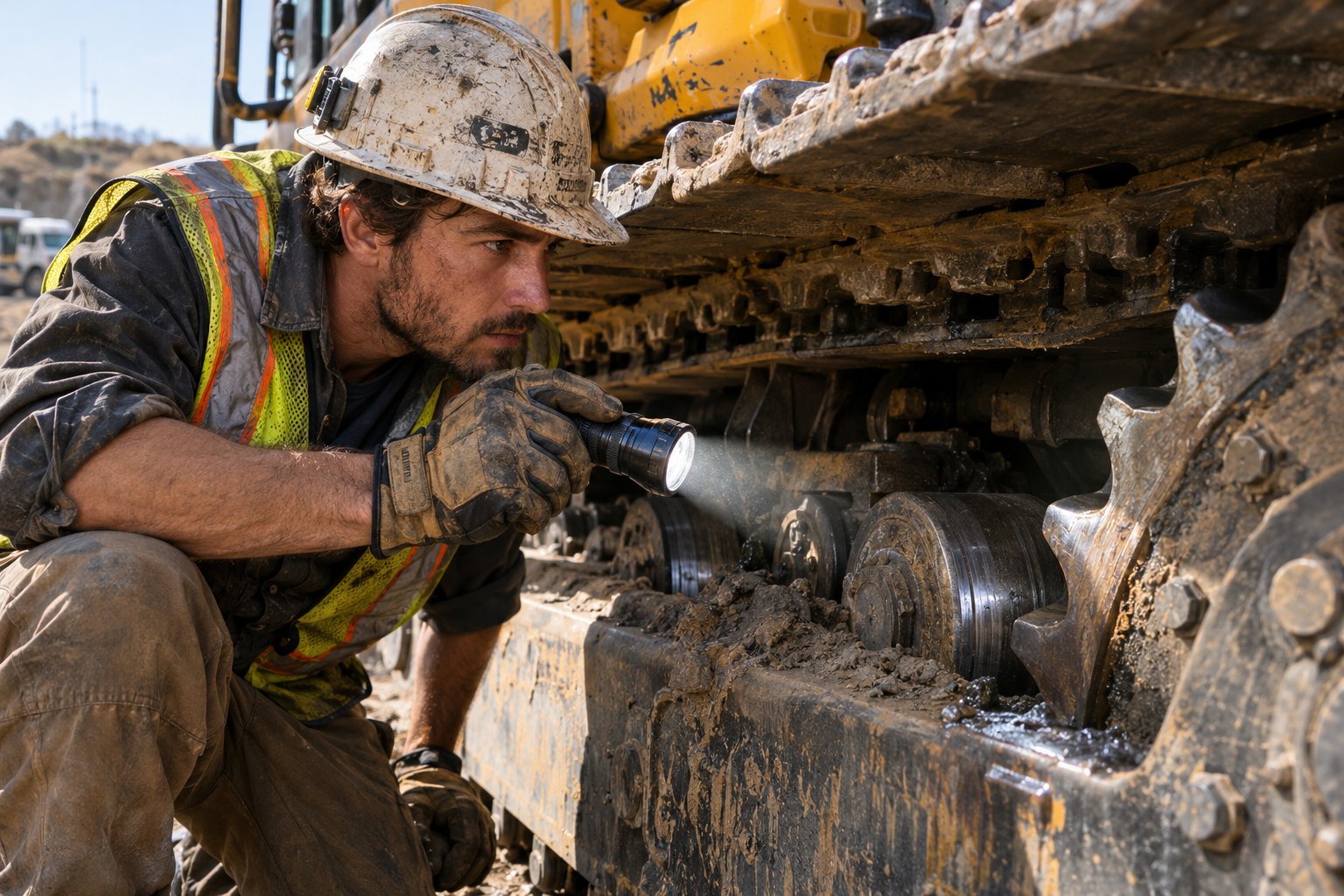
Paperwork tells you where a machine has been. A hands-on inspection tells you where it's headed. Certification and service records can narrow the field, but nothing replaces standing next to a piece of john deere construction machinery, walking around it systematically, and letting the machine reveal what the documents might not. Whether you're evaluating an excavator and skid steer side by side on a dealer lot or flying out to inspect a single dozer from a private seller, you need a repeatable process that covers every critical system in a logical sequence.
The checklist below is designed for exactly that — a structured, on-site walk-around you can follow step by step. Print it, save it to your phone, or hand it to your mechanic. It applies to virtually any piece of used Deere construction equipment regardless of category.
Structural and Undercarriage Assessment
Start at the ground level and work your way up. Frame and structural integrity are non-negotiable, because a cracked frame isn't just a repair — it's often a write-off. Look closely at weld seams around booms, stick connections, and mounting points. Fresh paint in isolated areas is a classic tell: it may be hiding rust, cracks, or previous structural repairs the seller would rather you not notice. Examine pin bosses on excavators and backhoes for egg-shaped wear or excessive play, which signals years of heavy-cycle loading.
For tracked machines — dozers, excavators, compact track loaders — the undercarriage deserves its own mini-inspection. Track shoes, carrier rollers, bottom rollers, idlers, and sprockets all wear at different rates depending on terrain and maintenance habits. According to Stewart-Amos Equipment Co., professionals recommend inspecting undercarriage components every 1,000 to 2,000 hours, and a full undercarriage replacement ranks among the most expensive repairs on any tracked machine. Compare both sides of the undercarriage for uneven wear — if one side is significantly more worn, it can indicate operating technique issues or underlying mechanical problems. Ask for measurement records if the seller has them, and factor the remaining undercarriage percentage into your offer price.
Hydraulic System and Engine Health Checks
Hydraulics are the lifeblood of any piece of construction equipment, so give them serious attention. Inspect every visible hose for brittleness, cracking, abrasion, and signs of patched repairs. Check cylinder rods on booms, sticks, and buckets for scoring or pitting — these surface imperfections destroy seals and cause progressive leaks. Operate the machine under light load and watch for hydraulic drift, where a raised implement slowly sinks on its own. That symptom points to worn internal seals or failing control valves, and the repair bill can escalate quickly.
Pull the hydraulic fluid dipstick or sight glass. Clean fluid at the correct level suggests consistent care. Dark, foamy, or metallic-flecked fluid tells a very different story. If the seller has oil analysis reports available, review them for elevated particle counts — high iron or copper levels in hydraulic samples indicate accelerated pump or motor wear happening inside the system where you can't see it.
Engine diagnostics follow a similar logic. Request a cold start so you can hear the engine fire from ambient temperature — difficulty starting or knocking sounds suggest worn bearings or injection timing issues. Watch the exhaust closely during warm-up and under load. Blue smoke points to oil burning past worn rings or valve guides. White smoke may indicate coolant entering the combustion chamber, possibly through a failed head gasket. Black smoke typically signals fuel system problems such as a clogged air filter or failing injectors. While the engine runs, remove the oil fill cap and check for excessive blow-by — a strong pulse of air escaping from the crankcase confirms worn piston rings or cylinder walls. Finally, inspect the coolant for contamination; oil-slicked or foamy coolant is a red flag for internal gasket failure.
Cab, Electronics, and Attachments
You'll spend hundreds or thousands of hours inside the cab, so don't rush through this part. Test every switch, gauge, and control. Cycle the HVAC system through heating and cooling modes. Check the seat suspension, mirrors, and seatbelt. Verify that the display screen powers on correctly, shows accurate readings, and doesn't throw persistent fault codes. If the machine is equipped with a JDLink telematics module, confirm it's active and transferable — that module provides remote diagnostics, GPS location, and usage data that add real operational value.
Attachments and couplers are the final piece. A quick-coupler that doesn't lock securely is a safety hazard. Verify that the coupler style matches the attachments you already own, and check auxiliary hydraulic flow rates against the requirements of your most-used tools. These compatibility details affect your total cost of acquisition just as much as the base machine price. Anyone shopping for jd tractors for sale or browsing used deere tractors sale listings should treat attachment compatibility as a line item in the budget, not an afterthought.
Pulling all of these inspection points together, here is a numbered walk-around checklist you can follow on-site:
- Walk the full perimeter of the machine and note any fresh paint, dents, structural cracks, or suspicious weld repairs on the frame, boom, and stick.
- Inspect pin bosses and pivot points for egg-shaped wear, excessive play, or missing grease fittings.
- Examine the undercarriage (tracked machines): measure track shoe, roller, idler, and sprocket wear, and compare both sides for uneven patterns.
- Check all hydraulic hoses for cracks, brittleness, bulges, or evidence of patched repairs.
- Inspect hydraulic cylinder rods for scoring, pitting, or active leaks at seals.
- Operate implements under light load and watch for hydraulic drift — any implement that sinks slowly on its own signals internal seal or valve failure.
- Pull fluid samples or review existing oil analysis reports for the engine, hydraulic system, and transmission.
- Perform a cold start and listen for knocking, misfires, or excessive cranking time.
- Monitor exhaust color during startup and under load — blue, white, or black smoke each indicate specific engine problems.
- Check for engine blow-by by removing the oil fill cap while the engine is running and feeling for excessive air pressure.
- Inspect coolant condition for contamination, oil slicks, or foaming.
- Enter the cab and test every switch, gauge, light, display screen, and HVAC function.
- Verify JDLink telematics module status and transferability, if equipped.
- Cycle through all operator controls — joysticks, pedals, steering — and note any dead spots, delayed response, or unusual vibration.
- Inspect the quick-coupler for secure locking, check auxiliary hydraulic flow rates, and confirm attachment compatibility with your existing tool inventory.
For any high-value purchase — especially machines listed at a used construction equipment dealer or through private channels — hiring an independent, third-party inspector is strongly recommended. The cost of a professional evaluation is a fraction of the repair bills it can help you avoid.
Even the most thorough walk-around, however, can't catch everything a seller might not disclose. Concealed damage, outstanding liens, and warranty gaps represent a different class of risk entirely — one that requires a separate set of protective strategies beyond the physical inspection itself.
Common Pitfalls When Buying Used Construction Equipment for Sale
A solid inspection catches what's visible. But some of the most expensive mistakes in the used equipment market aren't mechanical at all — they're informational. Concealed repairs, undisclosed liens, and misunderstood warranty terms have cost contractors tens of thousands of dollars on machines that looked perfectly fine on the surface. Protecting yourself requires thinking beyond the physical condition of the iron and into the legal, financial, and contractual layers surrounding the transaction.
Hidden Mechanical Issues and Undisclosed Damage
Fresh paint on a ten-year-old machine should make you curious, not impressed. As industry sources consistently warn, cosmetic touch-ups are one of the most common methods sellers use to mask structural welding, frame cracks, and repaired collision damage. A bucket arm that was cracked and re-welded may hold for a while, but the weld creates a stress concentration point that's weaker than the original casting. Multiply that across several concealed repairs, and you're operating a machine with a compromised structural envelope.
How do you fight back? Start with oil analysis reports. If the seller doesn't have them, consider pulling your own samples before closing. Engine oil, hydraulic fluid, and transmission fluid each carry a chemical fingerprint of internal wear — elevated metal particle counts reveal problems that no amount of fresh paint can disguise. Beyond fluid analysis, request a diagnostic scan of the machine's ECU. Modern Deere equipment stores fault codes, event histories, and engine load data electronically. A seller who refuses to allow a diagnostic download is a seller who may be hiding stored fault codes that point to recurring issues — overheating events, hydraulic pressure faults, or aftertreatment system failures that were cleared from the dashboard but remain in the controller's memory.
Excessive welding marks on buckets, boom arms, joints, and attachment points are another telltale sign. While welding is a legitimate repair method, heavy welding across multiple components suggests the machine endured significant structural damage — the kind that fundamentally changes its fatigue life and safety profile. If you spot extensive welds that weren't disclosed upfront, treat that as a serious credibility issue with the seller, not just a mechanical concern.
Title, Lien, and Ownership Verification
Here's a scenario that catches buyers off guard more often than you'd expect: you pay for a machine, transport it to your yard, and a month later receive a call from a lender claiming they hold a security interest in the equipment. Heavy construction equipment can carry outstanding liens just like vehicles — and unlike cars, many pieces of off-road equipment don't have traditional motor-vehicle titles. Instead, lenders secure their interest through loan documents and Uniform Commercial Code (UCC) filings.
A clean-looking bill of sale is not enough by itself. UCC filings are indexed under the debtor's legal name, not the machine's serial number, so you need the seller's exact legal name and state of organization to run a proper search. The National Association of Secretaries of State maintains a directory linking to official state filing offices where you can search active UCC records. Once you pull the results, read the actual collateral descriptions carefully — some filings are equipment-specific, while blanket liens may cover all of the seller's business assets, including the machine you're about to buy.
If a lien exists, that doesn't necessarily kill the deal. It does mean you need written payoff instructions directly from the lender using independently verified contact information — not just the seller's word that the loan is almost paid off. Send the payoff portion directly to the lender, require a lender authorization for the transfer, and set a firm deadline for receiving a UCC termination or collateral release filing. Skipping any of these steps exposes you to the risk of paying for a machine that still legally belongs to someone else's creditor.
For private sales, consider using an escrow service so funds aren't released until title and lien clearance are confirmed. This adds a small cost and a short delay, but it eliminates the most catastrophic financial risk in any equipment transaction.
Warranty Gaps and Post-Sale Support Risks
Buying john deere construction used equipment outside the authorized dealer network can save you money upfront, but it may quietly increase your long-term cost of ownership in ways that don't show up on the purchase invoice. Machines acquired through private sales, auctions, or independent dealers may not qualify for PowerGard Protection Plans or other extended service agreements offered through John Deere's dealer channel. If the machine didn't go through the certified inspection process, or if it exceeds the age and hour thresholds for eligibility, you're on the hook for every repair from day one.
Even when a warranty technically exists, the fine print matters. Standard warranties typically cover the first six months to a year after delivery or a specific number of operating hours — whichever comes first. Extended warranties can sometimes be transferred from a previous owner, but only if the transfer is documented and the plan terms allow it. A specialized or powertrain-only warranty covers specific components but not the whole machine, which means a hydraulic pump failure on a unit with only powertrain coverage still comes out of your pocket.
The practical impact goes beyond repair bills. Machines purchased through authorized dealers typically come with integrated access to 24/7 parts support, factory-trained technicians, and priority service scheduling. Those who browse john deere tractors for sale near me through private channels may find that getting genuine Deere parts requires establishing a separate relationship with a dealer, potentially at retail pricing without fleet discounts. Over thousands of operating hours, those incremental costs compound significantly.
Whether you're evaluating used john deere riding mowers for a property maintenance division or a 350-class excavator for your earthmoving fleet, the warranty question deserves the same rigor as the mechanical inspection. Ask for the exact plan documentation. Read the exclusions. Confirm transferability in writing. And factor the cost of self-insuring against major failures into your total acquisition budget if warranty coverage isn't available.
Pulling these risks together, here's a concise checklist you can use to protect yourself on any used equipment purchase — whether the listing is from an authorized dealer, farm equipment used marketplace, or a private seller you found online:
- Commission an independent, third-party inspection — never rely solely on the seller's representation of machine condition, even from a reputable dealer.
- Conduct a UCC lien search using the seller's exact legal name through the appropriate state filing office, and obtain copies of any active financing statements.
- Request clear title documentation and, if applicable, a lender authorization letter confirming the seller has the right to transfer the equipment free of encumbrances.
- Get warranty terms in writing — including the plan type, coverage duration, covered components, exclusions, and transferability provisions — before signing anything.
- Use escrow for private sales to ensure funds are held securely until title clearance and lien releases are confirmed.
- Pull a diagnostic scan and oil analysis to verify the machine's electronic history and internal component health independently of the seller's claims.
- Verify the machine's identity by matching the serial number on the frame plate against all documentation, ECU records, and any dealer service history.
Every item on this list exists because real buyers have lost real money by skipping it. The common thread? Risk in the used garden tractors for sale market — or any used construction equipment for sale transaction — is manageable, but only when you treat due diligence as non-negotiable rather than optional. With those protective steps locked in, the next decision becomes equally consequential: understanding the financial math that determines whether buying used actually delivers the cost advantage most contractors assume it does.
New vs Used John Deere Equipment and the Cost-Benefit Reality
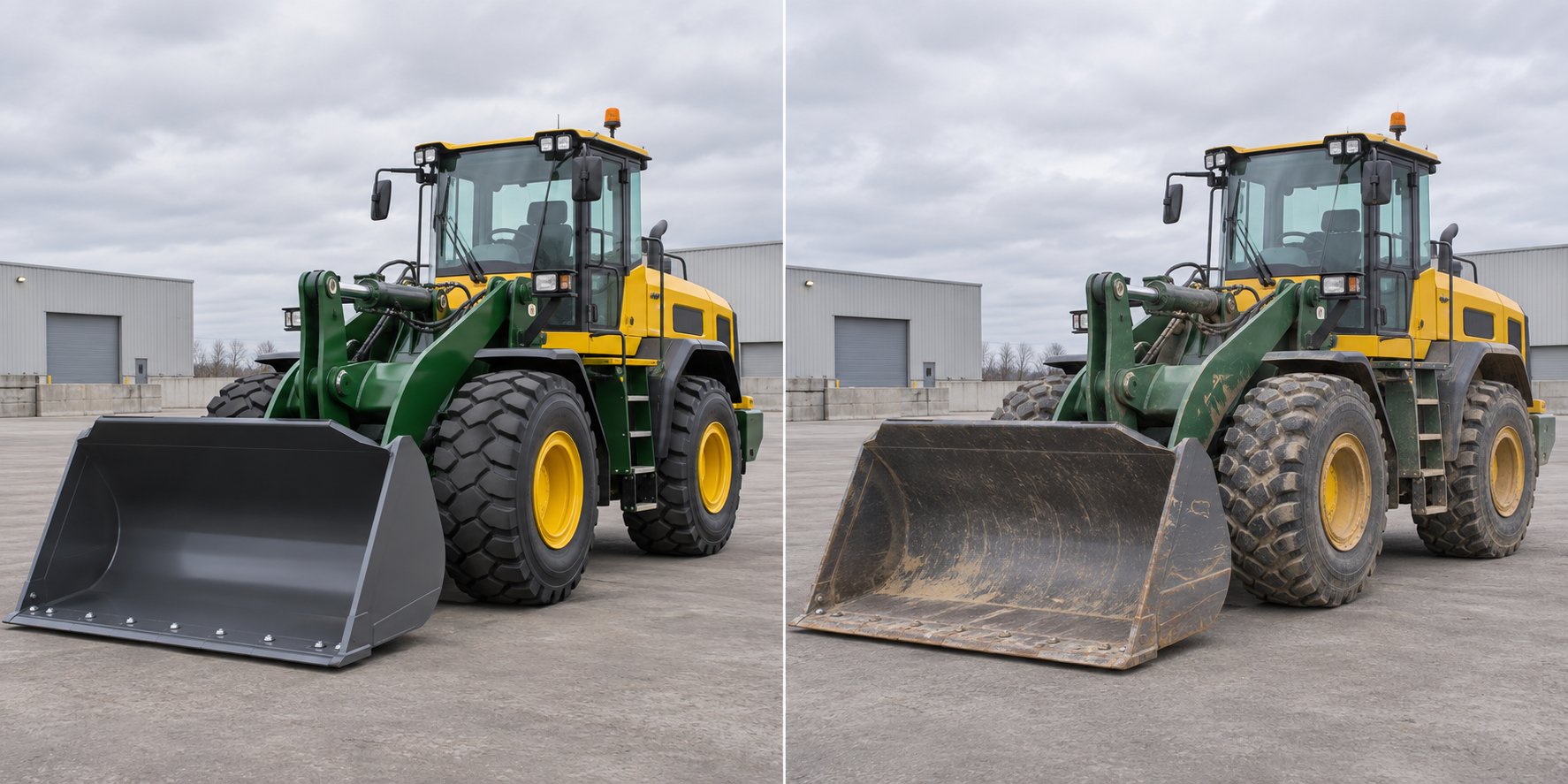
Most contractors believe buying used automatically saves money. In many cases it does — but not always, and not by default. The real financial advantage depends on where a machine sits on its depreciation curve, what it will cost to keep running over its remaining useful life, and whether the savings on the purchase price survive contact with maintenance budgets, fuel bills, and financing terms. Stripping this decision down to its actual economics — rather than gut instinct — separates a smart acquisition from an expensive lesson.
How Depreciation Works on Construction Iron
Every piece of heavy equipment starts losing value the moment it enters your fleet. That decline isn't linear, though. As Thompson Machinery explains, the steepest drop occurs in the first few years of ownership, when a machine transitions from "new" to "used" in the market's eyes. Think of it like driving a new truck off the lot — except the numbers are six or seven figures instead of five.
This front-loaded depreciation creates a strategic window for used buyers. A three-to-five-year-old John Deere excavator or dozer has already absorbed its sharpest value decline, yet it likely retains the majority of its productive life. For cost-conscious contractors, purchasing a machine that's passed through that initial depreciation phase means paying significantly less while still getting a unit with thousands of productive hours ahead. You're essentially letting the original owner absorb the most painful portion of the value loss.
What complicates the picture is that depreciation rates vary by machine type, brand reputation, maintenance history, and regional demand. A well-maintained Deere wheel loader in a market with strong construction activity will hold value far better than the same model sitting idle in a depressed region. Rather than relying on generic depreciation percentages, buyers should research comparable recent sales — auction results, dealer listings, and marketplace transactions — to understand where current market pricing falls for the specific model and hour range they're targeting. Several methods exist for calculating depreciation, from straight-line to double-declining balance to units-of-production approaches, each useful depending on whether you're planning for taxes, resale, or operational budgeting. A qualified financial advisor can help you choose the right method for your situation.
Total Cost of Ownership Beyond the Purchase Price
The sticker price on any piece of john deere construction used equipment is just the opening chapter of its cost story. Total cost of ownership (TCO) captures everything from the day you take delivery to the day you sell or scrap the machine — and ignoring any single line item can quietly erode the savings you thought you locked in at purchase.
Imagine you find a John Deere 330 skid steer listed at a price that undercuts comparable units by fifteen percent. Sounds like a win. But the machine runs a Tier 3 engine that burns noticeably more fuel per hour than a newer Tier 4 Final equivalent. The undercarriage has 60% life remaining, which means a five-figure replacement bill within the next couple thousand hours. And because the unit was purchased outside the dealer network, you're paying retail for every filter, seal, and service call. That bargain price just got a lot less impressive.
Before committing to any used equipment purchase, build a complete cost model that accounts for every ownership expense:
- Financing costs — interest rates, loan terms, and any dealer financing incentives versus third-party lender rates
- Insurance premiums — coverage for theft, damage, liability, and business interruption
- Scheduled maintenance — oil and filter intervals, hydraulic fluid changes, coolant service, and greasing per manufacturer specifications
- Unscheduled repairs — a reserve fund for unexpected component failures, typically budgeted as a percentage of machine value per year
- Undercarriage replacement — for tracked machines, this single line item can represent one of the largest costs over the ownership period
- Fuel consumption — older engines often consume more fuel per hour than newer, more efficient powertrains; model the difference over projected annual hours
- Technology and telematics fees — JDLink subscriptions, software updates, and any grade-control or machine-guidance packages
- Transportation and mobilization — the cost of moving the machine to and from jobsites, especially if purchasing from a distant seller
- Resale or trade-in value — the amount you expect to recover when you eventually exit the machine, which offsets cumulative ownership costs
When you total these items and divide by projected working hours, you get a realistic cost-per-hour figure — what Gregory Poole Equipment Company calls the number that actually determines whether an acquisition was profitable. Two machines with the same purchase price can produce dramatically different cost-per-hour results depending on fuel efficiency, maintenance burden, and residual value at disposal. Whether you're comparing a john deere for sale listing against a competing brand or weighing two Deere units of different ages, TCO per hour is the metric that tells the truth.
When Buying New Still Makes Sense
Framing this as a binary "used is always cheaper" argument would be dishonest. There are clear scenarios where new equipment — purchased from a john deere store near me or ordered through a dealer — delivers better lifetime value, even at a substantially higher acquisition cost.
High-utilization fleets running machines over 1,500 to 2,000 hours per year are the most obvious case. At that pace, a new machine with a full factory warranty shields you from repair costs during the critical break-in period, and the latest Tier 4 Final or emerging lower-emission engines deliver fuel savings that compound meaningfully over tens of thousands of operating hours. The newest Deere models also ship with the latest telematics, automated grade control, and operator-assist features — technology that boosts productivity in ways older machines simply can't match.
Emissions compliance is another factor. Contractors working on government-funded projects or in states with strict air-quality regulations may find that only current-production equipment meets bid specifications. Buying new eliminates the risk of showing up to a project with a machine that doesn't qualify.
Finally, consider the peace of mind. A new machine arrives with a known maintenance baseline, zero operating history to verify, and a manufacturer-backed warranty that covers virtually everything for the first year or more. For operators who don't have in-house mechanics or who need maximum uptime on critical projects, that certainty has tangible financial value — even if it costs more on paper. Some buyers browsing used agricultural equipment or john deere garden tractors for lighter-duty applications may find that the simplicity and reliability of new gear justifies the premium in those categories as well.
The honest answer? Neither new nor used is universally superior. The right choice depends on your utilization rate, your maintenance capabilities, your cash flow, and how long you plan to hold the machine. Build the TCO model, run the numbers for your specific operation, and let the math — not assumptions — drive the decision.
Of course, once you've decided that a used machine fits your financial picture, the next critical variable is where you buy it. The channel you choose — authorized dealer, independent lot, online marketplace, or auction — shapes not only the price you pay but also the protections you receive and the support you can count on after the sale.
Buying Channels for Used John Deere Equipment Compared
Where you buy matters almost as much as what you buy. Two identical John Deere 330 skid steers — same year, same hours, same mechanical condition — can carry vastly different price tags, warranty protections, and post-sale support depending on whether you purchase from an authorized dealer, an independent lot, an online marketplace, or an auction floor. Each channel exists because it serves a different type of buyer with different priorities. Understanding those trade-offs before you start negotiating puts you in a stronger position than most contractors who default to whichever listing catches their eye first.
Authorized Dealer Networks and Regional Availability
John Deere's dealer network isn't a single monolithic operation — it's a patchwork of independently owned dealerships, each holding territorial rights to sell and service Deere equipment within defined geographic regions. Murphy Tractor & Equipment Company, for example, serves markets across the Omaha, Kansas City, and Cincinnati corridors. United Construction & Forestry covers a different footprint across the Southeast. James River Equipment operates in Virginia and the Carolinas. This regional structure means the authorized dealer closest to your jobsite may carry a completely different pre-owned inventory than a dealer three states away — and that geographic variability directly affects your options.
What you get from an authorized dealer goes beyond the machine itself. Most Deere dealers provide 24/7 parts support, factory-trained service technicians, integrated financing through John Deere Financial, and access to programs like PowerGard Certified Used that simply aren't available through other channels. If the machine breaks down at 2 AM on a Thursday, an authorized dealer relationship means a parts counter that answers the phone and a field service team that can mobilize. That infrastructure adds real post-purchase value — particularly for contractors running tight project timelines where downtime translates directly into liquidated damages or lost revenue.
The trade-off? Pricing at authorized dealerships tends to sit at the top of the range for comparable machines. That premium reflects the inspection process, warranty backing, overhead costs of maintaining showrooms, service bays, and trained staff, plus the reputational accountability that comes with a branded storefront. For buyers who prioritize risk reduction and long-term support, the premium often pays for itself. For those who are mechanically self-sufficient and purely price-driven, it can feel like paying for services they won't use.
Independent Dealers and Online Marketplaces
Step outside the authorized network and you enter a much broader — but less standardized — marketplace. Independent used equipment dealers buy, refurbish, and resell machines from multiple brands without a formal manufacturer affiliation. Their pricing typically undercuts authorized dealers because they carry lower overhead and don't bundle manufacturer-backed warranties into the sale. Some independent dealers are highly reputable operations with experienced mechanics and transparent inspection processes. Others are little more than a gravel lot and a phone number.
The documentation gap between these two extremes is where buyers get burned. As Always Capital notes, reputable dealers — whether authorized or independent — track service history, repair records, operating hours, and ownership provenance because their reputation depends on repeat business. Less scrupulous independents may provide minimal paperwork, leaving you with the same verification burden you'd face in a private sale but at a higher price point than buying direct.
Online marketplaces have expanded the playing field dramatically. Platforms like Machinery Trader, Equipment Trader, and even Facebook Marketplace aggregate listings from dealers and private sellers nationwide, making it possible to compare pricing on a specific Deere model across dozens of sellers without leaving your desk. An AgDirect survey found that digital marketplaces rank among the top sales channels buyers consider when shopping for equipment, reflecting a broader industry shift toward online transactions. The advantages are obvious: price transparency, broad selection, and the ability to casually browse listings with detailed photos and specifications.
The limitations are equally real. You're often evaluating a machine through photos and a seller's description rather than a hands-on inspection. Shipping costs for heavy equipment can add thousands to the final price. And buyer-protection mechanisms on most listing platforms are minimal — the platform hosts the listing but doesn't guarantee the machine's condition, ownership status, or the seller's honesty. If you find a promising unit online, budget for either a personal trip to inspect it or a qualified third-party inspector in the seller's area before wiring any funds.
Auctions and Private Sales
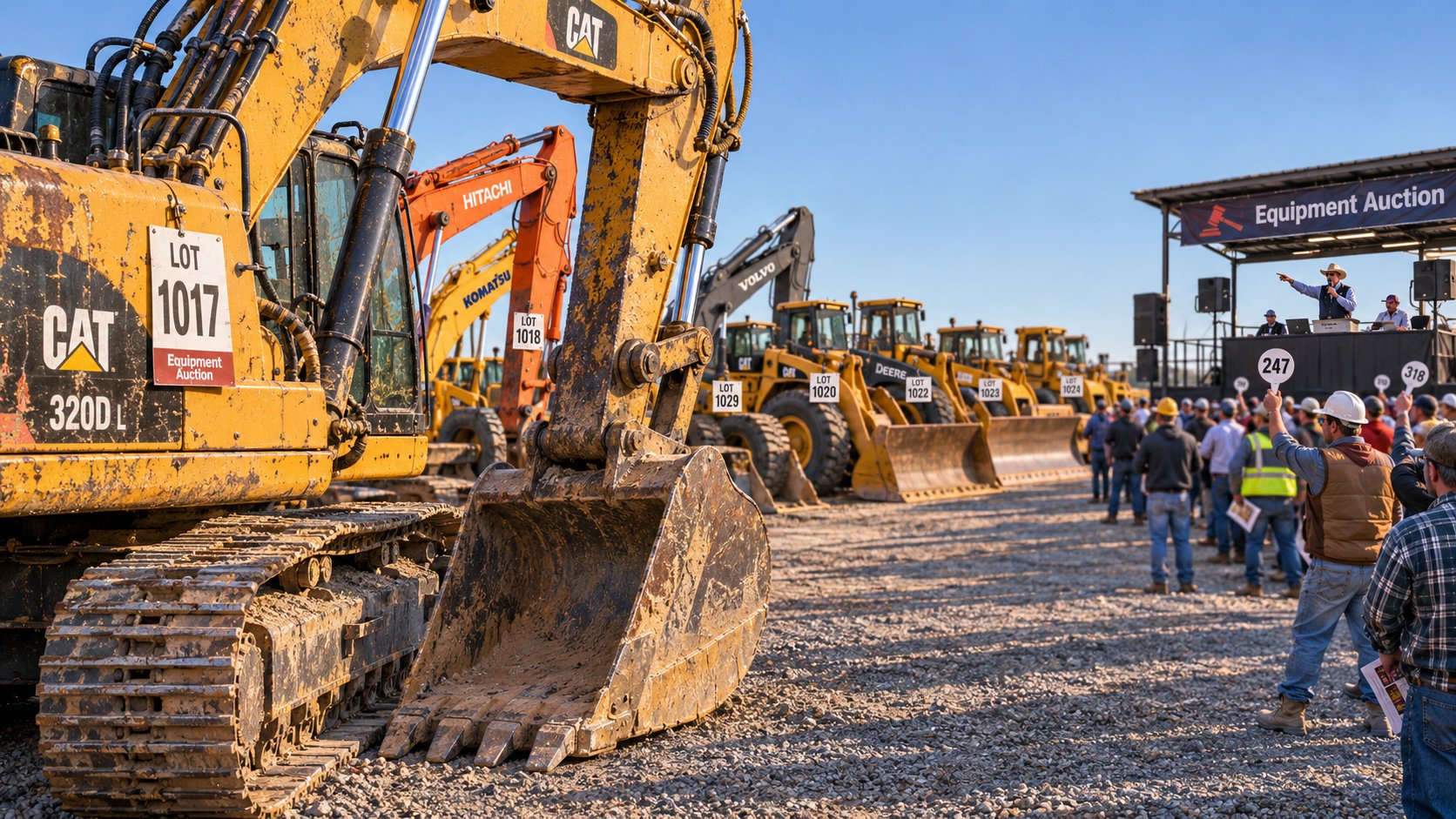
Auctions — both live and online — represent the most price-aggressive channel in the used equipment market. Major auction houses like Ritchie Bros., IronPlanet, and regional operators move enormous volumes of construction equipment, and competitive bidding dynamics can produce genuine bargains on machines that might cost significantly more through dealer channels. The popularity of online auctions has surged in recent years, driven by the convenience of remote bidding that eliminates the need to travel to physical auction sites. Hybrid auctions blending in-person and online participation have also gained traction, giving bidders flexibility without sacrificing the energy of a live event.
The catch? Nearly every auction transaction is treated as an "as-is" sale. There's no warranty, no return policy, and limited opportunity to inspect the machine before bidding closes. You might get 30 minutes with the unit at a preview day — or you might be bidding on a machine you've only seen in photos. For experienced buyers with mechanical expertise, auctions can deliver outstanding value. For less experienced buyers, the savings on purchase price can evaporate quickly if the machine needs major work that wasn't apparent during a rushed preview.
Private-party sales occupy a similar risk profile. According to AgDirect's research, 22% of producers acquired their most recent used equipment purchase directly from a private seller — making it the second most popular channel behind traditional dealerships. The appeal is straightforward: direct communication with someone who actually operated the machine, no dealer markup, and often more flexibility on price. The downside is equally clear. Most private sales are explicitly as-is, documentation quality varies wildly from seller to seller, and there's no institutional recourse if problems surface after the handshake. As one industry analysis puts it, private sellers face no reputational consequences for failing to disclose minor issues, creating an information asymmetry that favors the seller in every transaction.
Whether you're exploring jd dealer pathways through the authorized network or hunting for a deal on old john deere mowers and heavier iron at auction, the channel you choose should match your risk tolerance, mechanical capabilities, and post-purchase support needs. Even buyers browsing deere walk behind mowers for property maintenance face similar trade-offs at a smaller scale — the principles of due diligence don't change with the size of the machine.
| Dimension | Authorized Dealer | Independent Dealer | Online Marketplace | Auction |
|---|---|---|---|---|
| Typical Price Range | Highest — reflects warranty, inspection, and support infrastructure | Moderate — lower overhead, no manufacturer-backed programs | Varies widely — aggregates listings from dealers and private sellers | Lowest — competitive bidding often drives prices below retail |
| Warranty Availability | PowerGard Certified Used and extended service agreements available on eligible units | Dealer-specific warranties (30 days to 1 year typical); no manufacturer backing | Depends entirely on the individual seller listed on the platform | None — virtually all sales are as-is with no warranty |
| Inspection Assurance | Multi-point dealer inspection with fluid analysis on certified units | Varies by dealer; reputable independents inspect and refurbish, others do not | No platform-level inspection; buyer must arrange independently | Limited preview windows; no guaranteed inspection opportunity |
| Parts & Service Support | 24/7 parts access, factory-trained technicians, priority service scheduling | Limited; may offer some service but lacks manufacturer parts integration | None from the platform; support depends on the individual seller | None — buyer is fully responsible for all post-purchase support |
| Documentation Quality | Typically comprehensive — service records, inspection reports, warranty contracts | Inconsistent — ranges from thorough to minimal depending on the operation | Seller-dependent; listings may include photos and specs but limited service history | Minimal — basic machine description and hours; rarely includes full service records |
| Best For | Risk-averse buyers who value warranty, support, and verified machine history | Budget-conscious buyers with mechanical knowledge who can verify condition independently | Comparison shoppers casting a wide geographic net for specific models | Experienced buyers comfortable with as-is risk who prioritize lowest acquisition cost |
No single channel is universally right or wrong — each serves a legitimate purpose depending on your priorities. What matters is aligning your choice with your ability to absorb risk. A contractor with an in-house mechanic and a track record of buying at auction operates in a fundamentally different risk environment than a first-time buyer who needs the safety net of a certified program and dealer support. Recognizing where you fall on that spectrum — and shopping accordingly — is what turns channel selection from a gamble into a strategy.
With the channel landscape mapped, the final piece of the puzzle is execution: how to efficiently compare machines across multiple sources, build a defensible shortlist, and move from research into a confident purchase decision.
How to Compare and Source the Right Used JD Tractors for Sale
Knowing what to inspect, where to buy, and how to evaluate costs means nothing if you can't pull those skills together into an efficient sourcing process. Most contractors burn weeks jumping between dealer lots, scrolling through auction catalogs, and fielding calls from sellers — all without a structured framework for narrowing the field. The result? Decision fatigue, missed opportunities, and sometimes a rushed purchase driven by frustration rather than data. A disciplined comparison process eliminates that waste and puts you in control of the timeline.
Building a Shortlist Across Multiple Suppliers
Here's a straightforward rule that pays for itself every time: never commit to a machine until you've compared at least three equivalent units from different sources. That means three machines of the same model class, similar hour ranges, and comparable condition — sourced from three separate sellers. Why three? Because a single listing gives you no benchmark. Two listings give you a comparison. Three listings reveal a pattern — you start to see where fair market pricing actually falls, which sellers provide better documentation, and which machines carry red flags the others don't.
Broaden the search beyond a single brand or dealer network, too. If you're targeting a Deere 330 skid steer but a competing brand offers a comparable machine with better documentation, lower hours, and a transferable warranty at the same price, that unit deserves a spot on your shortlist. Brand loyalty is valuable when it's backed by superior parts support and resale value — less so when it blinds you to a clearly better deal sitting one listing away. This principle applies whether you're evaluating used jd tractors for sale, 2nd hand farm equipment for a mixed-use operation, or a production-class excavator for a highway project.
When comparing, resist the temptation to rank by price alone. Build a simple scoring matrix that weighs machine condition documentation, warranty offerings, post-sale support, and total cost of ownership alongside the sticker price. A machine priced ten percent higher but backed by complete service records, a transferable PowerGard plan, and 24/7 dealer parts access may cost less over its remaining useful life than the cheapest option on your list. The contractors who consistently make the best equipment purchases are the ones who evaluate value, not just price.
Online Platforms That Streamline Equipment Comparison
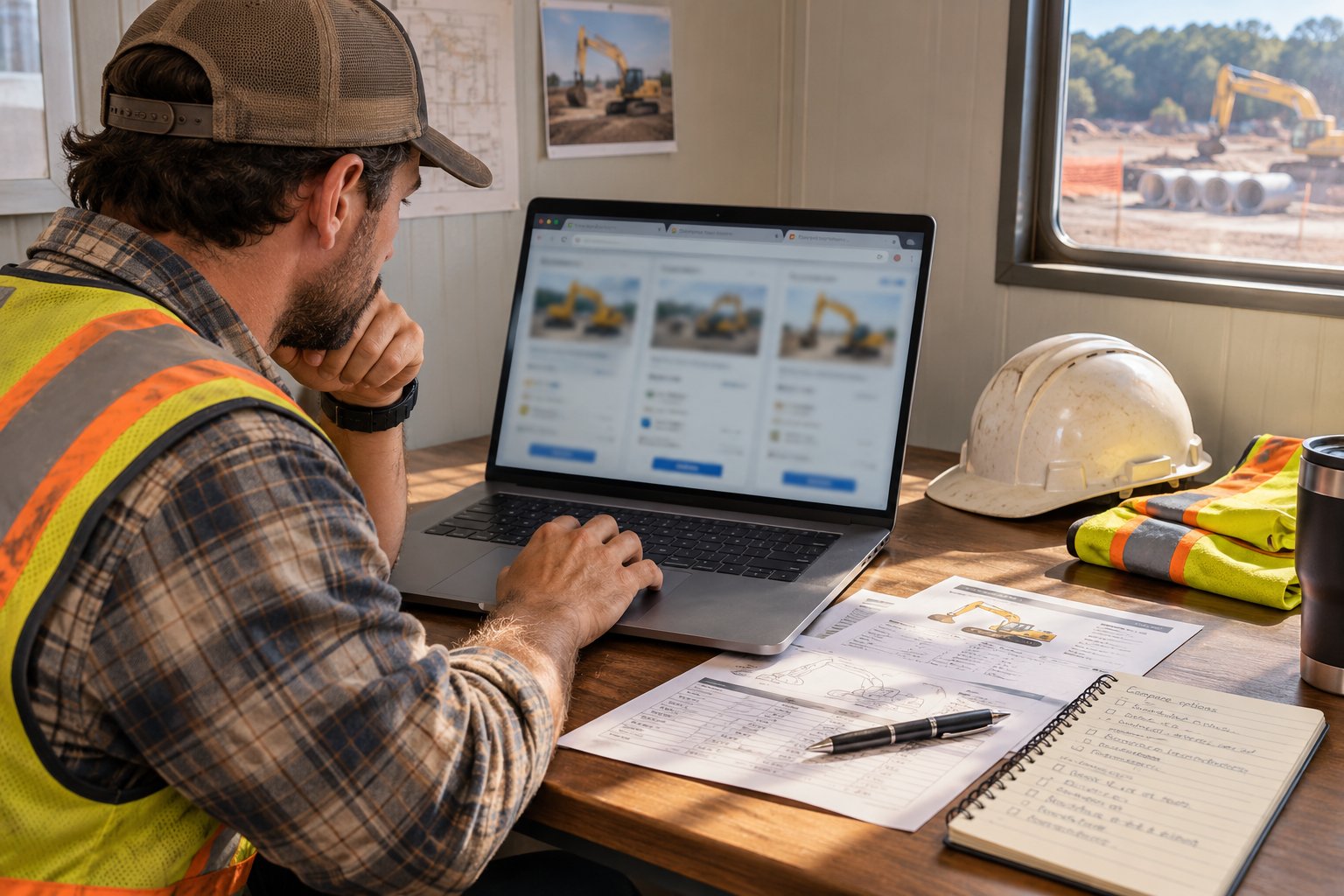
Physically visiting every dealer lot and auction yard within driving distance is impractical for most buyers — especially when the right machine might be three states away. Dedicated online equipment platforms have fundamentally changed how contractors and fleet managers source pre-owned machinery by aggregating detailed inventories in one place. You can filter by make, model, year, hours, and location, then compare specifications side by side without burning a day of windshield time per listing.
The range of platforms available reflects the diversity of the market itself. Authorized dealer websites showcase their own certified and non-certified inventory with manufacturer-backed details. Third-party aggregators like Machinery Trader and Equipment Trader pull listings from hundreds of sellers nationwide. Auction platforms such as Ritchie Bros. and IronPlanet provide access to competitive bidding environments. And specialized equipment suppliers — like JIUHONG's used construction equipment collection — allow contractors, fleet managers, and equipment dealers to browse excavators, loaders, bulldozers, and graders and request purchase quotes directly. Each platform serves a slightly different niche, and casting your net across several of them simultaneously is how you ensure you're seeing the full market picture rather than a single seller's inventory.
A word of caution applies equally to every online source: photos and descriptions are starting points, not substitutes for verification. Even the most detailed online listing can't replicate the information you'd gather from a cold start, a hydraulic drift test, or a close look at undercarriage wear. Use online platforms to build your shortlist efficiently, then follow up with the inspection, documentation, and lien-verification steps covered earlier in this guide before moving to negotiation. That sequencing — broad digital search first, deep physical verification second — is the workflow that consistently produces the best outcomes.
This approach works across every equipment category. Whether your fleet needs include john deere farm tractors for ag operations, a john deere harvester for seasonal production, or even john deere lawn mowers for sale to support property maintenance contracts, the sourcing logic remains the same: define requirements, compare broadly, verify thoroughly, and negotiate with documentation in hand.
Your Action Plan: From Research to Confident Purchase
Everything covered in this guide — from understanding machine categories and reading service records through inspecting hydraulics, evaluating warranty programs, running TCO models, and choosing the right buying channel — converges into a single actionable workflow. Here are the steps, in order, that separate a confident buyer from one who's hoping for the best:
- Define your equipment requirements precisely — machine type, size class, minimum specifications, attachment compatibility, and the jobsite conditions it needs to handle.
- Set a realistic budget range that includes total cost of ownership — not just the purchase price, but financing, insurance, maintenance reserves, undercarriage replacement, fuel, transportation, and projected resale value.
- Search across multiple channels simultaneously — authorized dealers, independent dealers, online marketplaces, auction platforms, and specialized suppliers like JIUHONG to ensure you're seeing the full range of available inventory and pricing.
- Build a shortlist of at least three comparable machines — scored not just on price, but on documentation quality, warranty availability, seller reputation, and post-sale support access.
- Inspect every shortlisted machine in person or hire a qualified third-party inspector — following the structural, hydraulic, engine, cab, and attachment checklist covered in this guide.
- Verify titles, liens, and ownership — run UCC searches, confirm serial number consistency across all documents, and use escrow for private-party transactions.
- Confirm warranty terms in writing — request the actual plan contract, read exclusions, and verify transferability before signing.
- Negotiate with documentation in hand — inspection findings, comparable market pricing, and any identified deficiencies give you concrete leverage to negotiate a fair price rather than haggling based on gut feel.
The used farm equipments market — and the broader pre-owned construction equipment market — rewards preparation more than any other single factor. Every hour you invest in research, comparison, and verification before signing a purchase agreement is worth multiples of that time in avoided repair bills, legal headaches, and buyer's remorse after the fact.
John Deere construction used equipment represents some of the most durable, well-supported, and value-retentive iron available on the secondary market. But durability and brand reputation don't eliminate risk — they just improve the odds for buyers who do the work. Follow the framework in this guide, apply it consistently, and you'll be positioned to find the real deals while walking away from the red flags that catch less prepared buyers off guard.
Frequently Asked Questions About Buying Used John Deere Construction Equipment
1. What does the John Deere PowerGard Certified Used program cover?
The PowerGard Certified Used program provides eligible machines with a protection plan covering up to three years or 2,000 hours, with comprehensive or limited coverage options. Before receiving the certified designation, each unit must pass a multi-point dealer inspection that includes a full fluid scan analysis and any required servicing with genuine Deere parts. Coverage spans main components, electronics, hydraulics, cab systems, and air conditioning. However, the plan does not cover attachments, routine maintenance items, or specifically excluded high-wear parts, so always review the actual contract before assuming a repair qualifies.
2. How do I check for liens on used heavy construction equipment before buying?
Heavy construction equipment can carry outstanding financing liens secured through Uniform Commercial Code (UCC) filings rather than traditional vehicle titles. To verify, you need the seller's exact legal name and state of organization, then search active UCC records through the appropriate state filing office. The National Association of Secretaries of State maintains a directory linking to these offices. If a lien exists, request written payoff instructions directly from the lender using independently verified contact information, and do not release funds until you receive a UCC termination or collateral release filing. For private sales, using an escrow service adds a layer of protection by holding funds until title clearance is confirmed.
3. Are machine hours the most important factor when buying used John Deere equipment?
Machine hours are a critical data point but should never be evaluated in isolation. A high-hour machine with complete, on-schedule maintenance records can be in better mechanical condition than a low-hour unit that was neglected or worked in extreme conditions like quarry operations. The type of application, duty cycle, and operating environment shape wear patterns far more than raw hour counts alone. Buyers should also request ECU data downloads to verify hours independently of the dashboard meter, review oil analysis reports for internal wear indicators, and demand full service documentation covering the machine's entire operating life before making a decision.
4. What is the best place to buy used John Deere construction equipment?
The best buying channel depends on your risk tolerance, mechanical expertise, and post-purchase support needs. Authorized Deere dealers offer the highest protection through inspections, PowerGard certification, warranties, and 24/7 parts support, but prices tend to be at the top of the range. Independent dealers and online marketplaces typically offer lower pricing with reduced buyer-protection mechanisms. Auctions deliver the most aggressive pricing but nearly all sales are as-is with no warranty or return policy. A disciplined approach involves comparing at least three equivalent machines from different sources and scoring each on documentation quality, warranty terms, and total cost of ownership rather than purchase price alone.
5. How much can I save buying used John Deere equipment instead of new?
Industry data suggests pre-owned construction equipment typically costs 40-60% less than new retail pricing, though actual savings depend on the machine's age, hours, condition, and market demand. The steepest depreciation occurs in the first few years, so purchasing a unit that has already passed through that initial decline lets you capture significant savings while still getting a machine with thousands of productive hours remaining. However, total cost of ownership matters more than sticker price. Older machines may consume more fuel, need costlier repairs, and lack warranty coverage, all of which can erode the upfront discount. Building a complete cost model that includes financing, maintenance, undercarriage replacement, and projected resale value is essential to determining whether a used purchase truly delivers better ROI for your operation.