

Step 1 - Define Your Project Needs Before You Start Shopping
Search for "how to buy a mini excavator from China" and you'll find page after page of product listings, factory catalogs, and Alibaba storefronts. What you won't find is an honest, step-by-step walkthrough of the actual buying process - the part where real money is at stake and real mistakes happen. That gap is exactly why this guide exists.
Think of what follows as a buyer-advocate playbook. It covers every phase from defining your project requirements to taking delivery of a machine that matches what you paid for. No fluff, no sales pitch - just the practical framework thousands of importers wish they'd had before wiring their first deposit. The entire process typically spans 8 to 16 weeks, depending on whether you're ordering a new Chinese mini excavator built to specification or purchasing a used machine already sitting in a dealer's yard. Either path is viable, but each carries different risks, costs, and timelines that you need to understand before committing a dollar.
Why This Guide Exists and Who It Serves
Not every buyer approaches this purchase with the same budget, risk tolerance, or logistics know-how. This guide addresses three distinct profiles, because the strategy that works for one can backfire for another:
- Individual owner-operators purchasing a single unit for landscaping, utility work, or small residential jobs. Budget sensitivity is high, and there's little room to absorb a costly mistake.
- Small contractors expanding their fleet with one to three machines. They need reliable Chinese excavators that can hold up on commercial job sites without draining the parts budget.
- Equipment dealers and resellers importing in bulk for domestic resale. Margins, warranty obligations, and compliance documentation matter as much as the per-unit price.
Whether you're hunting for the best Chinese mini excavator for a backyard project or evaluating the best Chinese mini excavators for a rental fleet, the negotiation leverage, shipping logistics, and payment safeguards differ considerably across these profiles. Each step ahead will flag where those differences matter most.
What to Expect From the Buying Timeline
Bookmark this sequence - it's the roadmap you'll follow through every remaining chapter:
- Research and shortlisting - 1 to 2 weeks. Identify your machine class, compare suppliers, and separate legitimate manufacturers from middlemen.
- Quoting and negotiation - 1 to 2 weeks. Submit detailed requests for quotation, decode Incoterms, and negotiate beyond the sticker price.
- Production or sourcing - 2 to 6 weeks. New-build machines require factory production time; used machines from existing inventory can ship almost immediately, compressing this window dramatically.
- Ocean shipping - 3 to 6 weeks. Transit time depends on the origin port, destination, and freight method. A typical container shipment from a major Chinese port reaches Southeast Asia in roughly two weeks and South America in up to six.
- Customs clearance and delivery - 1 to 2 weeks. Documentation, duties, and inland transport close out the process.
Add the numbers and you'll land somewhere between 8 and 16 weeks end to end. Used-machine purchases from dealers holding ready inventory can cut that range nearly in half by eliminating the production phase entirely. The key takeaway: your timeline is not fixed - it's a direct function of the buying channel and machine type you choose, which is precisely what the next step helps you sort out.
Step 2 - Understand What You Are Actually Buying From China
Here's a misconception that trips up nearly every first-time buyer: "mini excavator China" does not automatically mean a Chinese-branded machine. It can - but it just as easily means a used Komatsu PC30, a refurbished Caterpillar 303.5, or a Kubota U35 that spent its first few thousand hours on a construction site in Shanghai before being cleaned up and listed for export. China is the world's largest exporter of construction equipment in both directions - new domestically manufactured excavators rolling off factory lines and used machines from global brands that were previously operated across the Asian market and are now professionally refurbished for overseas buyers.
This distinction matters because the price you'll pay, the warranty you'll receive, the ease of finding parts back home, and the expected remaining service life all shift dramatically depending on which category you choose. Before you browse a single listing - whether on Alibaba or a dealer's website - you need to understand exactly which type of machine you're evaluating.
New Chinese-Brand Machines vs. Used Global-Brand Machines
Imagine two listings side by side: a brand-new 3.5-ton excavator from a Chinese manufacturer and a used 3.5-ton Komatsu sourced from a dealer in Shandong province. Both ship from China. Both fall into the "chinese mini excavators for sale" search results. Yet they represent fundamentally different purchases. The table below breaks down where they diverge.
| Dimension | New Chinese-Brand Machine | Used Global-Brand Machine |
|---|---|---|
| Typical Brands | XCMG, SANY, LiuGong, Lonking, and numerous smaller OEMs | Komatsu, Caterpillar, Kubota, Hitachi, Yanmar, Doosan |
| Price Range | Generally lower upfront cost for comparable operating weight | Varies widely based on hours, condition, and model year; often mid-range |
| Warranty Coverage | Typically 12-24 months from the manufacturer; terms vary by supplier | Limited or no warranty unless negotiated; condition-based guarantees possible |
| Parts Availability in Buyer's Country | Can be limited outside markets where the brand has dealer networks | Strong global parts networks for brands like Caterpillar and Komatsu |
| Expected Service Life | Full service life from zero hours | Depends on remaining hours and refurbishment quality; professional inspections are essential |
| Lead Time | 2-6 weeks for factory production; longer for custom specs | Often available from existing inventory; ships within days of purchase |
Neither option is universally better. A contractor in rural Australia who already runs a Komatsu fleet may find a used Komatsu exported from China far more practical because every local mechanic knows the machine and parts arrive overnight from domestic distributors. Meanwhile, an equipment dealer importing for resale into a price-sensitive market might find that a new Chinese mini excavator for sale at a lower acquisition cost delivers a faster return on investment - especially when bundled with a manufacturer's warranty. The right choice depends on your parts ecosystem, budget, and tolerance for sourcing aftermarket support.
Zero-Tail-Swing and Compact Specifications to Confirm
You'll encounter the term "zero-tail-swing" - often abbreviated ZTS - across countless alibaba mini excavator listings, and it deserves more than a passing glance. A zero-tail-swing machine is designed so that the rear counterweight stays entirely within the width of the tracks during a full 360-degree rotation. Why does that matter? Picture working beside a building foundation, along a fence line, or inside a narrow residential lot. A conventional tail swing extends the counterweight beyond the tracks, meaning you risk slamming into walls, utility poles, or parked vehicles every time you rotate. ZTS eliminates that risk - but it typically comes with a slight reduction in over-front lift capacity compared to conventional designs in the same weight class.
The catch is that not every machine labeled "compact" or "mini" actually features zero-tail-swing. Some are minimal-tail-swing designs where the counterweight extends just slightly beyond the tracks - a compromise that doesn't give you full clearance in truly confined spaces. Before committing to any purchase, explicitly confirm the tail-swing configuration by requesting the exact model's specification sheet.
And while you're reviewing specs, verify these critical numbers rather than relying on broad category descriptions:
- Operating weight - The total working-ready weight including bucket, hydraulic oil, and a full fuel tank. As MMS Industrial notes, manufacturers may calculate this figure based on different standard configurations, so confirm which attachments are included.
- Maximum dig depth - The vertical distance the bucket can reach below grade. Real-world trenching typically operates at 85-90% of the published maximum because boom geometry limits bucket curl angle near full extension.
- Bucket capacity - Measured in cubic yards or cubic meters. Less critical for mini excavators than for larger machines, but still important if your workflow involves loading trucks or moving volume.
- Tail-swing radius - The exact measurement, in millimeters or inches, of how far the rear of the machine extends beyond the track width during rotation. Zero should mean zero - don't assume.
One more nuance worth flagging: "mini excavator" generally refers to machines under 6 metric tons of operating weight, but the boundary is not standardized across every manufacturer. Some Chinese OEMs market machines up to 8 tons as "mini," while established global brands typically draw the line at 6 tons. A machine described as a mini excavator on one supplier's website might be classified as a midi or compact excavator by another. Always anchor your comparison to operating weight and dig depth rather than marketing labels.
Getting these specifications locked down before you ever contact a supplier saves you from the most common sourcing headache: receiving quotes for machines that don't actually fit your job. With a clear picture of what you're buying - and what category it falls into - the next challenge becomes finding a supplier you can actually trust to deliver it.
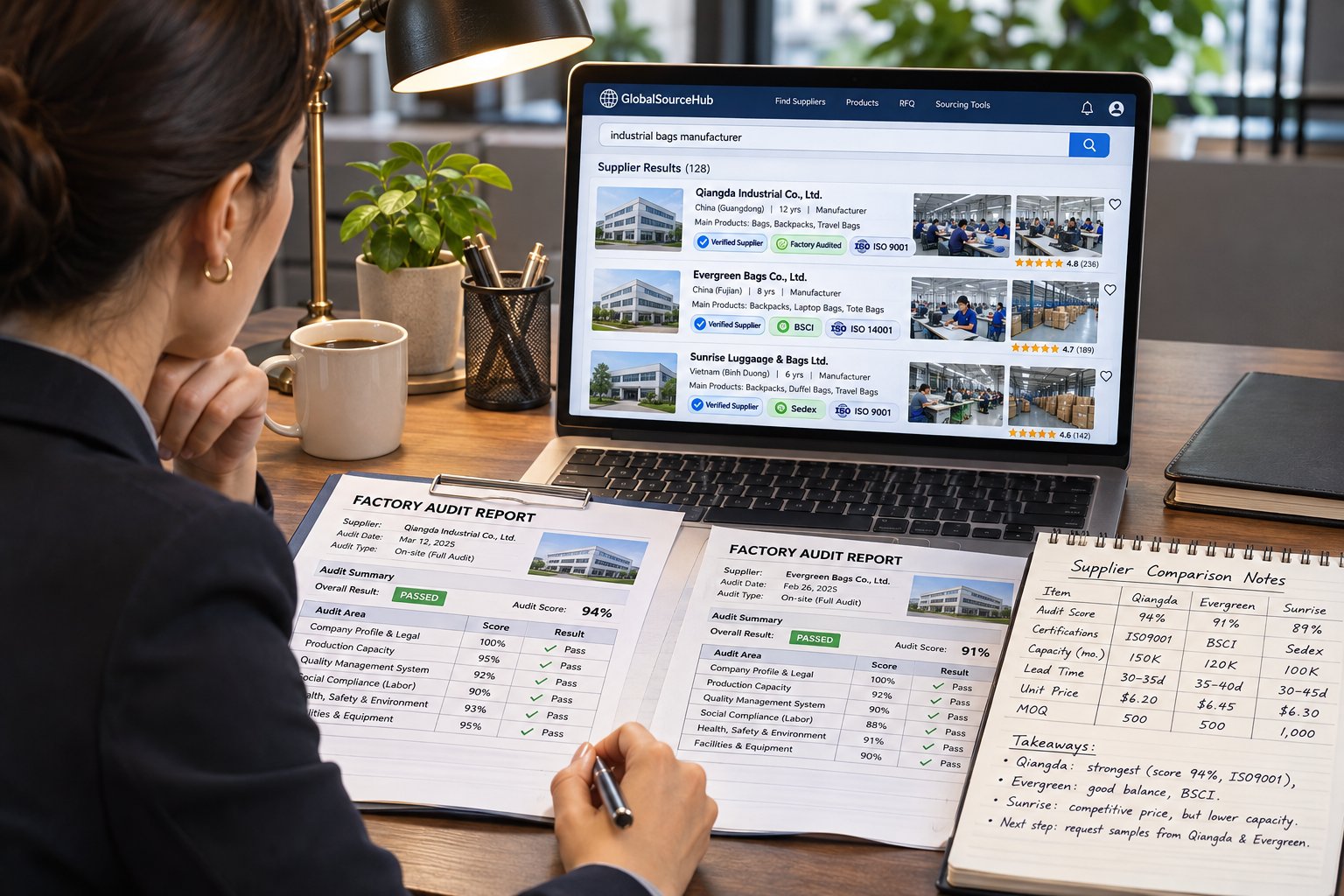
Step 3 - Find and Vet Reliable Suppliers Without Getting Burned
Knowing exactly which machine you need is only half the equation. The other half - and arguably the riskier half - is figuring out who to buy it from. Thousands of suppliers list chinese excavators for sale across the internet, and separating a legitimate manufacturer from a trading company reselling stock photos takes more than a gut feeling. Three primary channels dominate the landscape: B2B marketplace platforms like Alibaba and Made-in-China, direct manufacturer websites, and used-equipment dealers holding physical inventory. Each channel works differently, attracts different seller types, and exposes you to different risks.
Direct manufacturer websites give you the most control over specifications and pricing for new machines, but they require you to independently verify the company's legitimacy. Used-equipment dealers, on the other hand, let you browse machines already in stock - often spanning multiple brands - so you can compare a chinese excavator for sale from Komatsu against one from Caterpillar without toggling between ten different suppliers. B2B platforms fall somewhere in the middle: enormous selection, built-in buyer protections, but a verification layer that demands your active participation rather than blind trust.
How to Search and Filter on Alibaba and Made-in-China
If you've spent any time on Alibaba or Made-in-China, you know the sheer volume of results can feel overwhelming. Typing "mini excavator" returns thousands of listings. The trick is using the platform's filters strategically to surface serious suppliers and bury the noise.
Start by narrowing results with these filters:
- Supplier type: Select "Manufacturer" rather than "Trading Company" if you want to deal directly with the factory. Keep in mind that some trading companies mislabel themselves, so this filter is a starting point, not a guarantee.
- Verification badges: Look for "Audited Supplier" (indicates a third-party onsite audit) and "Trade Assurance" (indicates the supplier participates in Alibaba's payment protection program). On Made-in-China, the equivalent is the "Audited Supplier" badge backed by SGS, TUV, or Bureau Veritas inspection reports.
- Years in business: Filter for suppliers with at least three to five years of operation. Newly registered companies aren't automatically fraudulent, but they carry higher risk.
- Transaction history: Alibaba displays the supplier's Trade Assurance transaction volume. A supplier with a verified history of completed machinery orders is a stronger candidate than one with zero transactions on record.
Here's where most buyers get tripped up: they treat these badges as a seal of approval. They're not. A "Diamond Member" designation on Alibaba means the supplier paid for a premium membership tier. An "Audited Supplier" badge confirms that a third-party auditor visited the facility and verified basic company information - it does not certify product quality or guarantee honest dealings. Trade Assurance does offer meaningful protection: your payment is held in escrow and released to the supplier only after you confirm receipt, and Alibaba will mediate refunds if the order terms aren't met. However, Trade Assurance protects against non-delivery and documented quality disputes up to the covered amount - it does not guarantee machine performance six months down the road.
Beyond platform filters, request these documents directly from any supplier that makes your shortlist:
- Business license (营业执照) showing the company's registered name, address, and business scope
- Export license confirming the company is authorized to sell goods internationally
- Recent third-party audit or factory inspection report, ideally from a recognized firm like SGS or Bureau Veritas
If a supplier hesitates to share any of these, that hesitation itself is useful data.
Red Flags That Signal an Unreliable Supplier
Spotting a problematic supplier early saves you far more than any discount ever will. Research into Chinese supplier fraud patterns consistently shows that warning signs are almost always present before money changes hands - they just get overlooked. Watch for these specific signals when evaluating any mini excavator wholesale supplier or individual seller:
- Reluctance to provide a live factory video tour. A legitimate manufacturer is proud of their facility. If they can't show you the production floor on a video call - or only offer pre-recorded clips that could belong to any factory - treat it as a serious concern.
- No verifiable export history. Ask for references from previous international buyers or evidence of past shipments. A company claiming years of export experience should be able to produce at least a few verifiable contacts.
- Pressure to pay the full amount upfront. Standard industry practice for machinery imports is a 30% deposit, not 100% prepayment. Any supplier pushing for full payment before production or shipment is removing your only financial leverage.
- Inconsistent model specifications across communications. If the engine brand listed in the quote doesn't match the one mentioned in the chat conversation, or the operating weight shifts between emails, the supplier may be pulling specs from different machines - or fabricating them entirely.
- Stock photos instead of actual machine images. Run a reverse image search on any product photos you receive. Fraudulent suppliers frequently lift images from other companies' websites or use manufacturer stock renders rather than photographing real inventory.
- Unwillingness to allow third-party inspection. Pre-shipment inspection by an independent firm is standard practice for cross-border machinery purchases. A supplier who objects to it is telling you they don't want an independent set of eyes on what they're shipping.
- Communication channels that keep shifting. Conversations that jump from Alibaba chat to WhatsApp to a different email address strip away the platform's dispute-resolution records. Legitimate suppliers don't need to move discussions off-platform before you've even placed an order.
One red flag justifies closer scrutiny. Two or three together justify walking away. The cost of finding another supplier is negligible compared to the cost of a failed shipment or a machine that doesn't match what you were promised.
The Role of Sourcing Agents and Trade Shows
Not every buyer has the time or confidence to vet suppliers remotely from the other side of the world. Two alternatives exist that put boots on the ground in China.
Sourcing agents are China-based professionals or firms who locate suppliers, verify factories, attend inspections, and negotiate on your behalf. For an owner-operator buying a single machine, a sourcing agent's fee - typically a percentage of the order value or a flat project rate - can be well worth the cost if it prevents a $15,000 mistake. The tradeoff is that you're adding another party to trust, so vet the agent with the same rigor you'd apply to the supplier itself: check references, confirm their physical presence in China, and never let the agent control the payment flow between you and the factory.
Trade shows offer the chance to meet suppliers face-to-face, inspect sample machines, and compare multiple manufacturers in a single trip. The two most relevant events are the Canton Fair (held biannually in Guangzhou) and Bauma China (held in Shanghai), both of which draw major construction-equipment exhibitors. The downside is obvious: international travel costs, time commitment, and the reality that attending a show doesn't eliminate the need for post-show due diligence. Trade shows work best for equipment dealers and fleet buyers evaluating multiple brands for ongoing import relationships, not for a one-time purchase of a single unit.
Whichever channel you use to find your supplier, the vetting process produces one critical output: a shortlist of credible sellers who can provide the machine you need at a price worth exploring. The next move is turning that shortlist into actual numbers - quotes structured in terms you fully understand, with Incoterms that protect your interests rather than obscure the true cost.
Step 4 - Request Quotes and Master Incoterm Negotiations
A solid shortlist of vetted suppliers means nothing if the quotes you receive are vague, inflated, or built on Incoterms you don't fully understand. This is the phase where many first-time buyers lose money - not because a supplier cheats them, but because they sent a sloppy inquiry and accepted the first number that came back without knowing what it actually covered. The difference between a well-crafted Request for Quotation and a one-line message like "how much for mini excavator?" can easily be thousands of dollars in your landed cost.
How to Write a Request for Quotation That Gets Serious Responses
Think of your RFQ as a filter. A detailed, specific request signals to the supplier that you're a serious buyer who has done homework - and serious buyers get serious pricing. A vague inquiry, on the other hand, attracts padded quotes designed to leave room for the extended back-and-forth that inexperienced buyers tend to require. Worse, it invites responses from suppliers who aren't actually a good fit but figure they have nothing to lose by quoting anyway.
Every RFQ you send for a mini excavator from China should include these elements:
- Machine class and operating weight. Don't write "small excavator." Write "1.8-ton mini excavator" or "3.5-ton compact excavator with zero-tail-swing." Precision eliminates guesswork and ensures the quotes you receive are actually comparable.
- Required attachments. Specify whether you need a standard digging bucket only or additional attachments like a hydraulic breaker, thumb, auger, or tilt bucket. Attachments bundled at the factory are almost always cheaper than sourcing them separately after delivery.
- Destination port or delivery address. Suppliers price differently depending on whether the machine is going to Los Angeles, Mombasa, or Melbourne. Including your destination lets them quote accurate freight figures rather than generic placeholders.
- Quantity. A single-unit buyer and a dealer ordering ten machines will receive very different pricing. State your target quantity clearly, and if you anticipate repeat orders, mention that too - it gives the supplier an incentive to sharpen the initial quote.
- Preferred Incoterms. Even if you're not sure which term is best yet, stating a preference (such as FOB or CIF) tells the supplier how to structure the quote. You'll understand exactly why this matters in the next section.
- Timeline. If you need the machine on-site by a specific date, say so. This helps suppliers determine whether they can meet your schedule from existing inventory or whether a production run is required.
- Compliance requirements. If your country requires EPA Tier 4 Final emissions certification, CE marking, or any other standard, flag it upfront. A supplier who can't meet your compliance needs should be filtered out before quoting, not after you've spent weeks negotiating.
A structured RFQ checklist also typically includes evaluation criteria - letting the supplier know whether you're weighing price alone or factoring in warranty length, spare-parts availability, and delivery speed. Including this detail upfront encourages suppliers to compete on dimensions beyond the sticker price, which is exactly where the real value hides.
Decoding Incoterms From the Buyer's Perspective
Incoterms are three-letter codes published by the International Chamber of Commerce that define who pays for what, who bears the risk of loss or damage, and at which point responsibility shifts from seller to buyer. They're written into every international sales contract - and misunderstanding them is one of the fastest ways to blow your budget on a mini excavator from China.
Four Incoterms dominate china excavator sales. Here's how they compare from the buyer's seat:
| Incoterm | What the Seller Covers | What the Buyer Covers | Where Risk Transfers | Best For |
|---|---|---|---|---|
| EXW (Ex Works) | Makes machine available at factory premises - nothing more | Export clearance, inland transport to port, ocean freight, insurance, import clearance, duties, and delivery | At seller's factory gate | Experienced importers with a trusted freight forwarder in China who want maximum cost control |
| FOB (Free On Board) | Inland transport to port, export clearance, and loading onto the vessel | Ocean freight, marine insurance, import clearance, duties, and delivery | Once loaded on board the vessel at the origin port | Buyers who have freight-forwarding relationships and want to control shipping costs directly |
| CIF (Cost, Insurance, and Freight) | Everything FOB covers plus ocean freight and minimum marine insurance to destination port | Import clearance, duties, port handling, and inland delivery | Once loaded on board at the origin port (risk transfers early even though seller pays freight) | First-time importers who lack freight-forwarding contacts and prefer a simpler buying experience |
| DAP (Delivered at Place) | All transport and costs to the named destination, ready for unloading | Import clearance, duties, taxes, and unloading | At the named destination, before unloading | Buyers who want the seller to manage nearly all logistics; ideal when the supplier has reliable export infrastructure |
FOB is the most common starting point for negotiation because it keeps ocean freight costs in the buyer's hands. You pick the shipping line, you see the real freight rate, and you avoid the markup that many sellers bake into CIF quotes. That said, controlling freight only saves money if you actually have a freight forwarder lined up. If you don't, the time and complexity of arranging ocean transport for a multi-ton machine can erase whatever you saved on the markup.
For buyers placing their first order - especially owner-operators figuring out where to buy a chinese mini excavator without an existing logistics network - CIF or DAP is typically the smarter choice. Yes, the seller's freight quote may include a margin. But that margin buys you simplicity, and it's a known cost you can evaluate against independent freight estimates before agreeing to the deal. One critical nuance: under CIF, risk transfers at the origin port, not the destination. The seller pays for shipping and insurance, but if the machine is damaged at sea, you're the one filing the insurance claim. Always confirm the insurance coverage level and consider purchasing supplemental marine insurance on high-value shipments.
Negotiating Beyond Unit Price
Here's where most buyers leave money on the table: they haggle over the per-unit price and ignore everything else. A supplier who won't budge on machine cost might readily agree to include a spare-parts package, extend the warranty by six months, or cover the cost of loading supervision at the port. These concessions don't show up in the headline price, but they directly reduce your total cost of ownership.
Approach negotiation with this expanded checklist in mind:
- Warranty terms. Push for at least 12 months or a specified number of operating hours, whichever comes first. Clarify what the warranty covers - engine and hydraulics only, or the full machine including electrical components and undercarriage?
- Spare-parts package. Request a starter kit of high-wear items: filters (hydraulic, fuel, air), a set of bucket teeth, hydraulic hoses, and track pads. Bundled at the factory, these items cost a fraction of what you'd pay sourcing them individually from overseas after delivery.
- Pre-shipment inspection access. Negotiate the supplier's agreement to allow a third-party inspection firm to examine the machine at their facility before it ships. Reputable sellers welcome this; resistant ones should raise your suspicion.
- Loading supervision. Ask whether the seller provides documented loading and securing of the machine into the container or onto the RoRo vessel. Improper loading is a real cause of transit damage that no insurance claim will make painless.
- Payment structure. Rather than accepting the supplier's default terms, propose a milestone-based payment plan that ties disbursements to verified progress points. This is important enough to warrant its own chapter - and it's the very next step.
One negotiating advantage that often goes unnoticed: dealers offering used machines from multi-brand inventories create built-in price competition without any extra effort on your part. When you can compare a used Komatsu PC35 against a Caterpillar 303.5 and a Kubota U35 - all available from the same source - each listing effectively benchmarks the others. Platforms like JIUHONG's used excavator collection, which aggregates machines across brands and sizes, let you request model-specific quotes and play comparable options against each other. Whether you're buying a single unit or negotiating a bulk purchase, that cross-brand visibility gives you leverage that a single-factory inquiry never will. Keep in mind that broad collections like this encompass compact and larger excavators, so filter or ask specifically for machines in your target weight class.
Patience plays a role too. Seasoned equipment buyers consistently advise against rushing into a deal, even when a supplier implies another buyer is waiting. If someone else truly wants the machine, let them have it - there's always another unit. Walking away is the strongest negotiating tool you have, and the willingness to use it almost always brings the seller back with better terms.
Price, Incoterms, and deal terms are locked in. The next vulnerability point is the one that keeps international buyers up at night: how to structure payments so your money is protected at every stage of the transaction.
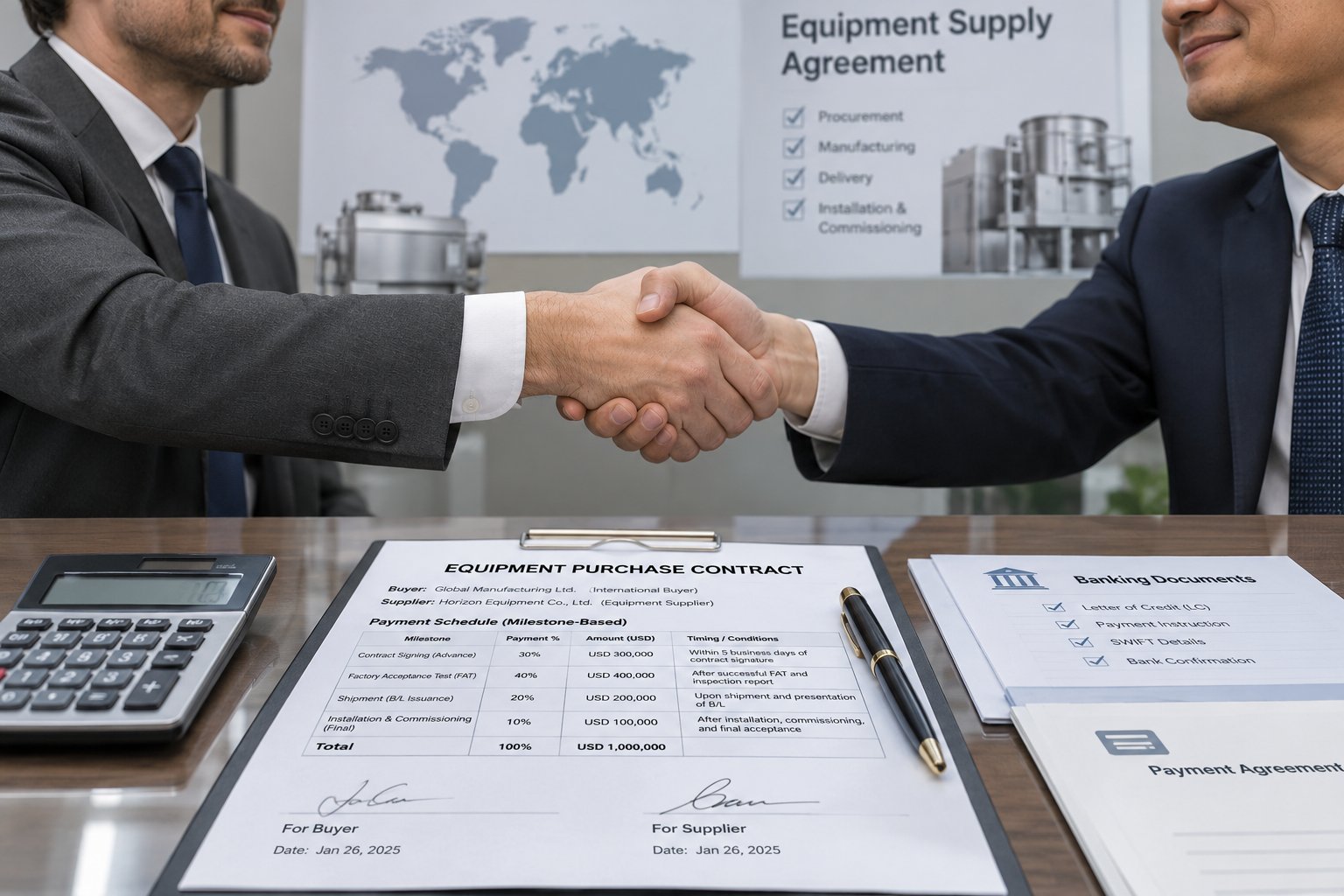
Step 5 - Structure Payments to Protect Every Dollar
You've identified the right machine, vetted the supplier, and negotiated terms that look good on paper. So why does the idea of wiring tens of thousands of dollars to a company on the other side of the world still feel like a leap of faith? Because it is - unless you structure the payment to keep you in control at every stage. Payment structuring isn't a formality. It's the single most important safeguard between a successful import and a financial disaster. The best chinese excavator deal in the world means nothing if your money disappears before the machine ships.
Recommended Payment Milestones for Machinery Imports
Imagine handing a contractor the full price of a kitchen renovation before they've bought a single cabinet. You'd never do it - and the same logic applies to buying chinese made mini excavators from overseas. A milestone-based payment structure ties each disbursement to a verifiable event, ensuring the supplier earns your money progressively rather than receiving it all upfront on a promise.
Here's the payment sequence that experienced machinery importers use to balance supplier commitment with buyer protection:
- Deposit of no more than 30% upon order confirmation. This payment signals your commitment and gives the supplier enough capital to begin production or reserve the machine from inventory. It's large enough to demonstrate you're serious, but small enough that your total exposure remains manageable if the deal goes sideways. For used machines already in stock, some buyers negotiate this down to 20%.
- Second installment upon passing pre-shipment inspection. Before releasing the next tranche - typically 30% to 40% of the total - require that the machine passes an independent, third-party inspection at the supplier's facility. This milestone is your quality gate. If the machine doesn't match the agreed specifications, or if the inspection reveals undisclosed defects, you hold the majority of funds and have leverage to demand corrections before another dollar moves.
- Final balance before or upon bill-of-lading release. The remaining 30% to 40% is paid only after the machine is loaded, secured for shipping, and you've received a copy of the bill of lading confirming the cargo is on the water. Some buyers pay this final installment against a scanned copy of the B/L, while others release it only after receiving the original shipping documents through their freight forwarder. Either way, you don't pay in full until the machine is physically leaving China.
Why does this three-stage structure work? At every point, the supplier has an incentive to perform - the next payment depends on it. And at every point, you retain enough unpaid balance to walk away or negotiate a remedy if the supplier fails to deliver on commitments. A mini excavator supplier who insists on 100% prepayment is asking you to absorb all the risk while they carry none. That's not a negotiation; it's a warning sign.
Comparing Payment Methods and Their Risk Profiles
The milestone structure above defines when you pay. The next decision is how you pay - and each method carries a very different risk profile. Not all payment channels offer the same level of buyer protection, and choosing the wrong one can leave you with no recourse if the transaction falls apart.
| Payment Method | Buyer Protection Level | Cost / Fees | Complexity | Best Use Case |
|---|---|---|---|---|
| T/T (Telegraphic Transfer) | Low - once funds are sent, recovery is extremely difficult without legal action | Low - typically a flat wire fee of $25 to $50 per transfer | Simple - standard bank wire accessible from any commercial bank | Repeat orders with verified, trusted suppliers where the relationship is established |
| Letter of Credit (L/C) | High - payment is released only when the supplier submits compliant shipping documents verified by both banks | High - expect 1% to 3% of the order value in bank fees, plus amendment and document examination charges | High - requires coordination between buyer's bank (issuing) and supplier's bank (advising), with strict documentary requirements | First-time orders above $50,000 or any transaction where the supplier is unverified and the stakes are high |
| Alibaba Trade Assurance | Medium - funds are held in escrow and released after buyer confirms receipt; Alibaba mediates disputes | Medium - no direct fee to the buyer, but some suppliers mark up prices to cover platform commissions | Low to Medium - managed through Alibaba's platform interface; only available for alibaba excavators and other products listed on the platform | Orders placed through Alibaba where the transaction value falls within the supplier's Trade Assurance coverage limit |
| Third-Party Escrow Services | High - neutral third party holds funds and releases them only when delivery conditions are met | Medium - escrow fees typically range from 1% to 5% depending on the service and transaction size | Medium - requires both parties to agree on the escrow provider and release conditions | Off-platform transactions with new suppliers where neither party wants to assume full risk |
T/T is the most widely used payment method in China's machinery trade because it's fast and cheap. That convenience comes at a cost: once a wire transfer clears, your bank has virtually no ability to recall the funds. The protection lies entirely in how you structure the milestones - which is why the 30/40/30 or 30/30/40 split matters so much when using T/T. You're compensating for the method's weak buyer protection by never letting the supplier hold more than a fraction of your total commitment at any given stage.
A Letter of Credit flips that dynamic. Your bank essentially guarantees payment to the supplier, but only after the supplier presents a complete set of shipping documents - bill of lading, commercial invoice, packing list, inspection certificate - that match the L/C terms exactly. A single discrepancy in the documents gives you grounds to reject payment until corrections are made. For large orders, especially a first purchase from an unverified supplier, the 1% to 3% fee is cheap insurance. The downside is paperwork: L/C applications require precise documentation, and any amendments mid-transaction incur additional bank charges.
Trade Assurance works well for buyers sourcing alibaba excavators and other machinery through Alibaba's platform, but it has real limitations. Coverage is capped at the supplier's Trade Assurance limit, which may not cover your full order value. The dispute resolution process, while functional, can be slow. And the protection disappears entirely if the supplier convinces you to move communication or payment off-platform - a tactic that should immediately disqualify any seller from your shortlist.
For buyers who aren't purchasing through Alibaba but still want escrow-level protection, independent third-party escrow services fill the gap. Both parties agree on a neutral provider and predefined release conditions. The supplier gets assurance that the funds exist; you get assurance that they won't be released prematurely. It's a practical middle ground for off-platform deals with new suppliers.
What to Do If Something Goes Wrong
Even with careful vetting and structured payments, problems can still emerge. A machine might arrive with undisclosed damage. Specifications might not match what was quoted. A supplier might go silent after receiving the deposit. Knowing your recourse options before you need them is far better than scrambling after the fact.
Here are the practical recovery paths available to buyers, ranked roughly from simplest to most involved:
- File a Trade Assurance claim. If your purchase was made through Alibaba with Trade Assurance, open a dispute directly on the platform. Provide your purchase order, communication records, inspection reports, and photographic evidence. Alibaba's mediation team reviews the case and can order a partial or full refund if the supplier failed to meet the agreed terms.
- Initiate a bank dispute for wire transfers. If you paid via T/T and the supplier failed to deliver, contact your bank immediately. Be realistic about expectations: banks can attempt to recall a wire transfer, but success rates are low once funds have cleared into the recipient's account. The window for action is narrow - hours or days, not weeks. This is precisely why milestone-based payments matter: if you've only wired 30%, your maximum loss is capped.
- Engage a China-based commercial attorney. For disputes involving significant sums, a PRC lawyer can issue a formal demand letter, pursue arbitration through CIETAC (China International Economic and Trade Arbitration Commission), or file in a Chinese court. A fixed-scope dispute assessment typically starts around $800 and maps out whether litigation, arbitration, or a structured settlement offers the best recovery odds relative to cost. For smaller claims, a well-drafted demand letter alone can sometimes prompt a supplier to settle rather than face formal proceedings.
- Leverage pre-shipment inspection reports as evidence. If you hired a third-party inspector before shipment - SGS, Bureau Veritas, or a similar firm - their report serves as independent, timestamped documentation of the machine's condition and specifications at the supplier's facility. This evidence is invaluable in any dispute, whether filed through Trade Assurance, a bank, or a legal proceeding. Without it, disputes often devolve into he-said-she-said arguments that rarely resolve in the buyer's favor.
One sobering reality underlies every recourse option: recovery after a failed transaction is expensive, slow, and uncertain. Even a successful CIETAC arbitration can take months, and enforcing an award against a supplier who has restructured or dissolved the company adds another layer of difficulty. Which brings us to the most important principle of this entire chapter:
The best protection when buying a mini excavator from China is prevention - not post-dispute recovery. Careful supplier vetting, milestone-based payment structures, and independent pre-shipment inspections eliminate the vast majority of risks before they become losses. Every dollar spent on due diligence upfront saves ten dollars in dispute resolution later.
Money protected, payment milestones locked in, and recourse options understood. The next potential deal-breaker has nothing to do with the supplier and everything to do with your own government: import regulations that can block a perfectly good machine at the border if you haven't verified compliance before the purchase.
Step 6 - Verify Import Regulations Before You Commit
Picture this: your excavator from China clears production, passes pre-shipment inspection, survives a month on the ocean, and arrives at your destination port - only to be refused entry by customs because the engine doesn't meet local emissions standards. The machine sits in a bonded warehouse racking up storage fees while you scramble for options. Re-export it back to China? Expensive. Retrofit a compliant engine dockside? Even more expensive. Destroy it under customs supervision? That's a real outcome, not a hypothetical scare tactic.
Regulatory compliance is the invisible gate that separates a successful import from an extremely costly mistake. The frustrating part? Every country has its own set of rules, and they don't always align with what Chinese manufacturers produce as their default configuration. A machine built perfectly to Chinese domestic standards may be completely non-compliant in the United States, Europe, or Australia. The burden of verification falls entirely on you - the buyer - not the supplier. Getting this wrong doesn't just cost money; it can block you from legally operating the machine at all.
EPA and CARB Emissions Standards for US Buyers
If you're importing into the United States, the Environmental Protection Agency is the gatekeeper you cannot bypass. Mini excavators run on nonroad compression-ignition (diesel) engines, and the EPA regulates emissions from these engines under 40 CFR Part 1039, which establishes Tier 4 Final emission standards and certification requirements. These standards require advanced emission control technologies - including diesel particulate filters and selective catalytic reduction systems - that dramatically reduce particulate matter and nitrogen oxide output compared to earlier tiers.
What does this mean in practical terms for someone figuring out how to buy a mini excavator from China? It means the engine inside your machine must carry an EPA Certificate of Conformity for its specific engine family and model year. Not a generic "EPA compliant" claim on a brochure. Not a photocopy of a certificate that belongs to a different engine series. A model-year-specific certificate tied to the exact engine family installed in your machine.
Here's what you should physically verify before committing to any purchase destined for the US market:
- Request the engine make, model, and serial number - then cross-reference against the EPA's certificate records to confirm the engine family holds a valid Certificate of Conformity.
- Confirm the engine bears an EPA emissions label in English. Certified nonroad engines must carry a physical label on the engine block showing compliance information. If the supplier can't send you a clear photo of this label matching the paperwork, that's a problem you need to resolve before money changes hands.
- Ask about EPA Form 3520-21 - the importation declaration form required for engines, vehicles, and equipment subject to federal air pollution regulations. Your customs broker will typically handle the submission, but you need to understand what's being declared on your behalf and ensure the supporting documentation is airtight.
California adds another layer. The California Air Resources Board (CARB) enforces its own emission requirements for off-road diesel equipment, which can be stricter than federal EPA standards. Machines operating in California must comply with CARB's in-use off-road diesel vehicle regulation, and certain engine configurations that pass federal Tier 4 Final may still face restrictions under CARB rules depending on fleet size and equipment age. If your machine will operate anywhere in California - even occasionally - confirm CARB compliance separately from EPA compliance.
The consequences of getting this wrong aren't abstract. US Customs and Border Protection can refuse entry to non-compliant machines, and "fixing it later" typically means re-export, bonded storage, or destruction. As industry compliance guides emphasize, if an excavator arrives with a nonconforming engine, retrofitting after the fact is usually expensive, slow, and sometimes impossible.
CE Marking and EU Machinery Directive Compliance
Buyers importing into the European Union face a different but equally rigorous compliance framework built on three pillars: safety, emissions, and noise. Miss any one of them and the machine can be stopped at the border or blocked from legal sale.
Mini excavators qualify as "machinery" under EU rules, which means they require CE marking and a valid EU Declaration of Conformity (DoC). The long-standing framework is the Machinery Directive 2006/42/EC, though the EU has adopted a new Machinery Regulation (EU) 2023/1230 that applies from January 20, 2027. For machines placed on the market right now, the Directive still governs - but forward-thinking buyers should already be asking suppliers how they're preparing for the Regulation's tighter documentation and digital-safety expectations.
A compliant CE package for a mini excavator typically includes:
- A documented risk assessment covering crush points, hydraulic hazards, rollover risks, unexpected start scenarios, and maintenance access
- A technical file with design information, calculations, test evidence, and a list of harmonized standards applied
- An EU Declaration of Conformity signed by the manufacturer
- CE marking physically applied to the machine
- A user manual and safety instructions in the official language(s) of the destination market
Here's a detail that catches many first-time importers off guard: EU regulations treat importers as "economic operators," not passive middlemen. You can't simply point to the factory and say "they promised it was compliant." If market surveillance authorities ask for the Declaration of Conformity or supporting compliance evidence, you - as the importer - must be able to produce it. Keeping a dedicated compliance folder per model and per shipment year is standard practice among professional importers.
On the emissions side, mini excavators are classified as non-road mobile machinery (NRMM) and must meet Stage V emission standards under Regulation (EU) 2016/1628 for most engine power categories. Customs and market surveillance care about engine type-approval evidence, correct emissions labels, and consistency between the engine model on the machine and the engine model on the paperwork. A common failure that gets shipments stuck? The supplier's marketing materials say "Stage V," but the engine plate tells a different story - or the certificate references a different engine family than what's actually installed.
Some Chinese manufacturers absolutely can and do produce CE-compliant, Stage V-equipped machines for the European market. The key word is "some." Never assume compliance based on a supplier's verbal assurance or a generic PDF labeled "CE certificate." CE compliance is a process backed by documentation and proper marking - not a single piece of paper.
Australia, Canada, and Other Markets
The US and EU get the most attention in compliance discussions, but buyers importing into other countries face their own regulatory requirements that are equally capable of blocking a shipment.
Australia requires imported machinery to meet Australian Design Rules where applicable, along with electrical safety standards for any powered components. Workplace health and safety regulations also apply to construction equipment, meaning machines may need to comply with specific guarding, visibility, and rollover protection requirements before they can be legally operated on Australian job sites.
Canada enforces emission standards for nonroad diesel engines that generally align with US EPA tiers, administered through Environment and Climate Change Canada. Transport Canada requirements may also apply depending on how the machine is transported domestically after import. The alignment with US standards simplifies compliance for buyers who source EPA Tier 4 Final-compliant machines, but "generally aligns" does not mean "identical" - always verify against current Canadian regulations rather than assuming a US-compliant engine automatically passes.
The universal principle across every market is straightforward: research your own country's import regulations for construction machinery before committing to a purchase. No supplier - no matter how reputable - is responsible for ensuring the machine meets your local laws. That responsibility sits with you.
To protect yourself, request the following compliance documents from the seller before any deposit is paid. Treat this as a non-negotiable checklist, whether you found the machine on a mini excavator Alibaba listing, a direct manufacturer website, or a used-equipment dealer's inventory:
- Emissions certification - EPA Certificate of Conformity details (engine family + model year) for the US; Stage V type-approval evidence for the EU; equivalent documentation for other markets
- CE Declaration of Conformity - for EU-bound machines, the full DoC signed by the manufacturer plus the list of harmonized standards applied
- Safety test reports - ROPS/FOPS (rollover and falling-object protective structure) certifications, hydraulic system test results, and any third-party safety assessments
- Certificate of origin - confirms the country of manufacture, which affects tariff classification and may influence duty rates or trade-preference eligibility
- Engine label photograph - a clear, legible image of the physical emissions label on the engine block, matched against the serial number and paperwork
Any supplier who balks at providing these documents is telling you something important. A factory that builds machines for export markets keeps this documentation organized and ready to share - it's part of delivering a compliant product, not an unreasonable request. If the compliance paperwork doesn't exist or doesn't match, no amount of savings on the purchase price will offset the cost of a machine stranded at customs or barred from legal operation.
Compliance verified, paperwork in hand - the regulatory gate is cleared. The next challenge is purely logistical: getting a multi-ton machine from a Chinese port to your worksite without the shipping process eating into the savings that made importing worthwhile in the first place.
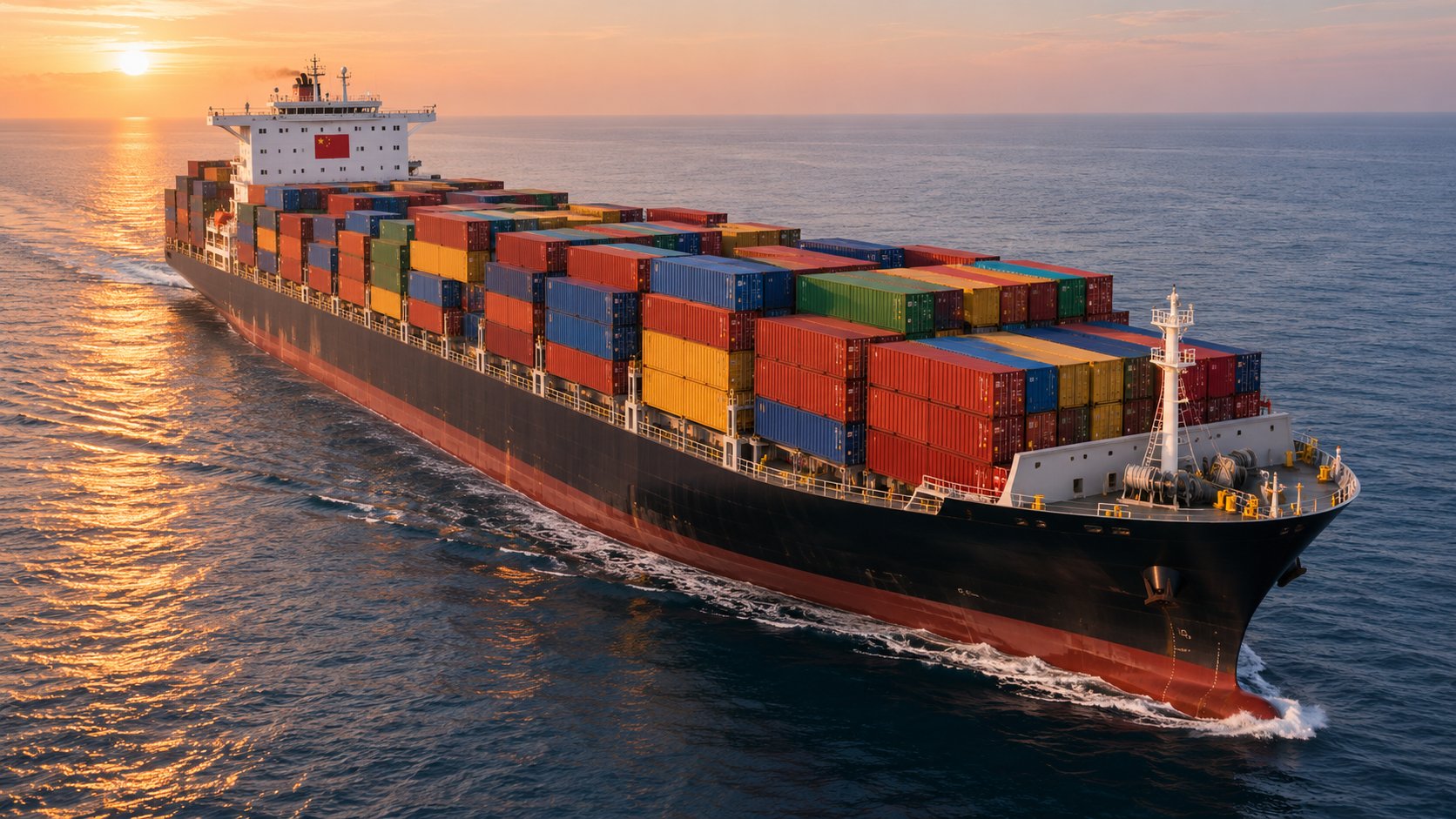
Step 7 - Arrange Shipping and Clear Customs Smoothly
Regulatory paperwork is sorted. The deposit is structured. The machine is sitting in a supplier's yard in Shandong or Jiangsu province, ready to go. Between that yard and your job site lies the part of the process that most first-time buyers underestimate: ocean logistics, documentation, and customs clearance. Shipping a mini excavator from China isn't like ordering a pallet of parts - you're moving a multi-ton piece of steel across an ocean, through customs checkpoints, and onto a flatbed trailer for final delivery. Every step has its own cost, its own timeline, and its own potential for things to stall if the paperwork doesn't line up.
The good news? None of this is mysterious once you understand the options. The bad news? Skipping the homework on freight methods and documentation is one of the fastest ways to watch your import savings evaporate into demurrage charges, storage fees, and customs holds.
Choosing Between Container Shipping and RoRo
Two primary ocean freight methods handle the vast majority of excavator shipments from China: container shipping and Roll-on/Roll-off, commonly known as RoRo. Your choice between them depends on the machine's size, weight, your budget, and how much protection you want during transit.
Container shipping is the go-to option for most mini excavators. Machines under roughly 3.5 metric tons can typically fit inside a standard 20-foot container (20GP) with the boom folded into transport position. This method offers several advantages: the machine travels inside an enclosed steel box, shielded from saltwater spray, weather, and handling damage. Pricing is more predictable because container rates are standardized across shipping lines. And because containers follow fixed schedules on high-volume routes, transit times are consistent and bookings are easier to secure.
For slightly larger compact excavators that won't fit through a standard container door, a flat-rack or open-top container is the next step up. Flat racks have no walls or roof, allowing oversized cargo to be loaded from the top or sides. They accommodate heavier and wider machines but cost more than standard containers and expose the equipment to the elements during transit. Open-top containers split the difference - walls on the sides, but an open or tarpaulin-covered top for crane loading.
RoRo shipping works differently. The excavator is driven or towed directly onto the vessel's cargo deck, secured in place, and rolled off at the destination port. RoRo is typically used for larger machines that can't fit any container format, or when the excavator is fully operational and the route has regular RoRo sailings available. The tradeoff? RoRo routes are more limited than container routes, sailings are less frequent, and the machine sits exposed on the ship's deck without the enclosed protection a container provides. The excavator must also be in running condition - if it can't move under its own power, loading becomes complicated and expensive.
For most buyers importing a mini excavator from China in the 1- to 3.5-ton class, a standard 20-foot container hits the sweet spot of cost, protection, and scheduling flexibility. If your machine is in the 4- to 6-ton range, get measurements from the supplier - transport dimensions with the boom folded, not just the machine's working dimensions - and have your freight forwarder confirm whether a 40-foot high-cube container, a flat rack, or RoRo makes the most sense for your specific route.
Required Shipping and Customs Documentation
Here's a scenario that plays out more often than it should: a machine arrives at the destination port, but the commercial invoice describes a "hydraulic excavator" while the bill of lading says "tracked digging machine" and the import permit references a different HS code entirely. The result? A customs hold, days of back-and-forth with port authorities, and demurrage fees that can consume a significant percentage of the machine's purchase price. Documentation mismatches are a leading cause of port delays for heavy equipment - ahead of actual transit disruptions.
The fix is straightforward: ensure every document uses consistent descriptions, and assemble the full package before the vessel sails. You'll need the following for a clean customs clearance:
- Commercial invoice - Issued by the seller, listing the buyer and seller details, machine description (brand, model, serial number), quantity, unit price, total value, Incoterm, and currency. This is the primary document customs uses to assess the value of your import.
- Packing list - Details the contents of the shipment including gross and net weight, package dimensions, and a description of how the machine is packed or secured. For containerized shipments, it confirms what's inside the box.
- Bill of lading (B/L) - Issued by the shipping line, this serves as the contract of carriage, receipt of goods, and document of title. You'll need the original B/L or a telex release to claim the cargo at the destination port. The cargo description on the B/L must match the commercial invoice exactly.
- Certificate of origin - Confirms where the machine was manufactured. This document affects tariff classification and determines whether preferential duty rates under any applicable free trade agreement can be claimed.
- Fumigation certificate - Required if the machine is packed using wooden crating, pallets, or dunnage. International phytosanitary standards (ISPM 15) mandate that wood packaging materials be heat-treated or fumigated to prevent pest transmission. No certificate means your shipment can be quarantined or refused entry.
- Emissions and safety certificates - The EPA Certificate of Conformity documentation, CE Declaration of Conformity, or equivalent certifications you verified in the previous step. Customs authorities in many countries check these during the clearance process, not just at the point of sale.
One rule ties this entire list together: the machine description, value, and consignee information must be consistent across every single document. A minor discrepancy - an inconsistent model number, a weight that doesn't match, or a misspelled company name - can trigger an inspection hold or valuation query that costs you days and hundreds of dollars in port storage. Review every document side by side before the supplier hands the shipment to the carrier.
Calculating Duties, Tariffs, and Landed Cost
The price you negotiated with the supplier is not the price you'll actually pay. Not even close. The mini excavator import cost includes a stack of charges that land on top of the machine price, and failing to calculate them before committing to the purchase is one of the most common mistakes first-time importers make. You budget $12,000 for the excavator, the quote looks great, and then another $4,000 in freight, duty, taxes, and handling fees shows up after the vessel sails. Suddenly that "incredible deal" looks a lot less incredible.
Your total landed cost is the sum of everything required to get the machine from the supplier's yard to your worksite, and it typically includes these components:
| Cost Component | What It Covers | How to Estimate |
|---|---|---|
| Machine price | The negotiated purchase price under your agreed Incoterm (FOB, CIF, etc.) | Directly from your supplier's confirmed quotation |
| Ocean freight | Port-to-port shipping charges for container, flat rack, or RoRo transport | Request quotes from at least two freight forwarders; rates vary by route, season, and container type |
| Marine insurance | Coverage against loss or damage during ocean transit | Typically 0.3% to 1.5% of the CIF value; confirm whether your CIF quote includes minimum insurance or if you need supplemental coverage |
| Customs duty | Import tariff assessed by your country's customs authority based on the machine's HS code classification | Look up the applicable rate for HS heading 8429 (self-propelled construction machinery) in your country's tariff schedule; excavators with 360-degree slewing typically fall under 8429.52 |
| Import taxes (VAT/GST) | Value-added tax or goods and services tax calculated on the CIF value plus duty | Apply your country's standard VAT/GST rate to the combined CIF + duty amount; rates commonly range from 5% to 27% depending on the destination |
| Port handling and terminal fees | Charges for unloading, storage, and container handling at the destination port | Your freight forwarder or customs broker can provide these; they vary by port but typically run a few hundred dollars |
| Customs brokerage | Fees paid to a licensed customs broker for preparing and filing your import declaration | Usually 0.5% to 2% of CIF value for heavy machinery, or a flat fee depending on the broker |
| Inland trucking | Transport from the destination port to your final delivery address via flatbed or low-bed trailer | Distance-dependent; get a quote from a local heavy-haul carrier before the machine ships |
The HS code classification deserves extra attention because it directly determines your duty rate. Construction machinery with a 360-degree revolving superstructure - which describes most mini excavators - falls under HS 8429.52. Misclassifying the machine under a generic heading or a wrong subheading can trigger duty reassessment, penalty interest, or even seizure. If you're unsure about the correct classification, ask your customs broker to issue a pre-import ruling before the vessel sails.
Here's the practical takeaway: before you finalize any purchase, ask your freight forwarder to prepare a complete landed-cost estimate that includes every line item above. Compare that total against what the same machine would cost you domestically - purchase price, delivery, and all. The savings from importing should still be meaningful after every fee is accounted for. If they're not, either the deal isn't as good as it looked or you need to explore a different shipping method, Incoterm, or supplier. A freight forwarder experienced in chinese mini excavator shipping and heavy-machinery imports is worth their fee many times over at this stage. They've handled the route before, they know which ports are efficient and which ones eat you alive on storage, and they can flag cost surprises before they become your problem.
Shipping method selected, documentation assembled, landed cost calculated - the logistics framework is in place. The remaining question isn't about any single step; it's about which buying channel gives you the best combination of price, protection, and speed for your specific situation.
Step 8 - Choose the Right Buying Channel for Your Situation
You've mapped the logistics, calculated the landed cost, and built a framework that accounts for every fee between the supplier's yard and your worksite. But here's the thing - all those calculations shift depending on where you actually source the machine. A direct factory order, an Alibaba listing, and a used-equipment dealer each carry different price structures, different protection mechanisms, and wildly different timelines. Choosing the wrong channel doesn't just cost you money; it can cost you months of waiting, expose you to risks you didn't anticipate, or saddle you with a machine that's harder to inspect before you commit.
Think of buying channels the way you'd think about hiring a contractor: the cheapest bid isn't always the smartest choice, the most expensive option doesn't guarantee the best outcome, and the right fit depends entirely on what you need, how fast you need it, and how much risk you're willing to absorb. Let's break down the three primary channels side by side so you can match the right one to your specific situation.
Direct Factory Purchase vs. Marketplace Platforms vs. Used-Equipment Dealers
Each channel has distinct strengths and blind spots. The table below compares them across the dimensions that matter most when you're deciding how to buy a mini excavator direct from China.
| Factor | Used-Equipment Dealers (Multi-Brand) | Direct Factory Purchase | B2B Marketplace Platforms (Alibaba, Made-in-China) |
|---|---|---|---|
| Typical Price Range | Mid-range; varies by brand, model year, hours, and condition | Often lowest per-unit cost for new machines, especially at volume | Wide range; prices fluctuate by supplier type (factory vs. trading company) and listing competition |
| Buyer Protection | Pre-purchase inspection of physical inventory; documented machine history where available; negotiable condition guarantees | Warranty from manufacturer (typically 12-24 months); quality depends on factory reputation and vetting | Trade Assurance or platform escrow for covered transactions; limited to platform-mediated disputes |
| Lead Time | Shortest - machines are already in stock and can ship within days of purchase confirmation | Longest - 2 to 6 weeks for production, plus shipping; custom specifications extend this further | Varies - some listings are from stock, others require production; verify before ordering |
| Ability to Physically Inspect | High - machines sit in a yard and can be inspected in person or by a third-party agent before purchase | Possible during or after production, but the machine may not exist yet at the time of order | Depends on supplier; some hold inventory, others manufacture to order |
| After-Sales Support | Varies by dealer; professional exporters often provide spare-parts sourcing and technical guidance | Strongest for established brands with international service networks; weaker for smaller OEMs | Inconsistent; ranges from excellent to nonexistent depending on the individual supplier |
| Best Suited For | Buyers who want to see what they're getting before paying; those seeking global brands at lower cost; bulk importers comparing across manufacturers | Buyers ordering new Chinese-brand machines in quantity; dealers building a branded product line | Buyers comfortable navigating platform tools; first-time importers using Trade Assurance as a safety net |
A few patterns jump out immediately. Used-equipment dealers with multi-brand inventories eliminate the production wait entirely - the machine exists, you can inspect it, and it ships as soon as the deal closes. That's a significant advantage for anyone who needs equipment on a job site within weeks rather than months. Direct factory purchases offer the lowest per-unit pricing on new machines but lock you into a production timeline and a single brand. Marketplace platforms offer the broadest selection and built-in payment protection, but the quality of individual suppliers varies enormously, and you're doing more of the vetting work yourself.
No single channel is universally superior. The right choice depends on whether you prioritize speed, price, brand flexibility, or the ability to physically verify the machine before wiring funds.
Why Multi-Brand Used-Equipment Platforms Deserve Attention
Imagine you're shopping for a used mini excavator from China and your only requirement is a reliable 3-ton machine with low hours. You don't care whether the nameplate says Komatsu, Caterpillar, or Kubota - you care about condition, price, and parts availability back home. Contacting three separate brand-specific dealers means three separate conversations, three different quoting formats, and no easy way to compare apples to apples.
This is where platforms aggregating used excavators from multiple brands change the equation. Instead of bouncing between suppliers, you browse a single inventory that spans manufacturers - compact excavators from Komatsu sitting alongside Caterpillar units, Kubota machines next to Hitachi models, all available for individual or mini excavator bulk purchase from China. You request model-specific quotes, compare pricing across brands at the same condition level, and negotiate from a position of visibility rather than guesswork.
The competitive dynamic this creates works in your favor. When a dealer knows you're evaluating a Komatsu PC30 against a Caterpillar 303 and a Kubota U30 - all within the same platform - every listing effectively benchmarks the others. Pricing stays honest because the alternatives are one click away. That kind of cross-brand transparency is nearly impossible to replicate when you're sourcing from isolated, single-manufacturer channels.
JIUHONG's used excavator collection is a practical example of this channel type. It brings together machines across brands and sizes, letting excavation contractors, equipment dealers, and import buyers browse available inventory and request quotes without committing to a single manufacturer. Whether you're an owner-operator looking for one compact unit or a reseller evaluating a dozen machines for bulk import, the ability to compare listings and negotiate from a multi-brand catalog streamlines a process that would otherwise require weeks of fragmented outreach.
One important note: collections like this encompass compact and larger excavators - they're not exclusively mini-excavator inventories. If you're specifically shopping in the 1- to 6-ton weight class, filter your search or ask the dealer directly for machines within your target range. A quick inquiry specifying your desired operating weight, dig depth, and brand preferences will surface the relevant listings far faster than scrolling through every available unit.
For buyers evaluating a used mini excavator from China, multi-brand dealers also simplify the compliance conversation. Because these platforms deal with machines from established global manufacturers, the engines are more likely to already carry emissions certifications recognized in Western markets. A used Komatsu or Caterpillar engine that was EPA- or EU-certified when it was originally manufactured retains that certification status - a significant advantage over a new machine from a lesser-known Chinese OEM that may require separate emissions verification.
Matching the Right Channel to Your Buyer Profile
The channel that works for a solo landscaper buying their first machine is not the same channel that works for a dealer importing twenty units per quarter. Your buyer profile - the one we defined back in Step 1 - should drive this decision. Here's how each profile maps to the strongest channel option:
- Owner-operators buying a single unit benefit most from chinese mini excavator dealers holding visible, inspectable inventory. You can see exactly what you're getting, verify condition through a third-party inspector, and avoid the production lead time entirely. The priority here is certainty - one machine, one transaction, minimal surprises. Used-equipment platforms with multi-brand stock are the natural fit because they let you compare options without the complexity of managing a factory order.
- Small contractors expanding their fleet often split between new-brand factories and used dealers, depending on budget and urgency. If you need a machine within four weeks, a used-equipment dealer with ready stock is the faster path. If you're planning six months ahead and want zero-hour machines with a full manufacturer warranty, a direct factory purchase from an established Chinese brand gives you the best per-unit economics - especially if you're ordering two or three units at once.
- Fleet buyers and equipment resellers gain the most leverage through bulk-quote requests on multi-brand platforms or direct factory MOQ (minimum order quantity) negotiations. At volume, both channels become highly competitive. Multi-brand used-equipment platforms let you assemble mixed shipments - a few Komatsu units, a couple of Caterpillars, a Kubota or two - tailored to what sells in your local market. Direct factory partnerships, on the other hand, let you lock in pricing, customize specifications, and build a branded product line around a single manufacturer. The choice between them often comes down to whether your customers value brand diversity or brand consistency.
One hybrid approach worth considering: use a multi-brand used-equipment platform to fill immediate inventory needs while simultaneously developing a direct factory relationship for future new-machine orders. This gives you the speed of ready stock today and the cost advantages of factory-direct pricing tomorrow. Several professional importers run both channels in parallel, adjusting the mix based on market demand, exchange rates, and seasonal availability.
Whichever channel you choose, the purchase itself is only the second-to-last step. The final phase - the one that separates importers who repeat the process confidently from those who swear they'll never do it again - happens after the machine ships. Pre-shipment inspection, arrival verification, spare-parts planning, and the small but critical details of commissioning determine whether the savings you worked so hard to capture actually survive contact with reality.
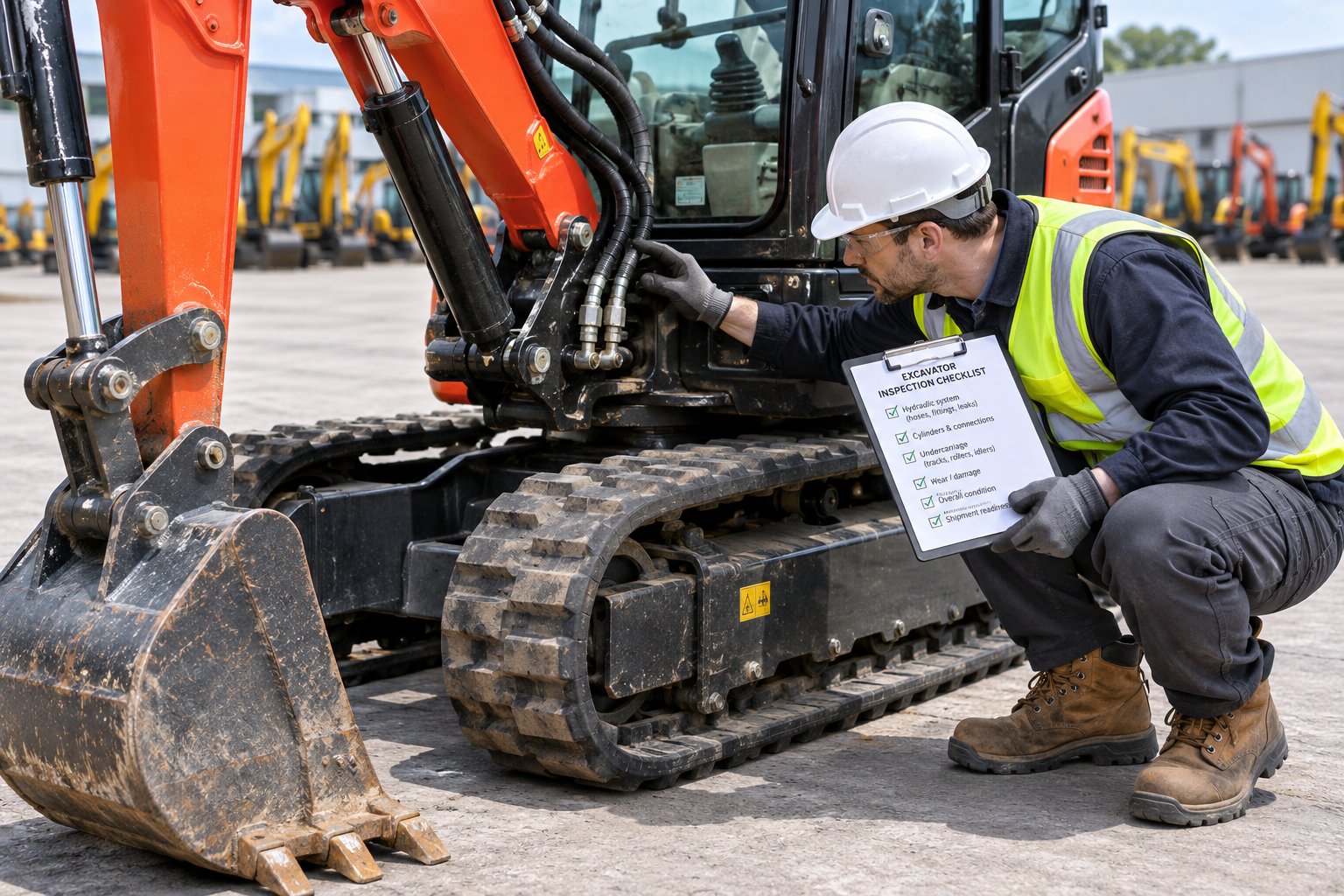
Step 9 - Inspect, Receive, and Avoid Costly Last-Mile Mistakes
The machine is paid for, the container is booked, and the supplier says everything looks great. This is precisely the moment when most first-time buyers relax - and it's precisely the wrong moment to do so. The final phase of buying a mini excavator from China is where overlooked details turn into expensive surprises. A hydraulic leak that could have been caught at the supplier's yard becomes a $2,000 repair after the machine crosses an ocean. A mismatched model number that a five-minute document check would have flagged becomes a weeks-long dispute once the container is sealed. Every dollar you invested in vetting, negotiation, and payment structuring can be undone in the last mile if you skip the steps that verify what you're actually receiving.
Pre-Shipment and Arrival Inspection Protocols
A mini excavator inspection before shipping is not optional - it's the single most cost-effective safeguard in the entire import process. Hiring an independent third-party inspection company to physically examine the machine at the seller's facility before it leaves China gives you documented proof of what was loaded into that container. If something goes wrong later, that report is your evidence. If everything checks out, it's your peace of mind.
Two firms dominate the international pre-shipment inspection market for heavy equipment: SGS and Bureau Veritas. Both maintain networks across China with inspectors experienced in construction machinery. Bureau Veritas, for example, combines a physical inspection of the goods with document examination to verify that the invoice, specifications, and customs classification all align - catching discrepancies that would otherwise surface as problems at the destination port. Smaller, specialized inspection firms also operate in China's major equipment-export regions and can be equally effective, particularly if they specialize in construction machinery rather than general consumer goods.
What should a thorough pre-shipment inspection cover? Here's the checklist your inspector should work through before you authorize the final payment and loading:
- Model and serial number verification. Confirm that the machine's nameplate data - manufacturer, model, serial number, and production year - matches the commercial invoice, purchase order, and bill of lading exactly. Mismatches here cause customs holds and destroy your ability to source parts accurately later.
- Engine condition. The inspector should check the engine model and serial number against the quoted specifications, verify the emissions label (especially critical for EPA or Stage V compliance), test for normal starting behavior, listen for abnormal noise, and check for visible leaks, excessive smoke, or coolant contamination.
- Hydraulic system pressure tests. Hydraulic performance defines whether an excavator actually digs or just looks like it can. The inspection should include pressure readings on the main pump, cylinder drift tests with a loaded bucket held in position, and a check of all hose connections for weeping or visible degradation.
- Structural integrity. Look for cracks in the boom, arm, and bucket linkage. Check weld quality at high-stress joints. Inspect the swing bearing for play or abnormal noise during rotation. On used machines, structural fatigue is the kind of problem that's invisible in photos but obvious to an inspector standing next to the machine.
- Undercarriage wear. For tracked machines, measure track shoe condition, roller wear, idler condition, and sprocket tooth profile. Undercarriage components are among the most expensive items to replace, and a machine with 60% undercarriage wear remaining has a very different value than one sitting at 20%.
- Operational function test. The machine should be started, cycled through all boom, arm, bucket, and swing functions, driven forward and backward, and tested for blade operation (if equipped). Any function that hesitates, drifts, or produces abnormal noise gets documented.
- Attachment and accessory verification. Confirm that every attachment, spare part, and accessory listed on the purchase order is physically present, matches the agreed specifications, and is properly packed for shipping.
The cost? Expect to pay roughly $300 to $800 for a qualified third-party inspection depending on the machine's location within China, the complexity of the inspection scope, and the firm you hire. Compared to the value of the machine you're importing, that's a rounding error - and it generates the documented evidence that makes every downstream protection mechanism (insurance claims, Trade Assurance disputes, legal proceedings) actually enforceable.
Upon arrival at the destination port, don't sign the delivery acceptance document until you've conducted - or hired someone to conduct - a second inspection. This arrival check is simpler than the pre-shipment version: verify that the machine matches the bill of lading, check for transit damage (dents, scratches, hydraulic leaks that developed during shipping, broken glass), and confirm that all accessories listed on the packing list are present. Photograph everything. If you discover damage or missing items, note them on the delivery receipt before signing. Once you sign a clean receipt, claiming transit damage becomes exponentially harder.
Commissioning, Spare Parts, and After-Sales Planning
Your excavator has cleared customs and rolled off a flatbed into your yard. It's tempting to fuel it up and start digging. Resist that urge. A machine that just spent weeks inside a sealed container - possibly exposed to temperature swings, humidity, and vibration - needs proper commissioning before it goes to work.
Arrange the following before the machine arrives, not after you're staring at it wondering what comes next:
- A qualified mechanic or dealer for initial commissioning. This includes changing all fluids (engine oil, hydraulic oil, coolant, and fuel filters), checking belt tensions, greasing all pivot points, and verifying that the hydraulic system is at proper operating levels. Fluids shipped inside the machine may have degraded during transit or may not meet the specifications required for your local climate. A fresh commissioning service sets the maintenance clock to zero on your terms.
- A spare-parts inventory for common wear items. Don't wait until something breaks to figure out where to source chinese mini excavator spare parts. As first-year parts planning guides emphasize, a low-cost component can idle an expensive machine when the correct part number is unavailable locally - and the delay from identifying, ordering, and shipping a single part internationally often exceeds the repair time itself. Stock these items from day one: hydraulic filters, fuel filters, air filters, a set of bucket teeth and adapters, hydraulic hoses in the most common sizes for your machine, track pads or rubber tracks (for tracked models), and a basic seal kit for the boom and arm cylinders.
- Parts books and service manuals matched to your serial number. A parts book for a "similar model" is not sufficient when the build uses different major components. Request the serial-specific parts book, operation manual, and hydraulic and electrical diagrams from the supplier before shipment. Store digital copies by machine serial number so any mechanic can pull the correct part number in minutes, not hours.
- A clear after-sales contact and warranty-claim process. Know exactly who to call if something fails within the warranty period. Get the supplier's after-sales email, phone number, and response-time commitment in writing before the machine ships. Understand what evidence the supplier requires for a warranty claim - photos, inspection reports, failed-part samples - and keep that documentation standard from the first operating day.
For buyers importing used machines from global brands like Komatsu or Caterpillar, spare-parts sourcing is significantly easier because these manufacturers maintain worldwide dealer networks. A used Komatsu PC35 imported from China uses the same filters, teeth, and hoses as one purchased domestically - your local dealer stocks them. For new Chinese-brand machines, parts availability outside of China may be limited, making that initial spare-parts package bundled at the factory even more critical.
Buying a mini excavator from China can save significant money compared to domestic purchases, but the savings are only real if the buyer invests time in proper vetting, structured payments, compliance verification, and inspection. The steps in this guide exist to turn a high-risk international transaction into a manageable, repeatable process.
Common Mistakes That Derail First-Time Buyers
Every buying excavator from China tips guide eventually circles back to the same theme: most failures are preventable. The importers who lose money aren't unlucky - they skipped a step that felt unnecessary at the time and paid for it later. Here are the mini excavator import mistakes that surface most frequently, distilled from the patterns covered throughout this guide:
- Skipping pre-shipment inspection to save a few hundred dollars. A $500 inspection fee feels like an unnecessary expense right up until you unload a machine with a cracked boom, mismatched serial numbers, or a non-compliant engine. The inspection is your last checkpoint before you lose physical access to the machine for weeks. Skipping it is the single most common - and most expensive - mistake first-time buyers make.
- Paying 100 percent upfront. Full prepayment removes every ounce of leverage you have. If the machine doesn't match the specs, if delivery is delayed, or if the supplier goes silent, your only recourse is legal action in a foreign jurisdiction. A 30/40/30 milestone structure costs you nothing and protects everything.
- Ignoring emissions compliance until the machine reaches customs. EPA Tier 4 Final, CARB, CE marking, Stage V - these aren't suggestions. A non-compliant engine can get your machine refused at the border, and "fixing it later" often means re-export or destruction. Verify compliance documentation before the deposit, not after the container arrives.
- Choosing the cheapest quote without verifying the supplier. The lowest price in a stack of quotes is not a deal - it's a question. Why is this supplier undercutting everyone else? Sometimes the answer is legitimate (lower overhead, existing inventory, hunger for a new market). Often the answer is that the machine doesn't exist as described, the specs are inflated, or the supplier plans to substitute a lower-grade machine after you've paid. Vet first, compare second, buy third.
- Failing to budget for landed-cost extras. The machine price is just the starting line. Ocean freight, marine insurance, customs duty, import VAT or GST, port handling, customs brokerage, and inland trucking add up fast. Buyers who budget only for the FOB or CIF price routinely face a 20% to 40% cost surprise when the full landed bill arrives. Get a complete landed-cost estimate from your freight forwarder before you finalize the purchase - not after.
- Neglecting to plan for spare parts and after-sales support. A machine without accessible replacement parts is a machine waiting to become an expensive paperweight. Order a starter kit of wear items with the machine, secure serial-specific parts books, and confirm your supplier's after-sales process in writing before the first payment leaves your account.
Every one of these mistakes has a simple, low-cost prevention. The pattern is consistent: a small investment of time or money at the right moment prevents a disproportionately large loss later. Importers who follow the full sequence - needs assessment, supplier vetting, structured payments, compliance verification, proper shipping documentation, pre-shipment inspection, and commissioning planning - don't just save money on equipment. They build a repeatable process they can run confidently on the next purchase, and the one after that.
Frequently Asked Questions About Buying a Mini Excavator From China
1. How much does it cost to import a mini excavator from China including shipping and duties?
The total landed cost goes well beyond the machine price. You need to account for ocean freight (varies by route and container type), marine insurance (typically 0.3% to 1.5% of CIF value), customs duty based on HS code 8429.52 for excavators with 360-degree slewing, import VAT or GST calculated on the combined CIF plus duty amount, port handling fees, customs brokerage (usually 0.5% to 2% of CIF value), and inland trucking to your final location. Many first-time buyers face a 20% to 40% cost surprise above the quoted machine price when these extras are tallied. Always request a complete landed-cost estimate from an experienced freight forwarder before finalizing any purchase so you can compare the true import cost against domestic alternatives.
2. Is it safe to buy a mini excavator from Alibaba?
Buying through Alibaba can be safe if you use the platform's Trade Assurance program, which holds your payment in escrow and releases it only after you confirm receipt of goods matching the agreed terms. However, Trade Assurance has limits - coverage is capped at the supplier's Trade Assurance amount and does not guarantee long-term machine performance. To reduce risk further, verify supplier badges critically (Diamond Member is a paid tier, not a quality guarantee), request business and export licenses, insist on a milestone payment structure rather than full prepayment, and hire a third-party inspection firm like SGS or Bureau Veritas to examine the machine before shipment. Never move payment or communication off-platform at a supplier's request, as doing so voids all platform protections.
3. What is the difference between buying a new Chinese-brand excavator and a used global-brand excavator from China?
China exports both new domestically manufactured machines from brands like SANY, XCMG, and LiuGong, and used equipment from global manufacturers such as Komatsu, Caterpillar, and Kubota that were previously operated in Asia and refurbished for export. New Chinese-brand machines typically offer a lower upfront cost and a 12- to 24-month warranty but may have limited parts availability outside China. Used global-brand machines benefit from established worldwide dealer and parts networks, making aftermarket support far simpler in most Western markets. Lead times also differ significantly - new machines require 2 to 6 weeks of factory production, while used machines from dealer inventory can often ship within days. Multi-brand used-equipment platforms like JIUHONG's excavator collection let you compare options across manufacturers in one place and request quotes for individual or bulk purchases.
4. What import regulations do I need to meet when bringing a mini excavator into the US?
US-bound mini excavators must comply with EPA Tier 4 Final emissions standards under 40 CFR Part 1039. The engine must carry a valid EPA Certificate of Conformity matching its specific engine family and model year, along with a physical English-language emissions label on the engine block. Importers also need to file EPA Form 3520-21 at customs. Machines destined for California face additional CARB in-use off-road diesel vehicle requirements that can be stricter than federal standards. Non-compliant machines risk being refused entry by US Customs and Border Protection, with outcomes including re-export, bonded storage, or destruction. Always verify the engine's EPA certification status and request documentation from the supplier before paying any deposit.
5. How long does it take to buy and receive a mini excavator from China?
The end-to-end timeline typically ranges from 8 to 16 weeks, broken into five phases: research and supplier shortlisting (1 to 2 weeks), quoting and negotiation (1 to 2 weeks), production or sourcing (2 to 6 weeks for new machines), ocean shipping (3 to 6 weeks depending on the route), and customs clearance plus delivery (1 to 2 weeks). Buyers who choose used machines from dealers with existing inventory can compress this significantly because the production phase is eliminated entirely - the machine is already built and ready to ship. Choosing CIF or DAP Incoterms also simplifies logistics for first-time importers, potentially saving time on freight coordination.