

What Is a Heavy Machinery Marketplace
Imagine you need a 20-ton excavator for a bridge demolition project starting in three weeks. You could scroll through general platforms like Facebook Marketplace or fire off gmail inquiries to every dealer in the region, but you would be sifting through furniture listings, used cars, and unverified sellers the entire time. A heavy machinery marketplace eliminates that noise by focusing exclusively on construction and earthmoving equipment.
What a Heavy Machinery Marketplace Actually Is
A heavy machinery marketplace is a specialized online or hybrid platform where buyers and sellers transact specifically on construction and earthmoving equipment, including excavators, loaders, bulldozers, graders, and related attachments, through auctions, fixed-price listings, or dealer networks.
Why does this distinction matter? General retail sites and broad classified boards lack the technical filters, specification fields, and industry trust signals that high-value equipment transactions demand. A contractor searching for a wheel loader with a specific bucket capacity needs structured data, not keyword guesswork. Specialized platforms solve that problem by organizing listings around machine type, hours of operation, model year, and condition, details that simply do not exist on generalist sites built for simpcity of everyday consumer goods.
These dedicated platforms emerged because the equipment rental and resale industry is massive yet highly fragmented. The American Rental Association reported nearly $71.5 billion in U.S. equipment rental revenue in 2023, and much of that activity still happens through phone calls and local relationships. Digital marketplaces are closing that gap fast.
Who Uses These Platforms and Why
The user base is more diverse than you might expect. Here are the primary profiles you will encounter:
- Contractors sourcing specific machines for upcoming projects on tight timelines.
- Fleet managers balancing capital budgets by comparing purchase, rental, and lease options across multiple sources.
- Equipment dealers expanding inventory or liquidating trade-ins to a broader audience than their local market allows.
- Government agencies and institutional buyers, from municipal road departments to large district networks like dadeschools, disposing of surplus fleet units or procuring replacements through approved channels.
Each group has different priorities, but they all share one need: reliable access to verified equipment data and trustworthy counterparties. Older discovery channels, think outdated directories or defunct social networks like G+, simply cannot deliver the transparency these buyers and sellers require today.
Understanding this landscape before committing to any single platform saves both money and risk. The real question is which type of marketplace fits your particular buying or selling situation, and that is exactly where the differences between auction houses, classified boards, and dealer aggregators start to matter.
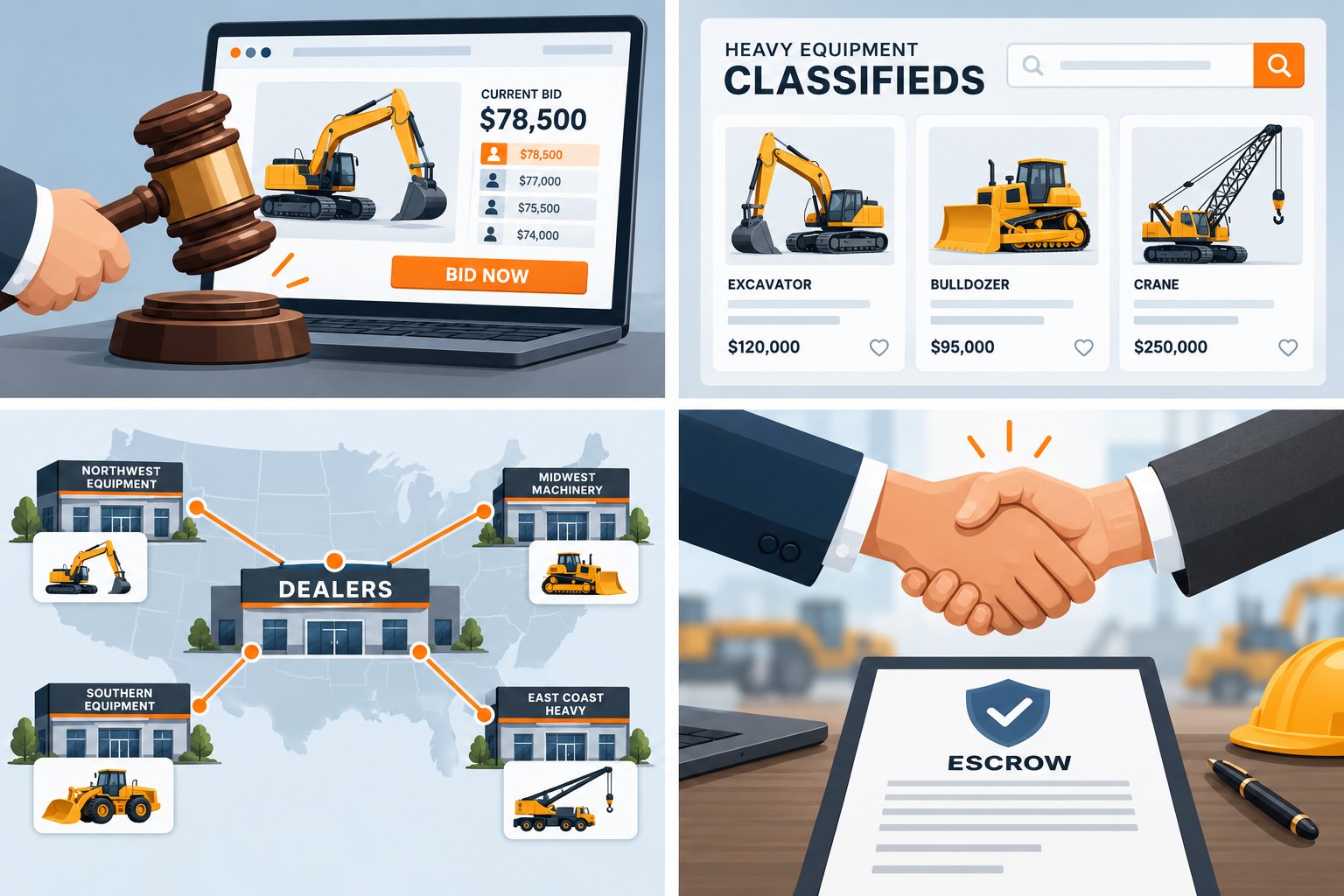
Four Marketplace Models Every Equipment Buyer Should Know
Not every heavy machinery marketplace operates the same way, and picking the wrong model for your situation is a bit like searching for "fast food near me" when you actually need a sit-down dinner. The format shapes everything: how prices are set, how fast you close a deal, and how much risk you carry. Four dominant models account for the vast majority of equipment transactions today, and each one rewards a different type of buyer and seller.
Auction Platforms and How Bidding Works
Auction platforms are the most dynamic corner of the equipment market. They come in two primary flavors: live auctions, where bidding happens in real time at a physical location or through a simultaneous webcast, and timed-online auctions, where lots open and close within a scheduled window, and you bid from wherever you happen to be.
The core mechanics are straightforward. A seller consigns a machine, the auction house lists it with specifications and condition details, and qualified bidders compete to win. Some auctions are unreserved, meaning every item sells to the highest bidder regardless of price. Others set a reserve price, a minimum the seller will accept, and if bidding doesn't reach it, the machine stays unsold.
Here is the cost detail most first-time bidders miss: auction houses typically charge a buyer's premium, an additional percentage, commonly 10% to 25%, added on top of the winning bid. So if you win a loader at $40,000 and the premium is 18%, your actual cost before tax is $47,200. Always work backward from your total budget before placing a bid.
Government-surplus platforms frequently follow this auction model, and the units they offer tend to be well-maintained fleet machines with documented service histories, making them appealing to budget-conscious contractors.
Classified Listing and Direct-Sale Platforms
Think of classified platforms as the digital evolution of print equipment ads. Private owners, small operators, and independent dealers post machines at a fixed price or mark them as negotiable, and buyers reach out directly. There is no bidding war, no closing bell, and, in many cases, no commission taken by the platform itself.
That zero-commission, direct-sale structure is exactly why sellers who want maximum proceeds gravitate here. Without an auction house taking a cut, the seller keeps the full sale price. For buyers, the appeal is negotiation flexibility: you can make offers, request maintenance records, and take your time. The trade-off? Pricing reflects what the seller hopes to get, not what competitive demand would actually determine. Overpriced listings can linger for months, much like obscure words you would only discover through an online thesaurus, while genuinely fair deals disappear fast to whoever messages first.
Due diligence falls squarely on you in this model. There is no structured inspection process unless you arrange one yourself, and verifying seller credibility requires extra legwork.
Dealer Aggregator and Inventory Portals
Dealer aggregators take a different approach entirely. Instead of hosting individual buyers and sellers, these platforms pull inventory feeds from hundreds or thousands of equipment dealerships into a single searchable database. You type in "wheel loader, under 5,000 hours, within 300 miles," and the portal returns results from dozens of dealers simultaneously.
The scale is the selling point. Platforms in this category, such as Machinery Trader and Equipment Trader, routinely list tens of thousands of machines across every category. That broad geographic reach means you are far less likely to miss the right unit simply because it sits on a dealer lot two states away. You will also notice that listed prices typically reflect dealer retail, which tends to run higher than auction results but often includes financing support, limited warranties, or return policies that auction purchases do not.
Managed Transaction Platforms
The fourth model blends elements of the other three. Managed transaction platforms act as intermediaries that facilitate the entire deal: listing, buyer-seller matching, inspection coordination, escrow payment handling, and sometimes even logistics. They appeal to buyers who want the convenience of a classified search combined with the trust safeguards closer to an auction environment.
Fees in this model are usually higher because the platform is doing more work on your behalf, but for high-value purchases where a misstep is costly, the added structure can be well worth it. Think of it as a common app for equipment buying: one process, multiple layers of verification, and a standardized experience regardless of who the seller is.
Side-by-Side Model Comparison
Choosing between these four models does not have to feel like memorizing geometry formulas. The table below maps each one across the factors that matter most.
| Model | Transaction Format | Typical Fees | Best for Buyers Who... | Best for Sellers Who... | Risk Level |
|---|---|---|---|---|---|
| Auction Platform | Competitive bidding (live or timed-online) | Buyer's premium of 10%–25%; seller commission varies | Want market-driven pricing and fast closings | Need to liquidate quickly or sell high-demand units | Medium (prices can exceed or fall below expectations) |
| Classified / Direct-Sale | Fixed price or negotiable listing | Often zero commission; some platforms charge a listing fee | Prefer negotiation control and flexible timelines | Want to keep 100% of the sale price | Higher (less vetting, pricing not market-tested) |
| Dealer Aggregator | Dealer retail with inquiry-based contact | Fees charged to dealers, not buyers; prices reflect dealer markup | Need broad selection and possible financing or warranty | Are established dealers seeking wider geographic exposure | Lower (dealer reputation and return policies add protection) |
| Managed Transaction | Platform-facilitated deal with escrow and inspections | Transaction fee or service percentage (varies by platform) | Want end-to-end support and built-in buyer protections | Are willing to pay for a streamlined, trust-enhanced process | Lower (escrow, inspections, and dispute resolution included) |
You do not have to pick just one model permanently. Many experienced buyers browse classified platforms and dealer aggregators purely for price research, the same way you might check a coffee shop near me before committing to a coffee near me order at a new spot, and then bid at auction once they understand fair market value. The smartest strategy is knowing which model matches a specific purchase scenario, and that starts with understanding how to evaluate any platform's quality and trustworthiness before handing over a deposit.
How to Evaluate and Compare Heavy Equipment Marketplaces
Knowing the four marketplace models is only half the equation. The other half is figuring out whether a specific platform within those models actually deserves your time and money. A flashy homepage and a massive listing count might look impressive, but so does a well-told joke until you realize there is no punchline. You need a structured way to separate substance from surface appeal, no matter which heavy machinery marketplace you are considering.
Criteria for Comparing Marketplace Quality
Every platform makes promises. The criteria below give you a concrete framework for testing those claims. Priorities shift depending on your experience level, so this ranked list is organized for first-time buyers, with notes on how seasoned fleet managers would reorder them.
- Buyer protections (escrow, inspection contingencies, dispute resolution). If you are new to equipment purchasing, this is your safety net. Platforms offering escrow services, inspection windows, or formal dispute processes dramatically reduce your risk on high-value transactions. Experienced fleet managers may rank this lower because they have existing relationships and internal inspection teams.
- Seller vetting processes. Does the platform verify seller identities, business registrations, or transaction histories? Industry practitioners emphasize that skipping verification is one of the costliest mistakes in equipment transactions. First-time buyers should prioritize platforms that do this work for them.
- Inventory breadth and geographic reach. A platform with thousands of listings across multiple regions gives you more options and better price benchmarking. Fleet managers often prioritize this criterion first because they need specific configurations quickly and cannot afford to wait.
- Commission and fee transparency. Understand exactly what you pay before you commit. Some platforms charge buyer premiums, others charge listing fees to sellers, and a few charge nothing at all. Hidden fees buried in fine print are a deal-breaker regardless of your experience level.
- Payment options. Wire transfer, escrow, financing, credit card: the more flexible the payment infrastructure, the easier it is to structure a deal that works for your cash flow. First-time buyers benefit from platforms that support escrow, while fleet managers may prefer direct wire or financing integration.
- Listing quality and data depth. Can you filter by hours, model year, location, and attachments? Platforms that require sellers to fill in structured specification fields save you from guessing, much like how a zero waste lifestyle depends on clear labeling to make informed decisions rather than assumptions.
Red Flags and Trust Signals to Watch For
Reputable platforms and risky ones can look surprisingly similar at first glance. The difference shows up in the details. BBB-investigated cases have tied fake equipment sites to tens of thousands of dollars in buyer losses, where money was wired for machines that never arrived. Jokes aside about too-good-to-be-true deals, the fraud is real and preventable if you know what to look for.
Use this checklist on any platform before engaging with a listing or placing a deposit:
- Verified seller profiles. Look for identity verification badges, linked business registrations, or documented transaction histories. Named sellers with visible company details are a credibility signal; anonymous or skeletal profiles are not.
- Transparent transaction histories. Platforms that display completed sale data, seller ratings, or buyer reviews give you evidence rather than claims. If past performance data is hidden or unavailable, you are flying blind.
- Regularly updated listings with timestamps. Fresh timestamps indicate an actively managed inventory. Stale listings with no update dates suggest the platform is not curating its content, and that machine may have been sold months ago.
- Established brand reputation. Search the platform name alongside terms like "complaint," "fraud," or "review" to see what other buyers report. A platform with years of operation and a traceable corporate presence is far safer than a site that appeared last month.
- Large listing volumes from diverse sellers. A broad base of dealers and private sellers competing on the same platform naturally keeps pricing honest and signals that the marketplace has earned industry participation over time.
- Clear contact and support channels. Can you reach a real person by phone or email? Legitimate platforms invest in customer support. A missing phone number or a contact form that goes nowhere is a red flag.
- Secure payment infrastructure. The platform should support traceable payment methods. If wire transfer to an unverified personal account is the only option, walk away. Industry guidance consistently warns that irreversible payment methods paired with unverified sellers are the most common fraud pattern.
Print this checklist or bookmark it. Run through every item before you register, bid, or transfer funds on any platform, whether you found it through a targeted search or stumbled across it while browsing equipment listings during a slow memorial day 2026 weekend. The five minutes it takes to verify these signals could save you thousands in losses.
A trustworthy platform, however, only solves the where of buying. The equally critical question is whether the asking price on any given listing actually reflects what a machine is worth, and that requires a completely different set of research skills.
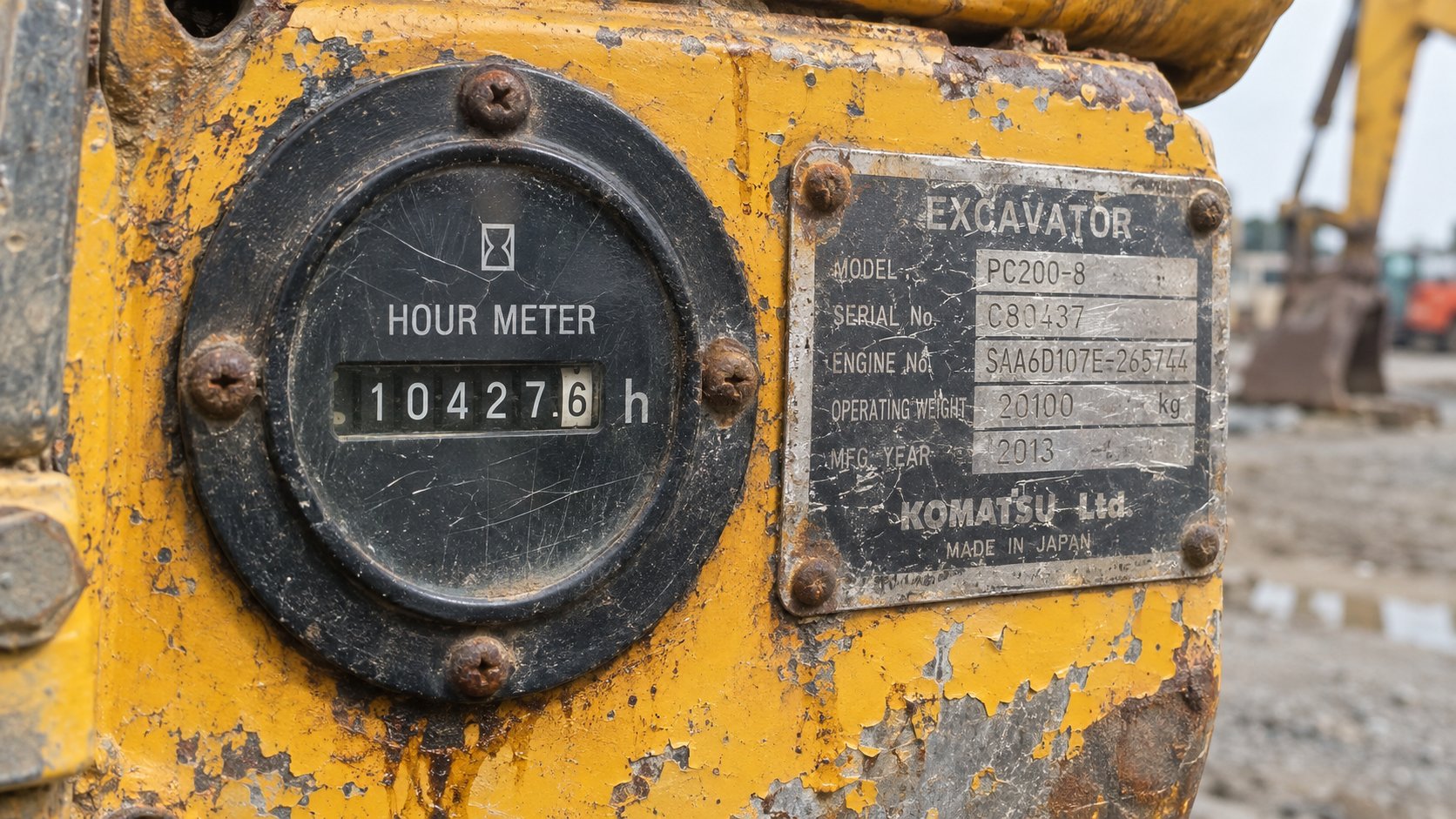
Understanding What Drives Heavy Equipment Pricing
A listing says $115,000 for a 2018 excavator with 7,500 hours. Is that a fair deal or an inflated ask? You cannot answer that question by gut feeling alone, any more than you could rate my professor without attending a single lecture. Equipment pricing follows a set of measurable factors, and once you understand them, evaluating any listing on any heavy machinery marketplace becomes a repeatable skill rather than a coin flip.
Primary Factors That Drive Heavy Equipment Prices
Five variables carry the most weight when the market assigns a value to a used machine. Think of them less as isolated numbers and more as interconnected points on a unit circle, where shifting one changes the position of all the others.
- Brand reputation. Established manufacturers with broad dealer networks and reliable parts supply chains command higher resale values. Industry analysis confirms that well-known brands bring stronger prices because buyers trust long-term support and parts availability. Lesser-known brands may perform equally well on the jobsite, yet sellers often need to lower prices to attract interest.
- Engine hours or mileage. Operating hours are the single largest value driver after age. A 10-year-old excavator with 5,000 hours can be worth 30 to 40% more than an identical model with 15,000 hours. But extremely low hours on an older machine can also raise concerns about prolonged storage, stale fluids, and deteriorating seals.
- Machine age. Heavy equipment typically loses 20 to 30% of its value in the first year alone. After five years, most machines retain only 40 to 60% of their original cost, assuming proper maintenance. The depreciation curve flattens significantly past year two, which is why buying a lightly used unit often delivers massive savings over purchasing new.
- Overall condition. Visible wear, hydraulic leaks, cracked glass, and damaged controls all reduce value, sometimes dramatically. A well-maintained five-year-old machine can be worth 20 to 35% more than an identical unit showing heavy corrosion and deferred repairs.
- Included attachments. Buckets, hydraulic breakers, grapples, and quick couplers add tangible value. A machine bundled with job-ready attachments saves the buyer a separate procurement cycle and often justifies a price premium over a bare unit.
Geographic market conditions act as a multiplier on top of these factors. Equipment located in regions with booming construction activity commands premiums, while the same model in an area experiencing an economic slowdown may sit at a discount. A bulldozer worth $120,000 in a high-demand metro corridor might fetch only $95,000 in a quieter rural market. Even transport proximity to export ports can add 8 to 12% to a machine's price.
How to Research Fair Market Value Before Buying
Relying on a single listing price is like deciding your salary expectations from one job posting. You need comparative data. Here is a practical research workflow you can follow before committing to any purchase:
- Cross-reference comparable listings. Search for the same make, model, year, and hour range across at least three different platforms, including auction sites, classified boards, and dealer portals. The spread between the lowest and highest ask reveals the real pricing band.
- Check recent auction results. Completed auction data shows what buyers actually paid, not what sellers hoped to receive. Tools like the Sandhills Equipment Value Index track asking and auction value trends across construction equipment categories, giving you a data-backed benchmark. Keep in mind that auction prices often reflect distressed or volume-liquidation scenarios, so private-sale values typically run 15 to 25% higher.
- Request and verify maintenance logs. Ask the seller for service records, oil analysis reports, and documented hour-meter readings. Equipment with complete maintenance documentation commands 15 to 25% premiums over identical machines with spotty records. If a seller cannot produce records, factor that risk into your offer.
- Consult dealer trade-in guides. Dealer quotes are useful floor-price references, though they tend to run 10 to 20% below true fair market value because the dealer needs resale margin. Treat trade-in numbers as the bottom of your valuation range, not the midpoint.
The table below maps each pricing factor to its relative impact and what you should verify before accepting any listed price at face value.
| Pricing Factor | Impact on Value | What to Verify |
|---|---|---|
| Brand and model | High | Manufacturer reputation, dealer network strength, parts availability |
| Engine hours / mileage | High | Hour-meter reading, oil analysis trends, consistency with machine age |
| Machine age | High | Year of manufacture, emissions-standard compliance, model-generation updates |
| Overall condition | High | Hydraulic integrity, undercarriage wear, structural cracks, cab condition |
| Maintenance history | High | Dated service logs, repair invoices, fluid analysis reports |
| Included attachments | Medium | Attachment type, wear percentage, hydraulic compatibility |
| Geographic location | Medium | Regional construction demand, proximity to transport routes, local supply levels |
| Cosmetic appearance | Low to Medium | Paint condition, glass integrity, control panel functionality |
One critical reminder: purchase quotes you receive from suppliers or dealers reflect their asking prices, not independent appraisals. You would not accept a single goodwill near me search result as definitive proof of the best thrift store in town, and the same skepticism applies here. Treat every quote as a starting point, then validate it against auction data, comparable listings, and documented condition. Independent comparison is the only reliable path to confirming whether a price is fair.
Fair pricing, however, only protects your wallet. Protecting your entire investment requires a different layer of defense: the right paperwork and a thorough pre-purchase inspection process that catches problems no listing photo will ever reveal.
Due Diligence and Documentation for Marketplace Buyers
Pricing research tells you whether a deal is fair. Documentation and inspection tell you whether the machine behind that deal is actually worth buying. Skip either one, and you are essentially ordering from a 7 brew menu you have never seen before, hoping for the best without knowing what you are getting. Every heavy machinery marketplace, whether auction, classified, or dealer portal, requires the same foundational layer of buyer protection: verified paperwork and a hands-on mechanical assessment.
Paperwork Every Buyer Must Request
Before you transfer funds or sign a purchase agreement, make sure every critical document is in hand. Missing paperwork does not just create headaches; it can mean you legally do not own the machine, or worse, that someone else still has a financial claim on it. Think of this checklist as a recycling guide for bad deals: if a seller cannot produce these items, recycle that listing right out of your shortlist.
- Clear title or certificate of origin. This proves legal ownership and confirms the seller has the right to transfer the machine. Without it, you could inherit title disputes or stolen-equipment claims.
- Lien release or lien-free guarantee. Verify that no lender, leasing company, or creditor holds a financial claim against the equipment. A lien search through your state's UCC filing database takes minutes and can save you from paying for a machine someone else technically still owns.
- Bill of sale with serial and model numbers. This document should include the full make, model, year, serial number, and agreed-upon sale price. It serves as your legal proof of purchase and your primary reference if a dispute arises.
- Maintenance and service logs. Dated service records, oil analysis reports, and component replacement invoices reveal how well the machine was cared for. Industry professionals emphasize that reviewing maintenance history is as critical as the physical inspection itself, because records expose patterns of deferred maintenance or recurring problems that a single walkthrough might miss.
- Emissions or safety compliance certificates. Depending on your state and the machine's intended use, you may need documentation confirming the unit meets current emissions standards and has passed required safety inspections. Equipment that fails compliance checks can be sidelined from jobsites, turning your purchase into an expensive paperweight.
- Warranty transfer documentation (if applicable). Some manufacturer or dealer warranties transfer to subsequent owners, but only with proper paperwork. Ask whether any remaining coverage applies and get it in writing.
Pre-Purchase Inspection Best Practices
Paperwork tells you what should be true about a machine. A physical inspection confirms what actually is. Even the most complete service log cannot substitute for putting eyes and hands on critical systems, and the stakes are too high to treat inspection as optional. A used bulldozer is not like browsing outfit ideas online, where the worst outcome is a fashion misstep. Here, a missed crack in a boom weld or a failing hydraulic pump can mean five-figure repair bills within weeks of delivery.
Focus your inspection on these high-priority areas, whether you perform it yourself or hire a professional:
- Hydraulic system. Check all hoses for brittleness, cracks, and signs of previous repairs. Operate the equipment under a light load and watch for hydraulic drift, where a raised implement slowly lowers on its own, because that indicates worn seals or valves. Inspect fluid levels and condition for contamination.
- Undercarriage and ground-contact components. For tracked machines, examine sprockets, idlers, rollers, and the track links for wear, cracks, and missing components. An undercarriage replacement is one of the most expensive repairs you can face, so accurate wear assessment directly affects your true acquisition cost. For wheeled equipment, check for uneven tire wear patterns that signal alignment or suspension problems.
- Engine and drivetrain performance. Listen during a cold start for knocking or unusual noise, which could indicate worn bearings. Check exhaust smoke color: blue suggests burning oil, white points to coolant entering the combustion chamber, and black indicates fuel system issues. Remove the oil fill cap while the engine runs and check for excessive blowby, a sign of worn piston rings or cylinder walls.
- Structural integrity. Walk the entire machine and look for cracks around high-load areas, especially booms, mounting points, and the chassis. Watch for fresh paint that could be hiding rust, collision damage, or weld repairs. Any structural deformation, bending, or twisting suggests the machine has been stressed beyond its design limits.
- Cab controls and electrical systems. Test every gauge, switch, light, and control. Faulty wiring or malfunctioning controls are difficult and expensive to diagnose, and rodent damage to wiring harnesses is more common than most buyers expect.
If you are buying sight-unseen through an online platform, budget for a qualified independent inspector to perform this evaluation on your behalf. Hiring a professional inspector with experience in the specific equipment type ensures no detail is overlooked, and their findings give you documented leverage for price negotiations. Some platforms and manufacturers offer guaranteed inspection reports that eliminate the need for on-site visits, but always verify the scope and limitations of any provided report before relying on it.
A thorough inspection also serves as your recycling guide for separating machines worth pursuing from those that should be passed over entirely. Red flags like structural cracks with undocumented weld repairs, fluid contamination, inconsistent operating hours, or missing safety components do not automatically disqualify a machine, but they demand further specialist evaluation before you proceed.
Thorough due diligence, combining verified documentation with a hands-on or professionally conducted inspection, is the single best protection against costly post-purchase surprises in any equipment transaction.
The types of flowers in a garden vary wildly, and so do the kinds of problems that hide inside used equipment. But unlike a garden, you cannot simply replant next season if something goes wrong. Invest the time and money in proper due diligence upfront, and you protect yourself on every transaction regardless of which platform you use.
Solid documentation and a clean inspection report protect the buy side of the equation. Sellers, however, face an entirely different set of challenges: choosing the right platform, creating listings that attract serious buyers, and pricing strategically enough to close deals without leaving money on the table.
How to Sell Heavy Machinery Through an Online Marketplace
Selling heavy equipment demands more than slapping a price tag on a dusty machine and waiting for the phone to ring. The way you present, price, and position your listing determines whether serious buyers reach out in days or whether your asset collects cobwebs for months. Whether you are a dealer clearing aging inventory or a contractor offloading a machine after project completion, the principles below apply across every heavy machinery marketplace.
Choosing the Right Platform for Your Equipment Type
Not every platform suits every machine. The match between your equipment category and a platform's strengths directly affects how fast you sell and how much you keep.
- Auctions for fast liquidation. If you need capital back quickly, especially on older fleet units or common models like standard backhoe loaders and mid-size excavators, auction platforms excel. The competitive-bid dynamic creates urgency, and unreserved auctions guarantee a sale date. Government agencies and fleet managers rotating equipment on a schedule often default to this channel for exactly that reason.
- Classified and direct-sale sites for niche or specialty machines. Forestry processors, tunnel boring attachments, or low-production-run models attract a narrower buyer pool. Classified platforms let you wait for the right buyer without the time pressure of an auction clock, and the zero-commission structure means you retain the full sale price. Patience pays off here because the right buyer for a specialty unit will pay a premium rather than settle for something that does not fit their operation.
- Dealer networks for high-value units requiring financing support. Late-model machines priced above $150,000 often sell faster through dealer aggregator portals because those platforms connect buyers to financing options, extended warranties, and trade-in programs. Buyers spending at that level expect a structured transaction experience, not a bare-bones classified ad.
Think of platform selection the way you would choose where to sell event tickets: listing premium concert seats on a specialized site like SeatGeek reaches the right audience far more effectively than posting them on a general forum. The same logic applies to heavy equipment.
Listing Optimization and Photography Tips
Your listing is often the first and only impression a buyer gets before deciding whether to call or scroll past. Industry best practices consistently show that clear, detailed listings generate more inquiries, stronger offers, and fewer time-wasting conversations. Here is a step-by-step workflow for building a listing that converts:
- Lead with the essentials in your title. Include brand, model, year, and hours in a clean format: "2019 Caterpillar 330 Excavator - 4,800 hrs - Good Condition." Skip hype words like "amazing" or "must-see." Buyers search by specs, not adjectives.
- Write an honest, spec-driven description. Open with a brief summary of the machine's primary use and current condition. Then list specific details in short bullet points: recent service work, included attachments, known mechanical issues, and available documentation. Transparency about flaws builds trust and filters out buyers who would waste your time negotiating over undisclosed problems later.
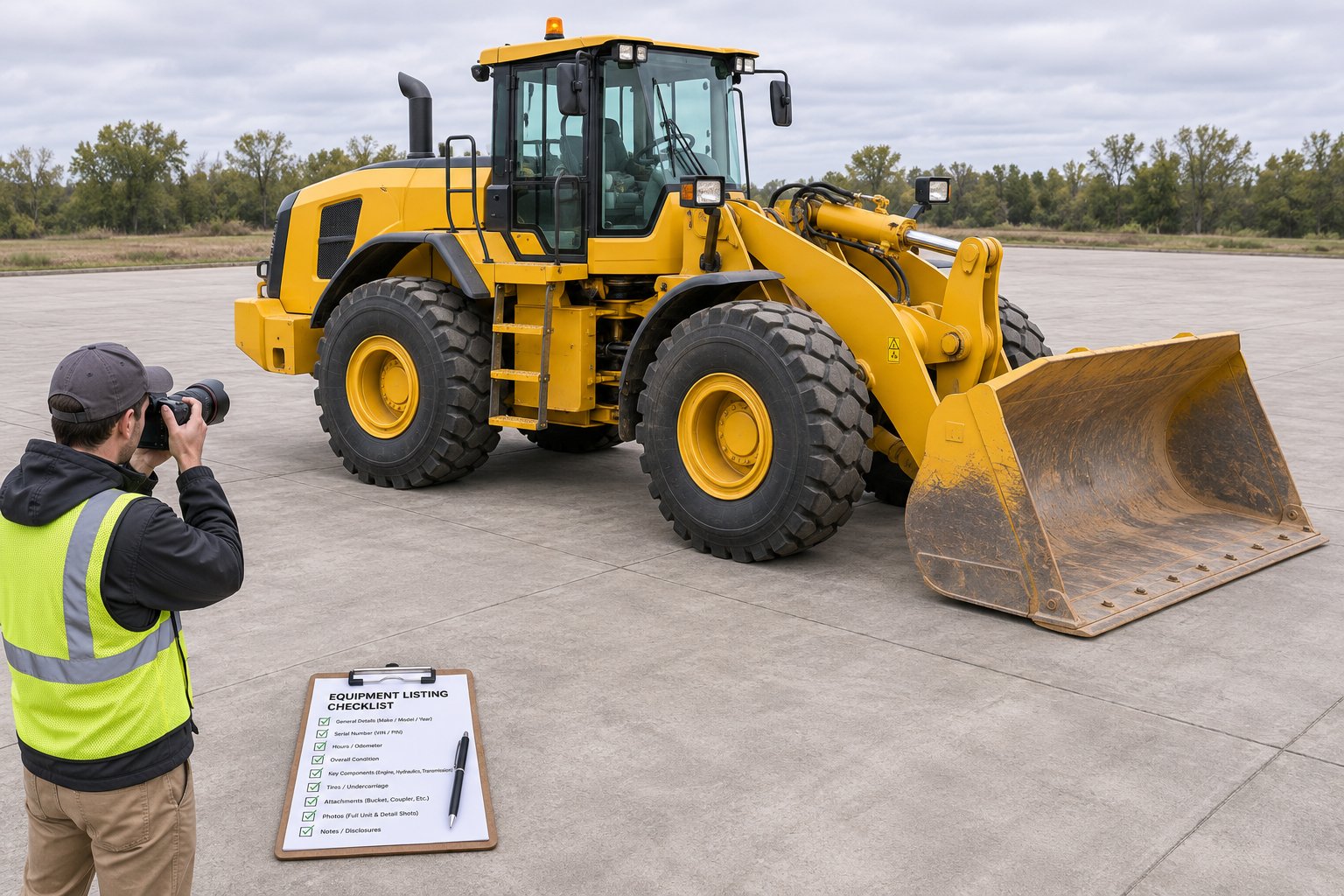
- Capture comprehensive photography. Aim for 12 to 20 high-resolution photos at minimum. Shoot all four exterior corners from roughly 10 to 20 feet away to show the full machine in context. Then get close-ups of wear points: undercarriage components, hydraulic hoses, tire tread or track condition, and any visible damage. Always photograph the hour meter, serial plate, engine compartment, and cabin interior. Shoot in soft, natural daylight, preferably on overcast mornings, and avoid heavy filters that distort true color. Name image files descriptively, like "2019-CAT-330-undercarriage-left.jpg," so they are useful for both buyers and search engines.
- Add operational video when possible. A short clip of the machine starting cold, cycling the boom, and driving forward and reverse does more to build buyer confidence than any paragraph of description. It proves the machine works, which is especially critical for remote buyers who cannot visit in person.
- Include all contact and logistics details. State the machine's physical location, whether you assist with loading or transport, and your preferred method of communication. Buyers who have to spider through a web of missing details to reach you will simply move on to the next listing.
Pricing Strategy for Sellers
Setting the right price is the difference between a quick, profitable sale and a listing that lingers until you are forced to cut aggressively. The approach mirrors the research process buyers use, only from the opposite side of the table.
Start by checking comparable active listings across multiple platforms for the same make, model, year, and hour range. Then cross-reference with recent auction results, which reveal what buyers actually paid rather than what other sellers hope to receive. Pricing guides recommend identifying at least three to five recent comparable sales to establish a reliable range.
With that data in hand, decide where your machine falls on the speed-versus-margin spectrum:
| Pricing Strategy | Target Range vs. Market Average | Best For | Trade-Off |
|---|---|---|---|
| Retail (maximum margin) | 100% to 110% | Turn-key machines with full service history, low hours, and included attachments | Longer time on market; machine must justify premium condition |
| Fair market (balanced) | 95% to 100% | Good working units with normal wear and documented maintenance | Steady inquiry flow; moderate negotiation expected |
| Liquidation (fast cash) | 70% to 85% | As-is machines, older units, or situations where capital recovery speed matters most | Lower proceeds; attracts dealers and flippers rather than end-users |
A practical rule: list at 5% to 10% above your minimum acceptable price. This gives you negotiation room without signaling desperation. Use round numbers, like $49,500 instead of $49,127, because clean pricing feels more professional and makes comparison easier for buyers scanning dozens of listings.
If your listing generates no inquiries within two weeks, reduce the price in small increments of 3% to 7% rather than a single dramatic cut. Track every adjustment in a simple spreadsheet alongside comparable market data so you can defend your number when a buyer inevitably asks, "What's your best price?" Sellers who can point to data rather than emotion close deals faster and at higher margins, much like how seasonal timing around construction ramp-ups or year-end tax-deduction deadlines, the equipment world's version of Easter traditions in terms of predictable annual cycles, can shift demand in your favor if you plan your listing date strategically.
A polished listing and a competitive price get the deal across the finish line. What happens immediately after, specifically how the machine gets from your yard to the buyer's jobsite, is the logistical puzzle most sellers and buyers forget to solve until it becomes an urgent, budget-busting surprise.
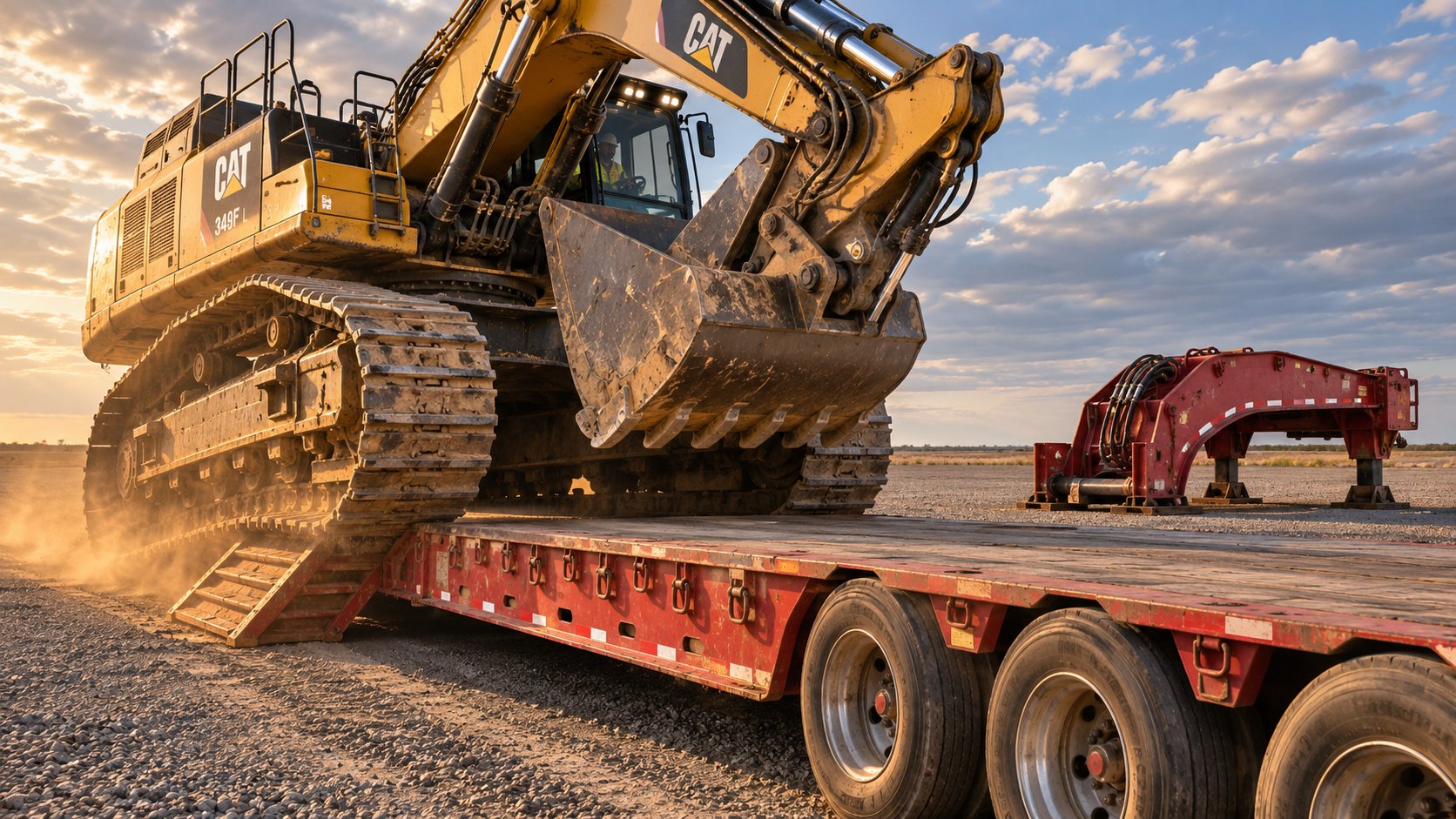
Shipping and Logistics After Buying Heavy Equipment Online
You found the right machine, negotiated a fair price, and verified every document. The deal is done, right? Not quite. A 40,000-pound excavator does not show up at your jobsite the way a package arrives from an online order. Transport logistics can add thousands of dollars to your total acquisition cost, and failing to plan for them is like searching for "food open near me" at midnight and discovering every option requires a 45-minute drive. The gap between closing a deal on a heavy machinery marketplace and actually putting that machine to work is filled entirely by trailer selection, permits, and shipping costs.
Common Transport Methods for Heavy Equipment
Three trailer types handle the vast majority of equipment moves. The right choice depends on your machine's weight, height, and whether it can drive onto the deck under its own power.
- Flatbed trailers. These are the workhorse option for lighter, legal-size equipment. A standard flatbed sits roughly 60 inches off the ground with a typical payload capacity of 42,000 to 48,000 pounds. Mini excavators, compact loaders, and skid steers that fall within federal legal limits of 8 feet 6 inches wide, 13 feet 6 inches high, and 80,000 pounds gross vehicle weight travel comfortably on a flatbed without oversize permits.
- Lowboy trailers. When the machine itself is tall, a lowboy's deck drops significantly lower than a flatbed's, sometimes to just 18 to 24 inches above the road surface. That reduced deck height helps keep the overall loaded height under the 13-foot-6-inch legal ceiling in most states. Buchanan Hauling notes that deck height, deck length, and axle configuration all need to match the specific freight, so "lowboy" alone does not guarantee clearance compliance.
- RGN (Removable Gooseneck) trailers. An RGN trailer's front neck detaches from the deck, creating a ramp that lets tracked equipment like excavators, bulldozers, and graders drive directly onto the trailer from the front. This eliminates the need for a separate loading ramp or crane and is the standard choice for heavy, self-propelled machines. Many RGN trailers are also lowboys, so the terms are not always mutually exclusive. Multi-axle RGN configurations handle gross weights well beyond 80,000 pounds, though anything over that threshold requires overweight permits in every state along the route.
Choosing the wrong trailer is not a trivial mistake. An excavator loaded onto a standard flatbed that pushes the combined height past legal limits triggers permit requirements, mandatory pilot car escorts, and potentially daylight-only travel restrictions, all of which inflate cost and delay delivery.
Factors That Affect Shipping Cost and Timeline
Transport pricing is not a single number. It is a formula built from several variables, and understanding each one helps you budget accurately before finalizing any marketplace purchase. You do not need to become a car guru of heavy haul logistics, but knowing the cost drivers keeps you from accepting an inflated quote or getting blindsided at delivery.
Here are the primary factors:
- Total weight and equipment dimensions. Machines that exceed 80,000 pounds gross or 8 feet 6 inches wide push the shipment into oversize or overweight territory. HTS Logistics reports that vendor estimates for legal RGN loads run $3.50 to $6.00 per mile, while oversize and overweight loads jump to $8 to $15 per mile, and superloads exceeding 120,000 pounds can reach $10 to $20 or more per mile.
- Transport distance. A 200-mile move and a 1,200-mile move use the same trailer, but the per-mile rate compounds dramatically over distance. Long-haul moves also add driver hours, fuel, and potential multi-state permitting.
- Permit requirements. Each state along the route issues its own oversize or overweight permit. Individual fees are often modest, New York charges $40 per single-trip permit with no mileage surcharge, but the cumulative cost across multiple states adds up. What the permits trigger, such as escorts and restricted travel windows, usually costs more than the permits themselves.
- Pilot cars and escorts. States mandate escort vehicles based on load width, length, and height. New York requires a certified escort for loads over 12 feet wide; Pennsylvania triggers a pilot car over 13 feet wide. Escort rates start around $1.95 to $2.15 per mile for a lead or chase car, with height-pole vehicles running $2.25 to $2.50 per mile.
- Fuel surcharges. Diesel prices directly affect your shipping cost. Fuel surcharges are either embedded in an all-in rate or billed separately.
- Seasonal demand fluctuations. Construction ramp-ups in spring and early summer increase carrier demand and drive rates higher, similar to how hotels near Burlington or any popular destination spike during peak tourist season. Winter months and holiday blackout periods can also delay moves: Pennsylvania bars oversize travel from noon the Wednesday before Thanksgiving through the following Monday morning.
| Transport Method | Typical Weight Capacity | Best For | Estimated Cost Range (per mile) |
|---|---|---|---|
| Flatbed | Up to ~48,000 lbs payload | Compact equipment within legal size and weight limits (mini excavators, skid steers, small loaders) | $3.35 – $4.04 (based on national spot and contract averages) |
| Lowboy | 40,000 – 80,000 lbs payload (varies by axle configuration) | Tall equipment that needs a low deck height to stay under legal height limits | $3.50 – $6.00 for legal loads; higher with permits |
| RGN (Removable Gooseneck) | 40,000 – 150,000+ lbs (multi-axle configurations) | Self-propelled tracked machines (excavators, dozers, graders) that can drive onto the deck | $3.50 – $6.00 legal; $5 – $15 oversize/overweight; $10 – $20+ superloads |
Rate ranges reflect vendor estimates and national averages referenced from HTS Logistics data as of late 2026. Actual quotes vary by lane, direction, season, and specific equipment dimensions.
A practical tip that experienced buyers treat as non-negotiable: confirm transport logistics and total shipping cost before you finalize any marketplace purchase. Calculate the volume of your total investment the way an engineer would approach a cylinder volume formula, accounting for every variable, not just the sticker price. The machine itself might be a great deal, but if shipping adds 10% to 20% on top, your budget math changes completely. Request itemized transport quotes that break out linehaul, fuel, permits, and escorts as separate line items so you can compare carriers on equal terms, much like how a car guru would cross-reference vehicle pricing across doublelist-style platforms and dealer sites before committing.
Transport is the final cost layer, but it is not the final decision you need to make. The broader question, which source and buying approach best fits your specific situation, ties every element of the process together, from marketplace model to pricing research to logistics planning.
Matching Your Buyer Profile to the Right Equipment Source
Marketplace models, pricing mechanics, inspection protocols, and transport logistics are all critical puzzle pieces, but they only click together when you anchor them to one starting point: who you are as a buyer. A fleet manager expanding capacity across multiple jobsites approaches a heavy machinery marketplace with completely different priorities than a first-time buyer stretching a tight budget on a single excavator. Treating every buyer profile the same would be like walking into a Costco Wholesale warehouse and a boutique specialty shop expecting the identical experience. The selection strategy has to match the shopper.
Matching Your Buyer Profile to the Right Approach
The framework below maps four common buyer profiles to the marketplace types and key considerations that best serve each one. Think of it as delta math for equipment sourcing: plug in your variables, and the right channel becomes clear.
| Buyer Profile | Recommended Marketplace Type | Key Considerations |
|---|---|---|
| Contractor needing a specific machine | Dealer aggregator portals or classified platforms | Prioritize platforms with granular search filters (make, model, hours, attachments). Time sensitivity is high, so focus on listings with confirmed availability. Factor transport cost into every comparison since the right unit may be several states away. |
| Fleet manager expanding capacity | Auction platforms and dealer networks | Volume purchasing power opens negotiation leverage on dealer portals. Auctions offer market-tested pricing for bulk acquisitions. Compare total cost of ownership across units, not just sticker prices, and confirm financing or lease options upfront. |
| Equipment dealer restocking inventory | Auctions, direct-sale classifieds, and supplier inventories | Look for equipment for trade or liquidation-priced units that leave resale margin. Auction platforms and direct suppliers with curated stock offer the best wholesale-to-retail spread. Verify title cleanliness before committing to any volume purchase. |
| First-time buyer on a budget | Classified platforms and managed transaction sites | Buyer protections matter most here. Choose platforms with escrow, inspection contingencies, or return policies. Research fair market value using the cross-referencing method from earlier sections before placing any offer. Budget an additional 10% to 20% for transport and potential repairs. |
Your profile might not fit neatly into a single row, and that is perfectly normal. A contractor who buys equipment only once every few years shares more in common with the first-time buyer column than with a fleet manager who purchases quarterly. Identify where your risk tolerance and timeline fall, then let those factors guide your channel selection rather than defaulting to whichever platform appears first in a search.
Browsing and Comparing Used Construction Equipment Suppliers
Multi-seller marketplaces are not the only game in town. Buyers also source directly from equipment suppliers who maintain their own curated inventories. These suppliers differ from auction houses and classified boards in an important way: you are dealing with one entity that controls the stock, sets the pricing, and handles inquiries directly. It is a more streamlined interaction, similar to how browsing a single retailer's catalog differs from scanning dozens of independent vendor listings scattered across a multi-seller platform.
When searching for used construction equipment for sale through this channel, you gain the advantage of consistent listing quality and a single point of contact for questions about machine condition, service history, and availability. The trade-off is that pricing reflects the supplier's asking price rather than a competitive-bid outcome, so the independent valuation steps covered earlier in this article remain essential.
One supplier worth browsing in this category is JIUHONG, which maintains an inventory of used excavators, loaders, bulldozers, and graders. Contractors sourcing machines for upcoming projects, fleet managers comparing options, and equipment dealers evaluating wholesale stock can review available units and request purchase quotes directly. JIUHONG operates as a machinery supplier, not an auction operator or multi-seller marketplace, so treat their listed prices the same way you would any dealer quote: as a starting point for your own independent comparison across multiple sources.
Positioning a supplier like JIUHONG alongside auction platforms and classified marketplaces gives you a broader sourcing net. The goal is not to commit to a single channel but to cast wide, compare thoroughly, and negotiate from a position of knowledge. How many weeks in a year does a busy contractor spend searching for the right machine? Fewer than you would think, if the sourcing strategy is structured from the start.
Here are practical next steps that apply regardless of which combination of sources you use:
- Define your equipment requirements precisely. Lock in the make, model range, acceptable hour limits, required attachments, and maximum budget before you start browsing. Vague searches produce vague results.
- Browse multiple source types simultaneously. Check auction platforms for market-tested pricing, classified sites for negotiable deals, dealer aggregators for broad selection, and supplier sites like JIUHONG's inventory page for curated used construction equipment for sale.
- Request quotes from at least three sources. Comparing quotes across channels reveals whether a price is competitive or inflated. Remember that quotes are asking prices, not independent appraisals.
- Perform full due diligence on every shortlisted unit. Apply the documentation checklist and inspection framework from earlier sections to every machine, no matter how reputable the source appears.
- Confirm transport logistics and total landed cost before signing. A great deal on a machine loses its appeal if shipping adds an unplanned 15% to your budget. Get itemized transport quotes and factor them into your final comparison spreadsheet.
Sourcing equipment is not a one-click decision, but it does not have to be an overwhelming one either. With your buyer profile matched to the right channels and a structured comparison process in place, the final step is pulling every lesson from this guide into a concise action plan you can execute on your very next purchase.
Putting It All Together for Smarter Equipment Decisions
Every section of this guide, from marketplace models to pricing research to transport planning, feeds into a single objective: helping you navigate any equipment alley of options without overpaying, under-inspecting, or choosing the wrong channel. Whether you are buying a single compact loader or liquidating an entire fleet of earth moving equipment, the principles stay the same.
Key Takeaways for Marketplace Success
Three principles separate confident equipment buyers and sellers from everyone else: first, understand marketplace models before committing to one so you match the transaction format to your timeline and risk tolerance; second, always perform independent due diligence, because no listing photo, seller promise, or platform badge substitutes for verified documentation and a hands-on inspection; third, factor logistics costs into total acquisition price before you sign, since transport can add 10% to 20% on top of the sticker price and reshape the economics of any deal.
These are not abstract ideas. They are the practical filters that protect your capital on every transaction, whether the machine is a $15,000 skid steer or a $350,000 excavator.
Your Next Steps as a Buyer or Seller
Knowledge without action is just trivia. Here is a concrete plan you can execute starting today:
- Identify your buyer or seller profile. Are you a contractor on a deadline, a fleet manager balancing budgets, a dealer restocking, or a first-time buyer learning the ropes? Your profile dictates which channels deserve your time.
- Shortlist marketplace types that match your needs. Auctions for speed and market-tested pricing, classifieds for negotiation flexibility, dealer aggregators for breadth, and direct suppliers for curated inventory. Use more than one.
- Research fair market value using multiple sources. Cross-reference active listings, recent auction results, and dealer trade-in guides. Just as you would not learn how to create invoices from a single template without comparing alternatives, do not anchor pricing decisions to a single data point.
- Prepare documentation and inspection protocols. Print the paperwork checklist and inspection framework from earlier sections. Hire an independent inspector for any high-value or sight-unseen purchase.
- Confirm transport logistics and total budget. Get itemized shipping quotes before you finalize the deal. Include permits, escorts, fuel surcharges, and seasonal rate adjustments in your landed-cost calculation.
This guide was built to be platform-agnostic. No single heavy machinery marketplace, supplier, or auction house is right for every situation, and anyone who tells you otherwise is selling something rather than educating you. The equipment alley you walk through on your next purchase might include auction sites, classified boards, dealer portals, and direct suppliers simultaneously, and that is exactly how it should work. Cast wide, compare rigorously, and let data drive the decision.
You now have the framework to evaluate earth moving equipment deals with the same structured confidence that experienced fleet managers bring to every transaction. The only step left is putting it into practice.
Heavy Machinery Marketplace FAQs
1. What is the difference between a heavy machinery marketplace and a general equipment listing site?
A heavy machinery marketplace is purpose-built for construction and earthmoving equipment transactions. Unlike general listing sites, these platforms offer technical search filters such as engine hours, machine type, model year, and attachment specifications. They also incorporate industry-specific trust signals like verified seller profiles, documented service histories, and structured inspection processes that general consumer marketplaces simply do not provide. This specialization helps buyers find exactly the right excavator, loader, bulldozer, or grader without sifting through irrelevant consumer product listings.
2. How do I know if a heavy equipment listing price is fair?
Fair market value requires cross-referencing at least three sources. Start by comparing the same make, model, year, and hour range across auction platforms, classified sites, and dealer portals. Then review completed auction results to see what buyers actually paid, not just what sellers asked. Request maintenance logs to verify hours and service history, since documented machines command 15% to 25% premiums. Dealer trade-in guides provide a useful floor price, though they typically run 10% to 20% below true market value. Suppliers like JIUHONG list asking prices on their inventory page at jiuhong-machinery.com/products/, but these should always be validated against independent comparable data before committing.
3. What are the most common types of heavy equipment marketplace models?
Four dominant models cover most transactions. Auction platforms use competitive bidding with buyer premiums of 10% to 25% and suit fast liquidation scenarios. Classified and direct-sale platforms allow fixed-price or negotiable listings with zero commission, giving sellers maximum proceeds but placing due diligence fully on buyers. Dealer aggregator portals pull inventory from hundreds of dealerships into one searchable database, offering broad selection and potential financing. Managed transaction platforms act as intermediaries handling escrow, inspections, and logistics for a service fee, combining classified convenience with auction-level trust safeguards.
4. What should I inspect before buying heavy equipment from an online marketplace?
Focus on five critical areas during any pre-purchase inspection. Check the hydraulic system for hose brittleness, drift under load, and fluid contamination. Examine undercarriage components including sprockets, idlers, rollers, and tracks for wear and cracks, since undercarriage replacement is among the most expensive repairs. Evaluate engine performance by listening for cold-start knocking and checking exhaust smoke color. Inspect structural integrity around booms, mounting points, and the chassis for cracks or hidden weld repairs. Finally, test all cab controls, gauges, and electrical systems. For sight-unseen online purchases, hiring a qualified independent inspector is strongly recommended.
5. How much does it cost to ship heavy equipment after buying it online?
Shipping costs depend on equipment weight, dimensions, transport distance, permit requirements, and seasonal demand. Standard flatbed moves for legal-size loads average $3.35 to $4.04 per mile. Lowboy and RGN trailer moves for heavier machines run $3.50 to $6.00 per mile when within legal limits, but oversize and overweight loads can jump to $8 to $15 per mile. Superloads exceeding 120,000 pounds may reach $10 to $20 or more per mile. Additional costs include multi-state permits, mandatory pilot car escorts, and fuel surcharges. Always confirm total shipping cost before finalizing any purchase, as transport can add 10% to 20% on top of the equipment price.