

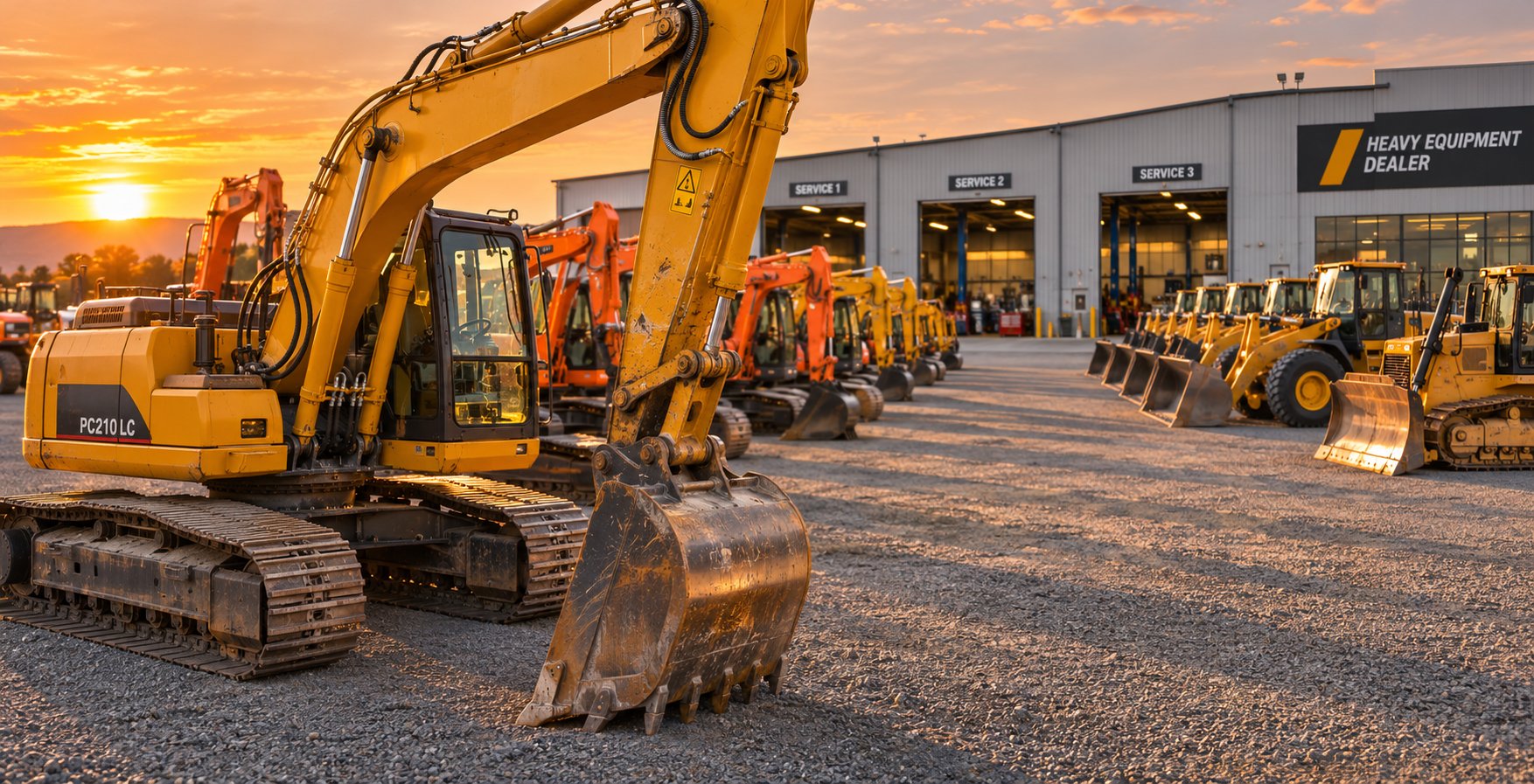
What a Heavy Equipment Dealer Actually Does for Buyers
When you start searching for machinery — whether you're typing "case dealer near me" into Google or browsing listings for case diggers and excavators — you'll quickly realize that not every seller operates the same way. The differences matter far more than most buyers expect.
What Exactly Is a Heavy Equipment Dealer
A heavy equipment dealer is a business that sells, rents, and services machinery such as excavators, loaders, bulldozers, graders, and skid steers for industries including construction, mining, agriculture, and demolition. Unlike private sellers or auction houses, a full-service dealer acts as the critical intermediary between manufacturers and end users, offering not just machines but also financing, genuine parts, operator training, and ongoing maintenance support.
That distinction is important. A private seller hands you a key and walks away. An auction house facilitates a transaction — often on an as-is basis with no warranty and limited recourse if something goes wrong after the sale. A reputable dealer, by contrast, builds a relationship. Whether you're visiting a loader dealership for a wheel loader, searching for a case skid steer dealer near me for compact equipment, or even exploring rental options through providers like Sunbelt Rentals Fort Myers for short-term needs, the breadth of services available through dealer channels far exceeds what any single private transaction can deliver.
Why Understanding the Dealer Ecosystem Matters
Choosing the wrong acquisition channel can cost your operation thousands in unexpected repairs, extended downtime, and voided warranty coverage. A machine's sticker price tells you surprisingly little about what you'll actually spend over its working life. Industry experts emphasize that working with the wrong supplier can be an expensive mistake — one that affects not just a single purchase but your entire fleet management strategy.
The total cost of equipment ownership is shaped as much by the dealer relationship as by the machine's sticker price.
This is especially true in specialized markets. Contractors handling hydro excavation in Fort Myers, for example, need dealers who understand the unique demands of vacuum excavation equipment — not just general-purpose machinery sellers. The right dealer match can mean faster service response, better financing terms, and machines configured precisely for your application.
This guide is built as a buyer-centric resource — not a sales pitch. It covers dealer types, evaluation criteria, financing structures, warranty negotiation, and long-term relationship management so you can approach your next equipment decision with clarity. The goal is simple: help you understand who you're buying from before you sign anything.
Types of Heavy Equipment Dealers You Should Know
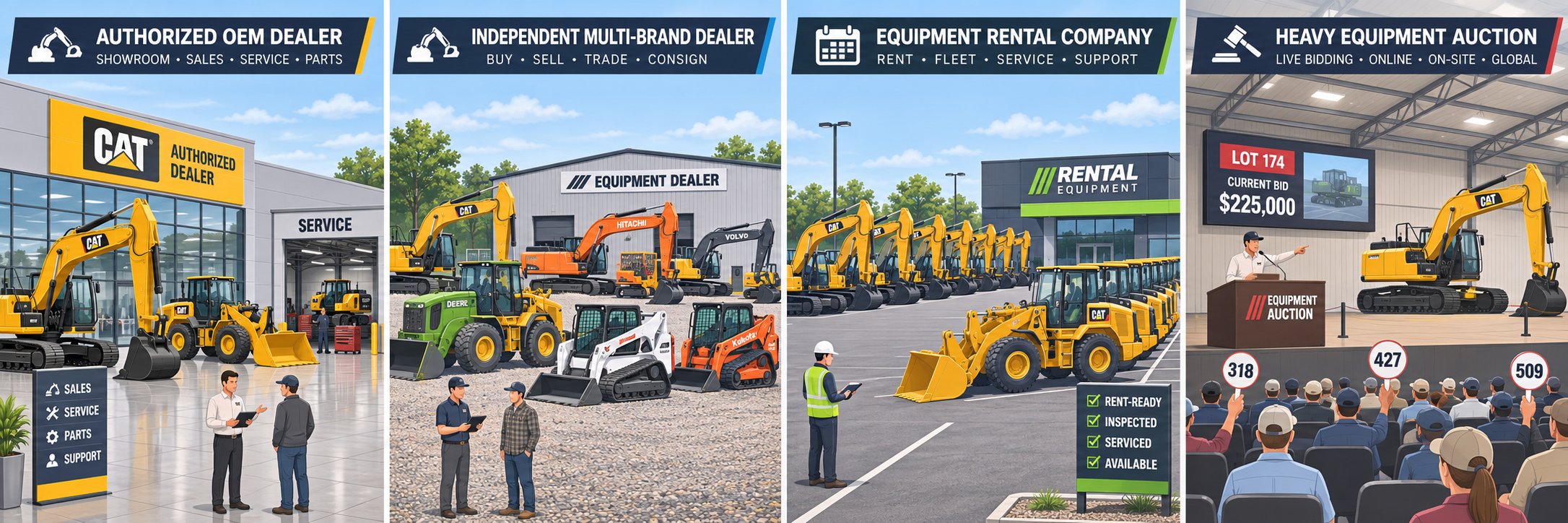
Knowing what a dealer does is one thing. Knowing which type of dealer fits your situation is where the real advantage begins. Not every heavy equipment dealer operates on the same model, and the differences in inventory access, warranty coverage, and long-term service can dramatically affect your total cost of ownership. Whether you're searching for a case construction dealer near me or comparing quotes from multiple sellers, the category of dealer you choose sets the terms for everything that follows.
Authorized OEM Dealers and What They Offer
Authorized dealers carry a specific manufacturer's product line — think John Deere, Caterpillar, Komatsu, or case power equipment — and operate under a formal agreement with that brand. What does that mean in practice? You get factory-trained technicians who complete model-specific certification programs, direct access to genuine OEM parts, and warranty-backed service performed to manufacturer standards. As Pape Machinery notes, dealer service centers offer manufacturer-specific diagnostic software and technical resources that independent shops may not have — a critical difference when modern equipment combines diesel engines, hydraulics, electronic controllers, sensors, and telematics into tightly integrated systems.
The trade-off? Premium pricing. Authorized dealers rarely offer the deepest discounts because their overhead — factory training, certified shop facilities, extensive parts inventory — is built into the cost structure. But for buyers who need warranty protection and long-term service reliability, that premium often pays for itself.
Independent and Multi-Brand Dealers
Independent dealers aren't tied to a single manufacturer, which gives them flexibility that OEM dealers can't match. You'll find operations like Altaquip and similar multi-brand suppliers carrying everything from excavators to compact loaders across several product lines — new and used — all under one roof. This makes them especially attractive if you're comparing options across manufacturers and want to evaluate machines side by side without visiting three different lots.
The caveat is consistency. Service quality at independent dealers varies significantly. Some employ highly experienced technicians and maintain well-stocked parts departments. Others operate with leaner resources, which can mean longer repair turnaround times and parts that may be aftermarket rather than OEM. If you're exploring independent options — perhaps looking to buy Troy Equipment Ft Myers or a similar regional supplier — verify their service capabilities before committing to a purchase.
Rental-Focused and Auction-Based Sellers
Rental companies like Bobcat of Fort Myers and national chains regularly rotate fleet equipment into the used market once machines reach a predetermined age or hour threshold. These units are often well-maintained because the rental company's business model depends on keeping equipment operational. However, warranty coverage on these units is typically limited or nonexistent, and the service relationship usually ends at the point of sale.
Auction houses take a different approach entirely. They aggregate inventory from multiple sources — fleet liquidations, bank repossessions, contractor downsizing — and sell equipment on an as-is basis. Industry data shows that equipment auctions have become one of the fastest-growing sourcing channels, giving buyers access to rotating inventory often priced below traditional retail. The risk? Limited or no inspection windows, zero post-sale support, and no service relationship. You'll need independent mechanical assessment expertise or be comfortable absorbing that risk.
For buyers exploring equipment loans services in Fort Myers FL or financing in other regions, it's worth noting that auction purchases often require alternative financing arrangements since most auction houses don't offer in-house lending programs the way authorized dealers do.
| Dealer Type | Typical Inventory | Warranty Coverage | Service Capability | Best For |
|---|---|---|---|---|
| Authorized / OEM | Single manufacturer's full product line (new and certified pre-owned) | Factory-backed manufacturer warranty; extended coverage options available | Factory-trained technicians, OEM diagnostic tools, dedicated parts inventory | Buyers prioritizing warranty protection, long-term service, and resale value |
| Independent / Multi-Brand | Multiple brands, new and used equipment across categories | Varies — may offer limited dealer warranty on select units; often as-is on older equipment | Ranges from full-service shops to basic sales operations; verify before buying | Buyers comparing across brands or seeking competitive pricing flexibility |
| Rental-Focused | Used fleet units rotated out of rental service; typically mid-life machines with documented hours | Limited or no warranty; machines sold after rental service period ends | Minimal post-sale service; maintenance history may be available upon request | Budget-conscious buyers comfortable with used equipment and self-managed maintenance |
| Online / Auction-Based | Broad, aggregated inventory from multiple sources — liquidations, trade-ins, repossessions | Typically sold as-is with no warranty | No post-sale service or parts support | Experienced buyers with mechanical assessment capability seeking lowest entry price |
Each dealer type serves a legitimate purpose — the key is matching the channel to your specific needs, risk tolerance, and long-term service expectations. But dealer type alone doesn't tell the full story. The industries these dealers serve, and the specialized equipment those industries demand, add another critical layer to the selection process.
Industries Served by Heavy Equipment Dealers
Imagine walking into a general construction dealership and asking for a high-reach demolition excavator with a 65-foot boom. Or requesting a forestry mulcher head configured for land-clearing in dense hardwood. Chances are, you'll get a blank stare — or worse, a recommendation for a machine that almost fits but doesn't quite perform in your application. That mismatch is exactly why dealer specialization matters as much as dealer type.
A heavy equipment dealer's industry focus shapes everything from the machines on the lot to the expertise of the service technicians in the shop. The global construction equipment market — valued at roughly $222.5 billion in 2025 — spans far more than general earthmoving. It encompasses mining, agriculture, forestry, demolition, landscaping, and road construction, each with distinct machinery requirements. Choosing a dealer whose specialization aligns with your industry isn't just convenient — it's a safeguard against costly mismatches in equipment configuration, parts availability, and technical support.
Construction and Infrastructure Dealers
Construction-focused dealers are the most common type you'll encounter. They carry the broadest range of earthmoving equipment — excavators, wheel loaders, bulldozers, motor graders, backhoes, and skid steers — because construction itself demands the widest variety of machine types. A single highway project, for example, might require grading equipment, hauling trucks, compactors, and pavers, all sourced through the same dealer relationship.
These dealers typically serve both residential contractors running one or two machines and large-scale infrastructure firms managing fleets of fifty or more. That range of clientele means their sales teams, parts departments, and service bays are built to handle high volume and diverse configurations. If you're searching for a case dealership near me or looking up any major brand's dealer locator, the results will skew heavily toward construction and infrastructure dealers simply because that's where demand is greatest.
The advantage for buyers is accessibility. Construction dealers stock common wear parts — teeth, cutting edges, filters, hydraulic hoses — and their technicians see the same machine models day after day, which translates to faster diagnostics and shorter repair turnaround. A backhoes dealer specializing in construction applications, for instance, will have a depth of knowledge around loader-backhoe hydraulic systems that a general agricultural supplier simply won't match.
Specialized Industry Dealers
Step outside general construction, and the equipment landscape changes dramatically. Mining operations rely on haul trucks rated for 100-ton-plus payloads and large hydraulic excavators sized for pit extraction — machines that most construction dealers don't stock, service, or even have lot space to display. Forestry contractors need purpose-built mulchers, feller bunchers, and specialized loaders with guarded cabs and high-torque undercarriage systems designed for steep, uneven terrain.
Demolition is another niche where dealer expertise makes a measurable difference. High-reach excavators with extended booms, concrete crushers, steel shears, and dust suppression systems require specialized knowledge that goes beyond standard earthmoving. A dealer who understands demolition-specific attachment configurations can recommend the right combination of boom length, counterweight, and tool for a particular structure type — guidance a general case dealer may not be equipped to provide.
Agricultural dealers occupy yet another segment. Compact tractors, utility loaders, skid steers, and hay-handling attachments are staples of this market. Many agricultural dealers also carry landscape-grade compact equipment and mini excavators, making them a natural fit for landscaping contractors as well. If you're sourcing case parts near me for a compact machine used in agricultural or landscaping applications, a dealer with ag-specific expertise will typically carry a deeper parts inventory for those models than a heavy construction-focused operation would.
Here's a quick reference for matching your industry to the right dealer category and equipment types:
- Construction and Infrastructure: Excavators, wheel loaders, bulldozers, motor graders, backhoe loaders, skid steers, compactors, and pavers
- Mining: Large hydraulic excavators, haul trucks (rigid and articulated), drilling rigs, and high-capacity wheel loaders
- Agriculture: Compact tractors, utility skid steers, telehandlers, hay balers, and implement-ready loaders
- Forestry: Feller bunchers, forestry mulchers, log loaders, skidders, and guarded-cab carriers
- Demolition: High-reach excavators, concrete crushers, hydraulic breakers, steel shears, and dust suppression systems
- Landscaping: Mini excavators, compact track loaders, compact utility loaders, and small skid steers
The takeaway is straightforward: a dealer who lives and breathes your industry will recommend better-suited machines, stock the right parts, and troubleshoot problems faster than a generalist. That alignment between your operational needs and the dealer's core expertise is one of the most undervalued factors in the buying process — and one of the most expensive to get wrong.
Recognizing which industry category your work falls into narrows the field of potential dealers considerably. The next challenge is evaluating the individual dealers within that category to separate the truly reputable partners from those who simply occupy the space.
How to Evaluate and Choose a Reputable Dealer
You've identified your industry niche, and you have a shortlist of dealers who carry the right types of machines. Here's where most buyers make a critical mistake — they stop evaluating and start buying. Typing "construction equipment supplier near me" into a search engine gives you proximity. It doesn't give you quality. The difference between a dealer who merely sells you a machine and one who becomes a genuine operational partner comes down to a handful of measurable criteria that too few buyers bother to check.
Certifications and Manufacturer Authorizations
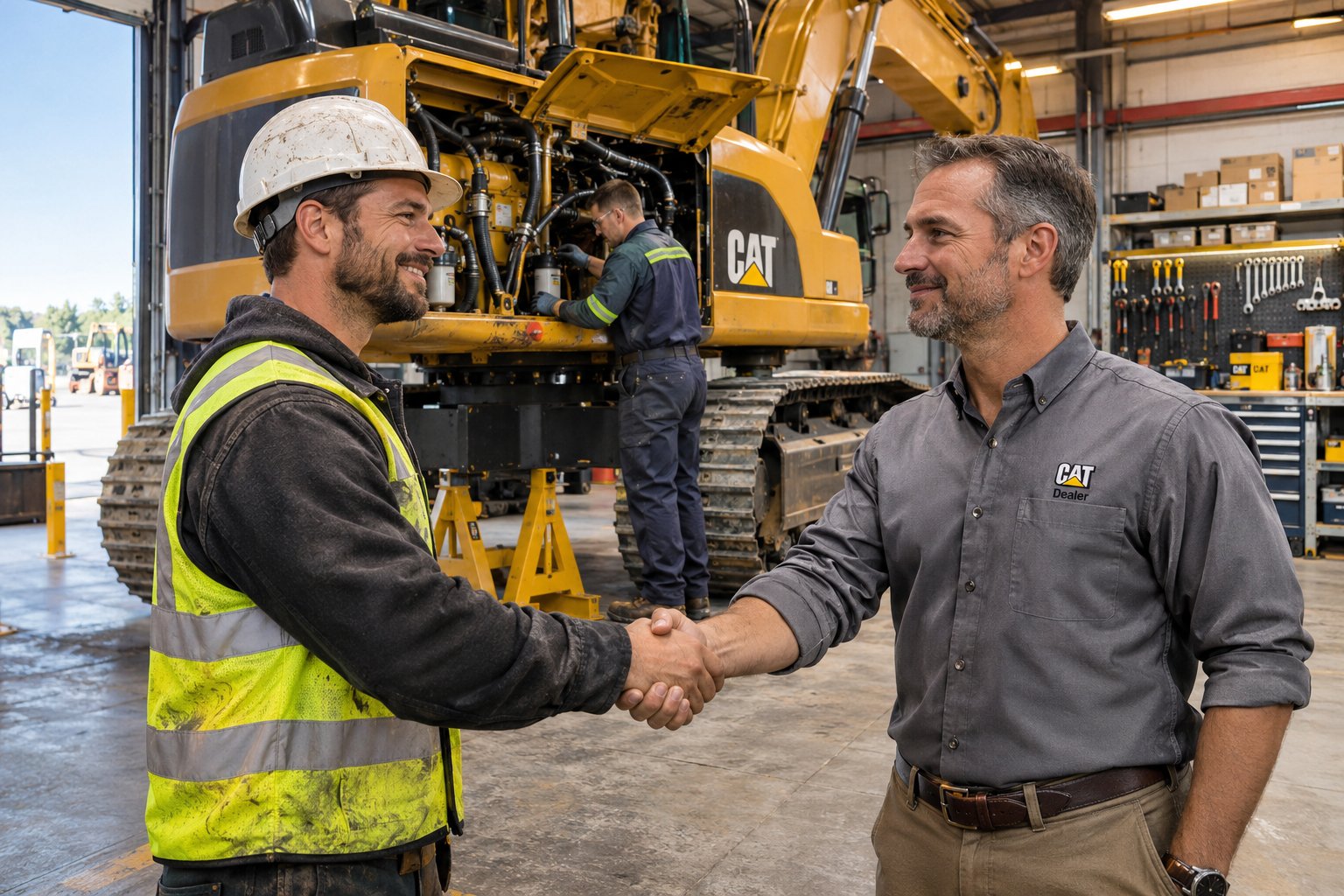
Before you discuss pricing, verify the dealer's authorization status with the specific manufacturer whose equipment you're considering. This isn't a formality — it directly affects warranty validity, parts authenticity, and the caliber of technicians working on your machine. An authorized case heavy equipment dealer, for example, has met the manufacturer's facility standards, invested in factory-mandated diagnostic tools, and completed brand-specific training programs. An unauthorized seller? They may offer a lower price, but a warranty claim that gets denied because the selling dealer lacked authorization is a painfully expensive lesson.
Most major manufacturers — Caterpillar, Komatsu, Deere, CASE, Manitou near me or elsewhere — publish online dealer locator tools. Use them. Cross-reference what a dealer claims with what the manufacturer confirms. If a dealer tells you they're "affiliated" with a brand but doesn't appear in the manufacturer's locator, that's a red flag worth investigating before you commit a deposit.
Service Capabilities and Parts Inventory
A dealer's service department tells you more about their long-term value than anything on the sales lot. How many certified technicians do they employ? Do they operate a mobile service fleet that can reach your jobsite for field repairs? What's their typical turnaround on common maintenance tasks? These aren't questions most buyers think to ask — but they're the questions that determine how much downtime you'll absorb over the life of the machine.
Parts inventory depth matters just as much. Industry experts emphasize that a well-stocked provider simplifies operations and helps circumvent costly delays, especially during high-demand seasons. A dealer who stocks common wear parts — filters, cutting edges, hydraulic hoses, undercarriage components — locally can get your machine back to work in hours. A dealer who has to order those same parts from a regional warehouse might leave you waiting days or even weeks. If you're searching for case equipment repair near me, prioritize dealers whose parts departments carry inventory for the specific models you operate, not just the brand in general.
Geographic Coverage and Reputation Signals
Proximity matters more than most buyers realize. A dealer 200 miles away might offer a better purchase price, but when you need emergency service on a machine that's sitting idle on a jobsite, you'll wish you'd chosen the closer option. Consider where your primary projects are located — not just your home base — and evaluate whether the dealer's service territory covers those areas. Some dealers extend coverage through mobile service trucks; others are strictly shop-based. Know the difference before you sign.
Reputation signals round out the picture. Check references from customers running operations similar to yours in size and scope. Look for memberships in industry associations like the Associated Equipment Distributors (AED), which holds members to ethical business standards. Assess the dealer's longevity — a company that's served the market for decades has weathered economic cycles and proven its staying power. Even for ancillary needs like scaffolding rental in Fort Myers or specialized lifting equipment, dealers with a long track record tend to maintain broader service networks and more reliable parts supply chains.
When you're searching for a construction equipment supplier near me, the dealer who checks every box on this list might not always be the cheapest option — but they'll almost certainly be the least expensive over the life of the equipment. Here's a step-by-step checklist you can follow during your evaluation process:
- Confirm manufacturer authorization — Use the brand's online dealer locator to verify the dealer's authorized status before engaging in pricing discussions.
- Assess the service department — Ask about the number of certified technicians, mobile service availability, typical repair turnaround times, and shop capacity.
- Audit parts inventory — Request a list of commonly stocked parts for the models you're considering. Ask whether critical wear items are held locally or sourced from a remote warehouse.
- Evaluate geographic coverage — Map the dealer's service territory against your active and planned jobsite locations. Confirm whether field service extends to those areas.
- Request customer references — Ask for references from buyers with similar fleet sizes and industry applications. Contact at least two before making a final decision.
- Check industry affiliations and tenure — Verify association memberships, review any public complaint records, and note how many years the dealer has operated in your market.
- Review financing and service agreement options — Before committing, understand the full range of financing structures, maintenance packages, and warranty terms the dealer offers.
This evaluation framework filters out dealers who look good on the surface but can't deliver where it counts — in the shop, on the jobsite, and over the long haul. Yet even a thoroughly vetted dealer is just one of several channels available for acquiring equipment. The real question many buyers face is whether a dealer purchase is the right channel at all — or whether auctions, private sellers, or online platforms might better serve their specific situation.
Buying from a Dealer vs. Auction vs. Private Seller
Here's a scenario most contractors have faced: you find a late-model excavator at auction for $30,000 less than a nearby dealer's price on a comparable unit. Sounds like a no-brainer, right? But six weeks later, a hydraulic pump fails, there's no warranty to fall back on, and the repair bill eats up every dollar you saved — plus some. The acquisition channel you choose shapes your risk exposure just as much as the machine itself. Understanding the trade-offs between dealers, auctions, private sellers, and online platforms is one of the most consequential decisions in the entire equipment buying process.
Dealer Purchase vs. Private Party Sale
Buying through a heavy equipment dealer — whether authorized or independent — typically comes with a bundle of protections that private transactions simply don't offer. Most reputable dealers provide pre-sale inspection reports, some level of warranty or mechanical guarantee, access to financing programs, and an ongoing service relationship. If something breaks in the first 90 days, you have a phone number to call and a shop that knows the machine's history.
Private party sales tell a different story. You might find a mini excavator or track loader listed by an owner-operator who's downsizing, and the asking price may sit 15-25% below what a dealer charges for a similar unit. That discount is real — but so is the risk. There's no inspection report unless you commission one yourself, zero warranty coverage, no financing assistance, and no service relationship after the handshake. You're buying the machine and every hidden problem that comes with it.
That doesn't mean private sales are always a bad move. Experienced buyers who can assess machine condition independently — or who hire a third-party inspector — can find legitimate value in the private market. The key distinction is accountability. A dealer has a reputation and a physical location to protect. A private seller has a bill of sale and a disconnected phone number.
Auction Buying vs. Dealer Buying
Equipment auctions have exploded in popularity, and for good reason. Industry estimates suggest contractors can save 20-40% below dealer pricing on comparable machines at auction. The U.S. heavy equipment auction market exceeds $28 billion annually, and roughly 72% of contractors have purchased at least one piece of auction equipment. Those numbers make the auction floor — or its online equivalent — impossible to ignore.
But the savings come with strings attached. Auction equipment is generally sold as-is with no warranty, limited or no inspection window, and no post-sale service relationship. Most auction houses offer a brief inspection period — typically one to three days before the sale — but you won't find the kind of detailed mechanical assessment a reputable wheel loader dealer or track loader dealer would provide before closing a sale. Buyers at auction need the ability to evaluate engine condition, hydraulic system health, undercarriage wear, and structural integrity independently. If you lack that expertise, hiring a third-party inspector — typically $300 to $800 per machine — is cheap insurance on a five- or six-figure purchase.
There's also the math most first-time auction buyers miss. The hammer price is never the final price. Buyer's premiums of 10-15%, state sales tax, transport costs, and immediate maintenance needs can add 25-30% on top of the winning bid. A machine that "sold for $50,000" can easily cost $63,000 or more once all fees land. If you're trying to locate a case construction equipment dealer near me through a case construction dealer locator to compare pricing, make sure you're comparing the dealer's all-in price against the auction's true landed cost — not just the hammer price.
Online Marketplaces and Supplier Platforms
The digital shift has added a third dimension to equipment sourcing. Online platforms now allow buyers to browse used equipment inventories from multiple sellers, compare specifications, review photos and documentation, and request quotes — all without leaving their office. This channel fills a gap between the high-touch, high-cost dealer experience and the high-risk, low-support auction environment.
Some online suppliers specialize in specific equipment categories. For example, JIUHONG's used construction equipment collection focuses specifically on excavators, loaders, bulldozers, and graders — allowing contractors, fleet managers, and equipment dealers to compare machinery specifications across categories and request purchase quotes directly. Platforms like these are particularly useful during the research phase, when you want to benchmark pricing and availability before committing to a local dealer or auction purchase.
The trade-off with online marketplaces is inspection transparency. You're evaluating machines through photos, descriptions, and — if you're lucky — video walkthroughs rather than hands-on assessment. Buying guides for online equipment purchases consistently stress the importance of requesting detailed maintenance logs, ownership documentation, and independent inspection reports before transferring funds. Beware of listings with stock images, vague descriptions, or sellers who resist third-party verification — those are signals worth heeding regardless of how attractive the price appears.
Whether you're a mini excavator dealer sourcing inventory for resale or a contractor looking for a single machine, the online channel works best when paired with strong due diligence. Think of it as expanding your search radius dramatically — but not as a substitute for the verification steps you'd apply to any high-value purchase.
The table below lays out how these acquisition channels compare across the criteria that matter most to buyers:
| Acquisition Channel | Typical Price Range | Warranty Availability | Inspection Transparency | Financing Options | After-Sale Support |
|---|---|---|---|---|---|
| Authorized Dealer | Highest — reflects OEM standards, certified prep, and service overhead | Factory-backed warranty on new; limited warranty options on certified pre-owned | High — dealer-provided inspection reports, maintenance records, and machine history | Extensive — captive finance, third-party lenders, leasing, and trade-in programs | Full service department, parts inventory, emergency repair dispatch, warranty claim support |
| Independent Dealer | Moderate to high — varies by brand mix and overhead structure | Variable — some offer limited powertrain warranty; many sell as-is on older units | Moderate — quality of inspection documentation depends on the individual dealer | Often available through third-party lender partnerships; less common than OEM programs | Ranges from full-service shops to minimal post-sale involvement |
| Private Seller | Lowest — typically 15-25% below comparable dealer pricing | None — sold as-is with no warranty or guarantee | Low — buyer must arrange independent inspection at own expense | None — buyer arranges own financing through bank or lender | None — no service relationship exists after sale |
| Auction (Live or Online) | Low to moderate — 20-40% below dealer retail, but add buyer's premium, tax, and transport | None — equipment sold as-is, all sales final | Limited — brief inspection window (1-3 days); no dealer-quality reports provided | Minimal — some auction houses partner with lenders, but options are limited | None — no ongoing service, parts, or maintenance relationship |
| Online Supplier / Marketplace | Moderate — competitive pricing with ability to compare across multiple sellers | Varies by seller — some offer limited coverage; many list as-is | Moderate — relies on photos, descriptions, and seller-provided documentation; third-party inspection recommended | Limited — some platforms partner with financing providers; buyer often arranges independently | Varies — specialized suppliers may offer support; general marketplaces typically do not |
No single channel is universally "best." An authorized dealer gives you the most protection and the least risk — but you pay for it. Auctions can deliver exceptional value — but only if you have the expertise (or the inspector) to evaluate what you're bidding on. Private sales reward savvy buyers and punish uninformed ones. And online platforms like JIUHONG's inventory, for instance at 5170 S Cleveland Ave Fort Myers FL 33907 or other supplier locations, expand your options geographically but require disciplined verification before you commit.
The smartest buyers often use multiple channels strategically — researching online, benchmarking at auction, and ultimately purchasing through whichever channel delivers the best combination of price, protection, and ongoing support for their specific situation. The acquisition channel gets the machine to your yard. What happens after that — financing, warranties, service agreements, and total cost of ownership — determines whether the purchase was truly a good deal.
Financing and Purchasing Through a Heavy Equipment Dealer
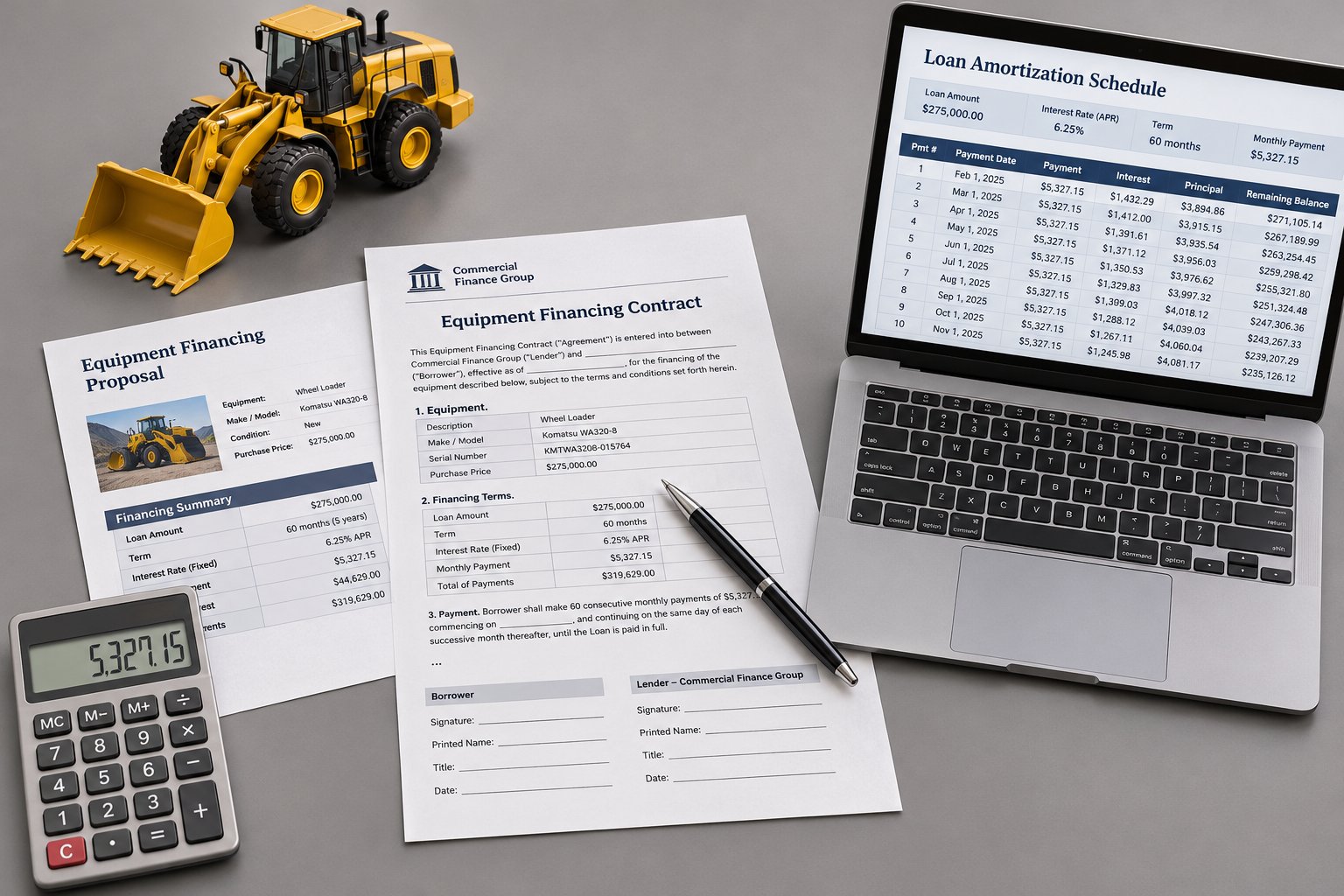
A $250,000 excavator doesn't actually cost $250,000. That number on the window sticker is just the opening line of a much longer financial story — one that includes interest charges, maintenance obligations, insurance premiums, fuel consumption, and eventual resale recovery. The way you structure the purchase through your heavy equipment dealer determines how that story plays out over five, eight, or even ten years of machine ownership. Yet most buyers spend weeks comparing specs and barely an afternoon evaluating financing options. That imbalance costs real money.
Leasing vs. Buying Through a Dealer
When you sit down with a dealer's finance team, you'll typically face two primary paths: purchase financing and leasing. Each serves a different operational strategy, and the right choice depends less on the machine itself and more on how your business manages capital.
Purchasing — whether outright or through a loan — builds equity. Every payment moves you closer to full ownership, and once the loan is satisfied, the machine is yours to operate, trade in, or sell on the open market. Cat Financial notes that financing allows buyers to spread the financial obligation across months or years while retaining the ability to resell the equipment later — a key advantage for companies building long-term fleet value. If you plan to run a machine for the bulk of its useful life, financing typically delivers the better total return.
Leasing, on the other hand, preserves working capital. Monthly lease payments are often lower than loan installments because you're paying for the machine's use rather than its full purchase price. For contractors who rotate equipment frequently — say, a skid steer dealership cycling compact machines every three years to stay current with technology — leasing makes it practical to upgrade without tying up large amounts of cash. Leasing also simplifies budgeting: fixed monthly payments with no surprise depreciation hits. At lease end, most dealers offer three options: return the equipment, extend the lease, or purchase the machine at its residual value.
Many dealers can model both scenarios side by side, showing you the five-year cash flow impact of each path. Ask for that comparison. It takes fifteen minutes and can save you thousands.
Trade-In Programs and Financing Structures
Imagine you're upgrading from a mid-size loader to a larger unit. Rather than selling your current machine privately — which takes time, effort, and carries its own risks — most dealers accept trade-ins to reduce the upfront cost of the new purchase. The trade-in value gets applied directly against the new machine's price, lowering the amount you need to finance. It's not always the highest possible price you could get for the old unit, but the convenience and speed often justify the trade-off, especially when you factor in the carrying costs of keeping an idle machine on your lot while waiting for a private buyer.
Beyond trade-ins, the financing structures available through dealers are broader than most buyers realize. Common options include:
- Captive finance arms: Manufacturer-affiliated lenders (like Cat Financial or John Deere Financial) offer rates specifically structured for their brand's equipment, often including special promotional rates on new and select used units.
- Third-party lender partnerships: Dealers frequently maintain relationships with banks and independent equipment finance companies — firms like Equify Financial that specialize in structured finance solutions for heavy equipment, vocational transportation, and industrial assets.
- SBA-backed and municipal loan programs: For qualifying small businesses, SBA 7(a) and 504 loans can fund equipment purchases at favorable terms. Some dealers have staff familiar with these programs and can guide you through the application process.
- Seasonal and deferred payment plans: Particularly useful for agriculture and construction businesses with cyclical revenue, these structures align payment schedules with cash flow patterns — lower payments during slow months, higher during peak season.
If you're using a case equipment dealer locator or browsing listings through a used excavator dealership, ask each dealer which financing partners they work with before you compare sticker prices. Two dealers offering the same machine at the same price can deliver wildly different total costs depending on the interest rate, term length, and payment structure behind the deal. Even buyers exploring options through Doosan excavator dealers near me or checking availability at an alta repair center should request full financing breakdowns — not just monthly payment quotes.
Understanding Total Cost of Ownership
Here's what your dealer probably won't volunteer: the purchase price typically represents only 40-60% of what you'll actually spend over a machine's working life. The rest accumulates through maintenance, repairs, fuel, insurance, operator costs, and financing charges — expenses that compound quietly year after year.
Cleveland Brothers outlines a practical formula: add the purchase price to the machine's cumulative annual maintenance, repair, fuel, tax, insurance, and financing costs, then subtract the estimated resale value, and divide by lifetime operating hours. The result gives you a per-hour ownership cost — the truest measure of whether a machine is delivering value or draining your budget.
Before committing to any purchase, calculate or estimate each of the following components:
- Purchase price or total lease cost — the base financial commitment, including down payment and all financed amounts
- Financing charges — total interest paid over the loan or lease term
- Preventive maintenance — scheduled oil changes, filter replacements, fluid analysis, and inspections at manufacturer-recommended intervals
- Repairs and component replacements — unscheduled repairs plus planned major component overhauls (engine, transmission, hydraulic pumps)
- Fuel and fluid consumption — based on projected operating hours and the machine's fuel efficiency rating
- Operator training — initial orientation plus any ongoing certification or safety training costs
- Insurance premiums — annual equipment insurance, which varies by machine value, type, and operating environment
- Taxes and registration fees — applicable sales tax at purchase plus any annual property or use taxes in your jurisdiction
- Projected resale or trade-in value — the estimated residual value at the end of your planned ownership period, which offsets total cost
Quality machines retain value better, and dealer-maintained equipment with documented service history consistently commands higher resale prices than comparable units with incomplete records. That's one reason why preventive maintenance agreements through a dealer — even though they add upfront cost — can actually reduce total cost of ownership by protecting resale value and preventing catastrophic failures.
Think of it this way: two identical machines can have dramatically different per-hour costs depending on how they're financed, maintained, and eventually disposed of. The buyer who runs the numbers before signing the purchase order — rather than discovering these costs piecemeal over the next decade — is the buyer who comes out ahead. And the financing structure you negotiate with your dealer is the first lever you pull in that equation. The second lever? Warranties and service agreements — the contracts that determine who pays when something inevitably breaks down.
The Full Dealer Relationship Lifecycle Explained
Most buyers think the dealer relationship starts when they sign the purchase agreement and ends when they drive the machine off the lot. That mindset leaves an enormous amount of value on the table. The strongest dealer partnerships follow a structured lifecycle — from the very first phone call through years of parts support, scheduled maintenance, and eventual trade-in assistance. Each phase builds on the last, and skipping any one of them introduces risk that compounds over time. If you've ever searched for construction equipment dealers near me and wondered what separates a forgettable transaction from a genuinely productive partnership, the answer lives in how well you and your dealer navigate these stages together.
Pre-Purchase Consultation and Needs Assessment
A reputable heavy equipment dealer doesn't start with a sales pitch. They start with questions. What kind of projects are you running? What are your terrain conditions — rocky, clay, sandy, swampy? What production targets do you need to hit daily or weekly? What's your realistic budget, including operating costs? These aren't casual pleasantries. They're the foundation of a needs assessment that determines which machine, configuration, and attachments will actually perform in your application.
Think about it this way: an excavator sized for residential foundation work is a completely different recommendation than one spec'd for pipeline installation in compacted soil. A dealer who skips the needs assessment and jumps straight to "here's what's on the lot" is selling inventory, not solving your problem. The best dealers — whether you find them through a case equipment dealers near me search or a referral from a trusted colleague — will walk you through machine utilization scenarios, compare models against your production requirements, and sometimes even recommend a used unit over new if it better fits your budget and project timeline.
Before your first dealer meeting, prepare the details that will make the consultation productive. Bring your project scope documents, terrain descriptions or site photos, estimated annual operating hours, and a candid assessment of your budget constraints. The more specific you are, the more precisely the dealer can match machinery to your actual needs rather than defaulting to a generic recommendation.
Delivery, Commissioning, and Operator Training
Signing the purchase order is the beginning of the post-sale phase — not the end of the dealer's involvement. What happens between "sold" and "operational" separates a full-service dealer from a simple equipment seller, and this is where many buyers first discover whether they chose their partner wisely.
Delivery itself involves more coordination than most first-time buyers expect. The dealer arranges transport — often via lowboy trailer for tracked machines or flatbed for wheeled equipment — and schedules arrival to align with your project timeline. For buyers managing case equipment for sale transitions within their fleet, timing delivery around active jobsite schedules prevents the expensive scenario of a new machine arriving with no operator available or no space to offload it.
Commissioning follows delivery. In the heavy equipment context, this means performing final on-site inspections — checking all fluid levels, verifying hydraulic system pressure, confirming electrical and electronic systems are functioning, testing safety interlocks, and ensuring attachments are properly mounted and calibrated. A disciplined commissioning process catches transport damage, verifies that the machine matches purchase specifications, and establishes a documented baseline for the equipment's condition at the point of handover. Skipping this step — or rushing through it — can void warranty coverage and leave latent problems undetected until they become expensive failures in the field.
Operator training rounds out the delivery phase. Many dealers provide on-site orientation sessions covering machine controls, safety systems, daily inspection routines, and basic operational best practices. For specialized machines — high-reach demolition excavators, for instance, or GPS-equipped motor graders — some dealers offer multi-day training programs or connect buyers with manufacturer-sponsored certification courses. Even experienced operators benefit from model-specific training when transitioning to a new machine generation, particularly given how rapidly electronic control systems and telematics platforms have evolved. Providers like fort myers forklift suppliers and regional dealers across the country recognize that trained operators reduce both accident risk and unnecessary wear on expensive components.
Ongoing Parts, Service, and Relationship Management
Here's where the dealer relationship either proves its value or reveals its limitations. The sale is a single event. The service relationship is a multi-year commitment that directly impacts your equipment's uptime, operating cost, and resale value.
Structured preventive maintenance programs are the backbone of this ongoing relationship. MacAllister Machinery emphasizes that preventive maintenance is the most effective way to reduce fleet breakdowns — scheduled inspections, fluid analysis, filter replacements, and component assessments performed at manufacturer-recommended intervals catch problems before they cascade into catastrophic failures. Dealers who offer these programs lock in service costs, ensure OEM-quality parts, and maintain the documentation trail that preserves warranty compliance and protects resale value.
Emergency repair dispatch is the other side of that coin. Machines break down at the worst possible times — mid-pour, mid-excavation, mid-deadline. A dealer with a mobile service fleet can dispatch a technician to your jobsite, often within hours, rather than requiring you to transport a disabled machine back to the shop. That capability alone can mean the difference between a four-hour delay and a four-day one. When evaluating dealers — even established operations like alta equipment Tampa or any regional service provider — ask specifically about emergency response time commitments and whether mobile service coverage extends to your active project locations.
Beyond maintenance and repairs, the ongoing relationship includes parts ordering with priority access for established customers, warranty claim processing handled by the dealer on your behalf, telematics integration for remote equipment health monitoring, and — when the time comes — trade-in or resale assistance that leverages the dealer's market knowledge and buyer network. SmartEquip research highlights that modern dealer capabilities have expanded dramatically, with technology enabling 24/7 parts procurement, automated service scheduling, and intelligent drop-shipping that reduces the time between "machine down" and "back to work." The dealer relationship, far from being disintermediated by technology, has actually deepened — dealers who embrace these tools deliver faster, more responsive support at lower cost to both parties.
The strongest dealer partnerships reduce total downtime, lower per-hour operating costs, and protect equipment resale value across the machine's entire lifecycle. Buyers who invest in building that relationship — through consistent communication, prompt payment, and honest feedback — find that dealers reciprocate with faster service priority, better trade-in valuations, and early access to inventory.
Here's the full dealer engagement lifecycle mapped as a numbered sequence, from your initial research through a multi-year service partnership:
- Research and shortlisting: Identify potential dealers through manufacturer locators, industry referrals, and online reviews. Narrow the field based on authorization status, geographic coverage, and industry specialization.
- Initial contact and needs assessment: Share your project requirements, production targets, terrain conditions, and budget parameters. Evaluate how thoroughly the dealer listens and how precisely they tailor their recommendations.
- Machine selection and quoting: Compare recommended models, configurations, and pricing. Request detailed quotes that include delivery, commissioning, and any included training or service packages.
- Financing and purchase agreement: Negotiate financing terms, trade-in values, warranty coverage, and any bundled maintenance agreements. Review all documentation before signing.
- Delivery and commissioning: Coordinate delivery timing with your project schedule. Participate in the on-site commissioning process to verify machine condition and confirm specifications match the purchase order.
- Operator training and orientation: Complete dealer-provided training for all operators who will run the machine. Document training completion for safety compliance and insurance records.
- Preventive maintenance program activation: Enroll in the dealer's scheduled maintenance program or establish a self-managed schedule aligned with manufacturer intervals. Begin tracking operating hours and service milestones.
- Ongoing service, parts, and warranty management: Maintain regular communication with the dealer's service department. Submit warranty claims promptly, order parts through the dealer's supply chain for authenticity assurance, and schedule major component inspections at recommended hour thresholds.
- Performance review and fleet planning: Periodically review equipment performance, operating costs, and utilization rates with your dealer. Discuss fleet expansion, machine upgrades, or trade-in timing based on market conditions and your operational needs.
- Trade-in, resale, or decommissioning: When the machine reaches the end of its planned service life in your fleet, work with the dealer on trade-in valuation, consignment sale, or direct resale. Dealer-maintained equipment with complete service records consistently achieves stronger resale recovery.
Each phase in this lifecycle feeds into the next. A thorough needs assessment leads to a better machine selection. Proper commissioning establishes a clean baseline for warranty coverage. Consistent maintenance protects both uptime and resale value. And when the time comes to trade in or upgrade, a documented service history — managed through your dealer — puts you in the strongest possible negotiating position. The lifecycle isn't just a process. It's the mechanism that converts a one-time equipment purchase into a long-term strategic advantage.
Of course, every phase of this relationship operates within the framework of formal agreements — warranties, service contracts, and maintenance plans that define exactly what your dealer is obligated to provide and what falls outside that scope. Understanding those documents, and knowing which terms are negotiable, is what separates informed buyers from those who discover the fine print only after something goes wrong.
Dealer Warranties and Service Agreements Decoded
You just signed the purchase order, shook hands, and drove a $180,000 wheel loader off the lot. Somewhere in that stack of paperwork is a warranty document you skimmed for about forty-five seconds. Sound familiar? Most buyers treat warranties and service agreements as afterthoughts — boilerplate fine print that only matters "if something goes wrong." The problem is, something always goes wrong eventually. And when it does, the language buried in those documents determines whether the repair costs you $0 or $40,000. Whether you're buying from an authorized wheel loader dealership or sourcing equipment through case construction dealers, understanding what's covered, what's excluded, and what's negotiable is one of the highest-value skills a buyer can develop.
Standard Dealer Warranties vs. Extended Coverage
New equipment typically ships with a manufacturer warranty administered through the selling dealer. This standard coverage usually protects the powertrain — engine, transmission, hydraulic pumps, and final drives — along with major structural components for a defined period, commonly 12 to 24 months or 2,000 to 3,000 operating hours, whichever comes first. Some manufacturers extend longer coverage on specific components. The key point? These terms aren't universal. They vary by brand, model, and even the specific product line within a single manufacturer's catalog.
Used equipment warranties are a different landscape entirely. Some dealers offer limited powertrain warranties on certified pre-owned units — typically 90 days to six months with strict hour-count caps. Others sell used machines completely as-is, meaning the moment the unit leaves the yard, every repair dollar comes out of your pocket. A few dealers occupy a middle ground, offering "goodwill" adjustments on failures that occur shortly after sale, but these informal arrangements carry no contractual weight.
Here's the critical move most buyers skip: request the full warranty terms in writing before you sign the purchase agreement. Not a summary. Not a verbal assurance. The actual document that specifies coverage scope, duration, exclusions, and claim procedures. If the dealer can't — or won't — produce that document, treat it as a serious warning sign regardless of how attractive the pricing looks.
And be aware of what voids that coverage once you have it. Equipment Trader highlights several common risks: skipping required maintenance, operating equipment outside its intended use, making unauthorized modifications, using incorrect fluids or parts, and continuing to run a machine after a problem appears. For example, Bobcat's warranty exclusions specifically address operation beyond the machine's design capacity, while Husqvarna Construction excludes failures resulting from failure to perform required maintenance or use of oils that don't meet engine manufacturer specifications. John Deere similarly excludes damage related to unapproved modifications and failure to follow operating instructions.
One nuance worth noting: missing a single maintenance appointment doesn't automatically void your entire warranty. Rather, if the manufacturer determines that inadequate maintenance contributed to a particular failure, that specific failure may fall outside warranty coverage. The distinction matters — but it only protects you if you've kept detailed maintenance records proving compliance with the manufacturer's schedule. Whether you're running giant wheel loaders near me on a mining site or a compact excavator on a residential job, documentation is your insurance policy within the insurance policy.
Preventive Maintenance Agreements and Their Value
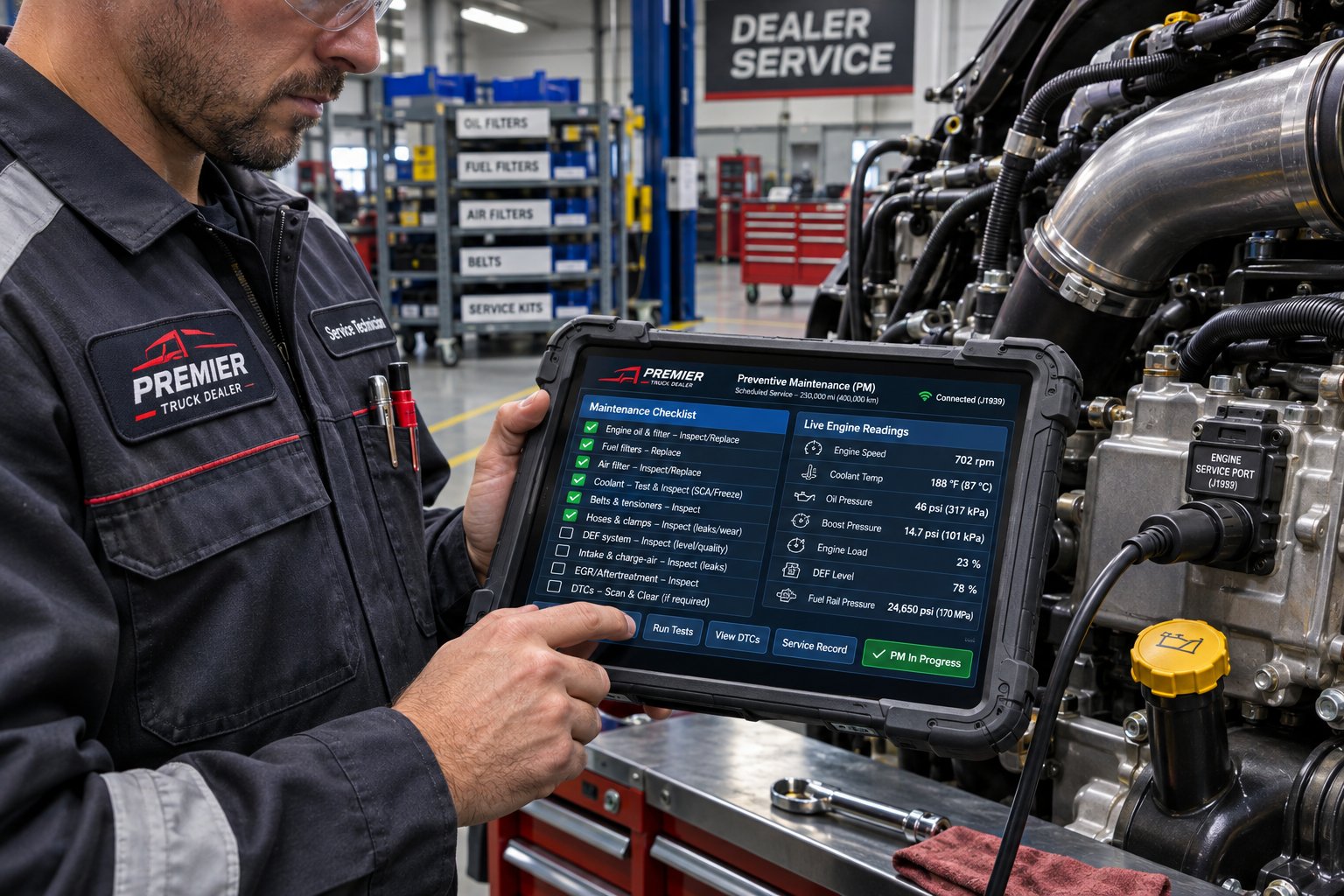
Think of a preventive maintenance (PM) agreement as a subscription for your machine's health. Under a structured PM contract, the dealer performs scheduled service — oil and filter changes, fluid analysis, lubrication, system inspections, and component assessments — at predetermined intervals based on operating hours or calendar time. You pay a fixed monthly or per-service fee, and the dealer handles everything from parts procurement to technician scheduling.
Why does this matter beyond basic convenience? Three reasons stand out.
First, cost predictability. CDK Global research on preventive maintenance programs shows that contract maintenance allows equipment owners to budget costs accurately because they know their monthly fee and can estimate usage-based charges — avoiding the dramatic expense swings that come with reactive, break-fix maintenance. A typical maintenance contract covers tires, brakes, oil, lubricants, filters, labor, and more under a predictable payment structure. For fleet operations, this stability in monthly cash flow can be as valuable as the maintenance itself.
Second, warranty compliance. Remember those manufacturer-specified maintenance intervals that can affect your warranty coverage? A dealer-managed PM agreement ensures those intervals are met with the correct parts, fluids, and procedures — documented every time. You never have to wonder whether your in-house crew used the right oil viscosity or whether the service was logged properly. The dealer's records become your warranty compliance trail.
Third, early problem detection. When executed properly, a strong PM program reduces equipment downtime because dealership technicians can identify and address developing problems during scheduled service — catching a worn hydraulic hose, a leaking seal, or abnormal fluid analysis results before they escalate into on-the-job breakdowns. A $200 hose replacement during a planned service visit is far cheaper than a $15,000 hydraulic system failure on a machine that's 50 miles from the nearest shop, whether that shop is a machine shop in Fort Myers or a service bay in Chicago.
PM agreements also benefit the dealer, which creates a dynamic that works in your favor. Dealers gain steady, predictable service revenue and regular customer touchpoints — opportunities to strengthen the relationship and discuss additional needs. Fleets with maintenance contracts typically receive priority in the service lane, ensuring their equipment gets serviced quickly with minimal downtime. That priority access alone can justify the contract cost for operations where every hour of machine uptime translates directly to revenue.
What to Negotiate in a Dealer Service Contract
Here's what most buyers don't realize: dealer service agreements aren't take-it-or-leave-it documents. They're starting points for negotiation. The dealer has a standard template, absolutely — but multiple elements within that template flex based on your fleet size, purchase volume, and willingness to commit to a long-term relationship. The buyers who negotiate these terms upfront avoid unpleasant surprises when they need service most.
Focus your negotiation on these key areas:
- Emergency response time guarantees: Pin down a specific commitment. "We'll get to you as soon as possible" is a customer service platitude, not a contractual obligation. Push for a defined response window — 4 hours, 8 hours, 24 hours — with clear terms for what constitutes a qualifying emergency and what geographic area the guarantee covers.
- Loaner or rental equipment during extended repairs: If a covered repair takes your machine out of service for more than a few days, will the dealer provide a substitute unit? At what cost — free, discounted rental rate, or full market rate? This single clause can save you tens of thousands in lost productivity on a critical project.
- Parts pricing caps: Some agreements lock in parts pricing at a fixed markup over manufacturer list for the contract term. Without this provision, a dealer can increase parts margins midway through a multi-year agreement, quietly inflating your maintenance costs without changing the contract's base fee.
- Wear component coverage scope: Standard PM agreements typically exclude wear items — cutting edges, teeth, ground-engaging tools, and undercarriage components. But this is negotiable, especially on larger fleet agreements. You may not get full inclusion, but negotiating a discounted pricing tier for wear parts purchased through the dealer's parts department is often achievable. Buyers working with a Bobcat Fort Myers FL dealer or a troy equipment dealer ft Myers, for example, should ask specifically about wear parts pricing as part of any service contract discussion.
- Coverage transferability: If you sell or trade in the machine before the service contract expires, can the remaining coverage transfer to the new owner? Transferable agreements enhance resale value, which benefits you even if you never file a single claim under them.
The table below maps the most common dealer service structures, showing what each covers and where your negotiation leverage lies:
| Agreement Type | What It Covers | Typical Duration | Negotiable Terms |
|---|---|---|---|
| Standard Manufacturer Warranty | Powertrain, major components, and structural defects due to materials or workmanship; excludes wear items and maintenance consumables | 12-24 months or 2,000-3,000 hours (new equipment); 90 days to 6 months on select certified pre-owned units | Limited — terms are manufacturer-set, but dealers may offer supplementary dealer-backed coverage on top of the factory warranty |
| Extended Warranty / Protection Plan | Extends powertrain and major component coverage beyond the standard warranty period; may add coverage for hydraulics, electrical systems, and technology components | Up to 5 years or 10,000 hours depending on manufacturer and plan tier | Deductible amounts, coverage tier selection, inclusion of technology/telematics components, and pricing (especially when bundled with a new equipment purchase) |
| Preventive Maintenance Agreement | Scheduled service at manufacturer-recommended intervals: oil and filter changes, fluid analysis, lubrication, inspections, and minor adjustments | Typically 3-5 years, aligned with the machine's projected service life in the buyer's fleet | Monthly fee and mileage/hour-based charges, priority service lane access, parts pricing tier, inclusion of additional fluid analysis or component inspections |
| Full-Service / Total Maintenance Contract | Combines preventive maintenance with unplanned repair coverage; may include wear components, emergency dispatch, and loaner equipment provisions | 3-5 years; often structured to align with the lease term or financing period | Emergency response time guarantees, loaner/rental equipment during extended downtime, parts pricing caps, wear component inclusion, and coverage transferability upon resale |
A final consideration that Equipment World's analysis of dealer agreements makes clear: the balance of negotiating power in any dealer relationship shifts significantly once you've already committed capital. Before you sign — while the dealer is competing for your business — is when you hold the most leverage to negotiate favorable service terms. After the purchase, when your machine is already in the field and you need parts or repairs, that leverage diminishes rapidly. Secure the service terms you need before the purchase closes, not after.
Every warranty document and service contract in that stack of paperwork represents a promise — but only if you've read it, understood it, and negotiated the terms that protect your operation. The buyers who treat these agreements as strategic tools rather than administrative formalities build a fundamentally different relationship with their dealer — one that pays dividends every time a machine goes down and the response is swift, covered, and exactly as the contract promised. That strategic approach extends beyond paperwork, though. Different buyers — first-time purchasers, seasoned fleet managers, and contractors vetting a new dealer — each need tailored strategies for extracting maximum value from these relationships.
Guidance for Every Type of Equipment Buyer
A first-time buyer walking onto a dealer lot faces a completely different set of challenges than a fleet manager negotiating volume discounts on fifteen machines. And a seasoned contractor who's switching dealers after a decade-long relationship brings yet another set of priorities to the table. The strategies that work brilliantly for one buyer persona can actively backfire for another. Here's how to tailor your approach based on where you actually stand in the equipment buying landscape.
First-Time Equipment Buyers
You're about to make one of the largest purchases your business has ever seen — and you probably feel like everyone at the dealership knows more than you do. That's normal. But here's something most first-time buyers get wrong: they chase the lowest price and end up at a dealer with no service department, no training support, and no relationship infrastructure to lean on when things go sideways three months later.
Resist that instinct. Your first dealer relationship is foundational. A strong service department and accessible training programs matter more at this stage than saving $3,000 on the purchase price. Why? Because you don't yet have in-house expertise to diagnose problems, source parts independently, or evaluate whether a repair estimate is fair. You need a dealer who will teach you as much as sell to you.
Rather than shopping across five or six dealers to squeeze out every last dollar, consider concentrating your business with a single reputable partner. Building rapport with one dealership creates negotiating leverage over time — loyalty gets rewarded with priority service, better trade-in offers, and early access to inventory. If you're searching for case dealers near me or exploring skid steers near me for your first compact machine, pick the dealer who answers your questions patiently and thoroughly, not the one who rushes you toward a signature.
When researching options before your first meeting, online platforms can help you build baseline knowledge. JIUHONG's used construction equipment inventory, for example, lets you compare specifications across excavators, loaders, bulldozers, and graders — a practical way to understand pricing ranges and machine configurations before you sit across the table from a sales representative. Think of it as homework, not a substitute for the dealer relationship itself.
- Prioritize service and training — Choose a dealer with a full-service department, certified technicians, and operator training programs, even if their pricing isn't the absolute lowest.
- Build one relationship first — Concentrate initial purchases with a single dealer to establish rapport, earn loyalty pricing, and simplify parts and service logistics.
- Prepare before your first visit — Bring project details, terrain descriptions, estimated operating hours, and a realistic budget to your initial consultation so the dealer can match machinery to your actual needs.
Fleet Managers Expanding Operations
Fleet managers operate in a fundamentally different reality. You're not buying a machine — you're managing a portfolio of assets, each generating revenue or burning money depending on uptime, utilization, and maintenance efficiency. Your dealer relationship is a supply chain partnership, and it should be managed with the same rigor you'd apply to any critical vendor.
Volume purchasing power is your biggest lever. A fleet manager acquiring three to five units annually has negotiating leverage that a single-machine buyer simply doesn't. Use it — not just on purchase price, but on fleet-wide preventive maintenance agreements, parts pricing tiers, and emergency response time guarantees. These back-end concessions often deliver more total value than front-end discounts on the machines themselves.
Standardizing on fewer brands is another high-impact strategy. Every additional manufacturer in your fleet means a separate parts inventory, different diagnostic tools, and technicians who need training on another platform. Consolidating toward two or three core brands — and working with a loaders dealer or equipment supplier who supports those lines — reduces complexity across your entire maintenance operation. Fleet management experts emphasize that the dealers who win fleet accounts are those who understand the operation before the first repair order — learning what each fleet runs, stocking the right parts, and keeping units working with minimal downtime.
Telematics integration is the third pillar. Most modern machines ship with manufacturer telematics systems that monitor engine health, fuel consumption, idle time, location, and fault codes in real time. A forward-thinking dealer can integrate that telemetry data into their service scheduling platform, flagging maintenance needs before they become breakdowns. If your current dealer isn't offering telematics-driven service coordination, you're leaving preventive capability — and money — on the table.
For fleet managers sourcing used equipment to fill capacity gaps or test new machine classes before committing to new purchases, platforms like JIUHONG's equipment collection allow you to compare specifications across excavators, loaders, bulldozers, and graders from a single interface. It's a useful benchmarking tool alongside your primary dealer's inventory — particularly when evaluating whether a used unit at a competitive price point makes more financial sense than ordering new with a six-month lead time.
- Leverage volume for back-end value — Negotiate fleet-wide maintenance agreements, parts pricing caps, and priority emergency service rather than focusing solely on per-unit purchase discounts.
- Standardize your fleet — Consolidate toward fewer brands to simplify parts inventory, technician training, and diagnostic tooling across your operation.
- Demand telematics integration — Work with dealers who can connect machine telemetry to proactive service scheduling, reducing unplanned downtime and extending component life.
Contractors Evaluating a New Dealer Relationship
Switching dealers is uncomfortable. You've built history with your current supplier — they know your fleet, your preferences, your payment patterns. But comfort and quality aren't the same thing. Maybe your current dealer's service response has slipped. Maybe they lost their authorization for the brand you rely on. Maybe you've expanded into a new territory and need a case parts dealer near me who can actually support machines at your new jobsite locations. Whatever the trigger, vetting a new dealer requires a deliberate, low-risk approach.
Start by requesting references from operations similar to yours — not just in industry, but in fleet size and geographic spread. A dealer who excels at serving a five-machine landscaping company may struggle with the complexity of a thirty-unit earthmoving fleet. Ask those references specific questions: How fast does the dealer respond to emergency service calls? How often are parts backordered? Did the dealer deliver on the warranty terms they promised? These aren't abstract qualities — they're measurable performance indicators that predict your experience.
Before committing to a major purchase, test the relationship with a smaller engagement. Place a parts order and track how quickly and accurately it's fulfilled. Schedule a minor service appointment — a routine inspection or a filter change — and evaluate the shop's turnaround time, communication quality, and billing accuracy. Industry guidance consistently recommends observing how a dealership treats you during these early interactions: are the premises well-maintained, do technicians demonstrate care and competence, and does the sales team approach you as a long-term partner rather than a one-off transaction?
Compare quoted lead times against what you know from experience. If your previous dealer could source a hydraulic pump in 48 hours and the new candidate quotes two weeks, that gap tells you something important about their parts network depth. Similarly, whether you need equipment rental Fort Myers options to bridge a gap while transitioning dealers or you're evaluating crane rental ft Myers providers alongside your primary machinery supplier, testing these auxiliary capabilities reveals how comprehensive the new dealer's support infrastructure really is. Contractors exploring case construction equipment near me through dealer locator tools should visit at least two or three candidates before committing — what looks comparable on a website can feel very different on the shop floor.
- Request targeted references — Ask for contacts from customers with similar fleet sizes and industry applications. Verify service response times, parts availability, and warranty follow-through with those references directly.
- Test before you commit — Place a parts order or schedule a minor service appointment before making a major purchase. Evaluate responsiveness, accuracy, and communication quality during low-stakes interactions.
- Benchmark lead times and capabilities — Compare the new dealer's quoted turnaround for parts, repairs, and delivery against your existing benchmarks. Significant gaps signal structural limitations that won't improve just because you become a bigger customer.
Regardless of which buyer persona fits your situation, the underlying principle is the same: your dealer relationship is an asset — one that appreciates when managed intentionally and depreciates when taken for granted. First-time buyers who invest in a strong initial partnership avoid the costly trial-and-error that plagues impatient shoppers. Fleet managers who negotiate strategically and standardize intelligently turn their dealer into a force multiplier for operational efficiency. And contractors who vet new dealers methodically protect themselves from the disruption and expense of discovering a poor fit after the purchase order is signed.
The equipment itself is just iron, steel, and hydraulics. The dealer behind it — the service team, the parts network, the financing structure, the warranty commitments — is what transforms a machine purchase into a productive business decision. Choose that partner with the same care you'd choose the machine, and you'll find that every chapter of this guide works in your favor.
Frequently Asked Questions About Heavy Equipment Dealers
1. What is the difference between an authorized heavy equipment dealer and an independent dealer?
An authorized (OEM) dealer operates under a formal agreement with a specific manufacturer, giving buyers access to factory-trained technicians, genuine OEM parts, manufacturer diagnostic software, and factory-backed warranties. Independent dealers are not tied to a single brand, which lets them carry multiple product lines and often offer more competitive pricing. However, service quality and parts authenticity at independent dealers can vary significantly. Before purchasing from either type, verify the dealer's authorization status through the manufacturer's online dealer locator tool, and evaluate their service department capabilities, parts inventory depth, and customer references independently.
2. How do I choose the right heavy equipment dealer for my business?
Start by confirming the dealer's manufacturer authorization for the brands you need. Then assess their service department — ask about certified technician count, mobile repair fleet availability, and typical turnaround times. Audit their parts inventory to ensure common wear items for your models are stocked locally rather than sourced from a distant warehouse. Evaluate geographic coverage by mapping the dealer's service territory against your active jobsites. Request customer references from operations similar to yours in size and industry, and check for memberships in associations like the Associated Equipment Distributors (AED). Finally, review financing structures and maintenance agreement options before committing, since these back-end terms often impact total cost more than the machine's sticker price.
3. Is it better to buy heavy equipment from a dealer or at auction?
Each channel serves a different buyer profile. Dealer purchases typically include inspection reports, warranty coverage, financing options, and an ongoing service relationship — protections that reduce long-term risk. Auctions can offer prices 20-40% below dealer retail, but equipment is sold as-is with no warranty, limited inspection windows, and no post-sale support. The hammer price also isn't the final cost; buyer's premiums, taxes, and transport can add 25-30% on top. Experienced buyers with independent mechanical assessment skills can find value at auction, while buyers who need warranty protection, parts access, and service support generally benefit more from a dealer relationship.
4. What should I negotiate in a heavy equipment dealer service contract?
Key negotiable elements include emergency response time guarantees with a defined hour window, loaner or rental equipment provisions during extended repairs, parts pricing caps that lock in a fixed markup over manufacturer list price for the contract term, wear component coverage or discounted pricing tiers for items like cutting edges and undercarriage parts, and coverage transferability so remaining service terms can pass to a new owner if you sell or trade in the machine. Negotiate these terms before signing the purchase agreement, when the dealer is competing for your business and your leverage is highest. After the sale, your bargaining position diminishes significantly.
5. What costs beyond the purchase price should I factor in when buying from a heavy equipment dealer?
The purchase price typically represents only 40-60% of what you will spend over a machine's working life. Additional costs include financing charges over the loan or lease term, preventive maintenance at manufacturer-recommended intervals, unscheduled repairs and major component overhauls, fuel and fluid consumption based on projected operating hours, operator training and certification, annual insurance premiums, taxes and registration fees, and the machine's projected resale or trade-in value at the end of your ownership period. Calculating a per-hour ownership cost — total lifetime expenses minus resale value divided by operating hours — gives you the most accurate measure of whether a machine is delivering real value to your operation.