

What Drives Excavator Prices and Why It Matters
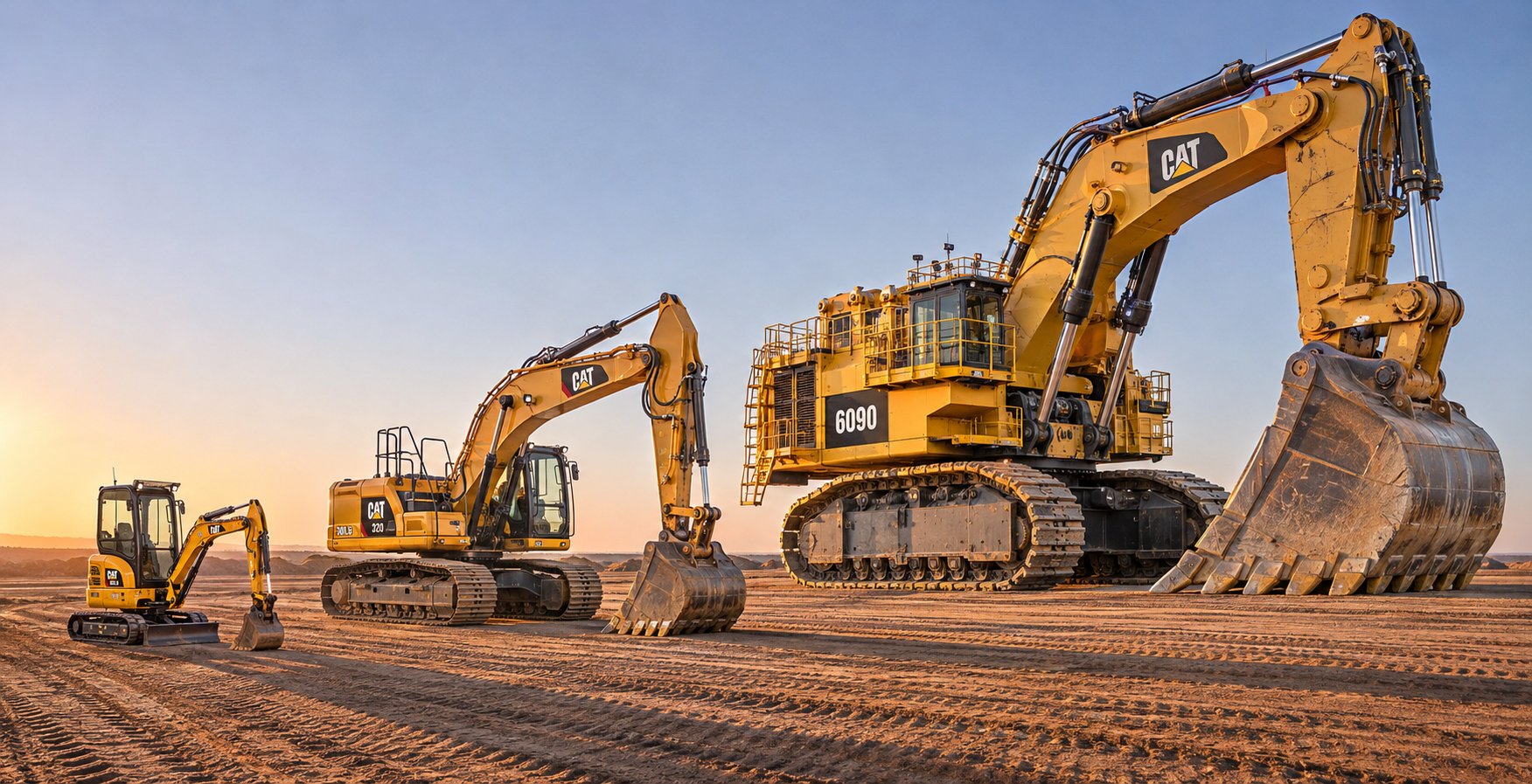
Excavator prices range from roughly $20,000 for a used mini to over $1,000,000 for a new large model, with size class, brand, condition, and hour-meter readings acting as the primary variables behind that spread. If you're shopping for a compact track hoe for residential landscaping, you're looking at a completely different price universe than someone sourcing a 45-ton crawler for a quarry operation. Here's a quick orientation: new mini excavators (under 6 tons) generally fall between $20,000 and $80,000, mid-size machines (roughly 11 to 30 tons) sit in the $100,000 to $300,000 corridor, and large excavators above 30 tons can climb from $250,000 past the million-dollar mark. Used machines in each class trade at steep discounts, but the exact number depends on factors most pricing guides gloss over. This article breaks down every one of them, whether you're browsing an excavator for sale locally or comparing trackhoe listings across multiple dealers.
Key Factors That Determine Excavator Price
Why can two excavators that look nearly identical on paper carry price tags $50,000 apart? The answer lives in a handful of variables that interact with each other in ways a single sticker price never reveals. Understanding these factors puts you in a stronger negotiating position and helps you avoid overpaying, or worse, buying the cheapest machine only to discover it costs more in the long run.
- Operating weight and size class - This is the single biggest price driver. A 2-ton mini and a 35-ton crawler are entirely different investments, and pricing scales non-linearly as you move up in weight.
- New vs. used condition - A brand-new excavator carries the full manufacturer warranty and latest technology, but used models can sell for 40-70% of the original price depending on age and hours.
- Brand tier (premium vs. value) - Established OEMs like Caterpillar, Komatsu, and John Deere typically command 15-25% higher prices than comparable models from value-tier brands, reflecting stronger dealer networks and resale value retention.
- Machine hours - Hour-meter readings function like an odometer on a truck. Higher hours mean lower asking prices, with value dropping roughly 5-10% for every additional 1,000 hours of operation.
- Emissions-tier compliance - Machines meeting Tier 4 Final or Stage V emissions standards carry meaningful cost premiums over older-tier equivalents, both on the new and used market.
- Geographic market differences - Local demand, transportation costs, and regional construction activity all create price variation. The same excavator trackhoe model can list at noticeably different prices in Texas versus the Pacific Northwest.
Why Excavator Pricing Is More Complex Than a Single Number
Imagine finding what looks like a great deal on a 20-ton excavator, only to realize the listing doesn't include the hydraulic thumb you need, delivery will cost $600 or more, and the financing terms add thousands in interest over the loan period. That scenario plays out constantly because most buyers focus exclusively on the sticker price while ignoring the layers underneath it.
The purchase price typically represents only a portion of the true lifetime cost. Total cost of ownership encompasses fuel consumption, scheduled maintenance, undercarriage replacement, insurance, transport fees, and eventual resale value, all of which vary by size class and brand. Attachments alone, from buckets and breakers to tilt rotators, can add anywhere from $5,000 to $30,000 depending on the machine's size and the work you need to perform.
This guide is built as brand-neutral buyer advocacy. You won't find content here shaped by a manufacturer's marketing department or an auction platform looking to drive bids higher. Instead, every section ahead delivers a complete financial picture: new and used pricing by size class, brand-by-brand value comparisons, a machine-hours valuation framework, total ownership costs, depreciation curves, and negotiation tactics that put real leverage in your hands. The goal is simple: by the time you finish reading, you'll understand not just what an excavator costs on the lot, but what it truly costs to own and operate one over its working life.
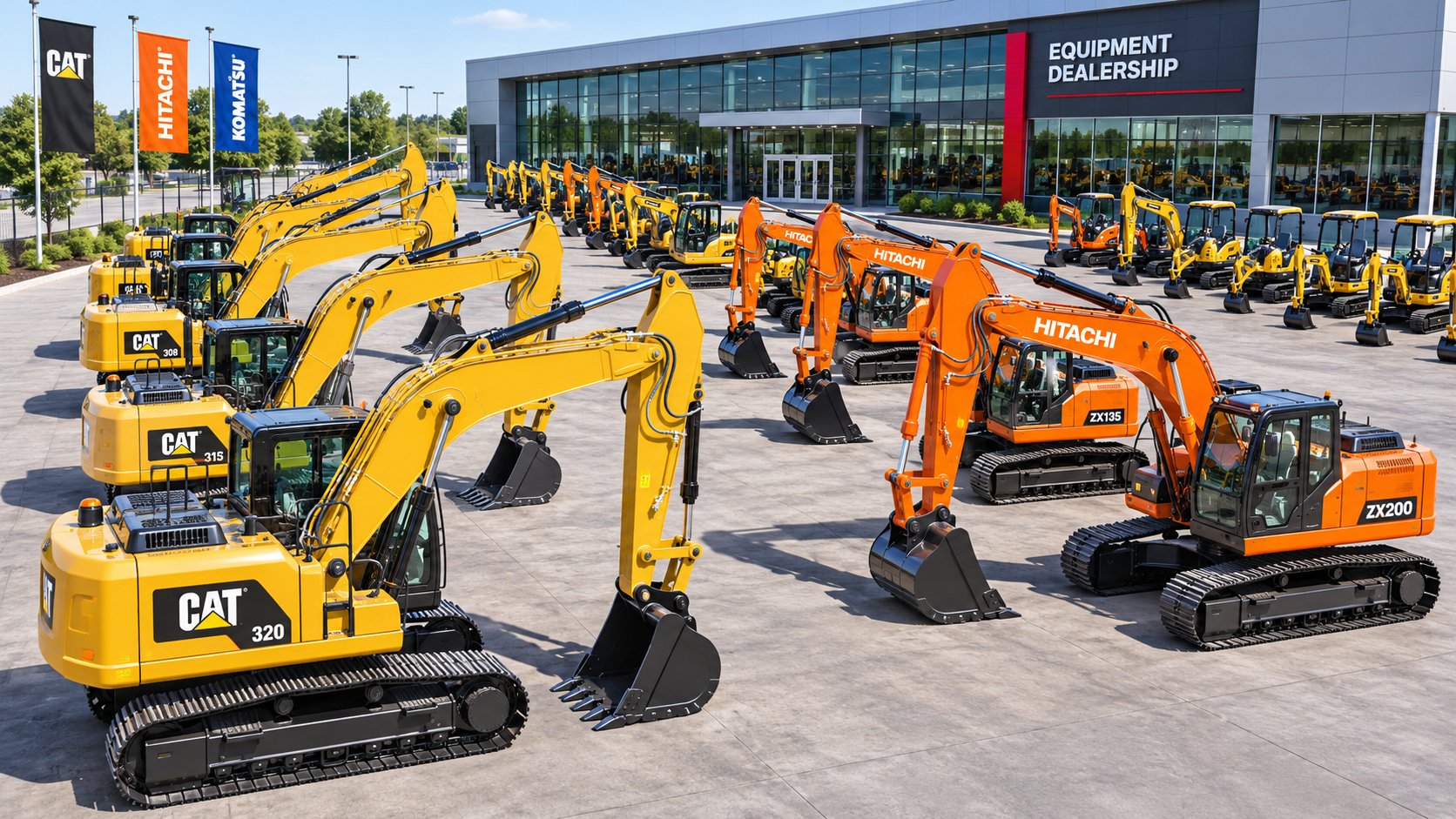
New Excavator Prices by Size Class
So how much do excavators cost when you're buying new? The answer depends almost entirely on what size machine your projects demand. A landscaper trenching residential yards and a highway contractor loading haul trucks operate in completely different price brackets, and lumping them together under one number doesn't help either buyer. Below, you'll find each major size class broken down with realistic pricing ranges drawn from current market data, so you can zero in on the category that actually matches your work.
Mini and Compact Excavator Prices
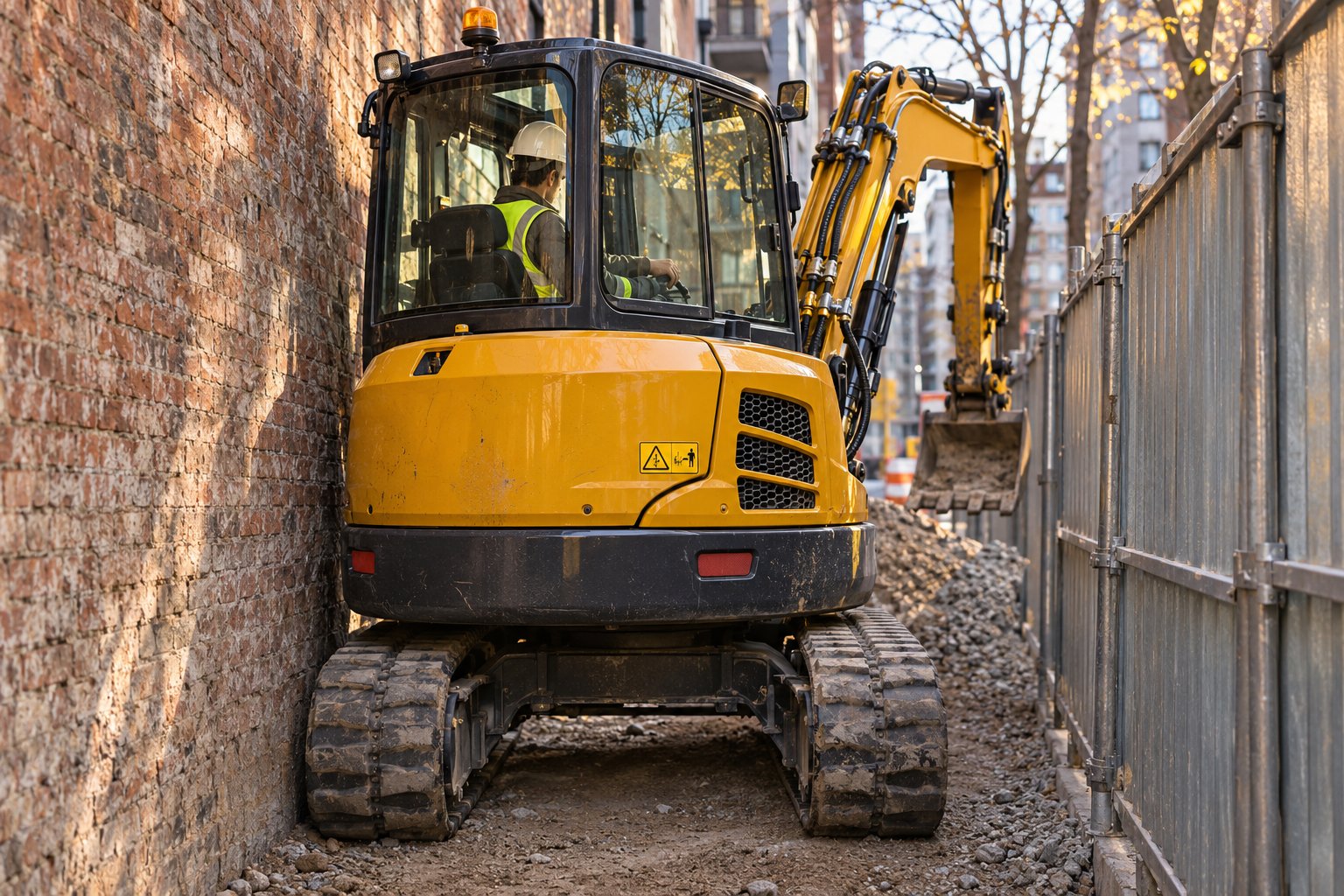
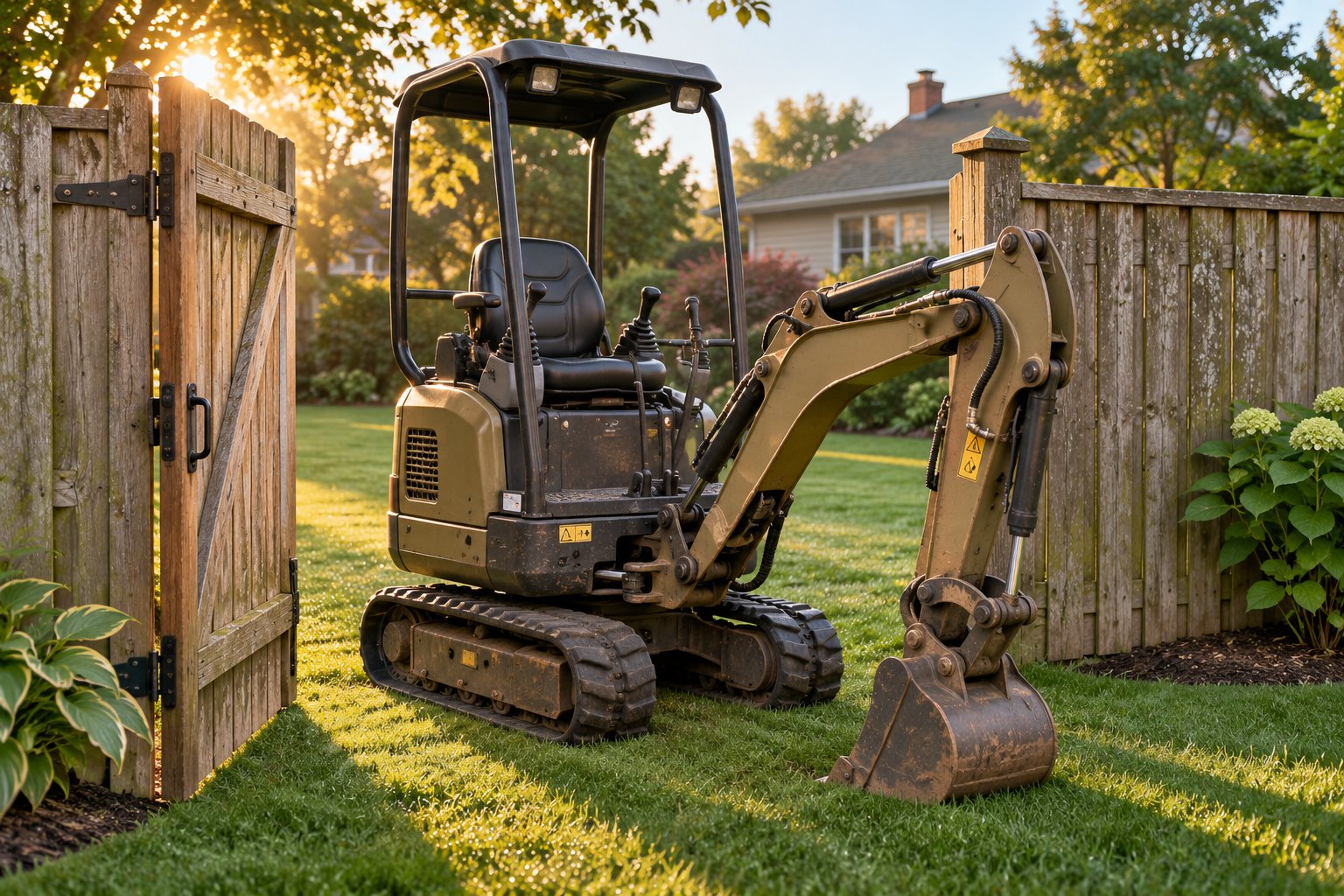
Machines under approximately 6 metric tons dominate the compact end of the market, and for good reason. They squeeze into tight residential lots, ride on trailers towed by standard pickup trucks, and handle everything from utility trenching to small foundation work. Mini excavators account for over 45% of unit sales industrywide, making them the highest-volume segment by far.
Within this class, pricing spreads wider than most buyers expect. A basic 1- to 2-ton micro excavator from a value-tier brand can start around $30,000 to $60,000, while a fully equipped 5- to 6-ton compact unit from a premium manufacturer pushes toward $110,000 or more. Features like enclosed cabs with climate control, auxiliary hydraulic circuits, quick couplers, and angle blades all push the number higher. If you're a landscaper or utility contractor shopping for excavators for sale in this range, expect the sweet spot for a well-equipped 3- to 4-ton unit to land somewhere between $60,000 and $85,000 new.
Premium brands such as Caterpillar, Takeuchi, and Kubota tend to command 10-15% higher prices than budget-friendly alternatives in this segment. That premium buys stronger dealer networks, more accessible parts inventories, and better resale value down the road, factors that matter when the machine's working life stretches beyond five or six years.
Mid-Size Excavator Prices
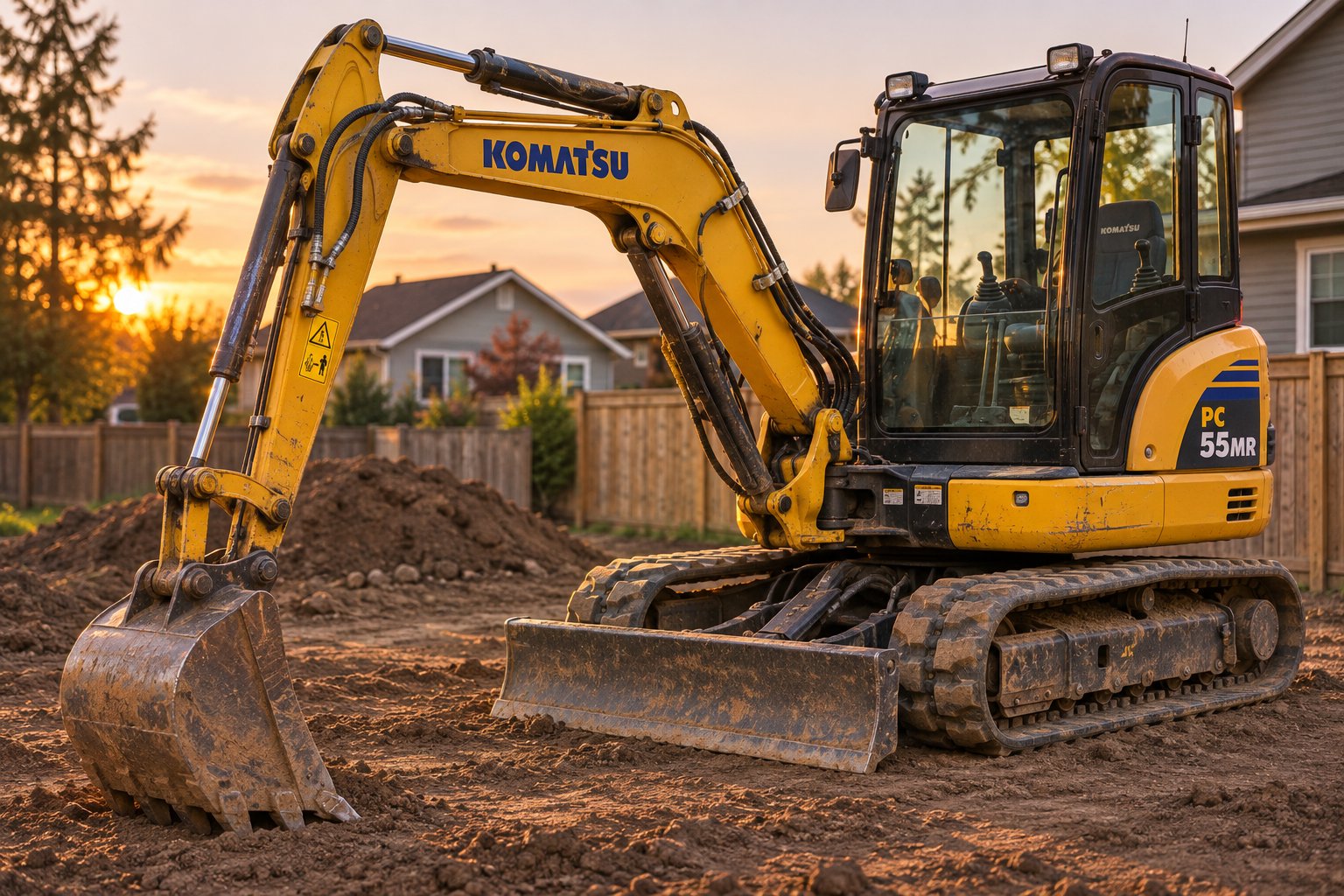
Step into the 6- to 30-metric-ton range and you're looking at the workhorse class of the excavator market. These are the machines handling general excavation, road building, commercial site development, and municipal infrastructure, the bread-and-butter applications where brand competition runs fiercest.
New mid-size excavators generally fall between $80,000 and $350,000 depending on where a specific model sits within that broad weight span. Compact units in the 6- to 10-ton sub-range often price between $80,000 and $200,000, while true mid-size crawlers from 10 to 25 tons typically run $150,000 to $350,000. Popular models like the Cat 320 or Komatsu PC210 frequently land in the $200,000 to $300,000 corridor once standard options are included.
This is also where add-ons start to move the needle significantly. GPS grade-control systems, advanced telematics packages, and technology upgrades can tack on $15,000 to $30,000 beyond the base configuration. Buyers sourcing a machine labeled as an excavadora in international listings will notice similar pricing structures, though import duties and regional compliance costs can shift the final number.
Large and Mining-Class Excavator Prices
Above 30 metric tons, you enter territory where standard dealer pricing gives way to direct manufacturer negotiation. These machines serve quarrying, mining, demolition, and heavy infrastructure projects where raw digging force and bucket capacity justify six- and seven-figure investments.
New large excavators in the 25- to 45-ton bracket typically range from $300,000 to $600,000. Push past 45 tons into true mining-class equipment and prices climb from $500,000 to well over $1,000,000, with some of the largest hydraulic excavators exceeding $2,000,000 when configured with specialized boom arrangements and reinforced undercarriages. At this tier, the transaction often resembles a custom procurement process: buyers negotiate directly with the manufacturer or a designated dealer, and lead times can stretch months.
| Size Class | Typical Operating Weight | Common Applications | Approximate New Price Range |
|---|---|---|---|
| Mini / Compact | 1 - 6 metric tons | Landscaping, utilities, residential construction | $30,000 - $150,000 |
| Small | 6 - 10 metric tons | Small commercial sites, municipal work | $80,000 - $200,000 |
| Mid-Size | 10 - 25 metric tons | General excavation, road building, site development | $150,000 - $350,000 |
| Large | 25 - 45 metric tons | Heavy construction, demolition, quarrying | $300,000 - $600,000 |
| Mining Class | 45+ metric tons | Mining operations, large-scale infrastructure | $500,000 - $2,000,000+ |
One pricing layer that cuts across every size class: emissions-tier compliance. Machines built to meet current Tier 4 Final (or the European Stage V equivalent) standards carry meaningfully higher costs than older-tier models. The added expense comes from advanced diesel particulate filters, selective catalytic reduction systems, and more complex engine management electronics. For new equipment, this premium is already baked into the sticker price, but it becomes a visible pricing fault line in the used excavators market, where pre-Tier 4 machines trade at noticeable discounts. That emissions-tier gap is worth understanding before you compare any two listings side by side, a dynamic explored in depth in the sections ahead.
Excavator Prices Compared Brand by Brand
Knowing the right size class is only half the equation. Two 20-ton excavators from different manufacturers can carry price tags tens of thousands of dollars apart, and the gap doesn't shrink much in the used market either. Brand selection shapes not just what you pay upfront but what you'll recover at resale, how easily you'll source parts, and how much unplanned downtime costs you over the machine's life. Whether you're browsing a used excavator for sale at auction or spec'ing a new unit through a dealer, understanding where each manufacturer sits on the pricing spectrum saves real money.
Premium Brand Pricing Tiers
Five names dominate the premium tier: Caterpillar, Komatsu, Volvo, John Deere, and Hitachi. These OEMs command higher prices because they deliver mature dealer networks, deep parts inventories, proven reliability records, and strong resale value retention. That premium isn't arbitrary - it reflects decades of global infrastructure built around keeping those machines running.
Caterpillar consistently sits at or near the top of the pricing hierarchy across virtually every size class. A new Cat 320 in the popular 20-ton range lists around $238,000, and Cat machines are widely regarded as the gold standard for resale value. Komatsu follows closely, typically pricing 5-10% below Caterpillar on comparable models - a new PC210, for instance, lands near $215,000. Komatsu's reputation for fuel efficiency and advanced hydraulic technology (including its intelligent Machine Control system) makes it the tech-forward premium choice. Volvo positions itself alongside Komatsu, with a particular emphasis on operator comfort, low emissions, and fuel-efficient engine design. John Deere carries strong brand loyalty in North America and competitive dealer coverage, pricing similarly to Komatsu and Volvo in most classes. Hitachi rounds out the premium group with a reputation for hydraulic performance and durability, particularly popular in Asian and Oceanian markets.
You'll notice that within the premium tier, the spread between the highest and lowest priced brand on a comparable model is typically 10-15%. The real pricing cliff appears when you cross into the value segment.
Value and Budget Brand Pricing Tiers
Kubota and Bobcat occupy a mid-tier position, especially dominant in the compact class where used mini excavators for sale from these brands are among the most traded units on the secondary market. Both offer strong dealer support in North America and competitive pricing that falls roughly 10-20% below the premium Japanese and American OEMs in the mini and compact segments.
The larger pricing gap emerges with major Chinese-origin manufacturers like SANY and XCMG. A comparable 20-ton SANY or XCMG excavator typically enters the market at 30-40% below equivalent Caterpillar or Komatsu units. That's not a subtle difference - on a $238,000 Cat, you're looking at potential savings of $70,000 to $90,000 at the point of purchase.
An important nuance: equipment exported from China is not necessarily manufactured by a Chinese brand. Several global OEMs operate manufacturing facilities in China and export machines worldwide. When evaluating any listing, the brand and engineering origin matter more than the country of assembly.
The trade-offs with Chinese-origin machines are real, however. Warranty terms have improved substantially - SANY now offers coverage broadly comparable to Western brands in many markets - but parts availability outside major metro areas can still lag. And the resale value difference is significant: industry projections show a five-year-old Caterpillar retaining roughly 70-75% of its original value versus 50-60% for a comparable SANY. That depreciation gap directly affects total cost of ownership, especially for buyers who plan to cycle equipment every few years.
| Brand | Primary Size Classes | Market Positioning | Price vs. Category Average | Resale Value Reputation |
|---|---|---|---|---|
| Caterpillar | All classes (mini through mining) | Premium | 10-15% above average | Strongest in category; ~70-75% retention at 5 years |
| Komatsu | All classes (mini through mining) | Premium | 5-10% above average | Very strong; ~65-70% retention at 5 years |
| Volvo | Compact through large | Premium | 5-10% above average | Strong, especially in European markets |
| John Deere | Compact through large | Premium | At or slightly above average | Strong in North America; thinner globally |
| Hitachi | Mid-size through mining | Premium | At or slightly above average | Strong in Asia-Pacific; solid globally |
| Kubota | Mini and compact (under 8 tons) | Mid-Tier | At or slightly below average | Excellent in compact segment |
| Bobcat | Mini and compact (under 10 tons) | Mid-Tier | At or slightly below average | Strong in North American compact market |
| SANY | All classes (mini through large) | Value | 30-40% below premium brands | Improving; ~50-60% retention at 5 years |
| XCMG | Mini through large | Value | 30-40% below premium brands | Growing; secondary market still developing |
The best brand choice depends on the buyer's market, intended use duration, and access to parts and service infrastructure. A contractor planning to run a machine for three years and resell it faces a fundamentally different calculation than one planning to operate it for a decade until rebuild.
These brand-level pricing differences matter most at the moment of purchase, but they echo throughout the machine's entire lifecycle. A lower acquisition cost means less capital tied up on day one; a higher resale retention means more capital recovered at the end. The real question for any buyer scanning used excavators for sale is which side of that equation matters more for their operation. And that answer depends heavily on one variable the sticker price never reveals: how many hours the machine has already worked - and what those hours really mean for the value left inside it.
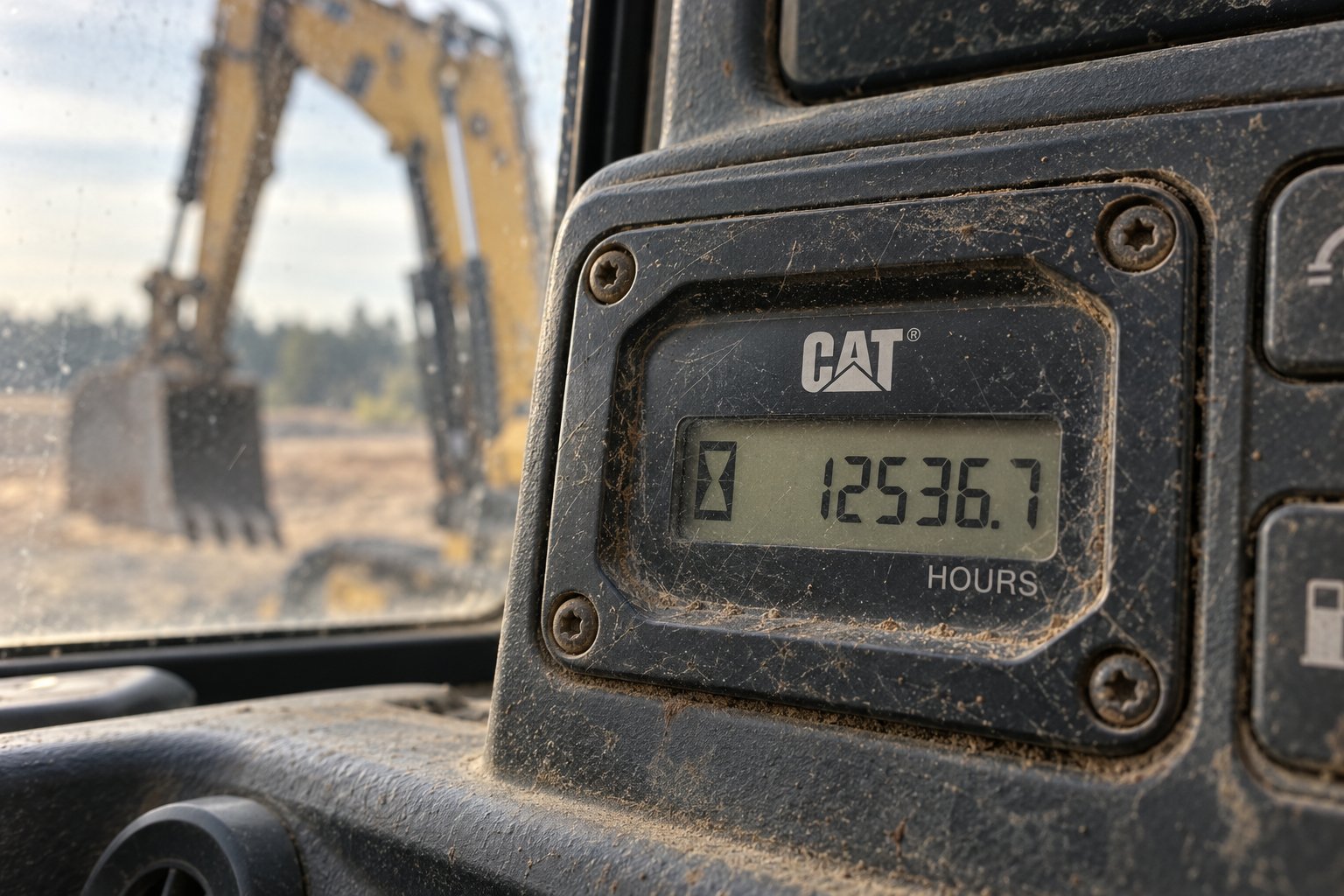
Used Excavator Prices and the Machine-Hours Framework
A used excavator's sticker price tells you what the seller wants. The hour meter tells you what the machine is actually worth. That distinction trips up buyers constantly, especially those crossing over from vehicle purchases where mileage is the single dominant variable. Excavator cost on the secondary market follows a more layered formula, one where hours, condition tier, emissions compliance, and maintenance history interact to create pricing gaps that savvy buyers exploit and uninformed ones absorb. Here's the framework that makes sense of it all.
How Machine Hours Affect Used Excavator Value
Think of the hour meter on an excavator the way you'd think of an odometer on a pickup truck - except the stakes per unit are higher and the context around the number matters more. A machine showing 3,000 hours has lived a very different life than one showing 9,000, but a well-maintained high-hour excavator from a reputable owner can outperform a neglected low-hour unit that sat idle and corroded between sporadic jobs.
Industry professionals generally break hour readings into four tiers, and the thresholds shift depending on machine size:
- 0 - 2,000 hours: Near-new condition territory. Minimal wear on seals, hoses, and undercarriage components. These units command the highest premiums in the used market and are often lease returns or fleet trade-ins.
- 2,000 - 5,000 hours: The sweet spot for most buyers. The machine has proven itself reliable through its break-in period, routine maintenance keeps it productive, and the steepest depreciation has already passed. This range represents prime used territory for contractors who want dependability without paying near-new prices.
- 5,000 - 10,000 hours: Moderate use. Expect visible wear on hydraulic seals and hoses, potential undercarriage component replacement needs, and the beginning of major-component maintenance windows. A thorough inspection is non-negotiable at this stage.
- Over 10,000 hours: Later life. Major component replacements - engine overhauls, hydraulic pump rebuilds, undercarriage refurbishment - are either imminent or should have already been completed. Machines in this range should only be purchased at significant discounts with a clear-eyed budget for upcoming repairs.
Here's the nuance most pricing guides skip: compact excavators and 30-ton crawlers age differently even at identical hour readings. A mini excavator doing light landscaping work at 5,000 hours has experienced far less structural stress than a 35-ton machine running a hydraulic breaker in rock at the same reading. Always interpret hours relative to size class and duty cycle, not as an absolute number.
Verifying hour-meter accuracy is equally critical. Cross-reference the displayed hours with maintenance records and telematics data if available. Inconsistencies between reported hours and visible wear patterns can signal meter tampering - a red flag that should either end the conversation or trigger a steep price adjustment in your favor.
Used Excavator Price Ranges by Condition Tier
Beyond raw hours, the used market organizes itself into three broad condition tiers. Each tier carries its own excavator price logic, and understanding where a specific machine falls helps you benchmark any listing against the broader market.
| Condition Tier | Typical Hour Range | Expected Remaining Service Life | Approximate Price as % of New |
|---|---|---|---|
| Late-Model / Low-Hour | 0 - 3,000 hours | 75-90% of original service life remaining | 60-80% of new price |
| Mid-Life Working Machine | 3,000 - 8,000 hours | 40-65% of original service life remaining | 35-55% of new price |
| High-Hour / Rebuild Candidate | 8,000+ hours | Below 40%; major components due or overdue | 15-35% of new price |
These percentages aren't fixed rules - they're market tendencies that shift with brand, model popularity, and regional demand. A Caterpillar retaining 65-70% of its value over five years will sit at the top of its condition tier, while a lesser-known brand at the same hours may fall toward the bottom. Buyers looking at small excavators for sale in the mid-life tier often find the strongest value-for-money balance: the machine has absorbed its steepest depreciation hit but still has thousands of productive hours ahead.
Emissions-tier status creates another distinct pricing layer in the used market. Pre-Tier 4 machines - generally manufactured before 2014-2015 - trade at meaningful discounts compared to Tier 4 Final equivalents. The EPA doesn't require older equipment to retroactively meet current standards, so these "grandfathered" machines remain legal to operate. However, new Tier 4 compliant equipment can cost buyers up to an additional 20% premium over older-tier models, and that gap flows directly into used pricing. For budget-conscious contractors working in areas without strict local emissions mandates, a well-maintained pre-Tier 4 excavator can deliver excellent value. Just factor in that resale will be limited to markets and buyers who accept older emissions technology.
Where to Source Used Excavators
Finding the right machine at the right price depends partly on where you look. Each sourcing channel carries its own trade-offs in pricing, risk, and buyer protection. Here are the primary options:
- Authorized dealer used-equipment programs: OEM dealers like Cat Certified Used and Komatsu Approved offer reconditioning, warranties (typically 6-12 months on powertrain and hydraulics), and financing options. You'll pay a premium - roughly 5-10% above auction prices - but the added protection is worth it for less experienced buyers or anyone purchasing sight-unseen.
- Auction platforms: Major houses like Ritchie Bros. and IronPlanet move enormous volumes of used excavators annually, with pricing typically 20-40% below dealer retail. The catch: most machines sell as-is with no warranty, inspection windows are short, and competitive bidding from professional buyers can push final prices higher than expected.
- Private sales: Buying directly from an owner can yield the lowest prices, but due diligence falls entirely on you. Budget $500-$1,500 for a professional third-party inspection, verify ownership and lien status, and never rely solely on the seller's description of condition.
- Online multi-brand marketplaces: Platforms that aggregate listings from multiple manufacturers let you compare machines side by side without driving between dealers. For excavation contractors, equipment dealers, and import buyers looking to browse compact and larger used machines across brands in one place, marketplaces like JIUHONG's used excavator collection offer the ability to request model-specific quotes for individual or bulk purchases - a particularly useful option for international buyers sourcing equipment for export.
The smartest sourcing strategy isn't choosing one channel - it's working several simultaneously. Dealer quotes establish the ceiling, auction results provide market-rate benchmarks, and direct-purchase marketplaces give you leverage when negotiating because you can demonstrate that comparable machines are available elsewhere at competitive prices. Whether you're looking for an excavator for sell locally or comparing listings across continents, casting a wide net consistently produces better outcomes than loyalty to a single source.
A used excavator's true value lives at the intersection of hours, condition, brand, and emissions compliance - not in any single number a seller puts on a listing. Buyers who understand the machine-hours framework walk into negotiations with data, not guesses.
Locking in a fair purchase price is a significant milestone, but it's far from the last financial decision you'll make with that machine. The costs that accumulate after the deal closes - maintenance schedules, fuel bills, undercarriage wear, and attachment needs - quietly reshape the total investment in ways that catch underprepared owners off guard.
How Much Does an Excavator Cost After You Buy It?
Here's the number most buyers don't calculate until it's too late: the purchase price of an excavator typically represents only 60-70% of its true lifetime cost. The remaining 30-40% arrives in monthly installments - fuel, filters, undercarriage wear, insurance premiums, and attachment investments that accumulate quietly across years of operation. If you've been searching for an excavator for sale near me and comparing sticker prices alone, you're seeing barely half the financial picture. The sections below break down every major ownership cost so you can budget for the real number, not the showroom number.
Annual Maintenance and Repair Cost Estimates
Routine maintenance on a crawler excavator isn't optional - skip it and you'll pay multiples in unplanned repair bills. Industry benchmarks place annual maintenance costs at roughly 8-12% of the machine's original purchase price each year. On a $200,000 mid-size excavator, that translates to $16,000-$24,000 annually - a figure that surprises first-time owners who budgeted only for the down payment.
Scheduled service items include engine oil and filter changes (every 250-500 hours), hydraulic fluid replacement (every 1,000-2,000 hours), air and fuel filter swaps, and greasing of all pivot points. These are predictable and relatively affordable on their own. The expenses that hit harder are the wear components, especially on the undercarriage.
Undercarriage costs alone can represent 50% or more of a crawler excavator's total maintenance budget over its lifetime. Track chains, rollers, idlers, and sprockets wear continuously, and a full undercarriage replacement on a 20-ton machine can run $15,000-$25,000 depending on brand and configuration. Hydraulic hose replacements, boom and stick cylinder seal kits, and swing bearing service add further layers. The pattern scales with machine size: a mini excavator's annual maintenance might stay under $5,000, while a 40-ton unit can demand $30,000 or more per year in combined scheduled and unscheduled repairs.
One practical tip - preventive maintenance consistently costs 60-70% less than reactive repairs while extending equipment life by 25-30%. Maintaining detailed service records also protects resale value, a benefit that compounds over years of ownership.
Fuel Consumption and Insurance Costs
Diesel is the single largest recurring operating expense for most excavator owners, and consumption rates vary dramatically by size class. Mini excavators sip fuel at roughly 3 to 6 liters per hour (approximately 0.8-1.6 gallons), making them comparatively inexpensive to run. A 20-ton mid-size machine burns closer to 15 liters per hour (about 4 gallons), while large excavators in the 50- to 100-ton range consume 40 to 80 liters per hour (roughly 10-21 gallons). At current diesel prices, that translates to anywhere from $4-$8 per hour on a compact machine to $50-$90 per hour on a mining-class unit. Over a 1,500-hour work year, a mid-size excavator's fuel bill alone can exceed $25,000.
Fuel consumption also fluctuates based on application intensity. Light grading and trenching sit at the lower end of consumption ranges, while heavy rock loading and breaker work push engines toward maximum output and peak fuel burn. Extended idling - a common jobsite reality - can waste up to 5 liters of diesel per hour without moving a single yard of material.
Insurance adds another $2,000-$8,000 annually depending on the machine's value, coverage level, usage type, and geographic location. Higher-value machines and operations in theft-prone areas will sit at the top of that range. And don't overlook transport and delivery fees, especially if you're buying from sellers outside your immediate area. Moving a mid-size excavator on a lowboy trailer typically costs $200-$800 per move, and buyers sourcing equipment from distant excavators for sale near me listings can face $1,500 or more in one-way freight charges. Those delivery costs add up fast for contractors who move machines between jobsites frequently.
Attachment Costs That Add to Your Total Investment
An excavator without the right attachments is like a truck without a bed - functional, but not nearly as useful as it should be. Most base-machine prices include a standard digging bucket and nothing else. Every additional capability you need adds to the total investment, and the range is wide enough to reshape your budget if you haven't planned for it.
- Mini and compact excavators (1-6 tons): Hydraulic thumbs ($1,500-$4,000), quick couplers ($2,000-$5,000), hydraulic breakers ($3,000-$8,000), tilt couplers ($4,000-$8,000), additional bucket sizes ($800-$2,500 each), and plate compactors ($3,000-$6,000).
- Mid-size excavators (6-30 tons): Hydraulic thumbs ($3,000-$8,000), quick couplers ($4,000-$10,000), hydraulic breakers ($8,000-$25,000), tilt rotators ($15,000-$35,000), ripper attachments ($3,000-$7,000), and sorting or screening buckets ($5,000-$15,000).
- Large excavators (30+ tons): Hydraulic breakers ($20,000-$60,000+), heavy-duty quick couplers ($8,000-$18,000), demolition shears ($25,000-$70,000), and specialty rock buckets or mass excavation buckets ($5,000-$20,000).
A compact excavator owner adding a thumb, quick coupler, breaker, and a couple of extra bucket sizes can easily spend $12,000-$25,000 beyond the base machine. For a mid-size unit outfitted with a tilt rotator, breaker, and multiple bucket configurations, attachment costs can push past $50,000. These figures represent a meaningful share of the total investment, yet they rarely appear in the headline price when you're browsing an excavator sale near me.
Smart buyers budget for the fully equipped cost - base machine plus every attachment needed for their typical scope of work - not just the sticker price. The purchase price gets you through the dealer's door; the attachment budget gets you through the jobsite.
Understanding total ownership costs changes the way you evaluate any listing. A machine priced $15,000 below a competitor suddenly looks less attractive if it requires an undercarriage rebuild within 500 hours or doesn't include the hydraulic circuits needed for your attachments. These cumulative costs also reshape the rent-versus-buy calculation in ways that pure purchase-price comparisons never capture - a decision framework worth examining on its own terms.
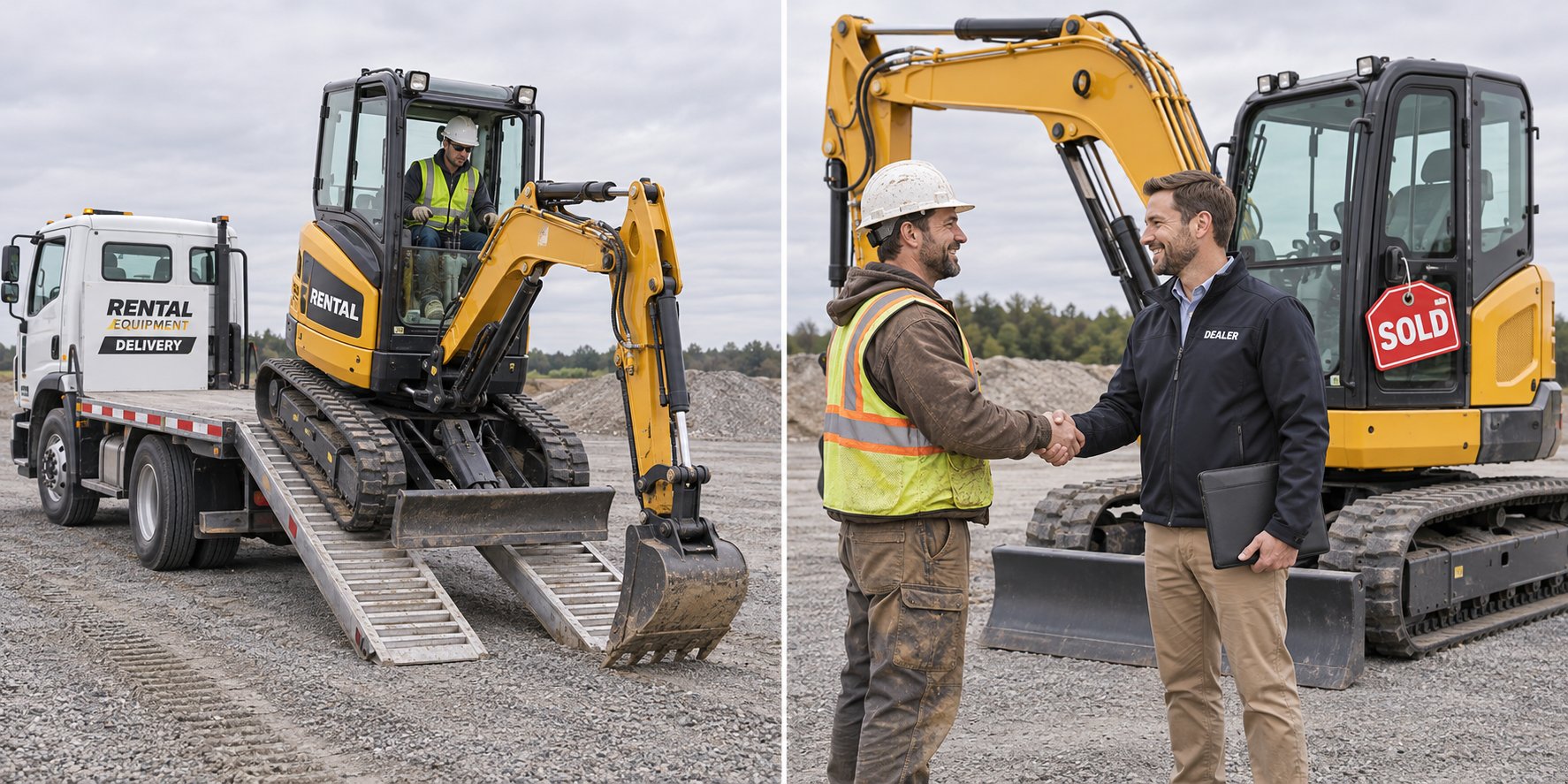
How Much Is an Excavator When Renting vs. Buying vs. Leasing?
You've calculated the purchase price, maintenance budget, fuel costs, and attachment investment. The total is substantial - and it raises a question most equipment guides mention only in passing: does it actually make sense to buy? For some contractors, the honest answer is no. The real question isn't just how much is an excavator - it's whether owning one delivers a better financial outcome than renting or leasing for your specific operation. That depends on utilization rates, capital position, and maintenance capabilities, three variables that interact differently for every buyer.
When Renting Makes More Financial Sense
Renting wins when your projected utilization falls below the break-even threshold. The math is straightforward: if your excavator would sit idle more than it works, you're paying depreciation, insurance, storage, and maintenance on a machine that isn't earning revenue. Industry guidelines place the ownership break-even point at roughly 60-70% of available working days per year - approximately 150 to 180 days. Below that threshold, rental almost always costs less once you account for the full ownership burden.
Rental rate structures scale predictably by machine size. Based on current market data, here's what to expect:
| Excavator Class | Daily Rate | Weekly Rate | Monthly Rate |
|---|---|---|---|
| Mini (1-5 ton) | $200 - $425 | $800 - $1,400 | $2,000 - $3,500 |
| Standard (6-15 ton) | $500 - $1,200 | $1,500 - $4,000 | $3,500 - $9,000 |
| Large (20+ ton) | $1,000 - $2,000 | $3,500 - $7,000 | $8,000 - $18,000 |
Weekly rates typically save 40-55% on a per-day basis compared to daily rates, and monthly rentals push that savings to 60-70%. That means renting a mini excavator for a two-week landscaping project might cost $1,600-$2,800, while owning that same machine carries $6,000-$12,000 in annual fixed costs even before you turn the key. For anyone wondering how much does a mini excavator cost to operate occasionally, the rental route is almost always cheaper than buying a machine that works part-time.
Renting also includes a hidden advantage most people undervalue: maintenance is the rental company's problem, not yours. Daily rates typically cover routine service, and you return the machine without worrying about undercarriage wear, hydraulic seal replacements, or storage between jobs.
When NOT to Buy an Excavator
Buying isn't just unnecessary in some scenarios - it's actively wasteful. Consider these situations where alternatives deliver better returns:
- You need excavation fewer than 120 days per year. The combined costs of depreciation, insurance, storage, and maintenance will exceed what you'd spend renting on demand.
- Your projects require drastically different machine sizes. A contractor who needs a 3-ton mini one month and a 20-ton crawler the next is better served by rental flexibility than by owning a "compromise" machine that's suboptimal for both tasks.
- A backhoe loader or skid steer with an excavator attachment covers 80% of your digging needs. If you already own multi-purpose equipment and only occasionally need dedicated excavation capability, renting a purpose-built excavator for those peak jobs makes more financial sense than adding another machine to the fleet.
- Hiring a subcontractor with their own equipment is available. When the total hours needed are low enough, paying a skilled operator who brings their own machine eliminates both the capital outlay and the operational risk entirely.
Leasing Structures and Their True Costs
Leasing occupies the middle ground between renting and buying, and it comes in two fundamentally different flavors that carry very different financial implications.
Fair Market Value (FMV) leases work similarly to car leases. You make fixed monthly payments over a set term - typically 24 to 60 months - and at the end, you either return the machine, extend the lease, or purchase it at its then-current fair market value. Monthly payments are lower than loan payments because you're only financing the depreciation during the lease term, not the full purchase price. FMV leases are classified as operating leases, meaning the equipment doesn't appear as an asset on your balance sheet, and the monthly payments are deductible as operating expenses in the year incurred.
$1 buyout leases (also called capital leases) function more like a financed purchase. Monthly payments run higher than FMV leases, but at the end of the term you acquire the equipment for just one dollar. Because this structure closely mirrors a loan, the equipment appears on your balance sheet as a company asset, and you may be eligible to deduct the full purchase price under Section 179 in the first year. This structure works best for equipment that holds value over time - exactly the profile of well-maintained excavators from premium brands.
The choice between them hinges on your plans for the machine. If you intend to keep it long-term and it won't become technologically obsolete, a $1 buyout lease builds equity while spreading payments. If you prefer upgrading every few years or want lower monthly cash outflow, an FMV lease keeps your options open. Either way, compare the total cost over the full lease term - including any end-of-lease purchase price, fees, and tax implications - against what a conventional loan would cost. Leasing often looks cheaper on a monthly basis but can be more expensive over the machine's useful life when all costs are totaled.
A Simple Framework for the Buy Decision
Rather than defaulting to purchase because "owning builds equity," run your decision through these sequential questions. Each one either points you toward ownership or redirects you to a lower-risk alternative:
- How many hours per year will this machine actually work? Be honest - most operators overestimate future utilization. If the answer is below 800-1,000 hours annually (roughly 150-180 working days), rental or leasing likely wins.
- How long will you need it? A single project or a 12-month pipeline favors rental. A multi-year backlog of consistent work justifies the capital commitment of ownership.
- What's your available capital, and what's its opportunity cost? Every dollar locked in equipment is a dollar not available for payroll, bonding capacity, or business growth. If tying up $80,000-$300,000 strains your liquidity, leasing preserves cash while still giving you machine access.
- Do you have maintenance infrastructure? Owned machines need service. If you don't have in-house mechanics or a nearby dealer relationship, rental rates that include maintenance have real dollar value compared to the cost of outsourcing every repair on a machine you own.
- What's your resale plan? Buying only makes financial sense if you can eventually recover meaningful residual value. If you're purchasing a brand with weak resale retention or plan to run the machine into the ground, factor that into your total cost comparison - the "equity" argument weakens considerably when the asset depreciates faster than your loan balance decreases.
Ownership becomes favorable when the machine will be utilized consistently over multiple years and the buyer has infrastructure for maintenance and eventual resale. When those conditions aren't met, renting or leasing protects your capital while keeping equipment available on demand.
This rent-buy-lease framework gives you the financial lens, but one critical variable sits underneath every option: how fast the machine loses value once you own it. Depreciation doesn't move in a straight line, and some brands, models, and configurations hold value far better than others - patterns that directly determine whether your ownership decision looks brilliant or expensive three years from now.
Depreciation and Resale Value by Brand and Size
Depreciation is the silent partner in every excavator purchase. It doesn't show up on a dealer invoice or a financing statement, but it shapes the true cost of ownership more than most buyers realize. Two contractors can purchase identical machines on the same day, operate them the same number of hours, and end up with resale values $30,000 apart - purely because one understood how depreciation actually works and the other assumed value fades gradually like paint in the sun. It doesn't. Excavator depreciation follows a specific, sometimes abrupt pattern, and the brands and behaviors that protect value aren't always the ones you'd guess.
How Excavators Depreciate Over Time
Imagine buying a new 20-ton crawler excavator for $250,000. By the end of year one, that machine has already lost 15-20% of its original value - somewhere between $37,500 and $50,000 - simply by being "used." Years two and three each shave off another 8-10%, bringing the cumulative loss to roughly 31-40% by the three-year mark. On that $250,000 machine, you're looking at approximately $80,000 to $100,000 in value evaporation before the fourth anniversary.
After year three, the curve flattens but never stops. Years four and five typically see 6-8% annual depreciation, and years six through ten settle into a 4-6% annual decline. By year ten, a crawler excavator has generally lost 59-74% of its original value cumulatively. Here's that trajectory in concrete terms:
| Ownership Period | Annual Depreciation Rate | Cumulative Value Loss | Remaining Value (on $250,000 machine) |
|---|---|---|---|
| Year 1 | 15-20% | 15-20% | $200,000 - $212,500 |
| Year 2 | 8-10% | 23-30% | $175,000 - $192,500 |
| Year 3 | 8-10% | 31-40% | $150,000 - $172,500 |
| Years 4-5 | 6-8% per year | 43-56% | $110,000 - $142,500 |
| Years 6-10 | 4-6% per year | 59-74% | $65,000 - $102,500 |
The critical takeaway: most of your machine's value loss happens before year four. Holding an excavator past the three-year mark without a clear operational reason means watching residual value decline faster than the productivity gains justify. Fleet managers who track this curve can time trade-ins to capture the maximum recovery before the steepest drop passes.
Premium brands and value-tier brands don't ride the same curve, either. A well-maintained Caterpillar or Komatsu crawler excavator tends to hold 10-15% more value at the three-year mark compared to lesser-known manufacturers. That gap compounds over time. By year five, a premium-brand machine retaining 65-75% of its original value sits meaningfully ahead of a value-tier unit that may have dropped to 50-60%. The initial savings on a budget machine can quietly disappear when the resale discount arrives.
Here's something most depreciation discussions overlook entirely: value doesn't erode smoothly. Machines crossing key hour-meter thresholds experience what amounts to step-function value drops - sudden, discrete decreases rather than gradual slopes. A used heavy equipment buyer scanning listings will pay noticeably more for a machine showing 4,900 hours than one showing 5,100 hours, even though those 200 hours represent only a few weeks of work. The psychological and practical thresholds at 5,000, 8,000, and 10,000 hours act as pricing cliffs. Cross one, and the market reclassifies your machine into a lower condition tier, triggering an immediate drop that far exceeds the depreciation those additional hours would normally represent.
Which Brands and Models Hold Resale Value Best
Not every badge on the hood protects your investment equally. Resale value retention depends on a web of factors that extend well beyond the machine's physical condition, and understanding them helps you make a smarter purchasing decision from day one.
Caterpillar consistently tops resale charts across virtually every size class. The combination of global dealer coverage, deep parts inventories, and near-universal buyer familiarity creates sustained demand for used Cat machines. A five-year-old Cat excavator routinely recovers 70-75% of its original value - a retention rate that few competitors match. Komatsu follows closely, benefiting from strong international demand and a reputation for fuel efficiency and hydraulic performance that translates directly into secondary-market desirability.
In the compact segment, Kubota holds exceptional resale value. Ritchie Bros. auction data confirms that Kubota, Bobcat, and Caterpillar consistently lead mini excavator resale strength - driven by their dominance in rental fleets and dealer inventories across North America. Buyers trust the parts and service availability behind these brands, which keeps demand for used units high. A well-maintained 3- to 4-year-old mini excavator with under 1,500 hours commonly retains 55-70% of its original value, a meaningfully better curve than most compact equipment categories. If you're sourcing a used small excavator for sale as a long-term investment, brand selection in this segment carries outsized financial consequences.
John Deere and Takeuchi also outperform generic and lesser-known imports at resale, though their strength is more regional. Deere commands loyalty in North America, while Takeuchi benefits from a reputation for durability in the compact and mid-size segments.
Chinese-origin brands like SANY and XCMG present a more complex picture. Their aggressive pricing at point of sale - often 30-40% below premium equivalents - comes with faster depreciation due to less established secondary markets. However, this gap is narrowing. As these manufacturers expand global dealer networks, build parts distribution infrastructure, and accumulate a larger installed base, buyer confidence in used units is gradually increasing. Recent European auction data shows Chinese-made machines appearing in growing volumes at major auction houses, signaling that secondary-market liquidity is developing - though median prices remain well below established brands at comparable ages.
For buyers who want to benchmark specific models against real market values, publicly available auction results from platforms like Ritchie Bros. offer one of the most transparent pricing resources available. Unlike dealer asking prices or classified ad listings, auction results reflect what buyers actually paid - a far more reliable indicator of true market value. Tracking sold prices for the specific brand and model you're considering, filtered by hour range and age, gives you a data-driven baseline that eliminates guesswork from both buying and selling decisions.
- Brand selection: Premium OEMs (Cat, Komatsu, Kubota in compact) consistently retain value 10-20% better than budget-tier alternatives at equivalent age and hours.
- Maintenance records: Documented service history can create resale value variance of 60-80% between two otherwise identical machines - making records potentially the single most impactful resale factor after brand.
- Low-to-moderate hours: Staying below key thresholds (5,000 and 8,000 hours) avoids step-function value drops that erode pricing disproportionately.
- Current emissions-tier compliance: Tier 4 Final and Stage V machines command 15-25% resale premiums over pre-Tier 4 equivalents in regulated markets, and that gap widens as environmental standards tighten.
- Clean cosmetic condition: Appearance signals care. A machine with fresh paint, clean cab interior, and intact decals communicates maintenance discipline - and buyers pay for that confidence even when the underlying mechanicals are identical.
- Attachment compatibility: Machines equipped with standard quick-coupler systems and sold with quality attachments hold value better than bare units with proprietary or obsolete attachment interfaces.
Depreciation isn't something that happens to you - it's something you manage from the moment you choose a brand, maintain the machine, and eventually decide when to sell. The buyers who recover the most capital at resale are the ones who planned for it at purchase. And planning for resale naturally leads to another question with immediate financial impact: how do you negotiate the best possible price in the first place - whether you're buying new from a dealer or bidding on a used unit at auction?
How to Negotiate the Best Excavator Price
Knowing what an excavator is worth and actually paying that amount are two very different skills. Depreciation curves, brand benchmarks, and hour-meter thresholds give you the analytical foundation - but the final number on the invoice depends on when you buy, how you negotiate, and whether you use the right comparison tools to cut through dealer markup. Most equipment buying guides skip this entirely, as if the listed price of an excavator is somehow fixed. It isn't. Dealers expect negotiation. The question is whether you show up with leverage or without it.
Timing Your Purchase for Maximum Leverage
Equipment dealers operate on quarterly and annual sales targets, and those internal deadlines create predictable windows where your negotiating power spikes. The most consistent leverage points fall in three categories:
End-of-quarter and end-of-year pushes. Dealership sales teams face cumulative targets that intensify as deadlines approach. A salesperson who needs two more units to hit a quarterly bonus in late March, June, September, or December is far more motivated to discount than one sitting comfortably ahead of pace in mid-February. Year-end deals are particularly powerful because they coincide with manufacturer incentive programs, dealer floor-plan pressure to clear aging inventory, and buyer tax-planning deadlines that create urgency on both sides of the table.
Model-year changeovers. When a manufacturer launches an updated model, previous-year units still sitting on dealer lots become yesterday's inventory. These machines are mechanically identical to what they were a month earlier, but they now carry a psychological discount simply because a "newer" version exists. Dealers holding previous-model-year stock face floor-plan financing costs on every unsold unit - meaning each month that machine sits, the dealer pays interest on it. That carrying cost becomes your leverage.
Seasonal demand dips. Construction equipment demand follows regional building seasons. In northern climates, late fall and winter represent the softest demand period. Sellers are often more willing to negotiate during slower seasons when buyer traffic drops and inventory accumulates. Shopping for a machine in January when your competitor waits until the spring rush means you're negotiating against empty showroom traffic rather than a line of other buyers. Anyone searching for used excavators for sale near me during the off-season will typically find both more inventory and more flexible pricing than during peak construction months.
Practical Negotiation Tactics for Equipment Buyers
Timing gets you in the door with an advantage. These tactics help you keep it:
- Obtain at least three competing dealer quotes before entering serious negotiation. This isn't just about finding the lowest number - it's about proving to each dealer that you have alternatives. A written quote from Dealer B changes the dynamic at Dealer A instantly. Getting multiple quotes gives you real negotiating leverage, especially at year-end when dealers are motivated to close deals.
- Request a fully itemized price breakdown. Ask each dealer to separate the base machine price, factory options, dealer-installed accessories, delivery charges, pre-delivery inspection fees, and documentation fees. Itemization exposes markup areas that bundled pricing hides. You might discover that the "included" quick coupler is carrying a $2,500 premium, or that a $900 PDI fee is negotiable. Written breakdowns that include MSRP, rebates, dealer discounts, and delivery fees let you compare offers on equal footing.
- Bundle attachments and service packages into the deal. Dealers have better margins on attachments and extended service contracts than on the base machine. Asking for a hydraulic thumb, extra bucket, or two-year maintenance package as part of the negotiation often yields better total value than fighting for an equivalent dollar amount off the machine price alone. A $1,500 discount on the excavator might be a hard battle; the same $1,500 in bundled attachments might come easily.
- Leverage trade-in equipment strategically. If you have a machine to trade, get an independent valuation first - check recent Ritchie Bros. auction results for your specific model and hour range. Dealers sometimes lowball trade-in values to subsidize discounts on the new unit, making the "deal" less favorable than it appears. Knowing your trade-in's market value prevents that maneuver. Trade-in bonuses may also be available when dealers are actively trying to build used inventory.
- Ask about floor-plan financing specials and manufacturer incentives. Dealers carrying inventory on floor-plan financing pay monthly interest to the lender. Machines that have sat for 90+ days are costing the dealer money every week. Ask directly: "How long has this unit been on your lot?" Older inventory carries more dealer motivation to move it. Additionally, manufacturers periodically offer 0% financing, deferred payments, or cash rebates that the dealer may not advertise prominently - you have to ask.
- Consider demo units and low-hour dealer stock as near-new alternatives. Demonstration machines - units dealers use for customer test drives and trade shows - typically carry 50 to 300 hours and sell at 10-15% below equivalent new-unit pricing. They're mechanically broken in, cosmetically near-perfect, and often come with remaining factory warranty. For a buyer researching something like a Cat 303.5 price new, a demo unit of the same model can deliver essentially the same machine at a meaningful discount.
One final tactic that amplifies all the others: have your financing pre-approved before you negotiate. A buyer who can promise fast payment holds a stronger position than one who still needs to arrange funding. Sellers - dealers and private parties alike - value transaction certainty, and pre-approval signals that you're serious and ready to close. That credibility alone can unlock price flexibility that undecided shoppers never see.
Introducing Price-Per-Ton as a Comparison Tool
Here's an analytical shortcut that most buyers overlook: normalize the price of an excavator by its operating weight to create a price-per-ton metric. This simple calculation strips away the noise of different size classes, brand positioning, and optional equipment, giving you an apples-to-apples number that reveals which machines deliver the best capability for the money.
The math is straightforward. Divide the total purchase price by the machine's operating weight in metric tons. A $240,000 excavator weighing 20 tons costs $12,000 per ton. A competing brand at $210,000 and 19 tons costs $11,053 per ton. An excavator second hand listing at $95,000 for a 22-ton unit comes in at $4,318 per ton - immediately highlighting the value proposition of used equipment relative to new.
Price-per-ton isn't a perfect metric - it doesn't capture differences in hydraulic performance, technology packages, or brand-driven resale retention. But it serves as an excellent first-pass filter when you're comparing multiple listings across brands and condition levels. Machines that fall significantly above the category average on a per-ton basis should justify that premium with specific advantages (stronger resale, better technology, dealer proximity). Those that fall below average warrant closer inspection to ensure the discount isn't masking deferred maintenance or weak market demand.
This framework is especially useful when comparing across the premium-to-value brand spectrum. A value-tier 20-ton excavator at $8,000 per ton versus a premium brand at $12,500 per ton makes the 36% gap tangible and quantifiable - helping you decide whether the premium brand's advantages in resale value, parts access, and dealer support justify the per-ton premium for your specific operation.
The best-negotiated price is the one where the buyer has done homework on market rates, has competing quotes in hand, and is genuinely willing to walk away. Dealers can sense preparation - and desperation - equally well. Show up with data, alternatives, and patience, and the numbers move in your direction.
Sharp negotiation skills secure the best possible entry point, but every tactic discussed here works best when paired with a clear action plan - knowing exactly which size class fits your work, which sourcing channels to pursue, and how to translate everything in this guide into a concrete purchasing checklist that keeps you on track from first inquiry to final signature.
Your Next Steps to Getting the Right Used Excavator at the Right Price
You've worked through the pricing data, brand comparisons, depreciation curves, total ownership math, and negotiation playbook. That's more analytical firepower than most equipment buyers bring to a purchase - and it puts you in a fundamentally different position than someone walking onto a dealer lot armed with nothing but a budget number and a handshake. The challenge now is converting all of that knowledge into a repeatable decision process that keeps you disciplined from first search to final signature. Here's how to pull it together.
Building Your Excavator Budget Checklist
Every smart equipment purchase starts with a checklist that forces honest answers before money changes hands. Pin this list somewhere visible - on your office wall, in your phone notes, wherever you'll actually reference it when a "great deal" tempts you to skip steps:
- Determine the right size class for the job. Match the machine to your most frequent project type, not your biggest or most ambitious one. Buying a 20-ton crawler for work that a 6-ton compact handles 80% of the time means overpaying for fuel, transport, and maintenance every single day.
- Decide new vs. used based on projected utilization. If the machine will run 1,000+ hours annually for multiple years, new or late-model used equipment justifies the premium through warranty coverage and lower early-life maintenance. Below that threshold, a mid-life used excavator in the 3,000-8,000 hour range delivers far better cost-per-productive-hour economics.
- Budget for total cost of ownership - not just the sticker price. Add annual maintenance (8-12% of purchase price), fuel consumption based on your size class, insurance, transport between jobsites, and every attachment you'll need for your typical scope of work. The purchase price is only 60-70% of the real number.
- Factor in depreciation and resale planning from day one. Choose a brand with strong secondary-market demand. Maintain meticulous service records. Plan your exit before the machine crosses a major hour-meter threshold (5,000, 8,000, or 10,000 hours) where step-function value drops erode your recovery.
- Evaluate rent vs. buy vs. lease against projected annual hours. Below roughly 800-1,000 hours per year, renting or leasing almost always wins when you account for the full ownership burden. Run the break-even calculation honestly - most buyers overestimate their utilization.
- Verify emissions-tier compliance for your operating region. Tier 4 Final machines carry resale premiums and broader market acceptance. Pre-Tier 4 units can offer excellent value if your local regulations and resale plans permit older emissions technology.
- Get financing pre-approved before you negotiate. A buyer who can close quickly holds leverage that an undecided shopper never will. Pre-approval also forces you to define your budget ceiling before emotional momentum takes over at a dealer lot or auction.
This checklist isn't just organizational housekeeping. Each item eliminates a specific category of overspending that catches unprepared buyers every day. Skip any one of them, and you're exposed to exactly the kind of surprise cost that turns a reasonable investment into a financial drag on your operation.
Comparing Listings and Getting Accurate Quotes
The single biggest leverage advantage any buyer can create is price transparency - knowing what comparable machines actually sell for across multiple channels before committing to any one of them. That means working several sourcing paths simultaneously, not sequentially.
Authorized dealers give you the ceiling. Their quotes include reconditioning, warranty coverage, and financing options that justify premium pricing, typically 5-10% above what you'd pay at auction. Use dealer quotes as the benchmark for maximum market value on any given model.
Auction platforms like Ritchie Bros. and IronPlanet provide competitive bidding environments where sold prices reflect real buyer demand. Reviewing recent auction results for your target model, year, and hour range gives you a data-driven floor price that no dealer can dismiss. Auction results are particularly useful when negotiating private sales or dealer purchases because they represent verified transaction prices, not aspirational asking prices.
Multi-brand online marketplaces fill the gap between dealer premiums and auction uncertainty. Platforms that aggregate used excavator listings across manufacturers let you compare machines side by side without driving between lots or waiting for auction dates. For excavation contractors, equipment dealers, and import buyers looking to browse compact and larger machines from multiple brands in one place, JIUHONG's used excavator collection offers a practical starting point - you can compare listings, request model-specific quotes for individual units or bulk purchases, and evaluate options across size classes without committing to a single dealer's inventory. This kind of direct-purchase marketplace is especially valuable for international buyers sourcing a 2nd hand excavator for export, where having centralized access to multiple brands and transparent quote processes simplifies what would otherwise require coordination across dozens of separate sellers.
Whether you're buying a single machine for a growing landscaping business or sourcing fleet equipment across multiple size classes, the principle stays the same: quotes from three or more channels give you the market-rate awareness that transforms negotiation from guesswork into data. A used excavator dealer quoting $145,000 on a mid-size unit becomes far more negotiable when you can reference auction results at $125,000 and a marketplace listing at $130,000 for a comparable machine. That triangulation is what separates buyers who pay market rate from those who pay whatever the first seller asks.
Your concrete next step is simple. Open three browser tabs: one for a dealer in your region, one for an auction platform with recent results for your target model, and one for a multi-brand marketplace like JIUHONG's excavator listings. Request quotes from each. Compare the numbers against the total-cost-of-ownership framework and depreciation benchmarks you've built from this guide. That 30-minute exercise will tell you more about the real price of your next excavator than hours of browsing classified ads ever could.
Informed buyers who understand total costs, depreciation patterns, and negotiation fundamentals consistently pay less and extract more value from their excavator investment. The price you pay isn't determined by the market - it's determined by how much of the market you've seen before you commit.
Frequently Asked Questions About Excavator Prices
1. How much does a new mini excavator cost?
A new mini excavator (1-6 metric tons) typically costs between $30,000 and $150,000 depending on brand, features, and operating weight. Entry-level micro excavators from value-tier brands start around $30,000-$60,000, while fully equipped 5-6 ton compact units from premium manufacturers like Caterpillar, Kubota, or Takeuchi can exceed $110,000. The sweet spot for a well-equipped 3-4 ton unit generally falls between $60,000 and $85,000. Premium brands command a 10-15% price premium over budget alternatives but offer stronger dealer networks, better parts availability, and higher resale value retention over the machine's lifespan.
2. How many hours is too many on a used excavator?
Industry professionals classify used excavator hours into four tiers: 0-2,000 hours (near-new), 2,000-5,000 hours (prime used territory), 5,000-10,000 hours (moderate use requiring thorough inspection), and over 10,000 hours (late-life machines likely needing major component rebuilds). The 2,000-5,000 hour range is widely considered the best value window because steep initial depreciation has passed while thousands of productive hours remain. However, hours must be interpreted relative to machine size and duty cycle - a 2-ton mini at 5,000 hours doing light landscaping has experienced far less stress than a 35-ton crawler running a breaker in rock at the same reading. Always cross-reference hours with maintenance records and visible wear patterns.
3. Which excavator brands hold their resale value best?
Caterpillar consistently leads resale value retention across nearly every size class, with five-year-old machines typically recovering 70-75% of their original purchase price. Komatsu follows closely at roughly 65-70% retention, driven by global demand and a strong reputation for fuel efficiency. In the compact segment, Kubota and Bobcat deliver exceptional resale performance, with well-maintained 3-4 year-old mini excavators commonly retaining 55-70% of original value according to Ritchie Bros. auction data. Chinese-origin brands like SANY and XCMG depreciate faster - retaining approximately 50-60% at the five-year mark - though this gap is narrowing as their global dealer and parts networks expand.
4. Is it cheaper to rent or buy an excavator?
Renting is cheaper when projected annual utilization falls below approximately 150-180 working days, or roughly 800-1,000 operating hours per year. Below that threshold, the combined costs of depreciation, insurance, storage, and maintenance on an owned machine exceed rental expenses. Monthly rental rates range from $2,000-$3,500 for mini excavators to $8,000-$18,000 for large units, with weekly and monthly terms offering 40-70% savings per day compared to daily rates. Renting also shifts maintenance responsibility to the rental company. Ownership becomes financially favorable only when the machine runs consistently across multiple years and the buyer has maintenance infrastructure and a viable resale plan.
5. What is the total cost of owning an excavator beyond the purchase price?
The purchase price typically represents only 60-70% of an excavator's true lifetime cost. Annual maintenance runs 8-12% of the original purchase price, with undercarriage components alone accounting for up to 50% of total maintenance spending on crawler models. Fuel consumption adds $4-$8 per hour for compact machines and $50-$90 per hour for mining-class units. Insurance costs $2,000-$8,000 annually, and transport between jobsites runs $200-$800 per move. Attachments like hydraulic breakers, thumbs, and tilt rotators can add $5,000-$50,000+ depending on size class. Buyers sourcing used machines through multi-brand marketplaces like JIUHONG's excavator collection can compare fully-equipped pricing across brands to better estimate total investment before committing.