

What Makes a Crawler Excavator Different from Other Types
Shopping for a crawler excavator for sale and immediately drowning in listings that skip the basics? You are not alone. Before comparing prices, hours, or brands, it pays to confirm you are looking at the right type of machine. A clear starting point saves hours of wasted browsing — and potentially thousands of dollars spent on the wrong platform.
What Exactly Is a Crawler Excavator
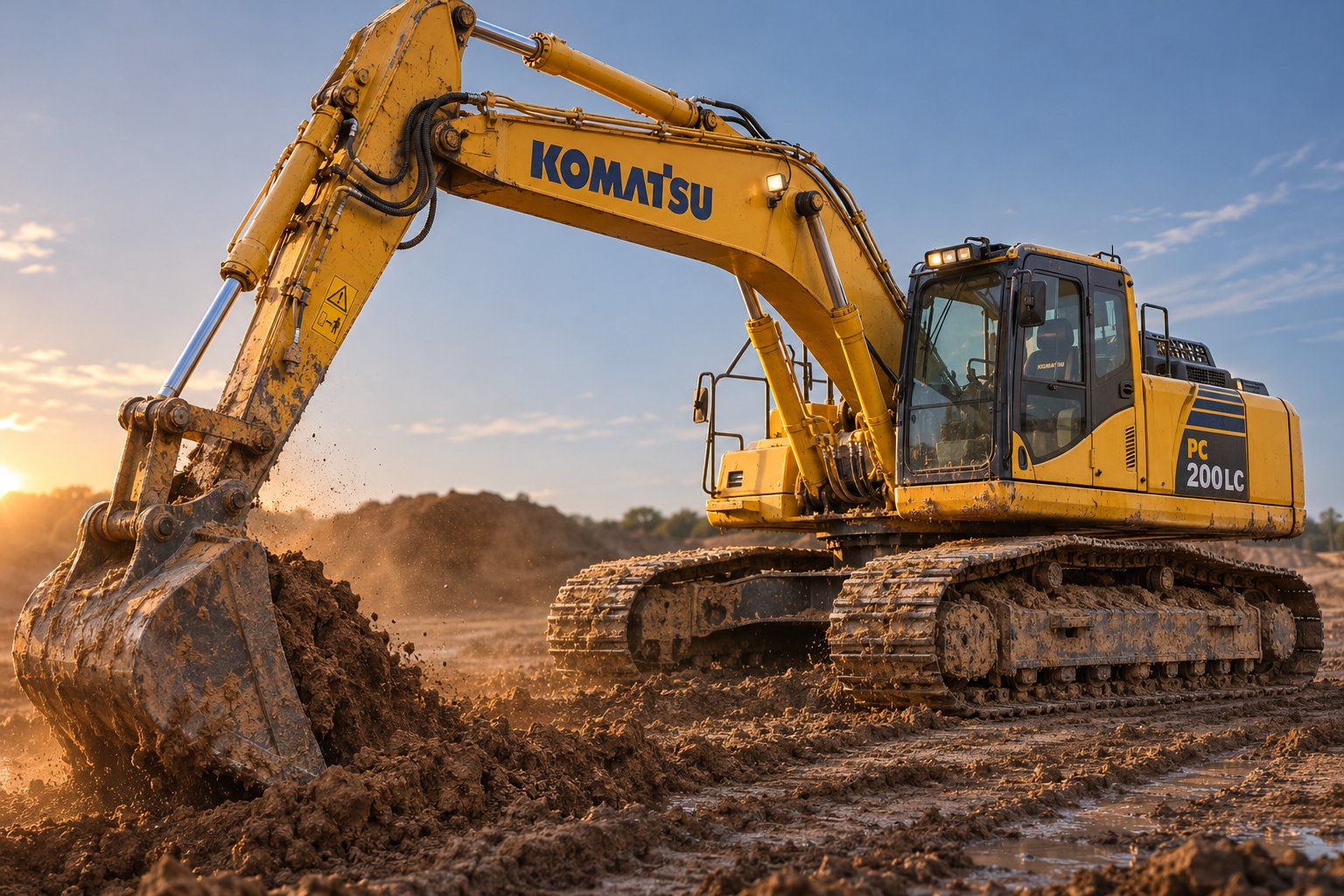
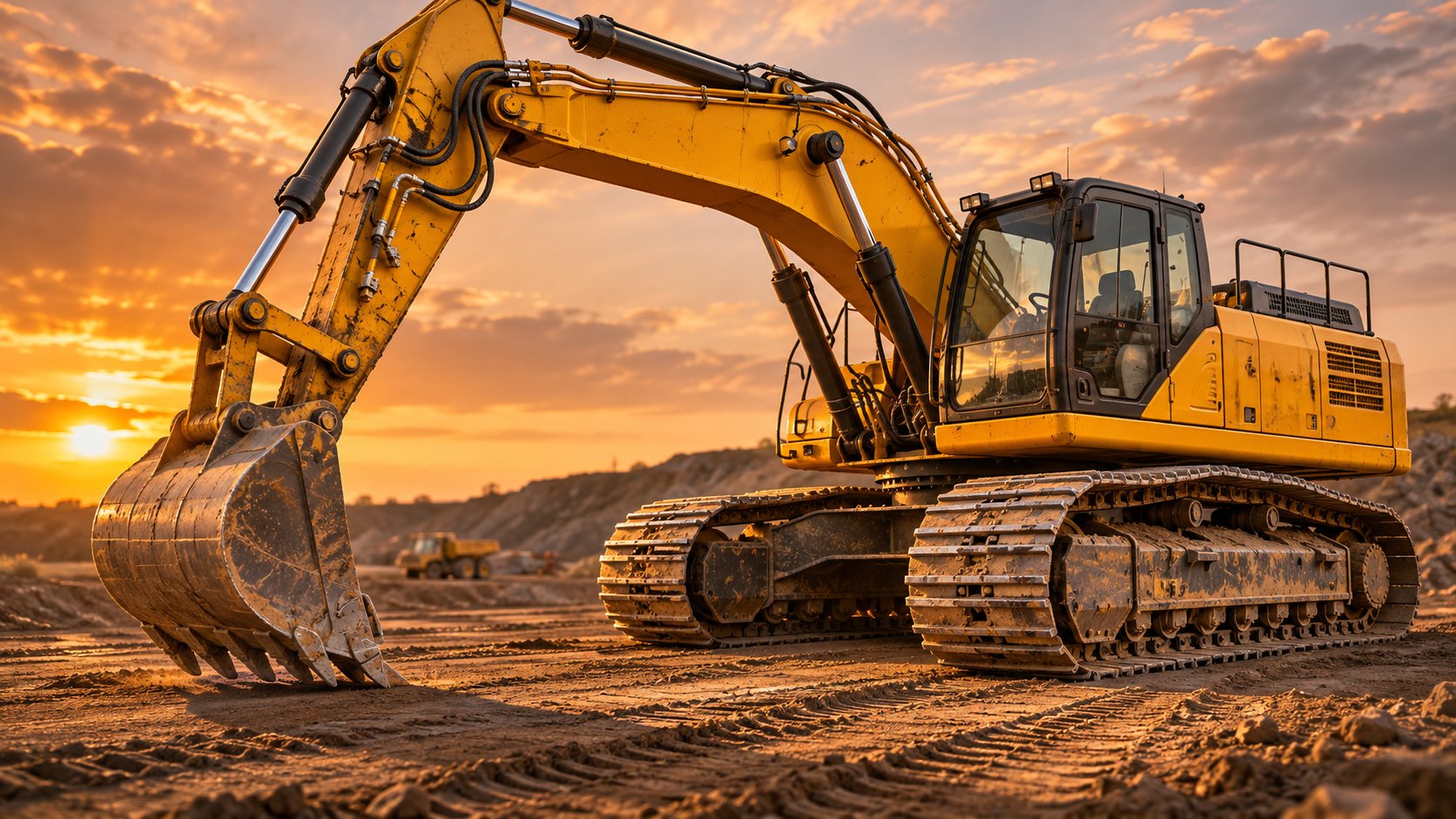
A crawler excavator is a hydraulic excavator mounted on a tracked undercarriage. Picture the machine in four main sections: a steel or rubber track system on the ground, an upper carriage that rotates 360 degrees, a cab where the operator sits, and a boom-stick-bucket assembly that does the actual digging. The hydraulic system ties everything together, converting engine power into the force that moves the boom, curls the bucket, and swings the cab.
You will also hear the term "trackhoe" on job sites and in classified ads — it means the same thing. Whether a listing says crawler excavator, tracked excavator, or trackhoe, you are looking at the same category of machine. Among all excavator types, crawlers dominate sales volume because their tracked undercarriage distributes weight across a large contact area, delivering stability that wheeled alternatives simply cannot match on soft or uneven ground.
Crawler vs Wheeled vs Mini — Confirming Your Choice
Three excavator types show up most often when buyers search for equipment: crawlers, wheeled excavators, and mini (compact) excavators. Each fills a different niche, and picking the wrong one leads to either overspending or underperforming on the job. Here is a quick comparison of the factors that matter most:
- Mobility: Wheeled excavators can drive between job sites on pavement without a trailer. Crawlers require flatbed or lowboy transport but excel once on site. Minis are the easiest to trailer due to their compact size.
- Ground pressure: Crawlers spread their weight over long, wide tracks, resulting in lower ground pressure — ideal for muddy, sandy, or freshly graded surfaces. Wheeled units concentrate force through tires, which can tear up soft terrain. Minis are lightweight enough to work on finished residential lots.
- Lifting capacity and digging force: Crawlers offer the highest stability and breakout force across comparable weight classes, making them the go-to for sustained heavy digging. Wheeled models match power on hard, flat ground but lose stability on slopes. Minis trade raw force for precision and tight-space access.
Imagine you need to load trucks in a gravel pit all day — a wheeled unit would struggle with traction, and a mini would lack the bucket capacity. Conversely, if you are patching a city sidewalk for two hours, trailering a full-size crawler is overkill when a wheeled excavator can drive to the site under its own power. Buyers interested in wetland or shoreline work may even encounter specialized amphibious excavators for sale, which use pontoon-style undercarriages for flotation — a niche solution beyond the scope of standard crawlers.
If the job involves soft ground, steep grades, or sustained heavy digging, a crawler is almost always the correct platform. Choose a wheeled excavator for paved urban sites that demand road mobility, and a standalone mini for tight residential lots where minimal ground disturbance is essential.
This guide is built as an independent buyer's resource. It walks you through the full decision journey — confirming the right machine type, selecting the correct size class, decoding technical specs, understanding real-world pricing, and evaluating every major buying channel from auctions to direct-purchase platforms. Whether you are comparing a Cat 320 excavator for sale against competing brands or evaluating your first Caterpillar excavator purchase, every section ahead is organized to move you one step closer to a confident decision. Listings for popular models like the 336 Cat excavator for sale fill dealer sites and auction platforms, yet none of them explain the context behind the numbers — that is exactly the gap this article fills.
Crawler Excavator Size Classes from Mini to Mass Excavation
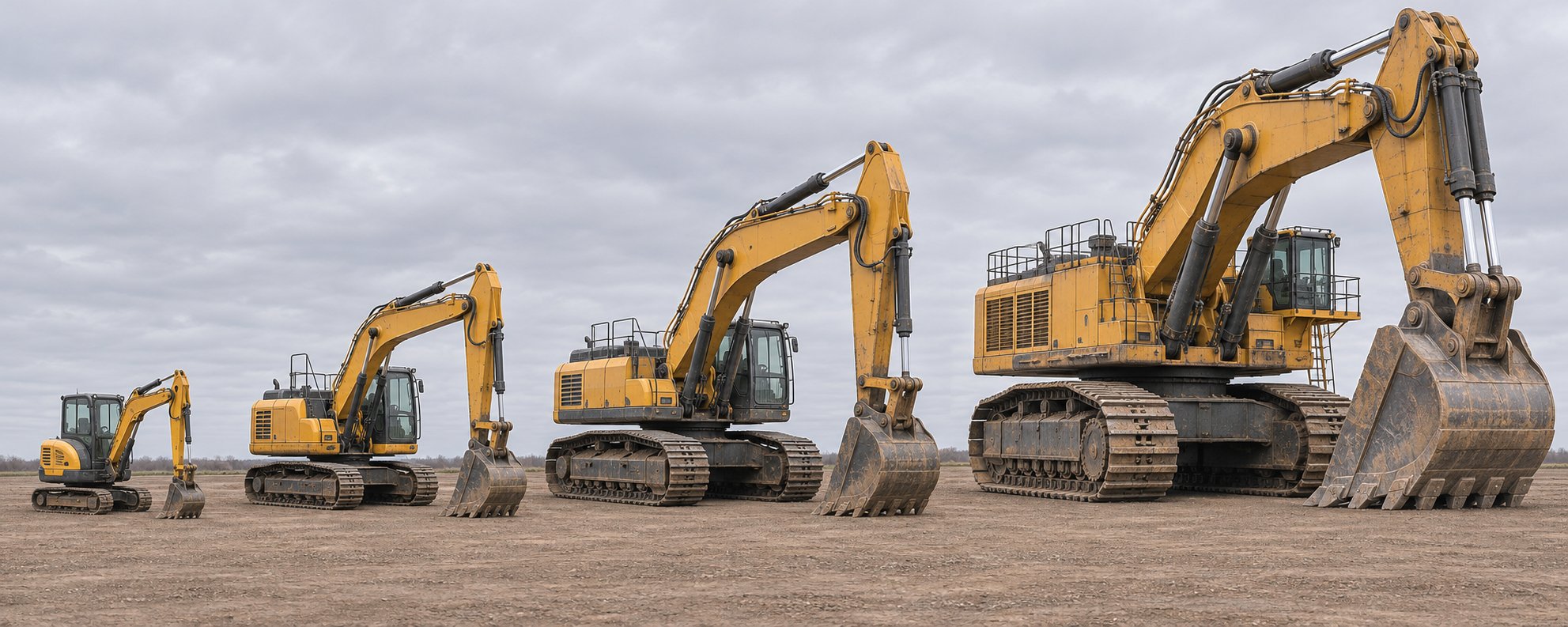
Knowing you need a crawler is only half the equation. The real question — the one most listing sites never bother to answer — is which size crawler fits your work. Excavators span a staggering weight range, and picking a class too small means slow production, while going too large wastes money on transport, fuel, and a machine that cannot maneuver on your site. Here is how the industry breaks it down.
Mini and Compact Crawlers Under 10 Tons
Machines in the 1 to 9 ton range are the entry point. You will see them listed as mini or compact excavators — models like the Cat 305 through 308 family, the Komatsu PC78 and PC88, Kobelco SK75SR, and SANY SY75C. If you are searching for a caterpillar 308 excavator for sale, you are shopping at the upper end of this class, where operating weights hover around 8 to 9 tons and dig depths reach roughly 14 to 15 feet. Deere's compact offerings, including the popular John Deere 85 P-Tier at about 9.8 tons, sit right at the boundary between mini and mid-size.
These units dominate residential foundations, utility trenching, landscaping, and any task where tight lot access and low ground disturbance matter most. Rubber-track options keep turf damage minimal, and many compact crawlers offer zero or near-zero tail swing — a critical feature near structures and property lines. Transport is simple: most ship on a standard flatbed trailer without oversize permits.
Mid-Size Crawlers from 10 to 25 Tons
This is the workhorse class. Models such as the Cat 313 through 320 range, Komatsu PC130 through PC240, Hitachi ZX130 through ZX210, and Kobelco SK130LC through SK210LC fill commercial job sites across the country. Industry sales data confirms that mid-size crawlers rank among the top-selling categories of construction equipment in the U.S., with models like the Cat 320 and Deere 210 P-Tier consistently appearing near the top of financed-unit lists.
Typical dig depths in this class range from about 17 to 23 feet, and engine power spans roughly 90 to 180 horsepower. Road building, municipal storm-water systems, utility installation, and general commercial excavation all fall squarely within mid-size territory. Transport usually requires a lowboy trailer, though machines under approximately 20 tons can sometimes ride on heavy-duty flatbeds depending on local regulations.
Standard and Large Crawlers Above 25 Tons
Step above 25 tons and you enter the realm of heavy civil, quarry, and mining-grade equipment. The 25 to 50 ton bracket includes proven models such as the Cat 336, the cat 340 excavator for sale listings that dominate dealer inventories, Komatsu PC360 and PC390, and Volvo EC350 through EC480. Dig depths typically reach 23 to 27 feet, and horsepower climbs to 250 and well beyond.
Push past 50 tons and the machines become specialized mass-excavation units. The Caterpillar 352 excavator, for example, weighs in at roughly 55 tons with 424 horsepower and a dig depth of about 23 feet 7 inches — built for loading haul trucks in aggregate pits. Buyers who browse a cat 352 excavator for sale listing are looking at a machine that requires a multi-axle lowboy and potentially oversize-load permits. At the extreme end, manufacturers like Komatsu and Hitachi produce excavators exceeding 200 tons that serve open-cut mining operations.
Niche applications call for niche platforms as well. Buyers working in marshland or shoreline environments sometimes search for a pontoon excavator for sale — a specialized variant where the standard tracked undercarriage is replaced with buoyant pontoons for flotation on soft, waterlogged terrain.
| Size Class | Operating Weight Range | Typical Dig Depth | Common Applications | Approximate Transport Requirements |
|---|---|---|---|---|
| Mini / Compact | 1 - 9 tons | 10 - 15 ft | Residential foundations, utility trenching, landscaping | Standard flatbed trailer; typically no oversize permits |
| Mid-Size | 10 - 25 tons | 17 - 23 ft | Road building, municipal infrastructure, commercial excavation | Lowboy or heavy-duty flatbed; permits vary by jurisdiction |
| Standard / Large | 25 - 50 tons | 22 - 27 ft | Heavy civil, pipeline corridors, quarry loading | Multi-axle lowboy; oversize permits often required |
| Mass Excavation | 50+ tons | 24 - 37 ft | Large-scale earthmoving, open-cut mining, aggregate production | Specialized lowboy; escort vehicles and route planning required |
Size class alone, however, does not seal the deal. Two 20-ton machines from different brands can differ dramatically in dig depth, bucket capacity, and attachment compatibility. The next step is mapping these classes against the specific project types that define your buying criteria — an exercise that turns a broad weight range into a precise shortlist.
How to Match a Crawler Excavator to Your Project Type
A size class tells you what a machine can do. Your project type tells you what it should do. Listing sites pile up hundreds of results without ever explaining which crawler fits a backyard pool dig versus a highway widening job — leaving buyers to guess. The sections below map each size class to the industries and tasks where it earns its keep, so you can filter your search with confidence instead of scrolling through irrelevant listings.
Residential and Light Commercial Projects
Picture a subdivision lot with a narrow driveway, a privacy fence on one side, and a finished landscape on the other. Maneuvering a 25-ton machine through that gap is not just impractical — it is destructive. Compact crawlers under 10 tons own this space for three practical reasons:
- Tight lot access: Machines in the Cat 307.5 or cat 308 for sale range typically measure under 8 feet wide, letting them pass through standard residential gates and between structures without ripping out fencing or hardscape.
- Lower ground disturbance: Rubber-track options, available on most compact crawlers, protect driveways, sidewalks, and finished turf. Landscapers and pool contractors rely on this feature to avoid costly surface repairs.
- Zero-tail-swing configurations: A zero-tail-swing excavator keeps its counterweight within the track width during rotation, eliminating the risk of striking a wall, fence, or parked vehicle as the cab swings. Models like the Bobcat E55 and several Kubota U-series units are built specifically around this concept. One important caveat: buyers should always confirm zero-tail-swing specs for a specific machine before assuming clearance, because "reduced" tail swing is sometimes marketed loosely alongside true zero configurations.
If you are pricing a cat 308b for sale or a comparable 8-ton compact, you are looking at the sweet spot for residential foundation work, utility trenching, and light demolition — enough dig depth (roughly 14 to 15 feet) to handle basements and footings, compact enough to work inches from existing structures.
Heavy Civil, Road Building, and Utilities
Step onto a road-widening project or a municipal storm-water installation and the compact class quickly runs out of reach — literally. Pipeline corridors demand dig depths of 18 feet or more, and daily production targets require bucket payloads that compact machines cannot deliver efficiently. Mid-size crawlers in the 10 to 25 ton range are the default here.
Why? These machines balance raw digging power with enough transportability to move between sites on a standard lowboy without special permits in most jurisdictions. Contractors working utility corridors will find that a 308 cat excavator for sale might handle the trench width, but a 20-ton unit in the Cat 320 family — including older generations like the cat 320c for sale listings still common on the used market — handles the depth, cycle speed, and daily volume that keep production on schedule.
Two attachment-related features separate a productive mid-size setup from a frustrating one:
- Blade compatibility: A six-way backfill blade lets the operator grade and backfill without calling in a dozer, cutting labor costs on utility and road jobs.
- Hydraulic thumb: Grabbing pipes, rip-rap, and root balls is a constant requirement in civil work. A factory-plumbed thumb circuit saves thousands compared to an aftermarket retrofit and integrates cleanly with the machine's control logic.
Buyers evaluating mid-size crawlers should confirm that the specific unit includes — or can readily accept — both features before committing.
Mining, Quarry, and Mass Excavation
In an aggregate pit or open-cut mining operation, the excavator's job is straightforward but punishing: load haul trucks as fast as possible, all day, every day. Bucket capacity and breakout force become the dominant buying criteria. Large crawlers above 25 tons deliver both. A 45-ton-plus machine can swing buckets exceeding 2.5 cubic meters and apply the breakout force needed to rip consolidated material without stalling cycle times. At this scale, fuel efficiency per ton of material moved matters more than purchase price alone, and undercarriage durability under constant heavy loading becomes a serious maintenance consideration.
Matching the right machine to a mass-excavation role is less about brand and more about honest job analysis. Here is a simple three-step process that works for any project type — residential, civil, or mining:
- Identify maximum dig depth and reach required. Measure the deepest cut or longest horizontal reach the project demands. Compare these numbers directly against manufacturer spec sheets to eliminate machines that fall short.
- Determine transport constraints and site access limits. Gate widths, bridge weight limits, and trailer availability can rule out an otherwise perfect machine. A 50-ton excavator is useless if the only access road has a 30-ton bridge.
- List every attachment you plan to run. Buckets, hammers, thumbs, augers — each one has a minimum hydraulic flow and machine-class requirement. Write them down before you start comparing base machines.
Then match to the smallest class that covers all three criteria. Oversizing costs you in fuel, transport, and capital. Undersizing costs you in production delays and premature wear. The goal is a precise fit — and that precision starts with understanding exactly what technical specs separate one listing from another.
Key Technical Specs That Actually Affect Your Buying Decision
Every listing page for a crawler excavator for sale throws a wall of numbers at you: breakout force, hydraulic flow, operating weight, dig depth, swing torque. Sounds technical? It is — but only because nobody ever explains what those figures mean for the person writing the check. Two machines in the same size class can carry wildly different spec profiles, and the buyer who understands which numbers matter will consistently find better value than the buyer who shops on brand badge alone. Here is a plain-language breakdown of the specs that actually move the needle on productivity and total cost.
Breakout Force and Digging Performance
Breakout force is the raw muscle behind every dig cycle. It comes in two flavors, and both show up on spec sheets:
- Bucket breakout force — the force generated when the bucket curls inward. This is what lets the machine bite into compacted clay, dense gravel, or soft rock at the start of a cut.
- Arm (stick) digging force — the force generated when the arm retracts toward the cab. This is the pulling power that drags the bucket through material during the main stroke of a dig cycle.
In practical terms, higher breakout force means the machine can dig harder material without bogging down or slowing its cycle time. Imagine swinging a bucket into packed limestone — a machine with 35,000 lbf of bucket breakout force will slice through material that stalls a unit rated at 22,000 lbf, keeping your trucks loaded and your production schedule intact.
How do you compare breakout force across competing models? Pull the spec sheets for every machine on your shortlist and line up the bucket and arm force figures side by side in the same unit of measurement — either lbf or kN, not a mix. A utility-class compact machine typically produces around 5,000 to 7,000 lbf of bucket breakout force, suited to trenching in average soil conditions. A mid-size 20-ton crawler jumps well past 20,000 lbf, and standard-class machines above 30 tons can exceed 40,000 lbf — enough for bank excavation in consolidated material. Keep in mind that published figures represent the geometric maximum; real-world output depends on bucket geometry, tooth condition, and operating angle. Still, the spec-sheet number gives you an apples-to-apples starting point that brand marketing never will.
Hydraulic Flow Rate, Pressure, and Attachment Capability
If breakout force is the muscle, hydraulic flow is the blood supply. Flow rate — measured in gallons per minute (GPM) — determines how quickly hydraulic fluid reaches the cylinders and motors that power every movement on the machine: boom lift, arm curl, swing, and, critically, attachments.
Why does this matter for buyers? Because the attachment you plan to run dictates the minimum flow the base machine must deliver. A hydraulic hammer, for example, typically requires 20 GPM or more on a mid-size excavator, while augers demand steady flow in the 15 to 25 GPM range. Mulchers and cold planers can push that requirement even higher. If the machine's auxiliary hydraulic circuit cannot meet the attachment's minimum flow, the tool will underperform, overheat, or damage the pump — none of which show up in a listing photo.
Here is the catch most buyers miss: the main hydraulic flow powers the boom, arm, and bucket. Attachments run on a separate auxiliary circuit — sometimes called third-line or fourth-line hydraulics. Not every machine leaves the factory with auxiliary plumbing installed, and retrofit costs can add thousands to your acquisition price. When browsing cat excavators for sale or any other brand, confirm three things before you commit:
- Auxiliary flow rate (GPM): Does it meet or exceed the requirement of your most demanding attachment?
- System pressure (PSI or bar): The auxiliary circuit must deliver adequate pressure — typically 2,500 to 3,500 PSI — or the attachment will lack force even if flow is sufficient.
- Number of auxiliary circuits: Simple thumbs need one circuit. Rotating grapples or tiltrotators may need two or more, plus electrical CAN-bus integration.
A buyer evaluating a cat 308 excavator for sale who plans to run a hydraulic hammer should verify that the unit includes factory-installed auxiliary lines with adequate GPM. Skipping this step is one of the most expensive oversights in the used-equipment market — a machine priced attractively because it lacks the right hydraulic setup will cost far more once you factor in the retrofit.
Operating Weight, Ground Pressure, and Transportability
Operating weight influences two things that hit your budget from opposite directions: jobsite stability and logistics cost.
On the stability side, weight determines ground pressure — the force the machine applies per unit of track contact area. A heavier machine with wide tracks can actually exert lower ground pressure than a lighter unit on narrow tracks, so the relationship is not as simple as "heavier equals more sinking." Well-designed compact crawlers can achieve ground pressure under 4 PSI — lower than a person standing on level ground. That matters on finished turf, saturated soils, and freshly placed aggregate where ruts mean rework.
On the logistics side, operating weight drives transport cost in a very direct way. Compact machines under roughly 10 tons ship on a standard flatbed with no special permits in most states. Mid-size crawlers in the 15 to 25 ton range typically require a lowboy trailer and may approach overweight thresholds that trigger permit requirements. Large machines above 30 tons almost always need multi-axle lowboys, pilot cars, and route-specific permits — each adding hundreds or thousands of dollars to the delivery bill. For buyers comparing the price of an excavator across size classes, transport cost can narrow or erase the gap between a mid-size and a large unit faster than most expect.
Two more specs round out the picture: dig depth and swing speed. Dig depth sets the hard ceiling on how deep the machine can work, and it drops off sharply if you choose a short-arm configuration. Swing speed — how fast the upper carriage rotates — directly affects cycle time when loading trucks or trenching, because every cycle involves at least two swings. Faster swing means more material moved per hour, which is why production-focused buyers compare swing speed as closely as they compare breakout force.
| Specification | What It Measures | Why It Matters for Buyers | How to Compare |
|---|---|---|---|
| Breakout Force (Bucket & Arm) | Maximum digging and penetration force in lbf or kN | Determines whether the machine can efficiently dig hard or compacted material without stalling cycle times | Line up bucket and arm force figures from competing spec sheets in the same unit; compact machines typically offer 5,000-7,000 lbf, mid-size units exceed 20,000 lbf, and large crawlers surpass 40,000 lbf |
| Hydraulic Flow Rate (Main & Auxiliary) | Volume of hydraulic fluid delivered per minute, measured in GPM | Controls boom/arm speed and determines which attachments the machine can power effectively | Check both main and auxiliary GPM; match auxiliary flow against the highest-demand attachment you plan to run — hammers often need 20+ GPM, augers 15-25 GPM |
| Operating Weight | Total weight of the machine ready to work, including fuel, fluids, and standard bucket | Affects ground pressure on soft soils and dictates transport trailer type, permit requirements, and delivery cost | Compare in the same condition (with standard bucket and full fluids); factor in transport cost differences — machines above 30 tons typically require multi-axle lowboys and permits |
| Maximum Dig Depth | Deepest vertical reach below grade on flat ground with arm fully extended | Sets the hard limit on trench and foundation depth; real-world usable depth is roughly 85-90% of the published maximum | Compare at the same arm configuration (standard vs. long stick); a long-stick option adds 1-2 ft of depth but reduces breakout force at full extension |
| Swing Speed | Rotational speed of the upper carriage, measured in RPM | Directly affects cycle time during truck loading and trenching — faster swing moves more material per hour | Compare RPM figures across shortlisted models; even a small difference compounds over hundreds of daily cycles into measurable production gains |
Notice a pattern? Every spec on that table connects back to either productivity or cost. Breakout force and swing speed drive how much material you move per hour. Hydraulic flow determines whether your attachments work at full capacity. Operating weight and dig depth shape your transport budget and project feasibility. When you see the cat excavator price or the cat 395 excavator price on a listing, the sticker number only tells part of the story — the specs above tell the rest, revealing whether a machine earns its price tag on the job or simply looks good on paper.
Specs define capability, but they do not explain what a machine costs. The gap between a well-equipped 20-ton crawler and a stripped 35-ton unit can be smaller than most buyers assume — or far larger — depending on age, hours, and condition. Understanding exactly how those variables shape the price of an excavator is the next critical step in turning specs into a smart purchase.
Crawler Excavator Pricing Explained by Size and Condition
Browse any major listing aggregator and you will see crawler machines priced from roughly $19,500 to well over $600,000 — a spread so wide it is practically useless without context. TractorHouse, for example, publishes that raw range but never explains why one 20-ton machine costs $45,000 while another commands $215,000. Dealers benefit from the confusion; informed buyers do not. Below is the pricing context no single listing site provides.
What Drives the Price of a Crawler Excavator
Five variables account for the vast majority of the price gap between any two crawler excavators on the market. They stack in roughly this order of impact:
- Size class. This is the single biggest price lever. A compact 8-ton unit and a 45-ton production loader live in entirely different cost universes — even when both are the same age and in similar condition. Think of size class as the lane you are shopping in; everything else adjusts the price within that lane.
- Machine age and model generation. Newer model generations carry updated hydraulics, emissions-compliant engines, and improved cab technology, all of which support a higher asking price. A current-generation mid-size crawler will command significantly more than a model from two or three generations back.
- Accumulated hours. Hours function as the excavator's odometer. Machines under 2,000 hours are considered near-new; units between 2,000 and 5,000 hours sit in the prime used territory; and anything above 10,000 hours enters a stage where major component replacements — engine overhauls, pump rebuilds, undercarriage swaps — loom on the horizon. Two machines from the same model year can sell tens of thousands of dollars apart purely because of hours and service history.
- Brand reputation and parts availability. Caterpillar excavators, for example, retain roughly 65 to 70 percent of their value over five years — the highest in the industry. Komatsu and Hitachi follow at 60 to 65 percent. That resale premium means a caterpillar excavator for sale will typically carry a higher sticker price than a comparable-spec unit from a less recognized manufacturer, even at equivalent hours and condition.
- Overall condition. Undercarriage wear, hydraulic integrity, structural fatigue in the boom and stick, and cab electronics all factor in. A well-maintained mid-size crawler with moderate hours can cost several times what a high-hour compact unit costs — and still be the better deal on a cost-per-productive-hour basis.
Notice that none of these variables exist in isolation. A low-hour machine with a neglected undercarriage is not the bargain its hour meter suggests, and a higher-hour unit backed by a complete binder of service records and fresh oil analysis can justify a premium that seems counterintuitive at first glance.
Price Expectations by Size Class and Condition Tier
Rather than quoting a single number per class — which would be misleading given how much condition and hours move the needle — here is a general framework based on publicly available auction data and market listings:
- Compact used crawlers (1–9 tons): Auction results for popular compact models like the Bobcat E35 ranged from about $10,000 to $54,000 in recent sales, with age and hours explaining almost the entire spread. New compact units from major manufacturers start in the low $30,000s for the lightest models and climb past $140,000 for units approaching 10 tons. If you are researching a cat 310 for sale or comparing the cat 306 price across used listings, expect the used range to fall comfortably within this window — lower for high-hour or older-generation units, higher for late-model machines with documented service histories.
- Mid-size used crawlers (10–25 tons): This is where the spread gets dramatic. Auction records for the Caterpillar 320 — one of the most actively traded mid-size crawlers — logged sales from $13,500 for a 1993 unit up to $215,855 for a 2023 model in the same calendar year. Well-maintained machines from the current or previous generation with moderate hours typically cluster in the upper half of that range, while older units with five-figure hour meters anchor the lower end. Competing brands like Komatsu and Volvo in this class follow a similar pattern, generally at a slight discount to Cat equivalents.
- Large used crawlers (25–50+ tons): Heavy crawlers occupy the top tier of used pricing. Expect asking prices to reach well into six figures for well-maintained units and to push toward or beyond $350,000 for late-model machines with low hours. Buyers shopping a caterpillar 395 excavator for sale or researching the cat 352 excavator price are looking at acquisition costs that reflect the sheer material, engineering, and transport investment these machines represent. At this scale, even incremental differences in undercarriage condition translate into tens of thousands of dollars in near-term maintenance liability.
New-machine pricing, across all classes, sits well above the corresponding used range. Used excavators typically cost 30 to 50 percent less than new equivalents, with the steepest discount applying to units that have already absorbed the first-year depreciation hit — new machines can lose 20 to 30 percent of their value in year one alone. That depreciation curve is precisely why many contractors, rental fleet builders, and equipment dealers focus their buying on the used market.
Certified pre-owned programs — such as Cat Certified Used — add a layer of assurance that commands a premium. These programs typically include multi-point inspections, limited powertrain or hydraulic warranties, and documented reconditioning. Dealer pricing for certified units runs roughly 5 to 10 percent above comparable auction prices, reflecting the value of reduced risk. For less experienced buyers or operations that cannot absorb surprise repair bills, that premium often pays for itself with a single avoided failure.
Hours and condition matter more than brand badge — a well-maintained off-brand machine can outperform a neglected name-brand unit at a lower price.
Before committing to any crawler excavator purchase, verify these cost drivers in writing — not in conversation:
- Engine hours: Confirm the reading against service records and, where possible, telematics data. Hour-meter rollback fraud exists and inflates perceived value.
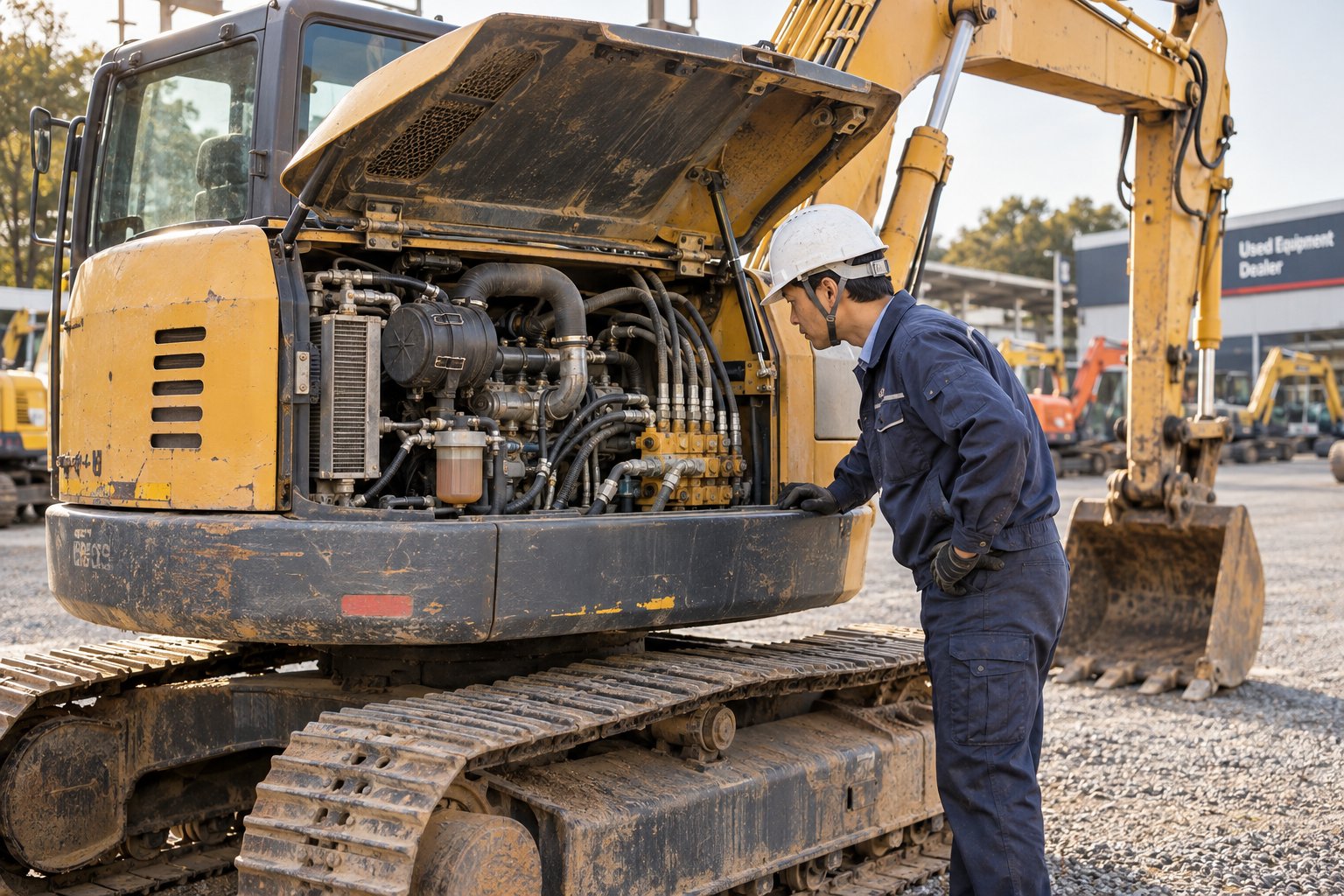
- Undercarriage wear percentage: The undercarriage can represent up to 50 percent of total lifetime maintenance costs, with replacements ranging from $15,000 to $40,000 depending on machine size. A worn undercarriage is not just a maintenance item — it is a hidden price adjustment.
- Hydraulic test results: Request flow and pressure test data. Sluggish cycle times or contaminated fluid signal pump or valve wear that can cost $5,000 to $15,000 per pump replacement — or up to $95,000 for a full system overhaul on larger crawler machines.
- Recent service records: Complete maintenance documentation can add 10 to 15 percent to resale value, which means a machine missing those records has likely already been discounted — or should be. No records means no proof of care, regardless of what the seller claims.
Price, ultimately, is only half of a smart purchase decision. A $90,000 machine that needs $30,000 in deferred repairs actually costs $120,000 — and may end up more expensive than a $110,000 unit that is ready to work on day one. The real question is not just how much to spend, but whether to spend it on a new machine, a used one, or something in between — and that decision hinges on how you plan to use, finance, and eventually resell the equipment.
New vs Used Crawler Excavators
A $90,000 used crawler that needs $30,000 in deferred maintenance and a $180,000 new unit with a full factory warranty can end up costing nearly the same over five years — or wildly different amounts, depending on utilization, financing terms, and resale timing. Yet most buying guides reduce this to a bullet-point pros-and-cons list that ignores the math. The framework below ties the new-versus-used decision to actual financial variables so you can run the numbers for your own operation rather than relying on someone else's opinion.
When Buying New Makes Financial Sense
A new crawler excavator is not automatically the expensive choice — in some scenarios, it is the only choice that pencils out. Consider buying new when your situation checks most of these boxes:
- High annual utilization. If the machine will run 1,500 hours or more per year, the reliability gap between new and used widens fast. Unplanned downtime on a busy job site does not just cost repair dollars — it stalls crews, delays milestones, and triggers liquidated damages on contracts. A new machine with a full factory warranty absorbs that risk for the first several thousand hours.
- Latest emissions-tier requirements. Federal, state, and municipal contracts increasingly mandate Tier 4 Final or equivalent engines. Older used units — even well-maintained ones — may not qualify, disqualifying your bid before it is read. Buyers shopping for a cat mini excavator for sale for government utility work should verify emissions compliance early in the search.
- Full warranty coverage. New machines from any major brand ship with comprehensive powertrain and hydraulic warranties. As industry analysts note, that warranty acts as an insurance policy — if a major component fails early, the manufacturer covers the cost, giving you predictable spending and peace of mind during the critical first years of ownership.
- OEM financing packages. Manufacturers often subsidize interest rates on new equipment to move inventory, resulting in financing terms that are difficult for used-machine lenders to match. The monthly payment gap between a financed new unit and a financed used unit can be smaller than the sticker-price gap suggests.
One common misconception deserves a direct correction: new machines exported from China or assembled in Southeast Asia are not necessarily manufactured by a Chinese OEM. Global supply chains mean a well-known brand may source components or assemble units across multiple countries. Brand origin and manufacturing location often differ, so evaluate the machine on its warranty, dealer support network, and spec sheet — not on where it was built.
When a Used Crawler Excavator Is the Smarter Play
For many buyers, a used crawler delivers more value per dollar spent — sometimes dramatically more. The economic case rests on three pillars:
- Significantly lower acquisition cost. Used excavators typically sell for 30 to 50 percent less than new equivalents, and since new machines can shed 20 to 30 percent of their value in year one alone, buying a one- or two-year-old unit lets someone else absorb the steepest part of the depreciation curve.
- Slower ongoing depreciation. A five-year-old caterpillar 320 excavator for sale depreciates at a fraction of the rate of a brand-new 320 rolling off the dealer lot. That flatter curve protects your equity if you need to sell or trade the machine in a few years.
- Lower financial risk for variable workloads. Seasonal contractors, equipment dealers building rental fleets, and companies testing a new service line do not always have confirmed, year-round utilization to justify a new-machine payment. A used crawler with a cat 305d for sale price point, for example, can serve a landscaping company's seasonal excavation needs without burdening cash flow during winter months.
Used equipment does come with trade-offs — limited or no warranty, less certainty about remaining component life, and the possibility of hidden wear. That risk is manageable, though. Certified pre-owned programs and independent third-party inspections exist precisely to close the information gap, and buyers who verify hours, undercarriage condition, and hydraulic integrity before signing rarely encounter the horror-story surprises that scare people away from the used market.
Regional and niche listings can surface unexpected value, too. A buyer searching for a kubota compact excavator for sale in Grove, OK, or scanning smaller regional dealers may find lower asking prices than national auction platforms simply because the seller's audience is smaller and competition among bidders is lighter.
Leasing, Renting, or Financing the Purchase
The new-versus-used equation shifts again once you layer in how the machine is paid for. Three financing structures dominate the market, and each one changes the math differently:
- Equipment loan or finance agreement (EFA): You borrow the purchase price, make monthly payments, and own the machine outright at the end of the term. Financing providers evaluate borrower cash flow, credit, equipment condition, and resale value before approving the transaction. A financed used machine often delivers lower monthly payments than a leased new unit — and you build equity with every payment rather than handing the machine back.
- Equipment lease: Leases can lower the monthly outlay by deferring a portion of the cost to a residual value or end-of-term buyout. They work well for buyers who want to rotate into newer equipment every few years — a common strategy for contractors chasing the latest telematics and fuel-efficiency gains. Just be careful: a lower monthly payment does not always mean a lower total cost once you factor in buyout fees, return conditions, and mileage-style hour caps.
- Short-term rental: If the project is a one-off or you are uncertain about long-term demand, renting avoids capital commitment entirely. Rental rates look expensive on a per-hour basis, but when you factor in zero maintenance liability, no depreciation risk, and no transport cost at project end, renting a cat 317 excavator for sale-equivalent machine for a three-month bridge project can beat buying and reselling by a wide margin.
The decision should not be driven by gut feel. Run it as a structured calculation instead:
- Estimate annual operating hours. Be honest — include seasonal downtime, weather days, and maintenance windows. A machine that runs 800 hours per year faces a very different cost profile than one running 2,000.
- Determine project duration. Is this a multi-year fleet addition or a six-month need? Short durations favor renting or leasing; long durations favor ownership.
- Calculate total cost of ownership including anticipated repairs. Total cost of ownership goes beyond the sticker price to include fuel, maintenance, insurance, and eventual resale — the complete financial picture from acquisition to disposition.
- Compare financing terms for new vs. used. Request actual quotes — not estimates — from lenders for both a new and a comparable used machine. Include down payment, interest rate, term length, and any origination fees.
- Decide based on lowest cost per productive hour. Divide total cost of ownership by the total hours you expect to operate the machine. The option with the lowest cost per productive hour is the financially rational choice, regardless of whether it is new, used, leased, or rented.
Cost per productive hour strips away the emotional pull of a shiny new machine and the bargain-hunting thrill of a low auction price. It forces every option onto the same playing field — and it almost always reveals that the smartest purchase is not the cheapest one or the newest one, but the one whose capability, condition, and financing align most tightly with how the machine will actually be used.
Of course, even the best financial framework falls apart if the machine you buy cannot run the attachments your work demands. A crawler optimized for general digging may lack the hydraulic circuits, flow rate, or mounting hardware for a hammer, grapple, or tiltrotator — and retrofitting after purchase is far more expensive than buying the right base machine in the first place. That attachment-first logic reshapes how experienced buyers build their shortlists.
Why Attachments Should Drive Your Base Machine Choice
Here is a mistake that costs buyers thousands of dollars every year: they find a crawler excavator at a great price, close the deal, and then discover the machine cannot power the hammer, grapple, or auger their work actually requires. Retrofitting auxiliary hydraulics after purchase — running new lines, adding valve blocks, upgrading couplers — can easily add $3,000 to $8,000 on a compact machine and significantly more on a mid-size or large unit. The smarter approach flips the process. Start with the attachments you need, work backward to the hydraulic and mechanical requirements they demand, and then shop for a base machine that checks every box out of the gate.
Common Attachments and Their Hydraulic Demands
Every attachment bolted to the end of an excavator's arm places specific demands on the machine's hydraulic system. Miss those demands, and you end up with a tool that stalls under load, overheats, or simply refuses to operate at full capacity. Here are the attachments buyers encounter most often — and the hydraulic reality behind each one:
- Buckets (GP, HD, ditching, tilt): General-purpose and heavy-duty buckets run on the machine's standard boom and arm circuits, so hydraulic compatibility is rarely an issue. Tilt buckets, however, require an auxiliary circuit to power the tilting cylinder — a detail often overlooked on used listings. Ditching buckets are wider and lighter, designed for grading rather than deep digging, and typically do not need extra hydraulics.
- Hydraulic thumbs: A thumb needs its own auxiliary line to open and close. Many mid-size crawlers — especially models in the Cat 325 excavator for sale range and similar 20-to-25-ton units — ship with thumb-ready plumbing from the factory. Compact machines often do not, so confirm before you buy.
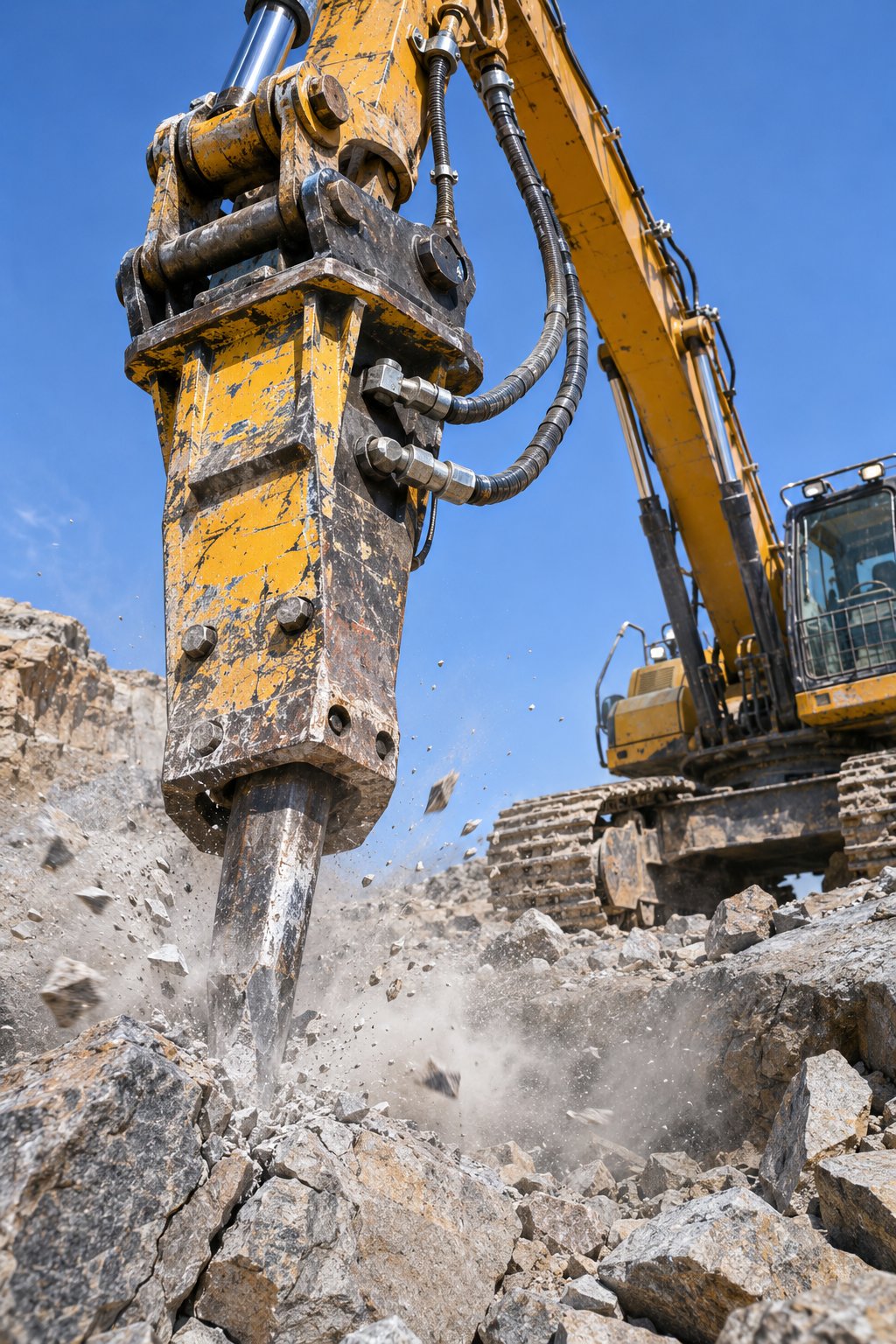
- Breakers and hammers: These are the most hydraulically demanding common attachments. They require high auxiliary flow (often 20 GPM or more on mid-size machines) and sustained high pressure, typically in the 3,300 PSI range or above. Machines designated as "high-flow" by the manufacturer are purpose-built for this duty. Running a hammer on a standard-flow machine starves the tool of fluid and risks damaging the hydraulic pump.
- Augers: Auger drives need steady, consistent flow — typically 15 to 25 GPM depending on auger diameter and soil conditions. Planetary-drive augers can work with standard-flow machines in medium-duty applications, but heavy-duty drilling in rock or dense clay calls for a high-flow setup.
- Rippers: Single-shank rippers draw from the arm circuit and generally do not need auxiliary hydraulics. Multi-shank or adjustable rippers on larger crawlers may require a dedicated circuit, particularly on machines above 30 tons used in quarry work.
- Grapples: Sorting and demolition grapples demand at least one auxiliary circuit, and rotating grapples need two — one for the clamp and one for the rotator motor. Buyers evaluating a used cat excavator for sale for demolition or scrap-handling work should treat dual auxiliary circuits as non-negotiable.
The underlying rule is simple: every hydraulic attachment has a minimum flow rate (GPM) and a minimum operating pressure (PSI) specified by the attachment manufacturer. The base machine's auxiliary circuit must meet or exceed both figures. If it falls short on either, performance suffers — and no amount of operator skill compensates for physics.
How Attachment Plans Should Shape Your Machine Search
Imagine you are a utility contractor shopping for a mid-size crawler. Your daily work involves trenching, pipe handling with a thumb, and occasional rock breaking. That attachment list immediately tells you three things about the base machine you need:
- The machine must have factory-installed auxiliary hydraulic lines — not a "thumb-ready" sticker, but actual plumbing and a functioning auxiliary valve.
- Auxiliary flow must be high enough to run a hydraulic hammer efficiently. Standard-flow circuits top out around 22 GPM, which may not meet the hammer's minimum requirement. You likely need a high-flow configuration exceeding 26 GPM.
- The coupler system — if the machine uses a quick coupler — must be compatible with every attachment on your list. A Cat Pin Grabber coupler, for example, allows rapid switches from the cab, but the attachment pins must match the coupler's size class.
A different buyer — say, a grading contractor focused on finish work — follows an entirely different path. That buyer prioritizes tilt-bucket compatibility, fine swing control for precise placement, and possibly a tiltrotator, which demands two auxiliary circuits plus CAN-bus electrical integration. The base machine shortlist barely overlaps with the utility contractor's, even if both buyers are shopping the same 20-ton weight class.
This is exactly why experienced buyers who browse listings — whether comparing a cat 309 for sale against a Komatsu PC138 or weighing the cat 340 excavator price against a Volvo EC380 — always filter by hydraulic configuration before they filter by price. A machine without the right auxiliary setup is not a bargain at any price. It is a project waiting for an expensive retrofit.
Retrofitting is not impossible, but it is rarely cheap. Auxiliary hydraulic conversion kits exist for many excavator models, and they can add thumb circuits or basic auxiliary lines to machines that left the factory without them. The cost includes the valve block, hoses, couplers, labor, and often custom brackets — a bill that adds up quickly and still may not deliver the same flow capacity as a factory-installed system. For buyers who plan to run high-demand tools like hammers or mulchers, the factory option is almost always worth the price premium on the base machine.
Always list every attachment you plan to run before you start comparing base machines — the attachment plan narrows your search faster than any other single factor.
The table below maps common attachment types to their typical minimum machine class and key hydraulic requirements. Use it as a starting filter when building your shortlist — and always confirm exact specifications against the attachment manufacturer's data sheet for the specific model you intend to run.
| Attachment Type | Typical Minimum Machine Class | Key Hydraulic Requirement | Common Application |
|---|---|---|---|
| General-Purpose Bucket | Any class (matched to machine size) | Standard boom/arm circuit; no auxiliary needed | Trenching, general excavation, truck loading |
| Tilt Bucket | Compact (5+ tons) and above | One auxiliary circuit for tilt cylinder | Finish grading, slope work, ditch shaping |
| Hydraulic Thumb | Compact (7+ tons) and above | One auxiliary circuit; moderate flow (10-15 GPM) | Pipe handling, brush clearing, demolition debris |
| Hydraulic Hammer / Breaker | Mid-size (12+ tons) recommended | High-flow auxiliary circuit (20+ GPM, 3,300+ PSI) | Rock breaking, concrete demolition, quarry secondary breaking |
| Auger Drive | Compact (3+ tons) and above | Auxiliary circuit with steady flow (15-25 GPM depending on duty) | Post-hole drilling, foundation piers, fence installation |
| Ripper (Single Shank) | Mid-size (15+ tons) and above | Arm circuit only; no auxiliary typically needed | Frost ripping, soft rock loosening, compacted soil prep |
| Sorting / Demolition Grapple | Mid-size (15+ tons) and above | One auxiliary circuit; rotating models need two circuits | Demolition sorting, scrap handling, land clearing |
| Mulcher | Mid-size (12+ tons) with high-flow option | High-flow auxiliary (26+ GPM, 3,500+ PSI) | Vegetation management, land clearing, right-of-way maintenance |
A quick glance at that table reveals something most listing sites never spell out: the attachment you need can disqualify half the machines in your size class before you even look at price, hours, or brand. A buyer hunting a cat 225 excavator for sale for demolition grapple work, for instance, needs to verify dual auxiliary circuits on every listing — a spec that narrows the field instantly. That single filter saves more browsing time than any keyword search ever will.
With your attachment plan locked in and your base-machine requirements clearly defined, the next challenge shifts from what to buy to where to buy it. Auction platforms, OEM certified programs, independent dealers, and multi-brand direct-purchase sites each offer different trade-offs in pricing, inspection rigor, and post-sale support — and no single channel is universally the best fit.
Where to Buy a Crawler Excavator and How Channels Compare
You have nailed down the size class, confirmed the specs, set a budget, and listed every attachment the machine needs to run. The shortlist is ready. The question that remains is deceptively simple: where do you actually buy it? Every major platform — auction houses, OEM dealers, independent yards, online aggregators — has a financial incentive to present itself as the obvious choice. None of them will volunteer an honest comparison against the alternatives. That comparison is exactly what this section delivers.
Six distinct buying channels dominate the market for used cat excavators and competing brands. Each one structures pricing, inspections, and post-sale support differently, and the best channel for a seasonal landscaper buying a single compact unit is rarely the best channel for an equipment dealer sourcing a bulk order of mid-size crawlers. Understanding the trade-offs before you start bidding or negotiating prevents the kind of regret that no return policy can fix.
Auction Platforms vs Direct-Purchase Dealers
Online auctions are the most visible channel in the used heavy-equipment market. Platforms like IronPlanet and Purple Wave run competitive bidding events — sometimes weekly — where hundreds of machines cycle through listings accessible to a global audience. IronPlanet alone serves over 1.8 million registered users, and Ritchie Bros. reported $15.9 billion in total gross transaction value for FY2024, with excavators representing one of the most frequently traded categories.
The appeal is straightforward: competitive bidding can push final prices below retail, and the sheer volume of listings means you will almost always find the size class and brand you want. A buyer hunting a cat 336d for sale, for instance, might see a dozen options in a single weekly auction cycle. The catch? Final prices are unpredictable. You might land a bargain — or get caught in a bidding war that pushes the price past dealer-lot territory. And most auction purchases are final: limited or no return options, and post-sale recourse is thin if undisclosed problems surface after delivery.
IronPlanet's IronClad Assurance program mitigates some of that risk with professional inspections, functional testing, 15 to 25 photographs, and lab oil analysis on equipment older than one year. That level of pre-sale transparency is the exception in the auction world, not the rule — many smaller auction houses sell strictly as-is.
Direct-purchase dealers and platforms operate on a fundamentally different model. Prices are listed or negotiable rather than determined by competitive bidding, which means you know the cost before you commit. Buyers can request model-specific quotes, ask detailed questions about machine history, and — depending on the seller — negotiate inspection periods or limited return windows. For someone comparing a cat 310 excavator for sale across multiple brands and size classes, the ability to browse fixed-price listings, filter by specs, and request quotes without watching a countdown timer is a significant practical advantage.
Multi-brand direct-purchase platforms take this a step further by consolidating inventory from various manufacturers into a single browsable catalog. JIUHONG's used excavator collection, for example, brings together compact and larger machines from multiple brands, allowing equipment dealers and import buyers to compare caterpillar machines for sale alongside Komatsu, Hitachi, and other makes without jumping between separate dealer websites. Buyers can request model-specific quotes for individual units or bulk purchases — a workflow that auction platforms are not designed to support. For contractors sourcing domestically, the direct-dealer model offers comparable convenience; for import buyers assembling multi-unit orders, platforms like JIUHONG streamline a process that would otherwise require coordinating with half a dozen independent sellers across different time zones.
OEM Certified Pre-Owned vs Independent Sellers
OEM certified programs sit at the premium end of the used-equipment spectrum. Cat Certified Used is the most widely recognized example. The program selects lightly used machines, performs a rigorous multi-point inspection using factory-trained technicians, replaces worn components with genuine Cat parts, and issues a Caterpillar warranty — including an Equipment Protection Plan (EPP) that extends coverage beyond the original warranty period. Buyers receive a complete maintenance history, a certification certificate, and the peace of mind that comes from knowing the machine has been restored to meet stringent manufacturer standards.
The trade-off is price. Certified pre-owned units typically carry a 5 to 10 percent premium over comparable non-certified machines. For buyers who cannot absorb a surprise $20,000 hydraulic pump failure — or who lack the in-house expertise to evaluate a machine's true condition — that premium is effectively an insurance policy. For experienced buyers with their own mechanics and inspection protocols, it may be an unnecessary markup.
Independent dealers and private sellers occupy the opposite end. Prices tend to be lower, sometimes substantially, but inspection rigor varies wildly. As one industry remarketing manager puts it, the key is eliminating the risk of the unknown — and with independent sellers, the unknown is exactly what you are buying unless you bring your own inspection discipline. A reputable independent dealer will provide service records, allow on-site walkarounds, and stand behind the sale with at least a short-term mechanical guarantee. A private seller on a classifieds site? You might get an honest owner with a binder full of maintenance records, or you might get someone looking to unload a machine with problems they would rather not disclose.
Buyers searching for a cat 304c for sale or any compact unit in the sub-10-ton range should be especially vigilant with private sellers. Compact crawlers are popular on the secondary market, which means high demand masks condition issues — a low price can disappear fast once you factor in deferred undercarriage work or missing auxiliary plumbing.
Evaluating Online Multi-Brand Inventories
The most underutilized channel for many buyers is the online multi-brand inventory platform — a category that has expanded significantly as cross-border equipment trade has grown. These platforms aggregate listings across manufacturers, size classes, and geographies, giving buyers a side-by-side comparison that no single-brand dealer can replicate.
Why does that matter? Because brand loyalty, while understandable, can cost you money. A buyer fixated on finding a used cat 308 excavator for sale might overlook a Komatsu PC78 or a Kobelco SK85 that delivers equivalent specs at a lower price — simply because those machines do not appear on a Cat dealer's lot. Multi-brand platforms eliminate that blind spot. They also serve a practical function for equipment dealers and resellers who need to fill diverse fleet requirements in a single procurement cycle rather than sourcing one machine at a time from separate channels.
Government surplus is one more channel worth mentioning. Federal, state, and municipal agencies periodically dispose of crawler excavators through platforms like GovPlanet or direct surplus sales. These machines are often well-maintained under mandatory fleet-management programs, but they can also carry very high hours if they served in continuous municipal service. Pricing tends to be attractive, though selection is unpredictable — you buy what is available, not what you need.
| Buying Channel | Pricing Model | Inspection / Warranty | Best For |
|---|---|---|---|
| Direct-Purchase Multi-Brand Platforms (e.g., JIUHONG) | Listed or negotiable; model-specific and bulk quotes available | Varies by platform; buyers can request detailed photos, specs, and machine history; some offer inspection support | Equipment dealers, import buyers, and contractors comparing across brands and sourcing multiple units |
| OEM Certified Pre-Owned (e.g., Cat Certified Used) | Fixed dealer pricing; typically 5-10% above comparable non-certified units | Multi-point factory inspection; limited manufacturer warranty; documented reconditioning history | Buyers who prioritize warranty coverage and verified machine condition over lowest price |
| Online Auction Platforms (e.g., IronPlanet, Ritchie Bros.) | Competitive bidding; final price unpredictable | Varies — IronClad Assurance on IronPlanet includes professional inspection and oil analysis; many auctions sell as-is | Buyers comfortable with bidding risk who want access to large, rotating inventory and potential below-market pricing |
| Independent Dealers | Listed or negotiable; pricing varies by dealer reputation and region | Variable — reputable dealers provide service records and may offer short-term guarantees; no standardized inspection program | Experienced buyers with their own inspection capability seeking lower prices than OEM certified channels |
| Private Sellers | Negotiable; typically lowest asking prices | Minimal to none; buyer assumes full inspection responsibility; no warranty unless separately arranged | Buyers with mechanical expertise and strong inspection skills who can evaluate a machine independently |
| Government Surplus (e.g., GovPlanet) | Auction or sealed bid; pricing often below market | Condition reports vary; machines are sold as-is with no warranty; fleet maintenance records may be available | Budget-conscious buyers willing to accept limited selection and potentially high-hour machines |
No single channel wins across every scenario. A contractor replacing a single mid-size crawler on a tight timeline might find the fastest path through an OEM certified dealer. An equipment reseller building a 10-unit rental fleet across multiple brands will extract far more value from a multi-brand platform that supports bulk quoting. And a savvy buyer with a trusted mechanic might land the best dollar-for-dollar deal from a private seller — provided they invest the time and rigor that private purchases demand.
The channel you choose determines more than the price you pay. It also shapes how much you know about the machine before you own it — which brings the conversation to the inspection itself. A thorough pre-purchase evaluation is the single most effective way to separate a genuine deal from a deferred repair bill disguised as a bargain, and the checklist for getting it right is more detailed than most buyers expect.
Red Flags and Inspection Tips for Used Crawler Excavators
You have picked the right size class, confirmed the specs, compared buying channels, and maybe even zeroed in on a specific listing. The temptation at this point is to wire a deposit and schedule transport. Do not. Every dollar of research you have invested so far can be wiped out by a single overlooked defect — a cracked boom weld hidden under fresh paint, an undercarriage measured at 25 percent remaining life, or a hydraulic pump quietly bypassing fluid at a rate that will become a five-figure bill within weeks. The inspection is where the real purchase decision happens, and it is the step most buyers rush through or skip entirely.
Whether you are standing beside a machine at a dealer yard or reviewing listing photos from across the country, the checklist below covers the red flags that separate a solid crawler excavator for sale from a money pit wearing a low price tag.
Undercarriage, Engine, and Hydraulic Red Flags
Start underneath the machine — always. The undercarriage is the most expensive system to replace on any crawler excavator, accounting for roughly 50 percent of total lifetime maintenance cost. On a 20-ton unit, a full track group replacement runs approximately $12,000; on a 30-ton machine, that figure climbs to $25,000 to $40,000. Yet most buyers glance at the tracks, note they "look okay," and move on to the cab. That casual approach is how deferred repair bills get transferred from seller to buyer.
Here are the specific undercarriage red flags to look for — and each one should be measured, not eyeballed:
- Excessive track sag: Press down on the top of the track between the carrier rollers. More than a couple of inches of deflection beyond the manufacturer's spec suggests stretched chain, worn pins and bushings, or an exhausted recoil spring. All are expensive to address, and excessive sag accelerates wear on every other undercarriage component.
- Worn sprocket teeth: Healthy sprocket teeth have a rounded, symmetrical profile. Hooked or pointed teeth — sometimes called "shark fins" — indicate the sprocket is pulling the chain unevenly, which triggers a cascade effect that damages rollers and idlers simultaneously. A single sprocket replacement costs around $3,000; ignoring it can turn into a $25,000-plus full rebuild.
- Cracked or leaking track rollers: Oil weeping from roller seals means the lubricant is leaving and dirt is entering — a combination that destroys the roller bearing and leads to uneven track wear. Check every roller individually; a single leaking unit can go unnoticed when the rest look clean.
- Missing or broken track pads (grousers): Cracked pads or pads worn flat indicate heavy-duty use, abrasive ground conditions, or both. Measure grouser height with a depth gauge and compare to the manufacturer's new-dimension and wear-limit figures. On machines you might find listed as a caterpillar 320 for sale or comparable 20-ton models, undercarriage wear percentage is the single most important number for calculating your real acquisition cost.
Move to the engine next — and insist on a cold start. A warm engine hides problems. On a cold machine, watch the exhaust during the first 30 seconds of cranking:
- Persistent blue smoke: The engine is burning oil, pointing to worn rings or valve seals. On a compact crawler, this can be a walk-away defect; on a larger machine, price the risk of an engine rebuild into your offer.
- Sustained white smoke: Coolant is entering the combustion chamber — a likely head gasket failure or cracked liner. This is a deal-breaker on virtually any machine class, because the internal damage behind white exhaust is unpredictable and often catastrophic.
- Erratic idle and abnormally high coolant temperature: An engine that hunts for a stable idle or runs hot within minutes of startup may have injector faults, a failing thermostat, or restricted airflow. None of these are cheap fixes, and together they signal systemic neglect.
Finally, evaluate the hydraulic system — the heart of every excavator's digging capability. Slow or jerky cylinder movement under load is the first warning sign. Extend each cylinder to its end of travel, hold for 30 seconds, and watch for drift. Cylinder drift under load indicates internal fluid bypass past a worn piston seal, and resealing a single boom or stick cylinder typically costs around $2,500.
- Milky or frothy hydraulic fluid: Pull the hydraulic tank sight glass or dipstick. Fluid that looks like a milkshake has been contaminated with water or coolant — a deal-breaker regardless of machine size, because contaminated fluid destroys pump internals rapidly.
- External leaks at cylinder seals: Oil streaks on cylinder rods or pooling fluid beneath the boom and stick indicate seals that are already failing. A small drip today becomes a major leak under sustained working pressure.
- Pump whine or knock at full extension: A high-pitched whine or knocking sound when the arm reaches full reach suggests pump cavitation — air or a starved inlet pulling the pump toward irreversible damage. Pump replacement on a mid-size crawler can run $5,000 to $15,000 depending on the make and model.
Buyers evaluating a cat 320 for sale or any popular mid-size listing should treat the hydraulic drift test as non-negotiable. It takes five minutes, costs nothing, and reveals problems that pretty listing photos will never show. Similarly, anyone considering a 335 cat excavator or machines in the 30-to-40-ton class should pay particular attention to swing-bearing play — put a dial indicator on the turntable bearing and measure deflection at four positions. Excessive play means a bearing replacement that can rival the cost of a full undercarriage swap on smaller machines.
Documentation and History Checks
Physical condition tells you what the machine looks like today. Documentation tells you how it got there — and whether you can trust the numbers attached to it.
Service records are the most valuable piece of paper a used crawler can come with. A complete maintenance binder — showing oil changes, filter replacements, undercarriage adjustments, and major component work at consistent hour intervals — proves that someone cared for the machine systematically. Missing records prove nothing except that you have no evidence of care, regardless of what the seller says over the phone. As one industry inspection scorecard framework puts it, absent service records alone can justify walking away from an otherwise attractive unit.
Hour-meter authenticity deserves its own scrutiny. Rollback fraud is real, and the financial incentive is enormous — on a mid-size excavator, the difference between 4,000 hours and 8,000 hours can represent $30,000 to $50,000 in resale value. Mechanical hour meters on older machines are trivially easy to tamper with: disconnect a wire, swap the unit, or run a replacement backward with a battery charger. Electronic meters on post-2005 machines are harder to manipulate, but not impossible. The defense is simple — always request an ECM (engine control module) hour readout and compare it to the dashboard display. A discrepancy of more than 10 percent should be treated as unverified hours. Roughly 15 to 20 percent of used equipment listings show hour readings inconsistent with service records or ECM data, which means the odds of encountering a tampered meter are not trivial.
Lien checks round out the documentation picture. A machine with an outstanding lien can be repossessed even after you have paid for it and taken delivery. Verify clear title through a UCC filing search or a service like the National Equipment Register before you commit any money.
Certified pre-owned units — such as those sold through Cat Certified Used — typically include complete documentation: inspection reports, reconditioning records, ECM hour verification, and clear title confirmation. Private sellers and auction purchases, by contrast, often include none of these. The documentation gap is one of the strongest arguments for paying a certified-program premium — or, if you choose a non-certified channel, for building your own documentation checklist and refusing to proceed until every item is satisfied.
Before you commit to any used crawler excavator purchase, verify each of the following in writing:
- Undercarriage wear percentage: Measured by component — grousers, chain, rollers, sprockets, and idler — not estimated visually.
- Oil and hydraulic fluid analysis reports: Lab results showing metal content, contamination levels, and viscosity confirm what visual checks cannot.
- Service history: A chronological record of maintenance tied to hour-meter readings at each service interval.
- Hour-meter verification: ECM hours compared to dashboard display, with telematics history if available.
- Attachment-fitment confirmation: Written verification that the machine's coupler, pin spacing, and auxiliary hydraulic configuration match every attachment you plan to run.
A low sticker price on a machine with a worn-out undercarriage is not a deal — it is a deferred repair bill that can exceed the savings.
Every red flag on this list translates directly into a dollar figure. A cat 313f for sale with a 40 percent undercarriage carries roughly $8,000 to $12,000 in near-term replacement costs that should be subtracted from the asking price — or should send you to the next listing. A machine scoring well across all inspection zones, on the other hand, justifies confidence in the price and clears the path to the final stage of the buying process: getting the crawler from the seller's lot to your job site, ready to dig on day one.
Transport, Delivery, and Getting Your Crawler Excavator to Work
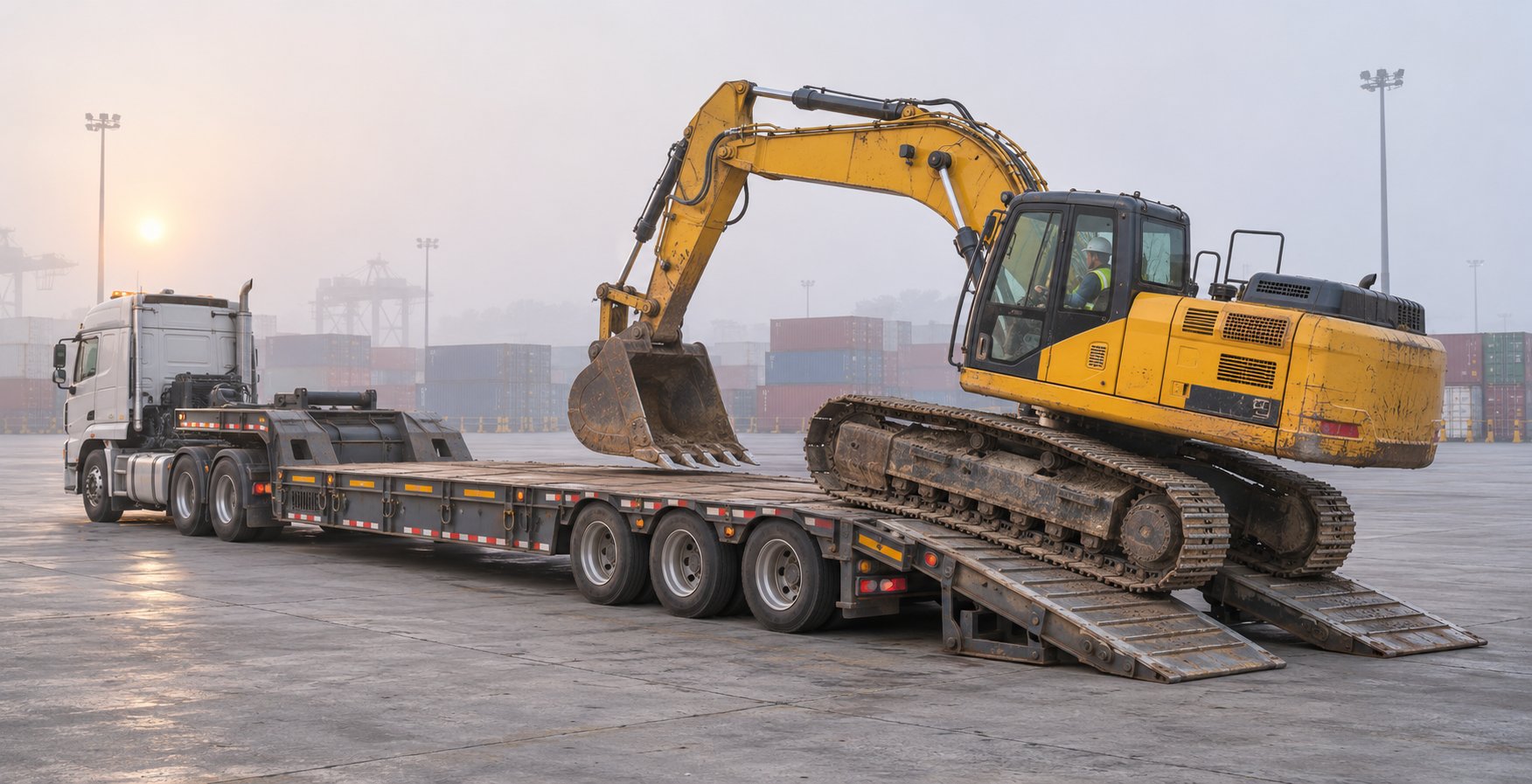
A signed purchase agreement does not put a machine on your job site. Between closing the deal and hearing the engine idle for the first time on your dirt, there is a logistics gap that catches more buyers off guard than any mechanical defect ever will. Crawler excavators cannot legally self-propel on public roads — their steel tracks would tear up pavement and violate DOT weight distribution rules within the first city block. Every unit, from a 3-ton compact to a 50-ton production loader, rides to work on a trailer. How much that ride costs — and how smoothly the handoff goes once the machine arrives — depends entirely on preparation most buyers never think about until the invoice lands.
Transport Considerations and Delivery Costs
The operating weight printed on the spec sheet you reviewed during your search does more than describe digging stability. It dictates every transport decision: trailer type, axle count, permit requirements, and ultimately the dollar figure on the freight invoice.
Here is how weight class maps to transport reality:
- Compact crawlers under 10 tons: A standard flatbed trailer with a deck height of 48 to 60 inches and a load capacity of 40,000 to 48,000 lbs handles these machines comfortably. A capable pickup truck or light-duty tractor can tow the rig, and most compact units — including popular caterpillar mini excavators for sale in the 305 to 308 range — stay within legal width and height limits without special permits. This is the simplest, least expensive transport scenario.
- Mid-size crawlers from 10 to 25 tons: The flatbed is no longer viable for most machines in this bracket. A lowboy trailer with an 18-to-24-inch deck height keeps the loaded height under the standard 13-foot-6-inch threshold for interstate travel, avoiding height permits entirely. A Cat 320 at roughly 49,000 to 50,000 lbs, for example, sits within a standard two-axle lowboy's capacity — no additional axles needed. Buyers comparing the cat 320 excavator price across used listings should add $1,500 to $4,000 in domestic transport costs depending on distance, because lowboy rental and fuel are meaningfully higher than flatbed rates.
- Large crawlers above 25 tons: Multi-axle lowboys become mandatory once gross vehicle weight — tractor, trailer, and loaded machine combined — approaches or exceeds the 80,000 lb federal road limit. Machines in the cat 336 for sale weight class (roughly 80,000 to 85,000 lbs operating weight) typically need a four-axle configuration to comply with federal bridge weight formulas. Push past 50 tons and you are looking at RGN (removable gooseneck) trailers rated up to 150,000 lbs, pilot car escorts, and route-specific permits that can add thousands of dollars. A buyer evaluating a cat 349 excavator for sale should budget for escort vehicles, nighttime travel windows, and multi-state permit coordination — costs that stack fast on long-distance hauls.
Width and height matter just as much as weight. The maximum legal width for interstate travel without a permit is 8 feet 6 inches, and most full-size crawlers exceed that measurement. State-level oversize permits are required for every jurisdiction the trailer crosses, and each state sets its own thresholds, processing times, and fees. A straightforward single-state delivery might cost a few hundred dollars in permits; a multi-state haul with escort requirements can push into several thousand. Building these fees into your acquisition budget — right alongside the cat 308 price or the asking price of any machine you are considering — prevents the unpleasant surprise of a freight invoice that erodes your negotiated discount.
Cross-border and overseas shipments introduce an entirely different cost layer. International heavy equipment shipping logistics involve customs clearance, port handling, ocean freight, and inland haulage at both ends of the journey. Ocean freight for a standard excavator shipped via Roll-on/Roll-off can run $1,200 to $1,500 on major routes, but flat rack or breakbulk methods — necessary for oversized machines — cost significantly more. Import duties, typically ranging from 0 to 5 percent for industrial machinery depending on trade agreements, add to the landed cost. For import buyers and equipment dealers purchasing in bulk, these logistics expenses can represent 10 to 20 percent of total acquisition cost. Platforms like JIUHONG allow buyers to request shipping and logistics support alongside their equipment quote, which simplifies cross-border procurement by bundling the machine price and transport coordination into a single conversation rather than forcing the buyer to manage freight forwarders, customs brokers, and inland haulers independently.
Site Readiness and First-Day Checklist
The machine is bought, the trailer is booked, and a delivery date is confirmed. What happens in the 24 hours before arrival determines whether the crawler goes to work on day one or sits idle while you scramble to fix things you should have prepared in advance.
Start with the unloading area. You need a level, compacted surface long enough for the trailer to pull in and position itself without jackknifing, and firm enough to support the combined weight of the loaded rig. A soft, muddy unloading pad is a recipe for a stuck trailer, a damaged machine, and a carrier who charges you for the delay. Confirm overhead clearances too — power lines and low branches catch more booms during offloading than most operators want to admit.
Fuel and fluids come next. A machine that ships from a dealer or overseas platform may arrive with minimal fuel — most ocean vessels prohibit equipment with full fuel tanks aboard due to fire regulations, and domestic sellers often drain tanks to minimize weight. Have diesel on site and ready. While you are at it, confirm that engine oil, hydraulic fluid, and coolant levels meet the manufacturer's specs before the first start. Even new machines can arrive with fluid levels that shifted during transit — vibration, temperature changes, and handling during loading and unloading all play a role.
Attachment verification deserves its own moment before the carrier leaves. If you purchased the machine based on confirmed auxiliary hydraulic specs and coupler compatibility, this is the time to physically verify the fit. Pin the bucket or thumb to the machine, connect auxiliary lines, and cycle each attachment through its full range of motion. Discovering a coupler mismatch or a dead auxiliary circuit after the carrier has departed leaves you chasing a warranty claim from a much weaker position.
The following five-step sequence turns all of these preparation tasks into a repeatable post-purchase workflow — whether you are receiving a single compact crawler or a multi-unit shipment from an overseas supplier:
- Arrange transport and confirm the delivery date. Lock in the trailer type, verify permit coverage for every jurisdiction on the route, and get a written delivery window. For international purchases, confirm customs clearance timelines and inland haulage scheduling so port demurrage fees — daily charges for equipment sitting at port beyond the free period — do not erode your budget.
- Verify insurance coverage is active. Your inland transit insurance or marine cargo policy must be in force before the machine leaves the seller's lot or port. Confirm the policy covers the full declared value and includes loading and unloading events — gaps in coverage during these transitions are more common than most buyers realize.
- Prepare the unloading site. Level and compact the surface, clear overhead obstructions, mark the offloading position, and have fuel, grease, and any required fluids staged within reach of the machine's final resting spot.
- Complete a walk-around inspection on arrival. Before the carrier disconnects the chains, inspect the machine for transit damage: cracked glass, bent handrails, leaking hydraulic hoses, and fresh dents or scrapes that were not documented in pre-sale photos. Photograph every side of the machine and any suspect areas immediately — this documentation is your evidence for freight damage claims and should be recorded before any cleaning or operation takes place.
- Perform a test cycle of all functions before releasing the carrier. Start the engine cold, let it stabilize, then cycle the boom, arm, bucket, swing, and travel functions through their full range. Test each auxiliary circuit with the intended attachment connected. Check for unusual noises, jerky movements, delayed hydraulic response, or visible fluid leaks. Only sign the carrier's delivery receipt and release the trailer once you are satisfied that the machine operates as represented. A signature on that receipt is your acknowledgment that the machine arrived in acceptable condition — getting it back after that point is exponentially harder.
Buyers who compare the cat 308 excavator price across several listings often focus so tightly on the sticker number that they forget transport and receiving are where money quietly disappears. A $500 permit fee here, a $2,000 lowboy surcharge there, a missed freight-damage claim worth $3,000 — these costs compound. The buyers who track total landed cost — machine price plus transport plus site prep plus any immediate maintenance — consistently make smarter purchases than those who optimize for the lowest asking price alone.
Every section of this guide has been built around a single idea: the best crawler excavator purchase is not the cheapest one or the newest one, but the one whose size, specs, condition, and total cost align most precisely with how the machine will actually be used. From confirming you need a crawler in the first place, through sizing, spec decoding, pricing, channel selection, inspection, and now logistics — each step narrows the field and removes a layer of risk. Follow the sequence, verify the details, and the machine you buy will earn its price tag from the first bucket load forward.
Frequently Asked Questions About Buying a Crawler Excavator
1. How much does a used crawler excavator cost?
Used crawler excavator prices range from roughly $10,000 for high-hour compact units under 10 tons to over $350,000 for late-model large machines above 25 tons. The five biggest price drivers are size class, machine age, accumulated engine hours, brand reputation, and overall condition — especially undercarriage wear, which can represent up to 50 percent of lifetime maintenance cost. A well-maintained mid-size crawler with moderate hours (2,000 to 5,000) often commands several times more than a high-hour compact unit, yet still delivers better value on a cost-per-productive-hour basis. Caterpillar models tend to retain the highest resale value at 65 to 70 percent over five years, while Komatsu and Hitachi follow at 60 to 65 percent. Always factor in transport, potential repairs, and attachment fitment costs to calculate true landed cost before comparing sticker prices.
2. What is the difference between a crawler excavator and a wheeled excavator?
A crawler excavator rides on steel or rubber tracks that distribute weight across a large contact area, delivering lower ground pressure and superior stability on soft, uneven, or sloped terrain. A wheeled excavator uses rubber tires, allowing it to drive between job sites on paved roads without a trailer — a major advantage for urban utility work. Crawlers generate higher breakout force and lifting capacity within the same weight class, making them the default choice for sustained heavy digging, grading on slopes, and work on muddy or freshly placed surfaces. Wheeled models excel on flat, hard ground where road mobility and quick repositioning matter more than maximum digging power. If your projects consistently involve soft ground, steep grades, or all-day excavation, the crawler platform is almost always the right pick.
3. What size crawler excavator do I need for my project?
Match the size class to three factors: required dig depth and reach, site access and transport constraints, and the attachments you plan to run. Compact crawlers under 10 tons suit residential foundations, utility trenching, and landscaping where tight lot access and low ground disturbance are priorities. Mid-size crawlers from 10 to 25 tons handle commercial site work, road building, pipeline corridors, and municipal infrastructure — they balance strong digging performance with manageable transport requirements. Large crawlers above 25 tons serve heavy civil, quarry loading, and mining operations where bucket capacity and breakout force drive productivity. Always select the smallest class that covers your maximum dig depth, fits through site access points, and powers every planned attachment — oversizing wastes fuel and capital, while undersizing stalls production.
4. Should I buy a new or used crawler excavator?
The decision hinges on annual utilization, project duration, and total cost of ownership — not just purchase price. Buying new makes sense when the machine will run 1,500-plus hours per year, when contracts require the latest emissions-tier engine, and when full factory warranty coverage is critical to avoid unplanned downtime. Used crawlers cost 30 to 50 percent less than new equivalents, depreciate more slowly after the first year, and suit seasonal contractors, rental fleet builders, or operations with variable workloads. To decide objectively, estimate your annual hours, calculate total ownership cost including anticipated repairs, compare actual financing quotes for both options, and choose whichever delivers the lowest cost per productive hour over your planned holding period.
5. What should I inspect before buying a used crawler excavator?
Focus on three critical systems: undercarriage, engine, and hydraulics. For the undercarriage, measure track sag, sprocket tooth profile, roller seal integrity, and grouser height against manufacturer wear limits — a full track group replacement can run $12,000 to $40,000 depending on machine size. For the engine, insist on a cold start and watch for persistent blue smoke (oil burning), white smoke (coolant leak), or erratic idle. For hydraulics, extend each cylinder to full travel, hold under load for 30 seconds, and check for drift, milky fluid, or external leaks. Beyond physical inspection, verify hour-meter readings against ECM data, request oil analysis lab reports, confirm complete service records, run a lien check for clear title, and physically test every attachment you plan to use. Multi-brand platforms and OEM certified programs often provide documented inspection results, while private and auction purchases typically require buyers to arrange independent evaluations.