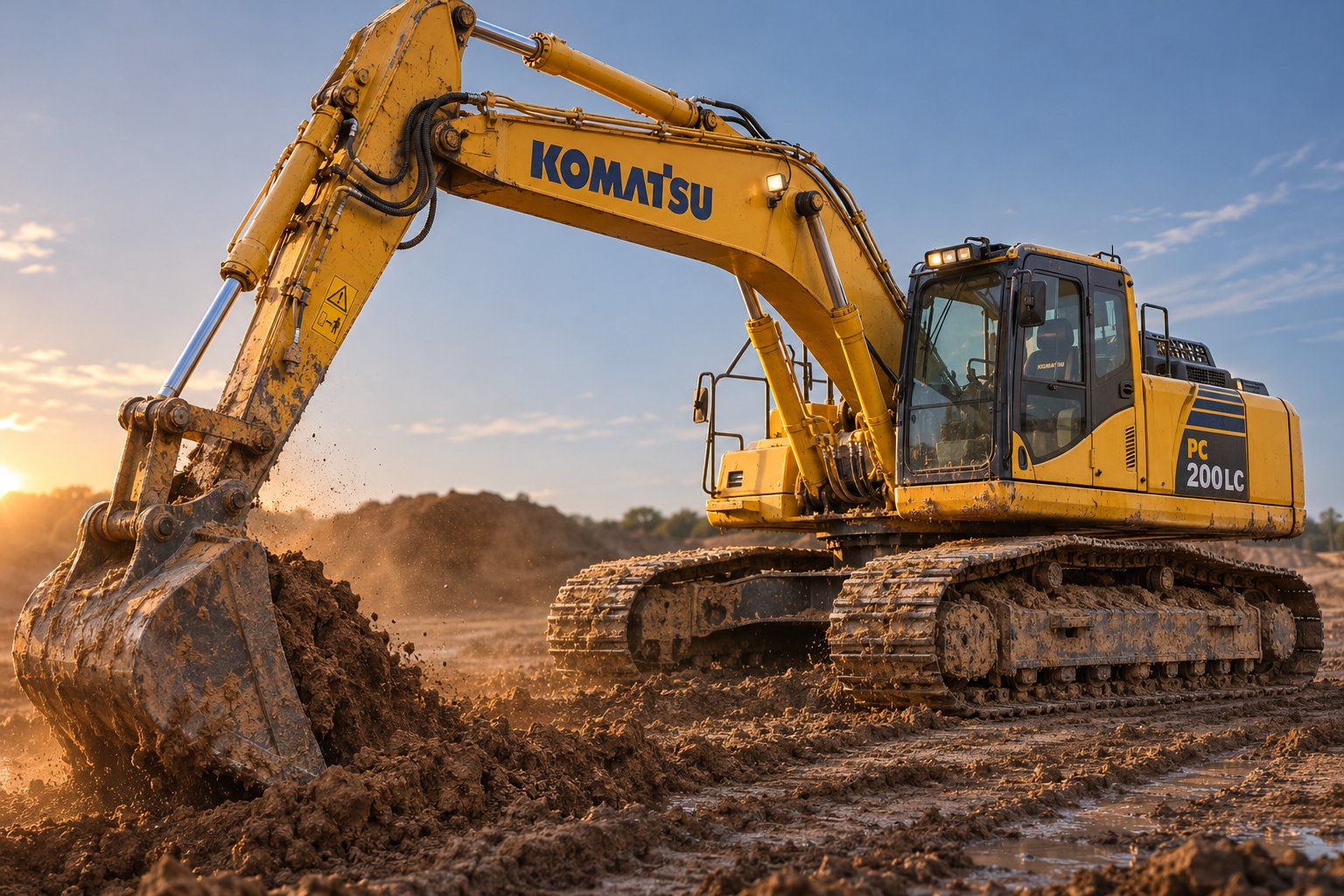


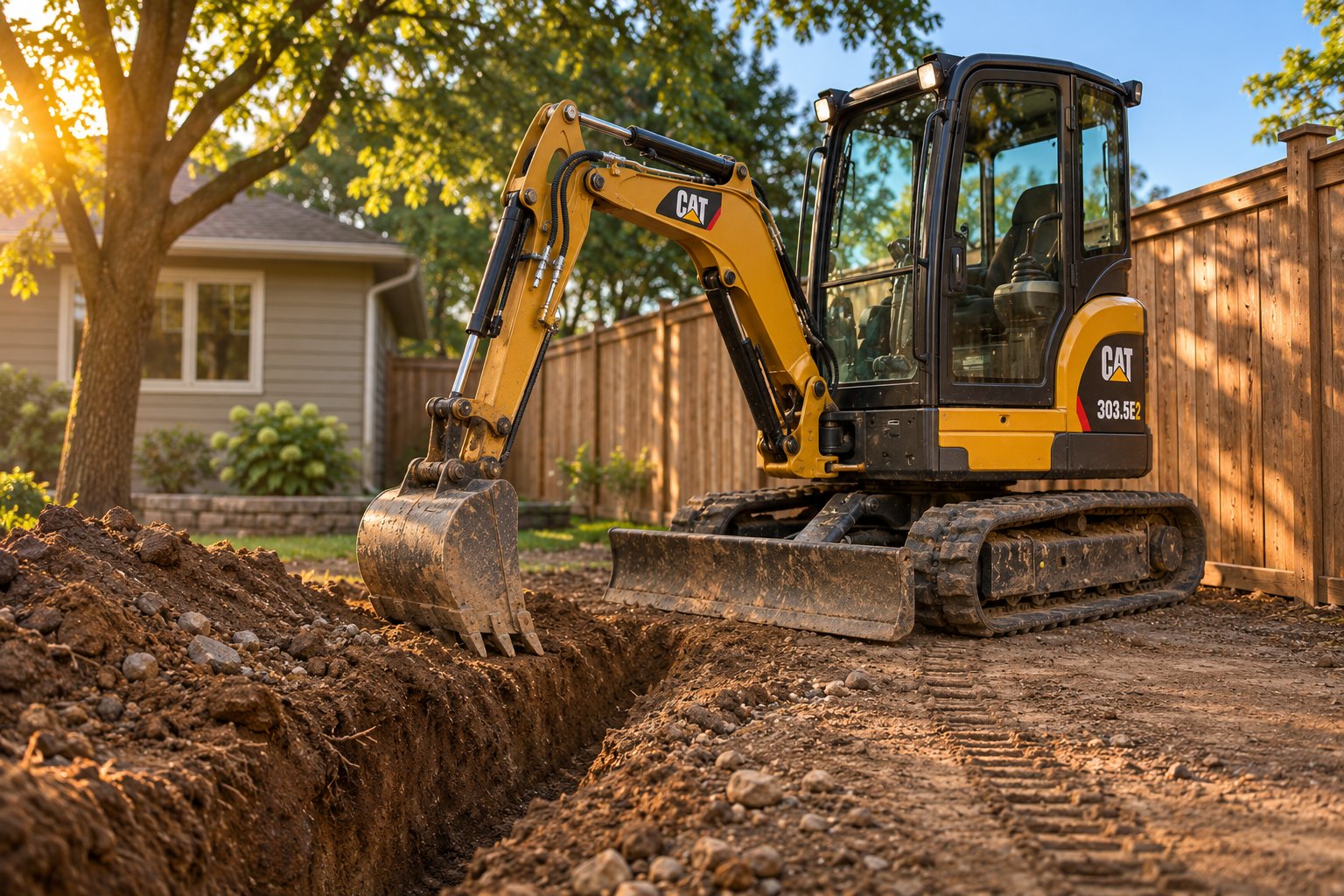
What Compact Excavators Are and Why They Dominate Modern Jobsites
Imagine pulling up to a residential backyard with a 50-ton excavator. The machine won't fit through the gate, the tracks will destroy the lawn, and the cost of getting it there could swallow your profit margin whole. That scenario is exactly why compact excavators for sale now attract more buyers than almost any other earthmoving category.
A compact excavator is a hydraulic excavating machine with an operating weight under 10 metric tons (approximately 22,000 pounds), engineered for digging, trenching, grading, and material handling in confined or limited-access jobsites where full-size excavators cannot operate efficiently.
You'll often hear the terms "compact excavator" and "mini excavator" used interchangeably, and in most conversations they mean the same thing. However, some manufacturers draw a line: they reserve "mini" for machines under 6 tons and use "compact" to cover everything up to roughly 10 tons. One helpful way to tell a mini apart from a full-size crawler excavator is the front blade—if the machine has one, it's typically classified as a mini or compact model. Regardless of the label, the buying decision hinges on the same factors: weight class, dig depth, tail swing, and attachment compatibility.
What Defines a Compact Excavator
Weight-class boundaries shape the entire compact excavator market. At the lighter end, micro models weighing around 2,000 pounds handle indoor demolition and garden work. At the heavier end, machines approaching 22,000 pounds tackle commercial utility projects and road construction. According to DOZR's spec guide, operating weights across major brands range from roughly 2,000 to 22,000 pounds, with small, medium, and large subcategories spanning that spectrum. The 2-to-5-ton weight class remains the most popular, while the 5-to-10-ton segment is the fastest-growing in terms of adoption.
Beyond weight, manufacturers categorize these machines by dig depth, engine horsepower, track width, and tail swing configuration. A 3,800-pound model might dig just under 8 feet deep, while a 20,000-pound unit can reach beyond 15 feet. Those numbers aren't abstract—they determine whether you can install a sewer line, excavate a swimming pool, or dig a basement without repositioning the machine.
Why Compact Excavators Outsell Larger Machines on Many Jobsites
Several practical advantages explain why compact excavators have become the entry point for landscapers, utility contractors, and small construction firms alike. Transportability ranks near the top—most models in the 1-to-5-ton range ride on a standard trailer behind a pickup truck or medium-duty tow vehicle, a convenience you'll also appreciate when hauling other gear like dump trailers for sale alongside your machine. Compare that to a full-size excavator requiring a lowboy trailer and oversize-load permits.
Operating costs tell a similar story. Lower fuel consumption, reduced insurance premiums, and simpler maintenance schedules keep hourly costs in check. Their rubber tracks cause minimal ground disturbance, so you can work in finished yards, near sidewalks, or on sensitive turf without leaving a war zone behind. For contractors who also run a skid steer or a front end loader on the same crew, a compact excavator fills the gap those machines can't—deep digging and 360-degree rotation in spaces too tight for larger equipment.
The versatility extends across industries. Landscaping crews use them daily. Utility companies trench with them. Farmers rely on them for drainage work, much like they'd use a snow plow in winter or a skid loader for material handling. Even municipal crews clearing stumps—a job that might otherwise require a dedicated stump grinder—find that a compact excavator with the right attachment handles the task efficiently.
All of that demand, however, creates a trap for unprepared buyers. The sheer variety of sizes, configurations, and brands means choosing the wrong machine—a model that's too light for your typical dig depth, too wide for your jobsite access points, or lacking the hydraulic capacity for your attachments—can quietly cost thousands in lost productivity before you realize the mismatch. And that's before you even consider where to buy, whether new or used makes sense, and what the real total cost of ownership looks like over the machine's lifetime.
Matching Machine Size and Weight Class to Your Project Needs
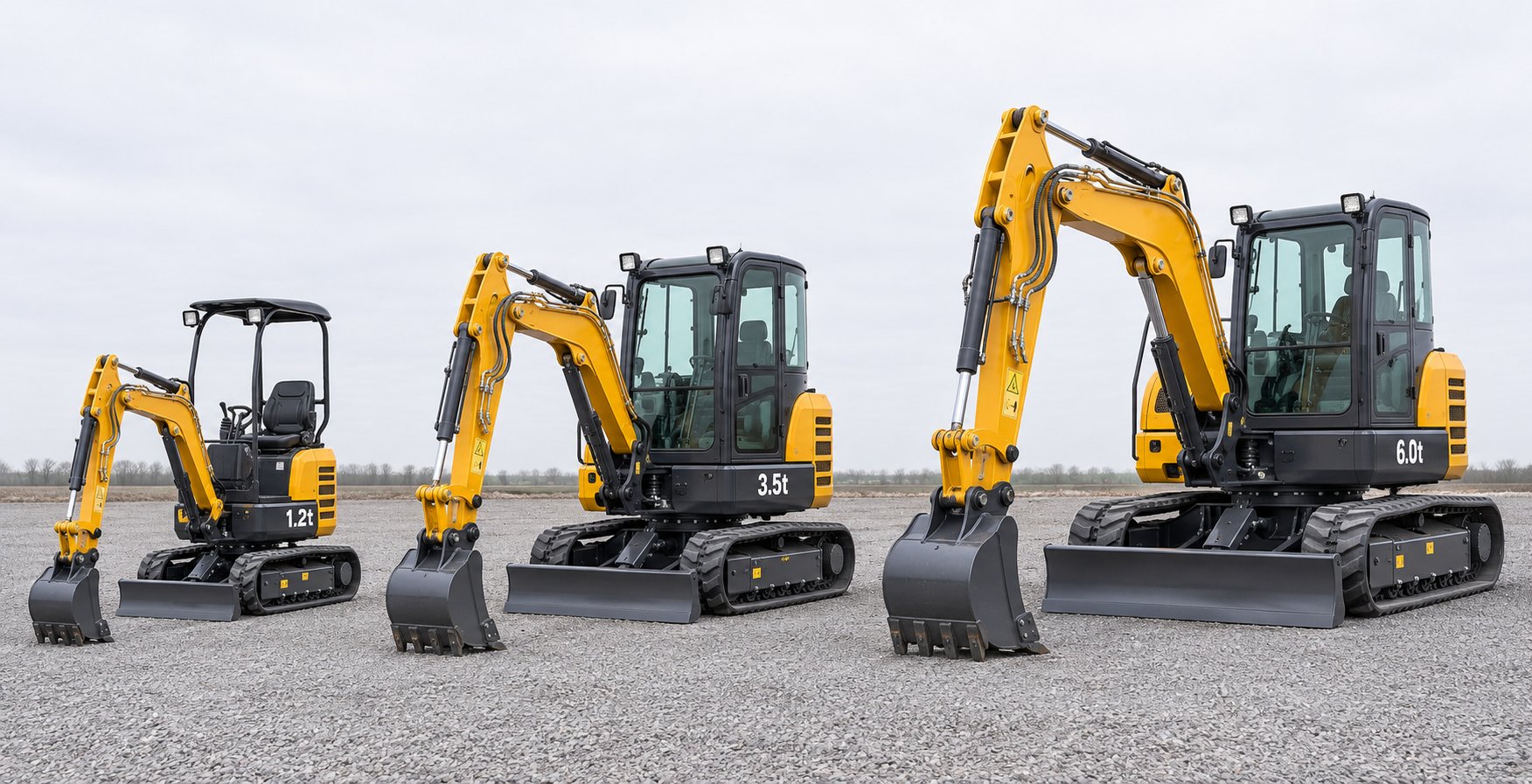
Picking the wrong weight class is where the real money disappears. A machine that's too small turns a four-hour job into a twelve-hour grind, while one that's too heavy might not even fit through the gate—or may demand a trailer and tow vehicle you don't own. The trick is matching spec-sheet numbers to the work you actually do, not the biggest job you might land someday.
The table below maps each mini excavator weight class to its real-world sweet spot, dig capability, and the transport setup you'll need to get it on site.
| Weight Class | Operating Weight | Typical Dig Depth | Best Applications | Minimum Trailer Capacity | Tow Vehicle Class |
|---|---|---|---|---|---|
| Micro (under 1 ton) | 2,000–2,500 lbs | 5–6 ft | Indoor demolition, tight garden work, cemetery projects | 6,000 lbs | Half-ton pickup |
| 1–2 Ton | 2,500–5,000 lbs | 6–8 ft | Backyard landscaping, small trenching, plumbing access | 6,000–8,000 lbs | Half-ton pickup |
| 2–4 Ton | 5,000–10,000 lbs | 8–12 ft | Utility installation, pool excavation, septic systems | 12,000 lbs | 3/4-ton truck |
| 4–6 Ton | 10,000–15,000 lbs | 11–15 ft | Foundation work, road shoulders, heavy landscaping | 18,000 lbs | One-ton truck |
| 6–10 Ton | 15,000–22,000 lbs | 13–18 ft | Commercial site prep, deep utility, demolition | 25,000–30,000 lbs | Heavy-duty truck or semi |
Those dig-depth numbers aren't just bragging rights on a brochure. They dictate whether you can complete a sewer tie-in, meet local frost-line requirements, or excavate a full basement without repositioning. According to FieldFix's sizing guide, dig depth and reach often matter more than weight class alone for actual job performance.
Micro and One-Ton Machines for Confined Spaces
Think of micro excavators as the surgical instruments of the earthmoving world. With widths as narrow as 28 inches, some models slip through a standard 36-inch doorway—making them indispensable for indoor demolition, basement plumbing repairs, and greenhouse work. A true sub-one-ton machine like the Kubota K008-5, weighing roughly 2,025 pounds, digs just under 6 feet deep with a 12-to-18-inch bucket. That's plenty for shallow trenching and garden grading, but don't expect production-level output. Realistically, you'll move around 3 to 5 cubic yards per hour in ideal conditions.
Stepping up to the 1–2 ton range opens access to 7-to-8-foot dig depths and wider buckets in the 18-to-24-inch range. A plumber who spends most days replacing residential sewer lines, for instance, can handle roughly 60 percent of service calls with a 1.7-ton machine—passing through backyard gates, tracking across lawns with minimal damage, and reaching the 4-foot trench depths standard residential work requires. The limitation is clear, though: when you need to go deeper or move serious volume, these machines hit a wall. For a job that also calls for a man lift or a stump grinder for sale to clear root systems, you're already planning a multi-equipment day where the micro excavator handles only one piece of the puzzle.
Mid-Range Compact Excavators for Utility and Residential Projects
The 2–6 ton range is where most buying decisions happen, and for good reason. These machines cover approximately 80 percent of residential and light commercial work. Each incremental ton of operating weight adds meaningful capability—not just raw digging force but also reach, bucket capacity, and the hydraulic flow needed to run attachments effectively.
In the 2–4 ton class, you'll find machines with 8-to-12-foot dig depths and engine output between 20 and 35 horsepower. That's deep enough for most utility installation—water, sewer, gas, and electric—plus swimming pool excavation and septic system work. Models in this bracket, such as a Bobcat E35 or a Kubota KX033-4, weigh between 7,400 and 9,200 pounds and still travel on a 10,000-to-12,000-pound-capacity trailer. A bobcat skid steer loader might handle grading and backfill on the same project, but when the job calls for 10-plus feet of vertical digging, the compact excavator takes over.
Move into the 4–6 ton territory and you gain 11-to-15-foot dig depths, 35-to-55-horsepower engines, and bucket widths stretching to 48 inches. Foundation contractors, road-shoulder crews, and heavy landscaping operations live in this weight class. The extra mass also means stronger breakout force—useful when you hit compacted clay or encounter rock that would stall a lighter machine. Buyers who browse rb auction listings or scan dealer inventories will notice that used 5-ton models hold their resale value well precisely because demand in this segment is so consistent.
Transport and Trailer Requirements by Weight Class
Here's the factor that quietly kills budgets: your excavator is useless if you can't get it to the jobsite affordably. Transport logistics should influence your size decision just as heavily as dig depth does.
Micro and 1–2 ton machines are the easiest to move. They ride comfortably on a 6,000-pound-rated trailer behind a standard half-ton pickup. At the other end, a 10-ton midi excavator pushing 22,000 pounds demands a trailer rated at 25,000 to 30,000 pounds and a heavy-duty diesel tow vehicle—think F-350 or Ram 3500 class at minimum. In many states, that combination requires a CDL and commercial auto insurance, adding layers of cost and complexity that a smaller operation may not be prepared for.
Width matters too. A 6-ton machine typically spans 77 to 82 inches, well within the 8-foot-6-inch federal threshold for non-permitted loads. But a 10-ton unit at 90 to 98 inches is flirting with oversize territory. Factor in the trailer width, and you could be looking at permit requirements, restricted travel hours, and even pilot-car escorts—expenses that rival what you'd pay for a bucket truck rental on a utility project.
A practical rule of thumb: calculate the total towing weight—machine, trailer, attachments, fuel, and any tools onboard—and stay 10 to 15 percent under your vehicle's maximum rated towing capacity. Pushing limits shortens the life of your tow vehicle, voids warranties, and turns every highway merge into a white-knuckle event. If you're consistently hauling near the ceiling, it's often smarter to step down one excavator size class or step up one truck class, rather than gambling on a setup that barely qualifies.
Tail Swing Configurations Explained from Conventional to Zero
You've dialed in the right weight class and trailer setup. But there's a specification hiding in the fine print that can make or break your productivity in tight quarters—and most listings for compact excavators for sale barely mention it. Tail swing configuration determines how much space the machine's rear end needs when the upper house rotates. Get this wrong, and you'll spend half the day repositioning instead of digging.
Three configurations dominate the market: conventional tail swing, reduced tail swing, and zero tail swing. Each one reshapes how you work around obstacles, and the trade-offs aren't always obvious.
A conventional tail swing machine features a counterweight that extends well beyond the track width during rotation. A reduced tail swing design limits that overhang to just a few inches past the tracks. And a zero tail swing excavator keeps the entire upper housing within—or flush with—the track footprint at every rotation angle. As Compact Equipment notes, contractors today can select from all three designs to match their specific applications, with some models even offering removable counterweights for added versatility.
Conventional Tail Swing and When It Still Makes Sense
Picture a wide-open commercial site, a land-clearing project, or a quarry where trucks line up for loading. No fences. No parked cars. No building corners inches away. That's where conventional tail swing earns its keep.
The extended counterweight creates greater leverage and stability—especially important when lifting heavy loads over the side, operating on slopes, or running demanding attachments like hydraulic breakers and grapples. According to Gregory Poole Equipment, the counterweight's position behind the tracks becomes a genuine asset rather than a liability when you're not hemmed in by obstacles. Kubota's Patrick Baker confirms that conventional tail swing models will lift more than reduced or zero tail swing equivalents, though they come with a larger overall footprint.
- Greater lifting capacity — the extended counterweight provides more leverage for heavy side lifts and deep digs
- Enhanced stability on slopes — ideal for grading uneven terrain or working on grades where tipping risk matters
- Better attachment performance — handles hammers, tiltrotators, and flail mowers with confidence, similar to how a gantry crane relies on counterbalance for heavy picks
- Wider overall footprint — the machine needs clearance on every rotation, limiting use near walls, fences, and traffic lanes
- Transport considerations — conventional models tend to be wider, which can complicate loading onto a car hauler trailer or standard equipment transport
For contractors running open jobsites with a consistent pipeline of heavy earthmoving—loading dump trucks, clearing lots, digging foundations on spacious parcels—conventional swing remains the better value. The extra lifting muscle and stability translate directly into faster cycle times and fewer repositioning stops.
Zero Tail Swing for Urban and Confined Worksites
Imagine rotating your excavator's boom 360 degrees while parked six inches from a brick wall. With a conventional machine, that wall takes a hit. With a zero tail swing model, the counterweight never breaches the track footprint—so you swing freely without striking structures, fences, vehicles, or pedestrians.
That capability explains why zero tail swing has become the dominant choice for utility contractors, municipalities, and landscaping crews who spend their days working next to buildings and along active roadways. JCB offers six zero tail swing designs across its North American mini excavator lineup, ranging from 1.8 to 10 tons. Doosan's DX35-5, a popular 3-to-4-ton zero tail swing option, sits in the most popular size class precisely because it balances compactness with serious digging capability. Kubota addresses the same demand with models like the U27-4 and U35-4, both engineered to maintain minimal counterweight overhang while delivering strong productivity.
- Full rotation beside structures — operate next to walls, property lines, and traffic barriers without repositioning
- Improved jobsite safety — reduced risk of striking bystanders, parked vehicles, or buried utility markers during swing
- Easier transport — the narrower profile simplifies loading and may allow a smaller trailer setup
- Lower purchase price in many cases — as JCB's Chris Lucas points out, most zero tail swing models cost less than their conventional counterparts
- Reduced lifting capacity at full reach — the trade-off for compactness is slightly less counterweight mass, which can affect over-the-side lifts
- Marginally lower breakout force — lighter rear mass means less leverage for tearing through compacted material at maximum depth
The reduced tail swing category splits the difference. Machines like the Cat 306 CR maintain just a few inches of overhang—not truly zero, but close enough for most confined scenarios while preserving a bit more counterweight than pure zero-swing designs. For a bobcat skid steer operator stepping into excavator ownership, or a contractor who alternates between tight residential lots and moderate commercial sites, reduced swing offers a practical middle ground.
Here's the real decision filter: think about where you work most of the time, not where you occasionally work. If 70 percent of your projects involve fences, sidewalks, or active traffic—urban utility trenching, residential pool excavation, backyard hardscaping—zero tail swing pays for itself in time saved and damage avoided. If you're splitting time between open sites and confined ones, reduced swing covers both. And if your days look more like quarry loading and slope grading than sidewalk-adjacent trenching, conventional swing's lifting advantage is worth the extra clearance it demands. Much like choosing between a boom lift and a lipher for elevated access, the right call depends on the conditions you face daily, not the specs that look best on paper.
Tail swing affects how you work. But the brand behind the machine shapes the ownership experience—dealer support, parts availability, technology integration, and resale value all vary significantly from one manufacturer to the next.
Leading Compact Excavator Brands Compared Side by Side
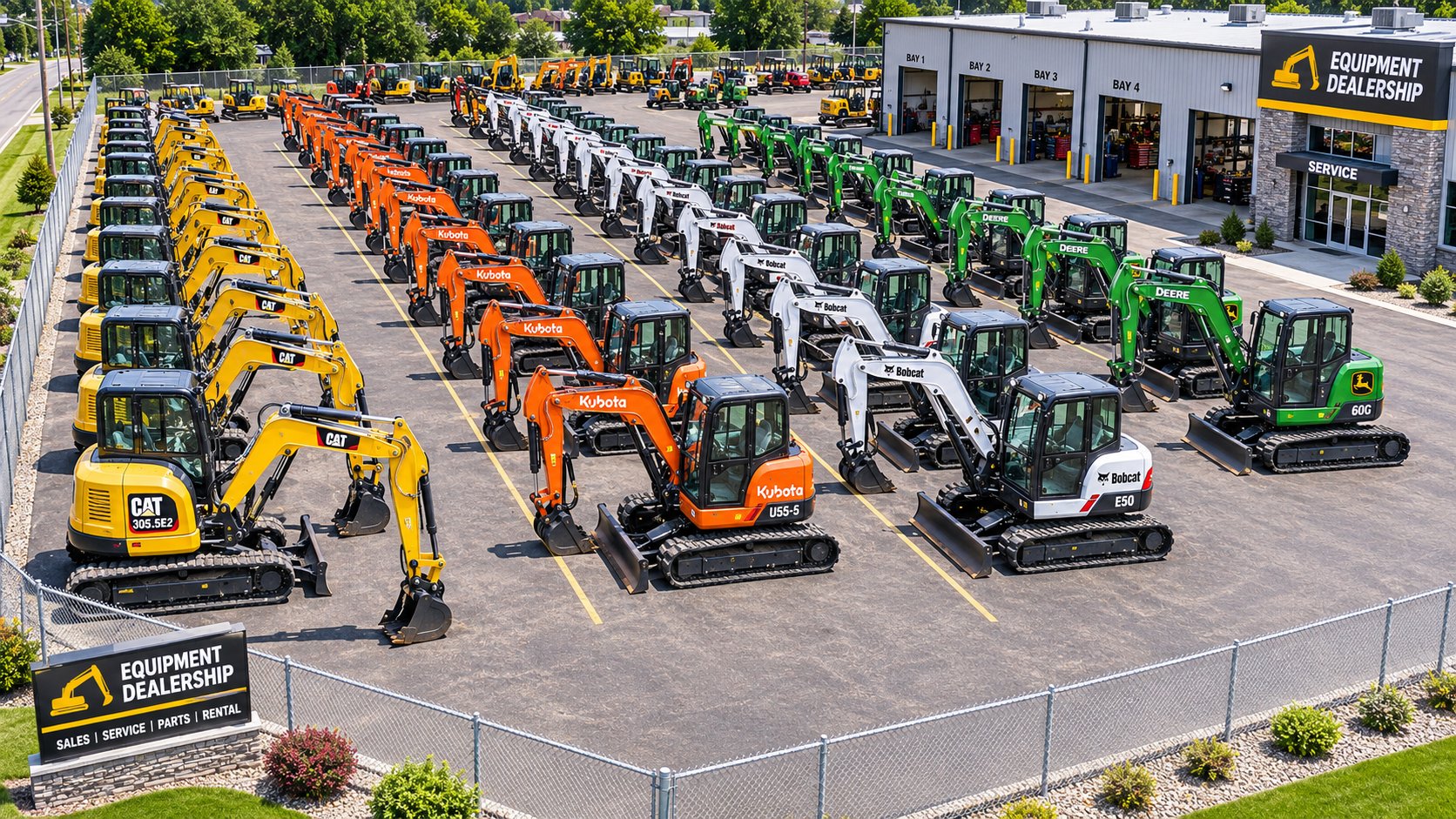
Every manufacturer's website will tell you their excavator is the best on the market. Every equipment marketplace wants you to browse their listings without questioning the brand behind the iron. Neither source has any incentive to give you a candid, side-by-side comparison—so let's fill that gap with a buyer-first look at the brands competing for your money when you shop compact excavators for sale.
The table below maps each major manufacturer against the factors that actually drive ownership satisfaction: where their machines excel, how deep their parts and service networks run, and how broad their attachment ecosystems are. Use it as a starting filter, not a final answer—because as we'll explore, the best brand for your operation depends on your local dealer as much as the badge on the boom.
| Brand | Notable Model Lines | General Strengths | Attachment Ecosystem | Dealer/Parts Accessibility |
|---|---|---|---|---|
| Caterpillar | Next Gen 301.5–310 series | Advanced telematics (Cat Grade, Cat Connect), heavy-duty build, strongest resale | Broad; proprietary and universal couplers | Largest dealer network in North America |
| Bobcat | E-series (E20–E88) | Industry-leading X-Change attachment system, competitive pricing | Widest; universal plate standard adopted industry-wide | One of the largest compact equipment dealer footprints in North America |
| Kubota | KX-series, U-series (zero tail swing) | In-house engine manufacturing, class-leading fuel efficiency, top resale value | Strong; proprietary quick coupler | Extensive, with some regional gaps in peak season parts supply |
| John Deere | G-Tier (26G, 50G, 85G) | Agricultural crossover financing, durable undercarriage, user-friendly controls | Good; growing quick-attach options | Deep in ag regions; competitive in construction markets |
| Komatsu | PC-series (PC30MR–PC88MR) | Build quality, operator comfort, strong residual values globally | Good; standard and high-flow circuits available | Strong globally; solid in U.S. commercial markets |
| Yanmar | ViO-series (zero tail swing), SV-series | Pioneered zero tail swing, best-in-class fuel economy, OEM engine supplier to competitors | Moderate; compatible with major coupler standards | Thinner in some U.S. regions, strongest on West Coast and Northeast |
| Takeuchi | TB-series (TB216–TB2150R) | Compact excavator pioneer (since 1971), hydraulic performance above tonnage class, loyal owner base | Good; standard pin-on and coupler options | Strongest on East Coast and Southeast; growing West Coast presence |
| JCB | 8008–100C series | Powerboom design, side-door cab for visibility, six zero tail swing models in lineup | Good; growing North American attachment options | Growing U.S. footprint; established globally |
| Case | CX-series (CX17C–CX80C) | Value pricing, shared CNH Industrial parts ecosystem with New Holland | Good; benefits from CNH parts compatibility | Solid where CNH dealer network is present |
High-Volume Brands with the Widest Dealer Networks
If your primary concern is getting a downed machine running within days rather than weeks, four brands consistently rise to the top: Caterpillar, Bobcat, Kubota, and John Deere. Their dealer networks blanket most of North America, meaning parts and service are rarely more than a short drive away.
Caterpillar commands roughly 32 percent of used-equipment market demand—the largest share in the category—which tells you everything about resale confidence. A cat mini excavator from the Next Gen series comes loaded with Stick Steer joystick travel and Cat Connect telematics, giving fleet managers real-time machine data without bolting on aftermarket hardware. The trade-off is weight and price: Cat machines tend to run heavier and costlier than equivalents from Kubota or Takeuchi at the same tonnage. For contractors already running Cat loaders or a dump truck and other Cat iron, though, the single-dealer convenience often justifies the premium.
Bobcat practically invented the compact equipment category, and its X-Change attachment system remains the industry benchmark. Operators who jump between Bobcat skid steers and excavators all day appreciate the consistent control layout. Rubbl's 2026 brand analysis notes that Bobcat's current R-series narrows quality gaps with Kubota, though older models still get discounted harder on the used market. If you run a plate compactor, hydraulic breaker, and multiple bucket widths—swapping them frequently throughout the week—Bobcat's attachment ecosystem is hard to beat.
Kubota earns its reputation through in-house engine manufacturing and conservative engineering that translates into class-leading reliability. Well-maintained KX and U-series machines routinely retain 60 to 70 percent of their original price after three years, the strongest resale curve in the compact segment. Hydraulic smoothness is the consistent praise from operators—precision grading and fine landscaping work reward that refinement. The catch surfaces during peak season, when dealer parts allocations in certain regions tighten.
John Deere makes the most sense for operations already embedded in Deere's ecosystem. Agricultural contractors who finance tractors, utility vehicles, and excavators through the same green dealer enjoy streamlined fleet management and cross-equipment parts access. The G-Tier lineup features AutoShift travel and clean cab layouts. Resale tracks slightly behind the top three in construction-focused markets but stays strong in farm country, where Deere brand loyalty runs generations deep.
Specialist and Value-Oriented Manufacturers Worth Considering
Not every buyer needs the biggest dealer footprint. Some need a machine engineered for a specific niche, while others are hunting for the best cost-to-capability ratio. That's where Yanmar, Takeuchi, Komatsu, JCB, and Case earn serious consideration.
Yanmar holds a unique position: the company's diesel engines power mini excavators sold under several competitor badges. That engine pedigree carries into Yanmar's own machines, particularly the ViO zero-tail-swing series—a favorite among urban utility crews where every inch of swing radius counts. Fuel efficiency leads the class at comparable tonnage, and pricing sits friendlier than Kubota or Cat. The honest limitation is U.S. dealer density. Outside the West Coast and parts of the Northeast, parts logistics can stretch timelines and inflate costs. Confirm your nearest service center before committing.
Takeuchi pioneered the compact excavator concept in 1971 and has cultivated one of the most loyal owner bases in the industry. The TB series punches above its weight class in hydraulic performance—operators who run a Takeuchi for a season rarely switch back. Used Takeuchis hold value stubbornly because supply seldom meets demand. The dealer footprint, however, runs thinner than Kubota's or Cat's in the Midwest. Buyers who shop at a Ritchie Brothers auction or browse online equipment listings will frequently spot low-hour Takeuchis commanding near-new prices, a testament to the brand's durability reputation.
Komatsu brings production-grade engineering to the compact class. The PC-series mid-range models are built for long shifts and demanding cycles, with operator comfort features—wide cabs, low-vibration seats, intuitive controls—that reduce fatigue over a ten-hour day. Globally, Komatsu captures roughly 12 percent of used-market demand, second only to Caterpillar. For commercial contractors handling heavier tasks in the 6-to-10-ton compact range—loading rubbish bin trucks, breaking concrete, or prepping commercial pads—Komatsu's build quality and parts depth make it a safe bet.
JCB differentiates with its Powerboom design and a side-door cab that delivers better operator visibility than most competitors. With six zero tail swing models spanning 1.8 to 10 tons in the North American lineup, JCB targets the same confined-worksite demand as Yanmar's ViO series. The U.S. dealer network is still growing relative to the big four, but global coverage is well-established—relevant for buyers sourcing machines internationally.
Case rounds out the contender list as a practical value play. The CX-series benefits from CNH Industrial's shared parts ecosystem with New Holland, which means access to a broader service network than the Case badge alone might suggest. Pricing typically undercuts premium brands, and the machines deliver reliable all-around performance. For a mixed CNH fleet—where you might already run Case loaders, backhoes, or other equipment—the parts consolidation alone can save meaningful dollars over a five-year ownership window.
Brand reputation sets the stage, but the financial math changes dramatically depending on whether you're buying new or used. A three-year-old machine from a top-tier manufacturer can deliver comparable productivity at a fraction of the sticker price—if you know what to inspect and where the hidden risks live.
New vs Used Compact Excavators and How to Decide
A brand-new 5-ton compact excavator rolls off the dealer lot at full sticker price. A three-year-old model with 1,200 hours on the meter does the same work for roughly 30 to 40 percent less. Sounds like an obvious win for the used buyer, right? Not always. The new-versus-used decision is more nuanced than sticker price alone—and getting it wrong can quietly drain your budget faster than any upfront savings you pocketed on day one.
Several factors shape the smarter choice: how many hours you'll run the machine annually, whether warranty coverage matters for your risk tolerance, how current emission standards affect your project eligibility, and whether financing incentives tip the math in favor of new iron. Just as buyers weigh similar trade-offs when shopping for a tractor for sale or browsing semi trucks for sale, the real calculation lives in total lifecycle cost—not the purchase receipt.
When Buying New Makes Financial Sense
A new compact excavator delivers three things a used machine cannot guarantee: a clean maintenance slate, full manufacturer warranty, and access to the latest technology generation. For high-utilization operations logging 1,000-plus hours per year, those advantages compound quickly.
Consider the warranty alone. Most major manufacturers back new machines with two to three years of full coverage and up to five years on powertrain and hydraulic components. That protection eliminates the financial risk of a catastrophic pump failure or engine overhaul during the steepest portion of the depreciation curve. Pair that with manufacturer financing—Cat, Kubota, John Deere, and Bobcat all run periodic low-rate or zero-percent programs—and the monthly cost gap between new and used narrows considerably.
Emission compliance adds another layer. Contractors bidding on municipal or federal projects increasingly face Tier 4 Final engine requirements. Older machines running Tier 3 powerplants may disqualify you from those contracts entirely. If your pipeline includes government work, buying new ensures you meet current standards without costly retrofit headaches.
Tax policy sweetens the picture further. Under Section 179 and bonus depreciation rules, buyers can deduct 100 percent of the cost of qualifying equipment—including used machines—in the first year of service. That said, the larger absolute deduction on a higher-priced new unit can offset a meaningful chunk of the premium for businesses with sufficient taxable income.
Evaluating Used Compact Excavators Without Getting Burned
Used machines dominate the market for good reason. Most depreciation hits hardest in the first two to three years, so a buyer of a used unit sidesteps much of that drop while inheriting a machine with years of productive life remaining. Excavation crews, landscapers, small construction firms, rental fleets, and even farms and municipal departments all rely on used equipment to stretch budgets without sacrificing capability.
The risk, of course, is hidden damage. A machine can look clean and still harbor expensive problems beneath the paint. That's why a structured inspection matters more than any sales pitch. Mico Equipment's 12-point buying guide offers a reliable framework that experienced buyers follow—and you should too before any money changes hands.
- Model, serial number, and configuration — verify that paperwork matches the physical machine, including stick length, coupler type, and included attachments
- Hour meter consistency — a "low hour" unit with worn pedals, a sagging seat, and loose joysticks doesn't add up; OEM telematics can help confirm actual hours
- Service history and maintenance records — dated oil changes, filter replacements, greasing logs, and oil analysis reports all signal responsible ownership
- Engine cold-start behavior — hard starting, heavy smoke, extended cranking, or unusual knocking during a cold start reveal problems warm engines can mask
- Hydraulic system condition — inspect hoses, fittings, and cylinder rods for leaks, dents, or scorch marks; slow or weak hydraulic action points to pump or valve issues
- Undercarriage wear — check track chains, rollers, idlers, and sprockets for pointed teeth, leaking seals, and stiff links; undercarriage replacement is often the single largest maintenance expense
- Boom, stick, and structural welds — look for cracks near pivot points, grinding marks that may conceal repairs, and fresh paint hiding structural damage
- Pins, bushings, and linkage play — clunking or sloppy movement in joints signals worn pins and bushings that add up fast
- Swing bearing and swing motor — rotate the upper house 360 degrees listening for grinding, rattling, or play between the turntable and undercarriage
- Final drives and travel motors — the machine should track straight and travel evenly; leaking seals or grinding noises during a final drive inspection demand follow-up
- Cab, controls, and electronics — test joysticks, switches, gauges, lights, A/C, heater, and monitor; check for stored fault codes
- Full operational test under load — run boom, stick, bucket, swing, and travel simultaneously with warm hydraulics, watching for drift, overheating, or power loss
Red flags don't automatically disqualify a machine, but they demand harder questions. A seller who refuses a cold start or an independent inspection, a freshly pressure-washed unit with no explanation, hour readings that contradict visible wear, and fresh welds on structural members all warrant extra scrutiny—and a larger repair budget baked into your offer price.
Certified pre-owned programs offer a middle path between new-machine confidence and used-machine pricing. Bobcat's Certified Pre-Owned program, for example, restricts eligibility to machines under four years old, requires a comprehensive multi-point dealer inspection using genuine parts, and backs every unit with a Protection Plus extended warranty covering powertrain and hydraulic components. Caterpillar, Kubota, and John Deere run similar programs through their dealer networks. The premium over a non-certified used machine is typically modest, and the warranty alone can justify the difference if it prevents even one major out-of-pocket repair.
One final detail that catches international buyers off guard: equipment exported from a given country is not necessarily manufactured by a brand from that country. A used compact excavator shipped from Japan might carry a Caterpillar badge, and a machine sourced through a trucktrading platform in Europe could be a Kubota built in the United States. Always verify the OEM, model, and serial number independently—regardless of where the machine is physically located when you find the listing. The same due diligence applies whether you're purchasing a flatbed truck, a used utility trailers for sale listing, or a piece of heavy iron like a humvee from a government surplus auction. Provenance matters, and assumptions cost money.
Knowing whether to buy new or used is half the equation. The other half—understanding what the machine actually costs to own over its lifetime—reveals pricing traps that the sticker never mentions.
Understanding Pricing and the True Cost of Ownership
The sticker price on compact excavators for sale is the loudest number in the room—and the least honest. A $35,000 purchase tag on a 3-ton machine feels concrete and final, but it represents only about 25 to 35 percent of what that excavator will actually cost you over a five-year ownership period. Fuel, maintenance, insurance, transport, repairs, and depreciation quietly consume the rest. Ignoring those line items is like buying a truck and pretending it will never need diesel—and it's the single most common budgeting mistake buyers make when shopping for a mini excavator for sale.
What Drives Compact Excavator Pricing Up or Down
Why does a Caterpillar mini excavator in the 3.5-ton class cost $15,000 more than a comparable-weight machine from a value-tier manufacturer? Several forces shape the number on the invoice, and understanding each one gives you leverage at the negotiating table.
Weight class is the most obvious driver. Micro units under one ton start in the $15,000-to-$25,000 range for new models, while 6-to-10-ton machines push well past $60,000. Each incremental ton adds steel, hydraulic capacity, and engine output—and every one of those components carries cost.
Brand positioning layers on a premium that reflects dealer support, parts availability, and resale confidence. Premium brands like Kubota and Cat command higher prices partly because their machines retain 60 to 70 percent of original value after three years, whereas budget brands depreciate faster and recover less at resale. Over a full ownership cycle, the premium machine can actually cost less—a counterintuitive reality that traps sticker-price shoppers.
Configuration and technology shift the price further. Zero tail swing models sometimes cost less than conventional counterparts, but adding a GPS-grade-control package, factory-installed telematics, an enclosed climate-controlled cab, or a hydraulic quick-coupler package can add thousands. Attachment bundles—bucket sets, hydraulic thumbs, auxiliary plumbing for breakers and augers—often appear as line items that inflate a base price by 10 to 20 percent.
Market timing is the variable most buyers overlook. Spring demand in construction-heavy regions drives prices up as contractors rush to equip crews for the season. Late fall and winter, by contrast, often bring fleet turnover deals—rental companies cycling out machines, dealers clearing year-end inventory, and private sellers offloading before insurance renewals. Much like the seasonal patterns that affect tractors for sale or dump trucks for sale in agricultural markets, the construction equipment cycle rewards patient buyers who shop during off-peak months. Even the broader excavator excavators market follows this rhythm: high demand compresses discounts in Q2 and Q3, while Q4 and Q1 create openings for negotiation.
Purchasing channel adds one more layer. Authorized dealers carry overhead that inflates pricing but include warranty backing and service support. Auctions offer savings but remove inspection certainty. Online marketplaces and private sales fall somewhere in between. Each channel shifts the price-to-risk ratio, and the cheapest upfront option is rarely the cheapest overall.
Calculating Total Cost of Ownership Beyond the Sticker Price
Total cost of ownership is every dollar you spend from purchase day to sale day. Gregory Poole Equipment frames it simply: add up every expense over the machine's working life—fuel, maintenance, insurance, repairs—then subtract projected resale value. The result is your true ownership cost, and dividing it by total operating hours gives you the number that actually matters: cost per hour.
The table below provides a framework for calculating five-year TCO on a typical 3-ton compact excavator running approximately 700 hours per year. Use it as a template—plug in your own fuel prices, regional insurance rates, and brand-specific maintenance intervals to generate a projection tailored to your operation.
| Cost Category | Estimated 5-Year Total | Approximate % of TCO | What Drives This Cost |
|---|---|---|---|
| Purchase Price | $28,000–$50,000 | 25–35% | Weight class, brand, configuration, market timing |
| Fuel | $15,000–$28,000 | 18–25% | Engine efficiency, hours/year, diesel price per gallon |
| Scheduled Maintenance | $10,000–$20,000 | 12–18% | Oil, filters, grease, fluid changes per manufacturer intervals |
| Undercarriage Replacement | $3,000–$8,000 | 4–8% | Terrain type, hours on tracks, rubber vs steel |
| Unscheduled Repairs | $4,000–$10,000 | 5–10% | Machine age, brand reliability, operator habits |
| Insurance | $3,000–$7,500 | 4–7% | Machine value, coverage type, claims history |
| Transport/Mobilization | $4,000–$18,000 | 4–12% | Number of moves per month, trailer ownership vs rental |
| Attachments | $2,000–$7,000 | 2–6% | Scope creep—thumbs, breakers, augers acquired over time |
| Gross 5-Year TCO | $69,000–$148,500 | 100% | |
| Less: Resale Value | ($13,000)–($35,000) | — | Brand, hours, condition, maintenance records |
| Net 5-Year TCO | $46,000–$113,500 | — |
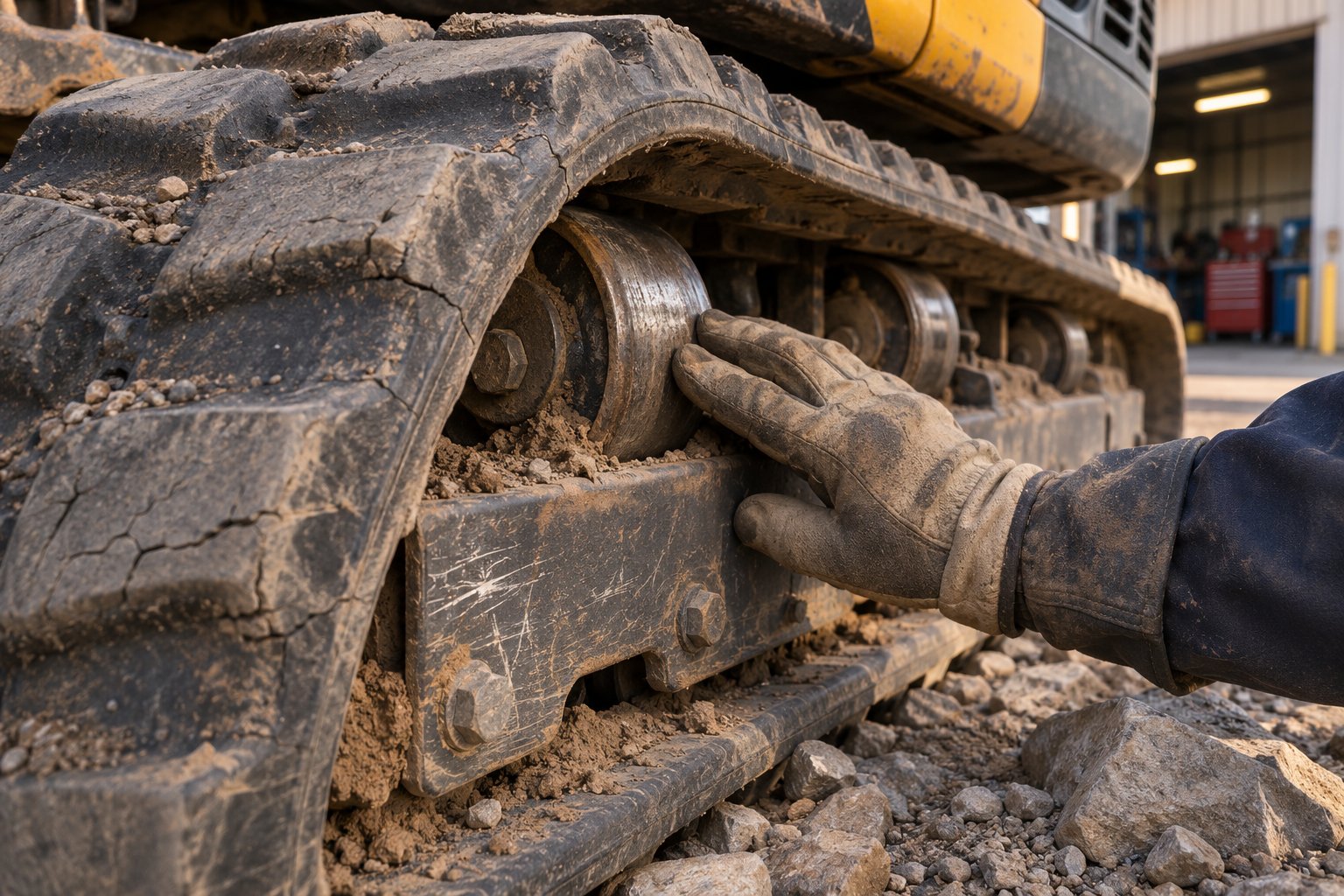
A few line items deserve special attention. Undercarriage replacement is often the single largest maintenance expense on any tracked machine. Rubber tracks on a 3.5-ton excavator typically last 1,000 to 1,500 hours depending on terrain, and a replacement set runs $1,500 to $2,500. Run the machine on rocky or abrasive ground and you'll replace them more often—an easy $5,000-plus expense over five years that first-time buyers rarely budget for.
Fuel consumption varies more than most buyers expect. A difference of just 0.4 gallons per hour between two competing models adds up to roughly 400 extra gallons per year at 1,000 operating hours. At $4.00 per gallon, that's $1,600 annually—$8,000 over five years. The fuel-efficient machine might cost more on the lot, but it quietly saves you the price of a combine harvester attachment by year five. Always compare gallons-per-hour ratings at equivalent load levels, not just manufacturer marketing claims.
Depreciation is the invisible cost that determines whether your machine was an investment or a money pit. Premium brands depreciate more slowly, and well-maintained units with complete service records command stronger resale. A $50,000 premium machine that sells for $35,000 in year five cost you $15,000 in depreciation. A $35,000 value-tier machine that sells for $14,000 cost you $21,000. The cheaper machine actually depreciated $6,000 more—a gap that erases the original savings and then some.
The takeaway is simple: never evaluate compact excavators for sale by sticker price alone. Calculate your projected annual hours, estimate every recurring cost using the framework above, subtract realistic resale value, and divide by total hours. That cost-per-hour number is the only honest measure of what a machine truly costs your business—and it's the number that separates profitable equipment decisions from expensive regrets.
Of course, ownership isn't the only path to productive hours in the seat. For buyers whose annual utilization falls below the threshold where ownership math works, renting introduces a completely different financial equation worth running before signing any purchase agreement.
Rent vs Buy Analysis for Compact Excavator Buyers
You've run the total-cost-of-ownership numbers and know what a machine truly costs per hour. But here's the question that should come first: do you even need to own one? For a surprising number of contractors, the answer is no—at least not yet. The rent-versus-buy decision hinges on a single metric that most buyers never bother calculating: your utilization rate.
According to a FieldFix cost analysis, the formula is straightforward: divide actual hours used by available working hours in a year (roughly 2,080). If that number lands below 60 percent—meaning fewer than about 800 to 1,000 annual hours—renting almost always costs less when you account for depreciation, insurance, storage, and maintenance. Push above that threshold with a consistent project pipeline, and ownership starts paying dividends that no rental agreement can match.
The following framework helps you make the call with numbers rather than gut feelings.
- Calculate projected annual hours — review your last 12 months of work; count actual days you used or would have used an excavator, then multiply by average productive hours per day (typically 5 to 7).
- Collect rental quotes — get daily, weekly, and monthly rates from at least two local providers. Mini excavators in the 3-to-6-ton class typically rent for $250 to $450 per day, $800 to $1,500 per week, or $2,500 to $4,500 per month.
- Add hidden rental costs — delivery and pickup fees ($200 to $800 per round trip), damage waivers (10 to 15 percent of the base rate), fuel, cleaning surcharges, and separate attachment charges can inflate the quoted rate by 15 to 25 percent.
- Calculate total ownership cost — use the TCO framework from the previous section, including financing, insurance, maintenance, storage, and depreciation.
- Compare cost per hour — divide each total by your projected hours. The lower number wins.
- Factor in tax treatment — rental payments are 100 percent deductible as operating expenses in the year paid, while purchased equipment qualifies for Section 179 deductions that can offset $20,000 or more in year-one taxes on a qualifying machine.
- Stress-test with qualitative factors — rental availability risk during peak season, operator familiarity with a specific machine, and the scheduling freedom that ownership provides all carry real dollar value that spreadsheets understate.
When Renting Compact Excavators Is the Smarter Financial Move
Renting wins in three clear scenarios. First, low utilization. If you're logging fewer than 500 hours per year, a FieldFix analysis shows ownership costs can balloon to $104 to $120 per hour—far above what weekly rental rates deliver. Second, one-off or specialty projects. A landscaping crew that needs a pile driver attachment for a single fencing job, or a contractor testing whether a 5-ton machine handles their typical scope before committing to purchase, avoids tying up capital in equipment that might sit idle afterward. Third, new businesses without utilization data. If you're in your first year or two and don't yet have enough history to predict demand, renting builds that data while preserving cash flow.
Hybrid strategies split the difference effectively. Roughly 75 percent of contractors choose to own their primary-use excavator, then rent additional units for peak-season overflow—a pattern similar to how fleet operators might own their core trucks but rent specialty rigs like tow trucks for sale listings only when seasonal demand spikes. You keep your main machine running at high utilization while avoiding the carrying cost of a second unit that works only four months a year. Some rental providers also offer rent-to-purchase programs that apply a percentage of your rental payments toward the eventual purchase price, letting you test before you commit without losing every dollar spent in the process.
When Ownership Pays for Itself
Flip the utilization dial above 1,000 hours per year and the math inverts. At that volume, ownership cost per hour drops into the $35-to-$45 range—roughly half what chronic renters pay. A Midwest excavation contractor profiled by FieldFix found that their high-utilization machine ran at just $38 per hour fully loaded, while a second machine used only 650 hours per year cost $71 per hour to own. They sold the underperforming unit and rented when needed, freeing $45,000 in capital.
Beyond the spreadsheet, ownership eliminates availability risk. During spring construction surges, rental fleets run dry—and a contractor without a machine can't bill clients. Ownership also builds operator familiarity. Crews who run the same excavator every day learn its hydraulic response, control feel, and quirks, gaining a productivity edge estimated at 10 to 15 percent over operators jumping between unfamiliar rental units. And unlike a rented machine that generates zero equity, an owned excavator retains resale value that partially recovers your investment when you're ready to upgrade.
If you run equipment across diverse project types—trenching one week, grading the next, loading a flatbed trailer with demolition debris the day after—ownership gives you scheduling freedom that no rental calendar can replicate. The same logic applies across the equipment world: a contractor who rents a billy goat brush cutter or a welding machine once a year is smart to keep renting, but the crew using that tool five days a week needs to own it. Compact excavators follow exactly the same rule. Even browsing kaufman trailers or other transport equipment for hauling your machine involves the same ownership-versus-rental calculation.
The rent-or-buy decision puts dollars in the right column. But regardless of which path you choose, the real return on a compact excavator multiplies the moment you expand what it can do beyond basic digging—and that's where attachments transform a single-purpose machine into the most versatile tool on your jobsite.
Attachments That Multiply Your Compact Excavator Investment
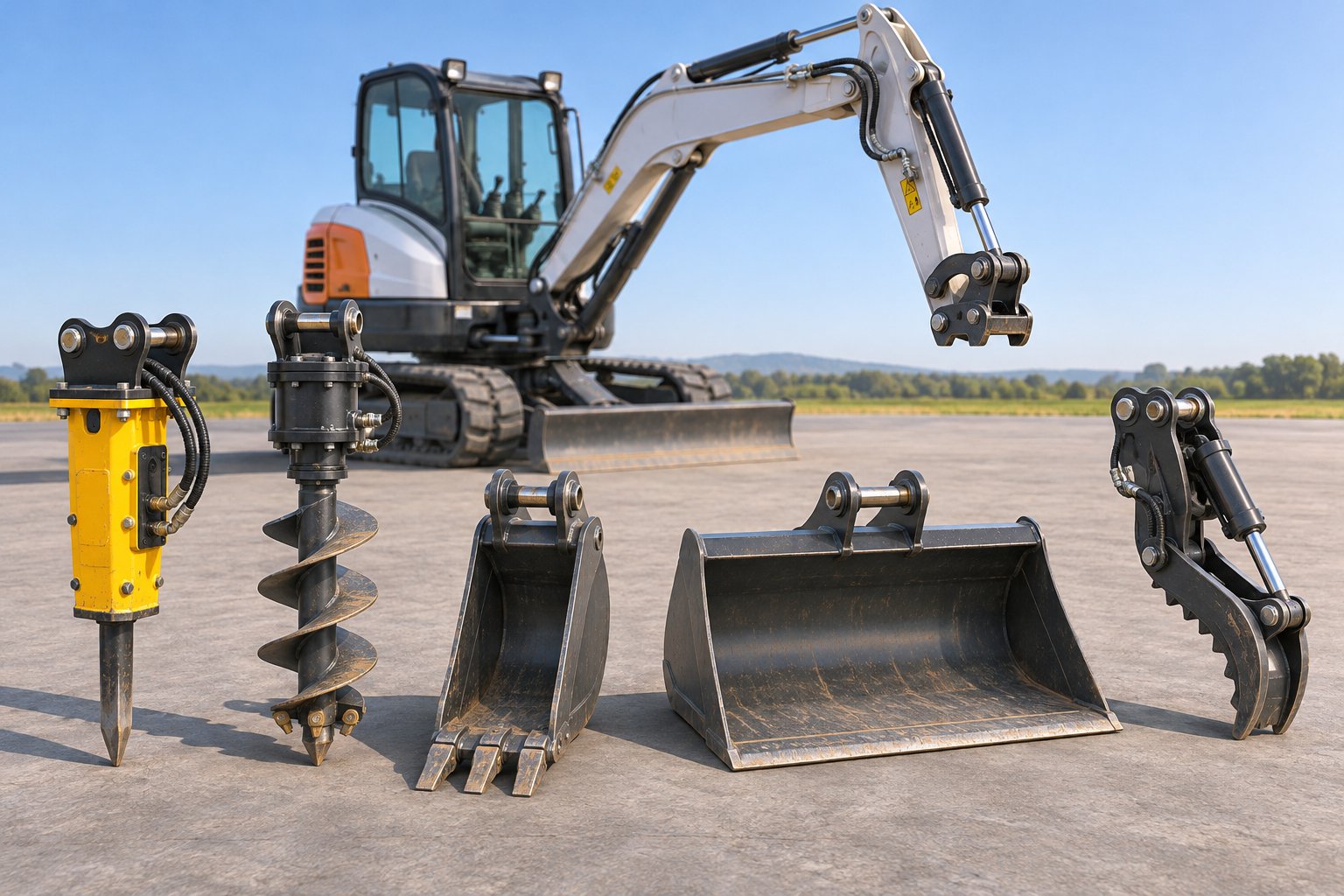
A compact excavator with only a digging bucket is like a power drill with only one bit—functional, but nowhere near its full potential. The moment you add a hydraulic thumb, breaker, or auger, that same machine becomes a multi-tool platform capable of handling tasks that would otherwise require separate pieces of equipment. Contractors who build a smart attachment library often find their excavator replaces the need for a dedicated back hoe, a standalone plate compactor, and even light dozer work on smaller sites—dramatically compressing equipment costs and trailer loads.
The catch? Not every attachment fits every machine. Compatibility depends on three variables: the excavator's hydraulic output, its coupler type and pin dimensions, and its weight class. Buy the wrong breaker for your 2-ton machine and you'll get sluggish performance at best—or hydraulic damage at worst. Before adding a single tool to your cart, you need to understand what your excavator can actually power.
Must-Have Attachments for Landscaping and Utility Work
Attachments fall into natural groupings based on the work they do. The following categories cover the tools that deliver the highest return across residential, utility, and light commercial projects.
Excavation and grading:
- Trenching buckets — narrow profiles (6 to 12 inches) for utility lines, irrigation, and drainage runs
- Grading buckets — wide, flat-bottomed designs (36 to 48 inches) for finish grading and swale shaping
- Ditching buckets — sloped sides for creating clean V-shaped or trapezoidal drainage channels
- Tilt-rotate couplers — allow the bucket to tilt side-to-side and rotate 360 degrees for precision grading without repositioning the machine, eliminating multiple passes on sloped or contoured surfaces
Material handling:
- Hydraulic thumbs — clamp against the bucket to grab logs, rocks, debris, and pipe, turning your bucket into a versatile grapple; hydraulic versions offer independent open-close control far superior to fixed mechanical thumbs
- Grapples — dual-jaw attachments for high-volume brush clearing, demolition sorting, and scrap handling; ideal for loading waste lorry trucks or roll-off containers on cleanup projects
Demolition and breaking:
- Hydraulic breakers — percussive hammers for concrete slabs, boulders, and frozen ground; MechMaxx's attachment guide advises always applying steady downward pressure before activating the hammer to prevent dry firing, which sends damaging shockwaves through internal components
- Rippers — single heavy-duty shanks that tear through hardpan, compacted clay, and frost layers, preparing the surface so your bucket can bite in on the next pass
Drilling and compaction:
- Augers — hydraulically driven drill bits for fence posts, deck footings, pier holes, and tree planting; available in diameters from 6 to 24 inches depending on the machine's flow capacity
- Plate compactors — vibrating plates mounted on the boom for compacting trench backfill, sub-bases, and gravel pads in areas a walk-behind compactor can't reach efficiently
If you've ever rented from a national provider like Sunbelt Rental, you've probably noticed they stock many of these attachments alongside the machines themselves—proof that the market considers them standard productivity tools rather than optional extras. Contractors shopping for a skid steer for sale or browsing tow truck for sale listings understand the same principle: the base machine earns its keep only when paired with the right tooling.
How Auxiliary Hydraulics Determine Attachment Compatibility
Here's where buyers get burned most often. Every powered attachment—breakers, augers, compactors, rotating grapples—needs pressurized hydraulic oil delivered through auxiliary lines on the boom. Your excavator's auxiliary hydraulic circuit dictates which tools it can run, and ignoring this spec leads to wasted money or, worse, equipment damage.
Two configurations exist in the market. A single-directional auxiliary circuit sends oil one way and handles tools that need continuous flow in a single direction—breakers and plate compactors, for example. A bi-directional circuit reverses oil flow on command, which is essential for attachments that open and close, rotate, or reverse direction—hydraulic thumbs, rotating grapples, and tilt-rotate couplers all require bi-directional flow. As JRD Machinery explains, machines equipped with dual circuits support more advanced attachments and future upgrades, making them a smarter long-term investment.
Flow rate, measured in gallons per minute (GPM), is the number that seals or breaks the deal. Each attachment requires a specific GPM range to operate correctly. Too little flow and the tool responds sluggishly, dragging out cycle times. Too much flow risks overheating, seal damage, and accelerated wear on both the attachment and the excavator's hydraulic system. A small 1-ton excavator producing around 5 to 6 GPM can power a compact breaker or hydraulic thumb comfortably, but it won't generate enough flow for a large auger or plate compactor that demands 12-plus GPM. A 3-to-5-ton machine with 15 to 20 GPM, by contrast, runs nearly the full attachment catalog without strain.
Pressure matters too. Measured in PSI, hydraulic pressure determines the force an attachment can exert. Relief valves on the excavator's auxiliary circuit must be set to match the attachment manufacturer's specifications—running above rated pressure risks hose rupture, cylinder damage, and pump overload.
Before purchasing any powered attachment, verify these three things with your machine's spec sheet or dealer:
- Auxiliary GPM output — confirm your machine's flow rate falls within the attachment's required range
- Circuit type — single-directional or bi-directional, matching the attachment's operational needs
- Coupler and pin compatibility — pin diameter, center-to-center distance, and jaw width must all match; even a few millimeters of mismatch prevents safe engagement
Skipping any of these checks is the fastest way to turn a productive investment into a frustrating return. The right attachments multiply your machine's earning power across dozens of job types—but only when your hydraulic system, coupler, and weight class align with the tools you're bolting on.
Building the ideal attachment arsenal is one side of the equation. The other side—finding the right machine and attachments at the right price through the right purchasing channel—shapes whether you overpay or land a deal that strengthens your bottom line from day one.
Where to Find Compact Excavators for Sale and How to Buy Smart
You know the right weight class, tail swing, brand, and attachment setup for your operation. You've decided whether to buy new or used and whether ownership beats renting. The only question left is deceptively simple: where do you actually buy the machine? The answer shapes everything from the price you pay to the warranty you receive, the inspection access you get, and how much negotiating room exists before you sign.
Five distinct purchasing channels compete for your money, and each one carries trade-offs that rarely appear in the listing description. The table below maps them against the criteria that matter most when shopping for compact excavators for sale—so you can match your buying style, risk tolerance, and budget to the channel that fits.
| Purchasing Channel | Typical Price Advantage | Inspection Opportunity | Warranty Availability | Negotiation Flexibility | Best For |
|---|---|---|---|---|---|
| Multi-Brand Equipment Platforms | Competitive; bulk-order discounts possible | Platform-facilitated photos and specs; third-party inspection recommended | Varies by listing; some offer refurbishment guarantees | High—direct quote requests per model | Buyers comparing across brands in one place; import and bulk purchasers |
| Authorized Dealerships | Moderate; highest retail pricing | Full on-site walkaround and operational test | Strong—OEM warranty on new; CPO programs on used | Moderate; margin built into list price | Buyers who value service support and financing convenience |
| Online Marketplaces / Listing Aggregators | Good; wide price range from private and dealer listings | Varies—some allow on-site visits, others are remote only | Rare on private sales; dealer listings may include limited coverage | High on private sales; moderate on dealer listings | Experienced buyers comfortable with due diligence |
| Equipment Auctions (Live and Online) | Strong; 20–40% below retail on competitive lots | Limited—typically 1–2 preview days before sale | None; sold as-is | None; final bid wins | Experienced buyers who can assess condition quickly |
| Rental Fleet Liquidation Sales | Good; fleet-maintained units at wholesale pricing | Often available through the rental company's maintenance records | Rarely; some companies offer short-term coverage | Low to moderate; prices often pre-set for fast turnover | Buyers seeking well-maintained, high-hour machines at value pricing |
Dealerships, Auctions, and Online Marketplaces Compared
Authorized dealerships remain the default for buyers who want a turnkey experience. Walk into a Cat, Kubota, or Bobcat dealer and you get hands-on machine access, factory-trained technicians, OEM financing, and warranty backing—all under one roof. The premium you pay, typically 5 to 10 percent above auction prices according to Mideast Equipment's buying guide, reflects that support infrastructure. For first-time buyers or operations that can't afford downtime while chasing aftermarket parts, the dealer channel earns its markup. Certified pre-owned programs—Bobcat's CPO, Cat's certified used inventory, Deere's MachineFinder Certified—add another layer of protection through multi-point inspections and extended powertrain coverage.
Auctions sit at the opposite end of the spectrum. Ritchie Bros. and IronPlanet list thousands of excavators at any given time, and competitive bidding can push final prices 20 to 40 percent below retail. IronPlanet's IronClad assurance program attaches detailed inspection reports to many listings, giving remote buyers more confidence than a typical as-is auction. The risk is real, though. Preview windows are short—usually one to two days—and everything sells without warranty. Experienced buyers who can evaluate undercarriage wear, hydraulic condition, and structural integrity in a single walkthrough thrive here. Newcomers gambling on photos alone often discover problems that erase those auction "savings" in a single repair invoice.
Online marketplaces and listing aggregators—Equipment Trader, Machinery Trader, Rock and Dirt—function as digital classified boards where dealers and private sellers post inventory side by side. The breadth is unmatched: you can filter by brand, weight class, location, and price, then compare a dump truck for sale listing next to a mini skid steer for sale, a loader, or a compact excavator, all on the same platform. Private sellers often price aggressively because they lack dealer overhead, but they also lack warranty obligations. Budget $500 to $1,500 for a professional third-party inspection on any private-party purchase—that cost is trivial compared to discovering hidden hydraulic damage after the wire transfer clears. Industry data suggests hydraulic system failures alone can cost up to $95,000 for complete replacement on larger machines, making pre-purchase due diligence non-negotiable.
Rental fleet liquidation deserves its own mention. National rental companies cycle machines out of their fleets after a set number of hours or calendar years, and those units hit the market at wholesale pricing with one significant advantage: documented maintenance histories. Rental fleets follow manufacturer-mandated service intervals because downtime costs them revenue. The trade-off is hours—rental machines typically carry 2,000 to 4,000 hours by the time they're liquidated. For a buyer who values maintenance certainty over low-hour bragging rights, these units often represent the best risk-adjusted value in the used market. You'll spot them listed through dealer consignment, dedicated rental-company sales portals, and occasionally through the same auction houses that handle private consignments.
Streamlining Your Search with Multi-Brand Equipment Platforms
Every channel above requires you to search one brand, one dealer, or one auction at a time. That fragmented process eats hours—especially for buyers sourcing multiple units, comparing across manufacturers, or purchasing internationally. Multi-brand equipment platforms consolidate that search into a single interface where you can browse compact and larger machines from Caterpillar, Komatsu, Kubota, Hitachi, and other global OEMs, review specifications, and request model-specific quotes without bouncing between a dozen tabs.
JIUHONG's used excavator collection is one example of this approach. The platform aggregates compact and full-size excavators from multiple brands, allowing excavation contractors, equipment dealers, and import buyers to compare listings and request quotes for individual units or bulk orders from a single source. For international buyers in particular, this format simplifies what would otherwise require coordination across multiple dealers, brokers, and shipping agents.
An important clarification for anyone sourcing machines internationally: equipment exported from China encompasses machines from global OEMs—Caterpillar, Komatsu, Hitachi, Volvo—not exclusively Chinese-manufactured brands. A used Kubota excavator listed by a China-based exporter may have been originally manufactured in Japan and operated domestically before entering the resale channel. The same applies to a used loader or any other heavy equipment moving through international trade. Always verify the OEM, model year, serial number, and service history independently, regardless of the exporting country. That due diligence is no different from what you'd apply when purchasing used tractors for sale domestically or sourcing a flatbed tow truck through a cross-border listing.
Platforms that offer photo documentation, specification sheets, and direct communication with sellers reduce—but never eliminate—the need for independent verification. If you're buying sight-unseen from any channel, allocate budget for a third-party inspection at the machine's physical location before funds change hands. This applies whether you're purchasing a single 3-ton mini excavator for a landscaping crew or a fleet of 8-ton units for a utility contractor scaling operations. The inspection cost is minor insurance against major surprises.
The cheapest compact excavator you can find is never the one with the lowest asking price—it is the one whose total cost, from purchase through resale, delivers the lowest cost per productive hour on your jobsite.
Choosing the right purchasing channel is the final lever in a decision chain that started with understanding what compact excavators are and ends with getting the best possible value for your operation. Whether you walk onto a dealer lot, raise a paddle at auction, or browse a consolidated equipment platform from your office, the principles remain constant: verify condition, calculate total cost of ownership, match the machine to your actual workload, and never let urgency override due diligence. The buyers who follow that sequence—regardless of channel—are the ones who turn a capital purchase into years of profitable, productive work. And that discipline separates smart equipment buyers from the ones still paying for pricing traps no one warned them about.
Frequently Asked Questions About Compact Excavators for Sale
1. What is the difference between a compact excavator and a mini excavator?
Most buyers and dealers use the terms interchangeably. However, some manufacturers classify machines under 6 metric tons as 'mini excavators' and reserve 'compact excavator' for models spanning the full range up to 10 metric tons. Functionally, both refer to hydraulic excavating machines designed for confined or limited-access jobsites. When shopping, focus on the actual operating weight, dig depth, and tail swing configuration rather than the label, since those specs determine whether a machine fits your project requirements.
2. How much does a compact excavator cost new and used?
New compact excavators range from roughly $15,000 to $25,000 for micro units under one ton, climbing past $60,000 for 6-to-10-ton models. Used machines typically sell for 30 to 40 percent less than their new equivalents, depending on brand, hours, and condition. However, the purchase price represents only about 25 to 35 percent of total ownership cost over five years. Fuel, maintenance, undercarriage replacement, insurance, and depreciation add substantially, so calculating cost per operating hour gives a far more accurate picture than sticker price alone.
3. What size compact excavator do I need for residential work?
For most residential projects, the 2-to-4-ton weight class covers approximately 80 percent of tasks including utility trenching, pool excavation, and septic system installation, with dig depths between 8 and 12 feet. If your work is limited to tight backyard landscaping and shallow trenches, a 1-to-2-ton model suffices and transports easily on a standard trailer behind a half-ton pickup. Foundation work and heavier grading typically demand the 4-to-6-ton range. Always match the machine's dig depth and reach to your most common project requirements rather than buying for the occasional heavy job.
4. Should I rent or buy a compact excavator?
The decision rests on your annual utilization rate. If you log fewer than about 800 to 1,000 hours per year, renting typically costs less when you factor in depreciation, insurance, storage, and maintenance. Above that threshold, ownership drops your cost per hour to roughly $35 to $45 - about half what chronic renters pay. A practical hybrid approach involves owning a primary machine for consistent use and renting additional units for seasonal overflow. Rent-to-purchase programs also let you test a specific size class before committing capital.
5. What should I inspect before buying a used compact excavator?
Start with a cold-start engine test to reveal starting problems warm engines can mask. Examine the undercarriage for worn track chains, leaking rollers, and stiff links, since replacement is often the most expensive single maintenance item. Check hydraulic hoses, cylinder rods, and fittings for leaks or damage. Inspect boom and stick pivot points for cracks or fresh welds that may conceal structural repairs. Verify hour-meter readings against visible wear on pedals, seats, and joysticks. Request complete maintenance records and, if buying remotely, budget $500 to $1,500 for an independent third-party inspection before funds change hands.