

Why Cat Mini Excavators Lead the Compact Equipment Market
A Cat mini excavator is a compact hydraulic excavator manufactured by Caterpillar Inc., typically weighing under 10 metric tons. These machines combine a rotating house, boom, stick, and bucket on a tracked undercarriage small enough to navigate tight residential lots, urban jobsites, and utility corridors. If you're searching for a cat mini excavator for sale, you've likely already noticed that listings are packed with abbreviations, vague pricing, and spec sheets that assume you already know the product inside and out. This article is different. It's not an inventory page or a product catalog—it's a buyer-advocate guide designed to help you make a confident, informed purchase decision.
What Makes Cat Mini Excavators Stand Out
Caterpillar didn't earn its reputation by accident. The brand's core value proposition for compact excavators rests on four pillars: proven durability, an extensive authorized dealer network, strong resale value, and reliable parts availability. That combination matters when a machine needs to earn its keep day after day on demanding jobsites. The latest market data from Fusable's EDA confirms the brand's dominance—Caterpillar holds the top position in both new and used financed mini excavator sales in the United States, capturing 23.3% of new financed sales and 21.8% of used financed sales. In auction rankings, Cat claimed 15 of the top 20 price spots, a clear signal of how well these machines retain value on the secondary market.
The current lineup spans an impressive range. At the smallest end, the Cat 300.9D is a sub-1-ton micro excavator built for extreme tight-access work. At the other end, the Cat 310 delivers 10-ton-class performance while staying compact enough for semi-urban projects. Between those bookends, you'll find models like the Caterpillar 301.7 for light-duty landscaping, the popular Cat 305 CR—a diesel mini excavator that ranked among the top-selling models nationally—and several mid-range options that serve as versatile workhorses for general contracting. Whether you think of these machines as a mini Caterpillar or a full-featured compact excavator, the breadth of the lineup means there's almost certainly a model sized for your work.
Who Buys These Machines and Why
The caterpillar mini excavator buyer pool is far more diverse than most listings suggest. First-time owner-operators often prioritize price and simplicity—they want a reliable machine without paying for features they won't use. Experienced contractors upgrading their fleets focus on production specs, attachment compatibility, and total cost of ownership. Landscapers adding excavation capability care about transport weight and width so the machine fits on a standard trailer. Municipal and utility buyers look for specific dig depths, reduced tail swing for roadside work, and long-term dealer support contracts.
Each of these buyers faces the same challenge: sifting through marketplace listings, auction descriptions, and dealer inventories without a clear framework for comparison. The sections ahead walk you through model naming conventions, side-by-side spec comparisons, pricing realities, buying channels, and a hands-on used-machine evaluation checklist. Think of it as the decision-making roadmap that no single listing or sales page will ever give you.
Decoding Cat's Model Names and Size Classes
Every listing for a cat mini excavator for sale starts with a string of numbers and letters—Cat 303.5 CR, 305E2 CR, 308 CR VAB—and most sellers assume you already know what those characters mean. If you don't, two machines with nearly identical base numbers can look interchangeable when they're actually different in weight, power, parts compatibility, and price. A few minutes learning Caterpillar's naming logic saves hours of confusion (and potentially thousands of dollars in buying mistakes).
How the Numbering System Maps to Size Classes
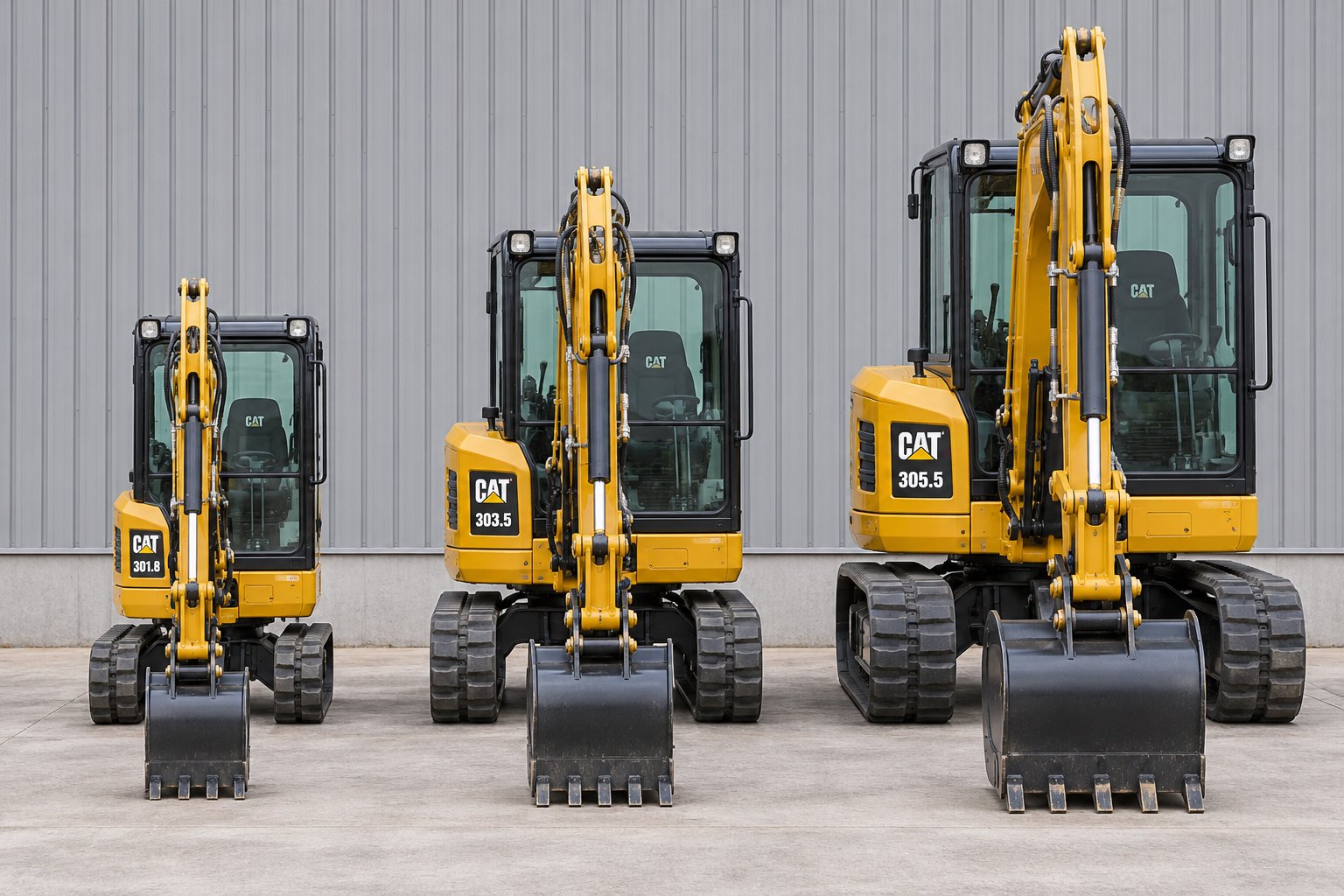
Caterpillar's compact excavator names follow a straightforward pattern. The first three digits represent the size class, roughly corresponding to metric-ton weight. A Cat 301 is approximately a 1-ton machine, a Cat 303 is roughly a 3-ton machine, a Cat 305 sits around 5 tons, and so on. The decimal suffix—such as .5, .7, or .9—indicates a weight variant within that class. A Cat 303.5, for example, is a slightly heavier version of the Cat 303 platform. Think of it like engine displacement badges on cars: the numbers tell you where a model sits in the hierarchy relative to its siblings.
Even the cat smallest excavator, the Cat 300.9D, follows this convention—the "300" places it at the base of the compact lineup, and the ".9" denotes its sub-1-ton operating weight. As Caterpillar's own product nomenclature guide explains, model number increments generally go up with size: "the smaller the number, the smaller the machine."
Here's the current Cat mini excavator lineup organized from smallest to largest, based on published specification data:
| Model | Approx. Operating Weight | General Size Category |
|---|---|---|
| Cat 300.9D | ~2,061 lb (under 1 ton) | Micro |
| Cat 301.5 | ~3,913 lb (~1.5 ton) | Micro / Mini |
| Cat 301.8 | ~4,000–4,103 lb (~1.8 ton) | Mini |
| Cat 302 CR | ~3,913 lb (~2 ton class) | Mini |
| Cat 302.7 CR | ~6,725 lb (~2.7 ton) | Mini |
| Cat 303 CR | ~8,500 lb (~3 ton) | Mini |
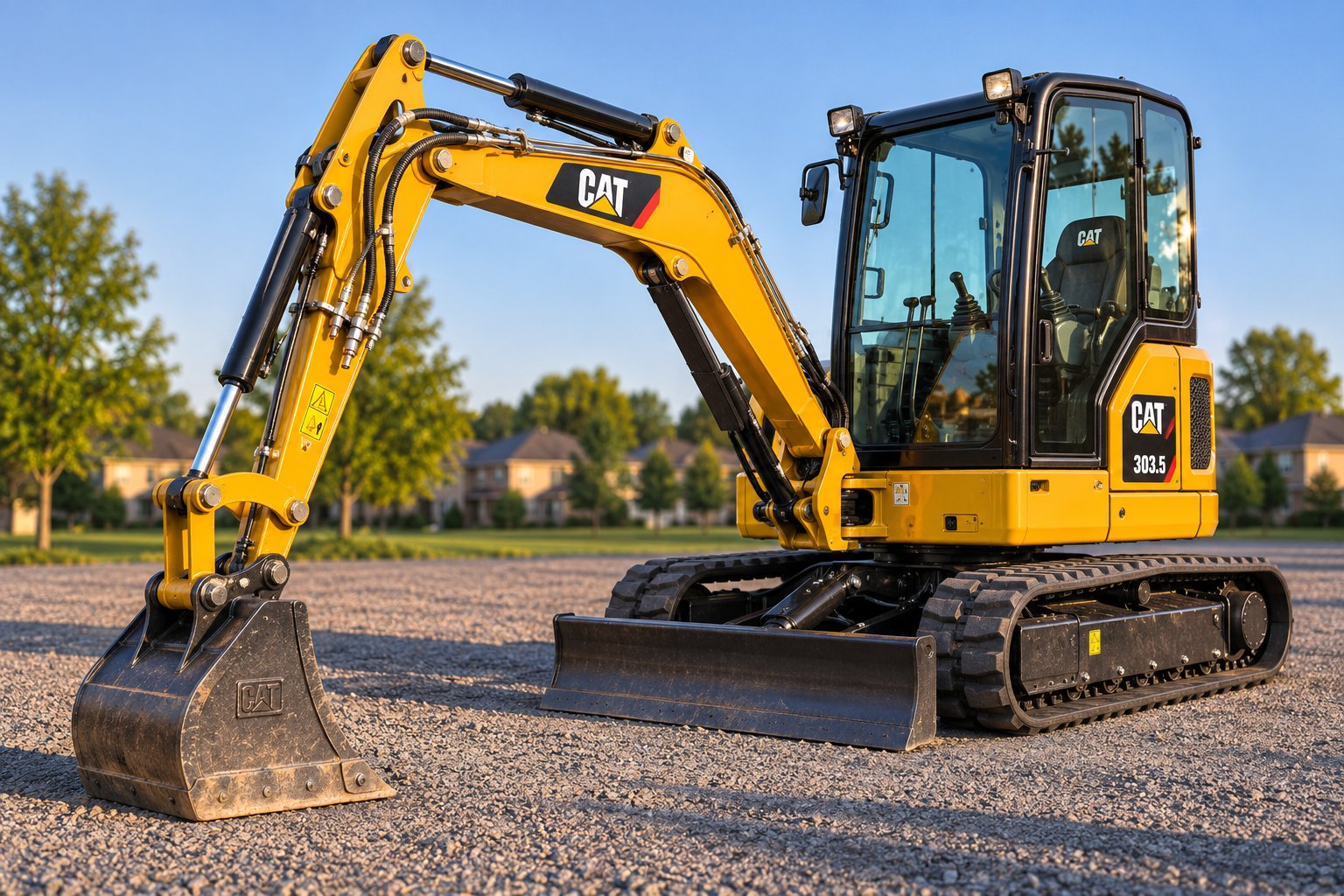
| Cat 303.5 CR | ~9,239 lb (~3.5 ton) | Mini |
| Cat 304 | ~9,900 lb (~4 ton) | Mini / Compact |
| Cat 305 CR | ~12,688 lb (~5 ton) | Compact |
| Cat 305.5E2 CR | ~11,958 lb (~5.5 ton) | Compact |
| Cat 306 CR | ~15,766 lb (~6 ton) | Compact |
| Cat 307.5 | ~17,900 lb (~7.5 ton) | Compact |
| Cat 308 CR | ~18,493 lb (~8 ton) | Compact / Mid-size |
| Cat 309 CR | ~21,091 lb (~9 ton) | Mid-size |
| Cat 310 | ~23,000 lb (~10 ton) | Mid-size |
Scan that table before you browse any marketplace, and you'll instantly understand where every listing falls in the size hierarchy. When you spot a cat 303 excavator for sale, you know it's a roughly 3-ton mini backhoe class machine suited for residential and light commercial trenching. See a cat 304 excavator for sale? That's a step up in weight and dig depth, pushing into the compact range.
Understanding CR, E2, and Generation Suffixes
The base number tells you the size. The letters after it tell you what version you're looking at—and this is where used-market buyers get tripped up most often.
- CR (Compact Radius or Conventional Radius): You'll see "CR" on most current Cat mini excavators. Depending on the model, it can stand for Compact Radius (indicating a reduced tail swing that keeps the rear of the machine within or near the track width) or Conventional Radius. The distinction matters for tight-space work. If tail swing is critical for your jobsite, confirm the exact swing specification with the dealer or Caterpillar's published spec sheet rather than relying on the abbreviation alone.
- E2 (Second-Generation Revision): This suffix indicates a second-generation redesign of a given model. Here's the crucial point: a Cat 305.5E2 is not the same machine as a Cat 305D, and a Cat 308E2 is not a Cat 308B. These generations differ in engine configuration, hydraulic system design, electronics, cab layout, and—critically—parts compatibility. Buying parts for the wrong generation can mean costly returns, downtime, and frustration. When evaluating any used cat 305 listing, always confirm the full model designation including the generation suffix.
- Next Gen: Caterpillar's latest platform updates carry the "Next Gen" label, representing the most current engineering, technology integration (such as standard telematics and updated displays), and emissions compliance. These models typically command a premium on the used market because of their newer technology stack and remaining useful life.
- VAB (Variable Angle Boom): Found on select models like the Cat 309 CR VAB, this suffix indicates a boom that can adjust its angle for improved digging in tight or deep applications.
- GC: Though more common in Caterpillar's larger excavator classes, the GC designation signals a focused-value configuration—basic features, lower cost, and simplified technology. As Caterpillar's brand team describes it, GC models offer "reliability and durability... plus low operating costs, basic features and simple technology."
Why does all of this matter when you're shopping? Imagine finding two listings that both say "Cat 305" with similar prices. One is a 305E2 CR with 2,500 hours; the other is a 305 CR Next Gen with 1,800 hours. Despite sharing the same base number, these are fundamentally different machines in terms of technology, remaining service life, and parts sourcing. The generation suffix is not a cosmetic detail—it's a buying decision factor that directly affects long-term cost and resale value.
Caterpillar recently moved away from letter-series designations on some product lines because, as their nomenclature team noted, they were literally running out of letters in the alphabet after nearly a century of product updates. For current models, a three-character build code on the machine's PIN plate identifies the exact generation. When inspecting any used machine, locating that PIN plate is one of the fastest ways to verify exactly what you're looking at.
With the naming system decoded, comparing models on paper becomes much more practical—but raw numbers only tell part of the story. The real question is which specs actually matter for the work you do, and that's where a structured side-by-side comparison proves its value.
Cat Mini Excavator Models Compared Side by Side
Knowing that a Cat 305 is bigger than a Cat 303 is useful—but how much bigger, and does that difference actually matter for your work? Listings rarely place models next to each other in a way that lets you compare the numbers that drive real jobsite performance. The table below does exactly that, pulling verified specifications from Caterpillar's published data into one scannable reference. Bookmark it, screenshot it, or print it out—this is the comparison sheet you'll want open while browsing any caterpillar mini excavator for sale.
| Model | Operating Weight | Net Power | Max Dig Depth | Tail Swing Type | Ideal Application |
|---|---|---|---|---|---|
| Cat 301.5 | ~3,913 lb | 21 hp | 8.3 ft | Compact Radius | Tight-access residential trenching, landscaping |
| Cat 301.8 | ~4,000–4,103 lb | 21 hp | 8.4 ft | Compact Radius | Backyard utilities, light site prep |
| Cat 302.7 CR | ~6,725 lb | 23.6 hp | 9 ft | Compact Radius (Zero Tail Swing) | Utility installs in confined spaces |
| Cat 303 CR | ~8,500 lb | 24.7 hp | 9.9 ft | Compact Radius (Zero Tail Swing) | Tight-lot utility trenching, drainage |
| Cat 303.5 CR | ~9,239 lb | 23.6 hp | 10.2 ft | Compact Radius | Deeper trenching in limited-access areas |
| Cat 304 | ~9,900 lb | 40 hp | 11 ft | Conventional Radius | General-purpose compact site prep |
| Cat 305 CR | ~12,688 lb | 45 hp | 12 ft | Compact Radius (Zero Tail Swing) | Utility, grading, contractor fleet work |
| Cat 306 CR | ~15,766 lb | 55.9 hp | 13.5 ft | Compact Radius | Higher-production compact excavation |
| Cat 308 CR | ~18,493 lb | 69 hp | 13.5 ft | Compact Radius | Broad-use trenching, truck loading |
Comparing Popular Models from Sub-2-Ton to 8-Ton
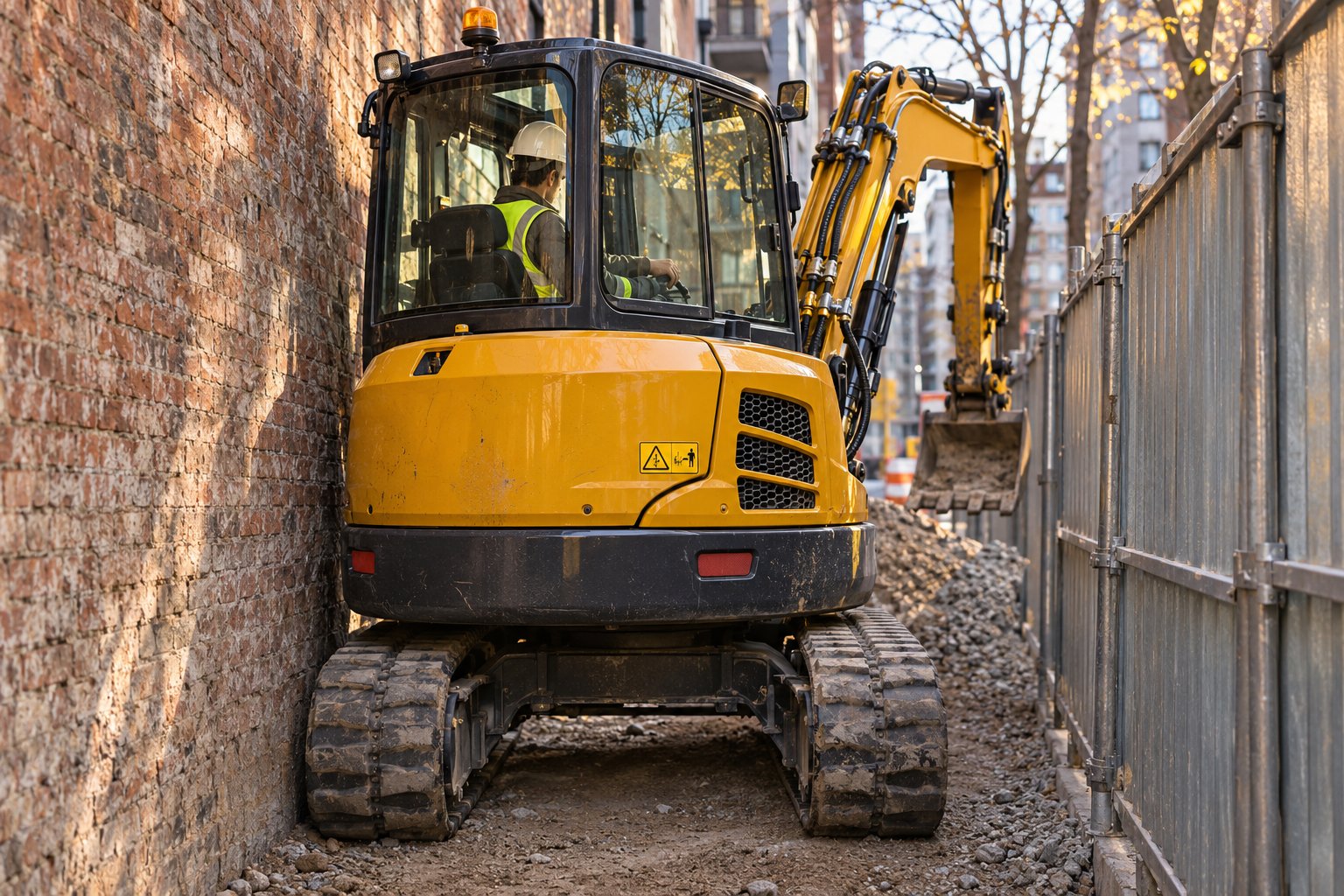
Three models deserve special attention because they represent the most commonly searched size classes. The Cat 302.7 CR sits at the small excavator sweet spot—light enough for easy transport, yet capable of a 9-foot dig depth that handles most residential utility trenches. Its zero tail swing design means the rear of the house stays within the track width during rotation, a critical advantage when you're digging next to a foundation wall or fence line.
Step up to the Cat 303 CR and you gain roughly 1,800 pounds of operating weight and nearly another foot of dig depth. That extra reach matters when trenching for water or sewer lines that sit below frost depth. The 303 CR also maintains zero tail swing, keeping it viable for tight residential lots where a conventional-swing machine would risk clipping structures.
The Caterpillar 305 CR, meanwhile, represents a significant jump in capability. At nearly 12,700 pounds and 45 horsepower, this compact excavator moves from light residential work into true general contracting territory—grading pads, loading trucks, running hydraulic attachments like breakers and augers. It's the model many fleet owners standardize around because it balances production output with a transport width of just 6.5 feet, still manageable on a standard equipment trailer.
You'll also notice a pattern in the table: net power doesn't always scale linearly with weight. The Cat 303.5 CR, for instance, weighs more than the Cat 303 CR but carries slightly less horsepower. That's because Caterpillar optimizes each model for a specific balance of fuel efficiency, hydraulic flow, and digging force rather than simply chasing headline numbers. A bigger engine isn't always the better engine—it depends on what you need the machine to do.
Similarly, the Cat 306 CR and Cat 308 CR share the same 13.5-foot max dig depth despite a nearly 3,000-pound weight difference. The big cat excavator advantage of the 308 CR isn't deeper digging—it's stronger hydraulic output, greater lift capacity, and improved stability when handling heavier attachments or loading material into trucks. If you're comparing these two, the deciding factor is workload intensity, not dig depth alone.
Which Specs Matter Most for Your Work
Chasing the biggest numbers on a spec sheet is tempting, much like choosing the smallest laptop for portability without considering whether it can actually run the software you need. The same logic applies here: the right Cat mini excavator is the one whose strengths align with your most frequent tasks, not the one with the most impressive stat in any single column. Here's how different buyer types should prioritize:
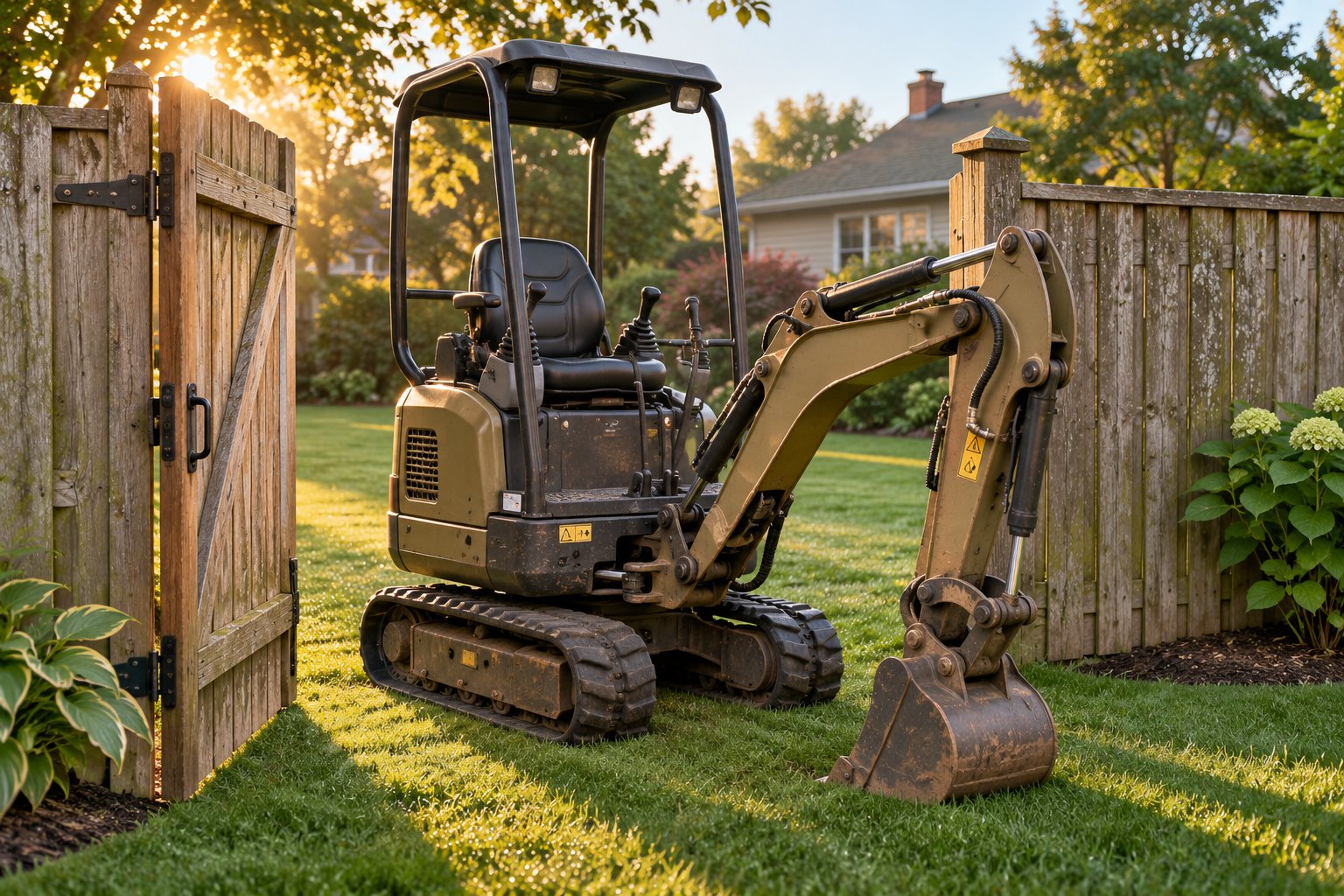
- Landscapers and residential contractors: Prioritize transport width and operating weight above all else. Your machine needs to fit on the trailer you already own and pass through backyard gates. A cat 301 excavator or the Cat 302.7 CR often hits this balance perfectly—capable enough for trenching and grading, yet light enough to tow behind a one-ton truck without overloading.
- Utility and plumbing contractors: Focus on max dig depth and auxiliary hydraulic flow. If your trenches regularly exceed 10 feet, models below the Cat 305 class may leave you short. Strong auxiliary hydraulics also matter here because you'll likely run a hydraulic thumb or compaction wheel as part of your daily workflow.
- General contractors and fleet buyers: Balance net power, attachment versatility, and resale value. The Caterpillar 305 CR and Cat 306 CR are popular fleet choices precisely because they handle a wide variety of tasks without being over-specialized. Strong resale value—a hallmark of the Cat brand—reduces your effective cost of ownership when it's time to rotate equipment.
- Municipal and public works teams: Prioritize zero tail swing and cab configuration. Roadside and right-of-way work puts operators near traffic and infrastructure, making a compact-radius machine essential for safety. Enclosed cabs with climate control (EROPS) also rank high for crews logging full shifts in variable weather conditions.
Spec sheets provide the raw data, but the real story lives in the terminology those listings use to describe cab types, attachments, and undercarriage options. Understanding that language is the difference between reading a listing and truly evaluating one.
Key Specs and Listing Terms Every Buyer Should Know
Browse any marketplace for cat mini excavators and you'll immediately run into shorthand like "EROPS w/ A/C," "aux hyd," "hyd QC," "rubber tracks 60%," or "PAT blade." Sellers pack these abbreviations into listings because space is limited and experienced buyers already speak the language. The problem? If you're purchasing your first or second machine, these terms can feel like a foreign dialect—and misunderstanding even one of them can lead you to overpay for a feature you don't need or, worse, overlook a gap that costs you on the jobsite.
This section translates the most common listing jargon into plain language so you can read any ad—whether it's for a Cat 303.5 for sale or a Cat 304 for sale—with the same confidence as a veteran fleet manager.
EROPS, ROPS, and Cab Configurations Explained
Two acronyms dominate the cab-description field in almost every listing: ROPS and EROPS. They look similar, but they describe very different operator environments—and the difference affects comfort, resale value, and price significantly.
- ROPS (Roll-Over Protective Structure): A ROPS is a structural frame or canopy engineered to maintain a survival space around the operator if the machine tips or rolls. On cat mini excavators, a ROPS configuration typically means an open canopy—no glass enclosure, no climate control. You get rollover protection and a roof for shade, but you're exposed to dust, rain, and temperature extremes. ROPS machines are lighter, less expensive, and perfectly adequate for seasonal landscaping or short-duration tasks in mild weather.
- EROPS (Enclosed Roll-Over Protective Structure): Think of EROPS as a fully enclosed cab built around the same rollover-protection framework. You get sealed glass, climate control (heat and air conditioning), reduced noise levels, and a pressurized environment that keeps dust out. Operators running full shifts—especially in a 4 ton mini excavator or larger—strongly prefer EROPS for fatigue reduction. On the resale side, enclosed cabs consistently command higher prices because the buyer pool is broader; most contractors won't consider an open-canopy machine for year-round primary use.
- FOPS (Falling Object Protective Structure): Some listings mention FOPS alongside ROPS. A FOPS is specifically engineered to protect the operator from objects falling from above—rocks, debris, or material dislodged during demolition. It addresses a completely different hazard than rollover protection. If you plan to work near overhead structures, on demolition sites, or in quarry environments, confirm that the cab carries FOPS certification in addition to ROPS.
When you see a listing that simply says "Cab," don't assume it means EROPS. Ask the seller to specify whether it's an enclosed cab or an open canopy, and check whether the climate control system is functional. A broken A/C compressor in an enclosed cab isn't just uncomfortable—it's a repair cost the listing price may not reflect.
Attachments, Hydraulics, and Quick Couplers
A mini excavator's versatility lives and dies by what you can bolt onto the end of the stick. The base machine digs with a bucket, but auxiliary hydraulics unlock an entire ecosystem of attachments that turn one machine into five. Here's what the listing terms actually mean.
Auxiliary hydraulics (often shortened to "aux hyd") are additional hydraulic circuits routed to the end of the stick, allowing the operator to power attachments beyond the standard bucket curl cylinder. Without aux hyd, your machine is limited to digging and loading. With it, you can run powered tools that dramatically expand your jobsite capabilities.
Quick couplers ("hyd QC" or "manual QC") let you swap attachments in seconds without leaving the cab. A hydraulic quick coupler uses the machine's auxiliary circuit to lock and release the attachment pins from inside the cab—imagine switching from a digging bucket to a grading bucket to a hydraulic thumb in under a minute, all without a wrench. Manual quick couplers still speed up changes compared to pin-on mounting, but they require the operator to step out and insert a safety pin by hand. Either type is a significant productivity upgrade over traditional pin-on connections.
When evaluating any listing, check whether the machine includes aux hyd and a coupler, because adding them after purchase isn't cheap. Attachment compatibility should also influence which model you select—a Caterpillar 306 excavator, for example, delivers higher auxiliary hydraulic flow than a Cat 303, making it better suited for running demanding tools like breakers or augers.
Here are the most common Cat mini excavator attachments you'll encounter in listings and rental yards:
- Hydraulic thumb: A grapple-style clamp mounted opposite the bucket, allowing the operator to grab and hold irregularly shaped objects like rocks, stumps, and debris.
- Auger: A rotary drilling attachment for fence posts, sign footings, and pier holes—powered entirely by the auxiliary hydraulic circuit.
- Hydraulic breaker (hammer): A percussive tool for breaking concrete, asphalt, or rock. Flow and pressure requirements vary by breaker size, so match the breaker to your machine's aux hyd specs.
- Tilt bucket: A bucket that rotates side to side, enabling angled grading and ditch shaping without repositioning the machine.
- Compaction wheel: A narrow, weighted wheel attachment used to compact trench backfill in layers—eliminates the need for a separate plate compactor on utility jobs.
- Ripper tooth: A single-point tearing tooth for breaking up hard or frozen ground before excavation.
A machine listed with "thumb-ready" plumbing but no thumb installed still gives you the option to add one affordably. A machine without any auxiliary hydraulic plumbing, however, requires a much more involved (and expensive) retrofit.
Undercarriage and Blade Basics
The undercarriage is the single most expensive wear component on any compact excavator, so listings that mention track condition deserve close attention. Two track types dominate the market, and each suits different work.
Rubber tracks are standard on most cat mini excavators from the micro class up through roughly the 5-ton range. As TVH's engineering team explains, rubber tracks shine on finished surfaces—driveways, sidewalks, landscaped yards—because they distribute weight without gouging. They also produce less vibration, creating a smoother ride for the operator. The trade-off is durability: sharp rocks, steel debris, and abrasive soil chew through rubber faster than steel.
Steel tracks excel on rough, rocky, or muddy terrain where maximum traction and puncture resistance matter more than surface protection. Larger models in the Cat lineup, such as the Cat 308 CR and above, sometimes ship with steel tracks for heavy-duty applications. You'll also find steel-tracked machines in demolition and quarry work where rubber would wear out unacceptably fast. The downside? Steel tracks damage paved surfaces and turf, limiting where you can operate without causing costly repairs to the ground beneath you.
Listings often describe undercarriage condition as a percentage—"tracks at 70%" means roughly 30% of the original tread or pad life has been consumed. Anything below 50% should factor into your negotiation because replacement tracks represent a meaningful expense, sometimes several thousand dollars depending on caterpillar excavator sizes and track type.
Finally, pay attention to the blade (also called a dozer blade or backfill blade) mounted at the rear or front of the undercarriage. Two types appear in listings:
- PAT blade (Power Angle Tilt): Angles left and right and tilts, giving the operator the ability to push material to one side or grade a slope without repositioning the machine. PAT blades add versatility and are a premium feature.
- Standard (straight) blade: Moves up and down only. It stabilizes the machine during digging and handles basic backfill and leveling, but it lacks the directional control of a PAT blade.
For contractors who use the blade frequently for finish grading or backfill work, a PAT blade can save significant time on every job. For buyers who primarily dig and load, a standard blade is perfectly functional and keeps the purchase price lower.
With these terms decoded, you can now scan any marketplace listing and understand exactly what's being offered—and what's missing. That knowledge shifts the power dynamic from seller to buyer, which matters even more when you're trying to answer the next critical question: what should this machine actually cost?
How Much Does a Cat Mini Excavator Actually Cost
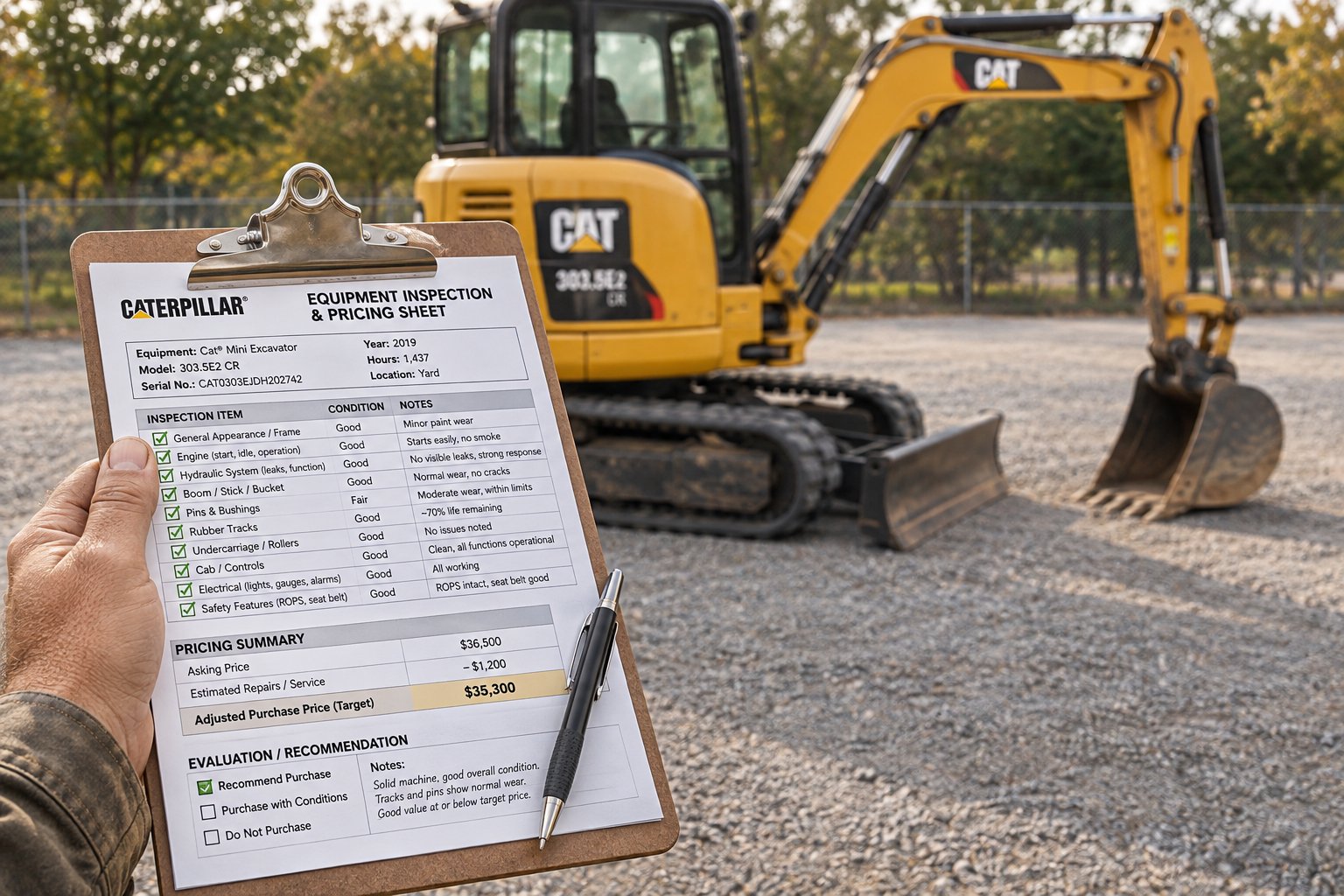
You can compare every spec on a sheet, decode every listing abbreviation, and still hit a wall the moment you try to answer the most basic buying question: what's the price? Unlike the automotive market—where you can pull up a Kelley Blue Book value in thirty seconds—the heavy equipment world operates with far less pricing visibility. That opacity isn't accidental, and understanding why it exists is the first step toward getting a fair deal on any cat mini excavator for sale.
New Cat Mini Excavator Pricing Ranges
If you've searched for a new Cat mini excavator price online, you've probably noticed something frustrating: Caterpillar doesn't publish MSRP figures on its website. Pricing is handled at the dealer level, meaning the quote you receive from a dealer in Texas may differ from one in North Carolina or Ohio. Configuration choices—cab type (ROPS vs. EROPS), attachment packages, auxiliary hydraulics, blade style, and technology add-ons like grade control—shift the final number significantly within any given model.
A few regional dealers, such as Milton CAT in the Northeast, do list some prices publicly, but these are the exception rather than the rule. For the vast majority of buyers, getting an accurate new-machine price requires requesting quotes directly from authorized Cat dealers.
While specific dollar amounts vary too much by region and configuration to state responsibly here, the lineup falls into three general pricing tiers:
- Entry tier (sub-2-ton models): Machines like the Cat 300.9D, Cat 301.5, and Cat 301.8 represent the most accessible price point. These compact mini excavator models carry the lowest sticker prices in the lineup, though even "entry-level" Caterpillar equipment is a significant capital investment.
- Mid-range tier (3-to-5-ton models): This is where the Cat 303 CR, 303.5 mini excavator, Cat 304, and Cat 305 CR live. As the most popular cat excavators sizes for general contracting, these models command mid-range pricing that reflects their broader capability and stronger resale demand.
- Upper tier (6-to-10-ton models): The Cat 306 CR through Cat 310 approach—and in some configurations exceed—price levels typically associated with standard-size excavators. Their higher net power, deeper dig depths, and heavier operating weights justify the premium for buyers who need that production capacity.
A practical tip: request quotes from at least two or three authorized dealers, and ask each one about current promotions, demo inventory, or end-of-quarter incentives. Dealer pricing isn't fixed, and competition between dealerships works in the buyer's favor—especially if you're flexible on delivery timing.
Used Pricing Factors and Depreciation Patterns
The used market is where most buyers find their price entry point. Industry appraisal data suggests that used mini excavators can offer 30-to-50% cost savings compared to new machines while retaining 70-to-80% of their useful life. That's a compelling value proposition—but only if you understand the variables that make one "used Cat 305" worth significantly more or less than another.
Here are the key factors that drive used Cat mini excavator pricing:
- Model year and generation: A Next Gen Cat 303 CR commands a substantial premium over an older 303.5E2 CR, even at similar hour counts. Newer emissions-compliant engines, updated hydraulic systems, and modern cab technology all hold value. If you're browsing a caterpillar 304 for sale, always confirm whether it's a current-generation or legacy model—the price gap between them can be dramatic.
- Hour meter reading: Hours are the odometer of heavy equipment. EquipmentWatch market data shows that the average age of used mini excavators in active resale listings sits around 4.75 years, with standard usage running approximately 1,000 to 1,200 hours per year. Machines well below that annual average often carry a "low-hour" premium, while those significantly above it face steeper discounts.
- Undercarriage condition: As covered in the previous section, replacing tracks and undercarriage components can run several thousand dollars. A machine with 80% undercarriage life remaining is worth meaningfully more than one sitting at 30%. Sellers who disclose undercarriage percentages are giving you real pricing information—pay attention to it.
- Attachment package: A machine sold with a hydraulic thumb, quick coupler, and multiple buckets is worth more than the same model sold bare. Quality attachments in good condition can add thousands to fair market value, and removing them before sale is a common seller mistake that leaves money on the table.
- Geographic region: Equipment markets aren't national—they're regional. A mini excavator for sale in NC may carry a different price than an identical machine listed in the Midwest, simply because construction demand, seasonal patterns, and local supply vary. Texas and Florida consistently lead in transaction volume, which can mean more competitive pricing in those states due to larger available inventory.
- Selling channel: Where the machine is sold shapes the price you'll pay. Dealer retail pricing sits at the top, private-party sales offer more negotiation room, and auctions can produce both bargains and surprises depending on bidder competition. Each channel carries its own trade-offs between price, inspection confidence, and buyer protection.
Depreciation patterns in heavy equipment aren't linear. Industry pricing guides generally estimate that construction equipment loses 20-to-40% of its value in the first year and then 5-to-10% annually afterward, with actual hour usage accelerating or slowing that curve. A three-year-old compact mini excavator with only 1,500 hours may retain value significantly better than a same-age machine with 4,000 hours logged in harsh conditions. Caterpillar equipment, in particular, tends to depreciate more slowly than lesser-known brands thanks to global parts availability and brand recognition—a pattern confirmed by auction data showing Cat claiming 15 of the top 20 mini excavator auction price spots in the most recent reporting period.
For a concrete benchmark, EquipmentWatch reported that the average used mini excavator transaction price across all brands was approximately $47,528 in the third quarter of 2025—down slightly from $48,767 a year earlier. Individual Cat models, especially popular sizes in the 3-to-5-ton range, frequently trade above that average due to stronger demand.
Why Pricing Transparency Is Difficult
If you've ever purchased a car, you're accustomed to transparent sticker prices, published trade-in values, and online tools that estimate fair market value down to the trim level and mileage. The heavy equipment market doesn't work that way—and for understandable reasons.
New equipment pricing depends on dealer-negotiated margins, regional demand, configured options, and financing arrangements that vary from transaction to transaction. Used pricing adds even more complexity: condition is subjective until a professional inspection occurs, maintenance histories are inconsistently documented, and many transactions happen privately without public price reporting.
The result is a market where asking prices on listing sites are often aspirational rather than reflective of actual sale prices. As one industry pricing guide bluntly puts it, "Most sellers look at a listing website, see a similar machine, and copy the price. This is a mistake. Listing prices are often wishful thinking, not the actual selling price."
So how do you cut through the noise and arrive at a realistic number? Triangulate. Use at least three data points before committing to any purchase:
- Auction results: Platforms like Ritchie Bros. and IronPlanet publish sold prices, giving you real transaction data rather than asking prices. These represent wholesale-level values—private resale typically runs higher.
- Dealer quotes: Contact two or three dealers with the specific model, year, and hour range you're targeting. Their retail pricing represents the market ceiling.
- Classified comparisons: Browse MachineryTrader, Machinery Pete, and regional listing sites to see what similar machines are listed at in your area. Adjust downward for negotiation room—most sellers expect to come off their asking price by 5-to-10%.
This three-source approach won't give you a single magic number, but it builds a realistic range that protects you from overpaying. And knowing the right price is only half the equation—knowing where to buy, and what each channel offers in terms of protection, inspection, and support, determines whether that price actually delivers good value.
Where to Buy a Cat Mini Excavator New or Used
A fair price means nothing if the buying channel itself introduces hidden risk. Every platform selling caterpillar mini excavators—from a local dealer lot to a global auction house—structures its transaction differently, and those structural differences affect what you actually receive for your money: inspection depth, warranty coverage, negotiation leverage, and after-sale support. The problem is that each platform only promotes its own advantages. A dealer website won't explain why an auction might save you 15%. An auction site won't mention that its inspection reports can miss undercarriage wear details. This section puts every major channel side by side so you can match the right source to your risk tolerance and budget.
Authorized Cat Dealers and the New-Machine Path
Buying new through an authorized Caterpillar dealer is the most straightforward—and most expensive—route to owning a mini excavator caterpillar. You're purchasing directly from the manufacturer's distribution network, which comes with a distinct set of advantages.
The biggest draw is factory warranty coverage. New Cat mini excavators ship with Caterpillar's standard warranty, and many dealers offer extended protection plans that cover powertrain and hydraulic components well beyond the base period. You also get factory configuration—the ability to spec your machine exactly the way you want it, from cab type (ROPS or EROPS) and blade style to auxiliary hydraulic circuits and attachment packages. Need a cat 304 mini excavator for sale with a specific quick-coupler setup and a thumb-ready package? A dealer builds it to order.
Cat Financial, Caterpillar's in-house lending arm, provides financing and lease options directly through the dealer, often with promotional rates that third-party lenders can't match on new equipment. Dealer support doesn't end at the sale, either—authorized locations stock parts, perform warranty service, and offer maintenance agreements that keep the machine running under the same roof where you bought it.
The trade-offs are real, though. New-machine pricing sits at the top of the market, and popular models—especially in the 3-to-5-ton range where a Caterpillar 303 for sale or a Cat 305 CR consistently leads demand—can carry wait times of several weeks depending on factory production schedules and regional inventory. If your project timeline is tight, a dealer's available stock may not align with your start date.
Pros
- Full factory warranty and optional extended coverage
- Custom configuration to your exact specifications
- Cat Financial integration for streamlined lending and leasing
- Ongoing parts, service, and dealer support
Cons
- Highest upfront cost across all buying channels
- Potential lead times on build-to-order configurations
- Less negotiation flexibility compared to used markets
Online Marketplaces, Auctions, and Used Dealers
Most buyers searching for a cat mini excavator for sale end up in the used market, where the channel you choose shapes every aspect of the transaction. Here's how the major options compare.
Online marketplaces like MachineryTrader and Machinery Pete function as aggregators—they pull together inventory from dealers, rental companies, and private sellers into searchable databases. You'll find everything from a cat 306 for sale at a regional dealer to a Cat 302.7 listed by a private owner two states away. The selection is broad, but the quality of information varies wildly. Some listings include detailed photos, hour-meter readings, and maintenance history; others offer a single blurry image and a phone number. Inspection responsibility falls squarely on you unless the listing dealer offers their own certification program.
Auction platforms like Ritchie Bros. and IronPlanet operate on competitive bidding, which can produce favorable pricing—especially for buyers willing to be patient and disciplined. IronPlanet's IronClad Assurance program, for example, provides an inspection report grading key components, giving bidders a baseline confidence level before committing. The catch? Auctions are unpredictable. A machine with strong bidder interest can blow past fair market value, and auction purchases are typically final—no negotiation, no returns, and no warranty unless explicitly stated.
Independent used equipment dealers offer a middle ground. These businesses buy, inspect, and resell pre-owned equipment with varying degrees of reconditioning. Some perform thorough mechanical inspections and offer short-term warranties; others are essentially brokers who list machines they've never physically touched. The key is asking the right questions before you buy: Did you inspect this machine in person? What's your return policy? Do you offer any post-sale warranty?
Specialty Caterpillar dealers focus specifically on one brand, curating inventory around Cat equipment. JIUHONG, for instance, maintains a dedicated collection of used Caterpillar excavators—including compact models—that contractors and fleet buyers can browse by model and size class. Their brand-specific focus means the sales team can discuss configuration details, generation differences, and budget alignment for Cat machines in particular. For buyers who want to compare multiple used Cat options within one source rather than piecing together listings across several platforms, this kind of curated inventory simplifies the search.
The table below compares these channels across the four factors that matter most to buyers:
| Buying Channel | Typical Price Level | Inspection Confidence | Negotiation Flexibility | Warranty Likelihood |
|---|---|---|---|---|
| Specialty Cat Dealers (e.g., JIUHONG) | Mid-range (brand-curated pricing) | Moderate to High (brand-focused inspection) | Moderate (direct sales team discussion) | Varies by dealer; ask directly |
| Authorized Cat Dealers (New) | Highest | Highest (factory-new condition) | Low to Moderate | Full factory warranty |
| Authorized Cat Dealers (Used/CPO) | Above average | High (dealer-inspected) | Moderate | Often includes limited warranty |
| Online Marketplaces (MachineryTrader, Machinery Pete) | Varies widely | Low to Moderate (buyer-dependent) | High (direct seller negotiation) | Rare unless dealer-listed |
| Auction Platforms (Ritchie Bros., IronPlanet) | Below average to average | Moderate (inspection reports available) | None (competitive bidding) | Very rare; typically sold as-is |
| Private Party Sales | Lowest potential | Low (self-arranged inspection) | Highest | None |
International and Specialty Used Equipment Dealers
Beyond your local dealer network and the major auction sites, a growing segment of the used equipment market operates through specialty and international dealers. These businesses source machines from fleet liquidations, rental company de-fleets, and trade-ins, then make them available to buyers who might not have access to competitive local inventory.
Imagine you're a contractor in a region where used Cat 305 CR inventory is thin and overpriced. A specialty dealer with broader sourcing channels can present options you'd never find on your local MachineryTrader page. JIUHONG's Caterpillar excavator inventory, as one example, allows buyers to explore available Cat models across multiple size classes—from compact machines to larger excavators—and connect with a sales team to discuss specific project requirements, preferred configurations, and realistic budgets. That kind of consultative approach can be especially valuable for fleet buyers sourcing multiple units or for contractors unfamiliar with the nuances between Cat generations.
The key considerations when working with any specialty or international dealer include:
- Shipping logistics and costs: Factor in transport fees, which can be substantial for machines crossing long distances or international borders. Request a delivered price, not just the equipment price.
- Inspection access: If you can't visit the machine in person, ask for detailed photo documentation, video walkarounds, and—ideally—a third-party inspection before finalizing the purchase.
- Import compliance: For international purchases, confirm that the machine meets local emissions and safety standards. A Cat 303 CR built for one market may carry different engine certifications than the same model sold domestically.
- Payment security: Use secure payment methods or escrow services, especially for high-value transactions with a dealer you haven't worked with before.
Regardless of which channel appeals to you, the strongest position any buyer can hold is one built on comparison. Contact multiple sources—a local authorized dealer, an auction platform for recent sold-price data, and a specialty dealer like JIUHONG for curated used inventory—before committing to a single transaction. The overlap in pricing and availability across those sources reveals the true market range far more reliably than any single listing ever could.
Choosing the right channel gets you to the right machine at the right price. But price and channel only tell you what you're paying and where you're buying—not whether the specific machine in front of you is actually worth it. That answer comes from what you find during a hands-on evaluation, and the difference between a thorough inspection and a casual walkround can be the difference between a smart investment and an expensive headache.
How to Evaluate a Used Cat Mini Excavator Before Buying
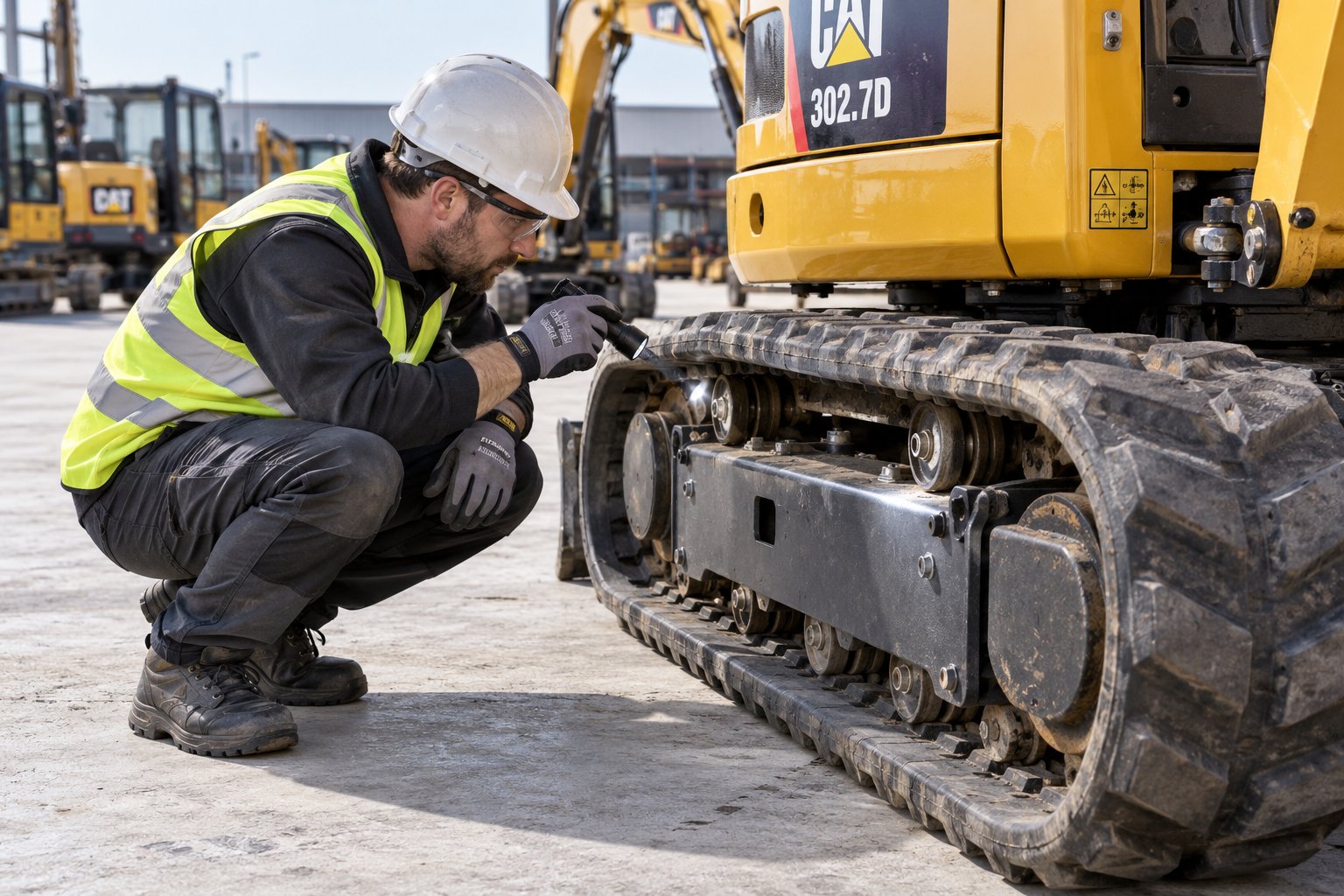
A listing can look perfect on screen—clean photos, reasonable hours, competitive price—and still hide problems that cost more to fix than the discount you thought you were getting. The heavy equipment market doesn't offer vehicle history reports or certified pre-owned programs with standardized criteria the way the auto industry does. That means the burden of evaluation falls on you, the buyer. Whether you're inspecting a cat 305 excavator at an auction yard or meeting a private seller to look at a 3 ton mini excavator behind a shop, a structured approach separates a smart purchase from an expensive regret.
Treat the checklist below as your on-site playbook. Print it out, save it to your phone, or hand it to a technician you trust. Every item on this list addresses a real failure point that experienced contractors check—and that less experienced buyers routinely miss.
Pre-Purchase Inspection Checklist
A proper evaluation isn't a casual walkround with the seller narrating what's great about the machine. It's a systematic, component-by-component review that you control. Industry inspection guides consistently recommend covering these eight critical areas before any money changes hands:
- Verify the hour meter reading and cross-reference with machine condition. The hour meter is the first number every buyer looks at—and the first number a dishonest seller manipulates. Check the displayed hours, then look at the physical evidence. A machine advertised at 1,500 hours should have minimal wear on pedal pads, joystick grips, and seat upholstery. If those surfaces look like they've seen 5,000 hours of use, something doesn't add up. As equipment inspection specialists note, analog meters can be unplugged or replaced with aftermarket units, and digital clusters can be swapped entirely—so never rely exclusively on the dashboard display.
- Inspect the undercarriage—track pads, rollers, idlers, and sprockets—for wear percentage. This is the single most expensive wear component on any compact excavator. Look for pointed sprocket teeth, leaking rollers, cracked or missing rubber track lugs, and stiff or loose track links. If the seller or a technician can measure remaining undercarriage life against the manufacturer's specifications, get those numbers. A machine sitting at 40% undercarriage life needs a replacement budget factored into your offer price.
- Check for hydraulic leaks at cylinders, hoses, and fittings. Walk the entire machine—boom cylinders, stick cylinder, bucket curl cylinder, swing motor, and all visible hose runs. Wet spots, oil film on cylinder rods, and scorched or bulging hoses all signal problems. Even small leaks can indicate larger mechanical issues that escalate quickly under working pressure. A clean, dry machine is far easier to evaluate than one caked in mud, so be wary of freshly pressure-washed equipment with no clear explanation—it may be hiding evidence.
- Test all functions: boom, stick, bucket curl, swing, travel, and blade. Operate every movement through its full range. Cycle the boom up and down, curl and uncurl the bucket, swing the house 360 degrees in both directions, drive forward and backward, and raise and lower the blade. You're feeling for hesitation, drift, uneven speed, or grinding. If the machine drifts when you hold the bucket in the air with controls in neutral, the cylinder seals or control valve may be worn. Run both travel motors simultaneously and confirm the machine tracks straight—pulling to one side suggests a weak final drive or motor.
- Examine the cab or canopy for damage, instrument cluster warnings, and seat condition. Climb inside and turn the key to the "on" position before starting. Watch the instrument cluster for stored fault codes or warning lights that stay illuminated. Check every switch: lights, wipers, horn, A/C (if EROPS), heater, and any camera or display systems. Stored fault codes tell a story about the machine's history that the seller may not volunteer.
- Review maintenance records if available. Oil change intervals, filter replacements, greasing logs, and any major component repairs should be documented and dated. Oil analysis reports are especially valuable—they reveal internal engine and hydraulic system wear at a level no visual inspection can match. Gaps in documentation aren't automatic deal-breakers, but they are reasons to dig deeper and budget more conservatively for unknown maintenance needs.
- Start the engine cold and listen for abnormal sounds. This step requires arriving before the seller has warmed the machine up. A cold start reveals problems that disappear once oil circulates and metal expands: hard cranking, excessive white or blue smoke, knocking, and rough idle all point to engine issues. If you arrive and the machine is already warm, ask why. A seller who refuses to allow a cold-start inspection is removing your best diagnostic opportunity—and that refusal, by itself, is a red flag.
- Check for structural cracks on the boom, stick, and frame. Run your eyes—and your hands—along the welds at the boom foot, boom nose, stick tip, and cylinder mounting points. Cracks in these areas indicate severe stress history. Fresh paint or visible grinding marks near welds can signal a repair that's been cosmetically concealed. As Cleveland Brothers' equipment team warns, welds on structural components will never be as strong as the machine's original steel, meaning a repaired crack is likely to fail again under load.
One more item that experienced buyers never skip: check the pins and bushings at every joint. Grab the bucket and push it side to side, then do the same at the stick-to-boom connection. Clunking or visible play indicates worn pins and bushings—a repair that's manageable but should factor into your negotiated price. Fresh grease at the joints is actually a good sign, suggesting the previous owner maintained a proper greasing schedule.
Hour Meter Thresholds and Red Flags
How many hours are too many? It's the most common question buyers ask, and the honest answer is: it depends. Hours alone don't determine a machine's remaining useful life—maintenance history, working conditions, and component rebuild history matter just as much. That said, industry lifecycle data provides a useful framework for setting expectations:
| Hour Range | General Condition Profile | Buyer Considerations |
|---|---|---|
| Under 3,000 hours | Low-use; near-new mechanical condition. Original undercarriage typically retains 75–90% life. | Premium pricing justified. Standard fluid and filter maintenance is likely all that's been needed. |
| 3,000–6,000 hours | Mid-life; the value sweet spot for many buyers. Solid structural integrity, engine running with good compression. | Inspect for track pin and bushing wear, minor hydraulic hose replacements, and bucket hinge pin condition. |
| 6,000–9,000 hours | Mature working machine. Expect cosmetic wear, potential play in boom pivot points, and heavier component usage. | Prioritize checking main hydraulic pump flow, swing motor seals, and undercarriage replacement timeline. |
| 10,000+ hours | High-hour machine. Value depends heavily on whether engine overhaul or hydraulic reconditioning has been performed. | Full compression test, oil analysis for metal particulates, and structural weld examination are essential before purchase. |
A cat excavators for sale listing advertising 2,000 hours on a seven-year-old machine sounds appealing—but do the math. That's under 300 hours per year, well below the typical 1,000-to-1,200 annual hours for a working contractor machine. Either this unit sat idle for long stretches (which brings its own concerns, like dried seals and stale fluids) or the hour meter doesn't reflect reality. Cross-referencing the displayed hours against physical wear indicators is the only reliable way to validate the reading.
For additional verification, ask the seller whether the machine is equipped with Caterpillar's Product Link telematics system. On equipped models, Product Link logs engine hours independently in the ECM (Electronic Control Module), creating a record that can't be altered by simply swapping the dashboard cluster. If telematics data is available, request a printout. If the seller claims the system isn't active or the data isn't accessible, that's not necessarily dishonest—but it removes a layer of verification you'd prefer to have.
When to Walk Away from a Deal
Not every used machine is worth saving with a lower offer. Some problems are so fundamental—or so expensive to repair—that no mini excavator price discount makes the purchase worthwhile. Here are the deal-breakers that experienced buyers treat as hard stops:
- Major hydraulic system failures: A main pump replacement or control valve rebuild on a compact excavator can easily exceed several thousand dollars in parts and labor. If the machine can't complete basic hydraulic functions smoothly—or if the seller admits to "intermittent hydraulic issues"—walk away unless you're prepared for a rebuild project, not a working machine.
- Cracked frames or booms: Structural cracks in the mainframe, boom, or stick compromise the machine's integrity under load. Welding a cracked boom is a temporary patch, not a permanent fix. If you spot cracks—or fresh welds that suggest someone already tried to repair them—the risk-to-reward ratio rarely favors the buyer.
- Mismatched serial numbers or missing documentation: The serial number on the machine's PIN plate should match the paperwork, title, and any dealer records. A mismatch raises serious questions about the machine's provenance. Similarly, missing titles or unclear ownership chains can create legal headaches long after the sale closes.
- Refusal to allow a thorough inspection: Any seller who discourages a cold start, declines a third-party inspection, or pressures you to "decide today" is prioritizing their timeline over your due diligence. A confident seller welcomes inspection because it validates their asking price. A defensive seller is often protecting something they don't want you to find.
- Evidence of hour meter tampering: If the displayed hours don't match the physical wear—polished pedals and a torn seat on a "low-hour" machine—trust the wear, not the meter. Tampering isn't just dishonest; it signals that other aspects of the machine's history may have been misrepresented too.
- Excessive fluid contamination: Milky engine oil (indicating coolant mixing with oil) or metallic particles visible in hydraulic fluid samples suggest internal component failure that may not be visible externally. If oil analysis reveals high iron or copper content, major internal wear is already underway.
A thorough pre-purchase inspection almost always saves more money than the discount you'd negotiate on a problematic machine.
If you're considering caterpillar mini excavators for sale and the listing looks appealing but you can't inspect the machine in person, hire an independent technician or a local dealer service department to perform the inspection on your behalf. The fee—typically a few hundred dollars—is negligible compared to the cost of discovering a hidden problem after the wire transfer clears. For buyers comparing a new mini excavator for sale against a used option, this inspection cost is the price of certainty: it either confirms you're getting good value or saves you from a machine that would have erased your savings in repair bills within the first season.
A machine that passes this evaluation gives you confidence in what you're buying. The remaining question is whether what you're buying actually fits the work you need it to do—because even a mechanically perfect excavator becomes a liability if it's the wrong size for your most common jobs.
Matching the Right Cat Mini Excavator to Your Jobsite
A mechanically sound machine at a fair price still becomes a costly mistake if it's the wrong size for your daily work. Imagine buying a 9-ton compact excavator to dig backyard fence-post holes—you'll burn more fuel, tear up turf with unnecessary ground pressure, and struggle to maneuver through a standard residential gate. Flip the scenario: bring a sub-1-ton micro excavator to a commercial utility trench that runs 12 feet deep, and you'll spend three times as long on a job that a properly sized machine finishes before lunch.
Specs tell you what a machine can do. This section tells you what each size class should do—connecting Cat's lineup to real jobsite scenarios so you can stop chasing numbers on a spec sheet and start matching capability to your most common tasks.
Micro and Sub-2-Ton Models for Tight Access Work
The smallest machines in Caterpillar's lineup exist for one reason: getting into places nothing else can reach. The Cat 300.9D, weighing just 2,061 pounds with a transport width under 2.5 feet, fits through standard doorways, rolls across plywood-protected floors, and operates inside existing structures where ceiling height and floor loading capacity rule out anything bigger. If you've ever wondered about the cat 300.9d price, it sits at the entry point of the lineup—but don't confuse entry-level pricing with limited usefulness. For indoor demolition, basement excavation, and work inside greenhouses or pool enclosures, this micro excavator is often the only option, not just the cheapest one.
Step up slightly and you reach the Cat 301.5 and Cat 301.7 CR, both hovering around 3,900 to 4,200 pounds. These mini x machines add meaningful dig depth—roughly 7 feet 8 inches to 7 feet 9 inches—while staying light enough to tow on a single-axle trailer behind a half-ton pickup. Landscapers gravitate toward this size class because the machines slip through 39-inch-wide backyard gates, dig irrigation trenches without destroying surrounding turf, and weigh little enough to work on residential lawns without leaving deep ruts.
Typical jobs for sub-2-ton Cat models include:
- Backyard landscaping: Planting trees, grading small areas, installing drainage lines, and shaping garden beds.
- Indoor demolition: Removing interior walls, breaking up basement slabs, and clearing debris inside structures.
- Tight-access utility work: Running gas, water, or electrical lines through narrow side yards or between buildings where larger equipment simply cannot fit.
- Cemetery and monument work: Excavating in confined, sensitive areas where precision and minimal ground disturbance are non-negotiable.
The trade-off at this end of the spectrum is straightforward: limited reach and reduced breakout force. A Cat 301.7 CR won't load a dump truck efficiently, and it'll struggle in compacted clay or rocky soil where a heavier machine would power through. These models earn their keep on finesse jobs, not production digging.
3-to-5-Ton Models for General Contracting
Ask a dealer which size class sells the most units, and the answer is almost always the 3-to-5-ton range. There's a reason for that. Models like the Cat 303 CR, 303.5 Caterpillar, Cat 304, and Cat 305 CR hit the sweet spot where digging performance, transport logistics, and attachment versatility overlap in a way that suits the widest range of contractors.
Consider the practical math. A Cat 303 CR at roughly 8,500 pounds rides comfortably on a standard dual-axle equipment trailer towed by a one-ton truck—no CDL, no overweight permits, no pilot car. Its 9.9-foot dig depth handles most residential foundation footings, septic system excavations, and water-line trenches without stretching the machine's limits. And with a reduced tail swing that keeps the rear of the house within the track width, the 303 CR works confidently on tight residential lots where fences, walls, and parked cars leave little room for error.
The Cat 305 CR—one of the most searched models when buyers look for a cat mini excavator for sale—pushes this class further. At 12,688 pounds and 45 horsepower, it bridges the gap between compact convenience and genuine production capability. Reviewing the latest updates from Caterpillar, the current 305 CR now offers optional E-Fence software to prevent collisions with overhead obstacles and entry-level grade Indicate software that displays real-time bucket position relative to target depth. Those aren't gimmicks—they're tools that reduce rework and protect underground utilities on every trench run.
For buyers evaluating older inventory, it's worth noting that the cat 305e2 specs differ meaningfully from the current Next Gen 305 CR. The 305E2 CR produced 40.2 horsepower versus the current model's 45 hp, weighed roughly 1,200 pounds less, and lacked the updated hydraulic architecture and technology integration found in the newer platform. Both are capable machines, but they're not interchangeable—and the price gap between them on the used market reflects those differences.
Typical jobs for 3-to-5-ton Cat models include:
- Residential foundations: Digging footings, strip foundations, and pier holes for new construction and additions.
- Utility trenching: Installing water mains, sewer lines, gas piping, and fiber-optic conduit at depths up to 12 feet.
- Grading and site prep: Leveling building pads, shaping drainage swales, and preparing subgrades for concrete or asphalt.
- Small commercial work: Parking lot excavation, retaining wall preparation, and light demolition on commercial properties where space is limited but production expectations are real.
This size class also offers the broadest attachment compatibility. Hydraulic thumbs, augers, breakers, tilt buckets, and compaction wheels all pair naturally with 3-to-5-ton machines, making a single excavator the most versatile tool on a mixed-use jobsite.
6-to-10-Ton Compact Models for Heavy-Duty Projects
When a 5-ton machine runs out of reach or struggles to keep pace with production demands, the upper end of Cat's compact lineup fills the gap without jumping to a full-size crawler excavator. The Cat 306 CR, Cat 308 CR, Cat 309 CR, and Cat 310 deliver the power and dig depth of mid-size machines while maintaining the compact footprint needed for semi-urban and suburban sites where space constraints still apply.
The Cat 308 CR, for example, generates 69.5 horsepower and reaches a max dig depth of over 15 feet—territory that handles deep utility corridors, storm sewer installations, and commercial foundation excavation with room to spare. Caterpillar's latest update to this model introduced the new Cat C2.8 engine with a "fit for life" no-maintenance diesel particulate filter, plus standard rearview cameras and an optional angle blade that lets operators use Stick Steer to control the machine like a small dozer during backfill work. These aren't incremental changes—they reflect a machine designed for high-utilization commercial fleets that need reliability across long shifts.
Contractors researching the cat 309 price should understand where this model sits in the hierarchy. At roughly 21,000 pounds, the 309 CR is among the heaviest machines still classified as compact. It pairs a 69.5 hp engine with either a standard boom or a Variable Angle Boom (VAB) configuration that improves digging geometry in tight or deep applications. Transport gets more involved at this weight—you'll need a heavy-duty trailer and a truck rated accordingly—but the production output justifies the logistics for road work, large commercial excavations, and municipal infrastructure projects.
The Cat 310, topping the compact lineup at approximately 23,000 pounds, reaches 17 feet of dig depth and pushes into territory normally reserved for standard excavators. For contractors who regularly dig deep but work on constrained urban sites where a full-size machine would be impractical, the 310 offers a compelling compromise.
Typical jobs for 6-to-10-ton Cat models include:
- Deep utility and storm sewer installation: Running trunk lines and storm drains at depths exceeding 12 feet.
- Road and infrastructure work: Excavating for curbs, catch basins, culverts, and road subgrade preparation.
- Larger commercial site work: Building pads, parking structures, and commercial foundations requiring sustained production output.
- Bridge and retaining wall projects: Excavating footings and structural bases where lift capacity and stability matter as much as dig depth.
Choose the smallest machine that can handle your heaviest typical task—undersized equipment slows production and burns time, while oversized equipment wastes fuel, limits jobsite access, and ties up capital that could work harder elsewhere.
That principle applies whether you're a landscaper eyeing a Cat 301.7 or a utility contractor debating between a 305 CR and a 308 CR. The right machine isn't the biggest one you can afford—it's the one that matches your most demanding regular workload without excess. And once you've identified that match, the final piece of the buying puzzle comes into focus: understanding the true cost of owning and operating it, from financing the purchase to budgeting for the maintenance, fuel, and eventual resale that shape your real return on investment.
Financing, Total Cost of Ownership, and Your Next Steps
How much does a mini excavator cost? By this point in the article, you know the answer isn't a single number—it's a range shaped by model, generation, condition, and buying channel. But even the most carefully negotiated purchase price only represents one piece of the financial picture. The sticker price on a 305 cat excavator or a cat 301.7 is what gets you the keys. What you spend after that—on financing, maintenance, fuel, insurance, and eventual resale—determines whether the machine actually makes you money or quietly drains it.
Financing Options for New and Used Machines
Most buyers don't write a check for the full purchase amount, and they shouldn't have to. Several financing paths exist, each structured differently depending on whether you're buying new or used and how long you plan to keep the machine.
- Cat Financial through authorized dealers: Caterpillar's in-house lending arm offers loans, finance leases, and operating leases directly through the dealer network. Loan terms build equity from day one—you own the machine outright once the balance is paid. Finance leases offer lower monthly payments with a purchase option at the end of the term, while operating leases keep payments even lower by shifting ownership risk back to Cat Financial. Qualified customers can schedule payments monthly, quarterly, semi-annually, or annually, and Cat Financial even offers skip-payment options on monthly schedules for seasonal businesses. For buyers purchasing a new cat 303 cr mini excavator or a Cat 305 CR, dealer-integrated financing streamlines the transaction into a single conversation.
- Third-party equipment lenders: Companies like AgDirect and specialized heavy equipment financing firms compete directly with manufacturer lending. These lenders often appear as integrated options on marketplace platforms, making it easy to pre-qualify while browsing. Their rates and terms may differ from Cat Financial, especially on used machines where manufacturer programs are less aggressive.
- Local banks and credit unions: Traditional equipment loans from your existing banking relationship can offer competitive rates, particularly if you have strong business credit and an established deposit history. Credit unions, in particular, sometimes undercut national lenders on interest rates for members.
- Lease arrangements: Beyond Cat Financial's lease products, independent leasing companies structure agreements where you use the machine for a set term—often 36 to 60 months—and then return it, extend the lease, or buy it out at a residual value. Leasing makes sense when you need a machine for a specific contract duration or prefer to rotate equipment regularly without carrying depreciation risk.
The core distinction is simple: a loan means you own the machine at the end of the payment schedule, building equity with every installment. A lease means someone else owns it, and you're paying for the right to use it—with a buyout option if you decide to keep it. Neither is universally better. The right choice depends on your cash flow pattern, tax strategy, and how long you intend to run the machine.
One piece of advice applies regardless of which path you choose: compare APR offers from at least three sources before signing. A single percentage point difference on a five-year equipment loan translates into thousands of dollars over the life of the contract. Cat Financial's website even provides digital calculators to help you model payment scenarios—use them as a starting benchmark, then shop the number against outside lenders.
Calculating True Ownership Cost Beyond the Sticker Price
Here's a reality that catches first-time buyers off guard: industry data from fleet management analysts consistently shows that the purchase price represents only 20 to 30 percent of what a machine truly costs over its working life. The remaining 70 to 80 percent hides in categories that don't appear on the bill of sale but show up relentlessly on your monthly expenses.
- Scheduled maintenance (filters, fluids, greasing): Oil changes, hydraulic filter replacements, coolant flushes, and daily greasing of pins and bushings are non-negotiable. Skipping or stretching these intervals doesn't save money—it accelerates component wear and can double long-term repair costs. Industry benchmarks suggest budgeting 15 to 20 percent of the acquisition cost annually for combined maintenance and repairs.
- Undercarriage replacement over time: As covered earlier in this guide, tracks, rollers, idlers, and sprockets are the highest-wear items on any compact excavator. Undercarriage components can account for up to 50 percent of total lifetime maintenance costs, with replacement cycles depending on terrain, operating hours, and track type (rubber vs. steel). Budget for this expense from the day you take ownership—it's a when, not an if.
- Fuel consumption: A compact excavator running 1,000 hours per year burns fuel every single one of those hours. Diesel costs fluctuate, but even at moderate fuel prices, annual consumption represents a substantial line item. Idle time inflates this number further—some fleets report 20 to 35 percent of total engine hours logged at idle, burning fuel without moving dirt.
- Insurance: Equipment insurance premiums vary by machine value, coverage level, and geographic risk factors. Whether you carry inland marine coverage, general equipment insurance, or a fleet policy, this is an ongoing annual cost that scales with the replacement value of your machine.
- Transport costs: Every time the machine moves between jobsites, you're paying for trailer fuel, driver time, and wear on towing equipment. Heavier machines in the 6-to-10-ton range require larger trailers and more powerful tow vehicles, increasing per-move costs. If you're running a caterpillar 303.5 mini excavator for sale evaluation against a Cat 308 CR, transport logistics deserve a spot in your comparison.
- Resale or trade-in value: This is the cost offset that works in your favor—and it's where Caterpillar equipment consistently outperforms many competitors. Cat machines tend to hold resale value well due to global parts availability, brand recognition, and strong dealer demand for used inventory. Market data indicates Cat excavators retain 65 to 70 percent of their value over five years—the highest retention rate in the industry. That means the effective depreciation cost of owning a Cat is lower than owning a comparable machine from a brand with weaker resale. When you eventually sell or trade a cat 305 for sale, that retained value directly reduces your total cost of ownership.
Think of it this way: two machines with identical purchase prices can have dramatically different total costs depending on fuel efficiency, maintenance requirements, and resale trajectory. A cheaper machine that drinks more fuel, demands more frequent repairs, and loses value faster can easily cost more over five years than a higher-priced Cat with better lifecycle economics. How much is a mini excavator, really? The answer lives in these ongoing categories, not on the price tag alone.
Your Next Steps Toward the Right Cat Mini Excavator
You've worked through model naming conventions, side-by-side spec comparisons, pricing realities, buying channels, inspection checklists, jobsite matching, and ownership economics. That's a lot of ground to cover—but it mirrors the actual decision-making process that leads to a confident purchase rather than an impulsive one. Here's how to put it all into motion:
- Define your primary use case. Revisit the jobsite-matching section and identify where your most common work falls: tight-access residential, general contracting, or heavy-duty commercial excavation. Your use case determines the size class, and the size class narrows your model list from fifteen options to three or four.
- Identify the right size class. Use the model comparison table as your reference. A landscaper running backyard projects doesn't need a Cat 308 CR, and a utility contractor trenching at 12 feet shouldn't try to make a cat 301.7 do the job. Match capability to workload—not ambition.
- Set a realistic budget that includes ownership costs. Your budget isn't the purchase price. It's the purchase price plus financing costs, annual maintenance, fuel, insurance, and transport—minus the projected resale value when you eventually rotate the machine out. Run these numbers before you start shopping, not after you've already committed emotionally to a specific listing.
- Explore multiple buying channels before committing. Contact your local authorized Cat dealer for new-machine quotes and any available used or certified pre-owned inventory. Browse auction platforms like Ritchie Bros. and IronPlanet for recent sold-price data that establishes real market values. Check online marketplaces for regional availability. And for buyers specifically interested in used Caterpillar excavators, specialty dealers like JIUHONG maintain curated Cat inventory—including compact and larger models—where you can compare available machines and speak directly with a sales team about model selection, configuration details, and budget alignment. Casting a wide net across channels reveals the true market range and prevents overpaying at any single source.
- Inspect before you commit. Whether you're evaluating a used machine in person or hiring a third-party technician for a remote inspection, the pre-purchase checklist from this guide should travel with you. No listing photo, seller description, or auction report replaces hands-on verification.
Bookmark this article. Save the spec comparison tables, the inspection checklist, and the pricing triangulation method. Refer back to them as you move from browsing listings to requesting quotes to standing in front of an actual machine with a decision to make. The difference between a buyer who overpays and one who gets genuine value almost always comes down to preparation—and you've just built yours.
Frequently Asked Questions About Buying a Cat Mini Excavator
1. How much does a new Cat mini excavator cost?
Caterpillar does not publish MSRP figures online, so new pricing varies by dealer, region, and configured options such as cab type, attachments, and hydraulics. Generally, sub-2-ton models like the Cat 300.9D and Cat 301.5 sit at the entry-level tier, 3-to-5-ton models such as the Cat 303 CR and Cat 305 CR occupy the mid-range, and 6-to-10-ton models like the Cat 308 CR and Cat 310 command the highest prices. Requesting quotes from at least two or three authorized dealers and asking about current promotions is the most reliable way to get an accurate number for your specific configuration.
2. What is the most popular Cat mini excavator model?
The 3-to-5-ton class, particularly the Cat 305 CR and Cat 303 CR, consistently ranks among the most popular models. Fusable market data shows Caterpillar leads both new and used financed mini excavator sales in the U.S. The Cat 305 CR is especially favored by general contractors and fleet buyers because it balances strong digging performance, a manageable transport width of about 6.5 feet, and broad attachment compatibility - all while fitting on a standard equipment trailer without requiring special permits.
3. What should I check before buying a used Cat mini excavator?
A thorough pre-purchase inspection should cover eight critical areas: verify the hour meter reading against physical wear on pedals, grips, and seat; inspect the undercarriage for track pad, roller, idler, and sprocket wear percentage; check all hydraulic cylinders, hoses, and fittings for leaks; test every function including boom, stick, bucket curl, swing, travel, and blade; examine the cab for damage and instrument cluster warnings; review maintenance records and oil analysis reports; perform a cold engine start listening for abnormal sounds; and inspect the boom and stick for structural cracks near welds. Specialty used Cat dealers like JIUHONG (jiuhong-machinery.com) can also discuss machine history and condition details with buyers directly.
4. What does CR mean on a Cat mini excavator?
CR stands for Compact Radius or Conventional Radius, depending on the specific model. On most current Cat mini excavators, a CR designation indicates that the machine's tail swing is reduced so the rear of the upper structure stays within or near the track width during rotation. This feature is critical for working safely in confined spaces like narrow residential lots, alongside walls, or near traffic. Always confirm the exact tail swing specification with the dealer or Caterpillar's published spec sheet, as the CR meaning can vary between models.
5. Is it better to buy a new or used Cat mini excavator?
It depends on your budget, risk tolerance, and intended use. New machines offer full factory warranty, custom configuration, and dealer support but carry the highest upfront cost. Used Cat mini excavators can save 30 to 50 percent while retaining 70 to 80 percent of useful life, and Cat equipment holds resale value better than most competitors - retaining roughly 65 to 70 percent of value over five years. The key to a smart used purchase is a thorough inspection and sourcing from reputable channels, whether that is an authorized dealer's CPO program, auction platforms with inspection reports, or specialty Caterpillar dealers that curate brand-specific inventory.