

What Every Buyer Should Know Before Shopping for a Cat Excavator
You typed "cat excavator for sale" into a search bar, and hundreds of listings appeared. Different models, different hours, different price points — and suddenly, what felt like a simple purchase looks more like a maze. Here's the truth most sellers won't tell you upfront: finding a listing is the easy part. Knowing whether that machine is the right fit for your project, your budget, and your long-term operating costs? That's where the real decision begins.
This guide exists to make you a sharper buyer before you ever pick up the phone or submit an inquiry. Whether you're evaluating a cat mini excavator for sale to handle residential utility work, shopping for a mid-size unit for commercial excavation, or comparing a cat 310 for sale against other compact models, the variables that separate a smart purchase from an expensive mistake are the same. You'll walk away understanding exactly how to match machine capability to project demands — and how to spot red flags that listings alone never reveal.
Why Caterpillar Dominates the Excavator Market
Caterpillar didn't become the most searched excavator brand by accident. The company holds an estimated 16% share of the global crawler excavator market, backed by the industry's largest dealer network and a product portfolio that stretches from sub-2-ton mini excavators all the way up to 95-ton mining-class machines. That breadth matters. It means parts availability is rarely an issue, service support spans virtually every region, and resale values hold stronger than most competing brands — a critical detail when you're calculating total cost of ownership rather than just sticker price.
Durability is the other factor driving demand. A well-maintained Caterpillar excavator can deliver 15,000 to 20,000 productive hours, and many units remain operational well beyond 25,000 hours with proper component replacement. That longevity fuels an active secondary market where even older models retain real value. For buyers, it means a wider selection of used equipment at every price point — but it also means you need to know how to evaluate what you're looking at.
What This Buyer's Guide Covers
Think of this as your pre-purchase education — everything you need to know before browsing a single marketplace listing or walking a dealer lot. The guide is built for first-time equipment buyers and experienced fleet managers alike, covering:
- Size classes explained — from compact caterpillar mini excavator models under 10 tons to large and mining-class machines, matched to specific project types
- Model number decoding — how to read Cat's naming system so you instantly know what a 308, 320, or 336 actually represents
- Popular model comparisons — side-by-side breakdowns of the excavator models buyers encounter most often, whether browsing new or looking at an excavator for sale on the used market
- Pricing factors and new vs. used economics — what drives used excavator values and when buying new makes financial sense
- Inspection best practices — a structured checklist covering undercarriage, hydraulics, engine health, and electronics
- Buying channels compared — authorized dealers, auction platforms, aggregators, and private sellers, with honest trade-offs for each
- Attachments and total cost of ownership — the expenses beyond the purchase price that most buyers underestimate
Every section ahead is designed to give you a concrete decision-making framework. The goal isn't to push you toward any single listing or seller — it's to make sure you understand the full landscape of excavator excavators available under the Caterpillar badge, so the machine you ultimately choose earns its place on your job site rather than draining your budget. And that starts with understanding exactly which size class your project actually requires.
Cat Excavator Size Classes Explained for Every Project Type
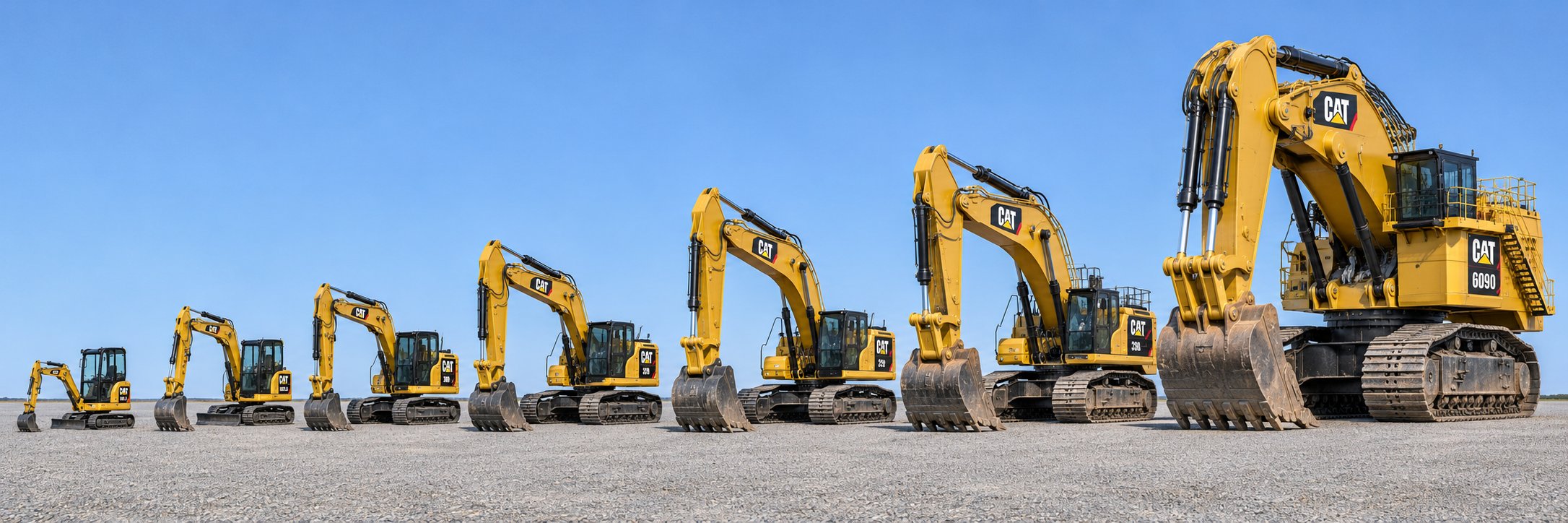
Picking the wrong size cat excavator is one of the most expensive mistakes a buyer can make. An undersized machine slows production and burns extra hours on every cycle. An oversized one drives up excavator cost through higher fuel consumption, pricier transport, and wasted capability you're paying for but never using. The key is matching the machine's weight class to the work it will actually perform — and Caterpillar's lineup makes that easier than most brands because it spans five distinct size classes, each engineered for a specific range of applications.
Mini and Compact Cat Excavators
If you picture a machine squeezing through a backyard gate or maneuvering beside a building foundation, you're looking at the mini and compact class. These caterpillar excavator models range from roughly 1 metric ton up to about 10 metric tons, with popular series falling in the 301 through 310 range. At the lighter end, sub-2-ton units like the 301.5 deliver around 21 horsepower and dig just over 8 feet — perfect for tight-access utility trenching. Step up to models like the 305 or 306 CR, and you'll find machines producing 45 to 56 horsepower with dig depths reaching 12 to 13.5 feet, capable enough for residential foundations and landscaping projects.
Transport is a major advantage here. Most compact models fit on a standard trailer with transport widths under 7 feet, and many feature zero or reduced tail swing for work near walls, fences, and underground utilities. For buyers searching for a used mini excavator for sale, this class consistently sees the highest resale volume — partly because contractors frequently rotate smaller machines as project needs shift. Models like the 308 CR and 309 CR sit at the upper boundary of this class, bridging the gap between compact versatility and the heavier production demands of standard machines.
Medium and Large Cat Excavators
Commercial site preparation, road building, heavy trenching, and demolition — these are the jobs where medium and large excavators earn their keep. Medium machines, spanning roughly 10 to 30 metric tons, include workhorses like the 313, 315, 320, and 325 families. The CAT 320 alone is often considered the fleet standard across the construction industry, delivering around 162 to 174 horsepower with a maximum dig depth near 22 feet. These units handle everything from utility trenches and small commercial foundations to truck loading and mass grading.
Large excavators push from 30 metric tons up to roughly 50 metric tons. Models in the 330 through 352 range produce anywhere from 201 to over 440 horsepower and dig 24 to 27 feet deep. They serve heavy infrastructure, quarry operations, and large-scale earthmoving where breakout force and lift capacity matter more than maneuverability. Transport requirements climb noticeably in this range — you'll typically need oversize trailers, and some jurisdictions require permits for machines exceeding certain width or weight thresholds.
When evaluating caterpillar excavators for sale in the medium and large classes, pay close attention to the GC suffix on certain models. Cat's GC variants (like the 320 GC or 330 GC) are value-focused configurations designed for lower acquisition and operating costs, which can be a smart choice for applications that don't demand maximum hydraulic output.
Mining-Class Machines
At the top of the lineup sit mining-class excavators — machines weighing 50 metric tons and well beyond. The CAT 374 tips the scales at roughly 162,900 pounds with 484 horsepower, while the massive CAT 395 reaches approximately 207,400 pounds and 542 horsepower with a dig depth exceeding 31 feet. These are purpose-built for mass excavation, open-pit mining, and quarry production environments where daily material movement is measured in thousands of tons.
Mining-class machines are rarely impulse purchases. They demand specialized hauling arrangements, dedicated maintenance programs, and operators with specific training. If you ever spot a caterpillar 235 excavator for sale — a legacy model from this heavyweight category — it's worth noting that older mining-class units can represent value, but parts sourcing and structural fatigue require careful evaluation before committing.
The table below summarizes each size class at a glance, giving you a quick reference for matching project demands to machine capability:
| Class Name | Typical Weight Range | Common Applications | Transport Notes |
|---|---|---|---|
| Mini / Compact | 1 – 10 metric tons | Residential construction, landscaping, utility trenching, tight-access work | Standard trailer; most models under 7 ft transport width |
| Small | 10 – 15 metric tons | Light commercial excavation, deeper utility runs, small road projects | Mid-size trailer; transport widths around 8 – 8.5 ft |
| Medium | 15 – 30 metric tons | Commercial site prep, road building, foundations, truck loading | Heavy-duty trailer; widths of 9 – 10.5 ft; may require permits |
| Large | 30 – 50 metric tons | Heavy infrastructure, quarry work, demolition, large earthmoving | Oversize trailer required; permits likely in most jurisdictions |
| Mining-Class | 50+ metric tons | Open-pit mining, mass excavation, large-scale quarry production | Specialized heavy haul; multi-axle trailers; route planning essential |
Knowing which class fits your workload is the first filter in any purchasing decision. But within each class, individual model numbers carry important information about relative size, generation, and configuration — details that directly affect parts availability, technology features, and pricing. Understanding that numbering system gives you a sharper lens for evaluating any listing you encounter.
Decoding Cat Excavator Model Numbers and What They Mean
Every listing for a cat excavator for sale includes a model number — 308, 320, 336, 340 — but those digits aren't random. They follow a deliberate logic that tells you the machine's relative size, its product family, and in many cases, its generation. Once you understand that logic, you can gauge what a machine is and roughly what it weighs before ever opening a spec sheet. That's a serious advantage when you're scanning dozens of results for excavators for sale near me and need to filter quickly.
How Cat Model Numbers Reveal Machine Size
Caterpillar's excavator lineup falls under the 3XX series. The "3" at the front identifies the product family — hydraulic excavators — while the remaining digits indicate relative size within that family. A smaller number means a smaller machine, and a larger number means a bigger one. Sounds simple? It is, by design. Caterpillar's own product identity team has confirmed that model number increments go up and down based on product size, keeping things intuitive for buyers and operators.
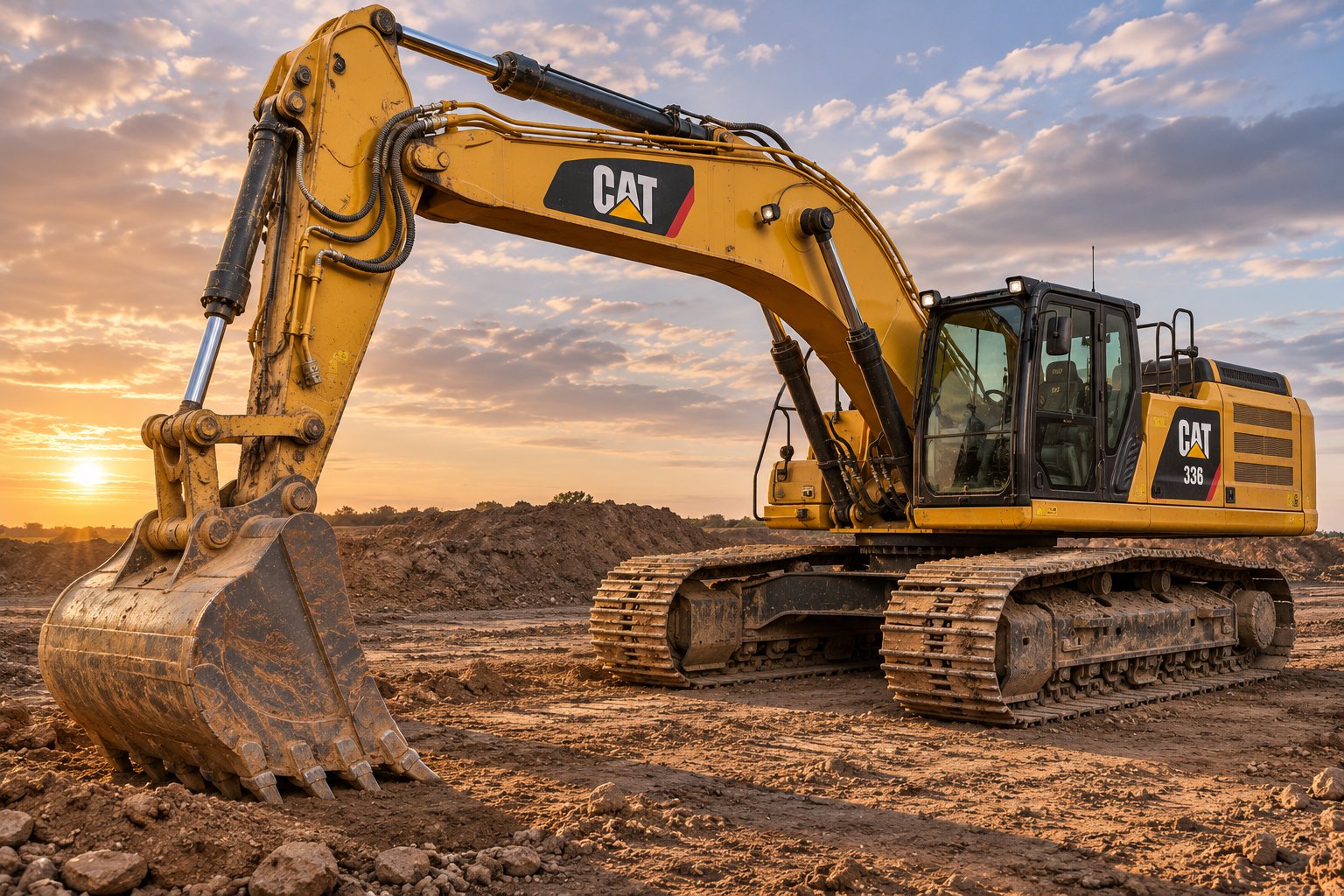
Here's how it works in practice. A Cat 308 is a compact excavator in the 8-to-10-metric-ton range. A Cat 320 is a medium machine around 20 to 22 metric tons — the industry's most recognized general-purpose excavator. A Cat 336 pushes into the large class at roughly 36 metric tons, built for heavy earthmoving and infrastructure. And if you spot a cat 340 excavator for sale, you're looking at a machine nearing the upper boundary of the large class, purpose-built for demanding production work. The numbering pattern holds all the way from the tiny 301.5 up through mining-class giants like the 395.
Caterpillar also produces cat wheel excavator models — designated with a "W" prefix, such as the M315 or M320 — which follow similar sizing logic but ride on rubber tires instead of tracks. These are less common on the resale market, yet they show up when buyers need road-mobile machines for utility or urban work.
Understanding Generation Suffixes and Variants
The number alone tells you size. The letters and suffixes after it tell you which generation or configuration you're dealing with — and this distinction matters far more than many buyers realize. Confusing a 308E2 with a 308B, or assuming a 305.5E2 is interchangeable with a 305D, can lead to costly mismatches in parts, technology compatibility, and resale value.
Historically, Caterpillar used series letters to mark generational updates: B, C, D, E, and so on. Each letter represented a meaningful upgrade cycle — new hydraulics, updated emissions compliance, revised cab ergonomics, or electronic system changes. Caterpillar's own excavator timeline highlights that the 320D introduced in 2007 brought significant engine optimization and emissions technology, and the Next Generation 320 launched in 2017 delivered up to 30% lower fuel consumption compared to its predecessor. Those aren't subtle differences — they directly affect your operating costs and what technology features the cab supports.
Beyond single-letter series designations, you'll also encounter suffixes that signal specific configuration types:
- CR — Compact Radius. Indicates a reduced or minimum tail swing design for tight-space work.
- E / E2 — Tier 4 emissions-era models, with E2 representing a further refinement within that generation.
- F — The generation following the E series on certain models, often incorporating upgraded hydraulics and electronics.
- GC — A value-focused configuration with lower acquisition and operating costs, simpler technology, and streamlined features for buyers who prioritize cost efficiency.
- XE — Caterpillar's premium tier, featuring the highest levels of technology, fuel efficiency, and productivity in the lineup.
More recently, Caterpillar eliminated the series letter entirely on its newest models. A current-production "320" no longer carries a suffix letter — the generation is identified through a three-character build number on the PIN plate instead. The company made this shift because, after nearly a century of generational updates, some product lines were running out of alphabet. For buyers, this means that when you see a plain "320" or "330" listed as new equipment, it's the latest generation. If the listing shows a letter like D, E2, or F, you're looking at an older production run.
To see how generational progression works in practice, here are example model histories for three popular size classes:
- 20-ton class: 320B → 320C → 320D → 320E → 320F → 320 (Next Gen) → 320 GC (Next Gen, value variant)
- 30-ton class: 330B → 330C → 330D → 330F → 330 (Next Gen) → 330 GC
- 8-ton compact class: 308C → 308E → 308E2 → 308 CR (Next Gen)
If you ever spot a cat 225 excavator for sale, you're looking at a piece of Caterpillar history — the 225 was the company's first customer-ready hydraulic excavator, introduced back in 1972. Legacy models like these still appear on the used market, and while they can be affordable entry points, parts availability and service support require extra due diligence.
Understanding these naming conventions transforms a confusing excavator sale near me listing into something immediately readable. You'll know whether the machine fits your size requirements, which technology generation it belongs to, and whether its configuration matches the work you need it to do. That clarity becomes even more valuable when you're comparing specific models side by side — which is exactly where the decision sharpens.
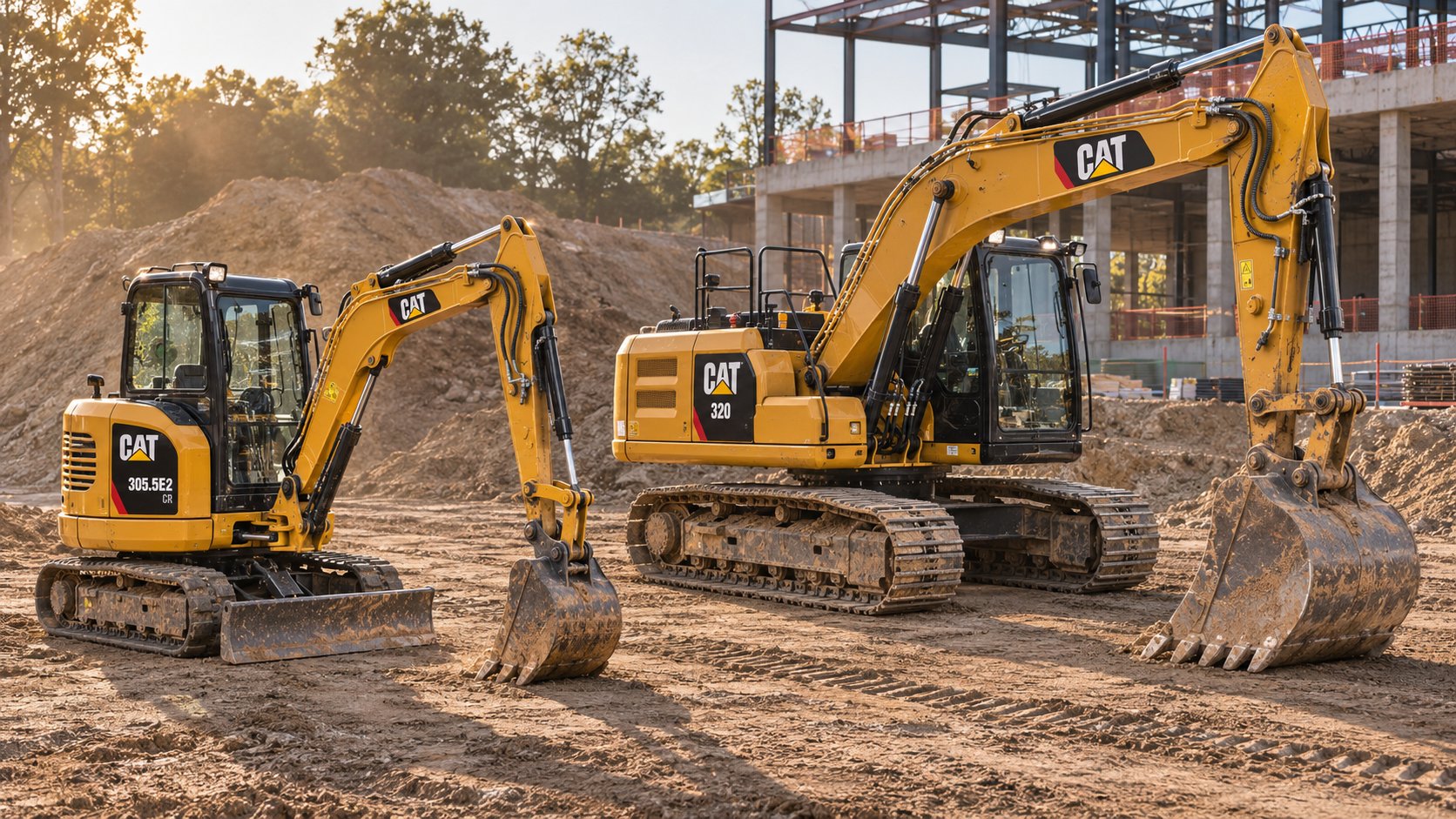
Popular Cat Excavator Models Compared Side by Side
Reading a model number correctly is one thing. Knowing how specific models stack up against each other in real performance terms? That's what actually sharpens your purchasing decision. Whether you're scanning listings for a caterpillar mini excavator for sale or evaluating mid-size workhorses for a commercial fleet, seeing the differences laid out in one place saves hours of tab-switching and spec-sheet hunting.
Popular Mini and Small Cat Excavator Models Compared
The 303 through 310 range covers everything from tight-access residential trenching to upper-compact production work. These are the models that dominate the used mini excavator sale market, and for good reason — they balance capability with transportability in ways that larger machines simply can't match.
| Model | Approx. Operating Weight | Primary Applications | Key Differentiator |
|---|---|---|---|
| CAT 303 CR | ~7,000 – 8,500 lbs | Residential foundations, drainage, tight-lot utility work | Compact radius design fits through gates and narrow access points |
| CAT 304 | ~9,000 – 9,900 lbs | General-purpose compact site prep, light commercial excavation | Step up in dig depth (~11 ft) without a major jump in transport width |
| CAT 305 CR | ~11,000 – 12,700 lbs | Utility installation, grading, contractor fleet rotation | One of Cat's highest-volume compact sellers; strong resale demand |
| CAT 306 CR | ~15,800 lbs | Higher-production compact excavation, heavier trenching | ~55 HP and 13.5 ft dig depth push the upper boundary of compact class |
| CAT 308 CR | ~18,500 – 20,000 lbs | Broad-use trenching, truck loading, small commercial projects | Bridges compact and standard categories; versatile across job types |
| CAT 309 CR | ~21,100 lbs | Pipe work, variable-angle digging, constrained urban sites | Available with variable-angle boom (VAB) for tight-envelope work |
| CAT 310 | ~22,500 – 23,000 lbs | Utility trenching in urban environments, deeper compact excavation | 17 ft max dig depth — deepest in the compact lineup |
You'll notice the jump from a 305 to a 308 isn't just about weight — it's a shift in role. A 305 CR is your go-to compact fleet machine that handles a broad range of light-duty work. A cat 308b for sale, on the other hand, represents an older generation of the 308 platform weighing roughly 18,500 lbs with about 63 HP. It's still a capable machine, but buyers should understand the generational differences covered in the previous section before assuming it performs identically to the current 308 CR. If you come across a cat 309 for sale, expect a machine positioned at the upper edge of the compact envelope — ideal when you need more dig depth and hydraulic output without committing to a full mid-size excavator.
Mid-Size and Large Cat Excavator Models Compared
Stepping into the 320 family and above, you're looking at excavators for sale that form the backbone of commercial construction fleets worldwide. These machines handle everything from general site preparation and foundation work to heavy infrastructure and mass earthmoving. The performance gaps between models grow wider here, so matching the right unit to your production demands is critical.
| Model | Approx. Operating Weight | Primary Applications | Key Differentiator |
|---|---|---|---|
| CAT 320 | ~48,000 – 49,800 lbs | General excavation, foundations, truck loading, utility trenching | Industry's most recognized general-purpose excavator; GC variant available for cost-focused fleets |
| CAT 323 | ~55,100 lbs | Heavier sitework, higher-production loading cycles | Increased lift capacity and stability over the 320 platform |
| CAT 325 | ~62,600 lbs | Tool carrier roles, heavier bucket and attachment work | Built as a platform for demanding attachment use; strong hydraulic output |
| CAT 330 | ~68,100 – 69,200 lbs | Heavy production trenching, large pipe installation, mass grading | Available in standard and GC configurations; ~23.9 ft dig depth |
| CAT 335 | ~77,000 lbs | High-lift applications, heavier-class production digging | 273 HP provides the muscle for heavy attachments without jumping to the 336 class |
| CAT 340 | ~83,100 lbs | High-production digging, bulk loading, demanding earthmoving | 346 HP and ~26.9 ft dig depth; strongest in the standard production range |
Imagine you're deciding between a cat 325 excavator for sale and a 330. The 325 at roughly 62,600 lbs serves as an excellent tool carrier — it's built to handle heavier buckets and hydraulic attachments without the higher fuel consumption of a 330. The 330, though, delivers deeper dig depth and stronger cycle performance for sustained production work like mass trenching or large-scale truck loading. The right choice depends entirely on whether your bottleneck is attachment versatility or raw excavation output.
When to Consider Legacy and Discontinued Models
Older Caterpillar excavators haven't vanished from the market — they've settled into a value tier that can work well for the right buyer. Models like the 320C, the 225 (Caterpillar's first hydraulic excavator from 1972), and the 235 still surface regularly in resale listings. Their lower price points attract buyers working within tight budgets or tackling projects where the latest technology features aren't essential.
The trade-off is real, though. Parts availability narrows as models age, and service support from authorized dealers becomes less predictable for units that left production decades ago. Before purchasing any legacy machine, verify the following:
- Whether critical wear components — undercarriage parts, hydraulic seals, engine filters — are still manufactured or available through aftermarket channels
- Whether your nearest Cat dealer or independent shop has experience servicing that specific generation
- Whether the machine's emissions classification creates any compliance limitations in your operating region
Legacy models can deliver solid value, especially for intermittent-use applications where accumulating high annual hours isn't the plan. Just make sure the savings on the purchase price don't get consumed by parts scarcity and extended downtime.
Comparing models on paper reveals capability differences. But the factor that often matters most — especially for buyers weighing new versus used options — is price. And the variables that drive used Cat excavator pricing aren't always obvious from a listing page alone.
New vs. Used Cat Excavators and What Drives Pricing
Spec sheets and model comparisons can narrow your options to a handful of candidates. The question that usually follows is the one that separates cautious buyers from confident ones: should you buy new or used? The answer isn't a blanket recommendation — it depends on how you weigh warranty protection against depreciation exposure, and whether your project timeline justifies paying a premium for the latest technology. Understanding the economics behind both paths gives you a concrete framework for deciding.
New Cat Excavators and When They Make Financial Sense
A brand-new Caterpillar excavator comes with advantages that no used machine can fully replicate. Full factory warranty coverage — typically spanning a minimum of 12 months or 2,000 hours on standard components — means unexpected repair costs are largely absorbed by the manufacturer during the most critical break-in period. You also get the latest EPA Tier 4 Final emissions compliance built in, which matters if you're bidding on government contracts or working in jurisdictions with strict environmental requirements.
Technology is another factor that tilts the math toward new. Current-generation Cat excavators ship with integrated grade-control readiness, Product Link telematics, and touchscreen cab monitors that older models either lack entirely or require expensive retrofitting to support. For fleet managers tracking fuel consumption, idle time, and location across multiple job sites, these systems pay for themselves through operational visibility.
Predictable maintenance scheduling rounds out the case. A new machine arrives with a clean slate — no deferred services, no unknown repair history, and no hidden wear from a previous operator's habits. You control every oil change, every filter swap, and every greasing interval from hour one.
That said, exact pricing for new units varies significantly by dealer, geographic region, and machine configuration. A base-model 320 GC and a fully loaded 320 with advanced hydraulics, a thumb-ready circuit, and grade-control hardware can differ by tens of thousands of dollars. The smart move is requesting itemized quotes from multiple authorized dealers rather than anchoring to a single number.
Key Factors That Drive Used Cat Excavator Prices
Here's where the economics get interesting for budget-conscious buyers. Heavy equipment — excavators included — follows a depreciation curve that hits hardest in the earliest years of ownership. Industry data consistently shows machines losing between 20% and 40% of their original retail value during the first year alone. After that initial drop, the annual rate of decline typically settles into the 10% to 15% range, calculated on the remaining book value rather than the original sticker price.
What does that mean practically? A Cat 323 excavator for sale with two years of ownership and moderate hours may have already shed a substantial portion of its original cost — yet it still carries years of productive life and potentially some remaining powertrain warranty. For buyers who don't need the absolute latest technology generation, this "lightly used" sweet spot often delivers the strongest return per dollar spent.
The variables that separate a fairly priced used excavator for sale from an overpriced one aren't always obvious in a listing photo. Here are the primary pricing drivers you should evaluate:
- Machine hours — The single most scrutinized number on any used listing. Hours correlate directly with component wear and proximity to major service intervals.
- Model year and generation — A newer generation (e.g., Next Gen 320 vs. 320E) commands a premium due to technology improvements, fuel efficiency, and emissions compliance.
- Maintenance records — Documented service history with dated routine maintenance logs showing oil changes, part replacements, and fluid analyses significantly strengthens a machine's resale position. Missing records create uncertainty — and uncertainty drives prices down or should.
- Undercarriage condition — On a crawler excavator, the undercarriage can represent 50% or more of total maintenance costs over the machine's life. Worn tracks, rollers, and sprockets translate directly to thousands of dollars in near-term replacement expense.
- Geographic location — Regional demand fluctuations, local construction activity, and even seasonal buying patterns influence asking prices. A machine listed in a market saturated with used inventory may be priced significantly lower than the same model in a region experiencing a construction boom.
- Attachment packages — A unit bundled with buckets, a hydraulic thumb, or a coupler system can justify a higher price — but only if those attachments match the buyer's intended work.
- Cat Certified Used vs. non-certified — This distinction deserves its own explanation because most buyers don't fully understand what it means.
Cat Certified Used equipment has passed a rigorous 140-plus-point inspection covering the engine, transmission, hydraulics, undercarriage, electrical systems, and cab. Machines must typically be no more than five years old, fall within program-defined hour limits, and carry documented maintenance history with genuine Cat parts. Components rated "poor" during inspection must be replaced before the unit qualifies for certification. Qualifying machines may carry limited warranty coverage on powertrain and hydraulic components — a meaningful trust signal that reduces the risk of surprise failures after purchase.
Non-certified used cat excavators, by contrast, are sold based on whatever condition documentation the seller provides — which can range from comprehensive to nonexistent. That doesn't automatically make them bad purchases, but it does shift the entire inspection burden onto the buyer. If you're evaluating a used cat 308 excavator for sale from a private seller with no service records, you're accepting significantly more risk than you would with a certified unit from a dealer.
Understanding Machine Hours as a Value Indicator
Machine hours function like an odometer on a truck — they tell you how much work the equipment has performed. But unlike highway mileage, the significance of excavator hours varies by machine class and application intensity.
A general framework helps set expectations. For mini and compact excavators (the models most buyers encounter when browsing used cat mini excavators for sale), typical annual usage often ranges from 600 to 1,000 hours. A compact machine showing 3,000 hours at five years old falls within a comfortable usage range. The same unit showing 7,000 hours has been worked significantly harder than average, which means major component replacements — hydraulic pumps, swing drives, undercarriage overhauls — are approaching faster.
Mid-size excavators like the 320 and 323 families commonly accumulate 1,000 to 1,500 hours per year in active fleet use. A 308 cat excavator for sale with 4,500 hours at three years old sits squarely within normal bounds. Push past 8,000 to 10,000 hours on a mid-size unit, and you're entering territory where buyers should expect documented evidence of completed major services — or price the machine accordingly to budget for them.
Large and mining-class excavators can sustain higher hour accumulations simply because they're engineered for continuous heavy production. Still, psychological thresholds matter in resale markets. Listings crossing round numbers — 5,000, 10,000, 15,000 hours — often see a noticeable dip in buyer interest and, consequently, pricing. Sellers who list just below these thresholds tend to capture stronger offers.
One critical nuance: hours alone never tell the full story. A machine with 6,000 meticulously maintained hours — complete with fluid analysis reports, on-schedule filter changes, and documented undercarriage adjustments — can be a far better investment than a 3,000-hour unit with zero service records and visible signs of deferred maintenance. Always pair the hour reading with the maintenance documentation before judging value.
Pricing knowledge protects your budget. But even the most favorable price means nothing if the machine you're buying carries hidden mechanical problems. That's why a structured inspection process — one that goes well beyond a walk-around and a quick listen — is the next essential step before any purchase commitment.
The Essential Used Cat Excavator Inspection Checklist
A favorable price and reasonable hours can make any listing look attractive — but fresh paint and a tidy photo set have a way of hiding the expenses that matter most. Whether you're evaluating used mini excavators for sale at an auction yard or reviewing a dealer's certified inventory, the physical inspection is where you separate a smart purchase from a five-figure mistake. Two machines showing identical hours can carry completely different mechanical histories depending on application, environment, and maintenance discipline. Your job is to estimate how many productive, low-surprise hours remain — and what it will cost to reach them.
This checklist applies equally whether you're looking at a compact unit like a cat 304 for sale or a full-size production machine. The components differ in scale, but the inspection logic stays the same.
Undercarriage and Structural Inspection Points
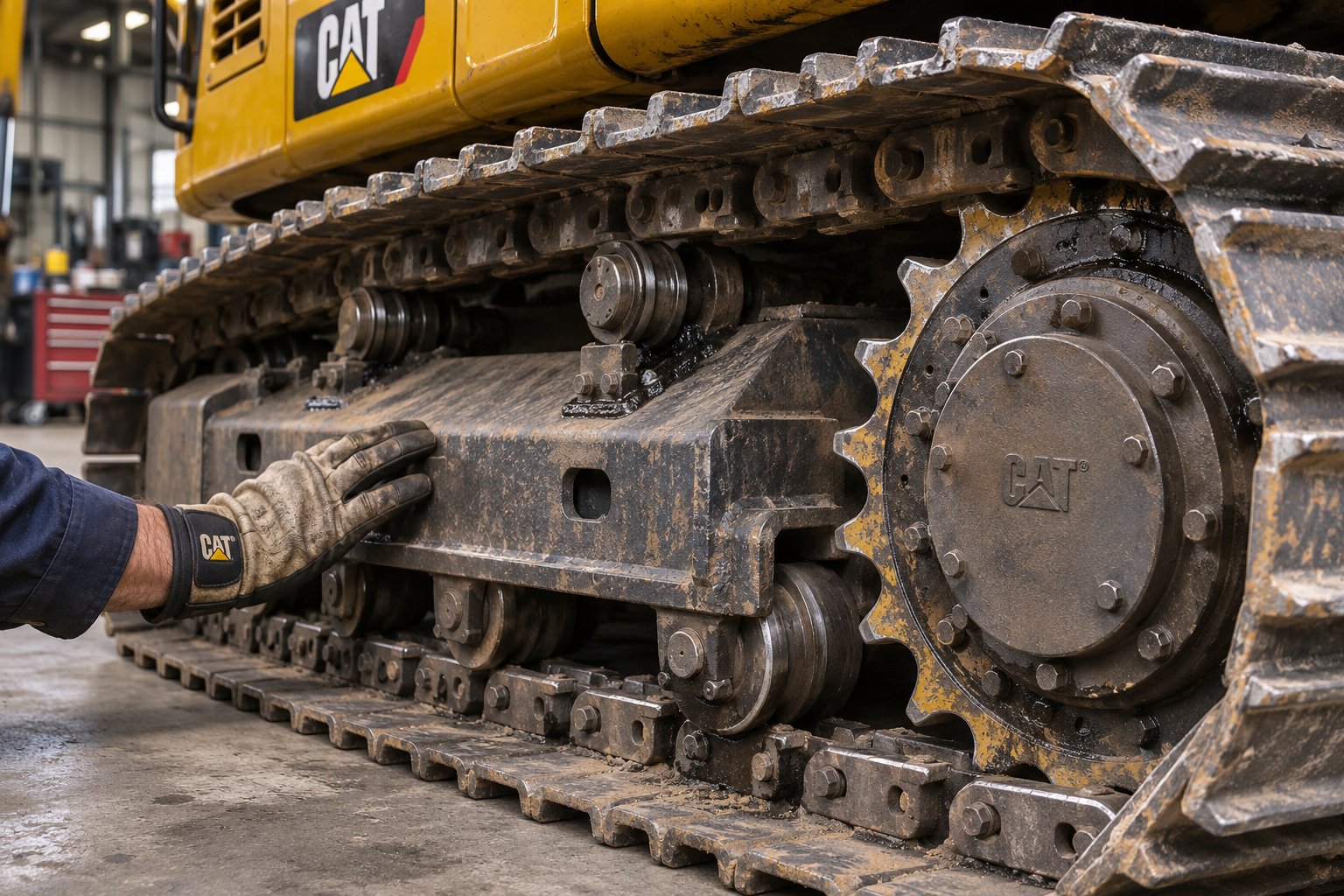
On any crawler excavator for sale, the undercarriage is the single most expensive wear system over the machine's lifetime. Industry estimates suggest undercarriage maintenance can represent up to half of total owning and operating costs. Skipping this part of the inspection — or rushing through it — is where buyers lose the most money.
OEM wear charts express component condition as a percentage from 0% (new) to 100% (fully consumed), and the five primary systems wear together rather than independently. A track chain at 70% wear paired with near-new rollers and sprockets tells a very different story than even wear across all five components. Follow this sequence to evaluate the undercarriage and structural elements systematically:
- Walk the full track length on both sides. Inspect track pads or shoes for cracking, uneven wear patterns, and missing grousers. Measure remaining pad depth if a wear gauge is available.
- Examine the sprockets. Look for hooked, chipped, or worn tooth profiles — these accelerate chain wear and signal that the drive system is approaching replacement.
- Check idlers and rollers. Spin each roller by hand if possible. Roughness, grinding, or visible oil seepage from seals indicates internal bearing failure. Flat spots on idlers reveal extended stationary periods or misalignment.
- Assess track chain tension and pin-bushing condition. Loose tracks can mean normal adjustment is needed — or that pins and bushings are worn past their turn limit. If the bushing already shows wear on the top half, it has been turned once, and the next step is full chain replacement rather than another adjustment.
- Inspect the boom, stick, and bucket pins. Grab the bucket with the machine powered down and check for excessive play at each pin joint. Slop at these connection points costs digging precision and accelerates wear on bushings and bores.
- Examine structural welds and high-stress areas. Look closely at the boom-to-stick transition, pin boss areas, and the main frame. Welds that don't look factory — uneven bead patterns, grinding marks, or color mismatches — often indicate previous structural damage. Fresh paint around high-stress zones deserves extra scrutiny.
- Rotate the upper structure through a full swing. Listen for grinding, roughness, or uneven resistance. Swing bearing replacement is a major expense that can rival a full undercarriage overhaul on mid-size and larger machines.
If you're assessing used excavators for sale in the mini and compact classes, the same principles apply — the components are just smaller and less costly to replace individually. Even so, a compact machine needing a full undercarriage rebuild can easily exceed what the buyer expected to spend, making a careful walk-around essential regardless of size class.
Hydraulic System and Engine Health Checks
Hydraulics are the heart of every excavator. If the undercarriage is where deferred maintenance hides the biggest dollar amounts, the hydraulic and engine systems are where it hides the biggest operational surprises.
Start with a visual sweep. Walk the machine looking for weeping hoses, damp fittings, and seepage around cylinder rods — especially where fittings show corrosion, which tells you something about the environment the machine worked in. Run your hand along each exposed cylinder rod. Scoring, pitting, or dents on a rod surface will chew through seals and lead to a reseal or full cylinder replacement.
Then check the hydraulic fluid itself. Pull a sample if possible. Milky or discolored fluid suggests water contamination or internal component wear — either one means a serious conversation about price. Clear, amber-colored fluid at the correct level is what you want to see.
Operate every function: boom up and down, stick in and out, bucket curl and dump, full left and right swing, and forward and reverse travel. Watch for hesitation, jerkiness, or any noise that changes under load. A short warm-up cycle is worth the time — some hydraulic problems are invisible when the oil is cold and obvious once it reaches operating temperature. After warming up, raise the boom fully and let the machine sit idle. If the boom drifts downward, you're looking at internal leakage in the cylinders or control valve.
For the engine, try to start the machine cold. A unit that needs extended cranking or starting fluid when cold but fires instantly when warm is hiding something. Watch the exhaust closely during the first minute: blue smoke points to oil burning past worn rings or valve seals, black smoke indicates fuel system problems, and white smoke can mean coolant is reaching the combustion chamber. Any of the three warrants a mechanic's evaluation before you commit.
Listen for knocking, tapping, or irregular idle. Check for blow-by at the crankcase breather — excessive vapor escaping under pressure suggests worn piston rings or cylinder walls. And don't overlook the cooling system: open the radiator cap on a cool machine, inspect for contamination or oil mixing into the coolant, and check whether debris is packed into the radiator fins. Neglected cooling systems rarely exist in isolation — if the radiator is clogged, other maintenance likely slipped too.
Perhaps the most valuable step costs the least. Laboratory oil analysis reads the metals suspended in engine and hydraulic fluid — iron, copper, lead, aluminum — which can reveal internal component wear that no walk-around will catch. A single sample is a snapshot, but a sequence of samples taken across the machine's service life shows whether wear is stable or accelerating. If the seller has fluid analysis history, review it. If they don't, take your own samples before purchase. The cost of a lab report is trivial compared to an engine rebuild. When someone asks how much is an excavator really worth, the answer often lives in these fluid reports more than in the listing price.
Cab, Electronics, and Attachment Compatibility
Modern Cat excavators — even compact models — include sophisticated electronics that directly affect productivity and resale value. Grade-control readiness, Product Link telematics, touchscreen monitors, and integrated camera systems all need verification during your inspection. Power up every screen, toggle through menus, and confirm that GPS and telematics modules are communicating properly. A non-functional monitor or a disconnected telematics unit might seem minor, but replacement costs add up quickly, and a buyer evaluating something like a cat 311b for sale from an older generation should verify which electronic systems were standard versus optional on that production run.
Inside the cab, test every control, switch, and gauge. HVAC performance, seat condition, and visibility through clean glass all affect operator productivity during long shifts — and the general care of the cab often mirrors how the rest of the machine was maintained. Check the rollover protective structure (ROPS) for any signs of damage, welding, or modification. Documented alteration to a ROPS is a safety issue, not a cosmetic one.
Finally, verify coupler compatibility with the attachments you plan to use. A machine bundled with a quick coupler system that doesn't match your existing bucket or breaker inventory means additional expense before the excavator does its first day of real work. If you're buying a machine specifically to run hydraulic attachments — hammers, grapples, augers — confirm that the auxiliary hydraulic circuit delivers the flow and pressure those tools require.
Always request a full maintenance and repair history before committing to a purchase. A documented service record is the single most reliable indicator of how a machine was cared for — and how much productive life it has left.
An inspection converts uncertainty into numbers. Every worn component, every deferred service, and every upcoming replacement interval translates into a dollar figure you can subtract from the asking price — or walk away from entirely. But knowing what to inspect is only half the equation. Where you buy determines the level of transparency, support, and risk you're working with, and the differences between purchasing channels are larger than most buyers expect.
Where to Buy a Cat Excavator and How Channels Compare
You know the size class you need, you've identified two or three candidate models, you understand what drives pricing, and you've got an inspection checklist ready to deploy. The next question shapes how much risk — and how much support — you're taking on: where do you actually buy the machine? Not all selling channels operate the same way, and the difference between purchasing from an authorized dealer, an online auction, an aggregator marketplace, a private seller, or a specialized used equipment dealer goes far beyond the excavator price on the listing page. Each channel carries its own combination of selection, buyer protection, and trade-offs that directly affect your purchase experience and long-term satisfaction.
Authorized Cat Dealers vs. Online Auction Platforms
Authorized Caterpillar dealers are the most controlled buying environment available. These dealerships sell new equipment, offer manufacturer-backed financing, and run Cat Certified Used programs that put units through rigorous multi-point inspections before they reach the lot. If a machine qualifies, it may carry limited powertrain and hydraulic warranty coverage — a meaningful safety net, especially on higher-value purchases. The trade-off is straightforward: you pay a premium for that certainty. Dealer pricing on a used Caterpillar 320 for sale, for example, will almost always sit above what the same model fetches at auction or through a private seller. But that premium buys you documented history, recourse if something goes wrong, and ongoing parts and service support from the same network.
Online auction platforms flip that equation. Ritchie Bros. — the world's largest industrial auctioneer, with $15.9 billion in gross transaction value for FY2024 — and its integrated IronPlanet platform give buyers access to thousands of machines across 170 countries. IronPlanet's IronClad Assurance program sends professional inspectors to evaluate equipment before bidding opens, producing detailed reports with photographs, system ratings, and fluid analysis for machines older than one year. That inspection transparency reduces sight-unseen risk significantly, but it doesn't replace the warranty coverage and post-sale service an authorized dealer provides.
The auction model works well for experienced buyers who can evaluate inspection reports confidently and don't need dealer-level hand-holding. Competitive bidding can yield favorable pricing, especially on models that are oversupplied in a particular region. The risk? Once the hammer drops, the sale is final. If you missed something in the report — or if the report didn't catch it — the cost is yours.
Equipment Aggregators and Private Sellers
Aggregator marketplaces take a different approach entirely. Sites like Machinery Trader, Equipment Trader, and Mascus compile listings from dealers, contractors, individual sellers, and auction houses into a single searchable database. Machinery Trader, for instance, features listings across dozens of equipment categories — including excavators — from its network of Sandhills Global platforms, allowing buyers to filter by year, hours, price, and location. The breadth is impressive: you can find everything from a cat 308 excavator for sale listed by a regional dealer to a caterpillar 304 for sale posted by a retiring contractor.
The catch with aggregators is seller variability. One listing might come from an authorized Cat dealer with full service documentation. The next might come from an unknown seller offering a single blurry photo and no maintenance history. The platform itself isn't vouching for listing quality — it's connecting you to sellers and leaving the vetting to you. That means your inspection skills and due diligence become the only buyer protection you've got on many of these listings.
Private sales by owner sit at the far end of the risk spectrum. They can deliver the lowest purchase prices because there's no dealer margin, no auction commission, and no platform fee built into the number. But everything that a dealer or auction platform handles — title verification, lien checks, condition documentation — falls squarely on the buyer's shoulders. Equipment financing experts have documented cases where buyers purchased equipment from a private seller only to discover months later that a blanket lien from the seller's bank still attached to the machine — resulting in the buyer losing both the equipment and the money they paid. A UCC search can uncover most liens, but it isn't foolproof, especially when equipment has changed hands multiple times. If you're buying privately, conduct your own UCC search, demand a complete paper trail back to the original purchase, and recognize that you're accepting a level of title risk that dealer and auction purchases largely eliminate.
Specialized used equipment dealers occupy a middle ground that's worth understanding. These are businesses focused specifically on sourcing, inspecting, and reselling used heavy machinery — often with deeper expertise in specific brands or equipment categories than a general aggregator listing can provide. They typically offer direct communication with a sales team who can discuss model availability, configuration details, and budget alignment before you commit to anything. The level of inspection and documentation varies by dealer, so asking the right questions upfront is essential.
The table below lays out how each channel stacks up across the factors that matter most to buyers evaluating caterpillar mini excavators and larger production models alike:
| Channel Type | Typical Price Range | Warranty / Support | Selection Size | Buyer Risk Level |
|---|---|---|---|---|
| Specialized Used Equipment Dealer (e.g., JIUHONG) | Competitive; negotiable based on model and configuration | Direct sales team consultation; condition verification before purchase | Curated inventory of verified used Cat models — compact through large class | Low to Moderate — direct communication and verified listings reduce unknowns |
| Authorized Cat Dealer | Highest; reflects warranty, certification, and service support | Cat Certified Used warranty; full dealer service and parts network | Moderate — limited to dealer's own inventory and trade-ins | Lowest — manufacturer-backed inspection and warranty coverage |
| Online Auction Platform (Ritchie Bros., IronPlanet) | Market-driven; competitive bidding can yield below-retail pricing | IronClad Assurance inspection reports; no post-sale warranty | Very large — thousands of units across global locations | Moderate — inspection reports help, but sales are final |
| Equipment Aggregator (Machinery Trader, Mascus, Equipment Trader) | Wide range; varies dramatically by individual seller | Depends entirely on the listing seller — none from the platform itself | Very large — compiled from dealers, auctions, and private sellers | Moderate to High — seller quality and documentation vary significantly |
| Private Seller / By Owner | Lowest potential price; no dealer margin or platform fees | None — buyer assumes all inspection and title verification responsibility | Limited — individual listings only | Highest — lien risk, no recourse, documentation often incomplete |
Notice how the channels don't rank neatly from "best" to "worst." A contractor with strong mechanical evaluation skills and a trusted independent inspector might thrive buying at auction or from a private seller — and pocket meaningful savings. A first-time buyer purchasing a cat 304 mini excavator for sale for a new landscaping business might be better served working with a dealer or a specialized used equipment source like JIUHONG's Caterpillar excavator collection, where you can browse available compact and larger models, discuss specific configuration needs with the sales team, and get clarity on condition before committing. The right channel depends on your experience level, your tolerance for risk, and how much of the due diligence process you're prepared to handle yourself.
Whichever path you take, one reality stays constant: the purchase price is only the beginning of your total financial commitment. Transport, insurance, maintenance schedules, attachment compatibility, and eventual resale value all add layers to the real cost of putting an excavator to work — and most buyers underestimate at least one of them.
Attachments, Financing, and the True Cost of Owning a Cat Excavator
The listing price on any cat excavators for sale is the number that gets all the attention — but it's rarely the number that determines whether you made a profitable investment or an expensive mistake. Two topics that almost never appear in marketplace listings deserve serious consideration before you sign anything: attachment compatibility and total cost of ownership. The first affects what work the machine can actually perform. The second determines what that work costs you over time. Get either one wrong, and the "deal" you thought you found starts eroding the moment the excavator hits your job site.
Common Cat Excavator Attachments and How They Affect Your Purchase
An excavator without the right attachments is a machine waiting for a purpose. Most buyers already know they'll need a bucket — but which type, which size, and which coupler interface? The answers should influence your excavator selection just as much as dig depth or operating weight. Attachment compatibility isn't universal across brands or even across models within the same brand. As industry compatibility research has documented, even a few millimeters of difference in pin diameter or center distance can prevent an attachment from mounting safely — and force costly returns or custom fabrication.
Here are the most common attachment categories you'll encounter when building out a Caterpillar used machine for production work:
- General Purpose (GP) Buckets — The standard digging bucket for mixed soil conditions; available in widths from 12 inches to over 60 inches depending on machine class.
- Heavy Duty (HD) Buckets — Reinforced sidewalls and cutting edges for rocky ground, demolition debris, and abrasive materials that would shorten a GP bucket's life.
- Ditching / Grading Buckets — Wide, flat-bottom profiles designed for slope finishing, channel grading, and cleanup work where precision matters more than breakout force.
- Hydraulic Thumbs — Mounted opposite the bucket, these clamp irregularly shaped material like stumps, concrete chunks, and pipe sections that a bucket alone can't grip.
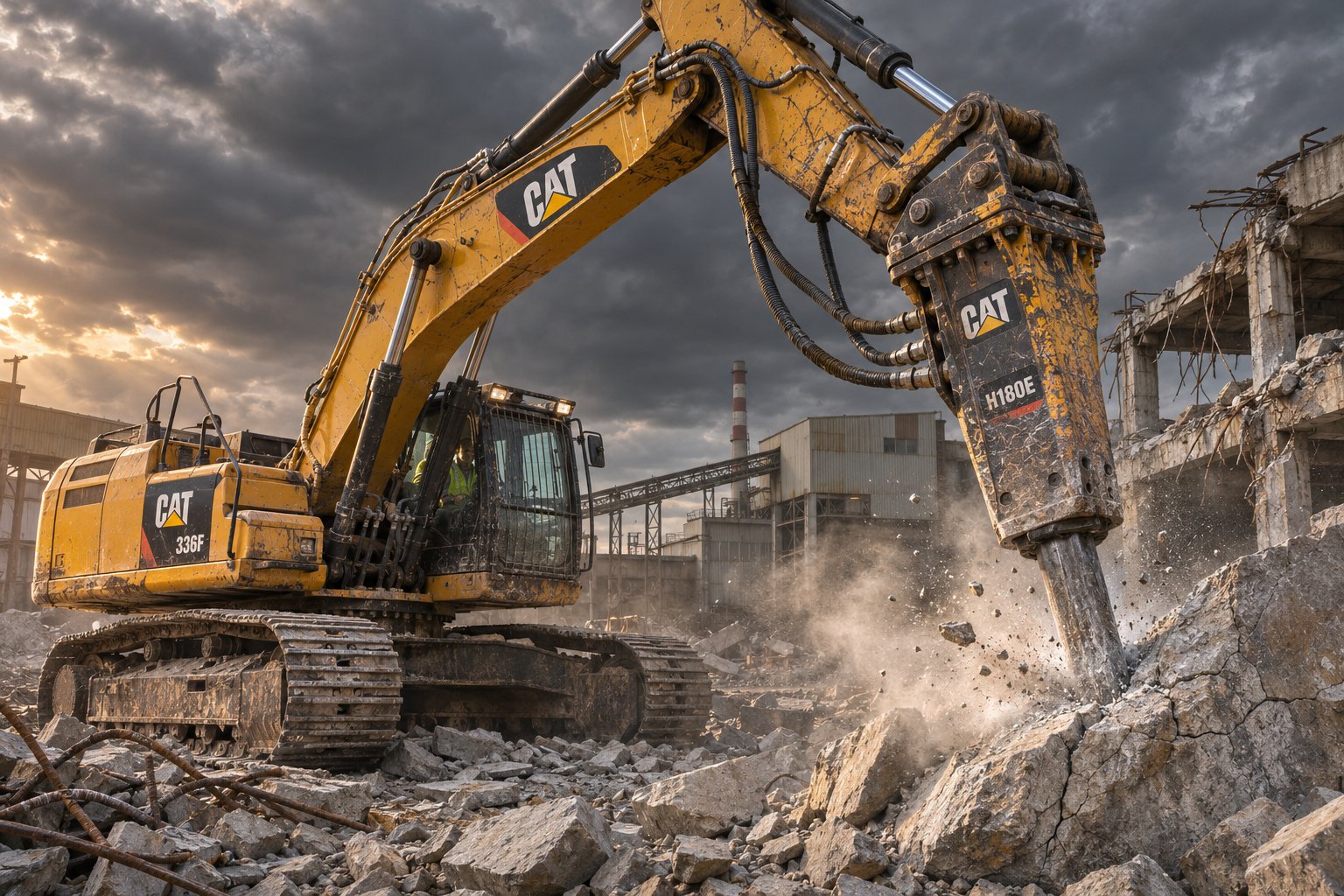
- Breakers / Hammers — Hydraulic impact tools for rock breaking, concrete demolition, and trench work in hard material; require high-flow auxiliary circuits on most mid-size and larger machines.
- Augers — Rotary drilling attachments for fence posts, sign poles, pier foundations, and utility boring; demand steady hydraulic flow and often a case drain line that not all machines provide standard.
- Grapples — Sorting, handling, and loading attachments used heavily in demolition, scrap, and forestry; rotating models require an additional hydraulic circuit beyond the standard auxiliary.
- Quick Couplers — Mounting interfaces that allow operators to swap attachments from the cab in seconds rather than manually pulling pins. Coupler standards vary — Cat's Pin Grabber, S-type, and CW-series are not interchangeable without adapter plates.
Why does this matter at the buying stage? Because the excavator you choose dictates which coupler system you commit to, which hydraulic flow rates your attachments can draw from, and which pin geometries your existing attachment inventory fits. If you already own a cat 306 for sale-class machine and a set of S-45 coupler-compatible buckets, buying a replacement excavator with a different coupler standard means re-purchasing attachments or adding adapter plates — an expense that rarely appears in anyone's budget until it's too late. Buyers searching for a compact excavator for sale near me should verify pin dimensions and coupler type before fixating on price.
Calculating Total Cost of Ownership Beyond Purchase Price
Imagine buying a used Cat 313 — solid hours, clean inspection, fair price. Six months later, you've spent nearly as much on transport, undercarriage components, insurance, and deferred maintenance as you paid for the machine itself. That scenario happens more often than sellers would like you to believe, and it's entirely avoidable if you calculate total cost of ownership (TCO) before committing rather than after.
TCO captures every dollar the machine costs you from acquisition day to the day you sell or trade it. Here's the full cost picture most buyers underestimate:
- Purchase or financing costs — The sticker price is just the starting point. If you're financing, factor in interest over the loan term, origination fees, and any required down payment. Even a few percentage points in rate difference can add thousands over a multi-year term.
- Transport and delivery — Moving a 50,000-lb excavator across state lines isn't cheap. Oversize loads may require permits, pilot cars, and route planning. Budget transport both to the initial job site and between future sites.
- Insurance — Equipment insurance premiums vary by machine value, geographic risk, and whether the unit is stored on-site or in a secured yard. Don't wait until after purchase to get quotes.
- Fuel consumption — A mid-size Cat excavator running eight hours daily at moderate throttle consumes significantly more fuel than a compact unit doing light-duty work. Estimate fuel costs against your expected utilization, not against a best-case idle scenario.
- Preventive maintenance schedules — Oil changes, hydraulic fluid replacement, filter swaps, greasing intervals, and coolant flushes follow manufacturer-recommended hour intervals. Skipping or deferring these services doesn't save money — it shifts costs into larger, less predictable repairs later.
- Undercarriage replacement intervals — On crawler excavators, track pads, rollers, idlers, sprockets, and chain components wear as a system. A full undercarriage replacement on a mid-size machine can run $15,000 to $25,000 or more depending on the model.
- Resale value — The amount you recover when the machine leaves your fleet offsets your total ownership cost. Well-maintained Caterpillar excavators with documented service histories consistently command stronger resale prices — which is one reason keeping records matters from day one.
Financing structures deserve a closer look because they directly shape your cash flow. Heavy equipment financing generally falls into three categories. Traditional term loans let you own the machine outright once the balance is paid; the equipment itself typically serves as collateral, and terms commonly range from two to seven years depending on the lender. Lease-to-own arrangements function similarly but structure payments as a lease with a buyout option at the end — useful if you want lower monthly payments during the lease period and the flexibility to return or purchase the unit when the term expires. Dealer financing programs, offered through authorized Cat dealers and some specialized used equipment sellers, can bundle competitive rates with service packages or extended warranty options. Some dealers periodically offer promotional financing terms — reduced rates or deferred payments — especially when moving older inventory or during seasonal slowdowns.
Whichever structure you choose, the key is calculating the total financed cost (principal plus all interest and fees) and comparing it against projected revenue the machine will generate. A cat 313b for sale at a low purchase price financed at a high interest rate can end up costing more over five years than a pricier unit financed through a dealer's promotional program.
First-Time Buyer Considerations
Experienced fleet managers already budget for these variables instinctively. First-time buyers — especially contractors stepping up from renting to owning — often discover them the hard way. A few practical concerns deserve attention before your first excavator excavator purchase closes:
Licensing and permitting. Requirements vary by jurisdiction. Some states require specific operator certifications or business licenses before heavy equipment can be operated on public-access job sites. Municipal permits may be needed for equipment transport on certain roads. Research your local regulations before assuming you can put a newly purchased machine to work immediately.
Transport logistics. Moving equipment between job sites isn't as simple as driving it down the road — although you'll see it done. Tracked machines damage pavement, and most local codes prohibit tracked travel on public roads. You'll need a trailer rated for your machine's transport weight, a tow vehicle with adequate capacity, and potentially escort vehicles for oversize loads. If you don't own hauling equipment, factor third-party transport costs into every job estimate.
Secure storage and maintenance planning. An excavator sitting unprotected on an open lot invites theft, vandalism, weather damage, and insurance complications. Secure storage — whether a fenced yard, locked facility, or covered enclosure — protects your investment and often satisfies insurance policy requirements. Similarly, establish a relationship with a qualified service provider before you need one. Waiting until something breaks to find a mechanic who knows Cat hydraulic systems is a recipe for extended downtime.
If you're a first-time buyer browsing used mini excavators for sale near me, starting with a compact model in the 303 to 308 range often makes sense. The lower acquisition cost, simpler transport requirements, and more manageable maintenance expenses let you build operational experience without overextending financially — and the strong resale market for compact Caterpillar units means your exit strategy stays flexible as your business grows.
Every cost element discussed here — attachments, financing, maintenance, transport, storage — rolls into the real number that determines whether your purchase was a sound investment. Keeping that total picture in focus as you finalize your decision is what separates buyers who build profitable fleets from those who just buy machines.
Your Next Steps to Finding the Right Cat Excavator
You've covered a lot of ground — size classes, model naming conventions, pricing drivers, inspection sequences, buying channels, attachment compatibility, and total cost of ownership. That's a significant amount of knowledge to absorb, but it all distills into a surprisingly straightforward decision workflow. The buyers who end up satisfied with their purchase aren't necessarily the ones who found the lowest price. They're the ones who followed a logical sequence and refused to skip steps along the way.
Match Your Project Needs to the Right Cat Excavator Class
Start with the work, not the listing. What are you digging, how deep, and how much material moves per day? Those answers point you to a size class — compact for residential and utility projects, medium for commercial site prep and infrastructure, large or mining-class for mass earthmoving and quarry production. From there, narrow to specific models within that class. A contractor who needs a versatile compact unit for landscaping and light trenching lands somewhere in the 305 to 308 range. A fleet manager replacing a production workhorse is probably comparing the 320, 323, or 330 families. Someone exploring a Caterpillar 395 excavator for sale is operating at a scale where daily tonnage targets drive every decision.
Once you've identified your target models, evaluate new versus used based on budget, project duration, and how much warranty coverage matters for your operation. Lightly used Caterpillar excavators — two to four years old with moderate hours and documented service history — often represent the strongest value for buyers who don't need the latest technology generation. New machines make financial sense when warranty protection, emissions compliance, and integrated telematics are non-negotiable requirements.
Start Comparing Available Cat Excavators
With your target size class and model shortlist defined, apply the inspection checklist and pricing framework from this guide to every listing you evaluate. Check undercarriage wear percentages, request fluid analysis histories, verify generation suffixes so you're not confusing a Next Gen 320 with a 320D, and calculate total cost of ownership rather than fixating on sticker price alone. Whether you're researching the cat 309 price range for a compact urban project or comparing caterpillar mini excavators for sale across multiple dealers, these steps protect your budget and eliminate the most common purchasing mistakes.
A practical place to begin browsing is JIUHONG's used Caterpillar excavator collection, where contractors and fleet buyers can compare compact and larger Cat models, review available used inventory, and contact the sales team to discuss the specific model, configuration, and budget their project requires. If a particular model isn't immediately visible in the current inventory, reaching out directly is worthwhile — available stock rotates regularly, and the team can advise on incoming units or source specific configurations. For buyers evaluating caterpillar excavators across multiple channels, having at least one specialized used equipment source in your comparison set gives you a reference point for pricing and condition standards.
Regardless of where you ultimately purchase, the decision-making framework stays identical. Match capability to project demands first. Verify mechanical condition thoroughly second. Understand total cost of ownership third. That sequence — application, inspection, economics — is the consistent thread running through every smart equipment purchase, whether it's a used mini excavator for a startup landscaping crew or a production-class machine joining an established fleet.
The best caterpillar excavator for sale purchase is one where the buyer matched machine capability to project demands, verified condition thoroughly, and understood total cost of ownership before signing.
Every section of this guide was built to give you that clarity. Use it as your reference the next time you're evaluating a listing, walking a dealer lot, or reviewing an auction catalog. The excavator market rewards prepared buyers — and now, you are one.
Frequently Asked Questions About Buying a Cat Excavator
1. How much does a used Cat excavator cost?
Used Cat excavator prices vary widely based on model, age, machine hours, undercarriage condition, maintenance history, and geographic location. Heavy equipment typically loses 20-40% of its retail value in the first year, then depreciates at roughly 10-15% annually on remaining value. A lightly used mid-size model like a Cat 320 with documented service records commands a significant premium over a high-hour unit with no maintenance documentation. Cat Certified Used machines also carry higher prices due to their rigorous 140-plus-point inspection and potential limited warranty coverage. For specific pricing on verified used Caterpillar models, buyers can contact specialized dealers like JIUHONG at jiuhong-machinery.com to discuss available inventory and budget requirements.
2. What do Cat excavator model numbers mean?
Caterpillar uses a structured naming system where the first digit (3) identifies the hydraulic excavator family, and the remaining digits indicate relative machine size. A Cat 308 is a compact machine around 8-10 metric tons, while a 320 is a 20-22 metric ton mid-size unit, and a 336 weighs roughly 36 metric tons. Letter suffixes denote generation or configuration: CR means Compact Radius for tight-space work, GC indicates a value-focused variant with lower operating costs, and XE represents Cat's premium technology tier. Newer models have dropped the letter suffix entirely, so a plain '320' listed as new equipment is the latest generation. Understanding these conventions helps buyers quickly filter listings and avoid costly mismatches between generations.
3. What should I inspect before buying a used Cat excavator?
A thorough used excavator inspection should cover three major areas. First, examine the undercarriage — track pads, sprockets, idlers, rollers, and chain tension — since undercarriage maintenance can represent up to 50% of total ownership costs. Second, evaluate the hydraulic system and engine by checking for cylinder rod scoring, fluid discoloration, exhaust smoke color, and requesting oil analysis reports that reveal internal wear invisible during a walk-around. Third, verify cab electronics, telematics systems, and attachment coupler compatibility with the tools you plan to use. Always request a full maintenance and repair history before committing, as documented service records are the most reliable indicator of remaining productive life.
4. Is it better to buy a new or used Cat excavator?
The decision depends on your budget, project timeline, and operational priorities. New Cat excavators offer full factory warranty (typically 12 months or 2,000 hours minimum), the latest emissions compliance, integrated telematics, and a clean maintenance slate. Used machines — particularly units two to four years old with moderate hours — can deliver strong value because the steepest depreciation has already occurred. Cat Certified Used equipment offers a middle ground, providing multi-point inspected machines that may include limited powertrain warranty. For buyers who prioritize cost efficiency over cutting-edge technology, a well-maintained used excavator often provides the best return per dollar invested.
5. Where is the best place to buy a used Cat excavator?
Each buying channel carries different trade-offs. Authorized Cat dealers offer the highest buyer protection through certified inspections and warranty support but price at a premium. Online auction platforms like Ritchie Bros. and IronPlanet provide large inventories and competitive bidding but finalize sales without post-sale warranty. Equipment aggregators such as Machinery Trader compile listings from varied sellers, so documentation quality ranges from excellent to nonexistent. Private sales can yield the lowest prices but carry the highest risk, including potential lien issues. Specialized used equipment dealers like JIUHONG (jiuhong-machinery.com/products/excavators/caterpillar/) offer a curated middle ground with direct sales team consultation and verified used Cat inventory across compact and larger classes.