

Understanding the Cat 350 Excavator Before You Buy
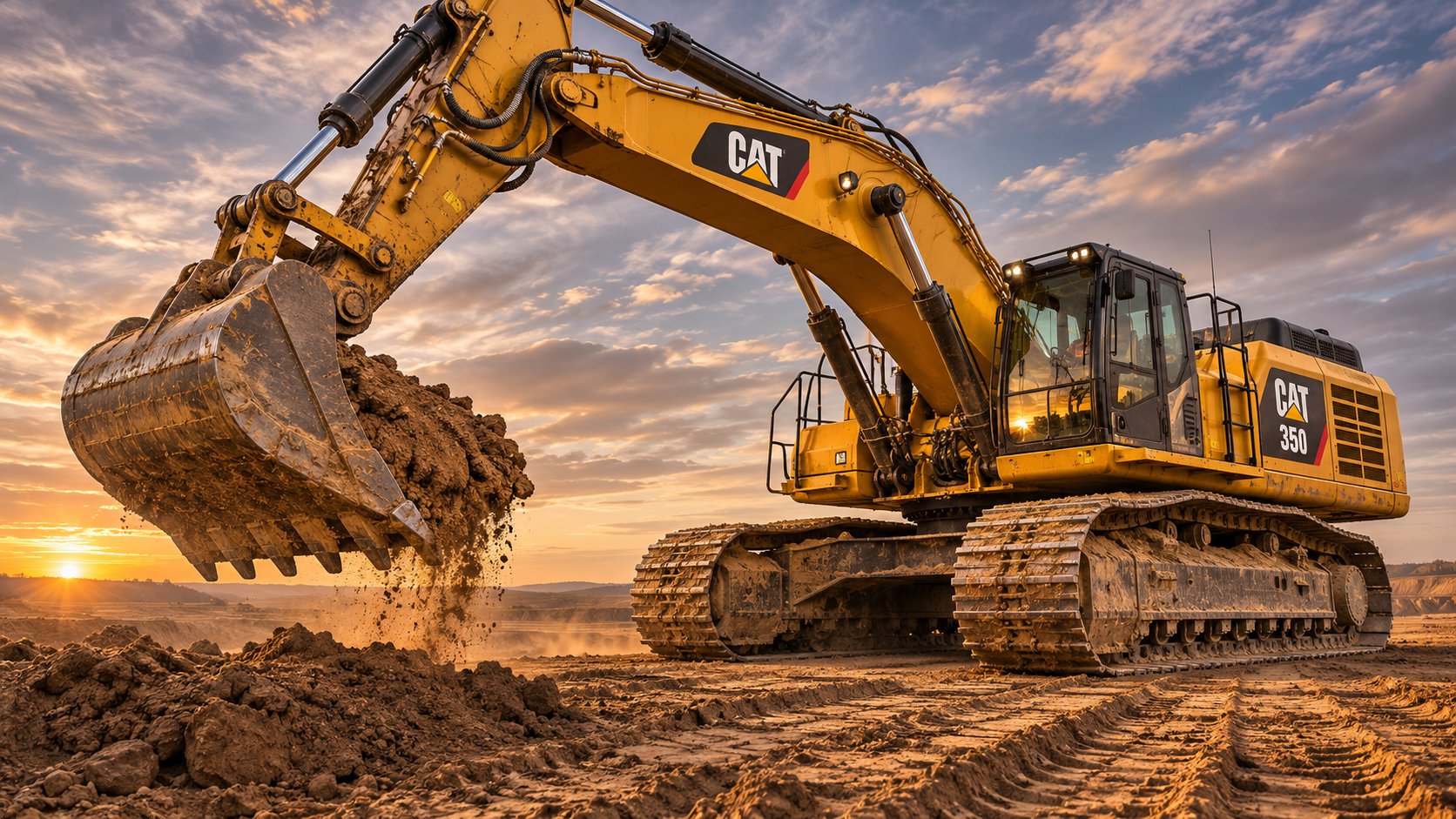
The Cat 350 excavator is a large hydraulic excavator built for the kind of work that smaller machines simply cannot handle efficiently. With an operating weight around 105,100 pounds and 413 horsepower, it sits squarely between the Cat 336 and the Cat 374 in Caterpillar's lineup — heavier and more powerful than the 81,100-pound 336, yet more practical and cost-effective than the 162,900-pound 374. That middle position makes the Caterpillar 350 a workhorse for contractors who need serious production capacity without stepping into mining-class territory.
When you're evaluating a cat 350 excavator for sale, you're looking at a six-figure capital equipment decision. The difference between a smart purchase and an expensive mistake often comes down to what you knew — or didn't know — before signing. OEM spec sheets tell you what the machine can do. Marketplace listings tell you what's available. Neither one tells you what to watch out for.
This guide bridges that gap.
What the Cat 350 Excavator Is Built For
The Cat 350 is designed for heavy cycles, large tools, and bulk earthmoving. Imagine loading 40-ton haul trucks in a quarry, trenching deep utility corridors for major pipeline projects, or moving thousands of cubic yards of earth on a highway expansion. Those are the jobs where this machine earns its keep. Equipped with buckets up to 4.2 cubic yards, it delivers class-leading productivity across large infrastructure projects, mass excavation, and heavy demolition applications. It also consumes up to 13 percent less fuel than the Cat 349 it replaced, which translates directly to lower daily operating costs on extended projects.
Why a Buyer's Guide Matters for This Machine Class
Buying the wrong excavator at this scale carries real financial consequences. An undersized machine slows production and increases project timelines. An oversized one inflates transport costs, fuel burn, and the upfront caterpillar excavator price — all without adding proportional value. Hidden mechanical issues on a used unit can turn a seemingly fair deal into a five-figure repair bill within months.
Always match machine capability to your actual project requirements before you start shopping on price. The most expensive excavator purchase isn't the one with the highest sticker — it's the one that doesn't fit the work.
The listings you'll find online rarely provide the context needed to make a confident buying decision. Generations get mixed together, critical inspection details go unmentioned, and pricing lacks any baseline for comparison. The sections ahead break down every factor that separates a strong Cat 350 purchase from a costly misstep — starting with the model history that most buyers overlook entirely.
Cat 350 Model History and Generation Guide
Search for a cat 350 excavator for sale on any major marketplace and you'll quickly notice a problem: listings labeled "Cat 350" can refer to machines built decades apart, powered by entirely different engines, and separated by thousands of pounds in operating weight. Without understanding which generation you're looking at, you risk comparing machines that share a name but almost nothing else.
The Cat 350L and Early Generations
The Cat 350L dates back to the early-to-mid 1990s and represents a fundamentally different machine from anything Caterpillar produces today. Powered by a Cat 3306ATAAC engine producing 286 horsepower, the 350L carried an operating weight around 108,000 pounds and featured a purely mechanical hydraulic system with no integrated electronics, telematics, or emissions aftertreatment. These units predate modern EPA emissions tier requirements entirely. You'll still find them on used marketplaces, often with very high hours and priced accordingly. They can be workable machines for the right buyer, but they demand careful mechanical inspection and carry none of the technology or fuel efficiency of newer variants.
The Cat 350F L and Transitional Models
The Caterpillar 350F L bridged the gap between the legacy 350L and the current generation. Built to meet EPA Tier 4 Final emissions standards, the 350F L introduced a more advanced hydraulic system, updated cab ergonomics, and diesel particulate filter (DPF) aftertreatment. This matters for buyers in regions with strict emissions compliance requirements — a pre-Tier 4 machine may not be legally operable on certain job sites. The 350F L also offered improved fuel efficiency over the older 350L, though it lacked the next-generation technology suite found in the current model. If you encounter a 350 cat excavator listing from this transitional era, pay close attention to the emissions certification and confirm whether the aftertreatment system is intact and functioning properly.
The Current Next-Gen Cat 350
Caterpillar released the current-production Cat 350 in 2022, built on the Next Generation excavator platform. It runs a Cat C9.3B engine producing 308 kW (413 hp), carries an operating weight of approximately 47,700 kg (105,100 lb), and integrates Cat Grade, Payload, E-Fence, and Product Link telematics as standard or available features. Fuel consumption dropped up to 13 percent compared to the Cat 349 it replaced. Three power modes — Smart, Power, and Eco — let operators match engine output to the task, further reducing fuel burn. This is a fundamentally more capable and efficient machine than any previous Caterpillar 350 variant.
The table below summarizes the key differences across all three generations. If you're evaluating caterpillar excavators price across different listings, this distinction is critical — a 350L and a next-gen 350 are not comparable purchases.
| Model Designation | Approximate Production Era | Emissions Standard | Key Distinguishing Features |
|---|---|---|---|
| Cat 350L | Early-to-mid 1990s | Pre-emissions regulation | Cat 3306ATAAC engine (286 hp); mechanical hydraulics; no telematics; ~108,000 lb cat 350 excavator weight |
| Cat 350F L | Mid-2010s | EPA Tier 4 Final / EU Stage IV | Updated cab; DPF aftertreatment; improved hydraulic efficiency; electronic monitoring systems |
| Cat 350 (Next Gen) | 2022 - Present | EPA Tier 4 Final / EU Stage V | Cat C9.3B engine (413 hp); integrated Cat Grade, Payload, E-Fence; Product Link telematics; up to 13% fuel savings; ~105,100 lb operating weight |
Before committing to any listing, confirm the exact model generation. Ask the seller for the machine's serial number prefix, production year, and engine model. A quick call to a Caterpillar dealer can verify which generation and emissions tier a specific serial number falls under. That single step can prevent you from paying next-gen prices for a transitional-era machine — or overlooking a solid deal because you assumed all older units are the same.
Complete Cat 350 Excavator Specifications Explained
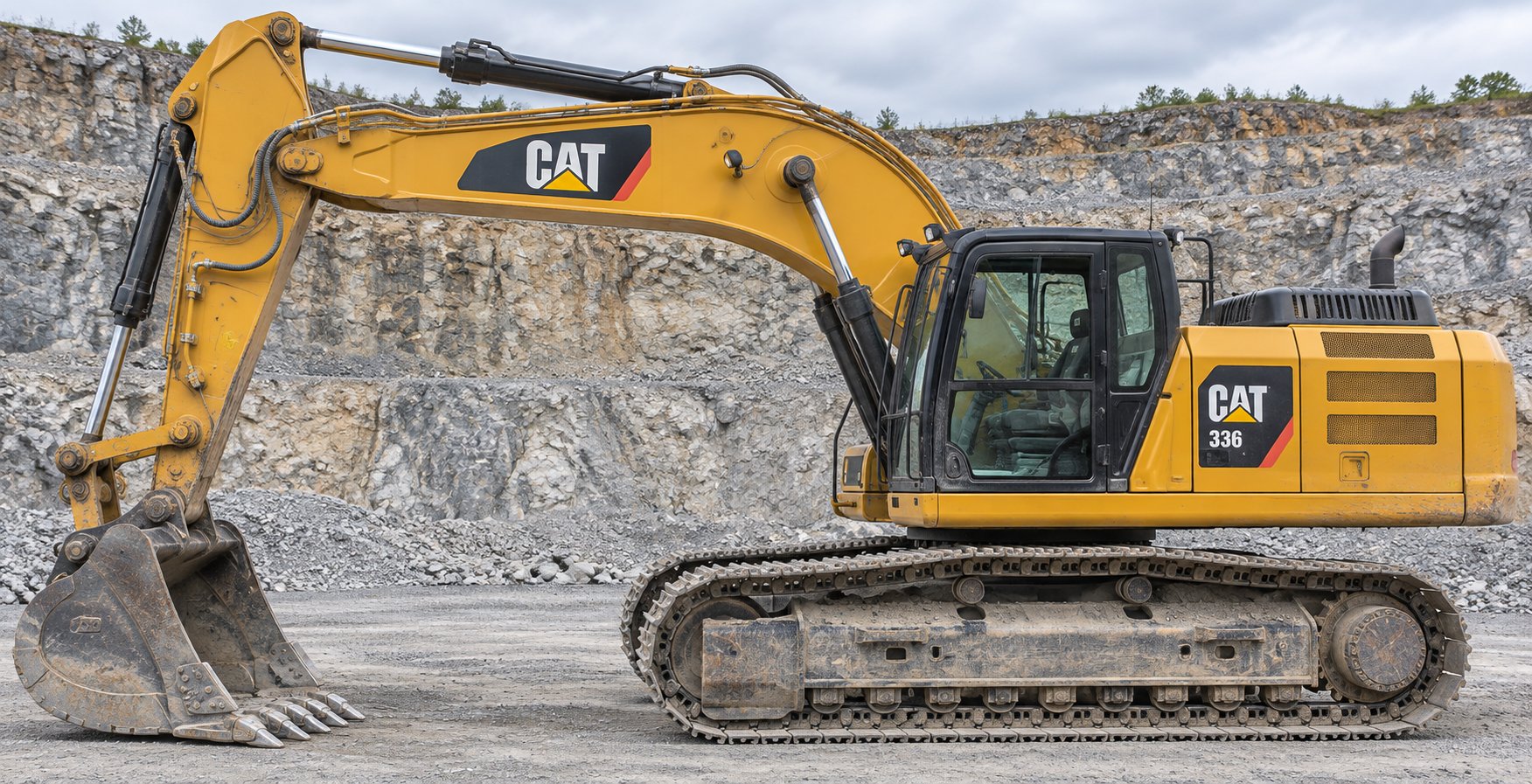
Numbers on a spec sheet only matter if you know what they mean on the job. A buyer looking at a cat 350 excavator for sale sees figures for horsepower, digging depth, and operating weight — but without context, those numbers don't tell you whether the machine fits your project, your trailer, or your budget for fuel. This section breaks down the caterpillar 350 excavator specifications into practical terms that directly affect your purchase decision and daily productivity.
Engine and Power Specifications
The current-generation Cat 350 is powered by a Cat C9.3B engine with a displacement of 9.3 liters (568 cubic inches), a bore of 115 mm (5 inches), and a stroke of 149 mm (6 inches). Net power output reaches 308 kW (413 hp) under ISO 9249, measured at the flywheel with all standard accessories running at 1,800 rpm. Gross engine power under ISO 14396 comes in slightly higher at 309 kW (414 hp).
What does 413 horsepower actually deliver? It translates directly into digging force and cycle speed. More power means the hydraulic pumps can sustain higher flow and pressure simultaneously, so the machine doesn't bog down when cutting through dense clay or loading heavy rock. Three selectable power modes — Power, Smart, and Eco — let operators scale engine output to the task. Smart mode automatically adjusts power distribution, pulling back during lighter swing movements and ramping up during heavy digging. That flexibility contributed to the up to 13 percent fuel savings compared to the Cat 349 it replaced.
The fuel tank holds 680 liters (179.6 US gallons), and the DEF tank adds another 80 liters (21.1 US gallons). A tank that size supports extended shift operations without constant refueling stops on remote sites.
For emissions compliance, the current Cat 350 meets U.S. EPA Tier 4 Final, EU Stage V, Korea Stage V, and Japan 2014 emission standards. The aftertreatment system requires no operator input or downtime during operation. Older used units — particularly the 350L generation — may carry Tier 3 or pre-regulation ratings, which can restrict their legal operation on certain job sites or in specific jurisdictions. Always verify the emissions tier before purchasing any used unit.
Operating Weight and Dimensions
The Cat 350 carries an operating weight of approximately 47,700 kg (105,100 lb) in its standard configuration with a 6.9 m (22 ft 8 in) reach boom, 3.9 m (12 ft 10 in) reach stick, 3.08 m3 (4.03 yd3) GDC bucket, and 900 mm (35 in) triple grouser shoes. That weight shifts depending on which boom-stick combination, counterweight, and shoe width you select.
Why does operating weight matter beyond the spec sheet? Two reasons hit your wallet immediately:
- Transport logistics: At over 105,000 pounds, the Cat 350 requires a heavy-haul lowboy trailer and, in most states, overweight permits for road transport. Shipping height with the cab reaches 3,260 mm (10.8 ft), and shipping length extends to approximately 11,800 mm (39 ft). You'll need to factor transport width as well — with 600 mm (24 in) shoes, the machine measures 3,340 mm (10.11 ft) wide. Wider shoe options push that number even higher, potentially requiring wide-load permits.
- Ground-bearing pressure: On soft or marshy sites, a 105,100-pound machine exerts significant downward force. The track gauge spans 2,740 mm (9 ft), and track length runs 5,400 mm (17.9 ft). Wider shoes distribute weight over a larger surface area, reducing ground pressure and preventing the machine from sinking — a critical consideration for pipeline work or utility trenching in wet soils.
The tail swing radius measures 3,760 mm (12.4 ft) with a counterweight clearance of 1,340 mm (4.5 ft). On tight sites, that tail swing determines whether you can rotate safely near walls, traffic barriers, or adjacent structures. Confirm these dimensions against your actual site constraints before committing to a purchase.
Hydraulic System and Dig Performance
The hydraulic system is where raw engine power converts into the digging force, reach, and cycle speed you actually use on the job. The Cat 350's main hydraulic system delivers a maximum flow of 779 L/min (206 US gpm). Maximum equipment pressure reaches 35,000 kPa (5,076 psi), increasing to 38,000 kPa (5,511 psi) in enhanced heavy lift mode — an automatic 8 percent boost that activates when the machine detects heavy picking or placing demands.
The standard configuration with the 6.9 m reach boom and 3.9 m reach stick produces the following dig performance figures, per Caterpillar's published data:
| Specification | Metric | Imperial |
|---|---|---|
| Maximum Digging Depth | 8,210 mm | 26 ft 11 in |
| Maximum Reach at Ground Level | 12,150 mm | 39 ft 10 in |
| Maximum Cutting Height | 10,690 mm | 35 ft 1 in |
| Maximum Loading Height | 7,390 mm | 24 ft 3 in |
| Maximum Depth Cut for 2,440 mm (8 ft) Level Bottom | 8,080 mm | 26 ft 6 in |
| Maximum Vertical Wall Digging Depth | 5,840 mm | 19 ft 2 in |
| Bucket Digging Force (ISO) | 268 kN | 60,160 lbf |
| Stick Digging Force (ISO) | 183 kN | 41,090 lbf |
| Maximum Swing Torque | 189 kN·m | 139,275 lbf·ft |
Consider what those numbers mean in practical terms. A bucket digging force of 268 kN means the Cat 350 can drive bucket teeth through compacted gravel, hard clay, and blasted rock without stalling. Stick digging force at 183 kN provides the breakout power needed to pry boulders loose or drag the bucket through resistant material at depth. The 139,275 lbf·ft of swing torque keeps loaded swing cycles fast and consistent, even on uneven terrain or when swinging uphill — a common scenario in quarry loading and bench work.
Maximum loading height of 7,390 mm (24 ft 3 in) means you can comfortably top-load standard highway dump trucks and most articulated haulers without repositioning. The 12,150 mm (39 ft 10 in) reach at ground level provides the working envelope for wide trenches, slope shaping, and loading trucks positioned at a distance from the excavation face.
One critical point that cat 350 excavator specs alone won't tell you: these figures represent a single boom-stick configuration. Caterpillar offers multiple boom and stick lengths for the 350 platform. Longer sticks increase dig depth and reach but reduce digging force. Shorter, heavier-duty configurations sacrifice reach for higher breakout power and lifting capacity. When evaluating any specific unit for sale, confirm which boom-stick combination is installed and cross-reference against the OEM spec sheet for that exact configuration. A machine with a mass excavation stick will perform very differently from one equipped with a long-reach stick, even though both carry the "Cat 350" name.
These specifications paint a picture of a machine engineered for sustained, high-production cycles. But raw capability only tells part of the story — the integrated technology features built into the current-generation Cat 350 significantly affect how that capability translates into daily output and, ultimately, the machine's long-term resale value.
Cat 350 Technology Features That Affect Productivity and Resale Value
Caterpillar packs the current-generation 350 with an impressive suite of integrated technology. The marketing materials make it all sound transformative — and frankly, some of it is. But when you're evaluating a 350 caterpillar excavator as a capital investment, the real question isn't "what does this feature do?" It's "how does this feature save me money or make me money?" Every technology feature on the excavator 350 either improves daily productivity, reduces operating risk, or strengthens resale value. Some do all three. Here's how each one translates into dollars and sense for the buyer.
Cat Grade and Payload Technology
Cat Grade is an integrated grade guidance and control system that uses sensors on the boom, stick, and bucket to show the operator exactly where the cutting edge sits relative to target grade — in real time, on the in-cab touchscreen. The advanced version, Cat Grade with 3D, adds GPS and GLONASS positioning so the machine knows its precise location on the job site and can reference complex design surfaces automatically.
What does that actually mean on a project? Imagine you're cutting a highway drainage channel to a specific slope and invert elevation. Without grade technology, you need a surveyor staking grade every few feet, an operator eyeballing the cut, and a grade checker walking the trench with a laser. With Cat Grade, the operator sees the design on screen and digs to it directly. Caterpillar's Technology Application Specialist Chris Barrett has noted that 3D grade control delivers "well over 50 per cent" productivity gains compared to traditional methods — largely by eliminating the constant cycle of staking, checking, overcutting, and reworking.
The practical savings stack up fast: fewer survey crew hours, less rework material to remove and replace, and tighter schedule adherence. On large infrastructure projects where the Cat 350 earns its keep, those efficiency gains can recover the technology investment within a single project phase.
Payload estimation works alongside Grade by measuring the load in each bucket pass and displaying a running total on the monitor. You'll see real-time weight data as the operator loads trucks, which solves two expensive problems at once. Under-loading means more truck passes and higher hauling costs per ton. Over-loading risks overweight fines, accelerated truck wear, and — on the excavator side — unnecessary stress on hydraulic components and structural pins. Payload keeps every cycle in the sweet spot.
E-Fence and Safety Systems
E-Fence is one of those features that doesn't get enough attention in a typical cat 350 excavator review — until you realize how much liability exposure it eliminates. It's a programmable motion-limit boundary system that prevents the boom, stick, and bucket from moving outside operator-defined zones. You set ceiling, floor, wall, and swing limits through the in-cab touchscreen monitor, and the machine physically stops itself before any part of the front linkage crosses those boundaries.
Picture a Cat 350 working a deep excavation next to an active gas main. Without E-Fence, one misjudged joystick input could drive the bucket into the utility. With E-Fence Floor activated, the machine refuses to dig below the preset depth — regardless of what the operator does with the controls. The same logic applies overhead. E-Fence Ceiling prevents the boom from reaching into power lines, bridge structures, or overhead crane zones.
For contractors, this translates directly into reduced insurance claims, fewer utility strike penalties, and stronger safety records on bid qualifications. E-Fence Swing is equally valuable when loading trucks near live traffic lanes or pedestrian areas, restricting the machine's rotation to a defined arc. It also helps less experienced operators work confidently within safe boundaries, reducing the skill gap that often leads to costly site damage.
Product Link Telematics and Resale Value
Here's where technology directly affects what the machine is worth when you sell it. Product Link is Caterpillar's onboard telematics module that continuously transmits machine data — location, engine hours, fuel consumption, idle time, fault codes, and maintenance alerts — to the cloud. Fleet managers access this data through VisionLink, Caterpillar's cloud-based equipment management platform that provides integrated full-fleet monitoring, task management, and utilization analytics.
For the current owner, Product Link means you can monitor the machine remotely, catch developing problems before they escalate into major failures, and document every service event with timestamped data. VisionLink's "Needs Review" feature flags instances that require action and creates workflows to schedule maintenance — keeping the machine on a proactive service cycle rather than a reactive one.
For the next buyer, that documented telematics history is gold. A machine with a complete Product Link record proves its actual hours, confirms maintenance was performed on schedule, and reveals utilization patterns that indicate how hard the unit was worked. Machines with verified telematics data consistently command higher resale prices because they eliminate the guesswork that drives buyers toward lowball offers. If you're shopping for a used unit and the seller can't provide telematics records, you lose the single most reliable tool for verifying the machine's true condition.
The following list summarizes the key cat 350 technology features and what each one means for the buyer's bottom line:
- Cat Grade (2D/3D): Eliminates grade staking costs and reduces rework by giving operators real-time dig-to-design guidance on the in-cab monitor.
- Payload Estimation: Prevents under-loading and over-loading trucks, optimizing haul cycles and protecting both the excavator and haul fleet from unnecessary wear.
- E-Fence: Programmable motion boundaries that prevent boom, stick, and bucket from entering restricted zones — reducing utility strikes, structural damage, and liability exposure.
- Product Link Telematics: Continuous remote monitoring of machine health, hours, fuel use, and fault codes — creating a verifiable ownership history that strengthens resale value.
- VisionLink Fleet Management: Cloud-based platform for tracking assets, scheduling maintenance, and analyzing utilization across the entire fleet, including non-Cat equipment.
- Smart Mode Engine Control: Automatically adjusts power output to match the work demand, reducing fuel consumption during lighter tasks without operator intervention.
- Swing Assist and Bucket Assist: Automates repetitive swing targets and maintains bucket angle during grading, improving cycle consistency and reducing operator fatigue.
One critical caveat for used-market buyers: these technology features are specific to the current next-generation Cat 350. Older 350L units have none of them. The 350F L generation may include basic electronic monitoring but lacks integrated Grade, Payload, E-Fence, and the full Product Link suite. When you see a listing touting "loaded with technology," verify exactly which features are installed and whether they're factory-integrated or aftermarket add-ons. That distinction can mean thousands of dollars in real capability — and thousands more in resale value down the road.
Technology tells you what the machine can do in ideal conditions. What it can't tell you is what the machine has already been through. For used buyers, that answer lives in the inspection — and knowing exactly where to look separates a confident purchase from a costly gamble.
Used Cat 350 Inspection Checklist Every Buyer Needs
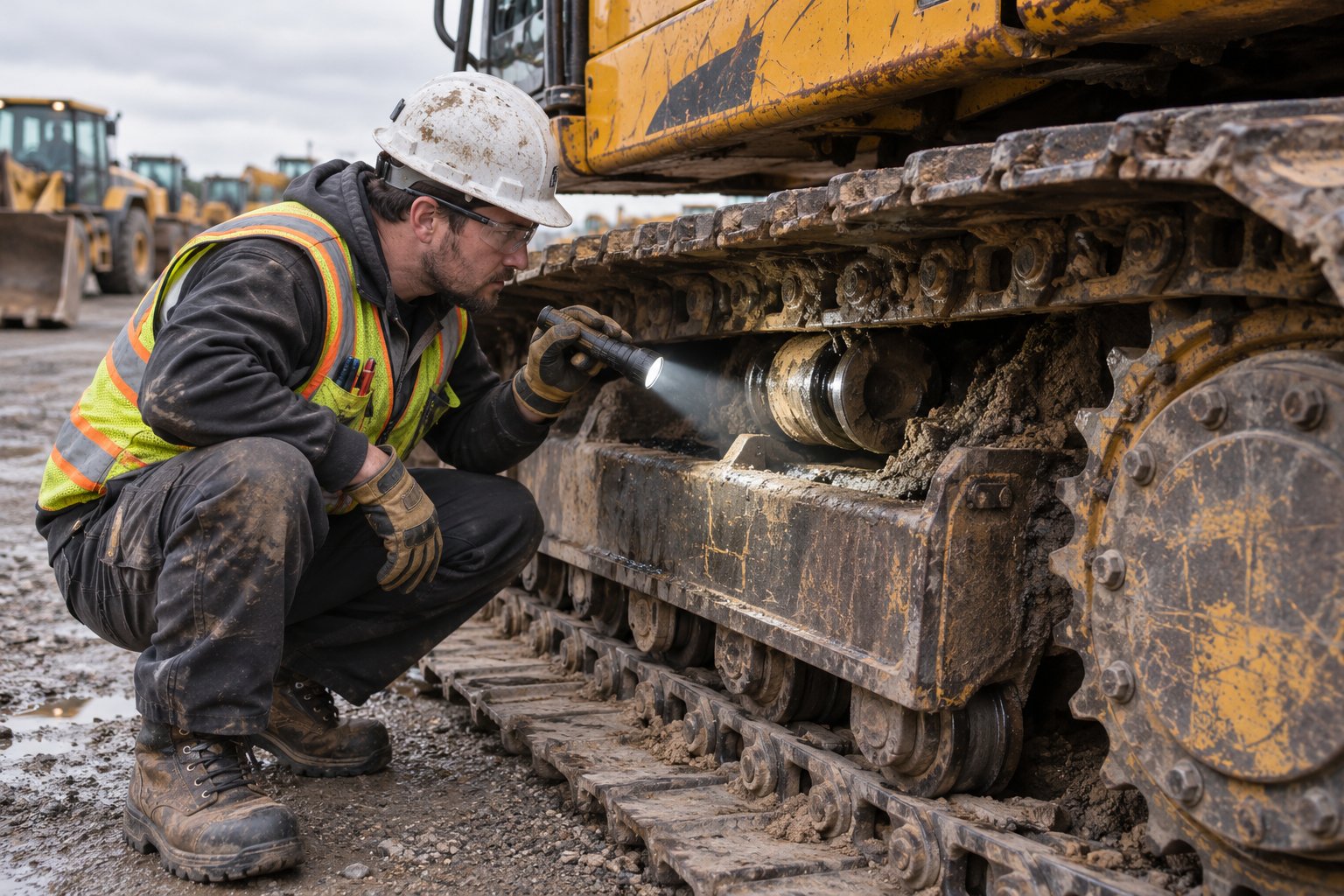
A used cat 350 excavator for sale can look perfectly clean in photos — fresh pressure wash, new paint on the boom, a listing description full of reassuring words. None of that tells you what's happening inside the hydraulic pumps, behind the swing bearing, or underneath the track frames. The difference between a solid used caterpillar 350 excavator and a six-figure headache comes down to what you check before money changes hands.
This cat 350 maintenance checklist covers the inspection points that experienced buyers never skip — and that most listings never mention.
Machine Hours as a Value Indicator
The hour meter is the first number every buyer looks at, and the first number that gets misunderstood. Hours provide a rough baseline for how much life the machine has consumed, but they're only useful if you know what the thresholds actually mean for a large hydraulic excavator in the 35- to 50-ton class.
For machines this size, the general industry benchmarks break down like this:
| Hour Range | General Condition Expectation | Buyer Considerations |
|---|---|---|
| Under 3,000 hours | Lightly used with significant service life remaining | Commands a premium price; expect minimal component wear if maintenance was followed |
| 3,000 - 6,000 hours | Broken in but far from worn; typically the value sweet spot | Best balance of remaining life versus purchase price; verify undercarriage and hydraulic condition |
| 6,000 - 10,000 hours | Approaching or past key service intervals; condition varies widely | Undercarriage rebuild, hydraulic pump service, and major filter replacements may be due or already completed; inspect closely and demand records |
| Over 10,000 hours | High usage; major component work likely needed or already performed | Buy only with strong, documented service history and verified rebuild records; budget for engine overhaul and hydraulic system service |
Here's the critical insight most buyers miss: two Cat 350 excavators with identical hour readings can have completely different amounts of life left. An 8,000-hour machine backed by a full binder of oil analysis records, filter change logs, and hydraulic service documentation is often a safer purchase than a 4,000-hour unit with zero maintenance history. Documented care tells you the machine was managed properly. A blank record tells you nothing — and in used heavy equipment, no records is rarely good news.
Also consider what kind of work the machine performed. A Cat 350 that spent its hours loading shot rock in a quarry endured far more stress per hour than one grading a highway subgrade. Hours don't capture intensity. That's why service records and a physical inspection always outweigh the meter reading alone.
Critical Inspection Points for Used Units
Knowing the hours gives you a starting point. The physical inspection tells you the real story. Walk through these points systematically — skipping even one can mean overlooking a repair bill that wipes out whatever discount you negotiated on the purchase price.
- Undercarriage wear (track pads, rollers, idlers, sprockets): The undercarriage is the single most expensive wear system on any tracked excavator. Replacement costs can represent up to 40 percent of total component replacement expenses. Inspect the track pads for uneven or excessive wear, check each roller and idler for oil leaks that indicate failed seals, and look at the sprocket teeth for pointed or hooked profiles — a sign they're nearing the end of their service life. Loose or stiff track links suggest the chains need attention. Ask how much undercarriage life remains and, if possible, have a dealer or technician measure wear against manufacturer specifications.
- Hydraulic system condition (cylinders, hoses, pump performance): Check every cylinder rod for scoring, dents, or chrome flaking — any of which will cause seal failure and leaks. Examine hoses and fittings for wet spots, bulging, cracking, or abrasion damage. Operate the boom, stick, and bucket through their full range and pay attention to cycle speed. Slow or weak action can indicate pump or valve problems. If possible, request a hydraulic pressure test — it's the most reliable way to confirm the pumps and relief valves are performing within factory specifications. On a machine with a maximum system pressure of 35,000 kPa, even a 10 percent drop signals wear that will worsen under load.
- Structural integrity (boom, stick, and weld areas): Run your hands along the welds at the boom foot, boom nose, stick tip, and every cylinder mount point. Feel for grinding marks, fresh weld beads over old cracks, or paint that seems to cover recent repairs. Cracks in these high-stress zones don't heal — they propagate. New paint or grinding marks near structural welds are a strong indicator that someone repaired damage and tried to conceal it. Also inspect pin bores in the boom, stick, and bucket linkage for elongation or egg-shaping, which causes excessive play and reduces digging accuracy.
- Pins, bushings, and linkage play: With the engine running and hydraulics warm, slowly cycle the bucket and stick while watching each joint for clunking, hesitation, or side-to-side slop. Worn pins and bushings create loose movement that compromises both precision and safety. Fresh grease at every joint is actually a positive sign — it means someone was maintaining proper lubrication intervals. Dry or corroded grease fittings suggest the opposite.
- Engine condition (blow-by, exhaust smoke, oil analysis): If at all possible, perform a cold start. A healthy diesel starts cleanly and settles into a smooth idle within seconds. Hard starting, extended cranking, heavy exhaust smoke, or knocking all point to internal engine issues that range from injector problems to serious cylinder wear. Check for oil leaks around the valve cover, turbo, and front seal area. Look at the coolant — milky oil in the coolant reservoir indicates a potential head gasket or liner failure. Most importantly, ask for oil analysis history. Oil samples reveal metal particle levels, coolant contamination, and fuel dilution long before these problems become visible externally.
- Swing bearing and swing motor: Rotate the upper structure a full 360 degrees. Listen for grinding, popping, or rattling during rotation. With the boom extended and the bucket loaded, check for vertical play between the upper frame and the undercarriage — any detectable rock or movement suggests the swing bearing is worn. Swing bearing condition directly affects both safety and digging accuracy, and replacement is one of the most labor-intensive repairs on a large excavator.
- Final drives and travel motors: Drive the machine forward and in reverse. It should track straight without pulling to one side. Listen for grinding or whining from the final drive housings and check around the sprocket hubs for oil leaks. A failing final drive seal or planetary gear set is an expensive repair that only gets worse with continued operation.
- Cab, controls, electronics, and safety systems: Test every joystick, switch, pedal, gauge, and monitor function. Run the air conditioning and heater. Check the backup camera, lighting, and any installed telematics display. On current-generation Cat 350 units, look for stored fault codes on the in-cab monitor — they reveal problems the machine has experienced even if no symptoms are currently visible. Confirm seat belts, mirrors, guards, and emergency exit functionality. A neglected cab often reflects neglected maintenance habits across the entire machine.
- Full operational test under load: Once the hydraulics are at operating temperature, run the machine through a complete work cycle — dig, load, swing, dump, and travel. Watch for any drift in the boom or stick when holding a loaded bucket at height. Cylinder drift, power loss, or overheating during sustained operation are symptoms that a brief startup demo will never reveal. This step alone is worth the trip to inspect a machine in person rather than relying on a video walkthrough.
Red Flags That Should Stop a Purchase
Some findings during an inspection are negotiation points. Others are walk-away signals. When you encounter any of the following on a used Cat 350, pause and seriously reconsider — or at minimum, budget for significant additional expense and risk:
- Missing or incomplete maintenance records: A machine this size should have a documented service history. Gaps in documentation aren't automatic deal-breakers, but they demand deeper investigation and should be reflected in a lower price.
- Welded structural repairs on the boom or stick: Field welds on primary structural members indicate the machine sustained significant stress damage. Even a competent weld repair alters the original metallurgy and creates a stress riser that's prone to re-cracking under heavy load cycles.
- Mismatched or inconsistent hour meter readings: If the displayed hours don't align with the visible wear on pedals, joystick grips, the operator seat, and track components, the meter may have been replaced or tampered with. On machines equipped with Product Link telematics, you can cross-reference the meter with Caterpillar's cloud records — a discrepancy here is a serious red flag.
- Excessive hydraulic oil contamination: Dark, gritty, or metallic-smelling hydraulic fluid indicates internal component wear that's circulating abrasive particles throughout the entire system. Left unaddressed, contaminated hydraulic oil accelerates wear on every pump, valve, and cylinder in the machine.
- Non-original emissions aftertreatment modifications: On Tier 4 Final machines like the Cat 350F L or current-generation 350, any modification or deletion of the diesel particulate filter (DPF), selective catalytic reduction (SCR), or DEF dosing system creates both legal liability and mechanical risk. These modifications can void remaining warranty coverage and make the machine non-compliant for operation in regulated jurisdictions.
- Seller refuses a cold start or independent inspection: A seller who won't let you start the machine cold or bring your own mechanic is hiding something. Cold starts expose hard-starting issues, excessive smoke, and abnormal noises that disappear once the engine reaches operating temperature. Any legitimate seller will accommodate a reasonable pre-purchase inspection request.
- Freshly pressure-washed machine with no explanation: A clean machine is normal for a dealer lot. A freshly washed machine from a private seller — especially one that's spotless around the hydraulic cylinders, hoses, and engine compartment — may have been cleaned specifically to hide active leaks.
Before committing to any used cat 350 excavator for sale, always request oil analysis records and complete service history. If the seller can provide them, you gain the clearest possible picture of the machine's internal health. If they can't — or won't — that absence tells you something too. Factor the unknown into your offer price, or keep looking for a unit that comes with the documentation a machine of this class deserves.
A thorough inspection protects you from cat 350 excavator problems that surface weeks after the sale. But even a mechanically sound machine can be a bad deal at the wrong price — and understanding what drives Cat 350 pricing across generations and conditions is the next piece of the puzzle.
Cat 350 Excavator Pricing and Market Value Context
Every buyer searching for a cat 350 excavator for sale eventually arrives at the same frustrating realization: nobody publishes straightforward pricing guidance for this machine. Dealer websites ask you to "request a quote." Marketplace listings show wildly different numbers with little explanation. And without a pricing baseline, you have no way to tell whether a listing represents a fair deal, an overpriced unit, or a suspiciously cheap machine hiding expensive problems.
This section provides the context that listings leave out.
New Cat 350 Pricing Context
The caterpillar 350 price new varies significantly based on configuration, and no single published figure captures the full range. A base machine with a standard boom-stick configuration, general-duty bucket, and no additional technology packages sits at a different price point than a fully loaded unit with Cat Grade 3D, premium cab options, additional counterweights, and a specialized attachment package. Regional dealer pricing, local market demand, and available financing incentives further shift the number.
What you can count on is this: the Cat 350 is a premium-class large excavator, and Caterpillar equipment commands an inherent brand premium. Industry data from Equipment Watch confirms that Caterpillar leads all excavator brands in resale value retention — roughly 62 percent of original value at 5,000 hours — which means part of the higher upfront cat 350 excavator cost is recovered when you eventually sell or trade. Buyers serious about current new pricing should request formal quotes from at least two authorized Caterpillar dealers to establish a real baseline and to compare available promotional financing terms.
Used Cat 350 Market Value Factors
The used cat 350 price you see in any listing is shaped by six primary variables, and understanding their relative impact prevents you from overpaying or walking past a legitimate deal:
- Model generation: This is the single largest pricing variable most buyers overlook. A 1990s-era Cat 350L, a mid-2010s 350F L, and a current next-gen 350 occupy completely different price tiers — even at similar hour readings. The generation gap reflects differences in engine technology, emissions compliance, hydraulic efficiency, cab comfort, and integrated technology features. A next-gen 350 with 4,000 hours and a 350L with 4,000 hours are not comparable purchases at any price.
- Machine hours: Hours remain the most visible value driver. Market data indicates that mid-size to large excavators lose roughly 8 to 10 percent of their value for every 1,000 hours accumulated in the first 5,000 hours. After 5,000 hours, the depreciation curve flattens as the market prices in proximity to major service events — undercarriage rebuilds, engine overhauls, and hydraulic system work.
- Maintenance history: Complete, documented service records can add 8 to 12 percent to a machine's resale value. Buyers pay more for reduced risk, and a full maintenance file is the clearest proof that the machine was managed professionally.
- Geographic location: A Cat 350 sitting in a region with heavy infrastructure activity faces stronger local demand — and commands a higher price — than the same machine in a softer market. Transport costs also factor in; hauling a 105,000-pound excavator across multiple states adds meaningful expense that distant buyers deduct from their offers.
- Attachment package: A machine equipped with a hydraulic thumb, quick coupler, and multiple bucket sizes is worth more than a stripped unit with a single general-purpose bucket. Turnkey machines attract more buyers and reduce the new owner's time-to-production.
- Technology features installed: On current-generation units, factory-integrated Cat Grade, Payload, and Product Link telematics with documented history add real, quantifiable value. These features improve productivity for the buyer and provide verifiable machine data that supports the asking price.
For reference, the broader 35-ton-plus large excavator class provides useful market context. Q1 2026 auction and dealer data shows machines in this weight class trading between roughly $70,000 for high-hour units and upward of $350,000 for low-hour, late-model machines — with Caterpillar models consistently commanding a brand premium of 12 to 15 percent over comparable competitors at similar hours and condition. Used excavator prices overall have softened approximately 5 to 8 percent since their 2023 peaks, creating better buying conditions for those entering the market now.
How to Evaluate Whether a Listing Price Is Fair
Seeing a cat 350 excavator price on a listing means nothing without comparable data to anchor it against. Here's a practical approach to determining whether a specific asking price falls within a reasonable range:
- Search multiple marketplaces simultaneously. Check MachineryTrader for dealer listing volume, Machineryline for international inventory, and IronPlanet for online auction units with inspection reports. Comparing across platforms reveals whether a listing sits at the top, middle, or bottom of the current market range for that specific generation and hour bracket.
- Pull actual sold prices, not just asking prices. Asking prices reflect seller hopes. Sold prices reflect market reality. Ritchie Bros. auction results publish post-sale data that shows what buyers actually paid for comparable machines. That data is free, searchable, and far more reliable than any single listing price. The typical spread between auction hammer prices and dealer lot pricing runs 15 to 25 percent — so knowing which channel you're comparing against matters enormously.
- Request a dealer appraisal. If you're considering a private-party or auction purchase, ask a local Caterpillar dealer for a trade-in appraisal on the specific unit. Even if you don't plan to buy through the dealer, their valuation provides an independent data point grounded in wholesale market knowledge.
- Factor in total cost of ownership, not just purchase price. A lower-priced machine with an impending undercarriage rebuild ($20,000 to $40,000 on this class) or a needed engine overhaul ($15,000 to $30,000) may cost more over the first two years of ownership than a higher-priced unit with recent major service work completed.
Always compare machines within the same generation and hour range. A $180,000 next-gen Cat 350 with 3,500 hours and a $95,000 Cat 350L with 9,000 hours are not competing options — they are fundamentally different machines at fundamentally different points in their service lives. Comparing raw prices across model years leads to the most expensive buying mistakes in heavy equipment.
The cheapest machine on the page is almost never the best value when you account for remaining service life, upcoming major component costs, and the productivity gap between generations. A smart buyer spends more time understanding what drives the price than negotiating to lower it — because the real savings come from buying the right machine, not the cheapest one.
Pricing context helps you evaluate individual listings, but it doesn't answer a broader question that many buyers skip entirely: is the Cat 350 actually the best machine for the job, or would a competing brand deliver equal performance at a lower total cost? That comparison deserves a closer look.
Cat 350 vs Competing Excavators in the 35-Ton Class
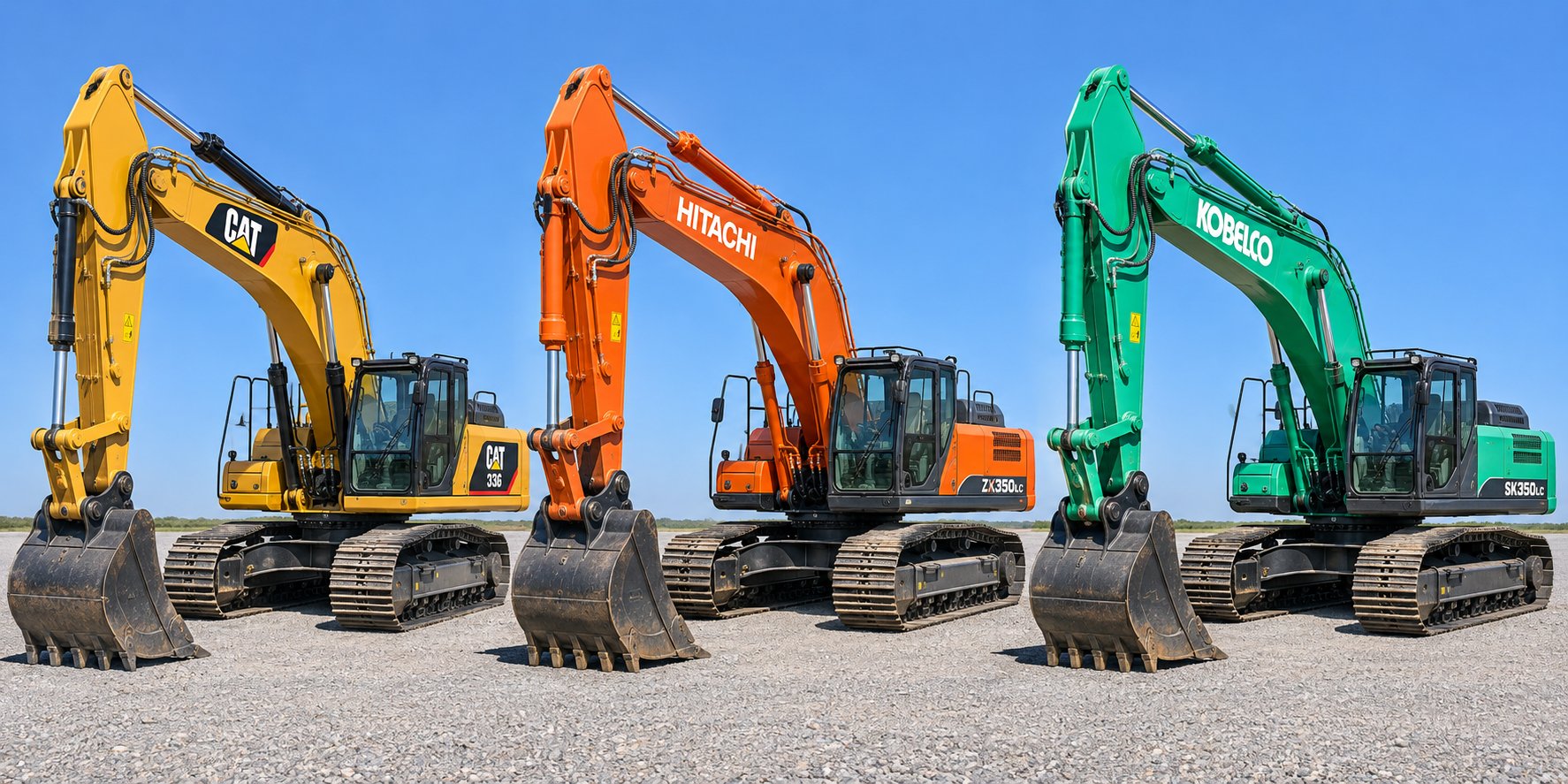
Knowing the Cat 350's value is only half the equation. Plenty of buyers commit to a brand before asking a harder question: does a competing machine deliver the same — or better — performance for the money? The 35-ton excavator class is one of the most contested segments in heavy equipment, with at least four direct competitors fighting for the same project bids. Evaluating the cat 350 vs komatsu pc350, Volvo, Deere, and Hitachi alternatives forces you to justify the purchase on capability and total cost — not just brand loyalty.
Cat 350 vs Komatsu PC350 and Volvo EC350
The Komatsu PC350LC has long been the default alternative when contractors weigh options against the Cat 350. Both machines target the same jobs — quarry loading, heavy infrastructure, mass excavation — but they diverge on cost structure and technology philosophy.
On purchase price, Komatsu typically undercuts Caterpillar by 5 to 10 percent at equivalent configurations, according to cross-brand market comparisons. Fuel efficiency tilts in Komatsu's favor as well, with field data consistently showing 5 to 15 percent lower fuel consumption across size classes. Where the Cat 350 pulls ahead is resale value — Caterpillar excavators retain roughly 5 to 10 percent more value at equivalent age and hours — and dealer network density, which translates into faster parts delivery and shorter service response times across most U.S. regions.
Komatsu's strongest differentiator is its intelligent Machine Control (iMC) system. Available on the PC350LCi variant, iMC integrates 3D machine guidance at the factory level with automated boom, stick, and bucket control that physically prevents over-excavation. Cat Grade with Assist offers similar functionality, but Komatsu pioneered the concept and has a longer track record of refinement in this space. For contractors who prioritize grade technology, the Komatsu iMC platform deserves a serious look.
The cat 350 vs volvo ec350 comparison has shifted recently. Volvo launched its biggest excavator redesign in more than 20 years, and the updated large models — including the EC370, which competes directly in this weight class — now claim up to 15 percent improved fuel efficiency and 10 percent faster cycle times over their predecessors. Volvo's new Smart View with Obstacle Detection also distinguishes between objects and people, a safety feature that goes beyond what most competitors offer at the factory level. Volvo's trade-off? A smaller North American dealer footprint compared to Caterpillar, which can mean longer waits for specialized parts or field service depending on your region.
Cat 350 vs John Deere 350P and Hitachi ZX350
John Deere's 350 P-Tier is one of the best 35 ton excavator options that often flies under the radar in brand-dominated conversations. Industry sales data ranks the Deere 350 P-Tier sixth among the most popular financed new excavators in the U.S. — a notable position for a machine designed entirely in-house after Deere's split from Hitachi. At 271 horsepower and 36.7 metric tons, the 350 P-Tier matches up closely in operating weight class. Deere's strength lies in its parts and service network. Any contractor already running Deere loaders, dozers, or ADTs benefits from consolidated dealer relationships, shared service agreements, and familiar parts ordering systems. Deere also offers 2D and 3D SmartGrade options, keeping its technology integration competitive with Cat and Komatsu.
The cat 350 vs hitachi zx350 comparison brings a different set of strengths to the table. The Hitachi ZX350C-7H — rated at 271 horsepower and 36.4 metric tons — has earned a strong reputation for hydraulic efficiency through Hitachi's TRIAS III hydraulic system, which is designed to reduce fuel consumption without sacrificing digging power. Hitachi excavators are known among operators for smooth, responsive hydraulic feel, particularly in truck-loading applications where consistent cycle speed matters. The trade-off is a smaller U.S. dealer network compared to Caterpillar and somewhat lower resale value retention. Hitachi's parts availability is generally strong but can lag behind Cat and Deere in remote or less populated regions.
For total cost of ownership, consider this: a machine with a lower purchase price and better fuel economy can still cost more over 10,000 hours if parts take longer to arrive, service calls require longer technician travel, or resale value drops more steeply. The cheapest machine to buy is not always the cheapest machine to own.
Which Excavator Wins for Which Application
No single machine dominates every scenario. The right choice depends on your operation's priorities — technology integration, fuel cost sensitivity, dealer proximity, or resale strategy. The table below frames each competitor across the factors that matter most in a real purchasing decision.
| Model | Approx. Operating Weight Class | Technology Integration Level | Dealer Network Density (U.S.) | Best-Fit Application |
|---|---|---|---|---|
| Cat 350 | ~47,700 kg (105,100 lb) | High (Cat Grade, Payload, E-Fence, Product Link) | Highest | Heavy infrastructure, quarry loading, fleet operations demanding integrated telematics and maximum resale value |
| Komatsu PC350LC | ~36 metric tons | High (iMC 3D machine control) | Strong, especially in Northeast | Grade-intensive work where automated excavation control and lower fuel costs are top priorities |
| Volvo EC370 | ~37 metric tons | Medium-High (Smart View, Dig Assist) | Moderate | Operators prioritizing fuel efficiency, cycle speed, and advanced safety systems |
| John Deere 350 P-Tier | ~36.7 metric tons | Medium-High (SmartGrade 2D/3D) | Strong (extensive ag and construction network) | Mixed fleets already running Deere equipment; contractors valuing consolidated dealer support |
| Hitachi ZX350C-7H | ~36.4 metric tons | Medium (TRIAS III hydraulics, Aerial Angle cameras) | Moderate | High-cycle truck loading and production digging where hydraulic feel and fuel efficiency matter most |
Note: Exact specifications vary by configuration. Verify current data from each manufacturer's OEM documentation before making direct comparisons.
A few patterns emerge from this comparison. If your operation already runs Caterpillar equipment across multiple machine classes, the Cat 350's integration with VisionLink fleet management and the breadth of dealer support create efficiencies that spec sheets don't capture. If you're a price-sensitive buyer willing to sacrifice some resale value for lower acquisition and fuel costs, the Komatsu PC350LC consistently delivers strong value. Deere makes the most sense when fleet consolidation and dealer relationship depth outweigh brand-specific technology advantages. And Hitachi remains a compelling choice for operators who prioritize hydraulic performance and smooth control feel above all else.
The honest answer? The best brand is often the one with better dealer support in your area. A Cat 350 with a dealer 20 minutes away beats a competitor with a dealer three hours out — and the reverse is equally true. Spec sheet differences between these five machines are measured in single-digit percentages. Dealer response time when a hydraulic pump fails on a Friday afternoon is measured in lost revenue per hour.
Knowing which machine fits your needs is the first decision. Finding the right place to buy it — with the inspection access, warranty options, and negotiation flexibility that protect your investment — is the second.
Where to Buy a Cat 350 Excavator
You've identified the right generation, confirmed the specifications match your project, and built a thorough inspection checklist. The next question is deceptively simple: where do you actually buy a Cat 350 excavator? The answer carries more weight than most buyers realize — because the channel you choose determines the price range you'll encounter, the inspection access you'll receive, the warranty protection available, and how much room you have to negotiate.
Each buying channel serves a different type of buyer. A first-time fleet purchaser has different priorities than a seasoned contractor who has bought and sold dozens of machines. Understanding the trade-offs across all available channels — from authorized Cat dealers to international used equipment specialists — helps you match the right source to your specific situation, budget, and risk tolerance.
Authorized Cat Dealers and New Equipment Sales
For buyers who want a new Cat 350 with a factory warranty and zero ambiguity about machine history, authorized Caterpillar dealers remain the most straightforward path. Purchasing through an authorized cat 350 excavator dealer gives you access to the full range of factory-certified configurations, OEM-backed financing programs, and post-sale service support from technicians trained specifically on the current platform.
Pros
- Factory warranty coverage: New machines come with Caterpillar's standard warranty, and extended coverage options are available at the time of purchase — something you simply cannot get through most other channels.
- Certified configurations: Every boom-stick combination, technology package, and attachment comes factory-specified and properly integrated. No guesswork about whether a feature is a genuine factory install or an aftermarket addition.
- Financing programs: Cat Financial offers competitive rates, flexible terms, and lease-to-own structures that many banks and independent lenders cannot match for heavy equipment purchases.
- Ongoing service support: Caterpillar's North American dealer network — approximately 2,470 locations across the U.S. — means parts availability and field service response times are industry-leading in most regions.
Cons
- Highest price point: You pay full retail, and negotiation margins on new Cat equipment are typically tighter than on used units from independent sellers or auctions.
- Limited used inventory: While many Cat dealers operate certified pre-owned programs, their used Cat 350 inventory at any given time is limited to whatever has come through their trade-in pipeline. If you're looking for a specific configuration at a specific price point, the dealer lot may not have it.
- Lead times on new orders: Depending on configuration and regional demand, a factory-ordered Cat 350 can take months to deliver. Supply chain disruptions have stretched new equipment delivery times to 12-18 months in recent years, though lead times have improved. If the project timeline won't wait, you may need to explore other channels.
For buyers who need a machine deployed quickly or who are working within a budget that can't absorb new-equipment pricing, the used market opens up significantly more options — and significantly more complexity.
Online Marketplaces and Auction Platforms
The majority of buyers searching for a cat 350 excavator for sale near me will end up browsing one or more online platforms. These marketplaces aggregate listings from dealers, brokers, and private sellers, giving you the broadest possible view of what's available. Auction platforms add price transparency by publishing what machines actually sell for — not just what sellers hope to get.
Each platform has a distinct advantage worth understanding:
- MachineryTrader.com: The largest dealer-focused listing site in North America, with strong search filtering by model, hours, location, and price range — ideal for comparing multiple caterpillar 350 for sale used listings side by side.
- Machineryline: An international marketplace with broader geographic coverage, useful for buyers willing to source equipment from overseas markets where pricing or availability may be more favorable.
- Ritchie Bros.: The world's largest industrial auctioneer, operating under a fully unreserved model where every item sells to the highest bidder. Post-sale price data is publicly searchable, making it the single best resource for establishing real market values. Ritchie Bros. reported $15.9 billion in total gross transaction value for FY2024, with construction equipment accounting for a major share.
- IronPlanet: A 100% online auction platform integrated with the Ritchie Bros. network. Its key differentiator is the IronClad Assurance inspection program, where over 250 professional inspectors — averaging 20+ years of equipment experience — personally assess each lot before bidding opens, providing detailed reports with photos, functional test results, and lab oil analysis for equipment older than one year.
Auction platforms offer compelling pricing — typically 20-40 percent lower than dealer retail — but they come with real trade-offs. Most auction sales are final and sold "as-is" with no warranty or guarantee. Inspection windows are limited, sometimes to just one or two days before bidding closes. And competition from professional buyers and dealers can drive prices higher than expected on popular models. You need to know exactly what you're looking at before you bid, because there's no walking it back once the hammer drops.
For less experienced buyers, or for anyone purchasing remotely, the absence of warranty protection at auction means every dollar saved on purchase price must be weighed against the risk of undiscovered problems. A professional third-party inspection — typically $500 to $1,500 — is essential before bidding on any high-value unit sight unseen.
Used Equipment Specialists and International Dealers
Between the full-service experience of an authorized Cat dealer and the raw price exposure of an auction sits a third channel that many buyers overlook: specialized used equipment dealers. These companies maintain curated inventories of used heavy equipment, often focused on specific brands or machine classes, and provide a level of consultation that marketplace listings and auction catalogs simply cannot match.
Specialized dealers like JIUHONG Machinery maintain inventories of used Caterpillar excavators that allow contractors and fleet buyers to browse available Cat models, compare configurations, and contact the sales team to discuss specific project requirements and budget parameters. This consultative approach is especially valuable when you're trying to buy a Cat 350 excavator but aren't certain which generation, hour range, or attachment package best fits your operation. Rather than scrolling through hundreds of undifferentiated marketplace listings, you work directly with specialists who can match available inventory to your actual needs.
International used equipment dealers also expand the geographic search radius. A Cat 350 sitting in a lower-demand market overseas may carry a price point that domestic listings can't touch — though buyers must factor in shipping costs, import duties, and the logistics of verifying machine condition across borders. Companies like JIUHONG that serve international buyers typically handle much of this complexity, but always confirm the scope of services before committing.
One important note: specific machine availability at any used equipment dealer changes frequently. A unit you see listed today may be sold tomorrow. Always verify exact model availability, hours, condition, and pricing directly with the dealer's sales team before planning around a specific listing.
Buying Channel Comparison
The table below puts all four primary channels side by side on the factors that matter most to a buyer evaluating where to purchase. Use it as a quick-reference guide when deciding which channel fits your priorities.
| Buying Channel | Typical Price Range | Inspection Access | Warranty Availability | Negotiation Flexibility |
|---|---|---|---|---|
| Used Equipment Specialists (e.g., JIUHONG Machinery) | Mid-range; varies by unit condition and generation | Typically available on-site or via detailed photo/video documentation; consultative process | Varies by dealer; some offer limited warranties or service guarantees | High — direct negotiations with dedicated sales team; flexible on pricing, terms, and bundled services |
| Authorized Caterpillar Dealers | Highest (new); mid-to-high (certified pre-owned) | Full access; dealer-facilitated inspections with technician support | Factory warranty on new; extended warranty and CPO programs available | Limited on new; moderate on used trade-in inventory |
| Online Marketplaces (MachineryTrader, Machineryline) | Wide range; depends on seller type (dealer vs. private) | Varies — some sellers provide reports; others require buyer-arranged inspection | Depends on individual seller; no platform-level warranty | Moderate to high — private sellers often more flexible than dealers |
| Auction Platforms (Ritchie Bros., IronPlanet) | Lowest to mid-range; 20-40% below dealer retail | Limited inspection windows (1-2 days); IronPlanet offers IronClad Assurance reports | None — sold as-is with no warranty or guarantee | None — final bid determines price; no post-sale negotiation |
A few patterns are worth calling out. If warranty protection and post-sale support are non-negotiable for you, authorized dealers are the clear choice — at a premium. If your priority is the lowest possible acquisition cost and you have the expertise to evaluate machines independently, auction platforms consistently deliver the most competitive pricing. And if you value a middle path — reasonable pricing, the ability to discuss your project requirements with knowledgeable staff, and negotiation flexibility on both price and terms — used equipment specialists fill the gap that the other channels leave open.
The smartest buyers don't commit to a single channel. They search across marketplaces to gauge the market, pull auction results for pricing anchors, contact used equipment specialists for curated options, and request dealer quotes for baseline comparisons. That multi-channel approach takes more time upfront, but it consistently produces better purchase decisions and stronger negotiating positions.
Finding the right source is critical — but so is confirming that the Cat 350 is actually the right size machine for your operation. Buying through the perfect channel means nothing if the excavator itself is too small to keep up with your production targets or too large for the projects that actually generate your revenue.
Right-Sizing Your Purchase and Final Buyer Recommendations
Here's a question that too many buyers skip entirely: is the Cat 350 actually the right size for your work? You can find the perfect listing, negotiate a strong price, and inspect every pin bore and cylinder rod — and still make a costly mistake if the machine itself is mismatched to your projects. A cat 350 excavator size class decision isn't just about horsepower and dig depth. It's about whether the daily operating costs, transport logistics, and production capacity align with the revenue the machine generates on your jobs.
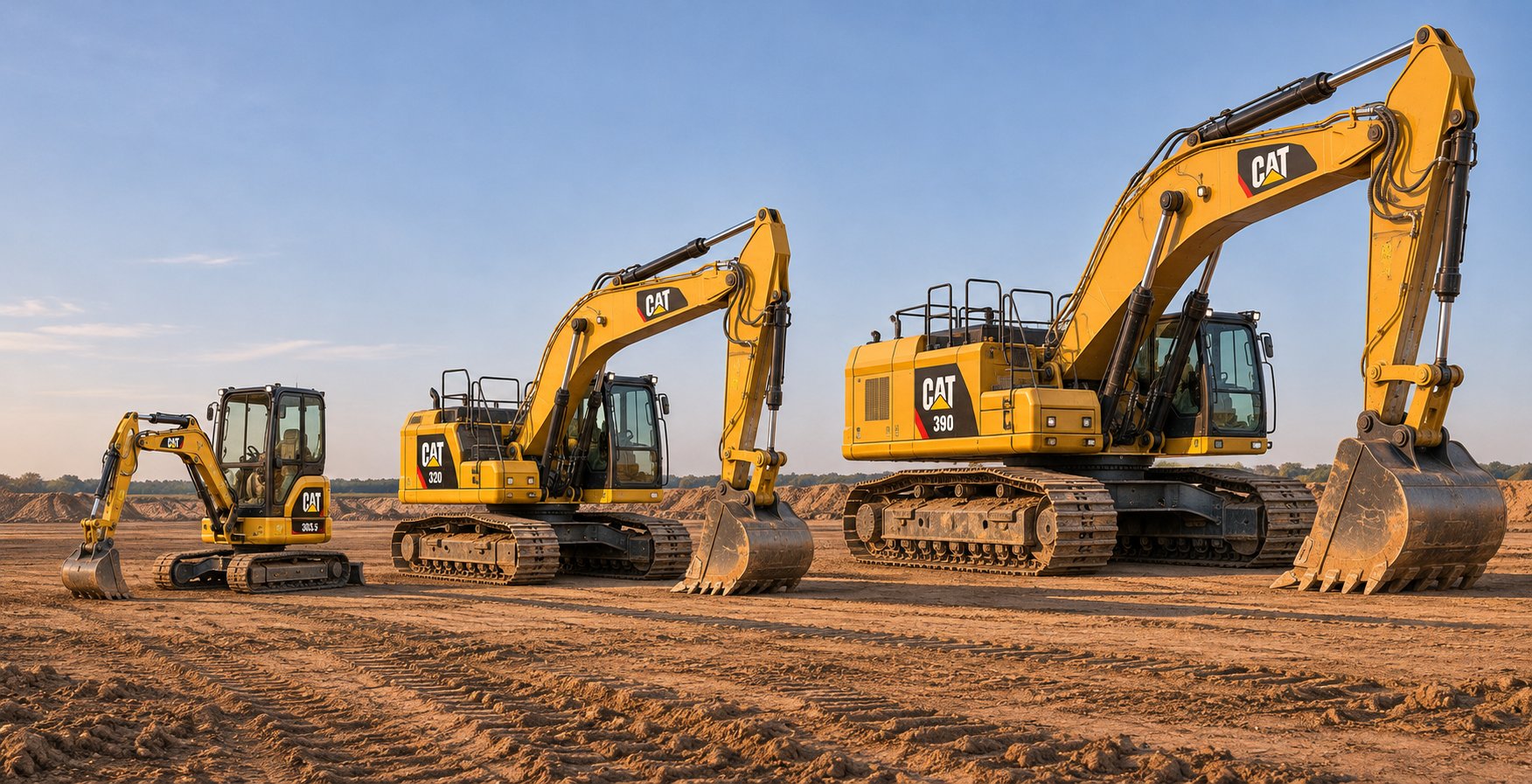
Caterpillar's large excavator lineup gives you three distinct tiers to consider: the Cat 336, the Cat 350, and the Cat 374. Each targets a different workload profile, and the gaps between them are wide enough that choosing wrong costs real money — either through lost productivity on the low end or unnecessary expense on the high end.
Right-Sizing Your Excavator Purchase
Think about the projects that fill your schedule 80 percent of the time — not the occasional outlier job, but the bread-and-butter work that keeps your fleet running. That's the work your excavator needs to be sized for.
The Cat 336 operates at roughly 80,000 pounds with approximately 311 horsepower. It's a proven mid-scale excavator that handles general contracting, commercial site development, road construction, and moderate utility trenching with lower transport costs and fuel consumption than anything in the 350 or 374 class. If your typical cycle involves loading 25- to 30-ton trucks, digging to 24 feet, and working sites where a lighter ground footprint matters, the 336 delivers excellent value without the premium of stepping up. Transport is simpler too — while still requiring a lowboy, you're dealing with roughly 25,000 fewer pounds than the 350, which can mean the difference between a standard overweight permit and a more complex multi-axle haul.
The Cat 350 occupies a sweet spot that justifies its existence for a specific type of buyer. At approximately 105,100 pounds and 413 horsepower, it carries meaningfully more dig force, bucket capacity, and cycle authority than the 336 — but it doesn't demand the capital outlay, fuel burn, or transport complexity of the 374. When you're comparing cat 350 vs cat 336, the 350 earns its premium on projects where you need to load 40-ton haul trucks efficiently, dig deeper utility corridors, handle heavier bucket loads in quarry applications, or maintain production rates that a 336 can't sustain without being pushed beyond its comfort zone. The 350 also runs buckets up to 4.2 cubic yards, which translates directly into fewer passes per truck and faster cycle completion on bulk earthmoving.
The Cat 374 is a different animal entirely. At roughly 158,000 pounds and 484 horsepower, it's built for large-scale mining, mass excavation measured in hundreds of thousands of cubic yards, and operations where maximum single-pass production justifies the elevated acquisition cost, fuel consumption, and transport logistics. Comparing cat 350 vs cat 374, the jump is significant — you're adding over 50,000 pounds of operating weight, a substantially higher hourly fuel rate, and transport requirements that push into specialized heavy-haul territory. The 374 makes sense when daily production targets demand it. For most heavy infrastructure contractors, it's more machine than the work requires.
| Factor | Cat 336 | Cat 350 | Cat 374 |
|---|---|---|---|
| Operating Weight Class | ~80,000 lb (36,287 kg) | ~105,100 lb (47,700 kg) | ~158,000 lb (71,668 kg) |
| Net Power | ~311 HP | ~413 HP | ~484 HP |
| Typical Application Fit | General contracting, commercial site work, road construction, moderate utility trenching | Heavy infrastructure, quarry loading, large utility projects, pipeline work, mass excavation | Large-scale mining, major mass excavation, high-volume production loading |
| Relative Cost Tier | Lower acquisition, fuel, and transport costs | Mid-tier — higher capability without mining-class expense | Highest acquisition, operating, and transport costs |
| Transport Complexity | Standard lowboy with overweight permit in most states | Heavy-haul lowboy; overweight and possible over-dimension permits required | Specialized heavy-haul; multi-axle trailer; extensive permitting |
| Best Buyer Profile | General contractors and mid-scale earthwork operations | Infrastructure contractors and quarry operators needing production above 336 class without 374-level costs | Mining operations and major earthmoving contractors with sustained high-volume production requirements |
The right-sizing decision comes down to a simple question: does your typical project demand more production capacity than the 336 delivers? If the answer is yes — and if your projects don't consistently require the sheer mass and output of a 374 — the Cat 350 is likely your machine. If you're handling mostly general contracting with occasional heavy work, the 336 keeps your costs proportional to your revenue. And if your operation runs quarry loading or mass excavation at scale every day, the 374's higher upfront cost spreads across enough production hours to justify itself.
Making a Confident Cat 350 Buying Decision
This caterpillar 350 excavator buying guide has covered every variable that separates a smart purchase from a regrettable one. Here's a consolidated summary of the decisions that matter most — in the order you should address them:
- Confirm the model generation. A Cat 350L, 350F L, and current next-gen 350 are fundamentally different machines. Verify the serial number, production year, engine model, and emissions tier before evaluating anything else. Generation determines the technology suite, fuel efficiency, regulatory compliance, and realistic price range.
- Inspect thoroughly using the checklist. Walk every point — undercarriage wear, hydraulic condition, structural integrity, engine health, swing bearing, final drives, and a full operational test under load. Request oil analysis records and complete service history. No photos or video walkthrough replaces an in-person inspection on a machine of this value.
- Contextualize pricing within generation and hours. Compare listings within the same generation and hour range — not across them. Pull actual sold prices from Ritchie Bros. auction results, cross-reference against marketplace listings, and factor total cost of ownership rather than just the sticker price. The cheapest unit is rarely the best value.
- Compare across multiple buying channels. Authorized dealers offer warranty and certainty at premium pricing. Auction platforms deliver the lowest acquisition costs with the highest risk. Used equipment specialists like JIUHONG Machinery provide a middle path — curated Caterpillar excavator inventory, consultative sales support, and the flexibility to discuss your specific project needs, configuration preferences, and budget parameters directly with their team. Searching across all channels gives you the broadest market view and the strongest negotiating position.
- Verify that the 350 class matches your project requirements. Use the right-sizing framework above. If a Cat 336 handles your typical workload, the 350's additional capability is wasted capital. If your projects consistently push beyond what the 350 can deliver, the 374 may justify its premium. Match the machine to the work — not the other way around.
For buyers ready to explore available used Caterpillar excavators across multiple size classes, JIUHONG Machinery's Caterpillar excavator collection offers a starting point where you can browse Cat models and reach out to their sales team to discuss which machine, configuration, and price range aligns with your operation. Keep in mind that specific listings change frequently — always confirm current availability directly.
The best equipment purchase is never the lowest price on the page. It's the machine that matches your work, backed by documented history, purchased through a channel that protects your investment, and sized correctly for the projects that actually generate your revenue.
Every section of this guide exists to help you make that match with confidence. Whether you land on a low-hour next-gen Cat 350, a value-priced 350F L with solid records, or ultimately decide that a different size class better fits your operation, the principles are the same: know the machine, verify the condition, understand the market, and buy with data — not just instinct. That approach turns a six-figure decision into a calculated investment rather than an expensive leap of faith.
Frequently Asked Questions About the Cat 350 Excavator
1. How much does a Cat 350 excavator cost new and used?
New Cat 350 pricing varies widely based on configuration, technology packages, and regional dealer pricing — buyers should request quotes from at least two authorized Caterpillar dealers for accurate figures. On the used market, prices range from roughly $70,000 for high-hour older-generation units to over $350,000 for low-hour, late-model machines. Caterpillar excavators typically command a 12 to 15 percent brand premium over comparable competitors. Used equipment specialists like JIUHONG Machinery (jiuhong-machinery.com/products/excavators/caterpillar/) allow buyers to browse available Cat models and negotiate directly on price, configuration, and terms.
2. What is the difference between a Cat 350L, Cat 350F L, and the current Cat 350?
These three designations represent entirely different generations. The Cat 350L is a 1990s-era machine with a 286 hp mechanical engine, no emissions controls, and no telematics. The Cat 350F L is a mid-2010s transitional model meeting EPA Tier 4 Final standards with updated hydraulics and a DPF aftertreatment system. The current next-gen Cat 350, released in 2022, features a 413 hp Cat C9.3B engine, integrated Cat Grade, Payload, E-Fence technology, Product Link telematics, and up to 13 percent better fuel efficiency. Buyers must confirm the exact generation before comparing prices, as a 350L and a next-gen 350 are not comparable purchases.
3. How many hours is too many on a used Cat 350 excavator?
For large hydraulic excavators in the 35- to 50-ton class, under 3,000 hours is considered lightly used and commands premium pricing. The 3,000 to 6,000 hour range typically offers the best balance of remaining life versus cost. Between 6,000 and 10,000 hours, major service intervals like undercarriage rebuilds and hydraulic pump work may be due. Over 10,000 hours, purchase only with verified rebuild records and documented service history. However, hours alone do not tell the full story — a well-maintained 8,000-hour machine with complete oil analysis records can be a safer buy than a 4,000-hour unit with no maintenance documentation.
4. What should I inspect before buying a used Cat 350 excavator?
A thorough pre-purchase inspection should cover undercarriage wear (track pads, rollers, idlers, sprockets), hydraulic system health (cylinder rods, hose condition, pump pressure testing), structural integrity at boom and stick weld areas, engine condition via cold start and oil analysis records, swing bearing play, final drive operation, and a full operational test under load. Key red flags include missing maintenance records, welded structural repairs on the boom or stick, mismatched hour meters, excessive hydraulic contamination, and any modifications to the emissions aftertreatment system. Always request oil analysis history and insist on a cold-start demonstration.
5. Is the Cat 350 better than the Komatsu PC350 or Hitachi ZX350?
Each machine excels in different areas. The Cat 350 leads in dealer network density, resale value retention (roughly 62 percent at 5,000 hours), and integrated technology ecosystem including Cat Grade, Payload, and Product Link telematics. The Komatsu PC350LC typically offers 5 to 10 percent lower purchase prices and 5 to 15 percent better fuel efficiency, with its iMC system providing strong automated grade control. The Hitachi ZX350 is known for smooth hydraulic feel and efficient truck-loading cycles. The best choice often depends on which brand has the strongest dealer support near your jobsite — spec differences between these machines are measured in single-digit percentages, but dealer response time during a breakdown is measured in lost revenue per hour.