

What the Cat 309 Brings to the Modern Jobsite
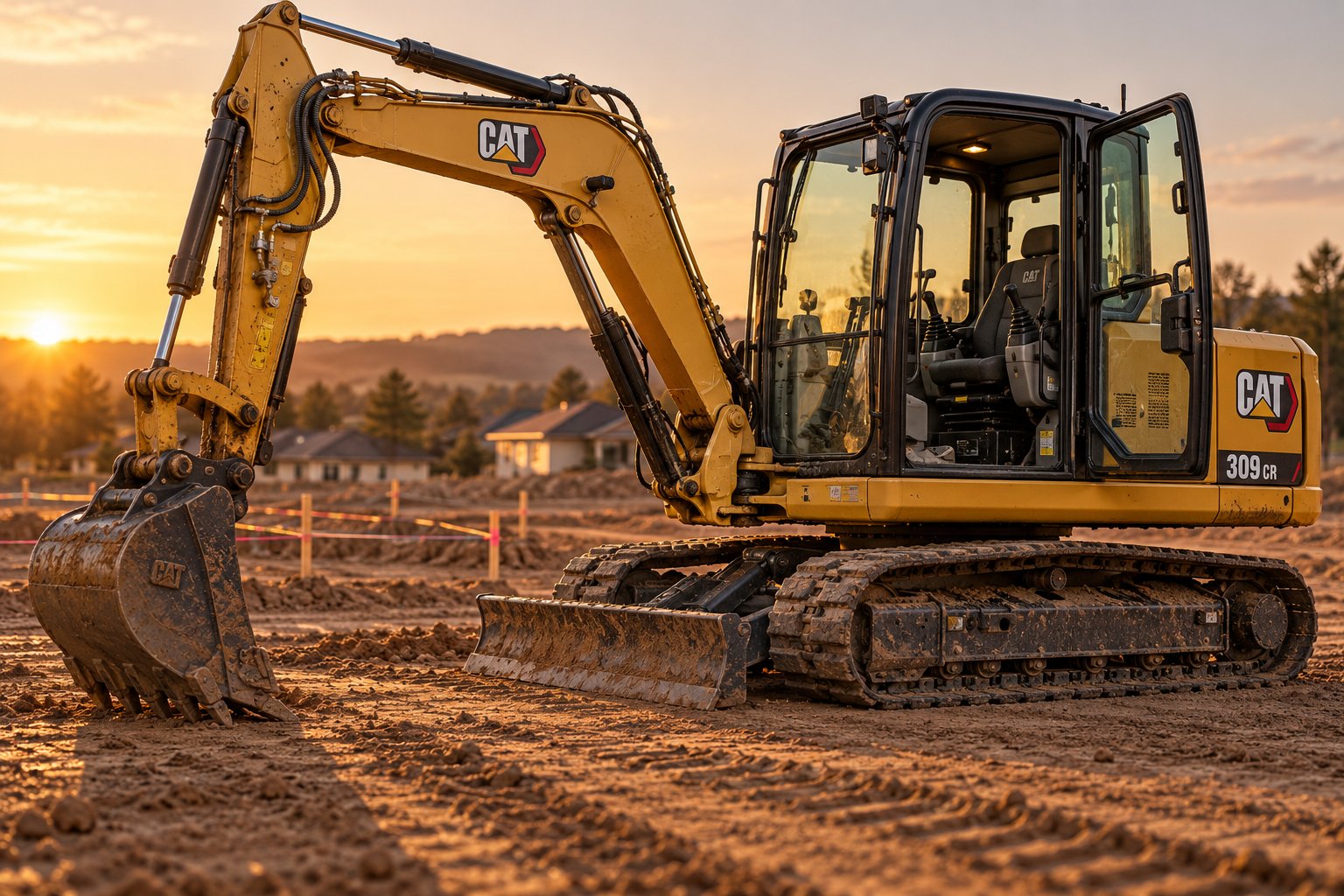
The Cat 309 is a 9-metric-ton class mini excavator built by Caterpillar, engineered to sit right between compact machines and full-size mid-range excavators. Think of it as the sweet spot: enough power and dig depth to handle serious commercial excavation, yet compact and light enough to trailer between job sites without oversize permits or specialized hauling rigs. If you've been searching for a cat 309 for sale, you're likely a contractor who has outgrown a 7- or 8-ton machine but doesn't need — or want — the logistical burden of stepping up to a 13-ton or larger excavator.
This guide covers everything a buyer needs to know before committing to a purchase. You'll find detailed specifications, real-world transport considerations, engine and emissions insights, new-versus-used cost analysis, a hands-on inspection checklist, current market pricing factors, and a breakdown of where to actually find available units. The goal is simple: arm you with the information that separates a smart purchase from an expensive lesson.
Where the Cat 309 Fits in the Caterpillar Excavator Lineup
Caterpillar's compact excavator range spans from sub-1-ton micro machines all the way up to the 10-metric-ton Cat 310. Within this lineup, the Cat 309 occupies the upper end of the compact segment — heavier than the Cat 308 CR and lighter than the Cat 310. It belongs to the Next Generation family that Caterpillar developed over a four-year period with direct input from dealers and customers, introducing standard features like Stick Steer, cruise control, an LCD touchscreen monitor, and automatic two-speed travel.
The 9-ton weight class has become one of the most popular segments for residential, commercial, and utility work — and for good reason. Machines in this range deliver standard dig depths starting around 13 feet 5 inches and extending deeper with long-stick options, giving contractors the reach needed for foundation excavation, utility trenching to code-required depths, and retention basin grading. At the same time, the Cat 309 weight keeps it within the towing capacity of a standard CDL-equipped truck-and-trailer setup, which is a critical operational advantage that larger excavators simply cannot match.
Who Should Consider a Cat 309
Imagine you run a small excavation crew handling residential foundations during the week and commercial utility work on weekends. You need a machine that digs deep enough for basements, lifts pipe sections into trenches, and still fits on a tag-along trailer. That's the exact profile the Cat 309 was designed for.
The typical buyer falls into one of four categories. Small-to-mid-size general contractors value the 309's ability to replace multiple smaller machines on a single job site. Municipal crews and utility departments rely on it for waterline, sewer, and storm-drain installations where dig depth and precision matter. Rental fleet operators stock the 9-ton class because it appeals to a broad range of renters — from landscapers to demolition specialists — making utilization rates consistently high. And landscaping firms tackling large-scale grading, pond construction, or boulder placement find the 309's lift capacity and attachment versatility hard to beat.
The Cat 309 bridges the gap between compact convenience and mid-size capability, giving contractors serious dig depth, lifting power, and attachment versatility in a package that still trailers easily and fits on congested job sites.
That versatility, however, only tells part of the ownership story. The purchase price listed on a dealer lot or auction site is just the starting line — fuel consumption, undercarriage wear, emissions system maintenance, and depreciation all shape the true cost of putting a Cat 309 to work every day. Understanding those costs begins with knowing exactly what the machine can do, which means diving into the specifications that actually matter for your projects.
Cat 309 Specifications That Matter for Your Projects
Spec sheets are easy to find. Understanding what those numbers actually mean when the bucket hits dirt — that's where most buyers get lost. A dig depth of 182.8 inches sounds impressive on paper, but does it reach code-required utility depths in your market? A pump flow of 62 gallons per minute looks strong, but will it keep a hydraulic hammer cycling efficiently? Every specification on the Cat 309 CR translates into a real capability or limitation on the job site, and buyers shopping for a cat 309 excavator for sale need to read these numbers with project requirements in mind — not just as abstract data points.
The figures below are drawn from Caterpillar's official 309 CR product specifications for the long undercarriage configuration, which is the standard basis for this model's published data.
Dig Depth, Reach, and Bucket Capacity Explained
The single specification most contractors evaluate first is dig depth, and the 309 cat delivers two distinct options depending on stick selection. With the standard stick (71.8 inches long), you get a maximum dig depth of 161.7 inches — roughly 13 feet 6 inches. Opt for the long stick (92.8 inches), and that figure jumps to 182.8 inches, or just over 15 feet 2 inches.
Why does that matter in practical terms? Residential basement excavations in most U.S. markets require digging 8 to 10 feet below finished grade. The standard stick handles that with room to spare. Utility contractors installing sanitary sewer lines, however, often work at depths of 12 to 15 feet to maintain proper gravity flow. That's where the long stick earns its keep — reaching code-required depths without requiring a larger, heavier machine that's harder to transport and position on tight residential streets.
Maximum reach at ground level extends to 293.7 inches (approximately 24 feet 6 inches) with the long stick, and the vertical wall dig capability stretches to 134 inches (about 11 feet 2 inches). For pond excavation, retention basin grading, or any task that involves maintaining a clean vertical face, that vertical wall number tells you how deep the machine can cut a straight, plumb wall in a single pass — no repositioning required.
Bucket capacity on the 309 CR varies by bucket type and width. Caterpillar offers heavy duty buckets ranging from 13-inch trenching widths (3.5 cubic feet) up to 36-inch general purpose sizes (13.7 cubic feet), with high capacity options reaching 16.2 cubic feet at the 36-inch width. Matching bucket size to your primary application — narrow for utility trenching, wide for bulk excavation — directly impacts cycle times and daily production.
Lifting Capacity and Load Charts
Here's a detail that catches many first-time buyers off guard: the "lifting capacity" you see in a headline spec is not a single number you can rely on across every scenario. Rated lifting capacity on any excavator — including the 309 CR — changes depending on three variables: the radius from the machine's center pin to the load, whether you're lifting over the front or over the side, and the height at which the load is positioned.
Imagine you're setting a 48-inch concrete pipe section into a trench at close range. At a short radius, the machine can handle significantly more weight than it can when the boom and stick are extended to their maximum reach. Over-front lifts benefit from the full counterweight and undercarriage stability, while over-side lifts reduce capacity because of the machine's narrower lateral footprint. As Gregory Poole Equipment Company explains, lift charts are the foundation for safe load planning — they spell out weight limits at different heights, distances, and positions, and they must be referenced before raising anything.
Contractors doing repetitive pipe-setting, precast structure placement, or heavy material handling should study the full load chart in the operator's manual rather than relying on a single advertised figure. Factors like ground slope, attachment weight, and boom configuration all reduce real-world capacity below the chart's ideal-condition ratings. The Cat 309 CR comes thumb-ready from the factory and supports a certified lifting eye as an option, giving crews a proper rigging point for controlled lifts.
Hydraulic System and Attachment Versatility
The hydraulic system is where the 309 cat separates itself from less capable machines in the 9-ton class. Caterpillar equips the 309 CR with a load-sensing, variable displacement piston pump that delivers 62 gallons per minute at 2,400 rpm, paired with an equipment operating pressure of 4,134 psi. That combination produces bucket digging force of 13,943 pounds-force and stick digging force of 9,500 pounds-force with the standard stick (8,023 lbf with the long stick).
What makes the system especially versatile is its auxiliary hydraulic circuit layout. The 309 CR includes a dedicated auxiliary hydraulic pump as standard equipment — a feature Caterpillar highlights because it allows the machine to power hydraulic attachments while simultaneously traveling and multifunctioning, with no loss of pressure to the auxiliary lines. Three auxiliary circuit tiers give you flexibility to match flow rates to specific attachments:
- Primary auxiliary circuit: up to 35 gpm at 4,134 psi — suitable for hydraulic thumbs, tilt-rotators, and moderate-demand tools
- High flow auxiliary circuit: up to 37 gpm at 4,134 psi — designed for power-hungry attachments like mulchers and brush cutters
- Secondary auxiliary circuit: up to 9 gpm at 4,134 psi — typically used for operating a tilt function on a coupler or a second tool circuit
This means a single 309 CR can run hydraulic hammers for demolition work in the morning, swap to an auger for fence-post drilling after lunch, and finish the day with a tilt-rotator handling precision grading — all without hydraulic modifications. If you're evaluating a cat 309 excavator for sale on the used market, verify that the auxiliary lines and case drain (a factory option for second auxiliary circuits) are present and functional, since not every unit leaves the factory with the same hydraulic configuration.
The following table consolidates the cat 309 specs that buyers reference most frequently. All values reflect the 309 CR with long undercarriage configuration per Caterpillar's published specifications:
| Specification Category | Detail | Value |
|---|---|---|
| Dimensions | Overall Track Width | 97.2 in (2,470 mm) |
| Cab Height | 100 in (2,541 mm) | |
| Overall Undercarriage Length | 126 in (3,200 mm) | |
| Transport Height (Boom Stowed, No Tools) | 89 in (2,260 mm) | |
| Performance (Long Stick) | Maximum Dig Depth | 182.8 in (4,642 mm) |
| Maximum Reach at Ground Level | 293.7 in (7,460 mm) | |
| Maximum Dump Clearance | 199.7 in (5,072 mm) | |
| Bucket Digging Force | 13,943 lbf (62 kN) | |
| Stick Digging Force | 8,023 lbf (35.7 kN) | |
| Hydraulics | Main Pump Flow (at 2,400 rpm) | 62 gpm (233 L/min) |
| Equipment Operating Pressure | 4,134 psi (285 bar) | |
| Auxiliary Primary Flow (Max) | 35 gpm (131 L/min) | |
| Auxiliary High Flow (Max) | 37 gpm (140 L/min) | |
| Weights | Maximum Operating Weight (Cab) | 21,091 lb (9,565 kg) |
| Minimum Operating Weight (Cab) | 19,735 lb (8,950 kg) | |
| Counterweight Addition | 552 lb (250 kg) | |
| Engine | Model | Cat C3.3B Turbo Diesel |
| Net Power (Rated) | 69.5 hp (51.8 kW) | |
| Displacement | 203 in³ (3.33 L) |
One detail worth noting: the cat 309 price you encounter — whether new or used — often reflects which of these specifications the particular unit includes. A machine configured with the long stick, counterweight, steel tracks with rubber pads, and a high-flow auxiliary package represents the top end of the weight and capability range at 21,091 pounds. A base-configured unit without the counterweight and running the standard stick comes in lighter at around 19,735 pounds. Both are the same model, but they'll perform differently on the job and carry different price tags on the open market.
Those weight differences also ripple directly into transport logistics — a factor that trips up buyers who focus on performance specs alone and forget to plan for how they'll actually move the machine between sites.
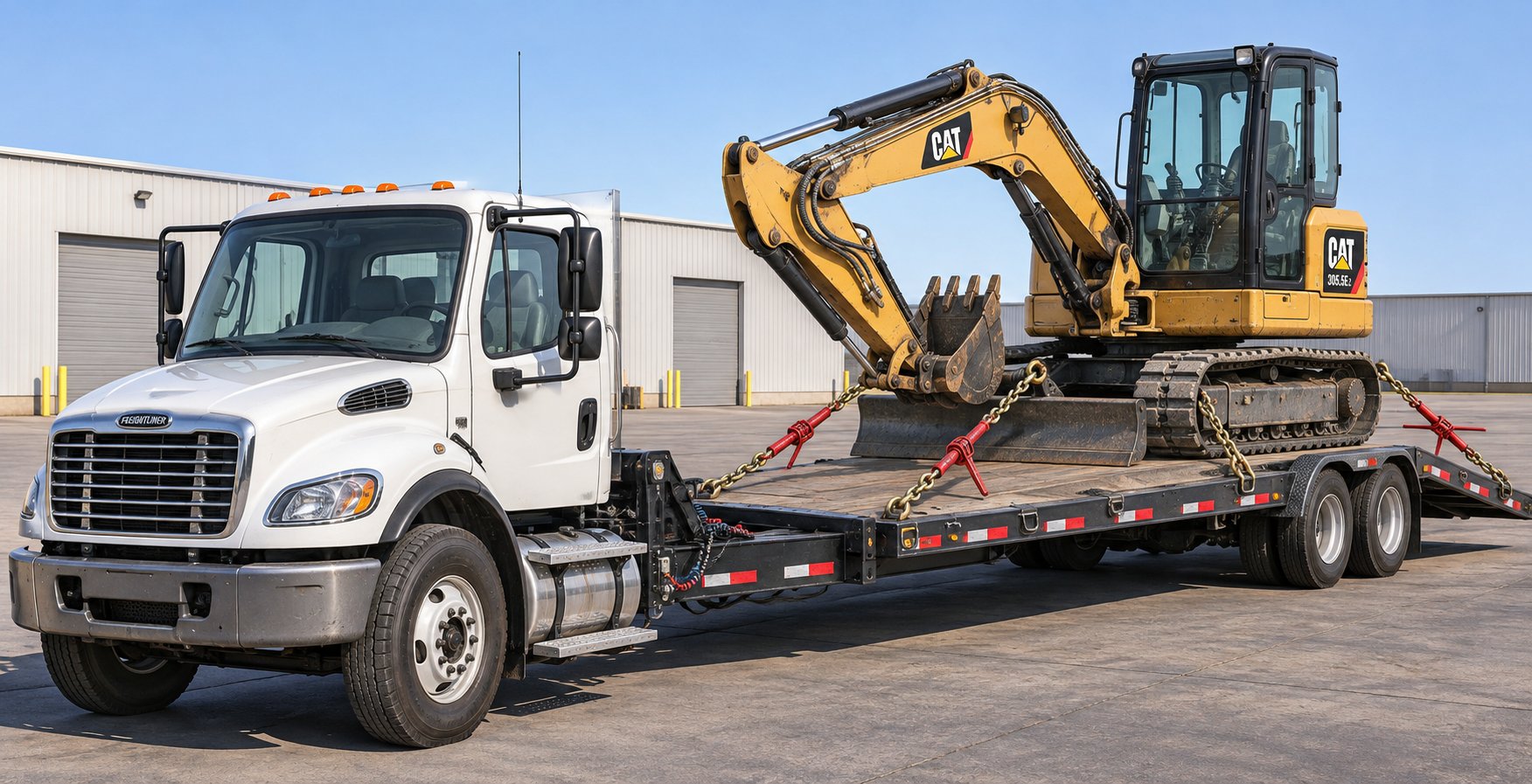
Operating Weight and Transport Planning for the Cat 309
You've found the right machine on paper — the dig depth checks out, the hydraulics match your attachment lineup, and the price fits the budget. But here's the question that catches buyers off guard: can your current truck-and-trailer setup actually move this Caterpillar 309 legally and safely? The answer depends on numbers most sellers never bring up during a walk-around.
Operating Weight and Its Impact on Trailer Selection
The Cat 309 CR's operating weight ranges from approximately 19,735 pounds in its lightest cab configuration up to 21,091 pounds fully loaded — counterweight installed, long stick, steel tracks with rubber pads. That puts it squarely in the 10-ton (U.S.) range, which is heavy enough to eliminate most light-duty equipment trailers from consideration.
Think about what that weight means for your trailer. A tag-along equipment trailer with a 15,500-lb GVWR — perfectly adequate for a 7-ton compact excavator — falls thousands of pounds short once you add a 309 CR and account for the trailer's own curb weight of 4,000 to 5,000 pounds. You'll typically need a trailer rated at 24,000 lbs GVWR or higher to carry the machine with a comfortable margin for chains, binders, fuel cans, and any loose attachments riding on the deck. As Spencer Trailers notes, usable payload is GVWR minus the trailer's actual as-built empty weight — and options like winches, steel decking, or upgraded axles eat into that margin quickly.
Two trailer styles dominate at this weight class. A low-profile equipment trailer with a dovetail and heavy-duty ramps keeps the deck height manageable and works well for contractors who load and unload frequently at different sites. A tilt-deck trailer eliminates the ramp-angle problem entirely by hydraulically tilting the entire deck, reducing the risk of the 309 CR's undercarriage high-centering during loading. Either option works when properly rated, but the tilt-deck typically adds cost and its own hydraulic system to maintain.
The combined gross vehicle weight also drives licensing requirements. A typical setup — say an 8,500-pound truck, a 5,000-pound trailer, and a 21,000-pound Cat 309 CR — totals roughly 34,500 pounds. That exceeds the 26,001-pound federal threshold for a commercial driver's license, meaning most operators hauling this machine on public roads will need a CDL. Factor that into your hiring and insurance planning.
Transport Dimensions and Regulatory Considerations
Weight is only half the equation. The cat 309 excavator's physical dimensions determine whether you can haul it without oversize permits — and one configuration choice can flip that answer from "yes" to "no."
Per RitchieSpecs data for the Cat 309 CR, the overall track width measures 97.2 inches (about 8 feet 1 inch) with the standard blade, comfortably under the 8-foot-6-inch federal limit for permit-free transport on Interstate highways. However, the optional wide-gauge blade pushes overall width to 103.9 inches — roughly 8 feet 8 inches — which exceeds that threshold and may trigger oversize permit requirements depending on your state's regulations.
Transport height is far less of a concern. With the boom stowed, the 309 CR stands 97.9 inches tall with the standard stick and 99 inches with the long stick — just over 8 feet in either case. Even sitting on a flatbed or equipment trailer with a 20- to 24-inch deck height, the combined load height stays well under the typical 13-foot-6-inch limit. Shipping length runs 259 to 262.3 inches (approximately 21.6 to 21.9 feet) depending on stick configuration, so a 22- to 24-foot deck gives you adequate room for positioning and securement.
One detail specific to the cat 309 cr deserves attention: tail swing. With the counterweight installed, the tail swing radius measures 64.8 inches from the center of rotation. Without the counterweight, it drops to 57.1 inches. During transport, the house should be locked in a travel position, but if the turret were to rotate, a wider tail swing means a wider load profile — and on a narrow trailer deck, that geometry matters for side-to-side clearance and tie-down positioning.
Before you load a Caterpillar 309 onto any trailer, run through every item on this checklist:
- Verify actual operating weight — weigh the machine as configured, including bucket and any installed attachments, on a certified scale rather than relying on catalog estimates
- Confirm trailer GVWR and usable payload — subtract the trailer's as-built curb weight from its rated GVWR to determine true remaining capacity
- Check transport height clearance — measure from the ground to the highest point of the machine on the trailer deck and confirm it clears all bridges and overpasses on your route
- Secure boom and stick — fully retract the arm, lower the bucket flat to the trailer deck, and engage the boom lock if equipped
- Retract the blade — raise the blade off the deck surface to prevent dragging during transit, then secure it
- Confirm axle load distribution — position the machine so hitch weight falls within the tow vehicle's and coupler's rated limits, then verify with scale weights at each axle group
- Assess overall width — confirm whether standard or wide-gauge blade is installed and check state-specific width limits along your planned route
- Secure independently — use a minimum of four rated tie-downs at the manufacturer's designated securement points, not at arbitrary frame locations
A Cat 309 CR with the wide-gauge blade measures 103.9 inches across — just enough to exceed the standard 102-inch permit-free width limit in many states. Confirm your exact blade configuration before every haul.
Getting the transport logistics right protects your investment and keeps your crew legal on the road. But the costs of moving a 9-ton excavator don't end at trailer selection and fuel for the tow vehicle — they extend under the hood to the engine that powers every dig cycle, travel pass, and attachment operation on the job site.
Engine Performance and Emissions Technology Inside the Cat 309
Every hour the Cat 309 spends on a job site, its engine is burning fuel, cycling through emissions management routines, and accumulating wear that directly affects your long-term cost of ownership. Yet most listings for a cat 309 excavator for sale highlight dig depth and operating weight while barely mentioning the powertrain. That gap leaves buyers unprepared for the maintenance obligations and fuel expenses baked into Tier 4 Final diesel technology — costs that show up on your books month after month, long after the purchase price is paid.
The Cat C3.3B Turbo Diesel Engine and Tier 4 Final Compliance
The 309 cat excavator is powered by a Cat C3.3B turbocharged diesel engine with a displacement of 203 cubic inches (3.33 liters). Per Caterpillar's published specifications, this engine produces a net rated power of 69.5 horsepower (51.8 kW) — enough to keep the hydraulic system fully pressurized during heavy digging cycles while maintaining responsive travel speed between tasks. It's a compact, high-torque engine designed specifically for the demands of excavation work: frequent load spikes when the bucket breaks ground, sustained effort during truck-loading cycles, and variable-speed operation when running hydraulic attachments.
What makes the C3.3B particularly relevant for buyers is its compliance with the EPA's Tier 4 Final emissions standards. Since 1996, the EPA has phased in progressively stricter regulations targeting particulate matter (PM) and nitrogen oxides (NOx) from non-road diesel engines. Tier 4 Final — the current and most stringent tier — effectively requires an aftertreatment system to reduce emissions to compliance levels. For the 309 CR, that aftertreatment centers on a diesel particulate filter (DPF) paired with a diesel oxidation catalyst (DOC).
Here's what that means in plain terms. A DPF is a filtration system that physically captures soot particles from the engine's exhaust stream using a series of alternately blocked channels that force exhaust gas through porous walls. Over time, those trapped particles accumulate and increase backpressure on the engine. To clear the filter, the system initiates a process called regeneration — raising exhaust temperatures above approximately 575 degrees Fahrenheit to burn off the collected soot.
Caterpillar's approach to regeneration is worth understanding because it directly affects uptime. Rather than relying on external load banks or operator-initiated burn cycles, Cat uses a proprietary active regeneration technology that periodically introduces a small amount of fuel into the DPF to oxidize trapped soot. The process is computer-controlled and runs automatically without operator intervention, which means the machine keeps working while the filter cleans itself. For the 309 CR specifically, the DOC/DPF system does not require diesel exhaust fluid (DEF), which eliminates the need for a separate DEF tank, fluid refills, and the potential for DEF-related fault codes — a meaningful simplification compared to machines that use selective catalytic reduction (SCR) systems.
That said, the DPF isn't maintenance-free. Ash — the non-combustible residue left behind after regeneration burns off soot — gradually accumulates inside the filter and must be physically cleaned at extended service intervals. Skipping or delaying DPF ash cleaning leads to restricted exhaust flow, reduced engine performance, and eventually a forced derate that limits machine power until the issue is addressed. For used-machine shoppers, this is a critical inspection point: ask for DPF service records and find out when the last ash cleaning was performed relative to the manufacturer's recommended interval.
What the Powertrain Means for Fuel Costs and Uptime
Engine specs and emissions hardware set the stage, but your fuel bill tells the real story. Fuel consumption on a 309 cat excavator is measured in gallons per hour, and that number swings dramatically based on a single variable: load factor.
Load factor is simply the percentage of maximum engine power the machine demands over a given period. Trenching through compacted clay at full depth with a loaded bucket on every cycle might push load factors to 50 or 60 percent. Finish grading with a tilt bucket at partial throttle might drop that figure to 20 or 25 percent. As Construction Equipment Magazine notes, the fuel burn rate is influenced by four major factors — application type, operator technique, idle time, and machine technology — and drawing conclusions from burn rate alone without understanding those variables can lead to false comparisons.
For a 69.5-horsepower engine like the C3.3B, typical fuel consumption on mixed excavation work falls in the range of 2.5 to 4.5 gallons per hour, depending on application intensity and operator habits. At current diesel prices, that translates to roughly $10 to $20 per operating hour in fuel alone. Over a 1,500-hour work year, you're looking at $15,000 to $30,000 in annual diesel costs — a line item that dwarfs many maintenance expenses and deserves as much scrutiny as the machine's purchase price.
The Cat 309's electronic engine management system helps moderate that burn. The system continuously adjusts fuel injection timing and volume based on real-time hydraulic demand, so the engine doesn't waste fuel producing power nobody is using. Features like auto engine idle and auto engine shutdown — both available on the 309 CR — further reduce consumption during the downtime that inevitably fills a typical work day: waiting for trucks, repositioning between trenches, or pausing for site meetings. The Caterpillar 309 weight and compact footprint also contribute indirectly to fuel savings during travel, since lighter track loads and shorter travel distances on confined sites mean less power consumed moving the machine itself.
Buyers evaluating a used Cat 309 should request fuel consumption logs and DPF regeneration history before making an offer — these records reveal how hard the machine was actually worked, how well it was maintained, and whether the emissions system is healthy or headed for an expensive service event.
Fuel and emissions maintenance are ongoing costs that shape every month of ownership. But they're only one side of the ledger. The other side — the capital cost itself — hinges on a decision every buyer faces before signing anything: should you buy new or used, and what does total cost of ownership really look like across each path?
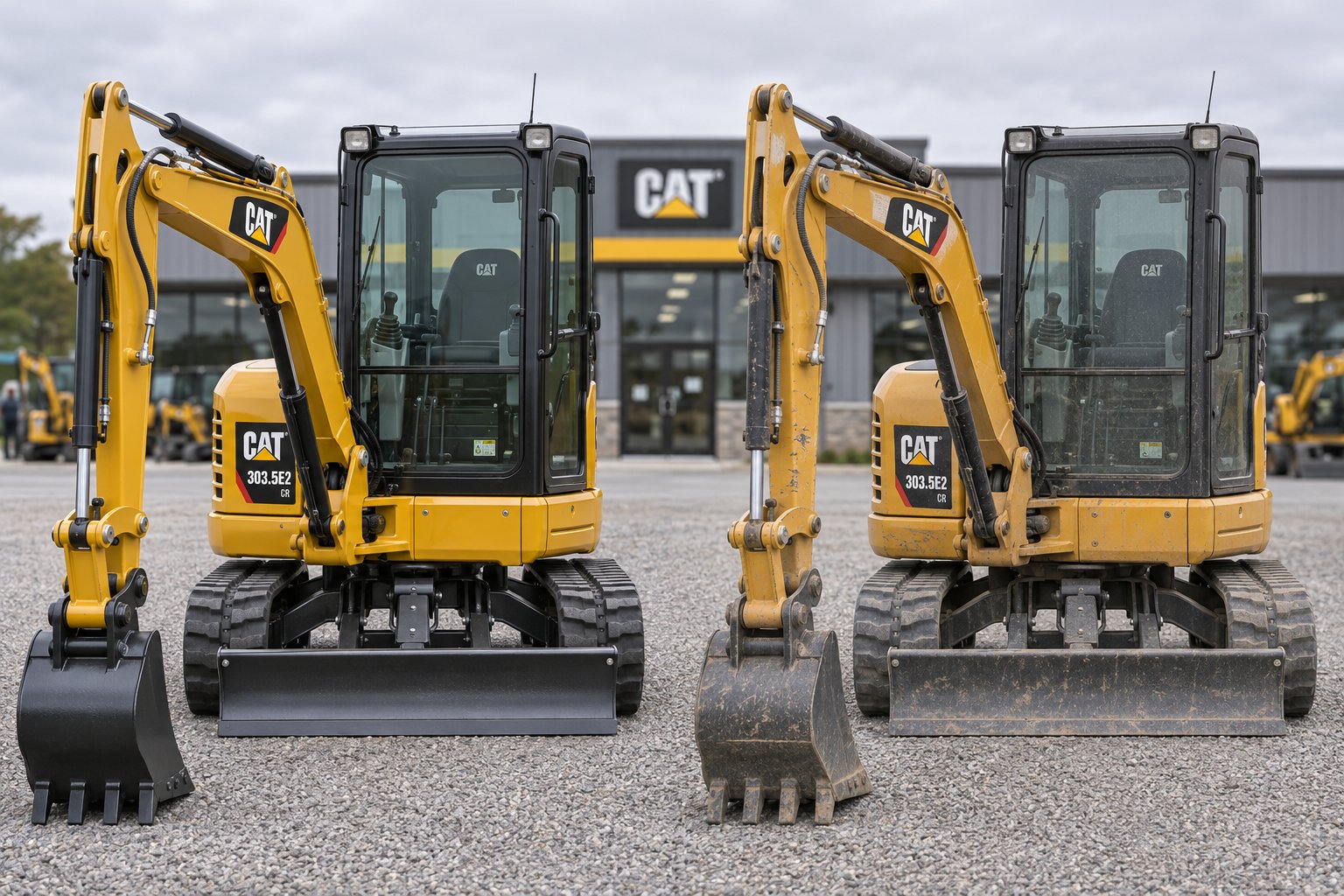
New vs. Used Cat 309 and the True Cost of Ownership
Sticker price is the number everyone fixates on. It's the figure on the dealer invoice or the winning bid at auction. But for a 309 excavator, the purchase price represents roughly 40 to 60 percent of what the machine will actually cost you over its working life. The rest — fuel, scheduled maintenance, undercarriage wear, insurance premiums, and the invisible drag of depreciation — accumulates quietly, month after month, whether the machine is digging or sitting on the trailer. Making the right call between new and used requires looking past the upfront check and mapping out every dollar the machine will demand across the years you plan to own it.
Advantages of Buying a New Cat 309
Buying a new cat 309 cr mini excavator delivers something no used unit can match: certainty. A zero-hour machine arrives with a full Caterpillar factory warranty, a brand-new undercarriage with 100 percent of its wear life ahead, and the latest technology package — including the LCD touchscreen monitor, Stick Steer, cruise control, automatic two-speed travel, and grade-assist readiness. Every component, from hydraulic seals to final drives, is fresh and backed by the dealer's service network.
You also get the ability to spec the machine exactly to your needs. Want the long stick for deep utility work? Need the high-flow auxiliary package for running a tilt-rotator? Prefer steel tracks with rubber pads over standard rubber tracks? A factory order lets you build the caterpillar 309 excavator specs around your workflow rather than compromising on whatever configuration a previous owner chose. And because the dealer relationship starts at hour zero, you'll have full access to Cat's telematics integration through Product Link and VisionLink from day one — giving you real-time machine health data, location tracking, and fuel consumption monitoring that becomes part of the machine's permanent value story.
The trade-off, of course, is price. A new 309 CR commands a significant premium over comparable used units, and the financial hit doesn't stop at delivery. According to industry depreciation data, excavators lose 15 to 20 percent of their original value in year one alone, with an additional 8 to 10 percent drop in year two. That front-loaded depreciation means a new machine's book value can fall by roughly 25 to 30 percent before it even completes its second season of work — a steep cost that doesn't appear on any maintenance invoice but hits your balance sheet hard.
Advantages of Buying a Used Cat 309
A used 309 excavator lets you sidestep that first-owner depreciation penalty entirely. Someone else absorbed the steepest part of the value curve, and you step in at a lower capital entry point with a machine that still has years of productive life ahead of it. For contractors testing the 9-ton class for the first time, or fleet operators expanding without overextending their credit line, that reduced commitment can be the difference between a smart acquisition and a cash-flow crisis.
Immediate availability is another practical advantage. Factory lead times for new equipment can stretch weeks or months depending on configuration and dealer allocation. A used cat 309 cr mini excavator sitting on a lot or listed online is ready to load and ship — sometimes within days of closing the deal. When a project timeline won't wait for a build slot, used inventory fills the gap.
There's also a less obvious benefit: proven field performance. A used machine with 2,000 to 4,000 hours has already survived its break-in period. Any manufacturing defects or early-failure components have likely surfaced and been addressed under the original warranty. What you're buying is a machine that has demonstrated it works — not a theoretical capability, but a documented track record. And used units frequently come bundled with attachments — buckets, thumbs, couplers, sometimes even hammers — that would cost thousands of dollars to purchase separately for a new machine.
Total Cost of Ownership Considerations
Whether you buy new or used, the purchase price is just the opening chapter. Total cost of ownership (TCO) is the full story, and it includes every recurring expense the machine generates across its time in your fleet. Ignoring these costs is how contractors end up underwater on equipment that looked like a bargain on the auction block.
Consider the major TCO components one by one:
- Fuel: As covered in the engine section, a Cat 309 burns approximately 2.5 to 4.5 gallons per hour depending on load factor. Over a typical 1,500-hour work year, annual fuel costs land between $15,000 and $30,000 — a number that applies equally to new and used machines running the same C3.3B engine.
- Scheduled maintenance: Oil changes, filter replacements, hydraulic fluid services, and greasing follow the same interval schedule regardless of machine age. However, a used machine approaching major service milestones — 2,000-hour hydraulic oil change, 3,000-hour coolant replacement — may hit those costs sooner than a buyer anticipates.
- Undercarriage replacement: This is the single largest maintenance expense on any excavator. Caterpillar notes that undercarriage maintenance costs can represent as much as half of a machine's total operating costs. Track shoes, rollers, idlers, and sprockets all wear at rates determined by ground conditions, travel distance, and operating technique. A new machine starts with 100 percent undercarriage life; a used unit may have 40 to 60 percent remaining, which translates to a rebuild bill arriving years earlier than it would on a factory-fresh machine.
- Insurance: Premiums are tied to declared value, so a new machine with a higher insured value costs more to cover annually. A used machine insured at a lower declared value saves on premiums — but the coverage ceiling is also lower in the event of a total loss.
- Depreciation: The silent cost. A new 309 excavator depreciates fastest in years one and two, losing roughly 25 to 30 percent of its purchase price in that window. A used machine with moderate hours — say a three- to five-year-old unit — sits on a flatter depreciation curve, losing approximately 6 to 8 percent per year. That means the gap between what you paid and what you can sell it for shrinks much more slowly, protecting your equity.
When you stack all these costs together, the total ownership picture looks very different from the sticker price alone. The table below frames the comparison across the factors that matter most to buyers evaluating a cat 309 for sale — whether rolling off the factory floor or coming off a job site with a few thousand hours on the clock.
| Factor | New Cat 309 CR | Used Cat 309 CR (3-5 Years Old) |
|---|---|---|
| Upfront Cost | Highest — full MSRP plus dealer fees and configuration options | Significantly lower — typically 30-50% below new pricing depending on hours and condition |
| Warranty Coverage | Full Caterpillar factory warranty; extended protection plans available | Limited or no warranty unless purchased through a Cat Certified Used program or dealer-backed plan |
| Technology Features | Latest generation: touchscreen monitor, Stick Steer, grade-assist readiness, Product Link telematics | Depends on model year — older units may lack current-generation monitor and telematics integration |
| Depreciation Rate | Steepest in years 1-2 (approx. 25-30% cumulative loss) | Flatter curve — approx. 6-8% per year for units past the 3-year mark |
| Undercarriage Life Remaining | 100% — brand-new tracks, rollers, idlers, and sprockets | Varies widely — inspect carefully; 40-60% remaining life is common on moderate-hour units |
| Customization Options | Full factory spec: stick length, track type, auxiliary hydraulics, counterweight, blade width | Limited to the configuration the previous owner selected; modifications possible but add cost |
| Included Attachments | Typically sold without attachments unless negotiated as part of a package deal | Often bundled with buckets, thumbs, couplers, or other tools — reducing additional capital outlay |
| Availability | May require weeks or months for factory build and dealer delivery | Immediate — ready for pickup or shipment upon closing |
A pattern emerges from this breakdown: buying new maximizes certainty and minimizes near-term maintenance risk, but at the cost of absorbing the steepest depreciation. Buying used reduces your capital exposure and can deliver a ready-to-work machine faster, but shifts more inspection and maintenance risk onto the buyer. Neither path is universally better — the right choice depends on your cash position, your tolerance for mechanical uncertainty, and how long you plan to keep the machine in your fleet.
The 309 cat excavator weight of your financial decision isn't the purchase price alone — it's the sum of fuel, maintenance, undercarriage wear, insurance, and depreciation spread across every hour the machine works for you.
That risk transfer is exactly why the used-machine path demands a different level of diligence. A thorough pre-purchase inspection — one that goes far beyond kicking tires and checking the hour meter — can reveal whether a used Cat 309 is a genuine value or a liability waiting to surface.
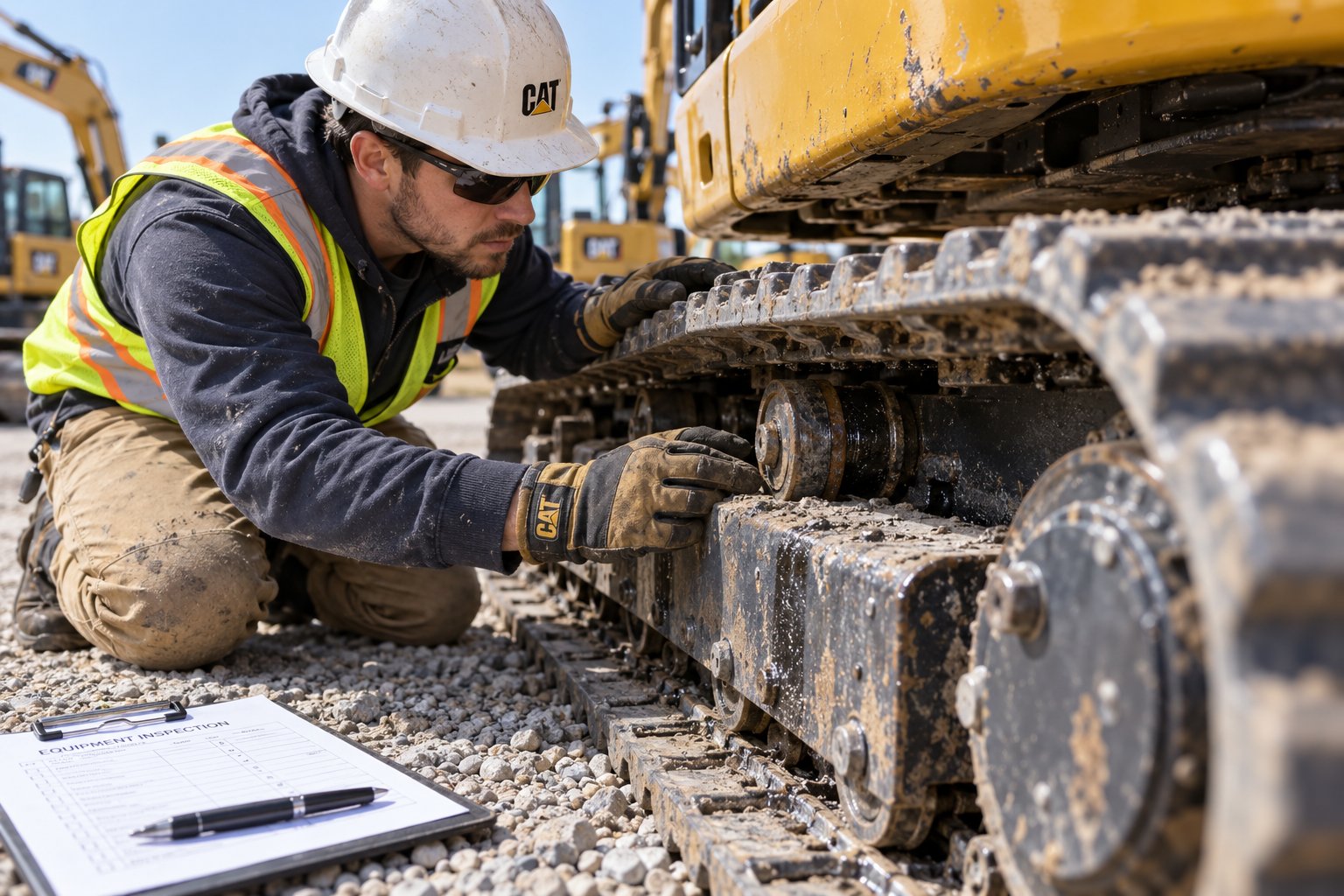
How to Inspect a Used Cat 309 Before You Buy
A used Cat 309 with fresh paint, reasonable hours, and an attractive listing price can still be hiding five figures' worth of deferred maintenance. As CentexExcavation's inspection guide puts it bluntly: you are not purchasing a new machine — you are purchasing whatever working life is left, and the hour meter alone says very little about how much of that remains. Two Cat 309CR units showing identical hours can carry completely different mechanical histories depending on application, ground conditions, operator habits, and maintenance discipline. A machine that spent its life loading loose topsoil in a landscape yard looks nothing like one that hammered concrete demolition in a coastal salt-air environment.
The inspection process outlined below turns that uncertainty into measurable data. Budget one to two hours on-site, bring a clipboard and a track measuring group, and — most importantly — insist on operating the machine under load before committing a dollar.
Undercarriage Condition and Remaining Life
The undercarriage is the most expensive wear system on any tracked excavator. Industry estimates consistently place undercarriage maintenance at up to half of total lifetime owning and operating costs, which means a worn-out set of tracks, rollers, and sprockets can quietly erase whatever discount you thought you negotiated on the purchase price.
Five components demand individual attention, and they wear as a system rather than independently:
- Track shoes and grousers: Measure grouser height with a depth gauge and compare the reading against Cat's published new and limited-use values. Worn grousers reduce traction and indicate heavy travel mileage.
- Rollers (carrier and guide): Use calipers to measure the outer tread diameter of each roller individually. Front and rear guide rollers experience more wear than center rollers — uneven readings across the set suggest the machine spent significant time traveling rather than digging in place.
- Idler alignment and wear: Check the front idler for side play and tread wear. A misaligned idler accelerates chain and roller degradation across the entire undercarriage.
- Sprocket tooth profiles: Pointed or hooked sprocket teeth are a visual indicator of advanced wear. Some OEM track measurement kits include a transparent sprocket gauge that overlays the tooth profile to show remaining life at a glance.
- Track tension and chain stretch: Measure pin-to-pin distances across five consecutive links and compare to Cat's specification chart. If the chain has been shortened by removing a link — a common shortcut to tighten a loose track — internal wear accelerates dramatically. Count the total links and verify against the factory number for the Cat 309CR's undercarriage configuration.
OEM wear charts express each component's condition as a percentage from 0 percent (new) to 100 percent (fully consumed). As a general guideline, tracked excavators running in moderate conditions often reach undercarriage replacement thresholds between 4,000 and 6,000 hours, though abrasive soils, rock, or excessive travel can cut that window in half. A unit showing 3,500 hours with components already at 70 percent wear tells a very different story than one at 5,000 hours with only 50 percent consumed — the second machine was clearly operated and maintained more carefully.
Hydraulic System and Cylinder Integrity
Hydraulics are the heart of any excavator, and the Cat 309's load-sensing system operates at pressures exceeding 4,100 psi. Even minor internal failures at those pressures cascade into expensive repairs. Start your hydraulic inspection with a slow walk-around, looking for weeping hoses, damp fittings, and oil seepage around cylinder bases. Equipment World's inspection guide notes that oil leaking from the hydraulic pump area could signal a replacement costing $12,000 to $15,000 — making it one of the most consequential finds during any pre-purchase evaluation.
Cylinder rods deserve hands-on attention. Run your fingers along each exposed rod surface and feel for scoring, pitting, or dents. Any surface imperfection on a cylinder rod will chew through the seal during operation, leading to a reseal or full cylinder rebuild. Check every cylinder — boom, stick, bucket, and blade — individually.
Then operate the machine. Run every function through its full range: boom raise and lower, stick in and out, bucket curl and dump, full swing left and right, and forward and reverse travel. Watch for hesitation, jerky movement, or unusual noise. Let the system reach normal operating temperature — some hydraulic problems stay invisible when the oil is cold and become obvious once heat thins the fluid and exposes internal bypass leaks.
One critical test: raise the boom with a loaded bucket, shut the engine off, and time how far the boom drifts downward over five minutes. Excessive drift — also called creep — points to internal leakage in the boom cylinder packings or the main control valve. A small amount of drift is normal; visible movement within the first 30 seconds is not.
If the seller allows it, request a hydraulic oil sample analysis before closing. Laboratory testing reads the metals suspended in the fluid — iron from cylinder bores and valve bodies, copper and tin from bronze bushings and thrust plates, chromium from hardened wear surfaces — and can detect internal component degradation that no walk-around will reveal. A single sample provides a snapshot, but if the seller has historical samples showing a trend line, that data is far more valuable. Stable metal counts across multiple intervals indicate healthy internals; a rising iron or copper trend tells you something is wearing faster than it should.
Boom, Stick, and Bucket Pin Wear
Every pivot point on the Cat 309's front linkage — boom-to-frame, boom-to-stick, stick-to-bucket, and bucket-to-coupler — relies on hardened steel pins rotating inside bronze or steel bushings. When those bushings wear, the joints develop play that you can see and feel during operation.
The test is straightforward. Have the operator position the bucket flat on the ground with the stick nearly vertical, then alternate between down-pressure and curl-release in short, deliberate cycles. Stand beside each pin joint and watch for movement between the mating components. This "wiggle test" isolates bushing slop at each connection point. Experienced inspectors consider loose pins and bushings one of the clearest indicators of how a machine was treated — specifically, whether the previous operator kept up with daily greasing. On a machine built for the cat 309 lifting capacity demands of pipe-setting and material placement, sloppy pins don't just reduce digging precision. They accelerate wear on adjacent components, create stress risers in the boom structure, and introduce a racking force that shortens cylinder seal life.
While you're examining the linkage, inspect the boom and stick surfaces for cracks, especially around pin bosses and weld seams. Look for repair welds that don't match the factory pattern — plating over a crack or a grind-and-reweld indicates the structure was previously damaged. On small and mid-size excavators, structural cracks can decrease the machine's value by roughly 20 percent and raise serious questions about how it was used.
Documentation and History Red Flags
The cheapest part of any inspection is the paper trail — and it's often the most revealing. Before you measure a single component, ask for the complete service history: oil and filter change records, hydraulic servicing logs, undercarriage work, DPF ash-cleaning invoices, and any major component overhauls. What you're looking for is consistency over the machine's life, not a sudden burst of maintenance activity dated just before the listing went live.
Verify that the serial number on the machine matches the paperwork and confirm there are no outstanding liens against the unit. Check the hour meter against the wear you observe — a machine showing 2,500 hours but wearing undercarriage and pin bushings consistent with 5,000 hours likely had its meter replaced or reset at some point. Caterpillar's Product Link telematics system, if active on the unit, can provide independent hour verification and usage data that bypasses the physical meter entirely.
Request these records before you travel to inspect any unit:
- Complete maintenance logs with dates, hour readings, and service descriptions
- Hour-meter verification — cross-reference against telematics data or dealer service records
- Ownership history — number of previous owners and type of work performed
- Accident or structural repair records — including any insurance claims
- DPF service history — ash-cleaning intervals and any regeneration fault codes
- Hydraulic oil sample analysis reports — ideally a series showing trend data over time
- Undercarriage measurement records — OEM wear percentage charts from prior inspections
- Title and lien status — confirmed clear before any deposit changes hands
A missing maintenance history on a high-hour machine is not a minor gap — it is a significant risk indicator that the machine may have been neglected, worked beyond its intended duty cycle, or passed through owners who prioritized production over preservation.
Every finding from this inspection should translate directly into dollars. Add up the cost of undercarriage components approaching their wear limits, hydraulic cylinder reseals, pin and bushing replacements, and any structural work — then compare that total against the asking price and against the market for a comparable unit with documented maintenance. A cheaper machine that needs $15,000 in undercarriage work is rarely cheaper than a higher-priced unit with verified component life remaining. That market comparison, however, requires understanding what actually drives Cat 309 pricing — and which factors move the number more than buyers expect.
Cat 309 Pricing Factors and Current Market Value
An inspection tells you what a machine is worth mechanically. But mechanical condition is only one variable in a pricing equation that shifts with geography, season, configuration, and how the unit reaches the market. Two identical-looking Cat 309 excavators — same model year, same hour count — can carry asking prices separated by $30,000 or more depending on these surrounding factors. Understanding what actually moves the cat 309 price helps you distinguish a genuine deal from an overpriced listing and gives you leverage when it's time to negotiate.
As a broad market reference, aggregated listing data from sites like MachineryTrader places the average asking price for a Cat 309 at approximately $107,762. That figure offers a useful starting point, but treat it as a compass heading rather than a GPS coordinate. Asking prices aren't transaction prices, and the gap between the two can be significant — especially at auction, where EquipmentWatch data reported an 18.22% drop in construction equipment auction values compared to the prior year, driven partly by an aging fleet and more selective buyers. The used excavator market has seen overall price softening, with average used excavator values peaking near $159,000 in mid-2025 before easing through the winter months and into 2026, per Fusable's EquipmentWatch market trend reports. That broader trend applies downward pressure on the 309 mini excavator segment as well, though strong brand recognition and high demand in the 9-ton class help Caterpillar units hold value better than many competitors.
Key Factors That Move the Price Up or Down
Not every variable carries equal weight. Some shift the cat 309 market value by thousands of dollars; others nudge it by hundreds. Here's how they stack up, ranked from the most impactful to the least:
- Accumulated hours: This is the single largest price driver. Ritchie Bros. notes that hour count matters more than age — a five-year-old machine with 800 hours will command more than a three-year-old unit with 2,500 hours because buyers are pricing remaining engine, hydraulic, and undercarriage life, not the calendar. Every additional 500 hours on the meter typically translates to a measurable step down in asking price.
- Undercarriage condition: A machine with 60 percent or more undercarriage life remaining carries a premium over one approaching rebuild thresholds. Since undercarriage replacement can cost several thousand dollars on a 9-ton excavator, buyers rightfully discount machines where that expense is imminent.
- Model year: Newer production years incorporate updated hydraulic controls, monitor software, and emissions calibrations. A 2023 or 2024 Cat 309 CR commands more than a 2020 unit at comparable hours because the technology package is closer to current-generation standards.
- Configuration and attachments: A unit equipped with the long stick, counterweight, high-flow auxiliary hydraulics, a hydraulic thumb, and a quick coupler is worth meaningfully more than a base-configured machine. Bundled attachments — especially name-brand buckets and thumbs — add real value because they save the buyer from purchasing those items separately.
- Dealer vs. private sale: Dealer-certified used machines carry higher asking prices, but that premium buys inspection documentation, limited warranty coverage, and financing options. Private-party and auction purchases typically come in lower, though the buyer absorbs all mechanical risk. A well-maintained 3- to 4-year-old mini excavator with under 1,500 hours commonly retains 55 to 70 percent of its original value — a strong retention curve that applies particularly well to Caterpillar units given the brand's dealer network density and parts availability.
- Geographic market: Demand — and therefore pricing — varies by region. States with year-round construction seasons like Texas, Florida, and the Southeast tend to sustain higher used equipment prices, while markets with shorter building windows or lower construction activity may offer better buyer leverage.
How to Benchmark a Fair Market Price
Relying on a single listing or a friend's anecdote is how buyers overpay. A disciplined approach to benchmarking a cat 309 for sale used involves cross-referencing multiple data sources to triangulate what the market actually supports.
Start with auction result databases. Platforms that track real transaction prices — not asking prices — give you the clearest picture of what buyers are actually willing to pay for a specific model year and hour range. These completed-sale records are far more reliable than dealer list pricing, which often reflects a starting negotiation position rather than a final number.
Next, scan dealer listing aggregators like MachineryTrader and Equipment Trader to see how many comparable units are currently on the market. High inventory levels in your target configuration give you negotiating power; low supply tilts leverage toward the seller. Pay attention to how long individual listings have been active — a machine that's been sitting for 60 or 90 days without selling is priced above what the market will bear.
Finally, apply comparable-sale analysis the same way a real estate appraiser would. Identify three to five recently sold units that match your target machine's model year, hour range, and configuration as closely as possible. Average their transaction prices, then adjust up or down based on any material differences — better undercarriage condition adds value, missing attachments subtract it.
Seasonality adds one more layer. Spring is when contractors ramp up for the building season, and that surge in demand reliably pushes used equipment prices higher. EquipmentWatch data shows that used excavator values strengthened through mid-year before easing in the fourth quarter, with November and February posting the steepest monthly declines at -1.9% and -2.5% respectively. If your project timeline allows flexibility, shopping in late fall or winter often yields better deals simply because fewer buyers are competing for the same inventory.
The best price benchmark for any 309 mini excavator is not a single listing or an average — it's a range built from verified auction results, adjusted for the specific machine's hours, undercarriage life, configuration, and the season you're buying in.
Knowing what a fair price looks like is only useful if you know where to shop. The buying channel you choose — dealer lot, online marketplace, auction house, or specialty reseller — shapes not only the price you'll pay but also the level of transparency, warranty protection, and post-sale support you'll receive.
Where to Find a Cat 309 for Sale Right Now
A fair market price means nothing if you can't find the right machine through the right channel. And the channel you choose affects far more than just the number on the invoice — it determines how much transparency you get into the machine's history, whether any warranty backstops your purchase, and how much post-sale support exists if something goes wrong at hour 50. Buyers searching for a cat 309 excavator for sale often default to whichever listing pops up first in a search engine, but a more deliberate approach — matching your risk tolerance and budget to the appropriate buying channel — consistently produces better outcomes.
Each channel carries its own blend of price advantage, mechanical assurance, and convenience. Here's how the major options compare.
- JIUHONG Machinery — Used Caterpillar Excavator Inventory: Specialty dealers that curate brand-specific inventories offer a streamlined buying experience, and JIUHONG is one example worth exploring. Their used Caterpillar excavator collection lists multiple Cat models on a single platform, allowing contractors and fleet buyers to compare configurations, request pricing, and inquire about specific budget requirements without bouncing between dozens of unrelated listing sites. For buyers targeting the 9-ton class, the ability to view several Caterpillar models side by side — and contact a sales team that knows the product line — saves time during the comparison phase. One editorial note: because dealer inventory rotates, exact Cat 309 availability should be confirmed directly with the JIUHONG sales team before planning a trip or committing to a timeline. Pros: brand-focused inventory, direct sales team contact, ability to compare multiple Cat models in one place. Cons: inventory varies by rotation cycle; confirm specific model availability before purchasing.
- Authorized Cat Dealers and Certified Used Programs: The highest-assurance channel. Dealer-backed units come with documented inspection histories, limited warranty options, and access to Cat Financial for structured financing. Pros: machine inspection and reconditioning, warranty coverage, parts and service support, financing. Cons: price premium over private-party and auction purchases.
- Online Auction Houses (Ritchie Bros., IronPlanet, AuctionTime): Auctions set the market price through competitive bidding, which can work in the buyer's favor when demand is soft. Pros: transaction prices often below dealer retail, large selection, verifiable sale history databases. Cons: limited or no warranty, inspection access varies, competitive bidding can push prices above expectations on popular units.
- Private Sellers (Contractors, Fleet Operators): Buying directly from the machine's owner typically offers the lowest price point, and the seller can provide firsthand operational history. Pros: lowest price, direct knowledge of machine history and usage. Cons: no warranty, no dealer reconditioning, buyer assumes full inspection and due-diligence responsibility.
Authorized Cat Dealers and Certified Used Programs
If minimizing risk is your top priority, an authorized Caterpillar dealer is the most insulated path to buying a used cat 309 for sale. Caterpillar's Cat Certified Used program puts qualifying machines through a rigorous process: up to a 140-point inspection, servicing with genuine Cat parts performed by trained dealer technicians, and coverage beyond the standard machine warranty through Equipment Protection Plans. As Caterpillar describes it, a certified used machine is a late-model product with many of the latest features — inspected, serviced, and completed through its most recent maintenance cycle, with a certificate to prove it.
The distinction between "certified used" and simply "used" matters. A standard used machine from a Cat dealer receives a general check and service to ensure quality and safety, but not to the same depth as a certified unit. Certified units carry a higher price tag because the dealer has invested real labor and parts cost into reconditioning the machine to a documented standard. For a buyer who plans to put the excavator straight to work on a time-sensitive project, that upfront premium buys something valuable: confidence that the machine won't stall a job in its first month.
Dealer purchases also unlock financing options through Cat Financial, which can structure lease-to-own, installment sale, or operating lease arrangements tailored to the buyer's cash-flow needs. And because the dealer relationship includes parts and service support, warranty claims and scheduled maintenance stay within a single ecosystem — no hunting for independent mechanics who may or may not have experience with the 309 CR's specific systems.
Online Marketplaces and Equipment Listing Sites
For buyers who want to cast a wider net and compare dozens of listings across geographies, online marketplaces are indispensable. MachineryTrader.com is the industry's longest-running equipment listing platform, featuring detailed listings from dealers, contractors, individual sellers, and auction houses. You can filter results by year, hours, price, and location, and the site's AI-driven recommendations learn from your browsing patterns to surface relevant units as they appear.
Equipment Trader operates a similar aggregation model, while auction platforms like Ritchie Bros. and IronPlanet offer both live and timed-auction formats where transaction prices are set by real-time bidding. Each platform has its own rhythm. Dealer listings on MachineryTrader tend to carry firm asking prices with room for negotiation. Auction listings start lower but can escalate quickly on desirable configurations — particularly low-hour Cat 309 units with full attachment packages.
Before traveling to inspect any machine found online, take these steps to protect your time and money:
- Request a detailed photo set that includes the hour meter, undercarriage close-ups, hydraulic hose routing, and all four sides of the boom and stick structure — not just glamour shots from the operator's side.
- Ask for condition codes or inspection reports. Many dealers and auctioneers assign standardized condition ratings. Understand what each rating means before interpreting it as a buying signal.
- Verify the listing's age. A unit listed for 90-plus days without a price reduction may indicate either overpricing or an underlying issue that previous inspectors flagged. Both scenarios give you negotiating room.
- Confirm the return policy and dispute resolution process. Online purchases that involve shipping a 10-ton machine across state lines carry logistical risk. Know your recourse before you wire funds.
Used Equipment Dealers Specializing in Caterpillar Models
Between the full-service Cat dealer network and the open marketplace, a third category of seller occupies valuable middle ground: independent dealers who specialize in specific brands or equipment families. These dealers typically carry curated inventories of Caterpillar machines — sometimes sourced from rental fleet turn-backs, lease returns, or contractor upgrades — and their sales teams develop deep product knowledge that generalist equipment brokers rarely match.
The advantage for a buyer shopping for a cat 309 excavator for sale is efficiency. Rather than sifting through hundreds of mixed-brand listings, a Caterpillar-focused dealer lets you compare multiple models, configurations, and price points within a single conversation. You can evaluate whether a 309 CR with 2,000 hours and a long stick fits your needs better than a lower-hour base-configured unit at a different price — and get informed answers about the trade-offs from someone who handles these machines regularly.
Specialty dealers also tend to be more flexible on bundling. Need a set of buckets, a hydraulic thumb, and a quick coupler included in the deal? A dealer who stocks Caterpillar-specific attachments alongside the machines can often package those items at a lower combined cost than sourcing each one separately after the fact.
The trade-off is that independent dealers generally do not offer factory-backed warranties. Some provide their own limited coverage or third-party protection plans, but the terms and enforcement mechanisms vary. Always read the fine print, and ask specifically whether the warranty covers hydraulic components, engine internals, and the DPF system — the three most expensive failure points on any used 309 excavator.
The buying channel you choose shapes your total cost of ownership just as much as the machine's condition — a lower purchase price through an auction or private sale can evaporate if you absorb repair costs that a dealer-certified unit would have covered under warranty.
Choosing the right channel and the right price still leaves one more question on the table for buyers who haven't fully committed to the Caterpillar brand: how does the Cat 309 actually compare against the machines its direct competitors are putting into the same weight class? That head-to-head evaluation is where brand loyalty meets hard data — and where the ownership decision either solidifies or shifts.
How the Cat 309 Stacks Up Against Rival Mini Excavators
Specs, pricing, and buying channels all point toward the Cat 309 as a strong contender in the 9-ton class. But "strong contender" doesn't mean "only option." Buyers still weighing brand loyalty against hard numbers owe themselves an honest look at the machines competing for the same trailer slot — particularly the Kubota KX080-5 and the Komatsu PC88MR-11, two of the most commonly cross-shopped alternatives in the upper compact excavator bracket. A thorough 9 ton mini excavator comparison reveals that each machine makes distinct trade-offs in weight, digging geometry, hydraulic architecture, and long-term ownership ecosystem.
Cat 309 vs. Kubota KX080-5 and Komatsu PC88MR-11
On paper, these three machines occupy overlapping territory — but they aren't identical. The Cat 309 CR tips the scales at 21,091 pounds, making it the heaviest of the trio by a meaningful margin. The Komatsu PC88MR-11 lands between 18,739 and 19,224 pounds depending on shoe width, while the Kubota KX080-5 comes in around 18,520 pounds. That weight gap isn't just a trailer-planning concern — it translates into greater stability and lift capacity for the Cat, but it also means more fuel consumed moving the machine itself during travel-heavy days.
Dig depth is where the cat 309 vs Kubota KX080-5 comparison gets interesting. The KX080-5 delivers a maximum digging depth of 15 feet 1 inch — genuinely deep for this size class and nearly matching the Cat 309 CR's 15 feet 2 inches with the long stick option. The Komatsu PC88MR-11, designed primarily as a reduced tail-swing utility machine, prioritizes tight-quarters geometry over raw depth, making direct dig-depth comparisons less meaningful since the PC88MR-11's value proposition centers on working safely in occupied rights-of-way rather than chasing maximum excavation reach.
Bucket breakout force tells a compelling story for Kubota. The KX080-5 generates 14,660 lbf of bucket breakout — strong enough to consistently outperform many machines in the 8-to-9-ton bracket when hitting compacted fill, old roadbed, or rock. The Cat 309 CR counters with 13,943 lbf of bucket digging force, still competitive but slightly behind on raw breakout. Where the 309 pulls ahead is hydraulic versatility: its dedicated auxiliary pump delivers up to 37 gpm through the high-flow circuit, allowing operators to run power-hungry attachments like mulchers and tilt-rotators without sacrificing simultaneous boom and travel functions.
Horsepower differences across the three machines are slim enough to disappear in real-world cycle times. The Cat 309 CR produces 69.5 hp from its Cat C2.8 engine, the PC88MR-11 delivers 68 hp from a Komatsu SAA3D95E-1, and the KX080-5 runs 66.6 hp from a Kubota V3307 diesel. You'll notice the gap narrows to just 2.9 hp across the entire field — far less than the variance introduced by operator technique, ground conditions, or attachment selection on any given day.
Cab environment is a less quantifiable but equally important consideration for machines that run full shifts. Kubota specifically publishes a 74 dB(A) interior noise rating for the KX080-5 — a figure worth requesting from Caterpillar and Komatsu dealers if operator fatigue over long days is a priority for your crew. All three machines offer enclosed, climate-controlled cabs with LCD monitors and telematics as standard, though the specific interface and feature set vary by brand and model year.
| Specification | Cat 309 CR | Kubota KX080-5 | Komatsu PC88MR-11 |
|---|---|---|---|
| Operating Weight | 21,091 lbs (9,565 kg) | ~18,520 lbs (~8,400 kg) | 18,739–19,224 lbs (8,500–8,720 kg) |
| Engine Power | 69.5 hp (Cat C2.8) | 66.6 hp (Kubota V3307) | 68 hp (Komatsu SAA3D95E-1) |
| Max Dig Depth | 161.7 in / std stick; 182.8 in / long stick | 181.2 in (15 ft 1 in) | Verify with manufacturer — reduced-swing design prioritizes geometry over max depth |
| Bucket Breakout Force | 13,943 lbf | 14,660 lbf | Verify with manufacturer |
| Auxiliary Hydraulic Flow | Up to 37 gpm (high flow) | Verify with manufacturer | HydrauMind load-sensing system — verify flow specs |
| Tail Swing Design | Compact radius | Reduced tail radius | Reduced tail swing |
| Telematics | Product Link / VisionLink | KubotaNOW | KOMTRAX Level 5.0 |
| Estimated Resale Retention (3-4 yr, low hours) | Strong — Cat brand consistently leads resale charts | Good — Kubota's flagship compact model | Good — established municipal/utility presence |
Note: Cells marked "Verify with manufacturer" indicate specifications not confirmed in available reference materials. Buyers should consult official manufacturer literature or dealer data sheets for exact figures before making purchase comparisons.
Why Brand Ecosystem and Dealer Support Matter
Imagine two machines sitting side by side with nearly identical specs. What separates them over a five-year ownership window isn't horsepower or dig depth — it's the ecosystem surrounding each one. How quickly can you get a hydraulic pump rebuilt? Can your dealer stock the right track shoes by tomorrow morning? Does the telematics platform integrate with your existing fleet management software?
Caterpillar's dealer network is the largest in the heavy equipment industry, with over 2,700 dealer locations globally and deep market penetration across North America. That density matters for a working machine. A Cat 309 CR owner in most U.S. markets can access same-day or next-day parts availability on common wear items, schedule warranty service without traveling hours to reach an authorized facility, and rely on trained technicians who see dozens of 309s every year. That infrastructure underpins resale value too — Ritchie Bros. consistently ranks Caterpillar among the strongest brands for resale retention in the mini excavator category, and the reason is straightforward: buyers on the secondary market want machines they know they can service and support locally.
Kubota and Komatsu each maintain substantial dealer networks of their own, and neither should be dismissed on that front. Komatsu's KOMTRAX telematics at Level 5.0 offers robust remote monitoring, and the brand's established presence on municipal approved-equipment lists — particularly for reduced tail-swing machines used in active rights-of-way — gives it an institutional advantage in public-sector bidding that the Cat 309's compact-radius design doesn't always match. Kubota's KubotaNOW telematics and the V3307 engine's reputation for reliability keep the KX080-5 competitive on the ownership-experience front, especially for contractors whose existing fleet already runs Kubota equipment and whose mechanics know the brand's service points by heart.
Telematics integration deserves special attention for fleet buyers. Cat's Product Link and VisionLink platform feeds machine location, hours, fault codes, idle time, and fuel consumption into a centralized dashboard. If your fleet already includes other Caterpillar iron, adding a 309 CR means one unified monitoring system rather than toggling between brand-specific portals. For a single-machine buyer, that advantage is less pronounced — but for a contractor running five or ten units across multiple job sites, ecosystem consistency saves real administrative time and reduces the chance of missed maintenance alerts.
So who should buy what? The cat 309 review boils down to this: the Cat 309 CR is best suited for contractors who need maximum attachment versatility through high-flow auxiliary hydraulics, value the deepest available dig depth in this weight class via the long-stick option, and want the strongest resale protection backed by the industry's largest dealer and parts network. It's the right machine for a buyer who runs multiple attachment types across diverse job sites and plans to keep the excavator for three to five years before trading up.
The Kubota KX080-5 makes a compelling case for buyers who prioritize raw bucket breakout force, want Kubota's proven engine reliability, and work primarily in applications where digging through compacted material or rock matters more than running exotic hydraulic attachments. It's also worth serious consideration if your shop already services Kubota equipment and your operators are fluent in the brand's control layout.
The Komatsu PC88MR-11 earns its place for utility and municipal contractors who work inside active rights-of-way, need a reduced tail-swing machine that appears on approved-equipment lists, and value Komatsu's fuel-efficiency improvements and HydrauMind hydraulic smoothness over chasing maximum dig depth. If your bread-and-butter work involves single-lane traffic control and DOT-compliant operations, the PC88MR-11's geometry and institutional acceptance may outweigh the Cat 309's broader capability envelope.
No single machine wins across every criterion. The right choice depends on your specific mix of job types, your existing fleet ecosystem, and whether your buying decision is driven by maximum versatility, maximum breakout force, or maximum regulatory acceptance in tight-access utility corridors. Whichever direction you lean, the due diligence outlined throughout this guide — from specification analysis and transport planning through inspection, pricing, and channel selection — applies equally to every brand on your shortlist.
Frequently Asked Questions About the Cat 309
1. How much does a Cat 309 excavator weigh?
The Cat 309 CR operating weight ranges from approximately 19,735 pounds in its lightest cab configuration to 21,091 pounds fully equipped with the counterweight, long stick, and steel tracks with rubber pads. That puts it in the 10-U.S.-ton range, which is important for trailer selection and CDL requirements. A combined truck-trailer-machine load often exceeds 26,001 pounds, triggering federal commercial driver's license thresholds for road transport.
2. What is the average price of a used Cat 309?
Aggregated listing data from major equipment marketplaces places the average asking price for a used Cat 309 near $107,762, though actual transaction prices vary widely. Key price drivers include accumulated hours, undercarriage condition, model year, installed attachments, and whether the sale is through a dealer or private party. Seasonal demand also plays a role — spring purchases tend to carry higher prices, while late-fall and winter shopping often yields better deals. Specialty dealers like JIUHONG Machinery (jiuhong-machinery.com) list used Caterpillar excavators where buyers can inquire about specific configurations and pricing.
3. What engine does the Cat 309 use, and does it require DEF?
The Cat 309 CR is powered by a Cat C3.3B turbocharged diesel engine producing 69.5 horsepower. It meets EPA Tier 4 Final emissions standards using a diesel particulate filter (DPF) paired with a diesel oxidation catalyst (DOC). Notably, the 309 CR does not require diesel exhaust fluid (DEF), which eliminates the need for a separate DEF tank and associated maintenance. The DPF does require periodic ash cleaning at extended service intervals to maintain proper exhaust flow and full engine performance.
4. What should I inspect before buying a used Cat 309?
Focus on five critical areas: undercarriage wear (track shoes, rollers, idlers, sprockets, and chain stretch), hydraulic system integrity (cylinder rod condition, oil leaks, drift tests, and oil sample analysis), boom and stick pin-joint play using the wiggle test, structural cracks around weld seams and pin bosses, and complete documentation including maintenance logs, hour-meter verification, DPF service records, and lien status. Undercarriage alone can represent up to half of lifetime operating costs, so a thorough measurement against OEM wear charts is essential before committing.
5. Is it better to buy a new or used Cat 309?
Neither option is universally superior — it depends on your cash position, risk tolerance, and ownership timeline. A new Cat 309 CR offers full factory warranty, zero-hour components, and full customization, but depreciates roughly 25-30% in its first two years. A used unit with moderate hours lets you enter the 9-ton class at 30-50% below new pricing with a flatter depreciation curve, and often includes bundled attachments. The trade-off is higher mechanical risk and potentially limited or no warranty coverage unless purchased through a Cat Certified Used program or a reputable dealer.