

Understanding the Cat 308B Excavator Before You Buy
You've found a Cat 308B for sale, and the price looks right. But is the machine itself right? Before you call the seller or place a bid, you need context that no listing page provides — starting with what the 308B actually is and why it demands its own buyer's playbook.
What Is the Cat 308B Excavator
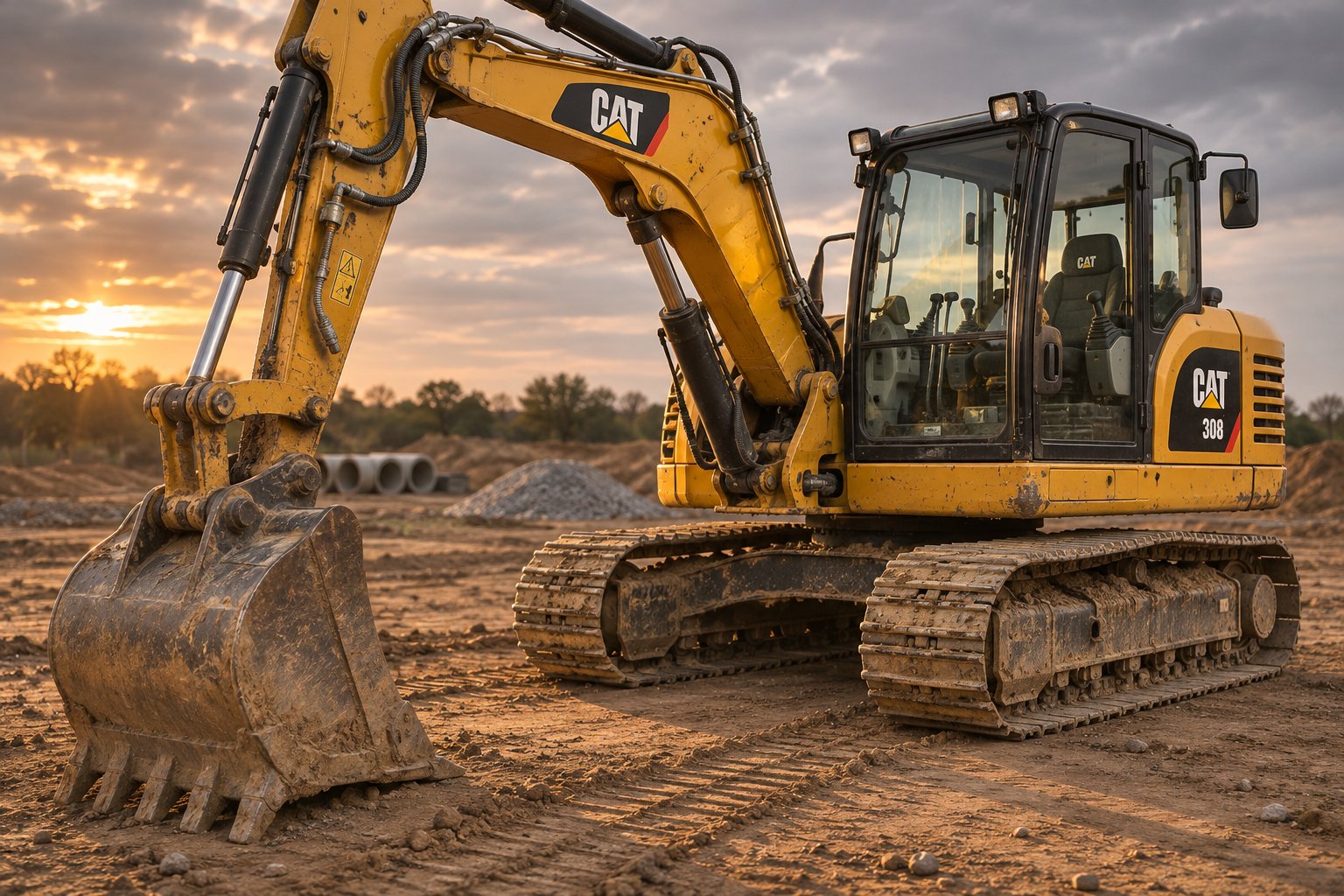
The Cat 308B is an 8-ton class midi excavator produced by Caterpillar during the late 1990s and into the early 2000s. It occupies a strategic middle ground in the Cat 308 excavator lineage — powerful enough to handle serious digging and demolition work, yet compact enough to maneuver on tighter residential and urban job sites. In industry terms, a midi excavator typically falls in the 5- to 10-ton operating weight range, bridging the gap between mini excavators and full-size crawlers. The Cat 308 weight class fits squarely in that sweet spot.
Within Caterpillar's own excavator evolution — a journey that stretches back to the company's first hydraulic excavator, the 225, introduced in 1972 — the 308B represents an earlier generation of the midi platform. It preceded the 308C, 308D, 308E, and the current Next Gen models. Every successor brought incremental improvements in fuel efficiency, emissions compliance, and electronic controls, but the 308B remains a workhorse valued for its mechanical simplicity and proven hydraulic design.
Here's the critical detail: Caterpillar no longer manufactures the 308B. Anyone searching for one is shopping exclusively on the used market, where machine history, hour counts, and physical condition vary wildly from one listing to the next.
Why a Dedicated 308B Buyer's Resource Matters
Search for a Cat 308 excavator on any major listing platform and you'll quickly notice a problem. Results blend every 308 variant together — 308B, 308C, 308D, 308E2, 308 CR, and Next Gen units — across decades of production. Prices, specs, and photos jumble into a single feed with no model-specific filtering. That leaves 308B buyers guessing at fair market value, unsure which specifications actually apply to their target machine, and blind to the inspection priorities unique to this generation.
Not all Cat 308 listings are 308B units. Always verify the exact model designation before inquiring — a 308E2 is a fundamentally different machine than a 308B in terms of engine technology, electronics, and price bracket.
This guide closes that gap. From verified specifications and variant comparisons to a hands-on inspection checklist and realistic pricing factors, everything that follows is built specifically around the 308B — so you can tell the difference between a deal and a dud before your money is on the line.
Cat 308B Specifications and Performance Data
A listing might say "Cat 308B for sale" — but does it tell you how deep the machine digs, how much it weighs on a trailer, or whether its hydraulic system can run the breaker you need? Rarely. Spec sheets are the backbone of any informed purchase decision, yet finding consolidated, 308B-specific performance data online is surprisingly difficult. Most results return specs for the newer Caterpillar 308 excavator variants or lump the entire 308 family into a single page. Here's the breakdown that belongs in your back pocket before you evaluate a single unit.
Engine and Power Output
The Cat 308B is powered by a Mitsubishi 4M40 four-cylinder diesel engine with a displacement of approximately 2.835 liters. Depending on the specific serial number range and production year, this engine is either naturally aspirated or turbocharged — a detail worth confirming on any unit you inspect. Net horsepower lands in the neighborhood of 57 hp (42.5 kW), which was competitive for the 8-ton midi class during the 308B's production era in the late 1990s and early 2000s.
What does that power figure mean in practice? Imagine steady, consistent force rather than explosive output. The 308B's diesel delivers reliable torque at low RPMs — exactly what you want for trenching through compacted clay or loading trucks at a steady pace. It won't win any speed contests against a modern Tier 4 Final engine, but it also won't burden you with the complexity of diesel particulate filters, diesel exhaust fluid, or electronic engine management systems that newer models require.
Operating Weight and Dimensions
Overall operating weight for the standard Cat 308B typically falls in the range of approximately 17,200 to 18,500 lbs (7,800 to 8,400 kg), depending on the configuration, counterweight package, and whether a thumb or quick coupler is fitted. That number matters for two immediate reasons: trailer selection and ground pressure.
Transport width runs roughly 7 ft 6 in (2,290 mm) on the standard variant, which keeps the machine within the envelope of a standard tag-along equipment trailer for most jurisdictions. Tail swing radius — the distance the rear of the upper structure extends beyond the track width during rotation — varies by variant and directly affects how close you can work to walls, fences, and traffic lanes. Ground pressure, generally in the 4.2 to 4.8 psi range, stays low enough for work on moderately soft ground without excessive rutting, though site conditions always dictate the final call.
If you're planning transport logistics, always weigh the machine with its actual attachment package. A hydraulic breaker and quick coupler can add several hundred pounds beyond the base operating weight listed in a catalog spec sheet.
Digging Performance and Hydraulic System
Digging capability is where the 308B earns its keep. Maximum dig depth reaches approximately 15 ft 5 in (4,700 mm), and maximum reach at ground level extends to roughly 24 ft 3 in (7,390 mm) — figures that give the machine genuine utility for basement excavations, utility trenching, and pond work. Bucket breakout force sits around 12,500 lbf (55.6 kN), which is sufficient for breaking into compacted gravel, hard pan, and moderately cohesive soils without constantly relying on a breaker attachment.
The hydraulic system uses a dual-pump configuration delivering approximately 2 x 21.1 gpm (2 x 80 L/min). This matters when you're evaluating attachment compatibility — breakers, augers, and mulchers each have minimum flow and pressure requirements, so you'll want to cross-reference any attachment's specs against the 308B's hydraulic output before assuming compatibility. The system pressure typically reaches around 3,560 psi (245 bar), which supports most standard midi-class attachments without issue.
Travel speed operates on a two-speed system: a low range of roughly 1.7 mph (2.7 km/h) for grading precision and a high range of approximately 2.7 mph (4.4 km/h) for repositioning across a job site. It's not fast — but excavators aren't built for speed. They're built for controlled force, and the 308B delivers that consistently.
| Category | Specification | Approximate Value |
|---|---|---|
| Engine | Model | Mitsubishi 4M40, 4-cylinder diesel |
| Engine | Displacement | 2.835 L (173 in³) |
| Engine | Net Horsepower | 57 hp (42.5 kW) |
| Weight / Dimensions | Operating Weight (standard) | 17,200 – 18,500 lbs (7,800 – 8,400 kg) |
| Weight / Dimensions | Transport Width | ~7 ft 6 in (2,290 mm) |
| Weight / Dimensions | Ground Pressure | ~4.2 – 4.8 psi |
| Digging Performance | Max Dig Depth | ~15 ft 5 in (4,700 mm) |
| Digging Performance | Max Reach at Ground Level | ~24 ft 3 in (7,390 mm) |
| Digging Performance | Bucket Breakout Force | ~12,500 lbf (55.6 kN) |
| Hydraulics | Main Pump Flow | 2 x 21.1 gpm (2 x 80 L/min) |
| Hydraulics | System Pressure | ~3,560 psi (245 bar) |
| Travel | Low Speed | ~1.7 mph (2.7 km/h) |
| Travel | High Speed | ~2.7 mph (4.4 km/h) |
Note: Specifications listed above represent commonly cited figures for the Cat 308B and may vary by serial number range, regional configuration, and installed options. Buyers evaluating a specific 308 cat excavator for sale should always cross-reference the unit's serial number against Caterpillar's archived spec sheets or request verified dealer documentation before finalizing a purchase.
These numbers paint a clear performance profile, but raw specs only tell half the story. The 308B wasn't produced as a single, one-size-fits-all machine — Caterpillar offered distinct sub-variants with different tail swing geometries, each designed for specific job-site constraints. Understanding which variant you're actually looking at in a listing can save you from buying a machine that doesn't fit where you need it to work.
Cat 308B Variants Explained and Compared
A listing that reads "Cat 308B" could actually be one of three distinct machines. Caterpillar produced the 308B platform in multiple tail swing configurations — the standard 308B, the 308B CR (compact radius), and the 308B SR (short radius) — and the differences between them go far beyond cosmetics. Each variant was engineered for a different work environment, and buying the wrong one means either sacrificing stability on open sites or scraping walls and fences on confined ones. Yet almost every marketplace listing for a cat 308 excavator for sale treats these variants as interchangeable. They aren't.
Conventional Tail Swing vs Compact Radius vs Short Radius
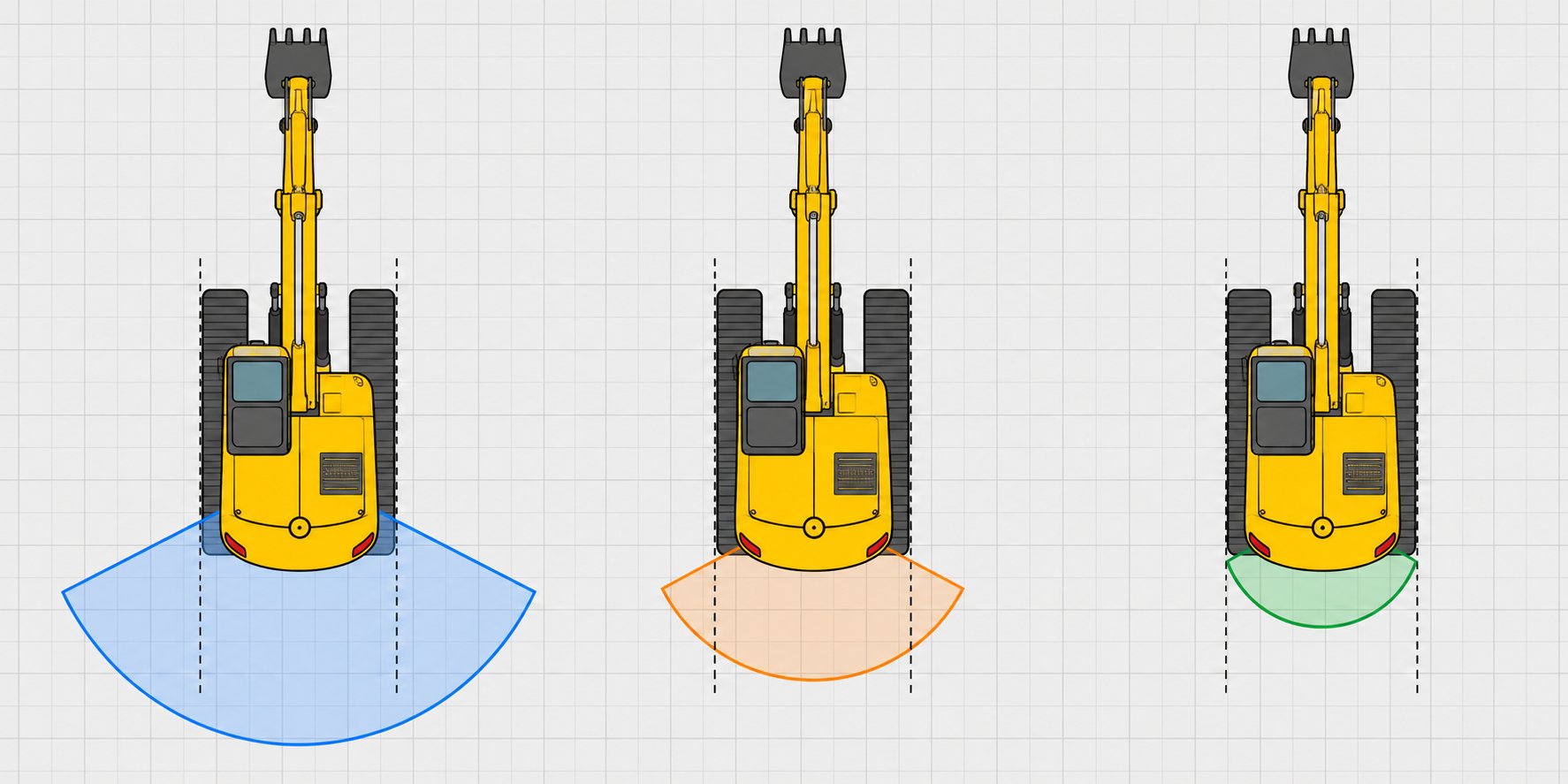
Tail swing geometry describes how far the rear of the upper structure (the house) extends beyond the track footprint when the cab rotates. It's a simple concept with major practical consequences.
The standard Cat 308B uses a conventional tail swing design. When you rotate the upper structure, the counterweight at the rear swings well past the edge of the tracks. This configuration allows Caterpillar to mount a heavier counterweight farther from the machine's center of gravity, which translates directly into greater lifting capacity and better stability during heavy digging — especially when working over the side of the machine. As Greg Worley of Caterpillar has noted, conventional designs really come into their own with 360-degree operation and heavier attachments like hammers and grapples. The trade-off? You need clearance behind the machine at all times, which rules out work directly alongside traffic lanes, building walls, or fences.
The 308B CR (compact radius) takes the opposite approach. Its counterweight is tucked closer to the center of rotation, reducing rear overhang so the tail stays within — or very nearly within — the track width during a full 360-degree swing. Picture an urban utility trench running along a sidewalk: the CR lets the operator rotate freely without worrying that the tail will clip a passing car, a utility pole, or a storefront window. That reduced overhang comes at a cost, though — less counterweight moment arm means somewhat lower over-the-side lift capacity compared to the conventional model.
The 308B SR (short radius) splits the difference. Its tail overhang is reduced compared to the conventional model but not eliminated as aggressively as the CR. You get improved close-quarters capability without surrendering as much counterweight advantage. Think of it as the compromise variant — suitable for jobs that are moderately tight but don't demand the near-zero overhang of a true compact radius machine.
This three-tier approach mirrors an industry-wide pattern. As Caterpillar's own product specialists have explained, early mini and midi excavator designs leaned heavily on conventional tail swing because it was simpler and cheaper to engineer. Over time, as urban redevelopment and confined-space work grew in demand, compact and reduced-radius designs became essential options across the lineup.
Choosing the Right 308B Variant for Your Job Site
So which one do you actually need? The answer depends almost entirely on where you work — not on which model happens to appear first in search results for a caterpillar excavator for sale.
If your projects are primarily open-site earthmoving, residential lots with generous setbacks, or rural utility work, the standard 308B is the strongest pick. You'll benefit from maximum counterweight, the best lifting capacity for loading trucks or setting pipe, and typically the lowest asking price on the used market due to higher availability.
If you operate in urban corridors, alongside active roadways, or on congested commercial sites where even a few inches of tail overhang could mean a collision, the 308B CR is purpose-built for that reality. It commands a modest premium on the used market and tends to be less common in listings, so patience during your search may be required.
The 308B SR suits operators who split time between open and semi-confined sites. It's the versatility pick — not the specialist — and its used-market availability generally falls between the other two variants.
| Feature | 308B (Conventional) | 308B SR (Short Radius) | 308B CR (Compact Radius) |
|---|---|---|---|
| Tail Swing Overhang | Extends well beyond tracks | Moderately reduced beyond tracks | Minimal — near or within track width |
| Typical Operating Weight | ~17,600 – 18,500 lbs | ~17,400 – 18,200 lbs | ~17,200 – 18,000 lbs |
| Lifting / Stability Advantage | Highest — heavier counterweight, longer moment arm | Moderate — balanced trade-off | Lowest of the three — reduced counterweight |
| Ideal Job-Site Type | Open sites, rural utility, general excavation | Mixed sites with occasional tight areas | Urban, roadside, indoor demo, confined spaces |
| Used Market Availability | Most common | Moderate | Least common — may require longer search |
Always confirm the exact variant designation — 308B, 308B SR, or 308B CR — in any listing before purchasing. A machine that looks identical in photos may have a completely different tail swing geometry, which directly affects where you can safely operate it.
Variant selection is foundational, but it's only one dimension of the 308B's appeal. The machine's real versatility shows up in the range of tasks it can tackle and the attachments it can run — factors that determine whether a single 308B can replace multiple pieces of equipment on your job site.
Best Applications and Job-Site Suitability for the Cat 308B
Specs and variant designations matter — but they only translate into value if the machine can actually handle the work you throw at it. The Caterpillar 308 earned its reputation in the field, not on a spec sheet. And the 308B, specifically, hits a productivity sweet spot that explains why owner-operators and small fleet managers still chase these units decades after production ended. It's big enough to do real work, small enough to get into tight spaces, and light enough to move between sites without logistical headaches. That combination is harder to find than you might think.
Residential and Light Commercial Applications
Picture a typical residential build: a foundation needs digging, utility trenches need cutting across the lot, grading work follows the pour, and backfill closes everything out. A compact mini excavator in the 3- to 5-ton range can handle some of this, but it runs out of reach and breakout force quickly — especially in compacted soil or when digging a full-depth basement. A full-size 20-ton crawler, on the other hand, tears up the driveway, can't squeeze between the house and the property line, and costs twice as much to transport.
The 308B threads that needle. With roughly 15 feet of dig depth and over 12,000 lbf of bucket breakout force, it excavates full-depth residential foundations without strain. Its midi footprint — around 7.5 feet wide — fits through standard residential lot access points where larger machines simply can't go. For utility trenching, the two-speed travel system lets operators reposition across the lot efficiently, while the machine's hydraulic flow supports trenching buckets in widths matched to water, sewer, and electrical conduit requirements.
Light commercial projects — strip mall site prep, parking lot demolition, small retaining wall construction — follow the same logic. The 308B delivers enough muscle for productive eight-hour shifts on moderately demanding material without the overhead of a larger class machine. Landscapers tackling pond excavations, large-scale grading, and boulder placement find a similar fit: the Cat 308 excavator weight keeps ground pressure manageable on finished turf areas while still providing the reach and force that compact machines lack.
Attachment Compatibility and Versatility
A bare excavator with a digging bucket is useful. An excavator with a well-matched attachment package is a multi-tool. The 308B's hydraulic system — delivering approximately 2 x 21.1 gpm at around 3,560 psi — supports a broad range of midi-class attachments, which is a major reason the machine remains relevant on the used market. Every attachment you can run on one machine is a separate piece of equipment you don't need to rent, transport, or maintain.
Here are the most common Cat 308B-compatible attachments and where they earn their keep:
- Hydraulic thumb: Clamps materials against the bucket for gripping irregular objects — pipes, stumps, boulders, demolition debris. Eliminates the need for manual rigging on most material-handling tasks and is widely considered the single most versatile excavator attachment across the industry.
- Hydraulic breaker (hammer): Delivers rapid, high-impact blows for breaking concrete, asphalt, and rock. Ideal for sidewalk removal, foundation demolition, and trench rock. Breakers in the 350- to 900-lb range are typically appropriate for excavators in the 2- to 6-ton-and-above class — verify flow and pressure compatibility before purchasing.
- Auger: Turns the 308B into a powered drilling rig for fence posts, sign footings, tree planting, and light pier work. Especially valuable for fence contractors and utility installers who drill dozens of holes per project.
- Tilt bucket: Rotates up to 45 degrees in either direction from the cab, enabling precision grading and angled ditching without repositioning the entire machine. Reduces finish grading time significantly on slopes and uneven terrain.
- Compaction wheel: Mounts to the stick and compacts trench backfill in lifts — a critical step for utility work where settlement can crack pavement or shift pipe joints. Eliminates the need for a separate plate compactor in the trench.
- Grapple bucket: Features powered jaws that grip and clamp demolition debris, scrap, and brush. Essential for site cleanup and demolition sorting where a standard bucket loses its grip on irregular loads.
- Quick coupler: Allows attachment swaps in under a minute from the cab, turning the 308B into a true multi-role platform. Particularly valuable on projects requiring frequent transitions between digging, grading, and material handling.
One practical note: when shopping for a used cat 308 excavator for sale, pay attention to what attachments come with the machine. A unit bundled with a quality hydraulic thumb and a couple of extra bucket widths delivers significantly more job-site flexibility than a bare machine at the same price — and buying attachments separately adds up fast.
Transport and Logistics Considerations
Here's where the 308B's midi classification pays dividends that don't show up on any performance chart. The machine's operating weight — typically 17,200 to 18,500 lbs depending on configuration — falls within the capacity of a standard tag-along equipment trailer towed by a heavy-duty pickup truck or a medium-duty flatbed. That's a significant logistical advantage.
Larger excavators in the 20-ton-and-above class require lowboy trailers with deck heights of 18 to 24 inches to stay under the standard 13-foot 6-inch legal height threshold — and those trailers demand CDL-equipped trucks, higher insurance, and substantially more fuel. Heavier machines push the combined gross vehicle weight past 80,000 lbs, triggering oversize permits, escort vehicle requirements, and route-specific bridge clearance planning. As transport specialists point out, permit fees alone on a multi-state haul with escort requirements can push into several thousand dollars.
The 308B sidesteps most of that complexity. Its transport width of roughly 7 feet 6 inches stays well under the 8-foot 6-inch federal threshold that triggers width permits. Its weight, combined with a standard equipment trailer, generally keeps the gross vehicle weight below the 80,000-lb limit without even coming close. In most jurisdictions, that means no oversize permits, no pilot cars, no restricted travel windows, and no DOT headaches.
For contractors who move equipment between job sites weekly — or even daily — that difference in transport cost and hassle adds up across an entire season. A 308 cat mini excavator that you can load, haul, and unload with your own truck and trailer is a machine that earns billable hours instead of sitting in a yard waiting for a permitted transport slot. It's one of the most underrated financial advantages of the midi weight class, and it's a major reason owner-operators hunting for a used unit in this range keep coming back to the 308B platform.
Versatility and transportability make a strong case for the 308B — but every buyer eventually faces the same question: is an older, mechanically simpler machine the right call when newer 308 variants with modern technology are available at a higher price point? The answer depends less on the machines themselves and more on how you plan to use and maintain whatever you buy.
Cat 308B vs Newer 308 Models and What the Trade-Offs Mean
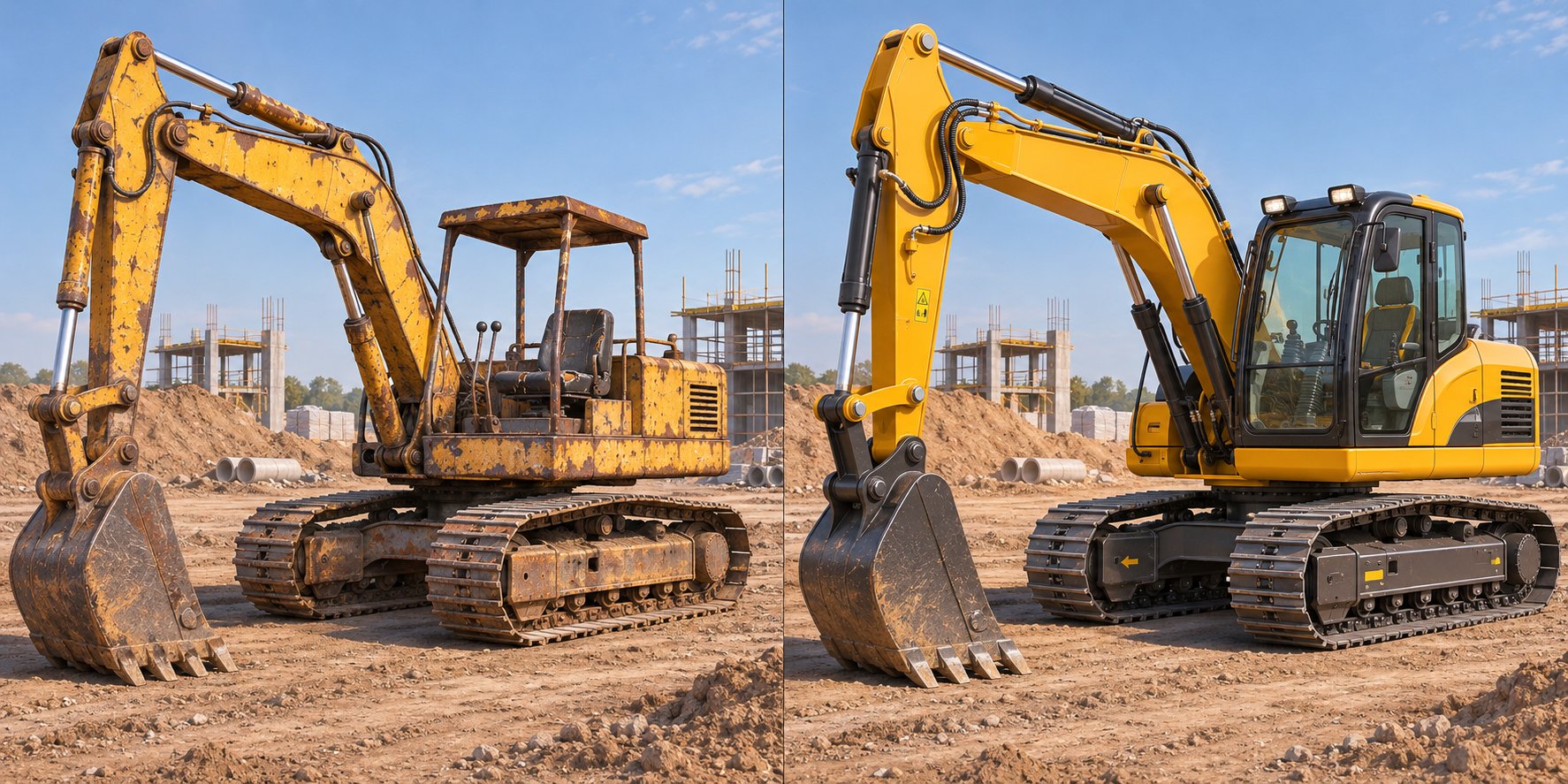
Every buyer browsing a caterpillar 308 excavator for sale eventually lands on this fork in the road: spend less on an older 308B with proven mechanicals, or stretch the budget toward a 308D, 308E2, or current Next Gen unit loaded with modern technology. Neither answer is universally correct. The smarter purchase depends on how you work, where you work, and who turns the wrenches when something breaks. Let's walk through both sides honestly — because the cat 308 excavator price gap between generations exists for real reasons, and understanding those reasons keeps you from overpaying or underbuying.
Cat 308B vs 308D and 308E Models
Caterpillar didn't just slap a new letter on the same machine each generation. The 308C, 308D, and 308E2 each represented a meaningful redesign — and the changes compound as you move up the alphabet.
The most visible shift is emissions compliance. The 308B predates the EPA's tiered emissions framework entirely, running a pre-Tier or Tier 1 diesel that burns clean enough for its era but doesn't meet the Tier 4 Interim or Tier 4 Final standards required on federally funded projects, certain municipal contracts, and regulated urban job sites. The 308E2 CR, by contrast, meets Tier 4 Final requirements. If your work regularly involves government-funded infrastructure or contracts with emissions stipulations, an older 308B may simply be ineligible — and no amount of savings offsets a machine you can't legally run on the job.
Beyond emissions, the generational upgrades are substantial. Fuel efficiency improved meaningfully with each redesign. As Equipment World documented, Tier 4 machines across the excavator industry achieved fuel consumption improvements of 10 percent or more compared to their Tier 3 predecessors — gains driven by refined hydraulic systems, electronic pump matching, and variable power modes. The 308B, with its purely mechanical fuel injection and fixed-output hydraulic pumps, simply can't match those efficiency numbers. On high-hour jobs, the fuel cost difference alone can quietly erode the savings you thought you captured with a lower purchase price.
Hydraulic system sophistication is another generational leap. Newer 308 variants use electronically controlled hydraulics that fine-match pump output to actual task demands. Imagine the difference between a light switch and a dimmer — the 308B's hydraulic system essentially runs at one intensity, while a 308E2's system scales output up or down depending on whether you're doing precision grading or heavy breakout. That translates into smoother controls, less wasted energy, and a more responsive feel at the sticks. Industry engineers have noted that refined hydraulics on Tier 4 machines retain or even improve performance specs while significantly reducing fuel consumption through innovations like minimized idle-circuit flow and larger hydraulic line diameters that reduce internal friction.
Cab comfort and electronics round out the gap. The 308B's cab is functional but spartan by modern standards — limited climate control, basic instrumentation, minimal sound insulation. Step into a 308E2 or a Next Gen 308 CR and you'll find a pressurized cab that keeps dust out, a high-capacity HVAC system, large color displays with diagnostic readouts, and noise levels meaningfully lower than older platforms. For operators logging eight-hour shifts five days a week, those aren't luxury features — they're productivity features. Fatigue kills cycle times, and a comfortable operator moves more dirt per hour than an exhausted one.
The price tags reflect these improvements. Ritchie Bros. pricing data shows used 308E CR units from 2013 to 2019 trading in the $55,000 to $95,400 range, while newer 308CR models (2019-2022) land between $87,000 and $126,800. A cat 308 mini excavator from the 308B generation typically sits well below those brackets — which is precisely what makes it attractive to the right buyer.
When an Older 308B Makes More Financial Sense
Here's the thing about generational upgrades: they only deliver value if your operation actually needs them. And for a significant segment of the used equipment market, the 308B's older technology is a feature, not a limitation.
Consider the owner-operator who runs a small excavation business, maintains equipment in a personal shop, and works primarily on private residential projects where no emissions mandate applies. That buyer doesn't need Tier 4 Final compliance, doesn't benefit from telematics subscriptions, and actively prefers a machine without electronic engine management systems that require dealer-level diagnostic software to troubleshoot. For this profile, the 308B's mechanical simplicity translates directly into lower repair costs, faster field fixes, and independence from dealer service departments.
Or imagine a part-time contractor who logs 300 to 500 hours per year on a machine — a pace where the fuel efficiency gains of a newer model save perhaps a few hundred dollars annually, not nearly enough to justify spending tens of thousands more on the purchase itself. At low annual utilization, the acquisition cost dominates the total cost of ownership equation, and the 308B wins that math handily.
There's also the depreciation angle. Used equipment that's already passed through the steepest part of its depreciation curve — and a 308B certainly qualifies — holds its residual value more predictably than a machine still depreciating rapidly. As Newman Tractor's buying guide points out, used machinery that's already absorbed its sharpest value drops exposes the buyer to far less resale risk. You can run a 308B for several years and sell it for close to what you paid, something that's much harder to do with a five-year-old 308E2 that's still sliding down the curve.
That said, Caterpillar's own excavator specialists have acknowledged that in demanding applications with high annual hours — think 2,000 to 5,000 hours per year — starting with a newer, low-hour machine is virtually always the right call. The warranty coverage, included maintenance packages, and reduced downtime risk of newer units more than offset the higher sticker price when utilization is intense.
Key Advantages of the Cat 308B
- Lower acquisition cost: Significantly cheaper upfront than any 308D, 308E, or Next Gen unit, freeing capital for attachments, transport equipment, or operating reserves.
- Mechanical simplicity: No diesel particulate filters, no diesel exhaust fluid, no electronic engine control modules — fewer systems to fail and cheaper components when repairs are needed.
- Proven reliability: Decades of field service have validated the 308B's core platform. Known failure points are well-documented, parts availability remains reasonable, and independent mechanics are familiar with the machine.
- Easier field repairs: Most maintenance and repair tasks can be performed with standard hand tools and basic diagnostic knowledge — no proprietary dealer software or specialized scan tools required.
- Lower insurance and ownership costs: Reduced declared value means lower insurance premiums, and in many jurisdictions, lower personal property tax assessments on equipment.
Key Advantages of Newer 308 Models (308D / 308E2 / Next Gen)
- Emissions compliance: Meets Tier 4 Interim or Tier 4 Final standards, qualifying the machine for government-funded projects, municipal contracts, and regulated urban job sites where older units may be prohibited.
- Improved fuel economy: Electronic engine and hydraulic management systems reduce fuel consumption by 10 percent or more compared to pre-Tier machines, compounding savings on high-hour operations.
- Advanced technology features: Color LCD monitors with real-time diagnostics, configurable power modes, automatic idle shutdown, telematics integration, and electronic joystick controls improve operator efficiency and fleet management.
- Enhanced cab environment: Pressurized cabs, improved HVAC, reduced noise levels, and ergonomic seat designs reduce operator fatigue and boost productivity across long shifts.
- Stronger resale value retention: Newer models retain a higher percentage of their purchase price over time, which improves the total cost of ownership calculation for buyers who trade equipment on regular cycles.
- Manufacturer warranty and support: Many used 308E2 and Next Gen units still carry transferable warranty coverage or qualify for Cat's certified used equipment programs, reducing the financial risk of unexpected failures.
The bottom line? A cat308 from the B generation and a current Next Gen 308 CR are both excellent machines — built for different buyers in different situations. If your operation runs high hours on regulated sites and values technology integration, the newer model pays for itself. If you prioritize low acquisition cost, mechanical independence, and the freedom to wrench on your own iron without a laptop, the 308B remains one of the smartest used excavator purchases in the 8-ton class.
Whichever direction you lean, the purchase decision doesn't end at choosing a generation. The real risk in any used machine purchase hides in the details you can't see from a listing photo — worn undercarriage components, leaking cylinders, loose pins, and tired final drives that quietly turn an apparent bargain into an expensive lesson. Knowing exactly what to look for on a walk-around separates confident buyers from hopeful ones.
Used Cat 308B Inspection Checklist for Buyers
Listing photos look great. The price fits the budget. The hour meter reads low. And yet, the machine could still be hiding thousands of dollars in deferred maintenance that only shows up after you've signed the check. Every major marketplace for a cat 308 mini excavator for sale will show you specifications and asking prices — none of them tell you how to actually evaluate the iron standing in front of you. This inspection framework changes that. Print it, bring it to the viewing, and work through it systematically before you negotiate a single dollar.
Undercarriage and Track Condition
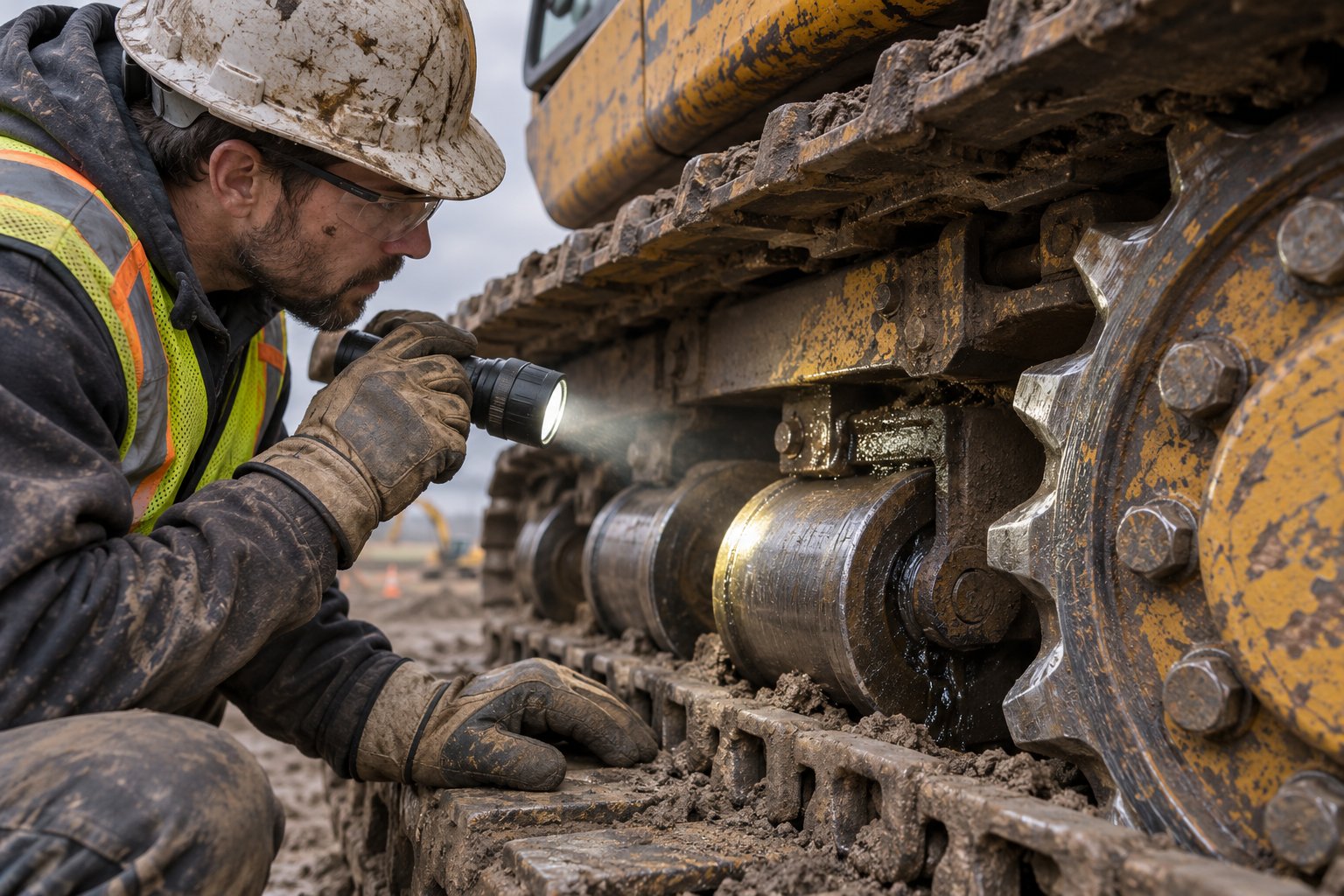
Start at the bottom. The undercarriage is the most expensive wear system on any crawler excavator, and on a machine as old as the 308B, it's the component most likely to need significant investment. A full undercarriage rebuild — tracks, rollers, idlers, and sprockets — can easily rival or exceed the purchase price of a low-cost unit, which makes this the single highest-leverage inspection area for negotiating power.
Walk the length of both track frames and look closely at the track pads. Rubber pads should have visible tread pattern remaining; steel pads (grouser shoes) should show defined edges rather than rounded, mushroomed profiles. Check each bottom roller for oil seepage around the seals — a leaking roller is a roller that's about to seize. Spin the front idlers by hand if the machine is shut down; they should rotate smoothly without grinding or catching. Then examine the drive sprockets at the rear: the teeth should have a consistent, symmetrical profile. Worn sprocket teeth look hooked or sharpened to a point, and they'll chew through new track chains rapidly if you replace the chain without replacing the sprocket.
Track tension matters too. Sagging, loose tracks suggest worn links or an idler adjustment that's been maxed out. If the idler adjuster has no remaining travel, the track group is at the end of its service life — full stop.
Hydraulic System and Cylinder Integrity
Hydraulics are the nervous system of the 308B. Every movement — boom raise, stick curl, bucket close, swing, travel — runs through hydraulic oil, cylinders, and motors. Small problems here grow expensive fast.
Begin with a cold-start visual sweep. Look under the machine and around every cylinder for fresh oil drips, wet hose fittings, or puddles. As BAS World's inspection guide emphasizes, slight sweating on an older machine is very different from an active leak — learn to distinguish the two. Inspect the chrome piston rods on the boom, stick, and bucket cylinders. You're looking for scoring, pitting, or flaking on the chrome surface. A scored rod destroys seals on every stroke, and RHK Hydraulics notes that rod damage accelerates seal wear and can cause progressive cylinder drift that worsens over time.
Then operate the machine. Raise the boom fully, curl the stick in, and hold position with the control levers in neutral. Watch for any slow downward drift over 30 to 60 seconds. Cylinder drift under load — where the attachment slowly settles without operator input — indicates internal seal bypass or a worn cylinder bore. Jerky, hesitant movements during normal operation signal air in the system, failing seals, or pump issues. Smooth, predictable response across all functions is the benchmark; anything less deserves a pointed conversation with the seller about hydraulic service history.
Don't skip the hoses. Check every hydraulic line for cracking, abrasion, bulging, or sun-hardened rubber — particularly along the boom and stick where hoses flex constantly during operation. A hose failure in the field doesn't just stop work; it can dump dozens of gallons of hydraulic fluid into the ground and create an environmental liability.
Boom, Stick, and Pin Wear Assessment
Grab the bucket with the machine powered down and push it side to side by hand. Feel any clunking or visible lateral movement at the pin joints connecting the bucket to the stick, the stick to the boom, and the boom to the house? That's play — and while a small amount is normal on any used excavator, excessive play makes precision work nearly impossible and indicates worn pins and bushings that need replacement.
Focus on the pivot points where the boom cylinder, stick cylinder, and bucket cylinder connect to the structural members. These high-load joints are where bushing wear concentrates. Look for egg-shaped or elongated pin bores, shiny wear marks around bushings, and grease that's black or contaminated with metal particles. Then inspect the boom and stick themselves for cracks at weld joints — especially along the bottom plate of the stick and the underside of the boom heel, where cyclical stress concentrations are highest. Any visible cracking at a structural weld is a serious finding that demands professional evaluation before purchase.
Engine and Final Drive Health
A cold start reveals what a warm engine hides. Arrive before the seller has run the machine and listen to the startup. The 308B's Mitsubishi diesel should crank within a few seconds and settle into a steady, rhythmic idle without surging or misfiring.
Watch the exhaust. A brief puff of white or light gray smoke during a cold start in cool weather is normal condensation burning off. Persistent blue smoke signals oil consumption — worn rings, valve guide seals, or turbo seal failure (on turbocharged variants). Continuous black smoke points to incomplete combustion from clogged air filtration, injector problems, or internal engine wear. As one industry inspection checklist puts it, a brief puff during cold start can be normal, but continuous smoke is a warning sign that demands further investigation.
Pull the engine oil dipstick. Clean oil with a consistent amber or dark brown color is expected on a diesel with service hours on the fill. Milky or frothy oil suggests coolant intrusion — a head gasket or cracked block issue that turns a bargain into a money pit. Oil analysis specialists note that cloudy, darkened, or metallic-flecked oil is a red flag that can indicate severe internal wear or contamination, and that engines typically shed metals before they fail catastrophically.
Finally, check both final drives. These are the sealed gearboxes at each end of the track frame that convert hydraulic motor rotation into track movement. Remove the check plug on each final drive and examine the oil. Clean gear oil is a good sign. Oil that's dark, metallic, or carries visible metal shavings indicates internal gear wear — and a final drive rebuild on the 308B is a four-figure repair that should be reflected in the asking price.
Step-by-Step Inspection Sequence
Use this ordered sequence as a field checklist. Work through each step before making any purchase offer on a used 308 cat excavator:
- Arrive early and confirm the machine is cold — a warm engine and warm hydraulic oil mask starting problems, leaks, and cylinder drift behavior.
- Walk around the entire machine — photograph every side, noting dents, cracks, fresh paint (which can hide previous damage), missing panels, and any fluid on the ground beneath the excavator.
- Inspect the undercarriage — check track pads, bottom rollers, front idlers, sprocket teeth, and track tension. Estimate remaining undercarriage life as a percentage.
- Examine all hydraulic hoses and fittings — look for cracking, abrasion, bulging, leaks at connections, and evidence of field-spliced repairs.
- Inspect hydraulic cylinder rods — wipe each rod clean, then check for scoring, pitting, chrome flaking, and oil weeping around rod seals.
- Check boom, stick, and bucket pin joints — push the bucket laterally by hand and feel for excessive play; inspect all pivot bushings for elongation and wear.
- Inspect structural welds — look for cracking at the boom heel, stick bottom plate, and all cylinder mounting brackets.
- Pull the engine oil dipstick — check for milky, frothy, or metallic-flecked oil that indicates coolant intrusion or internal wear.
- Check both final drive oil levels and condition — remove the check plug and look for metal contamination in the gear oil.
- Perform a cold start — listen for cranking speed, startup hesitation, misfires, and abnormal knocking; watch exhaust color for the first 60 seconds.
- Let the engine idle for five minutes — monitor for RPM fluctuation, unusual vibrations, and any new fluid leaks that appear once oil pressure builds.
- Operate all hydraulic functions individually — cycle boom, stick, bucket, swing, and travel through their full range; listen for grinding, whining, or knocking and feel for jerky or sluggish response.
- Perform a cylinder drift test — raise the boom, curl the stick, and hold position with controls in neutral for at least 60 seconds; any visible drift indicates internal seal bypass.
- Drive the machine forward and in reverse — confirm straight tracking, smooth two-speed transition, and no pulling to one side that would indicate a weak travel motor or brake drag.
- Request all available documentation — service records, invoices, hour meter history, and serial number verification against the listing description.
Every item on this list gives you information — and information is negotiating leverage. A seller who resists a thorough inspection is telling you something. A seller who welcomes it is telling you something too. The condition findings from this walk-around don't just protect you from a bad purchase; they directly inform what the machine is actually worth, which is the next critical piece of the puzzle.
Pricing Factors and Fair Market Value for Used Cat 308B Units
A thorough inspection tells you what condition the machine is in. The next question is just as critical: what should you actually pay for it? Pricing a used 308 cat is more complicated than checking a listing and assuming the number is fair. Unlike cars, there's no universal "blue book" for excavators — as Ironmart's equipment valuation guide bluntly puts it, ask three people what a used excavator is worth and you'll get three answers, and none of them are wrong. The value depends entirely on context: who's selling, who's buying, what condition the machine is in, and how urgently both parties need to close.
For a machine as old as the Cat 308B, that ambiguity is amplified. You're pricing equipment that's been off the production line for over two decades, and the spread between a well-maintained unit and a neglected one can be enormous. Understanding which variables actually move the number — and in what order of magnitude — gives you the framework to separate a genuine deal from an overpriced liability.
Key Factors That Determine Used Cat 308B Value
Not every pricing variable carries equal weight. Some shift the value by thousands; others nudge it by hundreds. Here's how they stack up, ranked roughly by their impact on what a 308B will actually sell for.
- Machine hours and usage intensity: Hours are the first data point every buyer and seller looks at — and the most commonly misunderstood. On the 308B, think in tiers. A unit under 3,000 hours qualifies as light use, suggesting either part-time operation or extended periods of storage. Machines in the 3,000- to 6,000-hour range reflect moderate, steady service — the sweet spot where the machine has proven it runs reliably without yet approaching major rebuild thresholds. Above 6,000 hours, you're in heavy-use territory where engine, hydraulic pump, and undercarriage components are approaching or past their expected service intervals. But here's the nuance: a 7,000-hour machine with documented rebuilds on the final drives and a fresh undercarriage can be worth more than a 3,500-hour unit with no maintenance records and worn-out tracks. Hours are a proxy for wear, not a measurement of it — always pair the hour reading with physical evidence.
- Undercarriage condition (percentage remaining): This is the single largest variable cost on any crawler excavator, and it directly correlates with the negotiating leverage you hold as a buyer. A full undercarriage replacement on a 308B — tracks, rollers, idlers, sprockets — can represent a substantial percentage of the machine's entire market value at this point in its lifecycle. Sellers who advertise "80% undercarriage" are claiming significant remaining life; sellers who stay silent on the topic are usually hoping you won't ask. Always estimate the percentage yourself using the inspection checklist from the previous section and factor the cost of any needed replacement into your offer.
- Attachment package included: A 308B bundled with a hydraulic thumb, two or three bucket widths, and a quick coupler is worth meaningfully more than a bare machine with a single digging bucket. Buying quality attachments separately adds thousands of dollars to the total project cost, so a well-equipped unit at a modestly higher asking price often represents better overall value. Conversely, a machine stripped of all attachments should be priced accordingly.
- Dealer sale vs. private party sale: The selling channel changes the number. Machinery Network's valuation framework draws a sharp distinction between fair market value — what a machine sells for in a normal, well-exposed transaction — and liquidation value, which applies when timing pressure compresses the seller's leverage. A dealer listing typically carries a premium because it may include a limited warranty, some level of reconditioning, and the dealer's reputation as a backstop. A private party sale, auction result, or liquidation purchase often comes at a discount, but shifts more risk onto the buyer. Neither is inherently better — the key is understanding which value framework you're operating in.
- Geographic location and regional demand: A 308B sitting in a region with heavy residential construction activity will attract more buyer interest — and command higher prices — than the same machine parked in a soft market. Transport costs amplify this effect. A machine priced attractively but located 800 miles away becomes less appealing once you factor in several thousand dollars for hauling. Regional demand follows construction cycles, and as industry pricing analysts note, areas with strong infrastructure and residential work absorb excavators faster than quiet markets.
- Maintenance documentation: A complete service history — oil change records, component rebuild invoices, hour meter logs — doesn't just indicate a well-maintained machine. It gives the buyer confidence that what they see matches reality. Undocumented claims about rebuilt components or recent service carry far less weight in a negotiation. Machines with thorough paper trails consistently sell at the higher end of their condition bracket, while machines with no records default to the lower end regardless of how good they look externally.
- Cosmetic condition and cab interior: Fresh paint, clean decals, and an organized cab don't make an excavator dig better — but they signal owner pride and suggest that the less visible maintenance was likely handled with similar care. Conversely, a machine with a trashed cab, missing panels, and peeling paint raises legitimate questions about how the mechanical components were treated. Cosmetics are the lowest-impact pricing variable on this list, but they influence first impressions and initial offers more than most sellers realize.
How to Research Fair Market Pricing
Here's where the cat 308 price research gets tricky. Open any major equipment listing platform — Machinio, MachineryTrader, Equipment Trader — and search for "Cat 308." You'll see pages of results spanning every variant from the 308B through the current Next Gen 308 CR, across production years from the late 1990s to the present. Prices will range wildly, and without careful filtering, those numbers are useless for establishing a 308B-specific market value.
The wide price ranges displayed on major listing sites — often spanning from roughly $11,000 to well over $200,000 — represent the entire Cat 308 family across all variants, configurations, and production years. These ranges do not reflect 308B-specific market values. Using unfiltered aggregate pricing to set your budget or evaluate an offer is one of the most common and costly mistakes buyers make.
To build a realistic pricing picture for the 308B specifically, you need to filter aggressively and verify relentlessly. Start by narrowing results to the exact model designation — "308B," "308B CR," or "308B SR" — rather than the broader "308" family. Then confirm the designation directly with the seller, because listing platforms sometimes miscategorize variants or use the generic "308" label for units that are actually a 308B, a 308C, or something else entirely.
Compare at least four to six listings that closely match the machine you're evaluating in terms of hours, configuration, and geographic region. Look for sold prices rather than asking prices whenever possible — an asking price reflects the seller's hope, while a sold price reflects what the market actually paid. Auction results from platforms like Ritchie Bros. or IronPlanet can provide useful sold-price data points, though you'll need to account for buyer premiums and fees that inflate the effective purchase cost beyond the hammer price.
Also consider the weight of a cat 308 excavator in your transport cost calculations. As discussed earlier, the 308B's operating weight typically allows standard trailer transport — but if you're comparing a local unit against a distant one that's priced lower, add realistic hauling costs to the faraway machine before concluding it's the better deal. A $3,000 savings on the purchase price evaporates quickly against a $2,500 transport bill.
Finally, understand the distinction between fair market value and liquidation value — a concept that Machinery Network's pricing guide calls one of the most important distinctions equipment buyers need to grasp. Fair market value assumes a normal, well-exposed transaction where neither party is under extreme pressure. Liquidation value applies when the seller needs to move the machine quickly — a business closure, a fleet reduction, a divorce settlement — and the buyer gains leverage from that urgency. If you're looking at a liquidation sale, the price will naturally be lower, but so will your inspection window, your negotiating time, and sometimes the completeness of documentation. Recognize which scenario you're in, and price your offer accordingly.
The pricing variables are knowable. The inspection findings are documentable. What remains is the practical question of where to actually find a 308B that's worth buying — and not every sourcing channel delivers the same quality of listings, seller transparency, or buyer protection.
Where to Find a Reliable Cat 308B for Sale
You know the specs. You understand the variants. You've got a printed inspection checklist and a realistic sense of what the machine should cost. The missing piece? Actually locating a 308B worth buying. And that's where the sourcing strategy matters just as much as the evaluation strategy — because the channel you use to find the machine shapes everything from listing accuracy to seller accountability to your ability to negotiate based on condition findings.
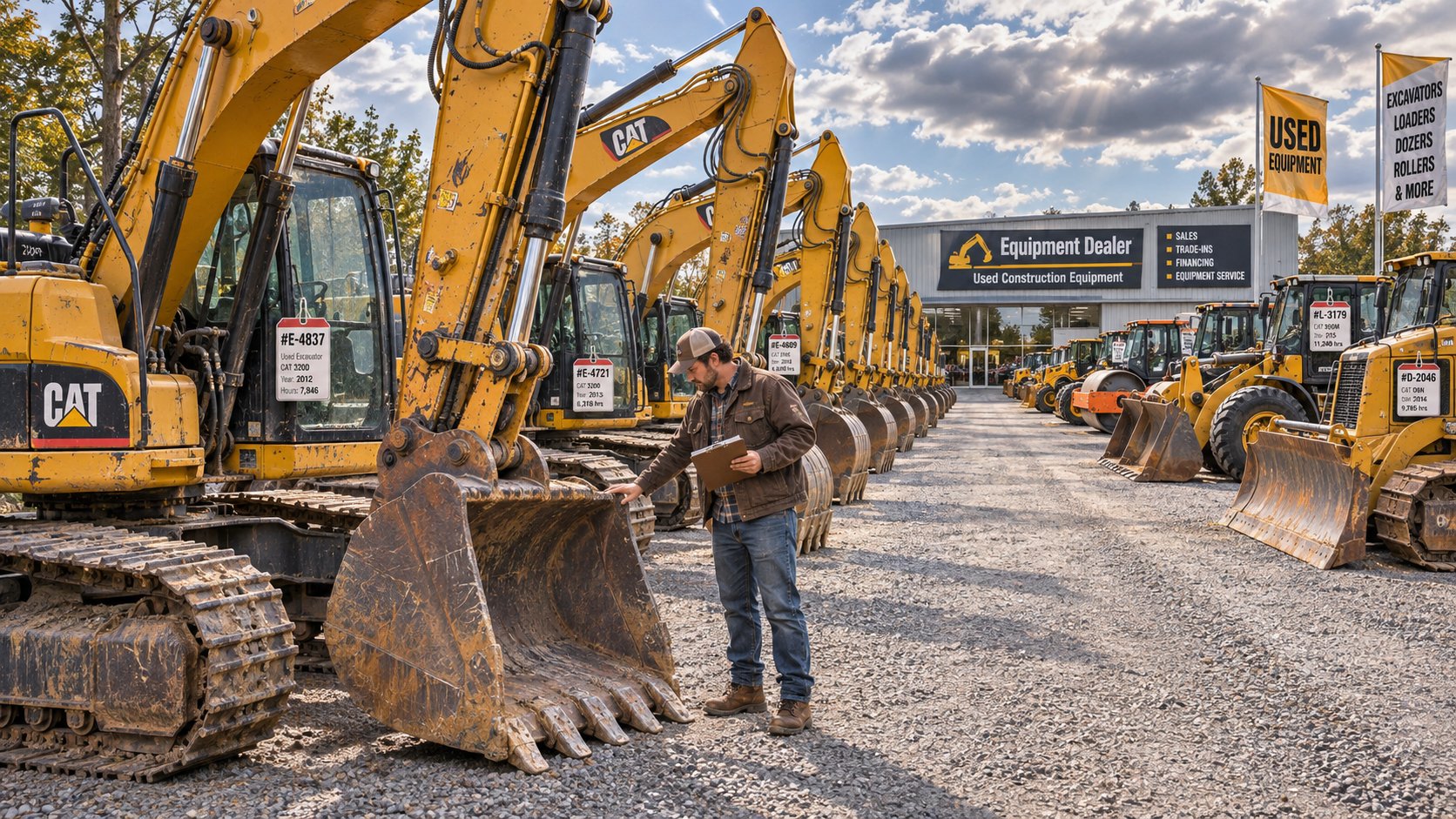
Not every platform serves 308B buyers equally. Some aggregate thousands of listings globally but leave you to sort signal from noise. Others curate smaller inventories but offer direct access to knowledgeable staff who can discuss specific configurations. The smartest approach? Cast a wide net across multiple channels simultaneously, then qualify each lead using the inspection and pricing frameworks already in your toolkit.
Online Marketplaces and Listing Aggregators
The internet has made equipment sourcing dramatically more efficient than the days of flipping through trade magazines and driving to every dealer lot within 200 miles. Several major platforms dominate the used construction equipment space, and each brings a different strength to your search for a 308 mini excavator or a specific 308B unit.
- MachineryTrader: One of the largest and longest-running equipment listing platforms in North America. MachineryTrader features listings from dealers, contractors, individual sellers, and auction houses, with powerful filtering by year, hours, price, horsepower, and location. The platform also cross-posts listings from affiliated Sandhills Global sites — including CraneTrader, ForestryTrader, and others — which broadens exposure. Its AI-driven recommendation engine surfaces relevant listings based on your browsing behavior, and registered users can save machines to a Watch List for ongoing monitoring. For 308B buyers, the key advantage here is sheer volume: with hundreds of Cat 308-family units listed at any given time, your odds of finding a genuine 308B improve simply through scale. Just remember to filter by the exact model designation rather than the generic "308" family.
- Machinio: Functions as a global aggregator, pulling dealer listings from around the world into a single searchable interface. If you're open to sourcing internationally or want to compare pricing across regions, Machinio's geographic breadth is unmatched. It's particularly useful for spotting pricing patterns — you'll quickly see whether a 308B listed locally is priced in line with comparable units elsewhere or sitting above the market.
- Equipment Trader: A long-established brand in the equipment marketplace space with a user-friendly interface and strong dealer participation. Equipment Trader skews toward the North American market and offers straightforward category-based browsing that makes it easy to drill into excavator listings quickly. Its brand recognition also means many sellers list here first, which can surface fresh inventory before it appears on aggregator platforms.
- MachineryZone: Offers particularly strong coverage of European and international markets. If you're located outside North America — or willing to import — MachineryZone expands the pool of available 308B units significantly. Listings tend to include detailed photo sets and specifications, which helps with preliminary screening before committing to an in-person visit or requesting a third-party inspection.
- Cat Used (Caterpillar's official platform): Provides OEM-backed listings from Caterpillar's authorized dealer network. The key differentiator here is provenance — machines listed through the Cat Used program often come with verified service histories, dealer inspections, and in some cases, certified used equipment warranties. For a legacy model like the 308B, availability through this channel is less consistent than newer models, but when a unit does appear, the documentation quality tends to be higher than what you'll find through private sellers or independent dealers.
A practical tip: don't limit yourself to a single platform and assume you've seen the market. Listings overlap across platforms, but not completely. A 308B listed on MachineryTrader might not appear on Machinio, and a unit on Equipment Trader might never surface through Cat Used. Running parallel searches across three or four platforms — and setting up email alerts where available — gives you the broadest possible view of what's actually available and at what price points.
One caveat applies universally across all of these platforms: listing accuracy for a legacy model like the 308B is inconsistent. Sellers sometimes list a cat 308 cr mini hydraulic excavator as simply a "Cat 308" without specifying the generation, or worse, mislabel a 308C as a 308B. Always verify the exact model designation, serial number, and production year directly with the seller before scheduling a viewing or placing a deposit. The filtering tools on listing sites are only as reliable as the data sellers enter — and that data is often incomplete.
Specialized Used Caterpillar Equipment Dealers
Listing platforms are powerful discovery tools, but they're fundamentally passive — you search, you scroll, you hope the right machine appears. Specialized dealers who focus on Caterpillar equipment offer a different dynamic entirely. These businesses curate their inventory around Cat models specifically, and their sales teams can often discuss nuances like variant differences, cat 308 fixed boom configurations versus offset boom setups, attachment compatibility, and realistic condition assessments in a way that a generalist marketplace listing simply can't.
The value of a specialist dealer shows up in several ways. First, inventory curation: rather than listing everything under the sun, Cat-focused dealers tend to stock machines they know and can stand behind. Second, consultation: if you're unsure whether a 308B, a 308C, or a different tonnage class altogether best fits your project requirements and budget, a knowledgeable dealer can walk you through the trade-offs in a single conversation. Third, support continuity: many specialized dealers offer post-sale support ranging from parts sourcing to transport coordination — services you won't get from a private party on Craigslist.
As one example of this dealer model, JIUHONG's used Caterpillar excavator collection gives contractors and fleet buyers a way to browse used Cat models, compare configurations side by side, and reach out to the sales team about specific requirements — whether that's a particular model, attachment package, or budget constraint. For buyers sourcing globally or looking across multiple Cat excavator classes simultaneously, this kind of centralized, brand-focused inventory can streamline the comparison process considerably.
An important editorial note applies here — and it applies to every dealer, not just JIUHONG: the Cat 308B is a legacy model with limited and fluctuating used market availability. Never assume any dealer has a specific 308B unit in stock based on a general catalog page. Always confirm exact model availability, serial number details, and current condition documentation directly before committing time or money to the transaction. This applies equally whether you're contacting a local independent dealer, browsing Cat Used, or reaching out to a specialized international supplier.
The strongest sourcing strategy combines both approaches — casting a wide net across the major listing platforms for maximum exposure, while simultaneously engaging one or two specialized Cat dealers who can flag units matching your criteria as they come in. Machines that sell quickly often never make it to the big aggregator platforms at all; they move through dealer networks and repeat buyer relationships before a public listing goes live. Having a dealer contact who knows you're looking for a 308B — and knows your variant preference, hour range, and budget — puts you in line for those opportunities.
Finding the machine is one thing. Pulling the trigger with confidence is another. The final step is synthesizing everything — specs, variants, inspection findings, pricing context, and sourcing channels — into a clear decision framework that gets you from browsing to buying without second-guessing.
Final Takeaways for Cat 308B Buyers
You've worked through the specs, the variant differences, the generational trade-offs, the inspection checklist, the pricing variables, and the sourcing channels. That's a lot of ground — but every piece serves a single purpose: making sure the used 308 cat excavator for sale you eventually commit to is genuinely worth the money, not just attractively priced.
Here's how to pull it all together into a clear, actionable decision framework.
Making a Confident Purchase Decision
Every confident purchase rests on five resolved questions — and if any one of them still feels fuzzy, you're not ready to write a check.
First, verify the exact model variant. Is it a standard 308B, a 308B SR, or a 308B CR? The listing may say "Cat 308" or "Caterpillar 308 for sale" without specifying. Ask the seller for the full model designation and serial number, then cross-reference against the tail swing geometry and weight ranges discussed earlier. A machine that doesn't match your job-site constraints is a bad buy at any price.
Second, inspect against the checklist. Undercarriage percentage, hydraulic cylinder integrity, pin and bushing wear, engine health, final drive oil condition — these aren't optional line items. They're the difference between buying a productive excavator 308 and inheriting someone else's deferred maintenance bill. If the seller won't allow a thorough walk-around and operational test, that resistance is its own answer.
Third, understand the pricing variables. Hours, undercarriage life, attachment packages, seller type, geographic demand, and documentation quality all move the number. Anchor your offer to documented condition findings and comparable sold prices — not to the seller's asking price or to unfiltered aggregate listings that blend every 308 variant and generation into a single misleading range.
Fourth, weigh the 308B against newer alternatives honestly. If your projects require Tier 4 emissions compliance, or if you'll log 1,500-plus hours annually and value electronic diagnostics, a 308D or 308E2 likely delivers better total cost of ownership despite the higher sticker. If you prioritize low acquisition cost, mechanical simplicity, and the independence to handle your own maintenance, the 308B remains one of the strongest values in the 8-ton class.
Fifth, source from reputable channels. Whether you're using MachineryTrader, Machinio, Equipment Trader, Cat Used, or specialized Cat dealers, verify every listing detail independently. Model designations get miscategorized. Hour meters get replaced. Fresh paint hides old damage. Trust the process you've built, not the listing description.
Next Steps for Serious Buyers
Ready to move from research to action? Here's the sequence that turns knowledge into a signed deal:
- Lock in the variant you need — standard, SR, or CR — based on your primary job-site conditions. Don't compromise here; the wrong tail swing geometry creates problems on every single project.
- Set a realistic budget range informed by the pricing factors discussed, including a reserve for any undercarriage or hydraulic work the inspection might reveal.
- Shortlist machines from multiple sources simultaneously. Run parallel searches across three or four listing platforms and reach out to at least one specialized Caterpillar equipment dealer. Buyers looking for used Caterpillar excavators can start through dealers like JIUHONG alongside the major listing platforms covered earlier — just confirm 308B availability directly, since legacy model stock fluctuates.
- Arrange in-person inspections — or, if distance makes that impractical, request comprehensive photo and video documentation covering every item on the inspection checklist. Ask for close-ups of undercarriage components, cylinder rods, pin joints, and fluid samples. A seller willing to provide this level of detail is signaling confidence in the machine's condition.
- Negotiate based on condition findings, not emotions. Every worn component, every undocumented repair, every missing service record is a data point that adjusts fair value downward. Conversely, a well-documented machine with strong undercarriage life and a clean hydraulic system justifies paying toward the top of its bracket. Let the evidence set the price.
A thorough pre-purchase inspection saves far more money than the lowest listing price ever will. The cheapest machine on the market is only cheap until you discover what the seller didn't tell you.
The Cat 308B has earned its reputation over decades of field service — a mechanically honest, capable midi excavator that still delivers real value for the right buyer. Your job isn't to find the cheapest one. It's to find the one where condition, documentation, and price all align. Follow the framework, trust the inspection, and you'll know the difference between a deal and a dud before your money is on the line.
Frequently Asked Questions About Buying a Cat 308B
1. How much does a used Cat 308B excavator cost?
Used Cat 308B pricing varies significantly based on machine hours, undercarriage condition, included attachments, seller type (dealer vs. private party), and geographic location. Because listing platforms often blend all Cat 308 variants together — showing ranges from roughly $11,000 to over $200,000 — buyers must filter specifically for 308B units and compare at least four to six comparable listings. Prioritize sold prices over asking prices, and always factor in transport costs and any needed repairs identified during a pre-purchase inspection to arrive at a realistic total acquisition cost.
2. What is the difference between a Cat 308B, 308B CR, and 308B SR?
The three variants differ primarily in tail swing geometry. The standard 308B features a conventional tail swing that extends well beyond the tracks, offering maximum counterweight and stability for open-site work. The 308B CR (compact radius) keeps its tail within or very near the track width, making it ideal for urban, roadside, and confined-space operations. The 308B SR (short radius) offers a middle ground with moderately reduced overhang. Each configuration suits different job-site conditions, so confirming the exact variant before purchasing is essential to ensure the machine fits your working environment.
3. What engine does the Cat 308B use and how much horsepower does it have?
The Cat 308B is powered by a Mitsubishi 4M40 four-cylinder diesel engine with approximately 2.835 liters of displacement. Depending on the production year and serial number range, the engine may be naturally aspirated or turbocharged. Net horsepower is approximately 57 hp (42.5 kW). This pre-Tier emissions engine is mechanically simpler than modern Tier 4 Final powerplants, meaning it lacks diesel particulate filters and electronic engine management — a characteristic many owner-operators view as an advantage for easier field maintenance and lower repair costs.
4. What should I inspect before buying a used Cat 308B?
A thorough inspection should start with the undercarriage — track pads, rollers, idlers, and sprockets — since a full replacement can rival the machine's purchase price. Next, check all hydraulic cylinders for rod scoring and perform a drift test by holding the boom raised with controls in neutral for 60 seconds. Assess pin and bushing wear at every pivot joint by pushing the bucket laterally by hand. Inspect structural welds on the boom and stick for cracking. Finally, perform a cold-start engine evaluation, check exhaust smoke color, pull the oil dipstick for contamination signs, and examine both final drive oils for metal particles. Bringing a printed step-by-step checklist to the viewing ensures nothing gets overlooked.
5. Is the Cat 308B better than newer Cat 308 models like the 308E2?
It depends on your operation. The 308B excels for buyers who prioritize low acquisition cost, mechanical simplicity, and the ability to perform field repairs without dealer diagnostic software. It suits owner-operators logging fewer annual hours on projects without emissions mandates. Newer models like the 308E2 offer Tier 4 Final compliance, 10% or greater fuel efficiency gains, electronic hydraulic controls, improved cab comfort, and stronger resale value — advantages that justify the higher price for high-utilization operations or regulated job sites. Evaluating your annual hours, project requirements, and maintenance capabilities determines which generation delivers the best total cost of ownership.