

The Cat 305D Mini Excavator Explained
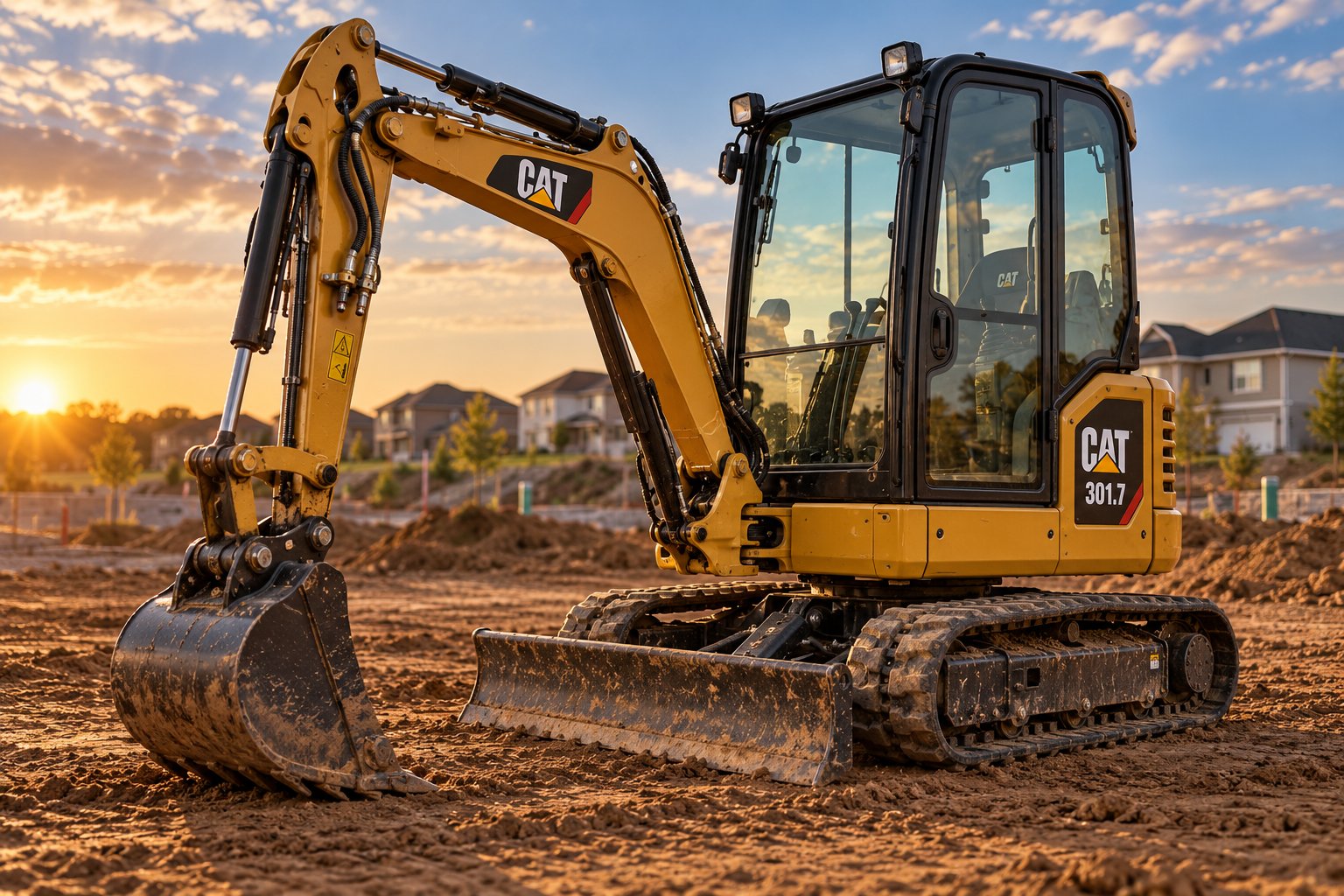
When you search for a cat 305d for sale, you're looking at one specific machine in a surprisingly complex family tree. The Cat 305D is a compact hydraulic mini excavator in Caterpillar's 5-ton class, built during the "D-series" generation that bridged the gap between Cat's earlier C-series machines and the later E-series lineup. It runs on a Mitsubishi S4Q2 diesel engine producing 42 net horsepower, carries an operating weight of roughly 11,012 pounds without cab (11,365 lb with cab), and features a hydraulic architecture distinct from every other 305 variant that came before or after it.
Here's the problem most buyers run into: online listings lump every Cat 305 model together. A generic search pulls up the 305C, 305D, 305E, and the Caterpillar 305.5 as though they're interchangeable. They're not. The 305D's Mitsubishi engine platform, its 153 cubic inch displacement, its specific hydraulic pressures and flow rates — these differ meaningfully from the Cat 3013 engine found in the earlier 305C or the updated powertrains in E-series models. Treating these machines as identical leads to mismatched parts orders, incorrect value assessments, and costly surprises after purchase.
What Makes the Cat 305D a Distinct Model
The D-series designation isn't cosmetic branding. It signals a particular generation of engineering decisions — from the engine and hydraulic pump configuration to the cab layout, track frame geometry, and electronic controls. A cat mini excavator carrying the "D" suffix was designed to meet the emissions standards and performance benchmarks of its specific production window, which for the 305D CR spanned roughly from the mid-2000s into the early 2010s.
The Cat 305D is not interchangeable with a 305.5E2, 305E2, or any other variant in the 305 family. Each model carries different engine specifications, hydraulic ratings, and operating weights. Always confirm the exact model designation on the machine's serial plate before evaluating price or compatibility.
This distinction matters whether you're sourcing replacement parts, comparing asking prices across listings, or estimating the cat 305 weight for transport planning. A buyer who understands these differences walks into negotiations with a significant advantage.
Where the 305D Fits in the Cat Mini Excavator Lineup
Caterpillar's compact excavator lineup has evolved through several generational shifts. The 305C introduced the 5-ton platform with a Cat 3013 engine and an operating weight around 10,890 pounds. The 305D CR refined that platform with the Mitsubishi S4Q2 powerplant, revised hydraulic system pressures, and an updated cab design. Following the D-series, Caterpillar rolled out E-series models — including the 305E and eventually the 305.5E2 — each incorporating further emissions compliance updates and efficiency improvements aligned with Caterpillar's broader excavator evolution toward lower fuel consumption and reduced maintenance costs.
Each letter designation represents real engineering changes, not just a model year refresh. For buyers shopping the used caterpillar mini excavator market, this progression matters because parts availability, service documentation, and resale trajectories all differ by generation. Someone cross-shopping a used cat 308 excavator for sale alongside a 305D is weighing two entirely different size classes and should approach each with model-specific data.
That's exactly what this guide delivers. The sections ahead break down the 305D's full technical specifications, real-world pricing by hours and condition, inspection checklists tailored to this machine, maintenance cost expectations, and the competitive landscape — everything you need to evaluate a listing with confidence rather than guesswork.
Cat 305D Technical Specifications Breakdown
Knowing what generation a machine belongs to only gets you halfway. The real question when evaluating any cat excavator for sale is whether the numbers on paper match the work you need done. For the Cat 305D CR specifically, those numbers tell a compelling story — and they differ enough from neighboring models like the cat 304 mini excavator for sale or the larger 305.5D CR that confusing them leads to miscalculated transport loads, wrong attachment orders, and unrealistic job expectations.
Every specification below comes from verified Cat 305D CR data and manufacturer documentation — not generic cat 305 family averages.
Engine and Hydraulic System Specs
The Cat 305D CR runs a naturally aspirated Mitsubishi S4Q2 four-cylinder diesel engine. Compared to the turbocharged S4Q2-T found in the slightly larger 305.5D CR, this engine trades a few horsepower for simpler maintenance and fewer turbo-related failure points — a meaningful consideration when you're buying used.
Hydraulic output is equally important. The 305D's pump delivers 31.7 gallons per minute at 2,400 rpm, feeding a closed, load-sensing system that optimizes flow based on actual demand rather than running at constant pressure. This design improves fuel efficiency and reduces heat buildup during lighter tasks.
| Engine Specification | Cat 305D CR Value |
|---|---|
| Engine Manufacturer | Mitsubishi |
| Engine Model | S4Q2 (naturally aspirated) |
| Configuration | 4-cylinder diesel |
| Net Power (ISO 9249) | 31 kW / 42 hp |
| Gross Power | 32.2 kW / 43 hp |
| Displacement | 2.5 L / 153 cu in |
| Bore x Stroke | 88 mm x 103 mm (3.5 in x 4.1 in) |
| Fuel Tank Capacity | 70 L / 18.5 gal |
| Hydraulic Pump Flow (at 2,400 rpm) | 120 L/min / 31.7 gal/min |
| Operating Pressure (Equipment/Travel) | 245 bar / 3,553 psi |
| Operating Pressure (Swing) | 185 bar / 2,690 psi |
| Auxiliary Circuit - Primary | 70 L/min / 18.5 gal/min |
| Auxiliary Circuit - Secondary | 35 L/min / 9.3 gal/min |
Those auxiliary flow numbers matter if you're planning to run hydraulic attachments. The primary circuit at 18.5 gal/min handles most buckets and thumbs comfortably, while the secondary circuit at 9.3 gal/min supports tools requiring a separate return line.
Dimensions, Weight, and Dig Performance
The "CR" in Cat 305D CR stands for Compact Radius — and that designation carries real jobsite implications. The upper body remains within just 140 mm (5.5 inches) of the undercarriage width during swing. Imagine working next to a building wall or inside a fenced residential lot. A conventional tail swing machine risks smashing into obstacles behind the operator with every rotation. The compact radius design on the 305D virtually eliminates that concern, letting you focus on the dig instead of constantly checking your six.
Here's how the full dimensional and performance picture breaks down:
| Dimension / Performance Metric | Standard Stick | Long Stick |
|---|---|---|
| Operating Weight (with canopy) | 4,995 kg / 11,012 lb | |
| Operating Weight (with cab) | 5,155 kg / 11,365 lb | |
| Maximum Dig Depth | 10 ft 9 in | 12 ft 1 in |
| Maximum Reach at Ground Level | 17 ft 10 in | 19 ft 1 in |
| Maximum Cutting Height | 17 ft 3 in | 17 ft 10 in |
| Maximum Dump Height | 12 ft 2 in | 12 ft 10 in |
| Bucket Breakout Force | 44.7 kN / 10,050 lb | |
| Stick Digging Force | 24.7 kN / 5,550 lb | 21.3 kN / 4,788 lb |
| Tail Swing Overhang | 140 mm / 5.5 in beyond undercarriage (Compact Radius) | |
| Track Shoe Width | 400 mm / 15.7 in | |
| Transport Width | 1.98 m / 6 ft 6 in | |
| Transport Height | 2.55 m / 8 ft 4 in | |
| Transport Length | 5.33 m / 17 ft 6 in | |
| Travel Speed (High / Low) | 2.8 mph / 1.7 mph | |
| Machine Swing Speed | 9 rpm | |
A few numbers deserve extra attention. The 10,050-pound bucket breakout force is substantial for a machine in this weight class — you'll notice the 305D punches above its size when breaking through compacted soil or clay. The transport width of 6 ft 6 in keeps the machine within standard trailer dimensions, and the 11,012 to 11,365-pound operating weight sits comfortably within the capacity of most tagalong trailers, making mobilization straightforward for contractors who move equipment between job sites regularly.
Among caterpillar mini excavators in the D-series, the 305D occupies a practical sweet spot: heavy enough to generate serious digging force, yet compact enough to navigate tight access points that shut out larger machines.
Lifting Capacity and Attachment Compatibility
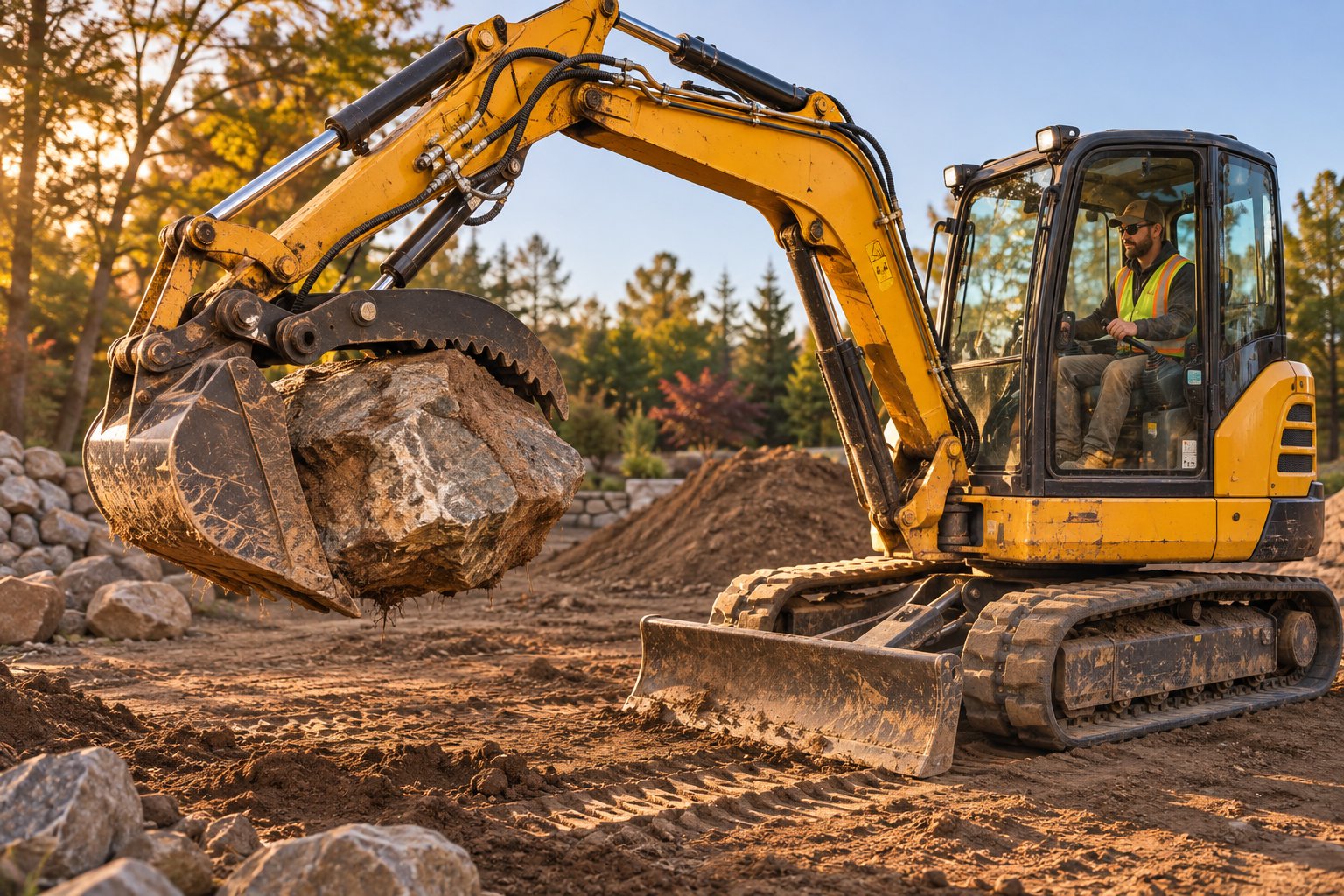
Lifting capacity varies depending on load radius and whether the dozer blade is grounded for added stability. At a 9 ft 8 in radius with the blade down, the 305D CR can lift approximately 3,704 lb over the front — enough to set precast steps, position concrete pipe sections, or handle landscape boulders. Push that radius out to 13 ft 1 in and the rated capacity drops to around 2,469 lb over the front, which still covers most utility and residential lifting tasks.
Attachment compatibility is one of the 305D's strongest selling points. Caterpillar designed the D-series with a wide range of work tools specifically matched to these machines:
- Digging buckets (heavy duty and heavy load configurations)
- Tilt and ditch cleaning buckets for grading precision
- Hydraulic thumbs for material handling and demolition debris
- Augers for post holes and pier footings
- Hydraulic breakers for concrete and rock demolition
- Compactor plates for trench backfill
- Quick coupler systems (mechanical pin grabber or hydraulic pin strut options)
The hydraulic quick coupler option lets the operator swap tools from inside the cab without touching a pin — a feature that dramatically reduces downtime on jobs requiring frequent attachment changes. With the bucket rotation exceeding 200 degrees, the 305D also provides better material retention during truck loading and cleaner vertical wall cuts compared to machines with more limited rotation arcs.
Specifications tell you what a machine can do on paper. What matters equally, though, is understanding which real-world jobs actually demand those capabilities — and whether the 305D's particular combination of reach, force, and footprint matches your workload.
Best Use Cases and Applications for the 305D
A 305 excavator with 10,050 pounds of bucket breakout force and a 12-foot dig depth sounds impressive in a spec table. But the question every buyer should ask before browsing a single listing is straightforward: does this machine actually fit the work I do? Matching the Caterpillar 305 to the right job types prevents one of the most expensive mistakes in equipment buying — owning a machine that's either too much or not enough for your daily workload.
Residential and Light Commercial Excavation
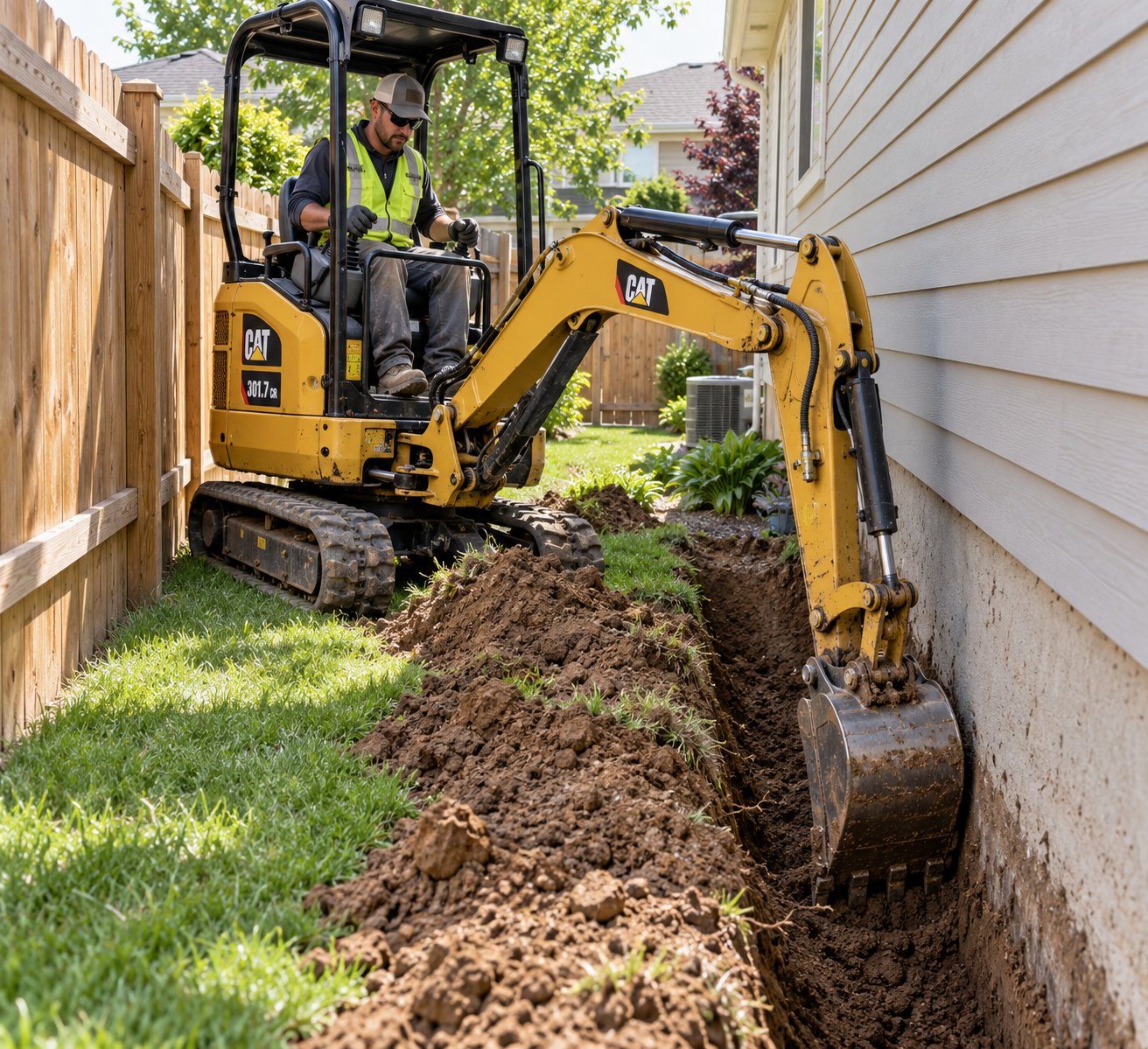
Picture a typical residential lot — a fenced backyard with a 36-inch gate opening into an area bordered by a house foundation on one side and a property line on the other. Most full-size excavators can't even get through the gate. The Cat 305D CR, with its 6 ft 6 in transport width and compact radius tail swing, threads through tight residential access points that shut out larger machines entirely.
This size class hits a productive middle ground for residential contractors. The 305D carries enough dig depth and breakout force to handle foundation excavation for additions, basement dig-outs, and swimming pool installation — jobs that would exhaust a smaller 303 or 304 class machine. At the same time, its ground pressure remains low enough to work across finished lawns without causing the deep rutting a 7- or 8-ton machine would leave behind.
Common residential and light commercial tasks where the 305D performs well include grading for new driveways, excavating footings for retaining walls, digging septic systems, and clearing sites for small commercial pads. The machine's rubber track option further reduces surface damage on paved or landscaped areas, a detail homeowners and property managers care about deeply.
Utility Installation and Municipal Work
Utility burial depths vary by code and region, but most waterlines sit 3 to 5 feet below grade, sewer laterals run 4 to 8 feet deep, and electrical conduit typically requires 24 to 36 inches of cover. The 305D's maximum dig depth of 12 ft 1 in with the long stick means it covers virtually every standard utility burial requirement with room to spare — and it does so with enough precision to maintain consistent trench width and grade.
Municipal crews and utility contractors frequently work in established neighborhoods, alongside active roadways, and near existing underground infrastructure. The compact radius design shines here because operators can swing the upper body without striking utility poles, parked vehicles, or retaining walls lining the work zone. For fiber optic installation, waterline replacement, and storm sewer connections, the 305D offers the reach and force needed while keeping the overall footprint manageable on constrained urban sites.
Landscaping, Demolition, and Agricultural Tasks
Beyond traditional excavation, the 305D's attachment versatility opens up a wide range of specialty applications. Landscapers use it for reshaping terrain, building berms, excavating ponds, and installing drainage systems. With an auger attachment, the same machine drills post holes for fencing or pier footings for deck construction. Swap to a hydraulic breaker, and it handles concrete patio removal or small-structure demolition — tasks that would otherwise require a separate piece of equipment on site.
Agricultural operators benefit from the 305D's ability to dig drainage ditches, clear fence lines, remove stumps, and clean out irrigation channels. According to Rentalex, compact excavators in this class excel at rock excavation and land grading on farms, helping improve soil drainage and field preparation without requiring the mobilization of full-size earthmoving equipment.
Here's a quick reference of the job types where the Cat 305D consistently delivers strong performance:
- Foundation and footing excavation for residential additions
- Swimming pool dig-outs and backfill
- Water, sewer, and storm drain trenching
- Electrical conduit and fiber optic installation
- Landscape grading and terrain reshaping
- Pond and drainage ditch excavation
- Small-structure demolition and concrete removal
- Septic system installation
- Agricultural drainage and fence line clearing
- Post hole drilling and pier footing preparation
If your intended work falls within this list, the 305D's combination of cat 305 specs — particularly its dig depth, breakout force, and compact footprint — aligns well with the demands of the job. If your projects regularly require depths beyond 12 feet or sustained high-production truck loading, you may want to evaluate the next size class up, like a cat 307.5 for sale, where deeper reach and greater hydraulic output match heavier workloads.
Confirming the right application fit is only half the equation, though. The other half — and arguably the more stressful part for most buyers — is figuring out what a used 305D should actually cost based on its hours, condition, and configuration.
Used Cat 305D Pricing Guide by Hours and Condition
Here's the frustrating reality of shopping for a caterpillar 305 excavator on the used market: major listing platforms publish average prices that blend every 305 variant together. MachineryTrader, for example, references an approximate $54,205 average across all Cat 305 models combined — lumping the older 305C, the 305D CR, and the newer 305E2 CR into a single number. That figure tells you almost nothing useful about what a 305D specifically should cost at a given hour count and condition level. It's like averaging the price of a 2008 sedan and a 2018 sedan, then calling it a "car price."
Buyers deserve a more practical framework. Pricing a used mini excavator caterpillar accurately depends on two primary variables working in tandem: machine hours and overall condition. Everything else — attachments, region, season — adjusts from that baseline.
How Machine Hours Affect Used 305D Pricing
Operating hours function as the odometer of any excavator. According to IronMart's 2026 appraisal guide, most mini excavators are engineered for 5,000 to 10,000 total operating hours before major component replacement becomes necessary. Each hour bracket represents a meaningful step-down in value because the machine has consumed a measurable portion of its designed service life.
The table below organizes approximate price ranges you can expect when evaluating a Cat 305D CR based on hour brackets. These ranges reflect market observation across multiple listing platforms and assume a machine in "good" overall condition — adjustments for better or worse condition apply on top of these baselines.
| Hour Bracket | Approximate Price Range | Market Context |
|---|---|---|
| Under 2,000 hours | $45,000 – $58,000+ | Premium tier; low wear, strong remaining life. Often one-owner machines with complete service records. Expect competition from other buyers. |
| 2,000 – 4,000 hours | $32,000 – $46,000 | The sweet spot for many buyers. Meaningful depreciation has occurred, but core components — engine, hydraulics, final drives — typically retain substantial useful life. |
| 4,000 – 6,000 hours | $22,000 – $35,000 | Mid-life range. Undercarriage and hydraulic hoses may need attention soon. Maintenance history becomes critical at this level. |
| Over 6,000 hours | $12,000 – $24,000 | High-hour territory. Expect significant component wear. Best suited for buyers with in-house mechanical capability or those budgeting for near-term repairs. |
A word of caution: these ranges serve as orientation, not gospel. You'll notice overlap between brackets because condition, configuration, and market timing all shift the actual number within — or sometimes outside — these bands. Always cross-reference at least three to five comparable listings when evaluating a specific machine. A 305D at 3,800 hours priced at $48,000 should raise questions, just as one at 1,500 hours listed for $28,000 likely has issues the seller isn't advertising.
It's also worth noting that each additional 500 hours of operation typically reduces value by roughly 3 to 5 percent, depending on maintenance quality. A machine with 2,500 well-documented hours from a single municipal owner often commands more than a 1,800-hour unit with no records and multiple previous operators.
Condition Tiers and Their Impact on Value
Hours alone don't tell the full story. Two machines at identical hour readings can differ by $15,000 or more based on how they were maintained, operated, and stored. When browsing listings, you'll encounter vague condition descriptions — "runs great," "field ready," or "needs minor work." Those phrases are meaningless without context. Here's what each condition tier actually looks like in practical terms for a used Cat 305D:
- Excellent: Undercarriage at 70% or greater remaining life. No hydraulic leaks. Cylinders show minimal scoring. Engine starts instantly, idles smoothly, and produces clean exhaust. Cab interior is complete and functional — heat, A/C (if equipped), all gauges and switches operational. Paint is intact with only minor cosmetic blemishes. Attachments included are in working condition with sharp teeth and straight edges. Service records are complete and current. Expect pricing at the top of the hour-bracket range or slightly above.
- Good: Undercarriage at 40–70% remaining life. Minor hydraulic seepage at hose fittings but no active cylinder leaks. Engine runs well with slight exhaust coloring under load. Cab functional with minor wear — cracked seat foam, faded controls, or non-critical cosmetic issues. Attachments usable but may show moderate tooth wear. Some service records available. This is the most common condition tier on the used market and represents the baseline for the price ranges listed above.
- Fair: Undercarriage at 20–40% remaining life — track replacement likely within 500–1,000 hours. Hydraulic hoses showing age cracks or minor weeping at connections. Engine may produce visible smoke at startup or under heavy load. Cab may have broken windows, non-functional climate controls, or damaged seals. Attachments heavily worn. Service history incomplete or unavailable. Pricing typically falls 15–25% below "good" condition values for the same hour bracket.
- Project / Salvage: Undercarriage near or past end of life. Active hydraulic leaks from cylinders or pump. Engine has known issues — excessive blow-by, hard starting, overheating, or knocking. Structural damage, cracked welds, or bent components present. Cab may be stripped or heavily damaged. These machines are priced for buyers who plan to rebuild, part out, or use the unit for occasional light-duty work while accepting its limitations. Expect 40–60% below "good" condition values.
Understanding these tiers protects you from overpaying for a "fair" machine marketed with "good" language. Equipment appraisal data consistently shows that machines with complete maintenance histories appraise 10 to 15 percent higher than identical units without records — a detail that reinforces why documentation matters as much as physical condition.
Regional and Seasonal Price Factors
Geography and calendar timing create pricing variations that catch many first-time equipment buyers off guard. A Cat 305D listed in a construction-heavy metro area like Houston, Atlanta, or Denver — where demand for compact excavators stays strong year-round — will typically command higher prices than the same machine listed in a rural market with fewer active contractors competing for it.
Seasonal patterns follow construction activity. Spring and early summer drive demand upward as contractors ramp up project schedules, pushing asking prices higher for any mini excavator caterpillar buyers are shopping for. Winter listings, particularly in northern climates where ground freezes limit excavation work, tend to carry softer pricing. According to depreciation research, machines listed during slow winter months may require a 5 to 10 percent discount to attract buyers — which creates opportunity for patient shoppers willing to purchase off-season and store the machine until spring.
Regional parts availability plays a secondary role as well. Areas with a strong Cat dealer network tend to support slightly higher resale values because buyers know they can source 305 caterpillar specs documentation, genuine replacement parts, and qualified service technicians locally. In regions where Caterpillar dealer coverage is thinner, competing brands like Kubota or Komatsu sometimes hold stronger resale positions, and used Cat pricing reflects that dynamic.
Whether you're comparing a caterpillar 303 for sale in one market or a cat 304 for sale in another, the lesson is consistent: never evaluate a listing price in isolation. Context — hours, condition tier, geography, and season — shapes the real value of every used machine. The next step toward a confident purchase is knowing exactly what to look for once you're standing in front of the 305D itself, inspection checklist in hand.
What to Inspect Before Buying a Used Cat 305D
Pricing context gives you a number to work with — but a number means nothing if the machine hiding behind the listing photos is falling apart underneath fresh paint. When you're evaluating cat excavators for sale in the 5-ton class, the difference between a solid purchase and a money pit comes down to what you catch during the inspection. Sellers know how to present machines attractively. Your job is to look past the cosmetics and evaluate the components that actually determine whether a Cat 305D will earn its keep or drain your bank account.
The inspection framework below is tailored specifically to this machine class. A Machinery Trader inspection guide puts it plainly: elusive problems on a used excavator can negatively impact your bottom line for years. The key is knowing exactly where to look.
Undercarriage Inspection Essentials
If there's one area where skipping the inspection will cost you the most, it's the undercarriage. Replacing the tracks, rollers, idlers, and sprockets on a mini excavator in this weight class can easily run $5,000 to $8,000 or more — sometimes approaching a quarter of the machine's total purchase price on a mid-hour unit. That single cost reality makes the undercarriage the highest-stakes inspection point on any Cat 305D you evaluate.
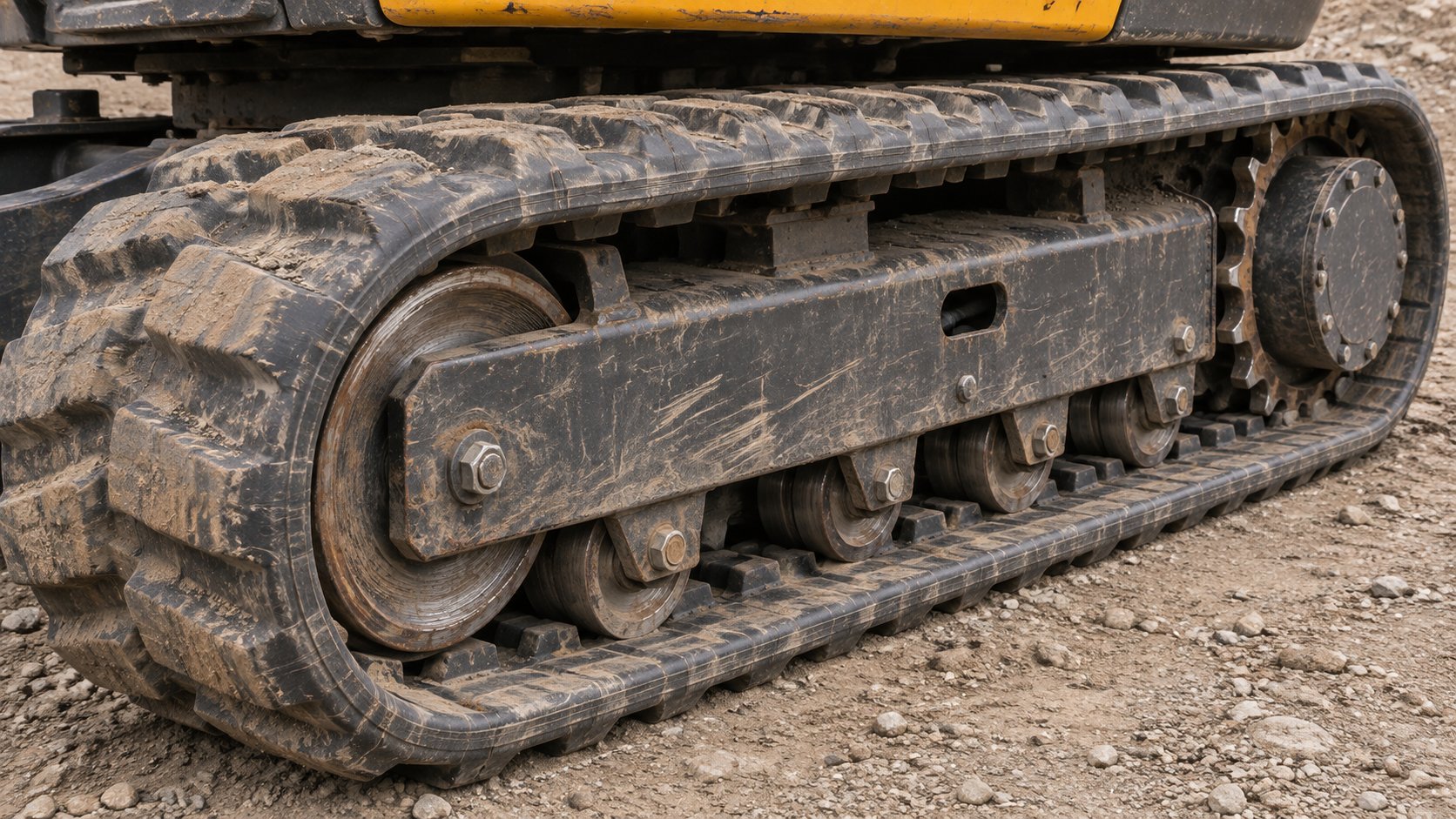
Start with the tracks themselves. The 305D CR comes in both rubber and steel track configurations. For rubber tracks, look for missing lugs, deep cracks, dry rot along the edges, and any sections where the internal steel cords are exposed. These signs indicate tracks nearing end of life. Steel track shoes should be checked for worn grouser height and cracked or missing hardware.
Move to the rollers next. Spin each bottom roller by hand if the machine is lifted — they should turn freely without grinding or resistance. Leaking seals on rollers mean the internal lubricant has been lost, and the roller is running metal-on-metal. Check the idlers at the front of the track frame for the same issues: smooth rotation, no visible seal leakage, and no excessive side-to-side play.
Sprocket teeth deserve close attention. Worn sprockets develop a characteristic "hooked" or sharpened tooth profile compared to the broad, flat tops of new sprockets. As Mico Equipment's buying guide recommends, ask the seller — or better yet, a qualified technician — how much remaining undercarriage life the machine has. Manufacturers publish wear specifications that allow precise measurement, and knowing where a 305D sits on that wear curve directly affects what you should pay.
Track tension matters too. Overly tight tracks accelerate wear on every undercarriage component. Excessively loose tracks risk derailment. A properly adjusted track on a 305D should have slight sag between the top carrier roller and the idler — consult the Cat operation and maintenance manual for the exact specification.
Engine and Hydraulic System Red Flags
The 305D's Mitsubishi S4Q2 naturally aspirated diesel is a generally reliable powerplant, but age and neglect take their toll on any engine. The most revealing test is a cold start — and "cold" means the machine hasn't been warmed up beforehand by the seller. Why does that matter? Because hard starting, excessive cranking time, and heavy exhaust smoke are far more apparent on a cold engine. A seller who has the machine idling before you arrive may be masking problems.
Pay attention to exhaust smoke color. White smoke on initial startup that clears within a minute or two is normal in cold weather. White smoke that persists suggests coolant entering the combustion chamber — a potential head gasket or cracked head issue. Blue smoke indicates oil burning past worn piston rings or valve seals. Black smoke points to fuel system problems: dirty injectors, incorrect timing, or a restricted air filter. None of these are cosmetic concerns. Each represents a repair ranging from moderate to major expense.
On the hydraulic side, slow or jerky cylinder movement is the clearest warning sign of pump wear, internal valve bypass, or air in the system. Operate the boom, stick, and bucket through their full range of motion. The movements should be smooth and responsive at every throttle setting. Hesitation, drift when the controls are released, or a noticeable loss of power under load all warrant deeper investigation.
Inspect every hydraulic cylinder rod by fully extending each cylinder. The chrome surface should be smooth and mirror-like. Pitting, scoring, or rust on a cylinder rod means the seal is being damaged with every cycle, leading to progressive leakage. Check hose fittings and swivel joints for active drips or wet, oily residue — and be wary of areas that look freshly cleaned, as experienced inspectors note that dishonest sellers sometimes pressure-wash leak points to hide evidence.
Here's a scannable pre-purchase inspection checklist covering the critical checkpoints you should work through on any used Cat 305D:
- Cold start behavior: Note cranking time, initial smoke color, and idle stability before the engine warms up
- Exhaust smoke under load: Run the engine at full throttle during digging — persistent smoke of any color warrants investigation
- Engine oil condition: Pull the dipstick and check for milky discoloration (coolant contamination) or metallic particles
- Blow-by test: With the engine running, remove the oil filler cap and feel for excessive air pressure escaping — a sign of worn compression rings
- Hydraulic cylinder rod condition: Fully extend each cylinder and inspect for pitting, scoring, or rust on the chrome surface
- Hydraulic response and drift: Raise the boom to full height, release the controls, and time how long it holds position — noticeable drift indicates internal seal leakage
- Pin and bushing play: With the bucket on the ground, push the stick in and out while watching the joint connections — visible clunking or looseness means worn pins and bushings
- Swing bearing condition: Rotate the upper body 360 degrees in both directions and listen for grinding, popping, or uneven resistance
- Final drive motors: Travel forward and reverse, then pivot each track independently — straight tracking, even speed, and absence of grinding or whining noises indicate healthy final drives
- Track and undercarriage wear: Measure remaining track pad depth, check roller and idler seal integrity, and inspect sprocket tooth profile
- Structural weld integrity: Examine the boom foot, boom nose, stick tip, and all cylinder mount points for cracks, rust lines in weld seams, or signs of re-welding
- Cab and controls: Test every switch, gauge, joystick, monitor display, seat belt, and climate control function — replace broken safety components before operation
Skipping even a few of these checkpoints creates blind spots that sellers exploit. If you're not comfortable performing this evaluation yourself, hiring an independent third-party inspector is money well spent — typically $300 to $500 for a thorough assessment that could save you thousands in undisclosed repair costs.
Documentation and Maintenance History Review
A clean-looking machine with strong hydraulic response and tight pins can still be a risky purchase if the paperwork doesn't back up what you're seeing. Documentation is the final — and often most overlooked — layer of due diligence when shopping for caterpillar mini excavators for sale on the secondary market.
Start with the service records. Request any maintenance logs, oil change receipts, oil analysis reports, and dealer service invoices the seller has. A machine with consistent 250- and 500-hour service intervals documented throughout its life tells a very different story than one with no records at all. Gaps in documentation aren't automatic deal-breakers, but they should prompt you to budget conservatively for unknown deferred maintenance.
Hour meter verification is critical. The displayed hours should align with the visible wear on the machine. A unit showing 1,200 hours but sporting a heavily worn seat, shiny control levers, and faded pedal rubber has likely been clocked — meaning the hour meter was reset or replaced at some point. Many newer Cat machines include telematics data that can independently confirm operating hours, so ask whether any Product Link or VisionLink records exist for the unit. When comparing this concern to something like a cat 309 price evaluation, the same principle applies across every size class: hours must match wear, or something is off.
Before any money changes hands, verify the machine's identity. Locate the serial number plate on the frame — on the 305D, it's typically found on the left side of the main frame near the front. Cross-reference that serial number against the seller's title or bill of sale, and confirm through Caterpillar's serial number lookup that the machine is indeed a 305D CR, not a misidentified 305C or 305E variant. Model confusion is surprisingly common in the used market, especially among private sellers and smaller brokers who may not distinguish between generational variants.
A 308E2 is not a 308B, and a 305.5E2 is not a 305D — each carries different specifications, parts compatibility, and value. Always verify the exact model designation on the machine's serial plate before finalizing any purchase. A misidentified model means incorrect parts orders, inaccurate valuations, and potential resale headaches down the road.
Finally, check for liens. A used excavator that still has an outstanding loan or lease obligation attached to it can be legally repossessed from you even after you've paid the seller in full. Request a lien search through your state's UCC filing database, or work with a dealer who handles title verification as part of the transaction. Whether you're looking at a cat 302.7 for light-duty work or a full-size unit, lien verification is non-negotiable — the financial risk is simply too high to skip.
Completing a thorough inspection and verifying all documentation puts you in a strong negotiating position. You'll know exactly what condition the machine is in, what repairs are looming, and whether the asking price aligns with reality. What many buyers fail to account for, though, is what happens after the purchase — the ongoing maintenance costs and common repair items that quietly shape the true cost of owning a Cat 305D over the months and years ahead.
Maintenance Costs and Common Repairs to Expect
Buying a Cat 305D at a fair price is only one piece of the financial picture. The real number that determines whether a machine earns you money or slowly bleeds it is total cost of ownership — and that figure is driven largely by what you spend keeping it running after the purchase. Most sellers won't volunteer this information, and most listings never mention it. Yet for a cat 305 excavator in the 5-ton class, routine maintenance and predictable repairs represent a significant ongoing expense that every buyer should model before signing a bill of sale.
Routine Maintenance Costs and Intervals
Caterpillar structures its planned maintenance program around four standard service intervals: PM1 at every 250 hours, PM2 at every 500 hours, PM3 at every 1,000 hours, and PM4 at every 2,000 hours. Each interval builds on the previous one, adding service items as the hour count climbs. For the 305D specifically, here's what each window typically includes:
- Every 250 hours (PM1): Engine oil and filter change, fuel filter inspection or replacement, hydraulic system visual check, and greasing all pin and bushing joints. On the 305D's Mitsubishi S4Q2 engine, expect to use approximately 2.1 gallons of engine oil per service. Genuine Cat filters for this interval generally run $80 to $150 for the full set, while aftermarket alternatives come in at roughly half that cost.
- Every 500 hours (PM2): Everything in PM1 plus hydraulic oil filter replacement, fuel system water separator draining, and air filter inspection. Hydraulic filters for the 305D typically cost $40 to $80 each for genuine Cat parts.
- Every 1,000 hours (PM3): Adds hydraulic oil sampling, coolant testing, and more thorough inspection of belts, hoses, and undercarriage wear components. This is also when many owners send an oil sample to a lab for S.O.S. fluid analysis — a $25 to $40 test that reveals internal engine and hydraulic wear patterns before they become expensive failures.
- Every 2,000 hours (PM4): The most comprehensive interval. Includes full hydraulic oil replacement (the 305D holds approximately 24.6 gallons of hydraulic fluid), coolant replacement, and detailed inspection of all major systems. A complete PM4 service using genuine Cat fluids and filters can run $600 to $1,200 depending on your dealer and whether additional corrective items surface during the inspection.
Greasing deserves its own mention because it's the maintenance item most often skipped — and most often responsible for premature pin and bushing failure. The 305D has multiple grease points across the boom, stick, bucket, swing bearing, and blade assembly. Caterpillar recommends greasing every 10 operating hours, which translates to roughly once per working day. A tube of Cat multipurpose grease costs a few dollars. A set of worn-out boom bushings costs several hundred. The math speaks for itself.
Should you use genuine Cat filters and fluids or aftermarket alternatives? Genuine parts typically cost 30 to 50 percent more but are engineered to Cat's exact filtration specifications and material tolerances. Aftermarket options from reputable brands can deliver adequate protection at lower cost, though quality varies significantly across suppliers. For a caterpillar excavator for sale on the used market, a documented history of genuine Cat maintenance parts often adds resale value — buyers trust those records more than receipts from unknown filter brands.
Your local Cat dealer can provide a precise maintenance cost estimate based on your region's parts pricing and labor rates. Requesting this quote before you buy gives you a realistic annual maintenance budget to factor into your purchase decision.
Common Repair Items and Known Wear Points
Routine maintenance covers the predictable items. Repairs cover everything else — and on a used machine, "everything else" is where budgets get tested. Certain components on the 305D have well-known wear patterns that any prospective buyer should anticipate, especially on units with 3,000 or more operating hours.
Final drive motors rank among the most critical — and most expensive — repair items on any mini excavator. As Texas Final Drive documents, the most common failure point on Cat excavator hydraulic drive motors is the floating face seal (also called a duo-cone seal). When this seal fails, gear oil leaks out and jobsite debris — sand, grit, and soil — works its way into the planetary hub. Neglecting even a small leak behind the sprocket leads to contaminated gear oil that destroys internal components far more expensively than a timely seal replacement would have cost. The fix for a damaged final drive can range from $1,500 for seal replacement to $4,000 or more for a full remanufactured unit.
Hydraulic hose deterioration is another predictable expense. Rubber hoses degrade from heat cycling, UV exposure, and flexing over thousands of operating hours. You'll notice surface cracking, stiffening, or weeping at crimp fittings — all signs that replacement is overdue. Individual hose replacements are relatively inexpensive ($50 to $200 per hose installed), but a machine that needs multiple hoses replaced at once can quickly push past $1,000 in combined parts and labor.
The table below organizes the most common repair categories for the Cat 305D alongside their relative cost impact, helping you prioritize where to focus your inspection and budgeting efforts:
| Repair Category | Typical Issue | Relative Cost Impact |
|---|---|---|
| Track replacement (rubber) | Worn lugs, cracked rubber, exposed cords | High ($2,500 – $5,000 per set) |
| Final drive motor repair | Failed face seals, contaminated gear oil, planetary damage | High ($1,500 – $4,000+ per side) |
| Boom/stick/bucket pins and bushings | Excessive play at joints from wear | Moderate ($800 – $2,500 for full set) |
| Hydraulic cylinder reseal | Scored rods, leaking piston seals | Moderate ($400 – $1,200 per cylinder) |
| Hydraulic hose replacement | Cracked, leaking, or aged hoses | Low to Moderate ($50 – $200 per hose) |
| Roller and idler replacement | Leaking seals, seized bearings, flat spots | Moderate ($300 – $800 per component) |
| Sprocket replacement | Hooked or worn tooth profile | Moderate ($400 – $900 per sprocket) |
| Fuel injector service | Poor spray pattern, hard starting, uneven idle | Moderate ($200 – $600 per injector) |
| Swing bearing replacement | Grinding, excessive play, popping during rotation | High ($3,000 – $6,000 installed) |
| Electrical and sensor issues | Faulty switches, wiring harness damage, gauge failures | Low to Moderate ($100 – $500) |
Notice the pattern: the highest-cost repairs cluster around the undercarriage and hydraulic drive system. This is precisely why the inspection chapter emphasized those areas so heavily. A machine with healthy final drives, good tracks, and tight pins across the working group carries far less financial risk than a cheaper unit hiding wear in those exact zones. Buyers cross-shopping a cat 305.5 for sale or even researching a cat 308 excavator price will find similar repair cost hierarchies — undercarriage and drive components dominate the expense profile across virtually every compact and mid-size excavator class.
Estimating Total Cost of Ownership
Purchase price is the most visible expense, but Caterpillar's own total cost of ownership framework ranks it as the least impactful factor in determining a machine's overall profitability. That's a counterintuitive claim, but the logic holds up: a 1% improvement in productivity has over five times the impact on total cost of ownership than a 1% change in purchase price. Availability, operating costs, and utilization all weigh more heavily on your bottom line than the upfront number on the bill of sale.
To estimate your total ownership cost for a Cat 305D, imagine building a simple annual budget that includes these categories:
- Annual maintenance: At 1,000 operating hours per year, budget roughly $2,000 to $3,500 for scheduled service using a mix of genuine and quality aftermarket parts
- Repair reserve: Set aside 5 to 10 percent of the machine's purchase price annually to cover unplanned repairs — this builds a buffer for the inevitable hose failure, seal replacement, or worn component that surfaces mid-project
- Insurance: Equipment insurance for a 5-ton excavator typically runs $800 to $2,000 per year depending on coverage scope, deductible, and your claims history
- Transport: If you move the machine between jobsites frequently, factor in trailer ownership or rental costs, fuel for towing, and permit fees if applicable
- Depreciation and resale value: Cat machines historically hold stronger resale value than many competing brands, but a 305D still depreciates roughly 8 to 12 percent annually depending on hours added and condition maintenance. Understanding where your machine will land on the resale curve in three to five years helps you calculate the true net cost of ownership over your planned holding period
Imagine you purchase a Cat 305D at 2,500 hours for $38,000. Over three years of operation at 800 hours per year, you might spend $8,000 in scheduled maintenance, $6,000 in repairs, and $4,500 in insurance — totaling roughly $56,500 in cumulative cost. If the machine is worth $22,000 at resale after those three years, your net ownership cost was approximately $34,500, or about $14.40 per operating hour. That per-hour cost is the number that actually tells you whether the machine is profitable on your jobs.
Running this calculation before you buy — not after — separates informed buyers from those who discover hidden costs the hard way. And part of what drives both maintenance expense and resale value is the specific configuration of the machine you choose: cab type, track material, and installed attachments all shift the ownership equation in meaningful ways.
Features That Affect a Used Cat 305D Value
Two Cat 305D units can sit side by side with identical hours, identical condition scores, and a $10,000 gap between their asking prices. How? Configuration. The specific features installed on a machine — cab type, track material, and factory or aftermarket attachments — shape both what the 305D can do on a jobsite and what it's worth on the resale market. When you're scanning listings, these details often hide behind vague descriptions like "fully loaded" or "work ready." Understanding exactly what each feature adds in practical value helps you decode whether a higher asking price is justified or inflated.
Cab Configurations and Operator Comfort
Every used 305D listing falls into one of two operator station categories: enclosed cab or open ROPS canopy. The difference between them sounds simple — walls and a door versus a roof and open sides — but the impact on both usability and resale value runs deeper than most buyers expect.
An enclosed cab with heat and air conditioning transforms the operator experience during extreme weather. Imagine running an 8-hour shift in August heat or January cold. With a sealed cab, filtered air, and functioning climate controls, operator fatigue drops and productivity stays consistent throughout the day. As industry analysis from Boleo points out, the decision should start with your normal working week rather than the single worst weather day you can remember — how many of your actual operating hours involve conditions where an enclosed cab genuinely improves productivity?
An open ROPS canopy setup, on the other hand, offers advantages of its own. It's lighter — roughly 260 to 350 pounds less than an enclosed cab configuration — which marginally affects the cat 305 excavator weight and can matter on transport-sensitive jobs. Canopy machines also provide unrestricted sightlines and easier entry and exit for operators who frequently step off the machine for ground-level tasks. In mild climates where temperature extremes are rare, a canopy setup meets the need without the added cost.
Here's the resale reality: enclosed cab machines consistently command higher prices than canopy equivalents at the same hour count and condition. The premium varies by market, but you'll typically see a $2,000 to $5,000 difference between otherwise identical units. In regions with harsh winters or intense summer heat, that gap widens further because local demand for cab machines outstrips supply. If you're shopping for a cat mini excavator for sale and plan to resell within a few years, the cab configuration you choose today directly affects your exit price tomorrow.
One important detail that listings rarely clarify: an enclosed cab doesn't automatically include heating or air conditioning. Some enclosed cab units ship with heat only, while A/C is an additional option. Always confirm exactly which climate systems are installed and functional — a sealed cab with a broken A/C compressor in a Texas summer delivers all the heat retention and none of the comfort.
Rubber Tracks vs Steel Tracks
Track material is the second major value differentiator, and it directly influences both what work the machine can perform and what you'll spend on replacement down the road. The 305D CR is available with rubber or steel tracks, and each serves a fundamentally different purpose.
Rubber tracks are the standard choice for most buyers in this class. According to Compact Equipment Magazine, rubber tracks offer low ground disturbance, a smoother ride, and quieter operation — making them ideal for residential work, landscaping, and any job where surface protection matters. You can drive a rubber-tracked 305 cat excavator across a finished driveway or lawn without leaving the deep gouges that steel tracks would carve into the surface. They're also lighter, which improves fuel efficiency and reduces stress on undercarriage components.
Steel tracks flip the equation for tougher environments. Rocky terrain, demolition sites, and heavy earthmoving applications chew through rubber tracks at an accelerated rate. Steel links handle sharp debris and abrasive ground conditions that would shred rubber in a fraction of the expected service life. The tradeoff? Steel tracks cost more upfront, weigh more, increase fuel consumption, and will damage any paved or finished surface they cross.
Replacement cost is where this choice really shows its financial teeth. A new set of rubber tracks for the 305D typically runs $2,500 to $5,000 depending on brand and quality. Steel track components — shoes, links, and associated hardware — can push well beyond that when full replacement is needed. Industry experts note that using the wrong track type for your primary application leads to accelerated wear, reduced traction, and higher fuel consumption — all of which compound into unnecessary cost over the machine's working life.
For most buyers browsing a cat 305.5 e2 for sale or a 305D CR, rubber tracks represent the practical default. Reserve steel tracks for operations where the terrain genuinely demands that level of durability.
Thumb Attachments, Quick Couplers, and Auxiliary Hydraulics
The attachments and hydraulic options already installed on a used 305D can easily justify a $3,000 to $8,000 premium — or reveal a missed opportunity when they're absent. Three features in particular separate a basic digging machine from a versatile multi-tool platform.
A hydraulic thumb mounted on the stick transforms the 305D from a dedicated digger into a material handler. Grabbing tree stumps, positioning rocks, sorting demolition debris, loading odd-shaped material into trucks — these tasks become fast and efficient with a thumb that the operator controls from the cab. Without one, the same jobs require manual labor or a second piece of equipment. Listings advertising a factory or quality aftermarket hydraulic thumb typically price $2,000 to $4,000 above comparable units without one.
A quick coupler system delivers a different kind of value: time savings. Newman Tractor reports that manually changing a bucket or attachment with a sledgehammer can take two operators up to an hour, factoring in warped pins, rusted hardware, and safety risks. A hydraulic quick coupler lets a single operator swap attachments in roughly two minutes without leaving the seat. For contractors running multiple attachment types on the same job — switching between a digging bucket, a grading bucket, and a breaker throughout the day — this feature pays for itself rapidly through reduced downtime and eliminated labor cost.
Auxiliary hydraulic lines are the prerequisite that makes powered attachments possible in the first place. The 305D's primary auxiliary circuit delivers 18.5 gal/min and the secondary circuit provides 9.3 gal/min — enough flow to run hydraulic breakers, augers, compactors, and thumbs. A machine listed without auxiliary hydraulics is limited to passive attachments like standard buckets, which dramatically narrows its versatility. Adding auxiliary lines after purchase is possible but involves significant plumbing work, so machines that come pre-equipped carry a meaningful premium.
Two other features worth noting: a control pattern changer (sometimes called an ISO/SAE selector) lets operators toggle between the two most common joystick patterns, making the machine comfortable for any operator regardless of their training background. And the front dozer blade — standard on most 305D CR units — is essential for backfilling, rough grading, and stabilizing the machine during lifting operations. A missing or heavily damaged blade diminishes both functionality and value.
The table below summarizes how each common feature upgrade influences the used market value of a Cat 305D, helping you evaluate whether a listing's asking price aligns with what's actually installed on the machine:
| Feature / Upgrade | Practical Benefit | Approximate Value Impact |
|---|---|---|
| Enclosed cab with heat and A/C | Year-round operator comfort, weather protection, reduced fatigue | Adds significant value ($2,000 – $5,000+) |
| Hydraulic thumb | Material handling, sorting, demolition support | Adds significant value ($2,000 – $4,000) |
| Hydraulic quick coupler | Rapid attachment changes from the cab, reduced downtime | Adds significant value ($1,500 – $3,500) |
| Auxiliary hydraulic lines (primary + secondary) | Powers breakers, augers, compactors, and other hydraulic tools | Adds significant value ($1,500 – $3,000) |
| Control pattern changer (ISO/SAE) | Accommodates different operator preferences without mechanical modification | Adds moderate value ($300 – $800) |
| Dozer blade (functional, straight) | Backfilling, grading, machine stabilization during lifts | Expected standard; damaged or missing blade reduces value |
| Rubber tracks (good condition) | Surface protection, smooth ride, fuel efficiency | Adds moderate value vs. worn tracks; type preference varies by application |
| Steel tracks | Durability on rocky and abrasive terrain | Adds moderate value for heavy-duty applications; reduces value for residential-focused buyers |
When you're comparing two listings at similar hours and condition, this table gives you a practical framework for judging whether the price gap between them is reasonable. A 305D with an enclosed cab, hydraulic thumb, quick coupler, and full auxiliary hydraulics should legitimately cost $6,000 to $12,000 more than a bare canopy unit with no attachments — and that premium is worth paying if those features match your work. For buyers weighing smaller machines, the same logic applies when researching a cat 301.7 price: every installed feature either adds working capability or it doesn't, and the asking price should reflect that reality rather than a seller's optimism.
Configuration determines what a 305D can do on your jobs and what it's worth when you eventually sell. But value isn't shaped in a vacuum — it also depends on how the machine stacks up against its direct competitors from other manufacturers, each fighting for the same 5-ton class market share.
Cat 305D vs Competing 5-Ton Mini Excavators
Knowing the 305D's features and value drivers inside and out still leaves one question unanswered: is this the right machine compared to what other manufacturers offer in the same weight class? Buyers searching for a cat 305 for sale are often simultaneously weighing options from Komatsu, Kubota, and Volvo — brands that field strong competitors in the 5-ton compact excavator segment. A direct comparison helps you decide whether Caterpillar's reputation, dealer network, and resale strength justify the asking price, or whether a rival machine better fits your priorities.
Cat 305D vs Komatsu PC50MR
The Komatsu PC50MR is the most direct competitor in this class. It's a true tight-tail-swing design — meaning the counterweight stays within the track width during full rotation, not just close to it like the 305D CR's compact radius configuration. For operators working in extremely confined spaces where even 5.5 inches of tail overhang matters, the Komatsu's zero-overhang geometry offers a measurable advantage.
Where the Cat fights back is in parts availability, dealer coverage, and long-term resale value. Industry comparisons consistently note that while Caterpillar machines tend to cost more upfront, they retain better value over time. Komatsu, on the other hand, earns strong marks for fuel efficiency and lower initial pricing — the same dynamic that plays out in their larger models like the PC200-8 versus the Cat 320D L. Both are proven machines, but the ownership math favors Caterpillar for buyers who plan to resell and Komatsu for those focused on minimizing acquisition cost.
The PC50MR produces approximately 37.4 horsepower from its Komatsu-built engine, slightly less than the 305D's 42 hp Mitsubishi S4Q2. Dig depth on the PC50MR reaches roughly 11 ft 10 in — close to the 305D's 12 ft 1 in with the long stick, but meaningfully shorter for utility trenching jobs where every inch of depth matters.
Cat 305D vs Kubota KX057
Kubota has built a formidable reputation in compact excavators, and the KX057-5 is their flagship in this weight class. A direct comparison from Kubota Center highlights several areas where the KX057-5 edges ahead: its Kubota-built engine delivers 47.6 horsepower — roughly 5.6 hp more than the 305D — and its digging depth reaches 12 ft 9 in, giving it an extra nine inches of reach underground. Operating weight comes in at 12,346 pounds, slightly heavier than the 305D CR's 11,365-pound cab configuration.
That said, the Kubota comparison uses the current-generation CAT 305 (rated at 45 hp), not the older 305D variant. The horsepower gap between a KX057-5 and a 305D is therefore even wider at nearly 6 hp. For buyers whose projects demand maximum dig depth and raw engine power, the Kubota presents a compelling case. For buyers who prioritize the Cat dealer network, historically stronger resale curves, and broader attachment ecosystem, the 305D still holds ground — especially at the lower price points available on used units versus a newer Kubota.
Kubota's reputation for reliability in compact equipment is well earned. Comprehensive brand comparisons consistently rank both Kubota and Caterpillar among the top-tier mini excavator manufacturers, with each brand excelling in slightly different areas. The choice often comes down to dealer proximity and whether the buyer values Kubota's engine refinement or Caterpillar's parts infrastructure.
Cat 305D vs Volvo ECR50
The Volvo ECR50 takes a similar compact-radius approach to the 305D, keeping the tail swing tight for confined jobsite work. Volvo machines are known for smooth hydraulic response and operator comfort — their cab design and joystick controls consistently draw praise in industry reviews. The ECR50 produces around 38.2 horsepower and reaches approximately 11 ft 6 in of dig depth, placing it slightly behind the 305D on both metrics.
Where Volvo differentiates is in hydraulic quick coupler compatibility. Their coupler design works with both Volvo attachments and a wide range of third-party tools, giving operators flexibility that some competing coupler systems restrict. However, Volvo's used equipment resale market is smaller than Caterpillar's, which can make finding a specific ECR50 configuration more difficult — and can work against you when it's time to sell. For buyers browsing a cat 306 excavator for sale or exploring other mid-range options, the Volvo is worth evaluating but typically attracts a narrower buyer pool on the secondary market.
The comparison table below puts all four machines side by side across the specs that matter most when making a purchase decision. The 305 cat excavator weight, horsepower, dig depth, and tail swing configuration are the metrics that most directly influence which jobs each machine can handle efficiently:
| Specification | Cat 305D CR | Komatsu PC50MR | Kubota KX057-5 | Volvo ECR50 |
|---|---|---|---|---|
| Operating Weight | ~11,365 lb (with cab) | ~11,200 lb | ~12,346 lb | ~11,530 lb |
| Engine HP | 42 hp | 37.4 hp | 47.6 hp | 38.2 hp |
| Max Dig Depth | 12 ft 1 in | ~11 ft 10 in | 12 ft 9 in | ~11 ft 6 in |
| Tail Swing Type | Compact radius | Tight tail swing | Conventional | Short radius |
| Dealer Network (North America) | Extensive | Strong | Very strong | Moderate |
| Used Price Range (approx.) | $22,000 – $55,000 | $20,000 – $48,000 | $28,000 – $58,000 | $18,000 – $45,000 |
A few patterns stand out. The Kubota commands the highest used pricing, driven by its newer production and stronger horsepower, but the Cat 305D holds competitive resale value relative to its age thanks to Caterpillar's brand strength and parts availability. The Komatsu and Volvo both trade at slight discounts to the Cat in most markets — an advantage for budget-conscious buyers willing to accept a thinner dealer and parts network. If you're cross-shopping a cat 304 excavator for sale at the lighter end of this range or even exploring vintage iron like a cat 225 excavator for sale, the same evaluation logic applies: weigh the specs against your actual job demands, compare real asking prices across at least three similar listings, and factor in the long-term parts and service picture — not just the sticker price.
Choosing the right brand and model is a critical decision, but it means nothing if you can't find the specific machine you want. The next challenge is knowing where to search efficiently — and how to navigate the used equipment marketplace to surface legitimate cat 306 excavator for sale listings, 305D units, and everything in between without wasting time on dead-end leads.
Where to Find a Cat 305D for Sale
You've nailed down the specs, understand what fair pricing looks like, know exactly what to inspect, and can compare the 305D against its competitors with confidence. There's just one problem left: actually finding one. The used equipment market is fragmented across dozens of platforms, dealer networks, auction houses, and private sellers — and not every channel delivers the same quality of listings, buyer protections, or search experience. Knowing where to look, and how to search each platform effectively, compresses what could be weeks of aimless browsing into a focused, efficient hunt.
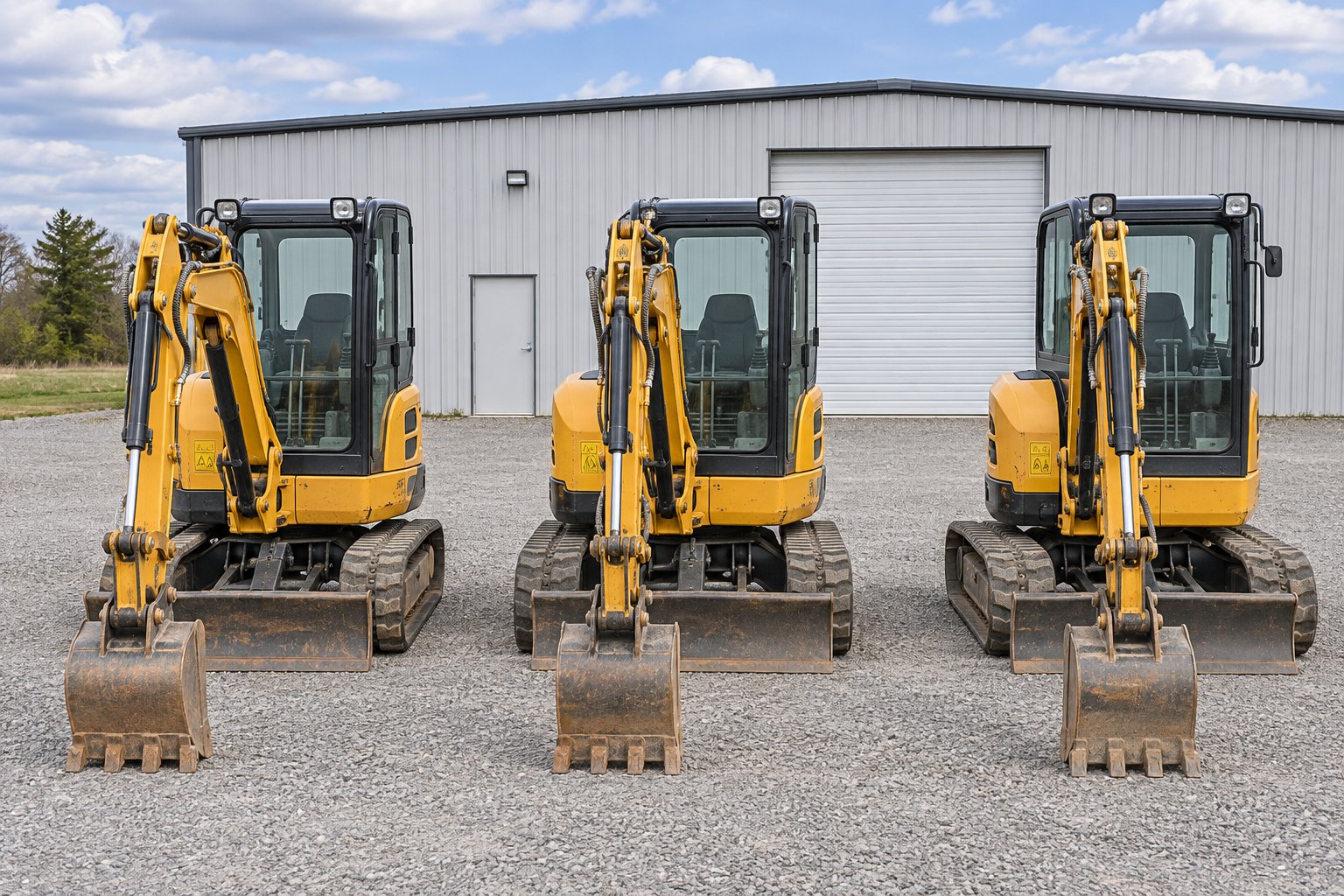
The good news? Inventory for the 305 mini excavator and related Cat compact models is robust. MachineryTrader alone lists 267+ Cat 305 units at any given time, spanning every variant from the 305C through the current generation. The challenge isn't scarcity — it's filtering through that volume to isolate the specific 305D CR you want at the right hours, condition, and price point.
Online Marketplaces for Used Cat Equipment
Several established platforms dominate the used construction equipment market, each offering a different mix of listing volume, buyer tools, and transaction support. If you're serious about finding a caterpillar mini excavator for sale in this weight class, casting your net across multiple platforms simultaneously gives you the best shot at surfacing the right unit before another buyer claims it.
Here are the primary marketplaces worth monitoring, ranked by listing volume and relevance for Cat compact excavators:
- MachineryTrader — The largest online marketplace for heavy and compact equipment in North America. With hundreds of Cat 305 listings active at any time, it offers robust search filters for model, year, hours, price range, and location. Both dealer and private listings appear here, so verify the seller type before engaging. The platform's sheer volume makes it the best starting point for establishing a realistic market price range.
- TractorHouse — Operated by the same parent company as MachineryTrader but historically stronger in agricultural and compact equipment categories. You'll find overlap in listings, but TractorHouse occasionally surfaces units from farm equipment dealers and rural sellers that don't appear on construction-focused platforms. Worth checking for cat 305 cr mini excavator units coming out of agricultural service — these machines often carry lower hours and gentler use profiles than construction-worked units.
- Equipment Trader — A consumer-friendly platform with strong search functionality and photo-heavy listings. It caters to a broad buyer base including owner-operators and small contractors, which means pricing on listed units sometimes reflects retail rather than wholesale values. Useful for comparing asking prices and spotting well-photographed units where you can evaluate cosmetic condition before scheduling an in-person visit.
- IronPlanet (Ritchie Bros.) — An online auction platform backed by the world's largest industrial auctioneer. IronPlanet provides detailed inspection reports, IronClad Assurance guarantees on many listings, and a timed auction format that often produces competitive pricing. Industry data suggests auction pricing runs 20 to 40 percent lower than dealer retail, making this platform attractive for budget-conscious buyers comfortable with the as-is nature of auction purchases.
- Cat Used (catused.cat.com) — Caterpillar's own certified used equipment platform. Listings here come exclusively from authorized Cat dealers, which means higher confidence in model identification, service history, and machine condition. The tradeoff is pricing — dealer-listed units on Cat Used typically carry a premium over private or auction alternatives. For buyers who want the peace of mind that comes with dealer-backed transactions and verified machine identity, it's an excellent resource.
- Facebook Marketplace and Craigslist — Lower-volume sources but occasionally surface private-sale 305D units at below-market prices. These platforms carry the highest buyer risk — no inspection reports, no transaction protections, and a higher likelihood of encountering misidentified models or undisclosed problems. Approach with thorough due diligence and never send money without verifying the machine in person.
Setting up saved searches and email alerts on the top three or four platforms ensures you're notified the moment a 305D matching your criteria hits the market. In competitive regions, desirable low-hour units can sell within days of listing — speed matters when a well-priced machine appears.
Used Equipment Dealers Specializing in Caterpillar Excavators
Online marketplaces give you breadth, but working with a dealer who specializes in used Caterpillar equipment adds depth. A knowledgeable dealer can match the right model, configuration, and budget to your project requirements — they understand the differences between a 305D CR and a 305.5E2, can advise on which features matter for your application, and often have access to inventory that hasn't been listed publicly yet.
Authorized Cat dealers with used equipment divisions are the obvious starting point. They typically offer reconditioning, short-term warranties, and financing options that private sellers can't match. Certified dealer pricing runs approximately 5 to 10 percent higher than auction prices, reflecting the value of professional inspection, reconditioning, and post-sale support. For less experienced buyers, that premium often represents worthwhile insurance against the kinds of costly mistakes that turn bargains into budget disasters.
Beyond the authorized network, independent dealers specializing in used compact equipment are worth exploring. JIUHONG, for example, maintains a used Caterpillar excavator inventory where contractors and fleet buyers can browse both compact and larger Cat models, compare configurations, and contact their sales team to discuss specific needs — including the 305D. Because dealer inventory changes frequently, exact availability for any particular model should be confirmed directly with their team. Treat JIUHONG as one resource among several in your search, not the sole channel. The goal is to work multiple dealer contacts simultaneously, just as you'd monitor multiple online platforms.
When evaluating any dealer — authorized or independent — ask these qualifying questions before committing: Do they provide a written condition report? Will they allow an independent third-party inspection? Can they verify the machine's serial number and confirm its exact model designation? Do they offer any return period or warranty, even a limited one? Dealers who welcome scrutiny typically have nothing to hide. Those who resist transparency are telling you something important.
Tips for Getting the Best Deal
Finding a listing is the starting line, not the finish. The difference between an average purchase and a great one comes down to how you negotiate, verify, and close. Whether you're tracking a cat 303 for sale in a lighter weight class or pursuing the 305D as your primary target, these practical strategies apply universally across the used equipment market:
- Set alerts on at least three platforms simultaneously. Relying on a single marketplace limits your options and eliminates the competitive leverage that comes from having alternatives. When a seller knows you're comparing their unit against four others, negotiation dynamics shift in your favor.
- Compare a minimum of three to five similar units before making an offer. Document the hours, condition, features, and asking price of each. This comparison builds a factual basis for your negotiations — you can point to specific listings to justify a lower offer rather than guessing at what's fair.
- Verify every claim independently. "Low hours" means nothing without meter verification. "New tracks" means nothing without receipts. "Serviced regularly" means nothing without records. Sellers make claims; documentation proves them. Trust, but verify — every single time.
- Request a professional third-party inspection before committing. Budget $300 to $500 for an independent inspector, especially on private sales and out-of-state purchases. That investment catches problems that photos and phone conversations miss — and it provides leverage to renegotiate if issues surface. As equipment buying research emphasizes, skipping inspection is gambling with tens of thousands of dollars.
- Factor in the total cat excavator price, not just the sticker number. Transport costs, tax implications, registration or titling fees, and any immediate repairs needed all add to your actual out-of-pocket. A 305D listed at $32,000 that needs $4,000 in tracks and costs $1,500 to ship is really a $37,500 machine. Build that complete number before you commit.
- Shop off-season when possible. Late fall and winter listings in northern markets tend to carry softer pricing as construction activity slows and sellers become more motivated. Buying in December and storing the machine until spring can save 5 to 10 percent compared to competing with other buyers during the spring rush.
- Don't chase the cheapest listing. The lowest price in any search results often signals deferred maintenance, hidden damage, or a misidentified model. The machine priced slightly above the bottom — with documentation, a clear title, and transparent seller communication — almost always delivers better long-term value.
- Confirm title clarity and lien status before sending any deposit. A lien search through your state's UCC filing database costs almost nothing compared to the risk of buying a machine with outstanding financial obligations attached to it.
Whether you're evaluating a cat 309 for sale at the heavier end of the compact range or zeroing in on a 305D as your ideal fit, the discipline of searching broadly, comparing rigorously, and verifying thoroughly protects your investment in ways that no single platform or seller relationship can. The used equipment market rewards prepared buyers — and every section of this guide has been designed to make sure you're one of them.
Frequently Asked Questions About the Cat 305D
1. How much does a used Cat 305D cost?
Used Cat 305D pricing depends heavily on machine hours and overall condition. Units under 2,000 hours typically range from $45,000 to $58,000, while machines in the 2,000 to 4,000 hour bracket fall between $32,000 and $46,000. Higher-hour units (4,000 to 6,000 hours) generally list at $22,000 to $35,000, and machines over 6,000 hours can drop to $12,000 to $24,000. Geography and season also influence pricing — spring demand in construction-heavy regions pushes values higher, while winter listings in northern markets often carry softer asking prices. Always compare at least three to five similar listings and verify hours against visible wear before accepting any price as fair.
2. What engine does the Cat 305D use?
The Cat 305D CR is powered by a Mitsubishi S4Q2 naturally aspirated four-cylinder diesel engine producing 42 net horsepower (31 kW) from 2.5 liters of displacement. Unlike the turbocharged S4Q2-T found in the slightly larger 305.5D CR, this naturally aspirated variant offers simpler maintenance and eliminates turbo-related failure points — a practical advantage when purchasing used. The engine feeds a load-sensing hydraulic system delivering 31.7 gallons per minute at 2,400 rpm, which efficiently powers digging, swinging, and auxiliary attachment circuits.
3. What is the difference between a Cat 305D and a Cat 305E?
The Cat 305D and 305E represent different generational engineering platforms within Caterpillar's 5-ton mini excavator lineup. The 305D belongs to the D-series generation (produced roughly mid-2000s to early 2010s) and runs a Mitsubishi S4Q2 naturally aspirated diesel. The 305E and subsequent 305E2 CR belong to the E-series, which incorporated updated emissions compliance, revised powertrains, and efficiency improvements. These models are not interchangeable — they carry different engine specifications, hydraulic ratings, operating weights, and parts compatibility. Buyers should always confirm the exact model designation on the machine's serial plate rather than relying on listing descriptions.
4. What jobs is the Cat 305D best suited for?
The Cat 305D CR excels in residential and light commercial excavation, utility installation, landscaping, and small-scale demolition. Its compact radius tail swing and 6 ft 6 in transport width allow it to navigate tight residential lots, fenced backyards, and urban work zones where larger machines cannot operate. With a maximum dig depth of 12 ft 1 in using the long stick, it covers virtually all standard utility burial requirements for water, sewer, electrical conduit, and fiber optic lines. Attachment versatility — including buckets, hydraulic thumbs, augers, and breakers — extends its capability into pond digging, post hole drilling, concrete removal, and agricultural drainage work.
5. What should I inspect before buying a used Cat 305D?
Focus your inspection on the three highest-cost failure areas: undercarriage, engine, and hydraulic system. Check track condition for missing lugs, cracks, or exposed cords on rubber tracks. Spin rollers and idlers to verify smooth rotation without grinding or seal leakage, and examine sprocket teeth for hooked or sharpened profiles indicating wear. Perform a cold start to assess cranking time and exhaust smoke color — persistent white smoke suggests coolant intrusion, blue indicates oil burning, and black points to fuel system issues. Fully extend every hydraulic cylinder and inspect for rod pitting or scoring, then operate all functions to check for slow response or drift. Dealers like JIUHONG (jiuhong-machinery.com) and authorized Cat used equipment divisions can assist with model verification and condition reports, though hiring an independent third-party inspector for $300 to $500 remains the most reliable safeguard.