

Meet the Cat 302 Mini Excavator
When you search for a cat 302 for sale, every listing looks promising. Sharp photos, competitive-sounding prices, and a spec sheet that seems to check every box. The problem? Marketplace listings are built to sell, not to educate. They rarely explain whether the machine actually fits your project, what a fair price looks like for its condition, or which details separate a solid deal from a costly mistake.
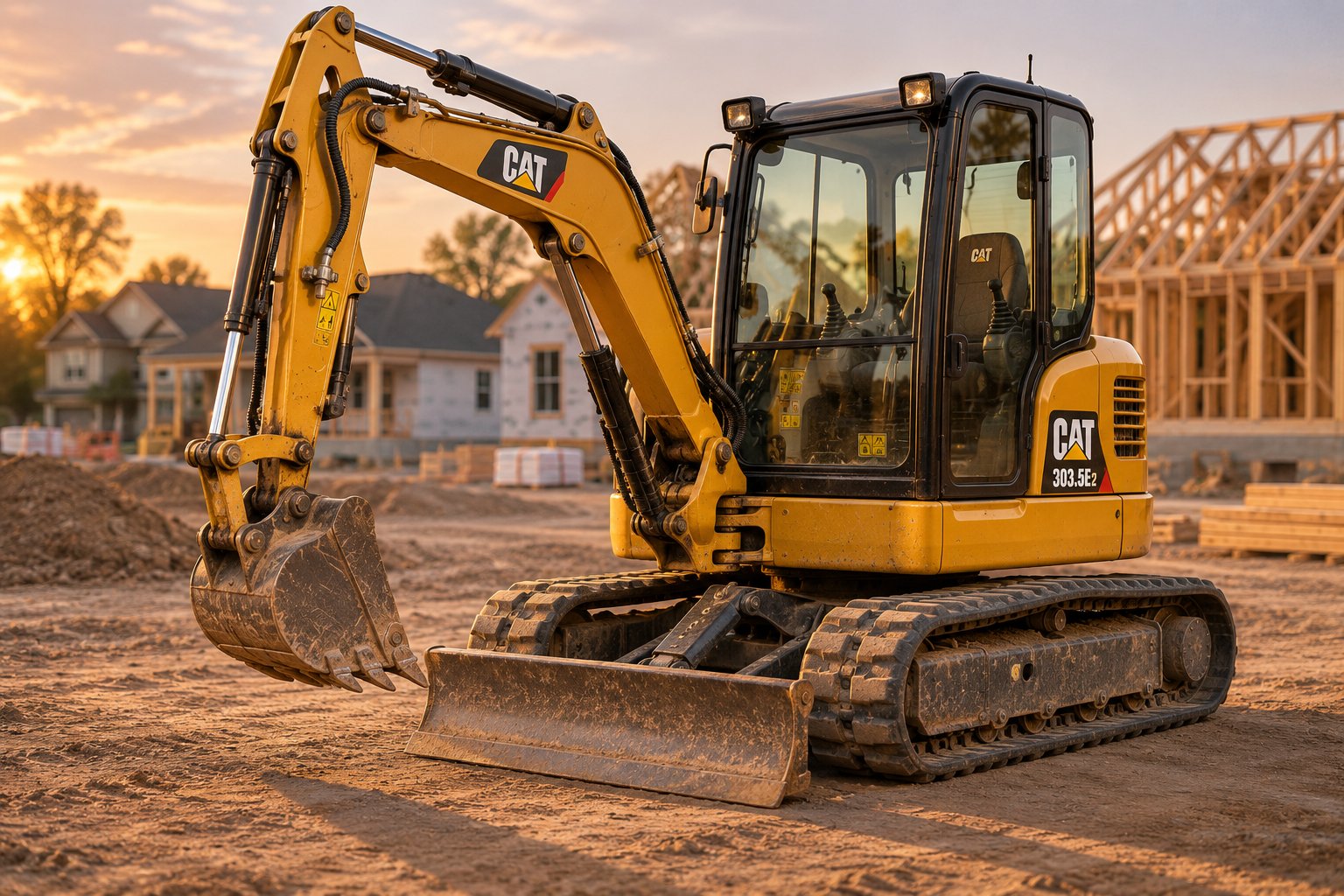
The Cat 302 sits in Caterpillar's 1-to-2 metric ton mini excavator class, a sweet spot that has made it one of the most popular compact excavators on jobsites across North America. With its compact-radius design, retractable undercarriage, and a surprisingly spacious cab for a machine this size, the 302 delivers serious versatility in a small footprint. Contractors, landscapers, plumbers, and utility crews all rely on it for tight-access digging, grading, and trenching where larger equipment simply cannot reach.
Why the Cat 302 Remains a Top Choice for Compact Jobsites
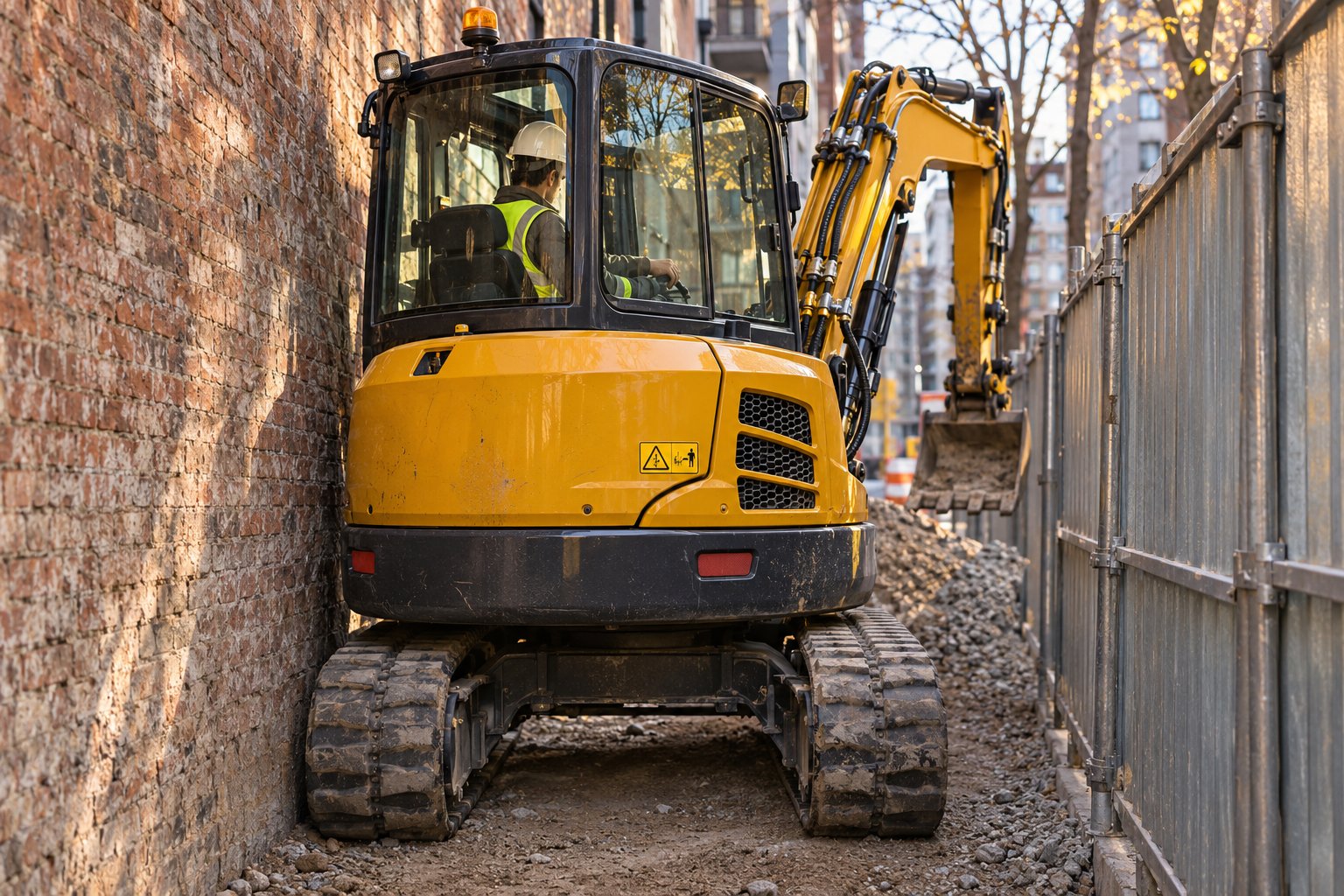
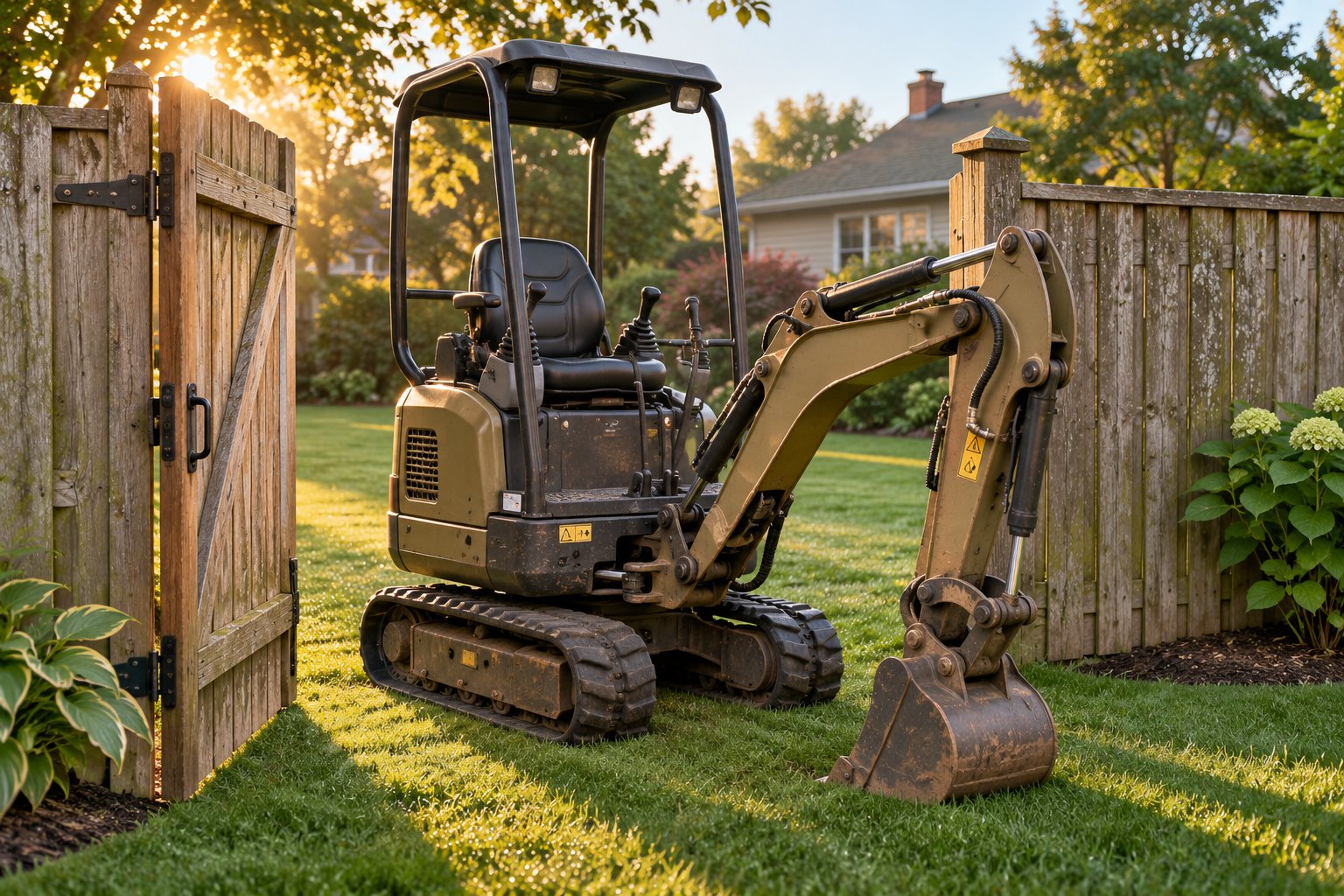
Imagine squeezing an excavator through a backyard gate, setting it up next to a residential foundation, and trenching a sewer line without tearing up the entire property. That is exactly the kind of work the Cat 302 was designed for. Residential construction crews use it for footings and drainage work. Landscapers rely on it to reshape grades, install retaining walls, and excavate planting beds. Plumbing and electrical contractors put it to work digging utility trenches in developed neighborhoods where space is tight and surface damage must stay minimal. Even small commercial projects benefit from its combination of dig depth, maneuverability, and easy transportability. Caterpillar's compact excavator lineup starts with micro models and scales up through the 300 series, but the 302 class consistently draws buyer attention because it balances capability with accessibility better than nearly any machine in its range.
What This Guide Covers and Who It Helps
This guide is written for the buyer who knows a caterpillar mini excavator for sale could be the right investment, but wants more than a glossy listing to base that decision on. You'll find the practical research that marketplace sites leave out entirely, organized to walk you from initial understanding through a confident purchase:
- Model variants - the differences between the 302 CR, 302.5, and 302.7 that listings rarely clarify
- Specifications that matter - what each key spec means for your actual project work
- Pricing context - the variables that drive used-market prices up or down
- Inspection checklist - a structured, mini-excavator-specific walkthrough for evaluating any used unit
- Buying channels - an honest comparison of dealers, auctions, online platforms, and specialized sellers
- Total cost of ownership - the full financial picture beyond the sticker price
Whether you are a cat mini excavator for sale first-timer or a seasoned operator adding to a fleet, the goal here is simple: arm you with enough knowledge to spot value, avoid overpaying, and walk into any negotiation with real confidence. The journey starts with understanding which Cat 302 variant you are actually looking at - because not all 302 models are created equal.
Cat 302 Model Variants and What Sets Them Apart
Not every Caterpillar 302 listing describes the same machine. The 302 family spans multiple sub-variants, each with different operating weights, dig depths, and design generations. Searching for caterpillar mini excavators for sale without understanding these distinctions is a fast track to comparing apples and oranges - or worse, buying a machine that does not match your project requirements.
Let's break down the three main sub-variants you will encounter in marketplace listings so you can zero in on the right one from the start.
Cat 302 CR and 302CR Explained
The letters "CR" stand for Compact Radius, and they describe one of the most important design features in the entire Caterpillar 302 lineup. A compact-radius excavator is engineered so that its tail - the rear counterweight section of the upper structure - stays within or very close to the width of the tracks when the cab swings. On the Cat 302.7D CR, for example, this translates to a true zero tail swing design, meaning the rear of the machine does not extend past the track edges during rotation.
Why does that matter? Picture working next to a building foundation, along a fence line, or in a narrow residential side yard. A conventional tail swing machine forces the operator to constantly monitor the rear overhang, risking contact with walls, vehicles, or other structures every time the cab rotates. A CR model eliminates that anxiety. You can swing a full 360 degrees in tight quarters without worrying about the tail clipping obstacles behind you.
The next-generation 302CR represents Caterpillar's latest compact-radius design in the 2-ton class. It features a 19.2 hp Cat C1.1 engine that meets Tier 4 emissions standards, advanced hydraulic systems for smooth and efficient performance, and standard features like auto engine idle for fuel savings. If you are browsing newer listings and see "302CR" as a single model designation, this is the current-generation machine Caterpillar is producing.
How the 302.5 and 302.7 Differ from the Standard 302
When you see model numbers like 302.5 or 302.7 in a listing, those trailing digits are not random. In Caterpillar's naming convention, higher numbers generally indicate a step up in operating weight, dig depth, and engine output within the same general size class. A Cat 302.5 is a slightly larger and more capable machine than a base 302, and a 302.7 steps up further still.
However, generation changes complicate the picture. The Cat 302.7D CR, for instance, was manufactured from 2014 to 2021 and carries a "D" generation designation. It weighs approximately 2.67 metric tons and delivers a dig depth of about 2.54 meters (roughly 8.3 feet). Its transport dimensions - about 4.26 meters long, 1.57 meters wide, and 2.41 meters tall - keep it well within the range of a standard tag-along trailer. Meanwhile, the next-generation 302CR (without the .7 and D designators) is Caterpillar's current replacement, featuring a redesigned platform with updated hydraulics and electronics.
The Cat 302.5, which you will find primarily in older used listings, slots between the base 302 and the 302.7 in terms of capability. It was a popular model for years among contractors who needed slightly more reach and weight than the smallest 302 offerings but did not require the full capacity of the 302.7 class. If you are comparing a cat 302.5 to a 302.7D CR side by side, expect noticeable differences in operating weight, dig performance, and available features.
The table below provides a general comparison of the three main sub-variants you are most likely to encounter when shopping:
| Sub-Variant | Approximate Operating Weight | Typical Dig Depth | Tail Swing Type | Common Production Years |
|---|---|---|---|---|
| Cat 302 CR / 302CR (Next Gen) | ~2 metric tons | Comparable to 302.7D CR class | Zero / Near-Zero Tail Swing | 2019 - Present |
| Cat 302.5 | ~2.3 - 2.6 metric tons (varies by generation) | Moderate - between base 302 and 302.7 | Varies by configuration (conventional and CR versions existed) | Early 2000s - Mid 2010s (older generation) |
| Cat 302.7D CR | ~2.67 metric tons | ~2.54 m (~8.3 ft) | Zero Tail Swing | 2014 - 2021 |
Note: Exact specifications vary by configuration, optional equipment, and regional market. Always verify numbers against the Caterpillar product data sheet for your specific serial number.
Here is the critical takeaway: a Caterpillar 302.5 listing is not interchangeable with a 302.7D CR listing - and neither is a perfect substitute for the next-generation 302CR. Each represents a different combination of weight class, dig capability, engine technology, and emissions compliance. Before you commit to any machine, verify the exact model designation on the serial plate. Listings sometimes use shorthand like "Cat 302" generically, lumping different variants together. The serial plate tells the real story, and any reputable seller will let you confirm it before money changes hands.
Knowing which variant you are looking at is only half the equation. The other half is understanding what the specifications actually mean for the work you need to do - and whether those numbers align with your project demands, trailer capacity, and budget.
Cat 302 Specifications That Matter for Your Project
Listings love to rattle off numbers - dig depth, operating weight, horsepower - but they almost never explain what those numbers mean for your actual work. Can this machine handle a four-foot footing? Will it fit on your existing trailer? Does the engine have enough muscle to run a hydraulic breaker? Specifications are only useful if you understand how they translate from a data sheet to a jobsite, and that context is exactly what most cat 302 for sale pages leave out.
The table below lays out the key performance specs for the current-generation Cat 302 CR, using official Caterpillar OEM data. More importantly, each row explains why that spec matters to you as a buyer evaluating whether this machine fits your project demands.
Key Performance Specs Every Buyer Should Understand
| Spec Category | What It Measures | Why It Matters to the Buyer | Cat 302 CR Value (OEM) |
|---|---|---|---|
| Operating Weight | Total machine weight including operator, fuel, and standard equipment | Determines trailer requirements, ground pressure on soft surfaces, and overall stability during lifting and digging operations | 4,229 lb (min canopy) to 4,987 lb (max cab) depending on configuration |
| Dig Depth | Maximum vertical distance the bucket can reach below ground level | Tells you whether the machine can handle footings, sewer lines, or utility trenches at the depths your project requires | 93.3 in (standard stick) / 101.2 in (long stick) |
| Net Engine Power | Usable horsepower available at the flywheel after parasitic losses | Affects digging force, hydraulic responsiveness, and the ability to power attachments like breakers or augers | 21 hp (15.7 kW) - Cat C1.1 engine at 2,400 rpm |
| Bucket Digging Force | Maximum breakout force the bucket can generate | Indicates how well the machine handles compacted soil, clay, or light rock without bogging down | 4,406.3 lbf (19.6 kN) |
| Tail Swing Radius | Distance the rear of the upperstructure extends beyond the track edge during rotation | A smaller tail swing means safer operation near walls, fences, and parked vehicles - critical on residential and urban sites | 29.5 in (750 mm) |
| Blade Width | Width of the front-mounted dozer blade | Determines grading and backfill capability; expandable undercarriage models offer wider blade coverage | 42.9 in (retracted) / 55 in (expanded) |
| Maximum Reach at Ground Level | Farthest horizontal distance the bucket tip can reach while at grade | Defines how far the machine can work from a stationary position - important for ditch work and loading trucks from a set spot | 159.1 in (standard stick) / 165.7 in (long stick) |
| Maximum Dump Clearance | Highest point at which the bucket can dump material | Determines whether you can load a standard dump truck or only low-sided trailers | 100.8 in (standard stick) / 103.9 in (long stick) |
| Ground Pressure | Weight per unit area the tracks exert on the surface beneath them | Lower ground pressure means less damage to finished lawns, driveways, and soft terrain | 3.4 psi (min weight) to 3.9 psi (max weight) |
A few of these numbers deserve extra context. The dig depth difference between the standard stick (93.3 inches) and the optional long stick (101.2 inches) is roughly eight inches - that gap decides whether you can reach the bottom of a typical residential sewer-line trench without repositioning. If your work regularly involves depths beyond seven feet, the long stick configuration is worth targeting in your search, and it adds only about 18 pounds to the machine's total weight.
Bucket digging force at 4,406 lbf is another number that carries practical weight. Imagine pushing the bucket into hard-packed clay at the bottom of a footing excavation. A machine with weak breakout force stalls, slips its tracks, or forces you to take shallow, time-consuming passes. The 302 CR's hydraulic system - a load-sensing setup with a variable displacement piston pump flowing 17.4 gpm at 2,400 rpm - delivers consistent force through the full working range. Pair that with 3,553 psi of equipment operating pressure, and you have a machine that punches well above its weight class.
Ground pressure is one of the most overlooked specs on any listing. At 3.4 to 3.9 psi, the 302 CR exerts less surface pressure than most adults standing on one foot. That makes it viable for finished landscapes, turf areas, and sites where surface damage translates directly into repair costs and unhappy property owners.
Transport Dimensions and Trailer Requirements
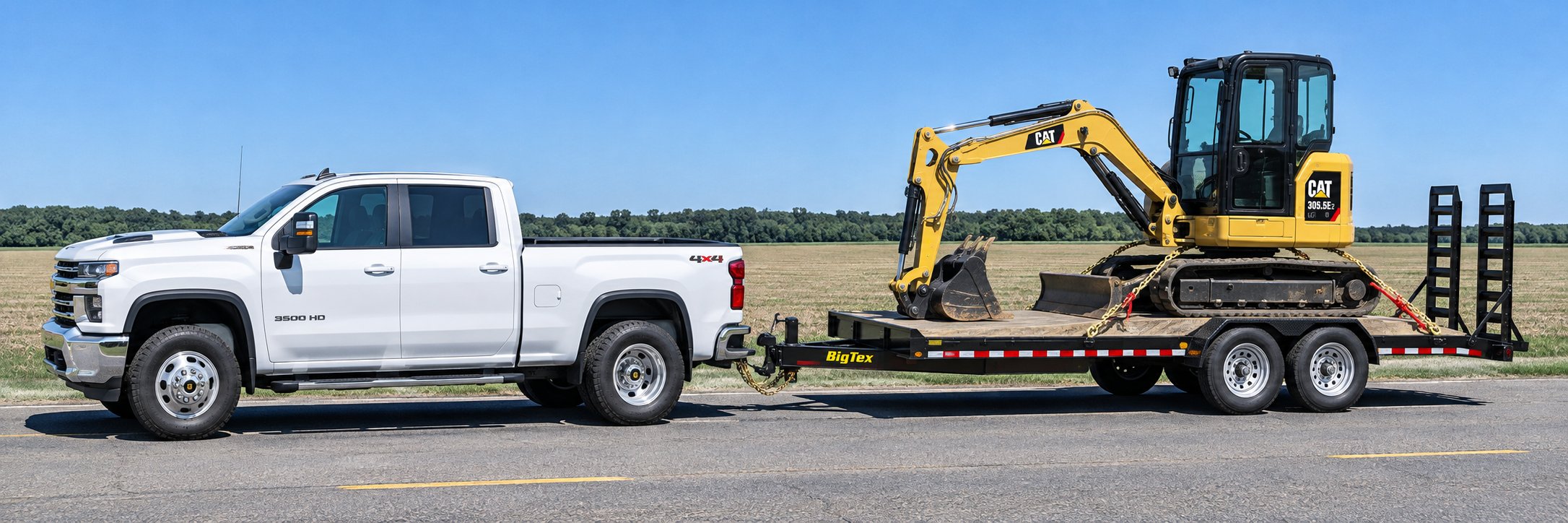
Here is where the Cat 302 class earns a practical advantage that bigger mini excavators simply cannot match: it fits comfortably on a standard tag-along equipment trailer towed behind a one-ton truck.
The 302 CR's overall shipping length comes in at roughly 152.8 to 153.5 inches (depending on stick configuration and blade position), which is just under 12 feet 10 inches. Its overall shipping height sits at 90.6 inches - about 7 feet 6 inches - and its track width ranges from 42.9 inches retracted to 55.12 inches expanded. Those dimensions mean the machine can ride on a tandem-axle equipment trailer in the 14-to-18-foot deck range without requiring oversize permits, pilot cars, or specialized hauling equipment.
Weight matters just as much as footprint for transport planning. Even in its heaviest configuration (cab, steel tracks, expandable undercarriage, long stick), the 302 CR tops out under 5,000 pounds. A typical 14,000-lb GVWR tandem-axle trailer carries an empty weight of roughly 2,500 to 3,500 pounds, leaving plenty of usable payload for the machine plus a few buckets or attachments. Many contractors tow this setup daily with a Ford F-350, Ram 3500, or Chevy 3500 without approaching the combination's legal weight limits.
The retractable undercarriage feature adds another transport-friendly detail. With tracks retracted to their narrowest setting (42.9 inches), the machine clears standard gates, alley entrances, and narrow trailer decks. Once on site, you expand the tracks to the full 55.12-inch width for greater stability during digging. That dual-width capability is something buyers searching for a cat 302.7 for sale should compare carefully - not every variant in the 302 family offers the same expandable track option.
If you are evaluating a cat 301.5 for sale alongside the 302 CR, the smaller machine will be lighter and narrower, but it sacrifices dig depth, reach, and digging force. Conversely, stepping up to a 302.7 CR adds roughly 1,700 pounds of operating weight (approximately 6,725 lb) and increases dig depth to about 106.7 inches, but it may push your trailer and tow vehicle closer to their limits. The 302 CR sits in a transport-friendly middle ground that keeps logistics simple and costs predictable.
Specs on paper tell you what a machine can do. The price you pay, however, depends on condition, configuration, and market timing - factors that vary wildly across the used equipment landscape and rarely show up in a listing's headline number.
Pricing Context and What Affects Cat 302 Market Value
You have found a cat 302 excavator listed at $18,000. Another one - same model year, same general description - is listed at $47,000. Both sellers call their machine a "great deal." So which one is actually priced fairly, and which one is hiding something behind a number that looks too good or too steep?
Used Cat 302 listings span a remarkably wide range. Browsing marketplace sites, you will find machines priced from the low teens all the way into the upper $50,000 range for late-model, low-hour units with premium configurations. That spread is not random. It reflects a set of specific variables that compound on top of each other - and once you understand how those variables interact, you can look at any listing price and immediately gauge whether it makes sense.
What Drives Price Differences in Used Cat 302 Listings
Think of every used cat 302 mini excavator as a combination of scored categories. No single variable determines the price. Instead, multiple factors stack together to push a machine's value up or down. Here are the primary drivers:
- Year of manufacture - Newer machines command higher prices, but the relationship is not linear. A 2020 model does not cost twice as much as a 2015 model. The sharpest value drops happen in the first few years, then level off. Generation matters too - a next-gen 302CR with updated hydraulics and electronics carries a premium over an older-platform 302.7D CR, even at similar ages.
- Accumulated engine hours - This is the single most reliable indicator of how much useful life remains. A machine with 500 hours tells a very different story than one showing 4,500 hours, even if both are the same model year. Hours interact with age: a five-year-old unit with 600 hours (a weekend-use or rental-reserve machine) will price significantly higher than a five-year-old unit with 3,000 hours of continuous commercial use.
- Cab type and operator environment - An enclosed cab with air conditioning, heat, and a radio adds meaningful value over an open canopy or a bare ROPS-only configuration. Enclosed-cab units consistently command premiums because they extend the working season into extreme heat and cold, improve operator retention on crews, and appeal to a broader resale market down the road.
- Attachment packages - A machine listed with a hydraulic thumb, quick coupler, and two or three extra buckets is worth noticeably more than a bare unit with a single digging bucket. According to Ironmart's 2026 mini excavator appraisal guide, a quality quick coupler alone can add $2,000 to $4,000 in resale value, while a hydraulic thumb adds $3,000 to $6,000 depending on condition.
- Undercarriage condition - Tracks, rollers, sprockets, and idlers represent some of the most expensive wear components on any excavator. A machine with 70% track life remaining is worth substantially more than one approaching end-of-life on its undercarriage, where replacement costs can run $2,500 to $4,000 or more.
- Geographic region - Equipment prices fluctuate by location. Areas with booming residential construction or major infrastructure projects tend to have higher demand, which drives prices up. Conversely, regions experiencing construction slowdowns may see more inventory than buyers, creating opportunities for lower purchase prices. Seasonal timing plays a role as well - mini excavators typically sell faster in spring and summer, so winter listings may carry a 5 to 10 percent discount to attract buyers.
Every one of these variables is something you can verify before making an offer. The problem is that most listings highlight just one or two favorable details - low hours or a recent model year - while glossing over the factors that justify a lower price. Your job as a buyer is to evaluate the full picture.
Understanding Hour Meters and Depreciation Patterns
If you remember only one number from every listing you review, make it the hour meter reading. Engine hours function like an odometer on a truck - they tell you how hard the machine has worked, and they are the strongest single predictor of remaining component life.
Most mini excavators are engineered for a total service life in the range of 5,000 to 10,000 operating hours before major components like the engine, hydraulic pump, or final drives require overhaul or replacement. Where a specific machine falls within that range depends heavily on maintenance quality and the type of work it has performed. A Cat 302 that spent its life digging residential footings in sandy soil will generally show less wear at 4,000 hours than one that spent the same hours breaking through compacted clay or working demolition sites.
Depreciation follows a predictable curve that every buyer should understand. Heavy equipment - excavators included - typically loses roughly 20 to 25 percent of its value in the first year after purchase. After that initial steep drop, the rate slows to approximately 5 to 10 percent annually, gradually flattening as the machine ages. Data from Five Star Equipment's depreciation analysis confirms that a well-maintained excavator can still retain around 50 to 60 percent of its original value after five years.
Here is what that curve means in practical terms for buyers shopping the used market:
| Hour Range | Typical Market Position | Buyer Considerations |
|---|---|---|
| Under 1,000 hours | Premium pricing - these machines are considered low-hour units | Expect to pay a significant premium, but the machine likely has the vast majority of its useful life ahead. Verify complete service records to confirm the hours are genuine. |
| 1,000 - 3,000 hours | The value sweet spot for many buyers | The steepest depreciation has already occurred, but the machine still has substantial service life remaining. This range often delivers the best balance of price and remaining capability. |
| 3,000 - 5,000 hours | Mid-life machines with moderate pricing | Thorough inspection becomes critical. Hydraulic pump wear, undercarriage condition, and pin-and-bushing play should be evaluated carefully. Budget for near-term maintenance. |
| Over 5,000 hours | Attractively priced but higher risk | Major component overhauls - engine, hydraulic pump, final drives - become increasingly likely. These machines can be good value if priced appropriately and if inspection reveals solid maintenance history, but they carry real financial risk if maintenance was deferred. |
A subtle but important detail: hour meters can be tampered with. A machine showing suspiciously low hours for its age, or hours that do not match the wear visible on the controls, seat, and pedals, should raise immediate questions. Cross-referencing the hour reading against service records and the machine's telematics data (if equipped with Cat Product Link or a similar system) helps verify authenticity. A 10-year-old cat 302 specs sheet showing only 400 hours should prompt you to ask pointed questions about where the machine has been and why it was barely used.
Brands also influence how steeply a machine depreciates. Caterpillar, along with Kubota and a handful of other top-tier manufacturers, tends to hold value better than lesser-known brands in the 3-to-7 year age window. That brand-level resilience is part of what makes the Cat 302 weight class attractive on the resale side - when you eventually sell the machine, it is more likely to command competitive offers than an equivalent-size excavator from a smaller manufacturer.
The financial picture does not end at the purchase price, though. A machine listed at $22,000 with 4,200 hours and a worn undercarriage could easily cost $26,000 or more once you factor in the repairs needed to bring it to reliable working condition. Conversely, a $34,000 machine with 1,800 hours, an enclosed cab, and documented maintenance might be the cheaper option over a three-year ownership window. Separating a genuinely good deal from a deceptively cheap one requires looking past the sticker price - and that means knowing exactly what to inspect before you commit.
Used Cat 302 Inspection Checklist Before You Buy
A sharp listing photo and an attractive cat 302 price mean nothing if the machine is hiding a worn-out undercarriage, leaking cylinders, or sloppy pin joints behind the fresh paint. The gap between a profitable purchase and a five-figure repair bill almost always comes down to what you catch - or miss - during a hands-on inspection. Most buyers spend less than fifteen minutes looking at a machine before deciding. Experienced equipment appraisers spend one to two hours, armed with measuring tools, a flashlight, and a systematic checklist that leaves nothing to guesswork.
This inspection framework is tailored specifically to mini excavators in the Cat 302 class. Whether you are evaluating a next-gen 302CR, a 302.5 cat excavator from an older generation, or a 302.7D CR with mid-range hours, these checks apply across the board. Print this section out or pull it up on your phone at the seller's yard - it is your best insurance policy against a bad deal.
Undercarriage and Track Condition
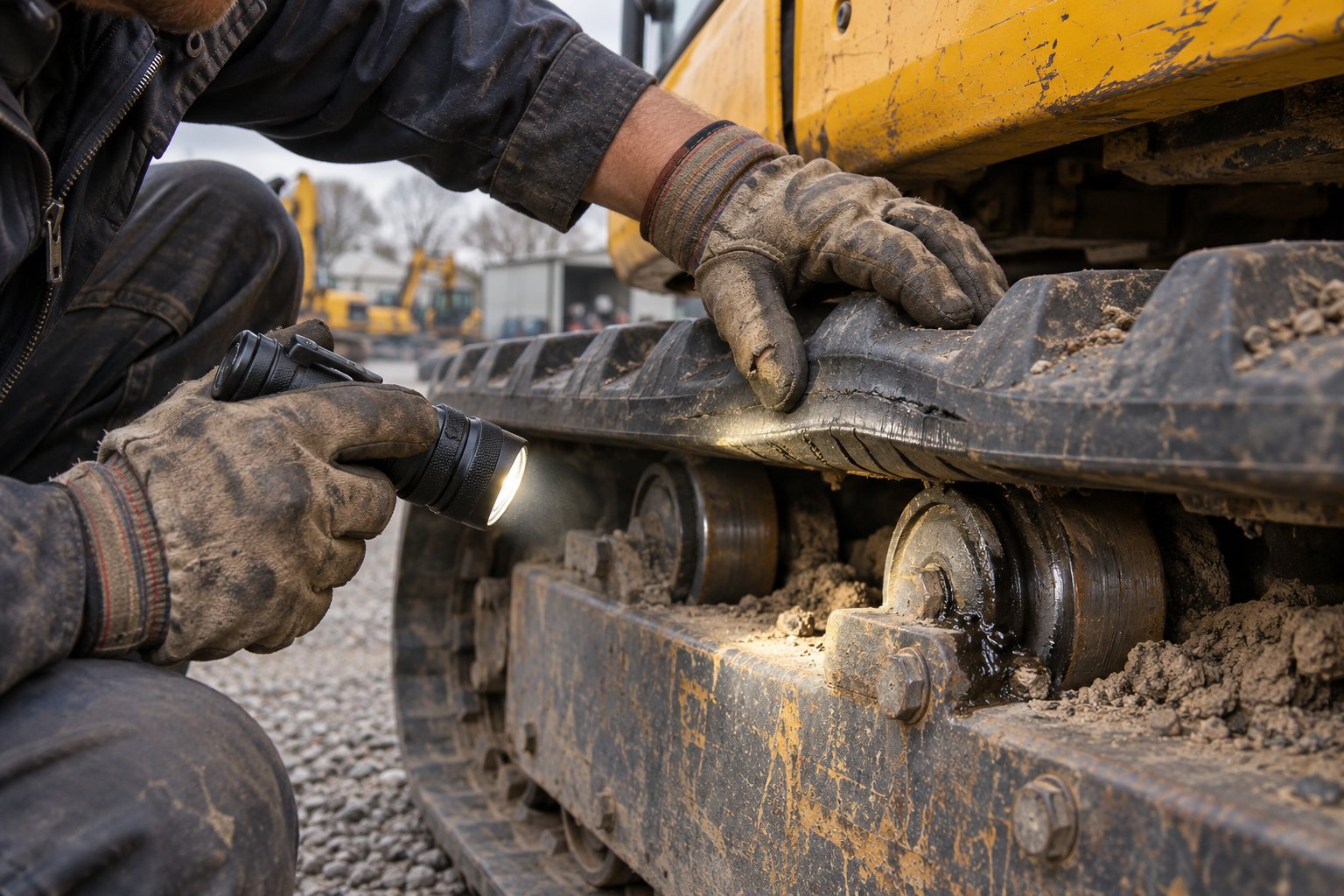
If you only inspect one system on any mini cat excavator for sale, make it the undercarriage. Industry professionals consistently note that undercarriage components account for roughly half of a tracked excavator's total lifetime maintenance cost. On a compact machine like the Cat 302, a full undercarriage replacement - tracks, rollers, sprockets, and idlers - can easily run $2,500 to $4,000 or more, which is a significant percentage of the machine's total value at higher hours.
Start with track sag. With the machine on flat, level ground, measure how much the track droops between the top carrier roller and the front idler. Excessive sag can indicate stretched track chains or internal pin and bushing wear. Compare your measurement against the tension specifications in the operator's manual - every Cat model has a published allowable sag range. If the tracks look suspiciously tight, count the number of links. As professional equipment appraisers warn, some sellers remove a link to mask stretched chains - a short link count is a red flag, not a feature.
Move to the rollers. Guide rollers (bottom) and carrier rollers (top) should spin freely without excessive side-to-side wobble. Look for oil seeping from roller seals - that indicates a blown seal and imminent roller failure. Run your hand along the sprocket teeth at the rear of the machine. Pointed, hook-shaped teeth signal heavy wear. Healthy sprocket teeth have a flat or slightly rounded profile. Finally, check the front idler for cracks, scoring, and smooth rotation. A seized or damaged idler creates uneven track wear that accelerates the deterioration of every other undercarriage component.
One additional detail for rubber-track variants common on lighter Cat 302 configurations: inspect the rubber for cracking, missing lugs, and exposed steel cords. Rubber track replacement is less expensive than steel, but a badly worn set still represents a meaningful cost that should factor into your negotiation.
Hydraulic System and Cylinder Inspection
Hydraulics are the lifeblood of every excavator. A tired pump, a weeping cylinder seal, or contaminated fluid can quietly erode a machine's productivity and leave you facing repair bills that rival the caterpillar mini excavator price you paid for the whole unit.
Begin your hydraulic inspection with the machine cold - ideally first thing in the morning before anyone has warmed it up. Crawl around the underside and look for puddles, drips, or wet streaks anywhere along hose runs, fittings, and the hydraulic pump housing. Small seeps at hose connections are relatively inexpensive to fix. Drips originating from the pump body itself suggest internal wear that could mean a full pump replacement - a repair that can cost $12,000 to $15,000 on larger machines and several thousand even on compact units.
Next, examine every cylinder rod on the machine: boom, stick, bucket, and blade. Wipe each rod clean with a rag, then cycle the cylinder slowly through its full stroke. Watch for fresh oil appearing on the rod surface after it extends. Visible weeping at the rod seal indicates the packing is failing. A single cylinder reseal on a boom or stick cylinder can run around $2,500, so multiply that figure if you see multiple cylinders leaking.
Perform a drift test to evaluate internal cylinder condition. Raise the boom with a loaded bucket, then shut the engine off. Mark a reference point on the cylinder rod and wait five minutes. Some drift is normal - hydraulic systems are not perfectly sealed. But rapid or excessive drift suggests worn packing or internal bypass within the valve body. This test is standard practice in professional pre-purchase inspections and is one of the quickest ways to expose hidden hydraulic issues.
While you are checking hydraulics, pull the dipstick or sight glass on the hydraulic tank. Healthy fluid is clear with a golden or amber tint. Milky or foamy fluid signals water or coolant contamination - a condition that damages pumps, valves, and cylinders from the inside out. Many appraisers consider contaminated hydraulic fluid a walk-away condition because the damage may have already spread throughout the entire system.
Boom, Stick, and Swing Bearing Checks
Structural integrity separates a machine with years of productive life ahead from one that has been worked past its limits. Cracks, worn pins, and a degraded swing bearing are expensive problems that sellers rarely volunteer.
Walk the full length of the boom and stick, examining every weld seam closely. Look for hairline cracks, especially at high-stress junction points where the boom meets the stick and where cylinder mounts attach to the main structure. Any area where a plate has been welded over an existing crack is a major red flag - it indicates the machine experienced stress beyond its design parameters. As one industry appraiser notes, structural cracks can reduce a machine's value by roughly 20%, and on smaller excavators, they often signal abuse severe enough to warrant walking away entirely.
Pin-and-bushing play is your next target. With the engine off and the boom lowered so the bucket rests on the ground, grab the bucket firmly and push it side to side, then pull it toward you and push it away. You are feeling for excessive movement at each pivot point - the bucket-to-stick connection, the stick-to-boom connection, and the boom-to-frame pins. Tight, well-greased joints show minimal play. Loose, clunking joints indicate a machine that lived a hard, under-greased life, and replacing worn pins and bushings across multiple joints adds up quickly.
Finally, evaluate the swing bearing - the large ring gear that allows the upper structure to rotate on the undercarriage. With the engine running, slowly slew the cab left and right. Listen carefully for grinding, popping, or metallic crunching sounds. A healthy swing bearing operates smoothly and quietly. For a more precise assessment, a magnetic dial indicator placed against the turntable can measure actual play at multiple positions around the bearing. Visible movement on a machine in the Cat 302 weight class generally means wear is well underway, and swing bearing replacement is one of the most labor-intensive and costly repairs on any excavator.
Putting it all together, here is the complete inspection sequence you should follow for every used Cat 302 you evaluate - whether it is a compact-radius next-gen model or an older 302.5:
- Walk-around visual - Circle the machine looking for cracks, weld repairs, dents, fluid puddles, and overall condition indicators.
- Undercarriage measurement - Check track sag, link count, roller condition, sprocket tooth profiles, and idler wear.
- Hydraulic leak check - Inspect all cylinders, hoses, fittings, and the pump housing for leaks with the machine cold.
- Cycle-time test - Run each function (boom, stick, bucket, swing, travel) through its full range and time the cycles. Compare against published specs for sluggish performance.
- Pin and bushing play - With the engine off, physically check each pivot joint for excessive looseness or clunking.
- Swing bearing assessment - Slew the cab in both directions listening for grinding or abnormal noise; use a dial indicator if available.
- Engine blow-by test - Remove the oil fill cap with the engine running and check for excessive pressure or smoke escaping the crankcase, which indicates worn piston rings.
- Cab and controls review - Inspect the seat, glass, gauges, joysticks, pedals, and electrical systems. Excessive wear on low-hour machines suggests rolled-back meters.
- Maintenance records review - Request complete service history, ECM hour verification, and ownership documentation. No records is a red flag, not a minor oversight.
A thorough pre-purchase inspection can save thousands in unexpected repair costs. Every worn component you identify and document becomes a negotiation tool - either reducing the price to account for needed repairs, or giving you the confidence to walk away before a problem becomes yours.
This checklist works whether you are standing in a dealer's lot, visiting a private seller's property, or hiring a third-party inspector to evaluate a machine you cannot see in person. The key is discipline: follow every step, document everything with photos, and resist the temptation to skip ahead because the machine "looks good." Plenty of excavators look great on the outside while hiding serious issues underneath - and the sellers know it.
Armed with inspection findings and a clear picture of what repairs a machine might need, the next question becomes where you actually buy. The channel you choose - dealer lot, online auction, private sale, or specialized used equipment dealer - shapes everything from buyer protection to final price.
Where to Find Cat 302 Excavators for Sale
Knowing what to inspect is only half the battle. The other half is knowing where to look - because the channel you buy from affects far more than just the sticker price. It shapes the warranty coverage you receive (or don't), the inspection transparency you can expect, and the negotiation leverage you hold. A cat 302 for sale through an authorized dealer lot carries a fundamentally different risk profile than the same model year listed on an auction platform or a private-party classified ad. Yet most buyers default to whatever platform shows up first in a Google search, without ever weighing the trade-offs.
Here is an honest breakdown of the three main purchasing routes, what each one actually delivers, and where the hidden costs live.
Specialized Used Equipment Dealers
Independent dealers that focus specifically on used Caterpillar and other heavy equipment brands occupy a middle ground that many buyers overlook entirely. These are not general-purpose machinery resellers or auction clearinghouses. They are businesses built around sourcing, evaluating, and reselling used excavators - including compact models like the Cat 302CR and larger units for fleet buyers who need multiple machine classes.
The practical advantage? Curated inventory. Rather than scrolling through hundreds of loosely categorized listings, you browse a collection that has already been filtered for brand, condition, and market relevance. Many specialized dealers also offer direct sales support, meaning you can discuss your specific project requirements, preferred configurations, and budget range with someone who understands the equipment - not just a listing algorithm.
For example, JIUHONG's used Caterpillar excavator collection lets contractors and fleet buyers compare compact and larger Cat models side by side, then contact the sales team to discuss specific configurations and pricing aligned to their project needs. This kind of consultative approach is especially valuable when you are cross-shopping a Cat 302CR against a 305 or 308 and need guidance on which size class actually fits your workload. Note: exact Cat 302 availability should be confirmed directly with the dealer, as specific model listings change frequently.
Pricing at specialized dealers typically falls between the premium of an authorized Cat dealership and the unpredictability of an auction floor. Negotiation flexibility tends to be higher than at OEM-backed lots, and many independent dealers can arrange financing or connect buyers with lending partners. The trade-off is that warranty coverage varies - some offer short-term mechanical warranties, others sell as-is with detailed inspection documentation. Always ask about warranty terms in writing before any deposit changes hands.
Dealer Lots and Certified Pre-Owned Programs
Authorized Caterpillar dealers represent the most structured buying experience in the used equipment market. Their flagship offering is the Cat Certified Used program, which puts qualifying machines through a rigorous multi-point inspection - up to 140 individual checkpoints - performed by factory-trained technicians using genuine Cat parts. Certified units come with Equipment Protection Plans that extend coverage beyond the standard warranty, and they are backed by the full weight of Caterpillar's dealer network for post-sale service and support.
That level of assurance comes at a cost. Dealer pricing on used equipment typically runs 5 to 10 percent higher than comparable machines sold through independent channels, and certified pre-owned programs carry a 10 to 20 percent premium over standard used listings for the same model. For buyers who prioritize peace of mind, documented condition, and access to Cat Financial's leasing and loan products, that premium can be well worth it - especially on higher-value purchases where a hidden defect could cost tens of thousands in repairs.
The limitations? Selection can be narrower at any single dealer location. You are browsing what that dealer has in stock or what appears on the Cat Used online platform, and specific models like the Cat 302CR may not always be available in your region. Negotiation flexibility is also more limited compared to private sellers or independent dealers, since authorized locations operate within pricing frameworks set at the corporate level.
Online Marketplaces and Auction Platforms
Third-party listing aggregators, online auction houses like Ritchie Bros. and IronPlanet, and private-sale platforms (Craigslist, Facebook Marketplace, Equipment Trader) offer the widest selection and the broadest price range. If you want to see every cat mini excavator price point the market has to offer, these platforms are where the volume lives.
The appeal is obvious: more machines, more options, and often lower asking prices than dealer lots. Auctions in particular can produce competitive pricing - though the reality is more nuanced than "auction equals cheapest." Buyer premiums at major auction houses typically add 10 to 15 percent on top of the hammer price, and online bidding fees stack on top of that. A machine that "sells" for $22,000 at auction may actually cost you $24,200 to $25,300 once all fees are factored in.
The real cost of these platforms, though, is reduced buyer protection. Most auction sales are final and sold as-is. Inspection windows are limited - sometimes just one or two days before the sale event - and you are competing against professional buyers and dealers who evaluate equipment for a living. Private-sale platforms offer even less structure: no inspections, no warranties, no recourse if the machine turns out to be different from what was described. Professional third-party inspections, which typically cost $500 to $1,500 according to industry guidance, become essential when buying through these channels.
Private listings also carry fraud risk. Phantom listings using stolen photos, wire-transfer-only payment demands, and title issues (liens, encumbrances, or stolen equipment) are real threats in the online equipment marketplace. Any listing priced 20 to 25 percent below comparable market values should trigger immediate skepticism, not excitement.
The table below puts all three channels side by side so you can match each option to your risk tolerance, budget, and buying experience:
| Buying Channel | Typical Price Level | Buyer Protection | Selection Variety | Negotiation Flexibility | Financing Availability |
|---|---|---|---|---|---|
| Specialized Used Equipment Dealers (e.g., JIUHONG) | Moderate - competitive with market | Varies by dealer; inspection documentation and short-term warranties often available | Curated, brand-focused inventory; compact and larger models | High - direct negotiation with sales team | Often available through dealer or lending partners |
| Authorized Cat Dealers / Certified Pre-Owned | Higher - 5-20% premium over independent market | Strong - up to 140-point inspections, Equipment Protection Plans, OEM-backed warranties | Limited to dealer stock and Cat Used platform | Lower - structured pricing frameworks | Yes - Cat Financial and dealer financing programs |
| Online Marketplaces and Auctions | Variable - potentially lowest base price, but buyer premiums add 10-15% | Minimal - most sales are as-is, no warranties; third-party inspection recommended ($500-$1,500) | Widest - thousands of listings across platforms | Mixed - auctions are fixed at hammer price; private sales are highly negotiable | Limited - some auction platforms offer financing; private sales typically require cash or pre-arranged lending |
No single channel is universally "best." A first-time buyer with limited inspection experience may find the warranty protections at an authorized Cat dealer worth every penny of the premium. A seasoned contractor who can evaluate a machine in fifteen minutes and negotiate confidently might extract the best value from a private sale or specialized dealer. Fleet buyers comparing multiple models and configurations often benefit most from working with a focused dealer like JIUHONG, where the sales team can match machines to project requirements rather than leaving you to filter through hundreds of generic listings alone.
Whatever route you choose, the inspection checklist from the previous section applies everywhere. A dealer warranty is valuable, but it does not replace your own due diligence. An auction bargain is only a bargain if the machine checks out mechanically. The channel determines your starting position - your preparation determines the outcome.
The purchase price, of course, is just the first line item on a much longer financial statement. Transport, insurance, maintenance, fuel, attachments, and eventual resale value all factor into what that Cat 302 actually costs you over the months and years you own it.
Total Cost of Ownership for a Used Cat 302
A 302 mini excavator listed at $28,000 might look cheaper than a $32,000 competitor on the next page. But what if the first machine needs $3,500 in undercarriage work within six months, burns through fuel at a higher rate because of an older engine design, and has no documented service history to support its resale value three years from now? Suddenly that "cheaper" machine is the more expensive one. The purchase price is just the entry ticket - total cost of ownership (TCO) is what actually determines whether your investment pays off or drains your margins.
Understanding TCO separates buyers who make profitable equipment decisions from those who chase low sticker prices and end up spending more in the long run. For anyone evaluating a cat 302 for sale, this framework turns a single-number comparison into a full financial picture that accounts for every dollar the machine will cost - and eventually return - over your ownership window.
New vs. Used Cost Considerations
A brand-new caterpillar 302 mini excavator ships from the factory with a full manufacturer's warranty, the latest Tier 4 Final emissions-compliant engine, updated hydraulic technology, and zero hours on the meter. It also ships with a price tag that reflects all of those advantages. New Cat mini excavators in the 302 class typically carry MSRPs that land significantly above what comparable used units sell for - often double or more the price of a well-maintained machine with a few thousand hours.
Used units flip that equation. You sacrifice the factory warranty and the guarantee of zero prior wear, but you gain dramatic savings on the acquisition cost. The key question is whether those savings actually hold up once you factor in the condition-related expenses that come with a pre-owned machine.
Experienced equipment buyers talk about a "sweet spot" in the used market - machines that have depreciated enough to deliver real savings but are young enough to offer years of productive service before major overhauls become necessary. For mini excavators, that sweet spot generally falls in the 1,000 to 3,000 hour range, where the steepest depreciation has already occurred and major components like the engine, hydraulic pump, and final drives still have substantial life remaining. A 302 cat excavator in this range, paired with documented maintenance records, often represents the strongest value proposition in the entire used market - you pay a fraction of the new price while inheriting a machine that is mechanically broken in but far from worn out.
Beyond that range, the math still works - but the margin for error shrinks. Machines in the 3,000 to 5,000 hour band require more careful evaluation, and anything above 5,000 hours on a mini excavator enters what industry professionals classify as the "high-hour" zone, where component replacement timelines start compressing and inspection diligence becomes non-negotiable.
Maintenance Costs and Parts Availability
One of the strongest arguments for buying within the Caterpillar brand - whether new or used - is the parts and service ecosystem. Cat operates one of the largest dealer and parts distribution networks in the heavy equipment industry, and that infrastructure translates directly into faster parts availability, shorter downtime windows, and more competitive pricing on common service items compared to brands with thinner support networks.
Routine maintenance on a 302 mini excavator follows Caterpillar's published service intervals, which structure preventive care around engine hours rather than calendar dates. The major service categories include:
- Engine oil and filter changes - typically every 250 to 500 hours depending on operating conditions and the specific engine variant. This is the single most frequent scheduled service item and the most important for engine longevity.
- Hydraulic fluid and filter service - fluid condition directly affects pump life, valve performance, and cylinder seal integrity. Hydraulic filters are generally replaced at 500-hour intervals, with full fluid changes at longer intervals based on oil analysis results.
- Air filter replacement - frequency depends heavily on the operating environment. Dusty demolition sites or sandy soil conditions can require replacement far more often than clean residential work.
- Undercarriage maintenance - daily track tension checks, regular cleaning to remove packed debris, and periodic measurement of track, roller, sprocket, and idler wear. As noted in the inspection section, undercarriage components can represent 40 to 60 percent of lifetime owning and operating costs on a tracked machine.
- Greasing pins and bushings - daily greasing at every pivot point is one of the simplest and most impactful maintenance tasks. Skipping it accelerates wear at the boom, stick, and bucket joints and leads directly to the kind of play that devalues a machine at resale.
When evaluating any used machine, always request the complete maintenance history. A seller who can produce a dated, detailed service log - oil changes with hour readings, filter replacements, hydraulic services, and undercarriage measurements - is telling you more about the machine's future reliability than the hour meter alone ever could. Conversely, a machine with no records forces you to assume the worst-case maintenance scenario and price your offer accordingly.
When a Used Cat 302 Becomes a Risk
Every machine reaches a point where the cost of keeping it running begins to outweigh the value it delivers. For mini excavators, that inflection point arrives sooner than many buyers expect. The lighter construction and smaller components in the mini class mean they are generally less economically rebuildable than their medium and heavy counterparts. On a 30-ton excavator, overhauling an engine or replacing a hydraulic pump is routine fleet management. On a 2-ton 302, the same repair can represent 25 to 40 percent of the machine's total market value - a math problem that often tips toward replacement rather than repair.
The major component overhauls most likely to surface in a high-hour ownership window include the engine (worn piston rings, increased blow-by, loss of compression), the main hydraulic pump (reduced flow, slower cycle times, internal leakage), and the final drives (gear wear, seal failure, oil contamination). Industry data suggests most mini excavators are engineered for a total service life of roughly 10,000 to 15,000 hours before a major overhaul becomes likely, but the practical threshold where repair costs start accelerating falls closer to the 5,000 to 6,000 hour mark for machines in this weight class.
Age compounds the risk independently of hours. A low-hour machine that sat unused for years can develop dried seals, corroded fittings, condensation damage in the hydraulic system, and degraded rubber components - problems that do not show up on the hour meter but absolutely show up in repair invoices. A 302 mini excavator with 1,500 hours and a 12-year history of intermittent use may carry more hidden risk than a 4,000-hour machine that was worked steadily and serviced on schedule.
To keep the full financial picture in view, here are the line items every buyer should account for when calculating TCO on a used Cat 302:
- Purchase price - the acquisition cost, including any buyer premiums, auction fees, or dealer documentation fees
- Transport and delivery - trucking or trailer costs to move the machine from the seller's location to your yard or jobsite
- Insurance - equipment insurance premiums, which vary by machine value, usage type, and geographic risk factors
- Annual maintenance - scheduled service costs including oil, filters, hydraulic fluid, greasing supplies, and undercarriage wear items
- Fuel - ongoing operating expense driven by engine efficiency, hours of use per day, and throttle demands of your typical workload
- Attachment purchases - buckets, hydraulic thumbs, quick couplers, augers, or other tools needed to match the machine to your project scope
- Eventual resale value - the amount you can recover when you sell or trade the machine, which offsets the cumulative ownership costs and is directly influenced by maintenance quality and documentation throughout your ownership period
Buyers who run this calculation before committing to a purchase consistently make better decisions than those who fixate on the listing price alone. A well-maintained machine with higher upfront cost frequently delivers lower TCO than a bargain-priced unit that demands immediate repairs and ongoing catch-up maintenance. The sticker price gets you in the door - the TCO number tells you what you will actually spend.
Of course, calculating ownership costs requires accurate information - and that starts with being able to decode the details packed into every listing you review. Abbreviations like ROPS, FOPS, and notations about auxiliary hydraulics or pattern-change valves appear in nearly every cat 302 for sale listing, yet almost none of them are ever explained.
How to Read and Decode Cat 302 Listings
Every 302 excavator listing is packed with abbreviations, spec notations, and shorthand that sellers assume you already understand. ROPS. FOPS. Aux hydraulics. Pattern change valve. Quick coupler ready. These terms appear in nearly every description, yet no marketplace platform bothers to define them. Misreading even one notation can mean buying a machine that lacks a feature you assumed was included - or overpaying for a configuration that does not match your needs. Decoding listing language is not a minor skill. It is the difference between shopping blind and shopping informed.
ROPS, FOPS, Enclosed Cab, and Canopy Differences
You will see these four terms in virtually every cat 302 cr mini excavator listing, and they describe fundamentally different levels of operator protection and comfort. Confusing them - or assuming they are interchangeable - can lead to a machine that does not meet jobsite safety requirements or an operator environment that kills productivity.
ROPS (Rollover Protective Structure) is a reinforced structural frame designed to protect the operator if the machine tips over. It is tested and certified to absorb specific load forces based on the machine's operating weight, following standards like ISO 3471. On a Cat 302, ROPS is the baseline level of operator protection - every configuration includes it. When a listing says "ROPS only," it typically means the machine has the protective frame but no enclosed cab structure around it. Think of it as the skeleton without the skin.
FOPS (Falling Object Protective Structure) adds overhead impact protection against debris falling from above - tree branches, demolition material, or loose rock on cut slopes. FOPS certification requires the overhead guard to meet a specific impact energy absorption standard, not just be physically present. A canopy alone does not qualify as FOPS protection. If your work involves demolition, tree clearing, or any environment where objects may fall toward the operator station, FOPS certification is a safety necessity, not an upgrade.
Open canopy refers to a ROPS overhead guard with no side glass, doors, or weather sealing. Canopy machines offer maximum outward visibility and a lower overall height profile - typically 200 to 300 mm shorter than an enclosed cab on the same platform. That height reduction matters for indoor work in basements, parking structures, or low-clearance environments. The trade-off is zero weather protection, no climate control, and higher operator fatigue from noise exposure over full working days.
Enclosed cab wraps the operator in a fully sealed environment with glass panels, a door, weather sealing, and typically a heating system. Many enclosed-cab Cat 302 units also include air conditioning - listed as "A/C" or "cab w/AC" in marketplace descriptions. The enclosed design provides noise attenuation that measurably reduces operator fatigue during long shifts, weather exclusion in rain and cold, respiratory protection in dusty environments, and FOPS-level overhead protection when properly certified.
Here is the pricing impact you need to understand: enclosed-cab units consistently command a premium over canopy models. The reasons compound - cab machines appeal to a wider resale market, extend the working season into temperature extremes, and meet commercial site access requirements where some contractors mandate enclosed ROPS/FOPS certification for all operator-present machinery. If you see two otherwise identical Cat 302 listings with a noticeable price gap, check the cab configuration first. That single variable often explains the difference.
When a listing includes the notation "A/C" alongside an enclosed cab, it signals a factory-fitted or professionally installed air conditioning system matched to the cab volume. Aftermarket A/C units retrofitted to machines not originally designed for them can introduce vibration issues and overload the alternator, so factory-equipped climate control adds both comfort value and mechanical reliability. In hot-climate markets - the southern United States, the Middle East, Southeast Asia - A/C specification is increasingly treated as a productivity feature rather than a luxury amenity, since heat-stressed operators lose precision and attention as temperatures climb.
Serial Number Prefixes and What They Reveal
Imagine finding a listing that says "Cat 302" in the title but provides no further model detail. Is it a 302CR? A 302.7D CR? A 302.5 from the early 2000s? The serial number - specifically, its prefix - answers every one of those questions definitively. It is the machine's fingerprint, and learning to read it protects you from both honest listing errors and deliberate misrepresentation.
Caterpillar's serial number system, formally called the Product Identification Number (PIN), uses two formats depending on the machine's age. Machines built after 2001 carry a 17-character PIN, where the last eight characters represent the actual serial number. Older machines use a simpler 8-character format where that code is the full serial number.
Every serial number breaks down into two components:
- Prefix (3 alphanumeric characters) - identifies the specific model variant, configuration, and manufacturing factory. Two machines that look identical on the outside can carry different prefixes if they were built with different engine options, cab configurations, or regional specifications.
- Sequence ID (5 digits) - tracks the individual machine produced under that prefix, running from 00001 through 99999.
The critical detail for buyers doing a cat 302 serial number lookup: the manufacturing year is not encoded as a single digit within the serial number the way a car's VIN works. Instead, Caterpillar's internal records connect each prefix-plus-sequence range to an exact build date. The only way to verify the production year with certainty is through official channels - either the Cat Service Information System (SIS) accessible through parts.cat.com, the Cat Central mobile app, or a direct request to any authorized Cat dealer. Dealers use the same SIS database and can provide the exact build date, original configuration, and destination records at no charge.
Why does this matter practically? Because listing descriptions sometimes state a model year that does not match the actual production date. A seller might describe a machine as a "2018 Cat 302.7D CR" based on the year they purchased it - not the year Caterpillar built it. The serial number eliminates that ambiguity entirely. Before you negotiate price on any used machine, request the full PIN, run it through an official lookup, and confirm the exact variant and build date. This five-minute step has saved countless buyers from overpaying for machines that turned out to be older than advertised.
For a quick alternative when you cannot access SIS immediately, auction archive sites like Ritchie Bros. and IronPlanet list thousands of previously sold machines with serial numbers and model years. Comparing machines with the same prefix and similar sequence IDs can help you narrow down a likely year range - though this method provides estimates, not factory-verified data.
Understanding Attachment Compatibility Notations
Listings for any 302 excavator frequently include shorthand about attachments and hydraulic configurations that sounds technical but is rarely explained. A machine described as "quick coupler ready, aux hydraulics, pattern change valve, hyd thumb" is telling you a lot about its versatility and value - if you know what each term means. Misunderstanding these notations can leave you expecting capabilities the machine does not have or overlooking features that add real utility.
The table below decodes the most common attachment-related terms you will encounter when browsing caterpillar 302 excavator specs and listings:
| Listing Term / Abbreviation | Plain-Language Meaning |
|---|---|
| Hydraulic Thumb (Hyd Thumb) | A mechanical "thumb" mounted opposite the bucket that clamps material against the bucket face. Powered by a dedicated hydraulic cylinder controlled from the cab. Essential for handling rocks, stumps, debris, and irregular objects. Adds significant versatility and $3,000-$6,000 in resale value. |
| Quick Coupler (QC) / Quick Hitch | A mechanical or hydraulic device that lets the operator swap attachments (buckets, breakers, augers) without leaving the cab or using hand tools. Dramatically reduces attachment change time from 8-12 minutes to under 30 seconds. Note: coupler standards are not universal - S-type, CW-series, and proprietary systems like Cat Pin Grabber are not cross-compatible without adapters. |
| Auxiliary Hydraulics (Aux Hydraulics / Aux Lines) | Additional hydraulic circuits plumbed to the end of the stick, providing pressurized oil flow to power attachments beyond the standard bucket cylinder. Required for operating breakers, augers, thumbs, grapples, and tiltrotators. A machine without aux hydraulics is limited to pin-on bucket work only. |
| High Flow Hydraulics | An upgraded auxiliary circuit that delivers higher gallons-per-minute (GPM) flow to attachments. Necessary for demanding tools like large hydraulic breakers or high-torque augers. Standard flow on mini excavators typically ranges from 10-20 GPM; high flow pushes beyond that threshold. |
| Pattern Change Valve (PCV) | A valve that lets the operator switch joystick control patterns - typically between ISO (excavator standard) and SAE (backhoe standard) patterns. Valuable for operators transitioning between machine brands or for rental fleets where multiple operators with different training backgrounds use the same machine. |
| Mechanical Thumb | A non-hydraulic thumb that must be manually repositioned by the operator outside the cab. Less convenient than a hydraulic thumb but simpler and less expensive. Common on budget-priced listings. |
| Pin-On (Direct Pin) | The attachment mounts directly to the stick using pins that must be manually inserted and secured. No quick coupler involved. Changing attachments requires the operator to exit the cab, use a hammer and drift pin, and physically swap the tool - a process that takes 8-12 minutes per change. |
| 2-Way / 4-Way Aux | Describes the number of hydraulic lines routed to the attachment. A 2-way system powers simple attachments like a thumb (extend/retract). A 4-way system supports more complex tools that require two independent hydraulic functions simultaneously, such as a rotating grapple. |
| Blade (6-Way / PAT / Angle) | Describes the front dozer blade configuration. A standard blade moves up and down. A 6-way or angle blade can also tilt and angle, providing more versatile grading and backfill capability without repositioning the machine. |
| Rubber Tracks / Steel Tracks | Rubber tracks are standard on most Cat 302 variants and are gentler on finished surfaces. Steel tracks offer greater durability in rocky or abrasive conditions but damage pavement and turf. Track type affects both replacement cost and the types of jobsites where the machine can work without causing surface damage. |
A few of these deserve extra attention. Auxiliary hydraulics are the single most important attachment-related feature to verify. A machine listed without aux lines is essentially a digging-only tool - you cannot run a breaker, an auger, a thumb, or any powered attachment without that circuit. Retrofitting auxiliary hydraulics after purchase is possible but expensive, so make sure the machine has them if your work demands attachment versatility.
Quick coupler compatibility is another area where assumptions cost money. As equipment compatibility experts consistently emphasize, pin dimensions - pin diameter, pin center distance, and dipper gap width - must match precisely between the coupler and every attachment you plan to use. Even a few millimeters of mismatch prevents proper engagement and creates dangerous play in the joint. If a listing mentions a quick coupler, ask the seller for the exact coupler make and standard (S-40, CW-series, Pin Grabber, etc.) so you can verify that your existing buckets and tools will fit - or budget for new ones that do.
Armed with the ability to decode every line of a listing - from the cab configuration and serial number to the hydraulic setup and attachment compatibility - you are no longer browsing blind. You are reading listings the way a professional equipment buyer reads them: critically, precisely, and with a clear understanding of what every detail means for your project and your wallet.
Making a Confident Cat 302 Purchase Decision
You have spent the last eight sections building a knowledge base that most buyers never assemble before handing over a deposit. You know which 302 variant fits your workload, what the specs mean in real-world terms, how to interpret pricing against market context, where the expensive hidden problems live on a used machine, which buying channels align with your risk tolerance, what total cost of ownership actually looks like, and how to decode every abbreviation in a listing. That is a significant edge - but knowledge only pays off when it translates into disciplined action.
The gap between a confident purchase and a regretful one is almost always process. Buyers who follow a structured sequence make better decisions, negotiate from stronger positions, and walk away from bad deals before those deals become their problem. The checklist below distills everything in this cat 302 buying guide into a clear, step-by-step action path you can follow from first search to signed agreement.
Your Pre-Purchase Decision Checklist
- Confirm the exact Cat 302 variant you need. Match the model designation - 302CR, 302.5, 302.7D CR - to your project requirements for dig depth, operating weight, tail swing, and transport dimensions. Do not assume all 302 listings describe the same machine. Verify the model on the serial plate before any negotiation begins.
- Establish a realistic budget that includes more than the purchase price. Factor in transport and delivery costs, initial maintenance to bring the machine to your service baseline, insurance, attachment purchases, and any immediate repairs identified during inspection. A used cat 302 for sale at $24,000 that needs $4,000 in undercarriage work is really a $28,000 machine.
- Identify buying channels that match your experience and risk tolerance. First-time buyers benefit from the warranty protections at authorized dealers or the consultative support of specialized used equipment dealers. Experienced operators comfortable with as-is transactions can extract value from auctions and private sales - but only with rigorous inspection discipline.
- Apply the full inspection checklist to every candidate machine. Walk-around visual, undercarriage measurement, hydraulic leak check, cycle-time test, pin and bushing play, swing bearing assessment, engine blow-by test, cab and controls review, maintenance records verification. Skip none of these steps. Document every finding with photos and notes.
- Verify pricing against market context. Compare the asking price to machines with similar hours, configurations, and condition. Use the depreciation framework and pricing variables covered earlier to determine whether the number makes sense - or whether it is inflated by cosmetic upgrades that do not affect mechanical value.
- Negotiate with documentation in hand. Your inspection report, comparable sales data, and repair cost estimates are your leverage. Present specific findings - not opinions - to justify your offer. A seller facing a buyer who has photographed every hydraulic leak and measured every track sag point knows they are dealing with someone who will not overpay.
This sequence works whether you are buying your first mini excavator or adding a fifth unit to a fleet. The discipline stays the same - only the speed at which you move through each step changes with experience.
Start Comparing Used Cat Excavators With Confidence
The used equipment market rewards preparation. Buyers who research before they shop consistently pay less, inherit fewer problems, and hold stronger resale positions when they eventually rotate a machine out of their fleet. Every section of this guide was built to give you that preparation - the kind of practical, decision-ready knowledge that no listing aggregator or marketplace search filter can provide on its own.
If you are ready to move from research to active comparison, specialized dealers offer a practical starting point. JIUHONG's used Caterpillar excavator collection lets you browse compact and larger Cat models in one place, compare configurations side by side, and connect directly with a sales team that can help match a machine to your specific project requirements and budget. Whether you need a 302-class compact unit for residential work or a larger excavator for heavier commercial projects, the ability to discuss options with someone who understands the equipment beats scrolling through anonymous listings every time. Note: confirm current Cat 302 availability directly with the dealer, as inventory changes frequently based on sourcing cycles.
The best used equipment purchase is the one backed by thorough research and a disciplined inspection process. Every shortcut you skip during evaluation is a risk you absorb after the sale.
You now have the framework to buy a cat 302 mini excavator on your terms - not the seller's. Use it.
Frequently Asked Questions About Buying a Cat 302
1. What is the difference between a Cat 302 CR, 302.5, and 302.7D CR?
These are distinct sub-variants within the Cat 302 mini excavator family, not interchangeable models. The 302 CR (and current-generation 302CR) is Caterpillar's compact-radius design in the 2-ton class featuring zero or near-zero tail swing. The 302.5 is an older-generation model that slots between the base 302 and 302.7 in operating weight and dig depth, commonly found in early 2000s to mid-2010s used listings. The 302.7D CR is a heavier unit at roughly 2.67 metric tons with approximately 8.3 feet of dig depth, produced from 2014 to 2021. Each carries different engine technology, emissions compliance, and hydraulic systems, so buyers should always verify the exact model designation on the machine's serial plate before committing to a purchase.
2. How much does a used Cat 302 mini excavator cost?
Used Cat 302 listings span a broad range, from roughly the low teens for older, higher-hour units up to the upper $50,000 range for late-model machines with low hours and premium configurations. The price is driven by several compounding variables: year of manufacture, accumulated engine hours, cab type (enclosed cab with A/C versus open canopy), included attachments such as hydraulic thumbs and quick couplers, undercarriage condition, and geographic region. Machines in the 1,000 to 3,000 hour sweet spot typically offer the best balance between depreciation savings and remaining useful life. Specialized used equipment dealers like JIUHONG (jiuhong-machinery.com/products/excavators/caterpillar/) can help buyers compare pricing across configurations and align options to specific budgets.
3. How many hours is too many on a used Cat 302?
Mini excavators are generally engineered for a total service life of 5,000 to 10,000 operating hours before major components require overhaul. Under 1,000 hours is considered low-hour and commands premium pricing. The 1,000 to 3,000 hour range is widely regarded as the value sweet spot, where steep initial depreciation has already occurred but substantial service life remains. Between 3,000 and 5,000 hours, thorough inspection of the hydraulic pump, undercarriage, and pin joints becomes critical. Above 5,000 hours, major component overhauls for the engine, hydraulic pump, or final drives become increasingly likely. Maintenance history matters as much as the hour reading itself - a well-serviced machine at 4,000 hours can outperform a neglected unit at 2,000 hours.
4. Can I tow a Cat 302 on a standard equipment trailer?
Yes, the Cat 302 class is one of the most transport-friendly mini excavators available. The current-generation 302 CR weighs under 5,000 pounds in its heaviest configuration and measures roughly 12 feet 10 inches in shipping length and about 7 feet 6 inches in height. These dimensions fit comfortably on a standard tandem-axle tag-along trailer in the 14-to-18-foot deck range, towed behind a one-ton pickup like a Ford F-350, Ram 3500, or Chevy 3500 without requiring oversize permits or specialized hauling. The retractable undercarriage narrows the tracks to 42.9 inches for tight access and trailer loading, then expands to 55.12 inches for on-site stability.
5. What should I inspect before buying a used Cat 302?
A thorough pre-purchase inspection should follow a nine-step sequence: walk-around visual for cracks and fluid leaks, undercarriage measurement including track sag and sprocket wear, cold-start hydraulic leak check on all cylinders and hoses, cycle-time testing of every function, pin-and-bushing play assessment at each pivot joint, swing bearing evaluation for grinding or abnormal noise, engine blow-by test by checking crankcase pressure with the oil cap removed, cab and controls review for wear inconsistent with stated hours, and a complete maintenance records review. Undercarriage and hydraulic issues are the most expensive to repair on compact excavators, so prioritize those systems. Hiring a third-party inspector ($500 to $1,500) is recommended when you cannot evaluate the machine in person.