

What Exactly Is a 2 Ton Mini Excavator
You have heard the term tossed around on dealer lots, equipment forums, and rental listings. But what does "2 ton mini excavator" actually mean in practice? The label sounds precise, yet it describes a range of machines rather than a single fixed specification. Understanding that distinction is the first step toward making a smart purchase or rental decision.
Defining the 2 Ton Mini Excavator Class
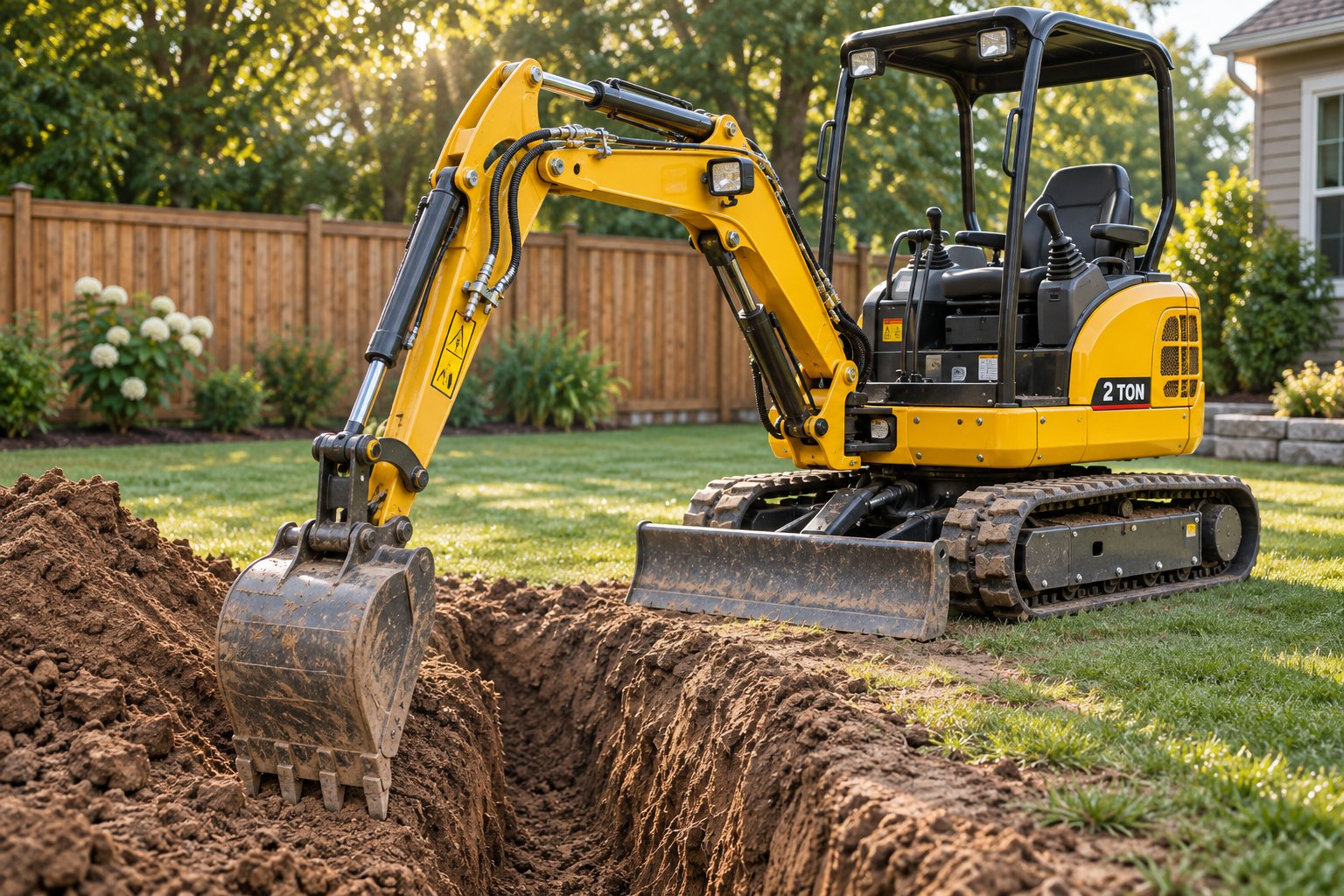
A 2 ton mini excavator is a compact, track-mounted digging machine with an operating weight near 2,000 kg — roughly 4,000 to 4,500 pounds. These machines are purpose-built for confined job sites where full-size excavators simply cannot operate. Most models in this class deliver dig depths between 7 and 9 feet, run on diesel engines producing 13 to 25 horsepower, and measure approximately 3.6 feet wide, allowing them to pass through standard residential gates.
A 2 ton mini excavator is a compact earthmover in the 1,700 kg to 2,200 kg operating weight range, offering 7 to 9 feet of dig depth and enough hydraulic force for residential and light commercial work while remaining transportable on a standard equipment trailer behind a properly rated pickup truck.
The important nuance here is that "2 ton" is a nominal weight class, not an exact figure stamped on every machine. Real-world operating weights shift depending on the manufacturer, the boom and arm configuration, whether the unit has a cab or canopy, and which attachments are mounted. A Kubota U17, for example, lists at 3,693 pounds (about 1,675 kg), while a Bobcat E20 tips the scales at 4,306 pounds (roughly 1,953 kg). Both sit comfortably within the 2 ton class, yet their actual weights differ by several hundred pounds. Models like the qk16r mini excavator and h12r mini excavator also fall near this bracket, reinforcing the point that the class is a range rather than a rigid cutoff.
Who Relies on These Machines
Imagine you run a small landscaping crew and need to dig a 200-foot drainage trench through a customer's backyard — with a fence gate that measures barely four feet wide. Hand-digging would eat up days of labor. A full-size excavator cannot even reach the work area. This is the exact gap a mini excavator in the 2 ton class fills.
The primary audiences for these machines include:
- Small contractors handling residential foundation repairs, footings, and site prep
- Landscaping businesses performing grading, pond excavation, and tree removal
- Utility installation crews trenching water lines, sewer laterals, and electrical conduit on tight residential lots
- Homeowners tackling major property projects — pool installations, driveway replacements, or land clearing — where renting a capable machine beats hiring out the work entirely
For each of these groups, the 2 ton class occupies a sweet spot: powerful enough to replace days of manual labor, yet light and narrow enough to travel on a standard trailer and slip through spaces where heavier equipment would cause damage or simply not fit. With combined machine-and-trailer weights typically under 7,000 pounds, most properly equipped pickup trucks can handle the haul without a commercial driver's license.
This article takes an independent, trusted-advisor approach. You will not find a single-brand sales pitch here. Instead, you will get honest coverage of brands, pricing, acquisition methods, and practical logistics — including what to look for during a mini excavator sale and where listings tend to hide critical details. Whether you are comparing new units, scouting the used market, or deciding between renting and buying, the sections ahead are designed to give you the complete picture before you commit a dollar.
Weight Class Comparison
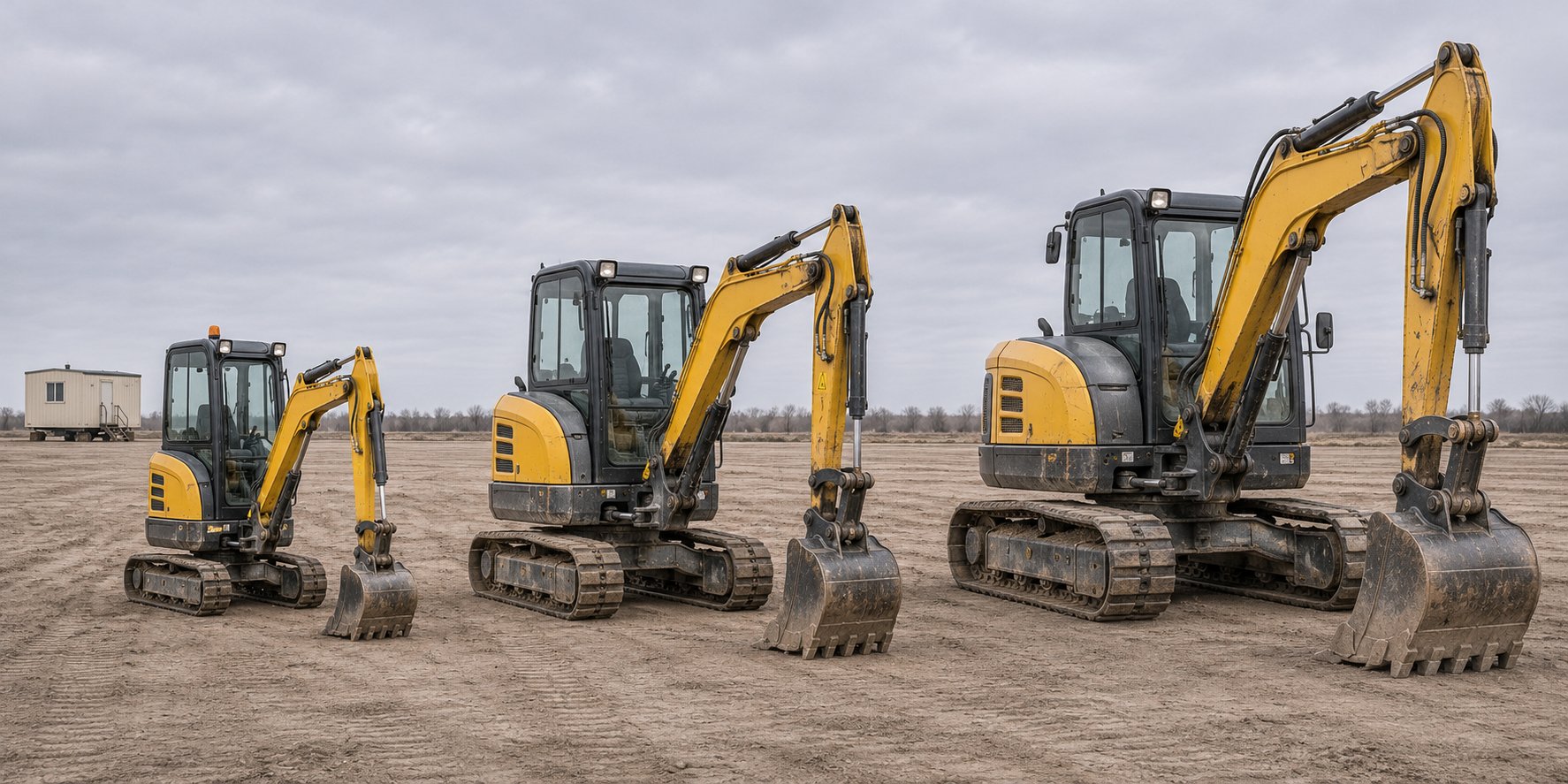
Knowing that the 2 ton class spans roughly 1,700 to 2,200 kg is useful, but a number on a spec sheet only matters when you can see what sits above and below it. Picking the wrong weight class is one of the most expensive mistakes a buyer can make — too small, and you are stuck renting a bigger machine mid-project; too large, and you have overpaid for capability you will never use while wrestling with heavier transport logistics. The honest question every buyer should ask is whether the 2 ton bracket genuinely matches their workload, or whether shifting one class in either direction saves money and headaches.
1 Ton and Micro Excavators
A micro excavator in the 1 ton class — machines weighing roughly 800 to 1,200 kg (about 1,750 to 2,650 lb) — is the lightest tracked digger you can buy. Think of it as the utility knife of earthmoving: handy, portable, and surprisingly capable within its limits. Models like the Kubota K008-5 at 2,025 lb, the Yanmar SV08-1D at 2,438 lb, and the Wacker Neuson 803 at 2,269 lb all fall into this bracket.
Typical dig depths range from just 5 feet 4 inches to around 6 feet, with engine output between 10 and 13 horsepower. Bucket widths tend to top out at 16 to 20 inches. That is enough muscle for garden landscaping, indoor demolition, shallow irrigation trenches, and tight backyard work — especially when the machine needs to squeeze through a 28- to 34-inch-wide opening that nothing larger can pass through.
The trade-off is straightforward: transport is a breeze, because many 1 ton units ride comfortably on a lightweight single-axle trailer behind a standard SUV. Operating costs stay low, and ground pressure is minimal, so you barely dent a manicured lawn. However, the moment a project calls for trenches deeper than six feet, harder soils, or sustained heavy digging, you will feel the machine struggling. A micro excavator simply lacks the hydraulic flow and breakout force for those demands, and pushing it beyond its design envelope wears components fast.
The 2 Ton Sweet Spot
Step up to the 1,700 to 2,200 kg range and you gain a meaningful jump in every performance metric without crossing the threshold into heavier transport headaches. Dig depths in this class generally land between 7 feet 7 inches and 8 feet 6 inches. Engine power climbs to roughly 13 to 21 horsepower, and bucket capacities widen enough to move noticeably more material per cycle.
Consider a few real-world benchmarks from published manufacturer data: the Kubota U17 delivers 7 feet 7 inches of dig depth at 3,693 lb with 16.1 hp, the JCB 18Z-1 reaches 8 feet 5 inches at 3,856 lb with 15.7 hp, and the Bobcat E20 matches that 8-foot-5-inch dig depth at 4,306 lb with 13.9 hp. Each machine fits on a standard tandem-axle equipment trailer behind a half-ton or three-quarter-ton pickup truck — no commercial licensing required in most U.S. jurisdictions.
This is why the class is so popular when you browse any mini excavator for sale listing, whether new or used. It balances enough hydraulic force for residential footings, utility trenching, and grading work with a footprint narrow enough to roll through a standard 36- to 49-inch gate. For small contractors and landscapers who switch between different job sites daily, that combination of capability and portability is hard to beat.
Budget-oriented options like the AGT mini excavator lineup — including models such as the AGT mini excavator AGT-H12 — also populate this weight class, offering lower upfront costs for buyers willing to accept trade-offs in dealer support and resale value. Whether those trade-offs make sense depends on your intended use, a topic covered in detail later in this article.
When You Need a 3 Ton or Larger Machine
Here is where honesty matters more than salesmanship: the 2 ton class is not the right tool for every dig. If your projects regularly call for trench depths beyond 9 feet, if you are breaking through rocky or heavily compacted ground, or if you need to run a hydraulic breaker for extended demolition sessions, a 3 ton machine — or even a 4 ton mini excavator — delivers a noticeably better experience.
Three-ton excavators in the 2,500 to 3,500 kg bracket typically reach 9 to 11 feet of dig depth and run on 20 to 25 hp engines. Models like the Kubota U27-4 at 5,688 lb (9 feet 5 inches dig depth, 20.9 hp), the SANY SY26U at 6,085 lb (9 feet 3 inches, 20.4 hp), and the Bobcat E26 at 6,489 lb (9 feet 6 inches, 24.8 hp) illustrate the jump. You gain about two extra feet of reach and substantially higher breakout force, which translates directly into faster cycle times on tougher material.
The cost of that extra muscle is weight. A 3 ton unit plus a properly rated trailer pushes combined loads well above 8,000 lb, often requiring a three-quarter-ton or one-ton pickup for safe, legal towing. Transport logistics get heavier still once you move beyond 3 tons — and by the time you reach large-scale civil or mining work, you are looking at entirely different equipment categories (think a 30 ton digger on a lowboy, a world away from compact residential machines).
Side-by-Side Comparison Across Weight Classes
The table below puts the three classes next to each other so you can compare the specs that matter most. Figures are drawn from representative models in each bracket.
| Specification | 1 Ton Class (800–1,200 kg) | 2 Ton Class (1,700–2,200 kg) | 3 Ton Class (2,500–3,500 kg) |
|---|---|---|---|
| Operating Weight Range | ~2,000–2,650 lb | ~3,700–4,900 lb | ~5,500–7,700 lb |
| Typical Dig Depth | 5 ft 4 in – 6 ft 0 in | 7 ft 7 in – 8 ft 6 in | 9 ft 3 in – 11 ft 5 in |
| Common Engine Power | 10–13 hp | 13–21 hp | 20–25 hp |
| Typical Machine Width | 27–34 in | 37–54 in | 59–69 in |
| Trailer Class Required | Single-axle utility trailer (1,500+ lb capacity) | Tandem-axle equipment trailer (5,000+ lb capacity) | Heavy-duty equipment trailer (7,000+ lb capacity) |
| Tow Vehicle | SUV or light pickup | Half-ton to 3/4-ton pickup | 3/4-ton to one-ton pickup |
| Ideal Use Cases | Garden work, indoor demolition, shallow trenching, tight-access residential | Utility trenching, landscaping, footings, light demolition, pond excavation | Deep trenching, heavy grading, commercial site prep, breaker work |
Scan the table and you will notice the 2 ton class sits almost exactly in the middle on every metric — capable enough for the majority of residential and light commercial tasks, yet compact and light enough that transport stays manageable without specialized hauling equipment. It is a practical middle ground, not a marketing gimmick.
That said, if more than half your upcoming projects demand dig depths beyond 9 feet or involve prolonged demolition, you owe it to your budget and your schedule to size up to 3 tons or more. And if virtually all your work is shallow garden-level digging in ultra-tight spaces, a 1 ton micro excavator could save you thousands on the purchase price and simplify every trip to the job site. The right class is the one that matches your most common workload — not the one that looks best in a listing photo.
Best Job-Site Applications for a 2 Ton Mini Excavator
Matching a machine to a weight class is only half the equation. The other half is knowing exactly which jobs squeeze the most value out of that class — and which ones will leave you wishing you had rented something bigger. A 2 ton mini excavator earns its keep on a surprisingly wide range of tasks, but it is not a do-everything tool. Here is where it shines, where it stretches, and where you should draw the line.
Residential Landscaping and Grading
Picture a backyard pond project. The homeowner wants a 12-by-8-foot, 3-foot-deep basin carved out of a flat lawn, with the spoil spread across a low spot near the fence line. A compact mini excavator in the 2 ton class handles every phase: excavating the basin, shaping shelves for marginal plants, stockpiling soil, and finish-grading the surrounding turf. Because the machine weighs under 4,500 pounds and rides on rubber tracks, ground pressure stays low enough to limit turf damage — a critical selling point when the customer is paying you to improve the yard, not tear it apart.
Other landscaping tasks where this class delivers strong return on investment include stump removal after tree felling, digging retaining-wall footings, rough and finish grading for patio installations, and reshaping drainage swales. A grading bucket swap takes minutes, and the machine's precise hydraulic control lets an experienced operator feather soil to within an inch of the desired grade. Compared to heavier equipment, the narrow track width — typically 37 to 54 inches — means you can work between established garden beds, fences, and structures without widening access paths.
Utility Trenching and Plumbing Work
Residential utility work is arguably the single highest-value application for this weight class. Water-line replacements, sewer-lateral connections, electrical-conduit runs, and irrigation mainlines all demand trenches in the 2- to 6-foot depth range — well within the 7-foot-7-inch to 8-foot-6-inch dig depth most 2 ton models offer. Swapping to a narrow trenching bucket lets you cut a clean, straight channel with minimal overdig, reducing backfill volume and the amount of spoil you need to haul away.
Where these machines truly earn their reputation is on tight residential lots. Imagine running a new sewer lateral between a house and the street when the side yard measures barely four feet wide, pinched between the foundation wall and a neighbor's fence. A full-size excavator cannot physically fit. Even a 3 ton unit at 60-plus inches wide would scrape both sides. A 2 ton machine threading that gap at 39 to 49 inches wide turns a logistically impossible job into a routine half-day task. For plumbing contractors who encounter this scenario regularly, having access to the right-sized compact mini excavator is not a luxury — it is a scheduling necessity.
Small-Scale Demolition and Site Prep
Concrete-pad removal, old driveway demolition, small retaining-wall teardowns, and light foundation work all fall within reach. Pair the excavator with a hydraulic breaker attachment and you can fracture a 4-inch residential slab into manageable chunks, then switch back to a digging bucket to scoop and load debris. A hydraulic thumb — a clamp-like attachment that works in tandem with the bucket — turns the machine into a grapple, letting you pick up irregularly shaped rubble, broken concrete, and woody debris without a second piece of equipment on site.
That said, this is where honest expectations matter. A 2 ton machine running a breaker can handle a patio slab or a sidewalk section. It will struggle, however, with a reinforced commercial foundation or a thick asphalt parking lot. Heavy ripping through rebar-laced concrete demands more mass behind the hammer, and the lighter hydraulic flow of a sub-20-hp engine means slower cycle times on dense material. Know the limits, and you avoid frustrating delays mid-project.
Top Job Types for the 2 Ton Class
For a quick-reference snapshot, here are the tasks where this weight class consistently delivers the best combination of productivity, maneuverability, and cost efficiency:
- Utility trenching — water lines, sewer laterals, electrical conduit, and gas piping
- Backyard grading and leveling for patios, pools, and drainage correction
- Pond and water-feature excavation
- Retaining-wall footing preparation
- Tree stump and root ball removal
- Residential driveway and sidewalk demolition
- Light foundation excavation and crawl-space dig-outs
- Fence-post and deck-pier hole drilling (with an auger attachment)
- Material handling and site clean-up using a thumb or grapple
- Backfilling and compaction prep after underground work
Attachments as Force Multipliers
A bare excavator with a standard digging bucket handles perhaps half the list above. The other half depends on purpose-built attachments that transform the base machine into a multi-tool. Buckets alone come in several profiles — digging, grading, trenching, and clean-up — each optimized for a different task. Add an auger for drilling post holes, a hydraulic breaker for breaking concrete, or a thumb for grabbing debris, and one compact mini excavator replaces three or four separate pieces of equipment on a residential job site. Grapples work well for sorting demolition material, while compactor attachments can tamp backfill directly from the cab, saving a separate compaction pass with a plate tamper.
Keep in mind that not every attachment fits every machine. Hydraulic flow requirements, pin spacing, and coupler compatibility vary by brand and model. Always verify that the attachment you plan to use matches your excavator's hydraulic capacity and mounting system before committing to a purchase or rental.
When a 2 Ton Machine Is the Wrong Tool
Editorial honesty demands equal airtime for limitations. Avoid deploying this class on deep excavation projects beyond its 8-to-9-foot reach — trying to over-dig by benching or ramping into a trench introduces safety risks and slows production dramatically. Heavy rock ripping through solid ledge or large boulders overwhelms the breakout force and risks premature wear on the boom and arm pins. Extended demolition sessions on reinforced concrete are better left to 3-ton-plus machines with higher hydraulic output. And any project requiring sustained lifting of loads above 1,500 pounds at full reach will push the machine past its rated capacity, risking tip-over on uneven ground.
Recognizing these boundaries is not a weakness — it is the mark of a contractor who values uptime, safety, and client trust over forcing a tool into a role it was never designed for.
With a clear picture of what the machine can and cannot do, the next logical step is understanding exactly how different models stack up on the specifications that drive real-world performance.
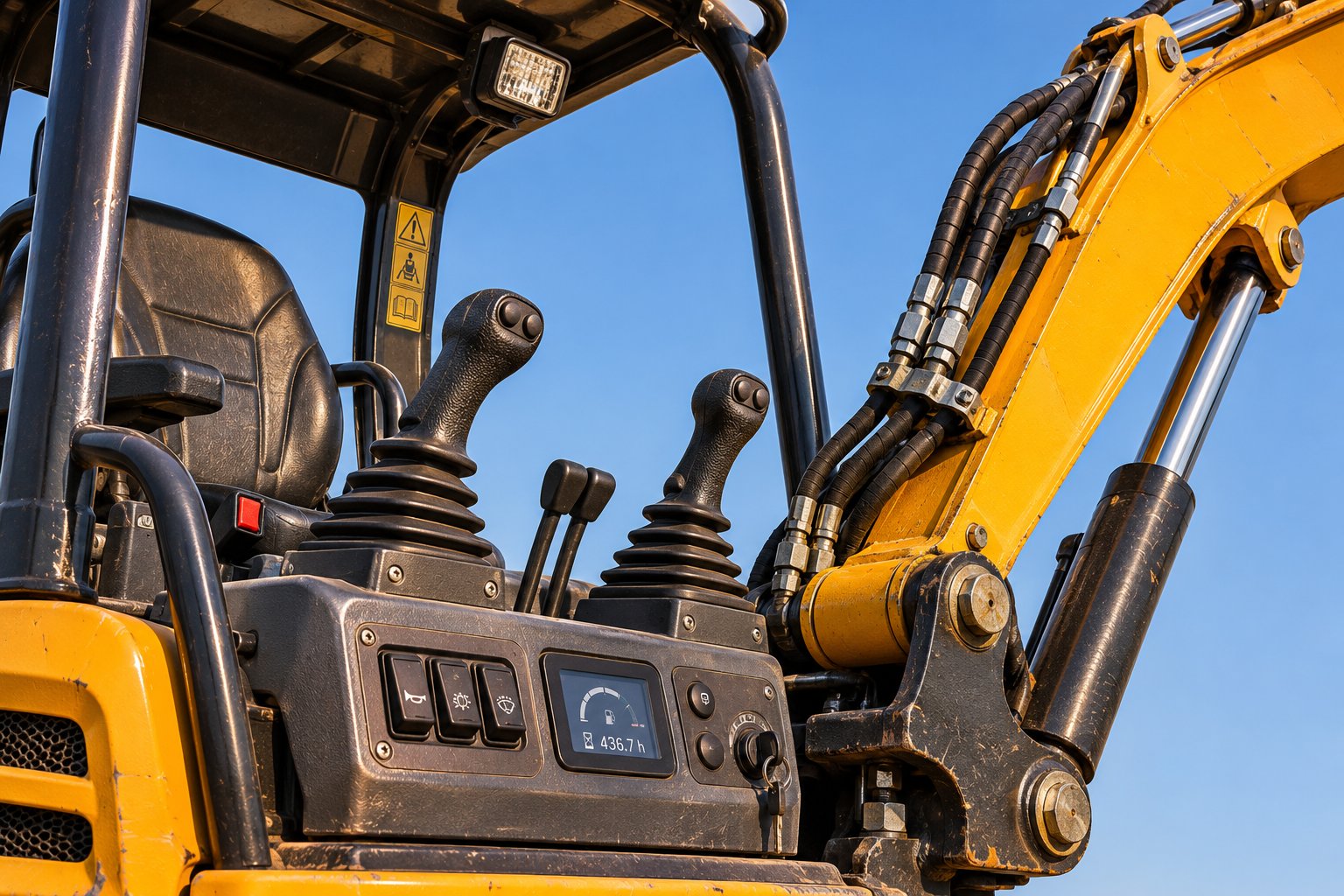
Spec Comparison Across Leading 2 Ton Mini Excavator Models
Listings love to lead with a glossy photo and a price tag. Specifications, however, tell you what the machine will actually do once it rolls off the trailer. Two excavators can share the same nominal weight class yet differ sharply in dig depth, hydraulic output, and tail swing geometry — differences that translate directly into which jobs you can take on and how quickly you finish them. Before you price mini excavator options from any dealer or marketplace, you need to know which numbers on a spec sheet deserve your attention and which ones are mostly marketing filler.
Key Specifications That Matter Most
Not every line on a data sheet carries equal weight. Here are the specs that experienced buyers check first — and why each one matters for day-to-day productivity.
- Operating weight — The machine's total weight with fluids, standard bucket, and operator. It determines stability during digging, ground pressure on soft surfaces, and the trailer and tow vehicle you will need. A few hundred pounds in either direction can push you into a different transport bracket.
- Dig depth — The maximum vertical distance the bucket tip can reach below ground level. If your projects routinely require 8-foot trenches and the machine maxes out at 7 feet 7 inches, you will be renting a second unit to finish the job.
- Bucket capacity — Measured in cubic feet or liters, this tells you how much material moves per scoop. Larger buckets speed up bulk excavation; narrower ones keep trenches clean. Most 2 ton models accept multiple bucket sizes on a quick-coupler system.
- Net engine horsepower — Drives hydraulic pump speed and, by extension, every function on the machine. In this class, engines are typically compact three-cylinder diesels — the Kubota D722 and similar units are common powerplants — producing roughly 13 to 21 hp. More horsepower does not always mean more digging force, but it does affect multitasking speed when you swing, curl, and boom simultaneously.
- Hydraulic flow rate — Measured in gallons per minute (GPM), this controls how fast cylinders extend and retract. It also dictates which attachments the machine can run effectively. A hydraulic breaker or auger that demands 8 GPM will not perform well on a machine that supplies only 5.
- Tail swing radius — Zero tail swing means the rear of the upper structure stays within the track width during rotation, critical for working flush against walls and fences. Conventional or reduced tail swing offers better counterweight balance but requires more clearance behind the machine.
- Track width and transport dimensions — Overall width determines gate access on residential lots. Transport height and length affect trailer fit and legal road dimensions. Some models, like the Bobcat E20, offer a retractable undercarriage that narrows the machine for tight passages.
Each of these specs interacts with the others. A machine with impressive dig depth but low hydraulic flow will reach the bottom of a trench slowly. A unit with generous horsepower but wide tracks may never fit through the gate to start the job. Evaluating models in isolation misses the point — you need to compare them side by side on every dimension that affects your specific work.
Model-by-Model Comparison Table
The table below lines up six recognized models that fall within or very near the 2 ton class. All figures are drawn from published manufacturer specifications and verified listing data. You will notice operating weights range from about 1,675 kg to roughly 2,262 kg — a spread that reinforces how loosely the "2 ton" label is applied across brands.
| Model | Operating Weight | Max Dig Depth | Engine Power | Tail Swing Type | Width | Notes |
|---|---|---|---|---|---|---|
| Kubota U17 | 3,693 lb (~1,675 kg) | 7 ft 7 in | 16.1 hp | Zero | 49 in | Compact three-cylinder diesel; zero tail swing ideal for fence-line work. Used units listed at 1,805 kg on JIUHONG Machinery, reflecting configuration variances. |
| Caterpillar 302 CR | 4,987 lb (~2,262 kg) | 7 ft 9 in | 21 hp | Reduced | 43 in | Compact-radius design; strongest engine output in this group. Sits at upper edge of the class. |
| Bobcat E20 | 4,306 lb (~1,953 kg) | 8 ft 5 in | 13.9 hp | Zero | 54 in | Retractable undercarriage narrows to 38.6 in; deepest dig in this lineup despite lowest HP. |
| SANY SY16C | 4,023 lb (~1,825 kg) | 7 ft 9 in | 19.6 hp | Reduced | 39 in | Chinese-manufactured with Yanmar-sourced diesel; narrowest fixed width in this group. |
| Yanmar ViO17-1E | 4,023 lb (~1,825 kg) | 7 ft 7 in | 14.5 hp | Zero | 37 in | ViO series known for zero tail swing heritage; narrowest overall width for ultra-tight access. |
| JCB 18Z-1 | 3,856 lb (~1,749 kg) | 8 ft 5 in | 15.7 hp | Zero | 39 in | Matches Bobcat E20 dig depth at lighter weight; Perkins engine; 500-hour greasing intervals. |
A few patterns jump out immediately. The Bobcat E20 and JCB 18Z-1 share the deepest dig depth at 8 feet 5 inches, yet the JCB weighs about 450 pounds less — a meaningful difference when calculating trailer loads. The Caterpillar 302 CR leads in raw horsepower at 21 hp, but its 4,987-pound operating weight places it at the very top of the 2 ton bracket, bordering on a heavier transport class. Meanwhile, the Yanmar ViO17-1E and SANY SY16C weigh almost identically and match on dig depth, yet the SANY packs 5 more horsepower — a trade-off worth considering if you plan to run attachments that demand higher hydraulic flow.
Notice the Kubota U17 in the first row. At roughly 1,675 kg from published specs, it sits toward the lighter end of the class. A used Kubota U-17 listed on JIUHONG Machinery shows a machine weight of 1,805 kg — a near-2-metric-ton alternative, not an exact 2,000 kg unit. That 130 kg gap between the published baseline and the listed weight is a perfect example of why you should always cross-check a listing's stated weight against the manufacturer's standard spec sheet. The difference likely reflects added components, a cab versus canopy configuration, or simply a different measurement standard. Requesting the exact configuration breakdown through the seller's inquiry form is a smart first step before making assumptions about what you are getting.
Buyers researching an agt industrial mini excavator or other chinese mini excavator alternatives will not find those models on most established spec databases. That lack of third-party verification is itself a data point: when you cannot cross-reference a listing's claims against an independent source, the due-diligence burden shifts entirely to you. Insist on verifiable serial numbers, engine model documentation, and — for any used unit — hour-meter records before negotiating.
The spec table also highlights a broader truth about this weight class. No single model dominates every column. The "best" machine depends on whether you prioritize dig depth, narrow access, engine power for attachments, or lighter transport weight. A contractor who runs a breaker regularly may lean toward the Cat 302 CR's higher horsepower, while a landscaper threading through 38-inch gates will gravitate toward the Yanmar ViO17's slender 37-inch profile. Even a step up to a 5 ton excavator — machines in the 4,500 to 5,500 kg range — may make sense if your workload consistently demands the deeper reach and heavier breakout force that the 2 ton class simply cannot deliver.
Specifications get you to a shortlist. Brand reputation, parts availability, and long-term reliability narrow that list further — and those factors vary far more dramatically between manufacturers than any single number on a data sheet.
Chinese Budget Excavators vs Established Brands
Brand names on a spec sheet hint at something numbers alone cannot capture — how easily you will source a hydraulic pump at 6 a.m. on a Tuesday, how much the machine fetches when you sell it three years later, and whether a warranty claim results in a quick resolution or months of silence. For buyers shopping the 2 ton mini excavator class, the brand decision increasingly comes down to a single tension: proven reputation versus dramatically lower upfront cost.
Established Japanese and Western Brands
Kubota, Yanmar, Caterpillar, Bobcat, and JCB did not earn their reputations overnight. Decades of iterative engineering, global dealer investment, and aftermarket parts infrastructure give these manufacturers a structural advantage that extends well beyond the machine itself.
Take dealer density alone. Kubota operates over 1,100 authorized dealerships across North America, while Bobcat maintains more than 600 specialized compact equipment locations. Caterpillar's footprint is the largest construction dealer network on the continent. Even Yanmar, the smallest of this group in North American presence with roughly 300 locations, compensates with legendary powertrain durability — their diesel engines have powered competitor machines for decades.
Resale value reinforces the picture. Well-maintained Kubota compact excavators routinely retain 60% to 70% of original price after three years. Yanmar tracks slightly behind at 58% to 62%, while Bobcat and Cat hold competitive positions. That retained equity is not abstract — it directly offsets the higher purchase price when you trade up or exit the machine.
Parts availability follows the same pattern. Because these brands sell high volumes globally, aftermarket suppliers stock common wear items — filters, seals, hydraulic lines, bucket teeth — in regional warehouses. A failed alternator on a Kubota U17 is typically a next-day fix. The same failure on a lesser-known brand can stretch into weeks.
Budget Chinese-Manufactured Alternatives
Here is where the conversation gets uncomfortable — and where most buying guides either dodge the topic or dismiss it unfairly. Brands like AGT, CFG Industrial, SANY, XCMG, LiuGong, and the wave of units sold through Amazon, eBay, and Alibaba storefronts offer a genuinely affordable mini excavator option. Prices often land 30% to 50% below name-brand alternatives for machines with comparable on-paper specifications.
That price gap is real, and for certain buyers it makes financial sense. A homeowner purchasing a compact earth moving machine for a single large property project — pool excavation, a major drainage overhaul — may never push the machine hard enough to expose quality differences. Low annual hours and a short ownership window reduce the risk that parts-supply delays or service gaps become costly problems.
The trade-offs, though, are equally real. Parts lead times on Chinese-manufactured units can stretch from days to weeks because North American warehousing and dealer support networks are still maturing. Warranty enforcement varies widely; some importers honor claims promptly, while others lack the infrastructure to process them at all. Build quality can differ not just between brands but between production runs of the same model — a variable that is nearly impossible for a buyer to assess from a listing photo.
Resale value tells the starkest story. Established brands benefit from buyer confidence in the secondary market. A three-year-old Kubota or Cat finds a ready audience at auction. A three-year-old unit from a lesser-known Chinese manufacturer often sells at steep discounts — if it sells at all — because the next buyer inherits those same parts and service uncertainties. For contractors who factor resale recovery into their total cost of ownership, that depreciation curve erases much of the upfront savings.
Making a Fair Assessment
Dismissing every Chinese-built machine as junk is lazy analysis. So is assuming an established badge automatically justifies a $15,000 to $25,000 premium. The honest answer depends on how you plan to use the machine and how much risk your operation can absorb. Before choosing a side, weigh these factors against your specific situation:
- Local service access — Can you reach an authorized dealer or qualified independent mechanic within a reasonable drive? A compact excavator sitting idle in your yard while you wait for an overseas parts shipment is not saving you money.
- Intended duty cycle — A micro excavator or 2 ton unit running 1,000-plus hours per year on commercial jobs demands a different reliability threshold than one used 50 hours a year on weekend property work.
- Resale expectations — If you plan to sell within two to four years, brand recognition protects your exit price. If you intend to run the machine until it is scrap, the resale gap matters less.
- Risk tolerance — A solo operator whose income depends on one machine cannot afford a two-week parts delay. A larger crew with backup equipment or rental access can absorb the occasional hiccup.
- Warranty clarity — Read the warranty document, not the marketing headline. Confirm who services claims locally, what the response-time commitment is, and whether the warranty covers both the engine and the hydraulic system.
- Fleet consistency — Shops already running Kubota or Bobcat benefit from shared parts inventory, cross-trained operators, and a single dealer relationship. Introducing an off-brand unit fragments that efficiency.
A landscaper running a 1 ton mini excavator ten weekends a year for garden projects faces a fundamentally different risk equation than a utility contractor dispatching a machine to a new trench every morning. Neither buyer is wrong — they simply occupy different points on the cost-versus-risk spectrum. The best brand decision is the one that honestly accounts for your hours, your service access, and your willingness to troubleshoot when something breaks at the worst possible moment.
Brand reputation sets the floor for what you can expect. Pricing, however, determines whether expectations translate into a sound investment — and the gap between sticker price and true ownership cost is where most buyers get surprised.
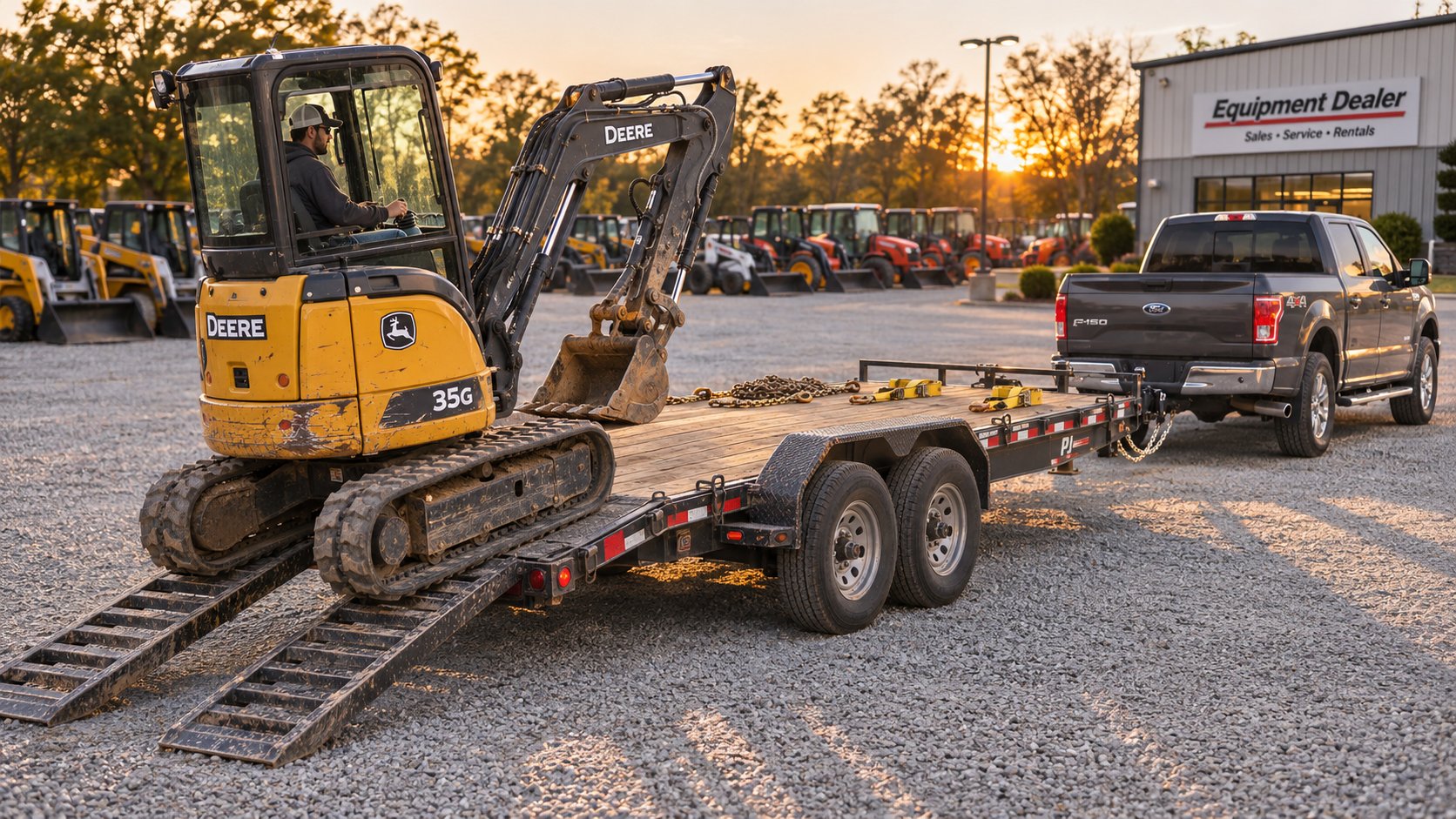
Real-World Pricing and Total Cost of Ownership for a 2 Ton Mini Excavator
How much does a mini excavator cost? It sounds like a simple question, yet the answer changes dramatically depending on whether you are buying new or used, choosing a premium brand or a budget import, and — most importantly — whether you factor in the expenses that pile up after the purchase receipt is filed. The sticker price is the opening line of a much longer financial story, and most buyers never read past the first page.
New Machine Price Ranges
New diesel mini excavators in the 2 ton class fall into three broad pricing tiers, each reflecting a different balance of quality, support, and long-term value.
- Budget imports (approximately $5,000 to $15,000) — Units from lesser-known Chinese manufacturers, including AGT and various Alibaba-sourced brands, occupy this floor. Prices are often as low as $5,000 to $12,000 for a bare machine with a standard bucket. At this level you are getting a basic small digging machine with minimal dealer support, limited warranty enforcement, and uncertain resale prospects. For homeowners tackling a single project, the low entry cost can make sense. For daily commercial use, the calculus shifts.
- Mid-range options (approximately $18,000 to $35,000) — Brands like SANY, XCMG, and some regional distributors land here. You gain better build quality, more recognizable engine components (often Yanmar- or Kubota-sourced powerplants), and slightly stronger parts networks than the bottom tier. This is the bracket where many first-time contractor buyers land when searching for a compact excavator for sale.
- Premium established brands (approximately $35,000 to $50,000+) — Kubota, Caterpillar, Bobcat, Yanmar, and JCB command the top tier. Industry data from current pricing guides places new 1.5 to 2.5 ton machines in the $35,000 to $48,000 range for these manufacturers. You are paying for extensive dealer networks, proven reliability histories, genuine warranty coverage, and resale values that offset a significant portion of the purchase premium over three to five years.
Those ranges can shift with optional equipment. Adding a cab enclosure, a hydraulic quick-coupler, an auxiliary hydraulic circuit for attachments, or upgraded rubber tracks can push a mid-range machine into premium territory — and a premium unit well past $50,000 — before it ever leaves the lot.
Used and Pre-Owned Market Pricing
How much is a mini excavator if you buy used? That depends on four variables that interact in ways listings rarely spell out: brand, age, documented hours, and verifiable maintenance history.
A three-year-old Kubota or Bobcat with 800 to 1,200 hours and service records intact will typically sell for 55% to 70% of its original retail price. A same-age unit from a lesser-known manufacturer with spotty documentation might fetch only 30% to 40% — and it may sit on the lot much longer before finding a buyer. Hours matter less than how those hours were spent. A machine with 2,000 hours of light landscaping duty and every oil change logged is a safer bet than one with 500 hours of undocumented heavy demolition work.
Where to look when shopping for small excavators for sale on the pre-owned market:
- Equipment auctions — Ritchie Bros., IronPlanet, and regional auction houses offer competitive pricing, though bidding wars can push final prices above private-party deals. Always inspect in person or hire a third-party inspector.
- Authorized dealer lots — Many established-brand dealers sell certified pre-owned units with limited warranties. The mini excavator price is higher than auction, but the reduced risk compensates.
- Online marketplaces — Platforms like Machinery Trader, Equipment Trader, Facebook Marketplace, and specialized used-equipment sites list thousands of units nationally. Verification is your responsibility; request hour-meter photos, service logs, and a VIN or serial-number history before traveling to see the machine.
Total Cost of Ownership Beyond the Sticker Price
The purchase price — whether $8,000 or $48,000 — is only the entrance fee. Real ownership costs accumulate in categories that most buyers underestimate until they run the numbers. Data from five-year total cost of ownership projections shows the purchase price represents just 25% to 35% of the total money spent over a machine's first five years. The rest flows into fuel, maintenance, insurance, transport, and attachments.
| Cost Category | Typical Annual Range (2 Ton Class) | Why It Matters |
|---|---|---|
| Purchase price | $5,000 – $50,000+ (one-time) | Sets your baseline investment and determines financing terms |
| Fuel consumption | $1,500 – $3,000 per year | 1.3 to 2.5 liters per hour at current diesel prices; varies with workload intensity |
| Routine maintenance | $1,500 – $3,500 per year | Oil, filters, hydraulic fluid, greasing, and track tension adjustments |
| Insurance | $600 – $1,500 per year | Fixed cost regardless of utilization — expensive per hour if the machine sits idle |
| Transport | $100 – $300 per move | Adds up quickly for contractors working multiple sites per month |
| Attachment purchases | $1,200 – $8,000+ (as needed) | Buckets, augers, breakers, and thumbs expand capability but inflate year-one costs |
| Repairs and unexpected downtime | $500 – $4,000+ per year | Budget-brand machines trend toward the higher end; premium brands toward the lower |
Add those columns together and a $35,000 premium-brand machine running 500 to 700 hours annually can easily cost $55,000 to $65,000 net over five years after subtracting resale value. A $12,000 budget import with higher maintenance and repair bills — and much weaker resale recovery — often lands in a surprisingly similar range. That convergence is the single most important insight in any pricing discussion: the cheapest machine to buy is not always the cheapest machine to own.
Financing Considerations at This Price Point
Most contractors do not pay cash for equipment. Financing structures for a 2 ton mini excavator differ from those for larger machines in a few practical ways.
- Equipment loans — The machine itself serves as collateral, which allows lenders to approve faster and accept a wider range of credit profiles than unsecured loans. Application-only approval up to $250,000 is common among specialized equipment lenders, meaning no financial statements are required for machines at this price point.
- Lease structures — Leasing lowers the monthly payment and simplifies upgrades when your needs change. It works well for contractors who prefer to swap machines every few years rather than ride one into the ground.
- Term length — Terms up to 60 months are standard. Shorter terms cost more per month but build equity faster and avoid the trap of making payments on a machine that has already depreciated past the loan balance.
- Section 179 deductions — In the U.S., qualifying businesses can deduct the full purchase price of equipment placed in service during the tax year, even when financed. A $35,000 excavator purchased and deployed before year-end could generate the full deduction in that year, potentially saving $7,000 to $12,000 in taxes depending on your bracket. This benefit applies to both new and used machines but not to rentals — a factor that tips the rent-versus-buy math for tax-paying businesses.
Lender requirements also shift at the lower end of the price spectrum. A $6,000 budget import may not qualify for traditional equipment financing because some lenders set minimum loan thresholds or decline to collateralize machines from unrecognized manufacturers with uncertain resale trajectories. If you are considering an entry-level unit, confirm financing eligibility before assuming the payment structure mirrors what a name-brand machine would receive.
Pricing and total cost of ownership answer the financial question. The operational question — whether renting that same machine makes more sense than buying it — depends on a completely different set of variables rooted in how many days per year the excavator actually runs.
Rent vs Buy Decision Framework for Small Contractors
Knowing the sticker price and the five-year cost curve is essential, but those numbers only become actionable once you answer a more personal question: how many days per year will this machine actually work? That single figure — annual utilization — drives the entire rent-versus-buy equation, and getting it wrong in either direction costs real money.
When Renting Makes More Financial Sense
Imagine you need a 2 ton mini excavator for a two-week drainage project, then nothing for months. Renting eliminates the capital outlay, the insurance premiums during idle months, and the maintenance clock that ticks whether you dig or not. Current market data places 1 to 2 ton class rentals at roughly $200 to $250 per day, with weekly rates dropping to about three to four times the daily figure and monthly rates landing around ten to twelve daily rates. Factor in delivery fees of $100 to $300 per round trip plus a damage waiver at 10% to 15% of the base rate, and a two-week job runs approximately $1,800 to $2,500 all in.
Renting is the stronger call in several clear-cut scenarios:
- You need the machine fewer than roughly 60 to 80 days per year
- The project is a one-time or seasonal task with no guaranteed repeat work
- Cash flow is tight and you cannot justify tying up $15,000 to $50,000 in a depreciating asset
- You want to test a specific mini excavator weight class or model before committing to a purchase — renting a machine like the xz20r mini excavator or a comparable unit for a real project is far cheaper than buying the wrong size
Plenty of successful contractors rent exclusively. There is no shame in that strategy — it preserves capital, transfers breakdown risk to the rental yard, and keeps you on the latest equipment without worrying about resale.
When Buying Delivers Better Value
The math flips once rental days accumulate. Industry cost analysis puts the break-even point for mini excavators at approximately 120 rental days per year — essentially five to six months of steady use. Beyond that threshold, every additional rental day is money you could be building equity with instead.
Ownership delivers advantages that go beyond simple per-day cost:
- On-demand availability — No scrambling for a rental during peak spring and summer demand, when yards frequently run out of popular sizes
- Attachment customization — You build a bucket, auger, and breaker collection tailored to your work instead of paying attachment rental surcharges every time
- Operator consistency — Your crew learns one machine's controls, hydraulic feel, and quirks, which improves productivity an estimated 10% to 15% versus switching rental units regularly
- Resale recovery — A well-maintained unit from a recognized brand can return 55% to 70% of its purchase price after three years, partially reimbursing your investment when you upgrade or exit
For contractors running a machine on commercial jobs most weeks of the year, ownership is not just cheaper — it is operationally essential. You cannot build a reliable schedule around rental availability, especially if your area has limited yards stocking the specific mini excavator weight class you need. A long reach mini excavator or a 4 ton excavator might be available on short notice; a popular 2 ton unit during peak season often is not.
The Used-Purchase Middle Ground
Buying used splits the difference. You avoid the steepest depreciation hit that comes in year one of new ownership — typically 20% to 30% of value — while still gaining every benefit of having the machine in your yard on demand. A pre-owned Kubota or Bobcat with 800 to 1,200 documented hours can deliver years of reliable service at 40% to 55% below new retail price, and resale values hold reasonably well because the sharpest depreciation has already occurred.
The risk, of course, is buying someone else's problem. Mitigate it by insisting on verifiable hour-meter readings, complete service records, and a pre-purchase inspection by an independent mechanic. Certified pre-owned programs from authorized dealers add a layer of protection — at a modest price premium — that can be worth the peace of mind for buyers who lack the mechanical knowledge to evaluate a machine themselves.
If you will use a 2 ton mini excavator more than 120 days a year, buying almost always wins on cost; below 60 days, renting is the smarter bet; between those thresholds, a used purchase offers the best balance of lower capital risk and ownership flexibility.
Neither renting nor buying is universally superior. The right answer is the one that matches your actual utilization, your cash position, and your tolerance for the responsibilities that come with ownership — from insurance premiums to greasing schedules. Speaking of those responsibilities, the practical logistics of moving, maintaining, and keeping a compact excavator running reliably deserve just as much planning as the financial decision itself.
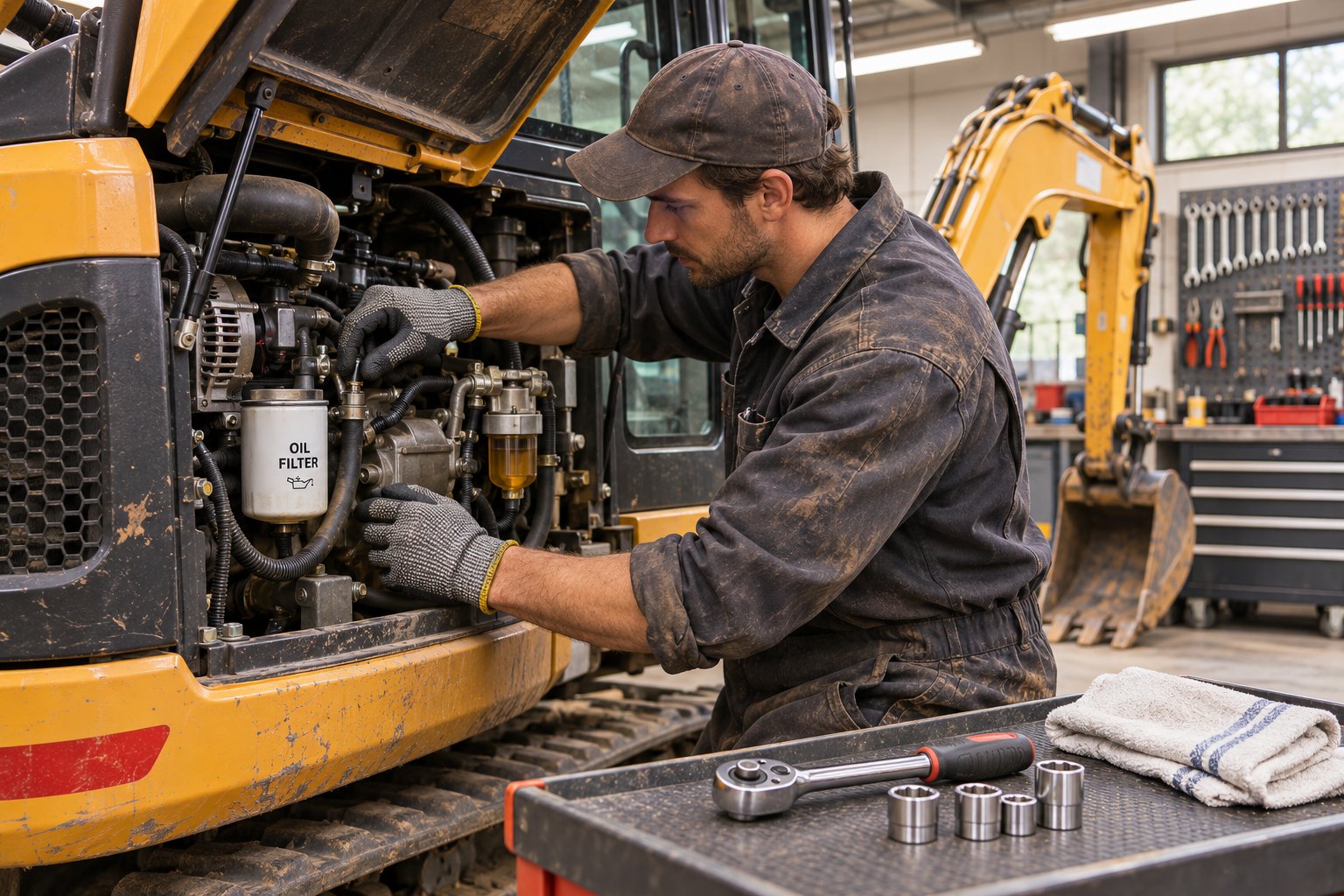
Transport Logistics and Maintenance Planning for Your Mini Excavator
You have settled on the right weight class, compared brands, crunched the rent-versus-buy numbers, and maybe even identified a specific model. There is just one problem: the machine is sitting at a dealer lot or auction yard, and it needs to reach your first job site — safely, legally, and without destroying a trailer or blowing a tire on the highway. Then, once it arrives, it needs to keep running day after day without an unexpected $5,000 repair swallowing your profit margin. Transport and maintenance are the unsexy logistics that separate contractors who make money from contractors who bleed it.
Transport and Trailer Requirements
A 2 ton mini excavator weighs roughly 3,700 to 5,000 pounds depending on the model and configuration. Add the trailer underneath it and you are looking at a combined load that demands careful matching between tow vehicle, trailer rating, and legal limits.
Start with the trailer. A tandem-axle equipment trailer with a Gross Vehicle Weight Rating (GVWR) of at least 7,000 pounds is the baseline for this class. That rating must cover the machine, the trailer's own weight (typically 1,500 to 2,500 pounds for a steel equipment trailer), plus any attachments, fuel, chains, and tools riding along. As Luby Equipment's hauling guide stresses, one of the most common mistakes is focusing only on machine weight while ignoring the cumulative load of trailer, attachments, fuel, and securement gear. A machine that "fits" on a trailer can still push the rig past its legal limit once everything else is loaded.
Can a standard pickup truck handle it? In most cases, yes — with caveats. A half-ton pickup (Ford F-150, Chevy 1500, Ram 1500) typically offers 9,000 to 14,000 pounds of towing capacity, which covers a 1 2 ton mini excavator on a properly rated tandem-axle trailer. A three-quarter-ton truck provides a wider margin and better braking confidence, especially on hilly routes or in wet conditions. If your machine sits at the upper edge of the class — say, a Cat 302 CR at nearly 5,000 pounds — a three-quarter-ton or one-ton pickup is the safer choice once you account for trailer weight and payload in the truck bed.
Beyond weight capacity, pay attention to these transport details:
- Loading ramps — Equipment trailers with fold-down ramps rated for the machine's weight and track width prevent tip-overs during loading. Ramp angle matters; a steeper ramp increases the risk of high-centering the undercarriage.
- Tie-down procedures — Secure the machine at four points using chains or ratchet straps rated for the load. The boom should be lowered with the bucket resting flat on the trailer deck, and the blade (if equipped) should be down. Improper load securement is one of the most cited violations during roadside inspections and can result in costly fines.
- Trailer brakes — Most states require trailer brakes on any trailer with a GVWR above 3,000 pounds. Electric brake controllers in the tow vehicle are standard; confirm yours is properly calibrated for the loaded weight.
- Permit and licensing considerations — A combined truck-and-trailer rig under 26,000 pounds GVWR generally does not require a Commercial Driver's License in most U.S. jurisdictions. However, some states impose width limits (typically 8 feet 6 inches) and height restrictions that a cab-equipped excavator sitting on a standard-height trailer deck can approach. Always verify local and state regulations before the first trip — rules vary, and an oversize load without a permit invites both fines and liability exposure.
Routine Maintenance Essentials
Here is a reality that listings never mention: every hour on the meter costs you something, whether you see it or not. Skipping a $30 filter change can cascade into a $5,000 hydraulic pump failure. Industry field data shows that hydraulic system failures account for roughly 45% of excavator breakdowns, with undercarriage issues adding another 22%. Nearly all of those failures are preventable through disciplined, hour-based maintenance.
The key mindset shift is that mini excavator maintenance runs on operating hours, not calendar dates. A machine racking up 200 hours in a busy three-week stretch needs its 250-hour service almost immediately, while a lightly used unit might not hit that milestone for six months. Track the hour meter the way you track your truck's odometer — religiously.
Here is a simplified maintenance interval chart based on OEM-aligned PM schedules for the major brands in this class:
| Interval | Maintenance Tasks |
|---|---|
| Every 10 hours (daily) | Visual walkaround inspection; check engine oil, coolant, and hydraulic fluid levels; grease all pivot points (boom, arm, bucket, blade); clean debris from undercarriage and radiator fins; verify track tension (10–30 mm sag at midpoint per OEM spec) |
| 50 hours (break-in — new or rebuilt machines only) | First engine oil and filter change; first hydraulic filter replacement; torque check on all critical fasteners. This service is non-negotiable — skipping it can void warranty coverage on internal engine and hydraulic components. |
| Every 250 hours | Engine oil and filter change; fuel filter and water separator replacement; inspect primary air filter element (replace if restricted); check hydraulic hoses for cracks, bulges, or chafing |
| Every 500 hours | Replace hydraulic filter; replace primary air filter element; take hydraulic oil sample for lab analysis; measure undercarriage wear (sprocket teeth, roller diameter, track link pitch); inspect boom and arm pin and bushing wear; check swing bearing play |
| Every 1,000 hours | Swing bearing torque check per OEM sequence; structural weld inspection at cylinder mounting points and stress areas; diagnostic scan for fault codes; full coolant system inspection |
| Every 2,000 hours | Full hydraulic oil change; coolant change; comprehensive undercarriage evaluation for component replacement decisions |
A few notes on those intervals. Severe operating conditions — demolition dust, ambient temperatures above 95 degrees Fahrenheit, muddy ground, or extended idle time — should shorten every interval by 20% to 30%. A machine running in ankle-deep mud needs undercarriage cleaning twice daily, not once. And brand-specific fluid requirements are critical: Kubota mandates SUPER UDT hydraulic fluid exclusively, while Cat specifies HYDO Advanced 10 and Bobcat requires its own All-Season Hydraulic/Hydrostatic Fluid. Substituting the wrong fluid is one of the fastest ways to void a pump warranty.
Common Wear Items and Spare Parts Planning
Some parts are designed to wear out. Knowing which ones — and how fast — lets you budget accurately and avoid the panic of a mid-job failure with no replacement on hand.
Based on component lifespan data across major excavator brands, here are the items that wear fastest on a mini x in regular service:
- Bucket teeth — Lifespan varies with terrain, often just several hundred hours in abrasive soil. Worn teeth reduce digging efficiency and increase cycle times. Keep a spare set on the trailer.
- Track pads (rubber tracks) — Expect 1,500 to 2,500 hours under normal conditions, but that can drop to 900 to 1,200 hours if cleaning routines are neglected. A full-set replacement runs $1,500 to $3,000.
- Hydraulic hoses — Typical lifespan of 1,000 to 2,000 hours. Cracks, bulges, and weeping at fittings are the warning signs. A blown hose on a job site means immediate downtime and a hydraulic fluid spill to clean up.
- Filters (oil, fuel, hydraulic, air) — Oil filters turn over every 250 to 500 hours, fuel and air filters every 500 to 1,000 hours, and hydraulic filters every 500 to 1,000 hours. These are inexpensive individually but critical collectively.
- Seals and O-rings — Hydraulic cylinder seals last 2,000 to 5,000 hours. Slow cylinder drift or visible weeping around rod ends signals a seal approaching the end of its life.
- Pins and bushings — Boom, arm, and bucket pivot pins wear gradually. A fresh pin costs around $80; ignoring the wear until it damages the bore can escalate to $2,500 to $4,500 for line boring and reinstallation.
Here is where the brand discussion from earlier chapters ties directly into daily ownership reality. If you own a Kubota, Bobcat, or Cat, most of these parts are stocked at regional dealer warehouses and available next-day or same-week. Aftermarket suppliers carry compatible alternatives for these brands, too, further reducing lead times and cost. If you purchased a lesser-known import, confirm parts availability before you close the deal. Ask the seller to provide part numbers for the top five wear items listed above, then call the nearest parts source and verify they carry them — or can source them within a reasonable timeframe. A 3 tonne digger from a recognized brand with next-day parts access will almost always outperform a cheaper unit that leaves you waiting two weeks for a hydraulic hose.
When browsing a new mini excavator for sale listing, request the full recommended spare-parts list from the dealer, not just the machine spec sheet. A transparent seller will provide part numbers, recommended spares for the first 500 hours, and the contact details for their parts department. If a seller cannot — or will not — answer basic parts-availability questions, treat that silence as a red flag regardless of how attractive the price looks.
Ultimately, transport planning and maintenance discipline are not separate from the buying decision — they are embedded in it. The brand you choose dictates your parts supply chain, the model you pick determines your trailer setup, and the maintenance schedule you follow controls whether the machine earns its keep or drains your budget one skipped filter at a time. With these logistics mapped out, the final step is pulling every variable together into a single, actionable checklist that keeps your decision on track from first research to first dig.
How to Choose the Right 2 Ton Mini Excavator
You have read through weight-class comparisons, spec tables, brand trade-offs, real-world pricing, rent-versus-buy math, and maintenance schedules. That is a lot of information competing for space in your head. The risk at this stage is decision fatigue — stalling out because every option has both appeal and drawbacks. The antidote is a structured sequence that forces each variable into its proper place, one step at a time, so nothing critical falls through the cracks.
Your Pre-Purchase Checklist
Think of this as the flight checklist a pilot runs before takeoff — skip a line, and you might not notice the problem until you are in the air. Every step below builds on the one before it, so work through them in order.
- Define your primary job types. List the three to five tasks you will perform most often — utility trenching, grading, demolition, post-hole drilling, landscaping. Be specific. "Digging" is not a job type; "4-foot water-line trenches on residential lots" is.
- Confirm the 2 ton class actually fits those jobs. Cross-reference your task list against the dig depth, lifting capacity, and attachment requirements covered earlier. If most of your work demands trenches deeper than 8 feet 6 inches or sustained breaker sessions on reinforced concrete, you need a heavier machine. If your work is all shallow garden-level digging, a 1 ton micro unit may save you thousands. Honest self-assessment here prevents the most expensive mistake — buying the wrong size.
- Compare specifications across at least three models. Pull up manufacturer spec sheets for a minimum of three machines and line them up on operating weight, dig depth, engine horsepower, hydraulic flow, tail swing type, and overall width. Do not rely on listing descriptions alone — go to the OEM data. Whether you are evaluating a premium diesel mini excavator from Kubota or a budget chinese excavator from a brand like CFG Industrial, the comparison process is identical: verify every number against a primary source.
- Verify local parts and service access. Call the nearest dealer or parts supplier for each model on your shortlist. Ask specifically about availability for the top five wear items: bucket teeth, rubber tracks, hydraulic hoses, filters, and cylinder seal kits. A machine with impressive specs and no local parts pipeline is a liability, not an asset.
- Calculate total cost of ownership, not just sticker price. Use the cost table from the pricing chapter as a template. Plug in your estimated annual hours, fuel cost, maintenance intervals, insurance quotes, and projected resale value. The machine with the lowest purchase price frequently does not produce the lowest five-year cost — and the math proves it faster than any sales pitch.
- Decide rent versus buy based on your actual utilization. Below roughly 60 days per year, rent. Above 120 days per year, buy. In between, a used purchase often offers the best balance of affordability and availability. If you are unsure of your utilization, rent for one full season, track every day the machine works, and let real data drive the decision next year.
- Arrange transport logistics before closing the deal. Confirm your trailer rating handles the machine weight plus gear, verify your tow vehicle's capacity, and check state regulations for combined load limits. A machine you cannot legally or safely move between job sites is not ready to earn money.
Print that list, tape it to your office wall, and check off each item before you write a deposit check or sign a financing agreement. It takes an afternoon of research. Skipping it can cost you years of regret.
Where to Start Evaluating Real Machines
A checklist is only as good as the data you feed it. The fastest way to build a realistic picture of the current market is to request spec sheets and pricing from multiple sources simultaneously — not sequentially. Cast a wide net across these channels:
- Established-brand dealers — Kubota, Bobcat, Cat, Yanmar, and JCB dealers can provide current MSRP, available inventory, financing terms, and certified pre-owned options. Walk in with your job-type list and let the salesperson match machines to your workload rather than your budget alone.
- Auction platforms — Ritchie Bros., IronPlanet, and regional auction houses publish upcoming lots with photos, hours, and condition reports. Set alerts for the 2 ton class and monitor final sale prices for several weeks before bidding. That pricing intelligence prevents overpaying in a competitive room.
- Used-equipment specialists and online marketplaces — Machinery Trader, Equipment Trader, and niche platforms list thousands of units nationally. For buyers researching the Kubota U-17 specifically, a used unit listed at 1,805 kg is available on JIUHONG Machinery's site, complete with a product inquiry form for pricing and availability. At 1,805 kg, the U-17 qualifies as a near-2-metric-ton option — not an exact 2,000 kg machine — which makes it a useful benchmark for evaluating how listed specs align with the class definition discussed throughout this article. Treat it as one concrete starting point, not the only option worth exploring.
- Budget and import channels — If affordable mini excavators from brands like AGT or CFG Industrial fit your risk profile, request itemized quotes that include warranty terms, parts-source documentation, and the name of the nearest authorized service provider. The absence of any of those details is itself a decision-making data point.
Gathering quotes from three or four sources takes a few days. The payoff is leverage — you walk into every negotiation knowing what the market actually charges, rather than relying on a single seller's word. And when you compare excavator to excavator across dealers, auctions, and private sellers, pricing patterns emerge that no single listing can reveal.
The best 2 ton mini excavator is the one that matches your specific job requirements, your realistic budget including five-year ownership costs, and your local service access — not simply the cheapest listing or the most famous badge on the hood.
Every chapter in this guide has pointed toward the same conclusion: there is no universally "best" machine in this class. There is only the best machine for you — for your jobs, your geography, your hours, and your appetite for risk. A landscaper running 80 days a year on soft residential soil faces a completely different equation than a utility contractor trenching five days a week through clay and gravel. A homeowner tackling one major project has no business paying the premium a daily-use commercial operator should gladly absorb.
Do the homework. Run the numbers. Inspect before you commit. And when you finally load your machine onto the trailer for that first job, you will know — with data, not hope — that the decision was sound.
Frequently Asked Questions About 2 Ton Mini Excavators
1. How much does a 2 ton mini excavator cost new and used?
New 2 ton mini excavators range from roughly $5,000 for budget Chinese imports to over $50,000 for fully equipped premium models from Kubota, Caterpillar, or Bobcat. Used units in good condition with documented hours typically sell for 40% to 70% of original retail price, depending on brand reputation, age, and maintenance records. A pre-owned Kubota U-17, for instance, can be found listed at around 1,805 kg on platforms like JIUHONG Machinery with inquiry forms for current pricing. Remember that sticker price represents only 25% to 35% of five-year ownership costs once you factor in fuel, maintenance, insurance, and repairs.
2. Can a pickup truck tow a 2 ton mini excavator?
Yes, most half-ton and three-quarter-ton pickup trucks can legally tow a 2 ton mini excavator on a tandem-axle equipment trailer. The machine itself weighs 3,700 to 5,000 pounds, and the trailer adds another 1,500 to 2,500 pounds, placing the combined load well within the 9,000 to 14,000-pound towing capacity of modern half-ton trucks. However, if your model sits at the upper edge of the class — near 5,000 pounds — a three-quarter-ton or one-ton truck provides a safer margin, especially on hilly routes. Always confirm that combined weight stays under your vehicle's rated towing capacity and complies with local road regulations.
3. Is it better to rent or buy a 2 ton mini excavator?
The decision hinges on annual utilization. If you plan to use the machine fewer than 60 days per year, renting at roughly $200 to $250 per day is almost always more economical. Above 120 days of annual use, buying delivers better long-term value through equity building, on-demand availability, and attachment customization. Between 60 and 120 days, purchasing a quality used unit often strikes the ideal balance — you avoid the steepest first-year depreciation while gaining ownership benefits. Successful contractors use both strategies; the right choice depends on your project pipeline, cash flow, and willingness to handle maintenance responsibilities.
4. What jobs can a 2 ton mini excavator handle?
A 2 ton mini excavator excels at utility trenching for water lines and sewer laterals, residential grading and leveling, pond excavation, retaining-wall footing prep, stump removal, driveway and sidewalk demolition, and post-hole drilling with an auger attachment. Most models deliver 7 to 9 feet of dig depth and fit through standard 36- to 49-inch residential gates. However, this class is not suited for deep excavation beyond 9 feet, heavy rock ripping, reinforced commercial foundation demolition, or sustained lifting above 1,500 pounds at full reach. Matching the machine to realistic job demands prevents costly mid-project equipment changes.
5. Are Chinese mini excavators worth buying over established brands?
Chinese-manufactured mini excavators from brands like AGT, CFG Industrial, and SANY can cost 30% to 50% less upfront than Kubota, Bobcat, or Caterpillar equivalents. For homeowners or occasional-use buyers tackling a single large project, the savings may justify the trade-offs. However, daily-use commercial operators face real risks: limited North American dealer networks, longer parts lead times, inconsistent build quality between production runs, and significantly weaker resale values — often only 30% to 40% after three years versus 60% to 70% for established brands. Evaluate your local service access, intended hours per year, and risk tolerance before deciding, because total five-year ownership costs between budget and premium machines often converge.