

What a Cat 950 Wheel Loader Is
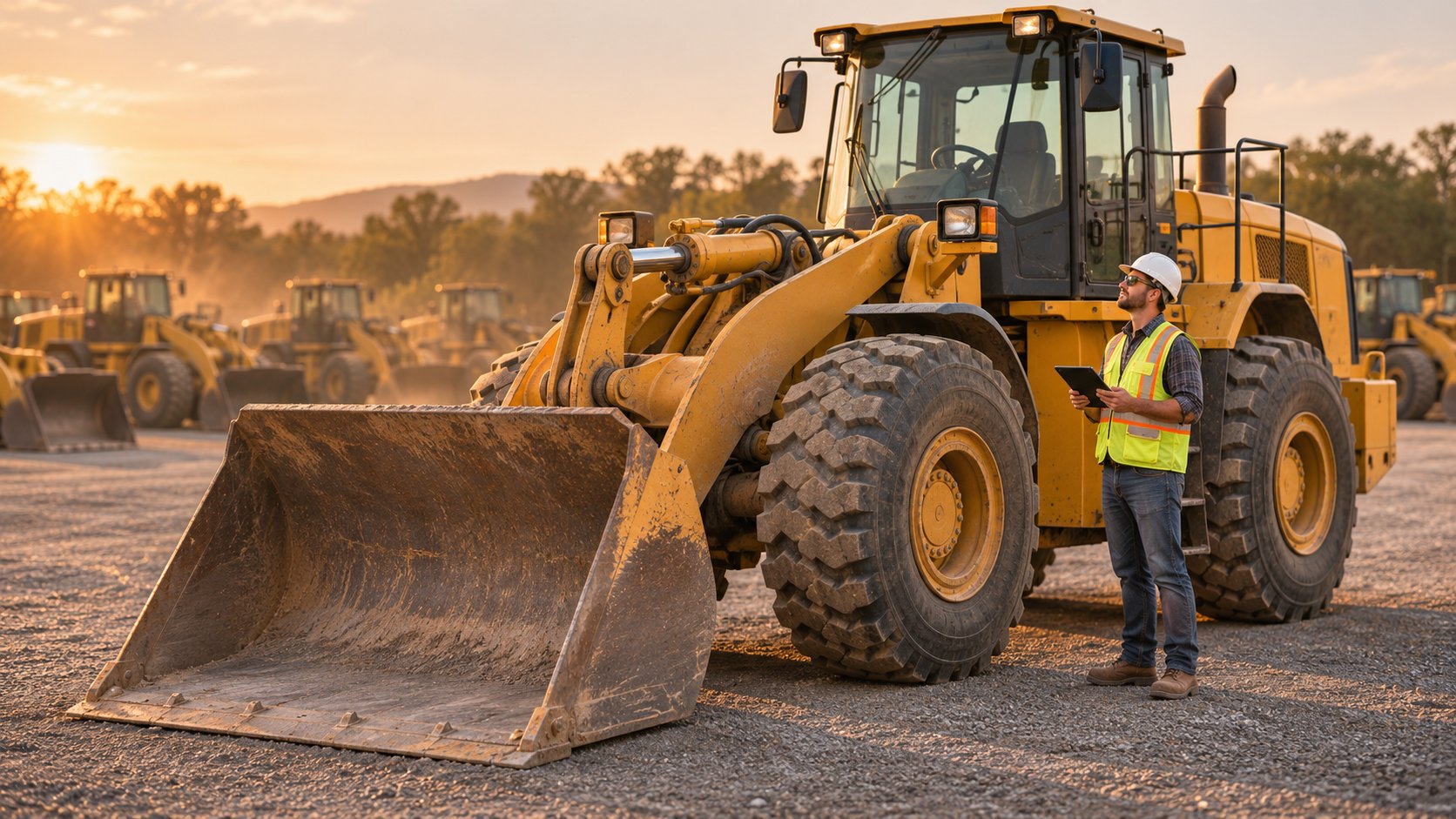
A Cat 950 wheel loader is a Caterpillar medium wheel loader sold across several generations, each marked by a letter suffix such as 950B, 950C, 950G, 950H, 950K and 950M. The 950 GC is a separate general-construction variant that Cat sells alongside the current 950, rather than an older generation.
What Is a Cat 950 Wheel Loader
The 950 belongs to Caterpillar's medium wheel loader family. Toromont Cat, a Cat dealer, traces that class back to the Cat 944 of 1959. Today Cat describes its medium wheel loaders as machines for construction, quarry, aggregate, industrial and waste sites. Cat lists their typical tasks as bank loading, material handling, truck loading, hopper feeding and stockpiling.
That kind of work tells you who shops for a Cat 950. Most buyers are contractors who need one loader to move dirt, gravel and building materials around a site. The rest are mostly material-handling businesses that spend the day loading trucks and managing stockpiles. One detail catches people out: Cat's current new-equipment lineup lists the model simply as the "950", next to the 950 GC. A used listing that says only "950" therefore tells you less than it seems to.
Why the Generation Matters Before You Browse Listings
Search for "Caterpillar 950" and the same model name will cover machines built decades apart. A 950B and a late-model unit share the number, but the machines underneath are very different. For example, the current 950 GC carries a diesel particulate filter and a DEF tank, and the oldest 950s still for sale were never built with that kind of emissions hardware. Operator technology, parts support and typical asking prices also change from one generation to the next.
Imagine two ads side by side, both titled "Cat 950 wheel loader." One could be a decades-old machine priced for a small yard. The other could be a recent unit from a dealer lot. Putting their prices next to each other tells you very little. Choose the generation first, and only then compare listings within it.
Most of the pages that rank for this search are inventory grids. They show year, hours, price and location, but they don't help you decide which 950 fits your work. This guide covers that decision. It starts with the generation letters, because each one marks a real change in the machine you'd be buying.
Cat 950 Generations From the 950B to the 950M
Have you ever seen a 950B, a 950F and a 950M on the same results page and wondered what they have in common? They share a model number and a size class. A new letter means Cat redesigned the machine, so learn the order of the letters before you compare ads.
Older Caterpillar 950 Models Still on the Used Market
The oldest units you'll find are usually 950B and 950C machines. Search for a cat 950b loader for sale and you'll mostly see listings with a year, an hour reading and a few photos. A 950C ad usually looks the same. Neither ad tells you what the machine was built to do. Before you judge either one, get Cat's spec sheet for that exact model from a Cat dealer.
The 950E came between those early machines and the later ones. Construction Equipment Guide's 950E chart lists a 1987 to 1991 build run, a Cat 3304 engine, and a transmission with four forward and four reverse gears. That chart is a third-party source, so check its figures against Cat's own sheet. This guide could not verify details for the 950F, the next generation, so its row in the table below is left open.
The Caterpillar 950G and 950K Generations
The 950G and the Caterpillar 950K are the newer machines built before the 950M. The 950H was built between them and gets its own section later in this guide. Treat each one as a separate machine. Imagine a seller quoting 950K figures for a 950G. The numbers might look close, but they describe a different loader. Compare every unit against the spec sheet for its own generation.
How Spec Figures Change Across Generations
| Generation | Production period | Key spec figures | Notable technology changes | Parts outlook |
|---|---|---|---|---|
| 950B | Not verified | Not verified | Not verified | Confirm with a Cat dealer |
| 950C | Not verified | Not verified | Not verified | Confirm with a Cat dealer |
| 950E | 1987 to 1991 (CEG) | Operating weight 34,321.6 lb (15,568 kg); rated payload not listed; heaped bucket 3.8 cu yd; flywheel power 160 hp (119 kW) | Cat 3304 engine, 7.0 L; 4F/4R transmission | Confirm with a Cat dealer |
| 950F | Not verified | Not verified | Not verified | Confirm with a Cat dealer |
| 950G | Not verified | Not verified | Not verified | Confirm with a Cat dealer |
| 950H | Covered in the dedicated 950H section | Confirm with a Cat dealer | ||
| 950K | Not verified | Not verified | Not verified | Confirm with a Cat dealer |
| 950M | Not verified | Not verified | Not verified | Confirm with a Cat dealer |
"Not verified" means this guide could not confirm the figure from a Cat spec sheet. It does not mean Cat never published one, so ask a Cat dealer for the official sheet. Don't assume parts are available just because a model is common, because availability changes over time. Ask a Cat dealer about the specific parts you expect to need.
Read in order, the letters form a simple timeline. One model in current listings sits outside that timeline: the 950 GC, which Cat sells alongside the current 950.
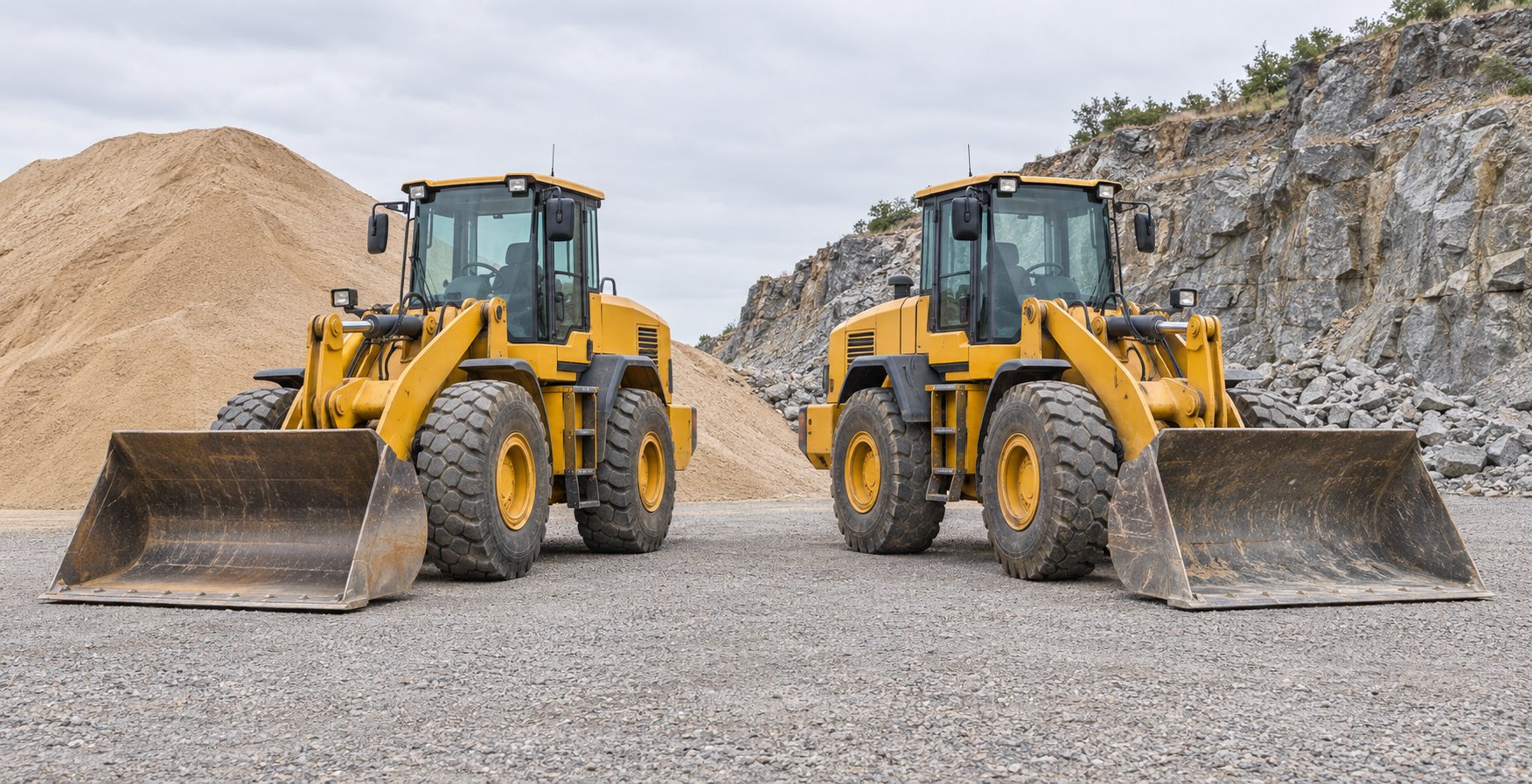
Cat 950 GC vs 950M Explained
Why would a Cat 950GC ask more than three times the price of a 950M on the same results page, when the M is the better-equipped line? Start with what the GC actually is.
What the Cat 950 GC Is
The 950 GC is a general construction version of the 950. Cat sells it new today next to the standard 950. It is not an older generation in the B-to-M sequence. Cat sells the GC on cost. The 950 GC product page promises "low owning and operating costs." It credits idle management, auto idle shutdown, a variable speed fan and load sensing hydraulics for the low fuel use. The standard 950 page sells something else: "premium performance and smart features."
A note on names: Cat's current page calls the standard model just "950" and refers to builds such as 14B and 14C. Used ads for recent machines usually say 950M. The figures below come from Cat's current page, so ask the seller of a used Cat 950M loader for the spec sheet that matches its build.
Cat 950GC vs 950M Loader Differences
| Point of comparison | 950 GC | 950 (950M line, current Cat page) |
|---|---|---|
| Price class | Cat shows "Pricing Varies" and stresses low owning and operating costs | Cat shows "Pricing Varies" and stresses premium performance |
| Operator and machine technology | Pilot-operated implement controls (two single-axis levers or one joystick), rear vision camera, computerized monitoring system, 4F/3R powershift transmission, Product Link ready | Electro-hydraulic implement controls, touchscreen display, Autodig with Auto Set Tires, application profiles, Remote Flash, 5F/3R transmission with lock-up torque converter; collision mitigation and Cat Command remote control optional |
| Hydraulics | Load sensing, piston pump; 68 gpm (256 L/min) at 2,390 rpm; 4,047 psi (27,900 kPa); 9.4-second total cycle | Load sensing, variable displacement piston pump; 85 gpm (322 L/min) at 2,340 rpm; 4,250 psi (29,300 kPa); 9.1-second total cycle |
| Payload system | Optional only. The product page lists a Cat Production Measurement kit, not available in all markets and not legal for trade. The spec sheet lists a Cat Payload scale system as optional. | Cat Payload standard (not legal for trade); Cat Advanced Payload optional; Payload for Trade offered in Europe and Australia |
| Cat's stated applications | Material handling, truck loading, general construction, stockpiling | Construction, aggregates, forestry, industrial work, plus factory specialty configurations |
Sources: Cat's 950 GC page, the 950 GC technical specifications, and the 950 page.
The table explains the gap but not the prices you'll see. During research for this guide, one search showed a 950GC listed at $166,996 next to a 950M listed at $51,998, and the 950M was several model years older. These were single listings seen at that time, not market averages, and both have probably changed since. They show that an older unit from the higher-spec line can sit far below a newer GC. Check current listings yourself before using any price as a benchmark.
Matching the Caterpillar 950 GC Wheel Loader or 950M to Your Work
- 950 GC: Cat says it is "designed specifically to handle all the jobs on your worksite from material handling and truck loading to general construction and stockpiling." If your loader does mixed site work and cost per hour matters most, that is the work Cat built it for.
- 950 / 950M: Cat calls it "jobsite-tough and ready for construction, aggregates, forestry, and industrial work." Cat also builds factory versions: industrial and waste models for transfer stations, recycling depots, scrap yards and demolition sites; a forestry model for log and chip handling in paper, pellet and sawmills; a block handler for block quarries; and a tunneling package. If your work fits one of these, ask whether the used unit left the factory in that configuration.
Both machines belong to Cat's current lineup, and their asking prices reflect that. Buyers with a tighter budget usually look further back, to the generation built between the 950G and the 950K.
Where the Used Cat 950H Fits
Have you found a 950H that looks like a bargain? Before you judge the price, work out where the machine sits in the 950 timeline and what Cat built into it.
Where the Cat 950H Loader Fits in the Lineup
The 950H came after the 950G and before the 950K. Cat's 950H spec sheet compares the H with the 950G Series II and says customer testing showed better fuel efficiency. The edition cited here is dated 2007 and lists these figures:
- Engine: Cat C7 ACERT, 7.2 L, EPA Tier III and EU Stage III compliant
- Net power: 197 hp (147 kW), ISO 9249
- Operating weight: 40,435 lb (18,338 kg) with a 4.0 cu yd (3.1 m3) general purpose bucket and bolt-on cutting edge
- Bucket capacities: 3.25 to 4.5 cu yd (2.5 to 3.5 m3)
- Static tipping load, full turn: 24,068 lb (10,915 kg) with that same bucket
- Transmission: planetary powershift, four forward and four reverse gears
Pros and Cons of a Used 950H
Pros
- The design was already proven when the H launched. Cat says the 950H reused the frames, axles, planetary powershift transmission, free wheel stator torque converter, separated cooling system and cab from earlier 950 models.
- It has load-sensing hydraulics and electrohydraulic implement controls. Factory options included Ride Control, Payload Control, Autolube and Aggregate Autodig.
- Its asking price is often lower than a current-generation unit's, but not always. The listing snapshot in the pricing section later in this guide includes a 950M listed below an older 950H.
Cons
- The technology is older. The 950H came before features on Cat's current 950 such as the touchscreen display, application profiles and the 5F/3R transmission with a lock-up torque converter.
- Condition varies widely. Two 950H units from the same year can be very different machines depending on their hours and how well they were maintained.
- Parts support has to be checked. The spec sheet's parts availability claims describe support when the machine was new. Ask a Cat dealer about the specific parts you expect to need now.
What to Ask When a Caterpillar 950 Loader for Sale Is a 950H
If a Cat 950 for sale is listed as an H, ask the seller these questions before you make an offer:
- Can you send a clear photo of the model plate and the full serial number?
- What does the hour meter read, and has the meter or display ever been replaced?
- Do you have service records? The 950H has oil sampling valves, so ask for any fluid analysis reports.
- What major repairs or rebuilds were done recently, who did them, and were genuine Cat or Cat Reman parts used?
- Which attachments come with the machine, such as the bucket type and size, a quick coupler or forks? Does it have factory options like Ride Control or Payload Control?
- Where is the machine, can it be loaded for transport there, and who arranges shipping and any export paperwork?
You can put these same questions to the seller of this used Caterpillar 950H loader from JIUHONG and ask for verified specifications, current condition details, shipping arrangements and a quote. That listing is for a single 950H, not stock covering every 950 generation.
All of these answers assume the machine really is a 950H. Ads sometimes get the model wrong, and the model plate on the machine is how you check.
How to Identify the Generation From a Listing
If an ad says only "Cat 950," how do you find out which machine is actually sitting in the seller's yard? Start with the machine itself. The ad title alone won't tell you.
Reading the Model Plate and Serial Number
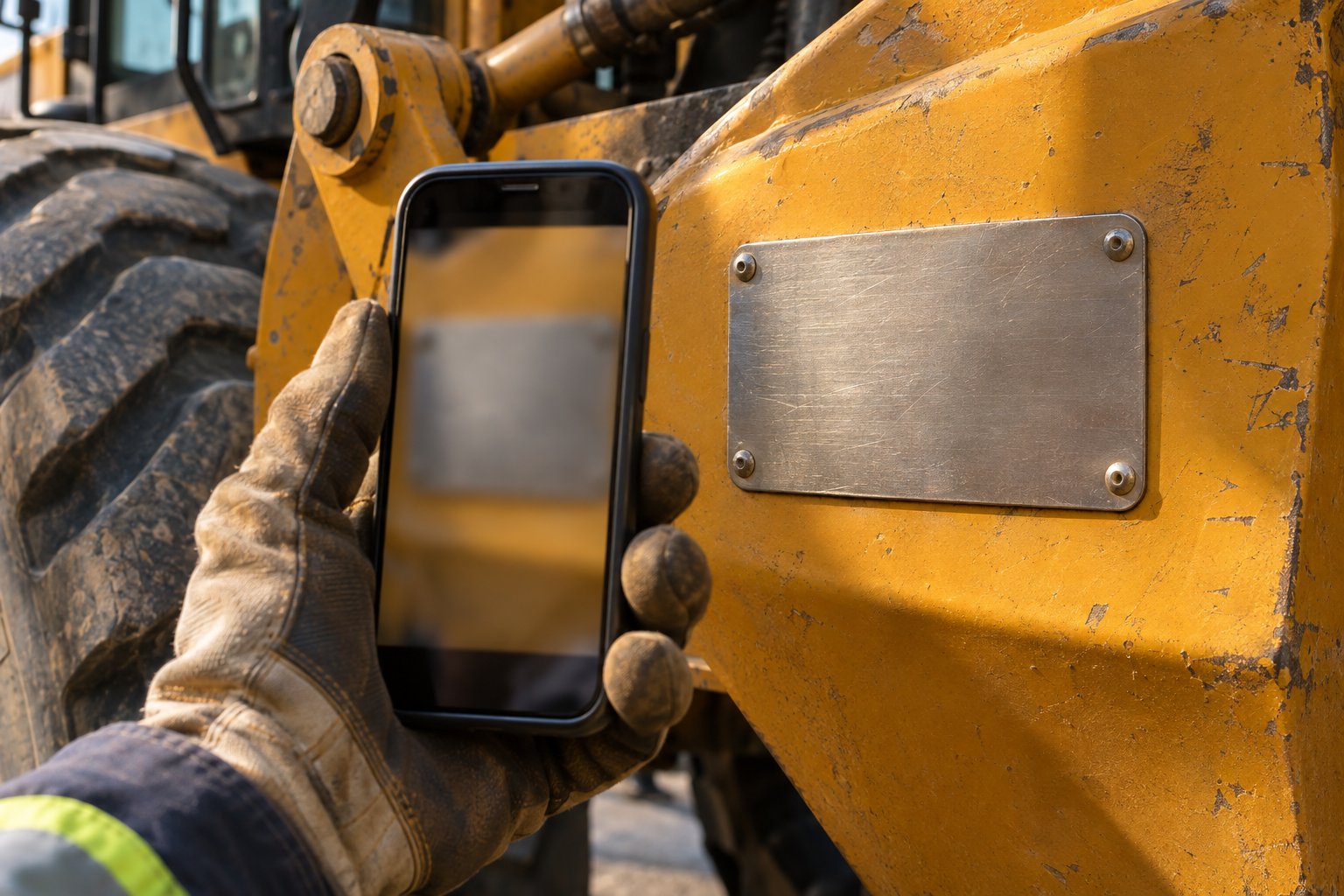
Ask the seller for clear, readable photos of the model plate and the full product identification number (PIN). Then give the PIN to a Cat dealer and ask them to confirm the model, the generation and the build year. Cat's Help Center has articles on where to find the serial number and how to find the year of manufacture. If a seller won't send a photo of the plate, slow down before going any further.
Red Flags in a 950 Cat Loader Listing
The pages that ranked for this search during research had several data problems. Each one leaves more checking for you to do.
- A mislabeled model. One listing read "Caterpillar 95014," which matches no model in Cat's lineup. Search filters can miss a listing like this or sort it under the wrong model, and you won't know the generation until you see the plate.
- A 950K with no photo. With no images, you can't read the plate or compare the machine with Cat's pictures. Ask for photos before you do anything else.
- "Price on request." You have to call before you can compare this unit with anything else. Ask for a written quote that lists what's included, such as attachments or shipping.
- An expired-ad message still in the results. The machine may already be sold, and the details shown may be out of date. Confirm the unit is still available before you ask anything else.
Confirming a Caterpillar 950G or Later Model Before You Call
Whether the ad says Cat 950G, H, K or M, run the same three checks:
- Match the PIN. The PIN in the plate photo should match the one on the invoice, the title and the service records. Ask a Cat dealer to confirm which generation it belongs to.
- Compare the photos with Cat's official images. Find Cat's images for the generation the ad claims, then compare the cab, the hood and the loader arms. Some changes are easy to spot. Construction Equipment's 950K field test notes that the 950K has a four-post cab with a door that opens forward from the left-front post. The 950H used a six-post cab with a door that opens toward the rear. The 950K's emissions module also makes its hood 8 inches taller, with less of a rearward slope.
- Check the year and hours against the records. The build year, the hour meter and the dates in the service records should agree. If an old service invoice shows more hours than the meter shows today, ask the seller to explain.
These checks tell you which machine you're looking at. They don't explain why a newer 950M can be listed for less than an older 950H, and answering that takes a different set of checks.
What Actually Drives Cat 950 Loader Price
When a newer loader is listed for less than an older one, how do you know which ad is the better deal? With the 950, this happens often enough that you can't judge a price from the model year alone.
Why Model Year Alone Does Not Set Cat 950 Loader Price
During research for this guide, one ranking page showed a 950M listed below an older-generation 950H. The listing gave no reason for the low price, and this guide won't guess at one. The case shows only that a later generation letter does not guarantee a higher asking price. Hours, condition, equipment and the seller's terms can matter more than age. DJJ Equipment, an Australian loader dealer, says hours usually matter more than age on used loaders. Its example is a five-year-old machine with 2,000 hours, which is normally worth more than a three-year-old one with 6,000.
Factors That Move Caterpillar 950 Loader Price
| Factor | What to check | Why it matters |
|---|---|---|
| Hours | The hour meter reading against the service records, and whether the meter was ever replaced | Hours track wear on the engine, transmission and pins more closely than the build year does |
| Overall condition | Leaks, tires, pins and bushings, the cab and the cutting edge | A unit that soon needs tires, pins and hoses costs more than its asking price suggests |
| Configuration | The confirmed generation, factory options such as Ride Control or Payload, and any specialty build | Two units from the same generation can carry very different equipment |
| Attachments | Which buckets, couplers or forks are included, and what condition they are in | Buckets, quick couplers and forks cost extra if the machine arrives without them |
| Warranty coverage | Any remaining coverage, stated in writing with its terms | Coverage moves some of the repair risk from you to the seller |
| Location and shipping | Where the machine is, how it gets loaded, who pays for transport and who handles export paperwork | A low price far away can cost more by the time the machine is delivered |
| Listing accuracy | That the model matches the PIN, the photos are current and the ad is still active | If the model or photos in an ad are wrong, the price may be wrong too until you verify it |
Reading a Cat 950M Price Against Older Listings
To judge a Cat 950M price, compare it with listings that match it on the factors above. The cheapest 950 on the page is not a useful benchmark.
- Match the generation. Compare a 950M with other 950M units, each confirmed by its PIN.
- Match the hours band. Group units with similar hour readings, and set aside any whose hours you can't verify.
- Match the configuration. Line up bucket size, coupler and factory options.
- Then compare prices. Add shipping costs and the value of any warranty to each price before you decide.
Each listing on the ranking sites shows year, hours, price and location. None of the sites explains how prices are set or publishes market-trend data. Any benchmark you build therefore rests on a few current ads, so build it again when you are ready to buy. Auction sites can add context. For example, Purple Wave's Caterpillar 950 price guide groups past results by generation, including the 950G and 950G Series II.
Of all the factors, warranty coverage varies most with the seller. The same 950M can come with very different backing from a Cat dealer, an independent dealer or a private seller.
Buying Channels and Their Trade-Offs
Who checks the machine before you pay? The answer depends on where you buy it. The same Caterpillar 950 wheel loader for sale can turn up in a Cat dealer's certified program, in ordinary dealer stock, on a classifieds site or on a multi-dealer marketplace. Each channel leaves a different share of the checking to you.
Cat Certified Used vs Regular Dealer Stock
Cat Certified Used is Caterpillar's program for used machines sold through Cat dealers. Cat's warranty page says certified equipment is protected for at least 12 months or a specific number of operating hours. Ordinary dealer stock has no program-wide promise like that. Cat says only that additional coverage "may be available" for Cat Used equipment, and an independent dealer sets its own terms. For a regular stock unit, the warranty is whatever the dealer writes into the sale. Get it on paper.
Classifieds and Multi-Dealer Marketplaces
Classifieds aggregators such as MachineryZone gather ads from many dealers and private sellers in one place. Multi-dealer marketplaces such as MyLittleSalesman work much the same way. Ironmart, an equipment broker, describes My Little Salesman as a print and digital classifieds platform whose listings can carry up to 100 photos plus video. These sites give you the widest choice of any cat 950 loader for sale. Any warranty, though, comes from the individual seller, not the site.
| Channel | Example | Warranty or assurance | Price transparency | Verification effort required from the buyer |
|---|---|---|---|---|
| Cat Certified Used | Certified units on Cat Used | Cat says at least 12 months or a specific number of operating hours; eligible for a CVA | Asking price usually shown; confirm with the dealer what it includes | Lower: confirm the coverage terms in writing and match the PIN |
| Regular dealer stock | Non-certified used units at a Cat or independent dealer | Set by the dealer; Cat Used units may qualify for extra coverage and a CVA | Listed price or a quote, depending on the dealer | Medium: get any warranty in writing and review the service records |
| Classifieds aggregator | MachineryZone | From the individual seller, if offered at all | Varies by ad; some show a price, others say "Price on request" | High: verify the model, PIN, hours, condition and ownership yourself |
| Multi-dealer marketplace | MyLittleSalesman | From each dealer, if offered at all | Varies by dealer and listing | High: check each seller and each machine separately |
What Cat Certified Used Warranty Terms Mean
- Coverage period: Cat states at least 12 months. Cat also says terms vary by product type, application and location, and that its warranty page is not a contract. The dealer's paperwork is what binds the sale.
- Hour limit: Cat says coverage is also tied to "a specific number of operating hours" but publishes no single figure. Ask the dealer for the hour cap on that exact machine and how it works alongside the time limit.
- PT+H: Some used listings print this abbreviation next to the warranty. Cat's warranty page does not define it. Ask the dealer to list in writing which components it covers and what it excludes.
- CVA filter kit: A Customer Value Agreement (CVA) is a Cat dealer maintenance plan. Cat's used equipment CVA page says it delivers genuine Cat parts on your maintenance schedule and adds machine health tracking through the Cat App and Cat Inspect. Cat says both Cat Used and Cat Certified Used machines qualify. Ask the dealer which filters and parts the kit contains and how many service intervals it covers.
The less assurance a channel offers, the more of the verification work falls on you as the buyer.
That work goes faster when you have fewer listings to check. All of these sites have search filters, and setting them carefully can cut a page of mixed 950 loader ads down to a short list of machines worth calling about.
Using Inventory Filters to Narrow Your Search
Have you ever typed "950" into a search box and gotten pages of mixed results? Cat Used, MachineryZone and MyLittleSalesman all let you narrow that list, but their default view won't do it for you. Sites rename and move their filters from time to time, so check the current labels on each site before you follow the steps below.
Filtering Listings by Model and Generation
Select the exact model designation, such as 950M, 950 GC, 950K or 950H, instead of searching for "950" alone. A Cat 950 GC wheel loader and a 950M are different machines, so you'll want them on separate results pages. A filter only reads what the seller typed, though. A unit entered as "Caterpillar 95014" or as a plain "950" may not show up under any generation. Run one broad keyword search as well. Then check any stray results with the plate and PIN steps described earlier.
Setting an Hours Range and Sort Order
Choose an hours band that fits your budget and the work you have planned, then sort the results by hours or by price. Either sort puts comparable units next to each other, which makes the matched comparison from the pricing section quicker. Imagine sorting a page of 950M results by hours. Units with similar wear line up together, and a price that looks out of place in that group is easy to spot.
Saved Searches and Alerts for a Cat 950M for Sale
Well-priced units can sell before you get back to the site. If a site lets you save a search or sign up for email alerts, set one up for your exact criteria so new listings come to you. The full workflow looks like this:
- Filter by exact model. Select one generation, for example 950M.
- Set the hours range. Enter a minimum and a maximum that match your budget.
- Add the other filters the site offers. Location is worth setting if shipping cost matters to you.
- Sort by hours or price. Keep comparable units next to each other.
- Run one broad search. Look for mislabeled ads that the model filter missed.
- Save the search. Turn on email alerts where the site offers them, so each new 950M Cat loader that fits your criteria reaches your inbox.
Filters can tell you whether a listing matches your criteria on paper. They can't show you a leaking cylinder or worn loader pins, and you only find those when you or an inspector look at the machine in person.
Inspection Points and Records to Request
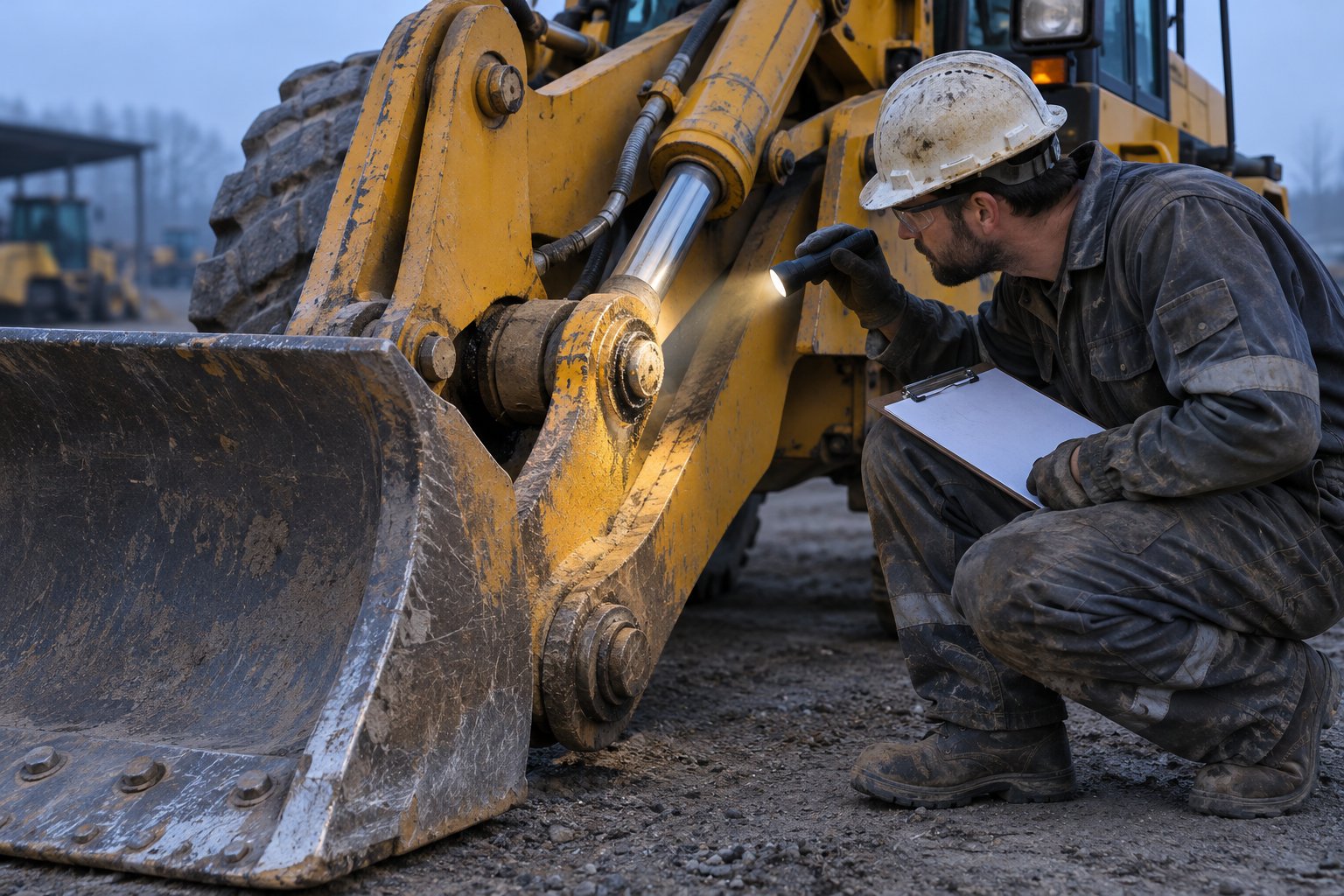
When you finally stand next to a used Caterpillar 950 loader, what should you look at first? Ryan Nielsen manages aggregate, asphalt and used equipment at 4 Rivers Equipment. His advice to Forestry Trader is to "always look at the high dollar components first." He means the engine, the transmission, the hydraulic pump and the articulation joints. The checklist below starts with those parts and then moves on to the smaller details.
Walkaround Checks on a Used Caterpillar 950 Loader
- Engine. Check the fluid levels and look for oil, coolant and fuel leaks. Ask the seller to start the machine while you watch. Note how easily it starts and whether the exhaust smokes heavily at startup or under load.
- Transmission and axles. On a test drive, the transmission should shift smoothly through every gear. Nielsen also suggests checking whether the machine will power through the brakes in first gear, and whether the differential lock works if the machine has one. Look for leaks around the axle housings.
- Hydraulic cylinders and hoses. Look for scored cylinder rods, weeping seals and hoses that are chafed or cracked. Raise the loader arms, hold them up, and watch whether they drift down.
- Loader linkage pins and bushings. Check the bucket links for play and look for dry pins. Nielsen warns that parts that are not properly greased tend to seize up.
- Articulation joint and frame. Steer from lock to lock and feel for play in the center joint. Inspect the frame for cracks and weld repairs.
- Tires. Check the tread wear. Then look at the rims for dents, cracks or rust, since structural damage there matters more than worn tread.
- Cab controls and electronics. Test every control, gauge, light and warning indicator. Check that the seat is stable and that the mirrors and windows are free of cracks.
- Bucket and cutting edge. Inspect the teeth and the cutting edge for wear and cracks. Measure the bucket to confirm it matches the size given in the ad.
How much play or wear is too much? That depends on Cat's service limits for each generation, and this guide does not list them. Ask a Cat dealer to compare your measurements with Cat service documentation.
Records to Request Before You Buy
- Service history. Ask for dated records that show the hour reading at each service. Nielsen notes that marked filters or a service sticker in the machine can also show when it was last serviced.
- Fluid analysis reports. Cat SOS Services analyzes oil, coolant and fuel samples. Either a Cat dealer or the owner can take the samples. Several past reports show wear trends that a single walkaround can't. If the seller has no reports, ask whether a dealer can take a sample before you buy.
- Evidence that the hours are genuine. The hour readings on dated invoices should rise steadily over time. Ask the seller to explain any reading that goes down, and any meter that was replaced without paperwork.
- Repair invoices. These should show what was fixed, who did the work and which parts were used.
- Proof of ownership and lien status. Loaders usually have no title, so a lender's claim on the machine appears in state UCC filings. Five West Financial advises searching those filings under the seller's exact legal name. It also recommends running the PIN through NER's IRONcheck to check theft records.
- Export or shipping documents. For a cross-border purchase, get a bill of sale that lists the full PIN, the hours and the attachments. Agree in writing who prepares the export paperwork, and confirm the destination country's import rules with a customs broker.
When to Pay for a Professional Inspection
Imagine buying a Cat 950 loader from a classifieds ad hundreds of miles away. You can't run the checks above yourself, and the seller may offer no warranty. In that case a professional inspection is usually worth paying for. It also makes sense when the records are thin, when the hours can't be verified, or when your own walkaround turns up something you can't explain.
A Cat dealer's service department will know the generation you're buying. An independent inspector also works, as long as they have no stake in the sale. Either way, ask for a written report with photos, test results and, if possible, a fluid sample.
Inspection reports rarely come back clean. Worn tires, a seeping cylinder or pins near the end of their life each add a cost, and you should add those costs to the asking price when deciding which Caterpillar 950 wheel loader is worth buying.
Choosing a Cat 950 Wheel Loader for Sale and Weighing Total Cost
Which machine costs more to own: an older 950 with a low asking price or a newer certified unit? The asking price only starts that calculation.
Weighing Total Cost Beyond the Asking Price
Cleveland Brothers, a Cat dealer, describes a simple total cost of ownership calculation. Start with the purchase price and add maintenance, repair, fuel, tax, insurance and financing costs. Subtract the expected resale value, then divide by the hours you expect to run the machine. The result is an hourly cost you can compare across units. For a used 950, include these items:
- Purchase price. Cat's dealer pricing notes say a listed price excludes taxes, freight, delivery and protection plans such as a CVA.
- Warranty coverage. Written coverage takes some repair risk off you. If a unit has no coverage, you carry that risk yourself.
- CVA filter kits where offered. Cat says CVAs cover new and used machines, wherever you bought them. Ask the dealer to price a plan for your unit.
- Parts availability. Ask a Cat dealer to quote the wear parts you expect to replace first, such as pins, bushings, hoses and the cutting edge.
- Expected maintenance. Use the service records and the inspection report to estimate what the first year will need.
- Inspection. Include a professional inspection in the budget for remote purchases and classifieds purchases.
- Shipping. Get a freight quote. Add export paperwork for a cross-border deal.
Run both machines through that list. Imagine an older 950H that needs tires, pins and hose work soon and comes with no warranty. A certified newer unit costs more up front, but its coverage and an optional CVA absorb part of that risk. When you divide each total by your expected hours, either machine could come out cheaper per hour.
Which Cat 950 Wheel Loader Should You Buy
| Model | Budget | Type of work | Older technology and parts risk you accept |
|---|---|---|---|
| Caterpillar 950 GC | Current-lineup pricing. Cat promotes low owning and operating costs. | Material handling, truck loading, general construction, stockpiling (Cat) | Low. It is a current model, with simpler controls than the 950. |
| 950M | Recent units cost the most. Older 950M units can list much lower. One listed at $51,998 during research. | Construction, aggregates, forestry, industrial work, factory specialty builds (Cat) | Low. It has current-generation technology. |
| 950K | Moderate. Compare listings matched on hours and configuration. | Check the job against the 950K spec sheet | Moderate. It has pre-M technology. Confirm parts with a Cat dealer. |
| 950H | Often below current units, but not always. | Check the job against the 950H spec sheet | Moderate to high. It has older technology, and its condition depends on hours and maintenance. |
| 950B to 950G | Tightest budget. | Check the job against that generation's spec sheet | Highest. It has the oldest technology. Confirm parts one at a time. |
Find the row that fits your budget, then check that the work column fits your jobs. If two rows still fit, let the risk column decide.
Next Steps Once You Have a Shortlist
- A used 950H from JIUHONG. If the table points you to a 950H, you can request verified specifications, current condition details, shipping arrangements and a quote for this used Caterpillar 950H loader from JIUHONG. Then run it through the inspection and records checklist in the previous section. The listing is a single 950H, so buyers who need a 950M or 950 GC should look elsewhere.
- Cat Used certified inventory. Cat says certified units are covered for at least 12 months or a set number of operating hours. Your choice is limited to units dealers have certified, so the generation and hours you want may not be available.
- Classifieds and multi-dealer marketplaces. MachineryZone and MyLittleSalesman have the most 950 Cat loader for sale listings. Any warranty comes from the individual seller, and you have to check the model, PIN, hours, liens and condition yourself.
Whichever route you choose, ask for a photo of the model plate first. Every price, warranty and inspection comparison in this guide depends on knowing which 950 you are buying.
Cat 950 Wheel Loader Buying FAQs
1. What is the difference between the Cat 950 GC and the 950M?
The 950 GC is Cat's general construction version of the 950. Cat sells it new alongside the standard 950, so it is not an older step in the B-to-M sequence. Cat markets the GC on low owning and operating costs, and its equipment is simpler: pilot-operated implement controls, a 4F/3R powershift transmission, a 68 gpm load sensing piston pump, and payload measurement only as an option. The standard 950, which most used ads call the 950M, adds electro-hydraulic controls, a touchscreen display, Autodig, a 5F/3R transmission with a lock-up torque converter, an 85 gpm pump, and Cat Payload as standard. Cat aims the GC at material handling, truck loading, general construction and stockpiling. It aims the 950 at construction, aggregates, forestry and industrial work, and also offers factory specialty builds. These figures come from Cat's current product pages, so ask the seller of a used 950M for the spec sheet that matches its build.
2. How can I tell which generation a Cat 950 for sale really is?
Don't rely on the ad title. Ask the seller for sharp photos of the model plate and the full product identification number (PIN). Then have a Cat dealer use that PIN to confirm the model, generation and build year. Cat's Help Center also explains where to find the serial number and how to look up the year of manufacture. Next, compare the listing photos with Cat's official images for the generation the ad claims. For example, a 950K has a four-post cab with a door that opens forward and a taller hood. The 950H has a six-post cab with a door that opens toward the rear. Finally, check that the PIN, build year and hour readings agree across the plate, the invoice and the service records. If a seller won't photograph the plate, treat that as a reason to pause.
3. Why is a newer Cat 950M sometimes listed for less than an older 950H?
Model year is only one factor. Hours, overall condition, configuration, included attachments, remaining warranty, location and shipping cost, and how accurate the listing is can all outweigh age. During research for this guide, one ranking page showed a 950M priced below an older 950H. Another search showed a 950GC at $166,996 next to an older 950M at $51,998. These were single listings seen at one point in time, not market averages. To judge a price fairly, compare units from the same confirmed generation, with a similar hours band and a matching configuration. Then add freight and the value of any warranty before you decide. The listing sites publish no pricing method or trend data, so rebuild your comparison from current ads when you are ready to buy.
4. What should I inspect and request before buying a used Cat 950 loader?
Start with the expensive components: the engine, transmission, hydraulic pump and articulation joint. Watch the machine start, and look for leaks or heavy smoke. On a test drive, shift through every gear. Check the cylinders for scored rods and watch whether the raised arms drift down. Look for play or dry pins in the linkage, and steer from lock to lock to feel for play in the center joint. Finish with the rims, cab controls, bucket teeth and cutting edge. For paperwork, ask for dated service records, fluid analysis reports such as Cat SOS results, repair invoices, and evidence that the hour readings rise steadily over time. Run a UCC lien search under the seller's legal name, and get export documents for a cross-border deal. Wear limits differ by generation, so ask a Cat dealer to compare your findings with Cat service documentation. For remote or classifieds purchases, a written report from a Cat dealer or an independent inspector with no stake in the sale is usually worth the cost.
5. Where should I buy a used Cat 950 wheel loader, and what warranty comes with it?
Each channel leaves a different amount of checking to you. Cat Certified Used units are sold through Cat dealers, and Cat states their coverage as at least 12 months or a specific number of operating hours. These units also qualify for a Customer Value Agreement (CVA) maintenance plan. Regular dealer stock carries whatever warranty the dealer writes into the sale. Classifieds aggregators such as MachineryZone and multi-dealer marketplaces such as MyLittleSalesman have the widest choice. On those sites, any warranty comes from the individual seller, and you have to verify the model, PIN, hours, liens and condition yourself. Get every warranty term in writing, including the hour cap and what abbreviations such as PT+H cover. If you have decided on a 950H, you can request verified specifications, current condition details, shipping arrangements and a quote for JIUHONG's used Caterpillar 950H loader (https://jiuhong-machinery.com/products/caterpillar-950h-loader-4543/). That listing is a single 950H, not a range of 950 generations.